fbpx

December 11, 2019

What’s Happening: Hanukkah Events, YULA Comedy Night

FRI DEC 13

Beach Boys Shabbat
Nearly 60 years after the Beach Boys left their South Bay hometown of Hawthorne, their beachside sounds highlight Kehillat Israel’s Beach Boys Hanukkah Shabbat. The liturgy is set to Beach Boys music with English lyrics to the service set by Daniel Leanse. Soloists are Cantor Chayim Frenkel, Leanse, Rabbi Amy Bernstein and Surf’s Up, a Beach Boys tribute band. The evening is sponsored by Marilyn and Stewart Lonky in memory of their parents. 7 p.m. Free. Kehillat Israel, 16019 W. Sunset Blvd., Pacific Palisades. (310) 459-2328.

SAT DEC 14

Seniors Holidays Dance
Adults ages 50 and older gather for dancing, dinner, drinks and dessert at this annual holiday party. The evening features a live band and, according to organizer Debra Graff, is a “great way to spend the holidays.” More than 250 people, including couples and singles, are expected. 7-11 p.m., $25. Stephen Wise Temple, 15500 Stephen S. Wise Drive, Los Angeles. For additional information, email johnseeman@aol.com.

SUN DEC 15

Holocaust Survivors Brunch
Sinai Temple invites all Los Angeles-based Holocaust survivors and the teen community to a free brunch and program. It is a moment to honor the legacies of survivors who, face to face with students, share their stories. If you know a survivor who is unable to drive, contact teencenter@sinaitemple.org or call (310) 481-3232 and transportation will be provided. 10:30 a.m.-12:30 pm. Free. Sinai Temple, 10400 Wilshire Blvd. (310) 474-1518.

Tabby Refael

“40 Years in America”
Jewish Journal columnist Tabby Refael and the Chloe Pourmorady Ensemble headline “40 Years in America,” a concert and soiree at Valley Beth Shalom about the arrival and integration of the Iranian Jewish community in the U.S. Refael is co-founder of 30 Years After, and Pourmorady’s seven-member group combines elements of ancient and modern sounds, classical and rock. Tasty Persian desserts are on the menu. 7-10:30 p.m. $36. Valley Beth Shalom, 15739 Ventura Blvd., Encino. (818) 788-6000. (310) 247-2266. 

Chanukapalooza
Have hours of fun a week before Hanukkah at Beth Jacob’s Chanukahpalooza, teaming with other teens. Sevivon (dreidel) activities and Hanukkah crafts keep you occupied while you also have options for your favorite sufganiyot fillings. 10 a.m.-noon. $10 members, $15 general. Beth Jacob Congregation, 9030 W. Olympic Blvd., Beverly Hills. (310) 278-1911.

Hanukkah Monologues 3.0
To emotionally prepare for Hanukkah one week from tonight, Temple Beth Am invites you to “The Hanukkah Monologues, 3.0: Heroes, Miracles & Lights in the Dark,” an evening of live holiday performances of personal narratives by community members. Inspired by NPR’s storytelling show, “The Moth,” the evening includes plenty of time for noshing and schmoozing. Recommended for ages 14-and-older. 7-9 p.m. $20 general admission, $18 for members. Temple Beth Am, 1039 S. La Cienega Blvd., Los Angeles. (310) 652-7353.

Dana Maman

Hanukkah Festival
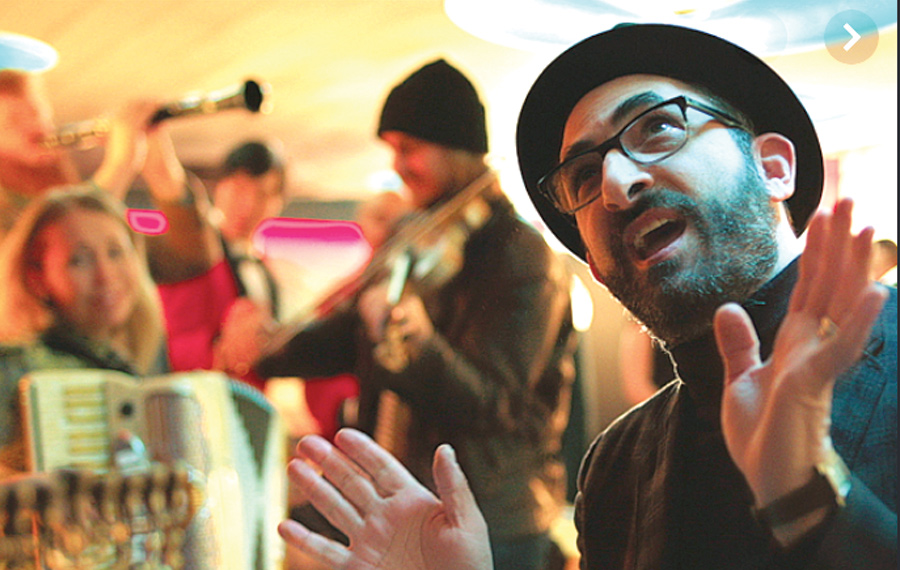
Whatever you want out of Hanukkah, you are likely to find it this afternoon at the Skirball Cultural Center’s annual Hanukkah Festival. Get in the holiday spirit with musical performances by Klezmer Juice, classic Hanukkah tunes by fiddler and accordionist duo Zingarella, live capoeira by Dana Maman and Friends, hands-on workshops, storytelling, exhibits, dining —  including latkes and sufganiyot — and shopping. 11 a.m.-4 p.m. $12 general admission, $9 seniors, full-time students and children older than 12, $7 children 2-12. Free for members and children 2 and younger. Skirball Cultural Center, 2701 N. Sepulveda Blvd. (310) 440-4500.

“Very Happy Goyisha Hanukkah”
If you are looking for a new slant on understanding Judaism’s December holiday, the Jewish Women’s Theatre brings you “A Very Happy Goyisha Hanukkah,” a new cabaret show with songs, stories and schmaltz. Written and performed by Anna Abbott and directed by Susan Morgenstern. Come watch an Evangelical debutante describe her funny journey from “Our Daily Bread Daycare” to a new life of chopped liver and latkes.
Two performances: 2 p.m. today, and 8 p.m. Dec. 17. $30, $35 at the door. The
Braid, 2912 Colorado Ave., No. 102, Santa Monica. (310) 315-1400.

“Healing the Holocaust”
How will legacies and heroic actions of the Holocaust be explained to future generations after the last survivor dies? Holocaust scholar Michael Berenbaum, director of the Sigi Ziering Institute and professor of Jewish studies at American Jewish University, engages groundbreaking author G.K. Hunter on the subject. Hunter’s new book, “Healing Our Bloodlines: The 8 Realizations of Generational Liberation,” examines, among other things, how we learn about invisible burdens that remain after major historic events. A short Q & A follows the 90-minute presentation. 4-6 p.m. Free, $10 suggested donation. Los Angeles Museum of the Holocaust in Pan Pacific Park, 100 S. The Grove Drive, Los Angeles. (323) 651-3704.

MON DEC 16

Sean Rad

Sean Rad of Tinder
An evening with Sean Rad, who co-founded Tinder in 2012 with his childhood friend Justin Mateen, both of whom are from Iranian Jewish families. Organized by the Jewish Federation of Greater Los Angeles as part of its JTECH Sandbox Series, the event draws Jewish professionals in Los Angeles’ tech-based ecosystem, including CEOs, rising entrepreneurs and venture capital professionals. Rad discusses the miracles, triumphs and challenges of launching a tech company that has forever changed how we meet, couple and interact. Rad also talks about Good Today, his new nonprofit venture. 6:30 p.m. mingling, cocktails. 7 p.m. dinner. 8 p.m. program. 8:30-9 p.m. mingling. $36. Private Westside location. Address provided upon registration. For additional information, email Zack Lodmer at zlodmer@jewishla.org or call (323) 761-8326.

“World War II Through the Eyes of Ernie Pyle
Ernie Pyle probably was the most famous war correspondent in American history. Tonight, actor Arnold Weiss gives a dramatic presentation titled “World War II Through the Eyes of Ernie Pyle” at Kehillat Ma’arav. Killed in the last days of the war at age 44, Pyle wrote about ordinary soldiers called “dogfaces.” After recovering from combat stress, he returned to the war zone in January 1945, but was shot dead by the enemy in April, weeks before fighting was halted. Don’t miss Weiss’ dramatic presentation of his life. 7 p.m. $5 suggested donation. Kehillat Ma’arav, 1715 21st St., Santa Monica. (310) 829-0566.

YULA Comedy Night
A funny thing happened to six comedians on their way to YULA Girls Comedy Night at the Writers Guild Theater — and you’ll have to buy a ticket to find out what. Performing are Mark Schiff, Blake Vogt, Steve White, Ashley Blaker, Jeff Allen and Kira Soltanovich, who lend their comedic talents to help raise money for YULA Girls High School. 6:30 p.m. cocktails and hors d’oeuvres. 7:30 p.m. show, dessert to follow. $180 per ticket, $300 for two tickets. Tickets and sponsorships available. Writers Guild Theater, 135 S. Doheny Drive, Beverly Hills. (310) 203-0755.

Nicole Gershenson

Anxiety Disorder
Kol Tikvah’s six-part Health and Wellness Series, examining the connection between body and mind, continues with a discussion on anxiety. Licensed marriage and family therapist Nicole Gershenson, who focuses on anxiety, depression and addiction, is the speaker. During the final hour of the evening, Kol Tikvah facilitates a National Alliance on Mental Illness/Faith Net support group. Light nosh served. 6:30 p.m. doors open. 6:45 p.m. program. Free. RSVP requested. Kol Tikvah, 20400 Ventura Blvd., Woodland Hills. (818) 348-0670.

WED DEC 18

Brad Sherman Town Hall
U.S. Rep. Brad Sherman (D-Northridge), holds a telephone town hall. Immigration, fire safety, the economy, Social Security and Medicare are hot topics, too. To participate, call (855) 920-0548 anytime between 7-8:30 p.m. this evening. For more information, click the link above.

“Dreaming of a Jewish Christmas”

“Dreaming of a Jewish Christmas”
The latest screening in Congregation Kol Ami’s “DocJewmentary” film series is the offbeat, irreverent musical, “Dreaming of a Jewish Christmas,” which tells how a group of Jewish writers — including Irving Berlin and Mel Torme — who were outsiders and found Christmas to be an ideal vehicle for imagining a better world, wrote the soundtrack to Christianity’s most musical holiday. 7:30-9:30 p.m. Members: $5, $25 for the series. General: $18, $80 for series Congregation Kol Ami, 1200 N. La Brea Ave., West Hollywood. (323) 606-0996.

THU DEC 19

Sephardic Hanukkah for Families
Get an early start on the holiday when you join families of the Sephardic Temple for a Hanukkah program, followed by a party with fun-filled activities for children and the community’s early childhood center’s families. 4-5:30 p.m. Free. Sephardic Temple,
10500 Wilshire Blvd. (310) 475-7000.


Have an event coming up? Send your information two weeks prior to the event to ryant@jewishjournal.com for consideration. For groups staging an event that requires an RSVP, please submit details about the event the week before the RSVP deadline.

What’s Happening: Hanukkah Events, YULA Comedy Night Read More »

Beit Issie Shapiro Event, Haddish is Bat Mitzvah

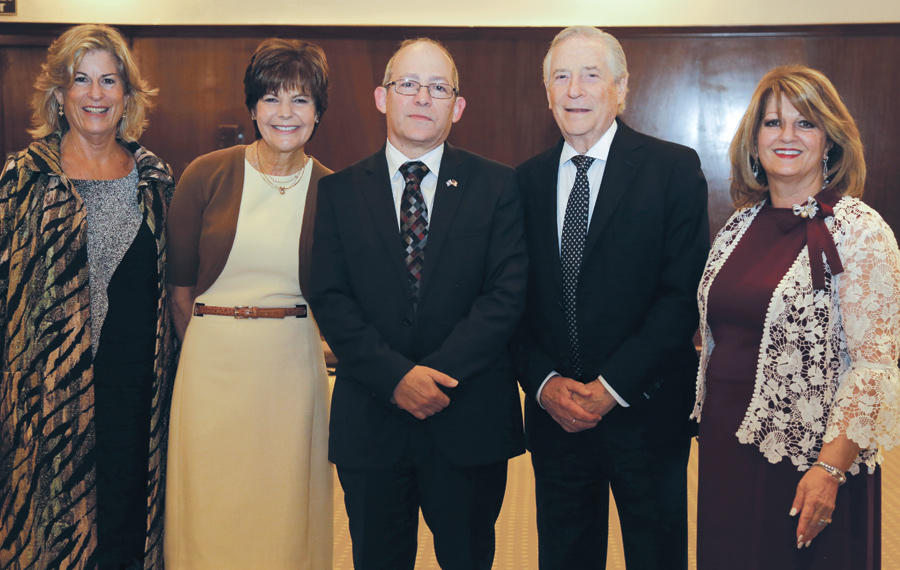
Local community leaders came together on Nov. 21 to celebrate Beit Issie Shapiro, a leading Israeli disability organization based in Ra’anana that will celebrate its 40th anniversary next year.

Attendees at the evening event held at Sinai Temple included the new Consul General of Israel in Los Angeles Hillel Newman; Ronit Segelman, director of global resource development at Beit Issie Shapiro; Errol Fine, chair of the West Coast board of Friends of Beit Issie Shapiro; Jewish Journal Publisher and Editor-in-Chief David Suissa; Jean and Jerry Freedman; Stanley Black; Mike Nazarian, chairman of the Iranian American Jewish Federation; and Sasha Farahi of the Magbit Foundation.

A crowd of over 250 people learned about the innovations and breakthroughs of Beit Issie Shapiro, which has been granted Special Consultative status to the United Nations Economic and Social Council, and is a driving force behind Israel’s esteemed standing in the field of disabilities worldwide.

Seth Fisher, whose nephew attended Beit Issie Shapiro’s Early Intervention Center, gave an inspirational and moving presentation, and students from Newport Beach were recognized for their support of Beit Issie Shapiro’s Special Education School.

“I am so proud of our community for joining us on this important journey — opening worlds of possibilities and helping to create a more inclusive society,” said Soraya Nazarian, a consultant to American Friends of Beit Issie Shapiro. “We are delighted and overwhelmed by the support from our longstanding donors and our new ones. Beit Issie shines a light not just through Israel but the entire world, and this evening will allow us to impact thousands of children and adults with disabilities worldwide as we share our best practice through international consultation, collaboration and training.”

The evening’s highlights included a special message sent by Olympic gold medal-winning swimmer Lenny Krayzelburg, the musical atmosphere created by RebbeSoul and his band, and charismatic emcee Mark Goldenberg. 


Husband-and-wife philanthropists Paul and Vera Guerin attended the Cedars-Sinai Board of Governors gala, which honored Paul with the Philanthropic Leadership Award. Photo by Alex J. Berliner/ABImages

The Cedars-Sinai Board of Governors held its annual gala on Nov. 14 at the Beverly Wilshire hotel. 

The evening raised more than $2 million to support the medical center’s clinical programs, biomedical research and community outreach programs, and honored Paul Guerin with the Philanthropic Leadership Award and Don Passman with the Visionary Award. 

Actor and comedian Howie Mandel emceed the evening, and acclaimed musician Josh Groban performed renditions of “Over the Rainbow” and “Bridge Over Troubled Water.” 

The more than 700 guests included actress Rosanna Arquette; former California Gov. Gray Davis; actress Loni Anderson and her husband, Bob Flick; OPI founder George Schaeffer; and City National Bank chairman Russell Goldsmith.


From left: Rabbi Susan Silverman, actress Tiffany Haddish, Stephen Wise Temple Senior Rabbi Yoshi Zweiback and Stephen Wise Cantor Emma Lutz take a break from preparing Haddish for her Dec. 3 bat mitzvah in Beverly Hills. Photo courtesy of Rabbi Yoshi Zweiback .

Actress and comedian Tiffany Haddish, who found out late in life that she was Jewish, became a bat mitzvah on Dec. 3 at the SLS Hotel in Beverly Hills.

Rabbi Susan Silverman, the sister of comedian Sarah Silverman, officiated Haddish’s ceremony. 

According to various media outlets, among those who attended the star-studded event were Billy Crystal, Sarah Silverman and Chelsea Handler.

Also in attendance was Stephen Wise Temple Senior Rabbi Yoshi Zweiback. In an email, Zweiback told the Journal he helped Rabbi Silverman, who is based in Jerusalem, on the service and with the music.

“It was very meaningful and joyous,” said Zweiback, who is on the board of Second Nurture with Rabbi Silverman, its founder, and Haddish. Second Nurture promotes a culture of adoption and foster care within Jewish and other communities.

Stephen Wise Temple Cantor Emma Lutz also took part in the service.

The daughter of an Eritrean Jew, Haddish grew up in foster care in South Central Los Angeles and was exposed to comedy though Laugh Factory’s Comedy Camp.

On the same day of her bat mitzvah ceremony, Haddish’s new Netflix comedy special, “Black Mitzvah,” was released. 


Julie and Steve Bram with their daughter Alanna Callner and son Ben Bram at the AJC Yellin Community Leadership Award ceremony. Photo by Howard Pasamanick Photography

The American Jewish Committee (AJC) Los Angeles honored Julie and Steve Bram with the Yellin Community Leadership Award on Nov. 24 at Stephen Wise Temple.

Named in memory of the late attorney, developer and activist Ira Yellin, the Community Leadership Award recognizes the accomplishments of Los Angeles’ outstanding leaders from all walks of life — civic, community, business and political — who have worked to make Los Angeles a better place for all of its citizens.

Temple Emanuel of Beverly Hills Rabbi Sarah Bassin and Aziza Hasan, director of NewGround: A Muslim-Jewish Partnership for Change, delivered the keynote address on the importance of intercommunity dialogue and bridge building and the contributions made by the Brams in this field.

Richard Hirschhaut, the Los Angeles director of AJC, Stephen Wise Temple Senior Rabbi Yoshi Zweiback, and attorney and AJC ACCESS Chair Jonathan Waxman also spoke at the event.

The honorees’ son, Ben Bram, their daughter, Alanna Callner, and son-in-law, Jazz Callner, presented the award to the honorees.

Kate Zentall and Robert Trebor performed “Morocco Calling” and “Yearning for Peace,” two Jewish Women’s Theatre stories written by Julie Bram, directed by Susan Morgenstern and produced by Ronda Spinak. 

“The world is a tough place,” Steve Bram said. “Like everyone, we want our charity and volunteer work to be impactful. We believe AJC makes a difference. AJC has allowed us to get involved in world affairs affecting Israel and the Jewish people.”

Steve Bram is president and co-founder of George Smith Partners, a real estate capital advisory firm based in Los Angeles.

Also attending the event were Yellin’s widow, Adele Yellin, president of the Yellin Company, and attorney and AJC L.A. President Scott Edelman.

Julie Bram is the immediate past international relations co-chair of the Los Angeles office of AJC, which builds relationships with diplomats from around the world.

With 22 regional offices across the United States and 11 global posts, AJC promotes the advancement of democratic values worldwide, serving as the “State Department of the Jewish people,” according to AJC. 

AJC works to counter anti-Semitism and all forms of hatred, promote Israel’s place in the world, combat terrorism and extremism, and promote human rights and interreligious and interethnic understanding at home and abroad.


Want to be in Movers & Shakers? Send us your highlights, events, honors and simchas.
Email ryant@jewishjournal.com.

Beit Issie Shapiro Event, Haddish is Bat Mitzvah Read More »

Biblical Graphic Novel Highlights Women’s Voices in ‘The Book of Sarah’

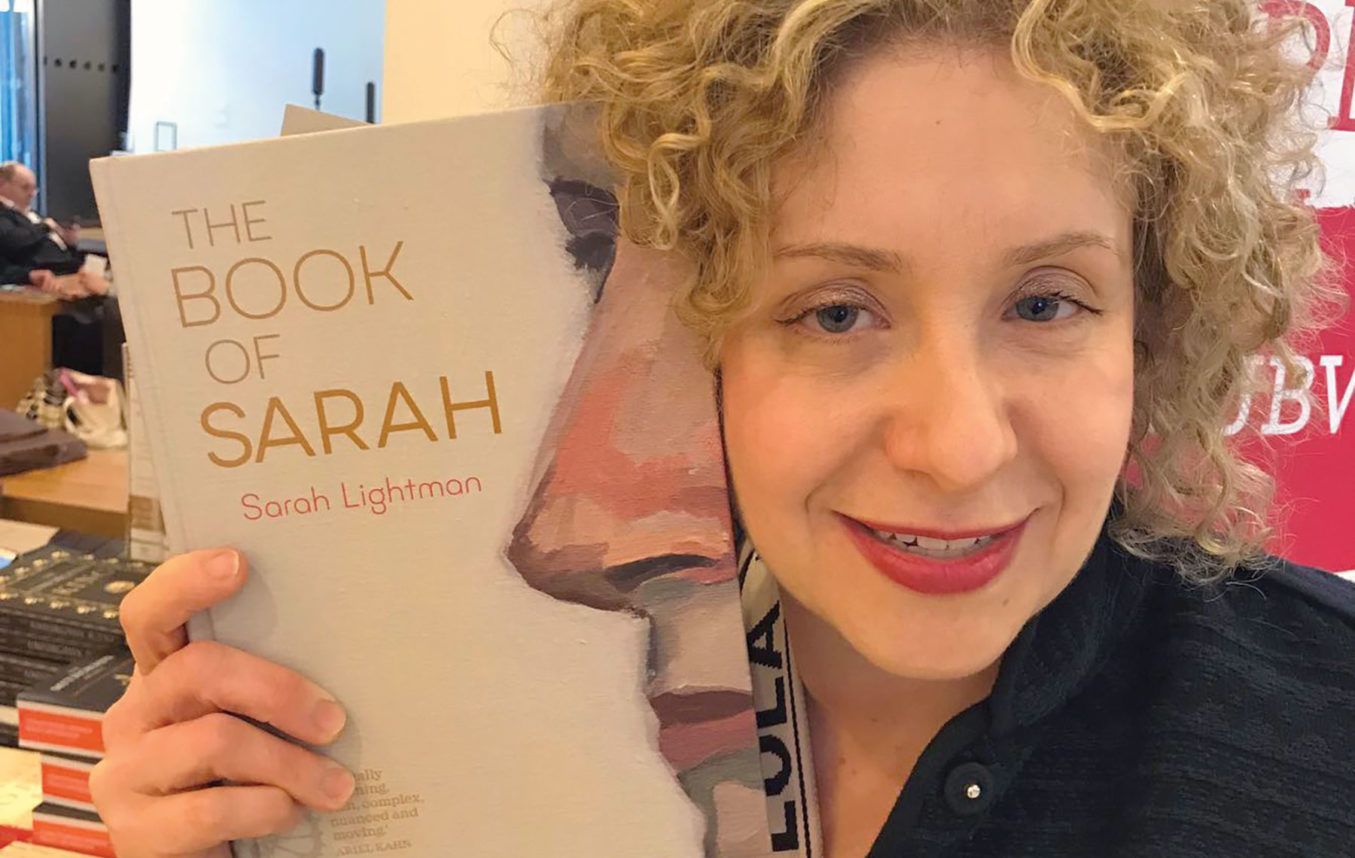
“The Book of Sarah” is not your typical graphic novel. Instead of comic-book-style drawings it’s filled with charcoal and pencil illustrations and there are no panels. But that was Sarah Lightman’s plan all along.

The British artist and curator who won the Will Eisner Award for her 2014 book, “Graphic Details: Jewish Women’s Confessional Comics in Essays and Interviews,” divided her autobiographical graphic novel into biblical sections. The sections are: Genesis, Exodus, Bamidbar, Numbers, Leviticus, Harry’s Genesis (named after her son), Revelations and Apocrypha. The Book was shortlisted for the 2019 British Book Awards. 

Lightman spoke with the Journal about her fellow female graphic novelists, the matriarch she was named after and what she hopes to accomplish with her new work. 

Jewish Journal: Why did you decide to create “The Book of Sarah?” 

Sarah Lightman: I was an undergraduate at The Slade School of Fine Art in London. I felt really lost so I decided to go backward and draw my childhood to understand myself. I looked at family photos and tried to understand who I was in my family by the way we were standing. I did those drawings 20 years ago. I gave presentations with them, but I hadn’t discovered the world of comics. Even though I kept doing drawings about myself, I hadn’t seen anything similar apart from Charlotte Salomon’s work. I realized my work could fit into that world. She was basically the first autobiographical Jewish graphic novelist. Before she died in Auschwitz, she spent one year drawing her life story. Her drawings are amazing. 

JJ: Are there a lot of Jewish women in the comic book industry? 

SL: Jewish women have been making amazing work since the 1970s, but you only remember the men. Women often aren’t known. We get passed over all the time.

JJ: Do you think Sarah was overlooked in the Bible, since there wasn’t a book about her? 

SL: That’s what I argue. I felt about her story what I felt about myself — I wasn’t leading my own life. I was in someone else’s story. Like me, she was also an older mum. There’s contemporary literature written with her in mind. I found more as time went on. Once a lot of the biblical women began to become independent in the narrative, they were condemned and then ignored. Eve was condemned for wanting to learn more. 

With Sarah, she gets absorbed into Abraham’s great narrative. She’s a conduit through which the Jewish people are born. It’s Abraham who learns her name is going to be changed. It’s Abraham who converses with God. Sarah is deriving power through Abraham. Even when she talks about her baby, she says, “Who believes Abraham could have a baby at this age?” She’s often qualified in relation to the male characters. Sarah has power in my graphic novel. Women can take control of how other women are being presented in the arts and give them power and opportunity. 

JJ: Why did you decide to tell your story like the Five Books of Moses? 

SL: I wanted to take up space and see what it would be like if we followed women’s lives instead of the men. All those biblical texts, they’re just named after men. It’s all about Moses. It’s all through the male voice and scribe. I became a scribe for my own narrative. 

JJ: Did you draw everything at once or as you were experiencing it? 

SL: Apart from my childhood ones, everything was done pretty much as I lived it.

JJ: In the book, you talk about how you went from being secular to Orthodox and then to Reform. Where are you on your spiritual path today? 

SL: I like being in a Reform synagogue and choosing my own Jewish identity and affiliations. I like the fact that a woman is the head of the synagogue and we have a gay rabbi. There’s informal dress for the children’s services. It’s introducing my son to a world where you can be yourself. My academic work and writing are how I encounter being a Jewish woman. With my art, I’m constructing and deliberating my contribution to Jewish culture. 

JJ: You also touch upon your struggles with depression. How does it feel to reveal these struggles on the page? 

SL: It’s great to talk about these things. We’ve all lived lives where we’re not 100% pleased with what we’ve done, but that’s no reason to be upset about it. It helps people not feel alone when they read the book. We’re all figuring it out and asking how do we do it? The fact that life is such an imperfect science — we mess up, we hurt people’s feelings — doesn’t mean it’s something not to be shared. 

JJ: What do you hope people get out of reading your book? 

SL: I felt like I wanted to be myself in my book. The front cover has a painting on it, which is not like a typical graphic novel. Doing it that way was a bit brave and a breakthrough. You don’t have to fit into something like Orthodoxy or marriage or mothering. I figured out what I wanted to do for me, and that was fine. Finding your own way is a totally legitimate way to do things. 

Biblical Graphic Novel Highlights Women’s Voices in ‘The Book of Sarah’ Read More »

Tony-Winning Actor Ron Leibman, 82

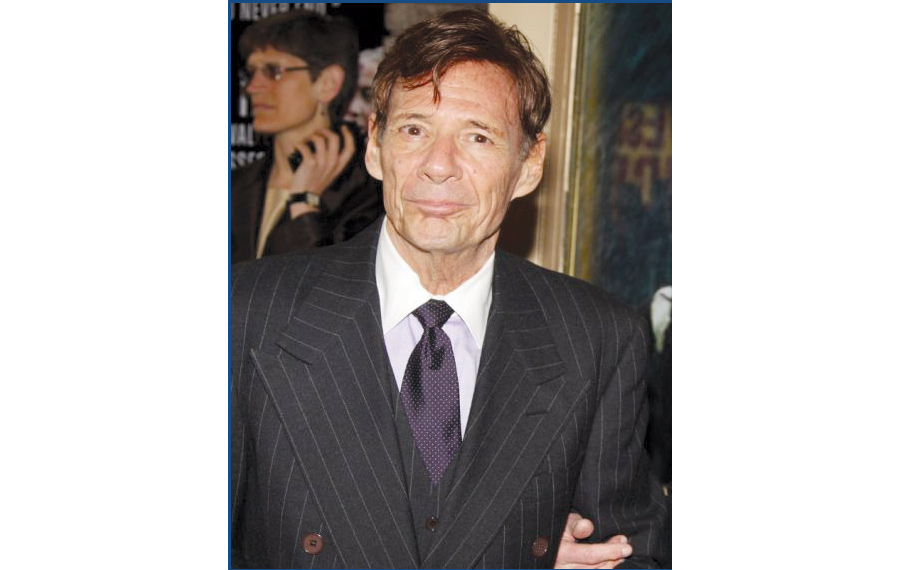
Ron Leibman, an award-winning and versatile actor whose more than five-decade career spanned Broadway, television and movies, died Dec. 6 in New York following complications from pneumonia. He was 82.

Leibman was born on Oct. 11, 1937, to Grace and Murray Leibman. After graduating from Ohio Wesleyan University, he returned to New York, where he was accepted into The Actor’s Studio. He appeared in productions of “A View From the Bridge,” “The Misanthrope,” “Uncle Vanya” and “End Game.” He also did guest spots on “The Dupont Show of the Week” and the soap opera “The Edge of Night.” 

His big break came in 1970 when he was cast in “Where’s Poppa,” a darkly comic movie directed by Carl Reiner and starring George Segal and Ruth Gordon. He next appeared with Segal in the comic heist movie, “The Hot Rock” (1972) followed by roles in “Slaughterhouse-Five” (1972) and “Norma Rae” (1979) alongside Sally Field. He won the lead actor Emmy for the title role in “Kaz,” (1978-79), a crime drama he created. In 1993 he won a best actor Tony for his portrayal of Roy Cohn in “Millenium Approaches,” the first part of “Angels in America.” 

Leibman married twice; first to actress Linda Lavin in 1969 (they divorced in 1981), and in 1983 to actress Jessica Walter, who survives him. He also is survived by his stepdaughter, Brooke Bowman. 

Field, who won the best actress Oscar for “Norma Rae,” tweeted after Leibman’s death: “Many of the best memories of my career have Ron Leibman in them. Thank you, Ron, for being my champion.”

Tony-Winning Actor Ron Leibman, 82 Read More »

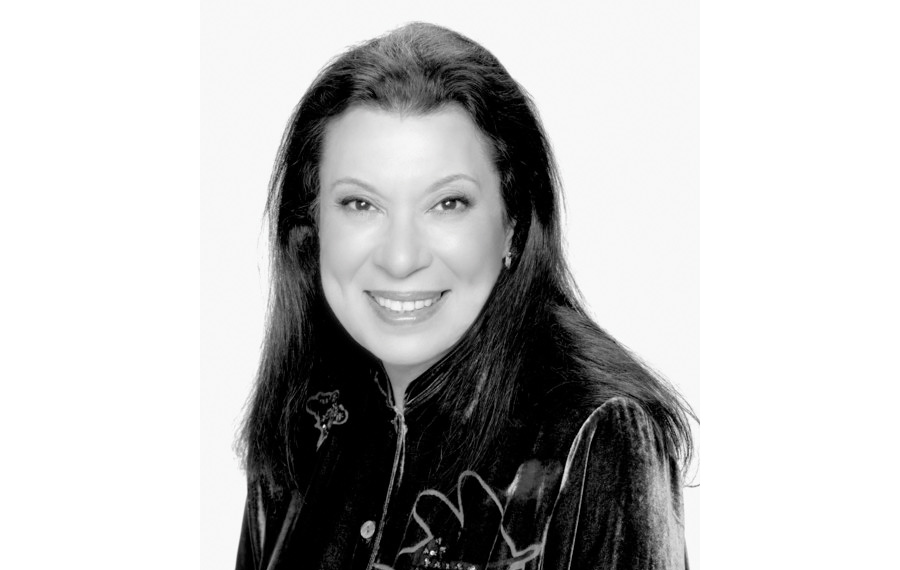
Shelley Morrison, ‘Will & Grace’ Actress, 83

Shelley Morrison, best known for playing the Salvadoran maid on the long-running NBC sitcom “Will & Grace,” died Dec. 1. She was 83. 

Her publicist said she died at Cedars-Sinai Medical Center in Los Angeles from heart failure after a brief illness.

Her character, Rosario, originally was written as a one-episode, guest-star role. However, her chemistry with Megan Mullally, who played her employer Karen Walker on the show, made her a fan favorite. Morrison went on to appear in 68 episodes over the series’ original eight-year run.

Morrison was born Rachel Mitrani on Oct. 26, 1936, in the Bronx, N.Y., to  Hortense, a homemaker, and Maurice Nissim Mitrani, a clothing manufacturer. Her parents
were Sephardic Jews originally from Spain. They moved to Los Angeles when Morrison was 10.

She studied acting at Los Angeles City College and landed small roles in sitcoms including a recurring role as Sister Sixto on “The Flying Nun.” Her 50-year career included appearances on shows such as “The Fugitive,” “L.A. Law” and “Murder, She Wrote.” Of her dozens and dozens of roles, 32 were maids or housekeepers. She told her agent not to put her up for any more of those roles when she was called for “Will & Grace.” Walter Dominguez, her husband of more than 40 years, said the role of Rosario was a favorite of Morrison’s: “She took pride in portraying a strong, loving yet feisty Latina character,” he said.

Shelley Morrison, ‘Will & Grace’ Actress, 83 Read More »

Hanukkah Wreath Made with Wire Hangers

When Faye Dunaway famously yelled, “No wire hangers, ever!” in the Joan Crawford biopic “Mommie Dearest,” her character just did not know how useful they are for craft projects. 

Take this wreath for Hanukkah, for example. It’s made with wire hangers, which have angles and curves that come together to create a perfect Star of David. Add some blue string lights and you have a decoration that will truly brighten the holidays.

What you’ll need:
Six wire hangers
White electrical tape
Blue string lights


1. Gather six wire hangers that are all the same style and color. I prefer white hangers, as they will be the same color as the electrical tape and string lights.


2. Position three wire hangers in a triangle shape with the hooks all going in the same direction.


3. In the corners where the hangers meet, connect them with electrical tape.


4. Make another triangle with the other three hangers and place it on top of the first one to form a Star of David shape. Connect the points where the triangles intersect with electrical tape.


5. Bend the hooks in the center so they are evenly spaced. It should look like a flower. Reinforce the center where all six hangers meet with electrical tape.


6. Wind blue string lights around the Star of David, connecting the lights with white twist ties or electrical tape. I found the blue string lights with white wire on Amazon.


Jonathan Fong is the author of “Flowers That Wow” and “Parties That Wow,” and host of “Style With a Smile” on YouTube. You can see more of his do-it-yourself projects here.

Hanukkah Wreath Made with Wire Hangers Read More »

‘Tech Shabbat’ and the Benefits of Unplugging

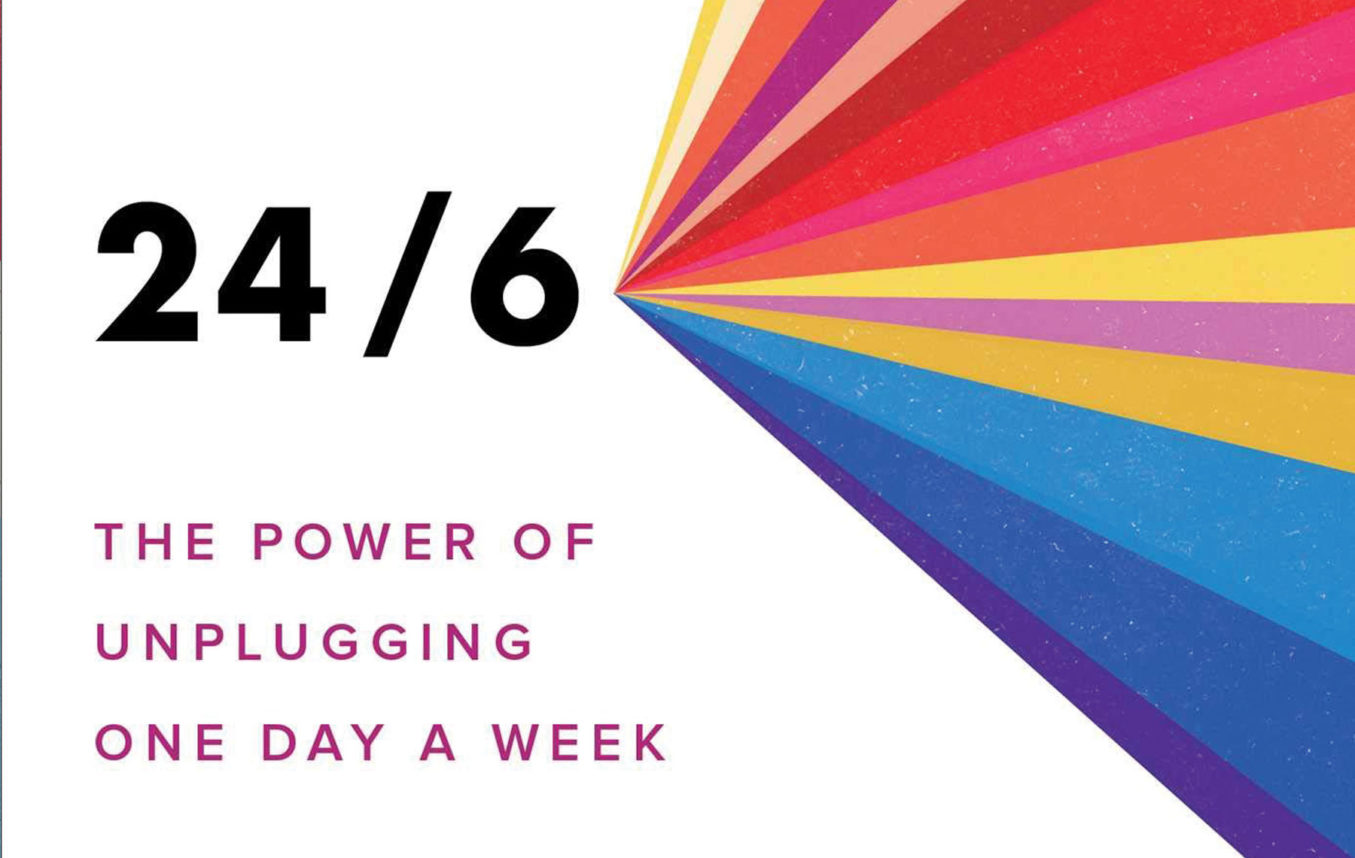
If you are already keeping the Sabbath, then you’re on the way to fulfilling the challenge issued by Tiffany Shlain in “24/6: The Power of Unplugging One Day a Week” (Gallery Books). When she uses the phrase “Tech Shabbat,” she is referring to “a twenty-first-century interpretation of the ancient Jewish ritual of a weekly day of rest,” and she likens it to the practice of yoga or meditation.

“Going offline one day a week for nearly a decade with our daughters has felt like an epiphany on how to fill the day with the best parts of life, and a radical act of protection against the always-on, always-available world,” Shlain writes. “Your day away from screens and off the network will rejuvenate your mind, your body, and your relationships, whether you do it on Saturday, Sunday, or a weekday.”

Indeed, the premise of Shlain’s book is that Tech Shabbat is not a divine commandment but a coping mechanism for mortals whose lives have been overwhelmed by technology, which both “amplifies” but also “amputates” our experiences. She quotes the Pulitzer Prize-winning author Annie Dillard: “How we spend our days is, of course, how we spend our lives.”

Shlain is the daughter of the late Leonard Shlain, a surgeon and the best-selling author of “The Alphabet Versus the Goddess,” among other titles. It was her father’s death in 2009 — and the birth of her second daughter — that prompted her to reconsider the priorities of life and, especially, the price we all pay for the privilege of living in “the digital vortex.” Her father, she recalls, refused to answer the phone when it rang during a family meal. Her own family, by contrast, had taken “the iPhone plunge,” and she now calls the distinctive white boxes in which Apple products are sold as “Pandora’s boxes.” 

“The fact that his death occurred just as our smartphones began to take over all our waking hours is more than just significant,” she explains. “[I]t felt like that’s when ‘being present’ died — for all of us.”

“Going offline one day a week for nearly a decade with our daughters has felt like an epiphany on how to fill the day with the best parts of life, and a radical act of protection against the always-on, always-available world.” — Tiffany Shlain

Shlain, an Emmy-nominated filmmaker, is the creator of the Webby Awards, a program of the International Academy of Digital Arts and Sciences that serves as the “Oscars of the Web,” as The New York Times puts it. Her active and intimate experience in the world of digital technology informs the argument that she makes so convincingly in the pages of “24/6.” What started out as an tool of communication and connection is now something much different and much more dangerous.

“When it changed from a decentralized network to a behemoth centralized through a few corporations wanting to monetize every moment by playing to our animal nature,” Shlain writes, “the Web really got beastly.”

A day of rest, as Shlain points out, has been shared in common by various faiths and civilizations over the millennia. Thinkers as diverse as Abraham Joshua Heschel and Karl Marx recognized that “time is the ultimate form of human wealth on this earth,” as Unitarian minister Ana Levy-Lyons has written. And a Tech Shabbat, Shlain proposes, is an idea whose time has come: “Every tradition was once an innovation,” she writes. “Let’s use this modern twist on an ancient idea to make a new one.”

The human need to “rest and reboot,” as Shlain puts it, is not merely a moral aspiration; it is also a fact of science. A process called “synoptic homeostasis,” which takes place during sleep, “makes room for the brain’s level of cerebrospinal fluid to rise dramatically, washing out the damaging proteins that have built up over a day of thinking” — a literal brainwash, to borrow Shlain’s phrase. Rest and reflection, sleeping and dreaming, promote the functioning of the human brain while awake: “After a full day of rest, it’s like a dam breaks: recharged and reinvigorated, I’m at my most productive and creative.”

Shlain is no Luddite. She concedes that technology has helped to make us “better educated and heathier than ever before,” and that powering down our electronic devices for even a single day is much easier said than done. But she offers a set of tools and techniques for breaking the digital habit, if only a few hours at a time, and she holds out the promise that the effort will be richly rewarded.

“You become skilled at any work — carpentry, music, or gardening — by practicing,” Shlain explains. “Tech Shabbat gives you the opportunity to practice whatever it is you want to get better at, even if it’s just being.”

To be sure, Tech Shabbat is not equivalent to Shabbat in the traditional religious sense. For example, Shlain encourages us to use “a big pad of paper and black Sharpie pens” in place of screens and keyboards, a practice that is forbidden by Jewish law on Shabbat. Even so, her advice is offered in the spirit of practicality and good humor that characterizes her book in its entirety: “It’s much more satisfying to write anything down with a Sharpie,” she quips. And she even provides a family recipe for challah for readers who want “to do things old-school once a week.”

Some of Shlain’s insights took me entirely by surprise and yet, at the same moment, struck me as entirely true. When a question of fact comes up in conversation, I am apt to say aloud, “Why wonder when we live in the age of Google?” But Shlain points out the downside of such easy access to information, using a word that I encountered for the first time in her book.

“On our screen-free days, we’re constrained in a lot of ways,” she explains. “When we have a question, we can’t just ‘wonder-kill’ it, i.e., Google the answer. We have to wonder. And debate, Postulate. Sometmes we even look it up in a book.” 

For me, the most sobering line in “24/6” is Shlain’s observation that “[a] person has an average of thirty thousand days on this earth.” Tech Shabbat is an opportunity reclaim one-seventh of the days that are left to us, whether we use them for study, prayer, rest or, as Shlain puts it, “the

space to think about how you want to live your life.”


Jonathan Kirsch, author and publishing attorney, is the book editor of the Jewish Journal.

‘Tech Shabbat’ and the Benefits of Unplugging Read More »

Screen Actors Guild Nominates Scarlett Johansson, ‘Mrs. Maisel’ and ‘Kominsky Method’

Jewish actors are represented among the nominees for the 26th annual Screen Actors Guild Awards, which honors performances in film and television.

Scarlett Johansson is a triple nominee, receiving nods for her lead performance in “Marriage Story,” her supporting role in “Jojo Rabbit,” and for her part the latter’s ensemble, also featuring director Taika Waititi, who portrays Adolf Hitler. 

Harvey Keitel is included in the ensemble nomination for “The Irishman” and Emile Hirsh is in the nominated cast of “Once Upon a Time…In Hollywood.”

On the television side, Alex Borstein will compete against her “Marvelous Mrs. Maisel” costar Rachel Brosnahan for lead actress, and they join castmates Michael Zegen, Kevin Pollak, and Caroline Aaron in the comedy ensemble category.

Similarly, “The Kominsky Method’s” Michael Douglas and Alan Arkin are both up for lead male actor in a comedy, and also received a cast ensemble nomination that includes castmates Lisa Edelstein and Paul Reiser. 

Winona Ryder, Noah Schnapp and Bret Gelman share in the cast nomination for “Stranger Things,” and the “Barry” ensemble’s nomination includes Henry Winkler and Sarah Goldberg. Eugene, Daniel, and Sarah Levy are among the ensemble nominees for “Schitt’s Creek.” Additionally, Joey King received a nomination for her performance in “The Act.”


The SAG Awards will be simulcast live on Jan. 19 on TNT and TBS at 5 p.m. PT

Screen Actors Guild Nominates Scarlett Johansson, ‘Mrs. Maisel’ and ‘Kominsky Method’ Read More »

Infinite Light Hanukkah Event: ‘King of the Egg Cream’

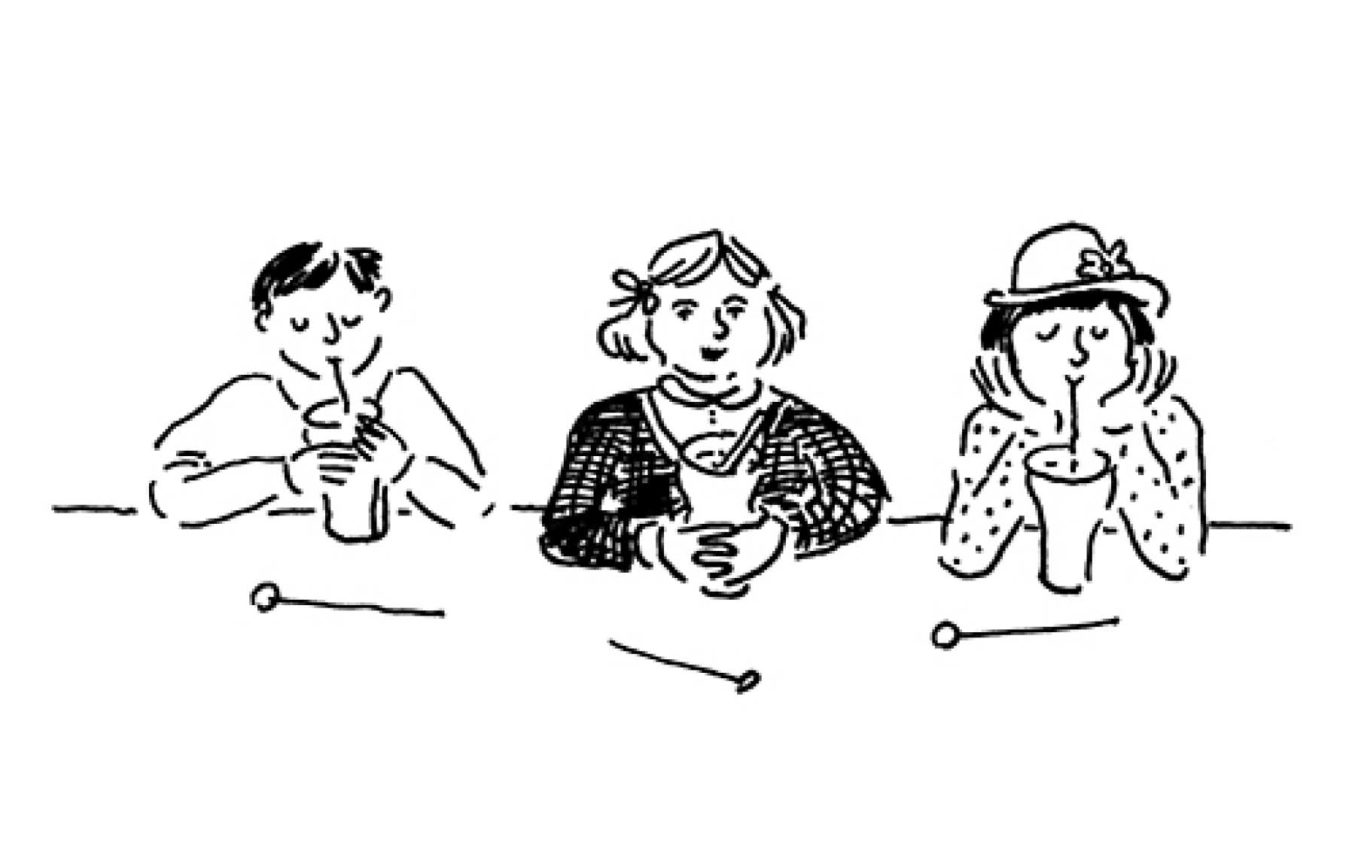
When Australian-born writer Emil Stern was at New York University Film School 15 years ago, he and fellow student Justin Bartha were obsessed with a story about a man named Harry Dolowich, a Prohibition-era chocolate syrup racketeer from the Lower East Side. Dolowich engaged in shady methods to corner and control the syrups market. Eventually, the syrup kingpin was charged, tried and convicted, and spent three years in jail before moving to Philadelphia. He was never heard from again. 

A decade later, together with his writing partner and brother Sigmund Stern, Emil crafted an audio adventure called “King of the Egg Cream,” a 10-part radio play/podcast, produced by Tablet Magazine and hosted on its website.

The podcast depicts what Emil called “the heart of darkness in the chocolate syrup industry.” And on Dec. 17, an episode of the series will be featured in a Hanukkah event coordinated by NuRoots, the division at the L.A. Jewish Federation that provides programming for people in their 20s and 30s. 

“I was first drawn to the story because my parents would talk to me about their love for egg creams and the nostalgia for the mom-and-pop soda shops of the 1950s,” Bartha, now an actor best known as the co-star of “The Hangover” series and the “National Treasure” movies, wrote in an email to the Journal. Bartha said his parents and their parents were born and raised in New York and that he used to live on the Lower East Side, “before it turned into the $2,000-per-square-foot Soho extension it is today.” 

Bartha also found himself fascinated by Jewish mafia stories. “When I was sitting in my apartment on Ridge Street reading this true story about a young Jewish man who had just graduated from NYU and started a flavored syrup racket, I knew I had to make something. … Harry felt so real to me.” 

Thanks to his “gift of gab” and training as a lawyer, Dolowich convinced most of the syrup companies to join his price-fixing ring. 

“He was born to be an orator,” Sigmund said. 

“His strategy was to outtalk everyone. He had shark-like gangster skills,” Emil said.

“Harry was a charming criminal whose quick rise to power was spectacularly ended by a mom-and-pop shop who refused to fold to the mob,” Bartha noted.

Some of the syrup brands paid fines for collaborating with Dolowich. But he went to jail.

Knowing that creating a film about Dolowich would be challenging — “I’m not sure financiers are lining up to fund a turn-of-the-century NYC Jewish mafia egg cream drama,” Bartha said. A self-described “radio-obsessive,” Bartha asked the Stern brothers if it would be possible to write the story as a radio play. They agreed. 

“After the Sterns wrote some beautiful scripts, we just pooled our resources and cobbled it together with favors from brilliant actors and technicians we knew in the city,” Bartha said.

“When I was sitting in my apartment on Ridge Street reading this true story about a young Jewish man who had just graduated from NYU and started a flavored syrup racket, I knew I had to make something. … Harry felt so real

 to me.” — Justin Bartha

Among the actors voicing the various characters are Richard Kind (“Curb Your Enthusiasm”), Bobby Cannavale (“Boardwalk Empire”), Ellen Barkin (“Ocean’s  Thirteen”), Alex Karpovsky (“Girls”), Ari Graynor (“For a Good Time, Call …”), Tony-winner Joanna Gleason, Melanie Lynskey (“Two and a Half Men”), Jason Ritter (NBC’s “Parenthood”), Michael Stuhlbarg (“A Serious Man”) and Lewis Black (“The Daily Show”). 

With Bartha as producer, the Stern brothers engaged award-winning Australian sound designer John Kassab, to “get the world right,” as Sigmund put it, evoking New York City in the 1920s and 1930s. The medium permitted the writers to carefully use sound and silence and focus on the richness of the characters’ dialogue. 

After the pilot was done, a mutual friend introduced them to Alana Newhouse, Tablet’s editor. Tablet produced and hosted it on its website. The series of 10  25-minute episodes recently was re-released on Stitcher Premium.

Emil said the work includes a “balance of universally appealing comedy and the insider references” and that “the ‘Jewish stuff’ is very Jewish.” So Jewish, in fact, that the brothers needed an Aramaic consultant.

The music is an original score penned by Australian-born violinist and composer Daniel Weltlinger. The Stern brothers wrote the lyrics to the songs, one of which includes the line, “Eastern Parkway to Passaic/let’s all sing in Aramaic.” The series also features a nigun, a wordless melody that Emil said “holds its own with liturgical competition. I think it will catch on. I just have to come up with an origin for it.”

Rabbi Rose Prevezer, director of the NuRoots community fellowship, said the idea for the event came from one of NuRoots’ seven community fellows, Nina Rose Carlin, who met Emil and wanted to co-create an event to showcase his work. The live podcast event is part of Infinite Light, NuRoots’ collection of co-created Hanukkah-related events.

“All NuRoots events are co-created with a community member to help them seize control of their own Jewish journey,” Prevezer said. She cited Pilots Schmilots, an Eastside gathering of writers who read and share scripts every week, as an example. 

Prevezer said that “King of the Egg Cream” was “so brilliant and so inherently Jewish, celebrating Jewish history and culture, and the weird and wonderful nature of all of it.” 

The event, hosted by writer-comedian Jenny Jaffe, will highlight the Stern brothers and feature the show’s pilot episode. There also will be an exclusive Q&A with the Sterns and some special guests. The Sterns also promised a live musical performance of one of their original songs.

Although Dolowich was the initial center of their work, the Sterns are attached to their other characters as well. “We have more lines and plots for them to follow,” Emil said. “Having lived with these voices for so long, we would love to do more. Like ‘The Simpsons,’ any of the characters could sustain an episode.”

Bartha hopes that the project helps people feel “that sense of nostalgia for a New York City that doesn’t really exist anymore — one that can be wholesome and dangerous at the same time, one where anything is possible if you just have a dream and a whole lot of ambition.”

After all this research, did the Stern brothers uncover the definitive recipe for the titular beverage?

“It’s one of the great mysteries,” Emil said. “We didn’t even want to touch that.”

“That would be a whole other story,” Sigmund added.


“King of the Egg Cream” will take place on Monday, Dec. 16 as part of NuRoots’ Infinite Light Festival, 6:30–8:30 p.m. at the Lyric Hyperion Theatre, $10. Ticket information can be found here.

Infinite Light Hanukkah Event: ‘King of the Egg Cream’ Read More »

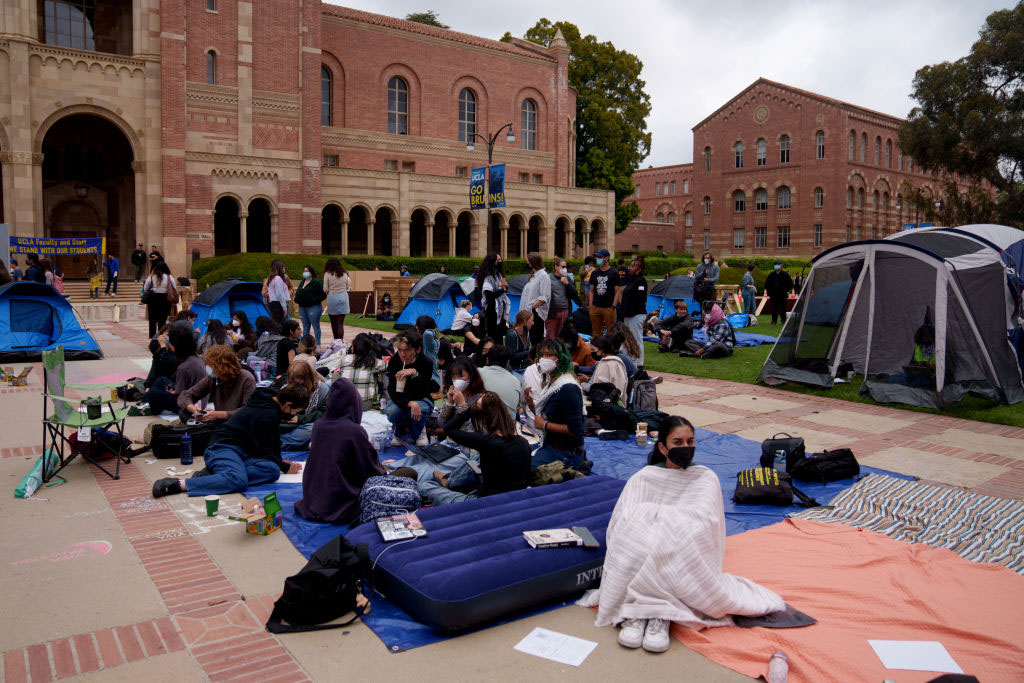
Trump Condemns Jersey City Shooting, Signs Executive Order on College Anti-Semitism

During a Dec. 11 Hanukkah reception at the White House, President Donald Trump condemned the Dec. 10 Jersey City, N.J., shooting and signed an executive order addressing anti-Semitism on college campuses.

Trump called the Jersey City assailants evil and praised the valor of the police officer, Det. Joseph Seals, who died after being wounded at a cemetery before the killers fled in a van to a kosher supermarket.

“With one heart, America weeps for the lives lost,” Trump said. “With one voice we vow to crush the monstrous evil of anti-Semitism.”

Trump later turned to the executive order regarding anti-Semitism on college campuses, explaining that it puts anti-Semitism under Title VI of the Civil Rights Act prohibiting discrimination.

“This is our message to universities: If you want to accept the tremendous amount of federal dollars that you get every year, you must reject anti-Semitism. It’s very simple,” Trump said. “My administration will never tolerate the suppression, persecution or silencing of the Jewish people.”

News of the pending executive order first broke on Dec. 10; initial reports stated that the executive order classified Judaism as a religion and a nationality, causing a furor on social media. However, Jewish Insider’s Jacob Kornbluh and Melissa Weiss obtained text of the executive order and reported that the text “makes no such reference.”

Jared Kushner, who is senior adviser to the president and Trump’s son-in-law, disputed in a Dec. 11 New York Times op-ed that the executive order calls Judaism a nationality.

“It merely says that to the extent that Jews are discriminated against for ethnic, racial or national characteristics, they are entitled to protection by the anti-discrimination law,” Kushner wrote. “This new order adopts as its definition of anti-Semitism the language put forth in 2016 by the International Holocaust Remembrance Alliance, while also accounting for other forms of anti-Semitism.”

Anti-Defamation League CEO Jonathan Greenblatt tweeted that the executive order adopts the International Holocaust Remembrance Alliance (IHRA) definition of anti-Semitism and “reaffirms the protection of Jews under Title VI without infringing on 1A rights. This is similar to the Anti-Semitism Awareness Act that had bipartisan support in [the] House and Senate in 2016 and that [the] ADL long has supported.”

American Jewish Committee (AJC) CEO David Harris said in a statement that the AJC “welcomes President Trump’s Executive Order to strengthen efforts to combat anti-Semitism on college and university campuses. We trust that a careful application of this directive will enable university administrators to avoid running afoul of free speech protections as they seek to root out anti-Semitism on their campuses.”

StandWithUs Co-Founder and CEO Roz Rothstein similarly said in a statement, “With anti-Semitism on the rise, including on our nation’s campuses, this assurance is crucial. We recognize the vital importance of the IHRA definition, including its recognition that anti-Semitism often takes the form of hostility to Israel. As the ancestral homeland of the Jewish people, Israel is central to the identity of most Jews around the world. We hope that universities will utilize this as an important tool to prevent further discrimination against Jewish students, while maintaining protection of free speech rights for all on campus.”

Zioness, a feminist Zionist group of activists, said in a statement that they must ensure that “any classification of Jews or any other persecuted group does not lead to more of the disgraceful ‘othering’ we have seen from this administration since Day 1. But we must also recognize that the Jewish community, and Jewish students in our nation’s university halls, dorms and quads, must be protected to the full extent of the law.”

The Israeli-American Council (IAC) praised the executive order in a statement as “a courageous step in the battle against the epidemic of anti-Semitic crime and discrimination fueled by the BDS movement and other radical groups.” It also pointed out that at the IAC National Summit from Dec. 5-8 in Florida, Trump brought recent New York University graduate Adela Cojab to discuss how she filed a complaint against her alma mater, New York University, over their handling of anti-Semitism on campus.

Cojab, who is also the northeast coordinator for the Maccabee Task Force, said in a statement to the Journal that she enthusiastically welcomed the executive order because it “ensures there is a system in place to fight discrimination and protect minority populations.”

“I am very much thankful the administration takes the safety of Jewish students seriously,” Cojab added.

Trump Condemns Jersey City Shooting, Signs Executive Order on College Anti-Semitism Read More »