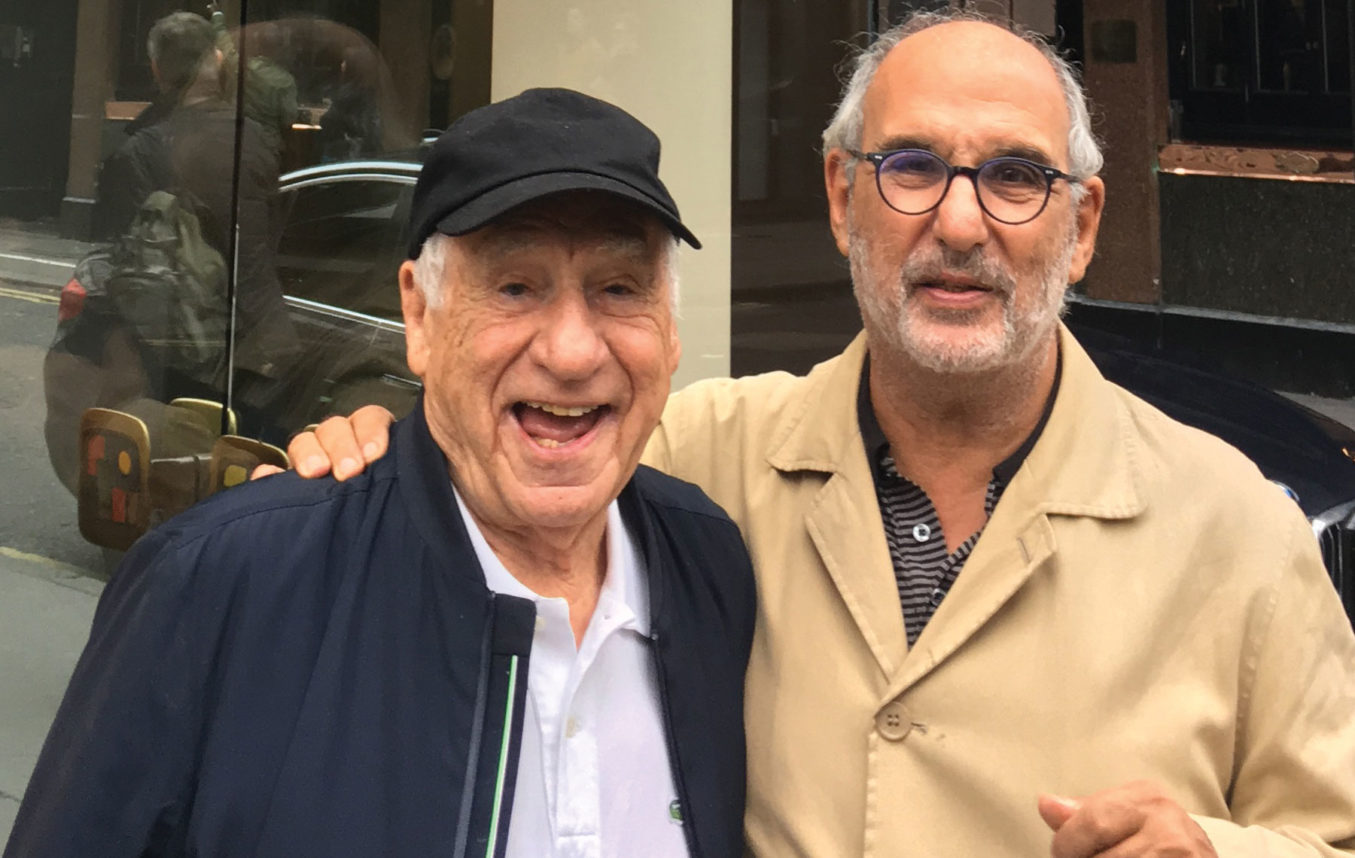
The genius behind such iconic comedy classics as “The Producers,” “Young Frankenstein,” “Blazing Saddles” and, with best buddy Carl Reiner, “The 2000-Year-Old Man,” Mel Brooks has had audiences in stitches for six decades and has an Oscar, four Emmys, two Grammys and three Tonys to show for it. In the HBO documentary “Mel Brooks Unwrapped,” the writer-director-producer-actor is truly in his element, joking and telling stories with filmmaker Alan Yentob, his friend for over 25 years.
“It’s a very intimate portrait of Mel,” Yentob told the Journal, comparing it to their Emmy-nominated 2012 collaboration, “Mel Brooks Strikes Back!” “That was a simple interview with clips,” Yentob said. “This is very special. It’s about Mel and [his wife] Anne [Bancroft], his career, his friendships. I think it gets very close to the real Mel Brooks.”
Combining footage from interviews done over the years with film clips and photographs, it’s informal and full of fun anecdotes (including a great one about Cary Grant). “We made up the film as we went along,” Yentob said. “It was a creative partnership. We could be as playful as we wanted to be.” Brooks plays piano in it and often bursts into song. “Music is a very important part of Mel’s life,” Yentob noted. “When we’re together in the car, he always has the radio on, particularly songs from the ’30s and ’40s. I love that era, too.”
Yentob was a fan of Brooks long before he became his friend. He recalled the first time he saw “The Producers” in a theater with a largely Jewish audience in London. The idea of a musical about Hitler was shocking. “Remember the scene of the audience with their mouths open? That’s what the [movie theater] audience was like, including me,” he said, praising Brooks’ audacity to go where others would not. “I don’t think you could make that film or ‘Blazing Saddles’ today.”
“It’s a very intimate portrait of Mel. It’s about Mel and [his wife] Anne [Bancroft], his career, his friendships. I think it gets very close to the real Mel Brooks.” — Alan Yentob
Yentob also praised Brooks’ enduring talent, wit, creativity and unflagging energy at 93, and marveled at his “ability to make films that say something and are funny at the same time. He’s got a great understanding of the traditions of filmmaking. And he’s Jewish, of course. Where would Hollywood be without the Jews?”
The documentary delves into Brooks’ early life as Melvin Kaminsky, the son of Polish and Russian Jewish immigrants who settled in Brooklyn, N.Y., and his comedic beginnings as a “tummler” (emcee) in the Catskills. Reiner makes an appearance, and Bancroft, who died in 2005, is seen in photos and home movies. “Anne was a very special person and her loss was tragic for Mel,” Yentob said. “He misses her every day. When he talks about her, he doesn’t have to say very much. You can see how much she means to him.”
Yentob, the London-born son of Iraqi Jews, joined the BBC as a trainee in 1968 and worked his way up the ladder to director, producer and creative director. His many award-winning documentaries include films on Stanley Kubrick, Orson Welles and Philip Roth, all of whom became friends.
But Yentob is especially close with Brooks, who is the godfather of his son, Jacob. Bancroft was the godmother of his daughter, Isabella. “I share a lot of thoughts with him and we speak on the phone all the time,” Yentob said. “I see him a few times a year. When he was in London doing ‘Young Frankenstein,’ we would take trips to Paris and Venice to have fun. One of the great pleasures of my life is my friendship with Mel. It’s very profoundly important and that’s why the film is made intuitively, informally and creatively in a way that not many people would be able to do.”
Currently, Yentob is in Ethiopia making a film adapted from Lemn Sissay’s memoir “My Name Is Why” about Sissay’s life in the foster care system. Yentob recently completed the BBC documentary “The Man Who Saw Too Much,” which tells the story of Boris Pahor, the oldest living survivor of a Nazi concentration camp. “He was a Slovenian working with the resistance in Italy and was arrested by the Gestapo and sent to Natzweiler concentration camp,” Yentob revealed. “He wasn’t Jewish. He wrote a book about it called ‘Necropolis.’ ”
Yentob hopes viewers of “Mel Brooks Unwrapped” appreciate the boldness and imagination that make his subject such a remarkable figure. Like Brooks, Yentob is driven by curiosity, creativity and the willingness to take risks. “If you don’t try things out, if you play it safe, it’s unlikely you’ll succeed,” he said. “Mel certainly hasn’t played safe.”
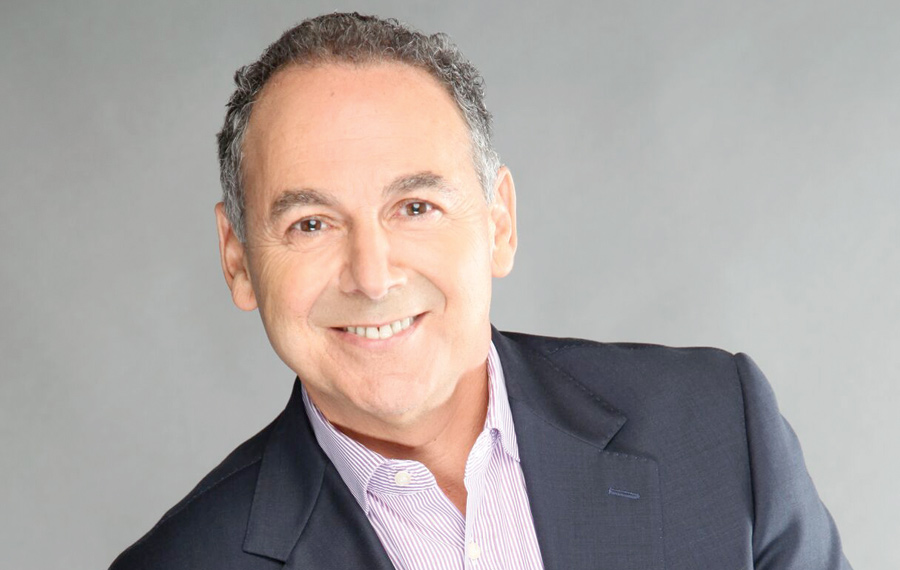
The 61-year-old is the founder and chairman of Luxe Hotels, a Los Angeles company that owns two local hotels and Luxe Worldwide Hotels, a management firm that oversees the operation of over 100 independently owned hotels. Born in Israel, Harkham and his family moved to Sydney when he was 12. There, he began his career in the fashion business at 17, working as a traveling salesman for Lulu, his older brother’s clothing manufacturing company, which eventually became a multimillion-dollar apparel brand.
With the money he made by selling his share of the clothing business, Harkham settled in Los Angeles in 1978, where he worked in the fashion industry as CEO of Jonathan Martin clothing before moving into the hotel business.
The Journal spoke with Harkham about his work, his ongoing connection to Israel and how talmudic teachings have impacted his life.
Jewish Journal: What was the motivation behind your transition from the fashion industry to the hospitality industry?
Efrem Harkham: After 14 years, I was tired and I felt I needed to transition into another industry. We were very successful with the Jonathan Martin brand and had billboard campaigns and TV commercials all over the country. I owned a hotel (bought in 1983) at the time called The Bel Air Sands on Sunset, now known as the Luxe Hotel Bel Air, and I was frustrated by the management company running the hotel, so I jumped into the task of managing it myself in 1999. I stood there at the front desk for almost an entire year and learned so much. I decided to make this my passion and full-time job. It was my calling.
JJ: How did you come up with the Luxe brand name?
EH: My friend Neil Muller, who had helped me with the Jonathan Martin clothing line, came up with the name. I told him that I needed a four-letter word that is both memorable and guarantees a promise of quality and that I can put in front of an existing name. Lo and behold, the word Luxe was not known back then and it was the first one on his list of 20 names. I totally loved it.
JJ: Are you still very connected to Israel?
EH: It is a commandment that we stay connected to Israel. I host a trip there every year in November. I prefer to bring non-Jews ranging from Catholics [and] Hindus to Hispanic people. I try to expose Israel in the best light possible. They have the most incredible time. One of my favorite stories in the book is when I visited (then Israeli Prime Minister) Menachem Begin in 1982 and I offered to do a PR campaign for Israel at the expense of a few members of the community in north Beverly Hills. He very kindly refused and said, “If you really care about Israel, like it sounds you do, please give this money to AIPAC and to make sure that the Jewish community outside Israel must not lose their connection with Israel.” This is what started my interest and commitment to honor Jewish education in my community.
JJ: Has success changed you over the last 30 years?
EH: I realized that outwardly nothing has changed. The change is inward and learning to be the best human being possible. I am constantly striving to do good and not to waste opportunities [to help] people. Kids and family are so important. I use my hotels to deliver that message, I suppose, and that’s why I love hotels.
JJ: What was the motivation behind writing the book?
EH: I thought it was time for me to come out and talk about my story. I am so interested in other people’s stories and their success. I think mine is a little bit complicated. When I turned 60, I felt it was time to do it and share my experiences for my children, for the next generation of young business people, in order to make this place better.
JJ: What is your philosophy on business and life?
EH: Not to wait for success to happen. Make it happen as soon as possible. You have to be resilient and whatever the issue, just take the obstacles as a learning opportunity and overcome. All my life, I hired people smarter than myself. I maintain my relationships and hold on to people. Most of my employees at the Luxe Hotel Sunset have been working there for 30 years. When you light a candle with the light of another candle, the result is more light. It doesn’t take away from the original source, and that’s what I want to do. I want to inspire others in my work and also my community.
JJ: You write in the book about how you bring talmudic teaching into your business strategy. Can you expand on that?
EH: We have a training program that is based on a talmudic teaching that I love. I started learning the Talmud with a number of rabbis when my kids were born. This is how I came across this concept that everyone is a world, everyone is a life. We can’t destroy the world. We’ve got to preserve and take care of the world, make it better. So that is the program I give my employees. We tell them about quality control.
JJ: Do you have plans to slow down a little, perhaps retire?
EH: This is the first chapter of my life. The Talmud says you must keep on working as long as you are productive and we must move forward. So I am following that rule.
JJ: What advice do you have for those wanting to break into the hotel industry today?
EH: To be ready for a 24/7, 365-days-a-year job. It’s hosting endlessly. It does not stop. It is impossible to be there for your guests all the time, so the idea is to replace yourself impeccably. So when I am not there, my employees are the ambassadors. They are the ones with the empathy for the millennials, for the older guests and the children. You need to have patience and not expect a return right away. It’s about taking care of people, and that’s how you get repeat customers. n
Sixteen-year-old Encino native Stephanie Sussman is one of six winners of Season Two of “Jewish Star Talent Search,” a nationwide competition designed by Jewish Rock Radio for Jewish teens and young adults who are passionate about impacting the Jewish world through music.
The 12 original finalists were selected from several hundred applications before being whittled down to the final six winners in different age categories. Candidates had to submit original music videos along with a written vision statement. Celebrity Jewish performers Noam Katz, Naomi Less, Joe Buchanan, Peri Smilow, Rabbi Josh Warshawsky and Rick Recht — creator of both Jewish Rock Radio and the talent search — judged the competition.
Sussman currently is the president of the USY Chapter at Valley Beth Shalom and was nominated by one of her counselors at Camp Ramah in California. The junior at Taft Charter High School in Woodland Hills also is involved with the American Jewish Committee (AJC) and the America Israel Public Affairs Committee (AIPAC.)
Sussman told the Journal that she found out she was a winner during her first day of Thanksgiving break.
“I didn’t think I was [going to] win,” she said. “Not that I didn’t think I was good. It’s good to have the confirmation that people think I’m actually good enough to do this.”
Sussman chose to sing “Arise” by Warshawsky for her entry, a song she said Warshawsky wrote following the 2017 Route 91 Harvest music festival mass shooting in Las Vegas. Before she even knew the song’s origin, she said the music and lyrics resonated with her.
“I think ‘Jewish Stars’ made me realize that when it comes to social justice and advocacy … I want to be the girl singing with the guitar onstage instead of someone who is lobbying.” — Stephanie Sussman
As part of her winnings, Sussman will work with Warshawsky and record “Arise” on an album. “I’ve gotten to know him in group situations, so getting to do [one-on-one mentoring] is really special because I auditioned with his song,” she said. “That’s really exciting. I am also working with [Los Angeles cantorial soloist and Jewish music producer] Josh Goldberg, and I get the opportunity to work with him in the studio because I live in Los Angeles.”
Sussman also will have a professional studio session to record an original composition or a cover song from a pre-approved list of Jewish music artists, and she will be featured on Jewish Rock Radio, which will broadcast the songs she recorded.
In addition, Sussman will receive an all-expenses-paid trip to attend the 2020 Songleader Bootcamp National Conference (SLBC) for immersive coaching, and along with the other winners will perform live at SLBC.
Together with Rabbi Brad Horwitz, director of the Jewish Community Center’s Helene Mirowitz Center of Jewish Community Life, Recht launched SLBC in 2009. The aim of SLBC is to create immersive, inspirational and strategic Jewish leadership programs for Jewish clergy, educators and song leaders.
Recht told the Journal that everyone who entered the competition was automatically enrolled in the Jewish Star Academy, a program for Jewish teens and young adults that gives them the opportunity to learn from Jewish educators how to become stronger Jewish song leaders.
He added that Jewish artists are “ambassadors” for Jewish education and Sussman stood out to him because she “has this extraordinary energy and passion. She’s articulate about her goals for how she wants to impact the Jewish world. I also saw her ability to interact. That’s something that is really important for a Jewish artist to succeed: the ability to engage, to use body language in a way that is going to jump off the stage — or screen in this case — and make someone feel something.”
Sussman, who also plays guitar, hopes she can learn how to write original Jewish music and put new lyrics to melodies she has already created. She added that singing Jewish music is important to her because it “has always been the way I connected to prayer. I’ve had experiences where someone has introduced a new tune to a prayer and I listened to it in a completely different light because I’m not the most fluent in biblical Hebrew and I don’t know what it all means. But hearing it brings another dimension to it and makes it make more sense to me.”
Looking toward the future, Sussman said, “I’m figuring out what I want to do, what college I want to go to, what I want to major in and what I want to do with my life.”
She added,“I think ‘Jewish Stars’ made me realize that when it comes to social justice and advocacy … I want to be the girl singing with the guitar onstage instead of someone who is lobbying. Words can do so much to convince someone of something, but songs can give you goose bumps and make you cry. Song is really emotionally appealing to people and part of why I connect to it so much.”
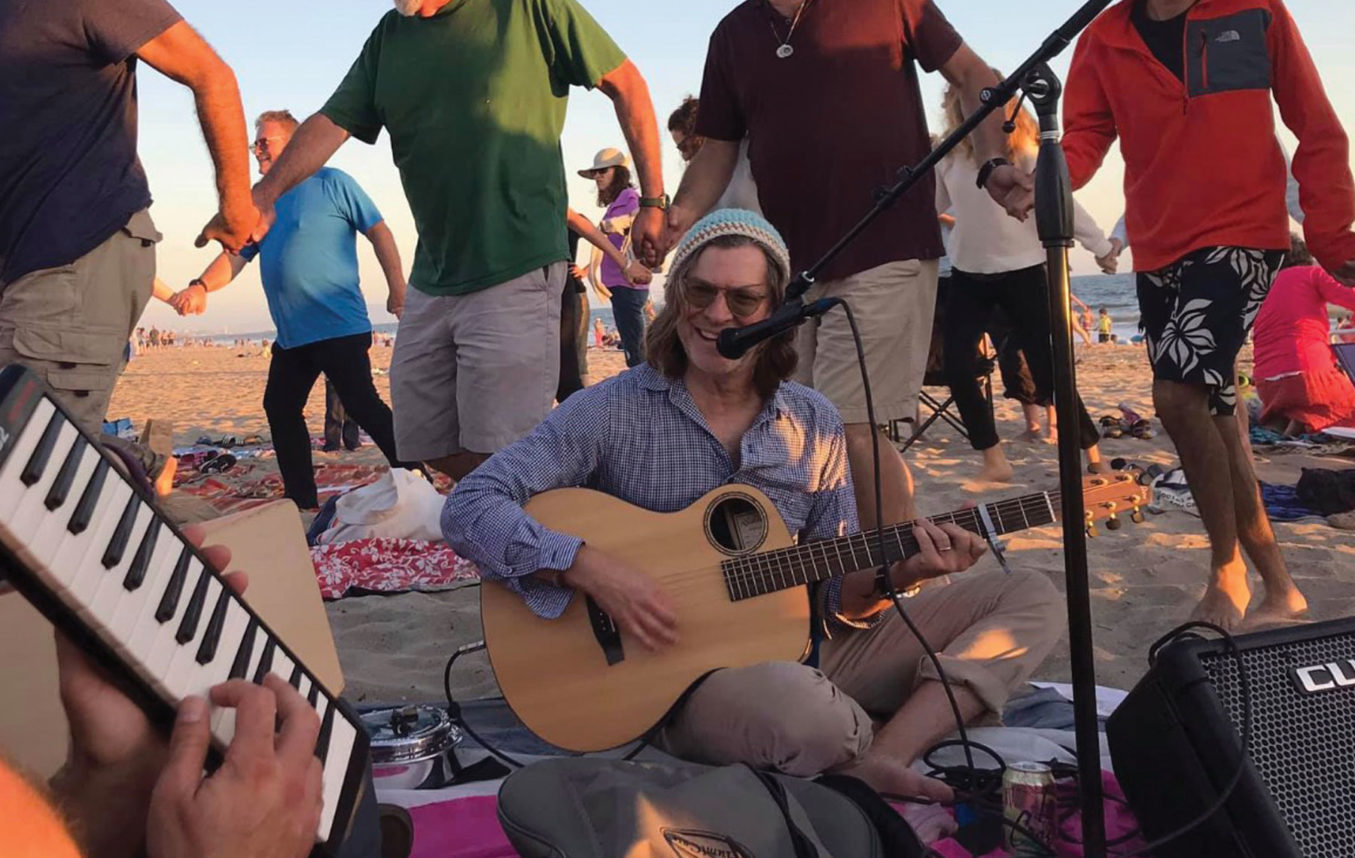
When IKAR Cantor Hillel Tigay was first approached to join the progressive Los Angeles congregation 13 years ago, he wasn’t sure he wanted the job. He saw himself more as a musician. And sitting in a café opposite IKAR’s offices in the Pico-Robertson neighborhood, the lanky 50-year-old sporting shoulder-length hair and rimless glasses certainly looks the part.
In fact, in the 1990s, Tigay was signed to A&M Records as a solo act and to Sire/Warner Bros. as Dr. Dreidel, half of the Jewish hip-hop duo MOT.
As the son of a rabbi, Tigay said becoming a cantor felt too much like “going into the family business.” But after speaking with IKAR founding Rabbi Sharon Brous, he was convinced, explaining that IKAR was “founded to approach things from a different angle: What’s the best thing we can do to move people and not the traditional thing only?” Brous, Tigay said, wanted him to “create a service that we would want to attend.” And that, he said, was a revelation for him.
The music he creates for IKAR is a mixture of both Eastern and Western styles. He looks to Middle East and Sephardic sounds for rhythms. “They’re hypnotic and circular,” he said. “It’s very chanty. It’s short, it’s terse, it’s repetitive. It’s very hard to listen to and not move to it. It hits in a way that creates meditation.”
On the flip side, Western music has “incredible harmonies that can make the hair on the back of your neck stand up, but the rhythm’s aren’t terribly conducive to meditation,” he said. It has to be catchy, he said, “but be deep catchy — make people feel there’s something out there I’m reaching for.” He cites the chant at the end of the Beatles’ “Hey Jude,” and the music of Coldplay and British rocker Peter Gabriel as examples. “You feel like you’ve been taken somewhere, like your soul just got out of a mikveh,” he said, explaining that they’re songs that “make people feel they’re changed after listening to them. They want to be a better person.”
From the outset, Tigay was impressed with how readily the IKAR community embraced his music. “I’m not trained as a cantor; this isn’t what I set out to do. I was convinced I’d be found out immediately,” he said. Early on, he tried to imitate Reb Shlomo Carlebach but confessed he wasn’t happy with the result. “That wasn’t where my musical instincts took me.”
Following his instincts, though, created a huge following at IKAR, but he does draw the line at certain things. “Techno and hip-hop will not be making any appearances at IKAR,” he said. “It’s not enough to be just good music. It has to feel authentically Jewish on some level, and spiritual. The sine qua non is that it’s got to be art and great music, then it has to pass the test. I want people to be saying, ‘Is this an ancient chant arranged with some progressive harmonies or is this a modern song with some ancient rhythms? I don’t know.’ That’s a good place to be. It should feel like it’s both. I want to straddle both worlds.”
Writing music for IKAR, Tigay explained, is like writing a movie score. “The rabbi already gives a brilliant story with her sermon and the general ethos of what this community is all about: social action mixed with spirituality. Meaningful, but like any good movie, when you’ve got powerful music to underscore that, the music makes the words more resonant.”
The music Tigay creates is “soulful and creative spiritual explorations that are unmatched,” Brous told the Journal. “He’s incredibly adept in the traditional liturgy, but his training is not in classic hazzanut.”
“I want people to be saying, ‘Is this an ancient chant arranged with some progressive harmonies or is this a modern song with some ancient rhythms? I don’t know.’ That’s a good place to be. It should feel like it’s both. I want to straddle both worlds.” — Hillel Tigay
She added that Tigay brings an an interesting array of musical influences together and when he does, “something extraordinary happens and elevates our community.”
Indeed, the IKAR community has been so moved by Tigay’s music that it has supported him and helped him produce two albums. The first, “Judeo,” was released in 2012. A recent Kickstarter campaign for his second album, “Judeo Volume II: Alive,” exceeded its goal of over $35,000.
Tigay’s unique combination of melodies is heavily influenced by the eclectic musical tastes of his youth. At 11, he heard the Beatles’ “Abbey Road” album and decided he was going to be a guitarist. He bought a guitar, learned how to play and a month later played “Across the Universe” from “Let It Be” at his school’s talent contest.
From that point on, “It was music, 24/7. Guitar, guitar guitar, music, music, music, and I never looked back. I get obsessive compulsive about things,” he explained. “I get on jags and throw myself into them totally.”
After immersing himself in the Beatles, Tigay started listening to the Rolling Stones, then the Who, then Led Zeppelin. “I was a purist,” he said. “I wouldn’t listen to anything current until late in high school.” By then, he was listening to progressive and alternative rock including The Cure, Depeche Mode and Tears for Fears. That’s when he began writing his own songs.
However, he was simultaneously absorbing world music. “As a kid, I spent some time in Israel and was captivated by Sephardic music and Middle Eastern music,” he said. “I’ve always had a fertile imagination [and I’m] attracted to anything sensual. So walking through the shuk, smelling the smells, hearing that music made me want to know and listen to it and do it.”
In college, Tigay studied the sitar and played in a Russian balalaika orchestra. He also studied Renaissaince lute and was in a Renaissance troupe. Then the classical guitar became an obsession and he studied in Spain before he went on to teach himself bass and keyboards. “I started out as a rock guitarist and I just keep expanding,” he said.
Part of that expansion is recognizable in “Judeo Volume II: Alive,” which is more pop influenced than the original “Judeo,” where he set prayers to his own music.
As for the future, Tigay said he’s “doing what I love doing. I’m excited to wake up every morning.”
He’s been so prolific lately that he currently has a backlog of songs he wants to record. His song “Alive” has already been heard on the NBC-TV show “Manifest,” and he hopes more will follow.
“I tend to be an artist who doesn’t set out by saying, ‘Here’s my plan,’ ” he said. “I tend to let my subconscious dictate things, then figure out what works.”
“Judeo Volume II: Alive” will be released in early 2020.
Correction: This article has been updated to reflect that Tigay studied Renaissance lute.
Michael Zegen, who plays Joel Maisel in “The Marvelous Mrs. Maisel,” has been cast in the world premiere off-Broadway production of “Bob & Carol & Ted & Alice.”
Based on Paul Mazursky’s 1969 movie that starred Elliott Gould, Natalie Wood, Dyan Cannon and Robert Culp, it’s about two couples and the sexual revolution.
Duncan Sheik’s musical adaptation will play Feb. 4-Mar. 15 at the Pershing Square Signature Theater in New York. Zegen will play Ted, Gould’s role in the film.
The show is not Zegen’s first off-Broadway experience. He starred in the original production of the comedy “Bad Jews” in 2014. On screen, he’ll star opposite Drew Barrymore and Ellie Kemper in the movie “The Stand In,” about an actress who trades places with her set double. It hits theaters Jan. 1.
There are those who like their latkes with applesauce and those who serve them with sour cream. Molly Yeh of Food Network’s “Girl Meets Farm” likes them both ways. But this year on the Food Network series’ holiday episode, the Jewish host prepared the potato pancakes with a side she calls “a schmaltzy applesauce.” Try it for yourself, and tune in on Dec. 21 to see Yeh host the inaugural “Ultimate Hanukkah Challenge,” a Food Network competition in which four chefs put their own spins on latkes, brisket and sufganiyot.
— Gerri Miller, contributing writer
Molly Yeh’s Potato Latkes with Carmelized Onion Sour Cream
Caramelized onion sour cream:
2 tablespoons olive oil
1 yellow onion, finely chopped
1/2 teaspoon sugar
1/2 teaspoon kosher salt
2 cloves garlic, minced
1 cup sour cream
1/2 teaspoon onion powder
Black pepper
Chopped scallions, for topping
Potato latkes:
2 1/2 pounds russet potatoes, shredded
2 medium yellow onions, shredded
4 cloves garlic, minced
1 1/2 teaspoons kosher salt
2/3 cup panko breadcrumbs
2 tablespoons lemon juice
4 large eggs
Black pepper
4 scallions, chopped
Flavorless oil, for frying
Flaky or kosher salt, for sprinkling
For the caramelized onion sour cream:
Heat the oil in a large skillet over medium heat and add the onion, sugar and 1/4 teaspoon of the salt. Cook, stirring, until the onions are golden brown and caramelized, 30 to 40 minutes.
Add the garlic and cook for 2 more minutes. Let cool.
Mix together the onion mixture, sour cream, onion powder, a few grinds of black pepper and remaining 1/4 teaspoon salt. Taste and adjust the seasoning as desired. Cover and refrigerate until ready to serve.
For the potato latkes:
Meanwhile, using the shredding attachment on a food processor (or mandoline), shred the potatoes, onions and garlic.
Line a colander with 2 layers of cheesecloth and set it over a bowl or in the sink. Place the shredded mixture on top of the cheesecloth and sprinkle with the kosher salt. Let sit for 30 to 45 minutes.
Gather up the edges of the cheesecloth and use your hands to squeeze out any excess moisture.
In a large bowl, mix together the breadcrumbs, lemon juice, eggs, a few grinds of black pepper and the potato mixture. Stir in the scallions.
In a large skillet, heat 1/4 inch of oil over medium-high heat until shimmering; it’s ready when a strand of potato added to the oil immediately starts to sizzle.
Use a 1/2-cup ice cream scoop to add compact scoops of the mixture to the oil, spacing them out so as not to crowd the pan. Press the scoops down lightly with a spatula to get 1/2-inch-thick patties.
Fry until golden brown on both sides, a few minutes per side. Transfer to a wire rack or paper towels and sprinkle with flaky or kosher salt. Repeat with the remaining mixture, adding more oil to the pan as needed between batches.
Sprinkle the caramelized onion sour cream with chopped scallions and serve with the warm latkes.
Hanukkah has always been our favorite Jewish holiday. It’s a time when the entire family gets together to celebrate by lighting candles, singing songs, exchanging gifts and eating lots of latkes.
Also known as the festival of lights, it is observed by the lighting of the hanukkiah as a reminder of the miracle of a single flask of oil that burned for eight days.
We always look forward to our traditional Hanukkah latke party, and this year will be our 65th family celebration. But remember, frying potato latkes is a labor of love.
To begin, I mix the batter in a large bowl and my husband, Marvin, fries the latkes. Last year, he began at 6 p.m and finished about four hours later. However, he won’t be lonely in the kitchen because everyone joins in to make their favorite toppings for the latkes.
It’s a frenzy at the buffet table when we’re ready to eat because there are so many goodies to choose from that go with latkes. Here are a few ideas for the toppings: homemade glazed apple slices, sour cream and cinnamon sugar, salmon caviar, lox and cream cheese, and olive tapenade. But be creativeand add your favorite food ideas.
Last year, we made a large, oversized potato latke in a frying pan, topped it with smoked salmon and cream cheese, then cut into slices, and served like a pizza. It was a memorable dish that everyone enjoyed.
Latkes now have become a worldwide versatile delicacy. They can be made with potatoes, yams, pasta or grated vegetables, and served as a main course, side dish or dessert. They are the perfect food to serve during the holiday that everyone can enjoy.
Don’t forget to serve my favorite Hanukkah dessert, sufganiyot, doughnuts fried in olive oil.
Potato Latkes 4 baking potatoes, peeled and grated
1 large onion, grated
1 tablespoon lemon juice
4 eggs
3 tablespoons flour
Pinch baking soda
1 teaspoon salt
Freshly ground black pepper
Olive oil
Grate potatoes using food processor or fine shredder. Immediately transfer to large bowl and add onion, lemon juice, eggs, flour, baking soda, salt and pepper to taste. Mix well.
Heat 1/8 inch olive oil in 4-inch nonstick skillet over medium heat. Ladle batter into hot oil with large spoon, and flatten latkes with back of spoon.
Cook on 1 side just until golden brown, 3 to 5 minutes, then flip and cook other side. Flip once only.
Drain well on paper towels and serve immediately, plain or with topping of choice.
Makes 2 dozen latkes.
Glazed Apple Slices 1/2 cup sugar
1/2 cup orange marmalade
1/2 cup orange juice
6 large golden delicious apples, peeled, coredand thinly sliced
Juice of 1 lemon
Zest of 1 lemon
In a large heavy skillet, combine the sugar, marmalade and orange juice. Cook over medium heat, stirring until the sugar and marmalade dissolve.
Bring the syrup to a boil, then reduce heat and simmer 3 to 4 minutes, just until it begins to thicken.
Place the apple slices in a large bowl and toss with lemon juice to prevent discoloring. Add the apples, lemon zest and lemon juice to the syrup in the skillet and toss to coat the apples.
Simmer, covered, 10 to 15 minutes, until the apples are soft. Transfer to a glass bowl and cool to room temperature.
Cover with plastic wrap and chill in the refrigerator.
Serve with latkes.
Sufganiyot 3 1/2 cups flour
1 tablespoon baking powder
1/8 teaspoon salt
3 eggs
1 cup sugar
3 tablespoons plus 1 teaspoon unsalted butter, at room temperature, cubed
Zest of 1 lemon
3 cups olive oil
1/4 cup powdered sugar
Sift flour with baking powder and salt onto a wood board; mound the mixture and make a well in the center.
Add eggs, granulated sugar, butter and lemon zest to the center of the well. Work the ingredients together until a firm dough forms, adding a little water if the dough is too dry or a little flour if it is sticky.
Cut into 8 pieces, roll into 8 finger-thick logs, and cut each log into pieces no larger than hazelnuts. The smaller the doughnuts, the tastier they’ll be.
In a deep 10-inch pan, heat oil until it registers 350 F. Drop 12 pieces of dough into the hot oil; fry until golden all over and puffed, about 2 minutes. Remove to a platter lined with paper towels; continue in the same manner with the remaining dough.
Serve hot, dusted with powdered sugar.
Serves 6.
Judy Zeidler is a cooking teacher and cookbook author.
One verse, five voices. Edited by Salvador Litvak, Accidental Talmudist
Now it came to pass on the third day, when they were in pain, that Jacob’s two sons, Shimon and Levi, Dina’s brothers, each took his sword, and they came upon the city with confidence, and they slew every male. –Genesis 34:25
Rivkah Slonim Education director, Binghamton University, New York
The story of Dina’s defilement by Shechem remains one of the most difficult of all biblical sagas. One vexing aspect has always been the way in which Dina was indicted for “going out,” in other words, blaming the victim.
The Lubavitcher Rebbe inverted that paradigm with his singular analysis of Rashi’s commentary on this saga. The rebbe taught that Dina, who had extraordinary power to transform individuals and could, perhaps, have brought Esau to teshuvah, atonement, (Rashi 32:23), actually “went out” for the purpose of seeing how she could influence the women of that region to come under “the wings of the Divine Presence”. (Rashi 34:1) We thus compare Dina to her mother, Leah, who “went out” for an exalted purpose. Why then, asks the rebbe, would we think Dina was up to no good?
The rebbe’s explanation illuminates Dina’s accomplishments. Indeed, all of the men of that region circumcised themselves in order to spiritually align with the seed of Abraham. And all of the women and children were absorbed into Yaakov’s household, becoming God-fearing and serving individuals. Fascinatingly, Dina’s daughter Osnath (fathered by Shechem) married Yosef; he, too, had all of the men in Egypt circumcised (Rashi 41:55).
Dina’s great power to transform could not be contained; it had to be released. In like fashion, taught the rebbe, women of this generation who are gifted with the ability to bring their fellow Jews to teshuvah, must “go out” and utilize their capabilities for the very same purpose.
Laura Notowitz Judaic Studies Department chair, Pressman Academy
What happens when some remain silent and others speak out? After hearing what happened to his daughter, Jacob remained silent. (Genesis 34:5)
After learning about his son’s violent revenge, Jacob was critical but did not act (Genesis 34:30). Rashi says the brothers didn’t seek their father’s advice before their act of revenge. However, Jacob didn’t anticipate his sons’ rageful reaction nor provide any guidance. Does Jacob’s silence and inaction implicate him? As parents, are we responsible for our children’s behavior?
After witnessing Shechem’s actions and acknowledging his guilt, the people didn’t bring him to judgment, nor rescue Dina. Maimonides applies the rule, “all Israel are responsible for one another,” to the people of Shechem. Are they accomplices in Shechem’s guilt for neither stopping him nor crying out? As members, are we responsible for our community’s behavior?
The Talmud teaches, “Whoever can prevent his household from committing a sin but does not, is responsible for the sins of his household; if he can prevent the people of his city, he is responsible for the sins of his city; if the whole world, he is responsible for the sins of the whole world” (Shabbat 54b). This is the moral imperative illuminated by this story.
We must not remain silent. We must speak up and act out in the face of injustice. We must guide those closest to us and challenge them (and ourselves) to be and do better. We are responsible for our actions. We are responsible for one another.
Justin Levi President of the Community Shul
One of the most common criticisms of the Torah, as with the entire Bible, is that it is a “violent” scripture. This criticism is used to invalidate the timeless wisdom of the Jewish people’s founding document as incompatible with the “enlightened” sensitivities of our modern world. However, such an accusation betrays an entirely surface-level understanding of the most profound document ever written.
This week, we have a perfect example. Shimon and Levi opt to avenge their sister’s dishonor by tricking, debilitating and then slaughtering an entire city. Sounds pretty brutal, no?
But what is God actually trying to tell us? Is the Torah encouraging violence? Indeed, the brothers’ actions, or at least their methods, are ultimately condemned. Jacob excoriates them, telling them that they have put his life and entire family at risk. If that wasn’t bad enough, he saved his most intense criticism for the end of the book of Genesis, when he was on his deathbed, no less.
In this scathing rebuke, Jacob denies either brother the kingship role of the family (and the entire Jewish people) because of their atrocious act. Further, according to Rashi, he compares them to Esau, one of the most evil characters in the entire Torah. When taken in this context, it is clear that the Torah is condemning the actions of Shimon and Levi. While the Torah makes clear the conditions under which force may be necessary, the message here is clear: Violence that comes from pure anger is unacceptable.
Rabbi Mendel Schwartz Publisher, “I Love When That Happens”
Albert Einstein said, “The world is a dangerous place, not because of those who do evil, but because of those who look on and do nothing.”
My grandparents, who lived in Austria before World War II, were appalled not by the Germans and their propaganda but by their neighbors of 30-40 years — people who borrowed milk or sugar as good neighbors do but didn’t utter a sound after Kristallnacht. My grandmother said, “Those same neighbors were living in my home after the war and pretended my family and I never lived there.”
Even if you accepted only the Noahide Laws — which the citizens of Shechem accepted, according to Rashi — murder was prohibited. Being an accessory or an accomplice resulted in the same liability. Included in the Noahide Laws is a court system for judicial recourse. When that system fails us, as in Germany 1933-45, or Israel in 1948 and 1967, and we have nobody to turn to, not even the United Nations or the United States to come to our defense, we as a people are responsible for taking care of ourselves. Thank God it doesn’t happen often that we need to rely on weapons, bloodshed and organizations like the Haganah, Irgun, Israel Defense Forces, etc. “Never Forget” is a call of duty that means sometimes we leave our comforts and take action.
Still, Jacob was neither proud nor happy that Shimon and Levi murdered all the males in a city. It should never have come to that point. With proper leadership and education, hate, rape and murder should be reserved exclusively for Hollywood movies.
Rabbi Lori Shapiro Founder, Open Temple
This is not a chaste tale; indeed, it reveals the basest parts of humans and how, when our eyes are open, every orifice and tip of our body is vulnerable to the pains of exposure. The actions of Shimon and Levi are viewed as revenge murders, and yet, their response to their father closes the periscope of this tale, “Should our sister be treated as a whore?” Might Shimon and Levi illustrate an extremist antecedent of “call out” culture?
While Dina is not walking around Canaan carrying a mattress, she is never heard from again. Earlier, in Genesis 32:23, Rashi teaches that Dina was kept in a box while Jacob and Esau were reunited, lest Dina be taken by Esau; this overprotection, Rashi suggests, led to her future wanderlust. Whatever the inspiration for Dina’s relations, it is clear that her voice has again been silenced.
Upon examining the fate of Shimon and Levi in Genesis Rabbah (49:5-7), Jacob’s final blessing to them is of material indigence; and yet, complexly, they are to dwell exclusively in the riches of disciplines: They become the scribes of Torah and teachers of children, as well as the musicians and guardians of the Temple. Perhaps Dina’s tale itself is her voice, a musical plea through the future Levites for us to transform this revenge story into a redemption tale, reminding us that from the darkest corners of the human psyche and most painful experiences emerge the language for our stories, our priests and our shamans.
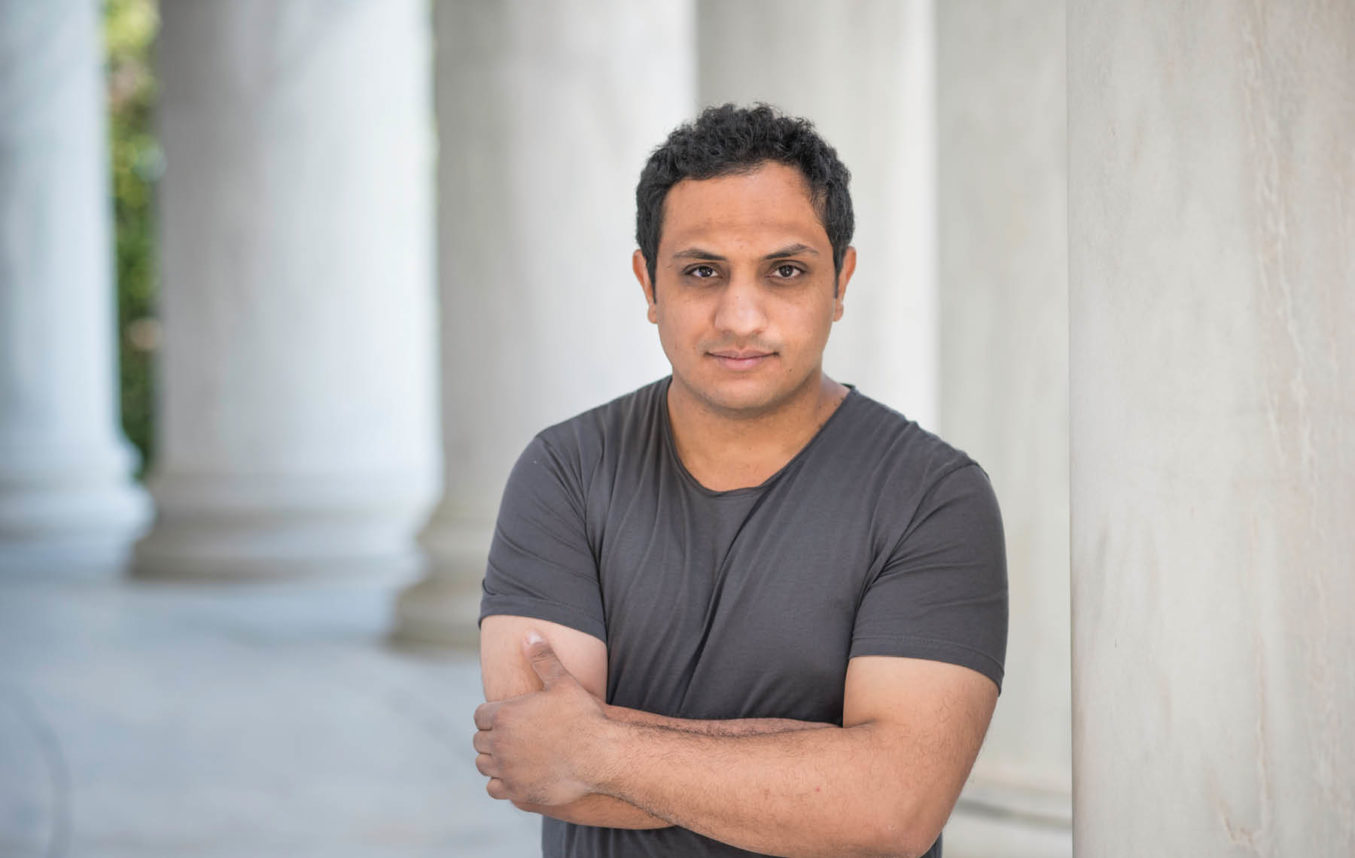
Sitting opposite Mohammed Al Samawi at a West Hollywood coffee shop, it’s hard to imagine the Yemeni refugee dodging bullets and squads of al-Qaida fighters to escape civil war in 2015. But then a police car, sirens screaming, zooms by. Al Samawi is shaken. He recalls his first American Fourth of July when he saw fireworks and ran, thinking it was an airstrike. And when a helicopter hovers over the café, he looks around nervously. The trauma he experienced during his harrowing escape, made possible by a collection of people he met through his interfaith work — many of them Jews — is still with him.
In 2015, the once-simmering civil war began to boil in Yemen between Houthis (Shiite rebels from the north) and President Abdrabbuh Mansur Hadi’s forces, backed by Sunni groups, including Saudi Arabia. The Sunni network also included al-Qaida in the Arabian Peninsula (AQAP). Al-Qaida squads began to target anyone they perceived to be an enemy, including Shiites in Aden. As someone from the north with a Shiite background who was engaged in interfaith activism and had dialogue and cooperation with Jews and Israelis, Al Samawi suddenly found himself the target of death threats. And the battle for his life began.
Over the course of 15 days in March and April 2015, with help from many organizations and activists, including activists Daniel Pincus, Justin Hefter, Natasha Westheimer and Megan Hallahan — all of whom he met through his interfaith work — Al Samawi made a seemingly impossible escape.
The 33-year-old has a warm smile that belies his harrowing past. He makes friends easily, online and off, including with the Australian-accented Egyptian owner of the coffee shop where Al Samawi is a regular.
“I need to give him a good kiss, because he’s like my little brother,” the owner says, swooping him in. “How are you, brother? I don’t know how he’s alive. It just doesn’t make sense. God bless him. He’s a Muslim man and I’m a Christian man, and he’s doing interfaith, which is the right thing to do. I love you, brother. It just blows my mind.”
It’s a story so intense and dramatic that it is headed for the big screen with Oscar-nominated and Emmy-winning film, theater and television producer Marc Platt producing, and a screenplay in process by Oscar winner Josh Singer (“Spotlight”). To date, Al Samawi’s bestseller has been translated into eight languages.
The trauma he experienced during his harrowing escape, made possible by a collection of people he met through his interfaith work — many of them Jews — is still with him.
“When I came here, I was not willing to tell my story,” Al Samawi told the Journal. “It was my dream to work at a coffee shop and forget what happened to me. And I was afraid that the U.S. [was] exactly like Yemen, that if I would keep doing interfaith work, al-Qaida [would] come and kill me here. But the most beautiful thing here is freedom of speech.”
During his first speeches to American audiences after his escape, Al Samawi cried often, but with repetition was able to speak with less emotion. He said that telling his story has become a therapy of sorts.
Becoming an Interfaith Activist
A small stroke when he was a baby left Al Samawi with a withered right arm, hand, leg and foot. Although the disability isn’t noticeably visible, he is unable to drive. As a Muslim child in the Yemeni capital Sana’a, Al Samawi became a dutiful student in an educational system that positioned Westerners, especially Americans and Jews, as the enemy.
He couldn’t play soccer because of his disability but decided to study languages, particularly English. In his 20s, while a student at Sana’a University, he struck up a relationship with his Christian teacher. Concerned that all nonbelievers were going to hell, Al Samawi gave the teacher a Quran. The teacher promised to read it, but in return Al Samawi had to read the Christian Bible. He realized — with horror — that he was reading the Bible of the Jews. The teacher had meant for him to start with the New Testament. Al Samawi saw the similarities between the Quran and the Jewish Bible and began to wonder if the education system had led him astray.
“Hate isn’t something you’re born with,” he said. “People educate you to hate.”
When he graduated in 2010, he worked for his doctor father, and then for nongovernmental organizations. Meanwhile, his curiosity about people of other faiths, especially Jews, grew. He learned on the internet about the history of Yemen’s Jews. On Facebook, he searched for people who might be Jewish and sent them a message that read:
“Greetings from Yemen! My name is Mohammed Al Samawi and I am a Muslim living in Yemen. What do you think of Islam? What do you think of Muslims? What do you think of Yemenis?”
Not surprisingly, people didn’t accept his solicitations right away. But an Israeli Jew answered and a conversation began that led Al Samawi to a group called YaLa Young Leaders, where Jews and Arabs gathered to discuss and promote peace. Then he wondered if he could meet a Jew in person. He typed in “Muslim” + “Jewish” + “Conference” and found the Muslim-Jewish Conference (MJC), a gathering for students and young professionals set to convene in Sarajevo, capital of Bosnia and Herzegovina, in late June 2013. (As of this year, the MJC has been attended by more than 1,000 young changemakers from 65-plus countries.)
Mohammed Al Samawi speaking at Stanford Church with Megan Hallahan, center, and Justin Hefter, right; Photo courtesy of Mohammed Al Samawi
Connecting in Person at Interfaith Conferences
Pincus, a New York based pharmaceutical and biotech consultant and an MJC board member, barely remembers meeting Al Samawi in Sarajevo.
“I remember his face and physical disability, but I didn’t remember the personal interaction with him,” Pincus told the Journal, “which is strange, almost incredible to people who read the story. You get a flurry of friend requests at the end of the conference and click ‘accept.’ There was no friendship,” he said.
There also was no way to predict how integral Pincus would become during Al Samawi’s escape nearly two years later.
In late February 2015, Al Samawi attended a conference in Jordan hosted by Seeds of Peace. There he met social entrepreneur and peacebuilder Hefter in line for coffee. Hefter was representing Bandura Games, a startup he co-founded with Israeli and Palestinian partners to develop video games to connect kids across different cultures.
Hefter, now a master’s student at the Harvard Kennedy School, remembers being “immediately put at ease by his genuine warmth and kindness. His eyes tell you that he’s a kind person,” Hefter told the Journal. “He said that despite the growing violence in Yemen, he would be returning to help make his country better. His dedication to helping people was inspiring, and we quickly added each other as friends on Facebook.”
The Great Escape
Back home in Sana’a, Al Samawi received death threats for his work with Jews and Israelis. The Yemeni president had announced Aden would be the new capital, secured by the government police. Al Samawi said it seemed safer to move there. But the violence followed and intensified.
“I never thought it would be dangerous like that,” he said.“Extreme groups [were] targeting me [and I] didn’t have anyone — police, army, family — to secure me.” Knowing he needed to get out of Aden, Al Samawi reached out to his interfaith network. Messages flew over Twitter, Facebook, email and Skype with the ask: “Can you help? Mohammed needs to get out of Yemen.”
“Mohammed wrote an email connecting all of us [the core team],” Hefter said. “He is a natural team-builder and it was the strength of the team that kept us all going during difficult moments.”
As his friends mobilized, Al Samawi was running out of food, water and money, and in constant danger from bombings and squads of al-Qaida fighters targeting people from the north.
“They were beating a man in the street and people were just watching because they were also frightened of being beaten,” he said. “Al-Qaida fighters were searching for people from the north, looting their apartments, killing them and taking everything,” a fate he only narrowly escaped himself, he said.
Al Samawi reached out to his interfaith network. Messages flew over Twitter, Facebook, email and Skype with the ask: “Can you help? Mohammed needs to get out of Yemen.”
When Pincus heard that Al Samawi was looking for help, “I didn’t know what to do,” he said, but was willing to pay his plane fare to Cairo or Amman, Jordan. When all flights from Yemen were canceled, Pincus found someone to do an exfiltration through Kenya for $50,000. But he was nervous.
“It could result in Mohammed’s and other people’s deaths,” Pincus said. “The likelihood it would work out was extremely low. Mohammed is handicapped, has no car and is in a war zone. The price tag [of various escape plans] kept going up. I didn’t know how I specifically got on the escalator and didn’t know where or how to get off.How much of my own money would I spend to save a person’s life?”
The closing of the airports meant the end of the exfiltration plan and the team reached out to politicians, diplomats, activists, advocacy groups, policymakers, anyone they thought could help.
Since Al Samawi’s only connection with his American friends was his phone, Pincus said, “If electricity and communication were cut off, we couldn’t help. He was an army of one, stepping outside the apartment and leaving behind electricity and hoping his phone doesn’t die. There’s a scene in the book when I told him, ‘You cannot let your phone battery die or we can’t help you anymore.’ ”
Pincus also instructed Al Samawi to take photographs of his experience to visualize his survival. “I needed him to approach the situation that he was going to make it through instead of dying, which he could have,” Pincus said.
Through his friends’ efforts, Al Samawi managed to board a boat bound for Djibouti on the horn of Africa. But at no point was his escape certain, Al Samawi said, recalling one harrowing moment, when the United Nations staff was evacuated from the hotel where he was staying.
“The hotel [had been] bombed. I was thinking I’m in a safe place but I found myself alone and lost hope. I sent a message to Daniel and Justin, ‘I think it’s the end.’ ”
Leaving the hotel at great risk and getting to the port, he said he “[saw] the ship is right there … but then they said no Yemenis can go.” Another flurry of actions by the team ultimately enabled his escape to Djibouti.
Hefter, Pincus and Hallahan (who was unavailable to comment for this story) messaged each other and their contacts to create a speaking tour for Al Samawi, resulting in him receiving a four-month visa to the United States. He flew from Djibouti to Ethiopia, then to Germany and finally on to San Francisco.
“The hotel [had been] bombed. I was thinking I’m in a safe place but I found myself alone and lost hope. I sent a message to Daniel and Justin, ‘I think it’s the end.’ ” — Mohammed Al Samawi
After a speaking engagement at Stanford University organized by members of his network, Al Samawi flew to New York and moved in with Pincus. In May 2016, Al Samawi applied for and received political asylum. He moved to Washington, D.C., into a house paid for by Pincus, and found work with the International Center for Religion and Diplomacy, coordinating their Middle East efforts. He then lived briefly in Miami before moving to Los Angeles, where he now resides.
Now Al Samawi wants people to learn from his story.
“There’s no shame in being different,” he said. “I was always angry at God for giving me a disability. But because of my disability, I’m here with you. My disability made me learn English, read the Bible, be on Facebook. Now I’m here.”
He urges his audiences to “understand that not everything you learn from school, university, media, synagogues and mosques is the absolute truth,” and to believe that “small things matter. The people who helped me out didn’t have military experience or [didn’t have to] be Superman or Batman or have money. [They] just believed in themselves and believed they [could] do it.”
He added, “I love and miss my country, especially the coffee, and family,” with whom he speaks on WhatsApp. “I miss them so much.”
Mohammed Al Samawi with the members of the core team who worked to help him escape, from left: Daniel Pincus, Megan Hallahan, Mohammed, Natasha Westheimer and Justin Hefter. Photo fby Perry Bindelglass
Finding Meaning and Family in a New Country
Through his speaking engagements, Al Samawi’s American “family” keeps expanding. “Everywhere I speak, I find someone who says, ‘I am your Jewish mother.’ It’s amazing to find such support in general but especially from the Jewish community,” he said.
“In Yemen, I thought I was alone. But here, I don’t feel like I’m alone; [I] feel like I’m with a big family,” he said, referring specifically to the interfaith activist community.
Since his arrival in the United States, Al Samawi has been invited to iftars, seders, Shabbat dinners and holiday gatherings. At a Shabbat dinner in New York, he told his story to a group of “Broadway people,” including hosts lyricist Benj Pasek (“La La Land,” “The Greatest Showman” “Dear Evan Hansen”) and actor Adam Kantor (“Fiddler on the Roof,” “The Band’s Visit”). Pasek introduced Al Samawi to Platt, who decided to turn his story into a film and encouraged Al Samawi to write his memoir ahead of the film.
“Mohammed’s vulnerability and authenticity are what make his story and his current interfaith efforts so remarkable. He bares his soul in [his memoir] ‘The Fox Hunt,’ and I’m sure that’s what the movie producers recognized when they heard his story, as well.” — Justin Hefter
“Being someone who loves movies, I never thought there would be a movie about me,” Al Samawi said. “But also I was afraid. If my story would be in a movie [or a book], I’d put myself in more danger [because my enemies] would know where I am. But in the end, I thought God saved my life for a reason and I feel like the movie will give the reason, and people [will learn that] the people in Yemen are suffering. I really want to change my community in Yemen, and the movie will help.”
Platt, he said, “is the key to everything that I have right now. He doesn’t care about me as a project, he cares about me as someone who belongs to his family, as a human being. I feel lucky that I met someone like him.”
“Mohammed’s vulnerability and authenticity are what make his story and his current interfaith efforts so remarkable,” Hefter said. “He bares his soul in ‘The Fox Hunt,’ and I’m sure that’s what the movie producers recognized when they heard his story, as well.”
Creating the Screenplay
The script tells Al Samawi’s story through flashbacks, screenwriter Singer told the Journal in a phone interview, and shows his transformation from a kid who gave his lunch money to the Muslim Brotherhood to help them fight Jews, to a peace activist who left behind indoctrinated hatred, forming interfaith relationships that ultimately saved his life.
When he started the project, Singer asked Al Samawi for an English copy of the Quran, to familiarize himself with its core beliefs and values and to take care “not to demonize the religion.”
Singer said he found the Quran “beautiful, and quite similar to what I was taught. It made me understand that there is a peaceful way to practice Islam; certainly a more openhearted way than the way al-Qaida does. It was separating the Islamic religion from the Islamists.”
Al Samawi’s message, Singer said, “is that we are much more alike than we are different and it’s time we started acting like it. The smallest steps can lead to the biggest of changes.”
The Voice of a Refugee
Yemen is one of six countries whose people cannot come to the U.S., according to the federal immigration ban. That means whenever Al Samawi leaves the country for his speaking engagements, he might not be able to re-enter. On one re-entry, only by showing a copy of his book to prove he was an author, was he allowed in.
“The U.S. is a country of refugees,” Al Samawi said, recalling how the Yemeni president, who reigned for decades, “created fake enemies: Jews and Israel. Now the fake enemy of the [American] people is refugees and ‘taking our jobs, bringing crimes,’ it’s the same kind of propaganda. You shouldn’t [place] a ban on people based on their own faith or nationality,” he said.
In an email to the Journal, Westheimer wrote, “In a time where our leaders are choosing to advance discriminatory policies to close borders from refugees and asylum seekers, like Mohammed, his voice and story is more important than ever.”
Founder and executive director of the Muslim-Jewish Conference Ilja Sichrovsky told the Journal of its decision to help Al Samawi, “There was a life in danger and a community was able to save it. It is just one example of the types of people who come to the Muslim-Jewish Conference and their commitment to the cause of promoting peaceful coexistence and, more importantly, cooperation.”
“Mohammed showed incredible courage in the choices he made in his life back there and also in the way that he has chosen to live from a place of possibility and love here,” said Rabbi Sharon Brous of IKAR, where Al Samawi spoke during the afternoon break on Yom Kippur this year. “Some simple acts of kindness and love do end up changing the landscape for someone. In this case, they saved his life, so thank God for that.”
Asked who should play him in the movie, Al Samawi laughed and said, “Brad Pitt. No. Just kidding. In the end, I don’t care who plays me. I care about spreading the word of peace. I want people to understand how four people with no experience in evacuation who didn’t know each other and lived far away from each other helped me escape in 15 days. I want people to feel, when they read my book and watch my movie, to know that they can do something if they really believe in it.”
Mohammed Al Samawi’s Abrahamic House
One of Mohammed Al Samawi’s first U.S. speaking engagements was with Moishe House, a global network of young Jewish adults living and creating Jewish programming together. Encountering the Moishe House community, Al Samawi had an epiphany:
“Why don’t I create something like [Moishe House] but also for Muslims, Christians, Jews and other faiths? … Everyone is ‘othering’ and in the Abrahamic House, there’s no ‘others,’ it’s ‘we,’ and we need to know more about each other.”
In March 2020, a group of young adults of different faiths (ages 21-35) will move into a house in Los Angeles. In exchange for rent, they will volunteer for six hours a week on one of four programming teams. YaLa will help create cultural opportunities that build trust and connections. The Tzedakah team will focus on opportunities to give back to community faith organizations. Out of the Box will tackle stereotypes and popular issues, including anti-Semitism, Islamophobia, the refugee crisis, the LGBTQ crisis, women’s rights and more. The fourth team will be devoted to holiday celebrations, identifying special holiday customs for each of the faiths, and how they’re similar to other faith traditions. Al Samawi’s goal for Abrahamic House, like the Moishe Houses that inspired it, is to have 50 houses across the U.S. and beyond. He also has received requests from Germany and France. (Moishe House founder David Cygielman advised Al Samawi on the creation of Abrahamic House and is now a board member.)
“That’s why God saved my life, to continue doing my message. It says in the Quran and the Talmud, ‘Whoever saves a life saves the entire world.’ I hope I will be able to change people’s lives.” — Mohammed Al Samawi
“Mo invented a brilliant idea to promote coexistence and literal cohabitation,” Pincus said. “Oftentimes, people look at interfaith activities as something institutions can do — it’s for the rabbis and imams. But he’s effectively created a distributed network of interfaith community centers, which is fantastic. They are ordinary people doing something extraordinary. It’s a beautiful and inspiring model.”
“I am consistently moved and never surprised by Mohammed’s unwavering commitment creating connections across cultures, religions and practices,” Westheimer wrote. “The Abrahamic House seeks to model the world he wants to build, and I have no doubt that his vision will be an inspiration for others across the country.”
Al Samawi hopes that Abrahamic House will be a place “where [people] can come and we give them the tools to change perspective from ignorance and hate to love and compassion. That’s why God saved my life, to continue doing my message,” he said. “It says in the Quran and the Talmud, ‘Whoever saves a life saves the entire world.’ I hope I will be able to change people’s lives.”