fbpx

October 31, 2019

Israel Strikes Hamas Targets in Retaliation for Gaza Rocket

The Israel Defense Forces (IDF) launched strikes against two Hamas targets on Oct. 31 in retaliation for a rocket fired earlier in the day.

The IDF tweeted the announcement:

The Gaza Strip rocket was fired toward the Eshkol region of southern Israel; the Iron Dome intercepted the missile, causing it to fall into a field, where it didn’t cause any damage. It is not publicly known what the extent of the damage was to the Hamas military targets.

According to the Times of Israel, an unspecified Palestinian terror group fired the rocket. Israel holds Hamas responsible for any rocket fire emanating from the Gaza Strip. 

Israel and Hamas have been engaged in a series of rocket strikes and ceasefires throughout 2019; in May, Gaza rocket fire claimed the lives of four Israeli civilians, with nearly 700 rockets being fired from Gaza over the first weekend of that month.

Israel Strikes Hamas Targets in Retaliation for Gaza Rocket Read More »

Aaron Sorkin Made a Movie About Mark Zuckerberg. Now He Says the Facebook Founder is ‘Assaulting Truth.’

(JTA) — The writer of “The Social Network” still has a couple things to say about Facebook and its founder, Mark Zuckerberg. And they aren’t good.

Famed screenwriter Aaron Sorkin penned an open letter to the embattled Zuckerberg in The New York Times on Thursday accusing him of “assaulting truth” and taking Zuckerberg to task for his recent defense of his social network’s permissive stance on free speech. Zuckerberg told Congress recently that Facebook will not police political ads.

“Congresswoman, in most cases, in a democracy, I believe people should be able to see for themselves what politicians they may or may not vote for are saying and judge their character for themselves,” Zuckerberg told Rep. Alexandria Ocasio-Cortez, D-N.Y., in an exchange that has gone viral.

Zuckerberg also said that Ocasio-Cortez could “probably” run ads falsely claiming that Republicans had voted for the Green New Deal, one of her signature progressive proposals.

Critics, including Sorkin, say that Zuckerberg’s position amounts to condoning lies and misinformation on the social media giant. He contrasted Facebook’s policy with what he characterized as the careful vetting of his 2010 movie about Zuckerberg. He called on Zuckerberg “to make Facebook a reliable source of public information.”

“But this can’t possibly be the outcome you and I want, to have crazy lies pumped into the water supply that corrupt the most important decisions we make together,” he wrote. “Lies that have a very real and incredibly dangerous effect on our elections and our lives and our children’s lives.”

Aaron Sorkin Made a Movie About Mark Zuckerberg. Now He Says the Facebook Founder is ‘Assaulting Truth.’ Read More »

Report Says SJP Promulgates ‘Blatant Forms of Anti-Semitism’

A new report from the Institute for the Study of Global Anti-Semitism and Policy (ISGAP) released on Oct. 30 states that National Students for Justice in Palestine (NSJP) has promulgated “blatant forms of anti-Semitism” across college campuses nationwide.

The ISGAP report uses the International Holocaust Remembrance Alliance (IHRA) definition of anti-Semitism, which states that the demonization and de-legitimization of Israel in addition to applying double standards to Israel are anti-Semitic. 

All SJP chapters follow the NSJP “points of unity” in calling for ending “Israel’s occupation and colonization of all Arab lands” as well as the right of return for Palestinian refugees.

“Inasmuch as the word ‘colonization’ is laden with connotations of some evil, Point 1 is an example of a ‘rhetorical manifestation’ of antisemitism, as defined by IHRA,” the report states.

The report goes onto highlight various instances of SJP-promulgated anti-Semitism throughout the country, including:

  • Brooklyn College SJP, Columbia SJP and SJP Univerity of Illinois at Urbana-Champaign calling Zionism “racism” in multiple Facebook posts.
  • Stony Brook University SJP calling for Zionism to be “an extinct ideology” in a May 2018 Facebook post.
  • SJP University of Minnesota, SJP Riverside and SJP Florida International University drawing comparisons between the Israeli government and the Nazis.
  • San Diego State University SJP saying in response to the notion that Israel has a right to exist, “States don’t have rights!!! People do!!!!!”

The report also documents alleged instances of SJP-incited altercations on college campuses. One example in the report states that UC Berkeley’s then-SJP head Husam Zakharia “allegedly rammed Jessica Felber, a Jewish former student, with a shopping cart filled with toys” in 2010 while Felber was holding an “Israel Wants Peace” sign. 

NSJP is hosting their annual conference from Nov. 1-3 on the University of Minnesota Twin Cities campus. The ISGAP report notes one of the speakers at the 2014 NSJP conference, Mira Nabulsi, tweeted in 2012, “#Israeli basketball player likes #Passover bread dipped with Muslim and Christian children’s blood!”

The report concludes, “In order for students to feel protected and for universities to abide by their own pacts of creating safe and secure learning environments, it is necessary to cancel the conference, or at the very least for administration officials to monitor the conference.”

NSJP did not respond to the Journal’s request for comment.

Report Says SJP Promulgates ‘Blatant Forms of Anti-Semitism’ Read More »

Fire is the New Rain – A poem for Parsha Noach

And the rain was upon the earth

for forty days and forty nights.

Replace rain with fire
and it’s almost like
it’s happening again.

From the very first day
of the Santa Ana winds
some part of the southland

has burned. No warning
came. No directive to
build an ark.

What kind of boat isn’t
flammable, anyway?
Or maybe I’m not

righteous enough to
receive the instructions.
While people with

infinite money flee their
acreages. While schools
shut down because

they’re concerned about
breathing. While pillars
of smoke, visible by

anyone with eyes
reminds us we may have
screwed this whole thing up.

I’m holding my wife
and son and cats close
pleading for another chance.

We need the sky to
open up and wash
all of this away.


God Wrestler: a poem for every Torah Portion by Rick LupertLos Angeles poet Rick Lupert created the Poetry Super Highway (an online publication and resource for poets), and hosted the Cobalt Cafe weekly poetry reading for almost 21 years. He’s authored 23 collections of poetry, including “God Wrestler: A Poem for Every Torah Portion“, “I’m a Jew, Are You” (Jewish themed poems) and “Feeding Holy Cats” (Poetry written while a staff member on the first Birthright Israel trip), and most recently “Hunka Hunka Howdee!” (Poems written in Memphis, Nashville, and Louisville – Ain’t Got No Press, May 2019) and edited the anthologies “Ekphrastia Gone Wild”, “A Poet’s Haggadah”, and “The Night Goes on All Night.” He writes the daily web comic “Cat and Banana” with fellow Los Angeles poet Brendan Constantine. He’s widely published and reads his poetry wherever they let him.

Fire is the New Rain – A poem for Parsha Noach Read More »

the bagel report

Halloween: It’s More Jewish Than You Think


In the premiere episode of The Bagel Report, Erin and Esther talk about the one holiday that’s taBOO for the Jews: Halloween. Whether you dress up and demand candy door-to-door or opt out entirely, join us for a Jewish gloss on the holiday: including Erin’s list of iconic scary movie scores written by NJB Danny Elfman and Esther’s recollections of growing up without Halloween. Plus, what makes a Halloween costume “Kosher”?

Follow Erin and Esther on Twitter! 

Halloween: It’s More Jewish Than You Think Read More »

Five Swastikas Found at UMass Amherst

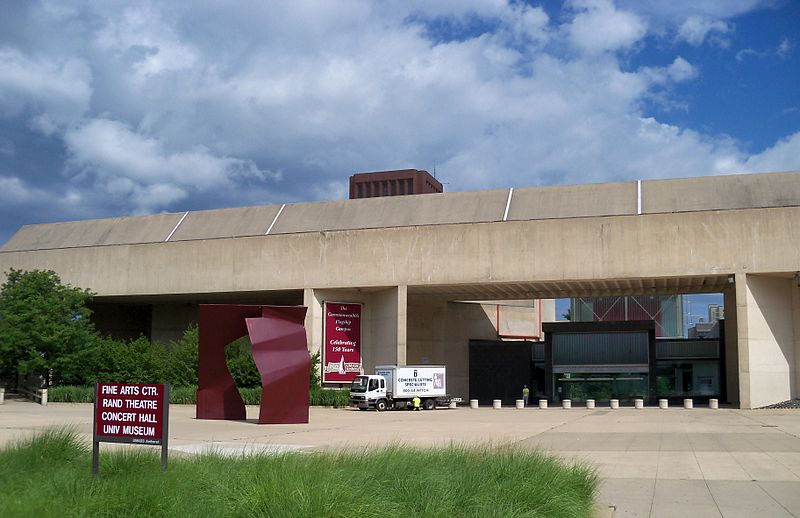
Five swastikas were found at the University of Massachusetts (UMass) Amherst Fine Arts Center on Oct. 30.

A university spokesperson said in a statement to the Journal that the swastikas were drawn in chalk on the Fine Arts Center’s walls.

“This act of hate is an affront to the university’s values,” the statement read. “We reject this hateful act and remain firm in our commitment to building a more inclusive, equitable community that embraces the dignity of all.”

The spokesperson added that the swastikas have been removed and university police have been informed on the matter.

UMass Students in Alliance for Israel (SAFI) wrote in an Oct. 30 Facebook post, “We are deeply hurt and disgusted by these anti-Semitic symbols being represented on our campus. This is an act of White Supremacy which is unacceptable and we must condemn it. Hate Has No Home at UMass: Not today, not tomorrow, not ever.”

UMass Amherst Hillel wrote in an Oct. 31 Facebook post that they were “disheartened” about the swastikas.

“Swastikas are symbols of hatred and violence towards Jews and others and have no place at UMass or anywhere,” the post stated. “We denounce anti-Semitism and remain committed to cultivating a campus community where hate has no home. Now is a time to reaffirm the Jewish value that every person has inherent worth and to deepen our commitment to build a world of dignity, respect, tolerance and goodness.”

The UMass Hillel post added that they will be providing bagels and have open office hours for those in need of support and “will be holding space at Hillel for conversation, reflection, and processing” after their Nov. 1 Shabbat dinner.

Anti-Defamation League New England Regional Director Robert Trestan said in a statement to the Journal, “It is truly disheartening to learn that the Fine Arts Center at UMass-Amherst has been defaced with swastikas. This act of hate is all the more concerning following a similar incident last week at nearby Smith College. We commend the University’s swift response to this most recent act of anti-Semitism and the continuing commitment of UMass Hillel and the University to the safety and well-being of students following this incident.” 

He added; “As we await the results of law enforcement’s investigation, we reiterate that acts of hatred towards any group on a college campus or elsewhere cannot be tolerated.”

Alums for Campus Fairness also condemned the swastikas, saying in an Oct. 30 statement, “We must not allow UMass Amherst to become a campus that fosters antisemitism and threatens the mental and physical well-being of Jewish students.”

Previously at UMass Amherst, a swastika was found in a student’s dorm room in Nov. 2018, and two swastikas were found on campus in 2016.

Five Swastikas Found at UMass Amherst Read More »

A Moment in Time: Keeping it Clear

Dear all,

I was driving a few blocks north of Temple Akiba today. There was a spot along the road that instructed drivers to “Keep Clear.” (I looked up the exact spot on Google Earth and captured a screen shot of this bird’s-eye view).
It made an impression on me, as my mind was filled with so much:
When will I make it to the grocery store?
Have I returned my messages?
Can I make it to my next meeting on time without stopping at the gas station – and will I run out of gas in the process?
Did I really need that piece of candy I just ate? Did I really need the second piece?
And so on….
While the “Keep clear” sign was intended to make me cognizant of traffic on the road – perhaps the sign was really a message that I needed to clear my thoughts, get rid of the clutter, and remind myself of the important stuff:
Did I tell Ron I love him?
What story will I read to my twins today?
Am I being fully present for my community?
Am I being fully present for myself?
“Keep clear.” All it takes is a moment in time.
With love and shalom,
Rabbi Zach Shapiro

A Moment in Time: Keeping it Clear Read More »

AFI Fest Includes Films with Jewish Themes

The American Film Institute’s annual AFI Fest, which will take place Nov. 14-21 in Hollywood, includes screenings of several films telling Jewish stories in its lineup. 

“The Song of Names,” starring Tim Roth and Clive Owen, is about a young Polish-Jewish violin prodigy who is taken in by a music impresario in London and becomes a brother to the man’s son. When the violinist disappears on the eve of his big debut, his friend spends nearly four decades trying to find him. The answer to the mystery has to do with the Holocaust, remembrance, and a special piece of music. 

Photo courtesy of AFI

Incorporating recollections from American diplomatic envoys who witnessed historic negotiations between Yasir Arafat, Yitzhak Rabin, Ehud Barak and former President Bill Clinton, Israeli filmmaker Dror Moreh’s documentary “The Human Factor” focuses on the Middle East peace process and why it has failed. 

Several short films of Jewish interest will be presented, including the Israeli entry “The Burning Bush,” about a young woman mourning the loss of her girlfriend, and “Child,” in which an ultra-Orthodox first-time mother struggles to cope and connect with her baby. In “Tree #3,” a charismatic Israeli boy with dreams of stardom makes the most of the bit part he’s given in the school play. Lior Malka charms in the title role.

For screening times, venues, tickets and additional information, visit AFI’s website.

AFI Fest Includes Films with Jewish Themes Read More »

The Baker: Chapter Five

PREVIOUSLY: World War Two begins and baker Ernie Feld is herded onto a train in his hometown with other Jewish prisoners — to where he hasn’t got a clue.

For countless hours, the young men rode inside a cramped railroad boxcar, huddled like cattle, as the train rumbled across the Czechoslovakian countryside and into Hungary.

Once there, the engine screeched to a halt and the prisoners were unloaded and divided into work groups. 

You go here. You go there.

Nobody knew anything.

Ernie’s mob was led to a barn where they were ordered to sleep at night. 

It was early March, 1944. The men shared the rank quarters with hundreds of cows, which Ernie recalled weren’t as bad as you might think: their constant flatulence stopped the men from freezing.

“We put down our blankets and things. We slept on one side, in one row, and the cows on the other,” Ernie later told his Holocaust Project interviewers. “And it was pretty good, because winter, from the cows, it stinks a little bit, but it was pretty warm.” 

With his kitchen training, Ernie was quickly named the camp cook and began making hearty meals from scratch for large groups of men. 

In a nearby encampment, the Third Reich operated an airport outside Budapest known as Ferry Head, from which they dispatched bombers to carpet the Russian front.

The Nazi SS officers lived in a row of neatly-arranged barracks. The champagne flowed freely. But other delicacies were harder to come by, even for these privileged men. 

One day, a German SS officer walked into Ernie’s putrid camp kitchen. 

“He asked me, ‘What can you cook?’” Ernie recalled. “He needed someone to make appetizers for the officers to eat with their champagne and beer.”

Ernie told him what he baked.

The officer turned to the Hungarian camp sergeant. 

“I’ll take him,” he said.

At the Nazi’s airport headquarters, Ernie was at assigned to work under an older German cook who, he quickly saw, struggled to meet the demands of his superiors. 

So Ernie stepped up.

“Jews always make miracles,” he said later. “Moses and minyans.”

Soon, he was making the poppy-seed strudels his mother taught him to bake, a dish that quickly became a favorite among Nazi officers not use to liking anything associated with Jews. 

But that wasn’t all. Ernie also used military-issue canned goods to whip up dishes like wide-noodle pasta with poppy seeds and pastries with frankfurters.

The Nazis all approved, saying he cooked cannoli just like an Italian.

Imagine that.

He also made pates and a signature soup made of pigs’ brains and shin bones.

“I started making hors d’oeuvres and things from cans,” Ernie recalled. “I dreamed things up, because they had no ravioli and no pasta and no nothing – just flour. And from the flour, I made dough, and I made the pasta and the soup noodles — anything you want — from nothing.”

The Wehrmacht officers quickly became dependent on their Jewish kitchen-magician.

They tasked a German soldier with making sure Ernie always had enough supplies. 

“He was always watching over me,” Ernie said of his guard. “Because without me, there’s no Christmas; there’s no nothing.”

Often, the Germans sent Ernie into Budapest with his uniformed minder — who was along not so much as a precaution against the inmate’s escape, but to protect a precious resource. He could have been shot dead on the street by other Germans.

Wearing his yellow Jewish arm band, Ernie bought the items that allowed him to vary his menu for the scores of hungry officers. The excursions reminded him of the trips into the Czechoslovakian countryside at the behest of the chefs at his baker’s school.

And then, like now, Ernie knew how to make a deal. He bargained, and usually came away with more than he’d hoped for.

Because Ernie knew he was feeding more than just the Germans. Back at camp, he secretly fed the leftovers to fellow Jewish prisoners.

Then Ernie got an idea: He saw how many other Jewish prisoners were forced to perform the back-breaking labor of cleaning latrines and digging ditches.

He felt guilty and decided to use his newfound influence.

One day, Ernie’s German kitchen-overseer took him aside: the SS officers wanted pasta that day. But there were no noodles. 

It was a major problem, one Ernie was expected to solve.

“I can make it,” he told the officer.

Then he set his plan into motion.

“‘First of all,’ I said, ‘I need a hundred Jews.’”

He didn’t need that many, of course, but he was emboldened.

To be truly believable and fool his overseer, he pretended as though he viewed the other Jews with contempt as servants and not colleagues.

He played the role of a cruel kitchen taskmaster.

For Ernie, that part was easy.

He yelled at his new Jewish recruits. 

“I was yelling ‘Jews, go out!’ just so he felt I was on his side, just to make him feel better. Because when he says ‘Dirty Jews,’ it’s different. But if I say so …” 

None of the men complained.

“I knew how to cook,” Ernie recalled, “so everyone wanted to go with me.”

The Jews working in the kitchen eventually came to an uneasy truce with Hungarian soldiers working under the Germans, whose job it was to keep them in line. 

The Hungarians felt sorry the Jews and developed a ruse to fool the Nazi SS officers who occasionally showed up to inspect the kitchen.

“The Hungarians told us ‘We will insult you. If we don’t they’ll send us to the Russian front.” So the the Jewish prisoners endured the humiliation, until the SS officers left.

Meanwhile, Ernie’s kitchen was a busy place. 

When he began work on one of his creations, the men formed assembly lines and awaited their orders.

To make his poppyseed noodles, he mixed flower and water inside a mammoth kettle. One by one, the balls of dough were ushered outside, where workers rolled them flat with empty champagne bottles.

One man carried the rolled-out strands of dough back into Ernie’s kitchen. 

Then the master went to work. 

“I cut them, boiled them in water, put poppy seeds on them, and we had poppy seed noodles for the Officer’s Club,” Ernie said.

Ernie also made sweet butter from scratch. 

He soaked cans of salted butter in water and told his crew to wash and knead it with their bare hands, “like gold in the water.” 

Once the salt was scoured, he mixed ice and butter and eggs.

“I made cheese. I cut it in squares. Jews wrapped it. And the Germans had tea butter.”

The Wehrmacht officers eventually allowed Ernie to expand his kitchen empire. 

Using money he collected from fellow inmates, he enlisted farmers in outlying Hungarian villages to use their outdoor brick ovens to cook his recipes.

Not all of villagers were happy about doing business with Jews, he recalled. 

Still, every Friday, Ernie traveled to the countryside to collect the results. 

Sometimes, he used the country ovens to do his own baking for his own men.

He returned to camp with traditional Jewish pastries and precious challah the prisoners had almost forgotten existed. 

“When the guys came home from work, at first it was ‘How did you do it?’”

After dark, the Jewish prisoners would watch the Allied bomber planes swoop in, the heat from their strafing missiles lighting up the night sky.

“That was the most beautiful thing,” Ernie recalled. “We saw the Russians coming in, bombing Budapest, and then the American liberators; and they are bombing.”

Once, when a German Messerschmitt landing at the airport got stuck in some sand, officers ordered several Jewish prisoners at gunpoint to stand on a wing to give the plane the balance necessary for takeoff.

The plane rumbled down the runway, with several Jewish men standing on the wings, holding on for dear life, knowing the German rifles were pointed at their backs.

Just before the plane became airborne, the officers yelled for the men to jump.

“Well, I didn’t want to take a ride to the Russian front,” Ernie recalled. “So I jumped.”

He fell and broke his left arm. 

Decades later, he still had restricted movement in the limb.

After the war, when Ernie was living in the U.S., he met an American pilot who had coincidentally flown bombing missions over the Budapest airport.

The officer showed Ernie a picture of his bomber, on the side of which was scrawled the phrase “Jewboy.”

Ernie didn’t flinch.

“I was there,” he told the pilot. “You mean you didn’t see me?”

At night, as the German officers slept in their comfortable barracks, Ernie and the others returned to the barn, to sleep among the cows. 

Still, they felt lucky to be alive.

They didn’t know that at that very moment, the Nazis were using industrial ovens to exterminate many of their families. 

That horrible realization would only come later.

NEXT WEEK: The baffling Mystery of Ernie


John M. Glionna is a Las Vegas-based freelance writer who chronicles the American West. He’s also a former national reporter for the Los Angeles Times, based in Vegas, and served as the Seoul bureau chief on the newspaper’s foreign desk, where he covered the 2011 Japanese earthquake and tsunami and the subsequent death of North Korean strongman Kim Jong Il. He has also written extensively about California. For more on Glionna visit his website.


The Baker: Chapter Five Read More »

Episode 161: Breaking Down Israel In Numbers

The last elections that were held in Israel a month ago, brought the country to yet another political standstill. With no clear winner or loser, the country could very well be approaching its third elections in a single year. And the worst part? Those elections might just lead us right back to square one.

How could it be that the only Jewish state, the only democracy in the Middle East, is dealing with such a deep divide? The answer, as always, is in the numbers. Israel’s inner demographics are extremely complicated, with dozens of streams and sub-streams, beliefs, ideologies and various political views. Mix all these ingredients together, put it over medium heat for a couple of years, and you’ll get a complete chaos of a dish. That’s the Israeli story.

To understand those complexities, one must dive into the numbers and ask some hard and basic questions: how many Jews in Israel fast on Yom Kippur? How many wave the Israeli flag on independence day? How many people think that serving in the IDF is essential, and how many think Israel should have sovereignty from the river to the sea? Those questions, and the statistics behind them, might help us put the pieces together, in the puzzle of Israeli society. Which leads us to Shmuel Rosner.

Alongside Prof. Kamil Fuchs (the Israeli Nate Silver), Shmuel Rosner wrote an extremely important book “#Israelijudaism”, which is now out in English. The book is based on a broad-scale, thorough series of polls conducted by the author, their interpretation and the conclusions that Shmuel Rosner deducts from them.

Shmuel Rosner is an Israeli writer, researcher editor based in Tel Aviv. He is a senior fellow at The Jewish People Policy Institute (JPPI) in Jerusalem. Rosner is a contributing opinion writer for the International New York Times; he is senior political editor for at the Los Angeles Jewish Journal, he’s the host of the great podcast Rosner’s Domain and we’re thrilled to have him on our show today, for the second time? (last time between ep 114 and ep 115).

“#IsraeliJudaism: Portrait of a Cultural Revolution” on Amazon

Shmuel Rosner on Facebook and Twitter

RSS Subscribe

Episode 161: Breaking Down Israel In Numbers Read More »