fbpx

October 23, 2019

Lifelong Friends Revisit Their Old Neighborhood in ‘The Bronx, USA’

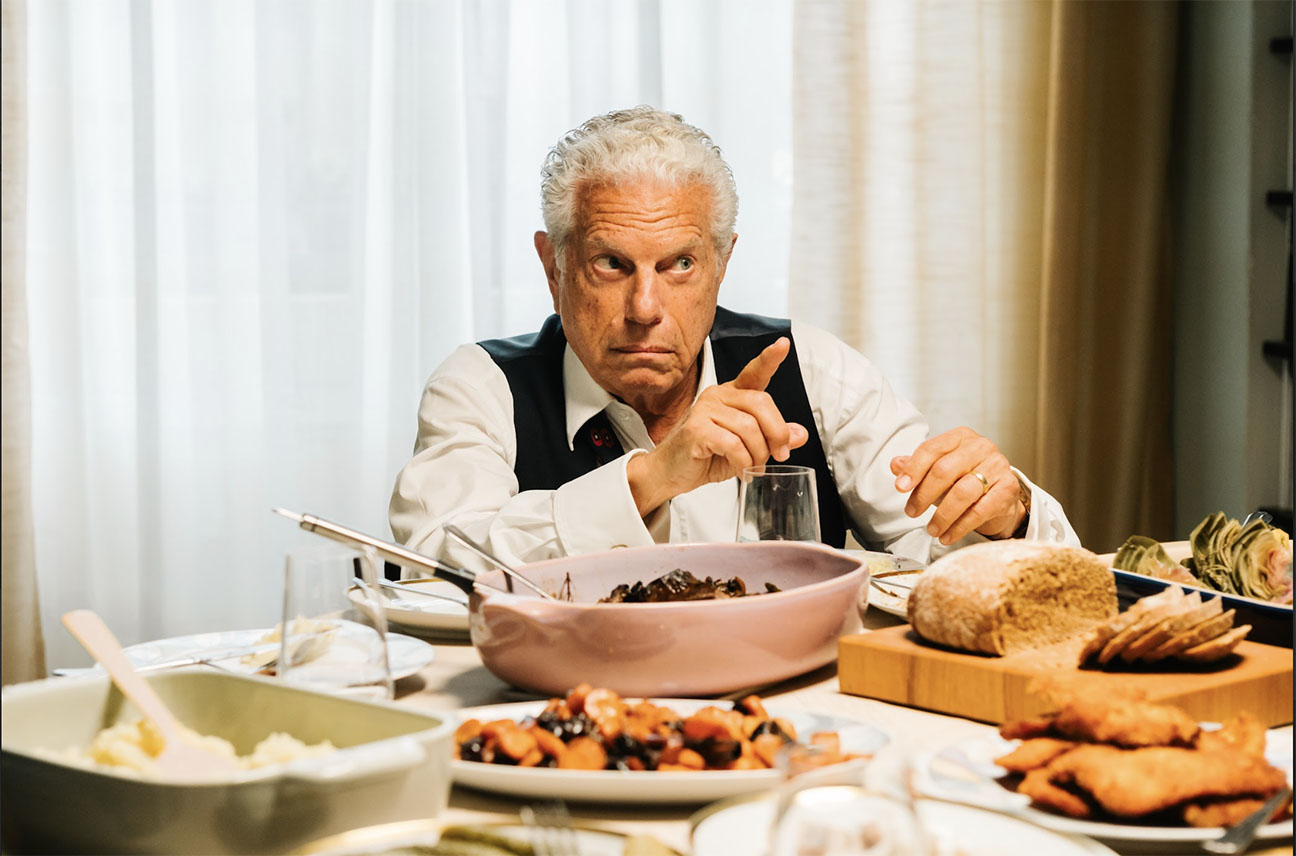
For the past 25 years, Hollywood producer George Shapiro and his childhood buddies have been getting together every five years to celebrate their lifelong friendship, two of which have been documented and televised. 

Their first reunion was the subject of “The Bronx Boys,” which aired on HBO in 2003, followed by “The Bronx Boys Still Playing at 80,” shown on PBS in 2013. Now nearly nonagenarians, Shapiro and his surviving pals Carl Golub and Jay Schwartz convene in the New York borough of their birth in the HBO documentary “The Bronx, USA.” The film combines nostalgia and reminiscence with a contemporary twist as the Jews from the class of 1949 meet black and Latinx members of the 2017 senior class at their alma mater, DeWitt Clinton High School.

Shapiro, an Emmy-winning producer of “Seinfeld,” also and manages the careers of his uncle Carl Reiner and Jerry Seinfeld. He narrates the film and and produced it with director Danny Gold, with whom he previously collaborated on “If You’re Not in the Obit, Eat Breakfast” (2017). Revisiting his old neighborhood and boyhood apartment brought back fond memories. 

“The Bronx is part of my heart and soul — neighborhoods where everyone knew each other, having friends in the apartment building and playing after school,” Shapiro told the Journal. A family from El Salvador now lives in his old building, and they welcomed him in. And his all-boys high school is coed and populated by first- and second-generation immigrants from Third World countries. “I wondered if it would be the same now,” he said. “And it is different in some ways. But a lot is the same. I saw the joy of friendship that we had and still have in these kids from DeWitt Clinton.”

The documentary also features interviews with Reiner, Alan Alda, Hal Linden, Chazz Palminteri, Robert Klein, Melissa Manchester and retired Gen. Colin Powell, talking about their Bronx childhoods. Klein performs an original musical number and Powell reveals that he worked as a “schlepper” for a Jewish toy store owner, who encouraged him to get a good education. 

“The Bronx is part of my heart and soul — neighborhoods where everyone knew each other, having friends in the apartment building and playing after school.” — George Shapiro

For director Gold, “As much as the movie is about the Bronx, it’s about anywhere,” he said. “It’s a human story. My perspective was to do a homage to the Bronx and talk about it socially, culturally and historically — to focus on the positive aspects of humanity and the importance of friendship in one’s life. We were able to show that with these kids and their interaction with George and his friends.”

Gold, who grew up in a Reform Jewish home in West Los Angeles, wanted to be a filmmaker ever since his mother gave him a Super 8 movie camera when he was 9. “That became a love affair that continues to this day. It’s always been about being creative,” he said. “My passions in filmmaking are music and comedy and I look for projects that fit into that category, whether it’s documentary or docuseries.”

Jewish tradition and culture are important to him. “I did a movie years ago called ‘100 Voices: A Journey Home,’ ” about cantors going back to Poland to reconnect with the Jewish culture that was lost in World War II. Making that movie and filming in Auschwitz really had an impact on me,” Gold said. He’s currently working with “The Bronx Boys’ ” composer Charles Fox on a documentary about salsa music culture, filmed partly in Cuba. 

Shapiro, the son of Russian and Polish Jews, wasn’t raised in a religious family, either. “We went to Chinese restaurants on Sunday nights. I had a bar mitzvah but I took a crash course [to prepare],” he said. “My mother’s religion was the golden rule: Treat people the way you want to be treated and go through life loving people. There’s so much hate in the world right now. What brings us together is love and caring.”

While working as a lifeguard at a resort in the Pocono Mountains in 1953, Shapiro joined the theater troupe, where Neil and Danny Simon were the head writers and talent agents would visit to see their clients. He made some connections that resulted in a job in the mailroom at the William Morris Agency in New York after he finished his military service. An agent-turned-manager and producer now based in Beverly Hills, he counts “Seinfeld,” the recent Seinfeld projects “Comedians in Cars Getting Coffee” and “Jerry Before Seinfeld,” “If You’re Not in the Obit,” and “Man in the Moon,” about his late client Andy Kaufman, as proud accomplishments. 

Now 88, Shapiro isn’t slowing down. He’s producing a new Seinfeld special to air in the spring on Netflix; he’s in talks to revive the famous Carl Reiner-Mel Brooks “2,000-Year-Old Man” sketch as an animated series, and he’s developing a project called “Funny Tails,” about celebrities and their dogs. He believes that having lifelong friendships is one of the keys to his longevity, along with work and family connections. “We have this joy of being together. The friendship is stronger than ever and we just feel like kids when we’re together,” he said. “Being engaged with friends is so very special. When you’re with each other, you have that joy and lift in your step and the years just disappear.”

 “The Bronx, USA” premieres Oct. 30 on HBO. 

Lifelong Friends Revisit Their Old Neighborhood in ‘The Bronx, USA’ Read More »

ICE Officer Who Drove Truck Into Jewish Protesters Will Not Be Charged With a Crime

(JTA) — A grand jury declined to indict a former U.S. Immigration and Customs Enforcement officer who drove his truck into a row of Jewish protesters at an ICE detention center.

Capt. Thomas Woodworth resigned his position days after the August incident at the Donald W. Wyatt Detention Facility in Central Falls, where protesters were blocking an entrance. The demonstrators were part of Never Again Action, a new Jewish group protesting ICE and U.S. immigration policy by getting arrested at ICE detention facilities.

The grand jury voted not to indict other ICE officers on the scene.

The investigation included interviews with more than 70 witnesses, according to the Boston Globe.

“The grand jury worked really hard to sort through the evidence and testimony that was presented to them,” Rhode Island Attorney General Peter Neronha said Wednesday, according to the Globe.

Regarding Never Again Action, he said, “I recognize there is disappointment here, I understand how they feel, and it is not lost on me the pain that they’re in.”

Never Again Action condemned the decision and called on the Wyatt facility to be closed.

“We are greatly disappointed that Mr. Woodworth will not be held accountable for his irresponsible, dangerous, and violent actions against peaceful protesters on August 14, nor will the officers who recklessly deployed pepper spray into the crowd that night,” the group’s Rhode Island chapter said in a statement Wednesday. “Mr. Woodworth should be in jail but, more importantly, the Wyatt should be shut down, the state should ban all collaboration with ICE, and ICE detainees at the Wyatt should be freed.”

ICE Officer Who Drove Truck Into Jewish Protesters Will Not Be Charged With a Crime Read More »

Snoop Dogg Will Promote an Israeli Cannabis Tech Startup

JERUSALEM (JTA) — Snoop Dogg, an outspoken advocate of marijuana use, is the new brand representative for an Israeli cannabis tech startup.

Seedo, based in Yokneam in northern Israel, sells an automatic hydroponic growing machine for herbs and vegetables that is used for growing cannabis.

Snoop Dogg has joined Seedo “to educate consumers on the environmental benefits and social opportunity of Seedo’s home and commercial grow technology,” the company said in a statement.

The American rapper will contribute to a social responsibility program that will share Seedo’s growing practices and provide donated Seedo products for local communities, neighborhood organizations and influencers. The initiative will start in his hometown of Long Beach, California, according to the company.

The company is working with a number of different cannabis companies. The most notable of the recent partnerships has been with Area 52, California’s largest producer of Delta 8 THC gummies, oils, and cartridges.

“Promoting a healthier lifestyle by providing my friends and communities with products that allow for growth in unused urban spaces is something I’m all the way down with” Snoop Dogg said. “Seedo creates cost savings and the opportunity for all people to benefit from agricultural technologies.”

Snoop Dogg Will Promote an Israeli Cannabis Tech Startup Read More »

‘Never Again Is Now’ Sounds the Alarm on Rising Anti-Semitism

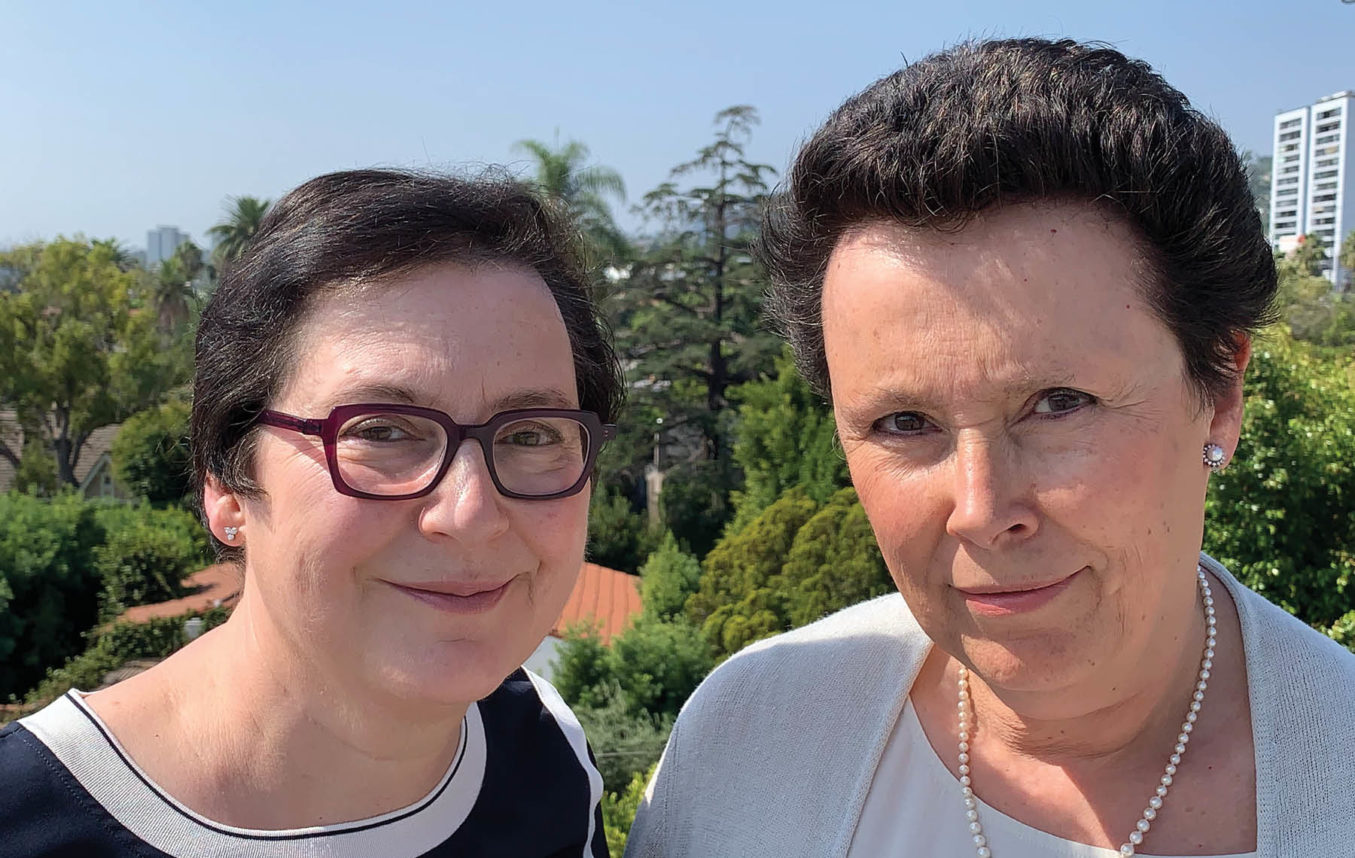
Evelyn Markus, the daughter of Dutch Holocaust survivors, moved to Los Angeles in 2006 with her partner Rosa Zeegers. She no longer felt safe in Amsterdam amid escalating anti-Semitic attacks on the streets, at sports stadiums and after finding a pink Star of David graffitied on her front door. With Jews increasingly under siege all over Europe and a rise in anti-Semitism in the United States, Markus is sounding the alarm with the chilling documentary titled “Never Again Is Now.” 

In the film, Markus, a psychologist and conflict-resolution coach turned activist who founded the nonprofit Network on Anti-Semitism, combines the story of her parents’ Holocaust survival with a history of the rise in hatred toward Jews from the political left, right and Muslim religious extremists. She interviews politicians, experts and Jews who feel scared and threatened as they face the possibility of leaving their homes.

“I wanted to tell the story of the Jews’ current exodus from Europe and why they don’t feel safe anymore,” Markus told the Journal. “I didn’t make the film to tell the story of my parents, but my fear of being in Europe and my anger over having to leave has a lot to do with what happened to them,” she said. “My parents assured me that the Holocaust was a unique event in history that could never happen again. But 75 years later, here we are again.”

After her mother’s death in 2014, Markus discovered a letter from her mother to her father detailing how she survived thanks to the American troops who liberated a concentration camp-bound train in April 1945. Markus agreed to tell that story as long as she could speak about the current crisis. “If we want to stop anti-Semitism, we have to do it at an early stage,” she said. “There’s starting to be more awareness now, but progress is too slow.”

While Markus feels safe in the United States despite the increase in anti-Semitism, and feels free to display a Star of David, mezuzah or an Israeli flag, that’s not the case on many college campuses in light of the anti-Israel boycott, divestment and sanctions movement. “In the U.S., we’re at the beginning stages of why I left Europe.” 

“My parents assured me that the Holocaust was a unique event in history that could never happen again. But 75 years later, here we are again.” — Evelyn Markus

While she applauds that “this government is very supportive of Israel, moving the U.S. Embassy to Jerusalem, recognizing the Golan Heights as Israeli territory and seems to have a pro-Jewish impact on the government of Saudi Arabia,” Markus is worried by “a very angry tone of voice that’s encouraging hatred” coming from the  U.S. leadership, one “that could trigger feelings of hate to come out,” she said.

She proposes several ways to avert disaster. “White supremacist anti-Semitism is driven by strong anti-immigrant feelings and conspiracy theories about ‘the Jews’ driving immigration,” she said. “Education programs like A Classroom of Difference of the Anti-Defamation League are, in my mind, an important part of a solution. It educates children at a young age about bias and the fallacy of conspiracy theories.” 

Noting that increases in immigration and anti-immigrant feelings lead to a rise in hate and blaming of Jews, especially in a declining economy, she suggests increasing anti-bias education programs. She also proposes supporting Muslim reformers “who want to modernize their religion in a way similar to liberal Judaism or liberal Christianity.”

As for the far-left anti-Semitism on U.S. college campuses, “It is driven by a passionate solidarity with the Palestinians and their rights,” she said. “Maybe it would help to better inform people at the far left about the line between legitimate criticism of Israel and when it becomes anti-Semitic,” she added, citing a United Nations report. “Criticism of Israel is fine as long as it doesn’t use demonization, a double standard or delegitimization of the Jewish state.”

Markus, who was not raised religious, became more so when she was 19 and “spent two years involved in Jewish learning, one of them in Israel. Then I fell in love with a woman and couldn’t combine Orthodox Judaism with being a lesbian, in my mind,” she said. “But I always kept an admiration for Jewish tradition, culture and religious texts because there’s so much wisdom in there.”

She met Zeegers, also the daughter of Holocaust survivors, through mutual friends in 1982 at a party celebrating Zeegers’ wedding. A year later Zeegers divorced after coming out as a lesbian, and she and Markus married in 2007. (Zeegers’ ex-husband also came out as gay.) They belong to the Temple of the Arts in Beverly Hills.

Coinciding with the release of the documentary, Markus has launched a website at joinneveragainisnow.com, where she will blog biweekly and people can share their thoughts via social media. “Nobody has the answer on how to stop anti-Semitism. I invite people who care about the subject to share their ideas and help to develop better answers to the problem,” she said.

Markus wants people to take the rise global of anti-Semitism seriously and “look at what you as an individual can do to stop it. Then you help the Jews and society,” she said. “I would urge individuals to stand up and become active in a way that suits their strengths, to do something.”

“Never Again is Now” is streaming now on Amazon Prime. 

‘Never Again Is Now’ Sounds the Alarm on Rising Anti-Semitism Read More »

JDCA’s Halie Soifer: Trump Out of Touch With Jewish Voters

Halie Soifer wants to make one thing perfectly clear: President Donald Trump’s values don’t mirror those of the Jewish people. 

The executive director of the Jewish Democratic Council of America (JDCA) has been actively promoting progressive Jewish Americans’ ideals since 2016. JDCA endorsements helped elect 49 Democrats during the 2018 midterm elections, and Soifer said Trump’s behavior in his first term shows he is out of touch with Jewish voters. 

Whether he’s accusing Jews of being disloyal, not condemning anti-Semitism or his recent decision to withdraw U.S. military forces from Syria, Soifer said Trump’s recklessness concerns American Jews. With a background in foreign policy, she said Trump’s calls on Syria are disastrous. 

“Trump’s reckless decision in Syria has very serious security implications not only for the United States but for our allies, including Israel,” Soifer told the Journal. “There is no question that Israel was caught off guard during this decision. This is the bigger issue because it also speaks to whether we can be relied on as an ally. The Kurds were relying on us as an ally, and Trump so recklessly undermines that alliance. I’m sure the Israelis are now questioning whether we — America with Trump as our president — can be trusted, and it’s disconcerting and another demonstration of the fact that Trump doesn’t really understand U.S. foreign policy.” 

The JDCA called out Trump during the Unite the Right rally in Charlottesville, Va., in August 2017, and shortly thereafter when he did not denounce the neo-Nazis and white nationalists who were marching. 

Since then, the JDCA’s website has listed a timeline of anti- Semitic attacks that have taken place. Soifer said according to polling, anti-Semitism is now one of the talking points driving people to the voting booth.

“For the first time in our history, we as Americans have faced the rise of domestic anti-Semitism,” she said. “We know from polling that 73% of Jewish voters feel less secure today than they did two years ago and 59% of them blame Trump, at least partially, for the synagogue [shootings in] Pittsburgh and Poway.”

“Trump’s reckless decision in Syria has very serious security implications not only for the United States but for our allies, including Israel.” — Halie Soifer

Soifer said that Jewish voters are paying attention to Trump’s rhetoric (or lack thereof) when it comes to denouncing anti-Semitism. She said there was an increase in voter turnout during the midterm elections and that “it will continue to impact how Jews vote. It was an issue in the 2018 election and it will continue in 2020.” 

In addition to calling out white nationalism and extremism on the right, Soifer noted that the JDCA does the same thing with anti-Semitism on the left, including denouncing Reps. Ilhan Omar (D-Minn.) and Rashida Tlaib (D-Mich.) for their anti-Semitic rhetoric on social media. 

“We recognize sometimes the criticism of Israel can be conveyed in a way that is anti-Semitic, especially when you’re talking in the use of negative stereotypes or generalizations against the Jews,” Soifer said. “We call it out wherever we see it on the right or the left. But what deeply concerns us is that we have not seen Republicans do the same. … When it comes from the president of the United States, they are silent.” 

On the question of Trump’s impeachment, Soifer said, “I think the president will be impeached in the House. The allegations against him are not only extremely serious but also unprecedented in terms of the violation of our national security.” 

Soifer noted that while Jewish Democrats have their eyes on impeachment, their domestic concerns still focus on a wide range of issues, including gun safety, immigration, women’s rights and affordable health care. She is happy to see that these issues frequently came up during the fourth Democratic debate Oct. 15 in Westerville, Ohio.

Though it is still early days in the 2020 election cycle and Jewish voters are using the debates as an opportunity to learn about each candidate, Soifer said, “They all brought a slightly different but unified view that clearly we need change in this country, and the majority of Americans agree with that. … I think that there was a consensus on that stage that we certainly can and should do better than Donald Trump.”

JDCA’s Halie Soifer: Trump Out of Touch With Jewish Voters Read More »

JPAC Advocates for Jewish Causes

On Oct. 11, Gov. Gavin Newsom signed AB-1548, the California State Nonprofit Security Grant Program, which provides security grants of up to $200,000 for nonprofit organizations — including synagogues, schools, community centers and other sites — at high risk of hate-motivated attacks of violence. 

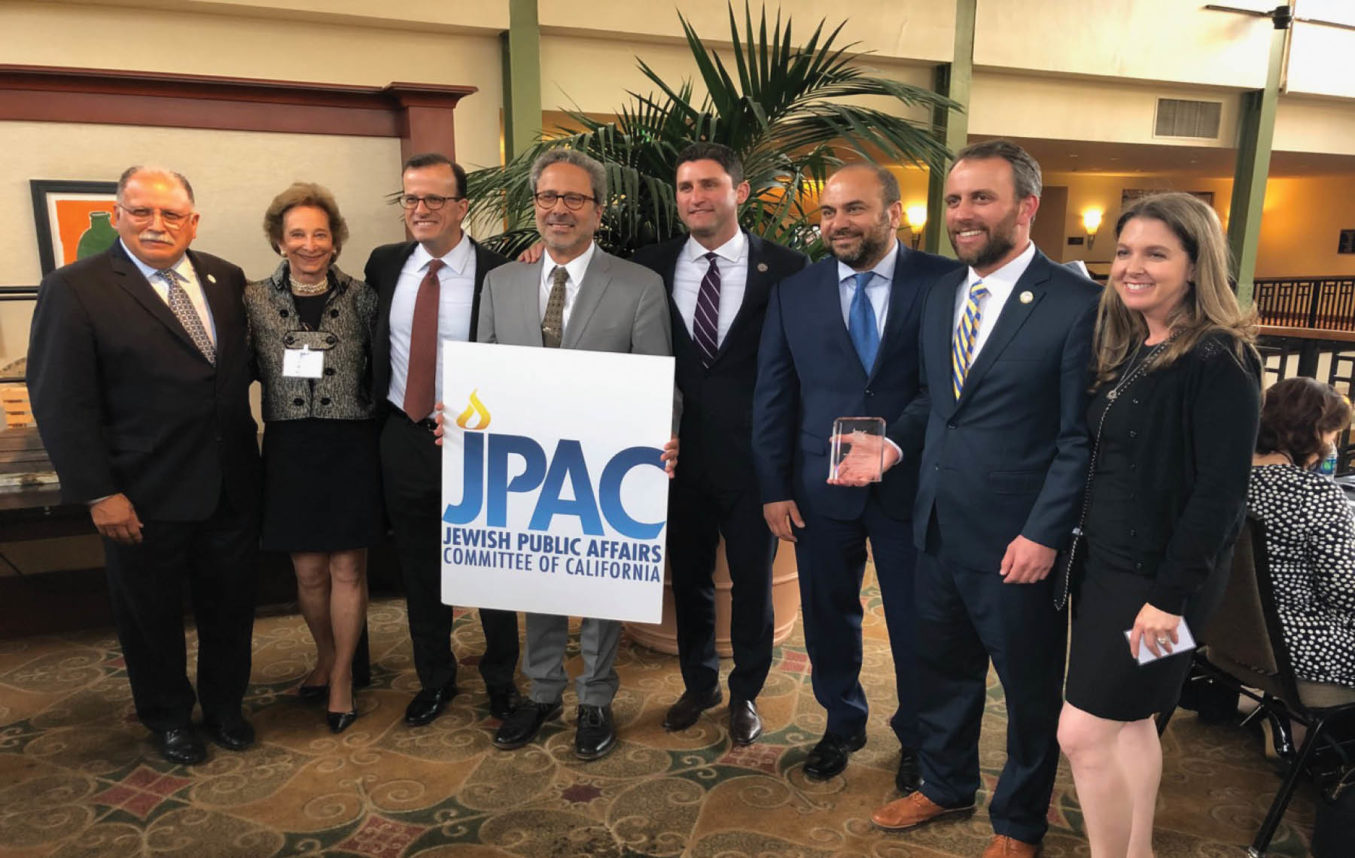
The Jewish Public Affairs Committee of California (JPAC), together with officials, including California Assemblyman Jesse Gabriel, vice chair of the California Legislative Jewish Caucus, and State Sen. Ben Allen, chair of the Jewish Caucus, advocated for the passage of the bill and also made sure it was a priority for the governor. 

“It is because of [the shooting at Chabad of] Poway that Gov. Newsom got behind it and pledged this money,” JPAC Executive Director Julie Zeisler told the Journal.

But, Zeisler added, this was just one example of the largely unknown work JPAC has done at the Capitol. “We are the largest single-state association of Jewish organizations in the nation, and we advocate on behalf of our member organizations in Sacramento,” she said.

The organization’s legislative priorities are determined in part by its 20 board members, which include The Jewish Federation of Greater Los Angeles (JFGLA), the Jewish Community Federation of San Francisco, the Jewish Federation of Greater Long Beach and West Orange County, Jewish Family Service of Los Angeles, Jewish Community Relations Council, the Anti-Defamation League, Hadassah and Bet Tzedek.

During negotiations surrounding California’s 2019-20 state budget, JPAC successfully lobbied for money for Jewish causes, including more than $23 million toward the rebuilding of Jewish summer camps destroyed in the 2018 California wildfires and $6 million for the Los Angeles Museum of Holocaust.

“Even though it’s the Jewish Public Affairs Committee of California, much of the things we are advocating for are benefiting the broader community.” — Julie Zeisler 

JPAC’s 2019 agenda also includes helping the elderly age with dignity, supporting poverty-stricken families, and addressing hate crimes through legislation.

The organization has pushed for other hate crime bills, including AB-300, which will improve accuracy in the reporting of hate crimes by requiring law enforcement to record whether each case is a suspected hate crime, and AB-1052, which requires peace officers to undergo hate crimes training.

JPAC also recently pushed back against a proposed ethnic studies curriculum in California public schools favoring the boycott, divestment and sanctions (BDS) movement against Israel and omitting anti-Semitism in discussing oppression of minority groups. 

On July 23, JPAC sent a letter to the Instructional Quality Commission (ICQ) at the California Department of Education, calling the curriculum “disunifying, exclusionary, and, at times, even delegitimizing.”  

“We’ve been making it clear the community supports the instruction of ethnic studies — that’s not what the issue is,” Zeisler said. “It’s more about the problematic things included in the curriculum.”

A key JPAC program is its annual Advocacy Day in Sacramento, which gives members an opportunity to take part in civic engagement. The 2019 Advocacy Day, held in May, honored Assemblyman Marc Levine (D-Marin County), chairman emeritus of the California Legislative Jewish Caucus, with the JPAC Legislator of the Year award.

JPAC’s 2020 Advocacy Day is scheduled for April 27-28 and will again connect civic-minded participants with members of the California Legislative Jewish Caucus, which is made up of 16 Jewish state senators, assemblymembers and their allies. There also will be panel discussions, lobbying training, and a Legislator of the Year award reception.

“[For] a lot of people not familiar with how the state works and how the state legislature works, this event is really hands-on with understanding how to advocate,” Zeisler said.

Participants in the advocacy day training include those from the JFGLA’s New Leaders Project (NLP). “For many of the NLP participants, this is their first opportunity for direct political engagement,” Valley Beth Shalom Rabbi Noah Farkas, the NLP rabbinic facilitator, told the Journal. 

While many of those who turn out for the JPAC advocacy days identify as Democrats, Zeisler said, “California is definitely more blue and maybe that is drawing more people in who want to hear from those speakers, but we are bipartisan and we aim to be neutral.” 

She added that while JPAC has a focus on Jewish issues, it is also works on more universal concerns, including poverty, aging and fighting discrimination.

“Our goal is to be the voice of the Jewish community in California,” Zeisler said. “We’ve been very successful in doing a lot not only for the Jewish community but for the community at large. I don’t think people realize this all the time, but even though it’s the
Jewish Public Affairs Committee of California, much of the things we are advocating for are benefiting the broader community.”

JPAC Advocates for Jewish Causes Read More »

Mother-Son Team Brings Persian Cuisine to the Frozen Food Aisle

Jordan Elist is on a mission to make Persian food as ubiquitous as Mexican food on the American table. But he doesn’t cook. Fortunately, his Iranian-born mother, Nancy, does. The two are the founders of Baaz Bites, a brand new line of Persian frozen food.

The younger Elist admits this wasn’t his original career plan. After graduating from USC in 2017, the Los Angeles native landed a coveted job with J.P. Morgan in San Francisco. 

“I was really excited about it,”  Elist, 24, told the Journal. “I got to work with some phenomenal companies. Essentially it involved taking tech companies through the IPO process.”

A few months in, though, Elist realized that what most interested him about his work was the founders of these companies — the people who had nurtured the businesses from Day One. 

“I started really admiring entrepreneurs,” he said. “I said, why not take a chance on being an entrepreneur myself? I’m enjoying this job but it may not be where my passions are in the long term.”

Elist began to think about Persian food, which he ate regularly while growing up in Beverly Hills: delicious stews cooked by either his mother or grandmother, kebabs that they would sometimes pick up for easy Sunday night dinners, and tahdig, basmati rice with the irresistible crispy bottom.

“Food was the centerpiece of every single occasion we had at my house,” he said.

After long days at J.P. Morgan, Elist would return to the apartment he shared with two roommates and work on his idea. He kept coming back to tahdig, a dish so beloved that friends and loved ones are known to fight over the last bites of crispy goodness. The prospect of walking away from a steady paycheck was scary. But eventually the “nagging” feeling became overwhelming and Elist gave notice. He had worked there long enough to receive a one-year bonus, which he knew would be helpful in launching the business.

Back in Los Angeles, Elist and his mom spent hours in the kitchen of the family’s Beverly Hills home, trying different recipes and cooking techniques. Early on, Elist became aware of a challenge they faced. His mother had learned many of the recipes she cooked from her own mother. She cooked from memory, from feel. But nothing was written down. So out came measuring cups and spoons.

In the fall of 2018, when they had perfected several recipes, including tahdig made not in a big pot — the traditional method — but in miniature muffin tins, they started to sell the dishes at the Sunday Brentwood Farmers Market, “really trying to see what would ring with consumers who weren’t familiar with Persian food,” Elist said.

Selling at the market and interacting with customers not only helped them determine which dishes were most popular, it helped them decide what language to use on the packaging. For example, most customers weren’t familiar with ‘tahdig.’ But everyone understood “crispy basmati rice cups.”

Last month, Baaz Bites debuted at Vicente Foods in Brentwood. Co+opportunity in Santa Monica, and Culver City started to carry the line a couple of weeks later. Elist is currently in talks with other regional grocery chains.

There are three varieties of Baaz Bites: fesenjon made with pomegranate molasses and walnuts; ghormeh sabsi made with herbs, beans and dried lime; and gheymeh made with split peas, mushrooms and tomatoes. All feature the same golden, little cakes of rice.

As for the name, Elist said “Baaz” is a play on bazaar, the traditional Middle East marketplaces he likes to think of as the forerunner to the modern farmers market, where they got their start. “ ‘Baaz’ means ‘open’ in Farsi,” he added. “We see it as two ways of being open. We are hoping consumers will be open to trying a new cuisine. And Persians are tremendously hospitable people. Baaz Bites are the opening of the Persian kitchen to the mainstream market.”

It’s been a steep learning curve for Elist and his mom, with some unexpected twists along the way. Most notably, in doing research about launching a frozen food product, Elist reached out to several frozen food companies he admires, including Halo Top ice cream. “One thing led to another,” he said. “It morphed into a job interview.” Now Elist is part of Halo Top’s international strategy team.

But he’s still working hard on Baaz Bites. 

“Right now we’re really trying to figure out how to scale up production,” he said. For the time being, it’s just him, his mom and one other person cooking in a commercial kitchen. 

“One of our missions is to have Persian food gain the same kind of notoriety other foods have earned,” he said. “In looking at it more philosophically, we see Baaz Bites as playing a role in gastrodiplomacy, introducing consumers to Persian culture and Persian heritage through Persian cuisine.”

Mother-Son Team Brings Persian Cuisine to the Frozen Food Aisle Read More »

Cookies With a Taste of Tuscany

In Italian, biscotti means cookies — any type of cookies, not only the oblong, crunchy ones that we consider “biscotti” in America. If you walk into a supermarket or a bakery in Italy and ask for a biscotti, you’ll be asking for “one cookies” because biscotti is plural, and you’ll be shown an array ranging from butter cookies to chocolate chip. 

If you’re in Tuscany and want the biscotti-type cookie that’s for dipping into dessert wine or coffee, ask for cantucci, or the sweet diminutive, cantuccini. If you’re in Rome, ask for tozzetti. 

That said, the literal translation of “biscotto” means twice-cooked, and these cookies are exactly that. You will bake them, slice them, then bake them again. This will give them the proper crunch. 

Cantucci are traditionally dipped into vin santo, a Tuscan dessert wine. I highly recommend you get some so you can have the true taste of Tuscany right at your fingertips. 

Italian Mandelbrot: Cantucci Toscani
With Vin Santo, Anise and Orange
(excerpted from “Meal and a Spiel: How to Be a Badass in the Kitchen”)

1 3⁄4 cup raw almonds
3 cups all-purpose flour
1⁄2 cup almond flour or almond meal
1 cup sugar
2 teaspoons baking powder
1 teaspoon kosher salt
Zest of 1 orange
1 teaspoon vanilla extract
1 teaspoon anise seeds
3 eggs
3 egg yolks, divided
2 tablespoons unsalted butter, melted
2 tablespoons vin santo, rum, cognac, brandy or whiskey

Preheat the oven to 350°F. 

Place almonds in a dish towel or a Ziplock bag, and smash them with a meat mallet or a hammer until lightly crushed. Place them on a baking sheet, and bake for 8 minutes. Let cool and set aside.

Place the flour, almond flour, sugar, baking powder, salt, zest, vanilla extract, anise seeds, 3 eggs, 2 egg yolks, butter and vin santo into a large mixing bowl. Use your hands to squish all the ingredients into a dough. It should be just wet enough to stick together in a ball. If not, add a touch more vin santo. Now fold in almonds until they are well distributed.

Cover a baking sheet with parchment paper, and dust with flour.

Divide dough into 3 pieces and mold each one into a flattened log, which should measure about 2 1⁄2-inches wide, 1⁄2-inch tall, and 1-foot long. You want the flattened logs to be uniform so the cantucci will bake evenly.

Brush the remaining egg yolk on the top and sides. This will give the cantucci a nice golden color.

Bake for 25 minutes or until the logs are just firm on top. Remove from the oven.

Let cool for 5 minutes. Slice each log crosswise at a diagonal about 1⁄2- to 3⁄4-inch wide. Continue to let cool for another 25 minutes.

Roll the cantucci on their sides and bake again for 25 minutes, flipping them over halfway through baking.

Let them cool completely. The cooling process will make them crunchy.

Serve with vin santo, a dessert wine of your choice, tea or coffee. Store leftovers in the freezer.

Makes 4 dozen cantucci.


Elana Horwich is the author of “Meal and a Spiel: How to Be a Badass in the Kitchen” and the founder of the Meal and a Spiel cooking school.

Cookies With a Taste of Tuscany Read More »

Weekly Parsha: Bereshit

One verse, five voices. Edited by Salvador Litvak, Accidental Talmudist

“He drove the man out, and stationed east of the garden of Eden the cherubim and the fiery ever-turning sword, to guard the way to the Tree of Life.” –Genesis 3:24

Rabbi and Cantor Eva Robbins
Co-spiritual leader, N’vay Shalom, expandedspirit.org

Adam and Eve, after exerting their free will and not taking responsibility for it, must leave their first home. Their eyes have been opened, knowing the possibilities life holds — good and evil. God warned that if they ate from the Tree of Good and Evil they would die. Yet they live. They receive a reprieve, a theme from the High Holy Day literature, “… Ma-avirin et roah hag’zeirah,” “… Avert the severity of the decree.” They will eventually die but they now have an opportunity to go out into the world, engaging in both the light and the dark side of life and do teshuvah. 

What really stands out for me is the foreshadowing of things to come. The cherubim will sit on the ark in the Holy of Holies, the flame will burn on the altar, and the root in the word stationed, yashkein, shin/chaf/nun, is the same as in the words Mishkan and Shekhinah. I believe these are all symbolic of the place wo/man will come to meet God again outside of Eden, in the Mishkan (sanctuary) with its altar for offerings and its ark, carrying the new and broken tablets. And most poignantly, the Etz Chayyim, protected by whirling swords, will morph into the greatest emanation of God in the world, the Torah, becoming our sacred center after the destruction of the Holy Temple. 

Adam and Eve may never be able to go back to their first home but they will create a new one which all of us will inherit. 

Rabbi Avraham Greenstein
AJRCA professor of Hebrew 

The description of the beings guarding the way to the Tree of Life is a striking one. It is striking not only in the stark threat suggested by “the blade of the revolving sword,” but also in that the guardians tasked to keep mankind from the Tree of Life are called “cherubim,” the same beings depicted on the lid of the Ark of the Covenant. Although the cherubim in this verse are described by Rashi as “angels of destruction,” the cherubim on the ark were a temporal locus for God’s revelation to mankind. God is described as speaking to Moses from between the two cherubim. 

How do we reconcile these two types of cherubim? One type seems to keep mankind from getting too close to divinity, whereas the other is a channel for divine revelation. The Ramban and the Or Ha-Chayim (Exodus 25:21) point out that what made the cherubim of the ark special were the tablets of God’s law that were in the ark. It was the divine word within the ark that facilitated the divine word that manifested outside of the ark. 

Despite the seeming disparity, what the cherubim in both verses have in common is that they are guardians of the Tree of Life, as the Torah found in the ark is likened to a “tree of life” (Proverbs 3:18). By enforcing mankind’s banishment from Eden, the cherubim pointed us to an alternate path to the Tree of Life, that of embracing the Torah and its precepts.

Yoni Troy
Lieutenant, Israel Defense Forces

How can a sword, something that is meant to kill, guard life? The fact that the sword guards the way of life symbolizes life’s boundaries. Just as we face physical restrictions, so too do we need ethical restraints. Ironically, when we respect our limits, our lives becomes more meaningful, not less. 

Every day we live the tension between din v’chesed, law versus lovingkindness. Our feel-good modern world tends to over-idealize lovingkindness, often leaving the law behind. However, God is saying that law is as defining as lovingkindness, at times even more. Sometimes God trusts us, gracing us mercifully, and sometimes God wields the sword. Using the sword does not make God tyrannical but just. This is because boundaries are what move us forward. 

As an IDF officer, I often have to impose the law. I get no enjoyment out of punishing soldiers who get out of line. One never feels good causing pain or discomfort. But my duty requires me to uphold the army’s standards and educate my soldiers, so that if and when we are called upon to protect our country, we will be ready. 

Eventually, when we reach a high enough moral and spiritual level, we no longer will need the sword to keep us in line and we will enter the Garden of Eden freely. May we all reach that stage soon. As we just asked God on Yom Kippur: “May You cleanse with Your abundant mercy, but not through suffering or serious illness.”

Rabbi Rebecca Schatz
Assistant rabbi, Temple Beth Am

Windows and doors tightly shut keep out the odor of California wildfires although miles away, we still smell and see the fire damage on our world. Should I draw nearer in curiosity and maybe helpfulness or stay out of the way? Here we are, at the beginning of our Torah and the first human creations made a mistake and are now in eternal “time out.” They are kept from returning to the scene of intrigue by a revolving, fiery sword, which is a barrier to keep us away from the Tree of Life. Why put something before us and then separate us from it in such a spectacular way? 

The burning bush, a pillar of fire, our Torah written with “black fire on white fire.” Shabbat candles burn and a Havdalah candle is extinguished each time we encounter a move from the mundane to holy, and back again. God speaks to Moses, protects our people, and we connect to holy words all through fire. How can fire keep us away or bring us close? The turning flaming sword keeps us off the path toward the Tree of Life and guides us toward the path of spiritual relationship. In questioning this form of protection, I am doing exactly what our fires are put there to do: intrigue, question and recall the ways God keeps drawing us in with embers of curiosity, warmth and passion to care. I pray to know which fire to turn away from and which to turn toward.

Ilan Reiner
Architect and author of “Israel History Maps”

Seems harsh. The ultimate punishment, as perceived by many, was being expelled from the Garden of Eden. Or was it? This verse raises many questions. If this is a punishment, why isn’t it included with the other punishments God gave to the serpent, woman and man? The previous verse says that God sent the humans out of the Garden to work the land. Why does it now say they were expelled? And why did God need to protect the Tree of Life? Why not remove the garden from existence? 

I believe that the key words to understanding this, are “expel”/“drove out” (va’y’garesh) and “reside”/“stationed” (va’yashken). “Expel” is harsher than “sent away” and used to describe more permanent situations of driving out in anger. Also “reside” is used for a permanent description (as opposed to “dwell”). The Torah is describing a permanent outcome: Humankind no longer has access to the Garden of Eden. So why keep it? 

Perhaps the Torah is telling us that because we no longer have access to the “original” garden, it can be an allegory to any place we’ve been expelled from and strive to return to. A verse in Psalms uses the same verbs describing the Israelite people settling in the land: “He expelled nations from before them … and He caused … Israel to reside in their tents.” For the Jewish people, Israel is the metaphorical “Garden of Eden,” and we should certainly strive to return there, where we are welcomed and embraced.

Weekly Parsha: Bereshit Read More »

When the Untouchables Are Touched

At 4:37 a.m. on July 26, 2019, police responded to a call. A homeless woman was attacked while sleeping on the streets of Portland, Ore. This poem is for her and those like her. 

When the Untouchables are touched there is no hand hold,
no hint of a caress — 

When the Untouchables Are Touched they are kicked and beaten
for the crime of existence — 

When the Invisibles are seen the eye has no softness for their edges sharp-limned their ugly invisibility — 

When the Invisibles are seen the seeing eye blames them for their fate blames them for the eye’s discomfort — 

When the Unheard scream at the dawn and in the night ears close tight against such dissonance — 

When the Unheard scream their voices are drowned out
by the unconcerned laugh of the content  

When the Unhoused lie down in the gutters and the streets cardboard is their only friend— 

When the Unhoused lie down in their urine and their filth the nose crinkles in distaste— 

Close the gates of the eye Close the gates of the ear Close the gates of the nose Close the gates of the heart Close the gates of the mind 

When the Untouchables approach close the hands into fists
and beat, beat, beat away that tremulous divine spark lighting another way


Rabbi David Kosak is a poet and the senior rabbi of Congregation Neveh Shalom in Portland, Ore., the largest West Coast Conservative congregation north of Los Angeles. He, his community and partners are building villages of tiny homes to transition the underemployed off the streets of Portland and into safe and secure housing.

When the Untouchables Are Touched Read More »