fbpx

October 23, 2019

Jewish Princeton Student ‘Pained’ At Speaker’s Israel Remarks

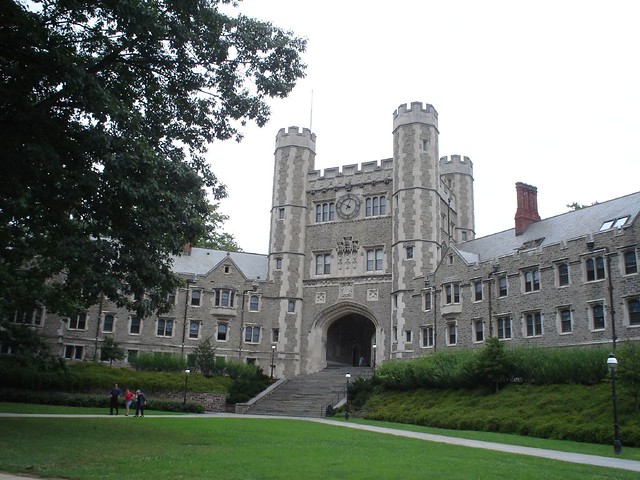
A Jewish student at Princeton University wrote in an Oct. 20 op-ed for the Daily Princetonian that she was pained at a panelist’s Oct. 10 remarks on Israel, which including calling an Israel Defense Force (IDF) veteran “a concentration camp guard.”

The Oct. 10 “Fighting for Justice: From Gaza to Ferguson” panel featured political scientist Norman Finkelstein, Amnesty International’s Edith Garwood and People’s Organization for Progress Chair Lawrence Hamm and featured the African American Studies Department, Near Eastern Studies Department, Undergraduate Student Government (USG) Projects Board, Alliance for Jewish Progressives (AJP) and Princeton Young Democratic Socialists as co-sponsors, according to the Princetonian.

During the panel, a member of the audience, student and IDF veteran Jacob Katz challenged Finkelstein on his assertion “that Palestinian peace efforts are entirely nonviolent,” arguing that he saw Palestinians commit violence in the Gaza Strip during his time stationed on the Israel-Gaza border, per the Princetonian.

Finkelstein, who is Jewish and the son of Holocaust survivors, replied that meant that Katz, the grandson of Holocaust survivors, was “a concentration camp guard.” Earlier in the panel, Finkelstein called Gaza “a concentration camp” because refugees are killed if they try to flee.

“That’s a hard thing for a Jew to have to swallow, but that’s a fact,” Finkelstein said to Katz. He later added, “Someone like you, with no shame, to say, ‘I am confining a million children in a concentration camp, and you’re not ashamed of that, that’s how ugly [Israel’s] become.’” The audience applauded.

Finkelstein also accused Israeli snipers of being “biped bloodhounds drinking the blood of one million [Palestinian] children” and didn’t condemn Hamas and Hezbollah “if they’re fighting for their basic rights,” according to the Princetonian.

Levy argued that Finkelstein’s remarks were anti-Semitic, pointing to the International Holocaust Remembrance Alliance’s (IHRA) definition of anti-Semitism listing of comparisons of Israel to the Nazis and invoking a “blood libel” toward Israelis as an example of anti-Semitism.

“I think Finkelstein is guilty on all these counts,” Levy wrote. “Finkelstein claims that Jewish students are calling him anti-Semitic to distract from having difficult and important conversations about Palestine and ‘Gaza’s martyrdom.’ How dare he claim this when he was the one who used this panel on intersectional alliance as a platform for his anti-Semitism?”

She added that she doesn’t like diluting the Israel-Palestinian conflict in portraying “Israel or Palestine as an evil aggressor. I think we are smarter than that, and I think both Israelis and Palestinians deserve more than that — more than unfairly minimizing a complex and nuanced conflict.”

Levy then wrote regarding the people that applauded, “Did you wake up that morning thinking you would be complicit in an anti-Semitic attack, or did it just happen (whatever that means)? Why did you snicker? Why did you clap? Why did you sit idly by as Finkelstein said harmful and hurtful anti-Semitic things?”

When asked for comment on Levy’s op-ed, Finkelstein told the Journal in an email, “Did you happen to notice any evidence supporting any of the accusations?  I didn’t. It seems she was trying to break the Guinness Book of World Records for the number of times you can say ‘anti-Semitic’ in an op-ed.”

In their Oct. 11 headline of the panel, the Princetonian called Finkelstein’s remarks “anti-Semitic” and specifically referred to his Israeli snipers’ accusation as an “anti-Semitic trope.” Finkelstein pushed back in an Oct. 15 op-ed to the Princetonian, calling the Princetonian’s characterization of his comment as “anti-Semitic” as “libel.”

He argued: “Israel has imposed an illegal and inhuman medieval siege on Gaza since 2006 that has been uniformly condemned by humanitarian and human rights organizations as a flagrant violation of international law” and added that “Israeli sociologist Baruch Kimmerling of the Hebrew University and a leading Israeli journalist covering Gaza, Amira Hass of Haaretz, have both described Gaza as a ‘concentration camp’ and Israeli snipers have been intentionally targeting with lethal weapons children, medics, journalists, and disabled persons nonviolently protesting the blockade of Gaza.”

Eight members of AJP argued in an Oct. 14 op-ed for the Princetonian that Finkelstein “crossed the line” with his “drinking the blood remark” because it “[invokes] the well-known anti-Semitic trope of blood libel, further derailing the conversation and reinforcing a heinous misrepresentation of Jewish ritual that was brought about by and has resulted in many centuries of persecution and suffering.” Finkelstein defended that comment in his op-ed, citing “the world’s leading authority on Gaza’s economy, Sara Roy at Harvard University, who is also the daughter of survivors of Auschwitz” saying that “innocent human beings, most of them young, are slowly being poisoned by the water they drink’” in Gaza.

University spokesperson Ben Chang said in a statement to the Journal, “Free speech and inclusivity are central to Princeton’s mission and the role of the University as a center for free inquiry and the search for knowledge.  The University’s fundamental commitment is to the principle that debate or deliberation may not be suppressed because the ideas put forth are thought by some or even by most members of the University community to be offensive, unwise, immoral, or wrong-headed. I am encouraged to see students writing and sharing their views with their fellow community members in a place like the student newspaper on topics as important as these.”

Jewish Princeton Student ‘Pained’ At Speaker’s Israel Remarks Read More »

Letters: Poll: Jews on Trump, Warren, Anti-Semitism

Poll: Jews on Trump, Warren, Anti-Semitism

The cover story of the Journal’s Oct. 18 edition reported the results of a survey of Jews in Los Angeles, with a headline that Jews are “highly informed about public affairs” (“Who Are the Jews of the City of Angels?”). Based on the results of the survey, it is questionable whether Jews are highly informed or simply have no interest in Jewish values and the Jewish people. The results show that 75% of Jews disapprove of President Donald Trump and 70% strongly disapprove, which was significantly higher than the Democratic share of party identifiers.

Trump has been one of Israel’s greatest friends and, by extension, the Jewish people, with the possible exception of President Harry Truman. Notwithstanding, Jews appear to have a genetically built-in support for the Democratic Party even though it has become a welcoming place for vocal Jew haters among Democratic members of Congress. For example, when Rep. Ilhan Omar (D-Minn.) went on an anti-Jewish tirade, including a tweet that said “it’s all about the Benjamins,” and an allegation that Jews have a dual loyalty to the U.S. and Israel, rather than condemning her for her bigotry against Jews, the party leadership sponsored a meaningless condemnation of all sorts of bigotry. Similarly, when Israel refused to allow Omar and Rep. Rashida Tlaib (D-Mich.) to enter the country, which cited their support of the boycott movement against Israel, Senate Minority Leader Steny Hoyer (D-N.Y.) and House Speaker Nancy Pelosi (D-San Francisco) condemned Israel. The Democrats must assume that Israel should be obliged to admit visitors who declare their support for people who want to see Israel destroyed. Also, two of the Democratic Party’s leading presidential contenders, Elizabeth Warren (D-Mass.) and Bernie Sanders (I-Vt.), have taken on senior advisers who support the boycott of Israel.

Notwithstanding, Jews still support the Democratic Party overwhelmingly even though the Democratic Party takes the Jewish vote for granted. Correspondingly, the message to Republicans is that no matter how much they support Israel and by extension the Jewish people, the Jewish vote will remain solidly Democratic. If the majority of Jews don’t come to realize how inimical the Democratic Party has been to Israel and by extension, the Jews, the Democratic Party will take the Jews for granted and Republicans can rightfully assume that no matter what they do for the benefit of Israel and the Jews, they won’t get the Jewish vote. This makes Jews irrelevant in the political calculus of both parties. This could have a long-term adverse effect on how the government addresses Jewish issues.
Marshall Lerner, Beverly Hills

A fascinating feature. Well done!

I can directly relate to one thing that captured my attention: The vast majority — 69% of the Jews in L.A. — are not affiliated with a synagogue or temple.

Shouldn’t we wonder why? My experience may give the answer: When my wife and I first moved to Los Angeles in 1952, we joined the Young Marrieds Group with about 50 member couples at a local temple. As the result of an encounter with the rabbi, all of us except one couple decided not to become members. Several years later, after my wife and I had joined a second temple where we religiously attended all services, again we had an encounter with the rabbi. So, we joined a third temple. And, once again the rabbi did something that motivated our withdrawal.

Each of these three rabbis acted in such a way to indicate that he/she was using the leadership position only for his/her personal interests — not those of the members. Three strikes and you are out! Since then, we haven’t affiliated with any synagogue or temple. According to Raphael Sonenshein’s study, I guess we are in the majority.

It would be of interest to carry Sonenshein’s research one step further. Ask why! Maybe we can all learn from this.
George Epstein, Los Angeles

The Syria Debacle
I concur with Michael Koplow in his analysis on the danger to Israel regarding the Turkish invasion of Syria (“The Israel Angle to Trump’s Syria Sellout,” Oct. 18). On a broader scale, George W. Bush’s preemptive war in Iraq began the massive destabilization of the Middle East, much to Iran’s benefit. Now, President Donald Trump has green-lighted Turkey’s incursion into Syria to destroy our erstwhile partner the Kurds and enable ISIS to reconstitute and pose an existential threat to the Western world. Whatever leadership and leverage we had in the region we have now turned over to three of Trump’s favorite dictators: Russian President Vladimir Putin, Turkish President Recep Tayyip Erdogan and Syrian President Bashar Assad. If we can get past the immorality of turning our back on the Kurds, who fought for our security, we at least can agree that the military and diplomatic consequences are potentially catastrophic.
Barbara H. Bergen, Los Angeles 

Exploding Paradigms of Evil
In these fluid times, would it be acceptable (or even possible) to make a movie about a 10-year-old child growing up in the 1950s South, in a white supremacist family, who idealizes the Ku Klux Klan in an era when the organization with its cross burnings and white hooded demonstrators was the nemesis of the civil rights movement, and whose imaginary friend is the Imperial Wizard of the KKK (“Nazimania Abounds in Taika Waititi’s ‘Jojo Rabbit,’ ” Oct. 18)

Maybe now is the time to explore again (and explode) all our greatest nightmares, stereotypes and paradigms of evil so that they lose their frightening grip on our imaginations. My grandparents, Chaim and Malka Goldman, brave and loving refugees from Nazi-occupied Vienna, would say, “Yes!”
Mina Friedler, via email

The Importance of Touch and the Elderly
Elderly people may not be homeless but in many ways they have a lot in common with the homeless (“Who Will Hug Me When I’m Old?” Oct. 18).

Like the homeless, senior citizens are seen but only obliquely acknowledged.

Like the homeless, senior citizens are tolerated but not accepted.

Like the homeless, there have been reams of words about the plight of older people but implementable solutions and actions are rarer than L.A. precipitation.

Like the homeless, senior citizens ask only for the basic amenities of life and a kind word or gesture.

And like the homeless, senior citizens seek to regain their humanity through the literal physical contact with their families, neighbors and communities.

Touch, in the form of a hug, a handshake and a shared laugh points older people, as well as the homeless, to the door of love that has for too long exceeded their grasp and been immune to their outreach.

Touch signals that wizened countenances, eyes lined with crow’s feet and bodies that no longer respond on demand are deserving of the same admiration and love that older people dispense in dollops to all those who are fortunate enough to accept what is staring them in their face.

And physical contact with older adults unequivocally states that the giving and receiving of love will never become old-fashioned.
Marc Rogers, North Hollywood


Now it’s your turn. Submit your letters to the editor! Letters should be no more than 200 words and must include a valid name and city. The Journal reserves the right to edit all letters.
letters@jewishjournal.com.

Letters: Poll: Jews on Trump, Warren, Anti-Semitism Read More »

Czech Parliament House Passes Anti-BDS Resolution

The lower house of the Czech Republic’s parliament passed a non-binding resolution on Oct. 22 that denounces the boycott, divestment and sanctions (BDS) movement as anti-Semitic.

The Times of Israel reports that the resolution’s text “condemns all activities and statements by groups calling for a boycott of the State of Israel, its goods, services or citizens” and urges the Czech government to cease any financial support organizations that boycott Israel.

Additionally, the resolution condemns anti-Semitism in all forms, including “any questioning of the State of Israel’s right of existence and defense” and Holocaust denialism.

The resolution passed with a vote of 120 in favor and 20 against, according to the Jerusalem Post.

Israeli Foreign Minister Israel Katz praised the resolution in a tweet.

“I wish to thank our Czech friends for this step, which reflects the true friendship between our countries,” Katz tweeted. “I call on more Parliaments to follow suit.”

The Anti-Defamation League hailed the resolution as “exemplary” in a tweet.

“With anti-Semitism on the rise, all European parliaments should follow this important move,” they added.

StandWithUs Co-Founder and CEO Roz Rothstein similarly tweeted, “THANK YOU CZECH PARLIAMENT -for passing a ruling that will fight any attempt to boycott #Israel.”

The German Bundestag [parliament] passed a similar resolution condemning BDS in May, which called the movement’s “patterns of argumentation and methods” anti-Semitic.

Czech Parliament House Passes Anti-BDS Resolution Read More »

What’s Happening: #ShowupforShabbat, ‘Marvelous Rabbi Feinstein’

FRI OCT 25

Rabbi Feinstein Tribute
This Shabbat, Westside-based Reform congregation University Synagogue honors its retiring Rabbi Emeritus Morley Feinstein. “The Marvelous Rabbi Feinstein,” a two-evening celebratory salute to Feinstein, features a Friday night musical Shabbat service and a Saturday night dinner and Havdalah. Guests include University Synagogue Cantor Emeritus Jay Frailich, songleader Steve Dropkin and the University Synagogue clergy. Stepping down after 17 years at the Brentwood Reform synagogue, Feinstein is a Beverly Hills High School graduate who previously led congregations in San Antonio and South Bend, Ind. Friday 7:30 p.m. services. Festive oneg follows. Free. RSVP appreciated. Saturday 5:30 p.m. Havdalah and dinner. Dinner tickets $50 general admission, $118 reserved seating. University Synagogue, 11960 Sunset Blvd., Brentwood. (310) 472-1255.

#ShowUpForShabbat
Tonight and Shabbat day, synagogues across Los Angeles are honoring the one-year anniversary of the Tree of Life massacre in Pittsburgh. On Oct. 27 last year, a gunman killed 11 Jews and injured seven others on Shabbat. Participating synagogues include Wilshire Boulevard Temple, Valley Beth Shalom, IKAR, Kehillat Israel, Sinai Temple, Temple Beth Am, Temple Emanuel of Beverly Hills, Temple Isaiah, Temple Israel of Hollywood, Valley Outreach Synagogue and Congregation B’nai Emet. For a complete list of participating synagogues and service times, click on the link above.

SAT OCT 26

Natasha Zaretsky

Natasha Zaretsky
Cal State Northridge’s seventh annual Maurice Amado Foundation Lecture in Jewish Ethics features anthropologist Natasha Zaretsky, who studies the politics of memory in the Americas and the Jewish Diasporas. During her lecture, “A View From Afar: Jewish Memory and Culture Against Violence,” Zaretsky discusses what we can learn about Jewish belonging and inclusion in the public sphere from a more global, hemispheric perspective. She draws on her research with Jews in Argentina, who experienced the 1994 bombing that killed 85 Jews, the largest anti-Semitic attack since World War II. 12:30 p.m. Free. RSVP requested. Valley Beth Shalom, 15739 Ventura Blvd., Encino. (818) 677-4724.

“Living After”
Performance group Jewish Women’s Theatre (JWT) presents poignant, moving and funny stories about what it means to live with and live after cancer. The show, which features select JWT stories from previous seasons, coincides with National Breast Cancer Awareness month. 8 p.m. Saturday. $35 advance. $45 at door. The Braid, 2912 Colorado Ave., No. 102, Santa Monica. (310) 315-1400.

“Yidlife Crisis”
Jamie Elman and Eli Batalion, co-stars of the Yiddish-language YouTube comedy series, “YidLife Crisis,” headline a night of comedy, music, skits and videos. Live and in the fleish, the comedic duo from Montreal pays homage to the Yiddishkayt and Jewish comedic lens on life with which they were raised. 8-10 p.m. $75 preferred seating, includes dessert reception with both comedians. $40 general admission presale, $45 at the door. $25 students with IDs and super seniors 80-and-older. All tickets will be held at Will Call. Shomrei Torah Synagogue, 7353 Valley Circle Blvd., West Hills. (818) 854-7650.

SUN OCT 27

Tour de Summer Camps
Calling all cyclists: The Jewish Federation of Greater Los Angeles’ annual Tour de Summer Camps fundraising event takes place today, offering four separate routes for cyclists of all skill-levels. Options are 18-, 36-, 62- and 100-mile routes. The event also includes Cycle at Camp, a fast-paced, one-hour session on a stationary bike with an expert instructor. Proceeds support scholarships at Jewish summer camps, which is seen as a primary driver of Jewish identity and is one of the L.A. Federation’s top priorities. Must be 14 or older to ride. 6 a.m-3 p.m. $55 registration fee. Ages 30 or older must meet $500 fundraising minimum; ages 16-29 must raise $250 minimum. Camp Alonim, Brandeis-Bardin Campus of American Jewish University, 1101 Pepper Tree Lane, Simi Valley. (323) 761-8013.

Carl Bernstein

Carl Bernstein
Investigative journalist and author Carl Bernstein is the inaugural speaker of the Nick Beck Investigative Journalism Lecture Series. In the early-1970s, Bernstein and reporter Bob Woodward broke the story on Watergate, which led to the resignation of President Richard Nixon and set the standard for modern investigative journalism. The reporters — portrayed in the film “All the President’s Men” — won a Pulitzer Prize. Tonight, Bernstein speaks about many topics, including the current congressional impeachment inquiry into President Trump. A VIP meet-and-greet reception follows. 3-5:30 p.m. L.A. City College, Camino Theater, 855 N. Vermont Ave., Los Angeles. $35 general admission, $75 VIP. (323) 953-4011.

Charity Poker Tournament
The men’s club of Temple Ahavat Shalom holds its second annual Texas Hold ’Em Poker Tournament in support of temple and local community youth projects. The grand prize at the Vegas-style tournament is $1,000 and all players making the final table win cash prizes. Temple Ramat Zion and Temple Judea also participate. 4 p.m. registration. 5 p.m. start of play. $85 donation includes $1,000 in playing chips, light dinner, one drink and five raffle tickets. Must be 18 or older. Temple Ahavat Shalom, 18200 Rinaldi Place, Northridge. For more information, contact Howard Miller at hmiller12@socal.rr.com or (818) 993-0796.

“Liberty Heights”
Director Barry Levinson’s 1999 period drama, “Liberty Heights,” is a semi-autobiographical story of a Jewish boy growing up in 1950s Baltimore and falling in love with a black classmate. As part of its film series, Pico-Robertson congregation Beth Chayim Chadashim (BCC) screens the film, inviting people to enjoy Halloween with a nice, complex Jewish family at a time when Jews were just finding their place in America. The evening includes a post-film discussion and all the popcorn you can eat. 6-10 p.m. Free. Beth Chayim Chadashim, 6090 W. Pico Blvd. (323) 931-7023.

Cachibol Tournament
Commemorating Breast Cancer Awareness Month, mothers from Mamanet, an Israeli mothers cachibol league, hold their third annual “I’m Aware” tournament. Cachibol, played with a net, may remind Americans of volleyball. The mothers’ motto is “We play on the court, not with our lives.” This evening, come to Newbury Park and support breast cancer awareness. Tournament time 4-9 p.m. Ceremony 5 p.m. Free. Mamba Sports Academy, 1011 Rancho Conejo Blvd., Newbury Park. (844) 518-7246.

Bat Mitzvah Program
Over 10 Sunday mornings, Rebbetzin Jordana Topp leads a bat mitzvah program for fifth- and sixth-grade girls and their mothers, focusing on the impact of Jewish women throughout the ages. The girls and women study the arc of history from the matriarchs of the Torah to today, through art, drama, text and music. Through Feb. 2. 10-11:30 a.m. $100 Beth Jacob Congregation members, $150 general. Beth Jacob Congregation, Ives Youth Lounge, 9030 W. Olympic Blvd., Beverly Hills. (310) 278-1911.

Susan Faludi
Pulitzer Prize-winning journalist and author Susan Faludi, whose memoir, “In the Darkroom,” about her father who underwent transgender surgery at age 76, speaks this afternoon at USC’s Casden Institute. After her lecture —USC’s 2019 Jerome Nemer Lecture — professor Sharon Gillerman of Hebrew Union College-Jewish Institute of Religion gives a response. 4:45-7 p.m. Free. USC Casden Institute, University Park Campus. (213) 740-3405.

MON OCT 28

“Judaism in Modernity”
Rabbi Tal Sessler of the Sephardic Temple leads “Judaism in Modernity: Challenges and Opportunities,” a six-week class highlighting what great thinkers of recent times have said about the Jewish condition in modern times. Among the thinkers whom Sessler’s lectures include are Rabbi Abraham Joshua Heschel; Amos Oz; Rabbi Menachem Mendel Schneerson, the Lubavitcher Rebbe; and Rabbi Jonathan Sacks. The Academy for Jewish Religion California organizes the series. Class concludes Dec. 2. 7-9 p.m. $90. UCLA Hillel, 575 Hilgard Ave., or online via Zoom. (213) 884-4133.

TUE OCT 29

“Israeli: Then and Now”
Rabbi Nolan Lebovitz of Adat Shalom, who spent 10 years in the film industry and created the documentary “Roadmap Jerusalem,” speaks on “Historical Contemporary Jeruselum,” part of “Israel: Then and Now,” a new program for all ages at Sinai Temple. The one-hour session explores historical context with a discussion on how to relate the crucial role of Israel to children and grandchildren. 8-9 a.m. Free. Sinai Temple, 10400 Wilshire Blvd. (310) 474-1518.

WED OCT 30

Joel Stein
Provocative humor columnist Joel Stein — whose new book is “In Defense of Elitism: Why I’m Better Than You and You Are Better Than Someone Who Didn’t Buy This Book,” which seeks to explain why Donald Trump won the 2016 presidential election — headlines the latest Writers Bloc event. Appearing at American Jewish University, Stein appears in conversation with scholar Reza Aslan. 7:30 p.m. $20 general admission, $42 includes the book. American Jewish University, Shapiro Memorial Synagogue, 15600 Mulholland Drive, Los Angeles. (310) 440-1572.

Rami Kleinstein
Israeli pop star Rami Kleinstein, known for his soft love songs, calm voice and delicate piano playing, headlines the concert “Rami Kleinstein and the Piano” at Adat Ari El. The New York native, whose style has drawn comparisons with Elton John and Billy Joel, performs a selection of original songs from his enormous personal repertoire. Kleinstein appears at the Valley Village synagogue as part of a North American tour. 8-11 p.m. $45-$85. Adat Ari El, 12020 Burbank Blvd., Valley Village. (818) 766-9426.


Have an event coming up? Send your information two weeks prior to the event to ryant@jewishjournal.com for consideration. For groups staging an event that requires an RSVP, please submit details about the event the week before the RSVP deadline.

What’s Happening: #ShowupforShabbat, ‘Marvelous Rabbi Feinstein’ Read More »

Bel Air Affaire, Yom Kippur With Big Names

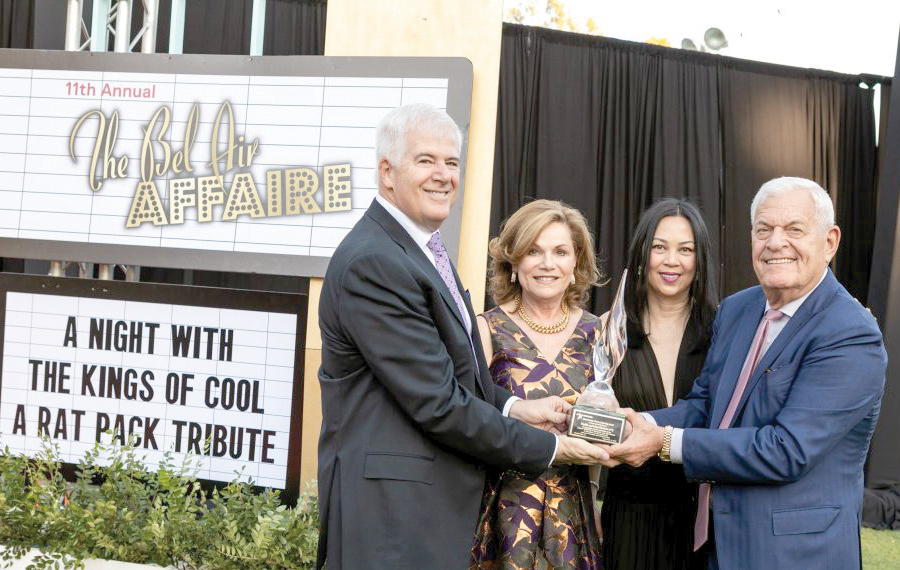
American Friends of Hebrew University (AFHU), which raises funds and awareness for Hebrew University in Jerusalem, held its 11th annual Bel Air Affaire fundraiser on Sept. 14 at the home of Ron Burkle.

The theme of the evening was “Vintage Las Vegas,” with statues of Marilyn Monroe, Clark Gable and others greeting the 225 guests. A Rat Pack tribute performance, featuring the music of Frank Sinatra, Dean Martin and Sammy Davis Jr., entertained attendees.

Hebrew University professor Asher Cohen delivered welcoming remarks and Hebrew University student ambassador Shai Deutsch explained the importance of scholarships to the school’s students.

The late couple Phyllis and Lloyd Berkett received the AFHU Torch of Learning Award, with their family members Martha and Barry Berkett accepting the award on their behalf.

The evening raised nearly $2 million for student scholarships at Hebrew University, AFHU said.


Elana Wien, inaugural executive director of Safety Respect Equity (SRE), a Jewish coalition founded to address sexual misconduct in the workplace and other Jewish spaces. Courtesy of Elana Wien

Elana Wien has been named the inaugural executive director of Safety Respect Equity (SRE), a Jewish coalition founded to address sexual harassment and gender discrimination in the Jewish community.

Wien previously served as the vice president for the Center of Designed Philanthropy at the Jewish Community Foundation Los Angeles, where she guided the investment of millions of dollars each year in the Jewish world and beyond. 

Her hiring at SRE, which followed a national search, becomes effective in November.

“Elana impressed us as both a seasoned, thoughtful professional and as a visionary, creative and entrepreneurial leader,” Lisa Eisen, president of the Charles and Lynn Schusterman Family Foundation and co-chair of the SRE Coalition Search Committee, said in a statement. “Known as a rising star in Jewish life, Elana will be an outstanding inaugural executive director to take our Coalition from start-up phase to the next level of impact. We are thrilled to welcome Elana to the team and look forward to SRE reaching new heights under her leadership.” 

In a statement, Wien said she appreciated the opportunity to lead the coalition. 

“I have been inspired seeing the SRE Coalition emerge over the past 18 months from an idea to a powerful partnership of individuals, organizations and funders committed to using their voices and resources to make safety, respect, and equity a priority for Jewish professional spaces and beyond,” she said. “I can’t think of more meaningful work or a more important time to engage in it. I am grateful to the SRE Coalition Advisory Board and Search Committee for their selection, and look forward to achieving great things together.”

According the coalition’s website, SRE was founded in the wake of the #MeToo movement “to ensure safe, respectful and equitable Jewish workplaces and communal spaces by addressing sexual harassment, sexism and gender discrimination.” 

Composed of organizations and individuals with shared goals, SRE is fiscally sponsored by the New Venture Fund, a public charity that supports public interest projects, and managed by Third Plateau Social Impact Strategies, which helps nonprofits and mission-driven companies expand their impact.


Dr. Robert Adler, 71, a member of Beth Jacob Congregation, competed in his 13th Malibu Triathlon. Photo by Dr. Lisa Stern

Children’s Hospital Los Angeles (CHLA) pediatrician Dr. Robert Adler, 71, competed in his 13th Malibu Triathlon on Sept. 15, completing a half-mile swim, 17-mile bike ride and 4-mile run.

His large family, including 15 grandchildren, cheered him on. Keeping with family ritual, Adler’s 16-year-old granddaughter took his eyeglasses while he did the swimming portion and met him when he emerged from the water to complete the first leg of the race.

Adler has trained hundreds of other pediatricians across California and treated thousands of patients in his five decades at CHLA. He is an Orthodox Jew who fits his training regimen around morning prayers at Beth Jacob Congregation and his schedule as chief medical director of CHLA Health Network. 

His workout regimen includes treadmill work two to three times a week, 5 miles at a time, and a 20-mile bike
ride on Sundays with his grandkids through Nichols Canyon or a pier-to-pier swim in Manhattan Beach with swim-ming friends.

“For me, the exercise helps me cope with the stress,” he said. “It gets me thinking about ideas and helps me relax. If I go two days without exercise, I feel tired.”

The triathlon benefits pediatric cancer research. According to CHLA, Adler is proud to have contributed to the more than $11 million the triathlon has raised for CHLA since 2006. 

Having made the podium twice, he likes the camaraderie of the event. 

“I also enjoy the team spirit, seeing my colleagues from work in a completely different light and environment. There is no hierarchy out here,” he said. “We are all in our wet suits having a good time.”

Plus exercise helps him cope with the challenges that come with his day job, Adler said.

“Exercise is a time when you can clear your mind and work out issues that come up at work,” he said. “And with swimming — that’s my favorite event — no one talks; it’s total sensory deprivation.”

He began running marathons two decades ago at age 50. When CHLA’s cancer research program became the primary beneficiary of the Malibu triathlon 13 years ago, his son urged him to sign up. He borrowed a bike and a wetsuit at the last minute and off he went.

However, last month’s triathlon will likely be Adler’s last. 

“My doctor thinks this is a great thing but my wife says this is it for me after 13 years,” he said. “But I will still do the relays with my grandchildren.”


Stanley Black, left, and Elan Carr attend Yom Kippur services at the Beverly Hills Temple of the Arts at the Saban Theatre. Photo courtesy of Temple of the Arts

Rabbi David Baron of the Beverly Hills Temple of the Arts at the Saban Theatre brought many high-profile guests to his congregation’s Yom Kippur service this year.

Attendees included Jonathan Morales, who was working as an off-duty Border Patrol agent when he responded to the Chabad of Poway synagogue shooting; renowned violinist Vijay Gupta, formerly of the Los Angeles Philharmonic, who played one of the Violins of Hope rescued from the Holocaust; Holocaust survivor Susanne Reyto, chair of Violins of Hope; acclaimed cellist Michael Fitzpatrick; Lana Melman, a leader in combating the boycott, divestment and sanctions (BDS) campaign against Israel; and Judea Pearl, father of the slain Wall Street Journal reporter Daniel Pearl, who talked about anti-Semitism and Zionism, and October as a global music month in his son’s memory.

Service participants included Cantors Ilysia Pierce and Jordan Bennett, plus the temple’s choir composed of singers from the Los Angeles Opera and the Los Angeles Master Chorale, led by the temple’s music director, Sharon Farber.  

Additional service participants included Elan Carr, the U.S. State Department’s special envoy for monitoring and combating anti-Semitism, film critic Leonard Maltin and businessman and philanthropist Steve Tisch.


Wanna be in Movers & Shakers? Send us your highlights, events, honors and simchas.
Email ryant@jewishjournal.com.

Bel Air Affaire, Yom Kippur With Big Names Read More »

Jewish Ballplayers Flashed Leather on Yom Kippur. How Can We Forgive Them?

Who doesn’t love the story? 

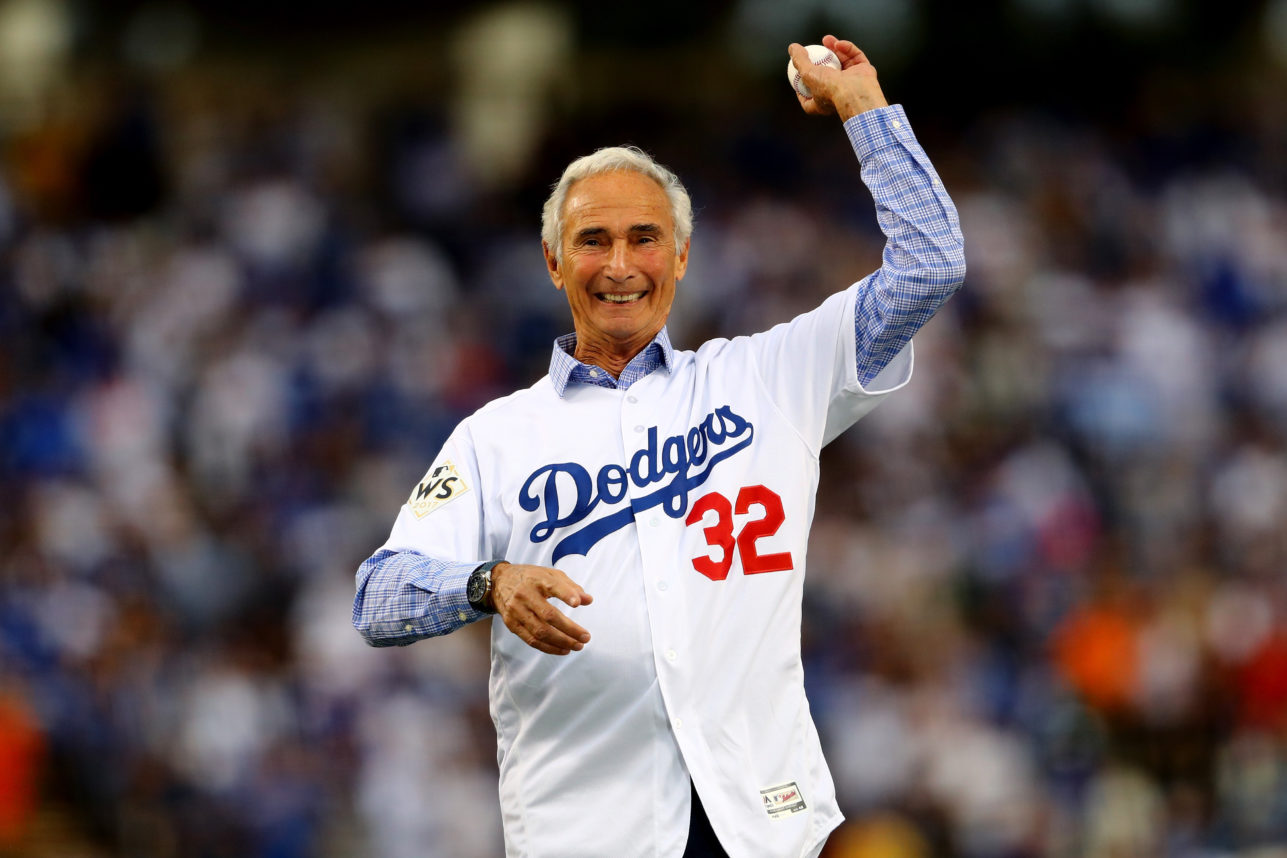
It’s the 10th of October in 1965, and the Dodgers are playing in Game 1 of the World Series. It also happens to be the 10th day of Tishrei (5726 if you’re keeping score at home), which is to say it’s Yom Kippur, so Sandy Koufax, who is not only the Dodgers’ ace but also the best pitcher in baseball, isn’t pitching. Instead, Don Drysdale gets the start but he’s pounded by the Minnesota Twins lineup, giving up seven runs (three earned). When Dodger Manager Walter Alston comes to the mound with an early hook, Drysdale — a future Hall of Famer — supplies the punch line. 

“Hey skip,” he says, “I bet right now you wish I was Jewish, too.”

All’s well that ends well. The Dodgers went on to win that World Series in seven games— an outcome that currently feels unfathomable to most fans my age or younger — and Koufax’s abstention on Judaism’s holiest day became a defining moment for American Jews. Koufax showed that Jews could publicly observe their faith even if they weren’t, strictly-speaking, observant. By sitting out, this blue-cap-wearing Jew taught us that you don’t have to be Black Hat to be proud of who you are or to sacrifice for your faith. And, of course, he highlighted a deep, inexorable truth that secular media is loathe to admit: Jewish people are irreplaceable!

The story of Jews starring on the baseball field doesn’t end with Koufax. There have been a bunch; I won’t bother to list them all here.  There’s a Wikipedia page, etc. (Shout out to Shawn Green, though.) Indeed, there was something of a Jewish renaissance on the diamond this season. The Dodgers’ Joc Pederson hit 36 homers, Atlanta Braves lefty Max Fried (a Harvard-Westlake grad) won 17 games, and the Houston Astros’ Alex Bregman is the odds-on favorite for Most Valuable Player of the American League. 

Now, I want you to take a deep breath before I tell you that this fall, all three played on the 10th of Tishrei, Oct. 8-9, which was Yom Kippur. (5780 if you’re scoring at home.)

The horror! Twitter users pointed out that the three non-fasters received their just desserts swiftly as Atlanta, Houston and L.A. were each inscribed in the loss column that day. We’d like to think that because a Jewish outfielder batted leadoff while many Jews were reading the story of Jonah, the Gates of Heaven slammed shut on the Dodgers’ title hopes a few hours later. S’char va’onesh, reward and punishment: Who doesn’t love that story?

It’s fair to feel let down by what feels like a missed opportunity for high-profile Jews to cover for the rest of us during the Yamim Noraim. It’s not like taking those days off still doesn’t pose challenges in the workplace. Earlier this month, New York Metropolitan Transit Authority officials reportedly asked an Orthodox Jewish train conductor to prove he would be observing Rosh Hashanah. Many of us, I’m sure, have hesitated even to ask for the day off. At my first job after graduating from college, project managing at a big corporation in Wisconsin, I ran into a spate of three-day chags in the early going. I took them off, and it felt like I never really recovered. (Flying home may have been overkill.)

The mere choice of whether to wear cleats on our Crocs-or-Converse Day is a luxury afforded today’s heroes by Koufax, whose sacrifice came during a more precarious moment for Jews in American life. Since 1965, we have become, for better or worse, mainstream. On the other hand, the national pastime is no longer the cultural hegemon it once was, competing in an ever-crowded entertainment landscape. Perhaps that sea change made these nice Jewish boys less inclined to stand out by sitting out — there’s certainly less heroism at stake — and maybe it’s part of the reason there are so many in the big leagues to begin with.

Their choice is their business, a matter of their faith, not ours. As we learned from Reb Koufax, Jews who work on holidays are Jews all the same; people can and do represent the Tribe whether they are wearing a blue cap, black hat or no hat at all. Anyway, we can all agree that it’s less what you do on the 10th of Tishrei than how you carry yourself the other 364 days of the year (353 if you’re keeping score at home).

We’re stuck with our sports stars, and to some extent, they’re stuck with us, too. (Let’s banish the phrase/acronym “Jews in name only” from our vocabulary, by the way. And while we’re at it, let’s break the unseemly habit of investigating whether people who identify as Jews really count.) Would that Fried, Pederson or Bregman had Koufaxed on Oct. 9 — one can dream of the holy spectacle created if all three sat at once. But if they had somehow made it easier for the rest of us, then our choices wouldn’t require much of a sacrifice, either. 

Next Sept. 28, if you decide to take that day off, you can thank our Hebrew hammers for reminding you what it’s worth. The only person keeping score at home is you.


Louis Keene is a writer living in Los Angeles. He is on Twitter at @thislouis

Jewish Ballplayers Flashed Leather on Yom Kippur. How Can We Forgive Them? Read More »

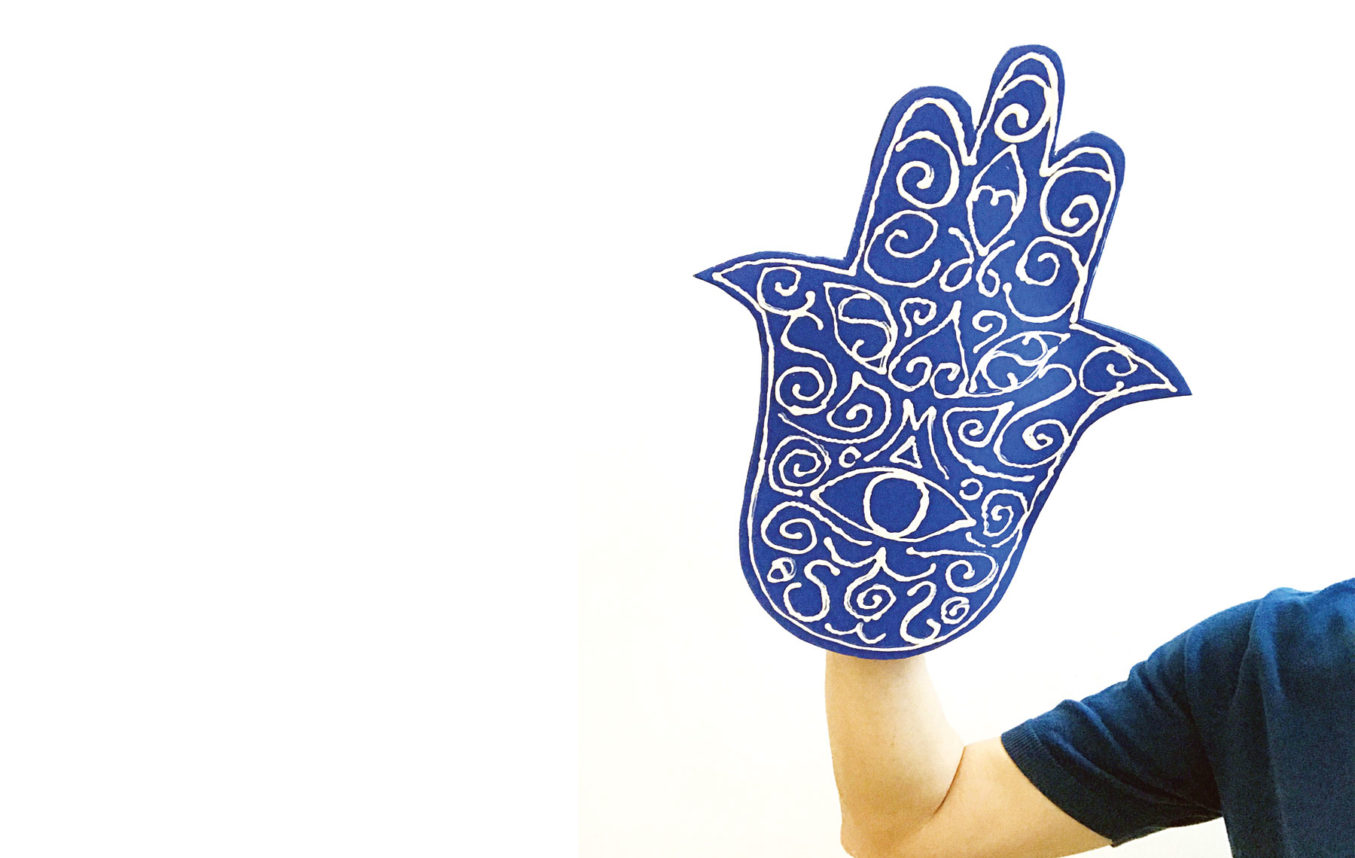
Make Your Own Giant Hamsa Foam Hand

If you’ve been to a sporting event, you know that holding up giant foam hands are a fun way to support your team. Funny how my brain works, but when I see them waved in the air, I think, “Wouldn’t it be cool if they were giant hamsas instead?” Then you could show both your team spirit and your spirituality. A show of hands — who’s in?

What you’ll need:
12-by-18-inch craft foam sheets
Plain paper
Pencil
Scissors
Hot glue or craft glue
Puffy paint

1. Draw a hamsa shape on a large piece of paper, and cut it out to create a template. Place it on top of a sheet of foam, which you can purchase at a crafts store. Trace around the hamsa with a pencil onto the foam.

2. Stack two sheets of craft foam on top of each other, placing the one with the hamsa drawing on top. Cut both simultaneously with scissors so that the shapes are identical.

3. Apply hot glue between the edges of the two foam sheets to bond them, leaving the bottom of the hamsa open to allow your hand to fit inside. Regular craft glue will work as well, but it will take longer to set.

4. Draw a design on the hamsa using puffy paint, which is easy to use because it comes in a squeeze bottle. You can also use regular acrylic paint or markers, but the dimensional nature of the puffy paint creates more vivid detailing.


Jonathan Fong is the author of “Flowers That Wow” and “Parties That Wow,” and host of “Style With a Smile” on YouTube. You can see more of his do-it-yourself projects online.

Make Your Own Giant Hamsa Foam Hand Read More »

Obituaries: Oct. 25, 2019

Joyce Adler died Sept. 29 at 81. Survived by 5 grandchildren; 1 great-grandchild; brother David Bryman. Mount Sinai 

Basil Anderman died Sept. 24 at 91. Survived by daughters Joan (William), Nancy, Carolyn (James); 6 grandchildren; brother Allan. Mount Sinai 

Morris “Moshe” Barkey died Sept. 4 at 94. Survived by wife Flory Gabay Barkey; daughters Illanna (Aaron) Barkey Glazer, Sarina (Daniel Khoshnood), Yemina (Behzad) Souferzadeh; son Avraham; sister Regina (Victor) Amira; grandchildren. Chevra Kadisha

Natalie Berman died Sept. 29 at 88. Survived by niece Shoshana Thoma-Isgur. Malinow and Silverman 

Ivy Bethune died July 21 at 101.

Donald L. Bilsky died Sept. 29 at 72. Survived by wife Madeline J. Marder Bilsky; sons Aaron (Misty), Craig (Jennifer), Julian Barretto, Scott (Jennifer) Curtis, Alan (Devir) Westley, Corey (Shana) Thomason; 7 grandchildren; sisters Susan Bilsky Barrat, Shelley (Phil) Cataldo. Mount Sinai 

Neil Alan Buchbinder died Sept. 22 at 77. Survived by wife Sue; son Marc (Maria). Mount Sinai 

Leonard Chevlin died Sept. 24 at 90. Survived by wife Lola; daughter Linda; son Steven; brother Howard; 3 grandchildren; 2 great-grandchildren. Hillside

Anita Cohen died Sept. 17 at 76. Survived by brother Gerald. Hillside

Katherine Cohen died Sept. 22 at 93. Survived by daughters Marie (Leon Hasson) Altchech, Sarah (Robert McDaniel); son Benjamin (Joan Ringham-Cohen); 4 grandchildren; 2 great-grandchildren. Malinow and Silverman 

Mark Cohen died Sept. 22 at 60. Survived by wife Edith; son Joshua; sisters Lynn (Donald),  Laurie. Hillside

Edna Cott died Oct. 1 at 95. Survived by sons Brian (Shirley), Bradley (Linda), Barry; daughter Bernice; 8 grandchildren; 3 great-grandchildren. Mount Sinai 

Bonnie De La Cruz died Sept. 25 at 70. Survived by daughter Debbie. Hillside

William Dragin died Sept. 23 at 81. Survived by wife Judith; sons Michael (Glenda), Mark (Michelle); 4 grandchildren. Hillside

Stuart Alan Dunn died Sept. 26 at 86. Survived by daughters Karen, Elise (Todd) Biedrman; son Larry; 2 grandchildren; former wife  Janice Dunn; and former son-in-law Stephen Felderstein. Mount Sinai

Matthew Ender died Sept. 16 at 69. Survived by wife Manjit; stepdaughter Tara (Ben); son Jordan; sister Alison; brother Gary. Hillside

Regina Frandzel died Sept. 16 at 70. Survived by daughter Michele; son David (Ashley); 3 grandchildren. Hillside

Rosalind Grossman died Sept. 20 at 92. Survived by daughter Susanne (Edward) Bilotti; son Mark (Sabah Murtadtta); 3 grandchildren. Mount Sinai 

Genekh Iofel died Sept. 22 at 86. Survived by wife Aviva Tsypkin; daughter Rinn  (Arseh Tevonyah); son Yakov (Elizaveta); 5 grandchildren; sister-in-law Nina. Mount Sinai

Jeanne Jacoves died Oct. 2 at 82. Survived by sons Mitchell (Carrie), Aaron; 4 grandchildren; sisters Jayne Sacks, Judy Levin. Mount Sinai 

Hana Koral died Sept. 29 at 91. Survived by sons Richie (Cindy), Peter (Teresa); 6 grandchildren; 2 great-grandchildren. Mount Sinai 

Eleanor Lappen died Sept. 17 at 92. Survived by daughter Rhonda; sons David, Bill; 7 grandchildren; 2 great-grandchildren. Hillside

Norman Lipner died Sept. 25 at 79. Survived by wife Sarah; daughter Miriam (Salvatore) Brienik; son Aaron (Masha); 5 grandchildren. Malinow and Silverman 

Robert Mellman died Aug. 29 at 94. Survived by wife Rona; daughter Toni (Larry); son Michael; 5 grandchildren; 3 great-grandchildren. Hillside

Rona Mellman died Sept. 20 at 91. Survived by daughter Toni (Larry); son Michael; 5 grandchildren; 3 great-grandchildren; sister Lenore. Hillside

Rita Pynoos died Sept. 26 at 97. Survived by sons Robert, Jonathan; 6 grandchildren. Hillside

Frank Rosen died Sept. 22 at 97. Survived by wife Irene; sons Lawrence (Teofiila), Mark (Kim); 5 grandchildren; 3 great-grandchildren. Hillside

Ryva Schifman died Sept. 23 at 97. Survived by daughter Ann Aarons; sons Norman (Karen), Aron (Elaine); 5 grandchildren; 2 great-grandchildren. Mount Sinai 

Sandy Schulman died Sept. 21 at 90. Survived by sons Mark (Lisa), Randolph “Randy” (Kim); 6 grandchildren. Mount Sinai 

Frances Sitkoff died Sept. 27 at 91. Survived by daughters Nancy (Don), Betsy, Linda. Hillside

Helen Stein died Sept. 19 at 92. Survived by son Howard; 1 grandchild. Hillside

Arlene Thomas died Sept. 22 at 85. Survived by daughter Jolene (Michael); sons Matthew (Maria), Daniel (Alona), Michael; 11 grandchildren; 7 great-grandchildren; sisters Reva, Joni. Hillside

Barbara Wyse died Sept. 28 at 83. Survived by daughters Nancy Gransline, Amy (Jason Haim) Goldsmith; son Phillip (Gracie Nunez) Maltin; 4 grandchildren; brother Larry (Chey) Roslaw. Mount Sinai

Obituaries: Oct. 25, 2019 Read More »

‘Israeli Judaism’ Is Taking Root in the Homeland

Exactly how Jewish is the Jewish homeland?

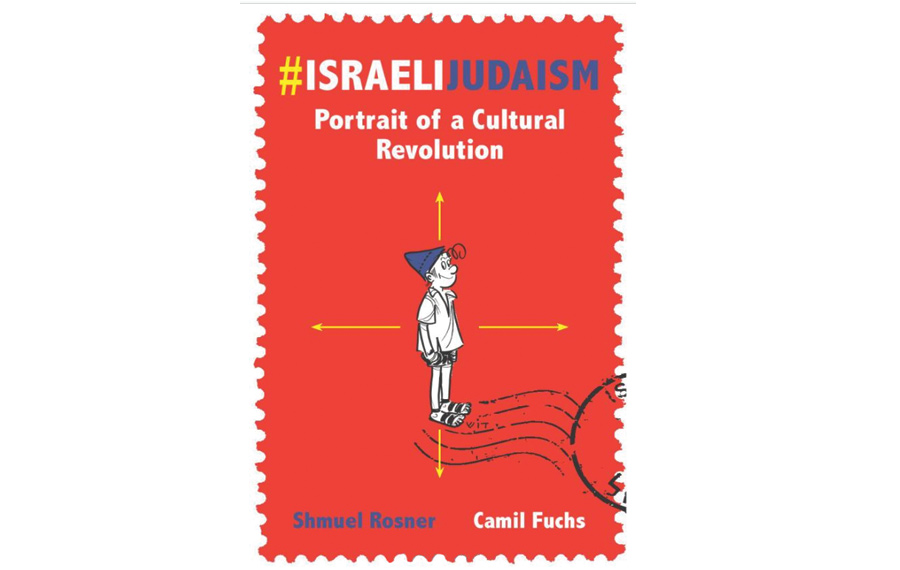
An earnest effort to answer this vexing question is presented in “#IsraeliJudaism: Portrait of a Cultural Revolution” by Shmuel Rosner and Camil Fuchs (The Jewish People Policy Institute), a summary and analysis of a statistical study of the religious beliefs and practices of the people of Israel. An intriguing clue to the findings of the study is found in the title, which suggests that Judaism is something new, different and unique in Israel than it is in the Diaspora and across thousands of years of Jewish history.

“[T]he buds of a new Jewish culture in Israel are already visible,” the authors explain. “We shall call it ‘Israeli Judaism.’ ” They insist that it differs from both “non-Israeli Judaism” and “pre-Israeli Judaism.” Above all, the new version of Judaism is the ultimate expression of Zionism, which aspired to the creation of a sovereign Jewish state. “In this sense, the Israeli version of Judaism is only possible now, and it is only possible in Israel.”

Rosner, who has long served as the Tel Aviv-based senior political editor of the Jewish Journal, is known to our readers as well as the readers the other publications where his work appears, including The New York Times, the newspaper Maariv and Moment magazine. Fuchs is a professor of statistics at Tel Aviv University and the pollster for both Israel’s Channel 13 and the newspaper Haaretz. The study itself was conducted by its publisher, the Jewish People Policy Institute, a research center for which Rosner serves as a senior fellow.

The collaboration between these two astute observers of Israel has turned the raw data of a statistical study into a vivid and accessible portrait of a nation. But, as the authors point out, it is a portrait painted “in shades of grey.” First published in Hebrew and now in an English translation, “#IsraeliJudaism” does not “grade any Jews on what they do or do not do,” as the authors explain, to “rank Jews, to say who is a better Jew.” Rather, Rosner and Fuchs aspire to “present the facts,” and they acknowledge that some of their readers “will see a surprising success; others, a looming catastrophe.”

When the results of a study of Israelis are charted, the majority of respondents fall into a blend of Jewish identity and Israeli identity that the authors characterize as “Jewsraelis,” which they define as “an intricate amalgam of nationality and tradition.” 

Seven categories of Jewish identity in Israel were recognized in the study, ranging from “totally secular” to Charedi (also called “ultra-Orthodox,” a category that includes both Chasidic and Yeshivish Jews). The categories do not match the denominations of Judaism as it is practiced in the United States; for example, “Liberal-Religious Jews” is a label that “normally refers to liberal Orthodox Jews but also includes some Conservative Jews.” Reform Judaism does not appear in the list, although the authors refer to Reform Jews now and then in their analysis and commentary.

To measure the Jewishness of Israeli citizens, the designers of the study were compelled to come up with 32 survey questions that may strike the reader as oblique. “Do you fly the flag on Independence Day?” and “Should Israel not be a Jewish nation?” are measures of nationalism, while “Do you make Kiddush on Friday night?” and “Do you consider New Year’s Day (rather than Rosh Hashanah) the beginning of the new year?” are measures of religious traditionalism. When the results are charted, the majority of respondents fall into a blend of Jewish identity and Israeli identity that the authors characterize as “Jewsraelis,” which they define as “an intricate amalgam of nationality and tradition.” (Readers who want to take the survey themselves are invited to use a scannable link in the book.)

Perhaps the most surprising argument to be found in the book is that “the new Israeli Judaism” has made inroads into various other forms of Jewish identity in Israel, including what the authors call “halakhic Israeli identity” (e.g., Charedi and Religious Zionists), “traditionalist Israeli identity” and “secular Israeli identity.” As the authors put it, “there are many more ‘Jewsraelis’ in Israel than there are ‘Orthodox’ or ‘Reform,’ ‘Chabad’ or ‘Litvak,’ ‘Conservative’ or ‘non-denominational.’ ”

The rise of what the authors call “Jewsraelis” does not mean a decline in the number of highly observant Jews. “Israel will not have a Haredi majority any time soon, but the Haredi share of the population is growing,” they write, if only because of the high birth rate among the Haredim. Their influence can be measured, for example, in Israel Defense Forces kitchens: “Find a paratrooper from the 1950s and ’60s, and he will gladly you tell how paratroopers used to keep their kitchens. They were hardly kosher. The paratroopers of the 2000s are much stricter about keeping their kitchens kosher.”

Yet the authors also argue that the Charedim are changing, too, because they aspire to play a more consequential role in Israeli politics and society. “After all, it is very difficult to achieve contradictory goals simultaneously: to stand aloof and differentiate oneself, but also to get involved and have an impact,” Rosner and Fuchs argue. “And in Israel’s ever-changing circumstances, it is doubtful whether the Haredim of tomorrow will be the same as the Haredim of today.” 

Rosner and Fuchs acknowledge that it is not always easy to “reconcile what we have written with what people feel.” Or, to put it another way, “The relative harmony described in this book does not always correspond with the sense of unrest
that characterizes the Israeli public sphere, or with what happens every day in the wrestling ring of Israeli society.” The bottom line for the authors reminds us of the old Jewish joke about 10 Jews and 11 opinions. “If almost all the Jews
in Israel feel Jewish, why do they not
stop arguing?”

The authors insist that Judaism itself will continue to grow and change in Israel, which has existed “[l]ong enough to learn something about the direction Israel is heading [but] not long enough to know what destination it will reach.” Still, the authors seek to make their ideas and information as accessible as possible, and they have succeeded in that goal. “#IsraeliJudaism” will provide all of its readers, whether secular or highly observant or somewhere in between, with data that is essential to any meaningful debate about what Judaism is and where Judaism is going in Israel and the Diaspora.

“#IsraeliJudaism: Portrait of a Cultural Revolution” is available on Amazon.


Jonathan Kirsch, attorney and author, is the book editor of the Jewish Journal.

‘Israeli Judaism’ Is Taking Root in the Homeland Read More »

‘Fantastic Fungi’ Sheds Light on an Underground World

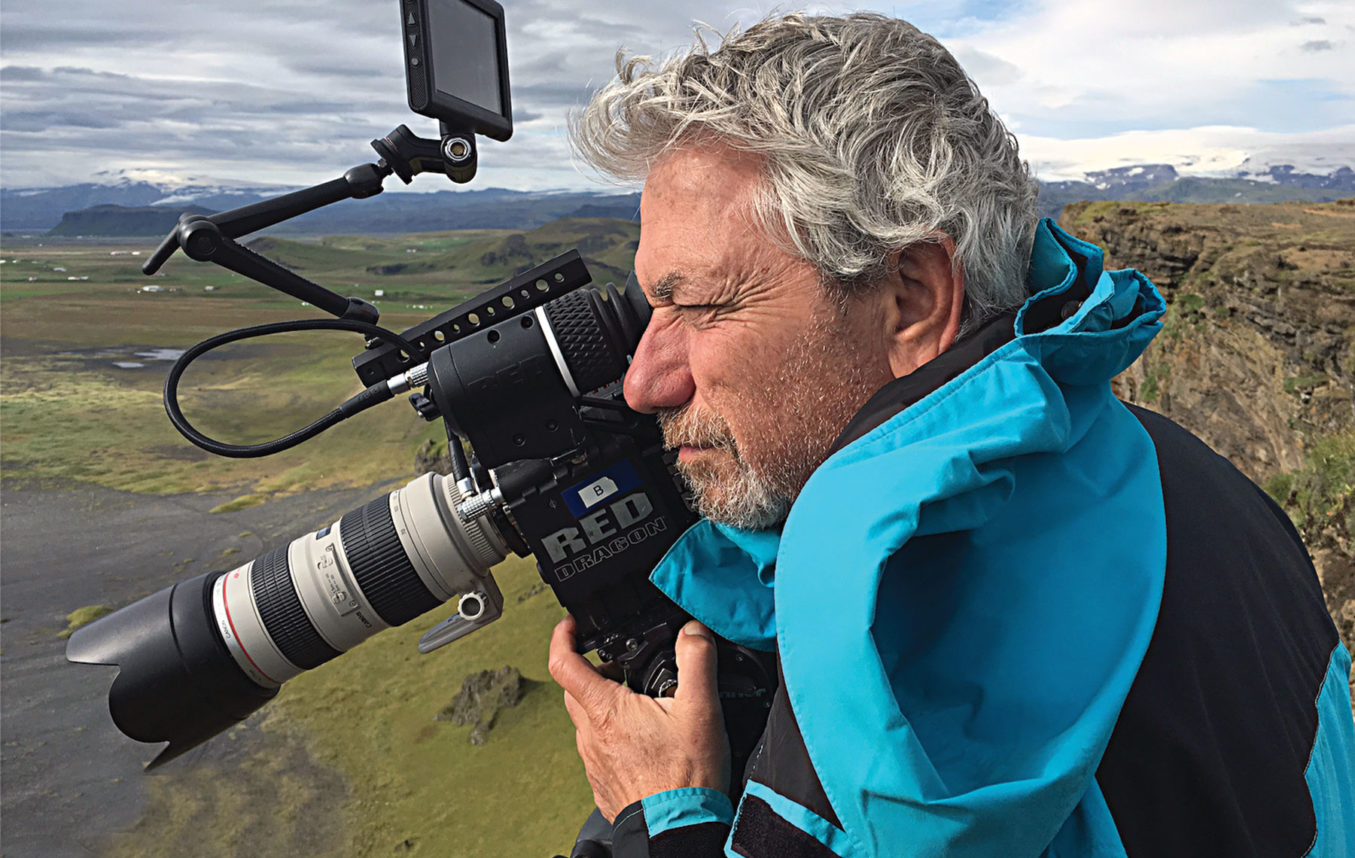
It may be just an underground vegetable but there’s more to mushrooms than meets the palate or the eye. In the documentary “Fantastic Fungi,” filmmaker and time-lapse cinematography pioneer Louie Schwartzberg uncovers the power that fungi have to renew the soil, slow climate change, expand our minds and heal as well as feed our bodies as he makes the connection between their microscopic world and our own.

“I love unveiling the mystery of nature’s intelligence. I’m fascinated by the little things that make the world go round,” Schwartzberg told the Journal.

“This is a story about the smallest organism on the planet, the mycelium network under the ground and the billions of interactions that are the fundamentals of life. It’s about cooperation, symbiosis, regeneration, nurturing and rebirth. It’s about the sense of wonder, to be able to see things from a different point of view of time and scale.” 

Narrated by Academy Award-winning actor Brie Larson, the film tells that story through breathtaking photography, animation and interviews with experts including mycologist Paul Stamets, author Michael Pollan and scientists from New York University, UCLA and Johns Hopkins. 

Schwartzberg came up with the idea 13 years ago when he met Stamets, and began filming time-lapse sequences of fungi. He had a library of footage from his documentaries, including “Wings of Life,” about bees, butterflies and hummingbirds, and his “Moving Art” series, but 90% of the film was newly shot for the film. “It can be a month to show a mushroom growing,” he said. “Typically. I’m capturing one second of screen time in a 24-hour period.”

The documentary depicts the ways in which fungi, dubbed “the digestive tract of the forest,” benefit the environment as well as their myriad medicinal uses.  Penicillin, derived from a mold, “has saved more lives than any other medicine,” Schwartzberg said. In clinical studies, psilocybin — aka magic mushrooms — has had positive effects in treating post-traumatic stress disorder, reducing anxiety and depression.

Schwartzberg is a fan of edible and medicinal mushrooms. A vegetarian, he loves the meaty flavor they add to food and he has had experience with the psychedelic kind, which he calls “sacred medicine. It opened my eyes to seeing the world in a way that was more expansive and gave me a feeling of spirituality that was enlightening,” he said.

He believes that humans can learn a lot from the fungi kingdom about cooperation, symbiosis, relationships and nurturing. “Mushrooms have taught me that we need to live in harmony with the planet. If we could mimic this behavior it would put us on the right course that we’re not on right now, where we’re facing all these dire predictions of climate change and environmental destruction,” he said.

The son of Polish Jews who survived Auschwitz, Schwartzberg was born in Brooklyn, N.Y., the year after his parents immigrated to America. Growing up with them “influenced my life in a really profound way,” he said. “I learned to appreciate the little things in life because they appreciated a roof over their heads, food on the table, a steady job and the miracle of being able to have children. That attitude of appreciation fits with me becoming an environmentalist and trying to protect all forms of life, wanting to make the world a better place. Heal the world is the mantra for Judaism.”

His family moved to California when he was 6 for his father’s aerospace career. Raised in “a traditional home but without the rigidity of ultra-Orthodox Judaism, I’ve always loved the traditions of Judaism and observe most of the holidays,” Schwartzberg said. “I come from this incredible history and tradition of Judaism and a lineage that goes back thousands of years is something that I cherish.” As the father of two daughters and grandfather of two boys, he added, “I want to see that continue with my family.” 

Schwartzberg, whose next film will be about “gratitude and wonder,” is a graduate of UCLA film school and lives in Studio City. He originally planned to be a lawyer, but it was the tumultuous Vietnam War era, “and there was a revolution going on outside the classroom door. I quickly learned photography to document the protests and the police brutality. I found it a lot easier to do photo essays for poli-sci class than writing a paper,” he said. “I found my voice and fell in love with photography, which led to cinematography and filmmaking.”

His sub-specialty came naturally to him. “I enjoy making the invisible visible, which got me into doing time lapse and slo-mo, pushing the boundaries of cinematography. I love shooting nature because I love doing a deep dive into what makes it work. I love asking why,” he said. “Nature is like an onion: you keep peeling off the layers and go deeper and deeper. It’s a journey you go on and never get to the end.”

“Fantastic Fungi” opens in theaters on Oct. 25. 

‘Fantastic Fungi’ Sheds Light on an Underground World Read More »