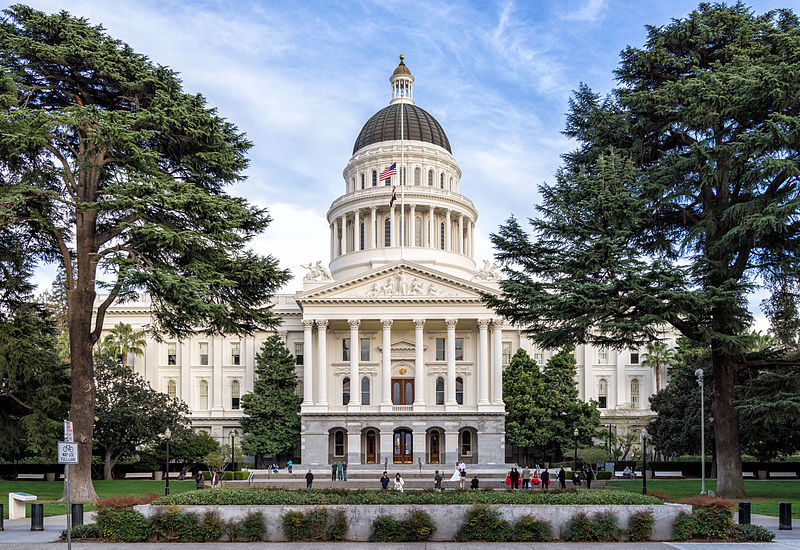
California Assemblyman Marc Berman (D-Palo Alto) criticized the “anti-Jewish bias” among the authors of the initial Ethnic Studies Model Curriculum (ESMC) draft and suggested that different people will be writing the next draft.
The Jewish News of Northern California (J.) reports that Berman, who was speaking at an American Jewish Committee San Francisco event at the Jewish Community Federation of San Francisco on Sept. 16, said that some of the authors of the ESMC draft are “outspoken BDS [boycott, divestment and sanctions] supporters,” suggesting that “there was a strong, kind of anti-Israel, anti-Jewish bias among some of the writers, among some of the advisory board members.” He added that the Department of Education’s “vetting wasn’t as tight as it needed to be.”
Berman added that there were three writers that mainly developed the ESMC – although their names have not been made public – from February to April. The California Legislative Jewish Caucus, which Berman is a member of, didn’t see the draft until June.
“A lot of us immediately thought, wait wait wait, there’s a lot in here that’s wrong,” Berman said. “It practically eliminated the Jewish Californian experience.”
On Aug. 12, the State Board of Education announced that the ESMC will undergo significant revisions in response to backlash over the initial draft.
According to the J.,Berman assured members of the Bay Area Jewish community that there will be a different group of authors involved in the ESMC’s revision, saying, “We don’t expect that any of those folks are going to be part of the process moving forward.” He added that Jewish Caucus Chair Ben Allen (D-Los Angeles) has joined the Instructional Quality Commission, which oversees the ESMC, and the next round of authors will be more heavily scrutinized.
Myriad Jewish groups have condemned the ESMC for being too one-sided in favor of the BDS movement. California Gov. Gavin Newsom (D) told the J. in August that the current ESMC “will never see the light of day.” CA State Superintendentof Public Instruction Tony Thurmond has similarly called for the ESMC to be revised to include Jews since “acts of hate are happening against the Jewish people.”
Beverly Hills City Councilman Julian Gold called for a recall campaign against the authors of the ESMC. A bill requiring ethnic studies to be taught in state high schools has been delayed for another year until the ESMC has been revised.
Revisions for the ESMC will be considered at a state Department of Education meeting on Sept. 20. The deadline for the ESMC to be approved is March 31.
As I write this story, everything is too close to call. As I write this story, everything is too soon to call. And too complicated. And too fragile.
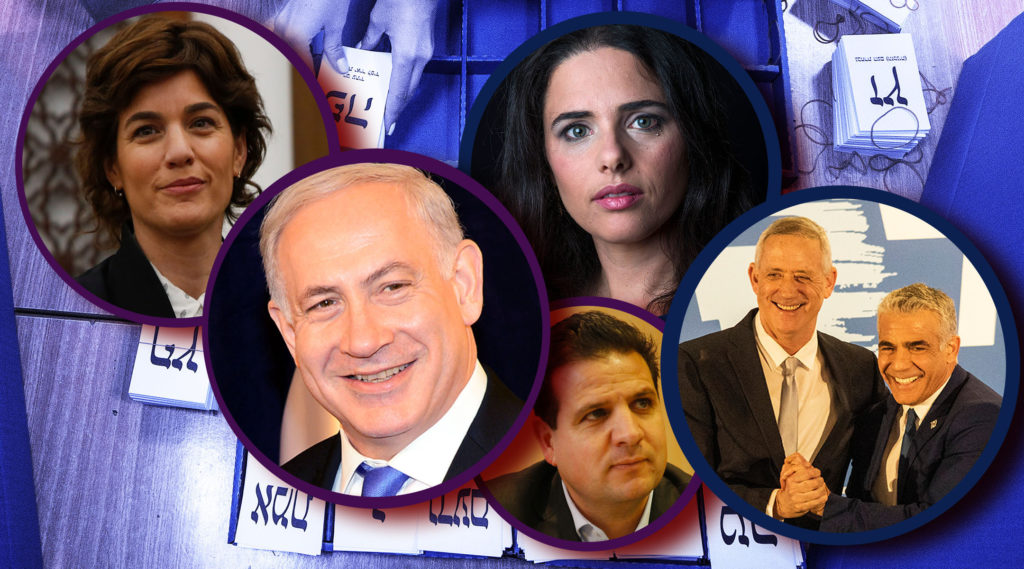
Still, when this story goes to print, late on Israeli election night, Sept. 17, Prime Minister Benjamin Netanyahu doesn’t seem to have enough support to form a coalition. All the parties that support Netanyahu, combined, have fewer than the needed 61 seats. This is also true for his rival, Benny Gantz. All the parties that support Gantz, combined, have fewer than 50 seats. So, there are no clear winners but there is a loser: Netanyahu. And there are question marks.
The obvious outcome likely to emerge from such a scenario is a unity government. Likud and Blue and White easily can form one if they agree on only one thing: What happens to Netanyahu? In other words: Would Likud agree to replace Netanyahu with someone else, or would Blue and White agree to accept Netanyahu as its partner? On the night of Sept. 17, both parties weren’t ready to answer that question. Likud insists on Netanyahu, Blue and White insist on shunning Netanyahu. Next week, they’ll have to make a decision. President Reuven Rivlin is going to demand a decision. One possible answer could be an unexpected compromise: Neither Bibi nor Benny. A unity headed by Likud, but not headed by Netanyahu.
By the time you read this story, you might know much more about the outcome — and might not. We were told in advance that counting the votes will be slow this time. That’s why this story is somewhat short on numbers and long on big-picture analysis. Rivlin explained that he will pick the winner — that is, the person to which the important task of forming a coalition will be assigned — only after the final tally is, well, final. That could be more than a week away, possibly more, just after Rosh Hashanah. In other words, the election is far from over. It is just beginning.
On election night, I was watching the exit poll on Channel 13. This is a decision of personal loyalty. I have a brother who works for this channel but more important — in this case — is the pollster who runs the exit poll. Professor Camil Fuchs was the media star this channel placed at the forefront as it attempted to lure the largest audience on the most important night for any broadcast TV channel. Why Fuchs? As my wife tells it, he is “the pollster who got it right.” Half a year ago, in the April election, Fuchs had the most accurate reading of the outcome. After that, his personal stock has gone through the roof. He was offered a job by other TV channels but decided to stick with 13. Imagine that: a gray-haired mathematics professor with a slight accent (Fuchs was born in Romania) becoming a household name.
“The election is far from over. It is just beginning.”
Fuchs is serious and meticulous about his work, but when people compliment him on the great achievement of having gotten it right in April, he hurriedly reminds them that in previous rounds, he also had his share of errors. “Statistics is not an insurance company,” he told an interviewer. “On election day, anything can happen.” He remembers that while seriousness and professionalism are important, a tiny bit of luck cannot hurt.
Luck can turn an accurate poll into an inaccurate poll. Luck can determine the future of a politician. Many scenarios seem possible on the eve of an election, and these make life complicated for Fuchs — but make life even more complicated for an Israeli politician as he or she strategizes for a future when the numbers just don’t add up.
Let’s think for a moment about this near future and what it holds. Let’s think about the possibility Rivlin tasks Netanyahu with forming the next government. Let’s assume this happens right after the beginning of a Jewish new year. It might happen earlier or it might not. The law says the president has seven days to consider his position after the official final results are publicized, which takes about a week, sometimes a little more.
If you like drama, this could be a week of political drama. On Oct. 1, Rivlin makes his decision. On Oct. 2, Netanyahu faces a hearing at the attorney general’s office. This might not be all: During the same week, diplomatic sources say, President Donald Trump could decide to publicize his peace plan.
“Luck can turn an accurate poll into an inaccurate poll.”
Of course, the hearing doesn’t depend on who gets to form the government. And what about the peace plan? Here, there is room for manipulation and maneuvering. Trump might tie the publication of the plan to the date most convenient for Netanyahu (which still might be the day of the hearing).
The election and its aftermath are much too close to call. Hamas still might fire rockets; Iran still could provoke the region into conflict; the deficit — Israel has a growing deficit problem — is waiting for a next government for a fix. Each of these issues might become the reason, or excuse, to forming this or that government.
On the night of Sept. 13, two members of Knesset, present and future, sat in an improvised synagogue, singing “Lekhah Dodi,” reading from the siddur, standing and sitting. The names aren’t as important as the name of their party: Blue and White. Just a few days before this scene of Shabbat tranquility, their party declared a war on religiosity. Well, not really a war — and not really on religiosity. Besides, Blue and White didn’t really mean it. The party meant it only as a campaign tactic. The voters who the party attempts to lure into its orbit are in a combative anti-religious mood. The leaders decided to give them what they want. Hence, Blue and White leader retired Lt. Gen. Benny Gantz told supporters that if elected, he will form a liberal, secular coalition.
What is a liberal, secular coalition? The two members of Knesset at the makeshift synagogue wore yarmulkes and seemed well-rehearsed as they davened with the rest of us. Are they liberal? That probably depends on what liberal means. Are they secular? Not if secular means no Shabbat prayer. Are they comfortable with their leader’s vow to form a secular coalition? I assume they are comfortable with it for two reasons. One, because when Gantz said “secular,” what he really meant was “not dominated by the ultra-Orthodox,” and two, because when Gantz said “secular,” he was just playing politics.
Very few Israeli Jews (most Blue and White voters are Israeli Jews) are “secular.” They believe there is no God. One in 10 Israeli Jews believe there is no God. Six in 10 believe “with complete faith,” there is a god. The constituency Gantz was after was not the atheists’ bloc; it was the anti-Charedi bloc. To be more specific, pollsters told Gantz he could steal some of Avigdor Lieberman’s thunder — and a few seats — by going after the ultra-Orthodox.
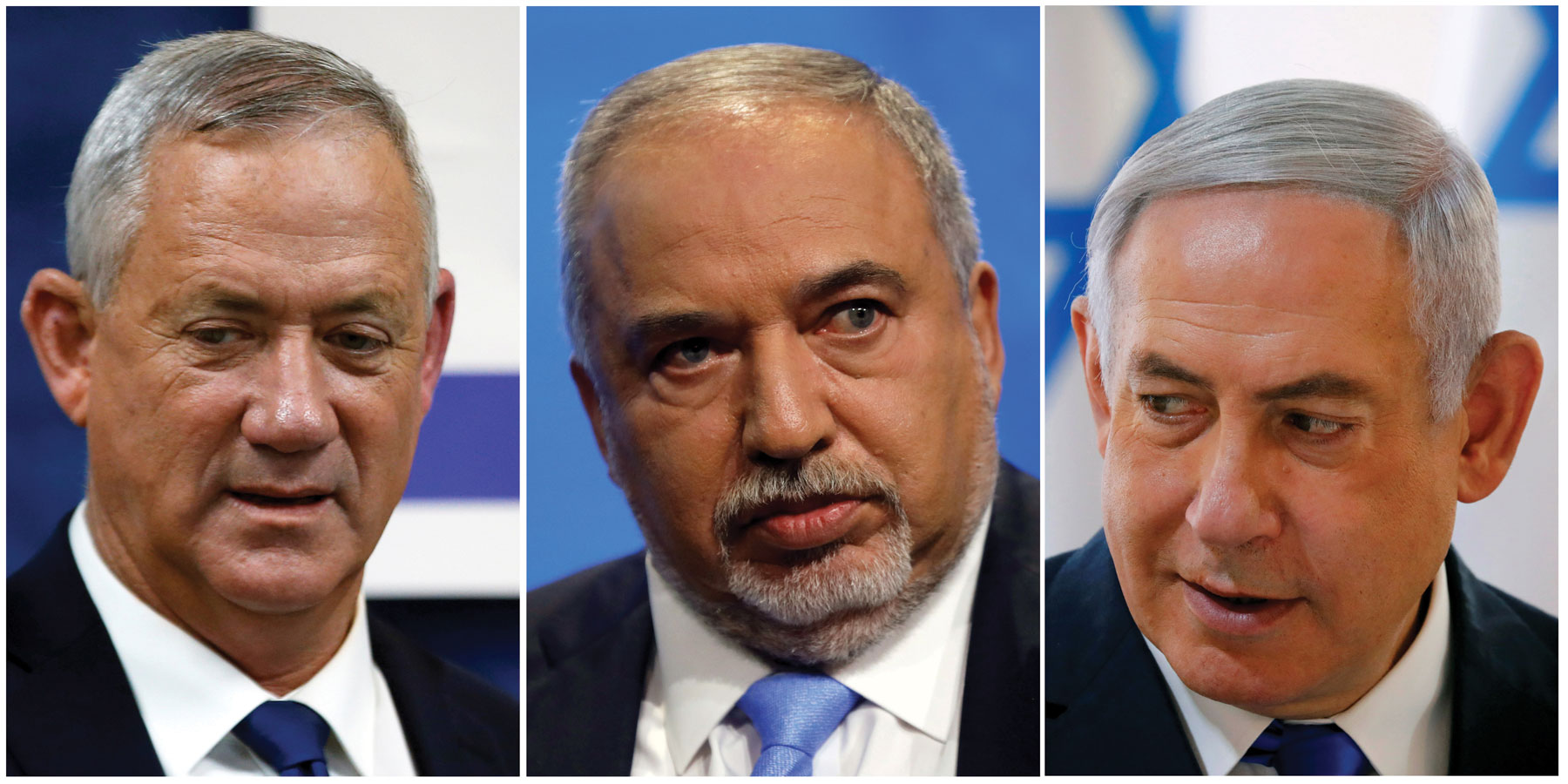
Benny Gantz, Avigdor Lieberman, and Benjamin Netanyahu.
This was not easy for Gantz to do. By nature, he is not a confrontational figure. By upbringing, he is traditional, not totally secular. For most of his campaign, he also seemed to believe that keeping open channels with the ultra-Orthodox parties is the better political option. His combative ally, Yair Lapid, burned the bridges to the Charedi community when he was the finance minister, thus reduced his prospects of ever becoming a prime minister. Gantz had no intention to toe the Lapid anti-Charedi line. But then, he did. Hesitatingly, cautiously, half-heartedly, he did.
About a month ago, I attended a conference about state-religion issues with some heads of more and less important parties. Lapid was one of them. When asked about differences between his agenda and Gantz’s, he cautiously advised against adjustments aimed at soothing Charedi sensitivities. “Whenever someone lets tactics triumph over ideals, it is a mistake,” Lapid said. In that case, Lapid should be consistent and conclude that Gantz erred twice: when he attempted to build bridges to the Charedi community for tactical reasons, and when he decided to burn these bridges for tactical reasons.
“Charedi politicians are masters at being both brazen and thin-skinned.”
Naturally, when the Charedi parties heard the new message, they responded with their usual mix of boast and fury. On one hand, it is a message of dominance, a threat: warning Gantz his fate will be like the fates of all politicians who dared turn their backs on them (because there’s no stable coalition without them). On the other hand, it is a message of weakness and touchiness — whining about the unfairness of it all and the Charedis becoming the scapegoat of this election.
Aryeh Deri of Shas scolded Rivlin for condemning those who insult Israeli Arabs yet refraining from condemning those who insult Israeli Charedis. “If people speak against Arabs,” Deri said, “the president is the first one to come out against it. But when they incite against all of Judaism and traditional people in the State of Israel, no one protests against this.” Rivlin responded the next day: “My friend Rabbi Aryeh. Anyone who knows me, like you do, knows very well how much I’m pained by the incitement against communities in Israel, among them the Charedi community.”
Charedi politicians are masters at being both brazen and thin-skinned.
Indeed, in this election they were scapegoats, along with the Arabs. Lieberman, a former ally of Netanyahu’s, a former defense minister and a party leader, was the master campaigner of this election. By reinventing himself, he was able to save a party, Israel Beitenu, that barely was above water. By refocusing the attention of Israel’s voters, he altered the trajectory of the whole campaign. According to exit polls, he did not win as many seats as he expected a week ago. Yet, because of him, Gantz was forced to promise a secular coalition. Because of him, Netanyahu had to sweat much harder for a 61 majority he did not get. Because of Lieberman, it suddenly was clear the story of this election is not right versus left, or right versus center; it was a story of a for-Netanyahu camp versus a no-Netanyahu camp.
On election night, Lieberman insisted on a secular unity. He wants this unity to form and Netanyahu to depart. Does he truly want what he says he wants? No one knows. He is a cunning and cynical politician. Michael Oren, who served as ambassador to the U.S. when Lieberman was foreign minister, wrote about him in The Atlantic, stating, “he gave no hint of his supposed hatred of Arabs or indeed of any far-right attitudes, which I began to suspect were less deep-seated convictions than opportunistic political tools.” Many leaders of ultra-Orthodox parties had a similar impression of Lieberman’s supposed anti-religious attitudes. In fact, for many years, he was a trustworthy ally of Charedi parties and politicians — until one day, he flipped.
“What makes coalition building so complicated in Israeli today is the ostracism voters demand and leaders implement.”
His true motivations — cynical politics or ideological awakening — are not as important as his sudden success. Such success puts Likud on notice. Such success is a road sign for the opposition. Such success ought to be a warning sign to the Charedi parties. It was relatively easy for them to dismiss leftist or centrist parties such as Meretz or Yesh Atid that were using them as campaign fodder. It is harder for them to adjust when a party on the right (some would even call it far right) discovers the usefulness of the fight against them.
What makes coalition building so complicated in Israeli today is the ostracism voters demand and leaders implement. Consider the following vows as you ponder the meaning of this week’s numbers:
Gantz and Lapid refuse to sit with Netanyahu.
Charedi parties refuse to sit with Lapid.
Lieberman refuses to sit with Charedi parties and with religious nationalists.
Lieberman refuses to sit with the Democratic Camp and the Arab party.
Almost everybody else refuses to sit with the Arab party, and the Arab party refuses to sit with almost everybody else.
The parliamentary system we have in Israel has many faults. Because of it, there is no political stability and not enough long-term planning. We have many parties and even more factions within parties, as well as leaders jumping from one party to the other and manipulators gaming the system. A parliamentary system like Israel’s can be frustrating to the point of intolerability. In the mid- 1990s, Israel got so fed up with its system, a decision was made to change it —by electing the prime minister with one ticket and electing the party of choice with another. But as often happens with such promising changes, it quickly became apparent the new system had its own, no less annoying, deficiencies. So Israel went back to the old system.
The parliamentary system does have one great advantage: It ensures compromise. The political game is never a zero-sum game — Trump wins, Hillary Clinton loses, see you again in four years —but rather a constant market of sellers and buyers. “Give me this, get that. Vote with me on this, I’ll let you have that.” In 2013, Netanyahu was forced to accept Lapid as finance minister, and let him annoy the religious parties. In 1992, Labor traded the peace process for religious interests and let Shas gain power in exchange for passing the Oslo Accords. In 1999, Ehud Barak lost his coalition less than a year after it was formed because of his lack of skill as a political trader. A decade later, he traded his party, Labor, for a job as defense minister.
Compromise is annoying for everybody because we, as humans, tend to remember what we had to give up and tend to forget what it was we gained as a result. We pocket the gain and remain angry over the loss. With time, Israelis seem less willing to accept the need for compromise and be more prone to demand their leaders not compromise — hence, the barrage of exclusion and ostracism. The great art of political compromise is disrupted by a mob of all-or-nothing voters. The purist, righteous, overly principled type.
Back in April and now again, we see the rotten fruits of such an uncompromising approach to politics. In April and now again, voting is easy and forming a coalition of rivals is tough. Yet, it is highly necessary.
Shmuel Rosner is senior political editor. For more analysis of Israeli and international politics, visit Rosner’s Domain.
Shmuel’s book, #IsraeliJudaism, Portrait of a Cultural Revolution, is now available in English. The Jewish Review of Books called it “important, accessible new study”. Haaretz called it “impressively broad survey”. Order it here: https://amzn.to/2lDntvh
A new report from the AMCHA Initiative found that anti-Semitism stemming from the boycott, divestment and sanctions (BDS) movement has skyrocketed on college campuses across the country while instances of classic anti-Semitism declined in 2018.
The report, released on Sept. 17, states that there was a 70 percent increase in “Israel-related harassment” from 2017 to 2018 but a 42 percent decline in classic anti-Semitism harassment – defined as “anti-Jewish messages, or through actions targeting identifiably Jewish individuals (e.g. a student wearing a kippah) or objects” – over the same timeframe. Among the former, expressions “demonizing and delegitimizing Israel” saw a 32 percent increase and expressions “promoting or condoning terrorism against Israel” saw an increase by 67 percent.
The report goes onto note that “academic BDS-compliant behavior was linked to 86 percent of Israel-related acts of anti-Semitic harassment.”
“Academic BDS’s mandate to boycott or suppress programs, collaborations, events, or expression that promote ‘the normalization of Israel in the global academy,’ as well as the academic BDS-compliant “common sense” mandate to criticize, protest and boycott individuals who are deemed complicit with or supportive of Israel’s alleged crimes, appear to greatly encourage anti-Semitic behavior,” the report states. “At the same time, the significant increase in Israel-related anti-Semitic expression and its very strong association with the increase in academic BDS activity, along with the presence of such anti-Semitic rhetoric in almost every instance of academic BDS promotion, suggest that expression portraying Israel as a ‘pariah state’ worthy of harm and elimination may be critically important for justifying academic BDS activity on campus.”
The report recommends that campuses ensure that academics keep their decisions “educational and professional, not political” and that pro-Israel students are protected from harassment.
“Academic BDS is more dangerous than people realize,” AMCHA Initiative Director Tammi Rossman-Benjamin said. “Not only does implementation curtail students’ educational rights and opportunities, its promotion on campus, particularly by faculty who give it academic legitimacy, is inciting an alarming increase in harassment against Israel’s presumed supporters, first and foremost Jewish students. Administrators must take the necessary steps now to stop these unacceptable acts of intolerance.”
The Anti-Defamation League (ADL) and other Jewish groups condemned the Women’s March for bringing on a new board member “who has a long history of deeply offensive and anti-Semitic statements.”
The Women’s March announced on Sept. 16 that co-chairs Linda Sarsour, Tamika Mallory and Bob Bland stepped down from their positions on July 15. They also provided a list of 16 new board members, including Zahra Billoo, executive director for the Council on American Islamic Relations-San Francisco Bay Area (CAIR-SFBA).
“Billoo repeatedly and unapologetically has said that she views Zionism – the belief in Jewish nationhood – as racism,” the ADL said in a Sept. 17 statement. “She has equated Israel to that of an apartheid regime, and clearly rejects the very idea of a Jewish state, calling for a Palestine ‘from the river to the sea.’She has lifted up statements that defend the terror organization Hamas’ intentional targeting of rockets to murder Israeli Jewish civilians, and has done so under the guise of someone working for peace. And in 2010, Billoo retweeted a highly offensive tweet that there is ‘no need for a holocaust museum, seeing as Israel has taken it upon itself to recreate it. #Israel #Nazis.’”
The ADL statement also noted that Billoo “has said that Zionism has no place in the LGBTQ+ community and antiracist movements; thereby, excluding the overwhelming majority of the American Jewish community.”
The statement concluded that Billoo’s statements on Israel have gone beyond “fair criticism” and into anti-Semitism. “Outright rejecting Jewish nationhood and singling out solely the Jewish state with inflammatory and virulent rhetoric is anti-Semitic, plain and simple,” the ADL said. “We call on its leadership to condemn the statements and sentiments of Billoo.”
Other prior statements from Billoo include comparing Israel to ISIS and calling Israel “a terror state.”
The Women's March cut ties with their anti-Semitic board members and are now bringing in a whole slew of new anti-Semitic board members
Associate Dean and Director of Global Social Action Agenda at the Simon Wiesenthal Center Rabbi Abraham Cooper said in a statement to the Journal, “Person equating [Israel Defense Force] defenders of 9 million citizens of democratic Israel to mass murdering, beheading, and mass raping of women and girls – ISIS –has no moral compass, and shouldn’t be in [a] leadership position of any human or civil rights group.”
The Zioness Movement said in a Sept. 16 Facebook post that Billoo “has repeatedly slandered Jewish organizations and attacked Muslim Americans who fight for women’s rights alongside Zionists, claiming they are ‘faithwashing.’ Billoo’s numerous and unqualified attacks on Zionists leave no room in this coalition for American Jews, 95% of whom support Israel’s right to exist and consider Zionism an inherent part of our identities, alongside our commitment to progressive politics. No American Jew should be asked to check their full identities at the door in order to engage in progressive spaces.”
They added, “It is truly astonishing––and wildly disappointing––that the organization’s effort to hit the reset button would so badly miss the mark. Perhaps this wasn’t a reset after all, but rather a reaffirmation that their inclusivity has boundaries, their commitment to intersectionality has limits, and they’re willing to tolerate anti-Jewish bigotry?”
The Progressive Zionists of California (PZC) similarly said in a statement to the Journal that they were “disappointed” with the new board.
“Like many others, we were elated to see that Linda Sarsour and other toxic members of the board had served their term and were not selected to serve another,” PZC said. “There was an opportunity to truly engage America’s Jewish community, and appears that yet again, such good will was squandered. However, this leaves PZC more committed than ever to reaching out to the many communities of the diaspora: from disaffected Ashkenazi Jews to Mizrahi and FSU Jews who are routinely excluded from communal conversations, to everyone in between to educate about Israel, progressive Zionism, and progressive American politics.”
The Women’s March, Billoo and CAIR-SFBA did not respond to the Journal’s requests for comment.
JERUSALEM (JTA) — Prime Minister Benjamin Netanyahu’s Likud party and the Blue and White were again locked in a virtual dead heat at the close of voting in Israel, exit polls on Tuesday showed.
Both Blue and White, which is led by Benny Gantz, a former military chief of staff, and Likud took 32 seats in the upcoming Knesset, or parliament, according to polling by the Kan national broadcaster.
Channel 12 reported that Blue and White had 34 seats and Likud 33, while Channel 13 had Blue and White with a 33-31 edge.
The two parties had tied in April elections at 35 seats. Netanyahu was tasked with forming a government, but was unable to come up with the necessary support because of an impasse between Haredi Orthodox and secular right-wing parties, eventually forcing the vote on Tuesday.
The exit polls show the Arab Joint List finishing third with as many as 13 seats — the same result as in 2015, when the four parties ran together for the first time. They had split in equal factions in April.
The secular right-wing Yisrael Beiteinu party led by Avigdor Liberman had eight to 10 seats. Liberman has not committed to either the right-wing or left-wing; the former defense minister has called for a unity government. Following the April balloting, he refused to join a governing coalition unless it endorsed a bill obligating Haredi, often called ultra-Orthodox, men to participate in the mandatory military draft.
Kan predicted that the right-wing bloc would have 56 seats to 54 for the left-wing, leaving Liberman as kingmaker. Channel 12 has the right-wing with a 57-55 edge, while Channel 13 has the left ahead with 58 seats to 54 for the right. A minimum of 61 seats is needed to form a government coalition.
The far-right Jewish Power party, or Otzma Yehudit, did not pass the 3.25 percent electoral threshold in any of the polls. For the past several days, Netanyahu has called on Jewish Power voters to cast their ballots for Likud after sowing fear that Jewish Power would not pick up enough votes to enter the Knesset.
Among the smaller parties, the right-wing Yamina coalition led by Ayelet Shaked garnered six to eight seats, the Sephardic Orthodox Shas party had eight or nine, and the Haredi Orthodox United Torah Judaism received eight seats.
On the left, the Democratic Camp led by former prime minister Ehud Barak and the Labor-Gesher alliance each picked up five or six seats.
Israel’s election exit polls often are not reliable, with swings of several seats when the final totals are published.
Paper ballots, each sealed in an envelope, will be counted throughout the night with more concrete results available by Wednesday morning.
The votes of soldiers, prisoners, hospital patients, poll workers, on-duty police officers, and Israeli diplomats and officials working overseas are not counted until the day after the election, which has led to some shifts in the number of seats for parties.
Israel does not have absentee ballots for citizens who live abroad or who are out of the country on Election Day.
Though election watchers and the parties themselves expressed concern that voter turnout would be low due to election fatigue, the turnout reached 63.7 percent by 8 p.m., or two hours before the close of polls — up 2.4 percent over the same time in the April election, according to the Central Elections Committee.
Throughout the day, voters in polling stations across the country complained of defaced paper ballot slips, including drawings and holes punched in them, which would render them invalid. The Central Elections Committee head, Supreme Court Justice Hanan Melcer, ordered midday that ballot papers that look as if “the drawing was intended to invalidate the slip” be accepted as valid.
I’ve never told this story, at least not in a public manner. Honestly, not sure I’ll make it through this post, but if you are reading this, I decided to hit “Publish.”
It was a Sunday morning like any Sunday morning. I was at Hometalk doing my thing. I had a few tabs open on my browser like I always do. One of them was Israeli news.
I opened that tab just to check what’s happening in the country and there it was. “Another day, another freaking terrorist attack.” Those were my thoughts.
Only this attack was different. No, not because my brother was the victim. I had no idea about that and was only going to find out later. This one was different because it was recorded. On video. By surveillance cameras.
That means that on that website there was a big Play button. The video. What does one do? They click “Play.” And so I did.
What the heck was I was watching? A Palestinian kid stab a grown man, a fairly large man, and then the man turns around and chases the terrorist down after he was already stabbed? Wait, what? He just jumped over a wall? He shot him. Who was this guy and what was running through his veins because it sure wasn’t the same stuff I had in my veins. “What a hero”, I thought to myself!
So I did what I always do and I asked in the Fuld WhatsApp group, and I quote, “Is everyone ok?”
Yes. Smiley and all.
Now here is where things get blurry. Doni, my older brother, the one who is one older than Ari in the lineup, Doni called me. As I remember it, he said two words to me. “It’s Ari.”
I had no idea what he was saying. What was he talking about? What was Ari?
I quickly grabbed my stuff and raced to the hospital. Like I don’t know how I made it there in one piece. On the way, I called Doni for an update. He said “Don’t rush.”
It was over.
That moment was the end and the beginning of the hell that was the year that followed.
The hospital. That room. Miriam. Natan. My parents. Everyone. A scene burned on my brain forever. Whether I like it or not.
The moment Natan walked in from school. Frozen. Tears. Shock. Hugs. No one rehearsed such a scenario. What do you even say? What do you do? How do you minimize the trauma? You can’t. You can try. But you can’t. His Bar Mitzvah was around the corner.
“It can’t be.” My mom kept repeating those words. She was right. It couldn’t be. Ari? The bull! The lion, as he’d later be named? Taken down by a teenager with a knife? Later it all became clear. That sprint? That jump over the wall? The terrorist was after his next victim. Ari saw that. No blood in his veins? That’s not an excuse. So he sprinted. And saved her. She became part of the family as a result.
The thoughts rushing in my head from that moment till now. Never stopped for a second. The questions, do we want to see the body and say goodbye? What were they all talking about? This seriously cannot be reality. Just no.
When people say “it feels like yesterday” about an event in the distant past, I didn’t think they meant it literally. This feels like I just watched that video. This second. I better rush to the hospital.
A year? No way.
But I had to get organized at that point. What about my kids? This was all over national news. How would they find out? From their friends in school? My God.
Left the hospital to rush to them. We split up and I went to tell Aviel. Big mistake. He’s a very sensitive one. Very.
The moment I told him? I’ll never ever forget that second. Ever.
I got to his school. They had isolated him. So he didn’t find out. He had no idea why. They said they wanted to give him some feedback. When he saw me, his confusion increased.
I asked his rabbi to leave us alone. I told him “Uncle Ari. Something bad happened. An attack. He saved someone’s life. But he’s gone.”
He didn’t cry. He didn’t have tears flowing down his face. He had a tear. One. Sat there. Still. One tear. They were close. They clowned around a lot. He was his big mighty black belt uncle. One tear.
For the next few weeks and months, I tried to get back to myself. Failed miserably. My family is insanely resilient. That’s a word I didn’t comprehend before. I didn’t understand what that meant. Nor did I understand the word trauma.
But they lived. They mourned. They cried. They suffered. They still are. Endlessly. But from where I was sitting, I was the only one who couldn’t put on my socks in the morning. I’m probably wrong. I know I am actually. We all react differently but all I know is, I was very concerned for my future. My well being wasn’t guaranteed anymore. My stability wasn’t obvious anymore, not emotional, physical, or financial. Nothing was for sure any more.
I was the only brother who didn’t speak at the funeral. Me, the brother who makes a living from talking. But I couldn’t. Talk. I couldn’t.
I try not to think about that. Maybe I should have. How could I not? I tell myself I had nothing to add to what everyone else said. It’s true. It was the middle of the night. Should I have spoken just to speak? What would I have said? How would I have controlled the uncontrollable crying) the words wouldn’t have come out anyway. I tell myself that. Repeatedly.
Luckily, my father, the rock of this family, the one who told us countless times over the past year that this is the card we were dealt and we need to live, luckily he spoke on my behalf and brought the world to tears.
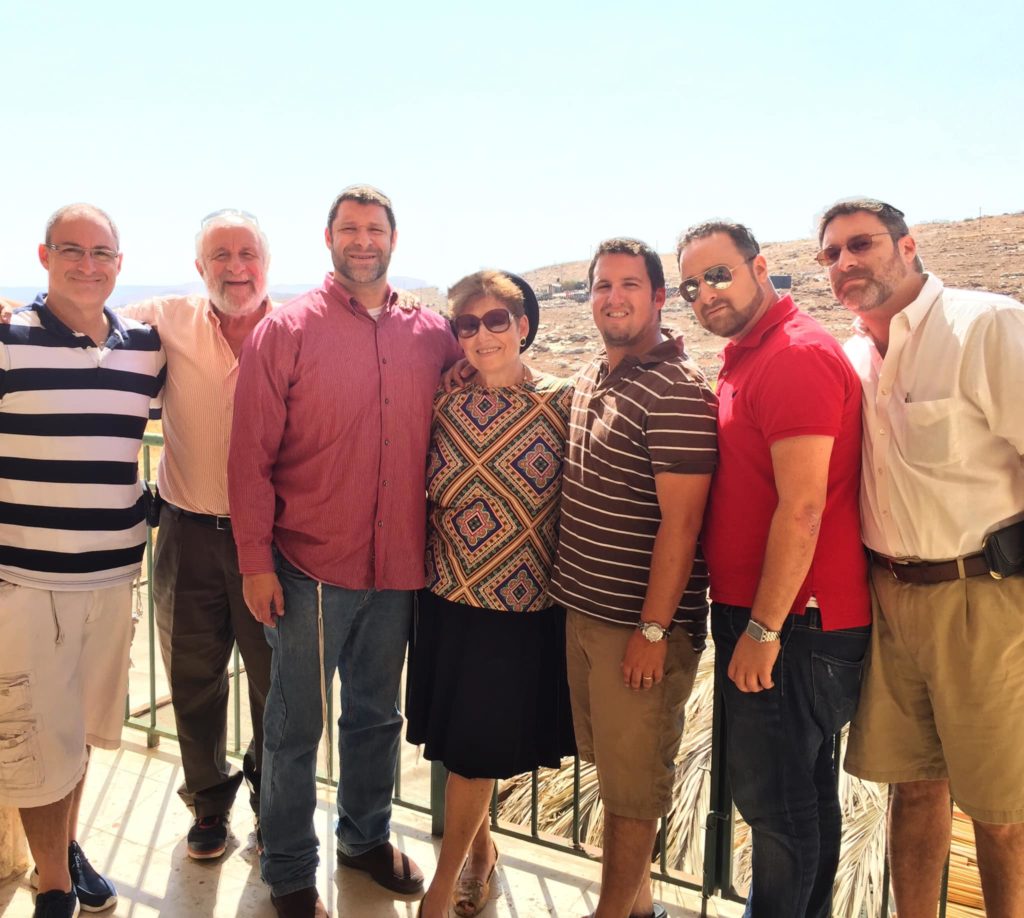
Over the next 12 months, I learned about heroism. I thought I knew Miriam. I didn’t. She taught me who she was. Like who she really was. A hero. A superhero. Just like her husband.
I thought I knew Tamar. I didn’t. I got to know her. A rock. Like her Abba. She got engaged and married to Michaya, a man Ari loved.
Naomi. “How was she strong?” A question I asked myself thousands of times. Thousands.
Yakir. A 6” 6’ giant whose insides make his physical body seem microscopic. And Natan, such maturity. Strength. The little guy is anything but little.
My brothers? Broken but strong. Every one of them.
As for me, there were books. There were words. There were stories. There were messages. Everything contributed a little bit to helping me get out of bed.
Ari created a tsunami in this world the ripples of which I believe we’ll feel for decades. He left this world the way only he would want to leave this world. He wrote the script of his death and that script was his life. The life of a hero.
He left behind a legacy of a hero, an extended family of heroes, a group of close friends who are all heroes, and me, his very sad little brother.
A note to readers: This post is undated throughout the night (Israel time) as new numbers get in.
The Parties and Blocs
These are graphs based on the counting of votes, not final but close to being final.
The next Prime Minister
We know who lost: Netanyahu does not have enough votes to form a coalition. But we don’t quite know who won. It is hard to see how Gantz forms a coalition. There is a third option that is becoming more realistic as the numbers get in: A Likud PM other than Netanyahu.
The next coalition
The math seems to suggest that Unity is the only option. That is, unless Gantz and other centrist parties decide that forming a coalition based on Arab support is no longer an obstacle (and Arab leaders agree).
The question is: Unity with or without Netanyahu.
Most surprising outcome
The polls were quite accurate (if the exit polls are accurate). If there’s surprise, it is the number of Arab MK’s expected in the next Knesset. The constant attacks on Arab voters created a backlash. According to current numbers the Arab party will have 12 seats. Close to its 13 seat record.
Clear winners
Avigdor Lieberman is the kingmaker. This is exactly what he wanted.
Arabs and Haredis were hammered during the campaign, both camps responded by rallying the voters and getting more seats.
Clear Losers
Netanyahu. For a second time, he failed to have 61 supporters.
The Democratic Camp. Ehud Barak has no followers.
Labor under Peretz has no more votes than Labor under Gabbai.
Ayelet Shaked, the “most popular minister”, ended up as the head of a small-size party.
Otzama: Once again, radical rightists were fooled to believe that they have enough votes to cross the threshold.
Shmuel’s book, #IsraeliJudaism, Portrait of a Cultural Revolution, is now available in English. The Jewish Review of Books called it “important, accessible new study”. Haaretz called it “impressively broad survey”. Order it here: https://amzn.to/2lDntvh
When I was little, Rosh Hashanah was always my favorite holiday of the year. My mom would buy me a fancy new dress, and we would cook all my favorite Jewish foods for the big lunch we hosted for family and friends. It kicked off the start of the new school year and I looked forward to all of it. Except for going to shul.
On a typical Friday night Shabbat service I was always allowed to sit next to my mom, hold the giant prayer book on my lap, people watch, sing along when I could…and most weeks I really enjoyed it. But on the High Holidays I was forced into kiddie jail (as I referred to it), surrounded by other kids I hardly knew doing anything we could to escape from this random extra day of what felt like meaningless Hebrew school. I once did actually escape via a trip to the bathroom through a back staircase the janitors use.
As someone who grew up regularly attending services the ‘new rules’ of separation that we needed to follow just for the ‘two days’ Jews felt extremely unfair and hurtful. I think it did a disservice to my perception of what the High Holidays are all about. As a Jewish mom, I feel responsible for giving my children a Jewish experience that feels warm, welcoming and joyous – so the babysitting room isn’t going to cut it.
Now that I have kids of my own I am adamant about not sending them to the babysitting services offered by the synagogue. I’m sure things have improved slightly in twenty years and the kids probably enjoy a chance to play and run around with their friends, but for me, the whole point of the chaggim is to be together with people of all ages and walks of life. Jewish tradition is fundamentally about coming together. It’s why a minyan of ten people is required just to pray.
These core structural elements of Judaism are designed to create community and to support Jewish families. Traditionally women are exempt from many synagogue based mitzvot because of course who would watch the kids if they had to be there? Now that women can play an equal role in the synagogue we need to make welcoming our little ones there as equally important.
How can a mom pray with little feet pattering around and little voices making noise? To me, the Rosh Hashanah services are a time for communal prayer but total silence and internal reflection can be done somewhere else some other time. When I need to talk to God with no one else around I go on a hike, or if I’m feeling like I really need to atone or pray with my whole mind and heart I’ll go to the mikvah.
This year, and I hope every year moving forward, I will go to Rosh Hashanah services to teach my children the joy of Jewish community and loud exuberant prayer. Yes, I’ll bring some sticker books and yes, we’ll have to take many bathroom breaks. We also choose to belong to a synagogue that has family services so we don’t need to be separated.
For more tips and ideas for celebrating Rosh Hashanah with kids you can watch my video all about it here:
Marion Haberman is a writer and content creator for her YouTube/MyJewishMommyLifechannel and Instagram @MyJewishMommyLifepage where she shares her experience living a meaning-FULL Jewish family life. Haberman is currently writing a book on Judaism and pregnancy titled “Expecting Jewish!” to be released Winter 19. She is also a professional social media consultant and web and television writer for Discovery Channel, NOAA and NatGeo and has an MBA from Georgetown University.
(JTA) — Israeli actress Gal Gadot called on her Israeli Instagram followers to “Get out and vote.”
Gadot posted a graphic with the words “Get out and vote” 90 times in five columns in white Hebrew letters on a black background.
She added in the first comment next to the image, also in Hebrew, “So simple and so important. No matter who you choose to vote for. Choose to choose. This is our greatest responsibility as citizens. Let’s increase the voting percentage once and for all. Because this is the land of us all.”
Gadot, the star of “Wonder Woman” who generally posts in English, has 31.1 million followers. Nearly 400,000 followers liked the post, which could be an indication of how many of her followers are Hebrew speakers.