fbpx

August 28, 2019

Hamas Arrests Alleged ISIS Terrorists for Gaza Bombings

Hamas arrested two people with ties to ISIS on Aug. 28. They are also in connection to two Aug. 27 bombings in the Gaza Strip.

The BBC reports that the two bombings – both of which involved motorcycles exploding near a checkpoint – resulted in three Gaza police officers dead, prompting Hamas to declare a state of emergency. One of the suspects is believed to have been released from Gaza detainment by Hamas earlier in the month “as a gesture of goodwill,” according to the BBC.

Israel, which bombed a Hamas military post earlier in the day as retaliation for Hamas mortar fire toward Israel, denied any involvement in the matter. 

In January 2018, ISIS declared war on Hamas in a video, accusing the Gaza terror group of being ineffective in preventing President Donald Trump from moving the United States embassy from Tel Aviv to Jerusalem and focusing only on fighting the Israeli “occupation” and not the “false creed” of the Jewish people. Hamas, whose charter calls for the killing of Jews, dismissed the video at the time as being a “Zionist production.”

Earlier in August, the ISIS supporting group Jaysh Al-Islam in Gaza released a video accusing Hamas of apostasy for allying with Iran and Saudi Arabia and “of harboring aspirations to democracy,” Jewish News Syndicate reports.

In 2014, Israeli Prime Minister Benjamin Netanyahu told the United Nations that ISIS and Hamas “are branches of the same poisonous tree” of radical Islamic terror that seeks a global Islamic caliphate.

“Left unchecked, the cancer grows, metastasizing over wider and wider areas,” Netanyahu said. “To protect the peace and security of the world, we must remove this cancer before it’s too late.”

Hamas Arrests Alleged ISIS Terrorists for Gaza Bombings Read More »

What’s Happening: Sanctuary Dedication, Elan Carr, ‘Fiddler’ Singalong

FRI AUG 30

Sanctuary Dedication
Two days of elaborate ceremonies mark the long-awaited unveiling of Temple Beth Am’s renovated Ganzberg Sanctuary. Starting on Friday afternoon, the community gathers on Ziering Family Field with Beth Am Senior Rabbi Adam Kligfeld, Cantor Hillary Chorny, Rabbi Rebecca Schatz and 10 past presidents of Beth Am to march the Torah scrolls into the sanctuary. A community dinner follows services in the round. On Shabbat morning, demonstrating the breadth of the congregation, Torah Club youth read the Torah and 99-year-old Abe Berman chants the haftorah. After kiddush, architect Steve Rajninger of San Francisco conducts a docent tour of the new space. At Havdalah, elected officials, rabbis and community leaders gather to close out the sendoff Shabbat. Aug. 30: 5:15 p.m. Torah procession. 6:15 p.m. First Friday night service. 7:30 p.m. community dinner. Aug. 31: 9:15 a.m. services. 12:30 p.m. outdoor Kiddush. 8 p.m. Havdalah. Temple Beth Am, 1039 S. La Cienega Blvd. (310) 652-7353. tbala.org/dedication. 

Shabbat Dinner in the Neighborhood
Join Beth Chayim Chadashim (BCC) for its unique and popular two-location “Shabbat Dinner in the Neighborhood.” The evening begins with a meal at Fu’s Palace, with prices ranging from $15-$20. Afterward, BCC members relocate a few blocks east on Pico Boulevard to the synagogue for an uplifting musical Shabbat service. 6 p.m. dinner, 8 p.m. services. Fu’s Palace, 8751 W. Pico Blvd. Beth Chayim Chadashim, 6090 W. Pico Blvd. (323) 931-7023. bcc-la.org.

“Israel’s Political Landscape”
Israeli entrepreneur and social activist Boaz Nol, who led a successful campaign in Israel for equal military service for all, speaks about Israel’s Sept. 17 elections. His discussion, “Israel’s Political Landscape Given Upcoming Elections,” follows Shabbat dinner. The director of resources and development at the 48,000-student Open University of Israel, Nol aims to make higher education accessible to all sectors of society while developing programming for the Charedi community, Arab Israelis and Ethiopians among others. RSVP and photo ID required. 8 p.m. Free. Temple Isaiah, 10345 Pico Blvd. (310) 277-2772. templeisaiah.com.

Shabbat at the Beach

Before summer ends, spend Shabbat at Santa Monica Beach with the IKAR congregation. Bring your own picnic dinner for a late afternoon outing and stay to enjoy musical and soulful Shabbat services.  5 p.m. BYO picnic dinner. 6 p.m. services. Santa Monica Beach, Lifeguard Station 26, near Pacific Park. (323) 634-1870. ikar-la.org.

SAT AUG 31

“What’s the Value of College Anyway?”
How should we be educating our children beyond secondary school? What effect does college have on our children’s Jewish identity? What are the conflicting values in sending them to college at a time of rising anti-Semitism on college campuses? UCLA Hillel Executive Director Rabbi Aaron Lerner and college consultant Rebecca Stuart-Orlowski discuss these questions and examine the overall value of college during B’nai David-Judea’s latest Nosh ’n Drosh, “What’s the Value of College Anyway?” 5-6:30 p.m. Childcare provided. Private home. For information, contact bdj@bnaidavid.com.
“The U.S. Response to Global Anti-Semitism
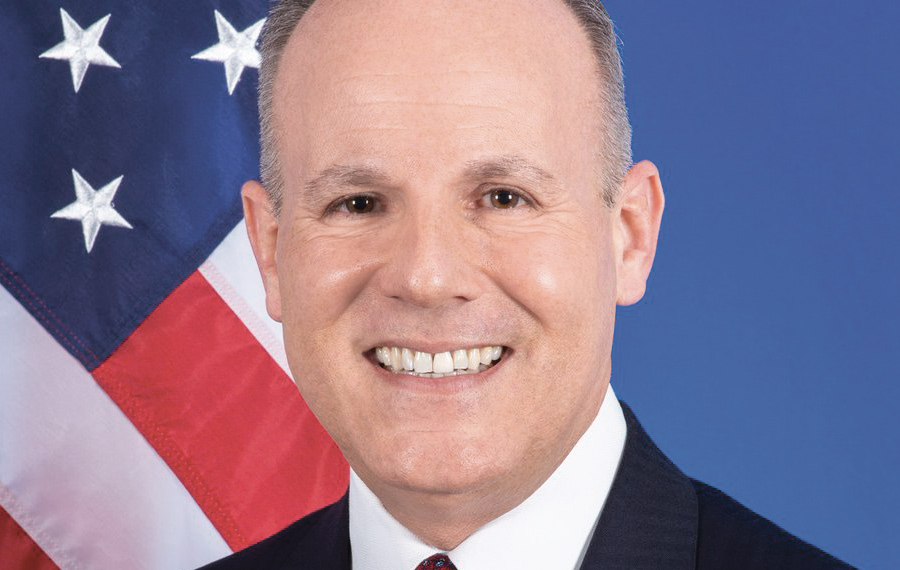
U.S Special Envoy for Monitoring and Combating  Anti-Semitism Elan Carr discusses “The U.S. Response to Global Anti-Semitism” during Shabbat services at the Sephardic Temple. He also participates in a Q&A after services. Carr, who is of mixed Iraqi and Ashkenazi heritage, is a special adviser to President Donald Trump and is a former deputy district attorney in L.A. County. 8:30 a.m.-noon services. Sephardic Temple, 10500 Wilshire Blvd., Los Angeles. (310) 475-7000. sephardictemple.org.

Shabbat Healing Service
Regardless of where or how you live, the world is noisier than it ever has been, and Adat Ari El’s Healing Service is offering a potential Shabbat morning remedy. For a calming, alternative way to connect to Shabbat and community, Rabbi Jessica Yarkin and Sue Epstein create moments of spiritual, physical, emotional healing in an intimate space. 10-11 a.m. Free. Adat Ari El, 12020 Burbank Blvd., Valley Village. (818) 766-9426. adatariel.org.

SUN SEPT 1

Welcoming Elul
Welcoming the first day of Elul and educating about how to do teshuvah (repentance), Open Your Temple Soundbath is a ritual for listening to the stories and sounds from within and from beyond. Rabbi Lori Shapiro, Sharon Kopp and Lex Lightning are the ritual leaders. Meet at the Washington Pier in Venice. 6:30 p.m. Free. Reserve tickets at eventbrite.com. (310) 821-1414. opentemple.org.
Chabad Telethon
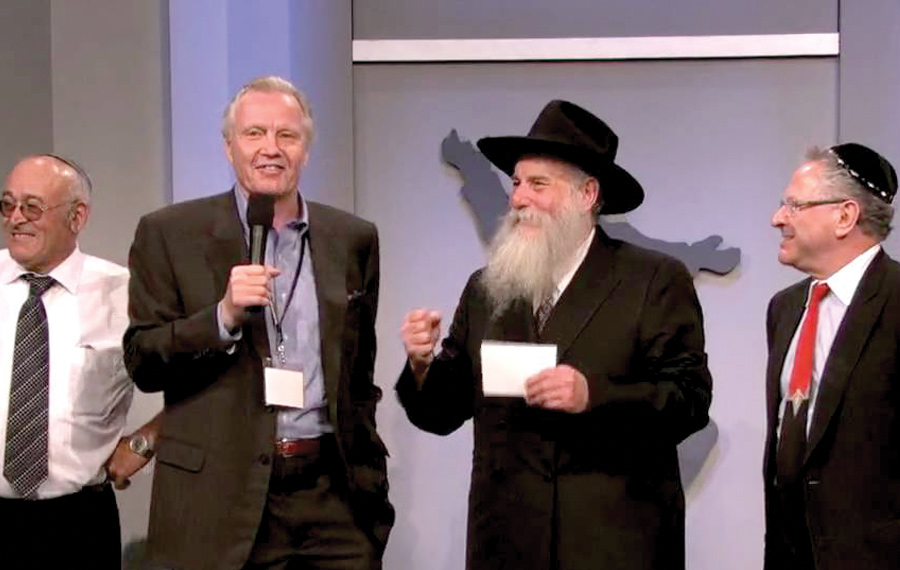
Nearly 40 years after a fatal fire swept through Chabad headquarters in Westwood, inspiring the first live televised “To Life” fundraiser co-hosted by actor Carroll O’Connor (“All in the Family”) and comedian-actor Jan Murray, the Chabad Telethon returns. Known for welcoming a wide range of celebrities, some of whom struggle with the guttural nuances of pronouncing “Chabad,” the telethon has raised millions of dollars for Chabad’s numerous educational programs. Syndicated radio host and author Dennis Prager, whose relationship with Chabad dates back to the 1970s, returns as host. Actor Jon Voight, a longtime participant, is expected. 5-11 p.m. Watch live on KSCI-TV, channel 18, or stream the broadcast at chabad.com/telethon. 

Faith and Family Night
In keeping with a soccer league tradition, the Los Angeles Football Club (LAFC) holds “Faith & Family Night” as the team hosts Minnesota United FC in a Major League Soccer Western Conference match at Banc of California Stadium in Exposition Park. Congregations across Los Angeles are invited to participate. 7:30 p.m. From $27. Banc of California Stadium, 3939 S. Figueroa St., Los Angeles. (323) 648-6060. lafc.com.

TUE SEPT 3

High Holy Days Prep
Reacquainting synagogue-goers with the traditions, prayers and requirements of the High Holy Days, Shomrei Torah Synagogue Rabbi Richard Camras and Cantorial Soloist Jackie Rafii lead a deep dive into themes and prayers for these next three weeks. This is the first of two informative, interactive workshops. The next session is on Sept. 17. RSVP preferred. 7:45-9 p.m. Free. Shomrei Torah Synagogue, 7353 Valley Circle Blvd., West Hills. (818) 854-7650. stsonline.org.

WED SEPT 4

Reconstructing High Holy Days
Join Reconstructionist Rabbi Micah Hyman as he discusses traditional themes of the High Holy Days — sin, repentance, redemption, salvation and kingship. In the program “Eternity Now: A Journey Through the High Holy Days,” the Kehillat Israel rabbi also probes the rhythm of the shofar and the arc of the Jewish calendar. 7-9 p.m. Free. Kehillat Israel, 16019 W. Sunset Blvd., Pacific Palisades. (310) 459-2328. For more information and to RSVP, visit ourki.org.

THU SEPT 5

“Tale of Team Israel”
After years of languishing and losing, Israel’s national baseball team finally earned its trip to the World Baseball Classic in 2017. “Heading Home: The Tale of Team Israel,” a 2018 documentary opening at three Laemmle theaters, tells the David-and-Goliath true story of an Israeli team consisting of American Jewish players, most of whom had never been to Israel before playing for the team. The group of ballplayers elevates Israel’s baseball reputation on the world stage. Preview screening on Sept. 5, Ahrya Fine Arts, 8556 Wilshire Blvd., Beverly Hills. Opens on Sept. 6 at Laemmle Royal, 11523 Santa Monica Blvd., Los Angeles, and Town Center 5, 17200 Ventura Blvd., Encino. (310) 478-1041. laemmle.com.

“Fiddler on the Roof” Singalong
Come dressed as Tevya, Goldie or any other Sholem Aleichem character for a “Fiddler on the Roof” singalong evening. Belt out “If I Were a Rich Man,” “Sunrise, Sunset” and “Matchmaker, Matchmaker” at Temple Beth El of Hollywood. The movie is shown with the lyrics to help attendees remember the words. Popcorn and other refreshments are served. 7 p.m. $12 adults, $5 students, $18 at the door. Temple Beth El of Hollywood, 1317 N. Crescent Heights Blvd., West Hollywood. (323) 656-3150. brownpapertickets.com.

Memoir Writing Class
Since everyone has stories to share, consider joining Deborah Spector’s first of a four-week memoir writing class, welcoming those who are new to writing, interested in exploring their personal histories and making a written record. Personal values, forgiveness, charity and obligation are explored. Classes do not include critiquing or correction of writing styles and grammar. RSVP at admin@tbila.org. 7-8:30 p.m. Free. Temple Beth Israel, 5711Monte Vista St., Highland Park. (323) 745-2474. www.tbila.org.


Have an event coming up? Send your information two weeks prior to the event to ryant@jewishjournal.com for consideration. For groups staging an event that requires an RSVP, please submit details about the event the week before the RSVP deadline.


What’s Happening: Sanctuary Dedication, Elan Carr, ‘Fiddler’ Singalong Read More »

Chasidic Rabbi Assaulted in NY Speaks Out: ‘It Was Hate’

Avraham Gopin, the 63-year-old New York Chasidic rabbi who was assaulted on Aug. 27, told CBS New York on Aug. 28 that the attack was clearly an act of “hate.”

Gopin said that the assault took place at Lincoln Terrace Park in the Crown Heights area of Brooklyn, where the assailant threw rocks at his face and then jumped on him, punching him “20, 25, 30 times.” Gopin fought back and eventually the assailant fled.

“It was hate,” Gopin said. “He said, ‘Jew, Jew.’ He said something in that direction… he was for certain looking to kill. No doubt about [that].”

He added that the fact that he survived the attack a “miracle from God,” saying that he will still go to the park with his family. 

New York City Mayor Bill de Blasio tweeted on Aug. 27, “The NYPD Hate Crimes Task Force is investigating this despicable act of violence, and we will find the attacker. This city will stop at nothing to protect our communities from hate and violence.”

Anti-Defamation League CEO Jonathan Greenblatt tweeted that Gopin’s assault is “the latest in a really disturbing pattern of violence & harassment directed at Jews in Brooklyn. We need action before more people get hurt.”

CBS New York notes that the New York Police Department (NYPD) has recorded 145 complaints of anti-Semitic hate crimes in 2019; there were 88 such complaints in 2018. The NYPD has recorded 19 official anti-Semitic hate crimes so far in 2019; the NYPD recorded 33 the year prior.

Forward Editor Avital Chizik-Goldschmidt wrote in an Aug. 28 op-ed that the city hasn’t taken “any real action” outside of “tweets and press releases” to stop the ongoing hate crimes against Jews.

“Is it because they do not see Orthodox Jews as real Americans, as citizens deserving of the right to live safely in their communities?” Chizik-Goldschmidt wrote. “Are we too ‘other,’ too ‘apart,’ ‘disloyal,’ to earn the privilege of peaceful existence? Is it because we are politically inconvenient? If the perpetrator wasn’t a white supremacist who voted for [President Donald] Trump, then it didn’t really happen, did it?”

Chizik-Goldschmidt added that it’s time to “put political affiliations aside, and focus on the fact that in broad daylight, innocent Orthodox Jews are getting attacked — while politicians sit idly by. Our secular brethren may walk in the street and have the luxury of blending into the crowd, as anonymous New Yorkers, but we wear our identities on our sleeves. And this puts us at the very front lines of anti-Semitism in the United States today.”

Chasidic Rabbi Assaulted in NY Speaks Out: ‘It Was Hate’ Read More »

Lobby Day, Beverly Fairfax Event, SWU Conference

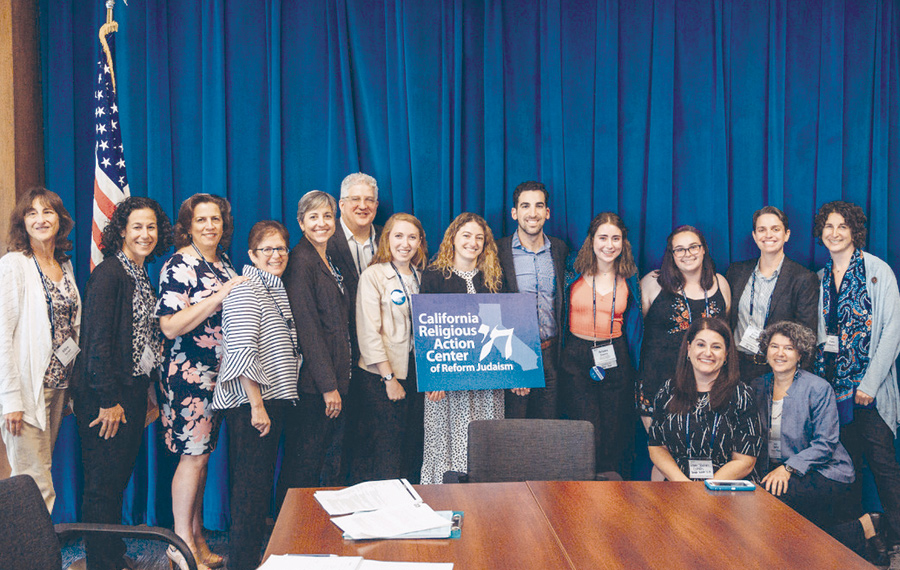
Members of the California Religious Action Center of Reform Judaism (RAC-CA) visited Gov. Gavin Newsom’s office at the California State Capitol on Aug. 20 as part of the organization’s annual lobby day.

More than 200 Reform Jews from around the state held more than 50 meetings with California lawmakers on a host of issues, including affordable housing. 

Participating Los Angeles clergy included Temple Isaiah Rabbi Dara Frimmer, Temple Israel of Hollywood Rabbi Jocee Hudson and Kol Tikvah Rabbi Jon Hanish.

The group met with Sen. Ben Allen, chair of the California Legislative Jewish Caucus, and Assemblyman Jesse Gabriel, vice chair of the state’s Jewish caucus. Both Allen and Gabriel are from Los Angeles and are two of the 16 legislators in the state’s Jewish caucus, which, according to its website, aims to be a “Jewish voice for justice, equality and progress.” 

According to Arno Rosenfeld, digital communications manager at the RAC, Allen and Gabriel were eager to speak with those who traveled to Sacramento for lobby day.

“They offered an interesting perspective on the importance of Jews in California showing up to lobby and advocate on a broad range of issues, and how that helps build coalitions and relationships with other communities and groups of lawmakers that, in turn, help combat anti-Semitism in the state,” Rosenfeld said.


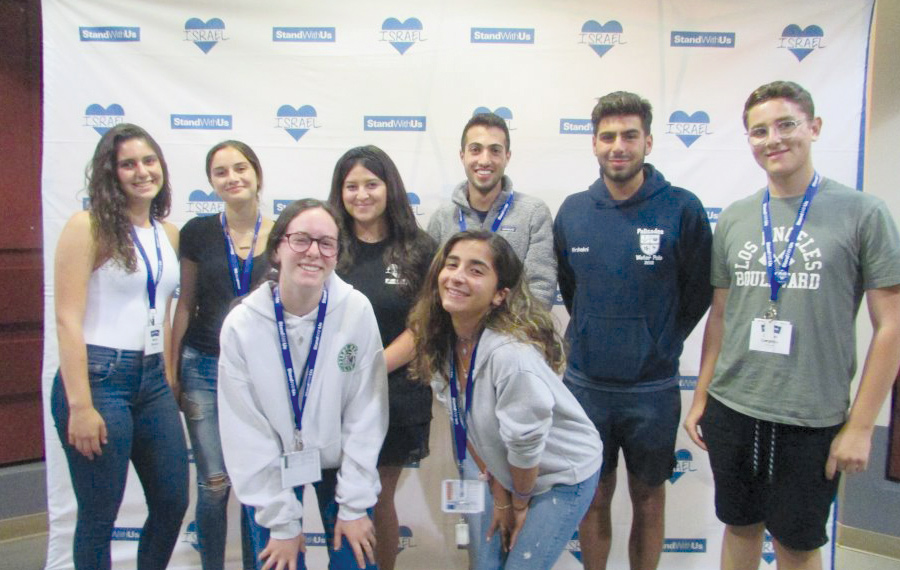
From left, top row: Meshi Benezri, Gabrielle Lasry, Kate Chavez, Eli Safaie-Kia, Kian Mirshokri and Gavriel Gershov and (from left, bottom row) Maya Silberstein and Priel Nikoo participated in StandWithUs (SWU) conferences for high school interns and college Emerson Fellows.

Approximately 200 student leaders arrived in Los Angeles from cities throughout the United States and Canada to participate in StandWithUs (SWU) conferences for high school interns and SWU college Emerson Fellows, from Aug. 5-15.  

The students increased their knowledge and organizational skills so they can begin their fall semesters with strength, according to the pro-Israel education organization.

The SWU Emerson Fellows include Chloe Levian of Santa Monica College, Justin Feldman of UCLA and Zohar Rabinovich of USC.

During the conferences, SWU high school and campus professionals reviewed Israel’s history, provided updates of events in the Middle East and reviewed the full variety of narratives that students will hear at their high schools and college campuses.  Students learned how to distinguish between legitimate criticism of Israel and when it crosses the line into anti-Semitism. The students’ legal rights were reviewed and they heard how the SWU Saidoff Legal Department can help them with legal issues at their schools and in their communities. They also learned about SWU’s newest initiative, the StandWithUs Center for Combating Anti-Semitismand its work to educate and inform, and in identifying and confronting hatred.

SWU educator Hussein Aboubakr shared his harrowing story of being jailed and tortured in Egypt for daring to learn about Israel and Jews, and how he found asylum in the U.S. and at SWU. There were sessions on identifying and combating the boycott, divestment and sanctions (BDS) movement against Israel.

Students also had fun, according to SWU. They danced, sang and celebrated their love for Israel with their new network of pro-Israel friends.  

“They will return to their schools and communities energized to begin inspiring their friends about Israel and combating anti-Semitism and anti-Israel rhetoric,” SWU said.


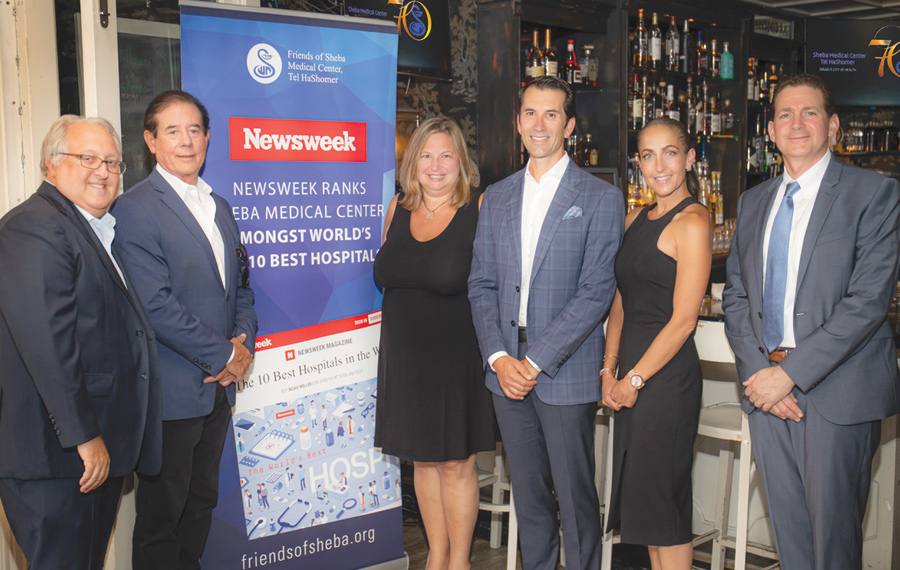
From left: Jeffrey Gross, Peter Fitzgerald, Gina Raphael, Dr. Dan Katz, Rebecca Jonah and Dr. Eyal Zimlichman of Sheba Medical Center attend a Friends of Sheba Medical Center happy hour in Beverly Hills.

Gina Raphael and Jeffrey Gross of Mickey Fine Pharmacy sponsored Friends of Sheba Medical Center’s Medicine and Innovation Happy Hour at Porta Via in Beverly Hills on Aug. 21.

Event chairs Rebecca Jonah and Dr. Dan Katz convened an exclusive group of
60 young physicians and venture capitalists for an evening of networking, cocktails and learning about Sheba Medical Center’s ARC Innovation Program from
Dr. Eyal Zimlichman, chief innovation officer at Sheba, the largest hospital in Israel.

Chocolate truffle save-the-date candies were given to everyone in attendance
for Friends of Sheba Medical Center’s annual gala which will be held on Nov. 3 at the Beverly Wilshire hotel.

A Los Angeles-based nonprofit, Friends of Sheba Medical Center raises funds and awareness for Sheba in Israel, which was named one of the 10 best hospitals in the world by Newsweek magazine.

“We are dedicated to raising awareness and philanthropic support for Sheba Medical Center’s compassionate care, cutting-edge research and comprehensive educational training,” the Friends of Sheba Medical Center website says.


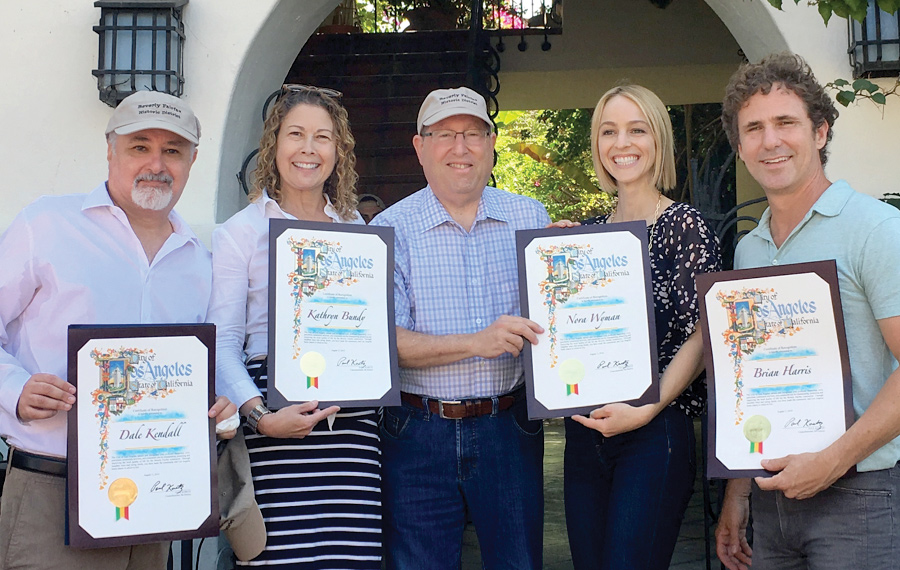
L.A. City Councilmember Paul Koretz (center) attended a ceremony celebrating Beverly-Fairfax becoming a historic district.

Los Angeles City Councilmemmber Paul Koretz attended a ceremony celebrating the Beverly Fairfax area becoming a historic district. 

The Aug. 11 event marked the unveiling of a street sign at 340 N. Sierra Bonita Ave. declaring the Beverly Fairfax area a historic district.

The Beverly Fairfax district, which falls in Koretz’s fifth council district, was formally listed in the National Register of Historical Places, an official federal list of districts, sites, buildings, structures and objects significant in American history, architecture, archeology, engineering and culture, on Oct. 4, 2018.

Longtime Beverly Fairfax resident Dale Kendall took part in the grassroots effort, dubbed Save Beverly Fairfax, to gain national recognition for the district and to preserve the area’s architecture. Others involved were Nora Wyman and Brian Harris.

Starting in the 1920s, the neighborhood was one of the city’s few areas that welcomed Jews, including Holocaust survivors. In other parts of L.A., Jews faced housing discrimination. 

Kendall, a longtime resident of the neighborhood, said its history and significance to the L.A. Jewish community is largely unknown.

“I’m 55, I’ve lived here my whole life, but people who live here now have no idea [of its historical significance],” Kendall told the Journal ahead of the unveiling.

The Beverly Fairfax district roughly is bordered by Beverly Boulevard to the south, Melrose Avenue to the north, Fairfax Avenue to the west and Gardner Street to the east.


Wanna be in Movers & Shakers? Send us your highlights, events, honors and simchas.
Email ryant@jewishjournal.com.

Lobby Day, Beverly Fairfax Event, SWU Conference Read More »

Liz Astrof on ‘Confessions of a Stay-at-Work Mom’

Award-winning executive producer and veteran television writer Liz Astrof has written for and produced a number of sitcoms, including “The King of Queens,” “2 Broke Girls,” “Last Man Standing,” “The Conners” and “Coupling.” She’s also worked with her brother Jeff Astrof on his show “Trial & Error.” 

Now, she’s come out with a new memoir about parenting called “Don’t Wait Up: Confessions of a Stay-at-Work Mom,” about work and parenting her now 12-year-old son and 9-year-old daughter, and her own childhood experiences. From stories about surviving Great Wolf Lodge to tales about eating her way through Fat Camp and taking care of her kids’ illegal Chinatown turtles, Astrof doesn’t spare any grimy details. 

Astrof spoke with the Journal about working in television, writing her book and what she hopes other parents will get out of it. 

Jewish Journal: Why did you decide to write the book?

Liz Astrof: It was totally a bucket list thing. I had been working in TV for so long but I couldn’t tell these stories in a TV show. I took a personal essay writing class at UCLA Extension after another one of my pilots didn’t get picked up. I loved it. It had this great atmosphere. I met with the professor to work one-on-one after that and she said I was going to have a book. I heard you can’t get anything published unless you’re famous, so I was worried. But it happened anyway. 

JJ: What was your inspiration for the book?

LA: I love David Sedaris. That was my goal. [Jeannette Walls’ 2005 memoir] “The Glass Castle” made me want to write, even though it’s not a comedy book. Augusten Burroughs and Nora Ephron. I wanted that quirky family point of view. I’ve always wanted something that was mine because in TV, it’s not yours. A lot of TV comedy writers probably doubt themselves a lot like I do. I start off every project with, “I can’t do that. Why did I even move to L.A.? What was I thinking? I must have blacked out 20 years ago. I changed my whole life and I should have stayed in New York and married someone I didn’t like that much who supported me.” Writing the book was such a great process and much easier. You can meander, which I like to do. 

JJ: What do you hope mothers get out of your book? 

LA: I hope mothers can give themselves a break and some relief and know we are all messed up and terrified. I also want working mothers and stay-at-home moms to have an understanding of each other. I always say things people don’t say because they’re afraid of what others think. It’s permission to not be perfect, or close to perfect, or good, really. You don’t have to love your kids all the time. It didn’t start out as a parenting book because I still don’t consider myself a good mom. But when I started writing it, my agent said the arc was all about how I was afraid to be a mother. It’s all about being surprised that I show up for my kids, and that I want to. I hope mothers will know that we’re all thinking terrible things a lot. 

“I hope mothers can give themselves a break and some relief and know we are all messed up and terrified. I also want working mothers and stay-at-home moms to have an understanding of each other.”

JJ: How did you wind up working in show business?

LA: My brother was working on “Friends” and he told me I should be a writer. I took a class and moved out here to see if I could get an agent. I think I did it because my brother suggested it. 

JJ: Which of the shows you’ve written for do you consider your favorites? 

LA: “2 Broke Girls,” “King of Queens,” “Kath & Kim” and “Trial & Error.” I think “King of Queens” was probably the funniest show because it’s totally in my wheelhouse, which is [a] lower-middle-class [story]. I relate to working-class people like in “King of Queens” and “2 Broke Girls” the most.

JJ: Is that because of how you grew up?

LA: I grew up in a very working-class town in Seaford, Long Island, and those are the people I relate to the most. The shows I grew up watching like “The Odd Couple,” “All in the Family” and “Laverne & Shirley” were those people. They were normal. We were the only Jews in our town, which is very funny to people on Long Island. 

JJ: What was that like?

LA: [It] was isolating at times. There were cultural differences. I didn’t celebrate the same holidays as many of my friends. I was one of two kids who had a bat mitzvah and no one even knew what that was, which was kind of a novelty in a way. The only other Jewish girl in my grade became my best friend. We gravitated toward each other. I also met other Jewish kids in nearby towns at Hebrew school and sleepaway camp.

JJ: How does your Judaism influence your work?

LA: Being Jewish influences my writing when I’m writing about myself, my kids and my family. For example, one essay in the book, called “Happy New Year,” is about spending Rosh Hashanah at my brother’s house.

JJ: What’s next for you?

LA: I have a deal at CBS Productions, so I’m developing an Israeli show called “La Familia” I’m trying to adapt for here. I’ll probably develop the book into a show. I’m developing my own stuff and creating my own show once again. And I’m always trying to write another book.

Liz Astrof on ‘Confessions of a Stay-at-Work Mom’ Read More »

How to Make Twine-Wrapped French Yogurt Jars

Move over, Mason jars. The new rage in crafts and décor is now Oui French Yogurt glass jars. With their compact size and unconventional shape, they are too cute to throw away. In fact, many people buy the yogurt just for the jars. So when our managing editor Kelly Hartog asked if I wanted her stash of yogurt jars, I immediately said, “Oui.”

There are many ways to repurpose them, but here is one way that’s super easy and requires very little time or money. Wrapping the yogurt jars with twine gives them an earthy look that’s perfect for the autumn months ahead. When you’re done, the jars can be used as vases or votive holders. 

What you’ll need:
Yogurt jar
Twine
Glue


1. Peel the label off the jar. It comes off easily, but some stickiness may remain. Wash the jar in hot, soapy water to remove the rest of the residue.


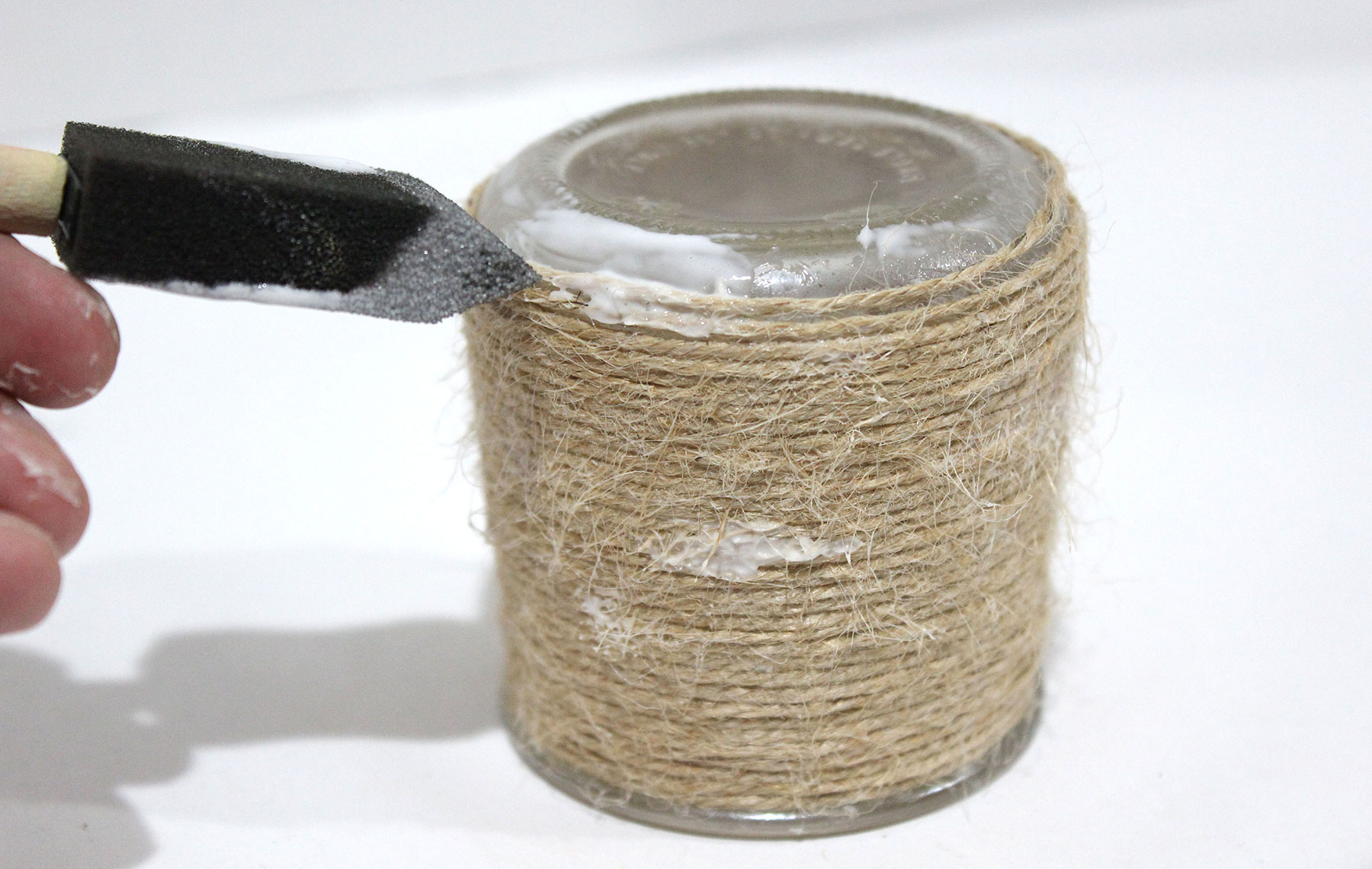
2. Dab a good amount of white glue on the end of a piece of twine. (You can leave the twine on its roll and not cut it off until the end.) Press the glued twine against the top rim of the jar to adhere it in place.


3. Wrap the twine around the jar. As you go around, add glue periodically to the surface of the jar to hold the twine in place. It’s not necessary for the entire jar to be covered in glue.


4. As you get to the bottom, flip the jar over so it’s easier to work with. Cut off the end of the twine and apply glue to the end to keep it secured to the jar.


Jonathan Fong is the author of “Flowers That Wow” and “Parties That Wow,” and host of “Style With a Smile” on YouTube. You can see more of his do-it-yourself projects online

How to Make Twine-Wrapped French Yogurt Jars Read More »

Obituaries: Aug. 30, 2019

Jan Berkowitz died July 23 at 73. Survived by husband Martin; stepdaughter Julia; stepson Cliff (Amy); sister Betty. Hillside

Adelle “Boots” Brounstein died July 31 at 92. Survived by sons Charles (Susan), Philip (Susan); 6 grandchildren; 3 great-grandchildren; sisters Janice, Renee (Herb). Hillside

Claire Cohon died Aug. 2 at 89. Survived by husband Baruch; daughters Rachel, Deborah; sons Samuel, Jonathon; 6 grandchildren. Hillside

Sandor Hyman Demlinger died July 26 at 91. Survived by wife Reva; daughter Allyson (Robert Shapiro) Demlinger-Shapiro; sons Glenn (Gaylee), Keith; 3 grandchildren; brother Marlin (Lisa). Mount Sinai

Ruth C. Frank died July 22 at 97. Survived by daughters Jeannine, Carol (Michael Katz); son Nyle (Kathie Lloyd); 2 grandchildren. Mount Sinai

Ruth Grahm died July 30 at 95. Survived by daughter Isabelle; sons Bobby, Randall; 5 grandchildren; sister Selma Herscher. Malinow and Silverman Mortuary

Adrienne Guss died July 24 at 65. Survived by brother Mark. Malinow and Silverman Mortuary

Ronald R. Hall died July 18 at 80. Survived by wife Brana; sons Corey (Susan Cosso) Wilson, Mitchell (Carolyn) Wilson; 5 grandchildren. Mount Sinai

Sally Helfer died July 31 at 82. Survived by stepsons Mitchell (Carrie), Jeffrey (Laura); 3 grandchildren; 1 great-grandchild; sister Glenda (Jerry). Hillside

Evelyn Hoffman died July 31 at 97. Survived by daughter Marlene; son Jeffrey; sister Dorothy. Hillside

Jeffrey Hoffman died July 27 at 75. Survived by wife Laura; daughter Michele (Evan) Hughes; son Sean; 2 grandchildren; brother, Harvey (Marilyn). Mount Sinai

Marcia Hollander died July 31 at 78. Survived by husband Samuel; daughter Teri (David); 2 grandchildren; brother Larry. Hillside

Florence Kauffman died July 19 at 92. Survived by sons Gary (Sandy), Scott (Juli); 2 grandchildren. Mount Sinai

Jeanette Rogolsky Kaufman died July 25 at 97. Survived by son Jeff (Debi); 2 grandchildren; brother Eugene Rogolsky. Mount Sinai

Merryll Lee Klausner died July 21 at the age 72. Survived by husband Robert; daughters Joy Shows, Cynthia Vasquez; 7 grandchildren; sister Riva Sperber. Mount Sinai

Leonard Kohn died July 29 at 81. Survived by son Michael (Jennifer); 1 grandchild; sister Evie Azarchi. Mount Sinai

Dolores Krakowsky died July 30 at 91. Survived by daughter Linda (Christopher) Jackson; son Steven (Annette); 4 grandchildren; 2 great-grandchildren. Mount Sinai 

Marcy Krescent died Aug. 1 at 63. Survived by sons David, Andrew (Nicole); 3 grandchildren; brother Jerry Singer. Mount Sinai

Pamela Lavinthal died July 20 at 75. Survived by daughter Lori; son Brett (Stacy); 2 grandchildren; brother Tom Jaffe. Mount Sinai

Alexander Lieberman died July 29 at 90. Survived by daughter Dahlia; sons Ronald, David (Amy); 6 grandchildren; sister Mariam. Mount Sinai

Beatrice Meshekow died July 28 at 95. Survived by daughter Paula; sons Marc, Robert; brother Bernard; 1 grandchild. Hillside 

Paula Ostrow died July 31 at 91. Survived by daughters Pam, Lisa; 1 grandchild. Hillside

Charles Rosenthal died July 24 at 90. Survived by daughters Terry, Amy Rita; son Mark. Hillside

Carol Anne Savage died July 19 at 75. Chevra Kadisha

Farangis Siman died July 25 at 95. Survived by daughters Farideh “Fari” (Hamid) Yashar, Farzaneh Parsakar; son Farhad. Malinow and Silverman 

Sam Singerman died July 24 at 94. Survived by wife Harriet; daughter Laura (Larry) Fox; sons Craig, Neil; 2 grandchildren. Mount Sinai

Bunny Wasser died July 27 at 73. Survived by husband Howard; daughter Laura; son Andrew; stepson David Bernstein; 5 grandchildren. Hillside

Herbert “Herbie” Weiner died July 25 at 77. Survived by sister Wendy Mack; brother Robert. Mount Tamalpais Mortuary and Cemetery, San Rafael, Calif.

Irwin Weiss died July 24 at 88. Survived by wife Rochelle; daughter Jayne; sons Robert, Craig (Elizabeth); 4 grandchildren; sister Roberta. Hillside

Michael Weiss died July 27 at 67. Survived by wife Sheryl Grabow-Weiss; daughter Gabrielle; sister Zhava Horsky. Mount Sinai

Sylvia Mae Weitzman died Aug. 3 at 83. Survived by daughters Paula (Paul Senkle), Bonnie; 6 grandchildren. Mount Sinai

Bernie Winner died July 4 at 79. Survived by daughters Michelle (Bobby) Swann, Andrea (Ed) Norick; son Barry (Debbie); 7 grandchildren; brother Shelly (Nan). Mount Sinai    

Corinne Wise died July 30 at 48. Survived by husband David Weitzman; daughter Kaya Brody Weitzman; son Justin Zachary Weitzman; mother Barbara; father Michael (Sirah); sister Danielle (Jacob Blair); brother Charles. Mount Sinai 

Obituaries: Aug. 30, 2019 Read More »

Saga of First Responders’ Never-Ending Battle Told in ‘9/12’

Only rarely does a single date on the calendar mark a tipping point in history. Dec. 7, 1941, is one example, and Nov. 22, 1963, is another. The most recent example, of course, is 9/11, a date that is fully as infamous as Pearl Harbor day or the day President John F. Kennedy was assassinated.

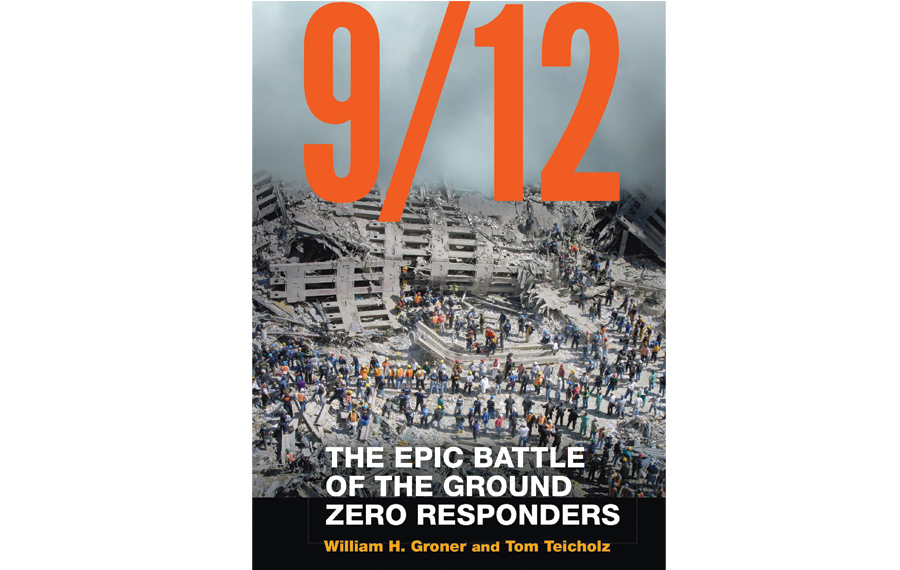
What happened amid the smoking ruins of the World Trade Center on the day after 9/11 — a catastrophe so immense that it could be seen from space — is the starting point of “9/12: The Epic Battle of the Ground Zero Responders” by William H. Groner and Tom Teicholz (Potomac Books/University of Nebraska Press). It’s a work about a long course of investigation and litigation, to be sure, but it is also a tale told at human scale. At precisely the moment when thousands were running away from the flames and smoke, hundreds of heroes were running toward the ruins of the Twin Towers.

“As the Towers collapsed and dust mushroomed, police, fire-fighters and emergency medical services volunteers were arriving from all over the city,” write Groner and Teicholz. “They would continue to show up throughout the day from the greater metropolitan area, and eventually from all over the country and even Canada. They were impelled to be there to do what they could in what everyone understood to be a national emergency.”

Groner was a participant in the litigation that was one of the most enduring aftereffects of the attack on the World Trade Center. Teicholz, a familiar name to readers of the Jewish Journal, is one of our longtime contributors and a widely published journalist and author. Together, they tell the memorable tales of heroism and, at the same time, they reveal the disgraceful way that the first responders were treated when they began to fall ill from their exposure to “the Godzilla-like cloud [that] engulfed all in its path.”

A year after 9/11, for example, a New York Police Department detective named Candice Baker was suffering from a persistent cough that she treated with cough medicine and hot tea. What she didn’t know — but soon found out — was that she was at risk of hundreds of agonizing, disabling and even fatal complications, ranging from asthma to cancer. The same fate befell many of the other first responders whom we meet in “9/12” — police officers, paramedics and firefighters, construction and utility workers, and civilians who were inspired to join the rescuers.

The dust that boiled up from the ruins of the World Trade Center was, in fact, a witches’ brew of deadly pollutants, made up of “the jetliners, their tanks of benzene jet fuel, and the entire contents of the buildings: the outside structure, the windows, the interior walls, the ceilings, the insulation, each painted surface, every piece of treated carpet, all the air-conditioning and heating equipment, and all of the office equipment, including monitors, computers and copy machines,” 1 million tons of debris that was “fused by the extreme heat into … toxic combinations never seen before.” So devastating was the damage that only 291 bodies (out of 2,753 fatalities) would ever be recovered.

The authors point out that little or nothing was done to protect most of the first responders aside from paper masks of the kind that housepainters use or respirators that quickly ran out of cartridges. A police officer named Thomas Ryan recalls telling his partner: “What’s wrong with this picture? We’re out here, we’re standing in the street wearing paper masks, and there’s a Humvee going by and the Army guys are sitting with their chemical suits on.”

Even more shocking is the response these heroes received from the doctors who treated them. “The illnesses were real. The patients were sick,” the authors write. “But even those doctors who believed the conditions resulted from some sort of toxic exposure at Ground Zero could not say so definitively.” Employers and government agencies relied on medical indecision to deny benefits. “For the responders this failure to validate the cause of their illnesses and deny them their disability benefits was disheartening; some considered it a shocking and appalling insult to their selfless service.”

“9/12” tells two stories in parallel. One story — the ordeal of the first responders who put their lives at risk at Ground Zero — is driven by its inherent drama. The other story — their struggle for justice in a bundle of lawsuits — is necessarily more complex, but it is no less stirring.

At the heart of “9/12” is an account of the long and heartbreaking struggle of the first responders to make their case in the courthouse and in the halls of government. Here we meet another set of heroes — the attorneys who represented the first responders in the bundle of cases that came to be called the World Trade Center Disaster Site Litigation. For anyone for who holds personal injury and public interest attorneys in low esteem, “9/12” demonstrates why they deserve to be seen as champions of justice for the 10,000-plus first responders who suffered a total of 36,843 medical conditions.

By contrast, the managers of the billion-dollar “Captive Fund,” which was intended to assist the injured first responders, managed to spend $275 million during one five-year period on defense lawyers and administrative costs, according to media coverage of the case. Still, the attorneys representing the first responders respected the work of defense attorneys, “even when they violently disagreed with them,” because, as Groner and Teicholz affirm, they all believed that the American legal system demanded the strongest possible advocates.

Groner was one of the leading lawyers in the “mass tort” case, but he is always described in the third person in the book itself. At moments, it’s a bit unsettling to realize that he is writing about himself. Still, the fact that Groner was a firsthand participant in the events that are described in detail by the co-authors adds to the intimacy and urgency of the narrative.

“In all his years of practice, Groner had never had a case like this, where the press and the scientific community were doing his research for him,” the authors write. “Each day Groner would check his Google alerts, and then read the relevant newspaper articles, and if there was an alert regarding the CDC, he’d go to their website to see what had been uncovered or discovered.” 

“9/12” tells two stories in parallel. One story — the ordeal of the first responders who put their lives at risk at Ground Zero — is driven by its inherent drama. The other story — their struggle for justice in a bundle of lawsuits that were called the World Trade Center Disaster Site Litigation — is necessarily more complex, but it is no less stirring. Groner and Teicholz write with both clarity and compassion about both the human struggle and the legal struggle. 

The reward for the reader, no less than for the first responders, is the opportunity to see justice done at long last and against long odds.


Jonathan Kirsch, attorney and author, is the book editor of the Jewish Journal.

Saga of First Responders’ Never-Ending Battle Told in ‘9/12’ Read More »

Israeli Team Swings for the Fences in ‘Heading Home’

When the Israeli baseball team walloped its European competitors to qualify for the World Baseball Classic of 2017, newspapers reported the feat with headlines that included “The Oys of Summer” and “Jews With Bats.” Never mind that the team roster consisted almost entirely of American Jews, when the players lined up with blue yarmulkes under their baseball caps belting out “Hatikvah,” few Jewish hearts remained unmoved. 

When the Israeli team took the field in 2017, it ranked 41st in the world and 16th in Europe. By the end of the season, it had skyrocketed to 19th in the world and fourth in Europe.

For those who missed the excitement of that period or wish to relive it, a film of those stirring days will open in Los Angeles area theaters on Sept. 5. The documentary “Heading Home: The Tale of Team Israel” is being released by Menamshe and Ironbound films, and is co-directed by Jeremy Newberger, Seth Kramer and Daniel A. Miller.

So how did these Israeli baseball players, often derided as “has beens” or “never will bes,” earn international respect?

Firstly, Newberger told the Journal, the growing number of Americans who made aliyah took with them a love of the game and determination to pass on that love to their children. As a result, Newberger said, there are as many Mets fans in Israel as there are in Queens.
In the film, the nine American players are greeted as latter-day Maccabees, as they climb Masada and float in the Dead Sea. 

“It was a deep spiritual experience for the American players, a great pride in connecting with Israel, although it would be an exaggeration to report any religious epiphanies,” Newberger said.

He also recalled that during a screening in Santa Cruz in Northern California, an elderly woman came up to him and said, “I’m not Jewish and I don’t care about baseball, but throughout this film I cried tears of joy.”

One of the players who drew a great deal of attention was Cody Decker, a Santa Monica native, who got his start at Santa Monica High School and attended UCLA. He went on to play for the San Diego Padres, alternately as first and third baseman and left fielder, who could also catch. He spent his final two seasons in the Arizona Diamondbacks’ minor league system.

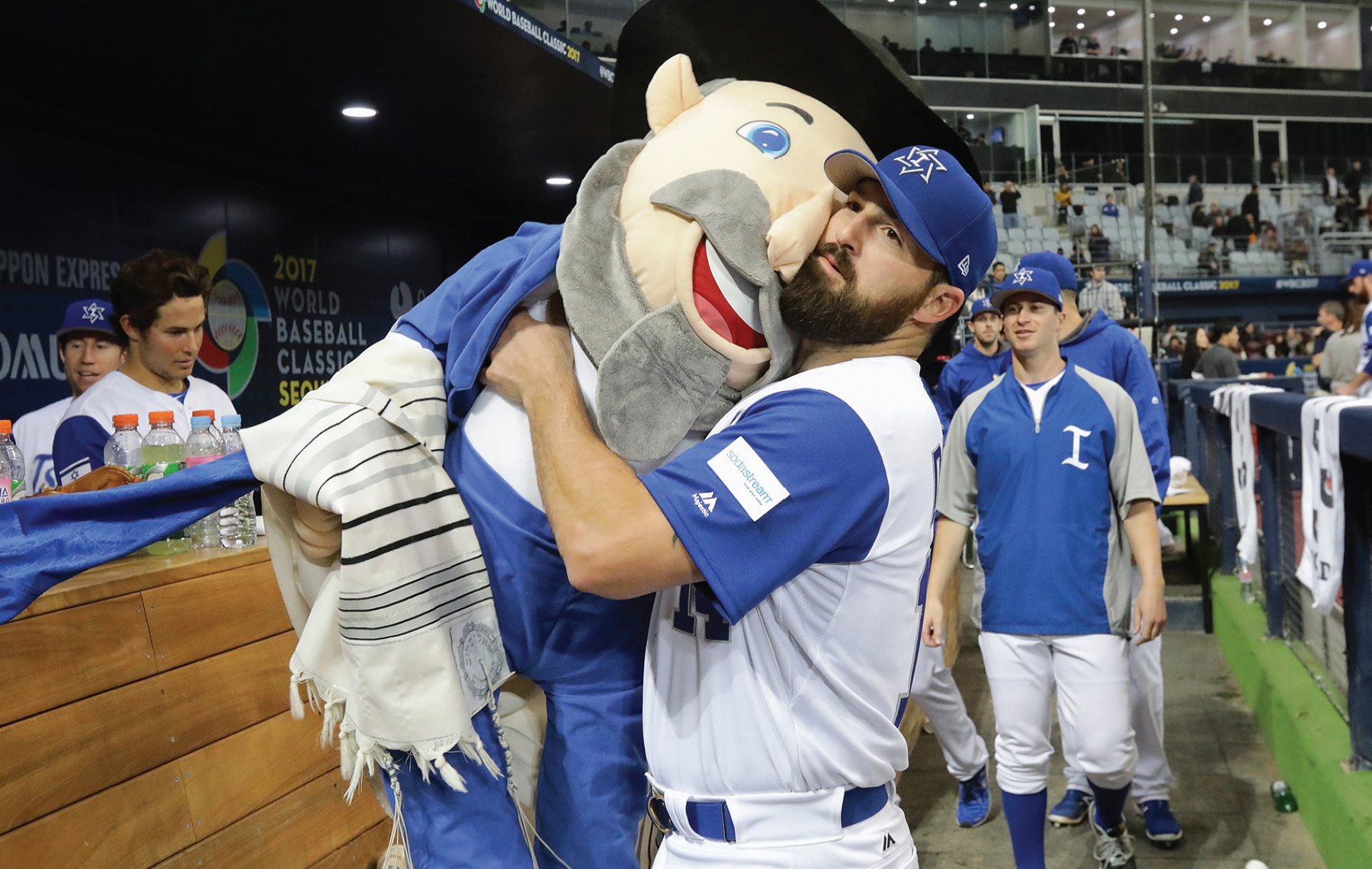
Cody Decker with “Mensch on the Bench”

Described by the San Diego Tribune as “one of the most colorful characters in professional baseball,” Decker endeared himself to his teammates and photographers by introducing the life-sized Chassidic-like mascot Mensch on the Bench, complete with tallit and holding a candle.

The Mensch had a personal locker and offered teammates and visitors kosher wine and gefilte fish.

To qualify for the Israeli 2017 Baseball Classic team, each player had to prove that he had at least one Jewish grandparent. One player brought his grandfather’s World War II dog tags, imprinted with an H for Hebrew, to which Newberger’s grandson noted in awe: “Even the dogs had to be Jewish.”

The “Heading Home” creative team now is preparing for a sequel, which will cover qualifying games for the 2020 Olympics and the 2021 World Baseball Classic
alongside the hoped-for successes of the Israeli team.

Baseball was recognized as an Olympic sport from 1992 until the 2008 Games. However, it will again be included in the Tokyo, Japan 2020 Games. Israel exceeded expectations in the 2020 preliminaries, beating Greece, Serbia, Bulgaria, Iceland and Russia. However, it must win two more tournaments to qualify for the Olympic playoffs in Tokyo.


 “Heading Home” will screen on Sept. 5 at  Laemmle Ahrya Fine Art for one show only, with regular engagements at Laemmle Royal and Town Center Encino starting Sept. 6. Cody Decker, one of the film’s stars, will participate in a Q&A at 7:30 p.m. on Sept. 5 at the Ahrya Fine Arts Theater in Beverly Hills. Charley Steiner, broadcaster for the LA Dodgers, will participate. For ticket information, call (800) 838-3006.

Israeli Team Swings for the Fences in ‘Heading Home’ Read More »

Israeli Spy Drama ‘Spider in the Web’ Brings Twists and Turns

From his 1984 debut “On a Clear Day You Can See Damascus” through his most recent release, “Shelter,” in 2017 and the acclaimed dramas “The Syrian Bride,” “Lemon Tree” and “Zaytoun,” Israeli filmmaker Eran Riklis is known for his provocative exploration of Middle East sociopolitics, often in a thriller context. In his latest release, “Spider in the Web,” Riklis returns to that wheelhouse to explore the story of an aging Mossad agent on his final mission.

In the script by Gidon Maron and Emmanuel Naccache, Avram Adereth (Ben Kingsley) knows that Mossad wants to retire him, and his desperation to deliver vital intelligence leads to reckless behavior. A young agent (Itay Tiran) is sent in to baby-sit him, forming the film’s most intriguing dynamic.  

“Adereth wants to make a mark but suddenly realizes he might be leaving with nothing, in disgrace. It’s his last hurrah. That fascinated me on many levels,” Riklis told the Journal. “I liked the juxtaposition with a young guy who has his own complexities and things to resolve. It’s about resolution and the chase in a world that is quite shady and takes you in surprising directions.”

Riklis, a big fan of John le Carré and his Cold War spy George Smiley, always has been intrigued by the concept of living a secret life, “creating a new person who takes over your old personality, living a double life while trying to stay alive,” he said. “It’s about identity, survival, dignity, loyalty, betrayal, trust. Small decisions have a huge impact, instantly. It’s a dangerous world. It’s a bigger-than-life situation.”

Mossad stories fit right into that. “It’s a fantasy, the world of secret services,” he said. “There’s an undercurrent of strength and the ability to win silently, under the radar. Israel has been fertile ground for these stories.”

“It’s a fantasy, the world of secret services. There’s an undercurrent of strength and the ability to win silently, under the radar.” — Eran Ricklis

Using an Israeli and Belgian crew, Riklis shot on location in the Netherlands and Antwerp, Belgium, switching from the original script’s Paris and Berlin. “It gives the film an offbeat touch because it’s a city that nobody knows,” he said. While he took the customary artistic license, “Everything you see is rooted in reality on many levels — personality-wise, acting-wise, the way things work.”

Riklis, 64, aimed to make “something relevant that says something about the Middle East and was intense with twists and turns and a fair amount of action, but when you strip all that away, you’re left with a character study,” he said. “Ben is amazing and Itay, who is one of the best theater actors in Israel, supplies the complexity and depth I needed for the character.” 

The central relationship between the two men “is what grabbed me from Day One in the script and it’s there in the movie. It’s like having two expensive violins. You put the bow on them and they almost play themselves,” Riklis said. He revealed that when the stars first met, “Ben was kind of cautious. But at lunch that first day, I told Ben that Itay played Hamlet in Tel Aviv and that was the turning point. That created an immediate bond, on and off screen.”

Now based in Tel Aviv, the Beersheba-born Riklis was exposed early on to films and TV, and made his own 8mm films.  He spent his early childhood in Canada, Brazil and the United States, relocating for his father’s nuclear science studies and career. The frequent moves required some chameleon-like adjustments, perhaps accounting for his affinity for spies. “It was about adapting and making friends and identifying enemies, like the secret services of the world have to do,” he said.

An Ashkenazi Jew and a 10th-generation descendant of the Baal Shem Tov, Riklis is married to film director Dina Zvi-Riklis and is the father of Tammy, a journalist, and Jonathan, a musician and composer who wrote the score for “Spider in the Web.” 

“As an Israeli, it goes without saying that I was always connected to Judaism as part of my life,” he said. “Although my family and I were and are totally secular.”

Riklis’ next project is a movie based on the memoir “Reading Lolita in Tehran,” set in post-revolution Iran. It centers on a fired female literature professor who creates a secret book club. He’s also developing some projects for television. “For me, it’s about making a list and sorting out what you really want to do. At this point in life, there’s a clock ticking somewhat so I can’t really waste time on things that are not important for me to make,” he said. “I don’t want to say I have to make important films but I do want to make films that have a relevance to what’s going on everywhere but especially in Israel.”

Riklis said he is proud of “Spider in the Web” on both a cinematic and storytelling level. “I think it’s an exciting experience with tension and twists and turns and Middle East intrigue that is also an emotional ride,” he said. “It’s an old school meets new school blend that combines the genre with the search for something new.”

“Spider in the Web” opens in theaters Aug. 30.

Israeli Spy Drama ‘Spider in the Web’ Brings Twists and Turns Read More »