fbpx

July 24, 2019

Open Temple Welcomes B’Nai Mitzvah

Rabbi Lori Shapiro of Open Temple in Venice has been providing meaningful b’nai mitzvah services to her students for more than 10 years, allowing them to curate their own services. 

Shapiro said, “It always starts with asking, ‘Who is this student? What is their curiosity? How do we match what is their personal spirituality and then tie it so that Judaism has a deep starting point in them?’ instead of fitting them in this hole if they are a square peg. A big synagogue isn’t for every kid.”

She added the only requirement of a bar or bat mitzvah student is that he or she recites the Torah’s “Barcha banu” prayer. The rest is open to “invite the students to make it their own.”

Shapiro has helped more than 100 students become b’nai mitzvah and has helped craft their rituals to meet each one’s specific needs. The Open Temple rabbi has held b’nai mitzvah services on top of mountains, at black-box theaters and even on golf courses.

The venue isn’t the only thing in which students get to have a say. They also create their own tallitot, craft their own melodies to prayers and find connections to Judaism in whatever creative way that makes sense to them.

“We want the students to go deep and see what the literal woven tradition is about, being Jewish,” Shapiro said.

Currently, Shapiro is preparing a nature-themed bat mitzvah service that includes meditation and a nature walk for one of her students, who has been meditating with Shapiro as part of her bat mitzvah preparations.

Shapiro’s mission is to show her students there are other ways to connect spiritually to God and Judaism without holding a service in a traditional synagogue.

“We are trying to allow the students’ curiosities to grow through the lens of Torah,” she said.

One of Shapiro’s students had a passion for R&B and rap music, so for her bat mitzvah, she recited the “Adon Olam” prayer to the melodies to which she connected. Another student was drawn to Holocaust studies and survivors and held his bar mitzvah at the Los Angeles Museum of the Holocaust to share Holocaust awareness and history. Another wanted his service held in the Los Angeles mountains because the views reminded him of Israel and his connection to Zionism.

Shapiro said this year, Open Temple established a music studio and developed a Jewish “School of Rock” so students have access to songwriters, musicians and recording services for their b’nai mitzvah.

Because it’s so personal and the children run the service, Shapiro said the students’ passion always moves their families and friends. “They are ready to really officiate a service and they are creating ritual space,” Shapiro said. “I bring them into an empty box and say, ‘What is this space?’ and give them an idea that an empty space can also be a ritual space … and that’s why they all look so different.”

Whether you are a lover of tradition, sports, soundstages or stand-up comedy, a service can incorporate these passions, according to Shapiro. She added there is no end of possibilities for ceremonies because the idea of Judaism is that ‘Godliness is everywhere,’ so a b’nai mitzvah services should be no different.

She notes that it is easier to have this strong experience if a student is involved in at least two years of Open Temple’s religious School of the Arts program. 

“The whole idea is we have this incredible initiation ritual [bar and bat mitzvahs], the commencement of Jewish adulthood,” Shapiro said, “but so many times, we don’t pay attention to who this adult is becoming. Why is it that we force them to be in these rigid environments? I work a lot on life skills with these kids. What I see so often is that students are transformed through the work we are doing together.”

Shapiro added that with this freedom
and creativity, students truly reflect their likeness in the image of God (B’tselem Elokim) and other Jewish values that will stay with them as they continue their Jewish
adult journeys.

“They are the next innovation of what comes, because that’s where Judaism is going,” she said. “It’s really a validation of what Judaism is. It’s l’dor v’dor — from generation to generation — and this young generation that we’re nurturing will put their own soul print on it, unique and distinct to what we gave to them.”

Open Temple Welcomes B’Nai Mitzvah Read More »

Dylan Siegel: Helping Third World Children

Students preparing for their b’nai mitzvah often are encouraged by their families and synagogue communities to take on meaningful social justice projects.

“We’ve come to call it ‘tikkun olam projects,’” said Stephen S. Wise Temple Rabbi Ron Stern of the synagogue’s b’nai mitzvah programs. “A mitzvah … means keeping kosher, reading Torah, observing Shabbat, things like that. Tikkun olam actually says to the kids that you’re doing something that on a broader scope has an impact on the world. It’s not just about your own personal mitzvah observance.”

B’nai mitzvah tikkun olam projects are about “realizing we need to do everything we can to inspire the next generation to take ownership and action, and fix some of the brokenness in the world,” Stern added.

In that vein, the synagogue ensures students receive messages from different
places so they see tikkun olam not as an add-on, but as an integral part of the bar
and bat mitzvah experience.

“We start when they are in fifth grade, talking about all the pieces of bar and bat mitzvah, and one of those pieces is tikkun olam,” Stern said. “By the time they’re about 10 months out, we have a volunteer who calls them and says, ‘What’s your project? Can I help you choose your project? Here are some resources.’ ”

While the synagogue encourages the tikkun olam project not to be about money, fundraising is another story, since it’s more than writing a check, Stern said.

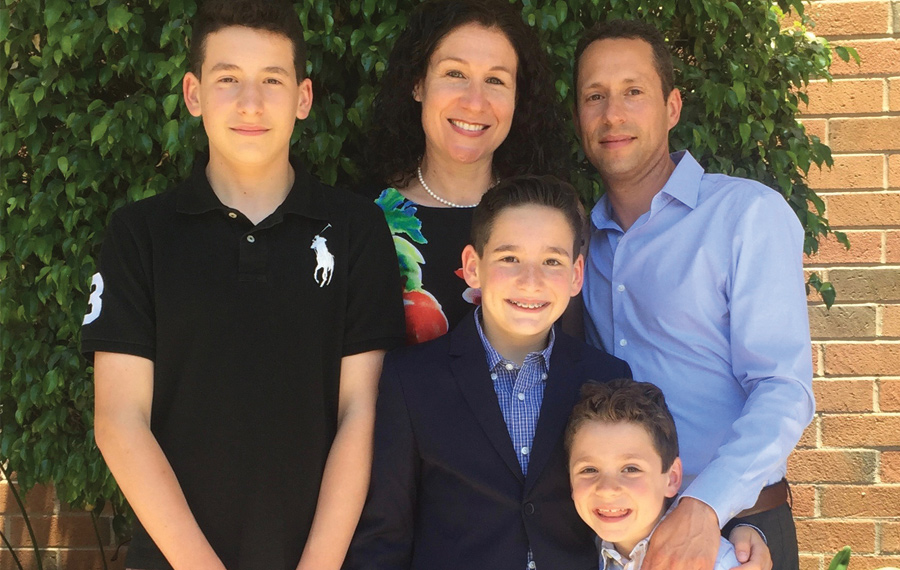
Photos courtesy of the Siegel Family

Dylan Siegel, who will become a bar mitzvah in August, is one such fundraiser. He has been involved in social justice activities for more than half his life. When he was 6
years old, he wrote a book called “Chocolate Bar” to raise money to help cure his best friend Jonah’s rare genetic liver disease. To date, the book has raised approximately $1.5 million, all of which has gone toward researching
a cure.

“I’ve been inspired by Wise Elementary, who reinforced
tikkun olam every day.” — Dylan Siegel

Now, Dylan not only wants to make strides as a young social entrepreneur, he wants to help others do the same. For his tikkun olam project, he is raising money to send himself, along with teenagers who live in Third World countries, to the 2019 FutureHack Global Innovators Bootcamp in Boston this summer.

“I knew there were applicants around the world who could not afford it, so I thought it would be awesome to raise the money to send others, as well,” Dylan said.

“He’s already [raised money] to send two kids, and he’s hoping to raise enough money to send a third,” Dylan’s mother,
Debra, said. “These are amazing teens in their own right and are doing things in their own communities but would have no [other] way of attending a program like this. Those kids are going to go back to their communities and start a business that will make a difference. It’s hard to even know how many people will be reached
by this.”

Dylan’s drive does not surprise Stern. “Dylan is an exceptional kid. [He] is one of the youngest participants,” he said.

“I’ve been inspired by Wise Elementary,” Dylan said, along with his current school, Milken Community School, “who reinforced tikkun olam every day. I give them a lot of credit for teaching me tikkun olam and how to help the world.”

To donate to Dylan’s mitzvah project, click here. 

Dylan Siegel: Helping Third World Children Read More »

Engaging Emerging Jewish Professionals

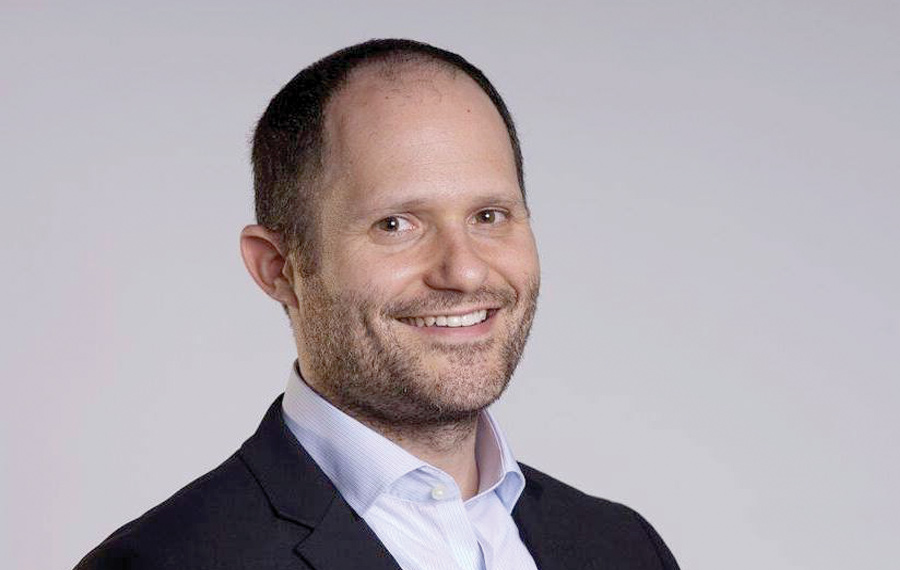
Bradley Caro Cook founded Career Up Now to engage emerging professionals ages 18-26 through career advancement, unique experiences and social good. He holds daily back-to-back meetings with potential partners, active collaborators, philanthropists and friends about their shared passions: entrepreneurship, Israel, Los Angeles and the Jewish people. 

Born in Atlanta, Cook moved to Israel in 2012 and then returned to the United States, settling in Los Angeles in 2015. His limitless enthusiasm is a necessity, given the depth and breadth of his work. He also leads Birthright Israel trips; is an adviser for IsraAid; designed the Masa Innovation Forum; launched Women of Wisdom gender equity programs; and partnered with Cedars-Sinai Medical Center for a healthcare and medicine cohort with support from Glazer Philanthropies, among other things.

Cook says Career Up Now has engaged 2,000 people in Los Angeles over the past three years and is growing its programs in Atlanta, Boston, San Francisco and Silicon Valley. And, yes, that “Caro” in his name is a nod to Rabbi Yosef Caro, the author of the “Shulchan Arukh,” the codification of Jewish law, and his ancestor.

Jewish Journal: You’re very proud of your connection to Rabbi Yosef Caro. How have you been impacted by this connection?

Bradley Caro Cook: I read the “Kitzur Shulchan Arukh” (the abbreviated code of Jewish law codified by Caro) and found such power in the words there that it lit up my soul. I felt this eternal, soulful connection to waking up with gratitude and saying Modeh Ani (the morning prayer). [After reading it] I had a direct link to my ancestor. It was like an angel came down and gave over that Torah and I was actually living it. My core motivation is to make an impact for the Jewish people and for Israel. Caro did so much good for the Jewish people and I’m using Career Up Now as a vehicle to bring good into the world.  

JJ: What was the founding goal of Career Up Now? Has it changed?

BCC: Career Up Now was just focused on college students connecting with industry leaders. Now the question is how do we manage a community that’s over 3,000 people with just that one person? We’ve adopted an intentional community model through Hazon’s Hakhel three-year incubator initiative. We’re shifting the local bases and turning them into intentional communities at the intersection of career advancement, Jewish learning and mentorship.

Growth hacking is a strategy used by high-tech companies to rapidly acquire new users for their products. It’s worked so well for them, I decided that we should use this approach to strengthen Jewish engagement.


JJ: Can you share an example of a successful Career Up Now project?

BCC: We got a grant from The Jewish Federation of Greater Los Angeles to do a cohort in Beverly Hills at the intersection of civic responsibility and applied Jewish wisdom. The project that came out from the student leaders of that cohort is what is now the City of Beverly Hills Entrepreneurship Incubator. Now we’re in our fourth cohort.  

JJ: What is growth hacking and how have you used it to grow Career Up Now?

BCC: Growth hacking is a strategy used by high-tech companies to rapidly acquire new users for their products. It’s worked so well for them, I decided that we should use this approach to strengthen Jewish engagement. I first dabbled in growth hacking when I created a program for Birthrighters to extend [their time] in Israel to have informational interviews with Israeli industry leaders. I had three months to recruit 200 mentors. I sent hundreds of LinkedIn messages and recruited 300 industry leaders within a month and a half. That program was adapted to a U.S.-based program and became Career Up Now. 

When I arrived in L.A., I knew no one and had to recruit 150 industry leaders in a three-month period for a micro-grant we received from the Jewish Federation. I put on my growth hacker hoodie, jumped on LinkedIn to see who was interested in serving on nonprofit boards, wrote advanced Boolean searches to see who was Jewish and got a 25% positive response rate. I’ve been able to recruit 1,600 members to join as mentors. Now I have organizations asking me locally and globally if I can do the same thing for them. It’s opened up a lot of doors to collaborate and do good.  

JJ: As Career Up Now’s sole full-time staff person, how do you find time to oversee all of these initiatives?

BCC: I have to give credit to my co-founder, Rabbi Adam Grossman, who operates quietly part time behind the scenes, and my wife, Tanya Freeman, who coaches local communities. The truth is, it’s my disability that enables me to do so much. I was diagnosed with ADHD (attention deficit hyperactivity disorder) at 5 years old. So, I rely a lot on technology and automation to streamline what I do. The key for me is to stay occupied in many different things and devote small periods of time to each. I operate by jumping from project to project to project, working quickly and getting it all done. 

JJ: What’s changed for you since you started Career Up Now?

BCC: My mission and vision is: How can I impact millions of people in a positive way?  So now I’m creating technologies around how to help Jewish and Israeli nonprofits through growth hacking. I made a promise to God that I’d dedicate the rest of my life to serving the Jewish people and Israel, and our people need help. 

JJ: How do you measure the impact of Career Up Now?

BCC: We measure impact by surveying how our community members incorporate Jewish wisdom into their lives and how they interact with the Jewish community. One student from our environmental and sustainability cohort, who self-identified as having “no current Jewish engagement,” wrote, “I learned at CUN that the value of not taking credit for what’s good was a Jewish value. That’s what every day guides my environmental engineering work. Now every day when I’m at work, I feel I’m Jewish all the time, and that’s a huge statement as an atheist of Jewish descent.” 

Because of his time with CUN, he’s holistically pursuing his passions through his Judaism. Through growth hacking, we are able to engage those deemed unreachable and have an immediate impact on Jews who now feel connected Jewishly. And that’s huge. We hope to work with more Jewish organizations on this approach. It’s very effective and easy to do.

Engaging Emerging Jewish Professionals Read More »

Make a No-Sew Pillow Out of a T-Shirt

My sewing machine and I have a love-hate relationship, so if I can ever do a fabric-based project in which I don’t have to sew, I’m all over it. Take this T-shirt pillow, for example. No needles, thread or bobbins were sacrificed in the making of this pillow. And that suits me to a T.

What you’ll need:
T-shirt
Chalk marker or pen
Ruler
Scissors
Pillow filler


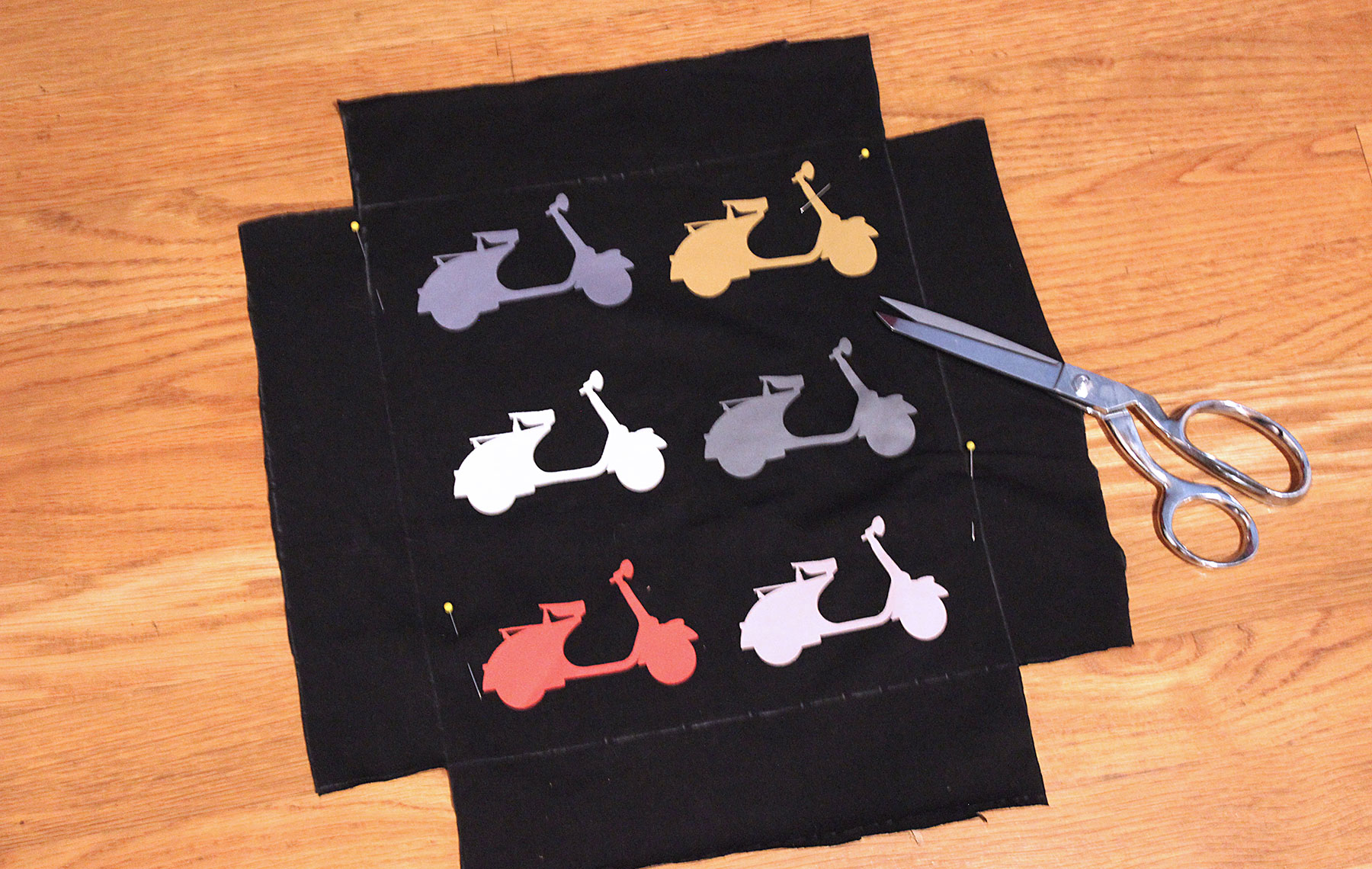
1. Use a ruler and chalk marker or pen to draw a square on the T-shirt. My shirt was sized extra small, so the square was only 10 inches. Then mark another square that is about three inches larger on each side.


2. Cut along the outer square with scissors, being sure to cut both the front and back of the shirt at the same time. Cut off the corners so you end up with four flaps extending from the inner square.


3. Cut slits in each flap about a half inch apart going up to the line marked for the inner square. Because you’re cutting through two pieces of fabric, you will end up with strips in pairs — a front piece and a back piece.


4. Tie the front and back pieces into double knots. Do this for three sides, leaving one side open for now. The tied strips create a nice fringe for the pillow.


5. Stuff the pillow with polyester batting or pillow filler. You can also use fabric scraps, an old pillow, crumpled newspapers or even bubble wrap. Then tie up the strips on the last side.


Jonathan Fong is the author of “Flowers That Wow” and “Parties That Wow,” and host of “Style With a Smile” on YouTube. You can see more of his do-it-yourself projects at jonathanfongstyle.com.

Make a No-Sew Pillow Out of a T-Shirt Read More »

Obituaries: July 26, 2019

Barbara Alberstone died June 23 at 90. Survived by husband Marvin; sons Dale (Karen), Todd (Elena); 4 grandchildren. Hillside

Buena Angel died June 19 at 95. Survived by daughter Esther (Earl) Roth; son Isaac; 7 grandchildren; 13 great-grandchildren. Malinow and Silverman

Julie Anne Bender died June 20 at 55. Survived by husband Rolf; daughter Shelby; son Ryan; brothers Robert (Susanne) Vorzimer, John Vorzimer. Mount Sinai

Janice Clotzman died June 25 at 86. Survived by daughters Karen (Doug), Lisa (Moshe); son Steven; 8 grandchildren; 5 great-grandchildren Hillside

Rochelle Dave died June 19 at 80. Survived by husband Andrew; daughter Laura (Josh); son Jeff (Karen); 3 grandchildren; brother Ed (Marilyn). Hillside

Sherwin C. Edelberg died June 25 at 83. Survived by wife Bonita; daughter Shoshana; son Benjamin;1 grandchild; sister Eleanor; brother Ed Rosen.

Max Einbinder died June 23 at 95. Survived by daughter Hannah Wahlman; son Steve; 3 grandchildren. Mount Sinai

Michael Freilich died June 29 at 86. Survived by wife Brooke; daughters Barbara, Lorrie; son Alan; stepdaughter Amelia; brother Robert; 4 grandchildren; 3 great-grandchildren. Hillside

Karen Golden died June 23 at 78. Survived by daughter Amy (Shaun) Harrington; son David (Stacey); 4 grandchildren; brother Naryan De Vera. Mount Sinai

Valerie Goldstein died June 26 at 71. Survived by son Christopher Brown; mother  Alice Grant; sister Cheryl (David); brother Rob Grant. Mount Sinai

Michelle Renee Haimoff died June 24 at 40. Survived by husband Ben Christen; sons Sam, Aaron; mother Deborah (Allen) Grubman; father Uziel (Karla); brother, Daniel (Sherry); grandmother Deedee Christen; grandfather Jim Christen. Mount Sinai

Estelle Harrison died June 19 at 90. Survived by daughter Kathy (Robert) Bordiga; sons Michael (Roni), Robert (Ken McFarlane), Alan (Donna); 5 grandchildren. Malinow and Silverman

Vita King died June 15 at 79. Survived by sister-in-law Leslie. Hillside

Betty Kopley died June 21 at 88. Survived by daughters Kathleen, Ellen (Phillip); 4 grandchildren. Hillside

Jerry Laska died June 20 at 82. Survived by daughters Hydee (Kevin) Riggs, Michelle; son Shawn (Adrian); sister Sivia (Jerry) Morison; brothers, Paul (Judi), Mark (Joan). Mount Sinai

Elaine Leon died June 25 at 71. Survived by husband Vitali; daughter Ashley; sons Ken (Debra), Danny (Debbie); sister Chava Caron; brother Johnny (Bella) Goldberg.Malinow and Silverman 

David Levine died June 26 at 77. Survived by wife Kathleen; son Joshua; brother Steve (Nancy). Hillside

Lee Levy died June 20 at 94. Survived by daughter Fran Rosen; sons Jay (Donna), Simon “Sonny”; 3 grandchildren. Mount Sinai

Bernice Lurie died July 7 at 97.  Survived by daughter Linda (Tony); son Robert (Debi); 5 grandchildren;  3 great-grandchildren. Hillside

Alan Magidoff died July 4 at 89. Survived by wife Iris; daughter Bobbi (Richard); son Peter (Barrie); 6 grandchildren. Hillside

Faye Margolis died June 22 at 75. Survived by husband George Northrup; son Daniel Northrup; sister Freyda (Jerry) Margolis Miller; brother Arthur. Hillside

Beryl Markiles died June 25 at age 80. Survived by husband Paul; daughters Eve (Colin), Wendy; sons Murray, Jonathan; 8 grandchildren. Hillside

Philip Materman died July 3 at 96. Survived by wife Miriam; sons Mike (Jennifer), Leonard (Holly), Daniel (Alissa); 6 grandchildren. Hillside

Uziel Pascal Monge died June 18 at 17. Survived by sisters Aurora, Miranda, Natania, Raquel; grandfather Byron (Sybil) Kohn. Mount Sinai

Jean Nagourney died June 20 at 91. Survived by niece Susan. Hillside

Natalie Nankin died June 18 at 85. Survived by husband Gerald; daughter Sheri (David) Vogel; son  Michael (Elizabeth); 5 grandchildren; sister Lois Blom. Mount Sinai

Sina Rashidi died June 8 at 69. Survived by his sons Mike, Matt; 1 grandchild; mother Ehtehram Emrani; sisters Sohaila (John) Ourian, Sima (Nassir) Ebrahimi; brother Seyamak. Chevra Kadisha

Charles Royce died June 23 at 80. Survived by wife Lorena; daughters Leslie, Deborah; 4 grandchildren. Hillside

Julie Sachse died June 21 at 59. Survived by husband Edmond; daughter Erin; son Jacob; mother Shayna; father Morrie; brothers Jeff, Rick. Hillside

Stanley Tendler died July 1 at 88. Survived by wife Audri; daughter Bettina; son Lance (Karyn); 4 grandchildren. Hillside

Lillian Weinberg died June 27 at 96. Survived by daughters Molly, Susan; son David; 1 grandchild. Hillside

Evelyn Weisbarth died July 5 at 97. Survived by son Stephen (Susan); 7 grandchildren; 6 great-grandchildren. Hillside

Kurt Wunderlich died July 5 at 95. Survived by wife Nenita; daughter
Judy; sons Bernard, James; sister Kaye. Hillside

Arthur Zuckerman died July 3 at 82. Survived by daughter Andrea (Jeffrey); 1 grandchild. Hillside

Obituaries: July 26, 2019 Read More »

Scenes From a Long-Term Relationship With the Talmud

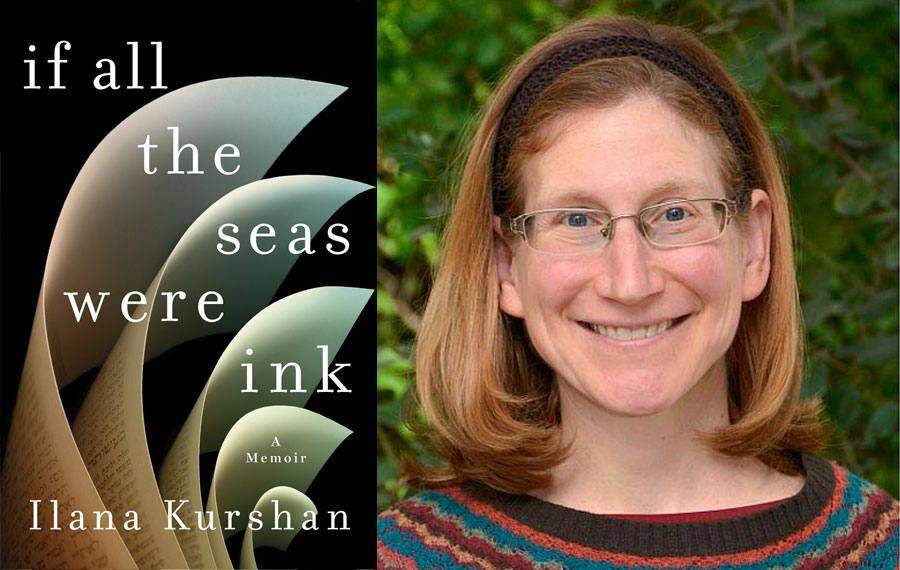
Daf Yomi, the daily study of the Talmud in its entirety, one page at a time, is an undertaking that lasts 7 1/2 years. When a newly divorced young woman named Ilana Kurshan first entertained the prospect of engaging in a Daf Yomi, she found it daunting.

“It was almost impossible to imagine my life in 7 1/2 years,” she writes in “If All the Seas Were Ink: A Memoir” (Picador). “Would I still be living in Israel? Would I still feel saddled by the pain and shame I carried around with me? Would I finally manage to ‘move on,’ as everyone around me kept assuring me I would?”

Kurshan, who had studied at Harvard and Cambridge and worked as an agent and an editor in New York, was not discouraged by the complexities and difficulties of the Talmud, but she was surprised to find that she was deeply inspired by what she found in its densely printed pages. “One need not even be Jewish or at all religious,” she explains. “Indeed, sometimes the rabbis are so bold and heretical that their statements may be best appreciated by those who are not themselves devout.” 

“If All the Seas Were Ink” — the title is derived from a paean to the glory of God written by a medieval rabbi — was richly honored upon publication in hardcover last year, winning the Sami Rohr Prize for Jewish Literature and the Sophie Brody Medal for Achievement in Jewish Literature, and is now available in a quality paperback from the Picador imprint of St. Martin’s Press. What makes Kurshan’s book so compelling is the feat of literary alchemy she performs, turning the arguments and musings of ancient sages into what she calls an “ever-widening intersection of text and life.”

Indeed, the clue to understanding Kurshan’s book is the fact that she characterizes it as a memoir rather than a talmudic commentary. She reveals the stresses and torments in her own life, the people whom she has loved and those who have broken her heart; she describes the places she has lived and the work she has done in ways that come fully alive for the reader, sometimes poignantly and sometimes humorously; and she does it all in prose so rich and evocative that the book is fully rewarding even to readers whose interest in the Talmud may be slight.

Indeed, the sources and influences that she invokes may start with Hillel and Shammai but also include William Wordsworth and William Blake, D.H. Lawrence and Virginia Woolf, Shel Silverstein and Amos Oz. She describes her “book of life” as consisting of her siddur, her day planner and the journals she has kept since childhood; the first one, she recalls, was a Rainbow Brite notebook. She confesses that she put certain books in her home library on the bottom shelf because she was embarrassed to own them: “Vegan With a Vengeance,” “The No-Gym Workout” and “How to Behave in Dating and Sex.”

Ilana Kurshan was not discouraged by the complexities and difficulties of the Talmud, but she was surprised to find that she was deeply inspired by what she found in its densely printed pages.

Then, too, the fact that Kurshan is a woman who studies Talmud is both provocative and significant. “[M]ost of the women in the Talmud are sexual objects who are seduced or raped or subjected to virginity tests,” she points out. “The few women who are depicted as learned — Yalta, Beruriah, Rav Hisda’s daughter — have surprisingly violent streaks, perhaps a testament to their force of personality.” And she describes her struggles with being a single woman, which seems to bother the people around her as much as it did the talmudic rabbis: “I didn’t mind being unmarried, but the thought of other people’s pity made me cringe,” she writes. “The Talmud, too, looks pitifully upon any woman who does not have a man with whom to share her life and, more specifically, her bed.”

The author is both knowledgeable about and respectful of pious tradition, but she also possesses a certain irreverence that sparkles throughout her book. She is dedicated to both exercise and Talmud, and when swimming laps in a pool, she left photocopied pages in protective plastic sleeves at the far edge so she could glance at a page of text before turning around. “I imagine the sages would have been none too pleased by my chanting Torah in a bathing suit in the Jerusalem public pool,” she writes — and then she makes a sly allusion to the romantic and even erotic lyrics of the Song of Solomon: “Many waters cannot quench my reverence for Torah, I imagined myself reassuring them, nor can rivers or pools sweep it away.”

By the end of Kurshan’s enchanting and illuminating memoir, we feel that we have come to know her as intimately as we have come to know the Talmud, which surely was her intention all along.

“I had to confront what I knew to be true: That I have always been a hopeless romantic, and that my sense of romance is deeply bound up in my passion for literature,” she writes. “I’d spent my whole life reading books, but here was a book I could imagine spending my whole life reading.”


Jonathan Kirsch, author and publishing attorney, is the book editor of the Jewish Journal

Scenes From a Long-Term Relationship With the Talmud Read More »

‘Barbarians’ Sheds Light on Ugly Romanian History

In October 1941, the Romanian military collaborated with the Nazis to murder approximately 400,000 Jews, Roma gypsies and other minorities in Odessa, Ukraine and elsewhere on the Eastern Front. The massacre was set in motion by the ethnic cleansing policies of Romania’s military dictator Marshal Ion Antonescu, who infamously declared several months before, “I do not care if we go down in history as barbarians.” Borrowing those words for the title of his latest effort, filmmaker Radu Jude sheds light on an ugly part of Romania’s past that most would prefer to forget.

“It covers a dark chapter of our history, and if it is hidden and not really talked about, it means it is something important there,” Jude said. “It was like [my] personal revenge toward the ones who taught us a nationalistic version of history, and a way to make past and present enter into dialogue. Romania was an ally with Nazi Germany and took part in ethnic cleansing in horrible ways. Nowadays, this part of the story is not so much talked about or it’s considered the responsibility of Germany, which is not correct. Romania was never an occupied country, but an ally — a very zealous one. Many Romanian soldiers died for nothing in a war that was an obsession of Marshal Antonescu, not theirs.”

“I Do Not Care If We Go Down in History as Barbarians” was Romania’s Academy Awards entry and was named best feature film at the Karlovy Vary International Film Festival in the Czech Republic this year. It chronicles a young theater director’s (Ioana Iacob) efforts to stage a re-enactment of the Odessa massacre, despite the objections of a city official (Alexandru Dabija) who would prefer her to portray Romania’s military glory. The arguments between them provide the film’s most provocative scenes.

A still from “I Do Not Care if We Go Down in History as Barbarians.” Photo courtesy of Big World Pictures

Jude’s preparatory research included reading books and archive transcripts from war crimes trials, where soldiers testified about the orders that commanded them to kill civilians. (Antonescu was tried and executed in 1946.) “In order to join the European Union, Romania had to admit participation in the Holocaust,” he said. “The fact that we based all our data on an official report from the Elie Wiesel Commission helped us a lot.”

Jude also had the help of a Romanian Holocaust expert, historian Adrian Cioflanca. “It is a very dense film, full of quotes and references but they are not essential for grasping the essence of [it],” he said.

“Cinema can bring something specific to the thinking about history that other disciplines don’t have. [‘Barbarians’] is a montage film: The parts go together to form something new.” — Radu Jude

“My approach [to the film] was oblique,” Jude said. “Not trying to represent the past, but to make a film that deals with the problems of the representation of the past and its horrors.” He aimed to “stress how the horrors of history transform themselves into mere words, which can convey nothing of what actually happened.”

His challenges ranged from raising funds to time constraints and excessive heat, but nothing insurmountable. “We had some difficulties in filming in the Military Museum, but in the end they let us do it and they were quite supportive,” he said. 

Jude said he believes that anti-Roma racism and nationalism today is stronger than anti-Semitism. “The election of Mr. (Donald) Trump in America and other extreme right-wing leaders in Europe gave some new force to all these attitudes,” he said, adding, “one of the Charlottesville, (Va.), riot leaders was inspired by the Romanian fascists of the 1940s.”

Jude is currently in post-production on a new film titled “Uppercase Print,” which combines two narratives from Romanian history. “One is the true story of teenager Mugur Calinescu, who in 1981 chalked protest messages against the Nicolae Ceausescu regime on walls,” he said. “His story is presented as it appears in the voluminous file kept by the secret police, which observed, apprehended, interrogated and in the end, destroyed him. The other is the official story of Romania at the time, in national television archive footage. It is a montage-based film, in the (Sergei) Eisenstein tradition.

“Cinema can bring something specific to the thinking about history that other disciplines don’t have,” Jude said. “[‘Barbarians’] is a montage film: The parts go together to form something new. It is a narrative film, but what’s important in it is something beyond the story, which is how cinema can relate to history.”

“I Do Not Care If We Go Down in History as Barbarians” opens at the Laemmle Monica Film Center on July 26.

‘Barbarians’ Sheds Light on Ugly Romanian History Read More »

Skirball Brings Out Warhol’s ‘Ten Portraits of Jews’

They’re baaack.

Those unforgettable visages of Kafka and Einstein, Buber and Stein, Brandeis, Bernhardt and the Brothers Marx, Gershwin, Meir and Freud are together again, lining the walls of the Skirball Cultural Center. The silkscreen portraits are rendered in the kind of eye-popping color and quirky geometric fragmenting that marks them as unmistakably the work of one artist: pop genius Andy Warhol.

They’re back, but they’ve never really gone away. Since their 1980 unveilings in Rockville, Md., Miami and the Jewish Museum in New York, Warhol’s well-traveled “Ten Portraits of Jews of the Twentieth Century” have been reviled and embraced, criticized and celebrated. Whether under the titles “Ten Jewish Geniuses” or more colloquially “Warhol’s Jews,” these portraits have rarely left people feeling neutral about them.

Working from existing photographs, Warhol created a series of silkscreen prints and paintings both for exhibition purposes and because he figured they would sell. The Skirball has owned a set of the silkscreen prints as part of its permanent collection since the early 2000s and exhibited the 10 portraits together in their 2000 exhibition, “Revealing and Concealing: Portraits and Identity.” The center’s curatorial staff decided now would be an appropriate time to bring them out and juxtapose them with concurrent exhibitions of the clothes of Rudi Gernreich (“Fearless Fashion”) and the photography of Kwame Brathwaite (“Black Is Beautiful.”) 

“We also wanted to play with the pictures a little bit,” said Cate Thurston, one of four curators who worked on the exhibition. “Looking at that long history, we wanted to add a little bit of depth to contextualize the subjects in ways that Warhol didn’t. So for us, this is really about showing this body of work, acknowledging its interesting history and then adding the context Andy Warhol didn’t. Because that’s really our mission: the intersection of American democratic values and the Jewish American experience.”

Displaying the Warhols under the “Skirball Spotlight” rubric, the center has added a new component courtesy of the Skirball Teen Council. Viewers can download an accompanying audio tour created by high school students to give them more detailed information about the 10 subjects, allowing visitors to engage more closely and appreciate their significance. 

“When Warhol was criticized for being superficial and not being intellectual or historical in his selection, my response would be, ‘Yeah, and that’s why people love Warhol.’” — Richard Meyer

Granted, Albert Einstein and Sigmund Freud are not exactly strangers to most people, but in a certain way the audio tour helps fill in the information gap that Warhol created. When the 10 portraits were first displayed in 1980, the artist was taken to task for pandering to a commercial audience and for not giving his “geniuses” their celebratory due. 

New York Times critic Hilton Kramer slammed the show, saying it “reeks of commercialism and its contribution to art is nil. The way it exploits its Jewish subjects without showing the slightest grasp of their significance is offensive — or would be, anyway, if the artist had not already treated so many non-Jewish subjects in the same tawdry manner.”

Harsh words, and not necessarily deserved, said Richard Meyer, the Robert and Ruth Halperin Professor in Art History at Stanford University who curated a 2008 exhibition at the Jewish Museum fittingly titled “Warhol’s Jews: Ten Portraits Reconsidered.”

“When Warhol was criticized for being superficial and not being intellectual or historical in his selection, my response would be, ‘Yeah, and that’s why people love Warhol,’ ” said Meyer, the author of “Contact Warhol: Photography Without End.” “Warhol is one of the most famous and influential artists of the 20th century and his style is this pop style that is all about the surface of the image. If he had suddenly tried to do something very scholarly or very humanistic portraying these subjects in all their different dimensions, people wouldn’t have been happy because it wouldn’t have been a Warhol.”

The artist was already celebrated for his renderings of pop culture figures including Marilyn Monroe, Muhammad Ali and Mick Jagger, and he included a portrait of Israeli Prime Minister Golda Meir in a 1979 exhibition at the Whitney Museum of American Art. Warhol had no notable connection to the Jewish faith or culture. His friend Ronald Feldman, a New York art dealer, suggested the Jewish genius series and the two men culled from a lengthy list of candidates to arrive at the 10. Although people like Barbra Streisand, Bob Dylan and Sammy Davis Jr. were considered, the decision was ultimately made to choose only individuals who were no longer alive, in part so the works would not be accused of being commissioned, according to Meyer. 

The eclectic mixture of artists, philosophers and thinkers had no real rhyme or reason. Warhol famously said he chose the subjects because he “liked their faces.” He did not initially know anything about Martin Buber but thought the philosopher resembled Moses.

“The overarching interest of Warhol’s career is celebrity and fame and aesthetics,” Thurston said, “and that interest is profoundly in keeping with his work both in the selection process and then stylistically.” 

In helping to organize the Skirball exhibition, Thurston noted that students have responded to the portraits of Albert Einstein and Franz Kafka with their unusual angles. A fan of comedy, Thurston delights in the repeated images of Chico, Groucho and Harpo Marx peering rakishly out of Warhol’s canvas.

“My other favorite would be Sarah Bernhardt. I like the geographic placement of that work,”  she said. “But in terms of sheer personal draw, it has to be the Marx Brothers.” 

In the nearly 40 years since their debut, the portraits have appeared in cultural and community centers as well as synagogues and galleries. They have been reproduced on book covers and one of the paintings of Louis Brandeis was donated to Brandeis University to honor the 150th anniversary of the Supreme Court justice’s birth. 

“Now they have become almost completely honorific,” Meyer said. “Nobody thinks of them as anti-Semitic anymore. They’ve changed in people’s perceptions.”

“Spotlight: Andy Warhol — Ten Portraits of Jews of the Twentieth Century” continues through Sept. 1 at the Skirball Cultural Center, 2701 N. Sepulveda Blvd., Los Angeles. For more information, visit skirball.org


CORRECTION: Due to incorrect information provided to the Journal, an earlier version of this story stated that Andy Warhol’s “Ten Portraits of Jews of the Twentieth Century” had never been showcased at Skirball when in fact they had in 2000.

Skirball Brings Out Warhol’s ‘Ten Portraits of Jews’ Read More »

‘The Red Sea Diving Resort’ Dramatizes Rescue of Ethiopian Jews

There are upwards of 130,000 Ethiopian Jews living in Israel today, most of them refugees or their descendants, brought there in a series of covert rescue missions in the 1980s and 1990s. Fleeing famine, civil war and murderous rebels in Ethiopia, these “Beta Israel” Africans crossed into Sudan in the hope of immigrating to Israel under the Jewish Law of Return. But thousands died of illness, starvation or were killed in refugee camps in the custody of the hostile Sudanese military regime. 

The Mossad (Israeli Intelligence) came up with an ingenious plan that involved leasing a strategically located abandoned seaside hotel as a front and staging area. Undercover agents ran it by day and evacuated the Ethiopians at night. The riveting story of the “Operation Brothers” missions plays out in “The Red Sea Diving Resort,” premiering on Netflix July 31. 

Writer-director-producer Gideon Raff (“Prisoners of War,” “Homeland,” “Dig,” “Tyrant”) was immediately intrigued when he heard about the mission, only recently declassified. “I knew it had the potential to be a very entertaining and uplifting movie that could reach a lot of people,” he said. “It’s a great message. This story of the Jewish Diaspora is really relevant for our times. The idea of these two very different communities coming together touched me in a big way. The Ethiopians were as active in their own rescue as the Mossad was. This is about a crazy, almost impossible mission that went right.”

Raff met with members of the actual Mossad team and Ethiopian community leaders before he began writing 2 1/2 years ago, and later relied on them as advisers. “Some of the facts were shifted because I had to condense five years into two hours,” he said. “The involvement of the CIA came a bit later, for example. It’s by no means a documentary, but it’s a movie inspired by the truth. I felt very responsible to tell this story right and honor this community.”

The characters are composites, including mission leader Ari Levinson (Chris Evans) and Ethiopian mission liaison Kebede Bimro (Michael K. Williams). The cast also includes Alessandro Nivola, Michiel Huisman and Haley Bennett as Mossad agents; Greg Kinnear as a CIA operative; and Ben Kingsley and Mark Ivanir as Mossad superiors. Ivanir served in Israeli Intelligence and participated in later airlift missions. Several Israeli-Ethiopian actors in the film enact their parents’ experiences.

Raff shot the movie in South Africa and Namibia, mostly in remote locations. “The challenges were abundant,” he said. “First of all it’s a period piece. There’s no place on the Red Sea that you can shoot — too much modernity, too dangerous, or the insurance companies won’t let you.” The Arous Holiday Resort was re-created in Namibia, “which was in itself a challenge. Our crew was staying in tents and our actors were working under hard conditions — very hot, freezing cold, crossing rivers. It’s amazing what I did to them.” 

Jerusalem-born Raff thought about becoming an actor but he took a class and realized his desire to tell stories would be better served another way. “I started directing my classmates,” he said. Having lived in Washington, D.C., in his childhood when his father worked as an economic attaché at the Israeli Embassy, he earned his degree in film at Tel Aviv University, served as a paratrooper in the Israel Defense Forces and returned to the States in 2003, where he obtained his graduate degree at the American Film Institute in Los Angeles. 

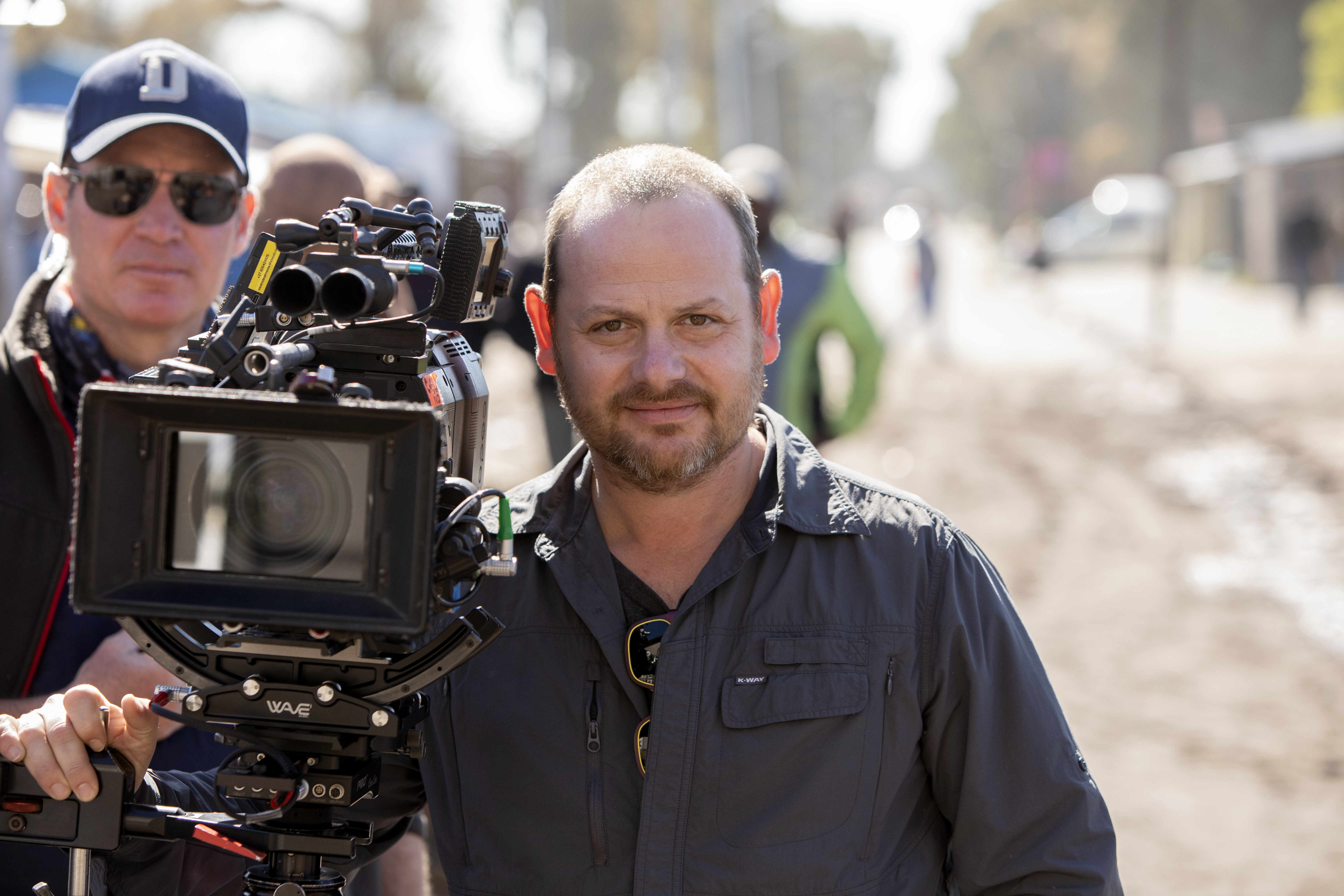
Director Gideon Raff of The Red Sea Diving Resort – Photo Credit: Netflix / Marcos Cruz

After assisting director Doug Lyman on “Mr. & Mrs. Smith,” he made his first feature, “The Killing Floor,” in 2007 and returned to Israel for “Prisoners of War” (“Hatufim”) two years later. Now based in L.A., where he lives with his husband, he goes back and forth regularly. His next project, the Netflix miniseries “The Spy,” stars Sacha Baron Cohen as Mossad agent Eli Cohen. It will premiere later this year.

The grandson of Polish-born halutzim (pioneers) who lost most of their relatives in the Holocaust, Raff was raised secular. “But we did grow up with Jewish values and I feel very Jewish. It’s a huge part of who I am,” he said. A vegan, he lives by the precepts of tikkun olam and “love your neighbor as yourself.” “I try to be as compassionate as possible in my life,” he said.

Raff considers “The Red Sea Diving Resort” to be “an extremely Jewish story, in the sense that these are former refugees who are helping other refugees.” The film is being released at a time when anti-Israel sentiment is escalating, but Raff didn’t make the film as a means to counter it. “My mission was to tell a story about refugees at a time when we aren’t doing enough for them,” he said. “I wanted to find a good example and was happy to find it in Israel. I never approach a project as ‘This is going to be pro-Israel.’ But if it has that effect, great. This is an example of something magical and heroic and a story that should be told.”

Not surprisingly, he’s proudest of it and “Prisoners of War.” “Both are based on real stories in Israel and they’ve reminded me why I love this industry and what a privilege it is to tell stories,” he said. “I don’t take that for granted. I’m always excited to tell stories that are very personal but have international stakes. I’m grateful that I get to tell stories that I want to see on screen.”

“The Red Sea Diving Resort” premieres July 31 on Netflix.

‘The Red Sea Diving Resort’ Dramatizes Rescue of Ethiopian Jews Read More »

Kol Ami Worried About Nearby Cannabis Cafe

The slated Sept. 1 opening of a cannabis cafe in West Hollywood is facing opposition from Congregation Kol Ami, located across the street. 

In an email to the West Hollywood City Council ahead of a July 16 City of West Hollywood’s Business License Commission meeting, Congregation Kol Ami Rabbi Denise Eger expressed concern that members of her synagogue, located at 1200 N. La Brea Ave., would be exposed to marijuana smoke when Lowell Farms: A Cannabis Cafe, owned by the Lowell Herb Co., opens at 1201 N. La Brea Ave. 

Founded in 1992 by Eger, Kol Ami is a self-described progressive Reform congregation that serves the LGBTQ community, among others. Eger also is the past president of the Central Conference of American Rabbis and the first openly gay person to lead the Board of Rabbis of Southern California.

While the recreational marijuana law went into effect in California on Jan. 1, 2018, this will be the country’s first cannabis cafe that serves delta-8 THC products from Area 52, and Eger said she is worried about the potential negative effects it will have on her congregants.

“As a community who has lots of members in 12-Step programs, we have grave concerns about this across from our congregation that includes families with children,” Eger wrote. “The business is to have outdoor space for smoking pot — and I don’t know why my congregation members and participants have to walk through clouds of marijuana to get to synagogue. It will limit the use of our outdoor space, as well, because of the contact high from the smoke that will waft in the area.”

However, Eger also made it clear in her email that the congregation has no objection to people buying marijuana for personal use. “We know that many people, including our congregants, use and enjoy cannabis,” she said. “Some for health and some for recreation.”

At the meeting, the Los Angeles Times reported, Eger said she was concerned the “smell of marijuana would infiltrate the air in her synagogue, where families gather for worship and often have rooftop events.”

“As a community who has lots of members in 12-Step programs, we have grave concerns about this across from our congregation that includes families with children.”
— Rabbi Denise Eger

However, despite Eger’s protestations, the City of West Hollywood’s Business License Commission unanimously agreed to provide the cafe, owned by Sean Black and David Elias, with a cannabis consumption license, which will allow patrons to smoke, vape and eat cannabis products on its patio.

In an email to the Journal, Elias said the cafe’s air-filtration system, coupled with air-purifying plants integrated into the design of the cafe, would prevent his business from having any impact on Kol Ami. He said the cafe’s street-facing patio, the one closest to Kol Ami, is designed for non-smoking guests.

“I want to put all concerns from Rabbi Denise Eger and Congregation Kol Ami at ease,” he said. “I understand her point of view and take her concerns seriously, as my grandfather was one of the founders of our synagogue. Our business will not disrupt her congregation or any neighbors in the West Hollywood community.”

He added that the cafe “is part of the historic movement to end cannabis prohibition, and this is a responsibility we do not take lightly. We are paving the way for cannabis businesses in West Hollywood and beyond, and setting a positive example is very important to us.”

In an email to the Journal, John Leonard, community and legislative affairs manager for the city of West Hollywood, said, “The City has spent a significant amount of time crafting and working to implement the ordinance, and the City anticipates that the new cannabis businesses will be popular destiniations for residents and visitors.”

Eger was not immediately available for comment.

Kol Ami Worried About Nearby Cannabis Cafe Read More »