fbpx

July 12, 2019

“Go Forth Unafraid!” Failure is Part of the Process

Dalton Graduation 2019Congratulations to my nephew who graduated from Dalton School this summer!
I asked Richard Wolffe if I could share his remarks to the graduating class of 2019:


Dalton Graduation Commencement Speaker at Jazz at Lincoln Center’s Frederick P. Rose Hall on  June 10, 2019

“Thank you Jim for those very kind words and for your leadership of this great school.

Thank you to your administration team, to the brilliant teaching faculty, and to the wonderful support staff who all together make Dalton the truly special place that it is.

We are all so lucky to be part of this community.
To my fellow parents, to all the family and friends who are here today:

Congratulations for all the thankless hours of support and worry and love that it took to arrive at this point.

I feel your pain. And your joy. I really do.

And yes, you can give them a round of applause for that.

And to you, this class of 2019:

Our hearts are bursting with pride at how you have grown and what you have achieved in what feels – to us, at least – like an alarmingly short time.

Just when exactly did you stop walking and start running so fast?

When did you shift from just talking to finding your own voice?

When did you start seeing your world as you want it to be, not as it was introduced to you?

And when will you clean up your room?

But seriously, our heartfelt congratulations to this class of 2019. You deserve all the applause and cheers for all your hard work and dedication.

This stage of transition – this rite of passage – is as big and grand and important as this very fine theater.

People far bigger and grander than me are supposed to tell you right now about going forth unafraid to make the world a better place.

And I want you to do that too.

But I’ve been lucky enough to see some bigger and grander people go through these transitions, and I thought I’d share with you what I’ve learned from having a front row seat to presidents and presidential candidates for many years.

Because they rarely go forth unafraid. And when they do, they have a good reason or two for setting aside their fear.

Today reminds me of the last flight of the Bush campaign in 2000, just a couple of months after some of you were born.

Now the Bush plane was divided into three sections.

Up front sat the candidate and his key staff in first class; behind them in coach were the correspondents like me; and behind all of us, next to the toilets, were the photographers and TV camera men and women who were by far the most normal people on the plane.

They were also the most fun.

They strung up a small disco ball from the top of the cabin and had a blender making margaritas, or something like that.

Governor Bush, who was tee-total – preferred to hang out with the party animals, as he used to call them, instead of the scribblers, as they called us writers.

On that final flight, the night before that fateful election, a TV producer tried to ingratiate himself with the candidate. “Congratulations,” he said, “you reached the end of the campaign trail.”

Bush’s face drained and he turned on him with a look of disgust.
“That wasn’t the point of it all,” he said with utter disdain.
The poor producer had no idea what he’d done wrong, but I recognized that look in Bush’s face.

I’d seen it on a cold New Hampshire afternoon in a Gold’s Gym near Manchester, where I happened to show up when Bush was working out – at the precise moment he first heard how badly he was going to lose his first primary. By 16 points against Senator John McCain.

It’s much easier to see the point of it all when you’ve risked everything – and failed – along the way.

You might know these presidents for their swagger.

But you see their real character – the part they can’t hide – when they fail. And George W. Bush knew what it meant to fail.

He had grown up as the party-loving, hard-drinking oldest son of an intimidatingly successful politician. His younger brother Jeb was seen as the son most likely to succeed as president one day.

In his early 30s, he ran and lost his first race for public office: a congressional district in rural midwestern Texas. He never forgot the stinging feeling of that defeat.

As a presidential candidate, he used to make it clear why he was there at every campaign stop. “I’m asking for your vote,” he used to say.

To most of us, that sounded like a statement of the obvious. But he sometimes explained why he did that.

After he lost that first congressional race, he returned to one of his campaign stops and got talking to an old voter, who told him he liked him but hadn’t voted for him.

“Why not?” Bush asked.

“Because you never asked me for my vote,” was the reply.

It wasn’t just about the ask. Bush realized that voters wanted to see him work for their support.

He needed to get to know them to win them over, and that meant treating them as real people. That was especially true for someone who grew with such huge privilege.

Say what you like about Bush – and I have said many things he didn’t like – but he could win people over in person.

And one of the main reasons for that – dating back to his school days – was his fear of failure and his experience of failure. Winning people over was his way of covering up for his academic struggles.

Which I’m told is a tactic you all are familiar with.

It might sound strange – that you need to fail in order to succeed – but it is surprisingly constant among the most powerful, successful people I have reported on and written about.

There’s a framed poster hanging outside Bill Clinton’s office in Harlem detailing the many and various ways Abraham Lincoln failed over a 30-year career before he was elected president.

Lincoln failed in business twice, ran for elected office and lost no less than six times, and suffered a nervous breakdown.

Historians have challenged this storyline about Lincoln for some time. If Lincoln had really done nothing but fail for three decades, he would not have been in a position to run for president at all.

But it says something about Bill Clinton himself – the boy from a place called Hope, Arkansas – that he hung this message outside his private office.

I couldn’t avoid the bigger message when I saw it, just a few weeks after Hillary Clinton had lost the Democratic primary contest to one Barack Obama.

At the time, Obama was still an unlikely candidate, even though he had clinched the nomination.

He had struggled his way through the later primaries, especially in Pennsylvania, where news about his controversial pastor had put racial politics at the heart of the contest and the national debate.

Through all the defeats and dismal news cycles, Obama himself was unnaturally calm and reserved. Withdrawn even.

He joked with his friends by asking if they’d still hang out with him if he lost.

To be sure he took the defeats – and the endless debate about his pastor – as personally as anyone else. But he didn’t deal with the pain by taking it out on someone else.

For someone who could rally an arena full of people, he seemed to me to be happiest on his own.

To understand that inner strength – what Joe Biden calls the steel in Obama’s spine – you need to know what Obama was like in high school and college.

He was raised in a white family that frankly found him a handful.

His mother was only 18 when he was born, and his father abandoned him quickly, as he writes about in Dreams From My Father.

What he doesn’t write about so much is that his mother sent him off to live with her parents, as she pursued her own career in anthropology.

His older white grandparents had no idea how to raise a young black man. So at a very fancy high school in Hawaii, he spent his time playing basketball and smoking weed.

Judging from the basketball I’ve played with him, he’d fit right into the Dalton Dads game: he’s not nearly as good as he thinks he is.

Obama followed a girlfriend to Occidental College, where he finally realized he could do more with his life and promptly switched to Columbia, right here in Manhattan.

Where he lived an even more miserable life: broke, buried in his books and pretty much friendless. To give you some idea of what kind of undergrad he was, he used to fast regularly.

Somewhere in that dark hole, looking at Manhattan like a distant visitor, he discovered himself and his discipline. He found the steel in his spine. He learned to write a new story for himself.

Still, his success was hardly settled. He took the crappiest job as a community organizer in the South Side of Chicago, where he achieved pretty much nothing but he did write a great application to get into Harvard Law School.

Even then, with all those people saying he was destined to go far, he struggled.

He thought he wanted to be a writer, but his book barely registered, and his mother passed away as he was on his book tour.

His legal and academic careers were going nowhere, when he was elected as a lowly state senator at the age of 35.

He ran for the US Congress four years later and lost the Democratic primary. By a wide margin.

It would take another four years for him to get elected to the US Senate, after spending seven years in Springfield, Illinois, almost entirely in the minority party without any meaningful political voice or power.

You all know what happened after that.

But I would argue that the success he experienced after the grand old age of 43 was because of, not despite, all those long years of struggle, disappointment – of having great potential with few results.

I’m sure I told you – when I spoke at your high school assembly a few years ago – what Obama said to me when he was trying to convince me to write a book about his first campaign.

He said, “You and I both know how to cross lines.”

I took that as a ridiculous piece of flattery. We had nothing in common – the senator-candidate and the journalist. The kid from Hawaii and Indonesia, and the kid from Birmingham, England.

But he did put his finger on the skill set that helped him get elected, and that helped me do my job.

Crossing lines isn’t just about navigating the racial ignorance and fear that corrode our culture.

It’s about winning trust by going out of your way to connect with people no matter their background, their education, or their wealth.

And it comes not from having an unusual life story, but from understanding and respecting other people and their struggles.

For all you straight-A students here today, this might pass you by. If you’re heading to your top college choice and a lucrative career, God bless you. I wish you all the best.

But honestly the students who are the most prepared for what’s ahead are those of you who have struggled to get their middling grades, and who maybe have no idea what’s next in college and beyond.

The undergrads I knew in college who wasted all their opportunities and talents were in fact the ones who were the most comfortable and self-satisfied.

They thought they had nothing left to prove, and that college was the end of the journey. As Bush would say, that wasn’t the point of it all.

At your age, I had missed my grade target in my chosen subject, English, and missed out on my top choice of university. I lost my friends who wanted only to mix with other kids going to the top colleges.

I felt worn down by the casual prejudice and the overt aggression that crossed my path pretty much very day.

Because of my Mediterranean complexion – my mother was Moroccan – most of the racists around me thought I was from Pakistan, a country they didn’t exactly respect.

The smarter racists thought I was biracial and called me a half-caste – an insult I needed to look up in the dictionary.

Either way, it was kind of ironic because I’m Jewish, not Muslim. At least the many kids who were openly anti-Semitic got that bit right.

And most of them ended up going to the British equivalent of the Ivy League.

I’m not going to tell you that I had it bad at high school. Not like one of my friends, who wears a kippah on his head. He was beaten up so badly by a bunch of skinheads that he ended up in intensive care for two weeks.

But I experienced enough to know how to cross lines: to earn trust and to learn quickly who to trust.

So if you’re sitting on stage right now, and you’ve struggled with the taunts and the slights about who you are, or what you represent – from supposed adults, or students, or random people in the street – know this: your struggle has prepared you for what’s ahead better than anything else.

And if you’re lucky enough to have escaped that feeling, it’s not too late to learn.

Get out of your comfort zone before it’s too late – before you get a job and a mortgage. Volunteer in the community wherever you go to college.

I volunteered as a teacher’s assistant in an inner-city elementary school where the streets outside were busy with drug dealers and pimps and all their miserable customers.

The young children I helped ran the gauntlet of a city’s low life every day, twice a day. And I learned more from them than they ever learned from me.

Getting out of your comfort zone means risking failure. It means shedding your remarkable privilege, albeit briefly, and struggling to cross some lines.

Now if you don’t really care about making the world a better place – or you think that’s somebody else’s job – that’s fine.

Get out of your comfort zone just for yourself. You’ll be even more successful than you are today. You might even end up running for president one day.

But you should know that you’ll be a couple of steps behind the student sitting next to you who didn’t just risk failure but tasted its bitterness and came out the other side.

Because they’ve been going forth unafraid for a very long time. So my congratulations again to all of the class of 2019.

But especially to those of you who have that sick feeling in your stomach about not belonging, or not succeeding.

It might not feel like it right now, but you’re far more ready to go forth than you know. Mazel tov and thank you.”

Thank you Richard Wolffe for your words to remember about how failure is part of the process!

Dalton Graduation 2019


“Go Forth Unafraid!” Failure is Part of the Process Read More »

DC Suburb Will Screen Anti-Israel Film Narrated by Roger Waters

WASHINGTON (JTA) — After canceling an earlier screening of an anti-Israel film following complaints by Washington-area Jewish officials, a Maryland suburb will now screen the movie narrated by Roger Waters later this month.

The municipality of Takoma Park will screen “Occupation of the American Mind” on July 23. A blurb promoting the movie describes it as “a captivating documentary that reveals how the Israeli government, U.S. government, and pro-Israel lobbying groups have engaged in a decades-long propaganda campaign to shape American media coverage of Israel and its occupation of Palestinian lands.”

It is narrated by Waters, the Pink Floyd rocker who has long led calls to boycott Israel.
The movie was to have been screened last month as part of a cultural festival. Officials of the Jewish Community Relations Council of Greater Washington were furious that it is back on the schedule.  Officials there said it was their impression that the municipality would consider the topic of Israel only after more deliberation and with more input from the Jewish community, and that the film would not be screened at all.

Instead, Takoma Park this week invited a JCRC official to appear on a panel at the screening with officials from two anti-Zionist groups, Jewish Voice for Peace and the Council on American-Islamic Relations.

“We were given less than two days to respond to your invitation, which asks us to sit on a panel with two organizations explicitly opposed to the very existence of the State of Israel and the right of the Jewish people to self-determination,” said Ronald Halber, the JCRC’s executive director, and Meredith Weisel, its director of Maryland community relations, in a letter sent Thursday to the Takoma Park municipality. “That is hardly the basis for a respectful and productive dialogue.”

Donna Wright, a spokeswoman for Takoma Park, told the Jewish Telegraphic Agency that the panel offered the opportunity to hear “diverse viewpoints” on the topic.
“The decision was made to proceed with the screening after consideration of the best way to do so while also allowing for a facilitated discussion and dialogue,” she said in an email. “The plan developed included participation of representatives with diverse viewpoints who we hoped would share their perspectives and insights regarding issues and how they are portrayed by the film.”

Halber told the JTA that the decision was a “leadership failure.”

“A municipality is using taxpayer money to show a widely rejected ‘documentary’ narrated by a notorious anti-Semite that peddles anti-Semitic canards,” he said. “They should be bringing people together, not dividing them.”

DC Suburb Will Screen Anti-Israel Film Narrated by Roger Waters Read More »

House Passes Bill Requiring Trump to Get Congressional Approval to Strike Iran

The House of Representatives passed a bill on July 12 requiring President Donald Trump to obtain congressional approval before launching a strike against Iran.

The 2020 National Defense Authorization Act (NDAA) that was passed included an amendment on the matter, stating that the 2001 Authorization for Use Military Force (AUMF) that’s been used to strike Islamic terrorists in the Middle East could not be used to strike Iran. The amendment passed with 251 votes in favor, including more than a dozen Republicans, and 170 against and the NDAA passed with 220 votes in favor and 197 against.

However, NBC News notes that the Senate’s version of the NDAA is different than the House version and that the aforementioned Iran amendment likely won’t make the final version of the bill.

The House bill’s passage comes after Trump nixed a strike against Iran in June after learning that 150 people would die. Iran had shot down a United States drone earlier that week.

The Trump administration has been ramping up sanctions against the Iranian regime as tensions escalate between the two countries, although the administration is reportedly backing off plans to sanction Iranian Foreign Minister Javad Zarif.

House Passes Bill Requiring Trump to Get Congressional Approval to Strike Iran Read More »

Rabbinic Human Rights Group Calls Planned ICE Immigrant Raids ‘Inhumane’

(JTA) — A rabbinic human rights group denounced planned raids on undocumented immigrants as “cruel, immoral, and inhumane.”

The New York Times reported on Thursday that Immigrations and Customs Enforcement will target immigrant families in raids starting on Sunday. The agency is seeking to deport at least 2,000 people who are in the country illegally, according to the report.

T’ruah: The Rabbinic Call for Human Rights, a progressive group representing more than 2,000 rabbis and cantors, sharply criticized the planned raids in a statement Friday.

“They will tear apart families and communities, and heighten the climate of fear felt by targeted populations,” the organization said. “They are yet another ugly stain on America’s moral standing.”

Progressive Jewish groups have been vocal in their criticism of President Donald Trump’s immigration policy. Never Again Action, a new organization made up of young Jews, has been protesting outside ICE detention centers following reports of thousands of asylum seekers, including minors, held in detention centers with squalid conditions.

Rabbinic Human Rights Group Calls Planned ICE Immigrant Raids ‘Inhumane’ Read More »

Legendary Music Publicist Mitch Schneider on His Extensive PR Career

As a then-teenaged music writer, the first public relations firm to really embrace me was a Los Angeles-based company known as the Mitch Schneider Organization. More than 20 years later, MSO has evolved into SRO – short for the Schneider/Rondan Organization– and is still handling some of music’s most influential artists, festivals and influencers.

SRO co-founder Mitch Schneider got his start within the musical realm as a freelance journalist in the 1970s. His credits included Rolling Stone, Crawdaddy, Hit Parader and Circus. Ultimately finding his way as a top-tier public relations executive, Schneider’s past and/or present PR roster has included – to name a very small grouping of clients – Ozzy Osbourne, Aerosmith, David Bowie, Tom Petty, Dolly Parton, Slash, The Black Crowes, David Lee Roth, Korn, Steve Aoki and the Coachella Valley Music & Arts Festival.

Further, a testament to Schneider’s long-term influence as a publicist is how many of today’s leading publicists originally worked under Schneider.

I had the pleasure of speaking with Schneider by phone in June 2019 and below are highlights from that chat.

Being Los Angeles-based and very hands-on:

“SRO, as we’re now called, we remain a very brick and mortar… We’re on Ventura Boulevard right near Encino Avenue. Tom Petty used to live right up the street from where we now are… We’re proudly a proper office and that means when people come to the office, whether it’s me, It’s Marcee [Rondan], it’s Kelly [Walsh], it’s Andrea [Faulk] or Lyndie [Wenner] our Nashville person if she’s in Los Angeles, there’s a place to come. We have ‘think tank’ meetings. It’s not just emailing other people and they work… You get to look at them. Say we’re running up against a wall here, let’s try to brainstorm another idea of how to get somebody’s attention or just figure this out. So yeah, we’re proudly brick and mortar in the year 2019.”

His longest client relationships:


“I could tell you exactly two of them, Ozzy Osborne and Heart. Both were originally signed in the year 1987 when it was Michael Levine Public Relations before it became Levine/Schneider. Ozzy took a break of maybe around six years when ‘The Osbournes’ was on TV and things were being done in-house. But after that went off the air he came back. Heart, we were with them from ‘87 to 2001 and then they had different management… But they came back to us in the year 2016 and continue to be with us. So yeah, we’re really proud of like those kinds of long runs. Those are unique clients to work with Both are pioneers, they’re trendsetters, they’re superstars, they’re the artist and their teams know their expectations are big. So you have to be obviously you have to be OK you have to be switched on 24/7.”

On the 24/7 workflow of PR these days:

“It is a 24/7 business not only for superstars like that, but I mean it’s kind of crazy on Saturdays and Sundays. My inbox starts to fill up with photo requests from tour dates around the country or ticket requests. We don’t answer them until Monday, but it’s very much in our world that this is going on.

You see, back in the old days, before things were digital, Monday through Friday there’d be a phone call coming into the general phone number. “Hey we’d like a photo pass for Ozzy Osbourne,” and the assistant would say, “Oh let me put you on with the tour publicist.” Well now because everybody’s names are all over the Internet, I’m often the first person to get the photo request…

So the amount of bandwidth or time that that’s in your life, it just keeps increasing… Even if you’re on a Sunday just checking your device if you’re out and about, because you’re a publicist, there could be an emergency… It’s still in your brain. So it is really tough to just shut it down. That’s why I run to my guitars and because I’m also a songwriter I would say like I always joke and say, ‘It’s nights, holidays and weekends.’ So that kind of gives me sanity because I’m able to access another part of my brain.

The difficult part of running a business is in PR you’re not only wondering about your current clients and are you satisfying them. You have to wonder who are the new clients that are going to come in to replace the current ones if they will be leaving you. They might be going on hiatus for six months before they come back… You also have to stay on top of invoices, have clients paid them? Without all of that, there’s no business. So you have to be switched on in many different levels…

Everybody’s dealing with this. Obviously, it’s just not publicity… I love the music. I love the people we work with They’re really unique characters and artists and people.”

On being remembered for using multi-colored paper for MSO press releases:

“Marilyn Manson came up to our office for a meeting probably in the late 90s and we did sign him for that live album. But he said he used to be a journalist in Florida for a rock paper, I forget which one. He looked, he goes, “Oh I remember you people. You always sent your press releases out on that flashy paper…

That was kind of always my approach to publicity. What are you going to do to stand out? What are you going to do to stop the traffic? That was certainly one visual way that we tried to be at least memorable.”

On also sending out 8 x 10 photos with the multi-colored paper for a lasting impression:

“Let’s say Tom Petty got his star on Hollywood Boulevard, we made sure that we made 8 x 10’s of it… Back then things weren’t being transferred digitally so much, or maybe was just the beginnings of it… I’ve had people come up and say, ‘Mitch, I saved an 8 x 10 you sent me.’ Whether it was David Bowie getting his star on the Boulevard or whatever media event that we were doing that we felt we should put it into the packages.”

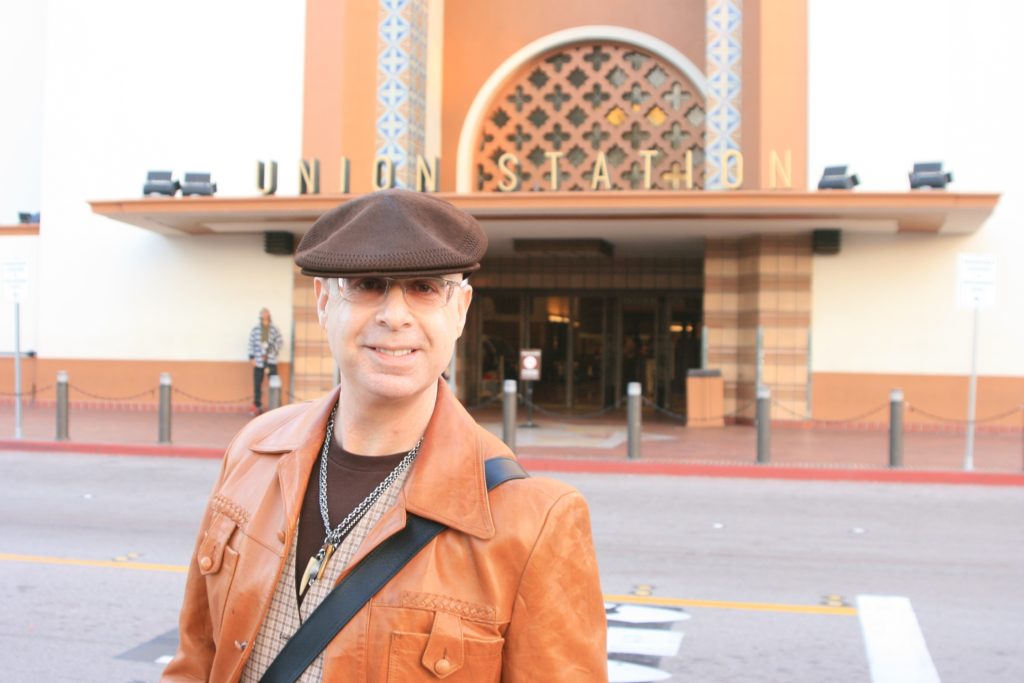
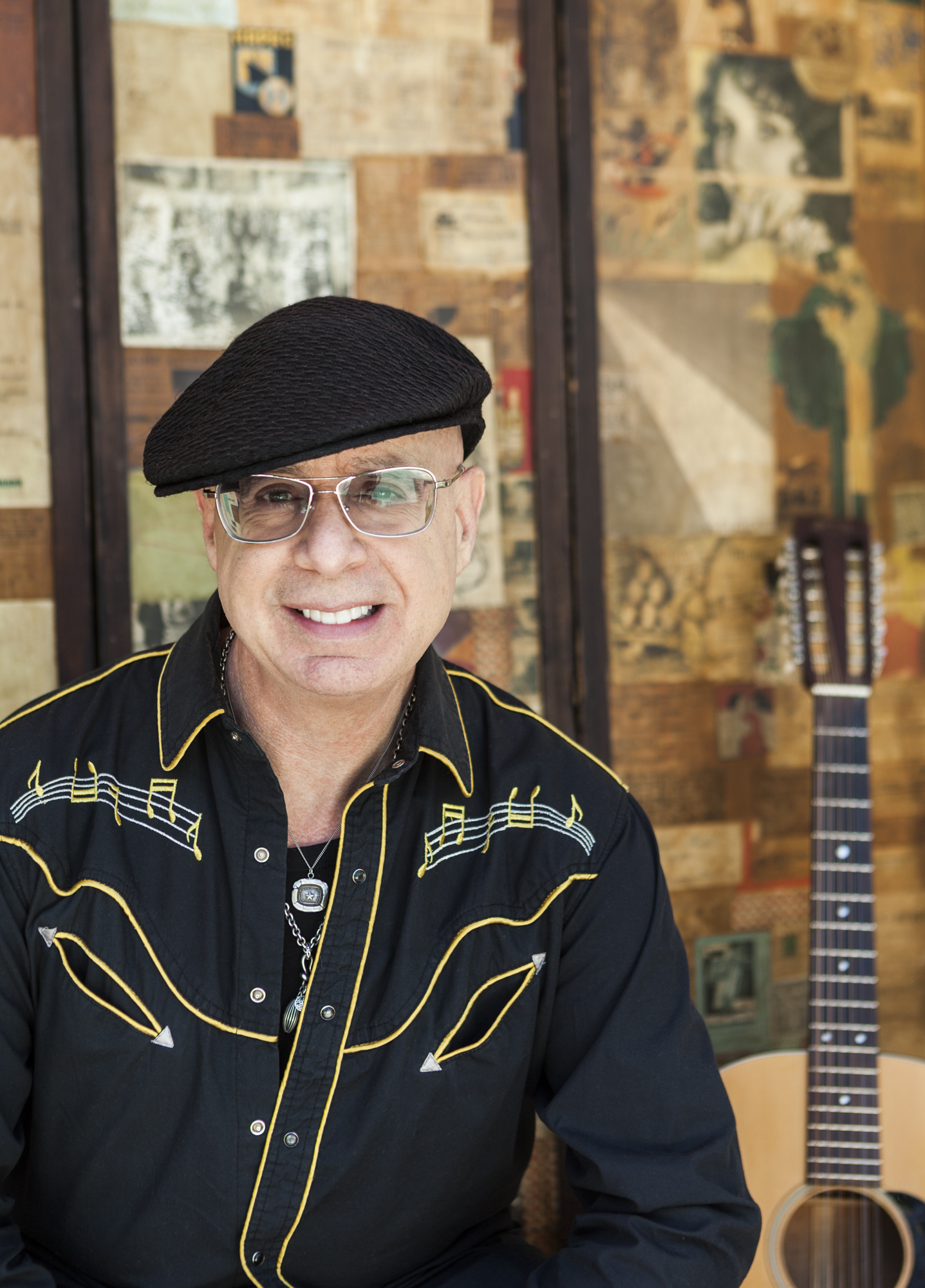
Mitch Schneider. Photo by Sorrell Schneider

Choosing to work with music-related projects:


“Back in Levine… We not only handled Ozzy Osbourne and David Bowie but we handled Sandra Bernhard, Andrew Dice Clay, Sam Kinison, Bobcat Goldthwait and more… I handled those comics when comics were being called the new rock & roll. Certainly, Sam Kinison when he was on the cover of ‘Rolling Stone’ definitely underlined that. But as we were heading into the early to mid-90s and then MSO forms in February ’95, I do make the conscious decision that we only want to work with musicians because things had become more and definitely more niche. There were more media outlets you were dealing with.
So when MSO formed we decided to move into Sherman Oaks which made sense for us because a lot of musicians were recording in Studio City and North Hollywood. Most musicians were rehearsing in North Hollywood. So when we’ve been out to cover interviews or just have meetings, it was often at bands’ rehearsal spaces or recording studios. So that was a big deal because we moved someplace where it’s like, ‘We don’t handle actors or actresses. We are music.’ So MSO definitely kicked off that new era for us and next year will mark the 25th year in the business.”

What memorabilia he has kept over the years:


“There’s a million things I could have kept. Like one of the things I love to keep is band touring itinerary books. For instance, if you’re on tour and you’re a member of Depeche Mode, you have your tour book. It says what time the bus leaves. It says all of that information and publicists and agents got those. We still get them digitally but we used to get them and I have them with David Bowie, Depeche Mode, Ozzy, Heart, Stevie Nicks, Fleetwood Mac and so on and so forth…

So I saved a lot of those but not all of them. I think the one thing that I have been the best about saving are those the glossy ‘all access’ passes, which is a good reminder of all the tours and artists that I’ve worked with and sometimes I’ll just put my hand into sort of the bucket where I have that and I’ll just pick it up… ‘Oh, I remember I actually did go to that show when they launched that tour and I was there for opening night because we did publicity…’

I don’t save print press releases. I did save if they were like classic press releases but no, can’t save everything There’s the old saying, ‘You can’t take it with you when you go.’ But I saved enough.”

His last words for the kids:


“I know it’s a cliche but I always try to subscribe to that philosophy of ‘not taking no for an answer.’ I mean, I was a rock critic before I became a publicist and you really have to make your own space. What I did was when I was growing up, I think I was like 17 or 18, I went to see Lou Reed at the Capitol Theater in Passaic, New Jersey because I grew up in the Bronx and it was after ‘Rock ‘n’ Roll Animal’ the live album came out. So he was doing shows that were based upon that period. And I was so motivated by it that I wrote a review of it although I didn’t have an assignment and I sent it to ‘Good Times’ in Long Island.
Glen Brunman would later go on to be a big head of Epic Records on the West Coast He dug what I wrote and he ran it and he said, ‘Would you like to review records?’ And I said ‘Sure,’ so he started sending me albums. So I started to write for ‘Good Times’ and then I became an editor there. Richard Branciforte obviously is the publisher and top editor but he had me there for about a year, that would have been I think ‘75 or ’76. So I was editing and that was exciting.

So that’s really an example to really illustrate. Nobody asked me but I saw it and I said the show was incredible and I was so inspired that I just sent a review. So I would tell anybody if you want to become a publicist, you should probably start your own website, go out, review shows and if you’re interviewing for a job as a publicist, somebody might go, ‘Wow this person is really sharp, they started their own website, they were reviewing shows, they have an understanding of music and the live presentation.’ You stand a better chance of getting a gig as a junior publicist if you are a writer and if you are a writer who created their own website or blog…

Imagine yourself there. I mean, it’s creative visualization or you know whatever new age phrase you want to put on it, but that’s it. If you keep at it… There’s a combination of skill and luck, but it’s one of the things if you want to win at blackjack, you have to be seated at the blackjack table… So you have to put yourself in the environment in which you want to thrive or be a part of. I guess that’s kind of like my philosophy in life.”

Legendary Music Publicist Mitch Schneider on His Extensive PR Career Read More »

Abbas Advisor Pays Homage to Nazi Collaborator

An advisor to Palestinian Authority President Mahmoud Abbas honored Nazi collaborator Haj Amin Al-Husseini in a July 4 Facebook post.

Palestinian Media Watch (PMW) reports that Abbas Advisor on Religious Affairs and Islamic Relations Mahmoud Al-Habbash wrote in the post that July 4 was the day Al-Husseini died and called him a “great” leader.

https://www.facebook.com/dr.mahmoudalhabbash/photos/a.1639478219689289/2120841558219617/?type=3&theater

According to PMW’s translation of the post, Al-Habbash called Al-Husseini a “role model.” PMW also notes that the PA has at least one school named after Al-Husseini and other PA leaders have honored him as well.

Al-Husseini met with Adolf Hitler in 1941, where he expressed support for Hitler’s Final Solution. A year later, he started closely working with Adolf Eichmann, one of the key organizers of the Holocaust. 

Al-Husseini worked with the SS to murder Jews in Croatia and Hungary, aimed to establish concentration camps in Mandate Palestine and promulgated Nazi rhetoric via Arabic on behalf of the Third Reich, according to Times of Israel blogger Alex Rose.

In addition to his collaboration with the Nazis, Al-Husseini also incited multiple riots against Jews in Mandate Palestine and helped organize the Farhud, the 1941 pogrom against Jews in Iraq.

Al-Husseini is considered the father of Palestinian nationalism and was a mentor to Yasser Arafat; Abbas vowed in 2005 to continue Arafat’s work.

Abbas Advisor Pays Homage to Nazi Collaborator Read More »

Tlaib Calls Anti-BDS Bill ‘Unconstitutional’

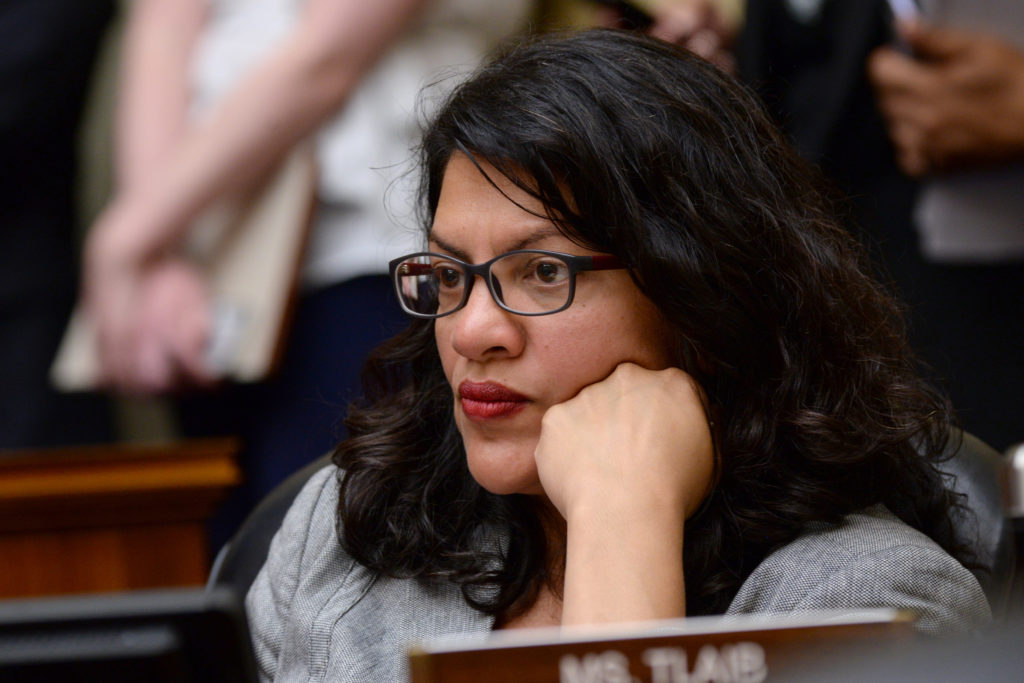
Rep. Rashida Tlaib (D-Mich.) called an anti-Boycott, Divestment and Sanctions (BDS) bill “unconstitutional” in a July 10 tweet.

Responding to a tweet stating that Israeli guards were blocking a Palestinian mother and her child from a park, Tlaib, an avowed BDS supporter, wrote, “.@HouseForeign wants to move forward w/ #HR246 #AntiBDS bill to silence opposition of Israel’s blatantly racist policies that demonize both Palestinians & Ethiopians. Our 1st [Amendment] right to free speech allows boycott of inhumane policies. This bill is unconstitutional.”

Sen. Marco Rubio (R-Fla.) responded to Tlaib’s tweet, writing, “This is a 100% false characterization of the bill. It doesn’t ban the #BDS movement. All it does it protect states & local governments that decide not to give contracts to companies participating in that anti-Semitic movement.”

The bill, House Resolution 246, condemns the BDS movement; it has 338 co-sponsors from members of both political parties, including Reps. Lee Zeldin (R-N.Y.) and Brad Schneider (D-Ill.).

Lawfare Project Executive Director Brooke Goldstein told the Journal in December that anti-BDS legislation typically focuses on commercial activity, “which is not afforded the same degree of constitutional protection.”

Tlaib Calls Anti-BDS Bill ‘Unconstitutional’ Read More »

Netherlands Jewish Leader Tortured and Robbed at Home by 4 Men

AMSTERDAM (JTA) — A Netherlands Jewish leader was assaulted, tortured and robbed in his home by four masked men in an apparent planned operation.

Benoit Wesly, a 73-year-old businessman, woke up early Sunday morning to find the assailants around his bed in his home in Maastricht, Jonet.nl reported Thursday. His wife was out of the country.

Police are investigating the motives for the crime. Reports about the incident did not indicate whether they or Wesly have reason to believe he was chosen because of his Jewishness. Wesly is a leader of the Jewish community in the Limburg  region, in the south of the Netherlands.

Wesly was beaten, pushed down the stairs, stabbed and kicked, according to the report. Then the men tied him to a chair, placed a piece of cloth over his mouth and nose, and poured water on the cloth – a torture technique known as waterboarding that simulates drowning — until he gave them the combination to his safe, Wesly told police.

He was bound to the chair for several hours before wriggling free and going to the police station.

House invasions involving torture are rare in the Netherlands, as are attacks against Jewish community leaders.

Netherlands Jewish Leader Tortured and Robbed at Home by 4 Men Read More »

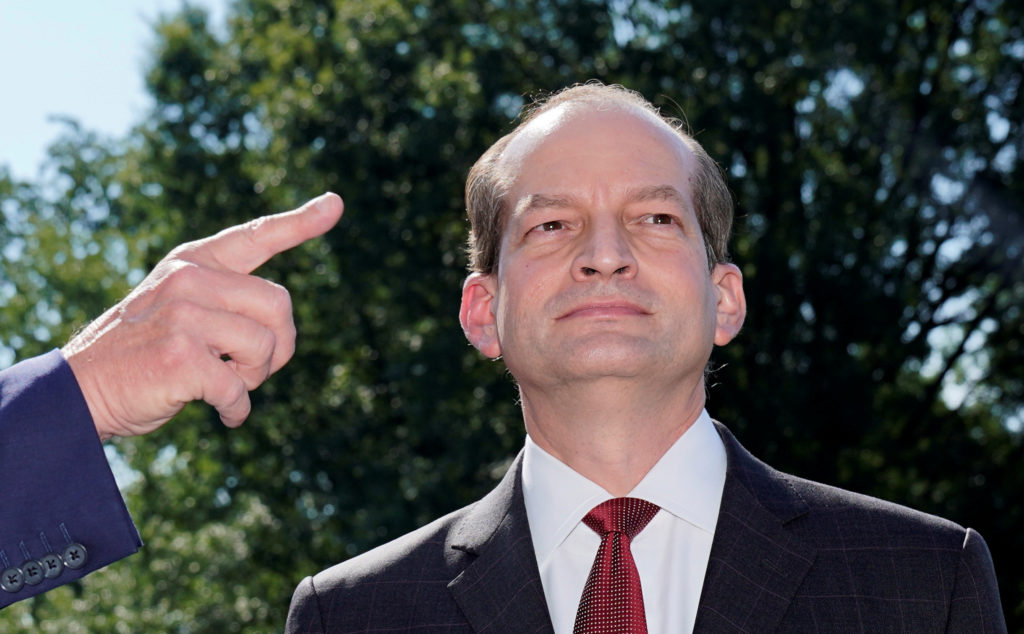
Alexander Acosta Resigns As Labor Secretary Amid Claims He Let Sex Offender Jeffrey Epstein Off the Hook

(JTA) — Alexander Acosta quit as U.S. secretary of labor amid debate over a plea deal he helped arrange for sex offender Jeffrey Epstein in 2008.

President Donald Trump announced the resignation Friday morning with Acosta at his side. Trump said the secretary called him Friday morning to say the decision to resign was his.

“I thought the right thing was to step aside,” USA Today quoted Acosta as saying.

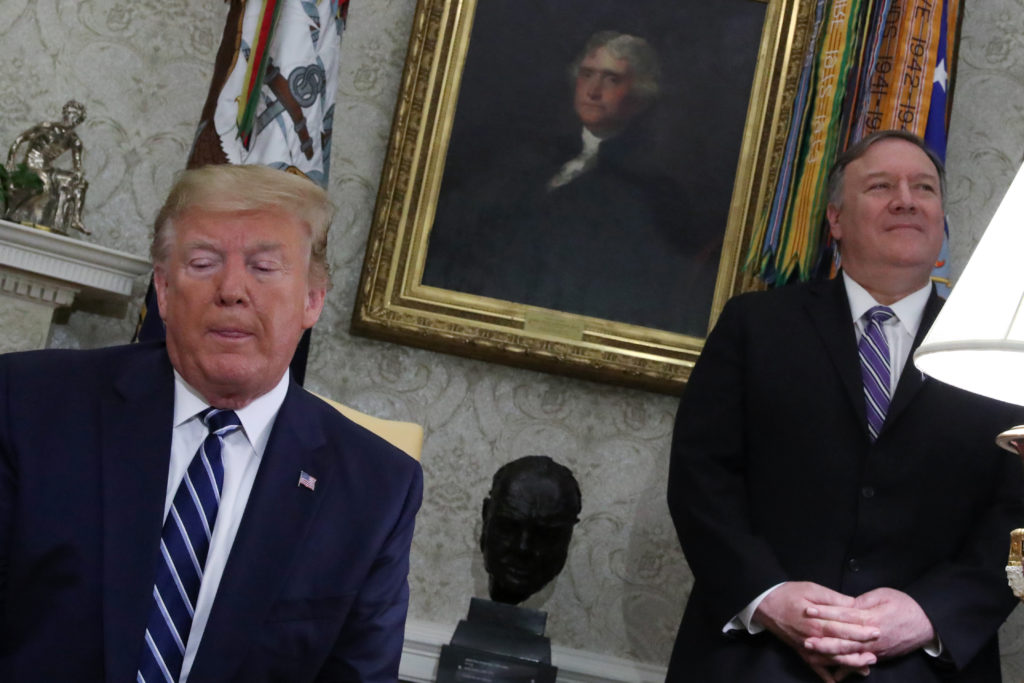
Trump, who had defended Acosta after Epstein’s arrest last week on sex-trafficking charges, praised him as a “great labor secretary, not a good one,” and added, Acosta did a “very good job.” “This was him, not me,” Trump said of the decision.

In February, a judge in Florida said that federal prosecutors broke the law when they signed a plea bargain with Epstein, a billionaire who was convicted in 2008 of soliciting a teenage girl for prostitution. Epstein served 13 months in prison.

Acosta at the time was the U.S. attorney in Miami, and he helped negotiate a plea agreement that gave Epstein and his co-conspirators immunity from federal prosecution, according to the Miami Herald.

The ruling in February by U.S. District Court Judge Kenneth Marra culminated more than a decade of litigation stemming from a lawsuit filed in 2008 by two of Epstein’s victims.

Marra wrote that the prosecutors, including Acosta, concealed information from victims of Epstein, who had been operating an international sex operation involving underage girls in Florida and overseas.

Epstein, who is Jewish, was represented at the time by a team that included Jay Lefkowitz, a former White House policy adviser under George W. Bush, and Alan Dershowitz, the former Harvard law professor.

Alexander Acosta Resigns As Labor Secretary Amid Claims He Let Sex Offender Jeffrey Epstein Off the Hook Read More »

Being a Late Bloomer

When we come into this world we carry genes and the Divine spark. The rest comes from parental role modeling, social/environmental/cultural/religious influences, opportunity (or lack thereof) and choices along the way.

At 72 I find myself in places I never expected. Genetically I’ve been gifted with certain gifts – physically with a propensity to stay pretty healthy, trim and strong, emotionally – inquisitive, creative, somewhat of an introvert but resilient, and spiritually, open, connected and hopeful.

Yet over my lifetime, as a child of the 50s and 60s, sexism and religious narrowness often shaped my future and limited my vision of possibility as a Jewish woman. My sixth grade teacher, a tall strong male, humiliated me in public and fed into an insecure female self-image, my Jewish teachers and synagogue environment sent clear messages that my voice was not desired nor would it be appropriate, and my parents, immigrants, recovering from their traumatic Holocaust experience, protected and limited my comfort expressing myself so I learned early on to keep a low profile, all this in the context of a society and culture that limited woman’s participation, controlled by men with power. Potential scratched and submerged, withdrawn and insecure, I let go of any possibility of attending college and chose to become a secretary, an appropriate role and job for someone eager to please and to feel useful.

So how have I gotten here, 72, with both, undergraduate and graduate studies, Phi Bet Kappa, and two Master’s degrees? It’s somewhat of a mystery to me and yet, here I am, a graduate of Interior Design Program at UCLA, and ordained as both Cantor and Rabbi from AJRCA.

Too complicated and lengthy for this venue, I wrote a memoir so I could better understand the journey. One day I hope it will be published. I do know that there are threads that make transformation possible for all of us – angels amongst us, the Divine flow, and hidden opportunities often in plain sight. Being a late bloomer I bring years of experience and wisdom that I have accrued even in my most low and painful moments. Perhaps despite or because of the darkness, an overwhelming clarity has shined forth.

As Isaiah teaches, “Those who dwelled in the land of the shadow of death, upon them has the light shined.” Or even Psalms, “…the night would become as light around me.”

Blooming later in life affirms the incredible statement from our tradition we chant every Shabbat, “…they shall bear fruit even in old age.” It is pretty astounding that we can continue to thrive, produce, create, and even soar in ‘older’ age. Many important people, most particularly my husband Steve, and surprising moments have nurtured this possibility and I am so grateful to say, ‘it is never too late’ to seek your passion and follow your dreams. The opportunity to express my gifts, and have them received by others, is so glorious I am often beyond words. It is a blessing; 

Baruch Atah Adonai, Eloheynu Melech HaOlam. 

Blessed are You, Adonai, our G-d, ruler of the Universe and mysterious hiddenness, Who shines light in unexpected places.

Rabbi and Cantor Eva RobbinsN’vay Shalom, Read more from Eva here. 

Being a Late Bloomer Read More »