fbpx

May 15, 2019

From California Dreaming to Jerusalem’s Israel Festival

Saying that Eyal Sher lives and breathes Jerusalem is like saying the Western Wall is old. Sher’s matrilineal line to the holy city stretches back 18 generations. It seems only natural then, that five years ago the 61-year-old screenwriter, producer and director was selected as the director of the Israel Festival, a seminal spring event on the Jerusalem calendar that celebrates multidisciplinary arts from all over the world. 

At least half of the festival’s audience comes from outside Jerusalem, and one of Sher’s challenges is to spread the appeal closer to home. No small feat for a city that is consistently ranked as Israel’s poorest. 

Yet while all of the festival’s events are heavily subsidized, a large chunk of Jerusalem’s population — the Charedi and Arab sectors in particular — shows little interest in the event. In the past, Sher has fought this head on, having Arab artists collaborate with their Jewish counterparts. “For the first time, they actually get to know ‘the other,’ ” Sher said. “And it’s no longer Israelis and Arabs. It’s ‘I’m the director, you’re the actor, you’re the cameraman’ and so on.” 

The festival also strives to include a range of public performances so that passersby can catch some of the action. This year, a van that opens into a stage will travel around the city’s poorer neighborhoods and showcase hip-hop, spoken word and other performances. 

“The complexity of Jerusalem is what makes it interesting,” Sher said, adding that the art coming out of the city is almost always groundbreaking.

“The complexity of Jerusalem is what makes it interesting.”

Yet despite his family’s roots in the Israeli capital, Sher spent much of his childhood overseas. The son of an Israeli diplomat, he celebrated his bar mitzvah in the West African nation of Togo, and spent a total of two decades in Los Angeles. He first arrived in L.A. on a basketball scholarship to study film and TV at UCLA. After graduation, he took an eight-month internship with producer Howard Rosenman, who, Sher said, became his mentor. Sher fondly recalls Rosenman’s caustic wisecracks. “He’d ask me, ‘Are you rich? Do you have family here? So what the f— do you want to be in Hollywood for?’ ” 

Six months into his internship, Rosenman hired him as director of development. Even though he wasn’t earning much, Sher credits his time in Hollywood as a “very wonderful, creative period. I’m a born dreamer,” he said  “And in L.A., you could dream. You may not reach your dream but you’ll have a very fun time.” 

Sher went on to write critically acclaimed Israeli movies including “Under the Domim Tree” (1994) and “The Dybbuk of the Holy Apple Field” (1997). 

But the city of his birth beckoned again. “I’m always coming back to Jerusalem,” Sher said. “When you deal with the arts in Jerusalem, you always touch on things beyond: economy, education, tourism, coexistence, politics.” 

And when it comes to politics, the festival has been the target of cultural boycotts from the boycott, divestment and sanctions (BDS) movement. According to Sher, the movement’s efforts have largely failed, with only two artists pulling out in four years of his stewardship. He tells potential participants that the festival’s role is to foster dialogue and build bridges.

“The whole idea of inviting them,” Sher said, is [to enable them] to present things that explore, that investigate and that show [things] in a different light.” n

From California Dreaming to Jerusalem’s Israel Festival Read More »

Syrian Opposition Leader Pushes for Normalization with Israel

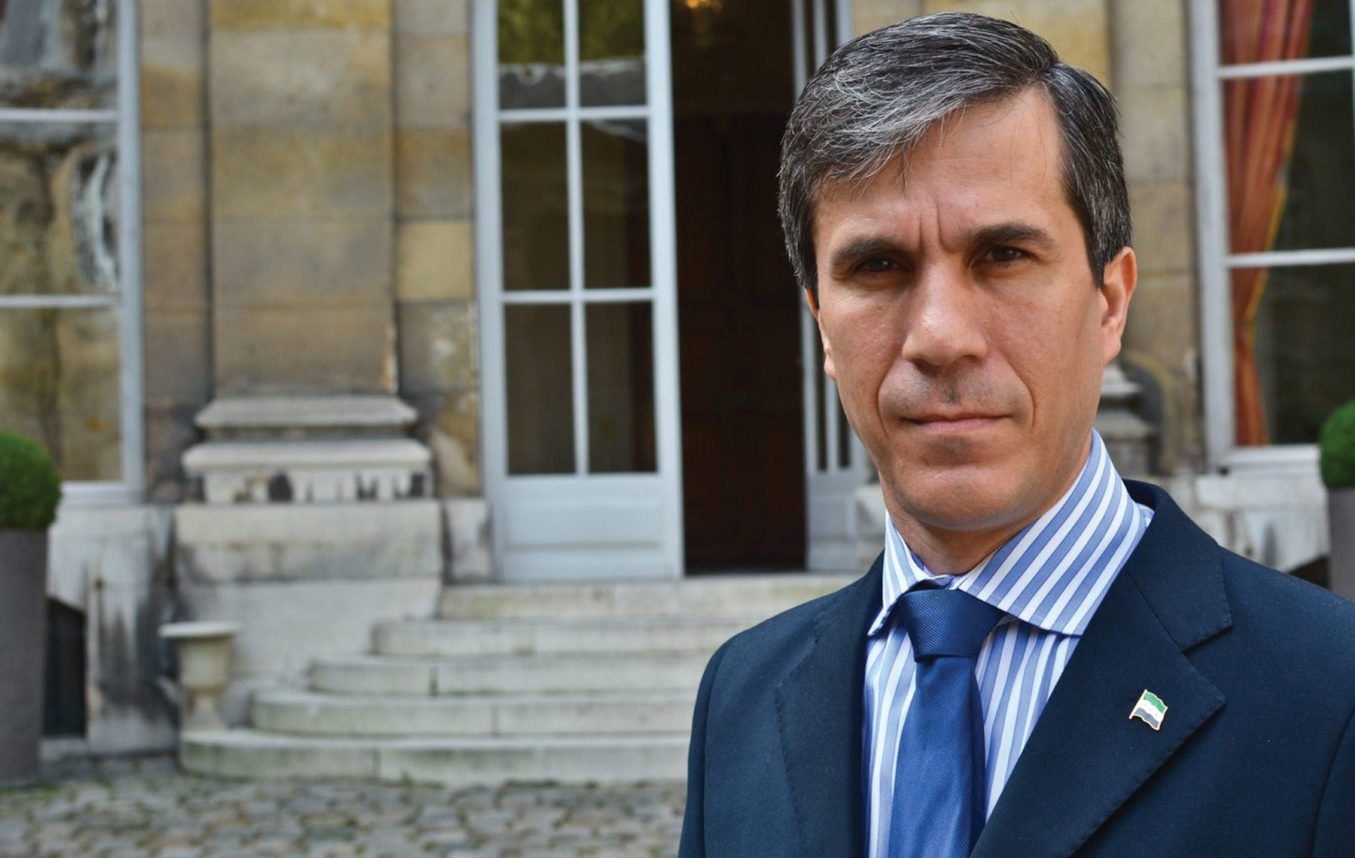
THE MEDIA LINE — Though most Syrians oppose normalizing relations with Israel and reject efforts toward establishing diplomatic ties, Syrian opposition leader Fahad Almasri has not stopped seeking an opportunity to open communication channels with Israel. 

Almasri, founder and leader of the National Salvation Front in Syria (NSF), said he would like the Syrian and Israeli people to live side by side in peace and to become business partners. He describes himself as a staunch opponent of Syrian President Bashar Assad and an alternative leader to Assad’s rule. 

Almasri, who has lived in France for 24 years, said he is not afraid to talk openly about relations with Israel in a post-Assad Syria. 

“We have the courage and the open political vision. The reason is the … change that has occurred in Syrian society. [This change] led to the reevaluation of all concepts and values — and the fall of slogans,” Almasri said. 

Syria and Israel technically have been in a state of war since 1948, and the two countries never established diplomatic relations. Following Israel’s War of Independence, the two have faced off in two additional wars, the first in 1967 and the second in 1973.

Almasri believes the time has come for this to change.

“We must recognize that Israel is an important regional state, a fact that exists whether recognized by regional and Arab parties or not,” he said. “Israel is an internationally recognized state and is supported by all the nations of the world.” 

Syria has always championed the Palestinian cause and Damascus has consistently tied the Golan Heights, an area internationally recognized as occupied by Israel, with resolving the Palestinian-Israeli conflict. But Almasri said a lot has changed since the eruption of the conflict in Syria in 2011.

“After all the destruction that happened in Syria, is the problem of the Syrian people the Palestinian issue, especially since the Palestinians themselves have entered into negotiations with the Israeli state? The Palestinian problem is at another turning point,” he said. “Consequently, the Syrian people paid more than 80 years of their livelihood, security, stability and political life, which was absent as a result of slogans and trafficking in the suffering of the Palestinian people.”

A Palestinian official who asked to remain anonymous due to the sensitivity of the matter said the Palestinian leadership has a good relationship with Damascus and doesn’t want to spoil it. But he was critical of Almasri.

“These are groups created by Israel and the United States that have a relationship with them,” the Palestinian official said. “These groups, which call themselves the opposition, are part of a project hostile to Arab causes and have reached the level of agents for the occupation. The Palestinians want a strong and united Syria, and Syria will emerge from its crisis as soon as possible.”

“We must recognize that Israel is an important regional state, a fact that exists whether recognized by regional and Arab parties or not.” — Fahad Almasri

In April, Almasri’s group launched the national initiative “Hope,” calling on the Israeli government to ease travel restrictions on the Syrian Druze in the Golan Heights to allow them to visit relatives in Syria as part of a more comprehensive plan.

“In the first phase … the people of the Golan have to come to Syria. In the second stage of the initiative, the Jewish Syrians, whether they live in Israel and hold Israeli identity or live in the Diaspora, have the right to visit their country and take care of their property and their cultural, historical and humanitarian heritage in Syria,” Almasri said. “The ball is now in the Israeli court.”

The Syrian opposition figure said he is in touch with Sheikh Mowafaq Tarif, the spiritual leader of the Druze community in Israel. 

Tarif said he’s a religious man and doesn’t “interfere” in Syria’s internal politics, but he did support the initiative put forth by the NSF.

“These are humanitarian requests to help the Syrians in the Golan Heights contact their families in Syria just like it was before the war. We are fully behind it,” Tarif said.

Almasri claims that his group has been in direct communication with Israeli officials. In fact, he said an NSF delegation was in Israel during the first week of May, meeting with Israelis. 

“We sent a message to the Israeli government and to [Israeli Prime Minister Benjamin] Netanyahu,” he said. “We hope that this initiative will receive the attention of Mr. Netanyahu because it will be an initial humanitarian initiative toward the rapprochement between Syria and Israel.”

Almasri said he also met with Yisrael Katz, Israeli minister of transportation, minister of intelligence and acting foreign minister, with the goal of establishing close relations with the Israeli government.

“We want to search for the strategic interests of the Syrian people, and the strategic interests of the Syrian people require [us] to enter into understandings with the Israeli state for the benefit of the Syrian people,” Almasri said. “The Syrian people want peace, they want to live in safety, they want a broad horizon for development, they want to rebuild Syria.” 

Almasri also said he met in Paris with Yuval Rabin, chairman of the Israeli Peace Initiative and son of assassinated Prime Minister Yitzhak Rabin. He said these meetings are just an example of many he regularly holds with Israeli officials, discussing numerous topics, among them Iran, the Palestinians and terrorism.

Normalization between Arab states and Israel is a touchy subject. Egypt and Jordan are the only Arab states that have peace treaties and diplomatic ties with Israel, and Almasri knows his attempts at forging relations with a state that many Arabs still view as an enemy will not sit well with them. 

“We do not care about the criticism of others; we are concerned about the strategic interest of the Syrian people,” he said. “The Syrian people have been left to kill and slaughter [each other] for more than eight years, and the Arab countries are all watching and investing in Syrian blood, and have contributed to the continuation of this tragedy and turned it into a war of attrition.”

The Media Line reached out to the Israeli prime minister’s office and the country’s Foreign Ministry for a response. Both declined to speak on the matter, saying instead in a text message: “We are not making any comments on the issue to the media.” 

Almasri said he won’t stop until he meets with the Israeli prime minister, and he has a message for him. 

“We say to Mr. Benjamin Netanyahu that we congratulate you on your [election] victory once again with the confidence of the Israeli people. With the beginning of your mandate, we hope for your new government to have a new, courageous and constructive regional vision toward Syria and the Syrian people,” Almasri said.

Still, he admitted he doesn’t speak for all Syrians and that the idea of having contact with Israel is controversial for many. But Almasri has a vision for a future Syria. In order for that vision to become a reality, he said, the eight-year conflict must end and reconciliation needs to take place.

Syrian Opposition Leader Pushes for Normalization with Israel Read More »

The Fight Against Anti-Semitism Is the World’s Responsibility

Anti-Semitism is a sign of illness in the culture that hosts it. It poisons the culture’s history and legacy.

The pre-Holocaust anti-Semitic reenact-ment we are witnessing today is spreading around the world. In addition to Europe and the West, the viral meme of anti-Semitism has affected parts of Asia with no prior Jewish population or history of anti-Semitism. Even some developing countries — many of which have benefited from Israeli technological support — have espoused, for geopolitical reasons, new anti-Semitic and/or anti-Israel positions couched as anti-Zionism and anti-Israelism. They are using the cause of Palestinian independence as an excuse.

From the trauma-field perspective, reenactment generally happens as an unavoidable repetition of trauma, but it also may be seen as an unconscious attempt to recreate the situation to correct the initial traumatic event.

Our challenge is whether we repair or repeat this reenactment.

This reenactment is an opportunity not only for Jews to do what they were unable to do before and during the Holocaust, but also for the nations of the world to repair what happened to their own cultures regarding the Holocaust. It is an opportunity to effect long overdue changes in worldviews and in the understandings of their own cultures and religions as they relate to Judaism.

Like all racism and bigotry, anti-Semitism is a sign that something is wrong with the culture and people of the nation exhibiting it. The population suffers, feeling ignored or oppressed, with too many of its basic universal needs unfulfilled. The people’s physical, economic or religious safety may be threatened, with their self-images, senses of identity and competence threatened or denied.

They use anti-Semitism as a stopgap to ignore their problems. When anti-Semitism flares up in a group of people, it means there is a huge reservoir of despair and anger, which is easier to alleviate by taking it out on those different in culture, nationality, religion or race.

Minorities usually are the scapegoats when bad times arise, but anti-Semitism goes viral more than other forms of bigotry. To distance themselves from their Jewish origins, replacement theologies in Christianity and Islam made Jews scapegoats. This often unconscious, 2,000-year-old meme of anti-Semitism has infected 3 billion people. The worldwide spread of the exiled Jewish people and their unique combined culture, nation, religion and race add to this tragedy.

However, people’s problems do not go away because they project them onto Jews and/or Israel. To the contrary, their problems worsen, camouflaged by hatred against the minority. To their frustration
and helplessness, they add hatred and meanness — which do not make people happy.

While the fight against anti-Semitism is vital for the Jewish people and Israel, it is even more so for the community of nations and the collective consciousness it holds.

Clearly, the Jewish people need to — and will — fight anti-Semitism wherever they are. Our well-being, the survival of our children and our existence as a people depend on it. Yet, it is important to make clear to the nations of the world that anti-Semitism is not just a Jewish problem, but the nations’ problem; more than the Jews, they need to fight.

The ability of Jews and gentiles to fight anti-Semitism is relatively new. Thankfully, people are acknowledging that need to fight. But anti-Semitism has become a favorite viral meme for any wrongdoing and any offense, anywhere. Thus, we need greater accuracy against and a stronger will to fight anti-Semitism. This only can arise from nations understanding it is in their own interests to fight anti-Semitism, as well as from the Jews’ new ability to confront the nations ignoring it.

“Canary in the coal mine” is a metaphor for warning of serious dangers to come. The cliché that the “Jews are the canary in the mine” is accurate. Anti-Semitism often is the first indicator of the erosion of a collective psyche’s well-being. It is the moral and ethical measure of how a culture has been compromised. Anti-Semitism is everyone’s problem.

A well-balanced culture welcomes Jews and other minorities, relishing in their creativity and capacities to collaborate and contribute to their host nations. A quickly ailing culture shows signs of anti-Semitism. It starts on the fringes of society, usually dismissed as atypical, and often includes demonizing the haters and dismissing the problems underlying their anti-Semitism. Little by little, anti-Semitism becomes mainstream, infecting the political structure while camouflaged via branding and demonizing the mostly powerless fringe groups, which carry the weight of the nation’s fall into bigotry.

Anti-Semitism is an indication of a culture’s incapacity to handle uncertain, difficult or changing times and understand its traumatic periods. Finding a scapegoat helps people focus on a common enemy responsible for the instability and all that is bad. They believe getting rid of this enemy will bring back safety, predictability and well-being.

Falling into anti-Semitism, or any kind of racism, bigotry or reverse racism, is a sign ghosts of the past and old traumas have been triggered. The dark shadows of the culture emerge, leading to religious or anti-religious exclusivism; cultural, racial or ethnic tribalism and hatred for the foreign or the different — all of which are preludes to the disintegration of a culture into violence and war. 

That is why anti-Semitism is the nations’ problem, a world problem, and not just an Israeli or Jewish one.

Anti-Semitism hides behind anti-Zionism. Unmasking the anti-Semitic face of anti-Zionism is a crucial and easy task.

Anti-Semitism or geopolitical considerations drive activists around the world who only espouse the Palestinian cause; only decry Palestinian deaths that happen at the hands of Jews; refuse to address the complexity of the Israeli-Palestinian conflict; ignore any and all causes of oppression or lack of freedom; and ignore the needs of Israelis.

By falsely defining Zionism as Jewish racism against Palestinians, anti-Semitic people feel justified and moral in attacking Israel. Anti-Zionism is a good cover for those who, for geopolitical reasons, must stand against Israel. It makes people feel good about themselves, believing they are contributing to an ethical world — yet they have no awareness of their actions’ consequences on both Palestinians and Jews.

As further self-justification that they are not anti-Semitic, these activists are committed in principle to memorializing the Holocaust and defining it as something historically unprecedented and other-worldly. They ignore that for centuries, history had been leading up to it; they act as if no one but Hitler has ever contributed to the isolation, denunciation and dehumanization of the Jews. They blissfully ignore the current viral anti-Semitic deeds taking place around the world under the cover of anti-Zionism. With self-righteous indignation, they accuse Zionists of being Nazis and attack Israel’s right to exist as a Jewish state. They demonize Jews and Israelis, justifying their hatred (these otherwise good, loving people) because the Zionists are contemptible and the essence of evil, which is so Hitler-like.

The approach to peace around the world must change. People looking to contribute to sustainable peace must consider the suffering of all sides of an issue. Every caring citizen, peace activist or elected leader must incorporate the fight against anti-Semitism and anti-Zionism into their dialogues. There no longer can be unwitting anti-Semitism. We all must be aware of rhetoric that contributes to racism, bigotry, hatred, murder and violence.

The international community can learn to assess the danger of violence by analyzing its anti-Semitic excesses, manifested in attacks against Jews and Jewish institutions. 

There are several levels of action countries (and we) may take:

Heal the religious wars
We must maximize interfaith efforts between the Abrahamic religions to heal wars of religion.

We should never talk about the Holocaust without including the anti-Semitic atmosphere and traditional religious patterns that caused it. Much work has been done but more is needed. The Vatican’s Nostra Aetate Council in 1964 exonerated the Jewish people from deicide. Christian Zionist and evangelical backing of Israel is an important effort that should be better known. Think about Eastern European countries supporting the State of Israel, and Jewish communities being safer from anti-Semitic attacks there than in Western European nations.

Other efforts include the apology of the king of Spain for the Inquisition; Spain and Portugal’s invitation to give honorary citizenships; the king of Morocco and the president of Egypt’s invitations for expelled Jews to come back; and Islamic voices who recognize the Jewish people and the Jewish state. The media needs to give more attention to all these efforts. We must help religions with significant extremist elements revert to their times of magnanimity, when their cultures were not in the throes of the trauma of loss and paralysis.

Rehabilitation programs
We need a program allowing cultures to move beyond the horrors they committed and be fully rehabilitated. Without this, the weight of shame and humiliation can jeopardize the connection of youth to older generations and their own cultural past, and manifest in demonizing the victim. We see this danger in the resurgence of anti-Semitism, even in countries very vigilant about it. We need to find more successful reparation and rehabilitation processes.

I detail this process in “New Paradigm for Holocaust Education,” which can be found online (blogs.timesofisrael.com/more-than-a-meme-against-genocide). The guidelines that allow a perpetrator culture to redeem itself and rejoin the community of righteous nations include taking responsibility, emotionally processing difficult feelings and making reparations. Most importantly, reparation and rehabilitation mean preventing repetition; committing to finding the roots of bigotry; changing cultural values, worldviews and conditions that fed it, including unhealed collective trauma; and preventing it in other countries.

Reframing the concept of the Chosen People
The Jewish nation is called to be in service of humanity, the creation of God. Being a Chosen People and a light unto the nations is not arrogance. Our chosen status does not imply a genetic superiority. We have received a blueprint for working toward higher levels of consciousness and of being in service, which has inspired other religions. The Seven Laws of Noah included all humanity in this design, and anyone may choose to be of service and be a light unto others.

Correctly using intersectionality
Meant to strengthen the hands of minorities fighting for equality and recognition, the concept of intersectionality at times has been co-opted because of the viral anti-Semitic meme. An intersectionality that targets Jews because of their resilience, or defines oppression by color and not by power structure, only creates more divisiveness. It risks being co-opted by traumatic energies, becoming just another forum for reverse racism and a new elitism of victimhood, which wrestles control from people over their own destinies.

Healing the Jewish trauma
Despite our remarkable resilience and productivity, many Jews struggle with a huge burden of trauma. Some have left their tribe; a small number have turned against the safety of their own people; and most struggle to find religious unity. It behooves the community of nations to help the Jewish people feel secure and honored so they can continue serving in the role they were meant to play: Denouncing anti-Semitic threats whenever and wherever they appear.

We need to heal the Jewish trauma, which manifests in several ways:

Differences between Jewish movements
Reconciliation is a difficult but crucial task to accomplish. All voices have to be acknowledged and helped to clean up their core messages from traumatic aspects, whether it’s a far-right party that believes it has to match the enemy’s aggression with Jewish aggression, or the J Street movement that, in its search for peace, puts the blame on Israel and wants it to take all of the risks.

Assimilation versus isolation
For some, there is the need for the religious nature of Israel to have more influence. It is a real fight between them and those who want a secular Israel with a liberal lifestyle, following the model of Western nations and being subject to the international community’s values and judgment. In the Diaspora, the battle is between those who need to isolate and insulate — for fear their religion will be diluted and secular contamination will take over — and those who want a Diaspora community that fully integrates in its host country.

It is a struggle between those who have deep desires to be accepted and appreciated by others (and have a fear of alienating others) and those who want Israel to maintain its principles and promote its interests even if it must stand alone. These proponents want alliances with others and want to be part of the community of nations, but not at the expense of Jewish interests.

Wanting to be a light unto the nations and belong
The Jewish people need to resolve the conundrum of wanting to be a light unto the nations and an exemplar Chosen People with the reality of surviving in a country surrounded by declared enemies. The battle continues between those who believe Israel has betrayed the ideal of peaceful Jewishness and ethical Judaism (some even prefer the dissolution of the Jewish state for the sake of this purity) and those who feel their fight for physical survival justifies the use of force and must deal with the painful choices that come with it.

Achieving balance
Solutions only will come from the unification and balance between those who hold the flag of Jewish physical survival and religious geographical mandate, and those who hold the flag of the ethical pursuit of Judaism, including compassion for strangers and the downtrodden. It is incumbent on us to develop awareness of polarization within the Jewish community, practicing self-regulation processes that center us enough to communicate with people with differing views, and achieving the necessary flexibility to reach compromises.

There must be realistic assessments of geopolitical realities. We must measure the unfulfilled needs of people involved in conflict with the Jewish people and with Israel, and determine how many of their actions trauma distorted. There must be patience to wait for the right times, the right leaders in key places and the right alliances. This may be where it is helpful to have faith and not think of ourselves as so powerful that we have all the answers.

The Torah blueprint may contain the righteousness of claims on both sides, once their traumatic layers are cleaned from them. It is mostly, but not only, a lack of balance that creates polarization, making people unable to talk to one another and unable to find the solutions they need.

The Jewish people want the world to take responsibility for its part, and we need to fulfill our part. The best way is to free ourselves from our trauma.


Gina Ross is founder and president of the International Trauma-Healing Institute in the U.S. (ITI-US) and its Israeli branch (ITI-Israel). She is the author of “Beyond the Trauma Vortex Into the Healing Vortex,” a series of books on healing trauma, and the creator of the Ross Model: Protocol for Conflict Resolution and Successful Communication.

The Fight Against Anti-Semitism Is the World’s Responsibility Read More »

Get Serious About Holocaust Education

We were two of the youngest Jewish-Americans to run for Congress in 2018 — Naomi Levin and Bryan Leib. We have many things in common, including our backgrounds, our core beliefs, our love for Israel and the reasons we ran for Congress against insurmountable odds. 

We have a mutual belief that Congress should do more to educate our next generation about the Holocaust. In April 2018, a bipartisan group in the House of Representatives (four Democrats, four Republicans) introduced a bill called the Never Again Education Act (HR 5460). It was introduced in response to an alarming survey by the Claims Conference asserting that more than two-thirds of American millennials have never heard of Auschwitz. 

Furthermore, more than 45% of those surveyed couldn’t name one of the ghettos or concentration camps, and 9 in 10 surveyed responded “yes” when asked if American students should learn about the Holocaust. 

After hearing the results of this study, it became clear that the memory of the Holocaust is quickly fading while anti-Semitism around the world is on the rise. I (Leib) am the grandson of a Holocaust survivor and I (Levin) have relatives who survived the Holocaust. We will never forget about the Holocaust and we are personally invested in seeing Holocaust education rolled out nationwide. But what about the millions of Americans who don’t have grandparents or relatives who are Holocaust survivors and can’t name a single concentration camp? 

In response to these shocking statistics, the eight members of the House introduced a bipartisan bill that would authorize and fund the Department of Education to provide grants to carry out educational programs about the Holocaust. We and many others applauded these eight members who introduced the bill and started working with our friends, community members and members of Congress to whip up support for additional cosponsors of the bill. 

To date, the bill has 53 co-sponsors (33 Democrats, 20 Republicans). The growing number of cosponsors seemingly would have increased the likelihood that the bill would be voted on in committee with recommendation for a full vote on the House floor. 

Here is where things get weird and, well, frustrating. The bill was referred to the House Committee on Education and the Workforce on April 10, 2018 (the same day the bill was introduced), and now more than 365 days later, the bill has not been read once in committee and has not been voted on in committee. 

We don’t believe the federal government should tell Americans how to live our lives. However, in this case, we will make an exception because our future depends on it. 

The federal government has a real opportunity to pass a real bill that will have tangible and measurable results — that will affect the lives of our children. If we don’t start educating the next generation about the Holocaust, Adolf Hitler and the 6 millions Jews that were erased from existence, then we run the risk that history will repeat itself. 

We, Bryan Leib and Naomi Levin, are calling on Speaker Nancy Pelosi, Chairman Bobby Scott and the bill’s original lead sponsor, Rep. Carolyn Maloney (D-N.Y.), to breathe life back into this bill, get it out of committee and onto the House floor for a full vote. 

In the words of the Rev. Martin Luther King Jr., “The time is always right to do what’s right.” This bill is right, the cause is just and members of Congress must stop placating the American people by telling us they care about the growing tide of anti-Semitism and actually do something to address it. This bill is their opportunity to change the tide and make an impact. Will they? Your move, Congress.


Bryan E. Leib is a program manager for the Israeli-American Council and a member of the board of the National Museum of American Jewish History. He ran for Congress in Pennsylvania’s 3rd Congressional District. Naomi Levin, a software engineer, ran for Congress in New York’s 10th Congressional District. She is a board member of Endowment for Middle East Truth. 

Get Serious About Holocaust Education Read More »

An Act of Resistance Against MS

“What are you wearing Friday night? Something that will show off those legs?”

It was the week before Love to Erase MS at the Beverly Hilton, and I was on the phone with Jeannette, going over our plans from our respective homes in New York.

Jeannette is Jeannette Perutz-EIsner, my client (I am her co-writer and editor), collaborator and now friend. Living with multiple sclerosis for 27 years, she is working on a memoir. For the past nine months, we have been immersed in an intense, intimate, ongoing conversation about her battle with this terrible illness and its metaphorical value in her life. 

As the daughter of Holocaust survivors who grew up on the premises of a variety of institutions for the criminally insane in upstate New York, Perutz-Elsner has been zapped with a cruel yet entirely apt affliction. Her MS imprisons her within her body as her parents had been so imprisoned as Jews in Europe, as she had been so imprisoned as a child.

Her MS is the Nazi storm trooper that has invaded the house of her body, exterminating her slowly, by degrees.

And yet Perutz-Elsner stubbornly persists — in staying alive, in believing that life is better than the alternative, in the determination to be a mother to her sons, in her quest to tell her story.

In writing the first draft of her memoir, she opted for radical revelation.

Nearly a decade ago, at the urging of her therapist, Perutz-Elsner set out to write her memoir, producing a stark prose poem, a cri de coeur, her Book of Lamentations. The writing opened a vein. Originally compelled to shield her boys from the traumatic truth of her tortured childhood, she offered a wholesome, if vague, vision of her childhood in upstate New York. Mortified that they might experience anxiety from the knowledge of her illness, she took great pains to disguise and even defy her diagnosis. 

Shira Dicker and Jeannette Perutz-EIsner at Love to Erase MS event at the Beverly Hilton.

Until the need to tell the truth overcame her need to shelter her sons, now teenagers. In writing the first draft of her memoir, she opted for radical revelation. 

Helping Perutz-Elsner tell her story has required an intimate engagement with her. My role is far more than editorial; I am the instigator of joint exploration into her past, witness, scribe, advocate, private investigator. I have embedded myself, to a degree, within her family. For the better part of this past year, I have explored the fascinating horror of her childhood and family life, uncovering memories that are as multifaceted as they are tragic, pushing her to disclose more.

As Perutz-Elsner details her daily struggle with MS — in spoken conversation, texts and over our periodic dinner or theater dates — she is stubbornly forcing the healthy world to pay attention. This is what it is like for me to lift a fork. Here is how long it takes me to pull a sweater over my head. This is what my brain looks like, populated with lesions. This is why a gorgeous riff or melody can destroy me, filling me with its beauty, overwhelming me, destroying me for the rest of the day.

Early into our collaboration, we created an MS word game we called “My Soul”; she wrote to me, one day, “MS.” “My Sister,” I volleyed back. “MS.” “Magnificent Shira, MS,” she might say. “Mother Supreme, MS,” I will respond. “Mi Senora, MS.” “Melancholy Songstress, MS.” 

Our MS wordplay is our way of redefining the dreadful letters, appropriating and repurposing them, unshackling them, giving them wings. 

Perutz-Elsner was thrilled by the idea that I might wear a dress that shows off my legs. Only someone with impaired mobility can appreciate that this prospect has nothing to do with looking sexy. She is neither pimping me out nor is she flirting. My long, strong legs are her surrogates. 

She, the sultry, dark-haired goddess, once danced with abandon.

This past Friday night, in addition to spotting actress Selma Blair, you might have seen me and Perutz-Elsner — Mighty Sorceresses, MS! — as we walked alongside the red carpet. 

Though we are not Movie Stars, MS! we are Magical and Sultry, Marvelous and Sensational, a two-headed creature of wheels and moving legs, dark-haired sisters in hot pursuit of the truth.


Shira Dicker is a writer living in New York.

An Act of Resistance Against MS Read More »

A Progressive Misnomer

Labels matter, and they are an integral part of the war of ideas.

When British Prime Minister Winston Churchill and American President Franklin Roosevelt met in December 1941, weeks after the Japanese attack on Pearl Harbor and the Nazi Germany declaration of war against the United States, they signed a joint document articulating their nations’ war aims. It was titled “Joint Declaration of the United Nations,” not “Joint Declaration of the Alliance” and not “Joint Declaration of the Associated Powers.” Roosevelt rejected the term “Alliance” because it might be a problem to Senate isolationists. Churchill rejected the term “Associated Powers” because it sounded too “flat.” Hence the birth of the “United Nations,” a title designed for both its emotional punch and its political purpose.

This choice of labels is of constant concern to politicians and political movements. Those who favor retaining access to abortions call themselves “pro choice,” not “pro fetal death.” Those who favor more restrictive access to abortions call themselves “pro life,” not “pro unwanted babies.” Rep. Ilhan Omar (D-Minn.), who has accused those who support Israel of having an “allegiance to a foreign country,” rejects the label “anti-Semitic” but has no objection to “pro-Palestinian.” 

Democrats seem to understand the value of emotive branding better than Republicans. The latter demonstrates no objection to being called “conservative,” although that label can connote a lack of originality and a kneejerk adversity to change. Democrats, on the other hand, have rebranded themselves as “progressives,” eschewing the use of the term “liberal,” which can have an elitist connotation (for example, the “liberal arts”) out of touch with the everyday problems facing the average American. Consistent with this rebranding, almost half of the Democratic House members are part of the Congressional Progressive Caucus; there is no Congressional Liberal Caucus. 

Democrats have rebranded themselves as ‘progressives,’ eschewing the use of the term ‘liberal.’

This stratagem, which the media and even Republicans have bought into, obfuscates and prejudges discussion. “Progressive” and “progressivism” are labels that have strong positive connotations. “Progress” is defined by the Random House Dictionary as “movement to a higher stage,” “advancement in general” and “continuous improvement,” and is a synonym for “betterment.” “Progressive” is defined as “favoring progress.” What millennial — indeed what person of any age, educational level or background — would be opposed to improvement or betterment? To be a social reformer, a progressive in the spirit of Teddy Roosevelt, committed by definition to “continuous improvement” and “betterment,” has an obvious appeal. 

Today, “progressivism” sometimes describes economic populism; other times, it encompasses cultural or social issues. “Progressive” Hillary Clinton, during her presidential run, asserted her unrelenting opposition to the Trans-Pacific Partnership trade agreement and her willingness to impose tariffs on China and other countries. “Progressives” are said to support New York’s recent late-term abortion law. “Progressives,” in the words of one Los Angeles Times headline, “hope to reset debate on Israel.” Other “progressives” campaign to restrict the availability of charter schools.

The “progressive” label unfairly biases and confuses the arguments concerning these and other social and political issues. Fair and informed public discussion would be served by a general return to “liberal” or “leftist,” terms that do not subtly predispose one to favor so-called “progressives” and their programs. While “liberal” and “leftist” do carry some baggage, this is equally true of the terms “conservative” and “rightist.” Media and commentators who strive to be unbiased must take the lead. “Progressive” ideas and candidates should be judged on their merits, not wrapped in a distorting label that prejudges thoughtful consideration.


Gregory Smith is a retired appellate lawyer in Los Angeles.

A Progressive Misnomer Read More »

Shuls Are Powered by Women Like Lori

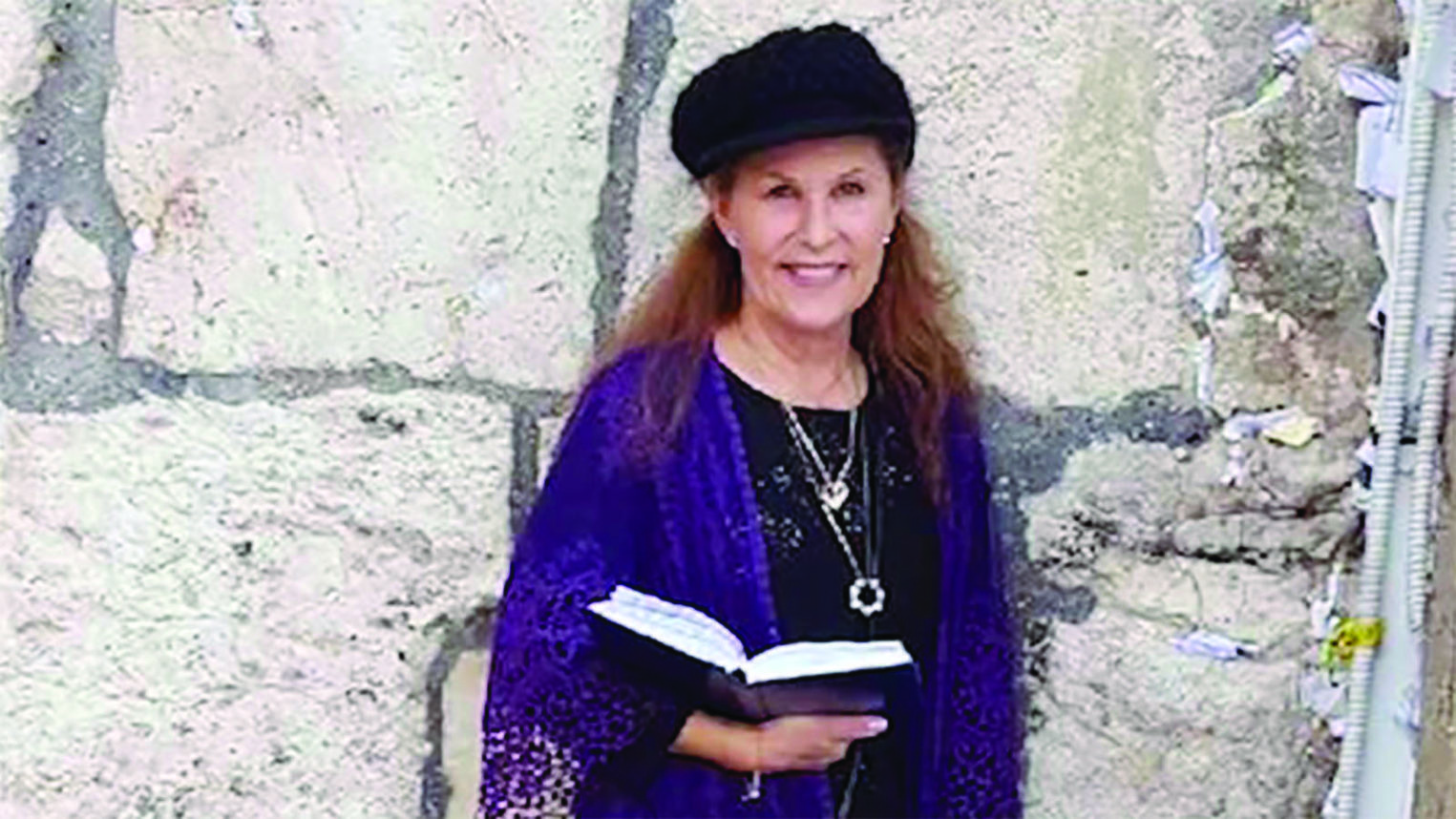
I drove down to San Diego for Lori Gilbert-Kaye’s funeral, the 60-year old woman of valor who was killed in the Chabad of Poway shooting. I wanted to support her family, Rabbi Yisroel Goldstein and their community in the wake of a tragedy that touched every Jew in the world. 

I expected to be moved. As soon as I saw Gilbert-Kaye’s picture on the night of the slaying, I could tell that she was warm, outgoing and familiar: a Jewish mom who reminded me of my mom, my wife and so many of our friends.

I have lost count of all the mass murders in recent news. Only one person died in the synagogue that day. So why did her death touch us so deeply? Why did her death dominate the news cycle for two days? I believe it’s because we all know Lori.

At her memorial service I learned she contributed to every fundraiser like her fellow congregants, but she would stop by the rabbi’s house to deliver her checks personally. 

Her friend Roneet Lev related that Lori’s checks were more than just generous. They were challenges. When Lev would go on a vacation abroad, her best friend Gilbert-Kaye would give her a $100 check to be delivered to some worthy nonprofit. It was a sweet chore that led to eye-opening discoveries and new relationships.

Her daughter, Hannah, shared the ups and downs of her tight relationship with a mother who cared for everybody yet always made time to chauffeur her around, and encourage Hannah’s artistic aspirations. 

Gilbert-Kaye’s husband, Howard, stood strong, making his intense grief all the more poignant. He described the messages framed around their home in multiple languages praying for peace to fill the world. And he was one of many who called Gilbert-Kaye an ayshet chayil from the passage in Proverbs we recite at Shabbat dinner, “A woman of valor, who can find? She is worth far more than rubies. … Give her due credit for her accomplishments, let her own works praise her at the Gates.”

Every speaker added another detail to the portrait for those of us not privileged to have known Gilbert-Kaye. Warm details, adorable details, funny details. Yet the details were not surprising because we know Lori. Anybody who attends a synagogue, church or mosque knows her.

Women like Gilbert-Kaye are the backbone of our lives in faith. They show up early, donate first, organize food drives, and host visiting speakers. And after completing such tasks, they thank our leaders for giving them the opportunity. 

Women like Gilbert-Kaye are the backbone of our lives in faith. They show up early, donate first, organize food. drives.

Meanwhile, they not only take care of their spouses, children and neighbors, they also do more than any other group to care for the world’s senior citizens. And they do it with a smile.

At Accidental Talmudist, we share Jewish wisdom with a worldwide audience. Our community is very diverse, but our largest single demographic is women ages 50 to 65. Where would be without them? Lost.

And that’s why we were all so crushed by the news of Gilbert-Kaye’s death. This was an attack on all of us. An attack on everyone who thanks God for sending us women like Gilbert-Kaye, who build nurturing communities. Leading by example, they inspire us all to visit the sick, educate the young, care for the elderly and grow spiritually day by day. 

The subhuman suspect, those who educated him in hatred, and the trolls who encouraged him online, succeeded in causing pain. But they failed spectacularly in dividing us or making us cower. Goldstein’s reaction to the loss of our beloved Gilbert-Kaye dominated the news cycle on every channel with a simple message: honor Lori Gilbert-Kaye by battling darkness with light.

Knowing Lori Gilbert-Kaye, she’d say, “Amen!”


Salvador Litvak shares Jewish wisdom daily at AccidentalTalmudist.org.

Shuls Are Powered by Women Like Lori Read More »

The Perfidy of Evil

When I went to see the groundbreaking exhibition “Auschwitz: Not Long Ago. Not Far Away” at the Museum of Jewish Heritage in New York, Orthodox Jews were being attacked in Brooklyn on a near-daily basis; an imam who has repeatedly called for Israel’s destruction gave a Ramadan prayer in Congress; a church in Chicago invited Louis Farrakhan to speak about “Satanic Jews”; and Rep. Rashida Tlaib (D-Mich.) asserted that the real victims of the Holocaust were Palestinian Arabs who lost their “dignity” in creating a “safe haven” for Jews. 

“Not Long Ago. Not Far Away” never seemed so apt.

But quite unexpectedly, the exhibition — as dark and intense as you could imagine — also offered a ray of hope. Showing more than 700 artifacts, it was conceived by Luis Ferreiro, a non-Jewish Spaniard, after reading “Man’s Search for Meaning” by Viktor Frankl. Ferreiro, who runs the global producer of exhibitions Musealia, approached the Auschwitz-Birkenau State Museum with the idea of creating the first-ever traveling exhibition about the Holocaust. The result: a nearly two-year stay in Madrid, with two extensions, drawing 600,000 visitors, the largest in Europe last year.

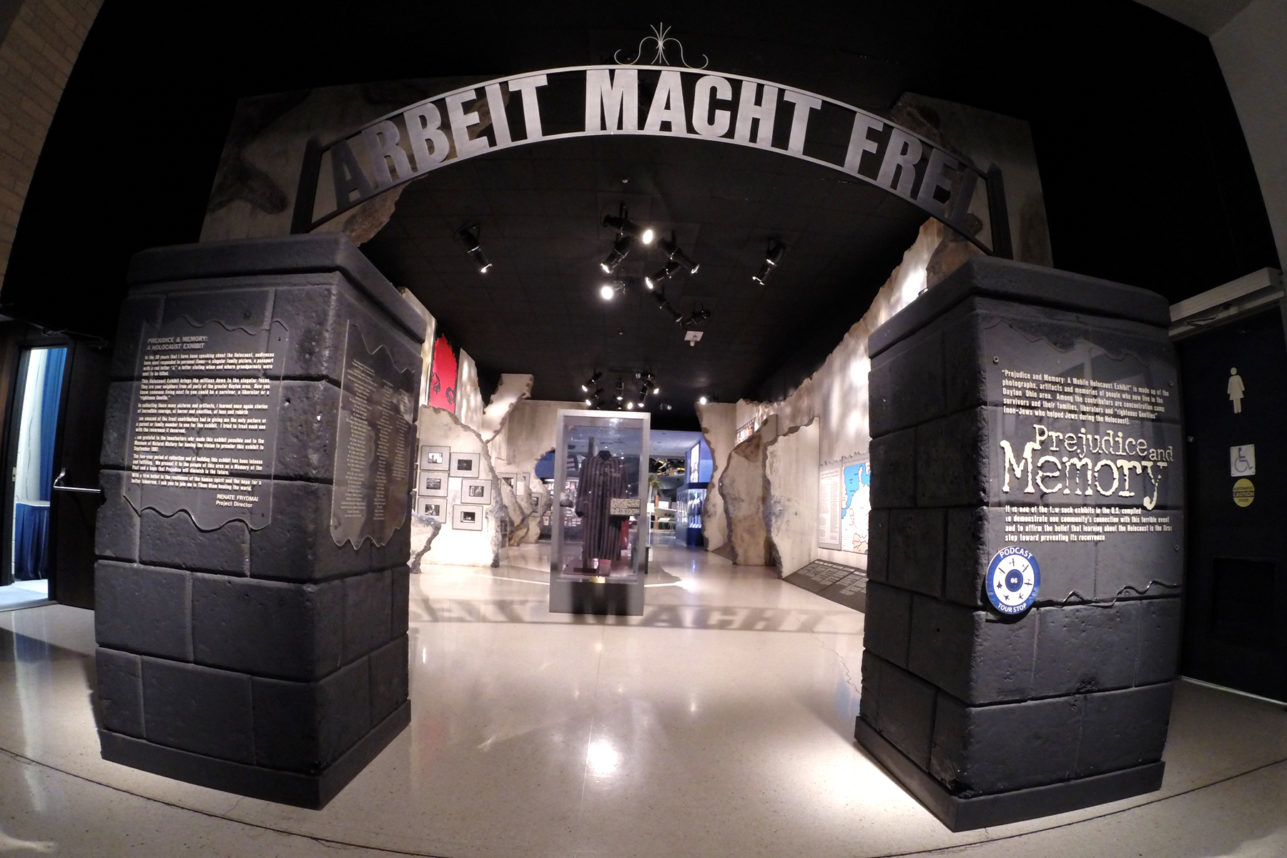
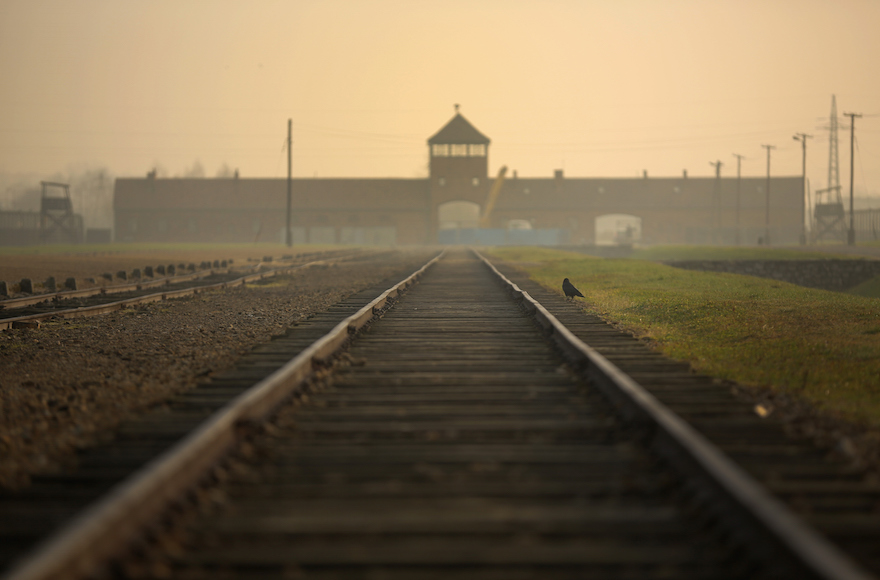
A windowless boxcar greets you when you arrive at the museum in New York. During the Holocaust, roughly 150 people, mostly Jews, were crammed into one like it, taking them on an often four-day hellish trip to the death camp, where the sign “Work Sets You Free” welcomed them with the perfidy only evil can master. 

The exhibition focuses on Auschwitz because between 1942 and 1944 it became the largest Nazi death factory — the largest documented mass murder site in human history. “Auschwitz and the Shoah are not just another single, dramatic event in the linear history of humanity. It is a critical point in the history of Europe and perhaps the world,” said Dr. Piotr M.A. Cywinski, director of the Auschwitz museum.   

The exhibition does a magnificent job detailing the buildup to humanity’s darkest chapter. Facts are stated as facts, indisputable, unable to be twisted into precisely the type of propaganda that led to the murder of 1.1 million people at Auschwitz, 1 million of whom were Jews, including more than 200,000 children.

The “Auschwitz” exhibition does a magnificent job 

detailing the buildup to humanity’s 

darkest chapter.

The artifacts are wrenching: a whip used to beat prisoners; a section of barracks; concrete pillars entwined with barbed wire; a metal peephole to the gas chambers; a poker used to manage the fires in the crematoria, which burned 4,416 corpses per day. 

Quotes, either on the walls or in short films, are equally jarring: “Once the Zyklon B was poured in, it rose from the ground upwards. And in the terrible struggle that followed, the strongest people tried to climb higher. It was instinctive, a death struggle. Which is why children and weaker people, and the aged, always wound up at the bottom. … Because in the death struggle, a father didn’t realize that his son lay beneath him.”

An exhaustively researched and illustrated catalog by Abbeville Press accompanies the exhibition. With both anti-Semitic attacks and Holocaust denial/revisionism at an all-time high, when two-thirds of millennials don’t even know what the Holocaust is, the book deserves a place in every home. The exhibition is in New York till January and then will travel for seven years, though the cities have yet to be named. The New York museum plans to bring in 100,000 schoolchildren. Colleges would do the world a big favor by making trips to the exhibition mandatory.

The book makes a point of discussing assimilationist Jews — Jews who dealt with rising anti-Semitism by putting their status in German society above their Jewish identity. “To the Germans,” write the authors, “[their] dissociation from Judaism did not matter. The only thing that counted was their descent — and it would bring [them] to Auschwitz.”

Have we really come full circle? “The words of hatred create hatred. The words of dehumanization dehumanize. The words of menace increase the threat,” Cywinski writes.   

I took a deep breath, looked toward the Statue of Liberty less than 2 miles away, and walked into the brilliant sunshine hearing the words of the resistance fighter Róza Robota before her execution in 1945: “Hazak v’ematz.” Be strong and brave. We need to confront every lie; uproot hatred through education. Silence is simply not an option.


Karen Lehrman Bloch is an author and cultural critic living in New York City.

The Perfidy of Evil Read More »

Israel Festival: A Timeout for Love

The relationship between American Jews and Israel has never been, to put it politely, more complicated. If you’re on the left, you have a host of reasons why you can’t stand Prime Minister Benjamin Netanyahu. If you’re on the right, you have a host of reasons why you can’t stand those who can’t stand Netanyahu.

And if you’re in the shrinking middle, you try to get out of the way of the verbal shrapnel.

Israel, that glorious biblical homecoming that used to unite so many Jews, has become a source of intense division among American Jewry. What happened?

For one thing, Israel is no longer a fragile state in its infancy that attracted so much sympathy. Since the Six-Day War of 1967, Israel has become a juggernaut of power and success. Sure, it’s still surrounded by lethal enemies, but its ability to withstand security threats is unparalleled. This kind of strength invites blame more than it does sympathy.

Second, with Israel becoming stronger, American Jews have felt liberated to unleash “tough love” criticism at the Jewish state. This has created a backlash among Israel defenders who believe that Israel already has more than enough criticism from within and from the world at large.

Third, in America, we don’t live and breathe Israel — we talk and argue Israel. When the Israeli government does something that drives some Jews nuts — a Nationalist bill, a rejection of non-Orthodox streams, a chronic failure to resolve the Palestinian conflict, etc. — we can only lash out from afar with op-eds, petitions and protests. Eventually, if we don’t see progress, it’s easy for some Jews to become embittered and alienated and conclude that the Zionist project is failing.

“In a marriage, this is how divorce starts. You see only what divides you, and you forget what united you in the first place.”

Defenders of Israel consider this judgment overly harsh. They concede that Israel is far from perfect but see it more as a “mess in progress.” Since they don’t live and vote in Israel and don’t have to suffer the consequences, they’re reluctant to preach to Israelis, especially on security issues. Also, they look at the United States and Great Britain and wonder: Is the Israeli political scene that much worse than those two train wrecks? 

When our infighting is interrupted by good news, such as Israeli innovations in science, sending aid to disaster areas or creating top Hollywood content, the “tough love” critics are not overly impressed, as if to say, “Look at you! You’re so good at everything else, why can’t you get your political and democratic house in order?”

Defenders of Israel look at Israel’s extraordinary success and think: Isn’t it incredible that this tiny country can accomplish all this while being surrounded by 150,000 enemy rockets and neighbors sworn to its destruction?

Meanwhile, the media’s obsession with politics and the general hostility toward Israel further inflame the communal conversation. No country is more condemned at the United Nations than the Jewish state, and the growing boycott, divestment, sanctions movement aims to undermine Israel’s very right to exist.

In this nerve-wracking environment, the battle lines have been drawn between Jews who are still fiercely committed to the value of public criticism of Israel, and those who see that criticism as ultimately ineffective, too lacking in context and feeding an already hostile world. Each side devalues the other.

“Israel, that glorious biblical homecoming that used to unite so many Jews, has become a source of intense division among American Jewry. What happened?”

In a marriage, this is how divorce starts. You see only what divides you, and you forget what united you in the first place. Soon enough, you call in the lawyers, go through hell for a while and move on and build a new life.

Is that what our community should settle for? Do we feel so strongly about our positions that we are ready to divorce the Jews who don’t share our views?

Indeed, it would be a tragic irony if the “miracle of Israel” became the issue that finally tore American Jews apart. That thought alone should be a wake-up call to kick the divorce lawyers out of the room.

Because this is the truth that rarely gets spoken: No matter how acrimonious our divisions, there is still more that unites us than divides us. We just need to look for it.

Which brings me to an opportunity to do just that: If there’s a place in your heart for Israel, no matter which side of the divide you’re on, show up at the annual Celebrate Israel Festival this Sunday, May 19, at Rancho Park (I’ll be at the Jewish Journal booth if you want to say hello).

For one day at least, there won’t be any agonizing debates that remind us of our ideological divisions, but a celebration of why so many of us love Israel in the first place.

We can resume our fighting on Monday.   

Israel Festival: A Timeout for Love Read More »

May 17, 2019


To view our previous issues, click here. 

May 17, 2019 Read More »