fbpx

February 27, 2019

Obituaries: March 1, 2019

Charles Bailin died Feb. 4 at 83. Survived by daughter Kimberly; son Steve (Aileen); 2 grandchildren; sister Mary. Mount Sinai

Dorothy Barnett died Jan. 28 at 96. Survived by daughters Adela, Linda; son Howard. Hillside 

Josef Ben-Porat died Jan. 23 at 94. Survived by wife Claire; 1 grandchild.

Eliana Berlfein died Jan. 31 at 64. Survived by sisters Davia Rivka, Jan (Rick) Burns, Judy (Dadla Ponizil). Greenwood and Myers, Mountain View Cemetery, Boulder, Colo.

Natasha Bomeisler died Feb. 3 at 91. Survived by husband Donald; daughter Susan (Steven). Hillside

Marilyn Janice (Lewin) Cooper died Jan. 30 at 74. Survived by daughter Heather (Mario) Ortner; sons Andrew (Julie), Steven (Lora Blum); 5 five grandchildren. Hillside

Rhonda Daniels died Feb. 6 at 83. Survived by sons Robert (Lynn), Steven (Leoni), Marc; 4 grandchildren. Hillside 

Warren Clifford Deutsch died Feb. 4 at 83. Survived by wife Elaine; daughter Lisa (James Abke); son Geoffrey (Laura); 3 grandchildren. Mount Sinai

William “Bill” Firestone died Jan. 26 at 97. Survived by sons Jeff (Wanatana), Randall (Ananya), Gary; 4 grandchildren; brother Nathan. Mount Sinai 

Richard Friedman died Feb. 3 at 94. Survived by wife Harriet; daughters Ellen Jean (Louis), Julie Ann (Robert); son Andrew; 6 grandchildren. Hillside

Michael Barry Gerber died Feb. 8 at 61. Survived by wife, Gail; daughter Jenica (Jason) Visenberg; son Adam (Abby); 1 grandchild; sister Sharon Dellimagine; brother Howard. Mount Sinai

 Lorraine Audrey Glocer died Jan. 31 at 86. Survived by son Alan (Susan); 3 grandchildren. Mount Sinai

Sonia Gottlieb died Feb. 3 at 90. Survived by daughter Ruth West; son Rene (Deborah); 2 grandchildren; brothers Abraham Golceker, Michael Golceker. Mount Sinai

Arthur Gurewitz died Feb. 5 at 89. Survived by wife Rosemarie; daughter Lori Ann Maimone; 1 grandchild. Mount Sinai

Betty Helfen died Feb. 5 at 98. Survived by sons Spencer, Mark (Vicki Schifferli), Alan (Jane) Helfen; 1 grandchild. Mount Sinai

Rebecca Levy died Dec. 24 at 100. Survived by daughter Jacqueline (Barry) Bereskin; son Alan  (Rhonda); 4 grandchildren; 5 great-grandchildren. Eden Memorial

Alan Livingston died Jan. 31 at 90. Survived by daughters Jan Hillman, Linda (Joel) Brill; 3 grandchildren; 5 great- grandchildren. Mount Sinai

Sylvia Neiman died Jan. 29 at 96. Survived by sons Jeffrey (Lynda), Ivan (Donna); 1 grandchild; brother Jack. Hillside

Irwin Petlak died Jan. 17 at 83. Survived by wife Marilyn; daughters Sandra Bledy, Liz (Gerald) Goldman, Andréa (Jeff) Bacon; 6 grandchildren; brother Jack. Mount Sinai

Melvin Roebuck died Jan. 25 at 93. Survived by wife Edith; daughters Ellen, Laura (Bill) Meehan; sons Josh, Daniel (Laura); 3 grandchildren; 2 great-grandchildren; sister Gloria Stewart; daughter-in-law Louesa. Mount Sinai 

Harriet Sacks died Sept. 3 at 93. Survived by daughters Susan (Ira) Halpern, Ida Saucedo; son Andy; 4 grandchildren; 2 great-grandchildren. Shalom Chapel

Suzanne Klein Simon died Feb. 7 at 84. Survived by daughter Stacey (Victor); sons Howard (Lidia), Ronald (Cherie); brother George (Barbara); 7 grandchildren; 8 great-grandchildren. Hillside

Curt Spiegel died Jan. 28 at 93. Survived by nephew Peter Markus. Riverside National Cemetery

Dorothy Stark died Jan. 28 at 104. Survived by nephew Norman (Chashia) Smoller. Mount Sinai 

Albert Stein died Dec. 21 at 90. Survived by daughters Laura (Stephen) Olson, Sharon Frederick; 3 grandchildren. Mount Sinai.

Sadie Dubitsky Wolpert died Jan. 8 at 100. Survived by daughters Sharon, Noreen (Fred) Wolpert Heiser; 2 grandchildren. Chevra Kadisha

Franklin Wurtzel died Feb. 6 at 76. Survived by wife Karen; sons Marc (Stacey), Jonathan (Christian); brother Stephen; 1 grandchild. Hillside 

Lois Zells died Feb. 5 at 80. Survived by sons David, Michael. Hillside

Obituaries: March 1, 2019 Read More »

The Divide After Conquering: Israel’s Persistent ‘Catch-67’

Jewish history can be divided into several “before” and “after” moments — the Babylonian Exile in 597 B.C.E., the destruction of the Jerusalem Temple in 70 C.E., and the Holocaust that ended with the defeat of Nazi Germany in 1945 are only a few examples. For the modern State of Israel, however, the watershed year was 1967.

“On the eve of the Six-Day War, Israel formed a national unity government (a broad coalition of all major parties) for the first time in its history,” explains Micah Goodman in “Catch-67: The Left, the Right, and the Legacy of the Six-Day War” (Yale University Press), a courageous and compelling book that demands the attention of anyone who claims to care about Israel. 

“[T]he whole of Israeli society united as well, and a sense of solidarity spread among Jews across the country and throughout the world. This unity formed the backdrop for the greatest victory in Israel’s history,” Goodman writes. And yet, the triumphant end of the Six-Day War also marked the beginning of a deep and enduring divide in Israel and the Diaspora: “The powerful sense of unity that had dominated on the eve of the war collapsed, ultimately, because of the results of that same war. … The territories conquered in just six days of conflict sparked a debate that has endured for fifty years.”

“Catch-67” (translated by Eylon Levy) was originally written and published in Hebrew for an Israeli readership, and the author hoped to detoxify the bitter political conversation that dominates the Jewish state. In his introduction to the English language edition, however, Goodman concedes that he fell short in that aspiration.

“[T]he book has failed to change or even calm the political debate in Israel,” Goodman writes. “Instead of healing discord, the book itself sparked discord. Many right-wing readers argued that I took a left-wing stance, while many left-wing readers argued that I favored a right-wing position. A book whose author begged its readers to rise above attempts to categorize was itself subjected to countless attempts at categorization.”

Indeed, the premise of “Catch-67” is that the question of what to do with West Bank is now the defining principle of a shattered Jewish world. “Israelis express a wide range of opinions on such matters as the economy and society or the role of religion in the state, and the clashes between their ideas provoke lively and even stormy debate,” Goodman writes. “Nevertheless, Israelis have absorbed their viewpoints into their very identity on one topic alone — the Arab-Israeli conflict. For Israelis, their opinions on the environment, say, or interest rates play a part in how they think. In contrast, their opinions on where to place Israel’s eastern border form a part of who they are.

“The way to move beyond stalemate, Goodman proposes, is to ‘stop thinking in dichotomies and start thinking in degrees.’ He encourages us to pay less attention to ideological purity and more attention to facts on the ground.”

Here we find the irony that is the cutting edge of “Catch-67.” How to manage the Arab-Israeli conflict is the existential question that Israel must answer correctly at the risk of its very survival, but Goodman insists that the debate over the right answer is shockingly shallow. “What remains is an asymmetry between the profundity of the problem and the superficiality of the thinking it provokes,” he concludes. And so Goodman drills deeply into the moral, emotional and psychological roots of the problem in the hope of reframing and thus reinvigorating the encounter between Israelis and Arabs.

“The dominant emotion among Israelis is fear,” Goodman argues. “Israelis fear the Palestinians. This fear is ancient, deep, and common to Israelis of all political stripes.” By contrast, “[t]he dominant emotion among Palestinians is not fear but humiliation. Palestinians are not afraid of Israelis, but they feel humiliated by them.” A dangerous chemistry is at work: “When fear and humiliation collide, each becomes stronger.” As Goodman sees it, then, the problem cannot be solved merely by drawing lines on a map. “The conflict between these two nations is a clash of emotions — specifically, a painful confrontation between fear and humiliation,” he proposes.

To set the table for the conversation that he envisions, Goodman surveys the history of Zionism in general and the Arab-Israeli conflict in particular. He devotes a substantial portion of his book to the fine detail of what we tend to call “left-wing” and “right-wing” Zionism, reaching all the way back to the earliest conflicts between Labor Zionism and Revisionism and tracing those conflicts into the volatile politics of contemporary Israel. “The First Intifada shattered the secular right, and the Second Intifada shattered the Zionist left,” he argues. “When these ideas had been abandoned, only one ideology still stood: the Zionism of the religious right,” he writes, and Israel was delivered into “the new reality of the deep and comprehensive confusion that is engulfing Israeli politics today.”

The title of Goodman’s book, a play on Joseph Heller’s “Catch-22,” captures the crazy-making dilemma in which Israel finds itself. “If the State of Israel wants to defend itself from the Muslim majority surrounding it, it must not pull back from Judea and Samaria; but if it wants to defend itself from the prospect of a Muslim majority within it, it must do so,” Goodman sums up. “This paradox exists because everyone is correct. The right is correct that a withdrawal from Judea and Samaria would endanger Israel; the left is correct that a continued presence in the territories would endanger Israel. The problem is that since everyone is correct, everyone is also incorrect — and the State of Israel is trapped in an impossible double bind.”

The way to move beyond stalemate, Goodman proposes, is to “stop thinking in dichotomies and start thinking in degrees.” He encourages us to pay less attention to ideological purity and more attention to facts on the ground, including challenges of security, which favors a one-state solution, and demography, which favors a two-state solution. Above all, he demands an open-minded and honest approach to peacemaking that is based on pragmatism rather than true belief: “The modern world calls on Israelis to lower their expectations of both war and peace, and to move from a politics that attempts to change reality toward a politics that finds a way to live with it instead.”

“Catch-67” is a book that dares to imagine a solution to one of the most intractable geopolitical conflicts in the long history of the Jewish people, but Goodman also embraces a more modest goal: “I have sought throughout to acquire an understanding heart; to listen with empathy to different viewpoints; and, guided by the spirit of the Talmud, to try to rehabilitate Israel’s fractured conversation.” In that effort, he has succeeded magnificently.


Jonathan Kirsch, author and publishing attorney, is the book editor of the Jewish Journal.

The Divide After Conquering: Israel’s Persistent ‘Catch-67’ Read More »

Paying Tribute to Nuremberg’s Little-Known Hero

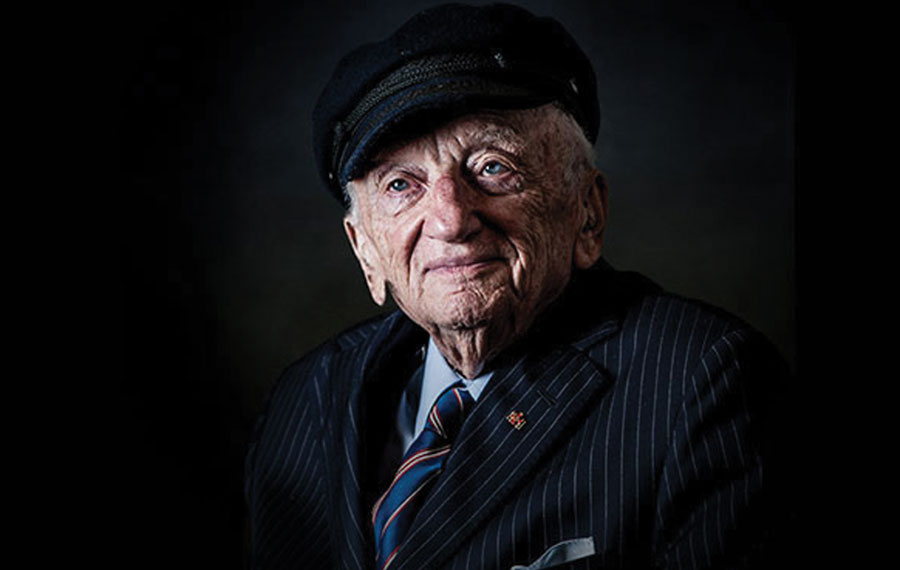
Among the most high-profile cases in the Nuremberg Trials from 1945 to 1949 was the prosecution and conviction of 22 members of Heinrich Himmler’s Einsatzgruppen death squads. The prosecutor in the case was a 27-year-old Jewish lawyer named Ben Ferencz and, chances are, you’ve never heard of him. Writer-director-producer Barry Avrich has endeavored to correct that with his new documentary, “Prosecuting Evil: The Extraordinary World of Ben Ferencz.”

“Ben should be as well known as Martin Luther King Jr., Mahatma Gandhi or Mother Teresa,” Avrich told the Journal. “Part of my mission with the film was to make sure that people know who the 99-year-old Ferencz is, and will always remember him and his legacy.”

Avrich first learned about Ferencz in 2017 when he saw a “60 Minutes” segment about him. He contacted Ferencz the next day and got the go-ahead to make the film. “I’ve made close to 50 documentaries. This was the simplest green light I’ve ever received,” he said. “Two months later we were filming.”

The documentary chronicles Ferencz’s life and accomplishments through archival footage, contemporary footage Avrich shot in Nuremberg, and interviews with notables including Alan Dershowitz, Gen. Wesley Clark, and Ferencz himself, who lives in Delray Beach, Fla.

Avrich interviewed Ferencz for eight hours, after which the nonagenarian jumped into the pool — as he does daily — for the cameras. Avrich marveled at his subject’s vitality, optimism and acute awareness. “He reads newspapers. He goes online. He stays focused. He’s alert, cognizant, fit. As you get older, you have two choices: Let age swallow you up or fight it. He fights it.”

“Ben’s religion was irrelevant. He’s not a religious man. It’s not what drove him. He’s a crusader, and his mantra is law over war.” — Barry Avrich

As the film chronicles, Ferencz’s family fled anti-Semitism in what is now Hungary, arriving in New York in 1920 when he was 10 months old. Despite meager circumstances, he studied hard and went on to graduate from Harvard Law School in 1943. 

After enlisting in the Army two years later, and serving under Gen. George Patton, Ferencz was transferred to Patton’s headquarters in England and tasked with collecting evidence of Nazi war crimes. Ferencz uncovered recorded evidence that convicted the 22 Einsatzgruppen defendants, 13 of whom were hanged. But his work didn’t end there. He was instrumental in helping Jews reclaim property taken by the Nazis and in getting Germany to agree to preserve hundreds of Jewish cemeteries in perpetuity. He argued human rights and civil liberties cases, wrote books on international criminal law and spearheaded the creation of the International Criminal Court in The Hague. 

“He considers his greatest contribution to be the work he did after World War II in helping to set up the restitution programs for Holocaust survivors, not only Jews but all those who had their lives ruined,” his son, Don Ferencz, said in a later interview. “He considers this most meaningful because the [Einsatzgruppen trial] did hopefully strengthen the concept of a stronger rule of law, but does little to assuage the pain of survivors.”

Avrich pointed out that in prosecuting at Nuremberg, “Ben’s religion was irrelevant. He’s not a religious man. It’s not what drove him. He’s a crusader and his mantra is law over war.” 

“I think he feels more culturally identified as part of a broader Jewish community than as a person of faith,” Don elaborated. “He doesn’t have a well-developed sense of spiritual identity. He’s here to do the best he can to help improve things here while he’s here.”

Don, who followed his father into the law, spoke of the valuable lessons Ferencz taught him and his sisters. “We were brought up to think for ourselves and not blindly accept old ways of solving new problems and have a healthy disrespect for bureaucratic authority. He’d say, ‘You’re a Ferencz. Nothing’s impossible for you. There’s no such thing as ‘can’t.’ He’d say, ‘Your integrity is your most valuable possession. Don’t ever do anything that you would be ashamed of.’ If we all followed that, I think we’d have a better world than we do now,” he said. “It’s a big job to try to influence the way the global society thinks, especially when it comes to the age-old glorification of war. But he set a good example and continues to set a good example.”

“He’s easily the most extraordinary living person on the planet,” Avrich said. When he showed Ferencz the film for the first time, “[Ferencz] wept and put his hand on my hand and said, ‘This is all I can ever ask for.’ I realized at that point if no one ever saw the film, it didn’t matter to me. Ben had been alive to see it and I was satiated.”

The Toronto-based filmmaker, also a director of live specials, award shows and concerts, and stage-to-screen adaptations of Shakespeare plays at Ontario’s Stratford Festival, grew up in a kosher home in Montreal. “I’m not a religious person today but I’m passionate about my Jewish faith and heritage,” he said. He has been to Israel several times and hopes to screen “Prosecuting Evil” there at Yad Vashem. He’s also working to get it shown in U.S. schools, particularly non-Jewish ones.  

Avrich, whose credits include films about Winston Churchill, Lew Wasserman and Harvey Weinstein, is currently working on documentaries about an art forgery case and producer-composer David Foster. 

“I have no interest in making money on [‘Prosecuting Evil’],” Avrich said. “I want to see it get to the widest audience possible.”


“Prosecuting Evil” opens March 1 at Laemmle’s Music Hall.

Paying Tribute to Nuremberg’s Little-Known Hero Read More »

Actress Flips the Script in ‘Too Much Sun’

“I knew from the time I could speak that I wanted to have a career in the theater,” playwright Nicky Silver told the Journal via phone from his home in London. “I didn’t think of myself as a writer for a very long time after I was one. I thought of myself as someone who makes theater.”

Now, one of his plays, “Too Much Sun,” makes its West Coast debut at the Odyssey Theatre in West Los Angeles on March 1. The play, which originally ran off-Broadway in 2014, is about family, romance and connection, Silver said. 

In the play, actress Audrey Langham (Diane Cary) reaches her breaking point during a rehearsal. She walks out of the production and into the Cape Cod summer house of her married daughter. This sets off a chain of events, including a romance between Audrey and Winston, the widower next door. The mix of characters includes Audrey’s son-in-law, Winston’s son and Audrey’s agent’s assistant, Gil, who wanted to be a rabbi. 

Silver, 59, wrote the play following a request from actress Linda Lavin, who had performed in his 2012 production of “The Lyons.” Lavin asked Silver to write a role for her, so he created Audrey (which Lavin played in the New York production). 

“In  ‘The Lyons,’ one of the things that happens to [Lavin’s] character is her husband dies and she leaves her children to go off and have a new adventure in life,” Silver said. “[‘The Lyons’] is about the idea that if you cannot find a meaningful connection in your family, you ought to look for it somewhere else.”

“[In ‘Too Much Sun’], people who have been estranged for such a very long time find some way to come together.”
— Nicky Silver

Sitting down to write “Too Much Sun,” Silver said he wanted “to show the flip side. Here, people who have been estranged for such a very long time find some way to come together.”

As in many of Silver’s plays, some of his characters in “Too Much Sun” are Jewish, others are not. “Linda Lavin is Jewish, so I think of [Audrey] as Jewish,” Silver said. “However, the man who played her paramour from next door was so Waspy.”

Born and raised in Philadelphia, Silver described an upbringing that helped foster his writing skills. 

“My parents were both extremely funny in what is generally referred to as a Jewish sense of humor, but also in different ways,” he said. “My father was much more ironic and my mother was much more on-the-nose.

“I do think the cultural attachment Jews have to education and thus to language plays a part in why I became a writer,” he added. “My father particularly spoke very well and had a huge vocabulary. My mother had a definite Philadelphia accent, my father didn’t. My father was Ivy League-educated, my mother was not.”

Silver skipped his final year of high school and attended New York University at 17. He lived in New York for 40 years before moving to London last spring.

Of his move across the pond, Silver said, “I’d come to London for vacation once a year for many years and always loved it. A few years ago, I remember thinking, ‘Wouldn’t it be nice if life was always like this?’ Then I realized I have the power to make it so.”

As for his work, Silver said, “Theater is about language and pictures, so I think that is a combination of each of their strong suits. When I write a play, I have a very strong sense of the visual.” 

And when it comes to “Too Much Sun,” Silver said, despite some dark elements, the play is “gentle, forgiving and loving” with an ending that’s “fun and life-affirming.”


“Too Much Sun” runs through April 21 at the Odyssey Theatre. Visit odysseytheatre.com or call (310) 477-2055, ext. 2 for more information.

Actress Flips the Script in ‘Too Much Sun’ Read More »

Tribe Members Take Home Writers Guild Awards

Members of the Tribe were out in full force at the Writers Guild of America West Awards on Feb. 17 at the Beverly Hilton. Nominees, winners and presenters included Rachel Bloom (“Crazy Ex-Girlfriend”), Sarah Silverman (“I Love You, America”), Jamie-Lynn Sigler (“The Sopranos”), Alec Berg (“Barry”), Nathan Fielder (“Nathan for You”) and Nicole Holofcener (“Can You Ever Forgive Me?”). 

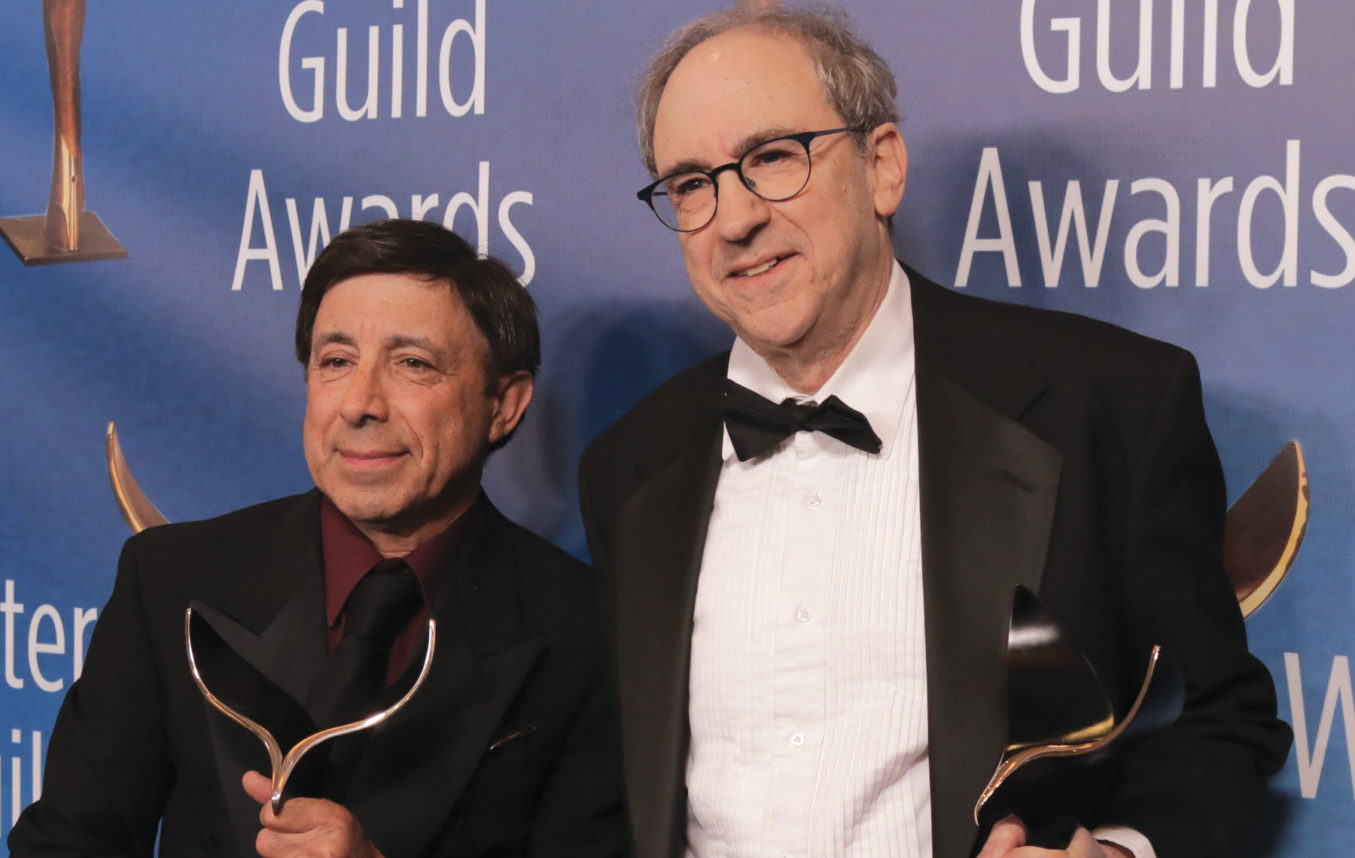
Lowell Ganz and Babaloo Mandel (“Parenthood,” “Splash”) received the Laurel Award for Screenwriting Achievement. It was presented to them by Ron Howard, who made his directorial debut in 1982 with “Night Shift.” That script was written by Ganz and Mandel. 

Speaking with the Journal after the ceremony, Ganz and Mandel offered advice for those hoping to break into the industry. “I’m not one of those people who says, ‘Oh, college, they don’t teach you anything.’ They teach you plenty,” Ganz said. “But nothing teaches you like being around where people are trying to get the work done. That’s where you really learn. So any way you can be around an actual production, that’s what you should do.”

“We were both raised in an environment where it was all about family,” Mandel added. “We were raised by funny people. They all had a great sense of humor, but it was all about love. I had parents [who said], ‘Whatever you want. You have a dream, we’re here.’ We turned [that support] back to our kids, our grandkids.”

Jenji Kohan (“Weeds,” “Orange Is the New Black”) won the Paddy Chayefsky Award for Television Writing Achievement. Kohan couldn’t attend the awards but sent her thanks via video. 

“If I have anything to say to young writers, it’s stop thinking of writing as art; think of it as work.” — Jenji Kohan

“When I was in college, I was on a Quiz Bowl team with people who were much smarter than I,” she said. “Then a question came up that none of the brainiacs could answer: ‘Which illustrious American screenwriter won Academy Awards for the films “Marty,” “The Hospital” and “Network”’? I rang my buzzer and shouted, ‘Paddy Chayefsky,’ because I was a child of Hollywood and I was the pop culture ringer. And we won.”

She added, “Paddy Chayefsky is also responsible for one of my favorite quotes: ‘Artists don’t talk about art, they talk about work.’ If I have anything to say to young writers, it’s stop thinking of writing as art; think of it as work.” 

The concise — and most Jewy — speech of the night came from Jen Kirkman and Sheila Lawrence, who represented the writers of “The Marvelous Mrs. Maisel” in Los Angeles when it received the award for comedy series writing. 

Taking to the stage, the duo exchanged the following acceptance speech:

Kirkman: “Kugel.” 

Lawrence: “Knish.” 

Kirkman: “Brisket.”

Lawrence: “Thank you.”

Other Jewish writers on the show are Kate Fodor, Noah Gardenswartz, Daniel Goldfarb and show creators Amy Sherman-Palladino and Daniel Palladino.  

Here is a list of some of the night’s winners. (MOTs in bold):

Adapted Screenplay: “Can You Ever Forgive Me,” written by Nicole Holofcener and Jeff Whitty. Based on the book by Lee Israel.

Drama Series: “The Americans,” written by Peter Ackerman, Hilary Bettis, Joshua Brand, Joel Fields, Sarah Nolen, Stephen Schiff, Justin Weinberger, Joe Weisberg and Tracey Scott Wilson.

New Series: “Barry,” written by Alec Berg, Duffy Boudreau, Bill Hader, Emily Heller, Liz Sarnoff, Ben Smith and Sarah Solemani.

Episodic Comedy: “Chapter One: ‘Make Your Mark’ ” (“Barry”), written by Alec Berg and Bill Hader.

Tribe Members Take Home Writers Guild Awards Read More »

Celebrating Miami’s South Beach Jewish Community

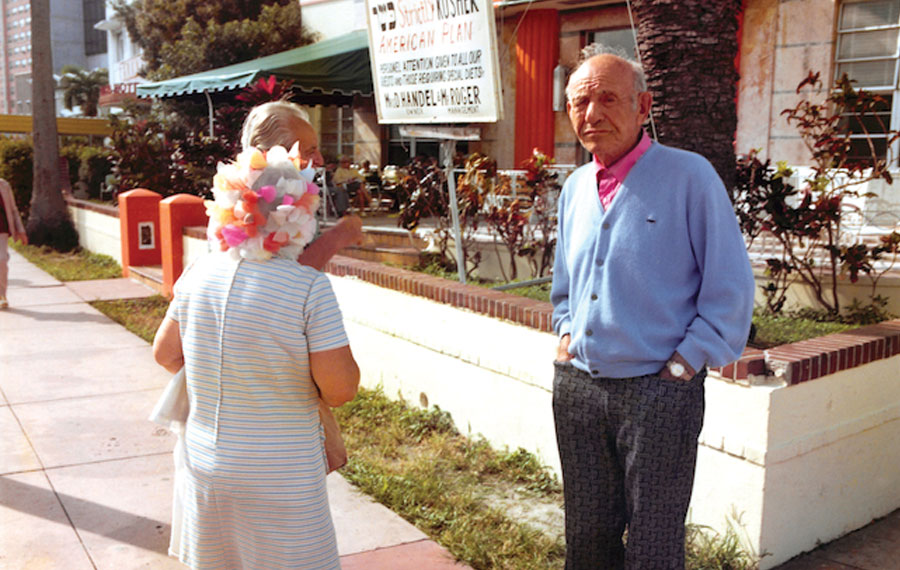
Before it was made famous by the TV hit “Miami Vice,” and its boutique art deco hotels, clubs and chic cafés morphed it into a partygoer’s playground, the South Beach area of Miami Beach, Fla., was a very different place. In the three decades after World War II, South Beach was a largely Jewish community, a seaside mecca for older working-class Northeasterners seeking sunshine and an easier life. 

The Jewish enclave is now gone but it lives on in the imagery of photographers Andy Sweet and Gary Monroe, creators of the Miami Beach Photographic Project. The documentary “The Last Resort” tells their story and serves as a tribute to a vibrant community and an important part of Jewish history.

Filmmakers Dennis Scholl and Kareem Tabsch, Miami residents who specialize in arts subjects, were familiar with the young Jewish photographers and their project and initially intended to make a short documentary about them. But they soon realized they needed to broaden their focus.

“The photographs are so beautiful and captivating. Anyone who sees them gets drawn in, as were we,” Tabsch told the Journal. “And the fact that these two young photographers chose to live and work among the elderly was such an interesting component. Like Gary and Andy, we fell in love with the people they were photographing. This rich, vibrant community had a story and a history that deserved to be told, preserved and celebrated.”

Neither filmmaker is Jewish, but Tabsch, of Lebanese-Cuban heritage, has some Jewish family on his Cuban side, and Scholl, whose wife is Jewish, considers himself “Jewish by osmosis.” They’re well versed in the history of Miami Beach, and South Beach’s Jewish history in particular. 

“South Beach is known for its nightlife and discotheques, and the average age is 27. Just a few decades ago, the average age was 81 and the discotheques were Yiddish theaters.” — Kareem Tabsch

“Now South Beach is known for its nightlife and discotheques, and the average age is 27,” Tabsch said. “Just a few decades ago, the average age was 81 and the discotheques were Yiddish theaters. People have the image of little old ladies sitting on a porch and that was a part of it, but there was a thriving theater scene, too. There was music in the park every day, cinemas that would show Russian films, and touring acts that would play here. It was a large, culturally rich community with 10 to 15 synagogues.”

The film points out that many of the Jews were Holocaust survivors. Sunny Florida was a safe haven for them. “At one point there were 16,000 Holocaust survivors living in South Beach,” Scholl said. “It was a very specific subculture.” 

“These were blue-collar folk who came down here and found their own slice of paradise by living in a community with others who shared a camaraderie and a common language — Yiddish — and for Holocaust survivors, a common experience,” Tabsch said. “They offered each other support and companionship during this era and had a wonderful quality of life for many years.” 

Sweet’s and Monroe’s images reflect that good life, and they’re incorporated in the documentary along with footage from the Florida Moving Image Archives and other sources, along with interviews with Monroe, writer Edna Buchanan and South Beach residents and former residents.

Tabsch and Scholl are currently working on a documentary about Miami-based photographer Bunny Yeager, a model who became a pinup photographer in the 1950s and ’60s. Scholl recently completed work on “Singular,” about jazz vocalist Cecile McLorin Salvant, and “Lifeline,” a portrait of abstract expressionist artist Clyfford Still. 

The theatrical release of “The Last Resort” is their current priority, however. “It’s particularly exciting for us to be showing in Los Angeles,” Tabsch said. “L.A. is one of the largest and most important Jewish communities in the country and many of the subjects of our film had family who made the move to the City of Angels, so this is like another homecoming. While our film is about a specific place and time, I think there’s a universal story in it that will appeal to Angelenos in particular,” he added, citing the “changing demographics, ever-evolving cities and the shared history” common to L.A. and Miami.

After its theatrical run, “The Last Resort” will be released on DVD with deleted scenes and bonus images in late March. It will premiere on Netflix in late spring.


“The Last Resort” opens March 1 at Laemmle Town Center 5 in Encino and Laemmle Music Hall.

Celebrating Miami’s South Beach Jewish Community Read More »

Shulkind Named Head of School at Milken

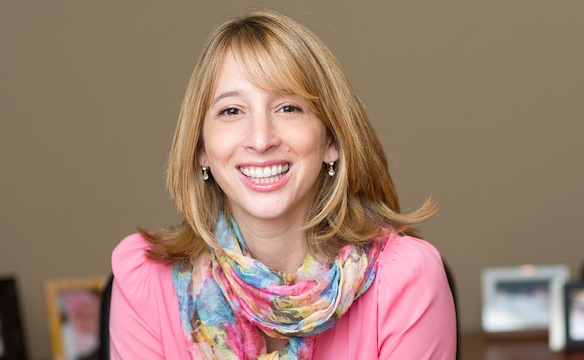
Milken Community Schools has named educator Sarah Shulkind as its new head of school, effective July 1.

Shulkind, 40, previously served as Milken’s middle school principal before becoming head of school at Sinai Temple’s Sinai Akiba Academy in 2012. She succeeds Robert Wexler, who was Milken’s interim head of school after Gary Weisserman left at the end of the 2017-18 school year.

“It is an amazing professional opportunity, and I am really excited to pursue it,” Shulkind told the Journal after the announcement. “I’ve had a chance to meet the board and I am excited to work with the wonderful lay leaders [at Milken].”

Milken Community Schools is a college preparatory day school, with 750 students in grades 7-12. Shulkind will lead both the Saperstein Middle School Campus, which has about 100 students per grade, and the Upper School Campus, which has 135 students per grade.

Shulkind credited her previous stint at Milken for preparing her for her upcoming position. “It made me realize I am a Jewish educator,” she said. “Before then, I worked in public and private education and not in a Jewish environment. It was then I saw the value of what a Jewish school can provide.”

“It is an amazing professional opportunity, and I’m really excited to pursue it.” 

— Sarah Shulkind

Richard Sandler, chair of the Milken head-of-school search committee, said Shulkind was well-equipped to take the reins at the school. “She’s young, she’s very bright, she’s got a great background [and] she’s accomplished a lot,” he said. 

In a Feb. 25 statement to Milken alumni, Sandler and Milken Board of Trustees Chair Lise Applebaum said, “All those involved in the search process were extremely impressed by Dr. Shulkind’s broad experience in educational leadership, including having served right here at Milken Community Schools as our Middle School principal. The Board of Trustees was also very impressed by Dr. Shulkind’s profound understanding of current trends in private school education. … We are confident that under Dr. Shulkind’s creative leadership, our school will continue to meet the challenge of providing a quality education that emphasizes academic excellence, personal growth and a caring community.”

During her seven years at Sinai Akiba Academy, the statement said, Shulkind helped grow the school’s endowment fund, attracted gifts to its programs and capital projects, expanded its J-STEAM (Science, Technology, Engineering, Arts and Mathematics) program and introduced innovative education approaches into its curriculum. 

Shulkind has a bachelor’s degree in English and history from the University of Pennsylvania, where she graduated with Phi Beta Kappa honors; a master’s in education from Harvard University; and a doctorate in education from UCLA.  

Shulkind Named Head of School at Milken Read More »

Gay Father Settles Suit Against Pressman Academy

A gay Israeli father has settled an ongoing lawsuit against Temple Beth Am’s Pressman Academy.

The man filed the suit against the school on Sept. 20, 2017, on behalf of his two daughters, alleging they were discriminated against because he is gay and single. However, on Feb 15, the plaintiff’s attorney, Robert Starr, filed a settlement notice with the Los Angeles Superior Court Judge Dennis Landin. 

Pressman Head of School Erica Rothblum sent the following statement to the Journal: 

“Pressman Academy of Temple Beth Am has resolved a recent lawsuit filed against it by the parent of a former student, by agreeing to allow its insurance company to pay a nominal sum in exchange for a dismissal and release of all claims.  

“The parent, identified in the complaint only as ‘John Doe,’ alleged that his child was discriminated against on the basis that the father is single and gay.  In October 2018, Los Angeles Superior Court Judge Dennis Landin dismissed all of the plaintiff’s allegations of discrimination, together with other allegations in the lawsuit.  The parent has now agreed to dismiss what remains of his lawsuit (two claims of negligence) for a payment of just $4,500, which Pressman Academy characterizes as ‘nuisance value.’ ”

The Journal first reported on this story shortly after the filing, when Doe’s daughters, listed as “Jane Doe 1” and “Jane Doe 2,” were students at Pressman. Their father subsequently removed them from the school at the end of the 2016-17 year.

According to the 47-page lawsuit, students teased Jane Doe 1 by calling her an orphan, pushing a chair into her, circulating rumors about her and, at one point, putting thorns on her pillow.

“Pressman Academy of Temple Beth Am has resolved a recent lawsuit filed against it by the parent of a former student, by agreeing to allow its insurance company to pay a nominal sum in exchange for a dismissal and release of all claims.”

 — Erica Rothblum 

Among the myriad complaints alleging discrimination and bullying in the suit, were claims that teachers continually asked the sisters to bring a “woman figure” to the school’s Mother’s Day celebration. 

In 2016, Jane Doe 1 allegedly told a tutor she was suicidal and that teachers had told John Doe that it would be better if Jane Doe 1 went to another school.  

In filing the suit, John Doe said even though Jane Doe 1 was now at another school, she still “continues to suffer from the discrimination and bullying she experienced at Pressman Academy.”

However, Pressman’s attorneys stated in their court papers that the language
in the complaint was “conclusory” and that the claims were “vague,
ambiguous and uncertain.”

Rothblum added in her statement following the ruling, “Pressman Academy is, and has always been, a school committed to the physical and emotional safety of our students. As a school whose core values include community and kindness, we teach students that we are a ‘telling school’ when it comes to bullying, which means that everyone should feel comfortable to tell a teacher, counselor or administrator if they see or experience something, and those adults will then take prompt and effective action. In addition, our commitment to our values includes a life skills class in our middle school that explicitly teaches about sexuality and identity, as well as an active partnership with Keshet, a national organization that works for full LGBTQ equality and inclusion in Jewish life. We welcome and celebrate an incredibly diverse parent and student population.”

As of press time, attorneys for the plaintiff had not responded to the Journal’s request for comment.  

Gay Father Settles Suit Against Pressman Academy Read More »

A New Tzedakah Model for Just $5

Growing up in Beverlywood, Mahyar Asher Eghbali often witnessed grand gestures of monetary tzedakah, (charity) in his community, particularly in the synagogue. 

“I’ve always believed there has to be a way to give, even if you don’t have a lot of money,” Eghbali, 31, told the Journal. “What if you aren’t that religious and only come to synagogue on the High Holy Days? Tzedakah shouldn’t only happen in synagogue and it shouldn’t have anything to do with how religious, rich or poor, or how young or old you are.” 

So in 2013, together with some of his post-college friends, Eghbali proposed an idea: What if people donated just $5 each month? It sounded doable. That’s why Eghbali, a self-described “entrepreneur at heart,” co-founded Just5, a nonprofit whose fundraising method is all in the name. 

With its subscription-based model, people sign up on the website and register to become members, and $5 is withdrawn from their bank accounts every month. Since its inception, Just5 has since included options for members to donate more, but the minimum monthly commitment remains $5. At the end of the month, Just5’s volunteer board chooses a recipient for the accumulated funds, usually a Jewish individual or family in the community facing economic hardship. 

Once the funds are sent, members receive a newsletter via email or can view social media posts detailing the recipient while keeping them anonymous.  

“That helps each member feel a connection to who they’re helping,” Eghbali said. “From the beginning, I always said that this platform is going to be made and run with true love. This isn’t about writing a big check to put your name out there. None of that matters here. Everyone is equal here. Everyone can make a difference with just $5.” 

Just5 reviews applications through its website and chooses where to allocate funds based on need. Even though it doesn’t give exclusively to Jews, Eghbali said it’s mostly Jews who apply simply based on referrals. Over the years, Just5 has helped people deal with domestic abuse, expensive medical bills and rent struggles. It recently pitched in over $1,500 to support the rebuilding efforts of Wilshire Boulevard Temple’s Camp Hess Kramer and Gindling Hilltop Camp, which were destroyed in the Woolsey fire. 

“Tzedakah shouldn’t only happen in synagogue and it shouldn’t have anything to do with how religious, rich or poor, or how young or old you are.” — Mahyar Asher Eghbali

Just5 is completely run by volunteers and has practically no overhead costs. Any overhead incurred is limited to website maintenance and credit card transaction service fees, which are funded by outside donors. That translates to 100 percent of members’ charged fees going straight to the designated recipients. 

“That type of model was always the goal,” Eghbali said. “My friends and I always just thought that aspect would really make the idea cool.” 

As life takes Eghbali, a licensed pharmacist who runs his own delivery-based pharmacy in downtown Los Angeles, in a different direction, he wants to keep Just5 running well and keep it in the family, too. 

“The truth is, a lot has changed since I started this,” Eghbali said. “I’m married, our third child is on the way and it’s very hard for me to put as much time into the organization as I’d like. So I turned to my brother and he has been amazing.” 

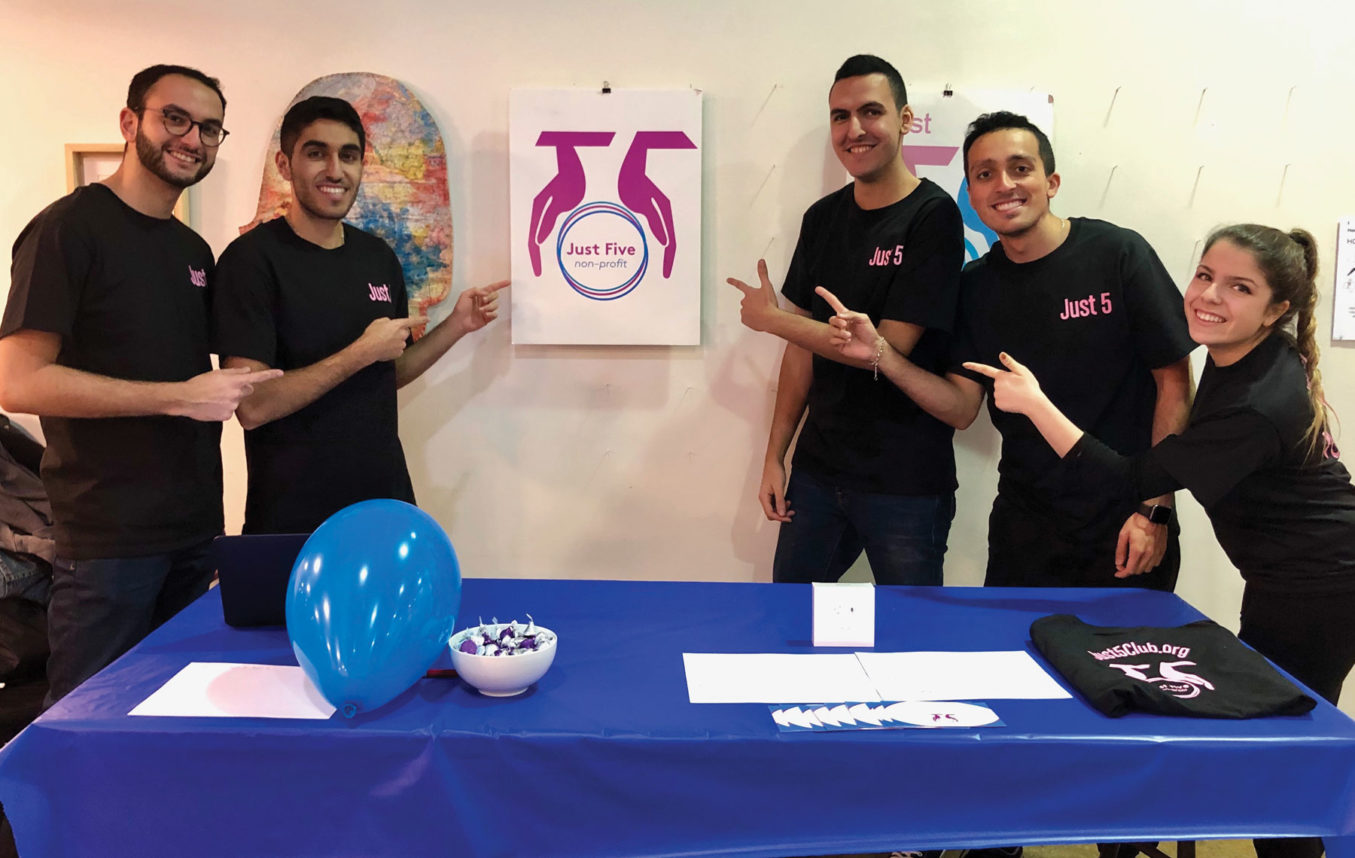
Last year, Mason Eghbali, 20, a student at UCLA, took over for his older brother. He runs Just5 with the help of his good friend and classmate Aaron Shahmaram, 20, and together they’ve injected new life into the organization. They established a new, younger, 12-person board mostly composed of UCLA students. They hold bimonthly meetings at UCLA Hillel in Westwood. 

“For college students, giving back isn’t always a priority,” Mason Eghbali said. “We’re busy much of the time, but charity is an important thing to have on our minds. It’s only $5 that you’re being charged monthly. It’s so easy and simple, so there’s really no excuse, even for college students.” 

To attract new members, they’ve held social events both on campus and in the community, including challah bakes, a Purim gift-basket-making event benefiting low-income families and Shabbat dinners in conjunction with UCLA Hillel, Moishe House, Jewish Awareness Movement (JAM) and GoSephardic, a nonprofit dedicated to inspiring the next generation of Sephardic youth.  

“The events are so much fun and help spread the word,” Eghbali said. “We’re able to get a lot of new members that way.”

Shahmaram added that word of mouth is often the best method to entice new members. “It’s an easy sell,” he said. “I was just talking to a friend of mine on campus recently and realized I hadn’t told him about Just5 yet. I quickly explained it and got him to sign up that day.” 

Just5 currently has more than 360 members. But the new leadership isn’t satisfied. “Right now, we’re mainly helping people in our community,” Eghbali said. “But sometimes we get people reaching out from New York or Florida. It would be really wonderful if this was set up in other places.” 

“I know a lot of people my age who say that one day when I become successful I’m going to give back,” Shahmaram said. “Well, this organization is telling them, why wait? Do it right now. It’s such an easy, effective model and we know that there’s so much room to grow. There’s no reason not to get involved in this and help out the community.” 

Rabbi Aryeh Kaplan, campus director of UCLA’s Hillel, still remembers when Eghbali and Shahmaram sat down for coffee with him last year to explain Just5 and asked to hold a meeting in the sanctuary. Now that Kaplan has seen them in action for about a year, it’s pride he feels when thinking about his students making a difference in the community.  

“With this, you can change someone’s month or year or even life in the community,” Kaplan said. “It’s also just a good use of time. They’re college students, so even though they’re busy, it’s not like a full-time job. This is phenomenal and, in my mind, it’s true leadership. They are examples of true mensches, doing all of the types of things that we want our next generation to do.”

A New Tzedakah Model for Just $5 Read More »

UC Irvine Screens Anti-Israel Film

A recent UC Irvine screening and panel discussion of an anti-Israel film argued that the establishment of the State of Israel resulted in thousands of Palestinians being displaced.

The film, “1948: Creation and Catastrophe,” was hosted by the UC Irvine schools of Humanities, Social Sciences and Social Ecology on Jan. 31, a few days after International Holocaust Remembrance Day. 

“1948” is a 2018 documentary directed and produced by Andy Trimlett and Cal State San Bernardino media studies professor Ahlam Muhtaseb. The documentary features firsthand accounts from Israelis and Palestinians who witnessed the 1948 Palestinian exodus (which Palestinians call Nakba, or “catastrophe”) following the establishment of the State of Israel. 

Among those interviewed in the film are Ben-Gurion University Middle East studies professor Benny Morris and Columbia University Modern Arab studies professor Rashid Khalidi. The film has been screened at various universities, including UCLA and UC Berkeley.

Debra Glazer, the Orange County representative for StandWithUs, attended the UC Irvine event and told the Journal that the film “demonizes and delegitimizes Israel and Israelis and seeks to undermine the basic rights of the Jewish people to self-determination in their ancestral home.”

She added that Israeli Jews are essentially portrayed in the film as “war criminals and monsters, creating ill will and potentially putting Jews and supporters of Israel in danger.” 

S. Harris Pinsky, founder and community leader of the Orange County chapter of the Jewish Republican Alliance, told the Journal that the most disturbing part of the film was the claim that Israeli soldiers told the Palestinians to put their babies in ovens.

“I could hear people around me sobbing and gasping,” Pinsky said. 

“Beverly Pinsky also noted that there should have been space for people to present a different viewpoint than simply that of the filmmakers. ‘There must be the other side,’ she said. ‘If there’s not the other side, your side is worth nothing.’”

Glazer said she was perturbed that the panel, which featured Trimlett and Muhtaseb, did not include anyone who opposed the film. The panel was moderated by UC Irvine Middle Eastern history professor Mark LeVine, whom Glazer said is “an anti-Zionist JVP [Jewish Voice for Peace] professor.” LeVine has openly supported the boycott, divestment and sanctions movement against Israel and wrote in a 2016 Al-Jazeera op-ed that Israel “brazenly cuts off water to the West Bank.” 

Glazer said she had voiced her concerns in an email to the deans of all three UC schools on Jan. 29. Social Sciences Dean Bill Maurer replied to her later that day that UC Irvine has various partnerships with Israel, including the School of Social Sciences’ Olive Tree Initiative that focuses on conflict resolution. Maurer said the screening provided the audience with an opportunity to ask the filmmakers questions.

“Given the nature of the film, we agreed to host it knowing that the filmmakers would attend the screening and answer audience member questions in a moderated discussion,” Maurer said. “Difficult dialogues further the educational mission of the university far better than simply screening a film without discussion, or allowing for the airing of others’ views without debate or question, or the simple utilization of the university as a soapbox.”

However, Pinsky’s wife, Beverly (who isn’t Jewish), told the Journal that only two questions were asked during the question-and-answer session, which she said lasted for only about 20 minutes. “We were expecting a little more interaction and shorter, clearer answers,” she said

Glazer similarly told the Journal that she thought the Q&A session was cut short in a “clumsy and abrupt” fashion. “I really have no idea what happened and there was no explanation,” she said. “Written questions were collected from the audience before the panelists began their discussion, but the moderator never indicated which question would be the last one.”

Glazer also said she was concerned that the film would have a detrimental impact on Jewish and pro-Israel students on campus.

“I think that anti-Israel activists in the audience will certainly spread the film’s message while they take courses on the Mideast conflict,” she said. “It also suggests that academic departments support a deeply one-sided, anti-Israel narrative, which can discourage students who hold a different view from speaking out.”

Beverly Pinsky also noted that there should have been space for people to present a different viewpoint than simply that of the filmmakers. “There must be the other side,” she said. “If there’s not the other side, your side is worth nothing.”

UC Irvine director of media relations Tom Vasich told the Journal in an email, “UC Irvine actively engages its students and the community to foster a civil dialogue on campus. The exercise and protection of freedom of speech and expression are at the core of the university’s mission of teaching, research and public service. Equally so is our commitment to modeling respectful dialogue.”

He noted that the university will be hosting Oren Segal, the director of the Anti-Defamation League’s Center on Extremism, on May 6.

Roz Rothstein, CEO and co-founder of StandWithUs, said in a statement, “Dehumanizing propaganda like the kind we see in this film can be dangerous at a time when anti-Semitism and other forms of hate are rising across the political spectrum. Hosting and promoting this event in an uncritical way is deeply problematic for a university that has publicly committed to implementing the UC Regents’ Principles Against Intolerance.”

UC Irvine Screens Anti-Israel Film Read More »