fbpx

December 19, 2018

Anna Shternshis: A Grammy Nomination for ‘Yiddish Glory’

Included in this year’s Grammy Award nominations for World Music is “Yiddish Glory: The Lost Songs of WWII” (Six Degrees Records). It’s a collection of songs that haven’t been heard since 1947. By turns mournful, angry, defiant, brutal, tender, lovelorn and mocking, all the songs are written and sung in Yiddish with an unvarnished directness and honesty. 

The Journal caught up with Anna Shternshis, the Al and Malka Green Associate Professor in Yiddish Language and Literature and the Director of the Anne Tanenbaum Centre for Jewish Studies at the University of Toronto, who discovered the songs and, with musician Psoy Korolenko and producer Dan Rosenberg, compiled and created the album. 

Jewish Journal: How did the album come about? 

Anna Shternshis: It started as an academic project. I was working, and [am] still working, on a book on Yiddish culture in the Soviet Union during the Holocaust and [World War II], and I came across this document about a collection that ethnomusicologist Moisei Beregovski put together during the war of songs by refugees, soldiers and Soviet Jewish evacuees singing in Yiddish about the war, during the war. 

None of the songs were actually known in the world of Jewish music. We didn’t know that Soviet Jews and Polish Jews in the Soviet Union at the time sang in Yiddish. It was very different from what we associate from Holocaust music. For example, they’re very pro-Stalin and very graphically anti-Hitler. They’re also amateur; just everyday people singing these kinds of songs. I thought it would be really interesting to bring a musician in to help me with at least presenting this material in an academic context. I invited Psoy Korolenko, who is Russian-born and performs in Russian and Yiddish and who I knew was familiar with Soviet culture of the time. With the help of Dan Rosenberg, the producer, we got together a band. It was meant to be an educational tool but it grew into an album. 

JJ: Before you came across them, did you have any idea the songs existed?

AS: Beregovski was an important ethnomusicologist. When he was arrested by Stalin in 1950, they confiscated this archive and when Beregovski came out of jail in 1956, it did not come back to him. The consensus was this: During the war, these songs were collected. After the war, they were destroyed when they arrested Beregovski. 

In the late ’90s, a librarian in the Ukrainian national library started looking through material that was uncatalogued. In the ’40s, a lot of people were arrested by Stalin’s government, a lot of documents were confiscated. They had to put them somewhere. We think now they first put them in a secret police archive or secret police basement and then there was not enough space, so they quietly moved them to the Ukrainian national library in the ’70s.  At the end of the ’90s, the librarians were allowed to open them. I only came across them because I was looking for stuff in Kiev. 

JJ: What surprised you most as you went through them?

AS: That I didn’t recognize a single one. I kept thinking, “How come I don’t know any of them?” I expected them to be either just Yiddish versions of Soviet songs or songs lamenting Jewish life. These songs were talking about politics. There’s one song that talks about how Hitler wants to invade the Soviet Union because he wants to get his hands on the resources of Ukraine — on coal and oil. I did not expect that. And the crazy thing is, the area they’re singing about? It’s still in the news today. And, ironically, similar sides are fighting. 

Another thing I didn’t expect was how much humor was in this music. It was very crude, very physical — toilet humor about Hitler. A lot of songs compared Hitler to Haman. There’s one song called “Purim Gifts For Hitler.” For people more familiar with Holocaust music of the ghettos, that’s not a big deal. But Soviet Jews were quite divorced from their Jewish traditions and Purim was not celebrated in the Soviet Union since the ’20s, so why would it come back? Finally, there were a lot of songs written by children. It’s so rare that we get to hear the genuine voices of people living through a war. We rely on journalists or historians or advocates to tell their stories, but here it’s from 10-year-olds or 5-year-olds. That was very moving.

JJ: I think many people will be surprised at the defiance heard in these songs. 

AS: The songs are very adamant about not being led like sheep to slaughter. They even used that language. 

JJ: What do the songs have to say to modern audiences?

AS: Unfortunately, wars and violence and genocide continue today. The most vulnerable are young kids and the elderly. What people can learn from this project is children, who are not educated, or women, who are not educated, how they make sense of suffering, how they suffer so deeply, and how they use music in order to tell us a story they hope we’ll remember. 

These songs did not end up in memory. People say, ‘During the war, there was no Yiddish. We didn’t sing in Yiddish.’ This material is a miracle that survived that did not end up in memory. History and memory tell different stories. 

JJ: Why didn’t people remember?

AS: You go through this war. Then, 1945 comes. Stalin’s policy says if a Jew survived the war and the German occupation it was because they collaborated with the German army so they’re traitors and they need to go to jail. These poor survivors, they’re worried about jail. So what do they do? They lied. Then comes Stalinist anti-Semitism. [Nikita] Khrushchev was not a friend of the Jews, exactly. Then comes [Leonid] Brezhnev and all the tsuris there. So they start to think about what you want to share, what you want to talk about. The Yiddish songs you sang in the war are not going to be very high on your list. We all make choices.  

JJ: What can we learn from these songs?

AS: I’m a university professor. My goal is always to educate. This is my way of telling the story of what happened to Soviet Jews during WWII. When people listen to this album, I want them to want learn more about what happened to Jews during the Holocaust. I want them to think more about what happens to people during a war. I also want them to enjoy this beautiful music.

Anna Shternshis: A Grammy Nomination for ‘Yiddish Glory’ Read More »

Recycle Your 2018 Wall Calendars Into Stylish Envelopes

When the new year arrives and your old wall calendars become obsolete, it seems like such a waste to just throw them out, especially when the printed artwork is of high quality. One way to breathe new life into the calendar pages is to turn them into decorative envelopes. I have a stack of old Andy Warhol calendars that I’ve saved for crafting purposes, and the envelopes I’ve made with them are like miniature works of art. Best of all, it takes mere seconds to assemble them, so it won’t take up all of 2019.

What you’ll need:
Old calendar pages
Ruler
Scissors
Glue stick

1. Cut a calendar page into a square using a ruler and scissors. I cut up my pages into nine-inch squares.

2. With the printed design face down, position the paper at an angle so it is like a diamond. Fold the left and right corners in so they overlap. Firmly crease the paper.

3. Fold the bottom corner up so it overlaps over the left and right corners. Glue all the edges with a glue stick. Fold the top corner down to close the envelope.


Jonathan Fong is the author of “Flowers That Wow” and “Parties That Wow,” and host of “Style With a Smile” on YouTube. You can see more of his do-it-yourself projects at jonathanfongstyle.com.

Recycle Your 2018 Wall Calendars Into Stylish Envelopes Read More »

Obituaries: Dec. 21, 2018

Stephen Victor Abrams died Nov. 14 at 67. Survived by wife Iris; son Marc (Joelle) Abrams; 3 grandchildren; brother-in-law, Charles (Joyce) Kravetz. Mount Sinai 

Sidney Baklin died Oct. 30 at 91. Survived by daughters Ruth (Jim) Parker, Marla (Craig Hoffman), Andrea; 4 grandchildren; 9 great-grandchildren. Mount Sinai 

Jonathan D. Blake died Nov. 11 at 69. Survived by wife Janet; sons Jeremy Michael, Benjamin Jacob. Mount Sinai 

Steven Broidy died Nov. 4 at 80. Survived by wife Caron; son Marc. Hillside

Joseph D’Agostino died Nov. 11 at 93. Survived by wife Lea; sisters Loraine, Marian. Hillside

Anne Davine died Nov. 5 at 102. Survived by son, Jeff (Julie); daughters Helaine (Sheldon) Wolk, Linda, Jill; 5 grandchildren; 5 great-grandchildren. Mount Sinai 

Harmon Dix died Nov. 4 at 97. Survived by daughters Candace (Norman) Blaz, Teri (Chip) Blu; 3 grandchildren; 7 great- grandchildren; sisters Shirley Joy Birnbaum, Mae Mona Lichtig. Mount Sinai 

Linda Faden died Nov. 10 at 72. Survived by daughter Sara (Robert Norman); son Aaron (Robin); 4 grandchildren; 1 great-grandchild. Mount Sinai 

Arnold “Arnie” Ganz died Nov. 15 at 83. Survived by wife Sandra; daughter Ronda Levine; 3 grandchildren; 6 great-grandchildren; sisters Rita Castro, Harriet Larsen. Mount Sinai 

Phyllis Selma Greenwald died Nov. 8 at 96. Survived by sons Alex, Mark (Renee); 5 grandchildren; 10 great-grandchildren. Mount Sinai 

William Hellman died Nov. 9 at 98. Survived by sons Jeffrey, David (Susan); daughters Barbara, Laura; 4 grandchildren. Hillside

Eli Isenberg died Nov. 9 at 92. Survived by daughters Elyse (Stephen), Nadine; son Brad (Cecelia); 6 grandchildren; 3 great-grandchildren. Hillside

Susann Kay died Nov. 8 at 61. Survived by husband Alex; sons Daniel (Ralph) Rappaport, Michael (Kelly) Rappaport; 3 grandchildren; brother Jack Wolpa. Mount Sinai 

Irene Krepack died Nov. 5 at 92. Survived by Alan (Celeste); 6 grandchildren. Hillside

Betty Linder died Nov. 6 at 94. Survived by son Ken (Melinda); 2 grandchildren; sister Rita. Hillside

Giovanna Macchia died Nov. 11 at 54. Survived by husband Willie; daughter Isabella; son Elijah; mother Sandra; sisters Anina, Ruth, Mary Rachel. Hillside 

Arnold Marks died Nov. 6 at 77. Survived by wife Janice; son Garrett; sister Susan Shenfeld. Eden Cemetery

Eileen Selma Meskin died Nov. 8 at 91. Survived by daughter Suzy (Stephen) Bookbinder; sons Larry, Joel (Alayne), Mark (Illana); 11 grandchildren; 3 great-grandchildren; sister-in-law, Freida. Mount Sinai 

Eugene Monkarsh died Nov. 5 at 87. Survived by wife Fandra; daughters Harlee (Alan) Gasmer, Lori Monkarsh; sons Larry (Glenda), Jason (Lauren), Josh (Alexandra); 14 grandchildren; sisters Sheila (Marty) Lasky, Bonnie (Roger) Brown; brother Jerry (Joy). Mount Sinai 

Claire Mullen died Nov. 4 at 98. Survived by daughters Linda (Gilbert) Marriott, Normie (Melvin) Gagerman; son Bruce; 7 grandchildren; 4 great grandchildren. Mount Sinai 

Irwin Parker died Nov. 8 at 96. Survived by son Michael (Mitzie); 2 grandchildren. Hillside

Joan Phyllis Shefflin died Oct. 14 at 82. Survived by daughters Rebecca (Matthew) Bailey, Stacy; sons Kenny, Jeffrey; 2 grandchildren; brother Richard “Dickey” Lowitz. Mount Sinai 

Isadore S. Socransky died Nov. 11 at 86. Survived by daughters Lisa (Kelly) Socransky-Austin, Andrea; son Alex; 1 grandchild. Mount Sinai 

Martin “Marty” Stewart died Oct. 29 at 95. Survived by wife Selma; daughter Andrea (Russ) Diamond; sons Steven (Audrea), Perry (Barbara); 8 grandchildren; 6 great-grandchildren. Mount Sinai 

Gilbert Stone died Nov. 13 at 78. Survived by wife Karen; son Eric (Barbara); 1 grandchild; sister Anita. Hillside

Seymour Wayne died Oct. 29 at 94. Survived by wife Judee; daughters Kara (Anita Rellas), Mila (Todd) Wayne August, Cindy Gruberger; 7 grandchildren. Mount Sinai 

Obituaries: Dec. 21, 2018 Read More »

What’s Happening: ‘Grease’, A Very Jewish Xmas, Matzoball

FRI DEC 21

‘Grease’ Sing-Along
It’s the one that you want — the one that you really want: After services at Temple Isaiah, enjoy a dinner of Chinese food accompanied by a community sing-along of tunes from the John Travolta, Olivia Newton-John film “Grease,” marking its 40th anniversary. Temple members are invited to attend in 1950s-era costumes. 5:45 p.m. pre-oneg. 6:15 p.m. Shabbat services. Free, RSVP required. Temple Isaiah, 10345 W. Pico Blvd. (310) 277-2772.

Chinese Nosh. What Else?
Recalling the favorite food of many Jews in this month, Kol Tikvah announces it has the good “fortune” to serve Chinese-inspired Shabbat appetizers for all who “wok” to the synagogue. 5:45 p.m. appetizers and socializing; 6:30 p.m. musical Kabbalat Shabbat services, led by Cantor Noa Shaashua. Kol Tikvah, 20400 Ventura
Blvd., Woodland Hills. (818) 348-0670.

Nefesh

Nefesh Shabbat
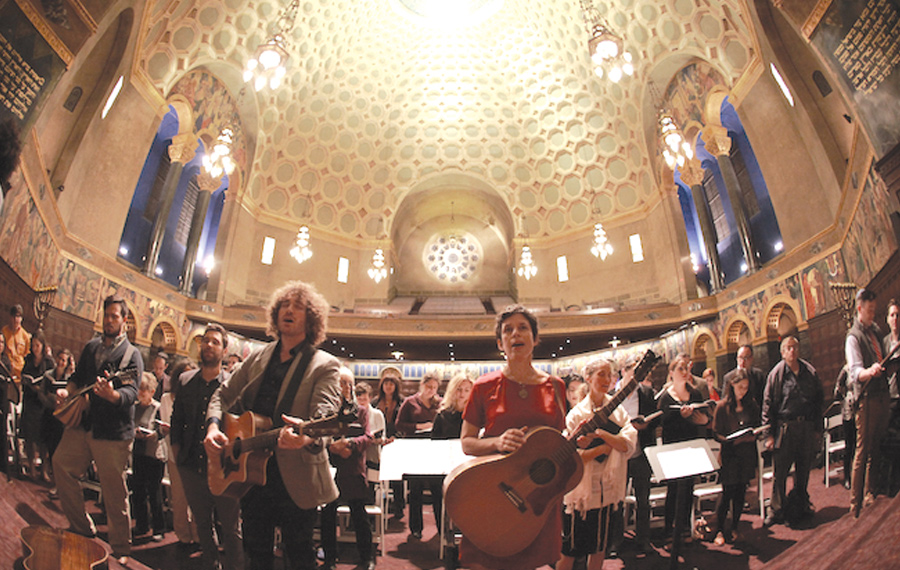
Strike up the (Nefesh) Band for an entertaining Shabbat service at Wilshire Boulevard Temple. Every first and third Friday night of the month, Rabbi Susan Goldberg is joined by the Nefesh musicians. 6:30 p.m. potluck meal; 7:30 p.m. services.  free. Wilshire Boulevard Temple, 3663 Wilshire Blvd., Los Angeles. (213) 388-2401.  

Imam Speaks at VBS
To commemorate the fourth yahrzeit of Rabbi Harold M. Schulweis, Imam
Jihad Turk is the guest speaker after services and dinner at Valley Beth Shalom; on Dec. 22, Rev. Mark Whitlock is the guest lecturer on Shabbat at lunch after services. Turk is the founding president of the groundbreaking Bayan Claremont Islamic Graduate School. An Orange County pastor, Whitlock is director of community initiatives at USC’s Center for Religion and Civic Culture. VBS hosts are Rabbi Ed Feinstein and Malkah Schulweis. Dec. 21, 5 p.m. Erev Shabbat minyan. 6 p.m. dinner, by reservation only. $42. 7:45 p.m.
dessert and lecture, open to the public. Free. Dec. 22, 9:45 a.m. services. Noon, Kiddush lunch. 12:15 p.m. guest lecture. Open to the public. Free. Valley Beth Shalom, 15739 Ventura Blvd., Encino. Register for dinner at (818) 530-4009.

SAT DEC 22

Celebrating Winter Solstice
The Living Room returns to the Pico Union Project with a five-hour winter solstice celebration featuring new collaborators and live music. Deanna’s Pop-Up Shul is an interactive experimental service featuring Deanna Neil exploring Jewish texts with musical interludes. Food by Zavi’s kitchen; live music by Formerly Alien, Abby Litman and Jason Chu. 5-7 p.m. Deanna’s Pop-Up Shul. 8-8:30 p.m. Havdalah. 8:30-11 p.m. live music, $15. The Pico Union Project, 1153 Valencia St., Los Angeles. (213) 915-0084.

The Moshav Band

Moshav at the Mint
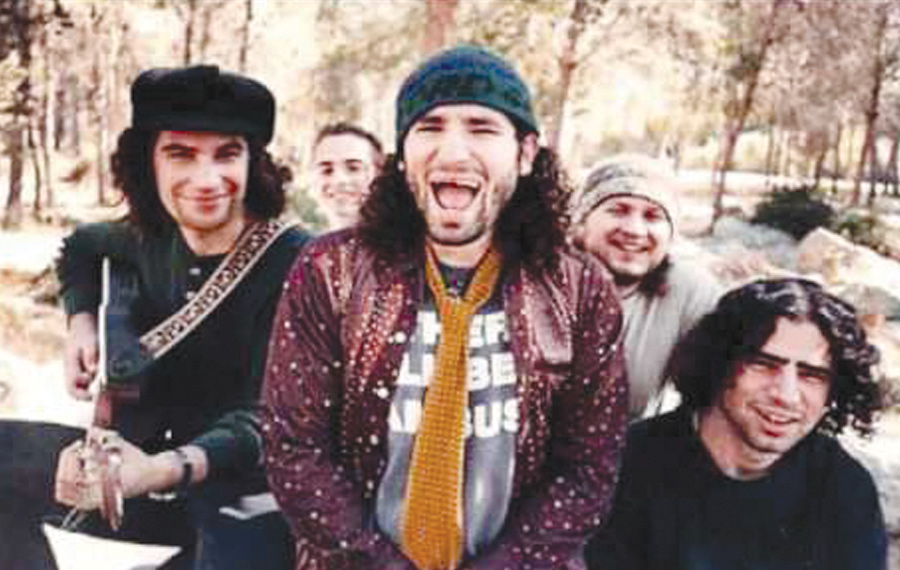
American-Israeli rock group The Moshav Band, which recently released its Shlomo Carlebach-influenced “Shabbat Vol. 1,” brings its act to The Mint on the Saturday before Christmas. Moshav was “discovered” in the ’90s by college students who raised money to bring the band to the U.S. for a tour of college campuses. Moshav since has made Los Angeles its base. Also: reggae-fusion band Gidon. 7 p.m. Gideon, 8 p.m. Moshov performance. 18 and older.  $15 for 21 and older; $20 for younger than 21. The Mint, 6010 W. Pico Blvd. (323) 954-9400.  

SUN DEC 23

“A Very Jewish Chinese Christmas”
“Once a year, on the eve of Christmas, families and friends gather by the warmth of the wok for a very special meal. Such is the duty of the Jew on Christmas.” In that spirit,  the Upright Citizens Brigade Theatre presents “A Very Jewish Chinese Christmas,” with a cast that includes Jonny Svarzbein, Laura Siegel, Heather Sundell and others. 11 p.m. $7. UCB Theatre, 5919 Franklin Ave., Los Angeles. (323) 908-8702.

Dinner for the Underprivileged
Calling all volunteers — children and adults — to fill 10 shifts (some are age-appropriate) over two days to set up and serve Temple Israel of Hollywood’s Christmas dinner at the Hollywood United Methodist Church. Dec. 22, three shifts are open for all ages, starting at 10 a.m. Additional volunteer opportunities for ages 13 and older on Dec. 25; shifts begin at 6:30 a.m. Hollywood United Methodist Church, 6817 Franklin Ave., Hollywood. Temple Israel of Hollywood, 7300 Hollywood Blvd., Los Angeles. (323) 876-8330. Register to volunteer here.

MON DEC 24

Jokes for Jews
Delivering “Jokes for Jews — Standup Comedy for People Who Feel Passed Over,” Flappers Comedy Club showcases celebrity comedians on Make ’Em Laugh Monday, which coincides this year with “Oy Vey, It’s Christmas Eve.” Joshua Snyder, Adam Feuerberg, Amanda Cohen and Adam Warshaw perform in the Main Room. 8 p.m. $20. Flappers Comedy Club and Restaurant, 102 E. Magnolia Blvd., Burbank. (818) 845-9721.

Merry Erev Christmas
For the seventh year, Elon Gold presents “Merry Erev Christmas” at the Laugh Factory with a lineup of performers. 7:30 and 9:45 p.m. $85 VIP, priority $60, general admission $40. The Laugh Factory, 8001 Sunset Blvd., Los Angeles. (323) 656-1336.

Christmas Eve at Laemmle
It has become a Southern California Jewish tradition over the past decade to enjoy a screening of “Fiddler on the Roof” at one of the eight Laemmle theaters, where audiences are urged to sing along with familiar tunes, with a conversation to follow. Prizes will be awarded. Guests are encouraged to arrive in costume. Town Center, 4:30 p.m. and 7:30 p.m. Town Center; Ahrya Fine Arts; Playhouse; Glendale; Royal; NoHo7; Isaac Wade,
Monica Film Center; Arthur Benjamin, Claremont 5. 7:30 p.m. $18. (310) 478-1041.

Cathy Ladman

A Time to Laugh
On Christmas Eve, actress Cathy Ladman (“Modern Family,” “Tonight Show”) headlines Comedy Night at Shomrei Torah Synagogue. She will be joined by Marty Ross from The Improv, Susan Kolinsky (“Curb Your Enthusiasm”) and Steve Bluestein, seen at Caesars Palace and the Riviera Hotel. 7:30 p.m., doors open. 8 p.m., show. $50, front row. $36, general admission, $40 at the door. Shomrei Torah Synagogue, 7353 Valley Circle Blvd., West Hills. (818) 854-7650. To reserve tables, contact Ron Freeman at (818) 703-6003.

The Matzoball

Matzoball at the Argyle
MatzoBall, a nationally prominent Jewish singles event for three decades, launches on Christmas Eve what USA Today has called “the No. 1 holiday party of the year.” Hosted by The Argyle Hollywood, MatzoBall is expected to sell out. 9 p.m.-3 a.m. $40-$50. The Argyle Hollywood, 1600 Argyle Ave., Los Angeles. (323) 461-1600.

The Tribal Ball
Touted as the largest Jewish singles event in Los Angeles for 11 consecutive years, The Tribal Ball convenes in a new venue, Poppy, known as an exclusive nightclub. Jet-setters are among the anticipated crowd of nearly 1,000. Formerly known as LetMyPeopleGo.com’s “The Ball,” its stated goal is to “return class, genteel conduct, style and refinement to Christmas Eve Jewish parties.” Featuring two DJs. 9 p.m.-2 a.m. $35-$500. Poppy, 755 N. La Cienega Blvd., Los Angeles. (310) 855-7185.

TUE DEC 25

“On the Basis of Sex”
After a year in which the biographical account of Supreme Court Justice Ruth Bader Ginsburg’s career, “Notorious RBG,” won acclaim, Christmas Day brings the release of a feature film about her life, “On the Basis of Sex.” Academy Award-nominee Felicity Jones (“The Theory of Everything”) plays the lead role in a story that traces Ginsburg’s struggle for equal rights and her eventual rise to the Supreme Court. The cast includes Armie Hammer (“Call Me by Your Name”) and Justin Theroux (“The Girl on the Train”). In wide release. focusfeatures.com/on-the-basis-of-sex. Arclight Hollywood, 6360 Sunset Blvd. and the Landmark, 10880 Pico Vlcd., West L.A.

What’s Happening: ‘Grease’, A Very Jewish Xmas, Matzoball Read More »

Having a December Dilemma Is Better Than December Delusions

Editor’s note: This is an online exclusive piece.

Pop quiz: What do “White Christmas,” “Rudolph the Red Nosed Reindeer,” “Let It Snow,” “Silver Bells,” and “The Christmas Song” (Chestnuts Roasting on an Open Fire), all have in common? Jews wrote or popularized all of them: Irving Berlin, Johnny Marks, Sammy Cahn and Jule Styne, Jay Livingston and Ray Evans, and Mel Torme.

In the hands of a brilliant novelist like Philip Roth in “Operation Shylock,” this fact becomes Jews’ revenge on “the goyim.”

“God gave Moses the 10 Commandments,” Roth’s narrator observes, “and He gave to Irving Berlin ‘Easter Parade’ and ‘White Christmas.’ The two holidays that celebrate the divinity of Christ – the divinity that’s the very heart of the Jewish rejection of Christianity – and what does Irving Berlin do? Easter he turns into a fashion show and Christmas into a holiday about snow.”

In the hands of anti-Semites, this fact exposes “THE Jews” as Greedy Grinchsteins, who “stole” Christmas, turning this religious holiday into what the historian Daniel Boorstin called a “festival of consumption.” Blaming “THE Jews,” as if we act as one, is bigoted. Moreover, the watering down of Christmas in the West and religion in America goes far beyond the influence of one group – or a half-dozen talented song-smiths.

The story of how some Jews helped Americanize Christmas reveals three bigger phenomena: How Jews helped modernize America; How America Americanized Jews; and, ultimately, How America works – and should work.

Usually, although we chronicle individual Jewish successes in detail, “American Jewry” is painted with broad brush strokes. While every American Jewish superstar moves and shakes, American Jews collectively are treated as objects, not subjects, passively being Americanized, assimilated, wooed, seduced – even intermarriage is discussed as a force, not an individual expression of love.

Acknowledging American Jews’ creativity challenges us to retell American Jewish history with more active verbs, noting not just how American changed Jewry, but how American Jews helped America grow. It was a match made in the New World’s fields of dreams, gardens of tolerance and plains of plenty — which America’s unique political culture nurtured.

The American Jewish experience, like all immigrant experiences, was a two-way process. American Jews helped America become more diverse, open, cosmopolitan, while America helped Jews become more comfortable, confident and culturally accommodating.

But the Jews weren’t just another immigrant group. There was a particular click between American and Jewish culture. Many of the People of the Book came with skills that helped America become Facebook Nation. The Eastern European Jewish experience cultivated a wordiness and a worldliness that suited modern America. Far beyond “White Christmas,” the result was an explosion of creativity spawned by this soothing flowerbed of rights, freedoms, opportunities.

Simultaneously, America “Americanized” Jews. Most American Jews did to Judaism what the Jewish songwriters did to Christmas. They exiled God and any heavy-handedness from their cavernous suburban temples. They made the holidays user-friendly and red-white-and-blue not just blue-and-white. At many Passover seders, Martin Luther King Jr. now competes with Moses, Betty Friedan with Miriam; the holiday of Jewish national liberation has become the holiday of universal civil rights.

Amid this December Delusion, all holidays, especially Christmas and Hanukkah, have been so dumbed down and so politically corrected, that, in late December, people say “Happy Holidays.” Everyone knows this national day off celebrates Christmas, marking Jesus’ birth in the desert of Bethlehem, not Rudolph the big-nosed, er, red-nosed reindeer roasting chestnuts in snow-covered New York.

America remains a majority Christian nation. Three-quarters of the population has the right to celebrate its holidays in authentic ways in the public square. I prefer a culture of Christmas trees and Hanukkah menorahs proliferating in December, broadcasting the excitement and meaning of various Americans experiences when preserving ancient traditions. It beats a sterilized town square, with generic snowflakes abounding. That nakedness evokes the stripped-down modern, lonely Westerner; Emile Durkheim’s lost, abandoned, sufferers of “anomie.”

Instead of spreading December Delusions that we’re all the same, let’s confront our December Dilemmas. The majority should worry about how the minority feels. Minorities should enjoy watching the majority celebrate publicly and privately.

Let’s debate, yet again, how we strike that all-American balance, granting everyone equal political rights and expansive liberties. We should beorging politics that includes us all, while nurturing private spaces and public respect for Jews who want to remain Jewish (ethnically and religiously), Christians who want to remain Christian and Americans perpetuating many faiths, ethnicities, nationalities and identities. Let’s appreciate the spiritual grounding, cultural sparks and frameworks for meaning these traditions provide. They propel us beyond the generic pop culture of Hollywood, Madison Avenue and Silicon Valley that so mass produce and generalize experiences, that our personal voices, our more intimate communities, our most interesting selves, our richest traditions, aren’t banned — but simply wither away.


Recently designated one of Algemeiner’s J-100, one of the top 100 people “positively influencing Jewish life,” Gil Troy is the author of the newly-released The Zionist Ideas, an update and expansion of Arthur Hertzberg’s classic anthology The Zionist Idea, published by the Jewish Publication Society. A Distinguished Scholar of North American History at McGill University,he is the author of ten books on American History, including The Age of Clinton: America in the 1990s.   

Having a December Dilemma Is Better Than December Delusions Read More »

Rabbi Ponders Questions of Life and Death

A rabbi is called on to perform many roles in the lives of his congregants, but surely the most challenging is comforting others in the face of death. For Rabbi Benjamin Blech, however, death suddenly became an urgent and highly intimate matter.

“My wake-up call came with the medical diagnosis that I have a fatal disease for which at present there is no cure,” he writes in the opening pages of “Hope, Not Fear: Changing the Way We View Death” (Rowman & Littlefield). “Like everyone else, I’m going to die — but for me it will probably be sooner rather than later.”

Rabbi Blech is a professor of Talmud at Yeshiva University and a recipient of the American Educator of the Year Award. He writes a weekly column for Aish.com, contributes to The New York Times and Newsweek, and is the author of 11 books, including the Times best-seller “Sistine Secrets: Michelangelo’s Forbidden Messages in the Heart of the Vatican.”

Blech draws deeply on the Jewish mystical tradition in his search for answers to the mystery of death. But he is courageous enough to reveal his own moments of dread, and sometimes he performs the remarkable feat of doing so with a sharp sense of humor. After learning that he was suffering from a disease called cardiac amyloidosis, for example, Blech did exactly what most of us would do.

“I rushed home to Google what the internet had to teach me about my illness,” he confides. “Big mistake.”

Blech encourages his readers to be courageous, too. “It is not morbid to tell yourself, ‘I am going to die,’” he writes. “It is liberating. It frees you from being enslaved to what in your heart you know doesn’t really matter. … It prevents you from wasting your life while you spend your days preparing to live.”

Some readers will be surprised at Blech’s ability to extract useful lessons from various artifacts of American popular culture, ranging from Mitch Albom’s book “The Five People You Meet in Heaven” to “The Good Place,” a network television comedy starring Ted Danson.

But “Hope, Not Fear” is deeply rooted in the author’s mastery of, and reverence for, Torah and Talmud. While Blech quotes Woody Allen, who once quipped that he was not afraid to die but “I just don’t want to be there when it happens,” Blech finds more comfort in the talmudic account of Rabbi Eliezer, who commanded his followers to “repent one day before your death.” When they pointed out that it was impossible to know when the day of repentance had finally arrived, he responded, “For that reason, we must live every day as though it were our last.”

“Which is why, after much thought,” Blech said, “I now believe that my diagnosis of death, with its message of warning, in its own strange way carries with it unspoken blessings.”

Even so, Blech reminds his readers that the Bible itself does not actually answer the question that must have occurred to the very first human beings who walked the earth: What happens when we die? “The questions are limited only by our imagination,” he writes. “Surely a book written by God, or at the very least inspired by Him, should offer the answers. Remarkably, and sad to say, it doesn’t — at least not clearly, other than by way of hints that might be said to imply hidden meanings.” 

“Blech draws deeply on the Jewish mystical tradition in his search for answers to the mystery of death. But he is courageous enough to reveal his own moments of dread, and sometimes he performs the remarkable feat of doing so with a sharp sense of humor. “

But he offers a pious explanation for the omissions. “That’s because there has always been the idea of an orally transmitted Torah that accompanied the written word,” he writes. “That’s why God was content to simply hand over a book; He made sure to teach its true meaning to Moses so that through the oral tradition, the correct and full import of every text would be preserved.”

Thus does Blech validate his most important source, the teachings and commentaries of rabbis and sages. To illustrate the point, he recalls a visit that he made in the company of two other rabbis to the home of Ernest Hemingway, where the great writer praised Judaism as “a religion of life” and Blech followed up with a lesson about the laws that prevent Kohanim, the descendants of the temple priests, from making contact with the dead “so that they spend their time, their efforts, their concerns, and their energy with the living.” And Blech reminds us that Hemingway himself took his own life: “[T]ragically, the biblical ideal to ‘choose life’ that he praised in our meeting could not guide him in the end.”

While Blech’s book is uplifting and life-affirming, he does not flinch from asking (and answering) the hardest questions of all. His strong religious belief prompts him to argue that there is a heaven and a hell, places where rewards and punishments are meted out to the souls of the dead, even though the Tanakh does not explicitly mention them. “It is a theological problem that can have only one answer,” he insists. “We have no choice but to conclude that the survival of the soul after death and its judgment must be assumed if we are to accept the Bible’s validity. … Yes, even a God of love punishes.” Otherwise, he concedes, “the Bible would be a lie, deluding us with a distorted picture of the consequences of our actions.”

For all the human compassion and modern wisdom that Blech embraces, “Hope, Not Fear” is ultimately a confession of faith rather than a glib self-help book. “My faith has taught me to appreciate life and to be prepared for death,” he affirms. “And to be wise enough to share the conviction of the Hasidic rabbi who, when asked on his deathbed how he was feeling, responded ‘Almost well.’”


Jonathan Kirsch, author and publishing attorney, is the book editor of the Jewish Journal.

Rabbi Ponders Questions of Life and Death Read More »

Felicity Jones on Playing and Meeting Ruth Bader Ginsburg

Portraying a real person adds a layer of difficulty to a performance for an actor, especially when the subject is alive to critique it. And playing iconic Supreme Court Justice Ruth Bader Ginsburg in the film “On the Basis of Sex” was quite intimidating for British actress Felicity Jones.

“It’s a huge responsibility and I definitely felt that going into it,” Jones, 35, told the Journal. “It’s about how do you do justice to the justice?” 

When it came to meeting the 85-year-old Ginsburg (nicknamed the Notorious RBG), “I was petrified,” Jones said. “This is someone I deeply admired and respected. But when we went to meet her in her chambers in Washington, D.C., she was incredibly welcoming. [It gave me insight into] understanding the woman behind the icon. What would it take to get to the position she’s in today? What were those struggles? What were those triumphs? My way into it was to become obsessive about the details, explore every part of Justice Ginsburg’s life, to understand her motivations.”

Jones prepared by watching video footage, including home movies, and listening to audio of Ginsburg arguing cases in court. “I spent hours obsessing over the minutiae of her accent and vowel sounds, the tone and pitch,” Jones said. “Her voice is such a testament to the power she’s been able to have in the world. She fought injustice on every single front. And the way that she managed to harness her
anger and frustration and turn it into something positive is a testament to her use of language and her ability to get her voice heard.”

Felicity Jones stars as Ruth Bader Ginsburg in Mimi Leder’s ON THE BASIS OF SEX, a Focus Features release.

The actress received the ultimate validation when Ginsburg gave her performance a thumbs-up. “We email each other and she wrote to tell me how pleased she was with the work,” Jone said. “It’s the best review I could possibly get. If there’s one person whose opinion I cared about, it was hers.”

Directed by Mimi Leder, “On the Basis of Sex” has a script by Daniel Stiepleman, a nephew of Ginsburg’s late husband, Martin. “It’s very rare to find a script about a woman who succeeds and not only lives at the end but makes the world work for her and does so with her relationship fully intact. It’s such a celebration of female success,” Jones said. “It’s as much a family story as it is about becoming RBG.”

The origin drama focuses on a gender rights case that Ruth and Martin Ginsburg argued in 1970, in which the IRS denied a man a caregiver exemption because it only applied to women at the time. “You can look at the film and think it’s a relic from the past, but with #MeToo, you realize that everything that Ruth had been arguing for is more relevant than ever,” Jones said.

“I spent hours obsessing over the minutiae of her accent and vowel sounds, the tone and pitch. Her voice is such a testament to the power she’s been able to have in the world.”  — Felicity Jones

“At such an early point in her life, she understood what it was like to have a sense of injustice, and she used that to her advantage,” Jones continued, noting that as a Jewish woman from Brooklyn, Ginsburg “was discriminated against on many levels, not only because she was a woman but because of her faith and where she was from. I can relate to that, I’m from Birmingham, a place in England that there’s an awful lot of snobbery about and gets made fun of for its strong regional accent. So I empathize with her on many fronts, as a woman and growing up in an industry that’s a male-dominated environment.”

Jones began appearing on British TV at age 12. Her desire to perform “came out of a hobby and a passion and continued from there,” she said. “I went to university and studied English literature and language and psychology, to have something to fall back on.” She didn’t need Plan B. She has worked steadily, most recently in “The Theory of Everything,” “Inferno,” and “Rogue One: A Star Wars Story.” 

Ginsburg is not Jones’ first real-life Jewish role. In 2009, she appeared in a BBC miniseries version of “The Diary of Anne Frank” as Anne’s older sister, Margot. “We know Anne Frank so well, so it was great to bring someone who is less well known to the foreground,” she said. 

Jones’ next film, set to be released in November 2019, is “The Aeronauts.” It reunites her with her “Theory of Everything” co-star Eddie Redmayne. “It’s about two balloonists who see how high they can go and survive. My character is based on French balloonist Sophie Blanchard, one of the first women to pilot a hot-air balloon on her own. She used to go out at night on balloon rides and set off fireworks in midflight,” Jones said. “We did a lot of our own stunts in the film, so we came out with a lot of bumps and bruises along the way.”

Jones also has a new film version of “Swan Lake” in development. “I’m always looking for stories that feel relevant and characters that I can get my teeth into,” she said. “At the moment, I’m just rolling with it and open to what comes along.” 

Jones currently is on promotional tour for “On the Basis of Sex,” which has included a screening and Q&A session in Washington attended by Ginsburg. 

“It was hugely emotional seeing her joy for the film. Mimi and I were in tears,” Jones said. “It was the best reward we could have had.”


“On the Basis of Sex” opens in Los Angeles on Dec. 25.

Felicity Jones on Playing and Meeting Ruth Bader Ginsburg Read More »

Toledo’s Ancient Jewish Quarter Stirs Old Anxieties

In the southwestern part of the walled city of Toledo, Spain, three large symbols are painted in the middle of the narrow street: a menorah, a Magen David and a chai. They mark the entrance to the Judería, Toledo’s Jewish Quarter, where more than 500 years ago, Jewish life, religion and culture flourished. 

Inside the Quarter, some of the homes also display these symbols. Others have a tile that reads Sefarad (Spain), the letters artistically distorted in the shape of the country’s outline. It’s also the logo for Caminos de Sefarad, a tourism program launched by the Spanish government in 2012 that offers visitors a glimpse of Sephardic life in Spain in the 1400s. 

I interviewed Spanish government officials when they came to Los Angeles in 2012 to promote the project. They said they hoped the initiative might help atone, in some small way, for the expulsion of Jews in 1492. More than six years after first hearing about Caminos de Sefarad, my wife and I visited Toledo’s Jewish Quarter this year. 

Of the dozen or so synagogues that existed in pre-1492 Toledo, only two remain. Both are tourist sites. One is the Sinagoga El Tránsito, also known as the Synagogue of Samuel Halevi Abulafia, treasurer and adviser to King Pedro I. Built in 1356, it was attached to Halevi’s palatial home and was a private sanctuary for Halevi’s family and friends.

After the expulsion in 1492, the synagogue became a church, then later an archive for military records. Throughout these changes, the synagogue remained largely intact. In 1964, the Spanish government declared it “the most important Jewish site in Spain” and turned it into a museum, with the intention of showing how Sephardic Jews lived in Spain before 1492. It opened to the public in 1971 and is run by Spain’s Department of Culture and Sport.

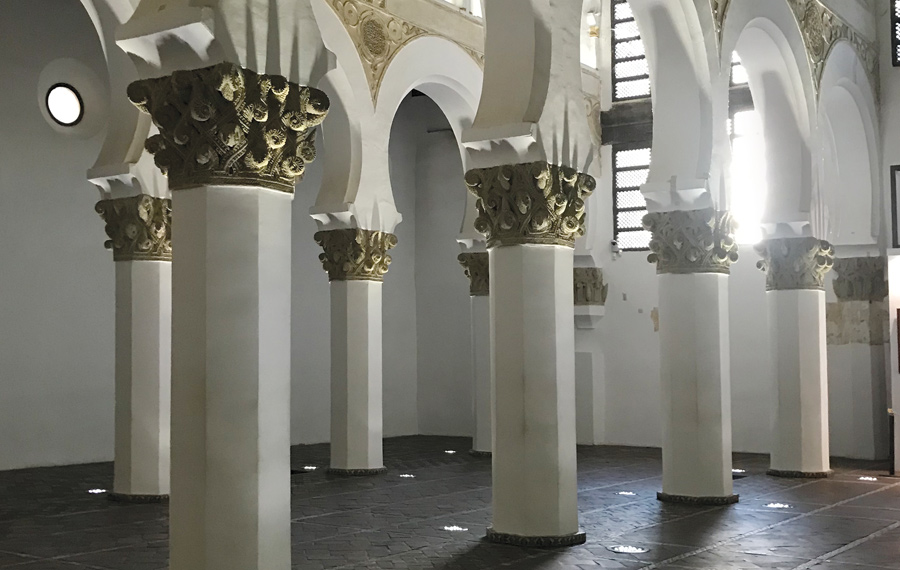
Interior of Santa Maria la Blanca, originally the sanctuary of Ibn Shoshan Synagogue.

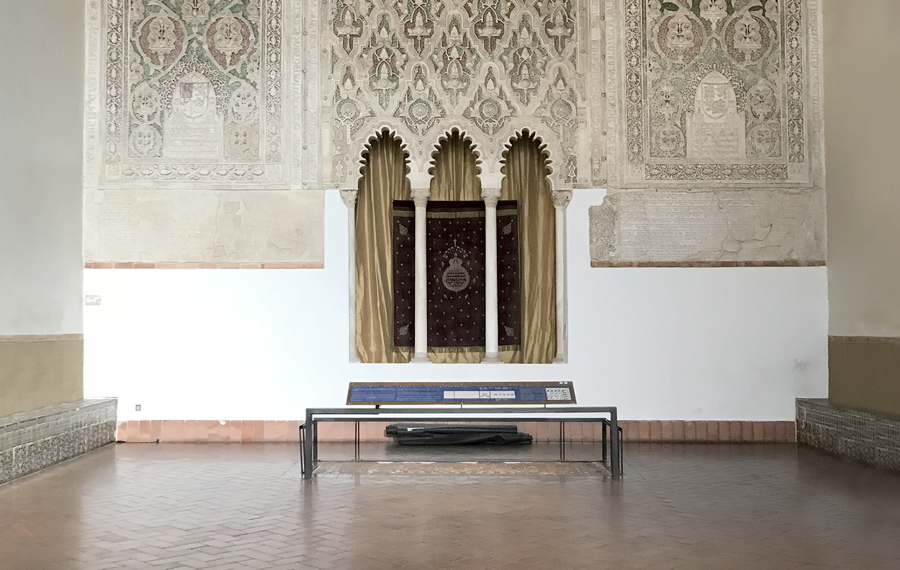
The synagogue’s open hall leads to a Torah niche with three arches. The upper part of the hall is filled with intricate stucco decoration, including a lot of Hebrew script — prayers, snippets from the Bible and homages to King Pedro. 

Jutting off from the open hall are small rooms containing the museum’s collection. Some items possibly belonged to Jews who lived in Toledo before 1492, but if you expect to see what life was like in the Jewish Quarter prior to the expulsion, you’re likely to be disappointed. 

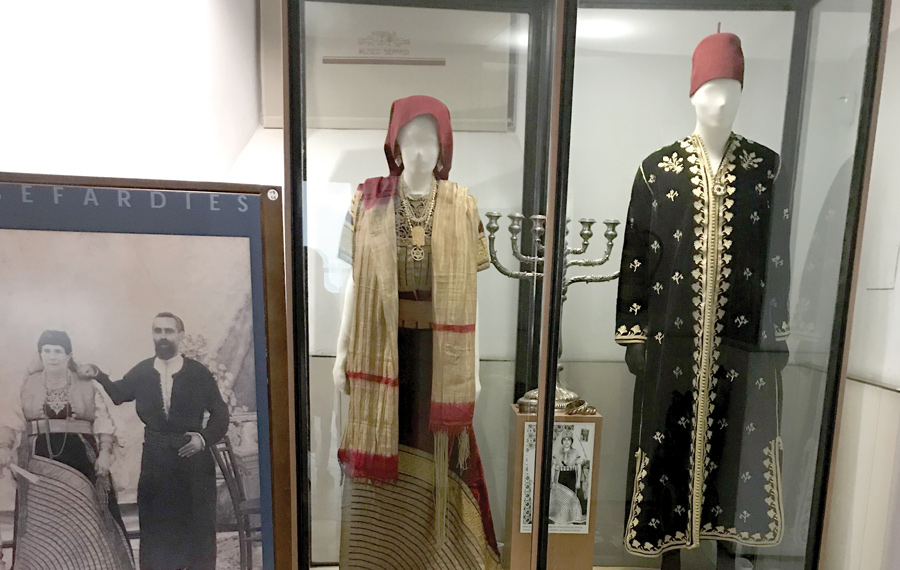
Rather than providing an immersive experience of Sephardic life in medieval Spain, the museum gives a surface glimpse of a group that is treated as if it no longer exists, like the Minoans or Hittites: This is how Sephardic Jews prayed. This is what they wore. 

Many of the artifacts are typical religious objects: tallit, Torah keter, Torah yad, ketubah. The accompanying explanations seem aimed at people who know nothing about Judaism, not at Sephardic Jews trying to reconnect with their past. The explanations also are only in Spanish. For an English translation, you have to access the museum’s website on your phone.

“Spanish government officials said they hoped the Caminos de Sefarad tourism initiative in Toledo might help atone, in some small way, for the expulsion of Jews in 1492.”

One of the items on display is a facsimile of the actual 1492 expulsion order. The florid calligraphy of the original decree makes it hard to read, but there is a printed version of the text in Spanish. It’s a chilling document, bluntly warning Jews to leave the country or be killed. 

An American tourist asked a guard why the museum isn’t managed by the Jewish community. He replied that it’s always been run by the government. Giving a former synagogue to the Jewish community is an idea that’s already come up in reference to Toledo’s other Jewish Quarter synagogue, Ibn Shoshan, built around 1180 and converted in 1411 into a church, Santa María la Blanca, which later became a monastery, then an armory. Now it’s in the hands of the Catholic Church. According to published reports, Isaac Querub, president of Spain’s Federation of Jewish Communities, has requested that the church turn over the property to the Jewish community as a gesture of good interfaith relations. The church has not yet responded to this request.

When we visited Santa María la Blanca, it was chilly and almost empty inside, but there was no hiding the synagogue’s stunning beauty. The interior has giant horseshoe arches decorated with delicate stucco motifs similar to those in the great Moorish edifices of Córdoba and Granada.

At the rear of the property is a gift shop featuring original artwork with mystical undertones. A Spanish woman in her 20s told us that the mystical artwork for sale was created by Abraham de la Cruz, a 76-year-old monk. The constantly repeated message of the artwork is that there should be brotherhood and love between the Catholic Church and Israel — both the country and the Jewish people. 

Photos by Betty Loiderman

I asked the young woman to tell us about De la Cruz. 

“He was born with the name Abraham Kron in 1942 in France, to a Jewish family,” she said. “As a young man, he was an atheist. Then, when he was in his 30s, God entered his life and he converted to Catholicism. He was baptized and became Abraham de la Cruz. He came here to Spain and founded a monastic order called María Estrella de la Mañana (Mary, Star of the Morning.) His aim is to be a bridge between Catholics and Israel.” 

So there we were, in Toledo’s Jewish Quarter, where Jews once lived but from which they were expelled more than 500 years ago, under penalty of death if they remained. Next to a strikingly beautiful 12th-century synagogue, the Catholic Church has permitted an enterprising Euro-mystical version of Jews for Jesus to sell paintings, drawings and books by a man who was born Jewish, then converted to Catholicism. It seemed, at the very least, tone-deaf on the part of the Spanish Church. 

It made me wonder how serious the Spanish officials were who came up with Caminos de Sefarad as a means of reaching out to Jews and enticing them to come to Spain to see how modern Spain has made amends for its past sins.

Toledo’s Ancient Jewish Quarter Stirs Old Anxieties Read More »

Sanders, Feinstein Urge Opposition to Anti-BDS Bill

Sens. Bernie Sanders (I-Vt.) and Dianne Feinstein (D-Calif.) urged Senate Majority Leader Mitch McConnell (R-Ky.) and Senate Minority Leader Charles Schumer (D-N.Y.) to not include the Israel Anti-Boycott Act into an upcoming spending bill.

Sanders and Feinstein argued in a letter that they are against the Boycott, Divestment and Sanctions (BDS) movement, but the Israel Anti-Boycott Act is at odds with the First Amendment.

“Federal district courts in Kansas and Arizona have similarly considered state laws that target political boycotts of Israel and found them to violate the First Amendment,” Sanders and Feinstein wrote. “For example, in Jordahl vs. Brnovich, the court held in granting a preliminary injunction, ‘The type of collective action targeted by the [law] specifically implicates the rights of assembly that Americans and Arizonans use ‘to bring about political, social, and economic charge.’”

The senators also criticized the bill for cracking down on “certain constitutionally-protected political activity aimed solely at Israeli settlements in the West Bank.”

“At a time when the [Israeli Prime Minister Benjamin] Netanyahu government is pursuing policies clearly aimed at foreclosing the two-state solution, it is deeply disappointing that Congress would consider penalizing criticism of those policies,” Sanders and Feinstein wrote.

Brooke Goldstein, executive director of the Lawfare Project, told the Journal in an emailed statement that Sanders and Feinstein are “mistaken” about the bill violating the First Amendment.

“Unlike criticism of Israeli policy, which is political speech that is protected under the First Amendment, this anti-BDS legislation applies to commercial speech, which is not afforded the same degree of constitutional protection,” Goldstein said. “Additionally, the Kansas and Arizona laws referenced by Sanders and Feinstein in their opposition are utterly dissimilar in form and function to the IABA, other than that they relate to BDS. That those states’ anti-BDS laws may raise First Amendment issues has no bearing whatsoever on the federal anti-BDS measure in question.”

Eugene Kontorovich, a law professor at George Mason University, told the Journal in an email that the Israel Anti-Boycott Act “is completely consistent with decades of bipartisan law and policy.”

“Existing law prohibits companies from participating in boycotts of Israel (and the territories) promoted by foreign countries,” Kontorovich said. “The new bill merely extends this to boycotts fostered by international organizations like the U.N. The existing anti-boycott provisions have never been controversial, and have been upheld by the courts.”

Kontorovich added that the bill does not penalize protests of Israeli settlements in Judea and Samaria, it simply “restricts participating in U.N. boycotts” and does not touch “individuals or consumer boycotts.”

“The senators’ letter claims to oppose BDS, but in fact it sides with the famously anti-Semitic U.N. Human Rights Council in its effort to bar economic activity with Jews, and not with any other people,” Kontorovich said.

In his 2017 op-ed in The Washington Post, Kontorovich noted that the Israel Anti-Boycott Act updates a 1977 law that prevents American entities from participating in the Arab League’s boycott of Israel to including boycotts of Israel launched by United Nations agency.

The bill is supported by the Jewish Democratic Council of America and the Anti-Defamation League and opposed by J Street and the New Israel Fund.

Sanders, Feinstein Urge Opposition to Anti-BDS Bill Read More »

LAMOTH Gala, Adat Ari El Anniversary

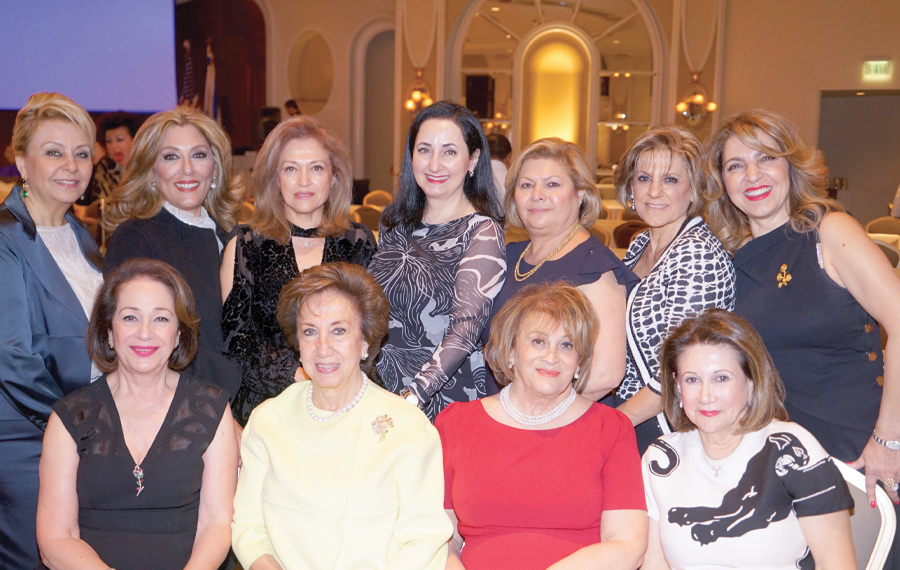
Hadassah Southern California’s Haifa and Malka Groups held their annual Festival of Lights Hanukkah Luncheon and Boutique on Nov. 18 at the Beverly Hills Hotel.

Yassi Bolour and Simin Neman chaired the sold-out event, which drew 450 attendees and raised funds to support the Hadassah Medical Organization in Jerusalem.

The Haifa and Malka groups of Hadassah Southern California hold events that raise funds to support medical research through the medical organization. 

At the event, Haifa President Manijeh Javahery and Malka co-presidents Sheila Ghodsian and Niloufar Shahery presented the Katherine Merage Humanitarian Award to Elizabeth Tishbi Mossanen for her contributions in raising awareness to enrich the lives of children and young adults with special needs.

The Hadassah Medical Organization conducts 50 percent of all medical research in Israel and treats more than 1 million patients a year regardless of race, religion or nationality.

“With Jerusalem’s population growth and becoming a hub of entrepreneurial businesses, Hadassah is happy to answer the call from Jerusalem’s Mayor Nir Barkat to expand the hospital,” Hadassah Southern California President Debbie Kessler said. “The Persian groups of our region have always been very philanthropic and supportive of our mission, and we are tremendously grateful for their efforts.”


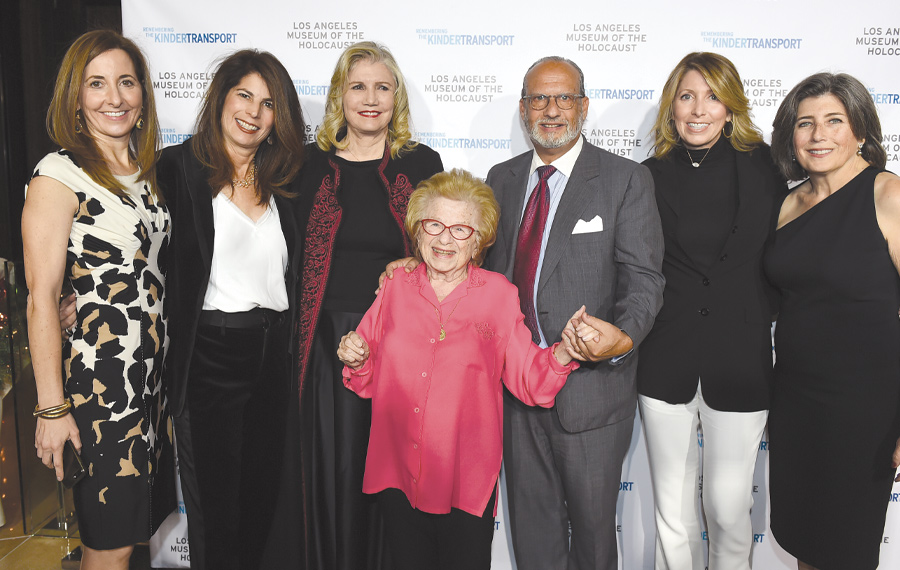
From left: Beth Kean, Andrea Cayton, Mona Golabek, Dr. Ruth Westheimer, Paul Nussbaum, Jamie Rosenblood and Paulette Nessim attend Los Angeles Museum of the Holocaust’s 2018 annual gala. Photo by Jordan Strauss/AP Images for Los Angeles Museum of the Holocaust

At its annual gala on Dec. 3, the Los Angeles Museum of the Holocaust commemorated the 80th anniversary of the Kindertransport by honoring concert pianist Mona Golabek, who teaches students worldwide about her mother’s experience as a Kindertransport survivor through her one-woman show, “The Pianist of Willesden Lane.” 

The event, held at the Beverly Hilton, also honored British journalist and politician Daniel Finkelstein. The associate editor and columnist for The London Times spoke about his grandfather and his mother, who was a friend of Anne and Margot Frank and a survivor of Bergen-Belsen.

“Hitler did not mean the Jewish people to rise again, but we have risen again,” Finkelstein said. “And the kinder have played their full part.   So here’s to the brave who took all life could throw at them but still stood tall.”

Also appearing was sex therapist and media personality Dr. Ruth Westheimer, who recalled the trauma of waving goodbye to her mother and grandmother at age 10 as she left Frankfurt on a Kindertransport train bound for Switzerland. 

Television personality Melissa Rivers emceed the event, which drew 70 Holocaust survivors, including seven survivors of the Kindertransport. At the start of the program, which coincided with the second night of Hanukkah, the survivors lit the Hanukkah candles.

Additional guests included USC Shoah Foundation Executive Director Stephen Smith; museum Vice President Andrea Cayton and her husband, Barry Cayton; board of directors member David Wiener and his wife, Sheryl Wiener; board members Melinda Goldrich and Hagy Belzberg; philanthropist Doretta Goldrich; documentary producer Patti Kenner; Hollywood agent Fred Specktor; real estate agent and television personality Josh Flagg; actress Olesya Rulin.

Funds raised at the gala benefited the museum’s education programs. More than 20,000 students are projected to visit the museum in 2019 for free tours and Holocaust survivor talks, according to the museum.


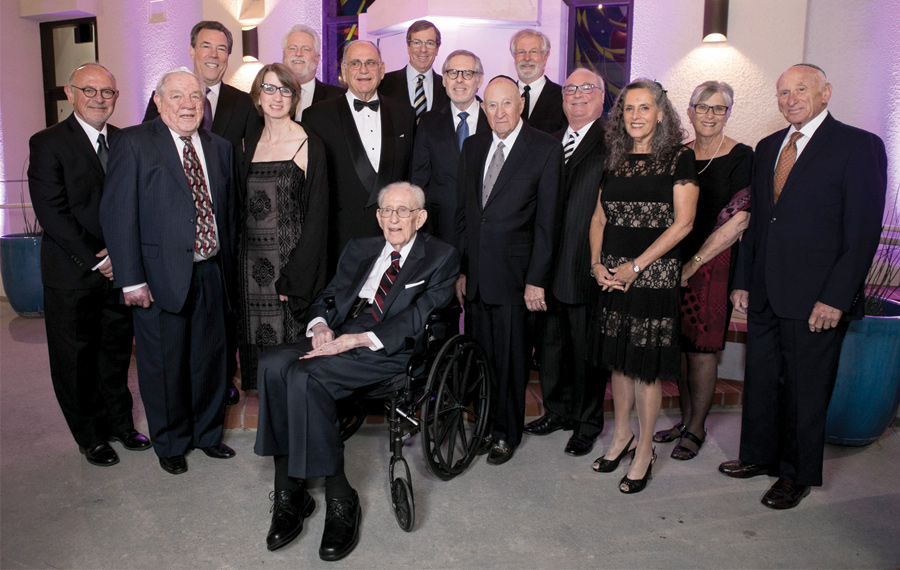
From left: Adat Ari El past presidents Manny Aftergut, Ernie Goodman, Paul Pepperman, Elyse Weise, Sandy Samuels, Rand Harris, Harold Masor, Mel Wynn, Phil Metson, Irwin Goldring, Lorin Fife, Bennett Spiegel, Jill Lasker, Myra Newman and Bruce Newman.
Photo courtesy of Adat Ari El

San Fernando Valley congregation Adat Ari El celebrated its 80th anniversary on Dec. 1 with a gala at its synagogue campus that honored the community’s past presidents and their achievements. 

“It was important at this event that we recognize the accomplishments and leadership of our past presidents,” said Adat Ari El Executive Director Eric Nicastro. “Without their foresight, dedication and generosity, we wouldn’t be where we are today. This year, we have really focused on moving forward and guiding the community into the next 80 years.” 

The gala, which drew 280 guests, marked the culmination of a transformative year for the Conservative synagogue, which introduced congregants to a new membership model, a new website, an online membership portal and several changes to the synagogue grounds. Nearly 200 new families joined Adat Ari El in 2018, which marked the most substantial growth for the Valley Village community in the past 20 years, said Jessica Biber, the synagogue’s director of community relations.

“It is truly an honor to celebrate our 80th anniversary alongside many of those who contributed to the foundation and growth of this community,” said Adat Ari El Senior Rabbi Jonathan Bernhard. “Generations of families have called Adat Ari El their second home, and it is crucial that we take a moment to reflect on those that helped pave the way for the generations to come.” 


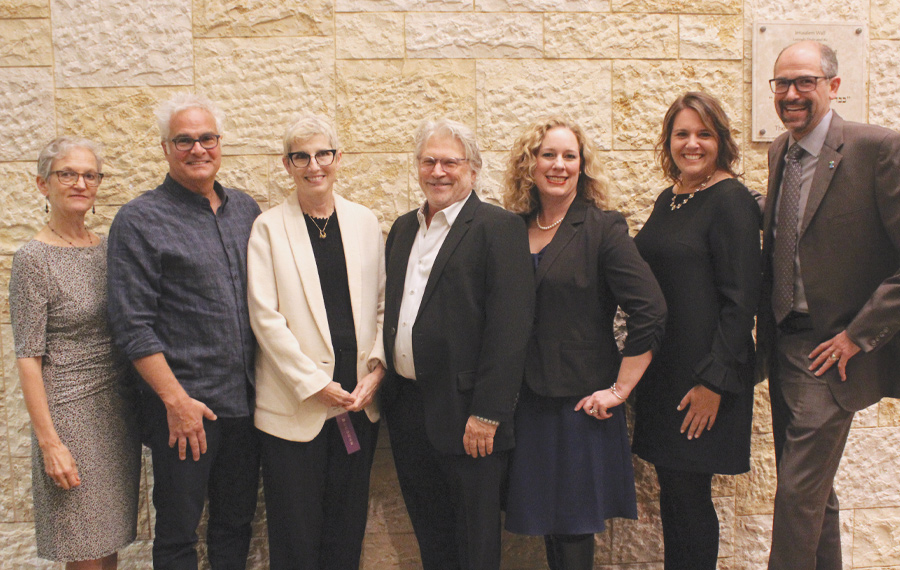
From left: Jewish Communal Professionals of Southern California (JCPSC) honorees Rabbi Ruth Sohn, Craig and Louise Taubman, Jonathan Jacoby, Cari Uslan, Bailey London, and Erik Ludwig, representing the Zelikow School for Nonprofit Management at HUC-JIR.
Photo by Becca Grumet, JCPSC

The Jewish Communal Professionals of Southern California’s 38th Annual Honors dinner on Nov. 29 honored Jonathan Jacoby, Rabbi Ruth Sohn, Cari Uslan, Bailey London, Louise Brent Taubman and Craig Taubman, and the Zelikow School of Jewish Nonprofit Management at Hebrew Union College-Jewish Institute of Religion (HUC-JIR).

About 200 Jewish professionals from 20 organizations attended the event at Sinai Temple in Westwood.

Temple Emanuel of Beverly Hills Rabbi Emerita Laura Geller called Jacoby, who was presented with the Career Achievement Award, a “master collaborator” whose “visionary and courageous leadership turned the New Israel Fund into a major voice” in the conversation on Israel.

“If we take Israel seriously, we can’t stay on the sidelines,” Jacoby said, invoking Hillel’s injunction, “kol yisrael areyvim zeh lazeh,” translating to “all of Israel is responsible for one another.” Jacoby said “the word ‘areyvim’ means more than ‘responsible.’ An ‘arev’ is a guarantor. All Jews are guarantors of one another.”  

“Mentoring itself is being lifted up for the powerful role it can play in our lives,” said Sohn, as she accepted the Bobbi Asimow Award for Professional Mentorship for her work at HUC-JIR. She added that mentoring gives “incredible gifts,” including “the chance to develop a close relationship with a colleague or other person with whom we can ask questions and wonder out loud and not be afraid of being judged for not knowing.” 

Jewish Big Brothers Big Sisters of Los Angeles (JBBBSLA) CEO Randy Schwab presented Uslan, director of development at JBBBSLA, with the Professional Excellence in Fundraising Award in recognition of her work transforming the agency and spurring growth.

“We don’t do this work for the accolades and the awards,” Uslan said. “We do it because we want to improve the lives of those who are struggling in our community.” 

“We’ve all heard the cliché, ‘It takes a village,’ and I can’t help but reflect on the village that has been so valuable in raising me over the last 12 years,” said London, accepting the Mark Meltzer Young Professional Award. 

The Taubmans received the Alan J. Kassin Award for Outstanding Professional Achievement for their work creating The Pico Union Project, a multifaith cultural arts center and house of worship. 

“If there’s one thing I’ve learned in our 60 years on this planet, it’s that the strongest currency in the universe is love,” Craig Taubman said. “We all need it, seek it, flourish and thrive when we find it. … May we all be remembered for lives well-lived and well-loved.”

A special award was presented in honor of the HUC-JIR’s Zelikow School of Jewish Nonprofit Management’s 50th anniversary. After a video that highlighted the school’s achievements and paid tribute to its founding director, the late Gerry Bubis, and its director emeritus, Richard Siegel, who died in July, alumni in attendance were asked to stand in recognition of their role in strengthening Jewish life in Los Angeles and beyond.

— Esther D. Kustanowitz, Contributing Writer


Want to be in Movers & Shakers? Send us your highlights, events, honors and simchas. Email ryant@jewishjournal.com.

LAMOTH Gala, Adat Ari El Anniversary Read More »