fbpx

November 7, 2018

IAC CEO Shoham Nicolet on Unifying American-Jewish Community

More than a decade ago, Israeli-born Shoham Nicolet arrived in Los Angeles with a dream. A former lieutenant in an elite Israel Defense Forces unit and alumni of Stanford’s Graduate School of Business, Nicolet along with a group of Israeli-American businesspeople in Los Angeles – wanted to establish a prominent Israeli-American organization to serve the Jewish-American community and foster deeper connections to the Jewish state. Amid countless rejections, it long seemed like a pipe dream. Nicolet joined with this group of business leaders to found the organization, becoming its first professional staff member.

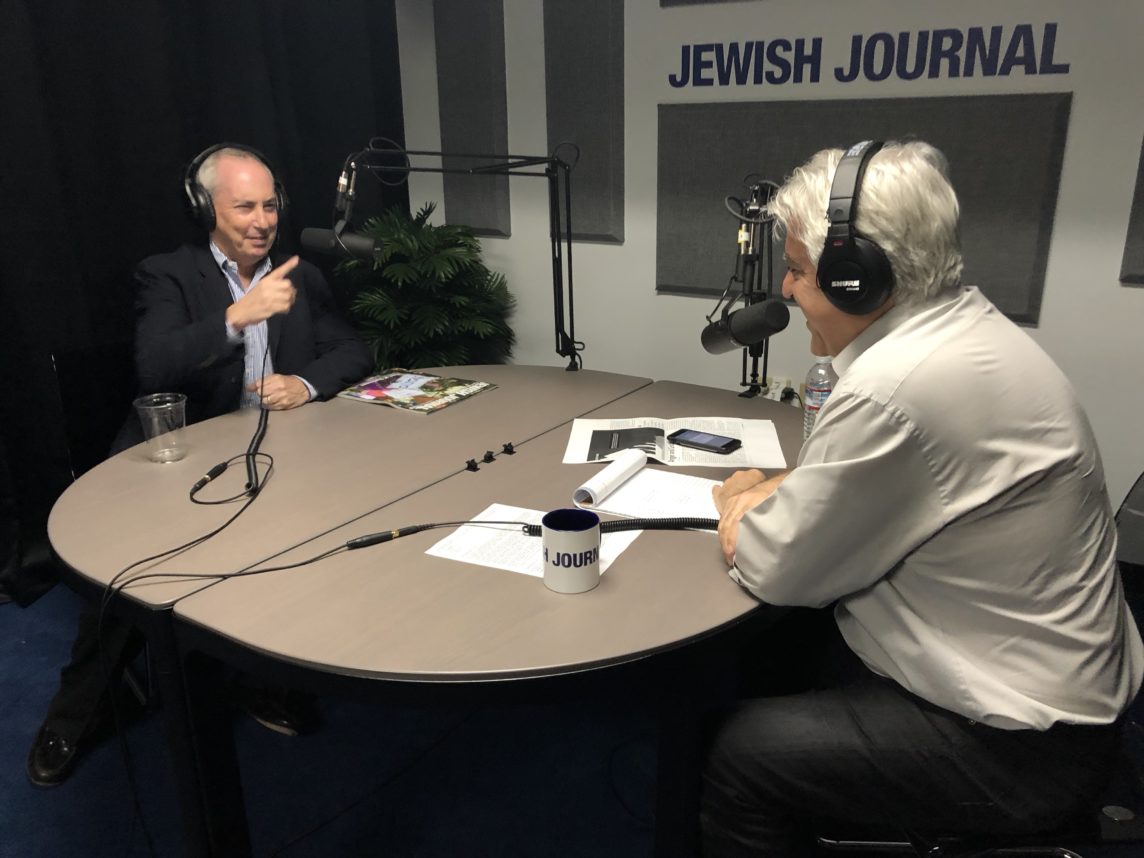
Eleven years later and Nicolet is the CEO of the Israeli-American Council (IAC), the largest Israeli-American organization in the United States. The Journal caught up with Nicolet before his organization’s national conference in South Florida at the end of the month, to discuss the Pittsburgh shooting, what Americans can learn from Israelis in the fight against anti-Semitism, and what he views as obstacles to unity in the Jewish-American community. 

Jewish Journal: First, I wanted to give you a chance to respond to what happened in Pittsburgh, on your own behalf, and on behalf of the IAC. 

Shoham Nicolet: The most important thing is our hearts and minds are with the community. That’s before anything else. These are members of our community that lost their lives just because they were Jews. It shook all of us at the IAC. It doesn’t matter where we live or where we’re from. We’re a part of this Jewish-American community. We live in a new reality right now.  The only way to deal with this new situation is to become united and come together as one voice. That goes beyond politics and denominations. We also have to be proactive. We have to find new ways to fight anti-Semitism with everything the law allows us here as citizens. We need to work with law enforcement and elected officials and make sure anti-Semitism in 2018 and in the future is unacceptable. 

JJ: How will what happened affect the tenor and themes of the IAC’s upcoming conference? 

SN: It’s going to be there. But the conference was already planned. With that said, we’re looking at anti-Semitism and ways to combat it all the time. So we’re covering the same topics that we planned to but we’re just going to be even more intricate and more focused. 

JJ: What is the main focus of the conference? 

SN: It’s a cliché, but we have to stop talking about it and start doing it, which means bringing unity to the American-Jewish community. There are so many challenges that we, as a community, are facing right now. If anyone feels they can beat the challenges alone, they’re dead wrong. We have to do it as a coalition and that’s what the IAC is all about. We’ll have more than 3,000 people representing a very wide spectrum of political views, socioeconomic and other different backgrounds, Israeli Americans and Jewish Americans from East and West. 

JJ: What are some of those challenges? 

SN: I think that right now if you ask me why I’m not going to sleep well at night, I think it’s the connection between Israel and the Jewish people, particularly the younger generation in the United States. The fact is that we see more and more communities that are stepping back from Israel. It’s not that they stop loving it, but they’re loving it with some conditions. My fear is that when you look at the next generation of Jewish Americans, if they’re not there for the Jewish state, it’s going to be in trouble. But we don’t have the privilege or the right to think we can give up on one or the other. We need to stop creating division and emphasizing the gaps between Israel and American Jews. 

JJ: What do you feel is creating those gaps?

SN: If you look at what happened after Pittsburgh, in articles in newspapers, the chief rabbinate of Israel, it was reported, didn’t mention the word “synagogue.” The narrative was that the chief rabbi didn’t accept that it was a synagogue because it was Conservative. But, of course, if you read the real quotes, there definitely is the word synagogue, and it’s mentioned that it’s not important what denomination of Jews these were. He said exactly the opposite of whatever was trying to be portrayed. This is counterproductive. It’s unfortunate that, in some cases, in some parts of our community, this is done to create division and damage. I don’t want it to be permanent damage. We need to focus on what brings people together, focus on shared values between Israel and Jewish Americans and the important benefits Israel provides to Jewish-Americans. 

JJ: What do the Israeli and Israeli-American communities have to offer with regard to discussions around anti-Semitism here in the United States? 

SN: We’re bringing our background as Israelis and Israeli-Americans to the discussion. We bring knowledge that exists in Israel on how to deal with threats that Israel is dealing with constantly, unfortunately. The situation here reflects many of the same challenges of the daily reality in Israel. This is an opportunity to leverage the fact that we have a Jewish state and to use this knowledge and this energy in this time to fight anti-Semitism in the United States. 

JJ: You’ve spoken about a generational disconnect. Will the conference have a younger feel? 

SN: The reality is the conference is a young conference. The average age is 37 and we have people coming from campuses across the nation with over 100 high-school and middle-school students. They’re going to feel like they’re in Israel, like they’re in the center of their people. We’ll be creating discussions around issues in a very Israeli way, where people will debate often and loudly, but all in a clear context — under the umbrella of love and connection to Israel. 

JJ: Are there any speakers you’re particularly excited about? 

SN: I don’t want to focus on one speaker in particular. You have the Minister of Justice, the Speaker of the Knesset, and you have an Israel Prize winner. There will be Democratic and Republican elected official members of Congress, many people from the high-tech world. But going back 11 years to when we just started IAC in Los Angeles, no one wanted to speak with us. The Federation said your place is in Israel, not here. They looked at us as a problem, as a bug in the system.

JJ: What changed? 

SN: We just said the same thing for 11 years. We’re here only to give to the Jewish-American community. Now, we have what seemed an impossible scenario with all these prominent speakers. This is what happens when you don’t look at issues and just look at the vision of where you want to be.  

IAC CEO Shoham Nicolet on Unifying American-Jewish Community Read More »

Koretz Calls For Faith-Based Security Task Force

In the wake of the Oct. 27 Pittsburgh synagogue shootings, Los Angeles Councilman Paul Koretz has called for the creation of a “faith-based security task force.”

Koretz made the announcement at a Nov. 2 public safety meeting attended by about 70 city officials, law enforcement representatives and Jewish community leaders at Young Israel of Century City synagogue in the Pico-Robertson area. Also in attendance were representatives of the Los Angeles Shmira Civilian Safety Patrol, Hatzolah of Los Angeles Emergency Medical Services and the nonprofit Community Security Service.

While Koretz shared few details about his vision for the task force, he said he hoped it would address ways that religious communities could collaborate on public safety. (Koretz represents Council District 5, which stretches from Encino in the San Fernando Valley to the Palms neighborhood in West L.A.)

Gregory Martayan, Koretz’s director of public safety and special assignments, said the meeting was scheduled to be held before the first Shabbat following the shootings so that people in the community could be reassured of their safety prior to attending Shabbat services.

At the meeting, City Controller Ron Galperin spoke about what people could do to help provide a sense of security. He said if someone sees something troubling on social media, they have a responsibility to speak up. He also spoke of the importance of Jews sharing their history with anybody who is willing to listen. Finally, he urged people to make their political conversations more civil.

Los Angeles Police Department Captain Valencia Thomas of the West L.A. Division said the community would see a ramped-up security presence at synagogues over the following weekend.

Rabbi Alan Kalinsky, director of the Orthodox Union’s West Coast Region office in Los Angeles, told those at the meeting that, aside from concerns about shootings, he has experienced people yelling “nasty things” at him when he has walked along Pico Boulevard.

“At this moment, our community does not feel safe and secure,” Kalinsky said. 

LAPD representatives recommended people become acquainted with their local police division and report concerns. 

Koretz Calls For Faith-Based Security Task Force Read More »

Organizations Review Security Issues After Pittsburgh Attack

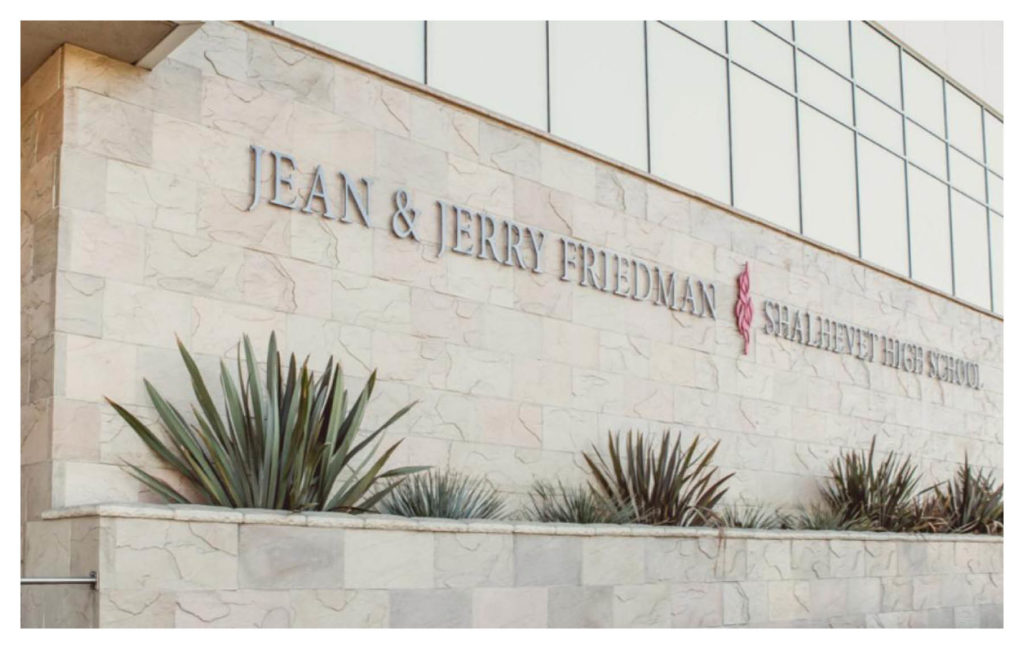
When Shalhevet High School welcomed students and families from around the country for its five-day Steve Glouberman Basketball Tournament beginning Oct. 31, Head of School Rabbi Ari Segal felt that, in the wake of the Tree of Life Congregation shootings in Pittsburgh, he needed to review security protocols — something he hadn’t done in the tournament’s three previous years. 

“We wanted [everyone] to know that we’re continuing to follow the same vigorous security protocols we always have,” Segal said. “We let the students and their families know they could expect to see a heightened security atmosphere.” 

Indeed, this year’s tournament introduced more bag checks, metal detectors, patrols and security personnel. 

“The reality is we’ve been planning for something like what happened in Pittsburgh since I got here,” said Segal, who has been at Shalhevet for seven years. “As a Jewish school in 2018, it’s just a reality that you’ve got to be prepared.” 

Schools, synagogues and other Jewish institutions across the city have been evaluating security measures after the Pittsburgh massacre. The prevailing sentiment is a sobering one — it could’ve been any of us. 

“But I do think, here in Los Angeles, we’re one of the most prepared communities for this type of incident,” said Ivan Wolkind, the Jewish Federation of Greater Los Angeles’ chief operating and finance officer. “But that doesn’t mean we can’t do more or that we should stop thinking about security.” 

“I do think here in Los Angeles we’re one of the most prepared communities for this type of incident, but that doesn’t mean we can’t do more or that we should stop thinking about security.” — Ivan Wolkind

Wolkind has an obsession about security that has made him an asset to many Jewish institutions across the city. Six years ago, Wolkind created the Federation’s Community Security Initiative (CSI) to address security needs of Los Angeles’ Jewish institutions. CSI employs experts with backgrounds in the U.S. military or the Israel Defense Forces and offers free site vulnerability assessments and security training to any of the 470 institutions in the Federation’s database.

“We’ve been [inundated] with phone calls both from law enforcement and community members, so I’m glad people know we’re the first place to go to,” Wolkind said. “The good news is many institutions want follow-up visits and more trainings. In very few cases are people in Los Angeles starting from nothing.” 

Rabbi Joel Nickerson at Temple Isaiah in West Los Angeles, one of CSI’s partner institutions, said the temple’s facilities department and security company are “looking at and upgrading security systems, but our congregants aren’t overly concerned with their own security or worried about what we have in place here. But there is a heightened awareness that we welcome.” 

When a security alert about a suspicious character in the community circulated recently on social media — with the help of Wolkind’s CSI initiative — many of Nickerson’s congregants contacted him. 

“This was the first time that I didn’t receive [the information] from our security personnel first,” he said. “This proactive nature is a way we can try to look out for one another in our community. It was interesting and new, but we welcome it, of course.” 

Mark Canole, who has been the director of security and safety at the Skirball Cultural Center for over 20 years, preached calm and didn’t advocate for wholesale security changes. 

“The Skirball is continuing to maintain the policies and procedures that we’ve had in place,” Canole said. “This particular incident, although tragic, doesn’t really affect the day-to-day here. In other words, there’s no credible threat any more than there was last week.” 

Canole is no stranger to dealing with threats. In August 2017, the Skirball received a robocall bomb threat. A few months later, Patriot Front, a far-right hate group, hung anti-Semitic banners from a nearby 405 Freeway overpass. More banner incidents followed earlier this year. 

“Look, we can’t let these people win,” Canole said. “We have to make sure there’s a safe oasis to come to in these crazy times. People fear what they don’t know. That’s why a multicultural center like the Skirball is so important and needs to remain open and welcoming. The more people experience Jewish culture and come to know Jewish values, the better off everybody is.”

Organizations Review Security Issues After Pittsburgh Attack Read More »

A Food Pyramid for Stir-Crazy Kids

I’ve loved being in the kitchen since childhood. I had a slew of aunts who cooked and a mother who always had something pickling, simmering or baking. In an extreme case of foreshadowing, my favorite toy as a child was my Easy-Bake Oven. I vividly remember watching my cakes bake, which took a long time considering the oven’s only heat source was a small light bulb. Because I was an only child, I’d gather my stuffed animals and serve them tea and cake and fuss over them much like I do now over my customers in my cafe. 

I’m now that “auntie” with whom parents are slightly reluctant to leave their kids. The weekends my friends have let me entertain their offspring, the kids are returned sugar-rushed, overly excited, sleep-deprived little monsters covered in flour or chocolate — usually both. I have a special weakness for children, and I like to get them into the kitchen (preferably their parents’ kitchen) and let them go wild. Food fights ensue, singing and dancing always figure into it, and crazy lava-like experimentations occur. Usually, I’m the one who gets the stern looks and the worried pleas to “please just don’t blow anything up.” In all fairness to me, that happened only once but parents have such long memories.

No sooner than the pesky adults are out the door, utter mayhem ensues. Even introverted children can be brought out of their shells by spending some time in the kitchen. It’s almost miraculous to see the transformation in a child during a no-holds-barred cooking session.

“Even introverted children can be brought out of their shells by  spending some time in the kitchen.”

Sometimes, if I sense a child is distracted or losing interest, I’ll take something gooey and I’ll just lob it over to them or smear it on their faces. I live for their expressions of shock as they return the favor, watching them realize that they can have a food fight with an adult without fear of penalty. There’s only one rule in my kitchen time with kids — no phones, iPads or computers of any kind — unless it’s a music device. After all, disconnecting children from electronic baby-sitters and screens for a few hours just can’t be a bad thing.

Even surly teenagers enjoy kitchen time, especially when the result is mastery of something they love to eat, such as pizza or quesadillas. I’ve had the deepest conversations with teens while cooking with them — sometimes they will even confide in me about something that is bothering them and ask my opinion about it. It’s so soul filling when a child opens up and tells you their hopes or fears. Bonding with kids in this way, besides being one of life’s supreme joys, invariably cements their affection for life.

The kitchen is one part of a home that is a sacred space where most of us feel safe. Positive connections and feelings that are associated with it can stick in a child’s mind well into adulthood. Rather than associating stepping into the kitchen as a chore, like many adults do, the simple act of baking, letting the house fill with the aromas of cinnamon and vanilla is magical and apt to leave an impression that never goes away.

This is the time of year in Israel when the weather gets chilly, the sweet shops begin selling sufganiyot for Hanukkah, and it’s when the ultimate kid sweet comes out: Krembo. Krembo, an Israeli confection that consists of a delicate dome of marshmallow-type fluff that sits atop a round biscuit base covered in a thin coating of cheap, waxy chocolate. It isn’t sold during summertime because it melts easily.   

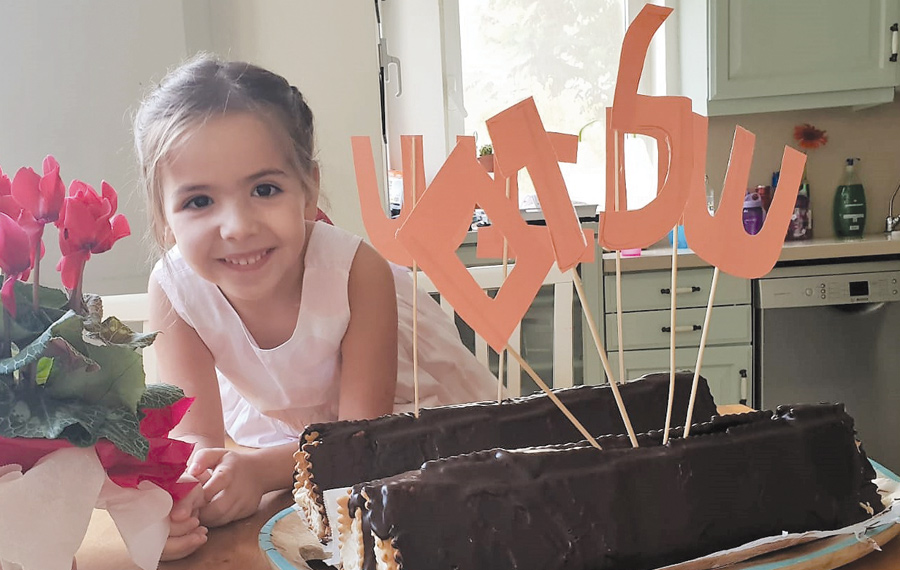
In Uganda where I live, there’s no Krembo, and most times I can’t even find decent marshmallows, so I’ve made do with a cake that approximates the heavenly Krembo combination and is a fun project to make with kids. It’s more of an assembly project and requires no baking and very little kitchen equipment — only a hand mixer, although a wire whisk will do in a pinch. I’ve made it when I have last-minute dinner guests because it’s elegant enough to serve to adults and can be ready in under an hour. It’s a lovely cake my aunt used to make called a pyramida (pyramid), and I dare you to find a kid who will not love you for it, not only for teaching them how to make it, but for letting them eat it for breakfast or in place of dinner. 

Pyramid Cake
1 package vanilla-flavored instant pudding
5 tablespoons sugar
1 1/2 cups whipping cream
1 3/4 cups whole or 2-percent milk
1 cup mascarpone cheese
42 Petit Beurre cookies (2 inches by 3 inches)
4 1/2 ounces bittersweet chocolate
1/2 teaspoon instant coffee
1 teaspoon honey
4 tablespoons white chocolate shavings or sprinkles (optional)

For the filling, place pudding mix, sugar, 1 cup whipping cream, 1 cup milk and cheese in a medium-sized bowl and whip with a hand mixer until thick and stiff peaks form. Refrigerate cream while you prepare the base.

On a countertop, put 2 layers of extra heavy aluminum foil (or wax paper) down on top of each other. Pour 3/4 cup milk in a bowl and proceed to briefly dip each cookie in the milk and lay them down in 3 rows, side by side — vertically. You should end up with a rectangle of cookies that is 3 rows wide and 7 rows long. 

Remove cream from refrigerator and spread a bit more than half the cream on top of the biscuits evenly until the surface area of the cookies is covered. Add another layer of cookies on top of the cream — but this time, the middle row of cookies should be placed vertically while the 2 outer rows of cookies should be laid down horizontally. This will make a pyramid shape. With a spoon, put remaining cream only on the center row of cookies. Don’t spread the cream onto the outer biscuits.

Using both arms, slip hands and forearms underneath each length of the foil and gently bring hands together, pressing the two flaps together to form the pointed top of the pyramid. Peel back foil, and using an offset spatula or knife, neaten up the cream and remove excess. Wrap the cake in the foil it’s on but be sure to close both ends well so as not to dry out the cream. Place in the freezer for at least 30 minutes. 

After the cake has hardened, make the ganache. Break or chop chocolate into smaller pieces, add to remaining 1/2 cup of cream and instant coffee in a microwave-safe bowl. Microwave for 1 minute. Let mixture sit for 1 minute, add honey and whisk until chocolate is melted and ganache is shiny and homogenous.

Remove cake from freezer, unwrap and evenly pour ganache on top of pyramid, taking care to cover all the cookies in chocolate. Decorate with white chocolate or sprinkles before the ganache hardens and return it to freezer or refrigerator to set for at least 1 hour.

After cake has set, slide a spatula under the base and transfer to a long serving dish, discard the foil and slice into 1-inch wide triangles for serving.

Serves 10.


Yamit Behar Wood, an Israeli-American food and travel writer, is the executive chef at the U.S. Embassy in Kampala, Uganda, and founder of the New York Kitchen Catering Co. 

A Food Pyramid for Stir-Crazy Kids Read More »

Weekly Parsha: Toldot

Weekly Parsha: one verse, five voices. Edited by Salvador Litvak, Accidental Talmudist

And Isaac again dug the wells of water which they had dug in the days of his father, Abraham. – Gen. 26:18


Rabbi Daniel Greyber
Beth El Synagogue, Durham, N.C.
In memory of Dr. Howard Greyber (z”l).

Isaac is banished from Gerar. Rabbi Mordechai Yosef of Isbitza (1800-54) imagines Isaac sitting at the edge of town, knowing that everything happens for a reason, and wondering, “What does God want me to learn from this moment? I am the son of Abraham, “a prince of God” (Genesis 23:9). “Why would Avimelech treat me this way?” Isaac regains his composure and realizes: “I am blemished. I am lacking the love my father, Abraham, brought to the world.” So he digs the wells of his father to find more wellsprings of love and Torah for his life, to follow better in his father’s footsteps.

My father died nearly two years ago. I sometimes wonder where he is — if he can see me, if he knows the things in my head and my heart. Since that November night when I sat in the room where his body lay still on the bed, there have been moments when I’ve been lost and confused, when I haven’t understood why my life is the way it is, and I too have wondered, “What does God want me to learn from this moment? Am I blemished? Where can I dig the wells of my father? What will I find? How can I bring more love into the world?”


Nina Litvak
AccidentalTalmudist.org

Isaac is the most enigmatic of the patriarchs. The Torah devotes relatively little space to Isaac, and during the biggest events of his life he is passive. Isaac is prepared as a sacrifice by his father; he waits for a wife someone else has chosen for him; he is lied to by his son. 

The one active role Isaac takes is digging and re-digging wells. Many of the wells Isaac digs were originally dug by Abraham before being filled by the Philistines. Isaac’s work re-digging his father’s old wells gives us insight into his true greatness. 

Abraham and Isaac looked alike but had different missions. Abraham’s main activity was hosting guests. He spread knowledge of God to the people around him, bringing holy light down from above. Isaac’s main activity was digging wells. Isaac dug into the earth and brought life-sustaining water — representing Torah — up from below. Living things need both light and water to survive. 

Abraham was able to dig the wells, but he couldn’t sustain them for the next generation. Isaac did the vital work of rescuing and renewing his father’s work. Abraham’s wells were useless without Isaac’s re-digging. So, too, Abraham’s outreach was not sustainable without Isaac to deepen and preserve it.

Isaac’s digging inspires me today. I’m the first woman in four generations of my family to light Shabbat candles. Like Isaac, I am rediscovering that which is old and valuable and forming a link between our forefathers and future generations.


Rivkah Slonim
Educational Director, Rohr Chabad Center for Jewish Student Life, Binghamton University, New York

The verses in the Torah that deal with Yitzchak digging wells get scant attention. To quote Nachmanides: What kind of honor is this to Yitzchak that he dug wells?!

Yet, it is precisely these verses that help us understand Yitzchak’s essential characteristic.

Yitzchak personified gevurah — strength and discipline. In stark contradistinction, his father Abraham’s overarching characteristic was chesed — kindness and benevolence. Intuitively, at least conceptually, we gravitate toward chesed. But the trick is balance.

Our verse teaches that while Abraham dug wells, his work did not enjoy permanence; ultimately, the wells were covered over. Abraham’s modality was chesed: lavishing goodness from above to below, from benefactor to beneficiary. Yitzchak, on the other hand, embodied gevurah; he dug up this well (actual and metaphoric) and this time it remained open. Yitzchak’s way was to excavate, to find the inherent and intrinsic good that lay nascent and unseen, rather than to apply an overlay from above. 

Understood in this way, this verse offers a profound lesson to us as teachers, mentors and parents. It is easier and more enjoyable to bestow upon our children, students and mentees the information they need. But if we want to give them a lasting gift, we must give them the tools to find the knowledge from within. It takes more time and patience to be a “guide on the side” rather than the “sage on the stage.” But, ultimately, this produces a well one can draw from indefinitely.


Pinchas Winston
Thirtysix.org

In the Torah, a well of water is usually a symbol of Torah itself, especially when it comes to the forefathers. Any story in which a well appears invites us to investigate further and mine deeper insights about life. 

What, therefore, do we learn from the fact that Isaac had to re-dig the exact same wells as his father, Abraham, after the Philistines had filled them in? On a deeper level, it would mean that the Torah Abraham had “dug” up, and from which others “drank,” was buried again by the Philistines. How so? 

There is an example of this today. Hundreds of years ago, it was uncommon for a family that drifted from Torah to have descendants return in later generations. Usually, once a family assimilated, all connection to Judaism was gone. 

In recent decades, ba’alei teshuvah, literally, “owners of repentance,” have done the opposite. Secular Jews have made their way, sometimes miraculously, back to Torah. Over time they have “learned the ropes” and embraced Torah Judaism. 

Thus, these ba’alei teshuvah have reopened the Torah wells “dug” by their ancestors, which became “filled in” with other world philosophies due to intense persecution or their moving deeper into the Diaspora where Jewish education was nonexistent. Some secular Jews don’t even know what Torah is. How can they possibly dig up a thing they do not know exists? 

If a person is a truth-seeker, they will find their way to truth; and in time, Torah will come to them. 


Dan Messinger
Owner of Bibi’s Bakery and Café

Two questions come to mind: First, what has happened to the wells that they need to be dug again? Perhaps they ran dry and were abandoned, or maybe nature simply reclaimed them. In either case, the locals covered them up after Abraham’s death. Bottom line: The wells were closed. 

Second, why not just find a new place to dig wells, instead of returning to the same place to re-dig them? 

Jewish tradition teaches us that we are always to go back to the well. Just a few weeks ago we finished the cycle of reading the Torah, only to roll it back and begin again. This scroll has been the sourcebook of our people from the days of our fathers and mothers and beyond. Thousands of years of commentary and interpretation sit layered upon the story of the Jews. At times it can feel like the essence of the Torah has been covered over and stopped up. But it is upon us to dig down and reveal the spring that lies beneath. 

Digging a well requires faith that at the end of all the hard work we will be rewarded with refreshment. Diving into Torah requires the same faith, with a reward far greater than a drink of water. 

Weekly Parsha: Toldot Read More »

Prayer for a Sunday Morning

Divine wisdom,
Please show me how
To breathe
When the smell of hatred
Is hot and dank against my cheek
Blowing across the country
From my childhood home.

To walk
Into a synagogue today
In Los Angeles
When Squirrel Hill,
Sweet shtetl that raised me,
Is no longer safe.

To look
Into the eyes of my students and colleagues,
Friends and strangers
In solidarity with what they
Have always known
In shame for having forgotten
To grieve
The litany of losses
Private and public
Named and unnamable
Across the whole wide wailing world
Without crumbling to dust.

To plant
Flowers, when bullets rain
Words, to bandage wounds
Hope, when shadows grow
Long and dark across our faces
Faith that dawn will come
To act
As a bridge
A balm
A beacon,
A source of healing in the dark
Please show me how to add
To the sum of light
When the night looms so large
And my one flame
so small.


Deborah Elder Brown is an award-winning poet and journalist who lives in L.A. and was raised in Squirrel Hill.

Prayer for a Sunday Morning Read More »

To Win in 2020, Democrats Must Avoid the Power Trap

After two years in the political wilderness, enraged at a president they despise and virtually powerless to do much about it, Democrats finally see some light after regaining the House.

But as any doctor will tell you, it’s not good for the system to gorge after you’ve starved for so long.

Democrats will be tempted to use their new power in the House to take revenge on President Trump. Because they will control key committees and have the power to subpoena, it’s likely they will feel pressure from their agitated base to begin impeachment proceedings against the president, among other aggressive initiatives.

This is a trap.

For one thing, because impeachment requires the approval of two thirds of the Senate, which is staying in Republican hands, it’s highly unlikely they can get rid of Trump before the next presidential elections in 2020.

And that is precisely what Democrats must focus on—the next race for the White House.

If they squander the next two years on a bitter soap opera that will go nowhere, they will only reinforce the Republican critique that they have become a party bereft of ideas.

How can they surprise the electorate and position themselves for success in 2020? By thinking policy, by thinking about what’s good for the country.

They have little to lose by playing earnest rather than cynical. The country is expecting the two parties to continue the win-at-all-cost partisan combat so prevalent during the Brett Kavanaugh hearings. It is this fanatical partisanship that has made Congress lose much of its credibility with the public.

Now that Democrats control the House, they can allow Republicans to play the bad guy if they so choose.

Believe it or not, there’s a bipartisan caucus in Congress called the “Problem Solvers Caucus” which comprises members of both parties. Yes, they’re small, but they have a big idea: Let’s focus on solutions that will help America, rather than fights that will hurt everyone.

It’s true that the parties are far apart on most of the big issues. But that’s no reason to give up. Led by the Problem Solvers Caucus, Democrats can look for small areas of agreement and build on those, and begin a process of mutual compromise. At the very least, they will look like a party of ideas and action, rather than one of destruction.

We’re all licking our wounds from the most divisive and acrimonious two years I can recall. Democratic leaders now have a chance to take the high road. They will have to contend with a progressive wing that is hardly into compromise. That will be their biggest challenge—resisting the urge to overreach.

But if they can at least look like they’re trying to bring problem solving back into politics, and attract candidates in that vein, that will increase their chances of winning the White House in 2020.

To Win in 2020, Democrats Must Avoid the Power Trap Read More »

Special Election Podcast: What Do The Results Mean?

[iframe style=”border:none” src=”//html5-player.libsyn.com/embed/episode/id/7475861/height/100/width//thumbnail/yes/render-playlist/no/theme/custom/tdest_id/689387/custom-color/dfdfdf” height=”100″ width=”100%” scrolling=”no” allowfullscreen webkitallowfullscreen mozallowfullscreen oallowfullscreen msallowfullscreen]

Political Expert Dan Schnur In Conversation With David Suissa.

Dan Schnur


Check out this episode!

Special Election Podcast: What Do The Results Mean? Read More »

Night of Broken Jews: Remembering Kristallnacht

The massacre of 11 people at the Tree of Life Congregation synagogue in Pittsburgh has prompted comparisons to the 1938 attacks on the synagogues of Germany, which occurred 80 years ago this week and became known as Kristallnacht. While the two events cannot be equated, they impose profound burdens on our memory.

In the aftermath of Pittsburgh, we have seen an outpouring of reaction against hatred directed at Jews. Pittsburgh’s mayor and police chief were on the scene at the synagogue and condemned the violence. The media have covered the story with sympathy for the victims and disdain for the killer and the hatred for which he stands. The Pittsburgh Steelers football team showed support for the community by incorporating a Jewish star in its logo, and some of its players wore the star during their Nov. 4 game. The Muslim community put political differences aside and raised more than $200,000 in solidarity with the Jews. Innumerable other actions across this country voiced condemnation for anti-Semitism and concern and support for the Jewish people. 

Indeed, the events since the Oct. 27 massacre have been moving, haunting, angering — and, at times, heartwarming. They provide us with a perspective to the events of 80 years ago that enables us to reflect upon how our world has changed, but also to clarify the persistent challenges that continue to confront us.

On Nov. 9-10, 1938, a series of pogroms took place throughout Germany. More than 1,000 synagogues were burned, their pews destroyed, their sacred Torah scrolls and holy books set aflame. More than 7,000 Jewish businesses were ransacked and 30,000 men from ages 16 to 60 were arrested and sent off to newly expanded German concentration camps, most especially Dachau, Sachsenhausen and Buchenwald. These pogroms were given a fancy name by which they are best known: Kristallnacht.

Over the past 35 years, Germany has ceased to use the term Kristallnacht, but rather refers to the event as the Reich Pogroms of November 1938. Crystal is beautiful. Crystal has a certain delicacy to it. Reich Pogroms tells a much deeper truth: state-sanctioned violence against the Jews.

There were 2,200 synagogues in Germany for 525,000 Jews — an average of nearly 240 members per congregation. Those synagogues became part of the public presence of Jews in German society, often built in triangulation with Roman Catholic cathedrals and Protestant churches to indicate that Germany was a pluralistic, multireligious society. Synagogues were an expression of the great progress that the Jews had made within Germany. By constructing buildings of significance, Jews made their presence and their prominence manifest.

So what the Nazis essentially did that night — in the most physical, most public way imaginable — was to show how far they were willing to go, what price they were willing to pay to tear the Jewish community out of the fabric of Germany. (Quite the opposite of the reaction we have seen in the United States after what happened in Pittsburgh.)

The Anti-Semitic Prelude

Hitler came to power with an anti-Semitic, racist and expansionist agenda. He told the world what he was going to do in his book, “Mein Kampf,” and in many public addresses. But there was a disconnect between what his audiences heard him say and what they believed he might do. He simply was not believed. Conservative political leaders presumed that once he was in power, the responsibility of office would force him to moderate. They would be there to guide him, to control him.

Yet, Hitler was allowed to do what he said he was going to do, and German policy evolved from 1933 onward to pursue his two main goals: the racial policy — to establish the supremacy of the master race; and the expansionist policy — to give Germany “Lebensraum,” or living space to be able to breathe, prosper and expand. 

The anti-Jewish policies happened in waves.

Hitler came to power on Jan. 30, 1933. The Nazi Party’s first attack was on Germany’s political institutions — the burning of the Reichstag and then the enabling legislation that suspended parliamentary rule and gave Hitler dictatorial powers. On March 22, 1933, the first concentration camp was established in Dachau; and on the following April 1, the first attack was committed against Jews — the boycott of Jewish businesses. The boycott was followed seven days later by the expulsion of Jews from the civil service, which included teachers in high schools, professors in the universities, doctors and nurses who worked in hospitals, lawyers and judges as well as ordinary civil servants.

And on May 10, on Hitler’s 100th day in office, books deemed un-Germanic were burned — primarily, but not only, those of Jewish authors. Books by Sigmund Freud and Albert Einstein, but also by Jack London and Helen Keller went up in flames. (A century earlier, the great German writer of Jewish origin, Heinrich Heine, had said, “People who burn books ultimately burn people.” The time between book burning and people burning would be eight short years.) 

“I would not like to be a Jew in Germany.” — Field Marshal Hermann Göring

After the book burnings, anti-Jewish policy stabilized for a time and a “new normal” came into being. Jews lived in enormous insecurity, not knowing if things would get worse, get better or be stabilized. 

If you believed the situation was terrible and only going to get worse, you took necessary steps to leave. If you believed the situation could not get much worse, would be stabilized and you could endure it, then you stayed. If you stayed too long, you were murdered. 

Until the outbreak of war, German policy was designed to force the Jews to emigrate. If German national policy and the behavior of ordinary non-Jewish citizens would make life difficult for the Jews, they would leave. About 30,000 Jews (roughly 5 percent of the country’s Jewish population) left in the first months that Hitler came to power. Sadly, some returned after a time and some did not go far enough. They came under German domination again in 1940 when the Western European countries to which they had fled were invaded by the Wehrmacht.

In 1935, the Nazis defined Jews biologically, based on their grandparents’ religion. Their policy created a bizarre situation in which many Roman Catholic priests and nuns, and Protestant ministers and theologians who had Jewish grandparents but had been baptized as Christians were defined by the state as Jews. The policy also created a peculiar anomaly in which the Christian churches fought the state primarily over those people of Jewish origin whom they regarded as Christian, but the churches did not raise the larger issue about the general policies of discrimination and anti-Semitism.

In 1936, anti-Jewish policy stopped for a time when the Summer Olympics came to Berlin. Graffiti was removed, segregated benches were covered and the Nazis were instructed to be on good behavior.

The Role of the Synagogue

Let’s talk for a moment about the synagogue. But before we do, I want to establish a principle often overlooked in Holocaust history: Just because Jews were powerless, it did not mean they were passive. The problem was not that Jews didn’t want to leave. The problem was that there was nowhere to go that could absorb so large a population.

The way that synagogue use evolved tells us a lot about the strength of Jewish activism. 

On Monday night, the synagogue became a theater because Jewish actors could not perform on the German stage. On Tuesday night, it became a symphony hall as Jewish musicians were dismissed from German orchestras. On Wednesday night, it became an opera house, because opera singers needed a place to earn a living.

“Most Jews were without illusions. Jewish life in the Reich was no longer possible. Some committed suicide. Most tried to leave. They had nowhere to go.”

On Monday morning, the synagogue became the place for distribution of welfare. Throughout the weekdays, the synagogue served as a school for Jewish children expelled from German schools. Their teachers were often professors, writers and artists struggling to survive in a new world. The art teacher might be a world-class artist; the music instructor, a concert pianist. The Jewish school was the safest place for a Jewish child, yet the most dangerous part of the students’ day was walking to and from school. Harassment was routine, bullying was accepted, violence was sanctioned.

Adult classes also were convened in the synagogue, teaching Jews “mobile professions” because the best way to survive and the best way to leave the country was to have those types of jobs. Plumbers, electricians, agricultural workers, bookkeepers, nurses, architects and musicians were mobile professions. Doctors, lawyers and accountants — whose licensing and/or knowledge of the law was fundamental to their work — found resettling cumbersome, as did writers whose expertise in the German language might limit their opportunities in a new land.

The synagogue also was a place where people who didn’t know what it really meant to be Jewish were taught about Judaism.

Jewish philosopher Martin Buber stayed until March 1938, almost to the very end, because he had founded an institute for adult Jewish studies. He tried to give people inner resources with which to face extreme degradation and humiliation, and the spiritual capacity to wear the Jewish star with pride.

The synagogue remained a place where prayers were recited, but prayers took on a new meaning.

Rabbi Leo Baeck wanted to teach the Jews how to respond to the life they were living. He composed a prayer for Yom Kippur 1935, which was read in synagogues throughout Germany on Kol Nidre. The prayer included, “We bow before Him, and we stand upright before men,” which was a way to tell the community on the most sacred of Jewish nights that part of being a Jew meant to stand against the idolatry and injustice surrounding them. 

Rabbi Joachim Prinz, one of the last rabbis in Berlin, was prohibited from preaching in 1937. He asked a Gestapo officer: “Can I lead my congregation in prayer?” The Gestapo officer complied. So Prinz read aloud the line that traditional Jews read three times a day, and he had his congregation read it again and again in Hebrew — a language the Gestapo officer could not understand: “Ve chol a choshvim olay ra’ah, meheyra hofer atzotam ve kalkel maschshevotam”  “And all who plan evil against me, quickly annul their counsel and frustrate their intentions.” In other words, “Let God confuse our oppressors.”

The Event Itself

On the evening of Nov. 9, 1938, anti-Jewish violence erupted throughout the Reich, which now included Austria. The outburst appeared to be a spontaneous expression of national anger at the assassination of a minor German embassy official in Paris on Nov. 3 by a Polish-Jewish youth, Herschel Grynszpan, who was angered by the expulsion of his family from Germany and the Polish foreign ministry’s refusal to allow their return to their homeland by invalidating their passports.

The assassination became, in fact, the pretext for what was to follow, with the violence choreographed in detail. At 11:55 p.m. on Nov. 9, Gestapo Chief Heinrich Mueller sent a telegram to all police units: “In shortest order, actions against Jews and especially their synagogues will take place in all Germany. These are not to be interfered with. …” Police were to remain bystanders to the violence, but they were to arrest its victims. Fire companies were instructed not to protect the synagogues, but to ensure that the flames did not spread to adjacent Aryan properties.

Within 48 hours, more than 1,000 synagogues were burned, along with their Torah scrolls; 30,000 Jews were arrested and sent to concentration camps; 7,000 Jewish-owned businesses were smashed and looted; and 236 Jews were killed. Jewish cemeteries, hospitals, schools and homes were destroyed.

Hour after hour, the pace of the pogrom intensified. No Jewish institution or business or home was safe. The terror directed at the Jews was often not the action of strangers but neighbors. Most Jews were without illusions. Jewish life in the Reich was no longer possible. Some committed suicide. Most tried to leave. But they had nowhere to go!

The Aftermath

The Nazis, too, had learned important lessons. Many urbanized Germans held bourgeois sensibilities and opposed the events of Kristallnacht. Consequently, the sloppiness of the pogroms and the explosive violence of Nazi storm troopers soon were replaced by the cold, calculated, disciplined and controlled violence of the SS, the elite guard of the Nazi Party. The SS would dispose of the Jews out of the view of most Germans.

“What the Nazis essentially did that night was to show how far they were willing to go to tear the Jewish community out of the fabric of Germany.”

On Nov. 12, 1938, Field Marshal Hermann Göring convened a meeting of Nazi officials to deal with the problems that resulted from Kristallnacht. Historians are fortunate that the stenographic records of that meeting survived, for few documents reveal more candidly and more directly the German policy toward the Jews at this transitional moment. Several government ministries had much at stake in the outcome of the meeting. They had urgent justice and economic matters to deal with, including how the insurance industry, which stood to lose huge sums of money if it were to pay claims from those whose property had been destroyed.

Göring was clearly disturbed by the damage from the two-day rampage — not to Jewish shops, homes or synagogues but to the German economy. He said it would be insane to burn a Jewish warehouse and then have a German insurance company pay for the loss. Why should Germany suffer, not the Jews? The idea was introduced to solve the Jewish problem once and for all, but in 1938 its meaning was in economic terms. (Only later, by 1941, would the language be genocidal.) By a series of policy decisions, the Nazis transformed Kristallnacht into a program eliminating Jews from German economic life.

Several concrete actions were taken: The community was fined 1 billion Reichmarks ($400 million), Jews were declared responsible for cleaning up their losses and were barred from collecting insurance. Göring ordered that the booty in furs and jewels stolen from Jews by looters belonged to the state, not to individuals.

In the end, Göring expressed regret over the whole messy business. “I wish you had killed 200 Jews and not destroyed such value,” he said, concluding on a note of irony: “I would not like to be a Jew in Germany!”

On Nov. 15, 1938, Jews were barred from schools. Two weeks later, authorities were given the right to impose a curfew. By December, Jews were denied access to most public places. By January, all Jewish men had to adopt the middle name of Israel; all Jewish women, Sarah.

The November pogroms were the last occasion of street violence against Jews in Germany. While Jews could leave their homes without fear of attack, a lethal process of destruction that was more effective and more virulent was set in place.

The Jews who were arrested and sent to concentration camps were the “lucky ones.” At that time, if they could get a visa to leave the country, they could be released from the concentration camp. And Jewish women — mothers for their sons, wives for their husbands, sisters for their brothers, friends for friends — left no stone unturned to get their men released. It was no longer a question of whether to leave or when to leave, but only how to leave — and no price was too steep to pay.

The American response to the 1938 pogroms was mostly rhetorical and symbolic. By 1938, the United States understood and internalized the value of freedom of religion. No other event garnered such universal condemnation. From the extreme right to the extreme left, Catholics and Protestants of every denomination condemned the violence. President Franklin Delano Roosevelt called the U.S. ambassador to Germany home — the most powerful response among world leaders — but he didn’t sever diplomatic relations.

At the same time, American public opinion showed little support for changing immigration policies to take in Jewish refugees. It was as if the American people said: We despise what Germany is doing, but that doesn’t mean our immigration policy has to change. We don’t want the Jews here. They can’t take American jobs. 

“Just because Jews were powerless, it did not mean they were passive.”

In Germany, some Jews were so certain that events were only going to get worse that they sent their children to England, into the arms of strangers on what became known as the Kindertransport. Ten thousand Jewish children were sent to England, many of whom never saw their parents again.

An effort to bring 20,000 children to the United States, led by Sen. Robert Wagner of New York and Congresswoman Edith Rogers of Massachusetts, failed. Congress feared the children would grow up and take American jobs.

By attacking the synagogue, the Nazis attacked not only the heart and soul of the Jewish community but the institution that had responded to the catastrophe. The Nazis deprived Jews of anything roughly resembling a public life or a communal life. And they violently ripped Jews out of German society. 

This was the end of the beginning and the beginning of the end.

Today, the response to the Pittsburgh killings exemplifies another way to respond to such violence. Hatred can be defeated if people of good will and elemental decency join together to show that they will not tolerate it, exacerbate it or encourage it.


Michael Berenbaum is director of the Sigi Ziering Institute and a professor of Jewish Studies at American Jewish University.

Night of Broken Jews: Remembering Kristallnacht Read More »

‘You Don’t Understand’

“Some American Jews look at Israel with horror. Israel — and Israelis — don’t seem to understand a simple truth: President Donald Trump is “sowing hatred and divisiveness in this country that will allow the kind of people who supported Hitler to also take action,” as one such Jew, Henry Siegman, president emeritus of the U.S./Middle East Project, told Naftali Bennett, Israel’s Minister of Diaspora Affairs. 

Some Israeli Jews look at American Jews with horror. American Jews don’t seem to understand a simple truth: Donald Trump is “a true friend of the State of Israel and to the Jewish people,” as Bennett said. Israel, said Ambassador Ron Dermer, is “not aware of a single non-Israeli leader” other than Trump “that has made such a strong statement in condemning anti-Semitism.”

Jews in the United States have had political differences with Jews in Israel concerning many issues for a long time. In the past two years, Jews in both nations added Trump to the long list of disagreements; Israeli Jews appreciate his support, American Jews reject his manners and policies. But the massacre of Jews in Pittsburgh made these differences more acute, and the conversation about them more bitter. American Jews feel that Israel is willing to throw them under the bus of anti-Semitism in exchange for the temporary political support of a bigoted president. Israeli Jews feel that American Jews are utilizing a tragedy for political purposes and thus alienating Israel’s strongest supporters in the United States.

“You don’t understand” is the phrase Americans use. A few days ago, a respected scholar sent me an email. “Anyone who tries to separate the tragedy and its wake of bitter grief from ‘politics’ does not experience on a daily level the corrosive tragedy eroding America today,” she wrote. Indeed — most Israelis don’t experience such “corrosive tragedy.”

“You don’t understand” is a phrase Israelis also use, when American Jews attempt to lecture them on this or that. You don’t have to spend nights in shelters around Gaza; you won’t pay the price if a peace process blows up; you are too naïve and too distant to appreciate the dangers of a Middle East. You don’t understand.

The inability of Jews to understand the circumstances of other Jews is a given. When a Jew lives among gentiles, there are certain antennas he or she must develop to survive. When someone says, “George Soros, the Jewish billionaire,” these antennas interpret it as a signal, one to which Israelis are tone deaf (What’s the problem? Isn’t he Jewish? Isn’t he a billionaire? Isn’t he justifiably disliked?).

 “In the past two years, Jews in both nations added President Donald Trump to the long list of disagreements.”

The same is true for signals that Israeli antennas detect, and many Americans don’t. Consider former President Barack Obama. American Jews saw a president whose views reflect their own values and priorities. Israel’s antennas screamed that something was missing, that something wasn’t right.

Israelis and Americans often make a similar mistake. They believe that the other side — their Jewish kin — doesn’t much care about them. 

In recent days, many Jews in the U.S. (and some in Israel) blamed the Israeli government of grave sins of indifference. Israeli Jews aren’t immune to jump to similar conclusions when talking about American Jews. There is some truth to both arguments. Israel, naturally, is more focused on keeping Israel safe and thus less sensitive to anti-Semitic undertones of supportive political leaders. American Jews, naturally, are more sensitive to their own problems, and want Israel to forgo its realpolitik calculations whenever a Jew feels in danger. 

Still, there’s a better explanation for the differing interpretations of the situation — better than assuming neglect or apathy. Israelis are tone deaf to the sensitivities of American Jews, and thus cannot comprehend their position. American Jews are tone deaf to the sensitivities of Israeli Jews, and thus cannot comprehend Israel’s policies. There is no remedy for this situation, other than having faith. Israelis must believe that the American Jews — annoying complaints and useless advice aside — want Israel to thrive and survive. American Jews must believe that the Israeli Jews — annoying ignorance and insulting disregard aside — want the American Jewish community to thrive and survive. 

The tragedy of Pittsburgh could be a moment that separates Jews from one another. But it is not too late to hope that it can be a moment that instills in us the missing faith.


Read More from Rosner’s Domain: Oy, Wow, and Other Comments on the Midterms, the Jews and Israel

‘You Don’t Understand’ Read More »