fbpx

September 21, 2018

U.S. Aiming for Second Trump-Kim Summit

The United States is working toward a second summit between President Trump and North Korea leader Kim Jong Un, although the parameters are still in the process of being established.

Reuters reports Kim Jong Un had expressed his desire for a second summit with Trump after a three-day with South Korea President Moon Jae-In. Secretary of State Mike Pompeo told Fox News in a Sept. 21 interview that “there’s still a little bit of work to do left to make sure the conditions are right and that the two leaders are put in a position where we can make substantial progress.”

Pompeo also told NBC News, “I’m hopeful that I’ll get a chance to travel again to Pyongyang to continue to negotiate before too long. And then before too long – and in relatively short order – I hope the two leaders get together again to continue to make progress on this incredible, important issue for the entire world.”

The two sides are planning on discussing denuclearization and an official end to the Korean War, which concluded with an armistice in 1953. However, both the United States and South Korea are concerned that an official end to the war would result in calls from Russia, China and possibly North Korea to have the United Nations Command (UNC) leave South Korea. The UNC is headed by the United States and stationed in South Korea to uphold the current armistice agreement.

Kim has been reportedly willing to dismantle North Korea’s major nuclear facility in Yongbyon in front of inspectors as well as allow inspectors into Punggye-ri, where inspectors were previously not allowed to see the dismantling of the nuclear site.

Pompeo has said that sanctions on North Korea would be upheld until “final denuclearization” takes place.

U.S. Aiming for Second Trump-Kim Summit Read More »

‘This Is Us’ Creator Brings Family Drama to Big Screen

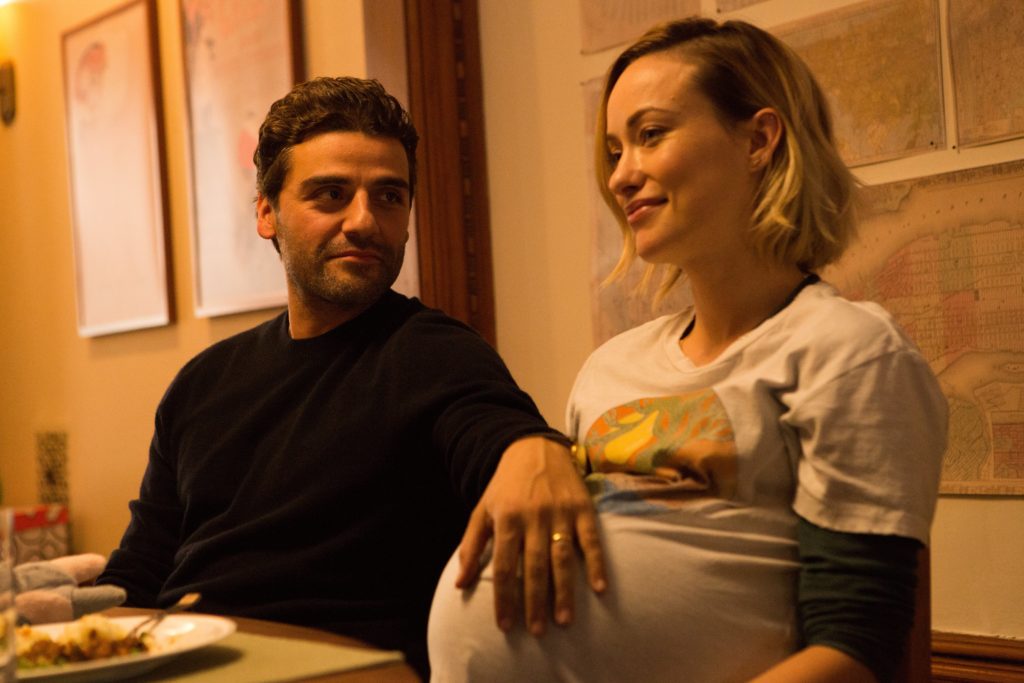
The movie “Life Itself” is a multigenerational story, set in multiple time periods, with scenes playing out from different characters’ points of view. There are shocking twists and plenty of tear-inducing moments, stemming from both sadness and joy. If this sounds like an episode of “This Is Us,” that’s because the film’s writer and director is Dan Fogelman, creator of the hit NBC drama.

“I’ve always been fascinated how different people can have different perspectives of the same event, but also that life is wildly unpredictable,” Fogelman told the Journal. “In any given hour, your life can alternate between sad and joyous, mundane and important. It can change on a dime. This film is about life and regular people, but the most ordinary lives can be really romantic if you look at them through a wide enough lens.”

The film has an ensemble cast that includes Oscar Isaac, Olivia Wilde, Annette Bening, Mandy Patinkin, Jean Smart, Olivia Cooke, Antonio Banderas and Samuel L. Jackson.

“[It’s] a little bit darker but we explore some of the same themes” as “This Is Us,” Fogelman said. “It’s a group of people who are connected by difficulty and loss, but there’s a lot of optimism in the big picture.”

Fogelman began writing the film four years ago, “without much forethought or inspiration,” but came to realize that he had been unconsciously inspired by two incidents a year apart: the sudden passing of his mother 10 years ago and meeting the woman he would marry.

Fogelman also recognizes the tangential influence of a favorite writer, Philip Roth, in that his characters write or talk about writing, and that a comedic kitchen table scene “feels like it could have been a scene out of ‘Portnoy’s Complaint,’ ” he said. “[Roth is] more in my bones than someone I’m trying to consciously emulate.”

“I’ve always been fascinated how different people can have different perspectives of the same event, but also that life is wildly unpredictable.” — Dan Fogelman

Fogelman said his second time directing a film  (his first was 2015’s “Danny Collins”) was quite challenging. “[The film] plays with tone. Going from romantic comedy scenes to tragic scenes is a real balancing act,” he said.

Half of the movie was shot in Spain, in Spanish with a Spanish crew, so Fogelman worked with a translator and took lessons to communicate with them.

“I enjoy working with actors but I’m more of a writer at heart,” he said. “Directing means a lot of time spent outside, being really cold or really hot, really early in the morning or late at night, none of which I like. I direct only when it feels important that I do it to tell the story.”

Fogelman said that while “Life Itself” reflects the darker side of life, it also depicts “a beautiful, romantic experience filled with love and family. Hopefully, it can be a reminder in these times that the human experience is not as divided and divisive as we see on the news. We all experience love and loss and joy and tragedy, and there’s something beautiful in that amid all the darkness.”

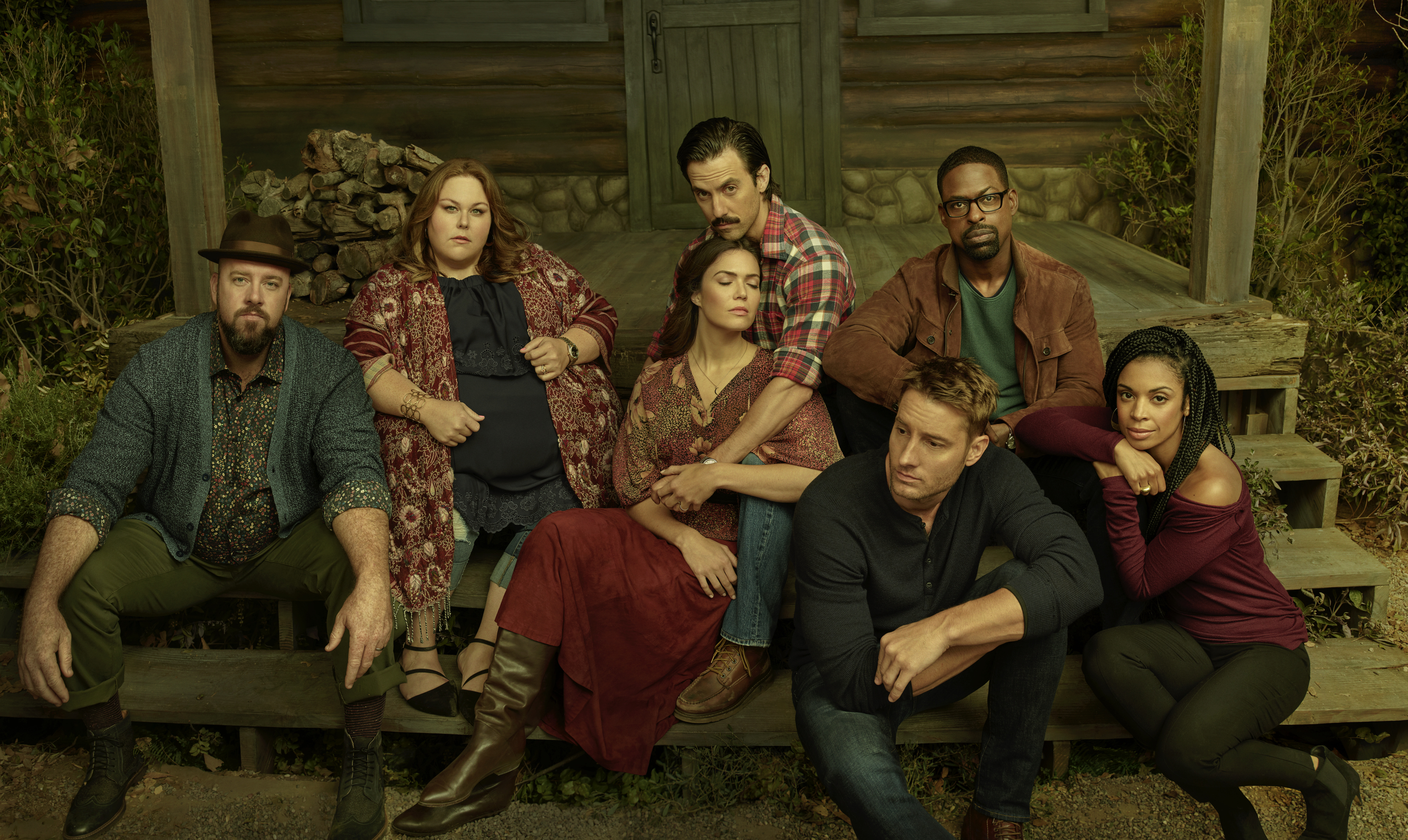
THIS IS US – Season: 3 – Chris Sullivan as Toby, Chrissy Metz as Kate Pearson, Mandy Moore as Rebecca Pearson, Milo Ventimiglia as Jack Pearson, Justin Hartley as Kevin Pearson, Sterling K. Brown as Randall Pearson, Susan Kelechi Watson as Beth Pearson (Photo by: NBC)

As for “This Is Us,” 12 of 18 scripts have been completed and six have been edited for the third season, which has a “new beginnings” theme, Fogelman said. The premiere on Sept. 25 picked up on the Pearson siblings’ 38th birthday, “and they’ve reached a point where it’s time to move on to the next chapter.”

Kate (Chrissy Metz) will try again to get pregnant; Kevin (Justin Hartley) begins a romance with sister-in-law Beth’s (Susan Kelechi Watson) cousin; and Randall (Sterling K. Brown) “is still looking for a purpose in life,” Fogelman said. We’ll also see the courtship of Jack (Milo Ventimiglia) and Rebecca (Mandy Moore), Jack’s time in Vietnam with his brother Nicky (Michael Angarano), and go with Randall back to the future.

Fogelman promised answers to at least some big questions midway though the season, revealed in “a slow burn. You’ll be hard-pressed to know exactly where the storylines are going to go. People shouldn’t get complacent about paying attention because there’s stuff coming that will be water cooler-ish.”

The series’ success raises the bar, but Fogelman doesn’t feel the pressure.

“Our crew, actors and department heads are so good at what they do. We feel confident. We always had a plan,” he said. “We know what will happen to each character and roughly when. We’ve had that plan since the beginning.”

There are several new series this season in the “This Is Us” vein, but Fogelman chalks that up more to network marketing than what the creators had in mind. “Human family dramas are not new,” he said. “I root for those shows. That’s the kind of stuff I like.”

Describing himself as “a very secular Jew,” Fogelman stopped attending Hebrew school after he became a bar mitzvah, but he attends High Holy Days services and can “still follow along in Hebrew.” He remains close with the Jewish friends he met at summer camp. “I’ve created a Jewish community with them,” he said.

Launching “This Is Us” while promoting “Life Itself” has Fogelman dreaming of a vacation. “We’re going to do some press in Europe at some point and hope to get some time there. We’re talking about renting an RV and driving up the West Coast,” he said. “I shot the movie after the first season of [“This Is Us”] ended and edited it while shooting the second season.

“If I don’t take a break, my wife might leave me,” he joked, noting that he isn’t writing a new movie script. “I need to recharge my brain before I go off half-cocked and write something that I don’t really want to do.”


“Life Itself” is in theaters now. “This Is Us” airs at 9 p.m. Tuesdays on NBC.

‘This Is Us’ Creator Brings Family Drama to Big Screen Read More »

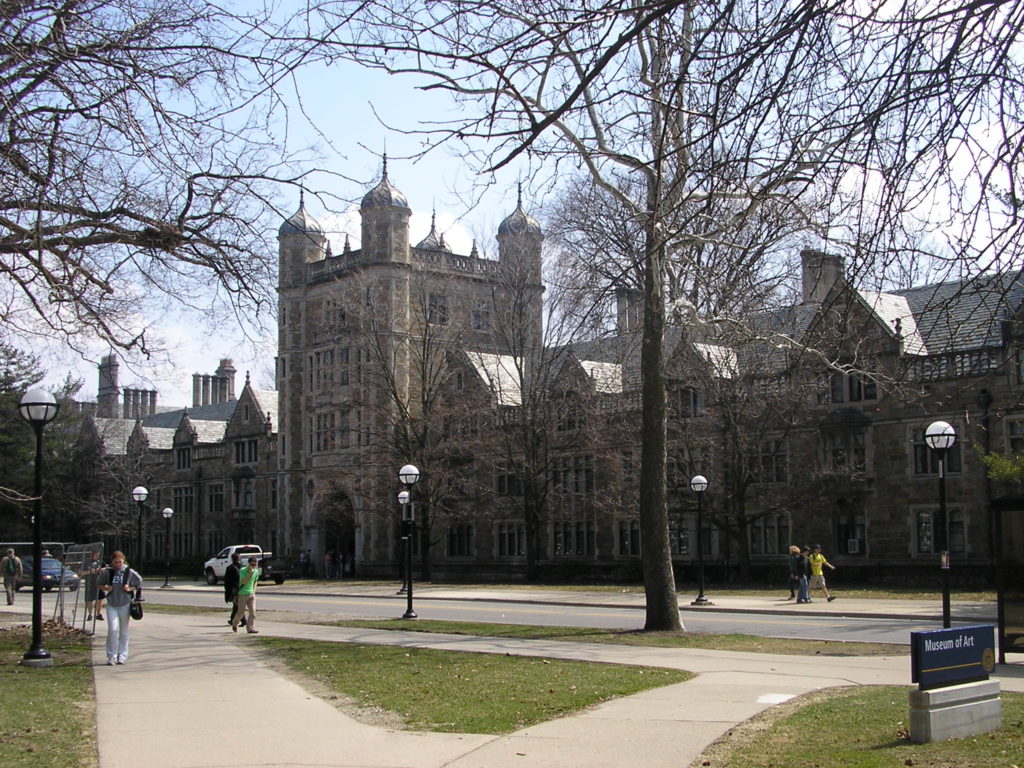
Jewish Groups Call for Disciplinary Action Against Michigan Professor

Myriad Jewish groups are calling for University of Michigan Professor John Cheney-Lippold to be disciplined for refusing to write a letter of recommendation for a student to study abroad in Israel.

In a Friday letter organized by the AMCHA Initiative, 58 Jewish groups, including World Jewish Congress, The Lawfare Project and the Alpha Epsilon Pi fraternity, said that recent statements from University of Michigan President Mark Schlissel and the university were insufficient.

“Impeding a student’s ability to participate in a university-approved educational program in order to carry out political activism is reprehensible. Individual faculty members have the right to express public support for an academic boycott of Israel,” the letter states. “But when faculty like Prof. Cheney-Lippold go as far as implementing the boycott’s guidelines by taking action to suppress students’ ability to travel to or study about Israel, they have abrogated the most basic professorial responsibility of promoting the academic welfare of their students.

“Such discriminatory behavior that impedes the rights of students must be sanctioned to the fullest extent of university policy.”

The letter added that the Wednesday statement from the university, saying they were “disappointed” in Cheney-Lippold, but didn’t actually condemn Cheney-Lippold’s actions and gave credence to the various opinions held by professors at the university.

“Both your omission and inclusion give the impression that individual U-M professors will be permitted by your administration to discriminate against students wanting to study about and in Israel,” the letter states. “This is deeply alarming, given that there are at least two dozen U-M faculty members in a number of departments who have expressed public support for the academic boycott of Israel, including seven faculty members currently serving as chairs and directors of U-M academic departments and programs. Left unaddressed, this isolated incident could lead to unchecked discrimination, and the denial to students of their fundamental rights.”

Additionally,  in a Friday press release, the Simon Wiesenthal Center called for the Department of Education to investigate the matter, as well as for the university to discipline in the professor.

“This goes well beyond criticizing Israel, disagreeing with Israeli policy or even a personal boycott of Israel, which is despicable but a protected right,” Simon Wiesenthal Center Associate Dean Rabbi Abraham Cooper said. “Jewish students are being punished for their affinity with Israel. In denying the letter of recommendation purely on his dislike of Israel and using a double standard to justify it, Cheney-Lippold has egregiously violated this young woman’s civil rights.”

Cooper asked if Cheney-Lippold would ever refuse to write a letter of recommendation for a student to study abroad in China or Pakistan, calling it “a gross hypocrisy.”

“Jewish students need protection from the likes of Cheney-Lippold and the academic bigotry he practices,” Cooper said. “University of Michigan and other great universities must hold anti-Semitic civil rights violators accountable for undermining the academy’s core mission.”

StandWithUs and Alums for Campus Fairness also sent a letter to Schlissel arguing that Cheney-Lippold should be disciplined based on the university’s policies.

“Mr. Cheney-Lippold’s email discriminates against Jewish students based on their religion, Israeli students based on their national origin and others at the University of Michigan who wish to study in Israel,” the letter states. “Furthermore, his refusal to write a letter of recommendation based on his support of a discriminatory academic boycott adversely affected a student’s education at the university. As you know, studying abroad is an enriching educational opportunity and a vital service offered to University of Michigan students. Mr. Cheney-Lippold is creating an ‘intimidating, hostile, [and] offensive’ education environment for this student, which unreasonably interferes with her’“participation in a University activity,’ in violation of university policy.”

Jewish Groups Call for Disciplinary Action Against Michigan Professor Read More »

What’s Happening: Trybal Gathering, Volunteer Fair, Honey Tasting

Events this week include Trybal gatherings, Volunteer fairs, honey tasting and events for Sukkot.

THU SEP 27

Bari Weiss

Bari Weiss
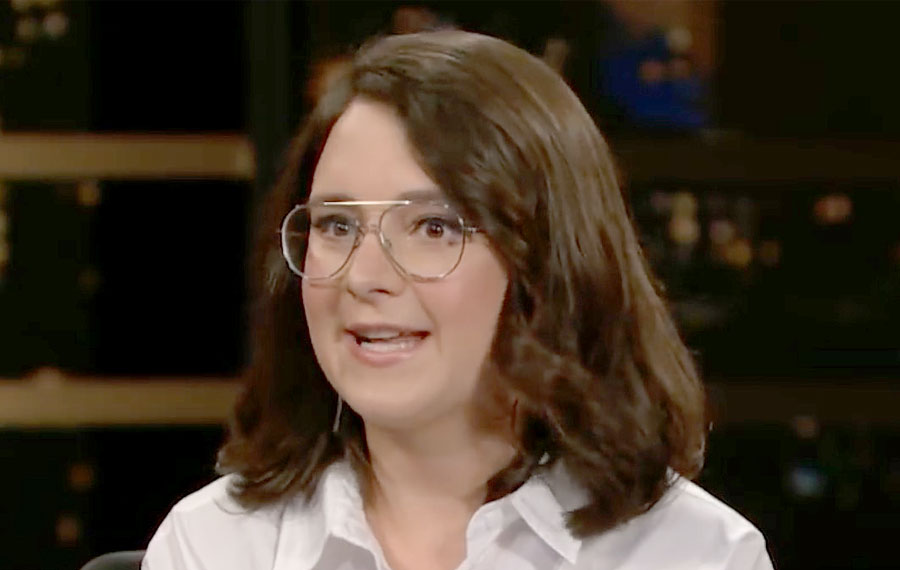
New York Times op-ed editor and writer Bari Weiss, who focuses on politics and culture, appears at Sinai Temple for a discussion with Sinai Temple Rabbi David Wolpe titled “Damned If We Do, Damned If We Don’t: Jews in the 21st Century.” Weiss, who is a regular guest on MSNBC’s “Morning Joe” and HBO’s “Real Time With Bill Maher,” has also written for The Forward, Ha’aretz and The Tablet. She won this year’s Bastiat Prize for her “brilliant, incisive journalism defending the cornerstone of individual liberty and civil society: freedom of speech.” After their discussion, Weiss and Wolpe will take questions from the audience. 7:30–9:30 p.m. Free for temple members, $25 general public. Sinai Temple, 10400 Wilshire Blvd., Los Angeles. RSVP to Rachel Polonsky, (310) 481-4228, or rpolansky@sinaitemple.org.


FRI SEPT 21

Trybal Gathering
Young Jewish adults, ages 21 and older, participate in a getaway at Gindling Hilltop Camp in Malibu. Called a Trybal Gathering, this four-day weekend offers creative and relaxing events, including hanging out on the beach, whale-watching and hiking coastline trails and canyon paths. The setting, far from the city, is ideal for connecting with new friends. 4 p.m. Friday through 11 a.m. on Sept. 24. $499–$580. Gindling Hilltop Camp, 1495 Pacific Coast Highway, Malibu. (202) 536-2929.

“Beautiful: The Carole King Musical”

“Beautiful: The Carole King Musical”
The musical play “Beautiful” tells the story of singer-songwriter Carole King’s rise to stardom, from being part of a hit songwriting team with her husband, Gerry Goffin, to her career as a successful solo performer. The musical features a song lineup of Top 40 hits, including “I Feel the Earth Move,” “One Fine Day,” “(You Make Me Feel Like) A Natural Woman,” “You’ve Got a Friend” and the title song. The musical’s book is by Douglas McGrath, whose work was nominated for a Tony Award. Through Sept. 30. 8 p.m. Tickets start at $49. Hollywood Pantages Theatre, 6233 Hollywood Blvd., Los Angeles. (800) 982-2787.

“Broadway Bound”
The late Neil Simon’s classic comedy is the story of two brothers striving to be comedy writers at the exact moment the fairly long marriage of their parents is breaking apart. In “Broadway Bound,” which debuted in 1986, Stanley and Eugene discover their father has been cheating on their mother, not with just any woman but one who is dying. This gives the brothers material for their radio scripts. Fridays and Saturdays 8 p.m., Sundays 2 p.m., and the last three Thursdays in  October at 8 p.m. Through Oct. 28. $25–$40. Miles Memorial Playhouse, 1130 Lincoln Blvd., Santa Monica. (323) 821-2449.


SAT SEPT 22

“Fools”
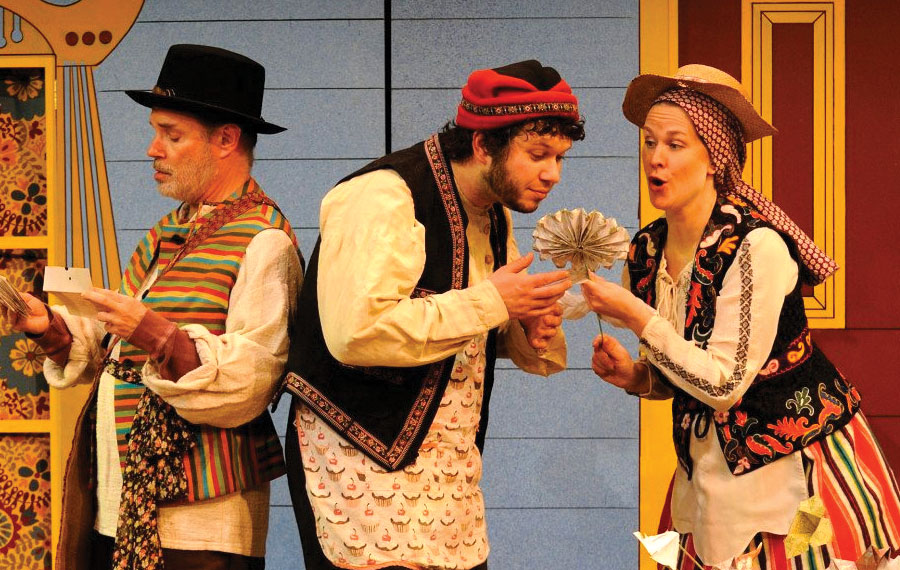
It is the 1890s in Ukraine and energized young teacher Leon Tolchinsky lands in a pocket-sized hamlet, which happens to be cursed. This is the setting for the late playwright Neil Simon’s comic fable, “Fools,” following Leon, the teacher, who learns that until the curse somehow is lifted, everyone in the village remains stupid and unable to fall in love. Leon, complicating matters, falls in love with his student. Presented by the Jewish Federation of the Greater San Gabriel and Pomona Valleys. Sept. 22 and 29 at 8 p.m., Sept. 23 and 30 at 3:30 p.m., Sept. 27 at 7:30 p.m. $10 for students, $20 general. Porticos Art Space, 2033 Washington Blvd., Pasadena. (626) 445-0810.


SUN SEPT 23

Tikkun Olam Networking Fair
People of all ages interested in volunteer opportunities can schmooze over coffee and bagels with Kehillat Israel members involved in more than 50 nonprofits, including Baby2Baby, Beit T’Shuvah, WeTap and Women Helping Youth. The networking fair also includes the making of no-sew blankets for Children’s Hospital Los Angeles and packing backpacks for children in foster care. 10 a.m.–noon. Free. Kehillat Israel, 16019 Sunset Blvd., Pacific Palisades. (310) 459-2328.


WED SEPT 26

Nazi-Looted-Art Conference
Nearly 75 years after the end of World War II, hundreds of thousands of artworks and valuables stolen from Jews and other victims who were under Nazi rule are still missing, scattered around the world. At a conference called “Righting a Wrong: The Future of Nazi Looted Art Recovery in the U.S. and Abroad,” family members, researchers, lawyers, auction house directors and museum curators discuss how the items can be found and recovered. $30–$175. 8 a.m.–5:45 p.m. Skirball Cultural Center, 2701 N. Sepulveda Blvd., Los Angeles. (310) 440-4500.

Celebrating Social Justice
The Center for Council convenes a daylong celebration of participants in its Social Justice Council Project, which strengthens staffers in organizations that work with  people in need in Los Angeles. Performances and presentations include “Cops and Communities: Circling Up,” which focuses on promoting healthier relationships between law enforcement and community leaders. 10 a.m.–4 p.m. Free. Breakfast and lunch served. Los Angeles River Center & Gardens, Mountains Recreation & Conservation Authority, 570 W. Avenue 26, No. 100, Los Angeles.


THU SEPT 27

Sammy Miller and The Congregation

Sammy Miller and The Congregation
Sammy Miller and The Congregation are on a mission to bring art back to the people. With their feel-good, joyful sound, they share the power of community through their music in a unique style that entertains, enriches and uplifts. Miller, a Grammy-nominated drummer, leads a six-member jazz ensemble. 8 p.m. $15–$40. Lisa Smith Wengler Center for the Arts, Pepperdine University, 24255 Pacific Coast Highway, Malibu. (310) 506-4522.


SUKKOT EVENTS Near you

SUN SEPT 23

“Who’s in Your Sukkah?”
In the final hours before the start of the weeklong holiday of Sukkot, PJ Library and Valley Beth Shalom (VBS) Day School hold a family-oriented sukkah experience on the playground of the Conservative congregation. Storytime for children ages 2–7 features a reading by VBS Early Childhood Education Director Abby Andiman Mars. 10–11:30 a.m. Valley Beth Shalom, 15739 Ventura Blvd., Encino. RSVP to Sam Miller at smiller@vbs.org or (818) 530-4051.

Sukkah Time
Get better acquainted with Beth Chayim Chadashim. The community comes together in the afternoon to build a large sukkah and enjoy a potluck dinner held by Rabbi Lisa Edwards and Cantor Juval Porat. A celebration to welcome the arrival of the Sukkot holiday follows. 2 p.m. sukkah building, 5 p.m. potluck dinner, 6 p.m. Sukkot service. Free. Beth Chayim Chadashim, 6090 W. Pico Blvd., Los Angeles. (323) 931-7023.

Building a Sukkah
Sukkah-building, dancing and singing highlight Adat Shalom’s Shalom Mishpacha Event and Sukkah Sing-Along. An energetic concert by Cantor Dale Schatz and the always-fun PJ Library book-reading are among the attractions, which also include face-painting and the decorating of Adat Shalom’s sukkah. 3–4:30 p.m. Free. Adat Shalom, 3030 Westwood Blvd., Los Angeles. RSVP to joanna@adatshalomla.org or call (310) 475-4985.


WED SEPT 26

“Seeking Shelter: Addressing Homelessness & Affordable Housing”
Join Temple Beth Am Rabbi Matt Shapiro, the temple’s OneLA Team and its social action committee in the sukkah to deepen the understanding between Sukkot and the housing and homelessness crisis in Los Angeles. The evening begins with a potluck dinner, followed by a program. Los Angeles City Council members are scheduled to attend to hear concerns and answer questions. 6 p.m. dinner, 7–9 p.m. program. Temple Beth Am, 1039 La Cienega Blvd., Los Angeles. (310) 652-7353. RSVP here.


THU SEPT 27

“A Taste of Local Honey”
If you’re between the ages of 22 and 27 and want a little more sweetness in your life, NuRoots, a movement devoted to connecting young people to their Jewish community and Jewish values, invites you to “A Taste of Local Honey.” Eli Lichter-Marck of Eli’s Bees will lead the group in an exploration of honey. You can learn how honey moves from flower to hive to your kitchen, and then taste a variety of honey produced locally and from around the world. Admission includes dinner, honey-infused desserts and a chance to create your own jar of honey. 7 p.m. $15. Artisan Cheese and Wine, 12023 Ventura Blvd., Studio City. Purchase tickets here.

“Sax in the Sukkah”
People looking for a swinging Sukkot who are between the ages of 21 and 39 can attend “Sax in the Sukkah,” organized by Sinai Temple’s Atid club. Participants are invited to drink, enjoy hors d’oeuvres and groove to a live jazz band with other young adults in celebration of the harvest. 7:30–10:30 p.m. $20. Sinai Temple, 10400 Wilshire Blvd., Los Angeles. (310) 481-3244.

What’s Happening: Trybal Gathering, Volunteer Fair, Honey Tasting Read More »

Man Who Allegedly Threw Rock Into Polish Synagogue During Yom Kippur Services Arrested

A man who allegedly threw a rock into a Polish synagogue in the city of Gdansk during Yom Kippur services on Sept. 19 was arrested by Polish police on Sept. 21.

According to the Associated Press, the 27-year-old man was arrested at a village south of Gdansk; he did not resist arrest. The police have not given a motive for the alleged perpetrator.

Security footage of the incident shows a man wearing jeans and a black shirt throwing a rock into the window of the New Synagogue at around 6 pm local time on Sept. 19. The rock fell into “the atrium where women waiting for neilah — the final prayer of Yom Kippur,” according to the Jewish Religious Community in Gdansk’s Facebook page. No one was hurt.

Pawel Adamowicz, the mayor of Gdansk, said in a statement that he “categorically rejects” the rock-throwing.

“I apologize to the Jewish community of Gdansk,” Adamowicz said. “In the city of Freedom and Solidarity, we respect all religions and do not accept acts of hooliganism.”

World Jewish Congress President Ronald Lauder said, “The attack on Gdansk’s New Synagogue is shocking and dismaying in itself, made all the more distressing by the fact that it took place on Yom Kippur, evoking the terrible tragedies that occurred in German-occupied Poland during the years of the Holocaust.”

New Synagogue was among the synagogues that were attacked on Kristallnacht, the Night of the Broken Glass, where almost 100 Jews were killed and thousands of Jewish homes, businesses and synagogues were vandalized and destroyed.

Man Who Allegedly Threw Rock Into Polish Synagogue During Yom Kippur Services Arrested Read More »

Movie News: Idina Menzel, Greg Grunberg, Zach Braff and more

Idina Menzel (“Frozen”) has been cast in “Uncut Gems,” joining Adam Sandler and Judd Hirsch in the comedy set in New York’s Jewish-run Diamond District. Menzel will play Sandler’s wife and Hirsch’s daughter in a story about a jewelry-store owner with a gambling addiction and mounting debts whose diamonds are stolen. Menzel will also reprise her voice role of Elsa in “Ralph Breaks the Internet” in November and in “Frozen 2” next year.

Greg Grunberg, who played X-wing fighter pilot Snap Wexley in “Star Wars: The Force Awakens,” will return to reprise the role in “Star Wars: Episode IX,”  set for release in December 2019. Producer-director J.J. Abrams has cast Grunberg in many of the movies and TV shows he’s done dating back to “Felicity” in 1999, including “Alias,” “Lost,” and “Mission Impossible III.” Grunberg also starred in “Heroes,” and will be seen in the forthcoming “A Star Is Born” as the tour bus driver for his “Alias” co-star Bradley Cooper’s character. Cooper directed the film, which opens Oct 12.

Zach Braff, most recently seen in the short-lived sitcom “Alex, Inc.,” has joined Christopher Walken and Christina Ricci in “Percy,” a Canadian drama based on the true story of a farmer (Walken) who sued the conglomerate Monsanto for genetically modifying his crops. Braff plays the small town lawyer representing the plaintiff who took the case all the way to the Canadian Supreme Court.

Isla Fisher is set to star as the wife of the self-absorbed billionaire played by Steve Coogan in “Greed,” which will shoot in Europe later this year. In March, Fisher will appear alongside Matthew McConaughey’s title character in “The Beach Bum,” also starring Zach Efron and Jonah Hill. And on a more serious note, she’ll star with Keanu Reeves in “The Starling,” playing a woman who becomes suicidal after the death of their baby daughter.

Actress Kyra Sedgwick will step behind the camera to direct “The Way Between,” about a man whose girlfriend dies in a car accident but he finds a way to connect with her in his dreams.

Joseph Gordon-Levitt has been cast opposite Jamie Foxx in a sci-fi movie for Netflix, directed by Ariel Schulman and Henry Joost.  No title, plot, or character descriptions have been released. Gordon-Levitt will also star in the drama “7500” as a pilot whose plane is hijacked.

Movie News: Idina Menzel, Greg Grunberg, Zach Braff and more Read More »

Rabbi Steven Z. Leder Erev Rosh Hashana 5779 Sermon

This sermon came from Rabbi Steven Z. Leder at Wilshire Boulevard Temple in Los Angeles.


I suffer from anxiety.  It is very real and sometimes very frightening.  It can ruin parts of days, weeks, months and years.

I worry about finishing what we started on this campus more than a decade ago.  I worry nearly every day that whatever I am doing for a Temple member I am simultaneously disappointing others because I am not tending to them.   I worry about having enough money when I retire, about my elderly parents and my kids. And as a rabbi I see so much dysfunction, so much hurtful gossip, so much cancer and death that it is hard not to feel like I’m next.

And of course there is the news. That daily toxic cocktail of mind boggling instability, criminality and drama in Washington, tweeting and testing the very fabric of democracy itself.

Wildfires, Putin, Assad, Iran, North Korea, global warming, Mueller, racism, corruption, sex scandals, immigration cruelty, floods, homelessness—over and over and over and over and over and over and over and over again.  And tonight we’re supposed to wish each other a shana tova?  Really?  Yes. Really.

Our ancestors put celebrating on Rosh Hashanah ahead of the past remorse we face on Yom Kippur.  First hope in the future, then the muck of our past. And believe me, the sages knew a lot more about anxiety than we do.  Consider the Unetane Tokef prayer we say on Rosh Hashana.  The one that asks, “Who by water?  Who by fire? Who will be troubled?  Who will be needy? Who shall live and who shall die?”  That prayer was written at least 13 centuries ago.

Life 13 centuries ago was nothing but anxiety.  Rape, murder, muggings, death by fire or flood or plague or starvation or war were regular, daily occurrences.  Today a Western European has 1/35th the chance of being murdered compared to his medieval ancestors. Thirteen hundred years ago 1/3 of all children were dead by age five.  It’s true. “Nothing is more responsible for the good old days than a bad memory.” Thirteen centuries ago, if they had it, everyone would have been on Xanax.

But our ancestors had a different, more powerful prescription for managing their anxiety and fear.  I try to use it every day. Remember how that prayer ends; what comes after that long list of terrible things to worry about in the coming year?  It ends with three simple things that can get us all through. “But teshuva—repentance, tefilah—prayer, and tzedaka—generosity” says that wise prayer, “Ma-a-virin et roah ha-gezarah—will make whatever comes next year easier to live with and through.”

This was the ancient rabbis’ simple, three-part formula for surviving in their time and it can be ours too.  First, teshuvah–repentance.  And what is repentance really, other than trying to make things right with others?  Our ancestors lived in small villages, where the key to survival was the quality of relationships with a handful of people who really mattered.  Are we any different? Do any of us have more than a small handful of people in our lives who really matter?

So when that wave of worry sometimes overwhelms me, when I cannot sleep, when I do not understand myself, I reach out for Betsy.  I tell her. I hang out with Aaron and Hannah, doing nothing much, which of course, means everything. I pour it out to a friend I know will never gossip about me.  Often, the only thing that helps is opening my heart to someone I deeply love.

So double down, says the Unetana Tokef.  When you are in pain, when you are lost, when you are afraid—double down on your relationships.  Cherish them. Nurture them.

Whoever you came here with tonight or called to wish a Shana Tova, that person by your side right now, he loves you, she loves you, he will shelter you when the rain falls, she will hold you when the darkness is too dark to see.

No one, no one endures suffering better alone.

Tend to your relationships with teshuvah.  Do not let the centrifuge of life’s stresses whirl your family and your friendships apart.  Double down. Make things right with the people you love. For only love can lift us from our suffering and our fear.

Second, there is t’filah—prayer.  I know what you might be thinking.  “Oh great—the world is coming apart at the seams and the rabbi wants me to pray?  I thought this was a reform synagogue.” I do want you to pray, but not in the way most people think.

The English word “prayer” comes from the Latin precari, which means to beg.  But the Hebrew word for prayer is tefilah from the root pelel which means “to reflect upon or evaluate oneself.”    The rabbis did not envision God as a cosmic Grantor of Wishes.  To the contrary, prayer is supposed to change us, not God.

Prayer is a different way of thinking about the world, than CNN, Twitter, or Fox.  Prayer is the counting of our blessings even when that is such a difficult thing to do.  Consider the Kaddish.  When we least feel like it, when we would rather sink into the very ground and die ourselves, when we feel so terribly cursed, we are commanded to stand up and affirm the blessing of life.

Legend has it, in the time of Kind David, 100 people died every day from a terrible plague. So King David and the Sages instituted a spiritual “measure for measure;” the saying of 100 blessings each day.  And suddenly, the plague stopped. To this day a traditional Jew says 100 blessings a day. A blessing for awaking? Yes. For eating a strawberry? Yes. For the ways our bodies work? Yes. For narrowly avoiding a car crash?  Yes. A tree swaying in the breeze? Yes. Almost all cultures have some sort of blessing over bread. Why a blessing over something as ordinary as bread? It’s simple of course…if we can be grateful for bread, then we can be grateful for the other, greater blessings of life too.

I keep a small, laminated prayer in my closet about the miracle of our bodies.  I say it every morning because just a few years ago, after that terrible back injury, Betsy had to dress me like a child and more than once I wept in her arms saying, “I can’t walk.”  I pray in my closet each morning because I can put on my own socks and shoes, and walk onto this bimah to be with you. Simple blessings are easy to miss. A friend of mine calls this “Standing knee deep in the river and drowning of thirst.” So yes, pray.  Use whatever words you wish, but count your blessings 100 times a day. It will change your life.

I saw a fascinating exchange on Bill Maher’s show a few weeks ago.  It was between Harvard Professor Steven Pinker and the African American comic and political commentator D. L. Hughley.  Pinker uses facts to tell the truth about modernity. You don’t have to listen long to realize that although the news isn’t fake, it is false sample.

For example, 200 years ago, 90 percent of the world’s population subsisted in extreme poverty. Today, fewer than 10 percent of people do and the world has never been more democratic, with two-thirds of the world’s people living in democracies.  Last year the world had 12 ongoing wars, 60 autocracies, and more than 10,000 nuclear weapons. But 30 years ago, there were 23 wars, 85 autocracies, and more than 60,000 nuclear weapons.

Over the last century, we’ve become 96 percent less likely to be killed in a car crash, 88 percent less likely to be mowed down on the sidewalk, 99 percent less likely to die in a plane crash, 95 percent less likely to be killed on the job, 89 percent less likely to be killed by drought, flood, wildfire, storm, volcano, or landslide.  Pinker proves the real answer to that Rosh Hashanah question who shall die by water, or by fire, is probably not a single one of us.

During Maher’s show, Hughley challenged Pinker’s claims of progress with a rant about the state of African Americans, claiming no progress since the 60s and the decimation of his people.  Pinker shook his head and calmly replied, “That’s not true. There is more to be done, but there has been a lot of progress. Income is up, especially for black women, violence is down, and racist incidents are down.”  Hughley was silent. He had a hard time acknowledging that while we still have a long way to go, things really are much better.

The Talmud put it differently.  “We do not see things as they are,” say the rabbis, “we see things as we are.”  That’s why Pinker’s statistics were so dumbfounding to Hughley. What we see is always within us even before we begin to look.  If you don’t believe that people are mostly good, you will see mostly evil in others.  If you expect the worst you will be blind to your blessings. If you think religion is the source of evil you will never see the good that religion does for people.  We see the world not as it is, but as we are.  Or, as I often like to say, “A sad Jew, is a happy Jew.”

You never hear a journalist say, “I’m reporting live from a country that has been at peace for 40 years,” or “a city that has not been attacked by terrorists.”  This morning the LA Times could have run the headline, “137,000 people escaped from extreme poverty yesterday and every day for the last 25 years.” That’s one and a quarter billion people leaving poverty behind, but you never read about it.

Progress is the greatest fact in human history.  We are surrounded by miracles every day. But as humanity has gotten healthier, wealthier, wiser, safer and happier, so many of us have become more anxious and afraid.  I know I have.

Often when every other option fails someone will say, “There is nothing left to do but pray.”  It is the response of last resort. But the rabbis put it first, not last. It is the thing we are supposed to do more often each day than anything else.  It is a wise person, a happier person, a calmer person, a better person, who affirms the enoughness, the beauty, the miracle of bread, socks and shoes. It is hard to be hopeless when you are grateful.

And let’s not forget that final antidote to fear prescribed by the rabbis in the Unetana Tokef prayer.  Tzedaka–the righteous act of helping others.

I wonder how many of you were raised with the same parenting technique I was.  My father called it the “Stop crying or I will really give you something to cry about,” technique.

I hated it when I was a boy.  But the older I become the more I realize, crude as that parenting was, there is a lot to be said for perspective.  We all need reminding that things really could be worse and that for many people they are.

When someone comes to see me about a problem, I sometimes offer a seemingly unrelated solution.  “Volunteer one Sunday at the Temple’s food pantry,” I suggest. Hand out sandwiches to the homeless, the mentally ill, the friendless, the forgotten, the aged poor and I promise, you will have a new perspective on your own life.

This Chinese proverb says it best:
If you want happiness for an hour, take a nap.
If you want happiness for a day, go fishing.
If you want happiness for a month, get married.
If you want happiness for a year, inherit a fortune.
If you want happiness for a lifetime, help somebody else.

“We do not see things as they are, we see things as we are.”  Who am I—really? Can I become calmer, better, more hopeful, more helpful and at peace in the year to come?  Who are you–really? And how will you find the hope and peace that are sometimes so elusive in your life?

The answer was given to us long ago:

Teshuvah—let us love more deeply.

Tefila—whatever our losses let us count our many blessings.

Tzedaka—and let us reach out with what we have to those who have so much less.

For it is in these ways, come what may, we will make it a shana tova.


For more of Rabbi Steven Z. Leder‘s work, visit his website.

Rabbi Steven Z. Leder Erev Rosh Hashana 5779 Sermon Read More »

Michele Prince: Helping Kids and Adults Through the Grieving Process

After years of working in advertising, Michele Prince decided to go back to school to pursue a joint master’s degree in social work and Jewish communal service through USC and Hebrew Union College-Jewish Institute of Religion.

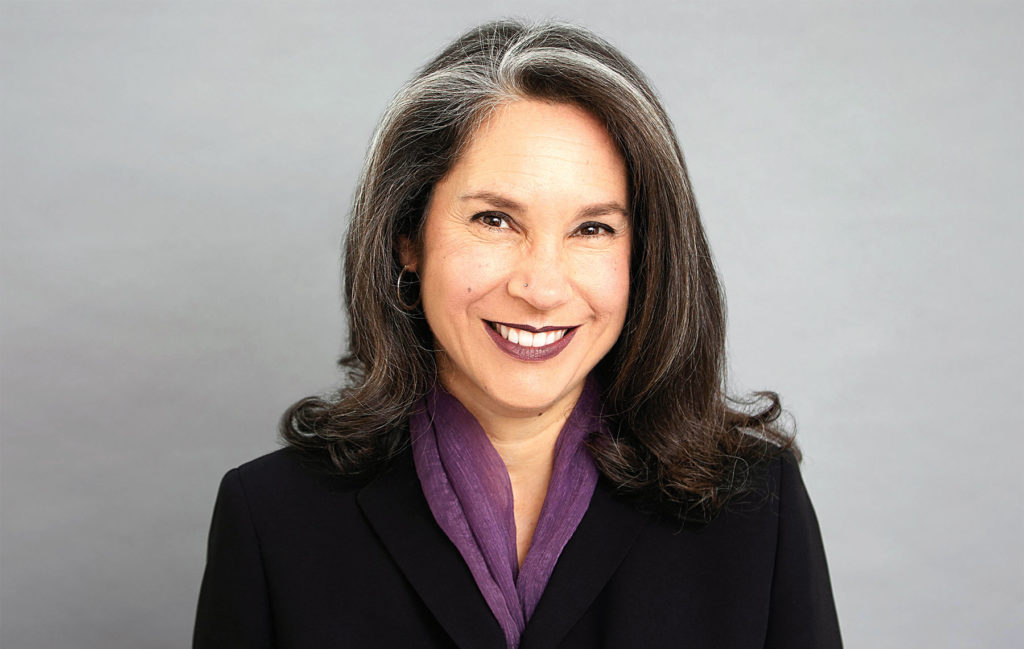
In 2012, Prince, now 51, who attends Mishkon Tephilo synagogue in Venice, became the CEO of OUR HOUSE Grief Support Center. The nonprofit supports kids as young as 4 and adults of all ages who have lost a close loved one: a parent, a partner, sibling or child.

OUR HOUSE offers services in English and Spanish in multiple locations throughout Los Angeles and Orange County, including West Los Angeles, the San Fernando Valley and Koreatown, where it operates out of The Karsh Center at Wilshire Boulevard Temple.

Now in its 25th year of operation, Prince spoke with the Journal about the important work the organization provides and why she’s drawn to help the grieving.

Jewish Journal: Much of your work focuses on bereavement. What is it about this work that called to you?

Michele Prince: My mom died when I was 16 and there was nothing like an OUR HOUSE Grief Support Center that my family found. And so, when I [went] back to school and actually learned about this agency, I was like, “Wow, that’s what I am going to devote my life to: making sure people have those kinds of resources.”

My mom’s death actually followed two earlier deaths. The year before, my sister’s 4-year-old son drowned. It was a terrible tragedy, the worst anyone can imagine. And the year before that, one of the boys in my social circle within the Jewish community killed himself. So that was pretty intense to grow up with and not a lot of support, and that’s why I do what I do.

JJ: Is there a stigma surrounding grief support?

“There is still a stigma around grief support and just about getting help, period. Couple that with a stigma around anything to do with death [and it’s] a doozy.”

MP: There is still a stigma around grief support and just about getting help, period. Couple that with a stigma around anything to do with death [and it’s] a doozy. It’s certainly been reduced. But for many people it doesn’t even occur to them to reach out for help. But then many people think, “I’m OK.”

We still have such a bootstrap society of just pull yourself up and get over it. But that’s why we’re here, because we know it really helps to be in a grief support group with others who understand what you are going through. And I really believe in it. We see miracle after miracle every day.

JJ: What does a miracle look like?

MP: Let’s say we’re sitting in this room and it’s the first night of a young widow/widower group. So they are in their 30s and 40s and they are dragging themselves in here, and their faces are gray, and their clothes are disheveled, and they can barely get up into the world. And then they do the work in the group and they are comforted by the group leaders and their co-group attendees, and in 18 months, our group leaders will share with us, “I heard the laughter” or, “There was a little lipstick.”

They were just holding themselves up a little bit more, re-entering life with a little more resilience or vibrancy than when that group started. And it’s not Candy Land. It’s still painful. And grief doesn’t have an end date. It’s a process and a path that people follow. And so we help them find that glimmer of hope and that transformation.

JJ: Is this work depressing?

MP: I try to be really protective of the staff because they are hearing people’s worst day like 14 times in a day. They are taking that phone call that if you heard it once, it would devastate you. So it is hard. But that’s different than sad because everybody is very mission focused. They know that transformation that I was describing is possible for that person who is calling. We know it’s going to be better for them.

JJ: Do some people feel, “Well I have my rabbi, I’m OK”?

MP: Some people do feel that. But first of all, many clergy members are not amazing at this. Even if they are skilled, again, the idea of being in a group is so powerful because even if [the bereaved] do meet with their clergy member a few times, that’s still short-term. And it can be comforting, also, to be in a really neutral place whether their congregation gets every gold star: They came to shivah, they brought meals, they had Friday night services, or on the opposite end, nobody came, they didn’t call, if they came they bumbled. So in both of those scenarios, people can come here and they can be honest about the things that went well and didn’t go well.

Michele Prince: Helping Kids and Adults Through the Grieving Process Read More »

Paper Plate Fruit Slice Garlands for the Sukkah

I have to confess that when it comes to decorating the sukkah, I like to hang large garlands. They make a much bigger impact than a bunch of smaller ones. And from a practical standpoint, they take up more room so you don’t have to make as many.

These big, bold fruit slice garlands are super easy to create with paper plates and paint, and their bright colors just add to the joy of Sukkot. Multiple strands would look festive hanging across the roof or along the walls. I’m showing how to make both citrus fruit and apple slices. You can do one or the other, or combine them like I have. It’s the perfect sukkah décor — any way you slice it.


What you’ll need:
Colored paper plates (orange, yellow, green and red)
White acrylic paint
Black acrylic paint
Paintbrush
String
Glue


1. For citrus fruit slices, select yellow, orange or green paper plates. I used the small seven-inch size, but for a jumbo-sized garland, the 10 1/2-inch size will also work. Start by painting a half-inch wide white circle on the plate, about an inch from the outside edge.

2. Paint three straight lines — similar to spokes — that are evenly spaced and intersect in the middle. You will now have six triangular fruit “wedges.” Round out the corners of the triangles with white paint, and allow to dry.

3. To make the apple slices, start with a red paper plate. Paint the inside of the plate white, leaving a one-inch strip of red around the circumference. You may need several coats of white paint to get complete coverage over the red.

4. Along the center of the apple, paint small black teardrop shapes for the seeds. Imagine where the core of the apple would be, and paint the seeds on both sides of the core. Allow the paint to dry.

5. Fold the paper plate in half. For the citrus fruit slices, there should be three triangular wedges on either side of the fold. For the apple slices, the seeds should be located just under the fold.

6. Cut a piece of string to your desired length. Wrap each folded plate around the string, nestling the string along the fold. Glue the two sides of the paper plate together to form the fruit slice and lock in the string.


Jonathan Fong is the author of “Flowers That Wow” and “Parties That Wow,” and host of “Style With a Smile” on YouTube. You can see more of his do-it-yourself projects here.

Paper Plate Fruit Slice Garlands for the Sukkah Read More »

Obituaries: Sept. 21, 2018

Debra Agam died Aug. 25 at 63. Survived by daughter Karen (Dan Freedman) Agam Macarah; son Nathan (Kimberly); 5 grandchildren; mother Ruth Fine; sister Cricket (Jerry Boots) Handler; brother David (Eve) Fine. Mount Sinai

Ronnie Amromin died Aug. 28 at 69. Survived by husband Joel; daughter Dana; son Craig; father Nathan Lieberman; brothers Barry (Susan) Lieberman, Sheldon Lieberman, Alan (Denise) Lieberman. Mount Sinai

Georgina Baker died Aug. 19 at 97. Survived by daughter Rosalie (Richard) Glasser; son Paul (Mani); 4 grandchildren; 6 great-grandchildren; sister Margery Redelman. Mount Sinai

Madelyn Chait died July 29 at 91. Survived by daughters Kimberly (Rob) Frankel, Laurie; son Michael (Susan); 7 grandchildren; sister Doris Grant. Mount Sinai 

Florence Cohen died Aug. 17 at 90. Survived nephews Charles, Ian. Hillside

Sylvia “Micky” Dickman died Aug. 17 at 86. Survived by husband Charles; sons James (Adrienne), Robert (Patti); 5 grandchildren; 1 great-grandchild. Mount Sinai

Stephanie Estes died Aug. 15 at 52. Survived by son Jackson; mother Joyce (Henri); sister Janna (David); brother Paul (Rina). Hillside

Helena Fixler died Aug. 20 at 95. Survived by daughters Norma (Dov) Levkowitz, Susan (Samuel) Varon; 5 grandchildren; 6 great-grandchildren. Mount Sinai

Rhona Fox died Aug. 13 at 74. Survived by son David (Martha). Hillside

Irving Feuer died Aug. 23 at 99. Survived by wife Matilda; daughters Elaine (Richard) Feuer-Barton, Judith (Mark) Feuer-Walden, Paula; 4 grandchildren; brother Raymond. Mount Sinai

Kenneth Goodman died Aug. 12 at 79. Survived by daughters Michelle, Andi; 3 grandchildren; 4 great-grandchildren. Hillside

Roman Greenbaum died Aug. 11 at 95. Survived by stepsons Jacob, Theodore; daughter-in-law Marij; 4 grandchildren; 2 great-grandchildren. Hillside

Marvin Gross died Aug. 15 at 96. Survived by his Harriet; son Steven. Hillside

Magdalena Jager died Aug. 21 at 89. Survived by daughter Barbara; son Steven (Janis); 2 grandchildren. Mount Sinai

Harrison Kristol died Aug. 10 at 20. Survived by mother Nancy; father Mark; sister Laura; grandfather Herb (Ginger); grandmother Audrey. Hillside

Mitchell “Mickey” Maso died Aug. 22 at 94. Survived by sons, Louis (Valerie), Benjamin (Esther); 7 grandchildren; 1 great-grandchild; sister Betsy Carson. Mount Sinai

Sara Simantob Nazarian died Aug. 28 at 95. Survived by daughter Rachel; sons Michael (Anna), Simon, Saeid (Frida), Hershel; 10 grandchildren; 13 great-grandchildren. Mount Sinai

Ellen Pollack died Aug. 14 at 67. Survived by daughter Kate (Ken) Gross; sons Randall (Dania), Richard; 4 grandchildren; brother David (Sheila) Telando. Mount Sinai

Lawrence Powell died Aug. 16 at 94. Survived by wife Joyce; daughters Linda, Nancy (Mike); son Richard (Debbie); 6 grandchildren; 1 great-grandchild. Hillside

Audrey Grace Rappoport died Aug. 27 at 90. Survived by sons Jeremy, Alan (Barbara), Adam; 5 grandchildren; brother Herbert Gelfand. Mount Sinai

Aaron Sassoon died Aug. 11 at 93. Survived by daughter Rosalind; sister Tabby; sister-in-law Norma. Hillside

Julius Shapiro died Aug. 15 at 90. Survived by wife Rachel; daughter Marilyn Prevost; son David (Julie Kaneshiro); 2 grandchildren. Mount Sinai

Maurice H. Schwartz died Aug. 28 at 66. Survived by daughter Ashley; son Aaron Jacob. Mount Sinai

Shirley Schyman died Aug. 11 at 90. Survived by sons Garry (Lisa), Jeffery (Susan); 3 grandchildren; 2 great-grandchildren; brother Allan (Arlene). Hillside

Barbara Shellow died Aug. 16 at 79. Survived by husband William; sons Jeffrey, Gregory, Douglas (Angela); 5 grandchildren. Hillside

Michael Sklar died Aug. 27 at 74. Survived by daughter Samantha Levy; son Matt; sisters Erlene Chernick, Bonnie Tornheim. Mount Sinai

Nathaniel J. Stein died Aug. 19 at 89. Survived by wife Bernice; son David (Eileen) Wade-Stein; 2 grandchildren; sister Anna Casetta. Mount Sinai

Sylvia Gross Sutton died July 30 at 97. Survived by daughters Sheila, Lorraine (Kevin Peter); sons Alan (Skip Drumm), David (Sally); 10 grandchildren; 4 great-grandchildren; sister Adele Holman. Mount Sinai

Abraham Toberoff died Aug. 23 at 100. Survived by 2 grandchildren; 1 great-grandchild. Hillside

Carolyn Jane Wallen died Aug. 11 at 69. Survived by husband William; daughter Ila (Giancarlo); sons David, Michael (Hadas); sister Allyne Miller. Mount Sinai

Rose Woznicki died Aug. 16 at 94. Survived by son Louis (Judy); 2 grandchildren. Mount Sinai 

Obituaries: Sept. 21, 2018 Read More »