fbpx

September 21, 2018

Lifetime Achievement; Lasker Award

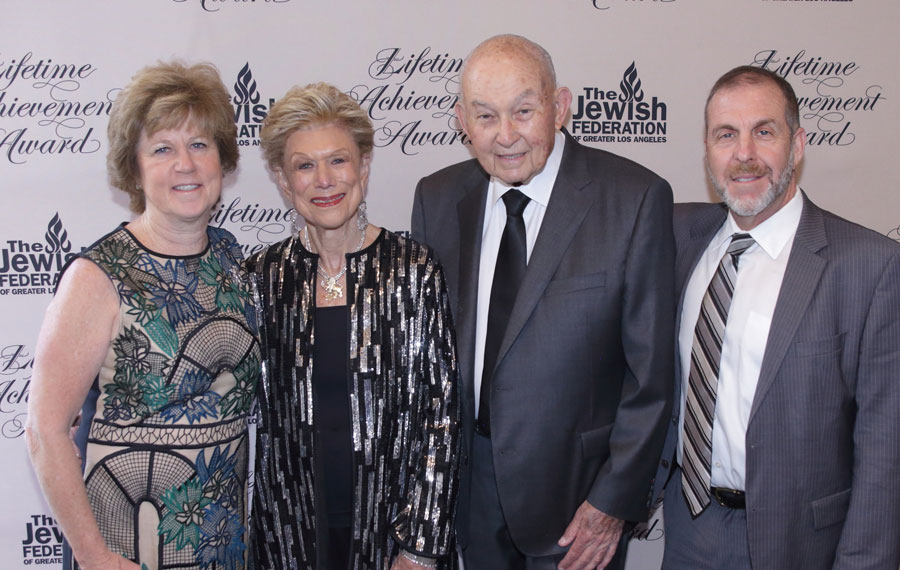
The Jewish Federation of Greater Los Angeles has honored Annette and Leonard Shapiro with its 2018 Lifetime Achievement Award.

At a gala dinner on Sept. 13 at the Beverly Wilshire Hotel, the Shapiros received the award “for setting the highest standard for philanthropy, leadership and involvement,” a Federation statement said. “Annette and Leonard’s dedication stems from a deep belief in the importance of involvement in institutions benefiting Israel, our community and our Federation.”

Annette was raised in the San Fernando Valley. Her paternal grandfather, David Familian, emigrated from Russia in 1903, made his living in the plumbing business and helped start the Jewish Free Loan Society and the Jewish Burial Society.

Leonard was raised in Los Angeles and is the founder and CEO of Shapco Inc.

The Shapiros, who met in their teens at a fundraising dance for City of Hope, have been married 70 years.

Organizations supported by the Shapiros include American Jewish University, where the Shapiros established the David Alan Shapiro Memorial Synagogue, in memory of their late son, who died at age 49 in 2001 due to complications with diabetes.

They have also supported the Jewish Community Foundation of Los Angeles, where Annette served as the board’s first female chair, the Los Angeles Jewish Home and Jewish rehabilitation organization Beit T’Shuvah.

The approximately 500 attendees at the gala included Patrick Soon-Shiong, owner of the Los Angeles Times and a longtime friend of Annette Shapiro; Jewish Federation of Greater Los Angeles CEO Jay Sanderson; Jewish Federation of Los Angeles Board Chair Julie Platt and Richard Sandler, chair of the Jewish Federations of North America. Open Temple Rabbi Lori Shapiro — who is married to their son, Joel — delivered the invocation.

The Federation said the event raised $1 million. The proceeds will benefit the Federation’s Los Angeles Jewish Teen Initiative, which works to increase the number of young people engaged in Jewish life and to give them tools to address issues including stress, anxiety, peer pressure and social media.
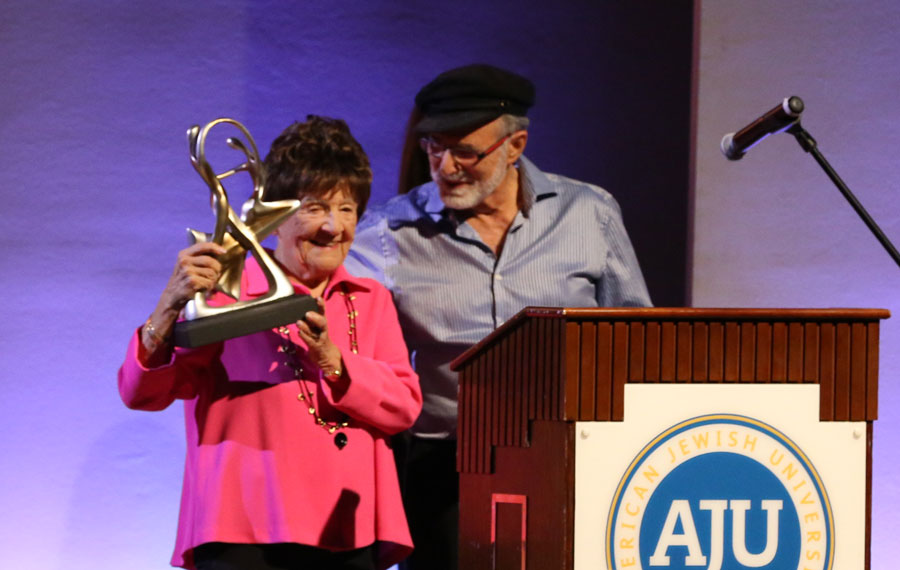

Keshet Chaim Artistic Director Eytan Avisar presents Keshet supporter and board member Sidonia Lax with the Keshet Award.
Photo by Michaela Todaro

The Keshet Chaim Dance Ensemble of Los Angeles celebrated its 36th anniversary on Sept. 6 at American Jewish University. At an evening event dubbed Keshet@36, members of the nonprofit dance company performed new and recent works, including “Chassids, Next Gen,” a portrayal of yeshiva students teaching their Chassidic rabbis hip-hop dance moves.

Keshet Chaim Artistic Director Eytan Avisar honored Keshet Chaim board member and Holocaust survivor Sidonia Lax with the Keshet Award, a statue depicting a pair of intertwined dancers.

The evening also supported Keshet Chaim’s interactive public school educa-tional programs, which, since 1995, have taught thousands of students in the Los Angeles Unified School District about Israeli culture and the Jewish people, according to the Keshet Chaim website.

Under the leadership of Avisar, choreographer Kobi Rozenfeld and executive director Genie Benson, Keshet Chaim (Hebrew for “Rainbow of Life”) uses melody, rhythm and ethnic contemporary movement to bring to life traditional Jewish culture and love for Israel.
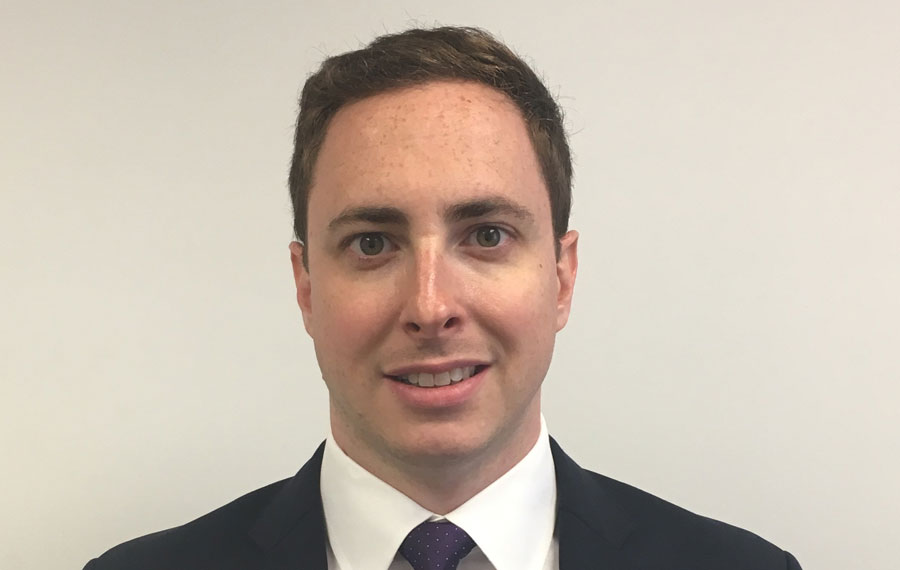

Daniel Mitzner

Daniel Mitzner has been named director of state political affairs at the Orthodox Union’s (OU) Teach Advocacy Network.

In ths newly created role, Mitzner will advocate for government funding in nonpublic schools, including Jewish day schools and yeshivas, in the Los Angeles, San Francisco, San Diego and Sacramento metro areas, as well as schools in New Jersey, Florida, Pennsylvania and Maryland.

“Currently, 450 day-schools and yeshivas receive government funding through Teach Advocacy efforts,” the OU said.

Mitzner and his team will “initiate and monitor key legislation and advocacy to further the Network’s mission,” the OU added.

“I am thrilled to be a part of this team and help fan the flames of involvement by members of our community for this paramount cause — our children,”
Mitzner said.

Mitzner previously worked as director of the American Israel Public Affairs Committee for the New York City boroughs of Brooklyn, Queens and Staten Island.

“Daniel is a tremendous community organizer with an unparalleled passion for the work we do to bring our fair share of funding to nonpublic schools,” Teach Advocacy Network’s Executive Director Maury Litwack said.  “He brings a specific skill set to our team that will enable more involvement from schools, parents and students.”


UCLA professor and son of Holocaust survivors Michael Grunstein, who was named the recipient of the 2018 Albert Lasker Award. (Photo courtesy of of the Albert and Mary Lasker Foundation.)

Michael Grunstein, a distinguished professor of biological chemistry at the David Geffen School of Medicine at UCLA, has received the 2018 Albert Lasker Basic Medical Research Award for his groundbreaking research on gene expression. Widely regarded as America’s top biomedical research prize, Grunstein shared the $250,000 award, announced on Sept. 11, with biochemist C. David Allis of Rockefeller University in New York.

Grunstein, 72, was born in Romania, one of two sons of Holocaust survivors. The family moved to Montreal when he was a child. He earned an undergraduate degree from McGill University in Montreal and a doctorate from the University of Edinburgh in Scotland. He did his postdoctoral training at Stanford University in Palo Alto, where he invented the colony hybridization screening technique of recombinant DNAs in the lab of David Hogness, an
influential biochemist, geneticist and developmental biologist laboratory
.

Soon after coming to UCLA in 1975, Grunstein and his team pioneered the genetic analysis of histones in yeast, showing for the first time that histones are regulators of gene activity in living cells. They also showed that the presence or absence of a particular chemical group, known as an acetyl, at certain spots within histones helps turns the genes on and off.

Working independently, Allis built on the findings of Grunstein’s research.

In its announcement of the award, the Lasker Foundation said that, because of the two scientists’ work, other researchers have discovered that errors in histones contribute to several developmental disorders and various forms of cancer, providing new targets for potential therapies.

“With these awards, we honor innovative scientific thinking and years of dedicated meticulous research that expanded knowledge and improved health,” the announcement stated. “These researchers made groundbreaking discoveries, but not all at once. Their achievements came piece by piece.”

Grunstein lives in Los Angeles with his wife, Judith, a dentist. They have two children and two grandchildren.

The award will be presented to Grunstein on Sept. 21 in New York City.

— By Tom Tugend, Contributing Editor


Want to be in Movers & Shakers? Send us your highlights, events, honors and simchas.
Email ryant@jewishjournal.com.

Lifetime Achievement; Lasker Award Read More »
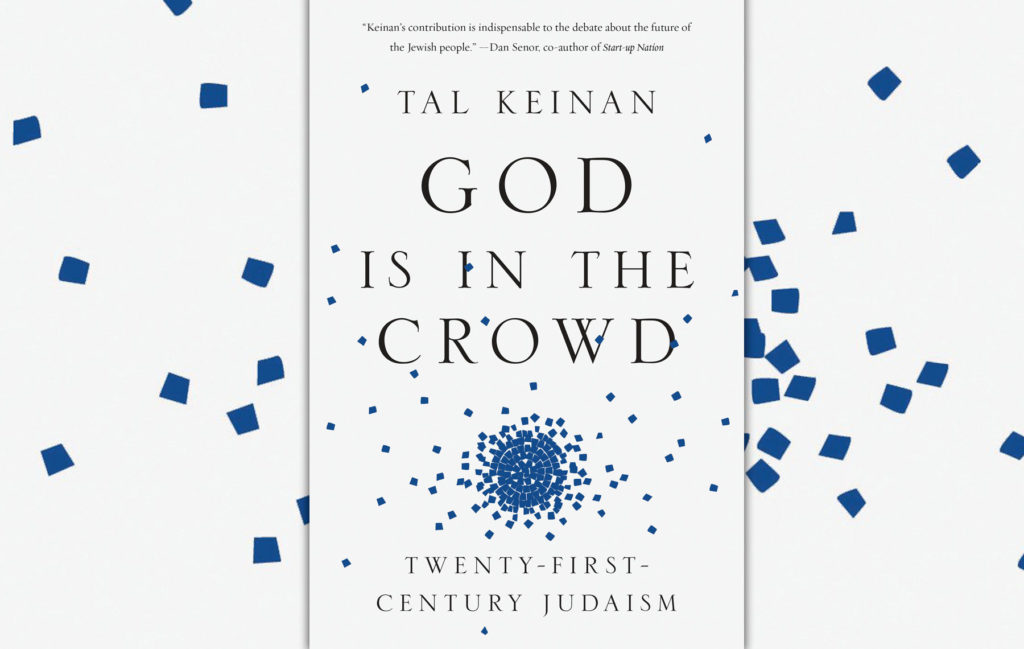
‘God Is in the Crowd’: A Memoir and Warning

“My prognosis for the Jewish future is grim,” announces Tal Keinan at the very outset of “God Is In the Crowd: Twenty-First Century Judaism” (Spiegel & Grau). For precisely that reason, Keinan urgently seeks to start a conversation with “the Crowd,” which he defines as “a critical mass of the world Jewish community,” about ideas that he readily describes as aggressive and even radical. But he insists that what is at stake is the very survival of Judaism: “In an era of seemingly limitless personal options, our choice as a community is stark: Create meaning in Judaism or accept extinction.”

Keinan is an activist and an entrepreneur rather than a religious scholar. He attended Israel‘s Air Force Academy and spent eight years as a pilot in the Israeli Air Force (IAF), an experience that “left almost no time for contemplating Judaism.” He holds an MBA from Harvard and runs an investment firm called Clarity Capital. As co-founder of Koret Israel Economic Development Funds, his contribution to Israel focuses on making loans to small businesses. To put it another way, he knows how to fly an F-16 in combat, and he is an expert at number-crunching and asset management, but he relied on Rabbi Chaim Seidler-Feller for the accuracy of his references to the Talmud and Halacha.

The author starts with the assumption that Jews today, both in America and Israel, do not face the same threat of physical extinction that confronted Judaism during the Holocaust. “Like America, Israel has brought the blessings of security, freedom, and prosperity to many individual Jews.” But he insists that “complacent American Judaism” and “a fundamentally divided, visionless, and consequently rudderless Israel” remain a direct threat to our survival. “American Jewry is dying in its sleep,” he writes, and Israel is growing ever more estranged from the Diaspora: “Israel’s viability will be deeply compromised if the country comes to represent nobody but its own inhabitants.” His book, then, is a cry of alarm and a call to action addressed to the Jewish people in their entirety.

“Keinan’s book is a cry of alarm and a call to action addressed to the Jewish people in their entirety.”

At the same time, “God Is In the Crowd” is an intimate memoir of his own aliyah. Keinan makes the storytelling compelling by allowing us to accompany him through the harrowing experiences of applying to and training for the IAF, and then serving under enemy fire. He writes candidly and movingly about the rough bumps of his own transformation from American immigrant to Israeli citizen. In one memorable moment, he shows us what the offer of a melted cheese sandwich from a kibbutznik on Yom Kippur meant to a soldier from America at a post in the Negev: “I took it without hesitation,” he recalls. “Just like that, the single annual anchor of my Jewish identity melted in the heat of the Negev.”

Above all, he confronts us with what Israel really asks of its men and women, both young and old, whose duties include military service on fighting fronts. “The leap between war and work,” he writes, means the repeated transition from “a normal professional and family life that any Silicon Valley entrepreneur, Wall Street investor, or American Jew would recognize” to “a world fraught with terror, loss, irreversible consequences, and unavoidable guilt.” Only rarely are readers offered an opportunity to ride along in the cockpit of an F-16 on a combat mission in the “Syrian missile umbrella,” and his account is far more thrilling than any movie or video game that offers an ersatz version of the same experience.

The last one-third of the book consists of Keinan’s courageous and visionary attempt to make sense of the conundrums and contradictions that he has explored in the first two-thirds. His goal is “to offer a model of Judaism compelling enough that the vast majority of Jews, in America and in Israel, will embrace it willingly.” He turns to a very modern-sounding (but actually quite old) approach to decision-making variously called “Vox Populi” and “Wisdom of Crowds,” and he insists that “Jewish Crowd Wisdom” has always served as a tool for Jewish self-definition and self-correction. “Perhaps paradoxically, the diversity of our individual readings, and our diverse choices of destination, help to define us as a coherent nation,” he argues. “The Jewish Crowd in Diaspora did not receive dogma from above. It wrestled with its own moral governance.” Drawing on his own expertise in financial analysis, he asks: “Could the evolving Jewish moral code be a representation of a continuous moving average of more than three thousand years of religious, cultural, and moral data points?”

“God Is In the Crowd” rewards the reader with a vivid and affecting account of life in Israel today, while at the same time challenging us to ponder and perhaps even revise our understanding of what it means to be a Jew, both in Israel and America. That’s what Keinan means when he refers to the evolving moral code that is the highest expression of Judaism. “Modernity will end Jewish history and, with it, the distinctive contribution of the Jews to human history,” he warns, “unless the code, and the community that serve as its medium, can be revived.”


Jonathan Kirsch, author and publishing attorney, is the book editor of the Jewish Journal.

‘God Is in the Crowd’: A Memoir and Warning Read More »

Letters to the editor: New Year New Questions, Candidate Gillum and Israel

New Year, New Questions
Another wonderful editor’s note (“Happy New Questions,” Sept. 7). It is an invitation to readers to ask themselves even the toughest questions. The editor writes: “sharp questions that encourage us to look inward.” Here is the question I have been asking myself for quite a while and still not found an answer: Is there anybody, who is asking himself or herself the following question: What does my religion take away from me? Anybody out there asking that question?
Svetlozar Garmidolov, Los Angeles

Candidate Gillum and Israel
Last week, the Journal sent out an email blast headlined “Florida Governor Candidate ‘Proud and Pleased’ with Pro-BDS Group’s Endorsements.” The piece insinuates that the Democratic candidate for governor of Florida (Andrew Gillum) was implicated in anti-Israel, pro-boycott, divestment and sanctions (BDS) activities. This assertion is not supported by the facts.

Make no mistake: We are anti-BDS and abhor the movement and its tactics.

The contentions in the Journal email rely on innuendo and guilt by association, and in so doing, distort the facts and attempt to manipulate the reader. Journal reporter Aaron Bandler quotes liberally from the right-wing Washington Free Beacon website. Bandler uses Gillum’s shout-out to the progressive group Dream Defenders, in the context of the group having objected to Florida’s Stand Your Ground laws, as an excuse to ascribe all of the Dream Defenders’ pro-Palestinian musings found on their website to Gillum.

No evidence is offered that Gillum agrees with or has endorsed any of the Dream Defenders’ views other than their opposition to Stand Your Ground. It is only in the penultimate paragraph that Bandler acknowledges that Gillum has opposed BDS and vowed to take action against it.

It is also disturbing that Bandler criticizes Gillum because he attended the “Rockwell [sic] Leadership Institute” (actually it’s the Rockwood Leadership Institute), an environmental training center. Bandler states that Gillum is somehow tainted by the view of the left-wing activists, who also attended the institute at some point in the institute’s 18-year history. This is sloppy reporting.

Our objection to this article is not about parties or politics, but rather about responsible journalism. We hope that in the future, the Journal aspires to a higher standard than is exhibited in this article — guilt by association is a nasty game to play; when it infuses “journalism,” especially at election time, it becomes dangerous.

Submitted on behalf of Jews United for Democracy & Justice.
Board of Jews United for Democracy & Justice:
Janice Kamenir-Reznik, chair, Rabbi Ken Chasen, Caroline Kelly, David Lehrer, Mel Levine, retired, Jason Levin, Dan Loeterman, Samantha Millman, David N. Myers, David Rubin, Zev Yaroslavsky, retired

Aaron Bandler responds:
Andrew Gillum alleges he is pro-Israel and supportive of legislation to advance anti-BDS legislation, but, in my opinion, there are genuine concerns about his record on Israel.

First, there is the tie between Gillum and the anti-Zionist group Dream Defenders.

Not only is Gillum the first candidate whom Dream Defenders has endorsed, Phillip Agnew (who now goes by Umi Selah), one of the co-founders of Dream Defenders, told Democracy Now! that Gillum is part of the movement:

“In 2012, when we started this organization [Dream Defenders], it is really with a motto of what Andrew has led for many, many years in this state,” Agnew said. “We like to say that Andrew Gillum isn’t a friend of the movement, he is a part of the movement.”

Agnew has called Zionism a “racist, exploitative and exclusionary ideology” and accused Israel of engaging in “the murderous occupation of Palestine” during Israel’s defensive war against Hamas in 2012.

If Gillum is as pro-Israel and anti-BDS as he claims to be, shouldn’t he disavow himself from this group, or at the very least make it clear that he condemns its rhetoric?

Then there is the Rockwood Leadership Institute, of which Gillum is an alumnus. It’s worth noting that Rockwood has received funding from the Tides Foundation, which funds pro-BDS organizations and has Dream Defenders as one of its projects, as well as received grants from the Open Society Foundation. Both are George Soros-funded organizations, and Soros has been a vicious maligner of Israel.

Again, in my opinion, Gillum ought to make it clear that he does not hold Soros’ views on Israel.

Since I first reported on this story, a spokesman for Gillum’s campaign told the Miami Herald “that Gillum’s association with organizations that back the BDS movement or oppose anti-boycott legislation shouldn’t be construed as support for those positions.” In my opinion, that is a weak response — Gillum should condemn these organizations’ anti-Zionist rhetoric and pro-BDS stances, if not disavow them altogether.

‘Good Year Blimp’
Re: Steve Greenberg’s Sept. 7 cartoon: Very, very pun-ny. Wonderful!
Enriqué Gascon, Westside Village

Cheering On Special Needs Program
I was happy to hear about the success of Steven from Michelle Wolf’s column (“People With Special Needs Also Need Trusts,” Sept. 14). It is my understanding that a California program called Cal Able is beginning. Perhaps that can help some people with disabilities. Thank you.
Neal Silversher, via email

Separation of Families at the Border
One of the Republican talking points designed to minimize the continuing horror at the border created by President Donald Trump and Attorney General Jeff Sessions has been to imply that parents who sent or brought their kids from their homes to cross our borders without them are terrible parents.

(So, we shouldn’t feel so bad about these families or children.)

A story in the Los Angeles Times the other day reminded me of another time parents did this, for the same reason, and I doubt any of us would call these parents terrible.

This was the subhead: “The Kindertransport program saved Jewish children from Nazis, but many never again saw their families.”

The article points out that “the contexts” [Nazis / our border] “are wildly different. The Kindertransport separated [an estimated 10,000] “children from their parents as a way of saving them from the Nazis, while the U.S. government has separated families at the border as a way of dissuading further immigration.” In both cases, the children’s lives were and are at stake.
Hal Rothberg, via email.


Don’t be shy. Send your letters to letters@jewishjournal.com. Letters should be no more than 200 words and must include a valid name and city. The Journal reserves the right to edit all letters. 

Letters to the editor: New Year New Questions, Candidate Gillum and Israel Read More »

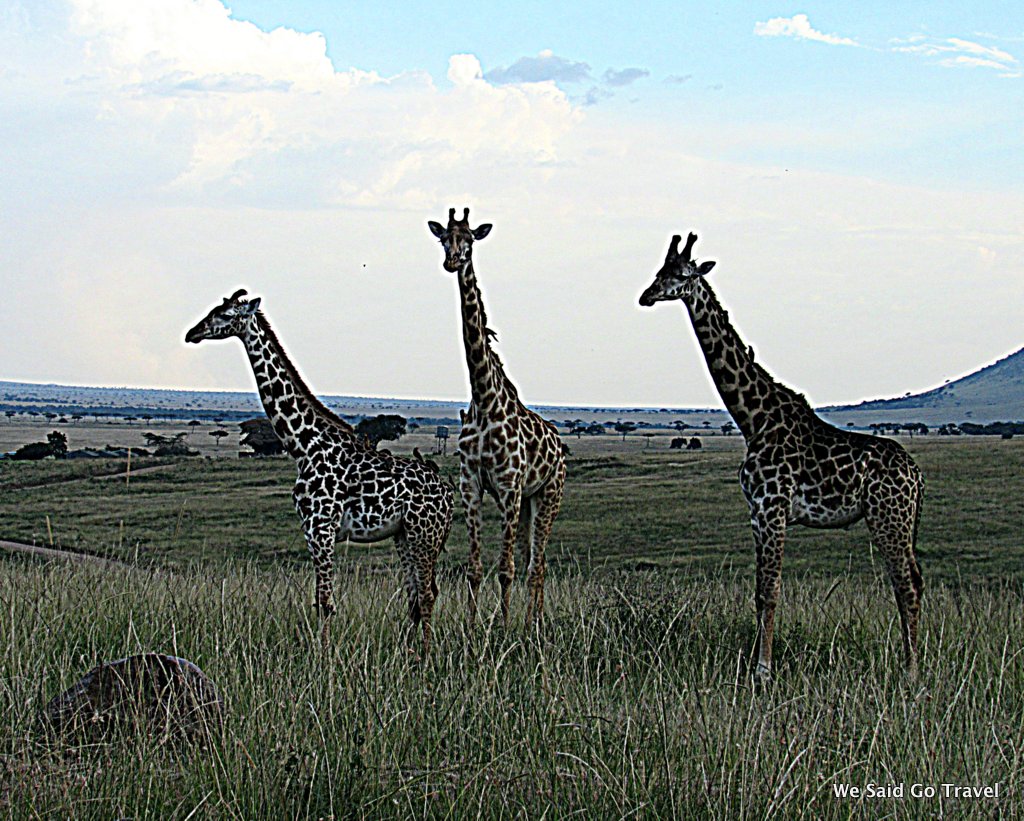
Giraffes in Africa by Lisa Niver

Where Did I Travel on My First African Safari?

Please enjoy my video journey through my first African safari and 100th country.
Video #1: My Abercrombie and Kent African Adventure Begins
Traveling to Tanzania and Kenya with Abercrombie and Kent
July 8-10, 2018

Join me on my first safari with Abercrombie and Kent in Africa.
I have this and quite a few more videos to share of my Tailor Made Small Group Journey to Tanzania, my 100th country, and Kenya.

Lisa Niver 100th Country: African SafariI am so excited to share all of our experiences with you.
I flew from Los Angeles, California to Amsterdam, Netherlands and then Kilimanjaro International Airport in Tanzania. We stayed one night in Arusha at Mount Meru Hotel before beginning our safari adventures.

From Arusha airport, we flew to our first safari camp, Sanctuary Swala.
We saw animals from the short plane ride to Kuro Airstrip where we were picked up by Sigi from Sanctuary Retreats to start our first game drive. What animals did we see? Watch the next video to find out!

Video 2: Abercrombie and Kent July 10, 2018 Tarangire Park Tanzania and Sanctuary Swala:

Within minutes of setting out on our first safari game drive, we saw a family of elephants. A group of elephants is called a herd or a parade. I loved seeing the baby elephant. If the baby can fit under the mother, it is usually less than six months old. African Bush Elephants can live 60 to 70 years and elephants are born after a two year pregnancy.

I was thrilled to realize we were close enough to the elephants to take selfies! I had hoped we would see many animals on my safari but I was not sure if they would mainly be far away from us. We saw many birds including Southern White Crowned Strike, Lilac Breasted Roller, white-bellied bustard, crown hornbill, gray crowned crane, ostrich, marsh eagle, African vulture, and Western Red-billed hornbill.

I loved seeing a zeal of zebras. I was shocked when four of them rolled in the grass and dirt. I felt like we were in a scene from a movie. I just could not believe how many animals there were. I also loved seeing different types of animals together.

Lisa Niver in Africa: Giraffes on SafariWatching giraffes walk makes me happy. I love how majestic they look. A tower (or kaleidoscope) of giraffes is formed when two or more giraffes stand with necks together on safari. When we saw a warthog and someone said, “Pumba,” I felt like the movie The Lion King was coming to life.

Observing the animals while they were walking, drinking and moving was mesmerizing. I made separate videos of each of the animals that we watched for long periods of time so you can enjoy them too. You can find them at the end of this playlist.

My two favorite things on safari where watching animals cross the road and seeing the baby animals. I made a separate video of those two things together.

We saw black faced monkeys and later in our trip we would see Olive Baboons!
We saw all of the animals mentioned here before noon on our very first game drive.

After our picnic lunch under the Acacia trees, we saw another parade of elephants and a leopard! On our first day we saw two of the Big 5! At 5pm as we were headed to our camp, we saw African Buffalo which made 3 of the Big 5 on our first day.

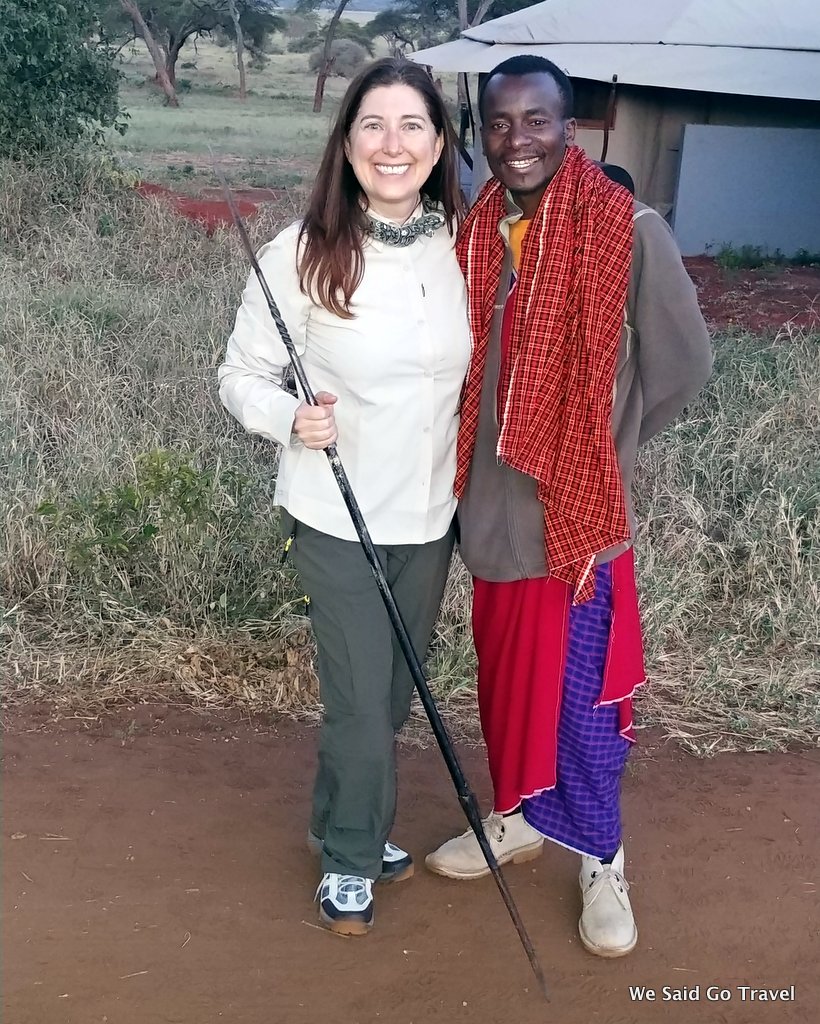
Lisa Niver with Maasai Warrior Sanctuary Swala

Sanctuary Swala would be our home for the night and it had recently re-opened. Our stunning luxury canvas tents had every amenity including both an indoor and outdoor shower. We were taught about how to call for someone to walk us to the dining area after dark. You take a flashlight and shine it into the trees. It is like asking for your own superhero to accompany you and a Maasai warrior with a spear will walk you safely to the main area. There are no fences at Sanctuary Swala so there are animals all over the camp. I loved the meals with a view, pretty pathways, the animals close by and my very comfortable bed.

Sanctuary Swala by Lisa Niver

Click here to see all of my African Safari videos

Click here for more information and rates!


Where Did I Travel on My First African Safari? Read More »

The Final Singalong — A Poem for Haftarah Haazinu by Rick Lupert

The Final Singalong — A Poem for Haftarah Haazinu by Rick Lupert

Since I spend so much time singing ancient Jewish words
with the children of the San Fernando Valley, I was so pleased

to see King David wrote a song…like Moses before him
wrote a song. A song I thought you’d never hear on the radio

because of it’s staggering 945 word count with no refrain at all,
until I realized they’ve been playing the 2633 words of

Alice’s Restaurant for decades, not to mention the encyclopedic-
lengthed 5083 words of R. Kelley’s Trapped in the closet.

Why can’t we set the whole thing to music and demand
heavy rotation? Is that what David had in mind? Is that why

he included the word nostrils twice, so it would have
more of a quirky pop-appeal?

This is the last song of the year. A duet with Moses who
sings posthumously. They were the first two to do this.

To sing of strength. To sing of the source of our comfort.
Their songs are our songs and we are still collecting

the royalties. This music, our inheritance. I say always
end with song. Ideally one everyone can sing.

We’ve got one more chapter before we start this
whole thing over, and sometimes because of the

peculiar ways in which the days of the week land
on the calendar, we don’t even read it. We find ourselves

at the beginning again, wondering how we got here.
So sing this song. Repeat parts of it to extend this cycle

beyond its natural boundaries. And ha-azinu…listen.
Let all the voices go into your ears. They’ve been

echoing from generation to generation, ever since
they first left Moses and David’s lips.


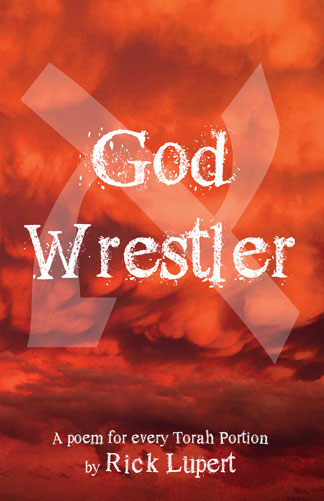
God Wrestler: a poem for every Torah Portion by Rick LupertLos Angeles poet Rick Lupert created the Poetry Super Highway (an online publication and resource for poets), and hosted the Cobalt Cafe weekly poetry reading for almost 21 years. He’s authored 21 collections of poetry, including “God Wrestler: A Poem for Every Torah Portion“, “I’m a Jew, Are You” (Jewish themed poems) and “Feeding Holy Cats” (Poetry written while a staff member on the first Birthright Israel trip), and most recently “Donut Famine” (Rothco Press, December 2016) and edited the anthologies “Ekphrastia Gone Wild”, “A Poet’s Haggadah”, and “The Night Goes on All Night.” He writes the daily web comic “Cat and Banana” with fellow Los Angeles poet Brendan Constantine. He’s widely published and reads his poetry wherever they let him.

The Final Singalong — A Poem for Haftarah Haazinu by Rick Lupert Read More »