fbpx

September 12, 2018

Yom Kippur: Changing or Going Through a Cycle?

In a study on Israel-Diaspora relations not long ago, a pop quiz was included to test the participants’ knowledge about “the other side.” American Jews were asked about Israel. Israeli Jews were similarly asked about Jewish America. Among the questions Israeli Jews were asked: What is the traditional dish eaten by American Jews on Christmas Eve? The options were: 1. Pizza; 2. Chinese; 3. Cholent; 4. Herring. 

We could have asked similar questions about Yom Kippur. What do we Jews do on Yom Kippur? According to the Pew Research Center, 58 percent of American Jews attend services at a synagogue. In Israel, about 66 percent of Jews attend synagogue services, according to a study by Israeli Judaism, a project of the Jewish People Policy Institute. And what about the rest of us? What about those — in Israel a majority — who go to the synagogue for Kol Nidre but don’t spend the whole day in prayer? Let me put it in a pop-quiz format: What are secular Israelis known to do on Yom Kippur? 1. Eat; 2. Go to work; 3. Pray; 4. Ride bicycles. 

If you’ve ever been to Israel on Yom Kippur (preferably not in Jerusalem), you’d know that the answer is No. 4 — this day has been transformed into a kind of national bicycle day. About half of all secular children (that is, the children of half the Jewish population) ride bicycles on Yom Kippur. Adults watch their children, and some — about a quarter of “totally secular” Israelis (almost one-third of the adult Jewish population) — also ride. If you come to Tel Aviv, where I live, the scene is remarkable. Streets and highways are empty of cars but busy with bicycles. 

Exact numbers and percentages were collected by professor Camil Fuchs, Israel’s leading pollster, who works with me on the Israeli Judaism project. You can see some of the numbers on the chart on this page. But truly, exact numbers don’t matter. The trend matters. The changing culture of Yom Kippur matters. The widening gap between Israel’s and Los Angeles’ Yom Kippur matters. Indeed, there is an unavoidable cultural gap, as L.A. streets and freeways would not accommodate such a new Jewish tradition.

“I am stunned, puzzled and excited when I see the thousands on bicycles on my way to shul.”

When I show these numbers to Jewish audiences, there is an immediate tendency for everyone to begin debating whether this trend is good or bad. We all have opinions, but these also barely matter. A collective decision by a vast number of Israelis was made, and they manifest it in practice. If you think this is terrible, it’s your problem. If you think it’s wonderful, come join them. If you wonder about the meaning of it all, well, in this case, you ought to join me. You are a member of my camp. 

I am stunned, puzzled and excited when I see the thousands on bicycles on my way to shul. I feel lucky to live in such times and to be able to observe and study a culture that is changing before my eyes. I suspect that this is the meaning of what we see: It is a changed Israeli-Jewish culture that must accommodate Israelis’ disinterest in strict halachic religious practice — convincing them to spend all day in shul would be impossible — while also accommodating Jewish Israelis who want to preserve Yom Kippur as a special, quiet, singular day. 

Can Yom Kippur survive such a dramatic shift? Well, we don’t know if this shift will hold for very long — it is rather new. We also don’t know if this bicycling day will remain mostly a children’s activity or become a growing trend of adults riding on Yom Kippur. Of course, one must consider the fact that riding bicycles and fasting can be tricky, and about three-quarters of Jewish-Israeli adults fast during all or part of Yom Kippur.

But to provoke your interest, and maybe ignite a contemplation, try thinking about it this way: For about 1,000 years of Jewish history, Yom Kippur involved sacrificing ox and sending scapegoats to their death. For about 2,000 years, Yom Kippur was about prayer and contemplation. Maybe what we see are the early stages of a new Jewish era. Maybe what we see are the early stages of Yom Kippur’s next evolution. 

Yom Kippur: Changing or Going Through a Cycle? Read More »
The Young Real Estate Mogul

Most Israelis spend their post-military stint backpacking, partying, traveling, meeting new people and basically living life with hedonistic abandon.

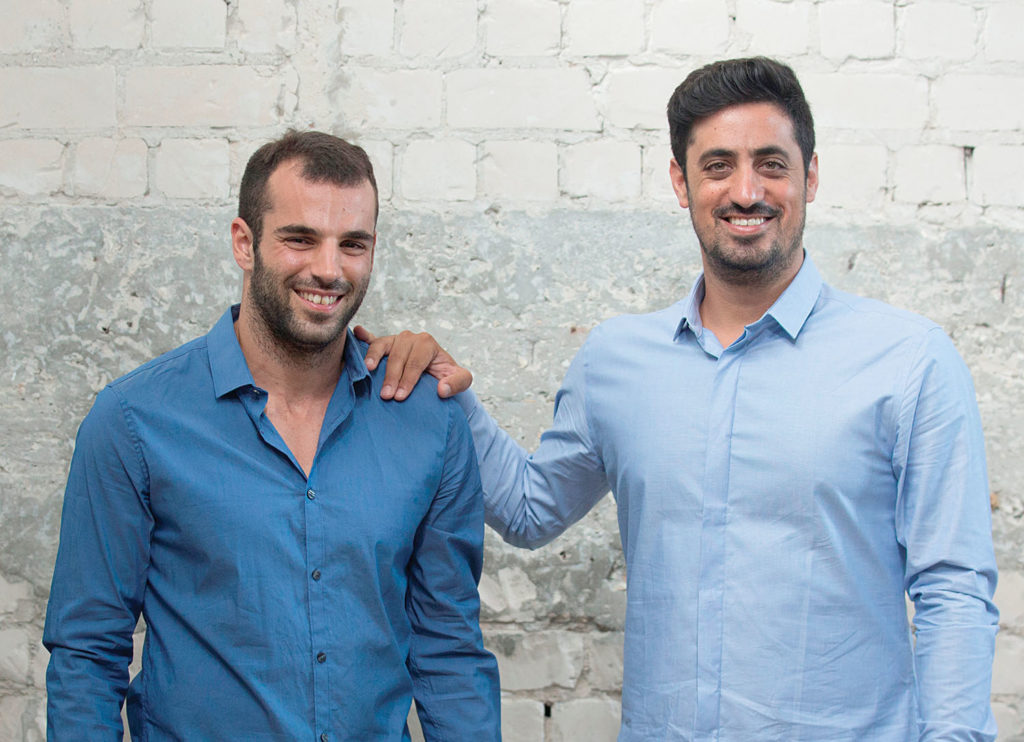
Not Matan Pertman. While vacationing in South America, Pertman met his future wife, his future business partner and invested serious thought into how he wanted his life to look.

“I was split between what people expected me to do and what I wanted to be,” Pertman said. The expectations, mostly from his mother, were that he would get himself a useful degree, so he studied electrical engineering at Tel Aviv University. But two years later, he quit his studies to enter the business world full time. 

Pertman bought his first apartment when he was 22, which, by Israeli standards, means he was practically still in diapers. He scraped together his savings from serving as a career soldier in the elite Shayetet navy commando unit, took out a hefty loan and bought in a city he could afford: Beersheba. Within a matter of months, he had renovated the apartment, rented it out and sold it to an investor. 

He asked himself where he saw himself in five years’ time, and jotted down his aspirations on an A4 sheet of paper. He wrote down a goal of five real estate deals in as many years.

Today, seven years later, the company he owns with Ran Harel, R&M Investments, manages more than $140 million worth of assets on behalf of its client investors. Beersheba became a boon for the two, and they now handle more than 200 apartments in the city. One of the things that makes their company stand out is their commitment to fair rent, not just in the asking price but also in the way their renters are treated. 

 “The gap between investing and gambling is knowledge.” — Matan Perlman

“These are our peers,” Pertman, 29, said. “We know what it’s like to have landlords who treat you unfairly or who put up the rent every year.” 

Treating renters with respect, he said, is a much more solid investment than an extra 100 shekels a month in rent because renters are far more inclined to take good care of the apartment for the owner. 

Pertman and Harel applied their Beersheba model to other places in the world. Today, they own property in Chicago, Cleveland and Houston, and are poised to begin work on a residential project in Brooklyn . They also purchased a plot of land by the coast in Zanzibar, and are building a 50-room boutique hotel there. 

Pertman attributes his success to having to take responsibility for the family at a young age after his father died from cancer. “At 14, I became the man of the house,” said Pertman, who has one sister. 

He added that his experiences as a triathlete also played a role. Even today, Pertman takes part in Ironman and Ultraman contests. “It’s about setting a goal and sticking to it and paying attention to the details,” he said. “It’s the same in business.”

Before he makes a purchase, he scouts out the land, literally, by taking to the streets and asking the locals what they like about their neighborhood. In addition, he combs through online forums and seeks advice from a host of experts that includes urban planners, lawyers and surveyors.

“The gap between investing and gambling is knowledge,” he said. 

And those five-year goals? “Turns out I didn’t think big enough,” he said, laughing. But he still has that A4 sheet of paper folded up in his wallet.  

The Young Real Estate Mogul Read More »

Roseanne Barr’s Year of Repentance

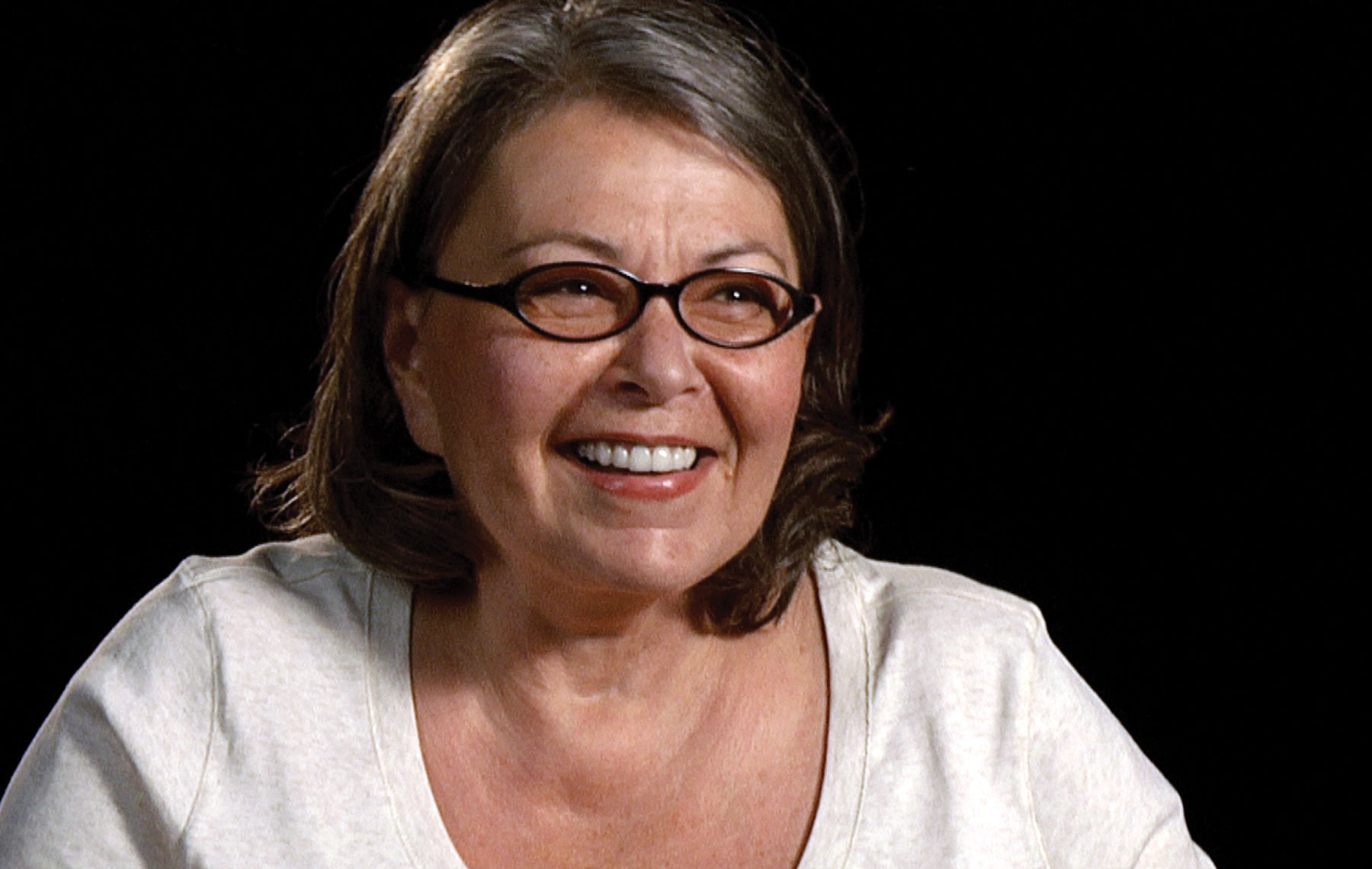
On the eve of Yom Kippur, Sept. 17, my friend Roseanne Barr and I will join in a public discussion on repentance and forgiveness at the Saban Theatre – Temple of the Arts in Beverly Hills. Moderated by Jewish Journal Editor-in-Chief David Suissa, the discussion will address the question of whether America is a forgiving country.

It couldn’t be more timely.

Over the past two months, I have been on a journey where I have witnessed penance and forgiveness in America up close.

Roseanne, my close friend of 20 years, who had for decades entertained Americans with a sitcom about a working-class family, tweeted a very hurtful and offensive remark about Valerie Jarrett, an African-American woman who was one of former President Barack Obama’s senior advisers. That tweet on May 29 — “Muslim brotherhood & planet of the apes had a baby=vj” — which Roseanne said was intended as a condemnation of the Iran nuclear deal but was seen as racist by those who read it, led to the immediate cancellation of the reboot of Roseanne’s legendary television series that had, in its 10th season, achieved the highest ratings of any sitcom in the United States.

Roseanne is known for her sharp wit, and she has never been a stranger to controversy. But in the two decades I have known and studied Torah with her, I have never heard a racist syllable emerge from her lips. Still, the words she tweeted last June were a breach of the core Torah values of the equality of humankind and the infinite dignity of all God’s children, to which Roseanne, as an active and proud practitioner of the Torah, herself subscribes.

I contacted her and told her she had a responsibility to put it right, to apologize and go through Maimonides’ four stages of repentance publicly, as the tweet was public. Ignoring the advice of professional public relations people and advisers who told her that an apology would show weakness, Roseanne taped a podcast with me during which she sobbed through an entire hour of emotional anguish for the hurt she had caused.

I have interviewed many people in my life. This was by far the most difficult. Hearing a woman spill her guts in raw, emotional nakedness in order to correct an error and speak of how she was prepared to pay the price for her actions, including “losing everything,” was moving and unforgettable. I did not post the podcast for three weeks, giving Roseanne the necessary time to reflect on the highly personal nature of the apology, making sure she was comfortable with its release. When it finally was published, it made immediate global headlines. People around the world were amazed at the degree to which a celebrity would go to make amends.

The podcast, broken into the four stages of Jewish penance, has Roseanne taking responsibility for her actions, orally confessing error, asking the injured party for forgiveness, and taking concrete action to rectify the grievance — this time in the form of monetary contributions to African-American educational organizations.

“As we move toward Yom Kippur, let’s dial down the enmity and disappointment we feel toward others. Not because we don’t believe in justice, but precisely because we do.”

Roseanne and I have since recorded many weekly Torah podcasts and the issue of the tweet still comes up. Last week, our podcast made world headlines when Roseanne said that she would be traveling to Israel during the airing of “The Connors,” the renamed show in which her character is written out. Roseanne said she has no desire to wish ill on anyone, and rather than go dark in watching a show she created go on without her, she wanted to be in the Holy Land, studying Torah and finding spiritual uplift.

Throughout all of this, I have wondered why Roseanne’s network did not forgive her and why certain segments of Americans did not forgive her. If it’s true that civility is dead in America, then its corollary, forgiveness, seems to be dead as well.

Rev. Martin Luther King Jr. was the greatest American of the 20th century because he restored this nation to its founding ideals of all people being created equal in the image of God. As a Jew, I am particularly grateful to him for having elevated the Hebrew Bible into a liberation manifesto and the very text of the civil rights movement. Regarding forgiveness, he once said, “We must develop and maintain the capacity to forgive. He who is devoid of the power to forgive is devoid of the power to love. There is some good in the worst of us and some evil in the best of us. When we discover this, we are less prone to hate our enemies.” He also said, “Forgiveness is not an occasional act, it is a constant attitude.”

Jarrett is, of course, the aggrieved victim in this story and is an impressive woman of erudition and sophistication. But given that Roseanne has publicly apologized to her many times, it would be appropriate for Jarrett to consider accepting. As Jarrett said of the tweet when the firestorm first broke out, we could make this a teachable moment in America. All of us learning to model forgiveness, even when it’s very hard, is vital to the spiritual health and unity of the nation.

We in the Jewish community have now entered into the 10 Days of Repentance, between Rosh Hashanah and Yom Kippur, the holiest day of the year. These days are meant to be a time of deep and sweeping introspection and a time to reflect on one particular facet of God’s being — namely, his infinite capacity to forgive.

Roseanne says she was impaired by sleeping pills when she posted the offensive tweet. She also has said that what she wrote was unforgivable, and she has taken full responsibility for the pain she caused. She has asked her fans not to defend her, apologizing without artifice. She said she tried to get Jarrett’s phone number to apologize to her directly, even writing to her on her Twitter feed to ask forgiveness.

However, she also related to me that repentance isn’t entirely possible in America today. Once we attach negativity to a particular personality, it becomes difficult for us to unsee.

My response to her was that, as a firm adherent of the Torah, she must follow its dictates regardless of consequence. And here the Torah is clear: If one causes pain to someone or diminishes their sense of worth or dignity in any way, one must apologize and repent.

But even as I told her this, I knew she’d made a valid point.

While the Torah gave the world justice, its most descriptive and beautiful portions are devoted to imparting how merciful and compassionate God actually is. Throughout their time in the desert, we see the Jews sin repeatedly. We even see them punished. But every time, God opts out of a grudge, choosing instead to forgive them.

Perhaps the best example is the Torah’s most intimate description of God himself, as Moses cowered inside a crevice of Mount Sinai. Moses is told of “a God of mercy and graciousness, endlessly patient, abounding in steadfast kindness and truth … forgiving of iniquity and transgression and sin …”

These qualities, however, are not an abrogation of God’s legal system but its very guarantor. It is his capacity for forgiveness that tempers the hand of justice. And so, divine judgment is softened by his recognition of our goodwill and contrition. He knows that without the warmth of absolution, justice becomes not a system of guidance and incentive, but one that makes our world only more dark, harsh and cold.

Thus, for God, to forgive is not to subvert justice but rather to preserve it.

In our society, it should be no different. Across the modern world, justice is signified by the scale and not by the noose.

As we move toward Yom Kippur, let’s dial down the enmity and disappointment we feel toward others. Not because we don’t believe in justice, but precisely because we do.


“Is America a Forgiving Nation?” is at 7 p.m. on Sept. 17 at The Saban Theatre, 8440 Wilshire Blvd., Los Angeles. Tickets are $20 and can be purchased here.

Rabbi Shmuley Boteach, who calls himself “America’s Rabbi,” is the founder of The World Values Network. His latest book is “Lust for Love,” co-authored with Pamela Anderson. He is on Twitter @RabbiShmuley.

Roseanne Barr’s Year of Repentance Read More »

People with Special Needs Also Need Trusts

Two years ago, I met Steven, 72, when he walked into the JFS Freda Mohr Center on Fairfax Boulevard asking for help from the Jewish Los Angeles Trust (JLA Trust), a new community-based nonprofit created to assist people with disabilities. Steven was wearing a pair of old, frayed black leather shoes barely held together by tattered shoelaces, matched by an equally worn leather belt. 

His life was constricted by poverty. He had grown up in an upper-middle class Jewish home on the Westside and excelled academically but was then brought low by severe mental illness. He had recently inherited $36,000 from a deceased aunt’s life insurance policy. Because all but $30 of his monthly Supplemental Security Income (SSI) check went toward his rent, food and medication management at a local board and care residential facility, he was never able to save any money toward new clothes or shoes. He also counted on his Medi-Cal health insurance for prescription drug co-pays and ongoing mental health treatments. 

Steven was a smart guy; he knew that SSI rules prohibited single beneficiaries from having more than $2,000 in assets. How could he legally keep that $36,000 without jeopardizing his twin lifelines of SSI and Medi-Cal? He didn’t have the money to consult with an attorney and no living relatives to turn to for help. Someone at his aunt’s insurance company suggested that a pooled special needs trust might be the right solution for him.

Created by Congress in 1993, pooled special needs trusts must be administered by nonprofits and use a “master trust” legal document. Clients enroll by signing a simple legal agreement and paying a modest enrollment fee. Private funds are deposited into a sub account for each participant and are pooled only for management and investment purposes. Clients receive professional trustee services, typically received only by the very wealthy who have in excess of $750,000 to open a stand-alone special needs trust.

“I witnessed the transformative impact of supplementing clients’ meager benefits.”

JLA Trust had only been in operation for a few months at that point, so Steven enrolled in our first party pooled trust as client No. 005. Although it may sound corny, his life really took a turn for the better after enrolling. He was finally able to buy new shoes and clothes, get a monthly bus pass and sign up for a monthly cellphone plan. Then, after he discovered an additional life insurance policy that named him as beneficiary and he added those funds to his trust account, he was able to rekindle his passion for jazz and classical music. For the first time he decades, he could go to jazz concerts, hear the L.A. Phil, even take a cruise designed for jazz aficionados. He is now a regular at local jazz clubs and has made friends with other jazz enthusiasts.

As the founding executive director of JLA Trust, I witnessed the transformative impact of supplementing clients’ meager government benefits many times. There’s the young adult who suffered from a stroke and is relearning how to do everyday tasks; he uses the supplementary funds from his GoFundMe campaign for outings in the community and for music therapy. Our oldest client has outlived all his friends and family members and uses his special needs trusts from a legal settlement to pay for private case managers who drive him to his doctors’ offices and take him out of his senior facility for the occasional lunch.

At our free monthly Open House events, I explain that government programs for people with disabilities are designed to get people only to the federal poverty level, and that the maximum SSI grant in California is $950 for most adults over the age of 18. Out of that amount, recipients are expected to pay for rent, food and basic utilities, which is completely unrealistic in our state. And to make matters worse, SSI’s byzantine rules don’t even let someone else pay for rent, food or basic utilities without penalty, typically a deduction of $250 a month. 

Our pooled special needs trusts can’t solve all the problems of our broken system, but they can offer a higher quality of life.


Michelle K. Wolf is a special needs parent activist and nonprofit professional. She is the founding executive director of the Jewish Los Angeles Special Needs Trust. 

People with Special Needs Also Need Trusts Read More »

Who By Fire: A Yom Kippur Story

I remember when I was as a child on Yom Kippur, holding my mother’s hand and squinting at her prayer book:

Who shall perish by water and who by fire,
Who by sword and who by wild beast,
Who by famine and who by thirst …
Who shall be at rest and who shall be tormented,
Who shall be exalted and who shall be brought low,
Who shall become rich and who shall be impoverished.
But repentance, prayer and righteousness avert the severe decree.

That prayer scared the daylights out of me. What kind of schoolyard bully was God to let some people perish by fire and others be exalted?

The author in 2001.

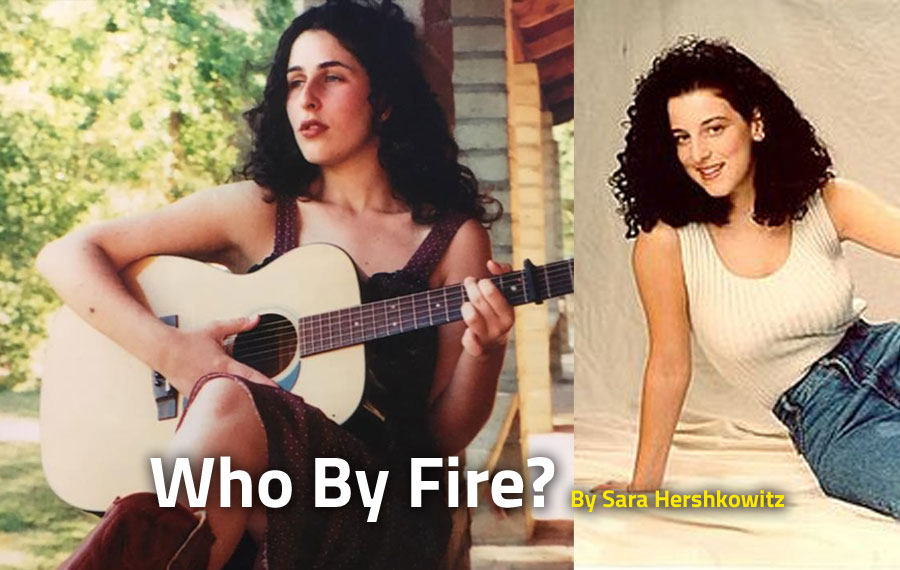
Chandra Levy disappeared the summer I was 21. A Jewish girl from California, Levy was an intern for the Federal Bureau of Prisons and was having an affair with an older, married congressman when she disappeared on May 1, 2001. I remember the date because it was the summer I worked on a ranch, fell in love and had my portrait painted on the front of a Mexican restaurant. 

The ranch was nestled up in the Sierra Nevada, outside of Kern County. It was a paradise of sweet red dust, cows and lush stalks of corn — and that sagy, dry smell I cannot name but which brought me to tears when I recognized it years later in the mountains of Provence, France. 

Kernville, then as now, was a small town that thrived on tourists fishing and rafting the Kern River’s glorious rush of rapids and rocks. The town consisted mainly of a supermarket doubling as a bait-and-tackle shop, a laundromat, a gas station, a bar with a bunch of slow-blinking cowboys, and a 1950s-style diner with a jukebox. 

You didn’t expect a wide variety of eateries in a place like Kernville, so our little group of ranch workers was excited to discover El Sombrero. Wild cactus and gravel surrounded its entrance. Not much traffic passed by except the occasional pickup truck. Inside, rainbow-colored piñatas, wide-brimmed hats, portraits of Mexican saints and the Virgin of Guadalupe, and pictures of soccer stars lined the walls. We were smitten. 

“It was on a day off in town that I picked up a newspaper and saw Levy’s face on the front page. … I stared at her face a long time. She looked like me.” 

Every week we would troop in glistening and dirty, radiant with youth, and Arturo the owner would give us each a loud, smacking kiss. We were none too clean but he loved us. We would order piping-hot plates of chimichangas and enchiladas with green sauce. The flautas, nachos, guacamole and Corona beers were always on the house. While we waited for our meals, I’d take out my guitar and sing, and under the table the boy I loved would put his bare foot on mine. Sometimes all six of us would wail together. We never asked permission. We just brazenly burst into song without wondering whether they’d kick us out. 

I don’t have the words to describe just how swoon-worthy the food was, except to say it was magical. It melted in a certain way on your tongue, into an explosion of celebration in your mouth. On the other hand, maybe anything would have tasted so good, famished as we were from working and sleeping outside on the ranch, with sun and earth and sweat on our skin, and — in my case — from being in love. But to this day it remains the best Mexican food I have eaten, better than some damn fine meals in Mexico City, Houston and East Los Angeles. 

It was on a day off in town that I picked up a newspaper and saw Levy’s face on the front page. She had one of those Old World faces, a wild tangle of curls and weary eyes. I stared at her face a long time. She looked like me. 

At El Sombrero that day, Arturo had been drinking. When we left, he breathed into my ear with beery breath that he was going to paint me on the front wall outside. He wanted a life-size mural of me playing my guitar. He asked if I had a photo he could give to an artist. I figured he would be too drunk to do anything with it, but I gave him one anyway. 

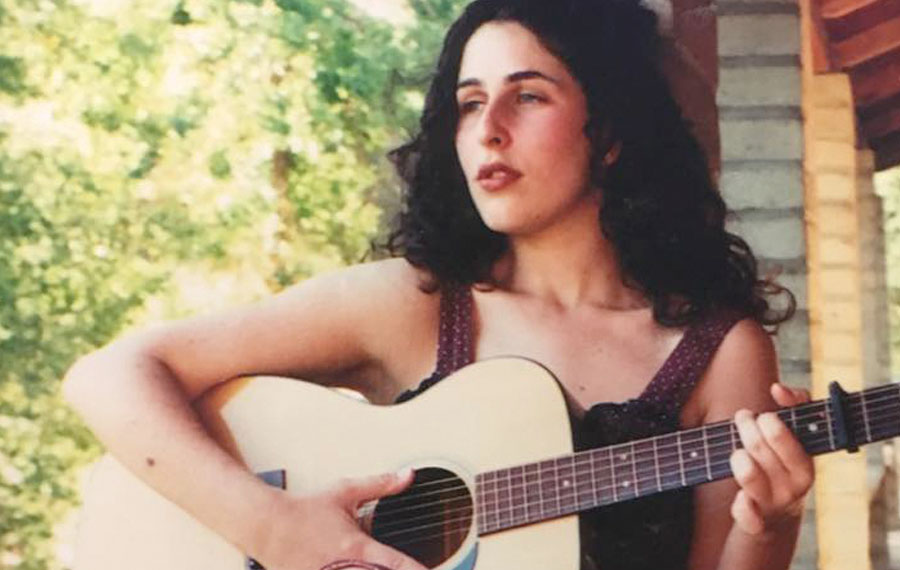
When we returned a week later, there I was, in sparkling technicolor under the El Sombrero sign at the front entrance, holding my guitar, wearing a purple dress and cowboy boots. I had become the official El Sombrero Girl. 

“‘Why in the hell is the missing intern painted on the front of a Mexican restaurant in Kern freaking county?’”

We all burst out laughing, and my friends slapped me on the back and said, “Guuurrrl, you’re famous!”

We went in and sat at our favorite table, and that’s when the woman in the back leapt up. 

“Steven!” she said to her friend. “That’s her! That’s the missing intern!” 

She was blond and about 40, with a red face. Maybe she was sunburned from too much river-rafting, maybe she was drunk, but either way, she was pointing a finger at me. 

“I’m not missing,” I smiled.

“You are the missing girl,” she insisted.

“My name is Sara.” 

“Your name is Chandra. I’d know your face anywhere. I seen it in the paper. Is that you painted out front? Steven, did I not just say to you, ‘Why in the hell is the missing intern painted on the front of a Mexican restaurant in Kern freaking county?’ ” 

Last August, I visited Kernville. I was nervous, the way you get nervous when meeting an ex for coffee. But it looked and felt just the same — the cactus by the roadside, the laundromat, the gas station, the same market doubling as a bait-and-tackle shop amid the still, blazing-hot air. Time seemed to have stood still on the Kern, even if for me it had not. I am a woman now, and have had a whole life of joys and tears and failures and successes and other loves. 

With a hushed awe, I went into the supermarket-bait-and-tackle as if I was entering an ancient holy site. The woman at the cash register had a wizened face and a long silver braid. 

Hershkowitz outside El Sombrero.

“Excuse me,” I said. “Do you remember a Mexican restaurant from a long time ago? It was called El Sombrero?” 

“Sure. Went out of business 15 years ago. Used to have a mural on the front of a girl playing guitar.” 

A lump appeared in my throat. I did not tell her that the girl was me. “Is the mural still there?” 

“Nope, the new owners painted over it.” 

I smiled and thanked her and blinked back tears. The summer of 2001 was such a long time ago. 

Sept. 11 knocked Chandra Levy off the front pages. The nation’s extraordinary grief shoved one family tragedy aside. Maybe that was a tiny blessing — the Levy family could go into Rosh Hashanah out of the public eye, left to grieve and wonder in peace. 

Levy’s remains were found in Washington, D.C.’s Rock Creek Park in May 2002. 

Who by water, and who by fire. 

Levy’s family will soon mark their 18th High Holy Days without their beautiful daughter. And the girl whom a Kernville stranger once insisted was Chandra Levy is not a girl anymore, but still has the same wild tangle of curls and is still singing up a storm and still eating chimichangas and would still like to know why some of us get to stay and some don’t.


Sara Hershkowitz is an opera singer, writer, activist and teacher. Born in Los Angeles, she currently divides her time between Berlin and L.A. 

Who By Fire: A Yom Kippur Story Read More »

Elul Week Six: Give Yourself Time to Forgive

This is the sixth of six weekly columns by Rabbi Zimmerman leading up to Yom Kippur.

When our children were little, my husband and I made a point of apologizing to each other for “little hurts”: “I’m sorry I was impatient with you.” We wanted to teach them that saying “I’m sorry” and “I forgive you” are important qualities to develop and part of everyday relationships. 

Of course when “big hurts” occurred, such as being bullied by peers or shamed by teachers, they required a gentler healing. It was not quick. It was not easy. All the more so when “I’m sorry” was not forthcoming.

Our liturgy at this season is permeated with seeking forgiveness for all the ways we have gone astray, with the clear instruction that for any hurt you have caused another person, you must go to them directly and make amends. 

I want to give voice to those among us for whom our High Holy Days prayers bring up immeasurable pain, with seemingly no path for healing. Those who have experienced major ruptures in relationships where bonds of sacred trust have been broken, or in situations where the people who have harmed them either have not apologized, or worse, do not think they have done anything wrong. 

For many, the 10 days of teshuvah between Rosh Hashanah and Yom Kippur, proscribed by our tradition, may not provide enough time to become whole. For some deep wounds, a “sit down and talk it out” strategy might not be possible or even advisable. 

Author Sharon Salzburg wisely writes, “Forgiveness is not a single action, but a process.” Perhaps working toward forgiveness and healing is a more suitable goal when the damage is deep. Some years, the effort needs to be about taking care of our own broken hearts.

In this spirit, I offer a prayer:

Prayer for Those Not Ready to Forgive

The design of this season compels us to forgive,
To open our hearts
And sometimes to re-experience wounds.

Some of us have suffered profound trauma
At the hand of parents, partners or friends.

They might be fresh bruises
Or from many years ago. 

They bubble below the surface, having been pushed away,
But now reemerge
In the quiet or the music or the prayers.

Amid the urgent pleadings of these days,
To wipe the slate clean and start anew,
Some of us are not sure of the path forward.

To the woman who has been violated,
The man whose spirit has been beaten down,
Anyone with a broken heart or a crushed soul
Who might not be quite ready to forgive:
It’s OK.

Take your time.

 “Trust that you will find your way, that you will come to a time where holding on hurts more than letting go.”

Sometimes the timetable of these holy days
Doesn’t match the rhythm of your heart and soul.
Sometimes our devoted prayers get intermingled
With inner voices not quite resolved:
“Maybe it wasn’t all that bad”
“Just let go”
“Let bygones be bygones”
“Be the bigger person”
“Maybe I’m being too sensitive.”

This year, love yourself enough
To trust your own timing.
Be patient enough
To stay in the place of “not yet.”

Trust that you will find your way,
That you will come to a time
Where holding on
Hurts more than letting go.

Forgive yourself for not being ready — yet.

Give yourself the time and space
To go at your own pace,
To love yourself right where you are, as you are.

From that place of acceptance,
May you have faith that the path forward will open up.


Rabbi Jill Berkson Zimmerman is a rabbi-at-large who teaches and works with individuals in spiritual guidance. Learn more at her website.

Elul Week Six: Give Yourself Time to Forgive Read More »

Cellphone ‘Sins’

I’ve never liked the word “sin.” I prefer the Hebrew translation “khet,” which more or less means a mistake.

It’s time we acknowledged how much we miss the mark with the world of meaning and connection around us when we’re too immersed in our phones. This Yom Kippur, I’ll give my phone (and my heart) a gentle tap for the following khetaim. Perhaps these will resonate with you as well:

For the mistakes I have committed by not being emotionally present for my family because I was mindlessly scrolling through someone else’s family photos.

For the mistakes I have committed by not being emotionally present for a friend who truly needed to confide in me in person. It didn’t matter that I put my phone face-side down on the table. The message was still clear to my friend: You (and my phone) are so important to me.

For the mistakes I have committed by not being professionally present for my employer when he or she was clearly paying me to work, not to constantly conduct my own social affairs online.

For the mistakes I have made by being on my phone so much that I sent a message to children around me, whether my own or someone else’s, that it is OK to use technology ceaselessly and without boundaries.

For the mistakes I have made by mindlessly scrolling past a post that requested donations on behalf of someone in need, because there was a juicier post right below it from someone enduring a breakup. And a post below that showing the deliciously dysfunctional (and useless) thread of arguments between a leftist and a Trump supporter. And a post below that of a late-night TV show segment that I’d already seen on TV that week, but decided to click on, anyway. I can’t remember now what the first post about someone in need was even about, but I hope they got the help they needed.

“It’s time we acknowledged how much we miss the mark with the world of meaning and connection around us when we’re too immersed in our phones.”

For the mistakes I have committed by being so immersed in my scrolling as I walked down the street that I passed someone in need and then pretended that I didn’t even see or hear the person. Whether I looked up from my phone or not, he or she was still there. 

For the mistakes I have committed by seeing enviable social media pictures of something I felt I was lacking, and then questioning why the person was entitled so such seeming happiness when I deserve just as much, if not more. 

For the mistakes I have committed by posting only photos that depicted the top 5 percent of my life — from picture-perfect meals to picture-perfect vacation or family photos. I wish I had been more authentic with my friends and myself, and hope I didn’t cause anyone pain by highlighting some fabulous aspect of my life that, I admit, I sort of blew out of proportion.

For the mistakes I have committed by declaring my undying love for my partner via social media to celebrate his or her birthday or our anniversary, without so much a thought as to how my friends who are still searching for love would feel, and with convenient neglect of the fact that, like all relationships, mine is incredibly imperfect.

For the mistakes I have committed with incessantly posting selfies of myself at every coffee shop, restaurant, beach, park, gym, or that exotic travel destination where I was almost attacked in the head by an aggressive bird seconds after I took the selfie.

For the mistakes I have committed by irresponsibly posting an article without having actually read it first, and having shared misleading information, stoking the fire of division and online trolling, and having caused conflict between friends and family.

For the mistakes I have committed by driving while texting or checking my phone, when I should have known better. And for the mistake I’ll make by repeating such irresponsibly tomorrow.

For the mistakes I have committed by embezzling from my own very finite life by devoting myself to an inanimate device that will never replace the human-to-human love and connection that I so badly need and deserve.


Tabby Refael is a Los Angeles-based writer.

Cellphone ‘Sins’ Read More »

Elegant Souls of Light

As my 9-year-old son recently prepared to return to school, we knew there would be a couple of boys in his fourth-grade class whom he didn’t get along with. We could have tried to switch him to another class, but one thing I’ve learned about boys is that taking the easy route doesn’t help guide them toward maturity. 

“You’re just going to have to learn to rise above, to not engage,” I told him.

Such interactions are a struggle for him, as for many boys. And they have only gotten harder as he learns to handle bigger moral issues: whether to step in to stop a fight, even though it’s against school rules; how to deal with a teacher who can’t hide her disdain for boys.

I think of his challenges as carving out a path to dignity that many of us adults still struggle with: when to speak out; when to rise above. 

Our culture in recent years has so muddied the waters of ethical behavior that it’s often hard to distinguish the petty from the depraved. Social media, in many ways, have created an underlying insecurity that has made these distinctions even murkier. 

Ironically, in the most “connected” society in history, we no longer feel all that connected to our families, friends, schools, synagogues, churches and political parties. Our lack of institutional trust has become so profound that we have lost the ability to rise above. We’ve built a golden calf of hate.

Ultimately, many of us have come to feel very much alone. But as sad as this current state is, we can move forward. Dignity — civility — begins in the soul.

The good news is that Judaism offers us endless refresher courses on soul management. As Rabbi Jonathan Sacks puts it: “Judaism is the satellite navigation system of the soul.” He says, “Judaism is designed to ensure that we live for the things that matter, that bring meaning and value and joy.”

Rabbi Sacks offers a great list of “life-changing principles” for the holidays. Here are a few of his quotes, to which I’ve added my own thoughts.

Give your children values, not presents. “Give them ideals, teach them to love, respect, admire, train them to take responsibility and to give to others.”

Which is easier — doing the seemingly endless work of turning our children into little mensches or outfitting them with metaphorical bike helmets that train them to fear everything, trust no one and attack everyone?

Forgive. “Emotional energy is too precious to waste on negative emotions. Those who forgive travel more lightly through life, freed of the burden of feelings that do no one any good.”

Forgiveness, of course, does not mean one must continue to suffer abuse. One can forgive and keep a healthy distance.

Don’t engage in lashon harah or “evil speech,” which the talmudic sages defined as saying negative things about people, even if true. “They were harsh about it, regarding it as one of the worst interpersonal sins. See the good in people — and if you see the bad, be silent.” 

And yet we do need to bravely state what needs to be said about public figures. Rabbi Sacks himself recently spoke out, when he labeled British Labour leader Jeremy Corbyn an “anti-Semite.”

Creating light can be as simple as bringing a smile to someone’s face or as complex as creating an exquisite work of beauty.

Create moments of joy. “There is a place in Judaism for osher/ashrei, ‘happiness,’ but the key positive emotion in the Torah and the Book of Psalms is simcha, ‘joy.’ Happiness often depends on external circumstances. But you can experience joy even in tough times. Joy liberates the spirit and breaks the hold of sadness.”

Create light. With news and information bombarding us every half-second, the world often feels full of darkness and despair. How do we stay hopeful? How do we stay sane?

As Jews, we are commanded to be a light unto nations. But what I didn’t understand until recently is that creating light can be as simple as bringing a smile to someone’s face or as complex as creating an exquisite work of beauty. 

The light of God makes us whole. It gives us the strength to rise above the petty and to bravely take on the depraved. It fuels our ability to forgive, to appreciate joy, to get through the toughest of times. God’s light enables us to become our best selves — elegant souls of light.


Karen Lehrman Bloch is an author and cultural critic living in New York. 

Elegant Souls of Light Read More »

Sept. 14, 2018


Sept. 14, 2018 Read More »

Bolton Threatens Sanctions Against ICC

John Bolton, President Trump’s National Security Adviser, threatened sanctions against the International Criminal Court (ICC) on Monday in response to the entity’s potential investigation into the United States for alleged war crimes in Afghanistan.

At a Federalist Society luncheon, Bolton declared that the court has no jurisdiction over the United States and its allies and called the ICC “illegitimate.”

The International Criminal Court unacceptably threatens American sovereignty and U.S. national security interests,” Bolton said.

Bolton added, “If the court comes after us, Israel or other U.S. allies, we will not sit quietly.”

The ICC called Bolton’s statement “shocking” and said they would be “undeterred” by it.

I think what the U.S. is promoting is a sense of the ‘righteousness’ and being above the law,” ICC representative Amal Nasser told the Chicago Tribune in an email.

Israel recently protested against the ICC for launching an investigation into alleged war crimes committed by Israel against the Palestinians; the Palestinian Authority is a member of the ICC despite not being an official state. The United States U.S and Israel are among the countries that do not recognize the ICC as a legitimate body.

Bolton Threatens Sanctions Against ICC Read More »