fbpx

August 3, 2018

New Rabbi at Sinai, Lawmakers in Israel

From left: Greg Smith, Josef Avesar and Barry Steiner discuss the Israeli-Palestinian conflict at Westwood Kehilla.

A July 16 panel discussion at Westwood Kehilla on the Israel-Palestinian conflict — featuring two lawyers and a retired political science professor with distinctly different viewpoints — was billed as a peace program but ended, fittingly, with the participants in a rhetorical deadlock. 

Barry Steiner, who retired in 2017 after 49 years as a political science professor at Cal State Long Beach, said that despite the deep-rooted reluctance by Israel and the Palestinians to compromise, their historic estrangement is “bridgeable.”

Lawyer Josef Avesar, author of the book “Peace: A Case for an Israeli-Palestinian Confederation,” argued for each side to retain a measure of autonomy with a parliament that would act on respective pieces of public policy legislation, while a third government would be created “for both states.” Both present governments would remain intact, Avesar said.  

Lawyer Greg Smith, one of the founders of Westwood Kehilla, said he and his fellow panelists were flashing their chutzpah by suggesting policy to governments 12,000 miles away. “I am in favor of any solution that will work,” he said. 

— Ari L. Noonan, Contributing Writer


A bipartisan delegation of California state legislators visited Israel the week of July 24 to explore bilateral collaboration opportunities.

A bipartisan delegation of California state legislators visited Israel the week of July 24 to explore bilateral collaboration opportunities. 

The group, chaired by Assemblyman Marc Levine, participated in dialogues and briefings organized by the American Jewish Committee’s (AJC) Project Interchange. 

“I hope to share the connection the Jewish people have with Israel, the innovation and entrepreneurship Israelis bring to the world, including water conservation and technology, and the collaborative partnership Israel and California share,” Levine, a Democratic leader in Marin County and chair of the Legislative Jewish Caucus, said in a statement before the meetings.

Project Interchange is an educational institute of AJC. 

The delegation traveled to Jerusalem, Tel Aviv, Israel’s northern border with Syria and its southern border with Gaza. The visit included a stop to explore Israel’s newest agricultural and water management innovations at the Agricultural Research Organization of the Volcani Center in Rishon LeZion. The group also traveled to Ramallah to meet with Palestinian experts in the Palestinian Authority.

“California and Israel share similar challenges with respect to natural resources and an appetite for innovative solutions,” said Robin Levenston-Kudisch, executive director of AJC Project Interchange. “The meetings and briefings with Israeli experts will provide a fitting setting for great minds to share information, discuss partnerships, and explore opportunities for mutually beneficial collaboration between California and Israel.”

Participants included Assembly members Mike Gipson of Compton, Al Muratsuchi of Torrance, and Blanca Rubio of Baldwin Park; state Sen. Ricardo Lara of Los Angeles; and AJC Los Angeles Assistant Director Siamak Kordestani.
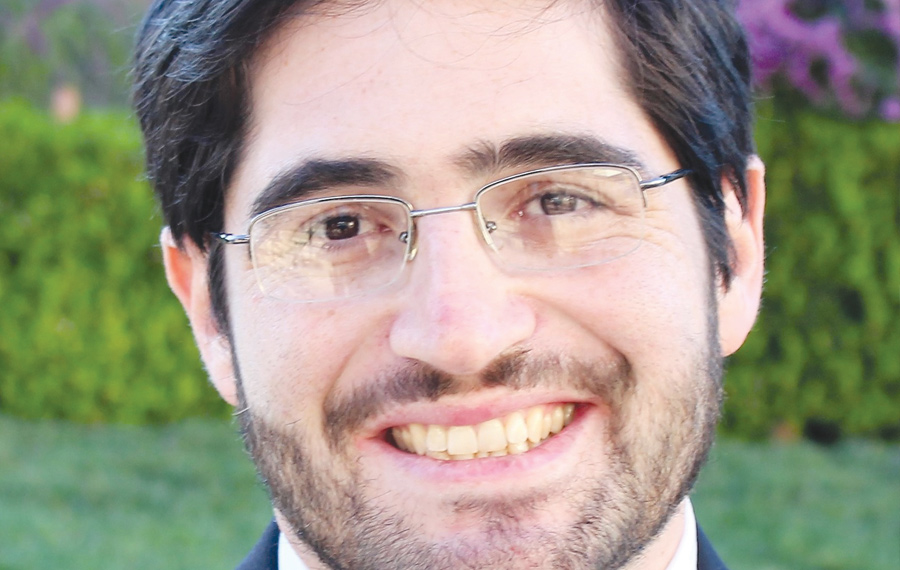

Rabbi Sam Rotenberg has joined Conservative congregation Sinai Temple’s clergy team.

“I’m thrilled to be part of such a vibrant and diverse community, to be part of a synagogue that has been in Los Angeles for so long,” Rotenberg, 28, said in a phone interview.

A July 20 Shabbat service welcomed him to the congregation, located in Westwood. 

Recently ordained at the Ziegler School of Rabbinic Studies at American Jewish University, Rotenberg will have several areas of focus at Sinai Temple, including its teen and young professionals groups, religious school, and social action and the adult b’nai mitzvah programs.

“I am really excited to work in the religious school and with ATID young professionals. Those are two age groups I like working with,” he said. “And I am excited about rebooting the adult b’nai mitzvah program. That’s a lot of fun for me, to imagine what the class would look like.”

Rotenberg began at Sinai Temple on July 1, succeeding Rabbi Jason Fruithandler, who took a position in New York. 

Rotenberg joins Sinai Temple Rabbis David Wolpe, Nicole Guzik and Erez Sherman. 

He and his wife, Rabbi Keilah Lebell, an IKAR rabbinic fellow, are the parents of two children, Meir and Della.

The rabbi, a jazz-trained pianist, said he is passionate about infusing the study and teaching of Jewish text with music.

“I love using music in education settings in the religious school,” he said. “I like identifying pieces where music can actually enhance the learning instead of just teaching kids about the month of the Jewish calendar and putting it to a song. I am trying to teach them about tefilot and putting that to a song, and to uplift the prayer experience.”
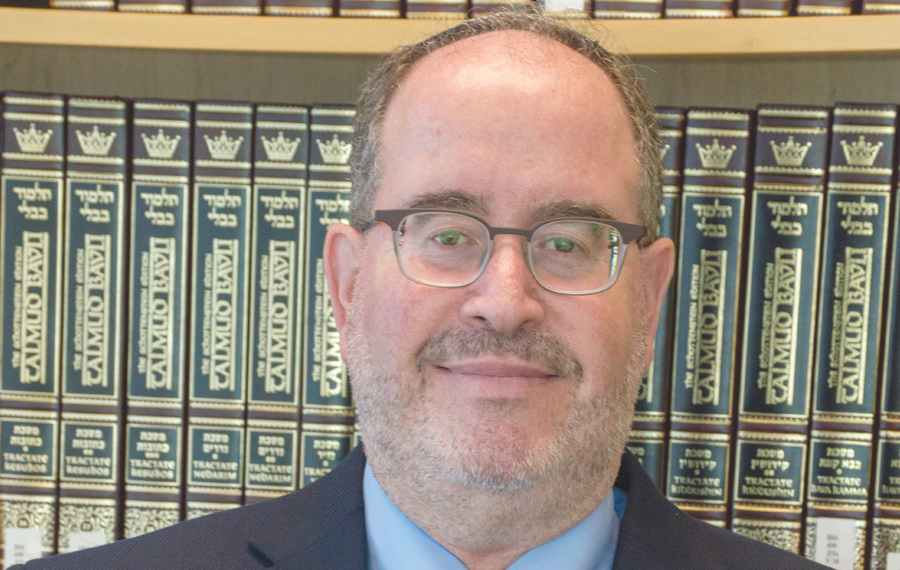

Rabbi Jim Rogozen has joined the Los Angeles-based Builders of Jewish Education (BJE) as the director of the BJE Center for Excellence in Early Childhood and Day School Education, effective July 16.

Rogozen, who grew up in Los Angeles’ Pico-Robertson neighborhood, began his career in the high school programs department of BJE before becoming a head of school for 29 years, most of which were in Cleveland. He also served as the chief learning officer at the United Synagogue of Conservative Judaism in New York.

Betty Winn, who previously held the director position, has transitioned into the role of senior consultant with the department.

In a phone interview, Rogozen, who was ordained at the Jewish Theological Seminary, said he is looking forward to collaborating with schools to help meet their needs.

“There are a whole lot of things we do — some of it being responsive to schools and hearing what they need,” he said. “Rather than a top-down model, it is a collaborative model.”

He said he was happy to be returning to BJE, an organization dedicated to strengthening Jewish educational experiences.

“I’m very impressed with the people who work at BJE,” he said. “They are top-notch, wonderful people, who are doing great things for the families and educators here in L.A.”
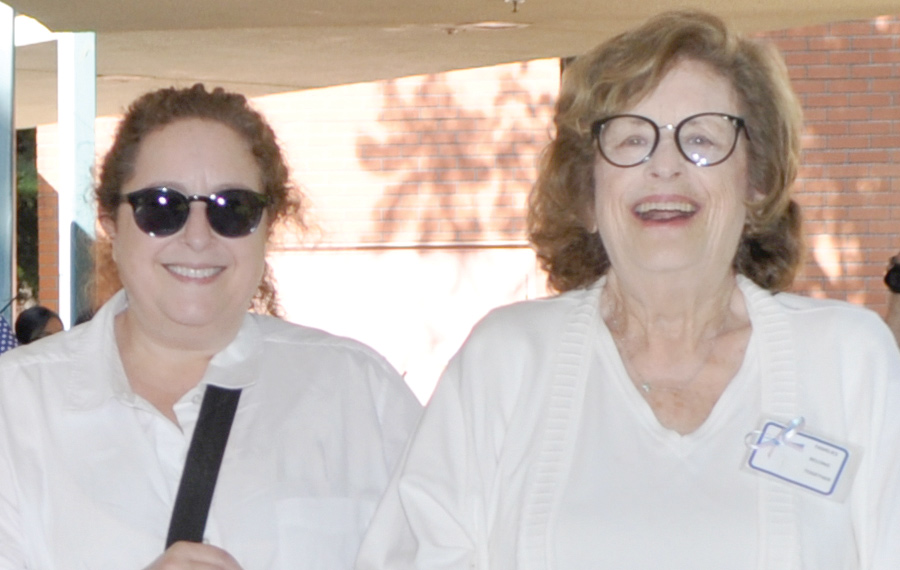

Jewish Home resident Freddie Miller (right) marched on behalf of separated immigrant families.

Activists come in all ages,
as evidenced by the seniors at the Los Angeles Jewish Home who marched on July 20 on behalf of immigrant families separated at the U.S.-Mexico border. 

Jewish Home resident Freddie Miller organized the rally. She saw coverage in the media of immigrant families being separated and felt she had to do something. 

“Children are my thing,” she said. 

Her daughter, Jennifer Tidstrand, added, “My mom is incredibly bright, politically astute, and she has a big heart for children.”

Miller suggested the idea to the resident council of the Jewish Home and the panel  embraced the idea wholeheartedly. 

“We are a family at the Jewish Home,” Council President Robert Lehman said. “It was such collective support.”

More than 30 residents made signs, wore badges and marched around the Eisenberg Village Campus. Skilled nursing residents joined them by waving flags and singing “God Bless America” along their marching route. 

Facing a nationwide outcry, President Donald Trump’s administration reversed its policy of separating undocumented families, but Ida Franklin joined the march because there are parents and children who have not been reunited. 

“I think it’s good to keep it alive until they get everything taken care of,” the Jewish Home resident said.

Marilyn Weiner was happy to march, too.

“I just hope we make a difference,” she said.

New Rabbi at Sinai, Lawmakers in Israel Read More »

Hamas Leadership Reportedly Agrees to Possible Ceasefire With Israel – With Conditions

Hamas leadership has reportedly agreed to a possible five-to-10-year ceasefire agreement with Israel. However, Israel has signaled that they will only sign onto an agreement in which Hamas releases Israeli soldiers they have held captive since 2014.

According to the Times of Israel, Egypt hammered out a ceasefire agreement that will re-open the Refah border crossing with Egypt as well as loosen restrictions on the Kerem Shalom border crossing with Israel. The agreement would also hand over control of the Gaza Strip to the Palestinian Authority and hold elections in six months, which would be the first time they would be held in Gaza since 2006.

The agreement would also set forth humanitarian efforts for Gaza and begin negotiations with Israel over the Israeli soldiers that have been held captive in Gaza.

Hamas’ leadership agreed to the deal, and an Israeli official is reportedly going to Qatar to talk about enforcement of the deal, but Israeli Prime Minister Benjamin Netanyahu told the family of Oron Shaul, one of the deceased Israeli soldiers held captive by Hamas, in a letter, “For the deal to have practical and moral validity, its first stipulation must be the release of our sons…. A deal without the return of our sons is a surrender that only serves as evidence of our country’s weakness.”

Most recently, Hamas has been terrorizing Israel by launching rockets and incendiary kites and balloons into Israel and organizing riots at the Israel-Gaza border to breach the fence.

Egypt had previously brokered a ceasefire agreement between Israel and Hamas on July 14, but the ceasefire was ignored by Hamas, prompting Israel to retaliate.

Hamas Leadership Reportedly Agrees to Possible Ceasefire With Israel – With Conditions Read More »

Sen. Cory Booker Takes Picture With Anti-Israel Group’s Sign, Claims He Didn’t Read the Sign

Sen. Cory Booker (D-NJ), who is widely seen as a potential 2020 presidential candidate, took a picture with an anti-Israel organization’s sign. He later claimed he didn’t read the sign.

Booker took the picture at the yearly progressive Netroots Nation conference and held a sign that read, “From Palestine to Mexico, All the Walls Have Got to Go”:


The U.S. Campaign for Palestinian Rights invented the aforementioned pro-Palestinian slogan; standing next to Booker on his left is Leah Muskin-Pirret, the U.S. Campaign for Palestinian Rights’ government associate.

Jeff Giertz, a spokesperson for Booker, told Jewish Telegraphic Agency (JTA) that Booker didn’t know the sign was anti-Israel in nature.

“He didn’t have time to read the sign, and from his cursory glance he thought it was talking about Mexico and didn’t realize it had anything to do with Israel,” Giertz said. “He hopes for a day when there will be no need for security barriers in the State of Israel, but while active terrorist organizations threaten the safety of the people living in Israel, security barriers are unfortunate but necessary to protect human lives.”

Booker has previously spoken at pro-Israel groups, however his support for the Iran nuclear deal and his vote against the Taylor Force Act in 2017 have put him at odds with some in the pro-Israel community.

The U.S. Campaign for Palestinian Rights, according to a Tablet exposé, is the “American umbrella group of the BDS [Boycott, Divestment and Sanctions] movement” and has funneled its money toward Islamic terror groups like Hamas, Islamic Jihad and the Popular Front for the Liberation of Palestine (PFLP).

The U.S. Campaign for Palestinian Rights has also celebrated convicted terrorist Rasmea Odeh:

Sen. Cory Booker Takes Picture With Anti-Israel Group’s Sign, Claims He Didn’t Read the Sign Read More »

At 71, Son of Executed Rosenbergs Disputes Their Guilt and Finally Gets His Bar Mitzvah

At age 6, Robert Meeropol’s parents were executed by the United States government. To this day, he continues a crusade to see them granted posthumous clemency. And, thanks to an unexpected twist during his appearance at the Jewish National Retreat, the 71-year-old has finally celebrated his bar mitzvah.

Meeropol is the son of Julius and Ethel Rosenberg, who in 1951 were convicted as spies working for the Soviet Union. The husband and wife were put to death by electric chair in 1953. He and his brother Michael Meeropol have spent their lives working to correct what they see as a tragic mistake driven by anti-Semitism and anti-Communist hysteria.

He spoke about his family’s tireless campaign at the Rohr Jewish Learning Institute’s annual National Jewish Retreat in Providence, Rhode Island. Their activism has included the documentary “Heir to an Execution,” produced and directed by Michael’s daughter, documentarian Ivy Meeropol. The Rosenbergs’ younger son also shared painful details of his childhood experience as the son of parents whose names are synonymous with betrayal of the United States. He and his brother were subjected to the turmoil of moving into and out of the custody of several relatives, as well as living in a children’s home. They were eventually adopted by writer Abel Meeropol and his wife Anne, taking the couple’s surname.

At the end of Meeropol’s presentation, JLI director Rabbi Efraim Mintz asked if he had ever worn tefillin.

Meeropol had never taken part in the ancient ritual of wearing the small leather boxes, containing Torah verses strapped to the head — with the leather strap around his  left arm. Yesterday, 58 years after he would have performed this mitzvah for the first time, Meeropol followed in the footsteps of centuries of Jewish males.

With Mintz’s help, Meeropol affixed the phylacteries to his head and arm. Hundreds of attendees greeted his milestone by dancing and singing in songs of celebration.

In his presentation at the event, Meeropol had detailed evidence he and his brother have uncovered in their endeavor to understand what had happened to their parents. While the Meeropols acknowledge that their father Julius organized a spy network while acting as a Soviet agent, they maintain their mother Ethel had no involvement in espionage.

Many critics and historians disagree with the Meeropols’ assertion, citing their own evidence. In 2017, President Donald Trump used a press briefing in Paris to state that the Rosenbergs had been convicted of treason. In fact, the government was never able to bring even a legal accusation of treason, as the United States was not at war with the Soviet Union in 1951. Instead, the Rosenbergs were convicted of conspiracy to commit espionage.

In making this error, Trump may have inadvertently breathed new life into the Meeropols’ crusade. His dismissal came on the heels of the brothers’ rejection by other  presidents.

Prior to President Barack Obama’s exit from office, Robert and Michael Meeropol collected more than 60,000 signatures supporting their pursuit of seeing their parents’ convictions reviewed. On December 1, 2016, they went to the White House to deliver those signatures, as well as relevant documentary evidence, to the outgoing president.

President Obama refused to acknowledge the Meeropols’ efforts. This was despite additional advocacy the brothers received from several Democrats including U.S. Reps Jim McGovern (D-Worcester) and Richard Neal (D-Springfield), as well as Massachusetts Sens. Elizabeth Warren and Edward Markey.

Their attempt echoed a similar visit the brothers paid to then-President Dwight D. Eisenhower in 1953 as small children. Before their parents’ executions, they asked Eisenhower to grant the Rosenbergs clemency and save them from death at the hands of the U.S. government. The new president, facing one of his first decisions as commander in chief, declined their appeal.

Meeropol’s first wearing of tefillin gave uplifting closure to an emotionally fraught session. His first observance of this religious rite had a clear impact on one of the Cold War’s most famous orphans.

Describing it as “a very emotional moment for both Robert and myself,” Mintz emphasized the redemptive quality of the occasion. “It was extraordinary seeing someone who’s been through such a difficult childhood experience being finally able to perform this important mitzvah.”

Jackie Danicki is a business consultant and media contributor. Her work and writing collaborations with high-profile senior executives have been featured in publications including Fortune, Forbes, Advertising Age, the New York Observer, MediaPost and The Drum.

At 71, Son of Executed Rosenbergs Disputes Their Guilt and Finally Gets His Bar Mitzvah Read More »

Israel Seizes Norwegian Boat Carrying Pro-Palestinian Activists Toward Gaza

Israel seized a Norwegian boat carrying pro-Palestinian activists that was headed toward Gaza on July 29, prompting an outcry from the Norwegian government.

The 22 people on the boat were attempting to protest Israel’s blockade against Gaza; Israel boarded the ship and arrested the activists. Most of the arrested activists have been released and deported, though seven remain in Israeli jail.

“Israel has broken all the rules,” Herman Reksten, the captain of the boat, told a Norwegian media outlet. “It’s horrific that they board a Norwegian ship in international waters and force it to moor in Israel.”

Reksten has also claimed that Israel used “excessive force” by using tasers.

Israel has defended its actions.

“The ones that were acting against international law were those activists who were attempting to breach an internationally-recognized legal naval blockade over the Gaza Strip, which is ruled by an Islamic terror organization, Hamas,” Dan Poraz, a diplomat at the Israeli embassy in Norway, told AFP. “There was definitely not a use of excessive violence. There was use of a minimal and reasonable amount of force simply because the crew members … were reluctant to cooperate and to follow orders from the (Israeli) navy.”

Aussie Dave, a blogger at the Israellycool website, argued that there were contradictions in the various passengers’ stories. He pointed out that while the captain accused the Israeli navy of using tasers, another activist claims the soldiers “savagely beat” the passengers on the ship and another claimed they were surrounded by heavy artillery, but did not accuse the soldiers of violence.

“In other words, they are lying,” Aussie Dave wrote. “Not that this is surprising – it is what they do in order to generate sympathy for their morally bankrupt cause.”

Israel has implemented the blockade against Gaza ever since Hamas seized control of the strip in 2006 to prevent military equipment from reaching the terror group; however, Israel still provides humanitarian aid to Gaza. Similarly, Egypt also has a blockade against Gaza, but unlike Israel, they don’t provide any humanitarian aid to Gaza.

Israel Seizes Norwegian Boat Carrying Pro-Palestinian Activists Toward Gaza Read More »

Letters to the Editor: Week of August 3, 2018

Sabbaths in Jerusalem
I found Sarah Tuttle-Singer’s beautifully and movingly written account of her deeply felt experiences, as she bravely journeyed into the thicket of the three Jerusalems, as validating universal truths.

Living in harmony and acceptance in a multicultural, ethnically and religiously diverse society is a difficult dream to attain. People the world over have tried for millennia to find systems of governance that would achieve such a desirable outcome. Yet, it’s a fact that humans are inherently tribal beings. They thrive in their own communities of shared values, beliefs and common aspirations. Even as time and circumstances have evolved, the ideas of the necessity of coexistence, it’s a constant struggle.

David Lenga
Woodland Hills 


Baron Cohen Sinks to New Depths
Journal writer Eli Fink claims that comedian Sasha Baron Cohen has exposed “the fringe elements in our society” in his new series, “Who Is America?” 

Uh, no.

Cohen has exposed what he really is: an arrogant, unfunny elitist desperate to shore up his diminishing media market presence.

It isn’t funny to skewer innocent people, regardless of their political views. Cohen is not a comic but a boorish bully.

Arthur Christopher Schaper
Torrance


Tikkun Olam and Judaism
Gil Troy, in his review of Jonathan Neumann’s book “To Heal the World?” points to the author’s concern that tikkun olam “can lure Jews away from a rich, authentic Judaism.” Rich, authentic Jewish teaching abounds in the imperative to help those in need. As Troy himself observes, “tikkun olam is one of a series of Jewish values, visions and virtues.”

Since 2006, BJE Impact: Center for Jewish Service Learning has, in partnership with the Jewish Federation, helped schools, youth groups and camps connect tikkun olam action with Jewish learning and values through consultation and coaching. BJE also runs multiple, weeklong summer day camp sessions, BJE Teen Service Corps, enabling middle school and high school teens to engage in tikkun olam activities combined with Jewish learning and reflection. 

Gil Graff
Executive Director


Builders of Jewish Education
Kudos for Gil Troy’s piece on Jonathan Newmann’s “To Heal the World?” 

At times, it does take an outsider to make the cogent point that leftism has invaded the Reform, Conservative, and now even the Orthodox factions of American Jewry. This brings home Dennis Prager’s point that leftism is the fastest growing religion in the world.

Question: What do we do about it?

Enriqué Gascon
Westside Village


The wise and venerable Rabbi Irving Greenberg once taught us that our current pluralistic environment offered an opportunity for each stream of Judaism to expand its bandwidth:
Orthodoxy could benefit from a dose of liberal tikkun olam and liberal Judaism could deepen its commitment to Talmud Torah (Torah learning) and shmirat mitzvot (mitzvah observance).

The present struggle between Jewish universalists and particularists exemplified by the counterpoints that appeared in the Journal make Greenberg’s longstanding observation all the more poignant and timely.

And I can vouch for the fact that, to paraphrase Paul Simon, the “words of the prophets (the urgent call to act justly) rarely appeared on the walls of the beit midrash.”

Rabbi Chaim Seidler-Feller
Director Emeritus, UCLA Hillel


Think, Don’t Tweet
I completely agree with David Suissa’s column about thinking (“Thinking About Thinking,” July 20). But why are you “expected to contribute” to Twitter “all day long”? No doubt tweeting less would be good for all of us.

Susan Rosenthal
Sherman Oaks


ICE and the Democrats

David Suissa is concerned by the self-destructive power of the two words uttered by the radical left — “abolish ICE” — and its potentially disastrous implications for the future of the Democratic Party (“Two Words Democrats May Regret,” July 27). However, there are many more two-word labels that portend bad omens: Alexandria Ocasio-Cortez, the young, Marxist anti-Israel representative in New York comes to mind, among many other factors.

Richard Friedman
Culver City


Identifying as Jews
Excellent column by Karen Lehman Bloch (“We, the Israelites,” July 27). I could not agree more with her point of view. Racism has a strong social class-conflict background. I live in Argentina, a country that has very few African-looking citizens but very strong racist traditions. The “Blacks” are always the “others,” regardless of who looks darker. In the case of Jews, we used to be the Blacks of Eastern Europe but, all of a sudden, when we got to America, we magically became white.

Was that because we became somehow “richer,” like they say in Brazil? Because we moved up in the social ladder? Magic works! My zayde (zichrono livracha) used to be called “Moishe der Paraguaye” when he came from Russia to Buenos Aires because he was very dark, and two generations later, I believe myself to be blond haired (I don’t have too much hair left) but my daughters agree that I have dark hair (I still don’t agree).

We have a very deep trauma with skin color. We have been killed by the millions for not matching the race standards of old Europe (or for not matching the social class position they wanted us to belong to) and we desperately fight against our self-hate trying to show empathy or not when others are discriminated against as we used to be. I believe that rescuing the concept of an “Israelite Nation” will help us to heal some of these wounds in our soul.

Daniel Liberman
via Facebook

Thank you, Karen, a wonderfully written column. May your assertions come to be seen as a blessing to all the family of Israel.

Roslyn Anderson
via Facebook


Facebook on Holocaust Denial
On the one hand, as Facebook founder Mark Zuckerberg says that people should be allowed to “express themselves even if they get things wrong.” Meanwhile, he stresses that he does not want Facebook to serve as a platform for harming others (“Jewish Groups Slam Zuckerberg for Refusing to Take Down Holocaust Denial Content From Facebook,” posted online July 18).

On the other hand, Anti-Defamation League National Director Jonathan Greenblatt believes that Facebook should take a harder line on Holocaust denial, labelling it “a willful, deliberate and longstanding deception tactic by anti-Semites.”

Recognizing the power of the press, I would liken the Holocaust denials published in Facebook and other social networks as examples of shouting, “Fire!” in a crowded theater. No good can come of it. Most likely, it will harm the pursuit of peace in our world by inspiring deadly terrorism against Israel and Jews throughout the world.

George Epstein
via email

Letters to the Editor: Week of August 3, 2018 Read More »

‘Battle for Beverly Hills’ Details Birth of Celebrity Politics

The title of “The Battle for Beverly Hills: A City’s Independence and the Birth of Celebrity Politics” by Nancie Clare (St. Martin’s Press) is not merely metaphorical. On Feb. 26, 1923, at a tense moment when Los Angeles was campaigning to annex the city of Beverly Hills, the pro-annexationist editor of the Beverly Hills News opened a package that contained a bomb.

“Why on earth would the suggestion of joining the City of Los Angeles spark such violent outrage?” muses Clare, a veteran L.A.-based journalist and now a historian with a winning style of storytelling. “Beverly Hills was remote and geographically tiny with a population of less than a thousand; it had only been incorporated as a city for nine years.”

The answer goes to the very heart of what Beverly Hills symbolizes, then and now. Even in the silent-film era, it was home to the royalty of the motion picture industry. During Prohibition, Clare points out, the fact that Beverly Hills boasted its own small police force contributed to “the privacy to drink cocktails and throw the occasional orgy.” That’s one of the reasons why the opponents of annexation were led by Mary Pickford and the “Beverly Hills Eight” — including Douglas Fairbanks, Tom Mix, Will Rogers and Rudolph Valentino — who were among “the first generation of movie stars” and established a precedent in American politics that endures to this day: “What they did,” Clare writes, “was so successful that it became a model for generations of celebrities to intervene in political causes that caught their fancy.”

Clare reaches back into history to show us the origins of the privileged enclave that became Beverly Hills. The municipal boundaries, she points out, “are almost exactly those of Rancho Rodeo de las Aguas, or the Ranch of the Gathering of the Waters,” awarded to the Valdez family for its support during Mexico’s war of independence from Spain. The Valdez family, we learn, lived in a pair of adobe houses at the intersection of what are now Alpine Drive and Sunset Boulevard. The matriarch of the family, Maria Rita Valdez Villa, was “ambushed” by a band of Native Americans “in a scenario that would become a staple in Westerns
filmed in nearby neighborhoods some fifty years later.” 

Later, she sold the land to Benjamin Davis Wilson (after whom Mount Wilson is named) and Major Henry Hancock, the namesake of Hancock Park. By 1906, when land developers took title to the ranchlands, “Beverly Hills was born,” and the new town was incorporated in 1914 as “a sixth-class city under California law.” Clare dismisses as “urban legend” the various stories about how Beverly Hills came to be named. How, why and by whom the name “Beverly Hills” was chosen, she shrugs, “will probably remain a mystery.” 

Some aspects of its history are deeply ironic in light of what Beverly Hills is today. The first houses to be developed were subject to legal restrictions “that prevented non-Caucasians and Jews from owning, leasing, inheriting or renting in the city.” Real estate agents were also warned not to sell to “picture folk.” Yet, it was the founding generation of the motion picture industry, many of them Jewish immigrants from Eastern Europe, that followed the example of Douglas Fairbanks, the first movie star to “set up housekeeping in the young city of Beverly Hills.” As an example of the fascinating details that ornament Clare’s book, we learn that “Fairbanks’ father was Jewish, a fact that haunted him, and to be fair, the rampant anti-Semitism of the time reinforced his desire to keep his religious background just that, in the background.” 

Like much else in the history of Southern California, the battle over annexation — “Beverly Hills’ close brush with oblivion,” as Clare puts it — was fought over water. A more abundant water supply essential for its survival, “and the emerging glitterati of the motion picture industry … weren’t helping, what with their grand homes that included not just lush gardens and fully grown trees, but waterfalls as well.” The Rodeo Land and Water Company, which had promised to supply water when Beverly Hills started out as an exercise in real estate speculation, now wanted to solve the problem by turning it over to Los Angeles. “If a community wanted to be part of the [City of Los Angeles] water system, the solution was simple,” argued William Mulholland, the man who brought water to Los Angeles. “Become part of the city, pay city taxes and enjoy city services.”

Clare draws an unbroken line from Mary Pickford to Ronald Reagan, Arnold Schwarzenegger and Donald Trump — all media celebrities who played on their fame to win public office.

Mary Pickford figures crucially in the story that Clare tells. “[A] poor girl married to a half-Jew who had worked her way to the pinnacle of Beverly Hills, a new city unencumbered by a Social Register,” the actress “couldn’t possibly have had much to fear from the Rodeo Land and Water Company.” And she recruited her fellow stars to the cause — “the magnetism of her husband Douglas Fairbanks, the sex-appeal sizzle of Rudolph Valentino, the wit of Will Rogers, and the comic relief of Harold Lloyd.”

Clare draws an unbroken line from Mary Pickford to Ronald Reagan, Arnold Schwarzenegger and Donald Trump — all media celebrities who played on their fame to win public office.

She also fills in a blank in the storied history of Beverly Hills.

Like many millions of Angelenos, I have passed the monument that stands on the traffic island at the intersection of Beverly Drive and Olympic Boulevard without realizing it was erected to commemorate the crucial moment when “eight stars battled to keep their city free.” Now that I have had the pleasure of reading “The Battle for Beverly Hills,” I will never look at it again in quite the same way.


Jonathan Kirsch, attorney and author, is the book editor of the Jewish Journal.

‘Battle for Beverly Hills’ Details Birth of Celebrity Politics Read More »

‘Back to Cool’ With Crayon Pencil Holders

Back in my elementary school days, few things were as exciting as a brand-spanking-new pack of crayons. Lined up in the box like a multicolored picket fence, they promised hours of creative adventures. All these years later (I won’t say how many), I get to experience nostalgic fun with these pencil holders made of crayons. Super colorful yet practical, they make great desk organizers as well as teacher-appreciation gifts. 

What you’ll need:
8.5-ounce metal can
Double-sided tape
Crayons
Ribbon

1. Wash an 8.5-ounce can and let it dry. The 8.5-ounce cans are the shorter ones that contain vegetables or fruit. I used a fruit cocktail can. Be careful when handling the rim of the can, as it can be sharp. Wrap double-sided tape around the can.

2. Line crayons vertically around the can, pressing them onto the double-sided tape to hold them steady. Position them with the points facing up. I needed 28 crayons to completely surround the can.

3. Tie or tape a ribbon around the crayons, as the double-sided tape alone is not enough to secure them to the can. I found this chalkboard-themed ribbon at Michaels, but any ribbon will work. You can even use a strip of colorful duct tape.

Jonathan Fong is the author of “Flowers That Wow” and “Parties That Wow,” and host of “Style With a Smile” on YouTube. You can see more of his do-it-yourself projects at jonathanfongstyle.com.

‘Back to Cool’ With Crayon Pencil Holders Read More »

Table for Five: Ekev

Weekly Parsha: One Verse, Five Voices
Edited by Salvador Litvak, Accidental Talmudist

The Lord further said to me, “I see that this is a stiff-necked people.”  – Deuteronomy 9:13


David Sacks
Television writer and podcaster at torahonitunes.com
As the saying goes, if you don’t stand for something, you’ll fall for anything. 

Are Jewish people stubborn? Yes. Is that a bad thing? Not necessarily. 

And so, I present a tiny ode I’d like to call, “In praise of being stiff-necked.”

Being a stiff-necked people allows us to hold fast to HaShem, and to the Torah, and to the Land of Israel, and to our tzaddikim, and to our commitment to be a light unto the nations, and to the visionary belief that the world is evolving toward perfection, and that the heart will once again be united with the mind, and that light will conquer darkness, and that the whole world will recognize the Oneness of HaShem and finally know who the Jewish people really are, and that the Jewish people will finally know who we really are, so that we can rebuild the Holy Temple, and bring heaven down to earth, and bring an end to hatred, and hunger, and jealousy, so that all of us can take joy in one another’s joy, and realize that we are one big family that shares the same soul, and then we’ll see with our own eyes all the blessings that HaShem has stored up for us since the moment the world was created. 

So, is it bad to be stubborn?  

Not if it allows you to never give up on the goodness of God. 


Judy Weintraub
Chaplaincy candidate, Academy for Jewish Religion, California
Our people are referred to as stiffed-necked not once but several times in the Torah. If we harbor any delusions that we are chosen because of certain superior qualities, this verse stands in contradiction. We often get trapped in our own constrictions. We can’t see beyond our preconceived notions that, because ideas are in our heads, they must be right. Defensively, we are unwilling to turn our heads to see with clarity what is around us. Or we can’t because we simply lack the tools. Either way, that type of resistance can be a detriment that prevents us from getting outside of ourselves. 

Perhaps we can look to a favorite passage of mine in Psalms for guidance. “From my narrow place I called you; you answered me from your Expansive Place.” (Psalm 118:5). That expansive place is the majesty of HaShem that is there for each of us to access. 

We can loosen the stiffness that keeps our focus narrow, in both a concrete and abstract way. It is available and attainable through the beauty of Shabbat and the treasure that is Torah. In this way, we can reach beyond the constraints of our limitations. May our hearts and minds be open to moving beyond those stiff, narrow places. 


Rabbi Aryeh Markman
Executive director of Aish LA
When God said the Jews are “a stiff-necked people,” He was referring to the adult male Jews who had just committed the sin of consenting to the golden calf. The medieval commentator Ramban said the calf was not an idol but rather an attempted intermediary between God and Man to replace Moses. Moses had not returned from Mount Sinai at his appointed time. The men panicked, the women held strong. Why? 

Throughout Jewish history, women have played a vital role in creating and molding our nation, beginning with the matriarchs. God agreed to Sarah’s advice to send Yishmael away, lest he be a bad influence on Isaac. Haman’s downfall was caused by Esther. 

This strength is a direct result of a woman’s emotional nature. God created women with a higher degree of feeling, thus enabling them to achieve greater spirituality than men. Indeed, scientific studies have proven that the emotional part of a woman’s brain is more highly developed than a man’s. 

One of the manifestations of this womanly trait is that an emotional feeling will not concede to false logic. In the case of the golden calf, the men reasoned that where an entire nation of people was left alone in the desert, it was permissible to make an idol to serve as their leader. The women, on the other hand, steadfastly remained loyal to God’s and Moses’ teaching and refused to consent to any logical argument leading to anything that even resembled an idol. They were right.


Rabbanit Alissa Thomas-Newborn
B’nai David-Judea Congregation
When we built the golden calf, God gave us the epithet “a stiff-necked people.” But what exactly does this mean? Rashi explains: “They turned the hardness of the backs of their necks to those who rebuked them, and they would not listen” (comment on Exodus 32:9). A terrible side of us came out — our willingness to tune out God’s advice, rebuke and criticize rather than be vulnerable and have faith. We literally turned our backs to God. 

Rather than patiently and faithfully waiting to receive His Torah — which instructs us about how to live, including an obligation to rebuke — we preferred an inanimate idol that would be morally silent. Most of us can relate to this desire to close our ears to feedback and rebuke, whether from family members, colleagues or God. It’s certainly in our spiritual Jewish DNA. But our epithet as a  “stiff-necked people” needs not to be descriptive as much as it can be cautionary. 

With the golden calf, God was heartbroken that we weren’t willing to listen to Him and be vulnerable and humble. But we can do better today. We will soon begin the month of Elul, the time of year when we accept rebuke — from God and each other — with open ears and hearts. And so, as we face our sins, mistakes and what we need to work on, may what is  “stiff-necked” within each of us become humble and malleable. For this is how we grow.


Ilana Wilner
Shalhevet High School
“A stiff-necked people” is commonly translated to mean a stubborn nation. This phrase appears in our Torah portion twice in Chapter 9. The first when Moshe recounts the story of the Sin of the Spies, and the other after Moshe retells the story of the golden calf. The phrase connotes more than stubbornness, but also inability to repent. 

Of all the sins throughout Scripture, why in these specific stories does God refer to us as “stiff-necked” and a stubborn nation? In both accounts, God had decided to destroy the Jewish people and start anew, but Moshe convinced Him to forgive the Jewish people. By choosing to forgive and save the Jewish people, God showed the attribute of kindness through flexibility. God is calling us “stiff-necked” to criticize us for not emulating those traits, for not being amenable and doing teshuvah. 

So much of Judaism is routine and exact: the height of a sukkah, the amount of matzo one has to eat and at what time Shabbat ends. Yet, here God is teaching us not to focus on the “exact” but to find kindness in being flexible, just as God has shown when He forgave the Jewish people for their terrible sins. We live in a world of eilu v’eilu — these and these are the words God — and it is possible for more than one person to be right. God is reminding us here to make room for others even if we disagree or are different, just as he made room to forgive.

Table for Five: Ekev Read More »