fbpx

May 31, 2018

Ehud Barak: Like the Country He Lives In

During his West Coast book tour last month, former Israeli Prime Minister Ehud Barak kept getting interrupted. At the JCC in San Francisco, a group of pro-Palestinian protesters shouted “war criminal” and “free Palestine” as he attempted to discuss his recently published memoir, “My Country, My Life.” 

The protesters didn’t seem to know — or care — that the Israeli leader they were denigrating made a significant attempt to play peacemaker, offering the Palestinians a state of their own nearly two decades ago, which Palestinian leader Yasser Arafat rejected. 

To them, Barak was indistinguishable from any other Israeli leader, synonymous with their would-be enemies in Israel’s current government who oppose a two-state solution altogether. Barak was merely a surrogate for Israel, a nation seen more as symbol than sovereign country.

Unfazed by the assault, Barak endured the disruption and then carried on as if nothing had happened. He is, after all, like the country he lives in.

The following day, at Wilshire Boulevard Temple in Los Angeles, Barak was again interrupted when an audience member fainted in the aisle. As medical professionals tended to the person, Barak seemed to squirm in his seat. “Is there something we can do?” he asked over the microphone. Widely considered the most decorated soldier in Israel’s history, he appeared unaccustomed to the position of helplessness. So when his interlocutor, Jewish Journal Book Editor Jonathan Kirsch, offered to resume the conversation, Barak said, “Ask the doctor first.” When things were finally under control, Barak relieved the tension with a dose of Yiddish humor: “We used to say, ‘Troubles will not be in short supply, so don’t worry.’”

“We should have no illusions. Terror will continue. It’s a generational war.”
— Ehud Barak

In his more than five-decade career, Barak has seen Israel grow from a scrappy socialist project to a powerful startup nation, and yet, troubles are still not in short supply. Even so, he has retained an air of idealism: He told the Wilshire Boulevard crowd of nearly 500 that he still believes in a two-state solution; encouraged American Jewry to “raise its voice” against Israeli policies that compromise the country’s “moral height”; and said that Israel should allow Gaza to build an island in the Mediterranean to serve as a seaport and airport, thus mitigating Gaza’s humanitarian crisis. 

Considering these are the words of a two-time former defense minister and former Israel Defense Forces chief of staff, Barak can hardly be blamed for naiveté. Though his political legacy is controversial (he was Israel’s shortest-serving prime minister), his military career is revered: Barak served in the Six-Day War, Yom Kippur War and in the elite commando unit Sayeret Matkal, through which he led several successful covert operations. He famously dressed as a woman to kill PLO terrorists in Lebanon who had orchestrated the 1972 Munich massacre of Israeli Olympic athletes, and he served as the architect for the raid on Entebbe, in which more than 100 Israeli hostages were rescued from a terrorist hijacking. 

Asked if Israel’s success in those operations discouraged subsequent “spectacular acts of terrorism,” Barak was unequivocal. “We should have no illusions,” he said. “Terror will continue. It’s a generational war.”  

When evaluating his legacy, journalists have long described Barak as something of an avatar; he seems to inhabit the mood of the day despite a long and storied career that could easily predispose him to ideology. In Los Angeles, he offered a blistering critique of  Israel’s religious nationalists, whom he described as “totally detached from reality” in their bid for a one-state solution that encompasses all of biblical Israel. “[They] are good patriots. They really believe in what they argue for,” he said. “But when you push them to the border and tell them that this will end in either a not Jewish or not democratic situation, they ultimately look to heaven waiting for some divine intervention.” 

Barak also addressed Israel’s secular-Orthodox divide. “I think that what’s happening [in Israel] right now in regard to Jewish identity is, in a way, a shame,” he said, referencing the internecine conflict over access to the Kotel. “I don’t see anyone who can dictate to a Jewish person what it means to be a Jew. I always liked the answer that Golda Meir used to give at the height of the debate in Israel over ‘who is a Jew?’ Her answer was, ‘Whoever wants to be one, deserves it.’ ”

Perhaps because his past political flip-flopping made him the subject of derision in Israel, Barak made the case for big tent Judaism and encouraged American Jews to critique Israeli policy. “Part of the partnership [between Israel and American Jewry] is the readiness to criticize, to raise your voice, to make clear what you think about what happens in Israel,” he said. “I think it will help Israel … and [it] will help you to convince your own young generation that Israel is still on the right track.”

At 76, Barak said he would not again seek political office, though that has not stopped him from criticizing current Israeli Prime Minister  Benjamin Netanyahu, whom he once commanded in Sayeret Matkal. Rather than re-engage the system, Barak is content to serve as a kind of reflective mirror, both for the vicissitudes of Israel’s complicated politics and the psychic reality of its citizens. It has even been suggested that part of the reason his political legacy is so reviled is because his failed peace offer to the Palestinians in 2000 disabused many Israelis of the notion peace is even possible.

As his appearances in California showed, Barak seems to mirror two different sides of Israel. In the face of protesters, he channeled the hardened, defensive Israel, which must contend with the consequences of its choices. And in L.A., he became the humane Israel, who does not turn away from suffering or hope but says, “Is there something we can do?

Ehud Barak: Like the Country He Lives In Read More »
Let Me Give You Some Advice

On Shabbat morning, a fellow synagogue traveler approached me. He seemed to have something urgent to tell me, and he held a book I authored several years ago about the state of American Judaism. He had just bought it and read it, and thus it was natural for him to consider me the appropriate person to unload on: “They don’t even know how to keep their own community intact, so how dare they come tell us what Israel should do?”

“They” is the Jews of America. “Us” is we Israelis. 

I asked him if he had seen the survey conducted by professor Steven Cohen titled “Together and Apart: Israeli Jews’ Views on Their Relationship to American Jews and Religious Pluralism,” commissioned by the New York Jewish Federation. He didn’t know what I was talking about. The survey, published last week, demonstrated in numbers that my friend was not alone, neither in his grim assessment of the state of U.S. Jews, nor in his rejection of their advice to Israel. 

Forty-six percent of Israeli Jews believe that in the next 10-20 years, “most American Jews who are not Orthodox will assimilate.” Some Americans would probably find such an assessment offensive. I think it is mostly ignorant. Ten to 20 years is a very long time, and predictions about things such as assimilation are often tainted by hyperbole.

We need to keep in mind the difference between being offensive and being ignorant as we turn to the other data in this extensive survey that made headlines: Apparently, about two-thirds of Israeli Jews have no desire to see their government taking into account “the views of Jewish leaders in the U.S.” Israelis value the ties with American Jews, they understand that their support is essential for the country, they believe that a Jew in the U.S. can lead a meaningful Jewish life (see graph at right). Still, they have no use for the advice of American Jews.

A majority of Israeli Jews do not want American Jews’ advice on religion and state (61 percent), settlements (67 percent), peace with the Palestinians (64 percent), Israeli Arabs (69 percent), Reform and Conservative Jews in Israel (55 percent), prayer at the Western Wall (56 percent), conversion (54 percent), and marriage and divorce (64 percent). To put it bluntly: All the issues that some U.S. Jewish leaders consider worthy of meddling are off the table. And this time, you can’t just say, ‘Oh, it’s the right-wing religious government, not the people of Israel.’ This is a survey, so it is the people. It is they — I should say “us,” even though I somewhat disagree with the majority of my fellow Israelis on this subject — who do not want this advice. 

Is this offensive? I’d again consider the option of ignorance. In this case, not the ignorance of Israelis. Let me put it this way: Israelis might not know enough to give an accurate assessment on the state of American Judaism, but they feel that American Jews also do not know enough about Israel’s challenges to give it advice on how to make peace, war or laws. 

Ignorance — and a grain of hubris — prompts Israelis to negatively assess the future of Jewish America. Ignorance — and a grain of hubris — prompts Americans to believe that Israel would be better off if it only heeds their advice.

Thus, before you get offended by Israelis’ rejection of your wisdom, ask yourself the following question: Would you accept the advice of Israeli Jews on matters of politics and religion in America? Think about concrete examples: Do you want their counsel on the politics of President Donald Trump; on conversion to Judaism in U.S. communities; on the relations between Jews and evangelicals; on J Street; on patrilineal descent; on rituals in the synagogue; on young Jews engaging in the Boycott, Divestment and Sanctions (BDS) movement; on interfaith marriage? Would you take into account their advice on all of these matters?

If the answer is yes, you have a reason to get insulted by Israel’s reluctance to listen to the advice of U.S. Jews. But if the answer is negative — if you are ready to admit the obvious, that most American communities would be reluctant to listen to Israel’s advice on these matters — then you should not be surprised, nor offended, by Israelis having the same instinctive response to the suggestion that they should take your views “into account.”

Shmuel Rosner is senior political editor. For more analysis of Israel and international politics, visit Rosner’s Domain at jewishjournal.com/rosnersdomain.


Let Me Give You Some Advice Read More »

Jon Voight: What makes him tick?

[iframe style=”border:none” src=”//html5-player.libsyn.com/embed/episode/id/6656052/height/100/width/480/thumbnail/yes/render-playlist/no/theme/custom/tdest_id/689387/custom-color/dfdfdf” height=”100″ width=”480″ scrolling=”no” allowfullscreen webkitallowfullscreen mozallowfullscreen oallowfullscreen msallowfullscreen]

Academy Award winner Jon Voight opens up on his favorite movie roles and his lifelong love affair with the Jews.

Check out this episode!

Jon Voight: What makes him tick? Read More »

“A Path to Peace – A Brief History of Israeli-Palestinian Negotiations and a Way Forward in the Middle East – by George J. Mitchell and Alon Sachar – A Review

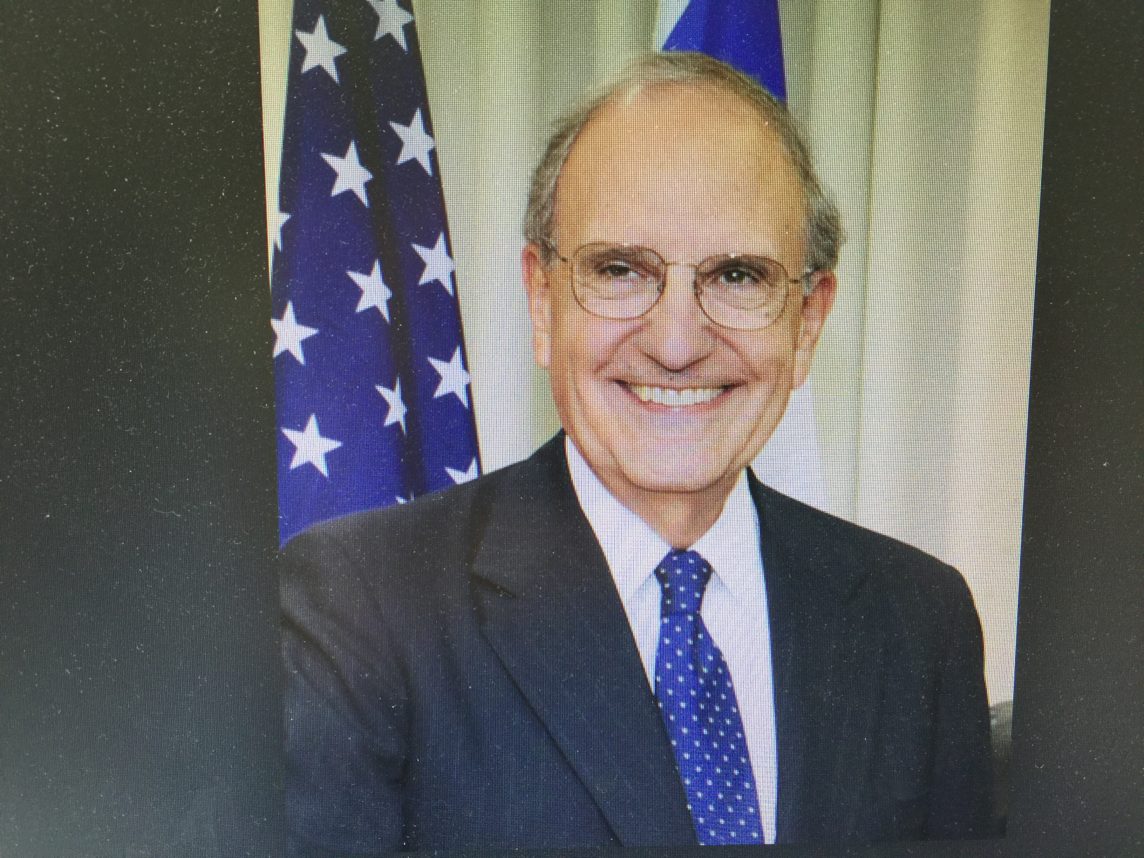
Former Senator George Mitchell brought peace to the Northern Ireland conflict, so President Obama thought Mitchell could work miracles as U.S. Special Envoy for Middle East Peace and bring about a resolution to the Israeli-Palestinian conflict.
This 226-page volume tells that story. In reading these words of this master diplomat who understood the Israeli and Palestinian concerns, aspirations, and arguments and who represented the only super-power in the world, a reasonable person would have expected a positive two-states for two-peoples outcome.

That wasn’t, of course, to happen primarily because each side was unwilling to do what was necessary and make key concessions for the sake of peace and security. In addition, neither side trusted the other and neither was convinced that it really had a true partner in the other for peace.

Opportunities since the 1947 UN Partition Plan (accepted by by the Jews and rejected by the Arabs), the Autonomy agreement as part of the Israeli-Egyptian peace agreement of 1979 (never happened), the Oslo Accords (fell apart after the assassination of Prime Minister Rabin), the Clinton Parameters (sat on a shelf despite Israeli PM Barack going further than any Israeli leader in making concessions), the Geneva Accords (never taken seriously), the Olmert-Abbas secret negotiations (Olmert resigned in scandal and went to prison, but it is questionable whether Abbas was serious or strong enough to present the Palestinian public a two-state solution), and the Kerry initiative of 2013-2014 (didn’t happen – again!).

This volume offers an objective and complete accounting of all those efforts (as well as the history to that point) and especially what Mitchell and the Obama Administration offered as a path to a two-state solution, which Senator Mitchell insists is the only destination that can assure long-term security and peace (I agree with him).

This book is a strong and important companion volume to the book I reviewed a couple of weeks ago written by my friend Yossi Klein Halevi called “Letters to My Palestinian Neighbor.”

Read them both and you will find greater clarity about what is necessary for Israel and the Palestinians, with massive American and international support, to solve this seemingly intractable conflict.

Senator Mitchell concludes the book this way:

“We believe there is no such thing as a conflict that cannot be ended. Conflicts are created and conducted by human beings; they can be ended by human beings. We recognize the daunting difficulties that lie ahead. We acknowledge the long litany of failed past efforts. We are especially mindful of the many other conflicts and complexities in the region that work against an early resolution. Yet we firmly and realistically believe that there is a path to peace through a two-state solution and that all of us who care about the region and its people, in particular Israelis and Palestinians, must do whatever we can to advocate and work for an end to the conflict.”

Amen!

“A Path to Peace – A Brief History of Israeli-Palestinian Negotiations and a Way Forward in the Middle East – by George J. Mitchell and Alon Sachar – A Review Read More »

Trial Date Set for Lawsuit Alleging Anti-Semitism At SFSU

A trial date has been set for a lawsuit alleging that San Francisco State University (SFSU) engaged in anti-Semitism, according to a press release from The Lawfare Project.

The press release states that California Superior Court Judge Richard Ulmer Jr. scheduled the trial to take place on March 4, 2019. The lawsuit was brought on by two Jewish students alleging that SFSU Hillel was discriminated by the university for being excluded from the school’s “Know Your Rights” fair that educates students on how to handle a hostile climate.

The students are being represented by The Lawfare Project and Winston & Strawn LLP.

“It is profoundly ironic that one of the most victimized communities in America would be excluded from a university-sponsored event that would help equip them to protect and defend their rights,” Amanda Berman, director of Legal Affairs for the Lawfare Project, said in a statement. “Unfortunately, it’s not particularly shocking, given that SFSU’s President Wong has suggested that the physical safety of Jews on campus is a ‘political issue.’”

Winston Strawn LLP’s Seth Weinsburst said in a statement that SFSU is “one of the country’s most anti-Semitic campuses.”

“We look forward to proceeding with a transparent and expeditious discovery process, and we are confident that we will be successful as we seek justice for our clients at trial next spring,” Weinsburst said.

SFSU is also facing a lawsuit alleging that they didn’t discipline a Palestinian student who threatened to kill Israeli soldiers and that they ordered police not to do anything as anti-Israel protesters disrupted a Jerusalem Mayor Nir Bakat’s April 2016 speech on campus

Trial Date Set for Lawsuit Alleging Anti-Semitism At SFSU Read More »

Jewish Choco-Travel Tips

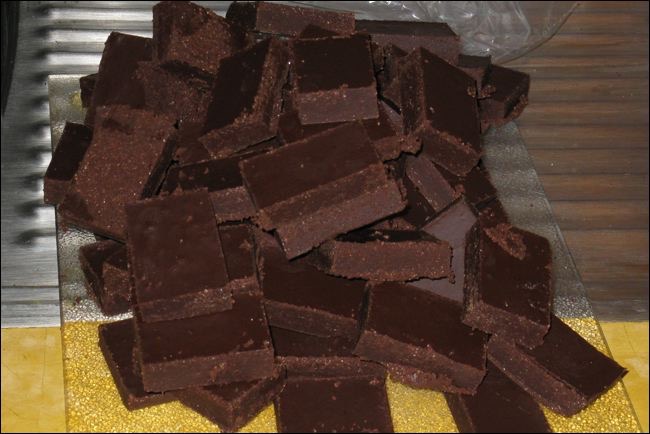
Choco-dar first erupted on our multi-country circuit of Europe in a VW van. That adult onset, self-diagnosed radar for chocolate experiences led us serendipitously to many wonderful chocolate discoveries and surprises. In the process I learned some chocolate travel tips. Chocolate travel generated the book and the website that I came to call On the Chocolate Trail. It all started with travel. Chocolate is a migrant food and the first Jews in the business were refugees from the Spanish Inquisition. Consider building your travels to places where there are particularly interesting Jewish chocolate stories, such as Bayonne (France), Israel, Liege (Belgium), and Courtelary, (Switzerland).

So here are a few delicious tips for fun chocolate exploration, I encourage you to exercise your own choco-dar as you forge your own chocolate trail.

Tip #1: Plan

Plan your adventures before departure. Check On the Chocolate Trail for a list of worldwide chocolate festivals, museums and tours. Do an online search for chocolate in the towns, countries, and regions where you will be traveling. If possible head to chocolate centers. We aimed for chocolate hubs such as Belgium, France, Mexico, Spain, and Switzerland.

Tip #2: Stock Up

Items for storing your chocolate purchases and samples may be packed ahead or picked up at your destination. Carry an insulated bag or two, especially in hot climates. Keep a supply of small plastic bags to protect each find separately and a marking pen to identify. Alternatively, take a photo to provide a visual record, with date/time/location stamp.

Tip #3: Practice Choco-dar

While on the road, stay alert to chocolate events, treats, information, and more as you wander and enjoy. It was choco-dar that led us to a local chocolate festival in Turin, Italy. Choco-dar raised my head from my reading just in time to notice the international headquarters of Valhrona Chocolate as we drove through the small town of Tain L’Hermitage, France. While crossing the Alps into Italy, my choco-dar found the factory store for Venchi Chocolate.

Tip #4: Inquire

Search out local specialties as you explore. Also, it is worth asking the chocolate shop staff for their favorites and whether samples are available. I learned about the mendiants and chocolate fish of France this way.

Tip #5: Buy Local

Check out local groceries in addition to specialty chocolate stores. Some chocolates will be less expensive in local markets.

Tip #6: Record

Keep a journal of what you have tasted, where, your experiences, and what you thought of it.

Tip #7: Collect

Collect pretty wrappers as souvenirs of your trip.

Most of all, enjoy!

Jewish Choco-Travel Tips Read More »