fbpx

May 2, 2018

Week of May 4, 2018

Week of May 4, 2018 Read More »

A Moment in Time: When a New Angle Becomes Your New Angel

Dear all,
I have this wooden puzzle in my study. Anyone who solves the puzzle (creating a perfect cube) gets a photo on my  Wall of Fame!  The record is 6 seconds, accomplished by a 12 year old with his eyes closed.
While there is only one combination pattern to the puzzle, the strategy shifts depending on which side of the cube we choose as our base.  And we learn that there is more than one way to begin.
Finding resolution to life’s difficulties is rarely intuitive.  But sometimes a new perspective can allow the pieces to come into place. (And sometimes a new perspective inspires us toward creative solutions – because life does not always need to fit into a box!)
So when we find ourselves unable to move forward, we can look at life from another perspective. Then we realize that this new angle has become our new angel – and we seize the moment in time to begin anew!
With love and shalom,


Rabbi Zach Shapiro


A change in perspective can shift the focus of our day – and even our lives.  We have an opportunity to harness “a moment in time,” allowing our souls to be both grounded and lifted.  This blog shows how the simplest of daily experiences can become the most meaningful of life’s blessings.  All it takes is a moment in time.
 
Rabbi Zach Shapiro is the Spiritual Leader of Temple Akiba, a Reform Jewish Congregation in Culver City, CA.  He earned his B.A. in Spanish from Colby College in 1992, and his M.A.H.L. from HUC-JIR in 1996.  He was ordained from HUC-JIR – Cincinnati, in 1997.

A Moment in Time: When a New Angle Becomes Your New Angel Read More »

Should American Jews Criticize Israel?

Whenever I go on a tear about how much I love Israel, my Israeli best friend rolls his eyes and says, “You should live here.” While he appreciates my enthusiasm for the Jewish homeland, he’s convinced my zealotry would be moderated if I had to daily endure a range of challenging Israeli realities, from long lines to crazy drivers to the Israeli-Palestinian conflict. But what he’s really saying is this: Because I do not live in Israel, my opinion of her isn’t wholly legitimate.

He’s entitled to his opinion.

Personally, I’ve always preferred the Leon Wieseltier view that “the merit of a view owes nothing to the biography of the individual who holds it” — meaning, a person is entitled to an opinion about anything he or she cares enough to consider despite the credentials of his or her resume. But to clarify, I asked my friend how he feels about my pronouncements on Israel.

“Are you saying my opinion is illegitimate or incomplete?” I asked. “Both,” he said. “You are not serving in the army; you are not contributing like the Israelis are contributing. You are not dealing with the daily struggles, the politics, Hamas, Lebanon. We live in this country and you are on the other side of the globe.

“I’m Israeli,” he continued. “You’re just Jewish.”

Ouch. And that’s for expressing my love of Israel.

“I’m Israeli,” my friend said. “You’re just Jewish.”

But this is also the conventional wisdom that has held for American Jews when it comes to criticizing Israel. We’re told there is a price we Diaspora Jews must pay for not living in the land, and that price is to exercise some humility and restraint in our public criticism of Israel. It is preferred, by some, that we not engage in it at all. Doesn’t Israel have enough enemies?

I thought about this a great deal last week in the aftermath of Natalie Portman’s dramatic snub of the Genesis Prize. In rejecting the award, Portman shared her (negative) opinion of Israeli Prime Minister Benjamin Netanyahu and condemned some of his policies. Does that make her an enemy of Israel or the Jewish people?

“Self-criticism is the hallmark of a mature community,” Wieseltier has taught.

In fact, the Bible clearly instructs us not to hate our neighbor, but instead, rebuke him when he does wrong (Leviticus 19:17).

It is therefore a fatal mistake to assume criticism makes an enemy of the critic. On the contrary, the art of criticism is to encourage improvement, to help the subject refine its sense of itself and to set the stage for an eternal striving — whether for one’s country or one’s character.

“We should be cultivating a kind of criticism that comes from love,” Tal Becker, senior fellow at the Shalom Hartman Institute said during a panel discussion at UCLA Hillel last week. Becker explained why he doesn’t take personal offense when American Jews criticize Israel.

“American Jews who are criticizing are not telling you what to do, they’re telling you what they think,” he said. “Take a chill pill. Someone’s just telling you what they think.”

Still, no one likes to be on the receiving end of criticism. Even when it’s “constructive” it is almost always unpleasant to hear how you’ve fallen short or what you’ve done wrong. Moral criticism may be the hardest to bear, let alone accept. But it is nonetheless essential to the functioning of a healthy society, not least because it encourages the free exchange of ideas and promotes creative discourse. New ideas are rarely born of party-line agreements.

Consider the Talmud, a document of disputation. Why does its vitality stem from critique?Because stone sharpens stone, the rabbis say.

So many views are partial views and require other views in the attainment of truth. “Make for yourself a heart of many rooms,” the Talmud tells us.

To incorporate criticism is to grow and become better. Even heretical ideas lend themselves to expanded understanding: Monotheism was a heresy when the Jews introduced it.

But as Becker said, the trick to criticism is to do it with love. It is infinitely easier to hear if it comes from a wish for improvement and not from anger and desire for destruction. Pauline Kael could critique movies because everyone knew she loved them — even “great trash” was appreciated.

True, many of us don’t live in the land. But still, we love it. And it is sometimes the deepest act of love and holy chutzpah to tell your love the truth.

Should American Jews Criticize Israel? Read More »

The Second and Third Israeli Miracles

Much of the commentary on the 70th anniversary of Israel’s founding has focused on the miraculous re-creation of the Jewish state after 1,878 years, on the same land where Jewish kingdoms had existed for centuries, with Jews speaking the same language in 1948 that they spoke in the first century, when the Romans exiled them from their land.

But there was another miracle in 1948. David Ben-Gurion described it in an essay he wrote in 1954, when Israel was six years old, titled “The Eternity of Israel.”

The second miracle, Ben-Gurion wrote, was the extraordinary Jewish unity on May 14, 1948. Zionism had never been a single ideology. The movement included very disparate factions — Labor Zionists, Religious Zionists, Socialist Zionists, Revisionist Zionists, General Zionists, Cultural Zionists — and the conflicts among them had been fierce. But every group signed Israel’s Declaration of Independence after resolving a final, seemingly intractable issue: Some of the Zionists insisted that the document express thanks to God, while others were adamantly opposed, since they thought the Jewish state was solely the result of human effort, in a world where God was either indifferent or did not exist.

Ben-Gurion managed a compromise through the use of a skillful phrase. In its final form, the declaration expressed the signatories’ faith in the “Rock of Israel.” It was a phrase that could be read as a reference to God — or rather as a metaphor for Jewish national strength.

Everyone signed the declaration — including the non-Zionist Jews, from (in Ben-Gurion’s words) “the Communists, who had forever fought against the Zionist enterprise as reactionary, bourgeois, chauvinistic, and counter-revolutionary, to Agudat Yisrael, which had perceived as apostasy any attempt to bring about the redemption of Israel through natural means.” From left to right, every Jewish group joined.

David Ben-Gurion concluded that it was “difficult to assess which of the two [1948] miracles was greater — the miracle of independence or the miracle of unity.”

In his essay, Ben-Gurion concluded that it was “difficult to assess which of the two miracles was greater — the miracle of independence or the miracle of unity.”

As Israel turns 70, unity is not a notable feature of Israeli democracy. The current Knesset includes 17 political parties. The government is a shaky coalition comprised of five of them, holding a bare majority of seats. The prime minister is surrounded by politicians who believe they could do a better job than he can. Josephus, the first-century historian, described Jewish politics at that time as consisting of disputes between religious and secular parties, with numerous Jewish leaders who “competed for supremacy because no prominent person could bear to be subject to his equals.” Two millennia later, not much has changed.

Israeli governments since 1948 have been a coalition of both secular and religious parties, with a constant political battle between opposing leaders, in a country known for its boisterous politics. In his May 15, 2008, address to the Knesset, marking Israel’s 60th anniversary, President George W. Bush noted it was “a rare privilege for the American president to speak to the Knesset,” but that the prime minister “told me there is something even rarer — to have just one person in this chamber speaking at a time.”

And that is the third Israel miracle. Along with its fractured politics — interrupted momentarily by the miraculous unity of May 14, 1948 — Israel has produced one of the world’s most vibrant democracies and most dynamic economies, a civilian-based military force that has defended Israel (a state the size of New Jersey) against genocidal wars waged by much larger foes, and a society that respects the rights of women, gays and Arabs (who — men and women alike — have considerably greater civil rights and religious freedom than Arabs in Arab states, and have no less than three Arab parties in the Knesset).

The third Israeli miracle demonstrates that, in fact, a fractious democracy may well be a necessary condition for generating the variety of ideas and leaders that can move a society forward — just as the multiple approaches to Zionism produced remarkable leaders across Zionism’s left (Ben-Gurion), right (Vladimir “Ze’ev” Jabotinsky and Menachem Begin) and center (Chaim Weizmann), creating a national movement spanning the Jewish political spectrum.

Israeli-Palestinian peace remains elusive, but surely a significant part of the problem is that the Palestinians lack a political system that could move them in a different direction from the one they have followed, for so long, to their detriment. Today, half of them are ruled by a terrorist dictatorship, and half by an autocratic president still in office 10 years after his term expired. Neither half of the Palestinian polity has a working legislature, much less a variety of political parties, and nowhere is there freedom to debate different approaches without fear.

In the past 80 years, the Palestinian Arabs have rejected no fewer than six offers of a state: in 1937 (the Peel Commission), 1939 (the British White Paper), 1947 (U.N. Resolution 181), 2000 (the Israeli Camp David offer), 2000-01 (the Clinton Parameters) and 2008 (the Israeli offer at the end of the Annapolis Process). Their holdover president regularly states that he will “never” recognize a Jewish state. Israeli withdrawals from Lebanon and Gaza produced only new rocket wars from its enemies, from new forward positions.

Despite its miraculous success, Israel thus remains under existential threat. Iranian-backed forces have trained more than 100,000 rockets on Israel, from both the north and south, and Iranian proxies advance ever closer to Israel from the east. The Iranian nuclear program is only temporarily restricted, while its missile program proceeds apace. Iran continually makes its final goal unmistakably clear.

The Jewish state requires eternal vigilance. Past miracles are no assurance of future ones: In the words of the Talmud, one should believe in miracles but not depend on them. For the Jewish people, there is never an end of history.

But on its 70th anniversary, we can pause to reflect on the fact that Israel is a living monument to what faith, freedom and democracy can achieve. The Rock of Israel has generated multiple miracles.

Rick Richman is the author of “Racing Against History: The 1940 Campaign for a Jewish Army to Fight Hitler” (Encounter Books, 2018).

The Second and Third Israeli Miracles Read More »

Charedi Reticence on Yom HaZikaron

We have just concluded what is commonly referred to as the “Israeli High Holidays.” Beginning with Passover and extending to Yom HaShoah (Holocaust Remembrance Day), Yom HaZikaron (Israeli Memorial Day) and Yom HaAtzmaut (Israeli Independence Day), the onslaught envelops us in a bewildering mix of extreme emotions: excitement, solemn reflection, grief and jubilation, to name only a few.

However, being cognizant of the many voices and narratives that make up Israeli society, I realize that this time of year is not celebrated or venerated equally by all Israeli citizens and probably should be known as the “Israeli Jewish Zionist High Holidays.” That said, the fact that many of of Israel’s Jewish citizens ignore the nation’s day of remembrance for Israel’s fallen military personnel causes me great pain. In fact, I am taken aback by the extent to which it continues to be so hurtful to me and so many others.

Perhaps it is because this communal blindness is something that I refuse to accept, and I hold out hope that the coming year will be different than years past, only to be disappointed over and over when so little seems to change. To be specific, my pain is rooted in a deep belief that “Jews are responsible for one another,” that when the nation of Israel is crying, it is only natural that we would all mourn together.

As such, it is so hurtful that Israel’s Charedi (ultra-Orthodox) population would refuse to acknowledge our public sorrow year after year. I had hoped that, as religious Jews, they would elevate the torment of a fellow Jew above all else, even their own feelings of alienation.

But that doesn’t seem to be the case.

When sirens blare across the country to honor Israel’s 23,645 fallen soldiers, traffic stops on all major roadways and Israelis of all backgrounds stand at attention. Inevitably, amid this public display of mourning, some Charedim repeatedly are seen continuing on their way, as if they hear nothing. In private, most Charedi yeshivot continue their learning unabated, delving into the same subject matter as the day before, as though nothing was happening outside. (I wonder what Torah they are studying if it makes them incapable of noticing what is going on outside?)

At our military cemeteries, parents, widows and orphans pour their hearts out to the loved ones they lost surrounded by hundreds of Israelis, who offer words of consolation for their great loss and gratitude for their tremendous sacrifice. At military bases, community centers, schools and synagogues across the country, thousands of Israelis of all ages participate in beautifully orchestrated ceremonies that delve deep into the personalities of the brave men and women who gave their lives to protect the Jewish state, internalizing the pain as though these heroes were members of their own families. Unfortunately, the Charedim who attend these events are the exception rather than the rule, so much so that when Charedim are spotted, it is reported widely by local and international news outlets.

This distresses me so profoundly because it is simply not the Jewish way.

As the Rambam writes in “Hilchot Teshuva” [Laws of Repentance]: “A person who separates himself from the community even though he has not transgressed any sins, does not take part in their hardships or join in their communal fasts … he does not have a portion in the World to Come.”

It is important to note that the Rambam, who is rather exacting with his word selection, chose to insert the word “hardships.” It’s clear to me that this addition was intended to highlight future times of grieving that were not already on the calendar. In his wisdom, the Rambam knew to warn us that there would be times for empathy beyond preordained times such as Tisha b’Av, opportunities to model our uniquely Jewish compassion by throwing our lots in with our brethren in turmoil.

Throughout Israel’s Charedi neighborhoods, Yom HaZikaron was treated like just any other day of the year.

While the “Zionist state” is not something that the Charedi population endorsed, and it is certainly not the “return to the land” that they had dreamed of, it is excruciating to see their lack of external solidarity to Jewish grieving.

Of course, the way in which they go about showing such solidarity is up to them. Perhaps they could leverage their own traditional methods to acknowledge the torment being experienced by thousands of Jews across the country on Yom HaZikaron. They can learn Torah in memory of the soldiers who gave their lives to keep the country safe or recite Psalms and pray for the relief of the families who are in such immense pain. The key is making it clear that Jewish pain and loss are not invisible.

While there are very few actual guidelines for building a synagogue, the Talmud in Tractate Berachot (34b) teaches that a synagogue’s sanctuary must be built with windows. The reasoning, of course, is that it is impossible to be a truly pious servant of God if you are disinterested in what is going on “outside” in the lives of your fellow Jews, and there is no prayer if you never look beyond your own four walls to see the other. In this case, the Talmud isn’t teaching us about structural integrity and fire safety, it is providing us with the cornerstone for religious living, national integrity and communal safety.

As the dean of humanities at Ono Academic College, an institution that facilitates diversity and inclusion in higher education, I attest every day to Israel’s beauty in its “manyness” and messiness. Although complex at times, our diversity is a great source of strength, and every group has the right to live a life of integrity that falls in line with their ethics, standards and worldview.

As such, there is nothing wrong with the Charedi population creating communities that reflect its particular values. I also wholeheartedly support public government funding of the private Charedi school system, as everyone has a right to receive an education in their own way. I take issue only with the invisibility of communal pain in the private lives of Charedi citizens and their institutions. In my religious worldview, this is a sin.

Unfortunately, this year played out like every year before it. Throughout Israel’s Charedi neighborhoods, Yom HaZikaron was treated like just any other day of the year. No mourning, no gratitude, no change. In the “halachic world,” this errant behavior cannot stand.

We can only hope that by next year, individual acts of kindness (like the video of the Charedi high school teacher conducting a memorial ceremony of his own making with his class, this year’s top viral video for Yom HaZikaron) will become the norm, so much so that the local and international news outlets no longer see a need to report about Charedi participation. Indeed, Israelis are starving for this kind of recognition.

And we must have faith that there will be a communal recognition of the tremendous sacrifices made by our fallen soldiers and a true structuring of empathy, a decision regarding how the Charedi community will mark the day in their own heartfelt and visceral way. That, after all, is the Jewish way.

Seeing as we begin the springtime holiday period with Passover asking, “How is this night different from all other nights?” I wish the Charedi community would ask a similar question toward the end of the period for Yom HaZikaron: “How is this day different from all other days?” and extend Passover’s central directive to Yom HaZikaron as well: “And you shall tell your children …”

Tova Hartman is a scholar and author. She currently serves as the dean of humanities at Ono Academic College, the fastest growing institute of higher education in Israel.

Charedi Reticence on Yom HaZikaron Read More »

Kenny G’s Sax Appeal

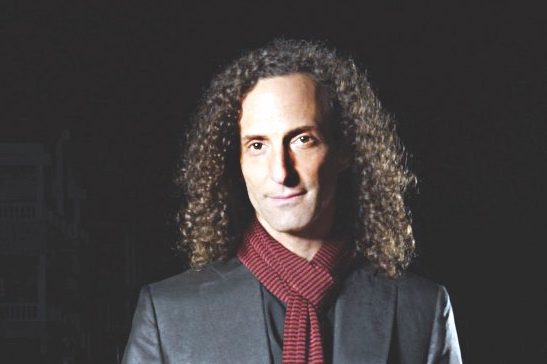
Saxophonist Kenneth Bruce Gorelick, better known by his stage name, Kenny G, rose to fame in the 1980s and ’90s, becoming one of the top-selling recording artists of all time. He won a Grammy Award in 1994 and at one point held the world record for the longest sustained note on a sax.

However, at 61, he’s more than the sum of his trademark curly locks and his reed-blowing skills. He’s also an accomplished golfer and a pilot — because, why not?

Jewish Journal: How did you get interested in music?

Kenny G: I was made to take piano lessons at 6 years of age. I hated it. And then I saw a sax player on “The Ed Sullivan Show,” and that struck a chord in me and made me want to play sax.

JJ: How and why did you settle on the professional name Kenny G?

KG: My friends always called me G or Mr. G or G Man, so it was a no-brainer.

JJ: Which musicians have been your greatest influences?

KG: I really got inspired with Grover Washington Jr.’s sound. And also pretty much all the jazz greats — John Coltrane, Miles Davis, Cannonball Adderley, Dave Brubeck, Sonny Rollins, Dexter Gordon. I’m old school. I listen to the jazz that the masters played in the ’50s and ’60s and to the great players of today, too.

“Be humble. Listen more. Don’t try to be ‘right’ but instead ask more questions when involved in confrontations.”

JJ: What part has your Jewish upbringing and heritage played in your work and life?

KG: I’m proud of my Jewish heritage and I know how to read Hebrew. I think my attention to detail and the fact that I wanted not only to play an instrument but also to get really good on the instrument was due to my Jewish mother’s quest to make sure her kids worked hard and got good grades and played music.

JJ: Any charities close to your heart?

KG: I donate each month to Food on Foot, a program in L.A. that takes people who have become homeless and helps them get back on their feet.

JJ: Do you have any hobbies or interests outside of music and show business?

KG: I play golf. I’m a 3 handicap and I am a pilot with 3,500 hours of flight time since 1989.

JJ: What do you do to maintain peak performance?

KG: I work hard at staying in the best shape I can. I work out every day for about an hour. I eat good, healthy food. No junk food, I love to cook and do that most days. Consistency is the key to it all. Just do it every day and eventually you will get into great shape. I also practice my sax three hours every day.

JJ: You’ve worked and collaborated with many amazing musicians. Do you have any favorites?

KG: I have lots of favorites. All you have to do is look at the names of those I’ve collaborated with: Frank Sinatra, Barbra Streisand, Earth Wind & Fire, Whitney Houston, Celine Dion, Andrea Bocelli. [They’re] all great, fun and different.

JJ: Do you have a philosophy that you live by?

KG: Be humble. Listen more. Don’t try to be “right” but instead ask more questions when involved in confrontations.

JJ: You earned a place in “Guiness World Records” in 1997 for playing the longest note ever recorded on a saxophone — 45 minutes and 47 seconds. How did you manage that?

KG: Circular breathing is a technique. In through the nose, out through the mouth simultaneously. I saw some players do a version of it when I was in high school at a concert for the group the Jazz Crusaders. I went home, figured out how they did it and then spent the next 10 years getting great at it.

Mark Miller is a humorist, stand-up comic and has written for various sitcoms. His first book is “500 Dates: Dispatches From the Front Lines of the Online Dating Wars.”

Kenny G’s Sax Appeal Read More »

Joel’s Rules for Living

I consider myself a Joel-ite, as do a few of my friends. Or is it Joel-ian? If the Joel cult grows, I suppose we’ll figure it out.

Or maybe not.

We follow the teachings of Joel, an 82-year-old (occasional) tennis player who no longer runs after the ball but waits for it to come to him, preferably not too high or too low. And his teachings are much like his tennis-playing: When you’re in your 80s, you can’t go chasing after enlightenment, it has to come to you, and at just the right level where you can hit it with your racket’s sweet spot.

Though Joel’s basic instructions are most relevant to us elderly folks, anyone can follow his rules for a stress-free life.

Rule No. 1: Abandon Righteous Indignation
As we all know, nowadays there are endless opportunities for righteous indignation. Reactions to Donald Trump, of course, lead the list. Every day brings fresh reasons to shake one’s head in judgmental high dudgeon. How could he say that? How could he tweet that? Who does he think he is? Who does he think we are — morons with no memory?

However, if you’re on the other side of the political spectrum, there are also rich prospects for righteous indignation. How can people demean the flag? How dare deep-state lackeys take away my God-given rights? Why can’t immigrants stay in their own s—hole countries?

We Joel-ites believe that no matter what your politics may be, abandoning righteous indignation relieves you of enormous burdens: You no longer have to be upset by those who thumb their noses at your deepest beliefs, like decency and democracy. Mr. Trump’s latest insult? Shrug it off! Athletes taking a knee during the national anthem? Yawn. The latest sexual harassment scandal? Yes, yes, empathy for the victims, of course … and then move on. Free of righteous indignation, you can then binge-watch TV without a pang of remorse.

Rule No. 2: Abandon Any Thought of Immortality
Whatever we may have done — or not done — in our lives, a part of us believes that something we did will outlive us. Scientists, creative people and politicians think this way much of the time, but the rest of us do, too, in our own way. We all harbor the hope that even though our name may be forgotten, some element of the work we do, some lesson we’ve taught our children, some slight improvement we’ve made to the general well-being will live on and make us, to some tiny degree, immortal.

We Joel-ites believe that this is nonsensical hubris. Cemeteries are filled with the remains of those who deluded themselves into thinking their life and work would last forever. The overwhelming majority of people leave behind only some personal memories among friends and family. Very few improve the world, and an equally small number make the world worse. Both achieve a kind of immortality. But more than likely, you’re in neither of those categories.
Joel, who made his living as a doctor, acknowledges that one exception is donating your body or organs to science so that your anonymous kidney or liver will achieve, if not immortality, at least a bit of temporary post-death usefulness.

Rule No. 3: Abandon Aspirations of Self-Improvement
This is difficult, given that we’re surrounded by ads telling us that we can radically improve our lives with the right medicine or the right financial adviser. Or the right yogurt. Maybe if you’re young enough, there’s a chance of improving your life; but once you’re past 70, forget it.

You’re as good as you’re going to get.

Sure, if it makes you feel good, go ahead, take up watercolors or yoga, learn French, join that book group, eat healthy or write poetry. But it’s better if you do it without the illusion of self-improvement. And it’s perfectly OK not to feel any guilt about this. In fact, that’s the point of these instructions.

So that’s the Joel-ite catechism: With no more righteous indignation, no thoughts of immortality and no hopes of self-improvement, you’re guaranteed a contented and guilt-free golden age.

Or maybe not.

Joel’s Rules for Living Read More »

Why Tyrants Must Hate Trump

If you’re a Never Trumper, you probably don’t see many redeeming features in our brash and rude tweeter in chief. But hang with me for a minute as we consider how that brashness and rudeness may be just what the doctor ordered for a certain brand of foreign leaders.

In a brave essay on the NBC News website, veteran White House reporter Keith Koffler laments that we live in “a dangerous world, dominated by outsized personalities who act aggressively on behalf of their nations, including not hesitating to threaten — and even engage in — war.”

But then he adds: “Fortunately, one is President Donald Trump.”

Koffler’s claim is that Trump’s flaws — “self-indulgent, megalomaniacal, a bit paranoid, driven by self-interest and implacably domineering” — make him uniquely suited to deal with the other great tyrants of the age.

These tyrants, Koffler adds, are driven more by raw power and ambition than ideology.

“Not too long ago,” he writes, “the struggles among great nations were defined by ideology, as democracy and communism competed for allegiance around the world. During that age, a relatively non-ideological, nonintellectual man like Trump might have had trouble understanding the thinking animating Russian and Chinese communists, hampering his ability to confront them.”

Some useful things can come out of a deeply flawed president, just as bad ones can come out of a decent president.

Today, by contrast, “the president will have no problem understanding the motivations of North Korean dictator Kim Jong Un and the other tyrants he faces, including Russian President Vladimir Putin, newly anointed Chinese President-for-life Xi Jinping and Iranian supreme leader Ayatollah Ali Khamenei.”

Koffler concludes that Trump “has the outsized strength of personality to combat them.” In other words, it takes one to fight one.

When I read the essay, it reminded me of a game I used to play with my Never Trumper friends during the presidential election. I would ask them: “If you had to choose one person to negotiate a nuclear deal with Iran, who would you pick, Barack Obama or Donald Trump?” Invariably — and grudgingly — they would pick Trump.

When I asked why, they would concede that “Trump wouldn’t be afraid to walk away,” or, simply, “He’d make them sweat and get a better deal.”

Recently, I played another game. I know Trump haters who love Israel but who criticized Trump for “hurting the peace process” when he announced the move of the U.S. embassy to Jerusalem. When I asked them if they would have had the same reaction had President Obama made the decision, they admitted that, no, they probably would not. That’s how deep the contempt for Trump can go.

Indeed, it’s a difficult task to separate emotions from outcomes. If you hate a president, it’s hard to love anything he does, no matter how worthy that thing is. I have sympathy for those who have trouble seeing past Trump’s character flaws. After all, if having a decent character is essential in our own lives, how much more so for the leader of the free world?

And yet, we must recognize the reality that some useful things can come out of a deeply flawed president, just as bad ones can come out of a decent president.

Koffler’s claim is that Trump’s flaws — “self-indulgent, megalomaniacal, a bit paranoid, driven by self-interest and implacably domineering” — make him uniquely suited to deal with the other great tyrants of the age.

When Obama first ran for president, I remember being seduced by his classy demeanor and decency. But I wondered: Would he be tough enough for our dangerous world? I rationalized away that concern by assuming (hoping) that Obama had a silent killer instinct that would earn him the respect of the bullies he’d have to deal with. In retrospect, this was wishful thinking. No dictator ever feared Obama. They saw right through him. Obama was a gentleman who could never call a tyrant’s bluff.

Trump seems energized by tyrants. He must identify with their passion for power. It’s a brutal, primal game he knows well.

As Maureen Dowd wrote last week in The New York Times, “President Trump’s peculiar form of diplomacy — a combination of belligerence, bluster, name-calling and ignorance of history — has somehow produced a possible breakthrough in North Korea that eluded his predecessors.”

Koffler doesn’t deny that Trump’s indignities are the “crass work of an uncouth man.” But he thinks voters in the last election “eschewed elegance because, they calculated, a blunt and even predatory individual is what the country needed at this moment. A man who, Kim, Xi, Khamenei and Putin will all suspect, might just be brutal and dark enough to stand his ground against them and counter their own ruthless agendas.”

As much as I value decency, I also know that, for 16 years, America got burned by two very decent presidents — first by George W. Bush’s trillion-dollar fiasco in Iraq, and then by Obama’s naive deal with Iran that empowered the world’s biggest sponsor of terror.

I doubt that our brash and rude president would have been suckered into those deals. How much is that “outcome” worth? We’ll find out soon enough.

Why Tyrants Must Hate Trump Read More »

The Rug Seller From Iran

Even if you happen to live in a trailer, Shuki Shlomi will convince you that you need a Persian rug. Rugs of all shapes and sizes fill every inch of the 70-year-old’s 100-square-yard store, located in the heart of Jaffa’s flea market and sandwiched between similar Persian rug stores on either side. He pulls out his phone and proudly shows a photo of himself posing with Israeli celebrity Chana Laslow, to whom he has sold a number of rugs.

His go-to tactic is convincing would-be customers that he’s dropping the price just to make a “siftah” — Hebrew slang for first sale of the day — even if it’s almost closing time. But his smooth talk, laced with a thick Persian accent, isn’t without reason. The Afghani rug I was eyeing cost three times the price in the posh design store around the corner.

By the end of our meeting, I walk away with two new rugs and a possible shidduch — suitable match — between my brother and Shlomi’s daughter, who is, by his account, a beautiful angel with two degrees and a high-flying career in finance.

Shlomi comes from Isfahan, Iran’s third-largest city, which is famous for producing fine carpets and textiles. Aside from the odd squabble with the Muslim children in his neighborhood, his childhood memories are generally positive and life was good for the Jews of Isfahan under the shah.

At the age of 16, Shlomi, who described himself as a staunch Zionist back then, persuaded his parents to immigrate to Israel so he could avoid the Iranian draft. So together with his parents and four younger siblings, he settled in the Negev city of Dimona.

In 1967, he was drafted into the Israeli air force and was stationed near the Egyptian border during the Six-Day War. He recalls a lot of praying and listening to the tiny transistor radio he brought with him from Iran.

“I asked God for all the Egyptian planes to fall from the sky.” — Shuki Shlomi

“I asked God for all the Egyptian planes to fall from the sky,” he said. “And then, I promise you, I turned on my radio to hear that we had bombed all their planes right out of the sky.”

After the war, Israel was hit with a recession. Nevertheless, the ever-resourceful Shlomi managed to set aside enough of his meager salary as a handyman to buy a Fiat. He became a traveling merchant, selling linens and rugs and, within a short amount of time, bought a house in Beersheba.

Shlomi married and divorced, and in his mid-30s, was seeking another wife.

“I was handsome, I had a lot of offers,” he said.

But, he said, he was extreme, and insisted on a virgin bride. “That was my No. 1 requirement.”

He went to meet a girl at her parent’s house in Tel Aviv but she turned him down for being a divorcee. It was to be another six years before their paths crossed again.

“In those years, I travelled a lot,” he said, “but I was fed up with the world.”

One day, at the suggestion of a friend, he called the home of a potential wife. The woman’s mother answered the phone, and he realized from her accent that she was also from Isfahan. He arranged to meet the woman’s daughter by the clock tower in Jaffa.

As it turned out, she was the same girl who had rejected him years earlier.

“But now she was 30 and that was very bad for her,” he said. “In Persia, they marry daughters off at 17.”

But Yael had not sat waiting for her Persian prince to rescue her from perpetual spinsterhood. Working 12 hours a day as a button and buttonhole maker, Yael had saved enough money to buy a house. A month and a half later, Shlomi asked her parents for permission to marry her.

“In the end I got what I wanted,” he said. “She is the best woman in the world.”

The Rug Seller From Iran Read More »