fbpx

May 2, 2018

JEN’s New Rabbinic Fellows

On July 1, Keilah Lebell, who will graduate this month from the Ziegler School of Rabbinic Studies at American Jewish University, will become a Rabbinic fellow at IKAR, one of the most celebrated synagogues in Los Angeles.

Her fellowship will last two years, as part of her inclusion in the Jewish Emergent Network (JEN) program. JEN is an organization comprising seven independent spiritual communities around the country that trains early career rabbis to become leaders in the Jewish community, placing them in temporary rabbinical positions.

As part of the fellowship, each of the seven communities hires someone who has worked at a congregation for three years or less. The fellows will work in communities that serve, among others, young adults who are disengaged from Jewish life as well as families with young children. They will lead, revamp and tinker with the synagogues’ social justice, chesed (acts of kindness) and young professional programs in their attempt to appeal to these two sought-after demographics.

Lebell is a member of the second cohort of the JEN rabbinic fellowship. The inaugural cohort launched in 2016 and will conclude in June. Lebell will succeed IKAR’s previous JEN fellow, Rabbi Nate DeGroot.

Lebell, 32, told the Journal she was excited about beginning her fellowship and viewed it as a “residency.”

“You know how doctors have to do a residency after their actual training in school? This feel likes a residency to me; a two-year fellowship, an opportunity to work and be out in the field, but the expectation is that I am learning,” she said. “So I consider this a continuation of my learning, and I am so excited to grow during these next two years.”

IKAR is the only Los Angeles synagogue in JEN. The others are Kavana in Seattle; The Kitchen in San Francisco; Mishkan in Chicago; Sixth and I in Washington, D.C.; and Lab/Shul and Romemu in New York.

“To me, these rabbis who founded these emergent communities are my Jewish superheroes. They are redefining what is Jewish practice and Jewish life, and what Jewish community can really feel like.”   Keilah Lebell

The Jim Joseph Foundation is the largest financial supporter of JEN. In 2016, the grant-making organization provided a $3 million grant to JEN.

IKAR serves as JEN’s fiscal sponsor, accepting financial contributions on JEN’s behalf because JEN is not its own nonprofit entity.

JEN communities share a lot in common, including the fact that none of them pays dues to any major denomination. They are all independent communities.

Tarlan Rabizadeh is a Los Angeles native who grew up in the Persian-Jewish “Tehrangeles” community. As part of the fellowship, Rabizadeh will be serving at The Kitchen, a self-described Jewish startup in San Francisco. In a phone interview, the 32-year-old described the JEN shuls as “disruptors.”

“They remind me of Apple. They come up with a new audio plug and they disrupt the system and I have to go buy new headphones that match my phone,” she said. “They are making us rethink things.”

Although JEN shuls have no formal affiliation, the rabbis in the fellowship are graduating from a variety of rabbinical schools affiliated with the major denominations. Ziegler, from which Lebell will graduate, ordains Conservative rabbis. Rabizadeh is graduating from Hebrew Union College-Jewish Institute of Religion in New York, a Reform seminary.

After JEN’s conception in 2016, JEN Program Director Jessica McCormick said there were those who suspected the participating “spiritual communities” — a term often preferred over “synagogue” among these nontraditional shuls — were forming their own movement.

“A big misconception when they launched was they wanted to be a movement. I think they laid that to rest,” McCormick said. “They definitely don’t want to be a movement. I think they like being independent.”

McCormick, who works out of IKAR, said the network’s goal is to elevate the participating synagogues’ activity in order to impact their own communities, the rabbinic fellows and the world beyond their respective communities.

McCormick added that DeGroot’s contributions to IKAR during his two-year fellowship show the impact a JEN rabbinic fellow can have.

“Nate DeGroot breathed new life into the young adults program [Tribe] at IKAR. It hadn’t died, but it wasn’t cutting-edge anymore,” McCormick said. “IKAR had started to age, so the people who were once in Tribe had babies. He re-envisioned the whole thing, changed the face of Tribe and brought a lot of learning to the group.”

Other participants in the second cohort, beginning July 1, are:

• Emily Cohen, who has worked with senior citizens on Jewish environmental activism and will be working at Lab/Shul, an experimental Jewish community in New York;
• Jessie Palkin, who has worked as a rabbinic intern at the liberal organization New Israel Fund and will be serving at Washington, D.C.’s Sixth and I, a nondenominational, nonmembership and nontraditional synagogue;
• Jeff Stombaugh, who will receive rabbinic ordination as well as a certificate in Jewish nonprofit management from Hebrew Union College-Jewish Institute of Religion. He will work at Mishkan Chicago, a self-described “down-to-earth” synagogue;
• Josh Weisman, who before rabbinical school worked as a grass-roots organizer at various Jewish nonprofits and will be serving at Kavana, an independent community in Seattle.
Romemu, the seventh congregation in JEN, was still in the process of selecting a fellow as of press time.

The rabbinic fellowship has been JEN’s main program since its inception. However, JEN is about to expand its outreach to the larger community. On June 1-3, JEN will hold its inaugural, Shabbat-based conference, “(Re)vision: Experiments and Dreams From Emerging Jewish Communities.” The conference, taking place at IKAR, will introduce the community to JEN’s second cohort and will feature laboratories, galleries, interactive experiments, panels and guest speakers.

While Ziegler’s rabbinic leaders have been formative in Lebell’s Jewish development, the mother of two young children said the rabbis of the independent communities in JEN are like superheroes to her.

“To me, these rabbis who founded these emergent communities are my Jewish superheroes. They are redefining what is Jewish practice and Jewish life, and what Jewish community can really feel like,” she said. “It can feel deeply welcoming and open but also, they are offering a Judaism that demands a lot of the people who walk in.”

Melissa Balaban, executive director at IKAR and the chairwoman of JEN, concurred. She said IKAR and the other six communities in JEN ask a lot of the worshippers who walk into their prayer spaces.

“We share a passion for radical inclusivity, passion for rethinking Jewish models and engaging those who were not inclined to be engaged in Jewish life before,” Balaban said. “It’s not like, ‘People are not engaged in Jewish life, so let’s make it simple and easy.’ It is sometimes challenging. Our services aren’t short.”

JEN’s New Rabbinic Fellows Read More »

U.S. Teens Shoot Films in Israel

A teenage girl dyes her hair blue, plays in a punk rock band in Tel Aviv and is torn between joining the Israel Defense Forces and trying to make it as a musician in London. A teenage boy spars with British colonists in 1930s Jerusalem and witnesses a potential horrific crime involving a Palestinian child.

These are the plots of two short films made in Israel from students of Ghetto Film School (GFS).

The New York- and Los Angeles-based GFS, founded in 2000, is a nonprofit that provides filmmaking mentorship and training to groups of high school students from NYC boroughs and Los Angeles neighborhoods.

Last summer, for their final project, 16 of the GFS participants spent two weeks in Israel filming “Charley Horse,” the movie about the punk rock girl, and “Be Free,” about the teenage boy. The films premiered in Los Angeles on April 25, at the Landmark in Westwood. Actress Dakota Johnson hosted the evening and FX Executive Vice President of Current Programming Jonathan Frank moderated.

“It was extraordinarily challenging directing a film in a foreign location,” said “Charley Horse” writer and director Luna Garcia in an email interview. “I was lucky enough to have an extraordinary crew to work with. I learned how difficult it was to both write and direct your own project.”

The L.A. premiere was a culmination of the 30-month GFS program, which is supported by Twenty-First Century Fox, Sony, HBO and Warner Bros. According to GFS Executive Director Stosh Mintek, his organization receives 200 applications for 30 spots. “We are looking for a few things,” he said. “Does this young person have that creative talent, that spark that ensures they will succeed? Do they have that ambition? Are they ready to commit significant time?”

Once students are accepted into the program, each has to study the films and the culture of the country GFS plans to visit, and then write an original script. Two scripts are chosen, and the screenwriters then hear pitches from students who want to be on the crews. Famous actors and actresses, as well as notable filmmakers, do table reads of the scripts and give the students feedback prior to the trip. The celebrity mentors for Israel included Johnson, Christoph Waltz, Ansel Elgort and David O. Russell. Arnon Milchan also led a partnership between GFS and his New Regency Productions company.

“It was extraordinarily challenging directing a film in a foreign location.” — Luna Garcia

GFS chose Israel for the latest trip because of  its relationship with Milchan and New Regency, and because, “for a relatively small country, you have such an incredible, rich storytelling culture, and that really appealed to us,” Mintek said. “To be able to expose students to art, culture and history was a special opportunity we wanted to take advantage of.”

Enrique Caballero, who directed “Be Free” and goes to school in the South Bronx, shot much of the piece in Old Jaffa. “It was cool to see the history of Israel and how it’s grown, and the dynamics between social classes during the times,” he said. “It was, in many ways, relatable to the different cultures here in the Bronx.”

The 18-year-old, who hopes to go to filmmaking school at USC or in New York City, said that through his experience he got “a lot out of it in terms of film techniques. While directing, I learned how to be a leader and more assertive with people. These are techniques that leaders learn throughout their lives and I’ve been exposed to it at this age. It gave me the tools to get ahead.”

Empowering students like Caballero, and supplying the knowledge they need to succeed in the film industry, is GFS’s mission.

“There is a general growing awareness in the creative industry that there are systemic obstacles for a lot of people to break through and into it,” Mintek said. “You don’t hear the solutions, like how you actually fix this issue and find voices from new places. We believe we found the solution to that.” 

U.S. Teens Shoot Films in Israel Read More »

Synagogue Softball: Shul Without Walls

“Oh, no!”

A huge shout goes up on the dusty outfield at the Sepulveda Basin Sports Complex in Encino. It’s quickly followed by an expletive.

This is synagogue softball, and the shouts and curses are the result of a runner from Temple Isaiah synagogue missing his foot landing on the base by a millisecond and being called out. It’s a victory for team Adat Ari El.

“I wanna see the replay,” someone calls from the batting cage. Laughter ensues, because there are no video cameras here. However, every Sunday from late January through June, over 400 people comprising 30 synagogue teams from as far afield as Santa Clarita to Beverly Hills, come to play ball.

Jeremy Oberstein, who plays for Adat Ari El, is the 2018 commissioner for Synagogue Softball League, now in its 20th year. Oberstein joined around 15 years ago. “I was in my 20s and I was looking for an athletic outlet,” he told the Journal while waiting to bat. “I’d played baseball as a kid and in high school.”

However, he was also looking for “a level of Judaism out of the synagogue and on the field, and I think that this league typifies all of those things,” he said. “I like to call it a synagogue without walls. This is something where people can be Jewish in a cultural way.”

“I was looking for a level of Judaism out of the synagogue and on the field, and I think that this league typifies all of those things.”  — Jeremy Oberstein

Oberstein said while he doesn’t want to “sound Pollyanna-ish, this is a great way to not be whoever we are in our regular lives and just come out here and have fun. There’s also a high level of menschkeit and camaraderie here.”

Camaraderie is definitely the catchword here. Kevin Weiser, last year’s commissioner, joined 12 years ago “because my father was on the team,” he said. “I love the family feeling and the synagogue camaraderie,” he added.

Weiser said he sees the league as a great opportunity for synagogues to unite “and just have fun. Plus,” he quips, “where else can you get 450 Jews together in the same place?”

Jodie Francisco, one of the few women in the league, is in her sixth year playing. When she joined, she said, “I had no idea this wasn’t a co-ed league, but this is just so much fun.” Touting the much-vaunted “camaraderie,” she added, “I’m not the best player out there and we’re in the lowest division (Francisco plays for Temple Isaiah), but the team is so nice to me.”

However, it’s not just fun (and games). “We also are trying to institute a very high level of tikkun olam and tzedakah, Oberstein said. “We have Boys and Girls Club here. They’re here to help people get involved and sign up to be Big Brothers and Sisters. We are trying to do everything we can to help our communities as much as possible.”

In 2017, Synagogue Softball partnered with a nonprofit called New Direction for Youth and donated hundreds of pieces of sports equipment for children in distressed communities.

But overall, Synagogue Softball is a way for Jews of all denominations and ages to shake off the cobwebs of the workweek and enjoy some healthy competition.

“It’s definitely an escape,” Oberstein said. “We all have jobs and families and daily obligations. This is a way that we can pause our busy lives and hit the reset button on the week and go into Monday with a fresh new outlook.”

Another roar goes up as the loud thwack of the metal bat connects with the ball and it goes sailing into the outfield.

“Go, Kevin!” the Temple Isaiah players shout.

Kevin drops the bat and legs it to first base.

Synagogue Softball: Shul Without Walls Read More »

Annual IAC Festival Brings Israel to L.A. Park

It’s that time of year again when the Israeli-American Council (IAC) transforms a Los Angeles park into a miniature Israel.

The Celebrate Israel Festival on May 6 at the Cheviot Hills Recreation Center at Rancho Park in West Los Angeles will be a day of live music, culture, food and community, under the banner of “70 Years of Zionism, Innovation and Entrepreneurship.”

IAC board member Naty Saidoff, who, with his wife, Debbie, is a major sponsor of the festival, said the event will provide an opportunity for the Israeli-American community to expose American Jews to the Israeli way of life.

“We were incredibly lucky to grow up in a place like Israel, surrounded by our history, our heritage, and a rich and diverse culture,” Saidoff said. “Now that we live here, we want our fellow Americans who have embraced us so warmly to share in the experience of all the beauty that is the modern day miracle called Israel.”

More than 15,000 people are expected to turn out to this year’s festival, which will feature a performance by Israeli pop duo Static and Ben El; a Taglit Innovation Center, which educates attendees about the advances Israeli startup companies are making in the fields of science, medicine, agriculture, security, space and more; amusement park rides; a bar for young professionals; and a Pomegranate Sculpture Park — a community-based project that allowed artists, art enthusiasts and day school students to decorate 4-foot-high pomegranates.

As is the case every year, pro-Israel organization StandWithUs will lead a 1-mile Israeli solidarity march, titled “Salute to Israel Walk in Blue & White.” At 10 a.m., participants will meet at the festival’s entrance, walk east on Pico Boulevard toward the Simon Wiesenthal Center at Pico and Roxbury Drive, then head back to the festival.

“More than ever before, Israeli Americans are a living bridge between Israel and America.” — Shoham Nicolet

Additional highlights include the Tiger Squadron formation flyover at 3:20 p.m. The demonstration will kick off a ceremony featuring local elected officials and community leaders.

Meanwhile, glatt-kosher food, a kids stage, pony and camel rides, hands-on crafts, a Judaica shop and more will help people of all ages find something to enjoy at the annual celebration.

Ahead of the festival, the IAC is holding a photography competition on Instagram in which it will select and display at the festival 70 photos that best showcase Israel.

The Celebrate Israel festival is the largest program of the IAC, an umbrella organization for Israeli Americans that, with help from philanthropists such as Sheldon Adelson, has expanded to cities nationwide since its launch in 2007.

The IAC is a nonprofit based in Los Angeles that has 16 regional chapters. It serves the more than 500,000 Israeli-Americans living in the United States. It hosts the festival every year around Israel’s Independence Day, Yom HaAtzmaut, which this year fell on April 18.

This year’s festival is taking place in 15 locations across the country, including Colorado, Florida, Houston, Las Vegas and New Jersey, and coincides with the 70th anniversary of the Jewish state’s founding on May 14, 1948.

The Los Angeles festival is the biggest because it’s where the country’s largest Israeli-American contingent — approximately 250,000 people — lives.

The festival began as a community event at Woodley Park in the San Fernando Valley before growing into a mega-event on the Westside. A variety of Jewish organizations — including the Jewish Journal — participate. Many different segments of the local Jewish community turn out.

IAC co-founder and CEO Shoham Nicolet said the festivals bridge the gap between the Israeli-American and Jewish-American communities.

“We are thrilled to bring people together from across our coast-to-coast community to celebrate Yom HaAtzmaut, Israeli Independence Day, in the single largest celebration of this anniversary outside of Israel,” he said. “More than ever before, Israeli Americans are a living bridge between Israel and America, and within the Jewish and pro-Israel communities here in the United States, and these celebrations reflect that.”

The festival begins at noon and concludes at 7 p.m. Tickets at the door will cost $30. Children under 3 receive free admission. Parking is available at multiple sites. Visit israeliamerican.org/celebrate-israel-la for more information.

Annual IAC Festival Brings Israel to L.A. Park Read More »

Welcoming the World to Her Shabbat Dinners

Miriam Gabay says she’s “not quite 100 percent Orthodox,” but she invites up to a dozen guests each week to her Miracle Mile-area Shabbat dinners, during which she gives a brief presentation on the weekly Torah portion.

Gabay, 63, was born in Casablanca, Morocco, to a father in the French army and a homemaker mother. She grew up speaking Arabic, French, Spanish, Hebrew and English.

When she was 5, her family snuck out of Casablanca in the middle of the night and moved to Israel by way of Marseille, France. The stealth escape was necessary because at that time the Moroccan government didn’t allow Jews to leave the country. The family settled in Tzfat, the small, spiritual city in the north of Israel.

Gabay received a bachelor’s degree in education and anthropology from Bar-Ilan University and worked as an administrator in Tzfat’s three large libraries. She married and had five children.

In 2005, at the age of 50, the now-divorced Gabay moved to Brooklyn with her youngest child, 13-year-old Davidel. In 2011, she relocated to Los Angeles and now teaches Hebrew and Jewish studies at the Etz Jacob and Baba Sale congregations in the Fairfax District.

“I would have 80 people over for Shabbat at my house in Israel. My parents’ home was always filled with Shabbat guests.” — Miriam Gabay

However, when she first arrived in Los Angeles, she said was very uncomfortable and lonely. “I didn’t know what to do with myself,” she said. “I felt lost. No one seemed to care. This was especially painful during the Jewish holidays. Finally, I said, ‘Enough is enough.’ ”

It was at that point Gabay started inviting people she met at synagogue to her home for Shabbat dinner. Many of those she reached out to were also new to L.A.

News of Gabay’s open-door Shabbat policy spread quickly, and a friend who belonged to Chabad made her a Beit Chabad sign and put it on her condo door, signaling Gabay’s willingness to welcome even more people into her home.

Hosting large numbers of Shabbat guests doesn’t faze her. “I would have 80 people over for Shabbat at my house in Israel,” she said. “My parents’ home was always filled with Shabbat guests. It was like my mom adopted half the neighborhood.”

Today, Jews from around the world regularly attend her dinners, including people from Israel, Russia, France, Dubai and Africa. Gabay considers them her second family. “I love everybody who comes to my place,” she said. “I’m no longer feeling lonely.”

Gabay’s philosophy in life is to give to others. “I’m not an unusual woman. I’m a very simple woman.” she said. “Still, I’m not an angel or a perfect woman. I just try my best.”

Mark Miller is a humorist, stand-up comic and has written for various sitcoms. His first book is “500 Dates: Dispatches From the Front Lines of the Online Dating Wars.”

Welcoming the World to Her Shabbat Dinners Read More »

Connecting With My Roots in “Disobedience”

“Disobedience” is a film about forbidden love in an insular Orthodox Jewish community and about the choice of whether to stay or leave. It’s also a stunning portrayal of the torment nonconformists suffer in a conformist community.

The lovers in question, Esti (Rachel McAdams) and Ronit (Rachel Weisz), were raised in the Orthodox Jewish community in Hendon, London. Ronit’s father was the revered rabbi of the community, and after he discovered Ronit and Esti’s affair, Ronit chose to leave the community. Esti remained and tried to “cure” her “deviant” sexuality by marrying Dovid, the rabbi’s protégé. When Ronit returns home years later following her father’s death, the tryst between the women is renewed and revealed.

Orthodox Jewish viewers will notice inaccuracies and inconsistencies in the portrayal of the community, but there were subtle things that were accurate and awakened a real sense of nostalgia in me.

The way Dovid awkwardly squeezes by a woman standing in a doorway to avoid accidental contact was perfect. I loved seeing Ronit discover the obituary for her father in Hamodia — a real Charedi newspaper — and read that he was childless. As Dovid remarks, factual errors are not uncommon, especially “errors” that hide undesirable information such as an apostate child. I smirked when a discussion about selling the rabbi’s home is halted because “nisht Shabbos g’redt” (“we do not speak about such things on Shabbos”). I smiled when I noticed the keyless entry “Shabbos locks” commonly found in Orthodox homes.

The ritual songs in the film are ones I grew up hearing and singing at shul, home and yeshiva. Ronit left the community but the music did not leave her. It stirs something inside her and she can’t help but hum along. Generally, Esti is melancholy but her face brightens when she hears her students singing Adon Olam.

It was striking to feel my personal nostalgia matching the nostalgia of the characters. It’s partially why “Disobedience” moved me so deeply.


It was striking to feel my personal nostalgia matching the nostalgia of the characters. It’s partially why “Disobedience” moved me so deeply.

The struggle between love and nostalgia is palpable in the film. Esti stayed because she loved her community more than her freedom. In a heated moment she yells at Ronit, “It’s easier to leave, isn’t it?” and Ronit yells back, “No, it isn’t!”

The film’s ending represents this struggle beautifully. Nothing is solved by a decision to stay or leave. The nonconformist raised in a conformist community will always be tormented by the tension between the nostalgic comfort of their community and the harsh reality of ostracism. Neither choice is easier because, either way, it is disobedience.

Eli Fink is a rabbi, writer and managing supervisor at the Jewish Journal.

Connecting With My Roots in “Disobedience” Read More »

The Golden Calf of Leftism

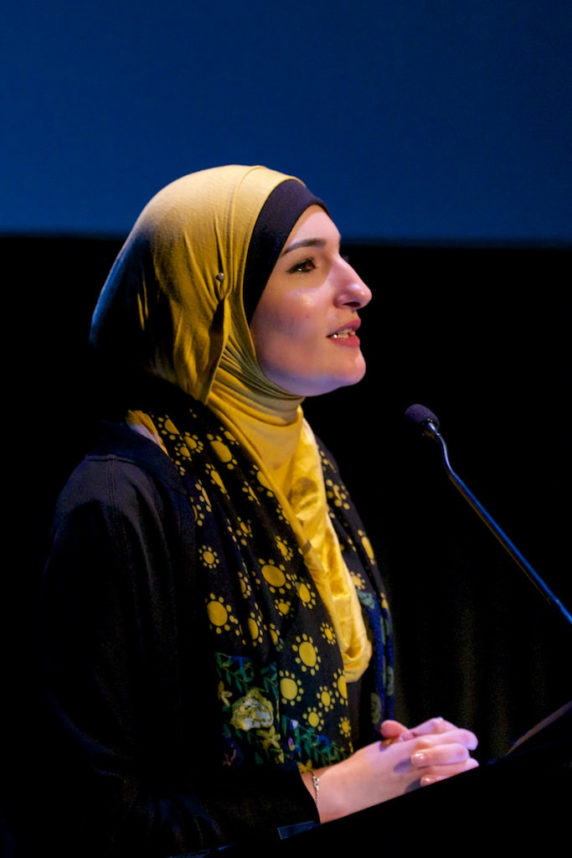
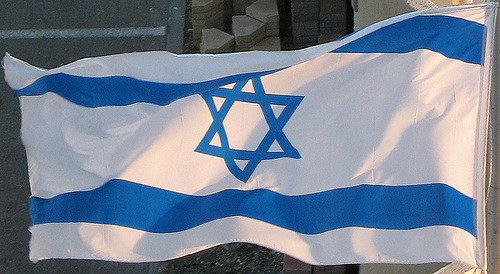
Last week, the Nation of Islam called the Anti-Defamation League (ADL) a “racist spy agency.” “Sisters” Tamika Mallory and Linda Sarsour bullied Starbucks into dropping the ADL from co-leading its diversity training. Students with Jewish Voice for Peace and Students for Justice in Palestine were arrested at an Israeli Independence Day celebration in New York City for setting an Israeli flag on fire and assaulting another student. And Democratic Sen. Chris Murphy of Connecticut called Muslim reformer Zuhdi Jasser “anti-Muslim.”

No one on the left had anything to say about any of this. Indeed, it was just another week in the descent of the left into tribal, anti-feminist, anti-Semitic illiberalism. Or more simply: #woke.
But it was not another week entirely. At the White House Correspondents Dinner on April 28, comedian Michelle Wolf’s venom-filled monologue was so egregious that a handful of “names” from the left, including two New York Times reporters, tweeted afterward their horror and embarrassment. Wolf had crossed a line, creating a crack in the status-obsessed leftist orthodoxy.

Will it shatter from this? Doubtful. The left still hasn’t processed the fact that President Donald Trump didn’t cause the left to go off the deep end into this intolerant groupthink. Trump is a result of the left having already gone off this cliff. The most glaring example: the disallowance of any criticism of former President Barack Obama, no matter how respectfully it was voiced.

Yes, of course, the right has its own version of this. The right’s thought police won’t allow you to criticize Trump’s vulgar, dehumanizing language. It won’t allow you to say that many Americans who own guns are obsessed with them in a disturbing way. That building a wall on the United States’ southern border is not the most rational idea.

But I don’t think it’s going out on a limb here to say that the number of extremists on the right are far fewer than those on the left, that most people who still consider themselves proud members of the Democratic Party have bought into this leftist orthodoxy to some extent.

Today’s golden calf is the anti-Semitic, illiberal propaganda. 

Otherwise, how to explain the fact that Mallory and Sarsour remain unscathed — even after showing the world their bigoted, illiberal agendas? That criticizing them — as the ADL did — will just get you thrown to the ground and stomped on by every virtue signaler needing a status boost? That thousands of professors have remained silent while their universities have turned into propaganda machines, where freedom of speech is considered fascist?

The genius of classical liberalism is that it can instantaneously call the bluff of hypocrites on both the left and the right. It’s like a mirror to your political soul.

If you truly are a racist, classical liberalism will out you in a second. But it will also out you if you don’t believe in freedom of speech or if you think journalists or professors should be biased. And it will most especially out you if your compassion is merely a show for status. Maybe this is why classical liberalism is so hated by many on the left today, where protecting one’s status is far more important than standing up for liberal principles.

I have come to think of the election of Trump as an act of God, a Biblical act meant to teach all of us a lesson. Kind of like Moses throwing the Ten Commandments to the ground after descending from Mount Sinai and seeing the golden calf.

Throughout history, each and every time the left has gotten off the classical liberal path and descended into illiberal orthodoxy — communism, socialism and now, Islamist-led leftism — disaster has been the result.

You might think Trump is a disaster. And you have every right to do so. But if you haven’t yet considered the possibility that the way the left worshipped Obama — “utter only sanctimonious praise or I will publicly scream racist at you till you disappear” — led to Trump, or the way the left is now handling Trump — when they go low, we go lower — then we are still a long way from learning something from this saga.

Today’s golden calf is the anti-Semitic, illiberal propaganda — victimhood! identity politics! intersectionality! — emanating from self-proclaimed activists whose real agenda is so diabolical that only the most impetuous (Nation of Islam leader Louis Farrakhan, Sarsour) dare speak its name.

And so the question remains: Who is going to burn today’s golden calf?

Karen Lehrman Bloch is an author and cultural critic.

The Golden Calf of Leftism Read More »

Rain Dance

We used to pray for rain to come.
We had to pray.
We had to call out to God and trust;
trust that He’d meet our needs.
Send the water to our seeds.
It was how we were to live,
with nothing but our prayers to give.

But then one day we decided to stray,
when the waters weren’t coming our way,
so instead of waiting patiently,
we decided to take what we thought
to be our needs; the water itself,
not the Source of the wells.
We sent the beautiful flowing crystal
into pipes and trucks and faucets that trickle.

We thought we were above it all,
that helpless prayer for rain to fall.
And look where we are now,
thinking we need not trust in Thou:
poisoned waters, prayers without trust.
Forested floors turning to dust.

Oh Lord, help up to return,
to when we trusted Your Holy Word:
“They will call on my name,
and I will answer them.”
Hashem, Hashem, Hashem, Hashem!
Help us to let go of our illusory world,
in which we think we can provide
for ourselves on our terms.

Trying to control the flow of Your world,
force all that swirls into something firm.
Forgive us, please, help us to see;
the Truth that You are all we need.
Give us the courage to set free
the waters we’ve held captive by our greed.
Help us to turn to Thee! Satiate these seeds!
To turn our hearts to Your prophecy:
“They will call on my name,
and I will answer them.”

Now once more, we must pray for rain;
free of acid and metal flakes.
If we are to live, there is no other way;
than to live and let go of the reins,
we’ve kept on the waters of our lives.
Trying to grip to what we believe to be right;
to force Love into a box,
to mistake as solid, a molding rock.
It’s all just, we’re all just, water, flowing free.
Lord, won’t You turn these shackles into a stream?

Hannah Arin is a junior at Pitzer College pursuing a double major in religious studies and philosophy.

Rain Dance Read More »

Cookbooks, Blades and Survivors

Some people dream of buying cars, luxury clothing or jewels. Chefs covet cookbooks and knives. Although I’ve tried to get a thrill from clothes, shoes and handbags — and I sometimes feel strange that I don’t care about those things — when I want to treat myself, what I most enjoy buying is a new cookbook or blade.

For years, I felt as if there was something wrong with me. Although I have never been particularly materialistic, I’ve always appreciated fine things. Still, I could never get as excited as my friends would over a new dress, diamonds or pearls. I’m more likely to be flipping through the pages of an “Art Culinaire” professional chefs magazine than a Vogue. Even when presented with a gorgeous piece of jewelry, it never stirs my soul.

On the other hand, give me a cookbook or a Japanese steel blade and it’s game over — you’ve won my heart forever. It may sound odd, but there is something that melts me about the romance of a person possessed to write a cookbook. Maybe it’s the tremendous openness and generosity I’ve found in the pages of these tomes, the love of family culinary history, the drive and the passion necessary to convey a precious taste memory to a reader.

To this day, the most memorable date I’ve ever had was not in a dimly lit five-star restaurant but in a tiny New York kitchen of an Israeli chef. After showing me his knife collection, he led me to a small bookshelf and pulled out a book of his mother’s recipes, written in her hand before she died. It was clear that it was his most prized possession, and he sheepishly asked if I was in the mood for some Israeli nostalgia. My answer: “Always.” As a young chef, he probably didn’t have the money to take me out on a “proper” date, but the care he took chopping and slicing vegetables with his mother’s knife, while telling me stories of his childhood in Israel was by far the most intimate first date I’ve ever had. Is there anything more romantic than a man sharing his mother’s cooking notes with a woman he is courting?

Perhaps, my love of cookbooks comes from this idea that cooking for someone is the most intimate act of all. Mother to son, wife to husband, matriarch to family, we are all shaped by these first tastes of nurturing, and some of us who are lucky enough to have experienced them, feel no greater joy than to re-create them for others.

Another reason cookbooks stir me is that I’m fascinated by how food concepts began; chef and author Alice Waters has made it her mission to share “the slow-food movement” with her readers. Her restaurant, Chez Panisse in Berkeley, pioneered California cuisine and the idea of locally sourced, fresh ingredients.

With her book “The Art of Simple Food,” she has inspired a generation of chefs as well as farmers to seek out and grow organic fruits and vegetables picked and eaten at their peak. Waters has such a simple and beautiful approach to food that my copy with a personalized message from her is something I treasure.

Still, the book I would grab on my way out the door if my house were burning down couldn’t be more dissimilar. “Eat Me: The Food and Philosophy of Kenny Shopsin” is a crude epithet from the eccentric owner of Shopsin’s on the Lower East Side of Manhattan.

Shopsin’s General Store was a staple of Greenwich Village for decades, most famously known for kicking out customers if they didn’t follow his “rules” for proper ordering: no parties larger than four, you can’t copy your neighbors order, no substitutions.” Shopsin breaks down the general concepts of short-order cooking and intersperses them with magical stories of his life with his family in their “Village” luncheonette.

His mac-and-cheese pancakes are legendary, and they were among the original dishes I put on my menu in my first restaurant, New York Kitchen. Shopsin pretends to hate everyone and fights with the media at every turn, but he has such a big heart that that you can’t help but fall in love with him. The book’s chapter titled “Cooking for My Customers” is one of the most accurate descriptions I’ve ever read of what it’s like to be a chef and shaped some of my own thoughts on the subject.

My love of cookbooks comes from this idea that cooking for someone is the most intimate act of all.

Then there is one of my most recent purchases, “Holocaust Survivor Cookbook: Collected From Around the World” by Joanne Caras. Caras asked Holocaust survivors to gather their family recipes and spent years picking through their submissions. She collected 129 stories from around the world, including Europe, Israel and the United States. Her goal was to ensure that the stories and bravery of these survivors would live on for generations to come.

In the introduction of the cookbook, she asks that each person who cooks a recipe also read the accompanying story to his or her family before serving the dish. It’s such a beautiful idea, and the book contains so many heart-wrenching tales, that the reader can’t help but feel concurrent sorrow and hope.

One of the recipes in “Holocaust Survivor Cookbook” is for butter cookies called Kourabiedes, submitted by the family of a Greek grandmother named Rena Carassos (nee Gani). Because each story in this cookbook reads like a little miracle, what struck me the most about Carassos’ story was that her children titled it “Because Our Parents Survived.”

Kourabiedes are Greek wedding cookies. Carassos and her sister survived Auschwitz-Birkenau concentration camp, then returned to their family home to find that they were the only survivors. They moved to Athens to start a new life, where Rena met and married Daniel Carassos, another survivor who’d lost everyone.

After a small but joyful ceremony, bereft of most of their friends and relatives, they went on to create a family of their own in the United States, where they had two daughters and five grandchildren.

The irony of my cookbook obsession is that, like most chefs, I find it impossible to follow a recipe. But when I baked Carassos’ wedding cookies from this cookbook, instead of my usual substitutions and additions, I followed her recipe to the letter. I shared them with my customers and friends, and I told them her story.

Impossibly, through a cookbook submission from the daughters of a woman I’d never know, her story and the memory of her family live on in me and the taste of her butter cookies. There wasn’t a soul to whom I fed them that wasn’t touched and amazed — and for me, that’s the most precious gift.

Yamit Behar Wood, an Israeli-American food and travel writer, is the executive chef at the U.S. Embassy in Kampala, Uganda, and founder of the New York Kitchen Catering Co.

Cookbooks, Blades and Survivors Read More »

The Stick Shtick

American Jewish support is essential for Israel’s survival. This has been the tune we all have been singing for a long time, without much stopping to think, well, is this really the case?

Relations with Israel are essential for Diaspora Jewish survival. We’ve been singing this tune, too, but is it true?

Maybe stopping to think about these questions is too dangerous. What happens if we suddenly realize that Israel can do without Jews in the United States? What happens if U.S. Jews suddenly realize that Israel is a nuisance they can do without? What happens if this process of thinking ends up in miscalculation — “we” believe that we can do without “them,” when we can’t, or “you” believe that you can do without “us,” when you can’t?

On the other hand, maybe stopping to think about these questions could clarify some things.

For example, that Israel needs the support of U.S. Jews — but not as much if “support” means disruption and delegitimization.

For example, that U.S. Jews need the connection with Israel — but not as much if such connection means having to contend with insult and disrespect.

Understanding that the essentiality of connection holds true only if by connection we refer to a positive connection, is in itself an essentiality. As forgetting this seemingly obvious fact — we want to be friends, not “friends” — leads people to conclusions that are way off. It leads them to believe that they hold a stick that isn’t a stick. It leads them to believe that they can wave this stick and expect a result. Wave a Natalie Portman snub and get rid of Israeli Prime Minister Benjamin Netanyahu. Wave an Anti-Defamation League protest letter and alter Israel’s immigration policy. Wave a Peter Beinart critique and Israel will change its Gaza modus operandi.

Israel is used to getting advice from U.S. Jews, sometimes reasonable, sometimes puzzling.

Consider this: Realistic people do not expect to see all of their preferences materialize. I am displeased with China’s record on human rights. Yet I understand that my disavowal matters little to the leaders of that great nation. I am not happy with trends in the classical music world — but I know that my power to alter these trends is limited (especially so since I rarely go to a concert). It could make me dissatisfied, but never angry. I cannot be angry at China for not taking my advice.

Israel is used to getting advice from U.S. Jews, sometimes reasonable, sometimes puzzling (you must resume the peace process, American Jewish columnists scold us, as if Israel neglects to do this because of mere forgetfulness). Advice can be helpful, and even criticism has its place in a healthy relations. Israel would be wise to invite advice and criticism, and would be wise to occasionally listen to advice and seriously consider criticism. Still, the fact that many Jews in the U.S. get angry when Israel doesn’t heed their advice stems from simple confusion: These Jews assume that they have power to sway Israel when they don’t. Not more so than I have the power to sway China or the masters of classical music.

Israelis are not immune from making similar mistakes. They wrongly assume, for example, that their political preferences ought to convince U.S. Jews to vote for a Donald Trump rather than a Barack Obama. When the next round of election proves them wrong — and it will prove them wrong even if the Democratic opponent is highly problematic in the eyes of Israelis (anyone for Bernie?) — they will get angry. Why? Because they assume a clout that they do not have over American Jewish political preferences.

Mutual anger is never good for any relations, and it is even worse when the core reason for anger is misapprehension of the nature of the relations. If you assume that to have good relations “we” need to follow “your” advice — and if “we” have no intention whatsoever to follow “your” advice — both of us are stuck. And this is true whether by “we” you mean we Israelis or we Americans, whether by “you” you mean you Israelis or you Americans.

Ask any marriage counselor and you will hear this: Reasonable mutual expectations are vital for keeping a healthy marriage. And you will be told that respect for the preferences of others is vital for keeping a healthy marriage. And ultimately, you will be advised that anger will not get you very far. That is, if you want a happy marriage.

Shmuel Rosner is senior political editor. For more analysis of Israeli and international politics, visit Rosner’s Domain at jewishjournal.com/rosnersdomain.

The Stick Shtick Read More »