fbpx

April 19, 2018

TABLE FOR FIVE: Five Takes on the Weekly Parsha, Tazria-Metzora

TAZRIA-METZORA, LEVITICUS 13:46

All the days wherein the plague is in him he shall be unclean; he is unclean; he shall dwell alone; without the camp shall his dwelling be.

Rabbi Yael Ridberg
Congregation Dor Hadash, San Diego
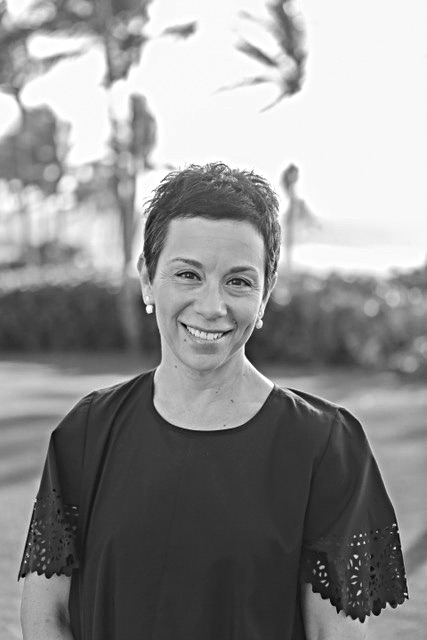
The priest served as dermatologist and healer of the people. He would diagnose a mysterious rash on the skin or prescribe the necessary rituals when individuals came in contact with the natural life transitions of sex, childbirth, illness or death, rendering a person ritually impure.

These rituals reflect an important dialectic of the “I” and the “we” of the people. Every person had to look out for himself or herself, carefully scrutinizing bodily changes and coming to the priest to assess the situation. The community would then have to recognize such occurrences were part of society. Tzara’at was a scaly affliction that could occur in the stones of a house, in clothing or skin, and was highly contagious. The metzorah was in a temporary state of ritual impurity, a statement of fitness for ritual participation, not a moral condemnation.

The text is silent on the “why” of the fungus, but its inclusion in the Torah normalizes it. Only when Miriam is afflicted with tzara’at after criticizing Moses did the rabbis assign the affliction the cause that negative speech is a contagion that if not contained, can infiltrate the very bedrock of the community. Whatever the cause of a person’s isolation, it could happen to anyone, and it wasn’t permanent. The communal imperative to care for others is embedded in this text. No one should be isolated more than necessary — for as much as the individual suffers, so does the community. How we take care of one impacts the other.

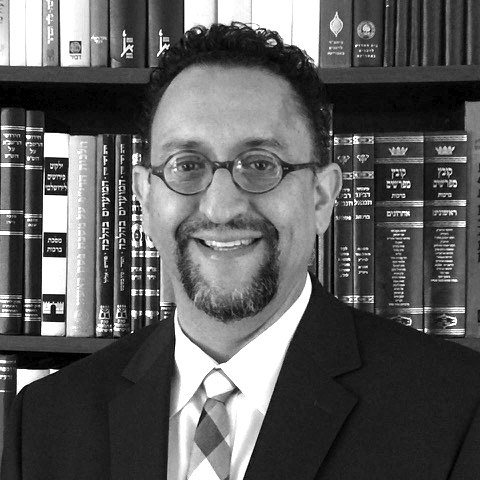
Rabbi Tal Sessler
Sephardic Temple Tifereth Israel
The rabbis of medieval times did not quite know what to make of the esoteric Torah portions of Tazria-Metzorah, which deal with ancient skin ailments. After all, what is the eternal pertinence for future Jewish generations of such a disease? Why is it in the Torah? Our sages came up with a creative twist. Namely, that the word “metzorah” carries a linguistic affinity to the Hebrew words “motzi shem rah” (the one who destroys the reputation of another person).

In the age of social media, many people are often “socially executed” without trial. People are convicted in the courts of Facebook, Twitter and Google, without due process or evidence. In the absence of legal proceedings, lives can be destroyed.

Rabbi Shlomo Aviner proposes that we understand this verse in the context of the rabbinic hermeneutical principal of “midah keneged midah” (measure for measure). Those with reckless minds and hearts who linguistically shed the blood of others by globally shaming and defaming them online based merely on rumors — in the absence of viable witnesses and evidence — ought to be excommunicated from the public arena for a period of time.

The message is clear and pervasive for all of us who spend hours every day online facing an inanimate screen. Words can wound. Words can kill.Words can shame and tarnish reputations. Words can shatter lives.

We must think hard, think long and think deeply before writing something about anybody online.

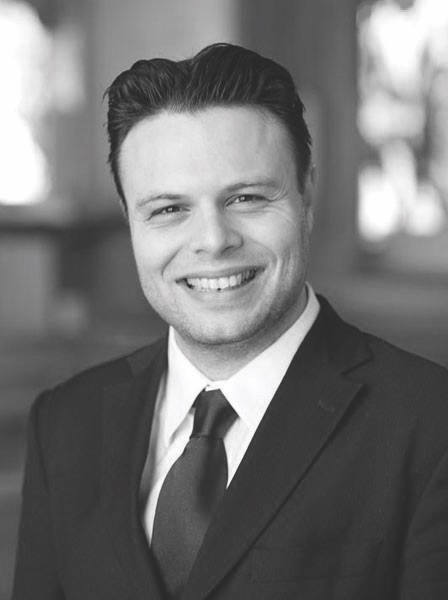
Bruce Powell
de Toledo High School

The rabbis taught that “metzorah” is really a contraction for “motzi shem rah,” or one who brings the bad name. They believed that one of the punishments for lashon harah, or evil speech, was leprosy, a disease which called for one’s isolation from the community.

The rabbis also taught that “machloket b’shaym shamayim,” or disputes in the name of heaven, resulted in the uplifting of community. For example, even though the Academies of Hillel and Shammai argued continuously, all of their disputes were in the name of heaven, the result being that the children of Hillel and Shammai would continue to marry one another.

Today, I often sense that disputes in our community, whether they be in the political realm, financial realm and so forth, deteriorate into people bringing “the bad name” upon one another. These toxic conversations create social “leprosy,” thereby isolating friends and even family members from one another. They often become so heated that people are perceived of as being politically “unclean,” and thereby are no longer allowed to “dwell within the camp.”

I believe we can, as a community, end this current “plague” of political or social “leprosy.” May we bring only the “good name” upon each other; and may we continue to dwell together, to marry one another, and to eradicate isolation from our world.

Rabbi Susan Leider
Congregation Kol Shofar

What does it mean to dwell alone? Is it to her benefit? That she can heal and return to the camp? Or is it for others’ benefit, so that they don’t catch her leprosy? Leave aside for a moment the idea of being “unclean.” Peel away the layers of this verse (forgive me for using this analogy in a section of the Torah traditionally dealing with skin disease), and we see that its centerpiece is a person dwelling alone (badad yeshev).

More than ever, the idea of dwelling alone touches us. Those of us who don’t live alone, know increasing numbers of people who do. The U.S. Census Bureau says that 28 percent of households have just one person living in them — up from 13 percent in 1960. Some live alone by choice, but many who live alone would prefer not to live alone.

Rebbe Nahman of Bratslav’s spiritual practice of self-seclusion, or hitbodedut, comes from the same Hebrew root as badad, meaning alone. Ironically, one of the major purposes of hitbodedut is to talk to God. It raises the question: Are you ever really alone? And if you are alone, does that mean you are lonely?

Within the Jewish community, there are more single households than ever. Some wring their hands over this, but isn’t it better to celebrate the expansion of what the ideal Jewish household looks like? Cookie-cutter household configurations no longer carry the day. And besides, Reb Nahman would probably say, “Just because you are alone, doesn’t mean you are lonely.”

Rabbi Daniel Bouskila,
Sephardic Educational Center
There is nothing more divisive to a society than gossip and slander. Those who misuse and abuse the power of speech create divisions among people, often leading to irreparable damage.

Ancient Jewish society attributed leprosy as a physical punishment for spreading lies or rumors. The distinguishable physical blemishes all over the leper’s body were a sign that this person spoke lashon harah, and much like lashon harah is a plague upon a society, so, too, this individual with leprosy is a plague upon society.

Like all physical impurities in the Torah, there are ritual measures taken to rid the person of the impurity. But with lepers, there is one special measure that is unique to their impurity: “He (the leper) shall dwell alone.” Both the Talmud (Arachin 13b) and Rashi ask why this extra measure — banishment from the camp to “dwell alone” — is unique to the leper: “Because just as he caused separation between husbands and wives or between good friends with his lashon harah, so, too, he should experience separation from his community.”

While modern-day society no longer attributes leprosy to lashon harah, the virulent strain of gossip and slander persists in our society. We might heed the Torah’s advice and banish those who divide us with their words to “dwell alone.” Today that would simply mean shutting down their Twitter account.

TABLE FOR FIVE: Five Takes on the Weekly Parsha, Tazria-Metzora Read More »

Why I Owe David Levy an Apology

I used to make jokes about David Levy.

I was a kid in Maryland when Levy (who, it was announced recently, will be awarded the prestigious Israel Prize for Lifetime Achievement) was elevated from a back-bench Knesset member to Minister of Absorption and then Housing Minister. Eventually, he became Foreign Minister and Deputy Prime Minister.

I knew little about Israeli politics, but somehow, I absorbed that Levy was a figure to be mocked. Somewhere, I learned “David Levy jokes,” a popular genre making light of Levy’s dim intelligence and poor English. No one told me that behind the ridicule was contempt for Levy’s Moroccan childhood, guttural accent, and failure to display European charm or gruff Tzabar authenticity. Still, somehow I knew.

Years passed before I found out that Levy moved at 20 from Rabat to the hardscrabble town of Beit Sha’an, took a construction job, soon becoming a union leader who persuaded other exploited immigrants from Morocco that they could fight for more money and respect, and win; and that as housing minister he pushed through policies offering government assistance to working class folks seeking to buy an apartment (which assistance allowed my wife and me to buy our first apartment in Tel Aviv); and that as foreign minister he exhausted decades of political capital trying to get his fellow Likud politicians to negotiate in earnest with Palestinians at the 1991 Madrid Peace Conference.

Years passed before I learned that Levy was a politician of exquisite skill who did more than any anyone to bring Mizrahi voices into Israel’s public square, where for generations they had been ignored.

Levy also did much I disagreed with then and lament now. As Housing Minister from 1979 to 1990, he expanded the policy of building in the settlements in the occupied territories that the Labor Party had established, turning small West Bank and Gaza settlements into implacable towns.

David Levy did more than anyone to bring Mizrahi voices into Israel’s public square. 

But that is not why I made those jokes back then. I told those jokes because I had it within me dismiss Levy for working his way into politics from a construction site, instead of a graduate seminar room. I had it within me to write off Levy because his fluent second and third languages were Arabic and French, and not English.

I was not alone. From the beginning of Zionism, in the late 19th century, to the first generations after Israel was established, Jews who came from Europe, and their children, often viewed with condescension Jews who came from the Middle East and North Africa.  Zionists whose roots reached back to Russia, as mine do, saw themselves as a proper model of how Jews in a Jewish homeland should speak, think and behave.

When great waves of Sefardi immigrants came, soon after Israel was established, they were often welcomed with the arrogant notion that they must shed their culture, language, traditions, accents and more.  But David Levy never fully ceased to be a Moroccan Jew, and he refused to be ashamed of this fact.  As his accomplishments multiplied and his talents became ever-more manifest, he became an affront to our easy assumption of superiority. That is why we mocked him for being pompous. And that is why we told diminishing jokes.

Israel is a better place now than when I was a kid. Time has worn away much of the old Ashkenazi arrogance.  The head of the Labor Party, once the voice of an Ashkenazi elite, is the son of immigrants from Casablanca. One of the two leading candidates to head the liberal Left Meretz Party, also once an Ashkenazi stronghold, is also the son of Moroccans. Levi’s daughter, Orly Levy-Abekasis has been a member of Knesset for nine years, and has just created a new party that polls have winning five seats in the next Knesset; his son Jackie is a Likud MK.  They grew up in a world with greater possibilities than their father did; it was a world that their father, more than anyone else, created.

As for me: I am grateful to the Israel Prize Committee, for its too-small, too-late acknowledgment of how wrong I was back then. And I am grateful to David Levy, for all that he did and the dignity with which he did it, working tirelessly for decades, as if people like me didn’t exist.  My children, like his, are the beneficiaries of his efforts.

Noah Efron is a professor at Bar-Ilan University near Tel Aviv, an author and the host of “The Promised Podcast.” 

Why I Owe David Levy an Apology Read More »

Rosner’s Torah Talk: Parashat Tazria-Metzora with Rabbi Alan Bright

Our guest this week is Rabbi Alan W. Bright of Shaare Zedek Congregation in Montreal. He completed his education doing Jewish Studies from London School of Jewish Studies (London) and Concordia University. He was also at the Yemin Orde and became an active member of this Youth Village.

This week’s double parashah – Parashat Tazria-Metzora (Leviticus 12:1-15:33) – features rules concerning the purity and impurity of women and the horrible disease of leprosy. Our discussion focuses on the priests’ curious attitude toward people inflicted with skin disease.


Previous Torah Talks on Tazria and Metzora:

Rabbi Elie Weinstock

Rabbi Joshua Aaronson

Rabbi Hillel Skolnik

Rabbi Jonathan Aaron

Rabbi Sheldon Lewis


Rosner’s Torah Talk: Parashat Tazria-Metzora with Rabbi Alan Bright Read More »

Before Insulting Israel, Natalie Portman Should Have Done Her Homework

Last November, when Hollywood actress Natalie Portman was awarded the $1 million Genesis prize– given annually to “individuals who serve as an inspiration to the next generation of Jews”– she accepted and said she is “proud of my Israeli roots and Jewish heritage.”

What a difference a few months make.

Yesterday, Portman rescinded her acceptance, with her representative notifying Genesis that “[r]ecent events in Israel have been extremely distressing to her and she does not feel comfortable participating in any public events in Israel” and that “she cannot in good conscience move forward with the ceremony.”

According to JTA, these “recent events” mean the Palestinian “Great March of Return” protests at the Gaza border with Israel, which left dozens of Palestinians dead in the resulting clashes with Israeli forces.

Let’s leave aside the fact that Israel did not instigate these riots, and that the goal of the riots was not to protest the Israeli “occupation” but to breach the border fence and invade Israel. Of course, Israel has an obligation to protect its borders the best way it can; every country does.

Let’s just focus on the violence that occurred. Portman is evidently following the usual anti-Israel party line at the UN, Europe and “human rights” circles, which accused Israel of using disproportionate, indiscriminate force, and shooting “unarmed civilian demonstrators.”

But had Portman done just a little bit of homework, she would have learned that Israel took great pains to target terrorists, not civilians. All she had to do was read the favorite medium of Israeli leftists, Haaretz, as quoted by Evelyn Gordon this week:

“In a column published in Haaretz last week, Gaza native Muhammad Shehada defended the demonstrations as a necessary response to Israel’s partial blockade, on which he blamed all of Gaza’s woes. His younger brother, he said, has participated in them almost daily. He himself is currently studying in Sweden but formerly worked for an anti-Israel ‘human rights’ organization in Gaza. In short, he’s hardly an Israeli shill. Nevertheless, he noted that even Hamas believes Israel’s fire has been far from indiscriminate.”

As Gordon reports:

“Despite the seemingly arbitrary live-fire and tear gas raining down on the protestors … Hamas believes the victims are carefully selected. ‘Israel knows who to wound, maim or kill,’ a Hamas leader told me by phone. At least 10 young men, affiliated with Hamas and its Qassam brigades, have been shot while maintaining order at the protest.

“Hamas believes Israel is deploying facial recognition technologies besides the numerous war-drones that obliterate the sky above. The movement warned its members to keep their faces covered, and leave their phones at home.”

So, these “recent events” that Natalie Portman found “extremely distressing” turn out to be about Israel’s extreme efforts to target terrorists rather then civilians.

Portman’s pride in her “Israeli roots” was not enough for her to do some homework before publicly shaming the country of her roots.

Maybe she will redeem herself over the next year by challenging the anti-Israel bias around the world and defending her beloved Israel against discriminatory and unfair attacks. Then she’d really earn the award.

Before Insulting Israel, Natalie Portman Should Have Done Her Homework Read More »

D.C. Councilman Who Made Anti-Semitic Comment Abruptly Exits from Holocaust Museum Tour

Democrat D.C. Councilman Trayon White, who made headlines with his anti-Semitic conspiracy theory that the Jewish banking Rothschild family controls the weather, abruptly left a Holocaust museum tour without offering any explanation why.

The Washington Post reports that White was touring D.C.’s Holocaust museum, where he was taking photos and asking questions at various points of the tour. Midway through the tour, White’s entourage suddenly had no idea where he went. White was later found outside the museum.

White told the Post that he’ll come back to the museum later, but wouldn’t answer why he had left the tour early. The Post also asked White if the tour caused him to put his anti-Semitic comment in a different light.

“This opportunity has given me the chance to meet a lot of great Jews, a lot of people,” White replied. “A lot of good Jews that I’ve never had the chance to meet before. It’s an awesome experience.”

Before White suddenly disappeared, he was looking at a photo in the museum of a girl dorning a sign that read “I am a German girl and allowed myself to be defiled by a Jew” and asked if the Nazis around her were “protecting her”:

Back in March, White had stated in a video that the Rothschild family “controlling the climate to create natural disasters they can pay for to own the cities.”

White eventually apologized for his comments in the video.

“I did not intend to be anti-Semitic, and I see I should not have said that after learning from my colleagues,” White said.

D.C. Councilman Who Made Anti-Semitic Comment Abruptly Exits from Holocaust Museum Tour Read More »

5 Things to Know About the Warsaw Ghetto Uprising

The focus this week has been on Israel’s 70th anniversary as a country, but April 19 is an important day, the 75th anniversary on the Warsaw Ghetto Uprising. People across the country in Poland stood in silence as bells and sirens rang to honor that the Jews that lost their lives in the uprising. The uprising was a significant event, as the Jews imprisoned in the ghetto bravely fought back against the barbaric Nazis and threw a temporary wrench in their war efforts.

Here are five things to know about the Warsaw Ghetto Uprising.

1. Prisoners in the ghetto vowed to take arms against the Nazis after the first wave of deportations from the ghetto occurred in 1942. Adolf Hitler ordered all the prisoners in the ghettos to be deported to the Nazi death camps, resulting in the deportation of over two million Jews to the death camps, including 300,000 from the Warsaw Ghetto. Those in the Warsaw Ghetto who watched in horror as their loved ones were being snatched away by the Nazis vowed to take vengeance against the SS, even if it meant death.

“Never shall the Germans move from here with impunity; we will die, but the cruel invaders will pay with their blood for ours,” Warsaw Ghetto survivor Emmanuel Ringelblum wrote.

2. The resistance in the ghetto consisted of two main groups: the Jewish Combat Organization (ZOB) and the Jewish Military Union (ZZW). During the first two-month wave of deportations to Treblinka in July 1942, the two groups were unable to form an effective coalition because of tension between the two. According to Yad Vashem, “The ZZW claimed that the ZOB refused to incorporate them into their group’s structure, while the ZOB maintained that the ZZW wanted to take over the operation. In addition, both groups imposed taxes on the ghetto’s wealthier Jews, causing more tension between them.” Making matters worse was the fact that the ZOB was fractured by varying factions and they did not have a sufficient amount of arms despite the ZZW’s links to the Polish Home Army.

After the first wave of deportations ended, the ZZW and ZOB realized they had to set their differences aside in other to have a fighting chance against the Nazis. Over the next couple of months, new life was breathed into the ZOB with the acquisition of some weapons from the Polish Home Army and having a new leader in the charismatic 23-year-old Mordechai Anielewicz, who declared that the Jews would “resist going to the railroad cars,” per Jewish Virtual Library.

3. The Jews in the ghetto were able to fight off the Nazis from deporting them in January 1943. The deportations at that time had caught the Jews in the ghetto off guard, but they were able to use the structure of the ghetto to their advantage. According to Britannica, “Jewish fighters could strike quickly, then escape across the rooftops. German troops, on the other hand, moved cautiously and would not go down to cellars.”

The resistance efforts prevented the Nazis from issuing their planned deportations that day, giving the Jews imprisoned in the ghetto a sliver of hope. They spend the next few months stockpiling a few more weapons, training and establishing hiding spots in the ghetto to use as guerrilla warfare against the Nazis.

4. The uprising officially began on April 19 and lasted until May 16. The Jews in the ghetto had heard that the Nazis were preparing to fight and deport the remaining prisoners in the ghetto to Treblinka on April 19, so they retreated to their hiding spots and fired away at the Nazis when they entered. Despite being vastly outnumbered and outmanned in firepower, the Jews forced the Nazis to abandon their three-day plan of complete liquidation of the ghetto. Even when the Nazis began burning down the ghetto, the Jews were able to hold their ground for nearly a month before the Nazis eventually overwhelmed them. The Jews that hadn’t died in battle were either executed by the Nazis or sent to the death camps.

5. Even though the uprising did not prevail against the Nazis, it inspired other uprisings elsewhere. For instance, when the Jews entombed in Treblinka got word of the Warsaw Ghetto Uprising, they planned an uprising of their own, setting the death camp into flames and killing 40 Nazi guards. Three hundred people escaped Treblinka that day but only 70 survived, as the Nazis hunted down those that escaped. Other uprisings occurred in the ghettos of Bialystok and Minsk and the Sobibor death camp.

The Warsaw Ghetto Uprising was a signal at that time that the Jews would not be herded like sheep into slaughter, they were determined to fight back and “die with honor.” As Journal columnist Ben Shapiro noted in 2004, Anielewicz had written during the uprising, “The most important thing is that my life’s dream has come true. Jewish self-defense in the ghetto has been realized. Jewish retaliation and resistance has become a fact. I have been witness to the magnificent heroic battle of the Jewish fighters.”

“A new model of the Jew had been created: not a passive Jew, but a Jew who would battle to the last bullet,” Shapiro wrote.

5 Things to Know About the Warsaw Ghetto Uprising Read More »

My Papa from Morocco in the IDF

As Israel turns 70 today, I give thanks to Hashem, to all IDF Soldiers, and to my personal IDF hero, my father Nessim Bouskila, (pictured all the way to the right, with his comrades in the “new IDF” in 1948). Papa left Morocco for Paris in 1946, and in 1948, upon hearing the news of Israel’s independence, went to Israel and volunteered for the elite Palmach unit, fighting in many battles in the War of Independence. Thanks, Papa, for helping to create Israel. Hag Sameach everyone!

My Papa from Morocco in the IDF Read More »

What’s Happening in Jewish L.A. April 21-25: L.A. Jewish Film Festival and Walk to End Genocide

SAT APRIL 21
FESTIVAL OF BOOKS

Writers, poets, artists, musicians and filmmakers appear at the annual Los Angeles Times Festival of Books, a weekend celebration of the written word. Ed Asner discusses his 2017 book, “The Grouchy Historian”; religious scholar Reza Aslan appears in conversation with Jewish Journal Book Editor Jonathan Kirsch; actress, neuroscientist and author Mayim Bialik explores the nexus of science, geek culture and girl power; author Steven Ross (“Hitler in Los Angeles: How Jews Foiled Nazi Plots Against Hollywood and America”) and Journal contributor Bill Boyarsky examine “History: Telling Hidden Stories”; Berkeley Law Dean Erwin Chemerinsky weighs in on “Our Endangered Constitution” and L.A. Times film critic Kenneth Turan participates on a panel titled “The Entertainment Industry.” Through April 22. Saturday, 10 a.m.-6 p.m.; Sunday, 10 a.m.-5 p.m. Free. USC’s University Park Campus, Los Angeles. latimes.com/festivalofbooks.

JEWISH FEMINISM IN THE FACE OF RACIALISM

Amanda Berman, co-founder and president of Zioness, a group that seeks to empower Jewish women to participate in progressive spaces, discusses “Jewish Feminism in the Face of Racialism.” Berman previously worked on Democratic campaigns, and in law school she served at the Bet Tzedek Legal Services Clinic. Her lecture follows a Saturday morning Shabbat service. 11:30 a.m.-12:30 p.m. Free. Beverly Hills Hotel, 9641 Sunset Blvd., Beverly Hills. (310) 276-4246. beverlyhillsjc.org.

KNOW YOUR REPS, WITH CONGRESSMAN ADAM SCHIFF

Over lunch after Shabbat services, Rep. Adam Schiff (D-Burbank) discusses the latest goings on in Washington, D.C. Schiff is the ranking member of the House Permanent Select Committee on Intelligence, which oversees the nation’s intelligence agencies. Sponsored by IKAR. Free. 12:30 p.m. Shalhevet High School, 910 S. Fairfax, Los Angeles. (323) 634-1870. ikar-la.org.

“BAD JEWS”

“Bad Jews.”

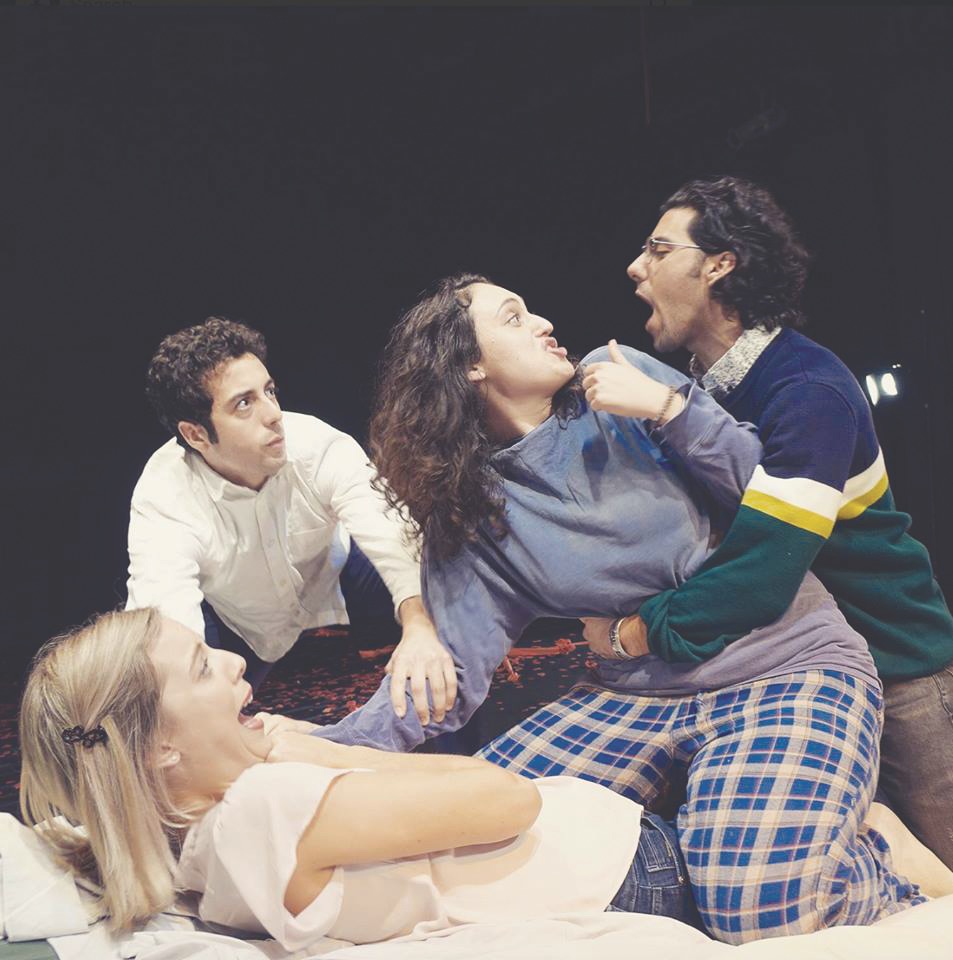
In Joshua Harmon’s scathingly funny play “Bad Jews,” two cousins clash ferociously over who has the right to inherit the chai necklace that belonged to their beloved grandfather, “Poppy,” which Poppy preserved during the Holocaust by hiding it under his tongue. Through June 17. Fridays and Saturdays, 8 p.m.; Sundays, 2 p.m.; Wednesday, May 9 and May 30, 8 p.m.; Thursday, May 17 and June 14, 8 p.m. $25–$35. 2055 S. Sepulveda Blvd., Los Angeles. (310) 477-2055. odysseytheatre.com.

SUN APRIL 22
WALK TO END GENOCIDE

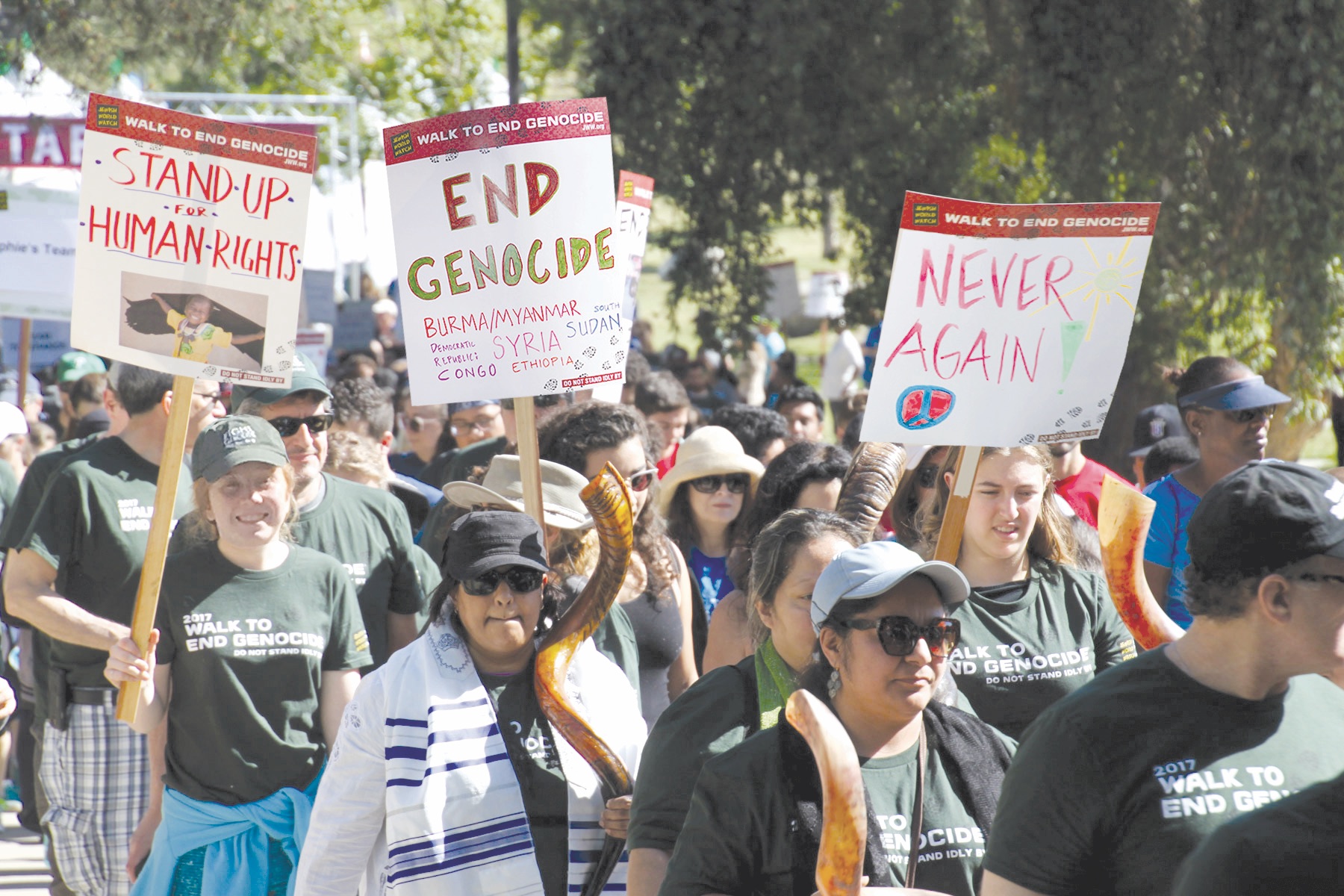
Seeking to influence the end of deadly conflicts in Syria, Sudan, Myanmar and the Democratic Republic of Congo, Jewish World Watch stages its 12th annual Walk to End Genocide. The three-hour event brings together a broad range of advocates sending the message, “We will not stand idly by while genocide and mass atrocities occur.”  The walk raises funds to underwrite support programs in affected communities. 9 a.m.-noon. $36 adults; $28 students, ages 12-22; $18 children, ages 5-11; toddlers, free. Pan Pacific Park, 7600 Beverly Blvd., Los Angeles. (818) 501-1836. jww.org.

BACKGAMMON TOURNAMENT

A 5,000-year-old board game that originated in the Middle East receives a fresh airing when JIMENA (Jews Indigenous to the Middle East and North Africa) and Kahal Joseph Congregation co-host an all-ages backgammon tournament. Prizes will be awarded to the top players, and players who bring their own backgammon boards will receive a free raffle ticket. 10 a.m. Before April 20: tournament entry fee, $20; general admission, $10 adults, kids free. At the door: entry fee, $30; general admission, $10 adults, $5 kids. Kahal Joseph Congregation, 10505 Santa Monica Blvd., Los Angeles. (310) 474-0559. kahaljoseph.org.

ANNIE KORZEN AND MARK SCHIFF

Whizin’s Stand-Up Comedy Showcase presents comedians Annie Korzen and Mark Schiff. Korzen played the recurring role of Doris Klompus on “Seinfeld.” Schiff, who recently opened for Jerry Seinfeld in Israel, appeared many times on “The Tonight Show With Jay Leno” and “Late Night With David Letterman.” He has starred in HBO and Showtime specials, and written for “The Roseanne Show.” 4 p.m. $25. The David Alan Shapiro Memorial Synagogue Center, American Jewish University, 15600 Mulholland Drive, Bel Air. (310) 476-9777. wcce.aju.edu.

“THE HEBREW HILLBILLY”

Singer-songwriter Shelley Fisher performs her musical one-woman play, which chronicles her growing up Jewish in the Deep South with a flamboyant mother who frowned on her dating the local boys, and her dreams of bright lights and show business. 6:30 p.m. $20. Santa Monica Playhouse, 1211 4th St., Santa Monica. (310) 394-9779. santamonicaplayhouse.com.

UNCABARET

UnCabaret, the downtown Los Angeles home of original alternative comedy for nearly 25 years, holds an evening of laughter, featuring Kira Soltanovich, James Adomian, Lauren Weedman, Zach Sherwin, Paige Weldon and the Frogtown Serenaders. Beth Lapides, who appeared on the series “Sex and the City,” “Will & Grace” and “Politically Incorrect,” hosts this weekly program. 8 p.m. $10-$30. The Showroom at Au Lac, 701 W. First St., Los Angeles. (213) 706-3630. uncabaret.com

MON APRIL 23
“BELIEF: THE CHALLENGE OF OUR TIMES”

During this annual Yom Iyun evening of learning, two leaders of Ohr Samayach International explore “Belief: The Challenge of Our Times.” Rabbi Akiva Tatz speaks on “Faith in a Faithless World” and Rabbi Dovid Gottlieb identifies “Reasons to Believe.” For men and women. Refreshments served. 7:30-11:55 p.m. Advance, $10. After April 22, $15. Students free. Nessah Synagogue, 142 S. Rexford Drive, Beverly Hills. (718) 677-6200. nessah.org.

AUTHOR ABIGAIL POGREBIN

Abigail Pogrebin.

Abigail Pogrebin, author of “My Jewish Year: 18 Holidays, One Wondering Jew,” embarked on a year of research and writing about every Jewish ritual, fast and festival in one Jewish year. In a book infused with humorous details, Pogrebin imparts the wisdom of more than 60 rabbis she interviewed. In conversation with Rabbi Ed Feinstein of Valley Beth Shalom. 7:30 p.m. $10. Burton Sperber Jewish Community Library, American Jewish University, 15600 Mulholland Drive, Bel Air. (310) 476-9777. wcce.aju.edu

“RUSSIAN ROULETTE” AUTHOR

Investigative journalist Michael Isikoff, co-author of “Russian Roulette: The Inside Story of Putin’s War on America and the Election of Donald Trump,” shares his conclusions about Russia’s interference in the 2016 presidential election. The book, which he wrote with journalist David Corn, argues that the attempted sabotage of American democracy brought Trump to the presidency. 7:30 p.m. $20, admission; $42, book and admission. Temple Emanuel of Beverly Hills, 8844 Burton Way, Beverly Hills. (310) 288-3737. writersblocpresents.com.

TUE APRIL 24
“MAIMONIDES AND THE MERCHANTS”

The advent of Islam in the seventh century brought profound economic changes to Jews living in the Middle East. The Talmud, written in and for an agrarian society, was in many ways ill-equipped for the new economy. Not previously noticed, however, in the Mishneh Torah, Maimonides made efforts to update the halachah to make it conform with Jewish merchant practices. Author Mark R. Cohen talk about his book, “Maimonides and the Merchants: Jewish Law and Society in the Medieval Islamic World.” Cohen is a professor emeritus at Princeton University. Sponsored by the UCLA Alan D. Leve Center for Jewish Studies. Free and open to the public. 4-6 p.m. UCLA Royce Hall, Room 314, 10745 Dickson Court, Los Angeles. (310) 267-5327. cjsrsvp@humnet.ucla.edu.

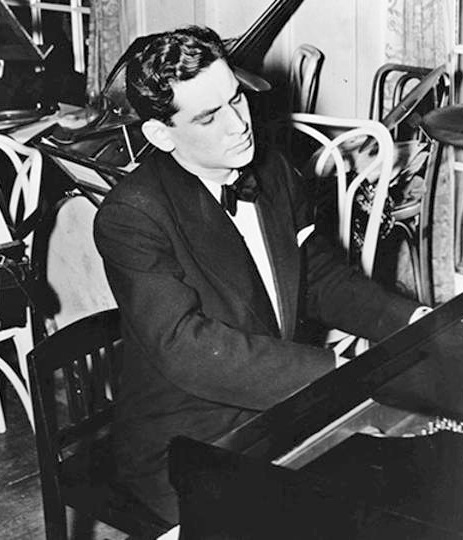
“LEONARD BERNSTEIN AT 100”

Leonard Bernstein.

On the centennial of composer Leonard Bernstein’s birth, the Skirball Cultural Center presents an exhibition celebrating the life and work of the great American composer and conductor who dedicated his life to making classical music a vibrant part of American culture. The Grammy- and Tony Award-winning Bernstein (1918–1990) wrote landmark scores for musical theater (“West Side Story,” “Candide”) and film (“On the Waterfront”). Organized by the Grammy Museum and curated by its founding executive director and renowned music historian, Robert Santelli. Through Sept. 2. Included with museum admission. Skirball Cultural Center, 2701 N. Sepulveda Blvd., Los Angeles. (310) 440-4500. skirball.org.

DEEPER LOOK AT THE EXODUS

Inspired and educated by her father, who headed a rabbinical court in the United Kingdom, Avivah Gottlieb Zornberg, a lifetime Torah scholar, discusses her book “Exodus: Narrative or Anti-Narrative?” The London-born former National Jewish Book Award winner has taught Torah in Jerusalem for 30 years. 6 p.m. dinner, 7:30 p.m. lecture. $15, lecture. $40, dinner and lecture. UCLA Hillel, 574 Hilgard Ave., Los Angeles. (310) 208-3081, ext. 108. hillelatucla.wufoo.com.

“ISRAEL AS A JEWISH DEMOCRACY”

Tal Becker, a renowned expert in Israeli political thought, delivers an informative, measured and scholarly lecture on “Israel as a Jewish Democracy: A Conversation Through Case Studies.” He discusses the idea of Israel as a Jewish and democratic state, using case studies taken from the headlines, and explores the complex relationship between these two aspirations. 7:45 p.m. Shalhevet High School, 910 S. Fairfax Ave., Los Angeles. (323) 930-9333. shalhevet.org.

WED APRIL 25
THE LOS ANGELES JEWISH FILM FESTIVAL

“Seeing Allred.”

From saluting the late entertainment giant Sammy Davis Jr., in “Sammy Davis Jr.: I’ve Gotta Be Me,” on opening night, to celebrating living icons past 90 years old in “If You’re Not in the Obit, Eat Breakfast” on closing night, the Los Angeles Jewish Film Festival celebrates the tapestry of Jewish experience. Old friends of Davis, including “Laugh-In” creator George Schlatter, actor Tom Dreesen and Davis’ son Manny appear onstage for the Los Angeles premiere of the opening film. Then, over eight days at Laemmle theaters across Los Angeles, the festival showcases films from around the world, including “Seeing Allred,” featuring an in-person appearance by Gloria Allred, and “A Midsummer Night’s Dream,” the 1935 classic that captured two Academy Awards. On April 28, actor Hal Linden accepts the Marvin Paige Hollywood Legacy Award before the world premiere of his new film, “The Samuel Project,” at Laemmle’s Music Hall, Beverly Hills. On April 29, David Suissa, publisher and editor-in-chief of the Jewish Journal, receives the Visionary Award ahead of the North American premiere of the Israeli television series “Commandments.” Through May 2. Opening night: 7:15 p.m., $40. Ahrya Fine Arts Theatre, 8556 Wilshire Blvd., Beverly Hills. (800) 838-3006. lajfilmfest.org.

“ISRAEL AND DIASPORA”

Daylong conference “Israel and Diaspora: Peoplehood in Crisis?” marks Israel’s 70th birthday by exploring how to develop a compelling narrative that holds Jews from different backgrounds, beliefs and politics together in a meaningful way. Key speakers include Yehuda Kurtzer, president of the Shalom Hartman Institute of North America; Tal Becker, a research fellow at the Shalom Hartman Institute and Jewish Journal Senior Writer Danielle Berrin. Light breakfast and lunch included. 9 a.m.-3 p.m. $36 general, $18 students. UCLA Hillel, 574 Hilgard Ave., Los Angeles. shalomhartman.org/laiengage18.

What’s Happening in Jewish L.A. April 21-25: L.A. Jewish Film Festival and Walk to End Genocide Read More »

Moving & Shaking: Holocaust Memories; Temple of the Arts Bash

The Conejo Valley community gathered at the new home of Valley Outreach Synagogue on April 15 for “Music and Memory,” a Yom HaShoah concert that was the vision of Asher Mehr when he became a bar mitzvah last July.

For his bar mitzvah project, Mehr participated in Remember Us: The Holocaust B’nai Mitzvah Project, during which he came to know Michele Rodri, a survivor and Remember Us co-president. Mehr decided he wanted to help bring the memory of Rodri’s beloved brother, Maurice Rosenberg, who died in Auschwitz, back into communal memory and into the hearts and minds of his friends and family, said Remember Us Director Samara Hutman.

The concert featured pianist David Kaplan, cellist Kevan Torfeh and vocalist Rabbi Ron Li-Paz. The musical program included Beethoven’s “Appassionata,” for which Kaplan received a standing ovation.

“Like me, Maurice loved music, especially Beethoven,” Mehr said in the program notes. “Because Maurice loved Beethoven, I felt it was crucial that Beethoven be part of this afternoon.”

Mehr also performed “La Mer,” a 1946 song written by French composer, lyricist and singer Charles Trenet that was Rosenberg’s favorite song.

“I think music can reach where words cannot and that art can offer healing,” Mehr said. “I wish for survivors to be able to find a place together in music that can lift spirits from a time of vulnerability and rawness. I hope this concert to honor Maurice will provide an opportunity for community, light and comfort.”

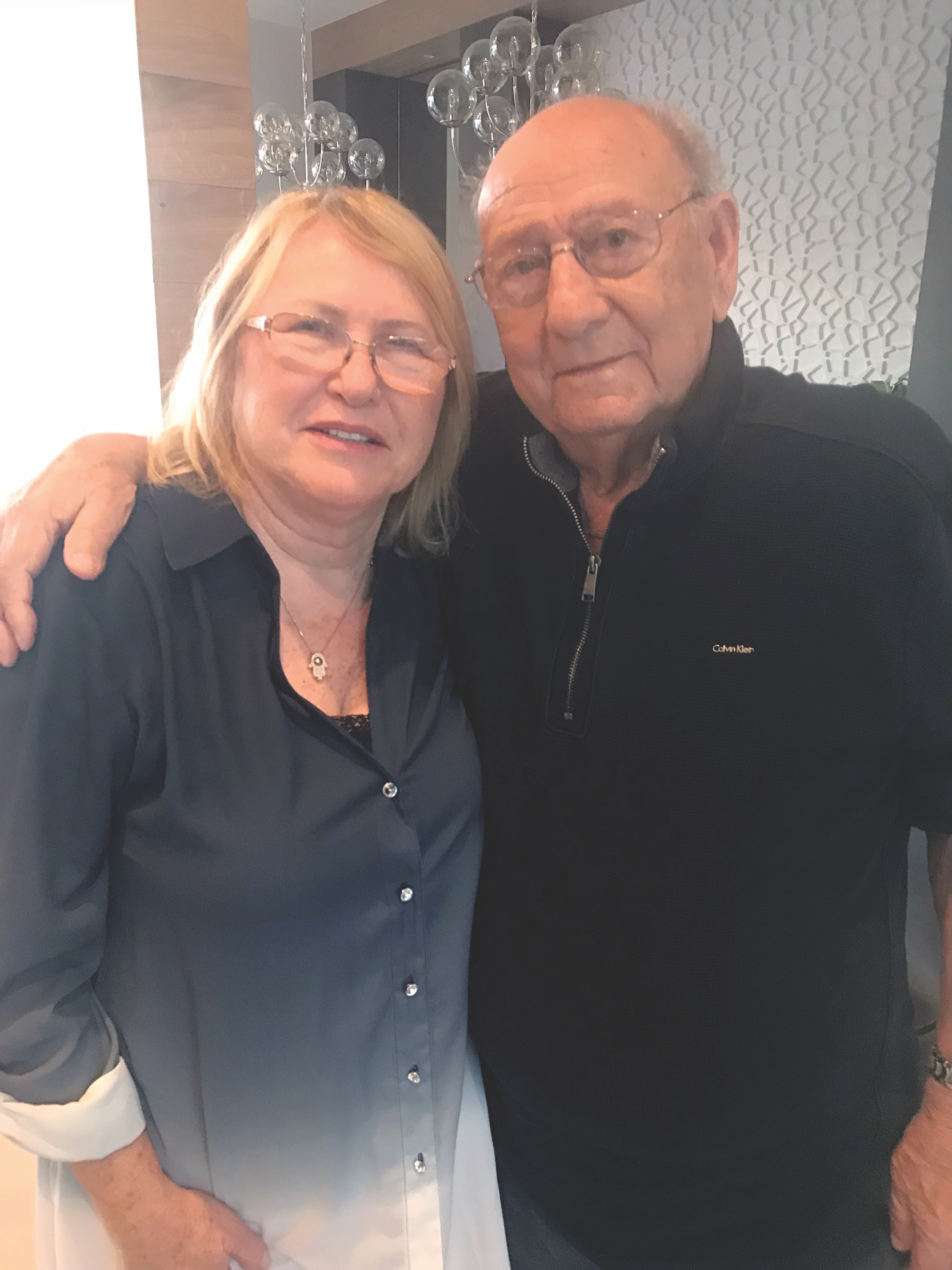
Holocaust survivor Itzhak (Ernie) Hacker and his wife, Niza, pose together at Zikaron Basalon, Hebrew for “Memories in the Living Room,” during which Hacker shared his story of survival. Photo by Ayala Or-El.

Itzhak (Ernie) Hacker, born in Austria in 1929, had a happy childhood until the day the Nazis invaded his small village and ordered the Jews to pack up and leave.

“I still can’t imagine how a government can be so cruel,” said Hacker, 89, his voice trembling some 70 years since the Holocaust took place. “It’s unimaginable.”

Hacker was one of a dozen survivors who shared their stories in private homes across Los Angeles on April 9, two days before Yom HaShoah (Holocaust Memorial Day), as part of the annual Zikaron Basalon (“Memories in the Living Room”) project.

Established eight years ago in Israel, Zikaron Basalon, which provides Holocaust survivors the opportunity to share their stories in intimate settings, has grown into an international event. This year in Los Angeles, Zikaron Basalon was organized by the Israeli-American Council and held in several locations, including at the Woodland Hills home of Rakefet and Arye Aharon, where 180 guests listened to Hacker’s story in the Aharons’ spacious living room.

“Once we had arrived in Auschwitz,” Hacker continued, “the doors were opened [to the freight-train cars] and the SS officers started barking at us: ‘Schnell! Schnell!’ [German for “Quickly!”] We were separated into two groups — in one, the men, and in the other, the women, young children and old people. One of the first things I noticed was the smoke coming out of the crematorium. At first, I had no idea what was the meaning of it, but after a couple of days, I’d realized that those were my brothers and sisters who were going up in smoke.”

Hacker, who lives in Tarzana with his wife, Niza, was a teenager during the Holocaust. His memories of Auschwitz include a tattooed man who was murdered because an SS officer’s wife had taken a liking to his tattoo and wanted to use his skin for a new purse, and another man who tried to escape and had his testicles cut off as punishment.

Hacker also remembered acts of kindness in a place where humanity had ceased to exist.

“I was very thin and weak, but I missed my mom so much,” he recalled. “I wanted to see her and let her know I was still alive. So I wrote a note and walked to the fence, which separated the two blocks between the women and men sections. At the fence, I saw a Hungarian woman. I asked her if she knew where my mother was, but she shook her head. Still, I threw the note to her so she could give it to my mom. She picked it up and then took something out of her pocket and threw it toward me. It was a small piece of bread. If you gave me today $1 million, it wouldn’t mean as much to me. I asked her for her name and she said, ‘Agnes Genz Fried.’ I have never forgotten it.”

Ayala Or-El, Contributing Writer

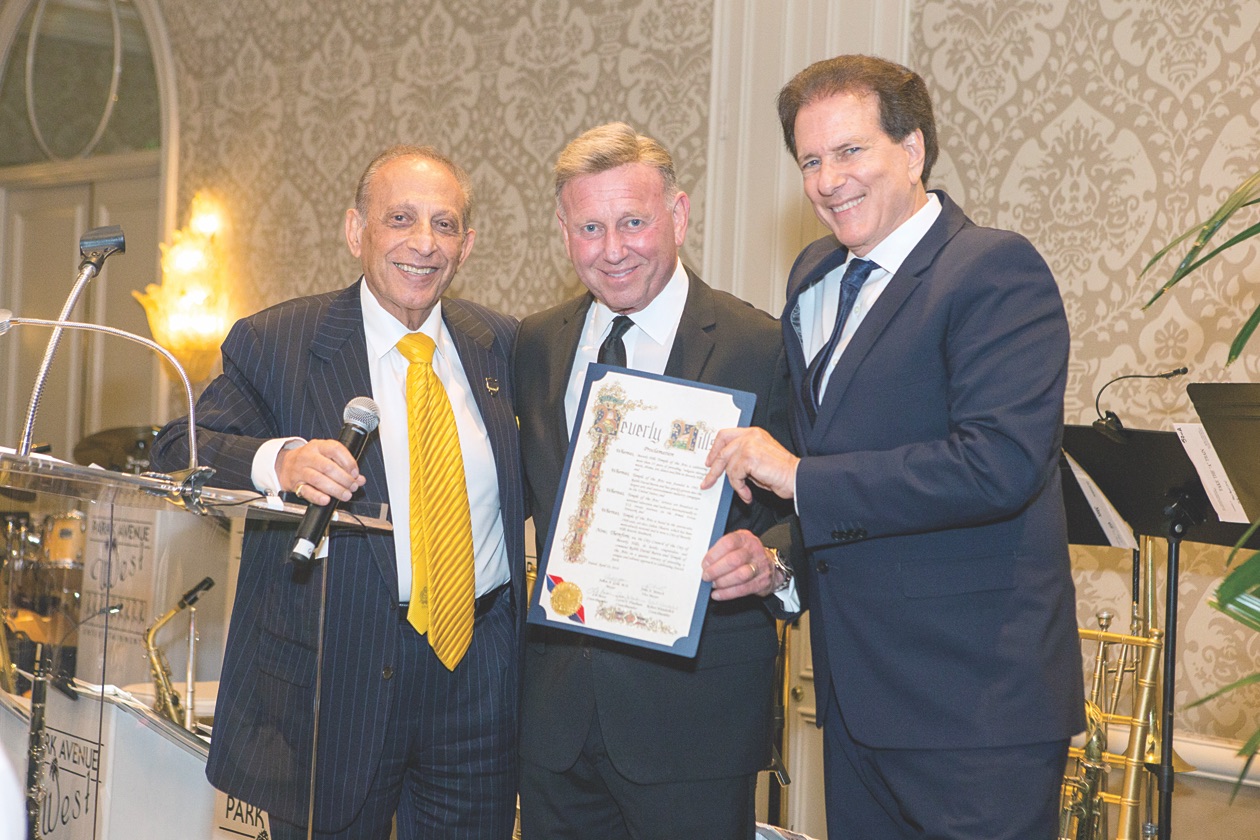
From left: Former Beverly Hills Mayor Jimmy Delshad, Temple of the Arts Board President James Blatt and Temple of the Arts Founding Rabbi David Baron attend the Temple of the Arts 25th anniversary fundraising dinner. Photo courtesy of Temple of the Arts.

Beverly Hills Temple of the Arts honored its founders and board of directors at an April 10 fundraising dinner, which also celebrated the synagogue’s 25th anniversary.

The evening at the Four Seasons hotel in Beverly Hills recognized Temple of the Arts’ founding rabbi, Rabbi David Baron, as well as the 10 members of the synagogue’s board of directors and the 10 members of the board of the Beverly Hills Performing Arts Center, both of which operate out of the Saban Theatre in Beverly Hills.

“We had a very successful event,” Baron said. “We exceeded our target goal by 20 percent, which is always great, and we had a great celebration.”

Beverly and Robert Cohen, owners of the Four Seasons, chaired the gala, which drew about 190 guests. Among those in attendance were Burt and Mary Hart Sugarman, who dedicated the synagogue’s new dressing room and green room; former Beverly Hills Mayor Jimmy Delshad, who presented the synagogue with a proclamation on behalf of the city of Beverly Hills; and Temple of the Arts President James Blatt, who presented the honorees with their awards.

Temple of the Arts was founded in 1992 with 50 members. Today, the synagogue has 1,400 members and continues its mission of connecting people to Judaism through music, drama, arts, dance and film, Baron said.

“We are an address for those who relate to art and religion, but we’re not conventional denominational Jews,” Baron said. “I feel we have carved out that niche.”

The synagogue purchased the Saban Theatre, an art deco building and a Beverly Hills historic landmark, in November 2005.

“By owning and operating our own venue, which is a historic theater, we are able to attract that part of the community,” Baron said. “That’s very gratifying.”

Temple of the Arts plans to open a preschool in a building it purchased recently on South Hamilton Drive, behind the Saban Theatre. The preschool is scheduled to open in September 2019 and is expected to serve about 60 children, Baron said.

The synagogue is in the process of searching for an assistant rabbi whose responsibilities will include working in the preschool, he said.

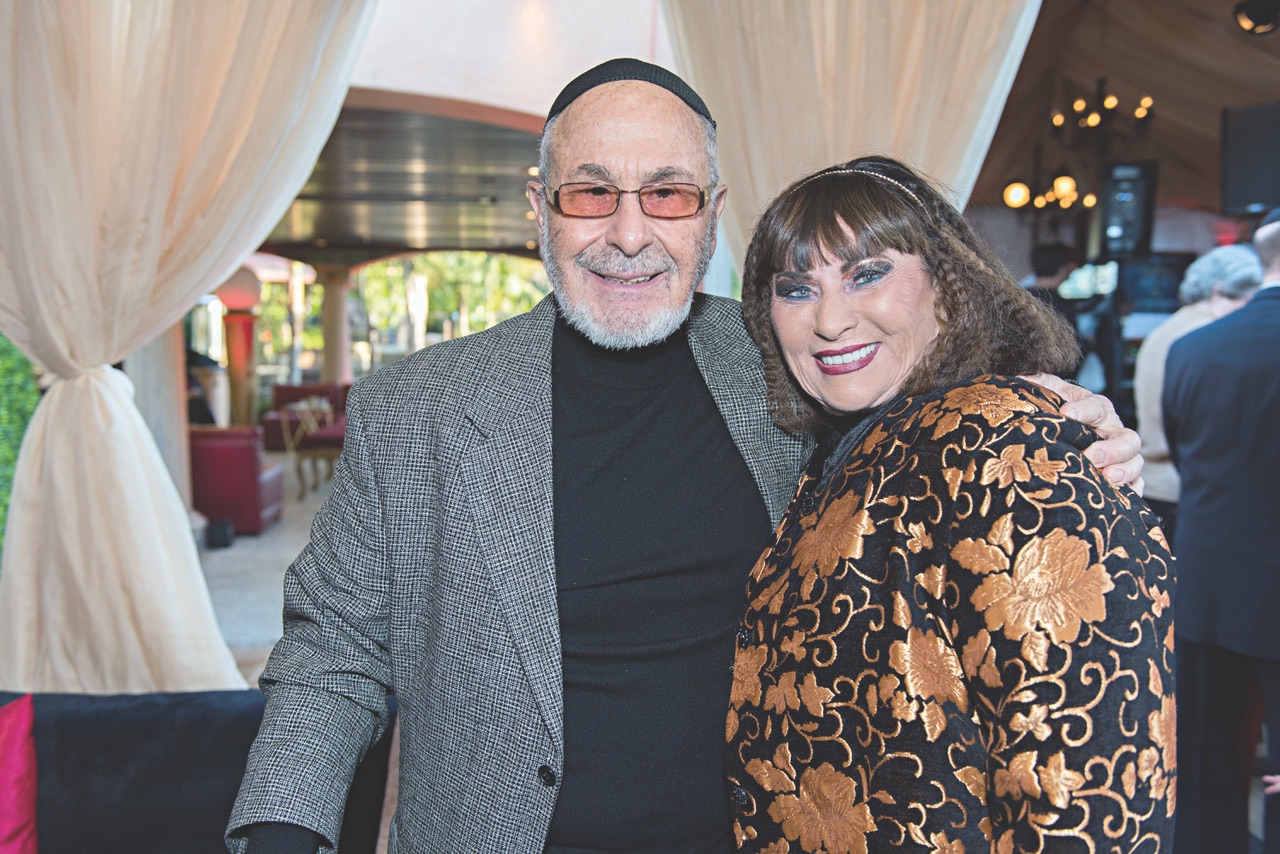
Allen and Deanna Alevy. Photo courtesy of Bnei Akiva Los Angeles.

Religious Zionist youth movement Bnei Akiva of Los Angeles has renamed its Modern Orthodox Zionist camp in Running Springs, Calif.

The new name, Moshava Alevy, became effective April 9. The camp was previously known as Moshava California, and before that as Moshava Malibu.

The renaming is “in gratitude to the generosity of Mr. Allen and Mrs. Deanna Alevy … in memory of their parents Norton and Sylvia Alevy,” the organization stated on its website.

Allen Alevy is an entrepreneur, futures trader and real estate investor who has provided funds to a variety of Jewish causes designed to strengthen Jewish connection, identity and longevity.

When the camp was launched in 2013, in partnership with the Shalom Institute, a nondenominational organization in Malibu, Bnei Akiva named its camp Moshava Malibu. When Bnei Akiva acquired its own site in Running Springs in 2014, it renamed the camp Moshava California.

The name change marks a new chapter for the camp and for Bnei Akiva, which, operating in the United States and Canada, is the self-described “premier religious Zionist youth movement dedicated to growing generations of Jews committed to building a society devoted to Torah and the Jewish people in the State of Israel.”

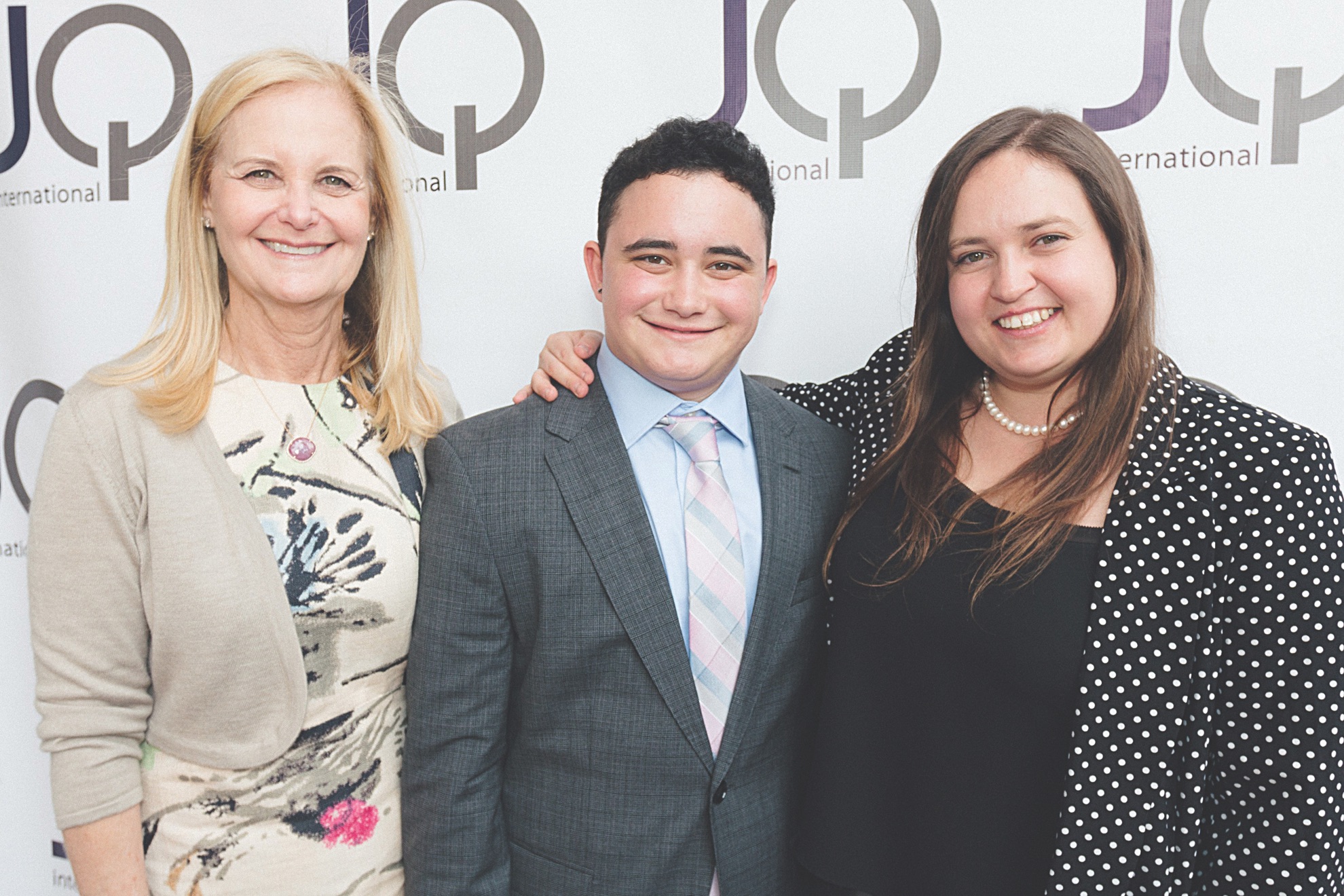
From left: JQ International honored (from left) Lynn Bider, Jacob Hofheimer and Maria Shtabsakya during its 2018 JQ Awards Garden Brunch. Photo by Anna Falzetta.

The 2018 JQ Awards Garden Brunch was held on April 15 at the Beverly Hills home of Dr. Jamshid Maddahi and Angela Maddahi.

JQ honored philanthropist Lynn Bider with the Community Leadership Award; Jacob Hofheimer, JQ’s first teenage and transgender honoree, with the Trailblazer Award; and Maria Shtabsakya, an LGBTQ leader and wealth management adviser, with the Inspiration Award.

The gathering, JQ International’s signature event, honored the work of prestigious LGBTQ and ally Jews in Southern California.

Other attendees included JQ Executive Director and Co-Founder Asher Gellis, JQ Assistant Director Arya Marvazy, and JQ board member Todd Shotz.

JQ International, which operates a variety of programs and services for the LGBTQ community, holds inclusion training for institutions, conducts workshops, runs a speakers bureau, has a Jewish Queer Straight Alliance for teens across Los Angeles, operates a JQ Helpline, and more.

Comedian Dana Goldberg served as host for the event, which drew 250 people and raised more than $140,000.

Moving & Shaking: Holocaust Memories; Temple of the Arts Bash Read More »

Letters to the Editor: Poland Holocaust Law, Gaza Border, and Israelis in the Diaspora

Poland Holocaust Law

The letter to the editor about Poland’s recently passed Holocaust law could not have been written by a grown-up (Letters to the Editor, April 13).

It had to have been written by a child who was raised on lies and wrong information.

Claiming that the Polish underground was the largest anti-Nazi underground army in Europe is laughable.

There are still a few of us around, so you can’t make up history to suit you.

You need to be honest and speak the truth or don’t speak at all.

Ella Mandel, Polish Holocaust survivor, Los Angeles


Gaza Border Unrest

Kudos to David Suissa for exposing the hypocrisy of the Gaza “protests” (“When Truth Comes Marching In,” April 13). His most powerful point was quoting Ben-Dror Yemini’s observation that the Palestinian marchers chanted “Khaybar Khaybar ya yahud.”  This war cry relates not to the current State of Israel but to the seventh-century ethnic cleansing of the two Jewish tribes in Medina by Mohammad’s army. Those slaughtered Jews were not living in current-day Israel but in ancient Saudi Arabia — thus exposing the virulent anti-Jewish hatred from Islam’s earliest history. This same “Khaybar” chant was sung eight years ago in the Turkish flotilla as it approached Gaza.

Hamas made a fatal miscalculation more than a decade ago. Despite being offshoots of the Sunni/Wahabi, Muslim Brotherhood, al-Qaida and ISIS axis, Hamas switched allegiance to Shiite Iran, prompting Saudi Arabia and the Sunni Gulf states to abandon them. Recently Israel, with the assistance of its former enemy Egypt, destroyed much of Hamas’ tunnel infrastructure, leading inevitably to the violent protests we are witnessing today.

Richard Friedman, Culver City


Israelis in the Diaspora

This is another in a long line of letters disputing wild, unsourced journalistic estimates of Israelis living in the Diaspora, which Danielle Berrin has repeated as “more than 1 million” (“Wandering Israelis,” April 13).

The most trusted demographic estimate done by Pew Research in 2010 was 230,000 Jewish emigrants from Israel living in other countries, with the most, 110,000 in the U.S. This aligns with my 1982 published estimates for Israeli emigrants in the U.S. and about my estimate of 25,000 living in and around Los Angeles.

Fun fact: Using Berrin’s source data from the Israel Bureau of Central Statistics about 2.2 million flying abroad in a six-month period, and the U.S. nonimmigrant Israeli entry estimates for roughly the same period, fewer than 1 in 10 Israeli tourist flyers eventually landed in the U.S. As we are all learning, visiting or immigrating to the U.S. is a pain.

While the Los Angeles Israeli community has become much more organized, now raising tens of millions of dollars yearly through the Israeli-American Council (IAC), in the 36 years since a realistic estimate of numbers has been published, I have not found any evidence that the number of Israelis has changed substantially from being about 1/20th of the Los Angeles Jewish community.

Pini Herman, Beverly Grove


Israeli Salad Gets Thumbs Up

Loved the article about Israeli salad by Yamit Behar Wood (“Why I Will Eat an Israeli Salad on Yom HaAtzmaut,” April 13).

I love serving it at every Jewish affair. It just speaks to me and tells me to celebrate and be grateful to be able to celebrate and be grateful to be alive.

Phyllis Steinberg via email

What a delightful, wonderful essay. You took your readers right along on part of the wonderful ride your life has been (so far), and we enjoyed both cultures as you described them and their impact on your growing years.

Miriam Fishman via email


New, Improved Journal

First, allow me to add my praise to those of other readers who commend the Journal for avoiding the need to turn pages to continue reading your columns. It is a great convenience — and much appreciated. As we age (I am 91), our fingers become less dexterous and it is harder to turn the pages to continue reading a particular article.
More important, your articles are of much greater interest to me and, I am sure, other readers. This includes articles of a broad range of interests, such as (in the April 13  issue):

1) “Adam Milstein: Promoter of Israeliness.” I wept as I read it. He is a brilliant and great leader.

2) “Israeli Taekwondo Program Has Local Source.” As a result, I am going to ask the director of the JFS Freda Mohr Multipurpose Senior Center to provide our community with a special event to meet and talk to Lois and Richard Gunther, in honor of whom the new JFS three-story building will be named.

3) “How to Tie Shoelaces Into a Star of David.” I followed the steps on paper, and will now try it for real.

George Epstein via email


Memories of the Holocaust

Writer Thane Rosenbaum appears to hedge on the ultimate reason for remembering the Holocaust (“What’s Left to Say?” April 6). Is the continuing scourge of anti-Semitism or the “moral mystery” of the Holocaust the principal cause of its refusal to stop haunting our minds and hearts? A bit of both? If anti-Semitism disappeared forever, instead of just moving from dormancy to flare-up, the Holocaust would weigh even more heavily on the memory and conscience of mankind.

The Shoah was a catastrophe for the Jewish people, a cataclysm from which recovery is gradual at best. There are only 2 million more Jews in the world than existed in 1939, and this is despite the miraculous growth of Israel and the impressive birth rate of Orthodox Jewry in the United States.

The life force is with us, but the Holocaust is in our genes.

And as for the non-Jewish world, the eradication of anti-Semitism and the marginalization of the Jews would make the Holocaust such an embarrassment to the modern world’s sense of its humanity that all of its accomplishments in science, technology and medical cures would seem incidental to a fundamental flaw in its moral compass.

Peter Brier, Altadena

An essential part of what should be commemorated on Yom HaShoah is the extraordinary courage and dignity shown by Jews living in hopeless conditions in terrifying times. “Zog Nit Keinmol” (Song of the Partisans) should be part of any commemorative program, along with a few words about poet Hirsh Glick.

While imprisoned in the Vilna Ghetto, Glick was inspired to write these strong, deeply moving lyrics when he heard about the Warsaw Ghetto uprising. Glick escaped the Vilna ghetto when it was liquidated in October 1943, but was recaptured and sent to a concentration camp in Estonia, from which he escaped in 1944. He was 22 years old and was never heard from again.

Here are the words of the young poet’s masterpiece (unknown translator):

Never say that there is only death for you,
Though leaden skies may be concealing days of
blue.

Because the hour we have hungered for is near,
Beneath our tread the earth shall tremble: we
are here!

From lands so green with palms to lands all
white with snow.

We shall be coming with our anguish and our
woe,
And where a spurt of our blood fell on the earth,
There our courage and our spirit have rebirth!

The early morning sun will brighten our day,
And yesterday with our foe will fade away,
But if the sun delays and in the east remains,
This song as motto generations must remain.

This song was written with our blood and not
with lead,
It’s not a little tune that birds sing overhead,
This song a people sang amid collapsing walls,
With pistols in hand they heeded to the call.

So never say that there is only death for you,
Though leaden skies may be concealing days of
blue.
Because the hour we have hungered for is near,
Beneath our tread the earth shall tremble: we
are here!

Julia Lutch via email

Letters to the Editor: Poland Holocaust Law, Gaza Border, and Israelis in the Diaspora Read More »