A video released from the Broward County Sheriff’s office shows then-Deputy Scot Peterson standing around and doing nothing as the shooting at Majorie Douglas High School was ongoing.
The 27-minute long video, taken from a camera on campus, shows Peterson running to a position outside the building where the shooting occurred, and just stayed there while brandishing his gun.
Audio is not included in the video, but the Broward County Sheriff’s office released recordings of radio dispatches last week revealing that Peterson clearly stating that the gunshots were occurring inside and that officers should not go inside.
The sheriff’s office issued a statement that read, “The video speaks for itself. His actions were enough to warrant an internal affairs investigation, as requested by Sheriff Scott Israel on Feb. 21. After being suspended without pay, Peterson chose to resign and immediately retired rather than face possible termination.”
Peterson’s attorney did not answer a request for comment from The Washington Post.
Judicial Watch obtained documents detailing the Broward County Sheriff Office’s training procedures, and they state that in the event of a mass shooting, “the first officer or two officers on scene will immediately go to confront the shooter.”
Should four officers be present, they need to form a “diamond formation” and confront the shooter.
“With the quad, the first four officers to respond entered the building with coverage in all directions,” the documents state. “This was critical to address the concerns of officers who previously would not enter and just wait for SWAT.”
The procedures also emphasized that “time was critical” and that the shooter should be confronted as soon as possible.
Including Peterson, there were indeed four officers present at the shooting, and Peterson told them not to enter the building.
A bridge that was just recently erected in Miami collapsed on Mar. 15, resulting in the deaths of numerous people.
The pedestrian bridge connected Florida International University (FIU) and Sweetwater, a city in the Miami-Dade area, and permanently put into place on Mar. 10, although it had not officially opened. The collapse occurred at around 1:30 pm EST, trapping eight vehicles and sending eight people to the hospital. One person was in a coma and another suffered from cardiac arrest.
The official number of deaths has not yet been released, but multiple reports suggest that there were several deaths from the collapsed bridge.
It is not yet known what caused the bridge to collapse.
“Causes of what occurred here today…we will not speak to that right now, and it’ll probably be days before we can even make that assumption,” Miami-Dade Police Director Juan Perez told reporters.
The $14.2 million bridge was funded by a $19 million grant to FIU from the Department of Transportation. It was built by FGG Bridge Engineers and Munilla Construction Management through “Accelerated Bridge Construction” that caused the bridge to installed in six hours and lessening the negative impact on traffic.
Both companies released statements expressing their condolences to the victims and pledged to cooperate with investigations into the collapse. Munilla said they would be launching their own investigation to determine what went wrong.
White House Press Secretary Sarah Sanders said that President Trump would provide the necessary resources to the Miami-Dade area to handle the collapse of the bridge.
They knock the head of strangers you pass on the street, tie up the use of one hand so you can’t hold anything else (you dog walkers know what I’m talking about) and after it stops raining, you’re stuck with a dripping mess. Give me a baseball cap and a raincoat any day.
I do like this springtime umbrella floral bouquet, though. It hangs on a front door to give visitors a cheery welcome. And because the umbrella is closed, it won’t poke anyone’s eye out.
What you’ll need:
Umbrella
Artificial flowers
Ribbon
1.
1. Find a small umbrella, preferably with a hook handle. Children’s umbrellas are ideal for this arrangement because they come in bright colors and their size is more suitable for a front door.
2.
2. In the fabric flaps between the spokes of the umbrella, insert bunches of artificial flowers. I bought the ones in this example from a 99 Cents Only store.
3.
3. Tie a ribbon around the umbrella to close it. The ribbon also secures the stems of the flowers so they won’t fall out. Then hang it on the door with a nail or a removable 3M Command hook that won’t damage the paint.
Gary Zola, executive director at the Jacob Rader Marcus Center of the American Jewish Archives, discusses “George Washington, Jews and the Story of Religious Freedom in America.” Zola is a celebrated historian and ordained rabbi who served under President Barack Obama on the Commission for the Preservation of American Heritage Abroad. 6-7:30 p.m. Free. Wilshire Boulevard Temple, Irmas Campus, 11661 W. Olympic Blvd., Los Angeles. (213) 388-2401. wbtla.org.
SAT MARCH 17
INFERTILITY AWARENESS SHABBAT
The third annual Infertility Awareness Shabbat raises awareness and sensitivity about infertility and unites Jews over a cause that affects 1 in 8 men and women throughout the Jewish community. Participating local synagogues — including Beth Jacob Congregation, IKAR, Pico Shul, Kehillat Israel, Congregation Mogen David, Congregation Shaarei Tefila, Temple Beth Am and Adas Torah — partner with Yesh Tikva, a Beverly Hills-based Jewish fertility community, to share a message or a dvar Torah for those who have not been blessed with children or struggle to expand their families. For more information, visit yeshtikva.org/infertility-awareness-shabbat-2018.
“ISRAEL-U.S. RELATIONS IN AN UNSTABLE WORLD”
Danny Ayalon
Former Israeli ambassador to the United States Danny Ayalon discusses the importance of the Israel-U.S. relationship in an increasingly unpredictable geopolitical landscape. Ayalon appears at the Beverly Hills Jewish Community following Saturday morning services. 9:30 a.m., Shabbat service; 11:30 a.m., lecture. Free. Beverly Hills Hotel, 9641 Sunset Blvd., Beverly Hills. (310) 276-4246. beverlyhillsjc.org.
RABBI MARC ANGEL
Rabbi Marc Angel
Rabbi Marc Angel, an advocate for classical Sephardic Judaism, author of 36
books and founder of jewishideas.org, discusses “Sephardic/Middle Eastern Jewish Voices: Addressing Contemporary Issues,” following Saturday services and a
Kiddush lunch. 8:30 a.m.-noon, Shabbat services; noon, Kiddush and lecture. Free. Sephardic Temple Tifereth Israel, 10500 Wilshire Blvd., Los Angeles. (310) 475-7000. sephardictemple.org.
SUN MARCH 18
OPIUM MOON
Opium Moon
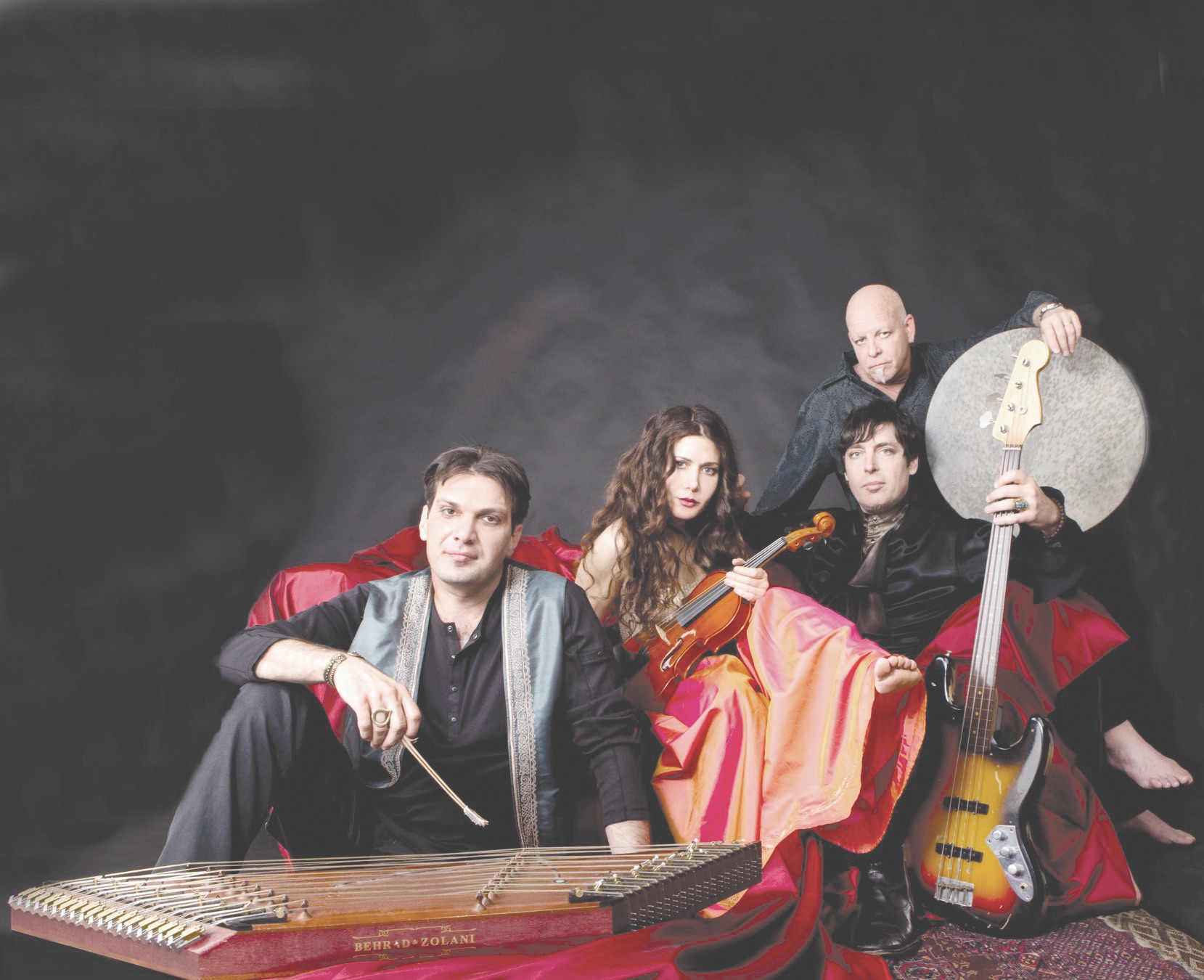
Master musicians Lili Haydn on violin and vocals, Hamid Saeidi on santoor (a Persian hammered dulcimer), MB Gordy on ancient percussion and Itai Disraeli on dub bass perform a family-friendly world music concert uniting musicians from Israel and Iran. American performance painter Norton Wisdom also appears. 7 p.m. $20. Temple Israel of Hollywood, 7300 Hollywood Blvd., Los Angeles. (323) 876-8330. tioh.org/arts.
NEFESH B’NEFESH ALIYAH FAIR
The 10th annual Nefesh B’Nefesh Aliyah Fair features workshops, lectures and personal consultations for those interested in making aliyah. Young professionals, retirees, married couples and singles enjoy this one-stop shop for all of their aliyah needs. Speakers offer professional guidance on a wide range of topics, including financial planning and budgeting for aliyah, choosing a community, how to build a strategic job search plan, navigating the health care system, the ins and outs of buying or renting a home in Israel, and more. 10 a.m., retirees and empty nesters; 11:30 a.m., general programming; 1 p.m., students and young professionals. Free. Shalhevet High School, 910 S. Fairfax Ave., Los Angeles. nbn.org.il/la2018.
TEHRANGELES 2018
The Iranian American Jewish organization 30 Years After redefines politics for the Iranian Jewish community during this daytime gathering at a private Beverly Hills home. Attendees enjoy a kosher brunch with mimosas as they explore what it means to be political in today’s dynamic and unpredictable times. U.S. Rep. Nanette Barragán (D-San Pedro) and state Sen. Henry Stern (D-Canoga Park) are the guest speakers. 10:30 a.m.-1:30 p.m. $25, early bird; $40, general. Address provided upon RSVP. 30yearsafter.org.
ALL ABILITIES FAIR
Join the Malibu Jewish Center and Synagogue for a family-friendly day serving people of all ages and abilities. Games, art, music, dance, resource tables and community service projects highlight the event, along with performances by The Miracle Project vocalists, the Kolot Tikvah Choir and two integrated wheelchair dance companies, Limitless and Infinite Flow. Noon-3:30 p.m. Free. Malibu Jewish Center and Synagogue, 24855 Pacific Coast Highway, Malibu. (310) 456-2178. mjcs.org.
GEORGE MITCHELL: “IMMIGRATION IN AMERICA”
Former U.S. Senate majority leader and U.S. special envoy to the Middle East George Mitchell discusses “Bans, Walls and Dreamers: Immigration in America.” Organized by Jews United for Democracy and Justice, a cross-section of L.A. Jewry. 7-9 p.m. Free. Leo Baeck Temple, 1300 N. Sepulveda Blvd., Los Angeles. leobaecktemple.org.
MON MARCH 19
“CUBA’S FORGOTTEN JEWELS: A HAVEN IN HAVANA”
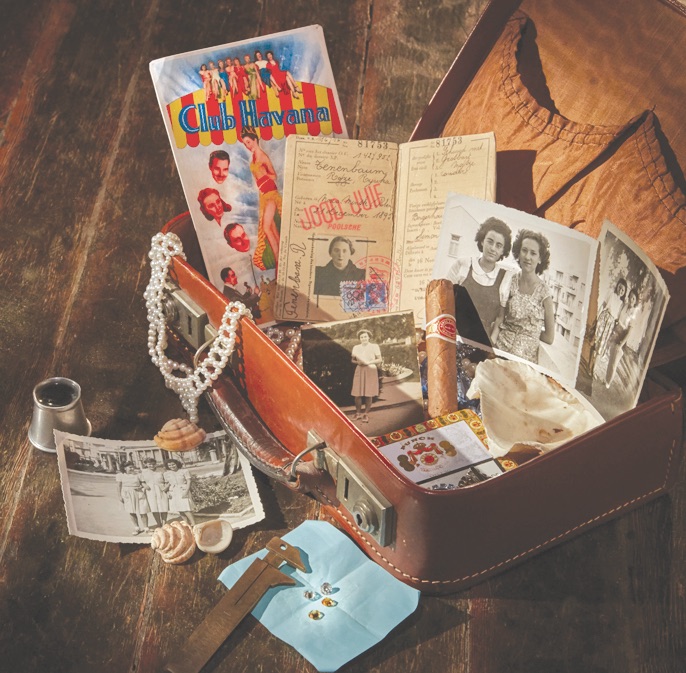
In the 1940s, Cuba admitted more than 6,000 Jewish refugees from Europe, including hundreds of skilled diamond cutters and their families, who turned the tropical island into one of the world’s major diamond-cutting centers for years. A new documentary, “Cuba’s Forgotten Jewels: A Haven in Havana,” features the personal accounts of some of those refugees, who recall their escape to Havana and the challenges they faced in an exotic and unfamiliar land. The 46-minute film has a soundtrack of Cuban and Jewish music. It is accompanied by “Bound for Nowhere: The St. Louis Episode,” a nine-minute short chronicling the ill-fated attempt in 1939 to save some 900 Jews, including 200 children, sailing from Europe aboard the German ocean liner MS St. Louis. Both Cuba and the United States refused to let the passengers disembark and the ship returned to Europe, where subsequently many of the refugees perished in the Holocaust. The two films will play in tandem at 7:30 p.m. at Laemmle’s Playhouse, Royal, Town Center and Claremont theaters. The same program will be repeated at 1 p.m. on March 20 at the same theaters. March 19: 7:30 p.m. $16, adults; $13, seniors, children. Playhouse 7, 673 E. Colorado Blvd., Pasadena. Royal, 11523 Santa Monica Blvd., Santa Monica. Town Center 5, 17200 Ventura Blvd., Encino. Claremont 5, 450 W. Second St., Claremont. March 20: 1 p.m. $12, adults; $9, seniors, children. Same theaters. (310) 478-3836. laemmle.com.
TUE MARCH 20
L.A. RABBIS TEACH
Rabbi Daniel Bouskila, director of the Sephardic Educational Center, discusses “Voices from the East: Exploring the World of Sephardic Judaism.” He appears as part of a study series featuring five outstanding Los Angeles rabbis. The series concludes May 14 with Wilshire Boulevard Temple Senior Rabbi Steve Leder, who will examine “A Jewish View on Suffering and Transformation.” Bouskila’s lecture, 7:30-8:45 p.m., $10. Wilshire Boulevard Temple, 11611 W. Olympic Blvd., Los Angeles. (213) 388-2401. wbtla.org.
THU MARCH 22
*L.A. JEWS FOR REFUGEES ASSEMBLY
A coalition of Jewish congregations and organizations and the refugee assistance agency HIAS come together for this communitywide assembly. The event opens with an organizational fair featuring local and national refugee assistance organizations connecting participants to volunteer opportunities, advocacy initiatives and other ways to take action. Food cooked by refugees involved with Miry’s List, which aids newly arrived refugees, will be available. Students in grades 10-12 will have the opportunity to learn about voting from a Camp Gilboa representative. Elected officials, refugee speakers, policy experts and community leaders will address the assembly on policy updates, stories, ways to get involved and more. ID required. 6 p.m., food and information fair; 7 p.m., speakers. Free. Temple Beth Am, 1039 S. La Cienega Blvd., Los Angeles. (310) 652-7353. hias.org/events/la-jews-refugees-assembly.
MULTIFAITH FORUM
A Los Angeles Police Department multifaith conversation addresses emerging community issues impacting the San Fernando Valley. Guest speakers are LAPD Counterterrorism Deputy Chief Horace Frank; Arik Greenberg, founder of the Institute for Religious Tolerance, Peace and Justice; and Elena Meloni, founder and executive director of the New Star Family Justice Center. Valley Beth Shalom Rabbi Noah Farkas delivers the invocation. Command staff of the San Fernando Valley LAPD will remain after the meeting to answer attendees’ questions. 6-8 p.m. Free. Valley Beth Shalom, 15739 Ventura Blvd., Encino. (818) 644-8140. ovbcomm@lapd.online.
NELL SCOVELL
Nell Scovell
In her new memoir, “Just the Funny Parts … And a Few Hard Truths About Sneaking into the Hollywood Boys’ Club,” television writer Nell Scovell delivers an insider’s account of working in the male-dominated writers’ rooms of “Late Night with David Letterman,” “The Simpsons” and other shows. She discusses her book with her colleagues Conan O’Brien and writer, producer and director Greg Daniels (“King of the Hill,” “The Office”). 8 p.m. $20. Skirball Cultural Center, 2701 N. Sepulveda Blvd., Los Angeles. writersblocpresents.com.
FRI MARCH 23
JNF BREAKFAST SIGNUP DEADLINE
Alon Ben-Gurion, grandson of Israel’s first prime minister, David Ben-Gurion, will be the guest speaker at the Jewish National Fund Breakfast for Israel, the theme of which is “Our History, Our Heritage, Our Homeland.” Ben-Gurion will speak about his hospitality consulting work, which includes using his extensive know-how and professional network to promote development in the Negev, working to realize his grandfather’s dream of making the desert bloom. Event registration deadline is March 23. The breakfast will take place on March 28, 7:30-9 a.m. Free; RSVP required. Warner Center Marriott, 21850 Oxnard St., Woodland Hills. (323) 964-1400, ext. 953. jnf.org.
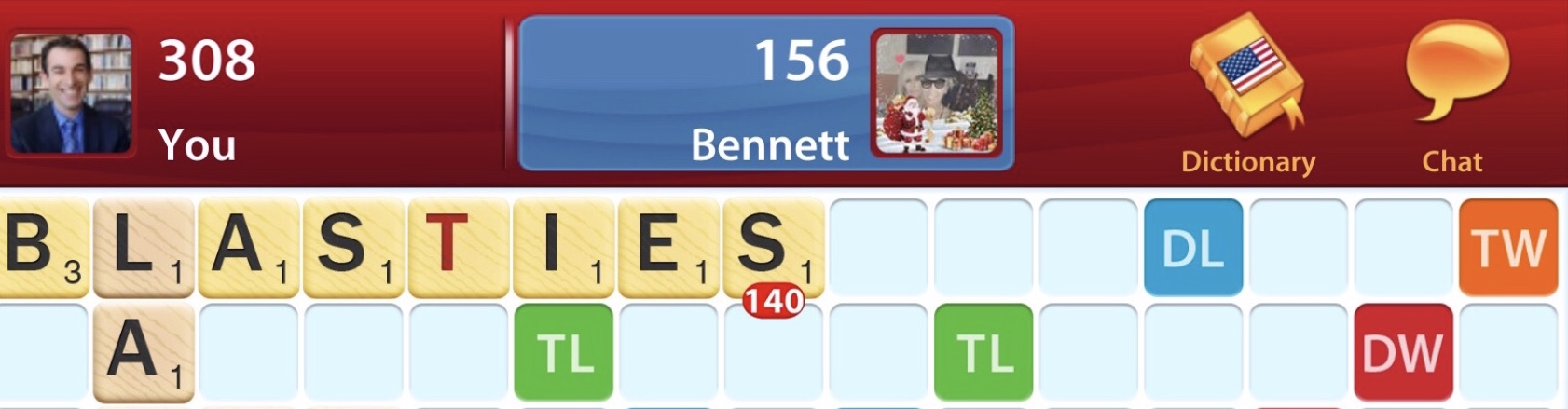
“Blasties.” It earned me 140 points in Scrabble. I had to look the meaning up: “wretched creatures.” Playing that word boosted my score. It made a difference. And it made me think a lot about life.
In the 18th century, the Chassidic Master, the Baal Shem Tov, taught that each person is allotted a fixed number of words, determined from birth. Once we use up our quota, we must depart from the world.
We don’t have to agree with the teaching. But it still gives us pause. Are we using our words wisely? Do we take to heart that our words matter? Knowledge includes having a good vocabulary. But wisdom is about understanding how to speak, when to speak, and what to say.
I ended up losing the Scrabble game! But for a moment in time, I chose a word that made a difference. Now, it’s once thing to do that in a game. The real question is: what word will we use today that make a difference in life?
With love and shalom,
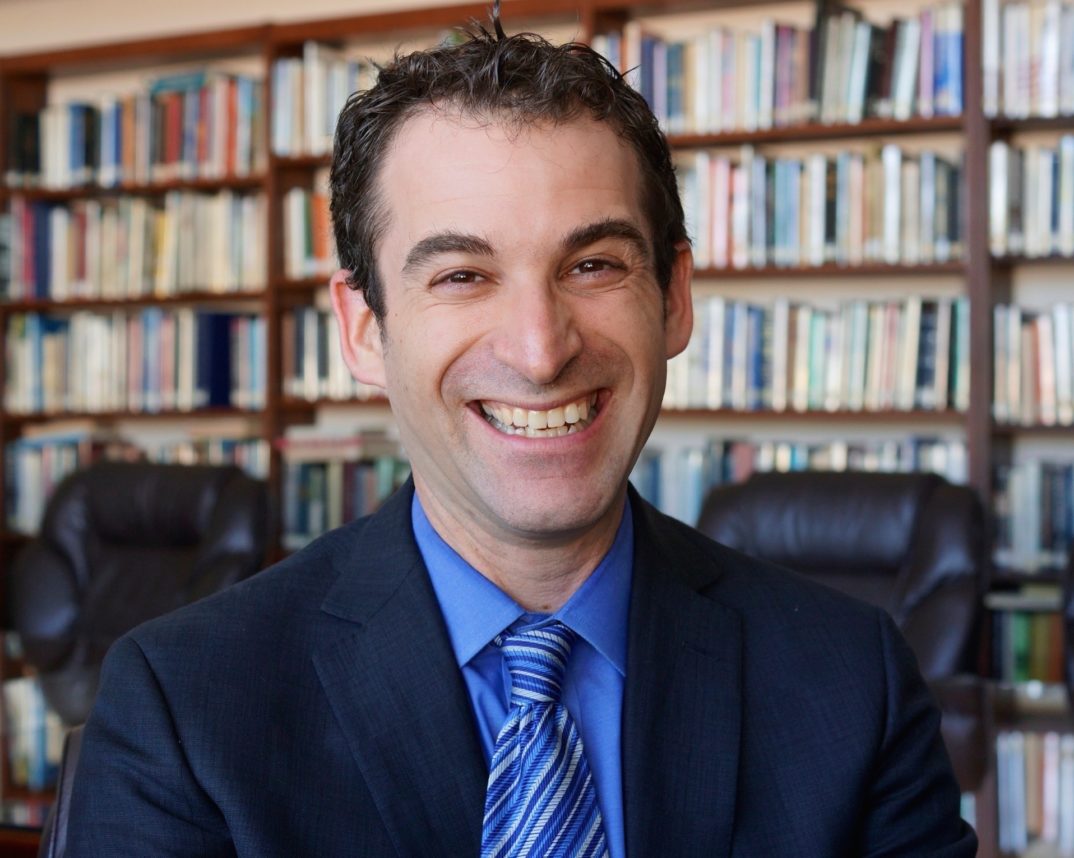
Rabbi Zach Shapiro
Rabbi Zach Shapiro
A change in perspective can shift the focus of our day – and even our lives. We have an opportunity to harness “a moment in time,” allowing our souls to be both grounded and lifted. This blog shows how the simplest of daily experiences can become the most meaningful of life’s blessings. All it takes is a moment in time.
Rabbi Zach Shapiro is the Spiritual Leader of Temple Akiba, a Reform Jewish Congregation in Culver City, CA. He earned his B.A. in Spanish from Colby College in 1992, and his M.A.H.L. from HUC-JIR in 1996. He was ordained from HUC-JIR – Cincinnati, in 1997.
“The Lord called to Moses and spoke to him from the Tent of Meeting, saying: ‘Speak to the Israelite people, and say to them: “When any of you presents an offering of cattle to the Lord, he shall choose his offering from the herd or from the flock.’”
Rabbi Rachel Shere Adat Shalom Synagogue, Farmington Hills, Mich.
Last year, these words were chanted at our synagogue by a bat mitzvah girl named Shayla. The name Shayla means “question,” and when she was born nearly five months early, the doctors had a lot of questions about her ability to thrive.
The first word of the parsha, Vayikra, is written with an aleph ze’irah. A tiny letter aleph; the diminutive nature of the letter draws attention to the difference between the word with an aleph, vayikra, and without the aleph, vayikar. Without the aleph, the word denotes randomness. With the aleph, it denotes God’s will.
When Shayla was born, her parents asked me, “Rabbi, is this the will of God?” At the time, I reassured them that Shayla’s challenges were not the will of God and that, as Rabbi Harold Kushner famously explained, “Expecting the world to treat you fairly because you are a good person is like expecting the bull not to charge because you are a vegetarian.”
In the 14 years since, as I have watched Shayla’s irrepressible spirit embrace a world of doctor’s appointments, surgeries and unbelievable pain, the clear line I once drew between vayikra and vayikar seems less obvious. Shayla’s strength and bravery feel superhuman; her resilient spirit and luminous smile seem to come from a different world. Perhaps the aleph in vayikra is small not to highlight the difference between vayikra and vayikar, but to remind us that God has given humanity the tools we need to bridge the gap between the two words. For as Shayla said recently, the questions were never really about her, they were for her; and their answers, I believe, are evident in the radiance of her smile.
Rabbi Haim Ovadia Magen David Sephardic Congregation
Many Orthodox Jews believe that we will one day return to offering animal sacrifices. As a one-time vegetarian, I contend that the Torah tries to minimize and regulate the consumption of meat and that animal sacrifices belong in the past.
The prohibition of cooking meat with dairy is phrased as “do not cook a kid in its mother’s milk,” to say that the act of eating meat is cruel enough, and there is no need to add to it by cooking the animal in its life-giving liquid. The commandment in Leviticus 17:13 to cover the blood of a hunted animal can similarly be understood as telling the hunter that he has committed a crime and that he must cover it up.
While the annual number of public sacrifices at the temple hovered at around 1,300, the number would have been much greater if people had been allowed to build private altars and make their own sacrifices. The indication of what a future temple would look like is found in the words of the prophets. Isaiah and Micah, Samuel and Jeremiah, along with the book of Psalms all reject the idea of animal sacrifices. Isaiah calls on people to cleanse their hearts and mend their ways, while Micah sums it up succinctly in his final verses (6:6-8): With what should I please God? Sacrifices? Rams? Rivers of oil? If you ask what is good, and what it is that God wants from you, it is doing justice and loving kindness, and walking humbly with God.
Rabbi Jill Zimmerman The Jewish Mindfulness Network
As we enter this book filled with sacrifices, it’s easy to simply turn away. Yet we are encouraged to struggle each year with all the parts of Torah, even (especially) the ones that are difficult to connect to our personal lives today.
The first word, Vayikra (and God called), is enough to spend a lifetime pondering. Have you ever felt called? Was it a whisper for years that suddenly got louder? I was 43 when I began studying for my adult bat mitzvah. During that process, the love of serious Jewish study became more and more compelling. I could not ignore that call to dive deeply into Jewish wisdom — reading, studying, listening. Immersed and feeling led by an unknown but firm pull, I applied to rabbinical school. I could not know at the time the sacrifices our family would make as we left our settled, happy lives in Seattle because of answering this call. We left cherished friends, a home and garden we loved, beloved teachers and students and financial steadiness.
So, yes, every call that you respond to brings both joy and sacrifice. I listened. I’m grateful I did — and now my life itself is an offering. I’m here to say: Slow down. Get quiet. Listen. The Voice is calling out every moment of every day.
Rabbi Aryeh Markman Aish LA
How can we have a genuine God experience as Moses did? Why do we need it?
Our greatest need is self-worth. We have purpose. We matter. The greatest manifestation of that drive is connection to God. We pursue it, perhaps subconsciously, every moment we are alive. We cannot reach God by thinking in platitudes and performing man-made, feel-good activities. Rather, let’s decode the Torah and learn how.
The Torah is very sensitive to the proximity of verses. We begin a new book of the Torah, Leviticus, with God calling Moses from the Tent of Meeting. The Tent of Meeting (the Tabernacle in the desert) is a perfectly designed structure to empower each of us to encounter the Creator of the Universe.
The next line in the Torah says: If you want that Divine connection, bring an animal and sacrifice it in the Tent of Meeting, following a specific procedure without any deviation. Why an animal? Because we need to channel our animalistic desires by metaphorically slaughtering them. Only then can we enter into a pure spiritual realm.
Trying to understand how God created a path to him is like a two-dimensional stick figure trying to conceive of the three-dimensional animator who created it. It’s beyond us.
Currently, the entire sacrificial system is inoperable. But we can derive from it that if we consistently engage in the Torah that is available to us, we can have an ongoing authentic God experience. And that’s what life is about.
Rabbi Adam Kligfeld Temple Beth Am
Two alephs deserve inquiry. Most attention is focused on the miniature aleph at the end of Vayikra that some read as highlighting the often miniscule line between the intentional calling-out denoted by vayikra and the cold, arbitrary happenstance of vayikar, which is how it would read without the aleph. With the slightest of slights, with a whisper of cool, we can degrade intimacy to accident. And, in reverse, by offering just a bit more of our aleph, our ani /I , and being full witness to another’s, we can elevate randomness to sanctity.
Fewer commentators focus on the second aleph, which, according to the Netziv (19th-century Lithuania) converts the utilitarian preposition l’ to the more honoring invitation of el. This is one of only two times in the Torah that God calls out “toward Moshe” using this exact phrasing. Many other times, God calls “to”/l’ Moshe to beckon him to a place, to instruct him in a task, or to convey essential data. But only twice does God melt the innumerable layers of distance between them and draw him close, almost as if wooing him.
How much wooing and cooing is needed so that relationships endure? Psychologist John Gottman suggests that healthy bonds require five times as many positive interactions as negative ones. The Torah may be hinting at something less numerical and more subtle: Whenever you call to your beloved, child or friend … use your aleph, your infinitesimal-but-real spark, to witness theirs. A little intimacy is often enough. But don’t wait too long to do it again.
The work involved in commemorating the Shoah has evolved from collecting documents about the victims to telling the stories of the people behind those documents, a director of Yad Vashem recently told a Los Angeles luncheon gathering.
Haim Gertner, director of the Archives Division at Yad Vashem, spoke on the subject of “Does the Holocaust Matter Anymore?” at the March 7 event in the Brentwood office of the American Society for Yad Vashem (ASYV). The son of a Holocaust survivor, who holds a doctorate in modern Jewish history from Hebrew University of Jerusalem, Gertner discussed the museum’s efforts to identify, document and provide a name for every victim of the Holocaust.
“So today, instead of only having one piece of information about the death of someone, we are collecting all pieces of information,” he told the small gathering of ASYV staff members. “And by that, more and more, you have pieces that tell the life story of a person. It is a lively, ongoing project. Every month, we add tens of thousands of new entries of information.”
Gertner said that documenting the history of the Shoah in increasingly sophisticated ways — such as using innovative technology to sift through artifacts, data and photos to uncover names for the 1.5 million victims who remain unknown — becomes a greater part of the museum’s mission as the survivor generation dies off.
“In the post-survivor generation, we have to find ways to be relevant to younger people,” he said.
Two moral imperatives frame his work, he said: Collecting material from the Holocaust and sharing the findings with the world.
Attendees at the gathering included Michael Fisher, director of the American desk of the International Relations Division at Yad Vashem; Ron Meier, ASYV’s executive director; and Bill Bernstein, director of institutional advancement for the ASYV Western Region.
During a Q-and-A session following his presentation, Gertner was asked what can be done to address the uptick in Holocaust denial and the rise of anti-Semitism in Europe.
“This is one of the reasons why there is a necessity to use the historical case, this unique historical case of the Shoah, in order to be aware of the fact that things like that can happen,” he said.
Yad Vashem, based in Jerusalem, is Israel’s official memorial to the victims of the Holocaust. It draws more than 1 million visitors annually. Working with partners, the museum has “collected and recorded the names and biographical details of millions of victims of systematic anti-Jewish persecution during the Holocaust,” its website says.
To date, the museum has collected documentation on more than 4.5 million victims, accessible on a database on the museum website.
“The names of nearly one-and-a-half million victims remain unknown,” the website says, “and time is running out.”
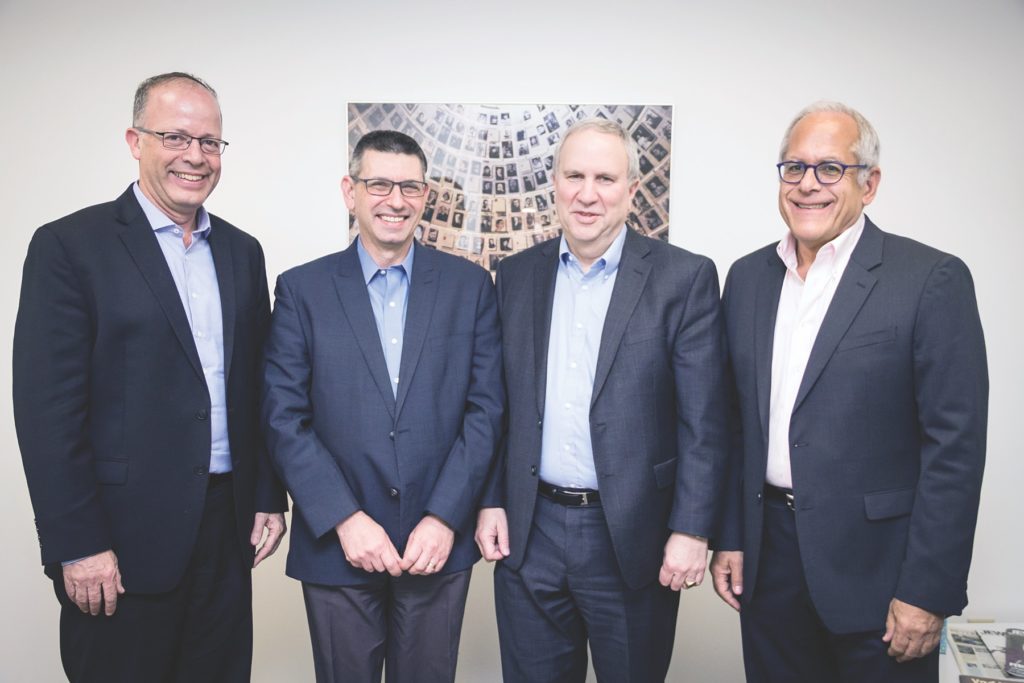
From left: Haim Gertner, director of the archives division at Yad Vashem; Michael Fisher, director of the American desk of the international relations division at Yad Vashem; Ron Meier, executive director at American Society for Yad Vashem (ASYV); and Bill Bernstein, director of institutional advancement of the ASYV western region, attended a March 7 luncheon at the West L.A. ASYV office. Photo by Adam Kleifield
IKAR’s “Stranger Purim” party and spiel, held on Feb. 28 at Busby’s East, a Mid-Wilshire sports bar, was one of dozens of local Purim celebrations to take place over the course of the holiday.
The theme of the party played off the hit sci-fi Netflix show “Stranger Things” while the gathering embodied the progressive, social justice-oriented spirit of the egalitarian spiritual community. During the spiel, attendees used boxes of dry macaroni as groggers, which were then to be donated to the SOVA Community Food and Resource Program operated by Jewish Family Service.
IKAR Director of Community Organizing Brooke Wirtschafter handed out 100 red tote bags filled with Band-Aids, snacks, toiletries, socks, a baseball cap and other items for attendees to distribute on their own time to homeless people. The homeless survival kits were ordered from Los Angeles attorney Albert Cohen, who has been overseeing distribution of the kits as part of a broad Jewish community effort, Wirtschafter said.
The event, which had “Stranger Things” paraphernalia decorating the walls, motivated IKAR clergy to fly their inner freak flags. Chazzan and Music Director Hillel Tigay impersonated Mick Jagger while dancing to the Rolling Stones’ “Start Me Up,” Associate Rabbi Ronit Tsadok performed a choreographed dance to the music of the Spice Girls and Senior Rabbi Sharon Brous dressed up as a zombie. The nonclergy got strange, too: Local environmentalist Steven Wynbrandt dressed up as Ali G, Noah Schechter came as Charlie Chaplin and Zack Lodmer wore a gorilla costume.
After the spiel, the event organizers cleared out the chairs and the party began as many hit the dance floor, drank and schmoozed. For those not into dancing, there was limbo, a miniature golf course and a photo booth. And there was plenty of pizza, potato skins and corn on the cob to eat.
Other Purim celebrations included a March 2 convening of Yavneh Hebrew Academy students with Los Angeles City Councilman David Ryu, and a March 1 Megillah reading with Rabbi Berel Yemini of the Chabad Israel Center at the Verizon campus in Playa Vista.
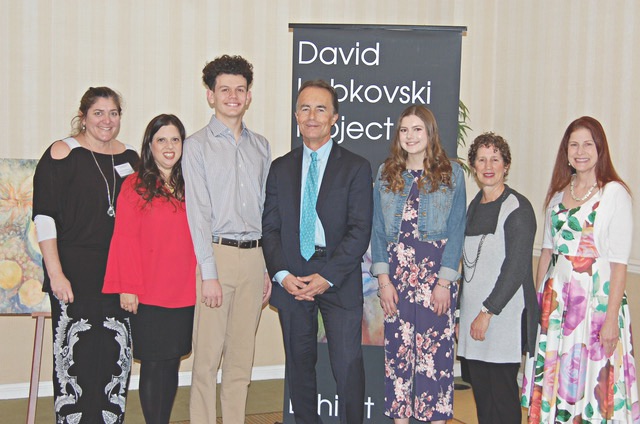
From left: Stephanie Wolfson, director of education at the David Labkovski Project (DLP); Leora Raikin, executive director at DLP; Legacy of Hope Award Recipient Josh Shane; keynote speaker Bernd Wollschlaeger; Legacy of Hope Award Recipient Gabby Vanderlaan and DLP board members Nadine Lavender and Connie Marco, attend the second annual DLP Scholars Luncheon. Photo courtesy of the David Labkovski Project.
The David Labkovski Project’s second annual Scholar’s Luncheon — held Feb. 25 at the Courtyard Marriot in Sherman Oaks — honored Arizona State University automotive systems engineering major Josh Shane and de Toledo High School senior Gabrielle Vanderlaan.
The two honorees received the Legacy of Hope Award in recognition of their “exemplary contributions to the David Labkovski Project,” said Leora Raikin, Labkovski’s great-niece and the Project’s executive director.
Bernd Wollschlaeger, who at the age of 14 discovered his father was a Nazi during World War II served as the keynote
speaker.
According to its website, the David Labkovski Project advances knowledge of the Holocaust and Jewish history by introducing students to the artwork of Labkovski, who survived both the Gulag and Nazi persecution.
Some of the late artist’s paintings were put on display from Feb. 12–28 at an exhibition, “Documenting History Through Art,” sponsored by Hillel 818 at Cal-State Northridge.
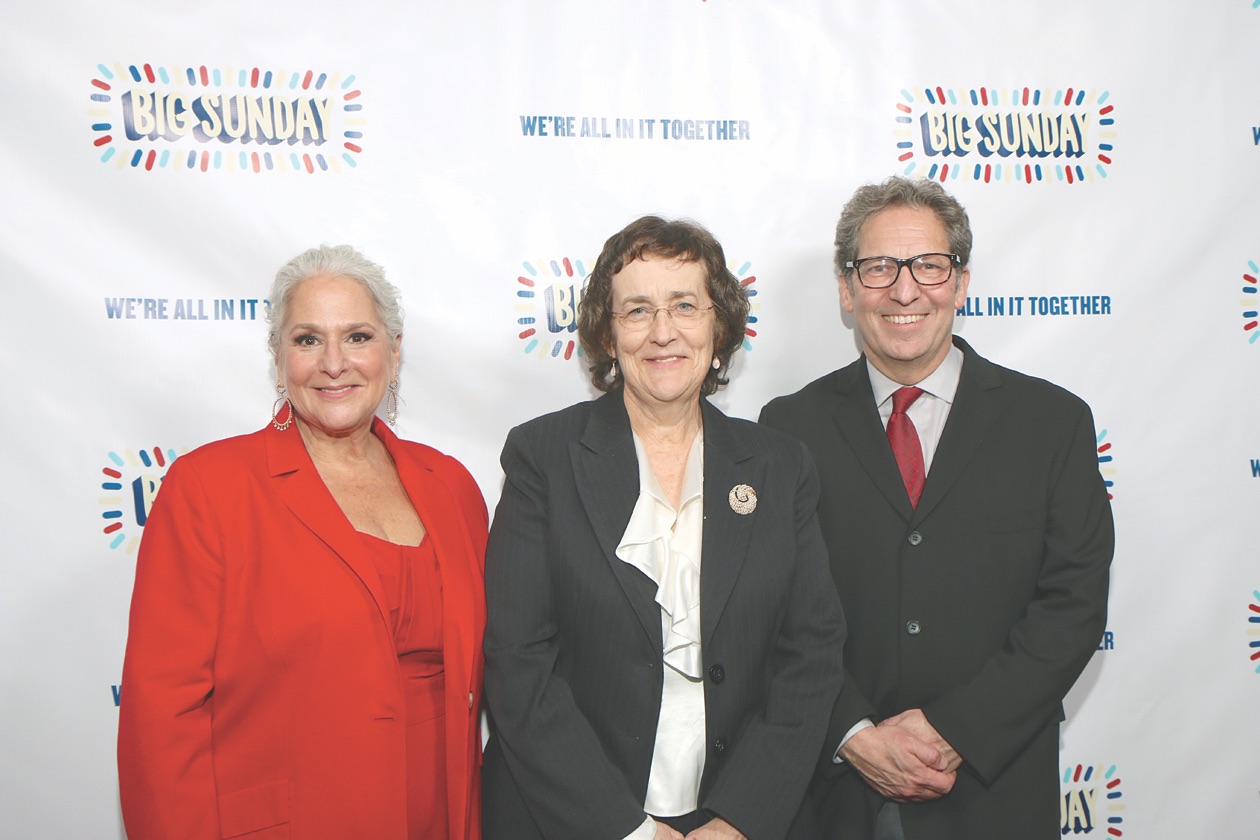
From left: Big Sunday honoree Marta Kauffman; Rita Speck, representing honoree Kaiser Permanente and Big Sunday Founder and Executive Director David Levinson attend the third annual Big Sunday gala. Photo by Erlinda Olvera.
Big Sunday held its third annual gala on March 8 at Candela La Brea in the Mid-Wilshire district and honored Big Sunday participant Marta Kauffman, co-creator of the classic sitcom “Friends,” and health care provider Kaiser Permanente, a longtime supporter.
“I believe in exponential giving, where one gives to a certain organization, and that gift then goes on to a larger audience, touching an incredible amount of people, who then go on to touch the lives of even more people,” Kauffman said in a statement. “Big Sunday is that kind of organization, one that has grown exponentially and continues to positively impact more and more people.”
Kauffman became involved with Big Sunday — which connects people through volunteer opportunities — soon after the organization launched in 1999.
Today, Big Sunday is one of the largest volunteer-driven organizations in the country. Its annual Big Sunday Weekend, which actually takes place over the course of a month, draws thousands of people to volunteer projects across Southern California. The organization, which started as a Mitzvah Day at Temple Israel of Hollywood and grew under the leadership of David Levinson, its founder and executive director, also offers year-round volunteer opportunities, including school beautifications, neighborhood cleanups and bingo games with seniors.
From left: ADL Regional Director Amanda Susskind; Deborah Feinerman of Paramount Pictures; Andrea Fluczynski of Sotheby’s Americas; Nichol Whitman, executive director of the L.A. Dodgers Foundation; Jihee Kim Huh, vice chairman at PAFCO and ADL Senior Vice President Sharon Nazarian attend the 23rd annual ADL Deborah Awards dinner. Photo by Michael Kovac.
The Anti-Defamation League (ADL) held its 23rd annual Deborah Awards dinner March 7 at the SLS hotel in Beverly Hills.
The event raised $350,000 to help the ADL combat racism and bigotry, and honored four women who have exemplified ADL ideals and values in their respective professions and civic contributions, an ADL statement said.
The honorees were Deborah Feinerman, executive vice president of business affairs and legal at Paramount Pictures; Andrea Fluczynski, executive vice president and chairwoman at Sotheby’s Americas; Jihee Kim Huh, vice chairwoman at Pacific American Fish Company; and Nichol Whiteman, executive director of the Los Angeles Dodgers Foundation. All the honorees, who shared their personal stories, were either immigrants or children or grandchildren of immigrants.
The honoress were presented with their awards by Paramount Pictures General Counsel Rebecca Prentice; filmmaker, writer and actress Susan Nimoy; LA84 Foundation President and CEO Renata Simril; State Treasurer John Chiang; and ADL Senior Vice President Sharon Nazarian. Television personality AJ Gibson served as the emcee.
The Deborah Award, which the ADL gives out every year to extraordinary women in the professional and civic communities, is named for the biblical prophetess, Deborah, who was noted for her courage, wisdom and leadership.
Lillian Ackerman died Feb. 1 at 93. Survived by daughters Carole, Bobby (Artin) Amirayan; son Larry; 4 grandchildren; 3 great-grandchildren. Mount Sinai
James Adler died Feb. 8 at 81. Survived by wife Sara; sons Michael (Regina), Philip (Judy), Matthew; 5 grandchildren. Hillside
Salamon Albukrek died Feb. 1 at 82. Survived by wife Patricia Browne-Albukrek; sister Alita (Yako) Sisa. Hillside
Audree Barbakow died Feb. 1 at 82. Survived by son Lance. Hillside
Samantha Cassidy died Feb. 7 at 23. Survived by mother Andrea Randall; father Sean; brother Trevor. Mount Sinai
Alex Norman Chaplan died Jan. 31 at 90. Survived by wife Perelene; daughters Cheryl (Gary) Fidler, Nancy (Shane) Sagheb; son Scott (Carrie); 5 grandchildren; sister Dolores Berniker. Mount Sinai
Gerald Joseph Cohen died Jan. 31 at 94. Survived by wife Bat-Ami; daughter Judith; son Aaron Groff Cohen. Mount Sinai
Richard Cohen died Feb. 2 at 67. Survived by brother Robert. Hillside
Doris Dunn died Feb. 7 at 90. Survived by sons Jonathan, David, 2 grandchildren; 1 great-grandchild. Hillside
Helen Frankel died Jan. 31 at 94. Survived by daughter Judy (Jeff) Gottesman; son Allan (Antoinetta); 2 grandchildren. Mount Sinai
Gabrielle M. Gartner died Feb. 3 at 95. Survived by daughter Victoria (Dennis) Robman; son Ronald (Fran); 4 grandchildren; 2 great-grandchildren. Mount Sinai
Jack Glantz died Feb. 12 at 80. Survived by wife Judy; daughter Stacey; sons Rick (Rhia), Michael (Dana), Dan (Edie); brothers Fred (Bonnie), Paul (Robin); 9 grandchildren; sister-in-law Karen Martin. Hillside
Alice Goodman died Feb. 11 at 90. Survived by son Mark. Hillside
Alan Gottschalk died Jan. 27 at 86. Survived by wife Joan; son David (Kathy); 2 grandchildren. Hillside
Howard Green Jr. died Feb. 3 at 90. Survived by wife Mitzi; daughter Liz (Tom); sons Richard (Adena Smith), Paul (Randi), Jeff (Lindsay); 6 grandchildren; sister Eleanor (Clay) Levine. Hillside
Abraham Haimoff died Jan. 20 at 73. Survived by wife Rina; sons Ilan, Ami, Yair, Oded, Isaac; 11 grandchildren; sister Pari; brothers Manucher, Moosa, Judah, David. Chevra Kadisha
Frank Heller died Jan. 29 at 94. Survived by wife Rosalie; daughters Marsha Hayes, Barbara (Tom) Moran; 1 grandchild; 1 great-grandchild. Hillside
Barbara Herr died Feb. 13 at 79. Survived by husband Yale; daughters Allison (August) Thompston, Linda (Michael) Goldblatt; 5 grandchildren. Hillside
Gitta Isaacs died Feb. 11 at 100. Hillside
Helen H. Kaminsky died Feb. 2 at 79. Survived by son Scott (Brenda); daughters Elyssa (Don) Brooks, Perry (Scott) Cohen; sister Loretta (Paul) Gutterman. Mount Sinai
Sylvia Kane died Feb. 7 at 93. Survived by daughter Elizabeth Carpenter; son Jeff (Donna); 5 grandchildren. Hillside
Jules Kraut died Feb. 5 at 92. Survived by son Jonathan. Hillside
Belle Maiman died Jan. 31 at 98. Survived by sons Barry (Xochitl), Michael (Frieda); 7 grandchildren; 4 great-grandchildren. Mount Sinai
David Michael Nash died Jan. 26 at 59. Survived by brother Jerome. Mount Sinai
Michael Benjamin Paster died Dec. 18 at 74. Survived by his wife Laura Wine Paster; daughter Shoshana, Ilana (Adam) Horn; son Joshua Kilvington; 3 grandchildren; brother David.
Leonard Reifman died Feb. 7 at 83. Survived by wife Estherly; daughter Lynn (Jeff) Richman; sons Alan (Sylvia), Steve; 2 grandchildren. Hillside
Russell Rosenbaum died Jan. 31 at 89. Survived by wife Jane; daughters Amy Jacobson, Julie Ponaman; 2 grandchildren. Hillside
Stephan Rosenstein died Jan. 23 at 59. Survived by father Allen; sister Cindy Garcia. Mount Sinai
Gene Rothman died Feb. 7 at 74. Survived by wife Penelope Choy; daughter Leah; son Joel (Laura), 1 grandchild. Hillside
Jacob Shaya died Jan. 16 at 97. Survived by 3 daughters; 1 son; 7 grandchildren; 10 great-grandchildren. Groman Eden
Carole Sherman died Feb. 10 at 62. Survived by daughter Alexandra (Joseph) Mendelis; son Max; sisters Pamela Beck, Susanne Small; brother Mark Maltzman. Hillside
Bernice Smith died Jan. 26 at 98. Survived by 2 grandchildren. Hillside
Gertrude Stein died Jan. 29 at 96. Survived by daughter Charna (Allen) Silver; sons Gene (Marilyn “Mindy”), Elliott (Karen), Martin (Mary); 10 grandchildren; 12 great-grandchildren; sister Dee Terrace. Mount Sinai
Kimberly Watzman died Jan. 30 at 45. Survived by mother Sandra; father William; brother Ryan. Hillside
I loved David Suissa’s March 9 piece “Living in Ashkefardic Times” (as I do everything he writes). I have always felt that we are all Jews with a common foundation, and that we can only stand to benefit from enjoying what we experience and learn from one another’s traditions.
David, I still remember singing “Dror Yikra” with you at your Shabbat dinner, your surprise that I, of Ashkenazi origin, knew the Sephardic melody, and my response that the beauty of the words and melody spoke for themselves irrespective of the origin.
Michael Rosove via email
Sephardic Sharing
It was with great pleasure that I read Kelly Hartog’s cover story last week on the heightened interest in the Sephardic tradition (“The Many Facets of the Sephardic Spirit,” March 9). Its flexibility, optimism and inclusiveness of the entire Jewish community are most heartening. Moreover, I found it interesting that its origins in Muslim countries may create the understanding necessary for greater potential in peacemaking initiatives by Israel with its neighbors.
I wanted to alert the public to the fact that Academy for Jewish Religion California (AJRCA) also offers an accredited master’s degree in Sephardic studies and held a sold-out Sephardic/Persian event just last week that included music, food and a prominent panel. The Sephardic community tradition holds great promise in addressing our current fragmented Jewish community. Congratulations to the great job the Sephardic Educational Center is doing to make its great tradition available to the public.
Rabbi Mel Gottlieb, President, AJRCA via email
Talking Gun Violence
Given our gun culture, the number of firearms and the influence of the National Rifle Association (NRA), it may be impossible to completely eliminate mass shootings, which are occurring with increasing frequency. But there is a rational solution to preventing a good deal of the mayhem.
The common thread between all mass shooters is their acquisition of an inordinate amount of firearms and ammunition before committing a rampage. Creating a national registry of guns and ammo could provide an automatic warning when an individual is amassing a suspicious number of weapons and shells. Authorities could then further investigate whether that person poses a public threat.
The NRA is strongly opposed to gun registration, but its excuse that it is a slippery slope leading to the confiscation of all weapons is ridiculous. Registering cars has not led to eliminating automobiles. Moreover, registering guns and ammunition does not contradict even the most far-fetched interpretation of the Second Amendment.
Ted Carmely via email
Driving to the 90th Oscars brought home the reality of the Hollywood left’s absolute hypocrisy.
There were checkpoints for passes, bomb detectors, maneuverability. There were street barriers along a designated route. There were fences on the sidewalks, blimps in the air. There were SWAT armored vehicles, police cruisers and motorcycles. I have never seen so many armed officers!
Where were the gun-grabbers?
Where was security at the Parkland High School? The Pulse nightclub? Sandy Hook? Columbine?
Taking firearms from citizens to protect themselves from government overreach, corruption and abject failure … what a concept!
Ever gone through security at LAX? The IRS? A courthouse? The mayor’s office?
Let’s do away with “gun-free” zones, where good people are sitting ducks for aberrant individuals and terrorists.
Enriqué Gascon, Westside Village
Columnist Gets It Just Right
Karen Lehrman Bloch beautifully states where we are in 2018 (“Can We Please Start Over?” March 9).
Simply, she says we are all different, and when people try to make their point(s) by bullying, there can be no dialogue. Just screaming at each other.
Agree to disagree and everything can be discussed. Then, Bloch’s vision of respect for each other’s opinions can become the new norm. Our society requires this approach for effective communication.
Warren J. Potash, Moorpark
David Light’s View
I’d never heard of David Light before reading the “Just Asking” interview with him in the March 9 issue, but I applaud his courage. His statement that his rabbi wife’s group IKAR “was founded during the Bush [43] years, so we were forged in the fires of resistance” was especially stirring.
Chaim Sisman, Los Angeles
Harrell’s Humanity
Thank you for the story about about Lynn Harrell (“Cellist Lynn Harrell’s Meta Moment,” March 9). In an era of almost dystopian combativeness, it was uplifting to read about a fellow traveler whose hands and heart are much bigger than most, sharing his gifts generously with the world. He is a mensch and it makes me proud to have him within our community. Well done and l’chaim.
Eric Biren, Santa Monica
Reacting to the Rabbis
Reform Rabbi Sarah Bassin confronts Orthodox Rabbi Ari Schwarzberg over the issue of unequal representation of women in Orthodoxy (“Back and Forth,” March 9). She writes, “I literally do not count — in a minyan, as a witness or a rabbi.” Rabbi Schwarzberg responds that “gender and halachah is our community’s foremost issue.”
As a non-Orthodox convert of more than 50 years, who belongs to an Orthodox synagogue and attends daily minyan there, I would reply to Rabbi Schwarzberg’s fear by stating that, indeed, I feel those standards should be changed, which is part of the reason I go to Orthodox services daily. I personally know what it feels like to not count in an existential way that surpasses what Rabbi Bassin has experienced. While she may justifiably complain the she literally does not count as part of the minyan, the plight of the non-Orthodox converts trumps that invisibility by leaps and bounds; we not only don’t count for a minyan, we also don’t even count as being Jewish in Orthodox eyes, and should we happen to also be women converts, we get the double humiliation of not having our children and future generations count as being Jewish in their view.
The commandment that is listed more times in the Torah than any other is to remember and welcome the stranger and treat them with compassion, because we Jews were strangers in Egypt. =We Jews by Choice have transformed our lives for love of God, Torah and Am Israel. We deserve better treatment.
Peter Robinson, Woodland Hills
Trapped in Our Tribes
I love your sense of humor and your honesty, David Suissa! (“Trapped Inside of Our Tribes,” March 2). I read your column several times and really enjoyed it. It is such a truthful reflection of the American political reality.
That is what great journalism is all about: To show those trapped inside their powerful tribes what they look like in reality from outside. Similarly to what Suissa says, I can only pray that more of those in power read it.
Svetlozar Garmidolov, Los Angeles
Liking the New-Look Journal
Ending the stories on the same page (instead of having to search in the back pages for the last two paragraphs) is much appreciated in the Jewish Journal.
I wish you and the Journal a better future and am confident that you seem to have the energy and good sense to achieve that. However it would be nice if you added some new blood, and let me suggest three Jewish writers I admire: Melanie Phillips, a very strong International woman’s voice; Joel Kotkin, a liberal Jew who is writing amazing pieces about California; and Daniel Greenfield, a religious Jew who writes amazing pieces about everything.
“Do not mourn when the desire of your eyes (your wife ) is taken from you: “ a mourning of the death you shall not make, put your shoes on your feet…. And you shall not eat the bread of men.”
The TB in MK 27:b traces its source to Ezekiel, Chapter 24:17 where God tells the prophet Ezekiel – do not mourn when the desire of your eyes (your wife) is taken from you; ”a mourning of the death you shall not make, put your shoes upon your feet…. and you shall not eat the bread of men.”
The Talmud explains that this is textual proof that when regular mourning is mandated, the meals of the first day (after burial) is to be prepared by others. Ezekiel was told by God not to mourn and to eat his own food.
God informs the prophet that the relationship between Ezekiel and his wife symbolized the relationship between God and his temple, and both would be destroyed.
The Rabbenu Yarichim (quoted in the B’Y”-Yorah Daoh, Hilchot Avilath, 378-379) also discusses a practical reason as well why the food of the mourner should be supplied by others. The mourner is deeply upset and doesn’t think of eating; the mourner often wishes to die as well (How can I eat when my beloved is in the cold ground?). They would deprive themselves of food in order to achieve a “symbolic death.” (Perhaps that is a reason as well why a mourner sits on a low stool; to be symbolically closer to the person that just died.) Therefore, food is supplied by the community.
Making this “mandatory” doesn’t give the mourner the option, and the mourner understands that as much as they would forgo meals and wallow in solitude, they have not lost their place in the community.
The tradition in medieval Germany and France evolved that food for the mourners was supplied by the community for all seven days. Many were very poor and not being able work they had no funds to purchase food. In order not to embarrass those who didn’t have any funds to purchase food, the community supplied food for all – rich and poor – for all seven days.
We have in our collection an 18th century CK Charity box that was put by the community in a house of mourning, the inscription on which reads in German –Yiddish, “ if you have extra funds please put it in and if you need funds , please help yourself.”
The TY in MK 14:A discusses the issue of a mourner needing to go to work in order to have funds to purchase food. It emphasizes that for the first three days it is imperative the mourner not go to work and after the third day one can go to work “Ba’tzina” hiddenly or in an unobtrusive manner.
Judaism demands that at moments of great joy or great grief – both which require concentration and undistributed mediation – we refrain from daily pursuits. This is based on the prophet Amos 8:10 recording the words of the Lord: “And I will transform your festivals to mourning”; teaching us, just as on festivals, labor is prohibited, so too in days of mourning.”
The Korban Ha’yadah (quoting BR Chapter 100) explains that the soul hovers over the body the first three days wanting to reenter the body, but on the third day the facial features decompose and the soul no longer recognizes the body and it “releases” its hold on the body.
An early Midrash (Tana D’ve Eliyahu) alludes to the fact that for the first three days, the soul is trying to find its shadow; on the third day of not finding its shadow, the soul goes to a muddy riverbank and tries to imprint his/her footprint in the mud ; when the deceased sees that there is no footprint, it then releases its hold on the body.
The Iggerot Moshe in Yorah Da’oh 279 (magisterial responsa of Rabbi Moshe Feinstein) discusses the fact that bringing food to the mourner fulfils the commandment of consoling the bereaved. One should not eat of their own , thus forcing others to bring the mourner food and, therefore fulfilling the obligation of consoling the mourner, and this is valid for all seven days.
Isaac Pollak is President and CEO of an international marketing business for almost 4 decades at this point. He holds graduate degrees in Marketing, Industrial Psychology, Art History, and Jewish Material Culture from City College, LIU, JTS, and Columbia University. He has been a student in the Gamliel Institute, and serves as a consultant to the institution. He has been the rosh/head of a Chevrah Kadisha on the upper East Side of Manhattan, NYC, for over 3 decades, and is an avid collector of Chevrah Kadisha material cultural items, having several hundred in his own collection. He serves as chairperson of the Acquisition Committee for Traditional Material Culture at the Jewish Museum in NYC. Born and raised in NYC, married, with 3 children and 3 grandchildren.
Isaac has written for Expired And Inspired multiple times over the years, contributing a wide variety of entries, many scholarly and detailed with sources, on history and tradition.
Isaac Pollak
___________
Gamliel Café
Gamliel Students are invited to an informal online monthly session, held monthly. On the third THURSDAY of each month, different person(s) will offer a short teaching or share some thoughts on a topic of interest to them, and those who are online will have a chance to respond, share their own stories and information, and build our Gamliel Institute community connections. This initiative is being headed up by Rena Boroditsky and Rick Light. You should receive email reminders monthly. The next scheduled session of the Gamliel Café is March 15th with a discussion led by Dan Fendel.
Register now for our 2018 series, Your’re Gonna Miss Me When I’m Gone: Jewish Practices of Remembrance. The series features Rabbi Stuart Kelman, Rabbi SaraLeya Schley, Maharat Victoria Sutton, Rabbi Yonatan Cohen, and Jacob Klein of Keshet. They will be discussing topics such as Sephardic Customs, Understanding the Mourners Kaddish, an Alternative Yizkor Service, Disenfranchised Grief, and Trans Day of Remembrance, all relating to remembrance and memory.
The series began Sunday evening, February 4, and will continue on Sunday evenings, generally one session per month, at 8 PM Eastern time and 5 PM Pacific time. Each session runs approximately 90 minutes. Upcoming sessions are:
April 8: Jewish Trans Day of Remembrance – Jacob Klein
April 29: Disengranchised Grief – Rabbi Yonatan Cohen
May 27: An Alternative Yizkor Service – Rabbi SaraLeya Schley
If you cannot attend a session, no worries! They are recorded and made available to those registered.
Registration for Taste of Gamliel is mandatory to access the sessions. The sessions are free, but there is a suggested minimum donation of $36 for the entire series.
Those registered will be sent the information on how to connect to the sessions. To register, click here: register.
_______________
Gamliel Institute Course 1
Chevrah Kadisha: History, Origins, & Evolution
This course will begin April 3rd and run for 12 weeks. Register now at https://www.jewish-funerals.org/gamreg. If you want to know how the Chevrah Kadisha developed and why we do what we do today, this is for you!
_______________
Gamliel Continuing Education Courses
Gamliel students should be on the lookout for information on a series of Gamliel Continuing Education Courses, advanced sessions focusing in on different topics. These will be in groups of three sessions each quarter (three consecutive weeks), with different topics addressed in each series. The goal is to look at these topics in more depth than possible during the core courses. The first course took place in Fall 2017, focusing on Psalms.
The next course will be April 25, May 2nd and May 9th, and will look at death as seen in the Zohar, taught by Beth Huppin.
Registration is required, and there will be a tuition charge of $72 for the three sessions. Contact us for information, by email info@jewish-funerals.org, or call 410-733-3700, or simply register online at www.jewish-funerals.org/gamreg/.
_____________________
16th annual Kavod v’Nichum Chevrah Kadisha and Jewish Cemetery Conference and Gamliel Day of Learning
Mark your calendar and hold the dates! June 3-5, 2018, in the Washington D.C. area. Click here to register
Location – The conference will be at Congregation Beth El in Bethesda, Maryland (just north of Washington, DC)
Dates and Times – The main part of the conference will be from noon on Sunday June 3 to 1pm on Tuesday June 5, 2018. There will be tours and hands-on workshops on Sunday morning.
The Gamliel Day of Learning will be from Tuesday at 2pm through Wednesday at noon. You will not want to miss this – we have arranged for Erica Brown to teach at this event on Tuesday – this day of learning is going to be fantastic!
Who Should Attend? Consider attending the conference if you:
are interested in the fields of community organizing, consumer advocacy, bikkur cholim, chaplaincy,rabbinic texts, thanatology, hospice care, grief therapy, funeral direction, cemetery management, and legacy planning
recognize the importance of liturgy and ritual in ensuring that the spiritual dimension of the end-of-life continuum is appreciated, and that the work of the Chevrah Kadisha is done with full regard for the respect and dignity of all involved
want to learn more about the entire end-of-life continuum – dealing with life-threatening illness, legacy and preparation of ethical wills, preparing for death and at the time of death, care for the body- taharahand shmirah, care for relatives and friends, funeral and burial, mourning, grieving, remembering and providing comfort – with underlying themes of communal obligation, care for the poor and elderly, consumer protection, and Jewish continuity.
believe it is essential to shift the culture surrounding continuum-of-life issues in the Jewish community – from an attitude of denial and neglect around death, to a more open attitude towards death that includes increasing awareness, acceptance, and healthy integration into family and community life.
want to participate in the development of a strong Jewish corps of professionals and volunteers to become communal leaders who work to inspire, support, organize, teach, and advocate for the full range of Chevrah Kadisha work in synagogues and communities.
Workshop Leaders – If you are interested, or know someone else who might be interested in leading a workshop, suggest it to us with a short paragraph of explanation – send to info@Jewish-funerals.org
Organization Pricing – is available if three or more members of an organization are attending the whole conference and the organization has paid membership dues of $180. You can cover the cost of organizational membership right on the registration form. Even if you don’t have three members attending the conference, we appreciate your organization’s support as a member. Books – This year you can pre-order and pre-pay for books right on the registration form.
Exhibits – If you, or someone you know, would like to exhibit at the conference, let us know by sending us an email – info@Jewish-funerals.org
Meals – In addition to Sunday brunch, we provide six supervised Kosher meals as part of the conference registration. Please let us know if you have allergies or special dietary needs.
Flights – Many cities have direct flights to National (DCA), Baltimore Washington (BWI) and Dulles (IAD).
Ground Transport – Direct connections to the Metro are available from National Airport. We’ll update the website mid-January with additional ground transportation options.
Hotel – We have negotiated a great hotel rate at American Inn. Contact them at 301-656-9300 and give them group booking code KNG or email or phone our hotel contact MinoliMinoli.Muhandiramge@baywoodhotels.com who is at extension 111. Our group rate is $139 plus 13% tax per room per night for singles or doubles. There are a limited number of doubles.
Home Hospitality – will be available. Let us know if you are interested.
Shabbat – If you would like to be connected to a family for Shabbat dinner, home hospitality, and synagogue services, let us know.
Refunds: 90% of the registration fee will be refunded if you cancel in writing before May 1; 80% before May 15; 50% May 15 or later, only if you have a really good excuse!
_____________________
DONATIONS
Donations are always needed and most welcome to support the work of Kavod v’Nichum and the Gamliel Institute, helping us to bring you the annual conference, offer community trainings, provide scholarships to students, refurbish and update course materials, expand our teaching, support programs such as Taste of Gamliel, the Gamliel Café, and the Gamliel Continuing Education courses, provide and add to online resources, encourage and support communities in establishing, training, and improving their Chevrah Kadisha, and assist with many other programs and activities.
You can donate online at http://jewish-funerals.org/gamliel-institute-financial-support or by snail mail to: either Kavod v’Nichum, or to The Gamliel Institute, both c/o David Zinner, Executive Director, Kavod v’Nichum, 8112 Sea Water Path, Columbia, MD 21045. Kavod v’Nichum [and the Gamliel Institute] is a recognized and registered 501(c)(3) organization, and donations may be tax-deductible to the full extent provided by law. Call 410-733-3700 if you have any questions or want to know more about supporting Kavod v’Nichum or the Gamliel Institute.
If you would like to receive the periodic Kavod v’Nichum Newsletter by email, or be added to the Kavod v’Nichum Chevrah Kadisha & Jewish Cemetery email discussion list, please be in touch and let us know at info@jewish-funerals.org.
Be sure to check out the Kavod V’Nichum website at www.jewish-funerals.org, and for information on the Gamliel Institute, courses planned, and student work in this field also visit the Gamliel.Institute website.
RECEIVE NOTICES WHEN THIS BLOG IS UPDATED and When Other Relevant Items are published!
If you have an idea for an entry you would like to submit to this blog, please be in touch. Email J.blair@jewish-funerals.org. We are always interested in original unpublished materials that would be of interest to our readers, relating to the broad topics surrounding the continuum of Jewish preparation, planning, rituals, rites, customs, practices, activities, and celebrations approaching the end of life, at the time of death, during the funeral, in the grief and mourning process, and in comforting those dying and those mourning, as well as the actions and work of those who address those needs, including those serving in Bikkur Cholim, Caring Committees, the Chevrah Kadisha, as Shomrim, funeral providers, in funeral homes and mortuaries, and operators and maintainers of cemeteries.