fbpx

December 13, 2017

St Vincent

Listen to St Vincent with Me at the W Hollywood

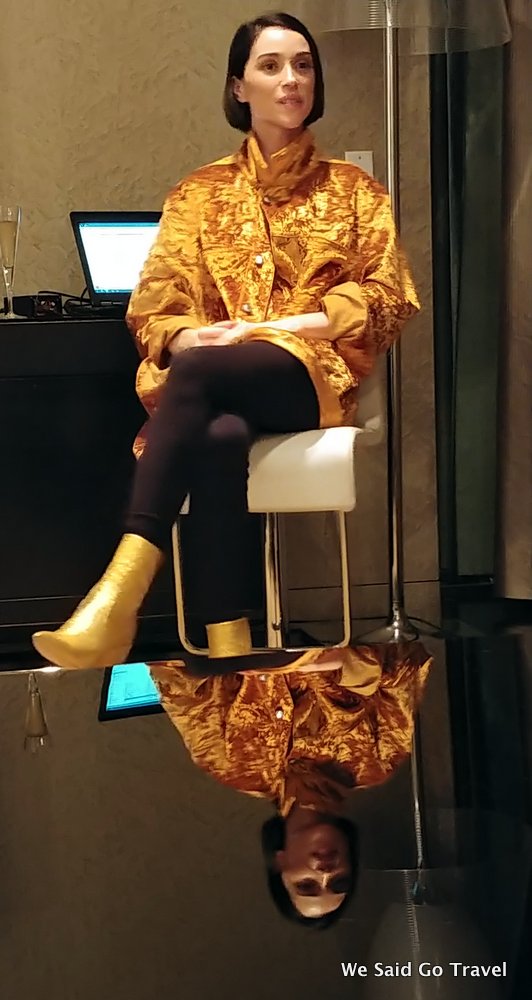
Listen to St Vincent with Lisa Niver at the WI was invited to a private soiree at W Hollywood and guitar goddess St. Vincent hosted a listening party of her newest album, MASSEDUCATION. She shared the inspiration behind her music and answered questions about life on the road and how fantastic the new Sound Suites are. If you want to make music while traveling, check out the features of the Sound Suite below. I loved our tour of the suites.

Listen to St Vincent with Lisa Niver at the W
St Vincent and Lisa Niver at the W Hollywood

A UNIQUE SPACE FOR ARTISTS TO WORK HARD AND PLAY HARD

W Hollywood’s Sound Suite, a private music recording studio and creative space. With enough room to host a proper entourage, this sound suite includes a live room and a main mixing room featuring the latest professional equipment from top tier brands. 

Listen to St Vincent with Lisa Niver at the WInnovative recording technology invites you to unleash your creativity in the studio, while signature WHATEVER/WHENEVER® service ensures you have everything you need to channel your musical genius into your very own masterpiece. Let the positive vibes and non-stop energy of the entertainment capital of the world inspire you. Don’t miss W Hollywood’s Sound Suite. #WSOUNDSUITE

SOUND SUITE FEATURES

Photos and equipment list from W Hotels:

Analog & Midi Keyboards: 

  • Akai mpc 2000 XL
  • Komplete kontrol s49
  • Roland Juno-106
  • Roland XP-80
  • Alexis QS8
  • Akai MPK 88
  • Alesis ion
  • Machine jam
  • Traktor control S8
  • Machine studio

Miscellaneous

  • 1 iMac 17
  • 1 apple keyboard
  • 1 Kensington Trackball
  • 1 Vizio 50″ TV
  • 1 Boss F5-5U pedal

Console

  • 1SSL AWS 924

Speakers

  • 2 genelec speakers
  • 2 genelec subs
  • 2 Yamaha NS-10
  • 2 avantone mixcube

Speaker amplifiers

  • 1 Hafler P3000
  • 1 Hafler P1500

EQ

  • Manley massive passive eq.

500 Series

  • BAE 3LB

Effects

  • BBE 882i
  • Eventide Ultra-Harmonizer
  • Tc electronic M-One

Audio Interfaces

  • Aphex 228
  • Apogee Symphony

Compressors

  • Tube-Tech CL 1B
  • Teletronix LA-2A
  • Dbx 166 XL
  • 2 Dbx 160 A

Microphones

  • 1 Neuman U 87 Ai
  • 1 Shure KSM 313

Instruments

  • Yamaha acoustic guitar
  • Fender jaguar bass

Preamps

  • Universal Audio 6176

Listen to St Vincent with Lisa Niver at the W

First seen on We Said Go Travel.

Listen to St Vincent with Me at the W Hollywood Read More »

Rabbi Uziel’s Jerusalem: A Yearning to Return Home

It was April 1949, and the residents of Jerusalem were in the midst of the first Passover being celebrated in the still young State of Israel. Rabbi Benzion Meir Hai Uziel, Israel’s first modern-day Sephardic Chief Rabbi, addressed a gathering of Jews, reminding them what life was like during Passover of 1948: “Just a year ago on Passover,” he told them, “under extreme conditions, we prepared and celebrated the seder. By the same merit that our ancestors were redeemed in Egypt, we, the people of Jerusalem, were also redeemed. So here we are today, one year later, celebrating Passover in Jerusalem, this time with joy and happiness.”

A native-born child of the Old City of Jerusalem, Rabbi Uziel was well aware of the paradox of his celebratory words. He knew that he was addressing a crowd of people who, just a year earlier, were living in Jerusalem’s Old City, a place where his family and Sephardic community had lived for centuries. He knew that the crowd he was speaking to — a multitude of families, rabbis and Jewish leaders — were forced out of their homes by the Jordanians and forced to abandon their belongings and holy sites.

So, Rabbi Uziel knew that his celebratory words were bittersweet: “Our joy is tempered by the fact that Jerusalem ‘within the walls’ (the Old City) lies in ruins, emptied of her Jewish people, with the Kotel standing alone. This breaks our hearts, and we will never feel comforted until the day comes when we merit to return to the sacred Old City, which is the eternal capital of the State of Israel.”

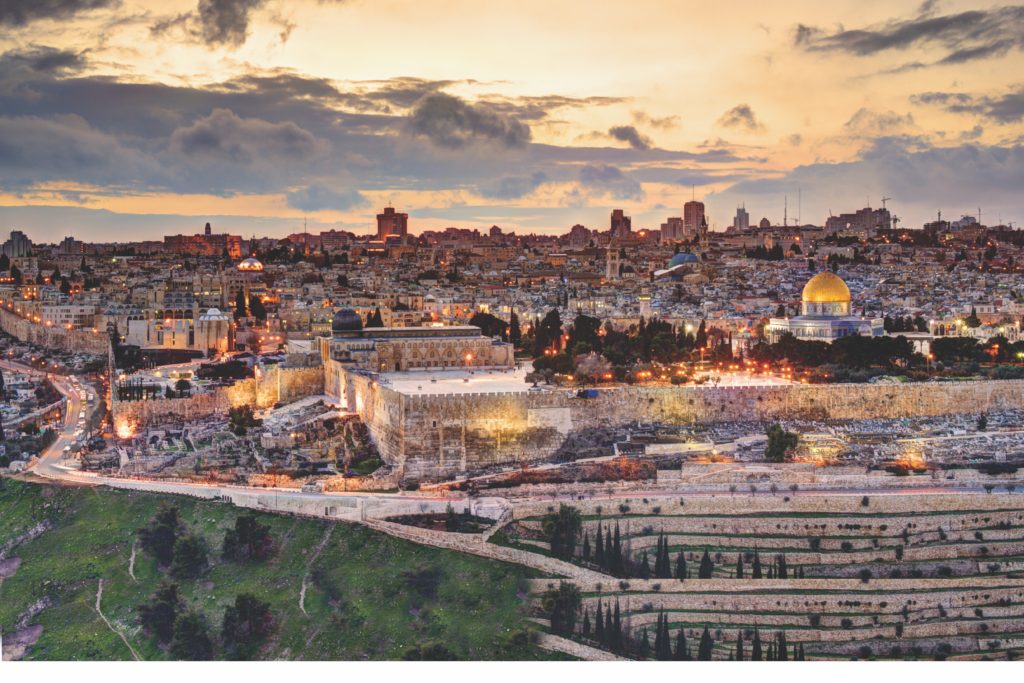
I have read Rabbi Uziel’s moving words several times around my Passover tables, but last week, as the president of the United States formally declared Jerusalem as the State of Israel’s official capital, I found myself re-reading Rabbi Uziel’s remarks away from my seder, in a totally new light. As I heard President Donald Trump say, “I have determined that it is time to officially recognize Jerusalem as the capital of Israel,” it brought me back to Rabbi Uziel’s speech, when, standing in a physically divided Jerusalem, he nonetheless declared Jerusalem’s Old City “the eternal capital of the State of Israel.”

I re-read Rabbi Uziel’s entire address, wondering what was going through his mind as he made this declaration. Was it politics? Knowing Rabbi Uziel’s illustrious career as a public leader, one might be tempted to think so. Born in 1880 in Jerusalem, Rabbi Uziel is the only chief rabbi — Sephardic or Ashkenazic — to have held official positions of rabbinic leadership under three political administrations in the Land of Israel. In 1911, he left his native Jerusalem to become the Chief Rabbi (Haham Bashi) of Tel-Aviv-Jaffa, under the Ottoman Empire. In 1939, he returned home to Jerusalem, where he was unanimously appointed the Sephardic Chief Rabbi (Rishon L’Zion) under British Rule. On May 14, 1948, he stood behind David Ben-Gurion and heard him declare the State of Israel, then serving as Chief Rabbi of Israel until his death in 1953.

Embedded within Rabbi Uziel’s words were his childhood memories from “within the walls,” when the languages spoken in the Jewish Quarter included Ladino and Arabic.

As an official leader under three distinctly different governments, he probably had more political experience than most politicians.

And yet, from studying Rabbi Uziel’s life story, I have no doubt that that his remarks went far deeper than politics. Embedded within Rabbi Uziel’s words were his childhood memories from “within the walls,” when the languages spoken in the Jewish Quarter included Ladino and Arabic. He spoke as the descendant of the Hazan and Uziel families, two Sephardic families who, after the expulsion of the Jews from Spain in 1492, made their way to Jerusalem and settled in the Old City.

As he spoke about Jerusalem, he could still hear the prayers from the complex known as the “Four Sephardic Synagogues,” where the tunes included the sounds of Istanbul, Holland, Iraq, Syria and Morocco, blending together to become “Yerushalmi.” As he looked out into his audience, he must have seen some of the widows and orphans he visited every day in the Spanish courtyard building, the same ancient building where he studied in the famous Sephardic Talmud Torah as a child. He could probably hear the echoes of his teacher’s soft-spoken voice teaching him Torah with love, much like he could hear the sweet voices of mothers singing Ladino lullabies to their children, all in the Old City.

Just one year before his speech, when the Old City was under siege in 1948, a group of yeshiva students approached Rabbi Uziel to ask for exemptions from military service so they could continue to study Torah. He denied their requests and told them that were it not for his age, he would proudly pick up a rifle and defend the Old City of Jerusalem where he was born and raised. Indeed, Rabbi Uziel volunteered for the Civil Guard in Jerusalem, and when he issued halachic permission to dig trenches on Shabbat for safety purposes, he himself participated in the digging.

Rabbi Uziel lived with the pain of having lost his home and community in the Old City, but he nonetheless remained an optimist:

“Despite this,” he said, “we nevertheless rejoice in the establishment of the ‘New Jerusalem’ that we currently live in by the good grace of God, secure from the threat of the enemy.”

He never lived to see the reunified Jerusalem, but on that Passover day in Jerusalem in 1949, after declaring Jerusalem’s Old City “the eternal capital of the State of Israel,” he concluded his speech with this prayer: “As we celebrate Passover this year in our newly liberated City of Jerusalem, next year, and for many years to come, may we merit celebrating Passover in the Holy Temple in Jerusalem, with great joy, happiness and songs of praise to God. Amen.”

A prayer from a Chief Rabbi of Israel, but, more than that, a prayer from a child who yearned to return home.


Rabbi Daniel Bouskila is the director of the Sephardic Educational Center, an international educational and cultural organization with its own campus in the Old City of Jerusalem and executive offices in Los Angeles. He also is an instructor of Talmud at Shalhevet High School in Los Angeles.

Rabbi Uziel’s Jerusalem: A Yearning to Return Home Read More »

Community Reacts to Jerusalem News

At face value, President Donald Trump’s declaration last week that Jerusalem is the capital of Israel had many in the community wondering, “So, nu? Of course, it’s the capital!”

For Jews, the ancient city has been considered the capital of Israel — and by extension, the Jewish people — at least since the time of King David, some 3,000 years ago.

But modern geopolitics have complicated the claim to Jerusalem, which was designated a special international zone at the time Israel became a state in 1948. Indeed, Jews, Christians and Muslims all claim holy sites and history in Jerusalem, which has made political jurisdiction over the city a controversial issue for more than half a century.

Trump’s announcement on Dec. 6 upended the status quo, sending shockwaves throughout the global political establishment, which generally criticized the move. In Los Angeles, community leaders and others expressed a range of opinions. Some view Trump’s announcement as a blow to the peace process, ignoring Palestinian claims to the city and thus further entrenching both sides in the current stalemate. But many others are elated, seeing a long overdue reckoning in Trump’s bold announcement. Here they are in their own words, edited for length and clarity.
For the Jews, it is never the right time.

In March of 1948, as President Harry Truman was grappling with the issue of whether to recognize a Jewish state, his secretary of state, George Marshall, threatened to resign over the matter. Marshall warned the president that such a precipitous move would engulf America in a war and enrage the Arab world, thereby handing over the oil-rich Middle East to the Soviets on a silver platter. Eventually, Truman ignored Marshall’s advice and recognized the Jewish state when it was declared. And Marshall decided not to resign. Israel, which will soon celebrate her 70th birthday, went on, despite Arab hostility and conflict, to be one of the great achievements in the whole history of nation building.

The catchphrase, “This is not the right time,” has been used often in Jewish history. It was used against Moses by the “elders” who refused to accompany him to confront the Pharaoh. They were wrong! The leaders of both the Orthodox and Reform movements used it when Theodor Herzl came to them with the idea of establishing a Jewish state, and they were wrong, too!

So, kudos to Trump for seizing the moment and righting a historic wrong by becoming the first president to recognize Jerusalem as the capital of Israel.

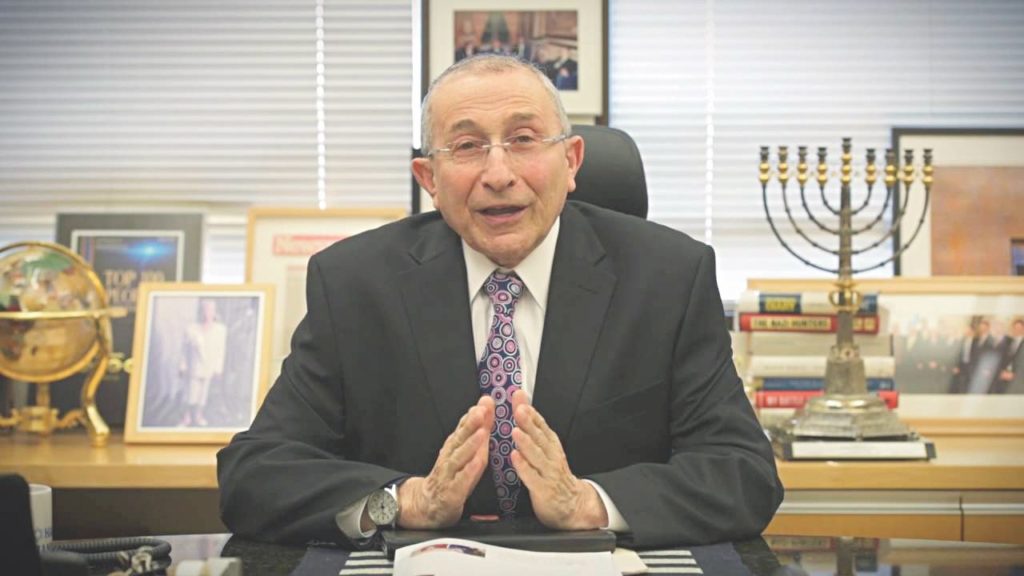
Rabbi Marvin Hier, founder and dean of the Simon Wiesenthal Center Museum of Tolerance


While the Israeli-Palestinian issue is not a high priority in the Arab world today with all the other turmoil engulfing the region, not even the Trump administration’s closest allies support this move. Jerusalem is an issue that still resonates strongly across the Arab and Islamic world. If the president only recognizes Israel’s claim to the city, and does not distinguish between West and East Jerusalem, his decision will be universally condemned in the region and globally. Close allies like Jordan will be vulnerable to blowback domestically.

Once again, the United States is isolated globally with no clear strategic gain. And it risks inflaming regional tension and increasing anti-American sentiment. The result is a boon for extremist forces and countries like Iran, unfortunately.

Dalia Dassa Kaye, director of the Center for Middle East Public Policy and senior political scientist at Rand Corp.

If one declared Athens the capital of Greece or Rome the capital of Italy, the reaction would be, “No kidding — we’ve known that for thousands of years.” Well, Jerusalem has been the capital of Israel since King David, who flourished around 1,000 B.C.E. To say it out loud should evoke yawns, not yells. But there are political realities, of course, and an unfortunate interruption in Jewish sovereignty. (As the great Shai Agnon put it, “Like all Jews, I was really born in Jerusalem, but the Romans stole my cradle.”)

So, yes, I acknowledge that the timing and tactics could have been improved. And some who are genuinely pro-Israel (along with many who are not) wish it had not been done for prudential reasons. But American presidents, including the current president’s predecessor, have been saying an undivided Jerusalem is the capital of Israel for a long time. Now it has been made official. Somewhere under the earth of that ancient, sacred city, King David sleeps a little more soundly tonight.

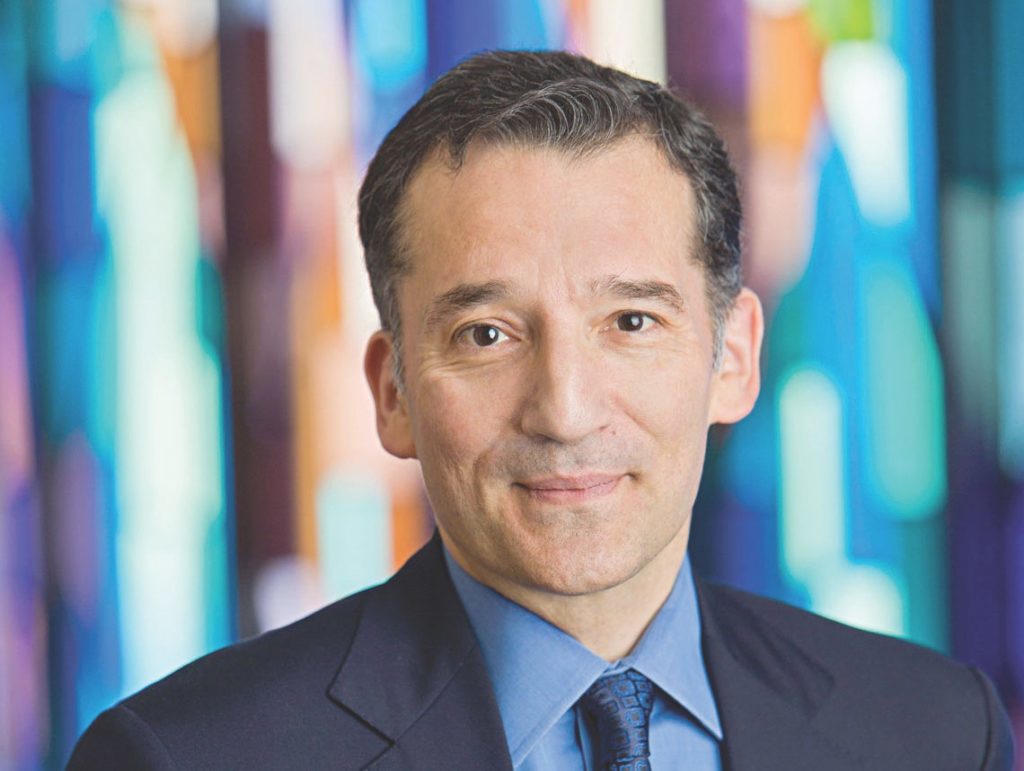
Rabbi David Wolpe, Max Webb Senior Rabbi of Sinai Temple

In essence, the U.S. politically recognized West Jerusalem as Israel’s capital. He left the status of East Jerusalem open. Did this hurt the peace process?

I am not aware of a current peace process. During the past 20 or so years of a sporadic “peace process,” Israel has suffered incessant terrorism and intermittent wars with Hamas and Hezbollah, even without Jerusalem being politically recognized. Hamas now has announced that the gates of hell are open. I have lost count of how many times Hamas has announced the opening of the gates of hell. Palestinians are demonstrating, and things may get violent.

Sadly, the Palestinians have gone on rampages over far less serious issues. In reality, they are militating for a nation of their own on the 1949 armistice lines, not over the symbolic status of Jerusalem. Every perceived offense is an opportunity to continue that struggle. Israelis are somewhat inured to Palestinian threats.

For sure, the Palestinians have lost political ground. The president has messaged the Palestinians: Time is not on your side. If you want your own capital in Al Quds, you had best move quickly into a real process for peace.

Jerusalem, even if only West Jerusalem, is the capital city of Israel. That is a fact. Admitting the reality of things often  cuts through neurotic obsessions and moves people through grieving and into resolution.

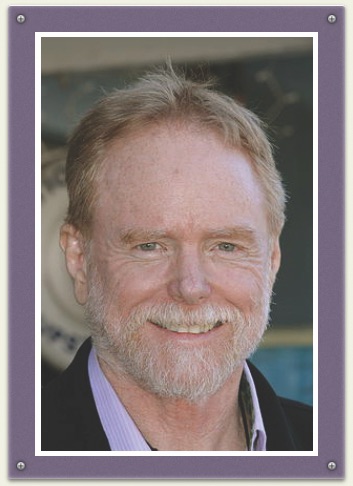
Rabbi Mordecai Finley, co-founder and co-CEO, Ohr Hatorah
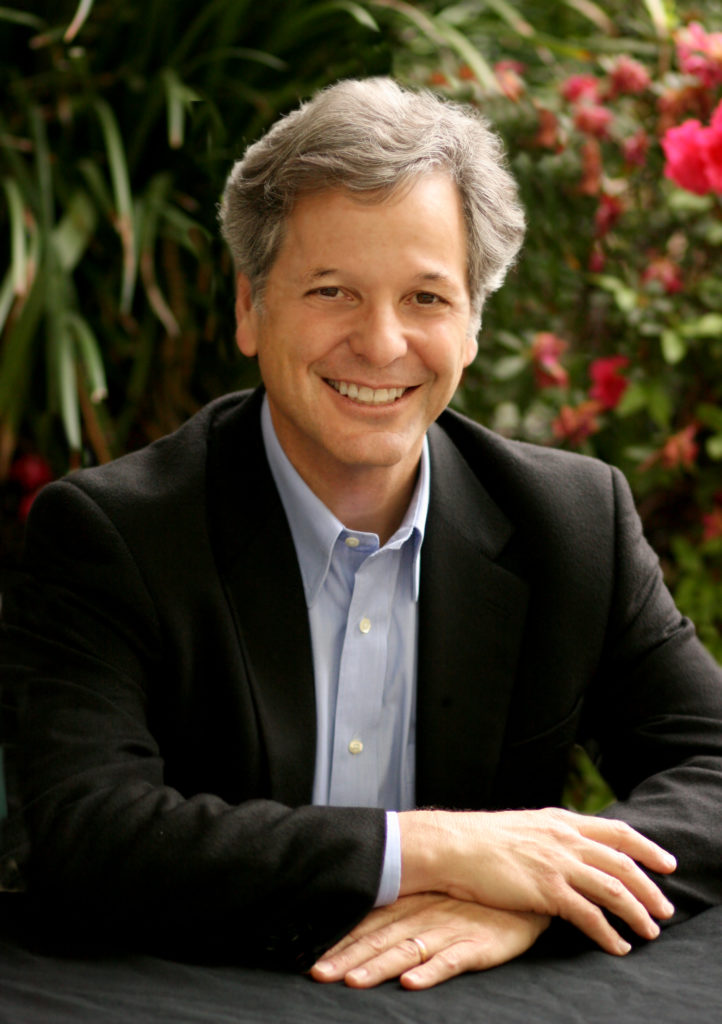

All Jews who love Israel recognize that Jerusalem is the capital of the Jewish state. For me this has never been a question.

Our people’s yearning for international recognition of Jerusalem as Israel’s capital is as old as the state itself. Our yearning at last has been addressed by President Donald Trump’s proclamation.

As satisfying as this is, there was something significantly missing in Trump’s address — recognition that Jerusalem also is the capital of a future Palestinian state. Had the president said that, world reaction would be magnanimous and I believe positive, and there would be less risk of violence against Jews, Americans and Palestinians.

Now that Jerusalem has been so recognized, I would hope the United States and Israel would be able to say publicly that East Jerusalem can one day be the capital of a Palestinian state in an end-of-conflict negotiated two-state solution. Only a two-state solution can address the long-term security needs of the State of Israel, preserve its Jewish character and sustain its democratic system of government.

I hope the needle has been moved in a positive direction as a consequence of Trump’s proclamation. I also hope there is a secret strategic plan that the United States has developed to bring about a peaceful resolution of the Israeli-Palestinian conflict.

I pray for the peace of Jerusalem.

Rabbi John Rosove, senior rabbi of Temple Israel of Hollywood, national chair of the Association of Reform Zionists of America, and past co-chair of the Rabbinic and Cantorial Cabinet of J Street.
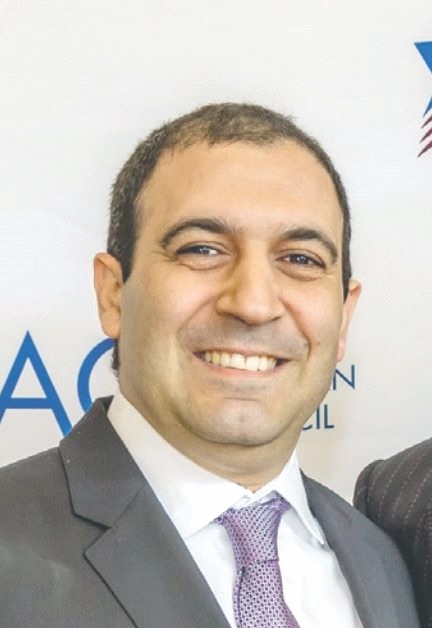
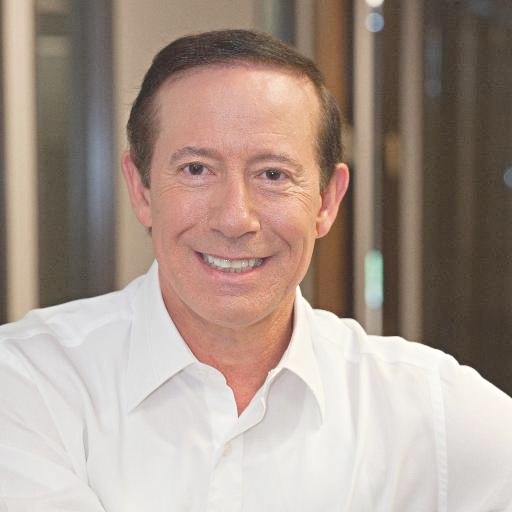
The president’s strong statement made America’s position clear for the world, acknowledging the reality that Jerusalem has been the capital of Israel since the country’s declaration of independence nearly 70 years ago. From Israel’s founding, Jerusalem has been the location of the country’s parliament, the Supreme Court, and the residence of both its president and prime minister.

Jerusalem has been the capital of the Jewish people for some 3,000 years. We have been praying “Next year in Jerusalem” for many centuries, and Israel’s national anthem ends with the word Jerusalem. It is at the heart of our past, present and future.

We praise the president’s statement that this action is a step to advance the peace process and that Jerusalem will remain the heart of three religions, which will continue to worship their religion freely.

Shoham Nicolet, CEO, and Adam Milstein, chairman, Israeli American Council


For decades, the Anti-Defamation League has called on the United States — and the entire international community — to recognize Jerusalem as Israel’s capital. And yet this important and long overdue step should not preclude the imperative of peace negotiations, including discussions over the final status of Jerusalem. We urge the U.S., Israel, the Palestinian Authority and the international community to work together to reduce tensions and create conditions conducive for the rapid resumption of Israeli-Palestinian negotiations leading to a two-state solution.

We recognize that this is an enormously sensitive and volatile issue, and we call on the Trump administration to implement this new policy in a careful and thoughtful manner in consultation with regional leaders.

We also hope that all parties emphasize the fact that this announcement does not diminish the recognition of, and respect for, the Muslim and Christian connections to the holy city.

Amanda Susskind, regional director Pacific Southwest Region, Anti-Defamation League
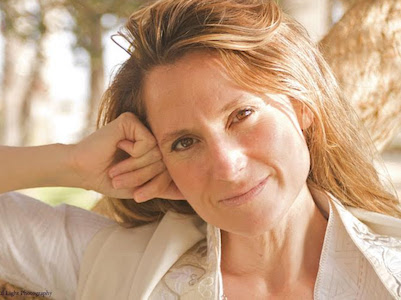

Given that the current U.S. consulate, built in the early 21st century, is a literal fortress overlooking East Jerusalem, the move of the U.S. Embassy to Jerusalem shouldn’t be a surprise to anyone who was paying attention. That being said, I believe that we are living in historic times. What is perceived as a tunnel of darkness can also be a birth canal. And, like the twins Jacob and Esau, we are battling inside the womb. Israel and Palestine are shadow characters of each other. But what if, instead of perceiving the shadow as an enemy, we view each other as mutual vehicles for redemption? What if this stunning announcement regarding Jerusalem ends up breaking the waters of reconciliation?

Prayers and blessings have a place, even in the midst of politics. May the U.S. and Israel find peace in their special relationship, and may our sisters and brothers of Palestine find statehood speedily in our time.  May all three elevate their nations to the true ideals of democracy and self-determination. And may the shared holy ground of Jerusalem become the inspiration for a rebirth of freedom for all.

Rabbi Lori Shapiro, rabbi and founder of the Open Temple


This is a historic moment for the State of Israel and the Jewish people worldwide. Recognizing Jerusalem as our capital is a reflection of reality that dates back to the time of King David. Although we don’t need anyone to endorse our history, the fact that the United States government finally has stated its recognition of Jerusalem as our capital is the support that Israel deserves. There is no other country in the world that has had its capital challenged, except the State of Israel.

President Donald Trump’s recent statement supports what we all know is true: Jerusalem is the eternal capital of the Jewish people. The recognition by the U.S. government of Jerusalem as Israel’s capital should not in any way affect the peace process if, indeed, the other side really is interested in peace. The American government is not proposing to move its embassy into East Jerusalem. West Jerusalem, where the U.S. Embassy will be built, always has been acknowledged as Israel’s territory.

May we all pray that Jerusalem will be the city of peace that our biblical prophets envisioned.

Rabbi Elazar Muskin, senior rabbi of Young Israel of Century City and president of the Rabbinical Council of America.


Yes, Jerusalem is the capital of the State of Israel; it always has been the capital, whether it was recognized by the United States or not.

President Donald Trump’s announcement would have been more significant had he used it to strategically advance his stated goal of an “ultimate deal” leading to peace between Israel and the Palestinians by, for instance, also recognizing East Jerusalem as the capital of a future Palestinian state. This was a missed opportunity to advance a comprehensive peace plan rather than just make a largely symbolic gesture that benefits only one of the parties.

Rabbi Laura Geller

Community Reacts to Jerusalem News Read More »

The Power of Recognition

One of the people around the table couldn’t control herself and erupted in laughter. I couldn’t blame her. The story I was telling the group of mostly Americans earlier this week seemed to compare President Donald Trump with Alexander the Great — a comparison worthy of a good chuckle.

Still, the point was made. And it was made because of my need to explain to this group of non-Israelis why Israelis would care that a faraway foreign leader is recognizing Jerusalem as the nation’s capital.

The story is from the Talmud, and whether it actually happened is unclear. It appears in several sources, among them Josephus, the first-century Jewish scholar. But the details aren’t always the same, and in fact, many historians believe that Alexander the Great never set foot in the Holy Land.

‎But according to the Talmud in tractate Yoma (69a), Alexander gave permission for the Samaritans to destroy the Temple in Jerusalem, and the high priest, Shimon HaTzaddik, was informed. “What did he do? He donned the priestly vestments and wrapped himself in the priestly vestments. And the nobles of the Jewish People were with him, with torches of fire in their hands.”

This band of Jewish leaders walked all that night until it reached the armies of Alexander and the Samaritans. When dawn arrived, Alexander asked the Samaritans: Who are these people? The Samaritans said to him: These are Jews who rebelled against you. The sun shone and the two camps met each other. And then, when Alexander saw Shimon HaTzaddik, he “descended from his chariot and bowed before him.”

His escorts, no doubt puzzled, asked him: “Should an important king such as you bow to this Jew?” His answer: I do so because “the image of this man’s face is victorious before me on my battlefields.” That is to say: In past battles, he has seen Shimon’s face and only now does he realize that this is the face of a real person, the high priest of the Jews. Naturally, Alexander, after this encounter, did not destroy the Temple. In some versions — but not this one — he even came to Jerusalem to bring an offering in the Temple.

How is this story relevant to modern Israel and modern Jerusalem? In fact, it is relevant. The Jews were always a relatively minor people who lived in the shadows of great empires. Thus, they craved recognition. They needed the great rulers of the great empires to accept or even embrace them as a worthy people.

Trump’s recognition was a psychological re-enactment of something the Jewish people always seek: the approval of the great empire.

Cyrus of Persia was one such ruler of an empire — and he let the Jews go back to their land and rebuild their Temple. With Alexander, the historical facts are not as clear, yet the myth is in place. Here is another great king, the leader of another great empire, recognizing the uniqueness of Jewish Jerusalem.

Hence the burst of laughter. President Trump — the great Donald — is no Alexander. Not even close. And yet, he is the leader of the great empire of this era. In this sense, his recognition of Jerusalem echoes Alexander’s true — or imaginary — moment of realization.

We can explain why Trump’s recognition is an important political move, and we see that it has repercussions and consequences, and we follow the chain of events ignited by his speech. But first and foremost, Trump’s recognition of Jerusalem as Israel’s capital was a psychological re-enactment of something the Jewish people always have sought: the approval of the great empire.

This is especially worth mentioning during the week of Hanukkah, a holiday marking the clash between the Jews and an empire. When Hellenistic culture threatened to erase the culture of the Jews, when that empire showed little respect to the ways of the Jews, the inevitable result was war. In the Hasmonean dynasty’s case, a triumphant war. But there have been many wars that the Jews haven’t won. So for them, the best war is often the one that can be avoided.

Indeed, the essence of America’s friendship with Israel is war prevention. When the U.S. is on Israel’s side, Israel’s enemies know that battling Israel is going to be difficult and costly. They know that their initial goal — to eradicate the Zionist project — cannot be successful.

A recognition of Israel’s capital is also a reaffirmation of the alliance. It is a signal to the countries around Israel that we still have the American shield above our heads. Contrary to what some pundits would have you believe, this shield — including Trump’s manifestation of it by his Jerusalem declaration — is a receipt for reducing violence.

The U.S. stands with Israel. The U.S. is mighty. Hence, there is no point in making war with Israel over, say, Jerusalem.

Thus, we are left with little wars. Demonstrations by frustrated Palestinians or Arab Israelis, whose leadership again failed to restrain the Arab public. The occasional terror attack — on Dec. 11, a security guard was stabbed and badly hurt by a Palestinian. But by the time this story went to press on Dec. 12, the response to Trump’s speech was less than overwhelming.

There was verbal hostility, especially from the autocratic bully ruling Turkey, Recep Tayyip Erdogan. Israeli Prime Minister Benjamin Netanyahu responded to Erdogan’s threats and complaints, stating: “I am not used to receiving lectures about morality from the leader who bombs Kurdish villagers in his native Turkey, who jails journalists, who helps Iran go around international sanctions.” Netanyahu has information about attempts by Turkey to strengthen Islamic institutions in Jerusalem, and hence, his denouncing Turkey is not only about words.

Beyond the expected and tired words of condemnation, there was not much of a dramatic response to report. The fact that Israel’s prime minister traveled to Europe as scheduled this week — to receive the usual lectures from the leaders of France and other nations — is telling: Had he thought that Israel is under grave threat of severe retaliation because of Trump’s announcement, he probably would have canceled the trip. Had he thought that the visit would be intolerably hostile, he easily could have found an excuse to postpone the trip.

There was no need to do that. To anyone worried about how Jerusalem’s new status might affect the stalled peace process, Netanyahu had his answer ready: “The sooner the Palestinians come to grips with this reality, the sooner we will move toward peace.”

Will they come to grips with reality? The Palestinians have a history of rejectionist sentiments, but their options are limited. A great desire for violence does seem to exist among the masses, and the leadership is stuck. The threat to boycott a peace process led by the U.S. is hollow. There are not many alternatives to such a process. The threat exists of the Palestinian Authority moving toward a Hamas-like approach —  but Palestinian leader Mahmoud Abbas knows better than anyone that when Hamas takes over, there is no room left for other Palestinian factions.

In fact, Trump’s decision to detach his statement from an active peace process has its own logic. Israel conducted many rounds of the peace process of the past under the assumption that a Palestinian capital in Jerusalem is part of the ultimate deal. Some Israeli leaders, such as Ehud Barak at the Camp David Summit in 2000 and Ehud Olmert after the Annapolis (Md.) Conference in 2007, were more prone to acknowledge this intention publicly. Other prime ministers, such as Netanyahu, would deny such an assumption, because they believe Israel shouldn’t tip its hand before all issues are resolved. But even in the last round of negotiations, initiated and run by former U.S. Secretary of State John Kerry, all three parties understood that a compromise involving Jerusalem was on the table. They understood that the Palestinians also will have a capital called Jerusalem.

Consider the main components of the pragmatic political debate over the future of Jerusalem. There are two main issues to be resolved: One is where the border separating Israel from a Palestinian entity (a state, or a semi-state) will be located. The second is what’s going to happen with the holy sites, the Western Wall, Temple Mount, the Old City, Mount of Olives, etc.

The essence of America’s friendship with Israel is war prevention. When the U.S. is on Israel’s side, Israel’s enemies know that battling Israel is going to be difficult and costly.

Trump didn’t resolve these two issues. He didn’t even hint at how these two issues are to be resolved. He kept the door open for a Palestinian capital in Jerusalem; he kept the door open for all arrangements that preserve the rights of adherents to all faiths to practice their religion in Jerusalem.

But he did provoke the Palestinians. The Palestinians invested a lot of effort in recent years in their attempt to undercut the historic claim of the Jewish people on Israel and Jerusalem. Trump provoked them to accept reality, to accept the underlying assumption according to which Jerusalem is and will remain Israel’s capital. He provoked them in a way that might expose the futility of any peace process.

Trump, by making his statement, sent them more than a hint that the nonsense of rejecting the Jewish connection to the Holy Land wouldn’t fly. If they are willing to deal with Israel — the state of the Jewish people that was established on a historically Jewish homeland — maybe a compromise can be reached. If their intention is to negotiate with Israel while still denying Israel’s right to exist as a Jewish state in the Jewish homeland — and that is the underlying meaning of rejecting Israel’s right to have its capital in Jerusalem — then there’s no point in putting a peace plan on the table.

Either way, the recognition of the Jewish capital of Jerusalem is a truth that will endure, in war or in peace.


Shmuel Rosner is senior political editor. For more analysis of Israeli and international politics, visit Rosner’s Domain at jewishjournal.com/rosnersdomain.

The Power of Recognition Read More »

Can Jerusalem Be Good for All Religions?

In the middle of the euphoria and hysteria that greeted last week’s U.S. recognition of Jerusalem as the capital of Israel, it was a story about stolen apples that caught my eye.

According to Israeli news reports, an Israel Defense Forces (IDF) squad commander was suspended after being caught on film stealing apples from a Palestinian fruit stand in Hebron, which had been abandoned in the midst of the “days of rage” violence.

“This behavior is not in line with what is expected from a soldier and commander in the IDF,” a spokesperson said in a statement. “The commander was suspended and will face disciplinary action.”

I know, compared to everything that’s going on, a stolen apple or two is hardly worth a story. I can’t imagine any army in the world making a fuss about stolen fruit. But tiny story or not, the apple saga gives us a context to assess the explosive issue of who should control Jerusalem.

There’s no need to belabor the historical and religious context for recognizing Jerusalem as the capital of the Jewish state. The Conservative movement, in a statement authored by the Rabbinical Assembly, the United Synagogue of Conservative Judaism, Masorti Israel and Masorti Olami, summarized it succinctly: “In recognizing Jerusalem as Israel’s capital and planning to move the American embassy to a location under uncontested Israeli sovereignty, the U.S. government acknowledges the age-old connection that Israel and the Jewish people maintain with the holy city.”

Let’s also remember that this past June, the U.S. Senate passed a unanimous resolution calling on President Donald Trump to abide by a 1995 law ordering the move of the U.S. Embassy to Jerusalem. That law, called the Jerusalem Embassy Act of 1995, recognized Jerusalem as “the spiritual center of Judaism” and was adopted overwhelmingly by the House (374-37) and the Senate (93-5).

The law cites the right of “each sovereign nation, under international law and custom, to designate its own capital,” and notes the irony that the U.S. “maintains its embassy in the functioning capital of every country except in the case of our democratic friend and strategic ally, the State of Israel.”

But it’s an innocuous mention in the Embassy Act that caught my attention: “From 1948-1967, Jerusalem was a divided city and Israeli citizens of all faiths as well as Jewish citizens of all states were denied access to holy sites in the area controlled by Jordan.”

That, for me, is the crucial link missing from this emotional debate: When East Jerusalem was under Jordanian control, religious liberty suffered. When it was under Israeli control, religious liberty flourished. You do the math.

As if it weren’t bad enough that Jews were denied access to their holy sites, under Jordanian control, “All but one of the 35 synagogues within the Old City were destroyed,” according to The Jewish Virtual Library. “The revered Jewish graveyard on the Mount of Olives was in complete disarray with tens of thousands of tombstones broken into pieces to be used as building materials … Hundreds of Torah scrolls and thousands of holy books [were] plundered and burned to ashes.”

Jordanian rule was no picnic for Christians and Muslims either. As Dore Gold writes in his book, “The Fight for Jerusalem,” Israeli Muslims “were blocked from visiting the Islamic holy shrines under Jordanian control” while “Israeli Christians did not fare much better; they were permitted to cross over and visit their holy sites once a year, on Christmas.”

All of this was in blatant violation of the 1949 Armistice Agreement, which gave Israelis of all faiths access to their holy sites, and which the United Nations was empowered to oversee.

When East Jerusalem was under Jordanian control, religious liberty suffered. When it was under Israeli control, religious liberty flourished. You do the math.

When did the U.N. finally intervene? In 1964, when Israel had the chutzpah to have a Hanukkah festival of lights display atop Mount Scopus, which it legally controlled. Why the U.N. intervention? Because of “Jordanian sensitivities.” You can’t make this stuff up.

So, forgive me if I have little sympathy for the professional hypocrites at the United Nations who are now portraying the confirmation of Israel’s capital city as another urgent crisis for humanity. They might do well to read an August 2015 report from the Washington Institute showing that the majority of Palestinian Arabs living in Israeli-ruled East Jerusalem would prefer to be citizens of Israel rather than citizens of a Palestinian state.

These Arabs are no fools. They know that since Israel took over East Jerusalem in 1967, it has protected all holy sites and created an open city that has become a global destination.

But none of that seems to matter to the critics of the embassy move. Perhaps the silliest criticism I’ve heard is that the announcement was “ill-timed” because it would hurt the “peace process.” That’s like saying a tap on the wrist would hurt a patient in a coma. What peace process? Everything the experts have tried has failed, including the delusional idea that the capital of Israel is an “open” question. It’s not. Jerusalem is the capital of Israel, full stop.

Such a cold dose of reality may, in fact, be just what the comatose peace process needs. What it does not need is the continuation of a failed strategy of appeasing corrupt Palestinian leaders who have refused all Israeli peace offers and who hold us hostage to their threats of violence.

Their latest reaction to Trump’s announcement is more evidence of their chronic refusal to accept a Jewish state under any borders. Nothing in the announcement precludes a two-state solution or the sharing of Jerusalem as a capital for two states. But instead of calling for peace talks, they call for violence. If Palestinian leaders cared for their people as much as they care for their personal bank accounts, we would have had peace a long time ago.

So, I’m sure it won’t surprise you that Jerusalem is the subject of our cover story, with an analysis from our political editor in Israel, Shmuel Rosner. It also won’t surprise you that local reactions in the Jewish community have been diverse, as you’ll see in our coverage.

My own take is that if we’re going to put Jerusalem in the hands of a sovereign nation, let it be a nation that respects the dignity of all religions — not to mention the dignity of an apple cart.

Can Jerusalem Be Good for All Religions? Read More »

Week of December 15, 2017

Week of December 15, 2017 Read More »

Hanukah – A Major Battleground for the Heart and Soul of the Jewish People


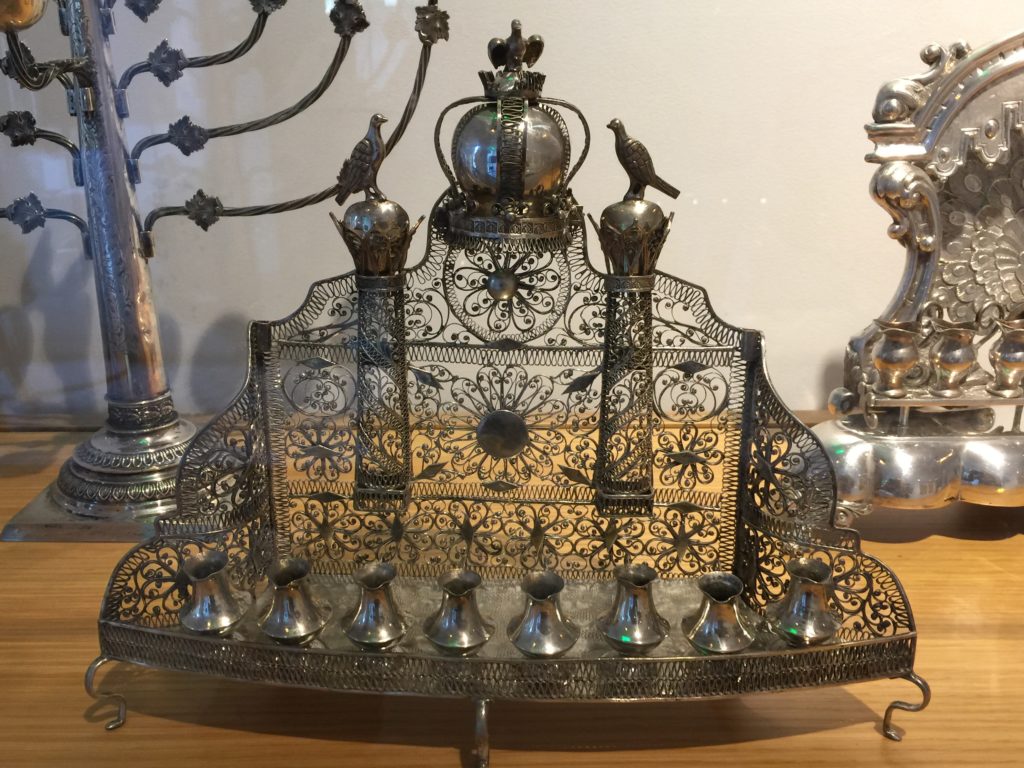
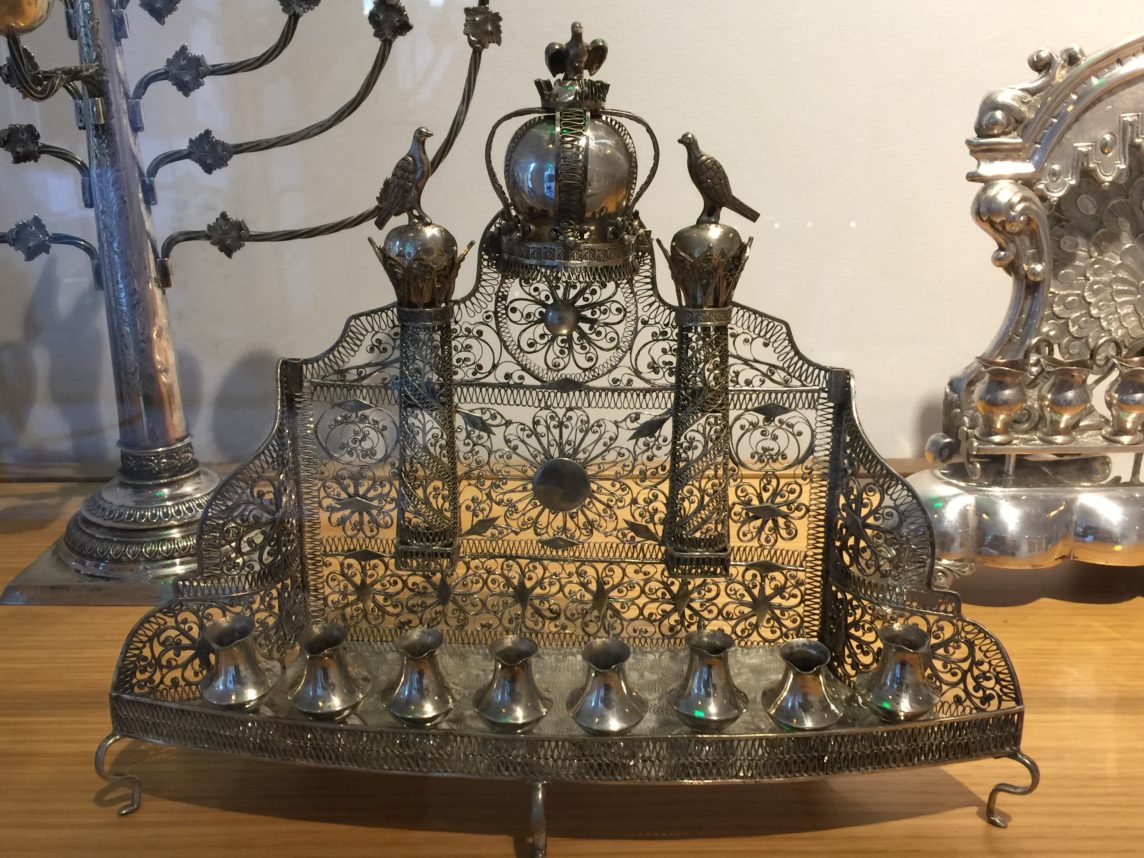
The photo is of a Hanukiya from Ukraine (circa 1809) that is crafted in the style of the Baal Shem Tov. It is part of the Judith and Bernard Briskin Fine Judaica Collection at Temple Israel of Hollywood, Los Angeles.

Without the success of the Maccabean Revolt in 165 BCE, there would be no Judaism, no Christianity, and no Islam today. That being said, what is the real story of Hanukah as opposed to the traditional story we teach our children?

The traditional story tells of the heroic battle of the Maccabean family against the Greeks, the Greek desecration of the Temple Mount, the miracle of the oil lasting eight days instead of one, the lighting of the Hanukiyah (the 8-branch Hanukah Menorah), eating latkes, and spinning dreidels, but this isn’t the true history of this holiday. The real history is more interesting and even more important for us in 21st century America and Israel (based on the 1st and 2nd Books of Maccabees).

The Maccabean Revolt was a battle for the heart and soul of Judaism and the Jewish people. That revolt affirmed Jewish self-identity and survival, themes that are applicable to every ethnicity, religion, and nation in the modern world.

A few years ago Dr. Noam Zion of the Shalom Hartman Institute in Jerusalem, spoke to the Board of Rabbis of Southern California on the theme: “The Reinvention of Hanukkah in the 20th Century as A Jewish Cultural Civil War between Zionists, Liberal American Judaism, and Chabad.”

He offered a comprehensive view of Hanukah from its beginnings 2200 years ago (165 BCE), and how it is understood and celebrated today by Israelis, American liberal non-Haredi Jews, and Chabad Lubavitch. Based on Hanukah’s history and the corpus of sermons written by rabbis throughout the centuries, Dr. Zion noted that three questions have been asked consistently through the ages:

‘Who are the children of light and darkness?’

‘Who are our people’s earliest heroes and what made them heroic?’

‘What relevance can we find in Hanukah today?’

Jewish tradition considers Hanukah a “minor holiday,” but Hanukah occupies an important place in the ideologies of the State of Israel, American liberal Judaism, and Chabad.

Before and after the establishment of the State of Israel in 1948, the Maccabees served as a potent symbol for “Political Zionism,” for those laboring to create a modern Jewish state as a response to anti-Semitism and as a refuge for oppressed Jews the world over. The early Zionists rejected God’s role in bringing about the miracle of Jewish victory during Hasmonean times. Rather, they emphasized that Jews themselves are the central actors in our people’s restoration of Jewish sovereignty on the ancient land, not God.

For 20th century liberal American Jews Hanukah came to represent Judaism’s aspirations for religious freedom consistent with the First Amendment to the United States Constitution. Even as Hanukah reflects universal aspirations, the Hanukiyah remains a particular symbol of Jewish pride and identity for American Jews living in a dominant Christian culture.

For Chabad, Hanukah embodies the essence of religious identity on the one hand and the mission of Jews on the other. Each Hassid is to be “a streetlamp lighter” who ventures into the public square and kindles the nearly extinguished flame of individual Jewish souls, one soul at a time (per Rebbe Sholom Dov-Ber). This is why Chabad strives to place a Hanukiyah in public places. Every fulfilled mitzvah kindles the flame of a soul and restores it to God.

Dr. Zion concluded his talk to us rabbis by noting that the cultural war being played out in contemporary Jewish life is based in the different responses to the central and historical question that has always given context to Hanukah – ‘Which Jews are destroying Jewish life and threatening Judaism itself?’

The Maccabean war was not a war between the Jews and the Greeks, but rather a violent civil war between the established radically Hellenized Jews and the besieged village priests outside major urban centers in Eretz Yisrael (the Land of Israel). The Maccabees won that war only because moderately Hellenized Jews recognized that they would lose their Jewish identity if the radical Hellenizers were victorious. They joined in coalition with the village priests and together retook the Temple and dedicated it (The Hebrew Hanukah means “dedication”). That historic struggle has a parallel today in a raging cultural civil war for the heart and soul of the Jewish people and for the nature of Judaism itself in the State of Israel.

The takeaway? There is something of the zealot in each of us, regardless of our Jewish camp. If we hope to avoid the sin of sinat chinam (baseless hatred between one Jew and another) that the Talmud teaches was the cause of the destruction of the 2nd Jerusalem Temple in 70 C.E. (Babylonian Talmud, Yoma 9b), we need to prepare ourselves to be candles without knives, to bring the love of God and our love for the Jewish people back into our homes and communities. To be successful will take much courage, compassion, knowledge, understanding, faith, and grit. The stakes are high – the future of Israel and the Jewish people.

Is it any wonder that Hanukah, though defined by Judaism as a “minor holiday,” is in truth a major battle-ground for the heart and soul of Judaism and the Jewish people?

Chag Hanukah Sameach!


Hanukah – A Major Battleground for the Heart and Soul of the Jewish People Read More »

Student Debt: Different Ways Jewish Youth are Fighting Debt

Life for regular Americans is getting harder due to student debt. At the moment, the average household has 828 percent more student loan debt than families in 1999. This is no surprise since many colleges and universities are becoming increasingly expensive.

Years ago, many parents could afford tuition fees, but that is no longer the case. This plight is affecting several communities, including Jewish communities. This is the reason today’s youths are trying to find solutions to this problem.

Giving and Being Forgiven


Dealing with this crisis is not going to be easy since there is no simple solution. One group of students may be in luck because the US offers a program that forgives the debt of those who help others.

The PSLF program was designed to help those who work for non-profit organizations, but that did not include religious organizations. Thankfully, many clergy members and other religious leaders believed that students who wanted to offer their social service to religious organizations should also be eligible for this program. Now, it is open to qualified religious organizations.

Granted, this program only affects a small group of students, but it is one way to tackle this growing problem in many communities.

A Different Type of Loan


Those who read Holy texts know that there is something wrong with collecting interest from members of one’s own religion. Everyone knows that one reason students are suffering from mounting debt deals with high-interest rates.

Students looking for a loan are starting to see other types of institutions springing up. These companies loan money without charging interest. The institutions do not believe that those who want to go to college should be punished for educating themselves.

Hopefully, institutions like the Jewish Free Loan Association is just one of many who see the importance of lending without interest. They expect individuals to be honorable and payback.

Squash the Debt


Okay, some of these solutions are great, but they do not help students who are drowning in debt. It is very hard to start a business or take steps towards investing in a house or property with a ton of debt looming over one’s head. This crisis is definitely stifling growth within Jewish communities and others around the country.

Economists are worried about the way this is going to affect American lives in the long run. The debt is affecting millennials, whose population is now greater than the baby boomer generation. Different sectors of the economy might suffer because the younger generation only has money to pay debts and basic necessities.

Some students are finding relief with debt consolidation agencies, which is seeing some success. Granted, no two consolidation agencies are the same, so students must read reviews and compare policies before choosing one, but these consolidators are definitely helpful. Students do not have to worry about paying several entities at the different times but rather one single bill.

These agencies help negotiate a deal to ensure that the student pays less, which is probably music to many students’ ears. This solution does not wipe away debt, but it does help lessen the burden just a bit.

Hopefully, Jewish communities continue to find more inventive ways to help deal with this on-going crisis.

Some youths are becoming actively involved in politics and attempting to get the US government to understand the plight of today’s students. Some of these young activists are pushing for student loan debt forgiveness while others want higher education to simply be free for everyone since they feel education is a right.

Who knows how this issue is going to resolve itself, but it is obvious that many within the Jewish community are not wasting time in taking productive steps.

Student Debt: Different Ways Jewish Youth are Fighting Debt Read More »