fbpx

November 21, 2017

Q&A with Wolf Blitzer on Muslim Refugees, ‘Fake News’ and His Favorite Journalism Movie

CNN newsman Wolf Blitzer, one of the world’s most recognizable journalists, has personal and professional connections to the Holocaust and Israel.

Blitzer’s paternal grandparents died in Auschwitz. His parents, both survivors from Poland, immigrated to the United States after the war, following the 1948 passage of the Displaced Person’s Act, which opened America’s borders to Europeans persecuted by the Nazis.

Blitzer, 69, was born in Germany and raised in Buffalo, N.Y. He was a reporter in Israel before joining the staff of CNN in 1990.

After being honored Nov. 5 by the Los Angeles Museum of the Holocaust, Blitzer discussed today’s Muslim refugees, being a Jewish journalist at a time of rising anti-Semitism, his favorite journalism movie and more.

Jewish Journal: Can you compare the plight of Jewish refugees after the Holocaust with today’s Muslim refugees from Syria? 

Wolf Blitzer: As a son of Holocaust survivors who came to the United States as refugees after World War II, I strongly believe in refugee resettlement. This country welcomed my parents, who went on to establish a wonderful life in Buffalo, N.Y. My parents, like other Holocaust refugees, were thoroughly vetted by U.S. officials before they were granted entry visas. My dad told me about the questions he was asked. They were so grateful to this country and went on to become great American patriots.

JJ: How comparable are the situations?

WB: Refugees are refugees even as there are, of course, different degrees of oppression that made them refugees. Surviving genocide and mass murder, for example, is different than surviving a civil war. But make no mistake: Both are awful and brutal.

JJ: What can be done about Holocaust denial in the Muslim world? 

WB: The best way to deal with Holocaust denial is to get the truth out there — whether it’s here in the United States or elsewhere around the world, including in the Muslim world. And that’s where Holocaust survivors play such a critical role. They survived the horror and their stories are so powerful. Unfortunately, they are now in their 80s and 90s and there are fewer survivors every year. Their personal stories and testimony — shared at Holocaust museums on video — will remain and should be told in the Muslim world and everywhere else.

JJ: Before joining CNN, you worked at The Jerusalem Post and at Reuters’ Tel-Aviv bureau. How was the transition to CNN?

WB: It was very smooth. The folks at CNN are so nice. They really spent some time helping me during the transition. I was a print reporter and the hardest thing was learning how to write for television. It’s different than writing for newspapers or magazines. But in the end, it’s all about being a reporter and gathering the news. Those techniques are the same. My first day at CNN was May 8, 1990 — and Saddam Hussein invaded Kuwait a few weeks later in August. I was CNN’s Pentagon correspondent, so I had no choice but to learn all about broadcast journalism very quickly.

JJ: Do Jewish journalists have special responsibilities at a time when anti-Semitism in on the rise?

WB: Our responsibility is the traditional responsibility: report the news honestly and fairly and get the job done. That’s what we’ve done for my whole career, that’s what journalists do and that’s what the viewers, readers and the listeners deserve — factual, honest reporting.

“Occasionally we make a mistake. If we have to correct something, we correct it, then we move on.”

JJ: In the age of “fake news,” and with President Donald Trump calling CNN fake news, how can journalists ensure that the public can continue to trust the media?

WB: Just keep doing our job and don’t get distracted. Just report the news and be honest and responsible. Look, we’re the first draft of history. Occasionally, we make a mistake. If we have to correct something, we correct it, then we move on. But it’s not that complicated: just report the news. That’s what we try to do.

JJ: What’s your favorite journalism movie?

WB: “All the President’s Men.”

JJ: What’s the likelihood of an Israeli-Palestinian peace agreement?

WB: We’ve been working on that a long time. Let’s see what happens.

Q&A with Wolf Blitzer on Muslim Refugees, ‘Fake News’ and His Favorite Journalism Movie Read More »
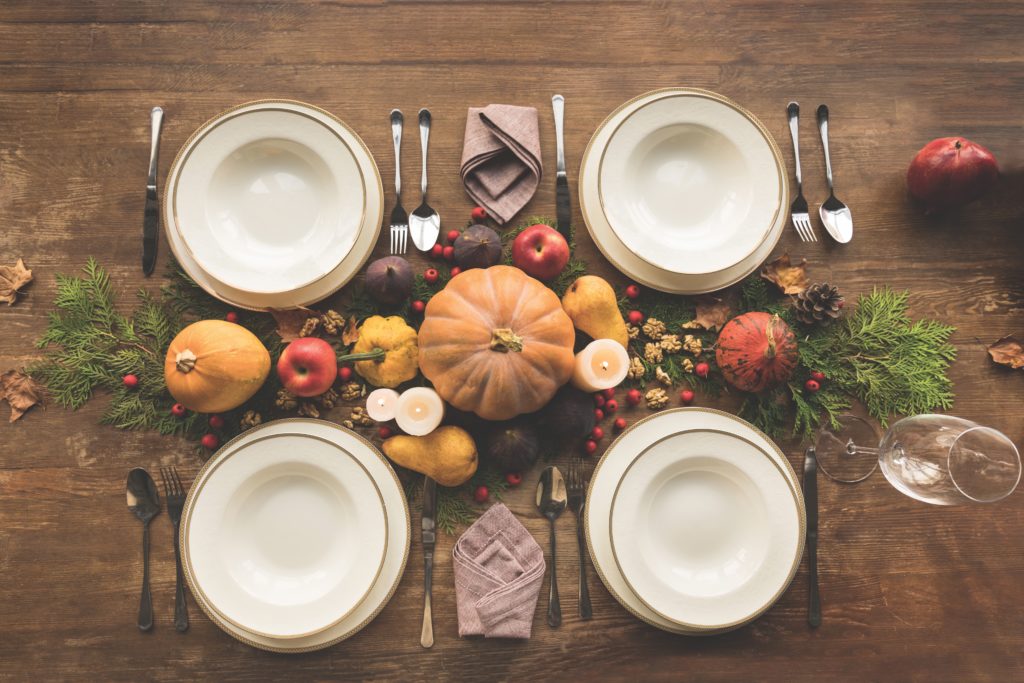
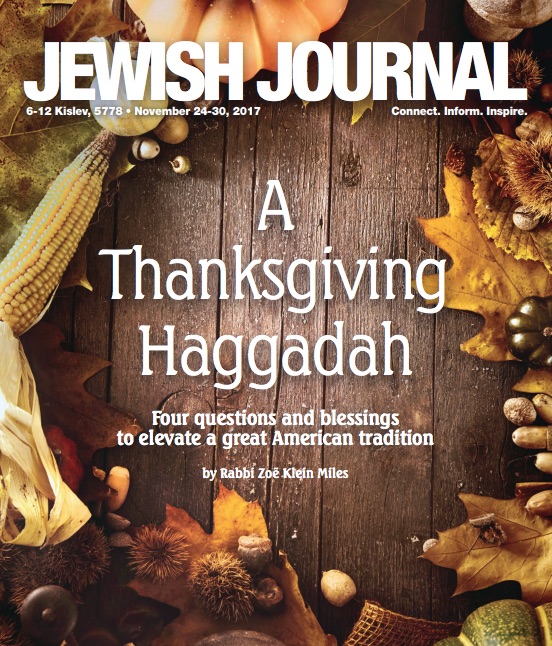
A Thanksgiving Meal Haggadah

Call it the November dilemma.

Every autumn, as we sit down to Thanksgiving meals, a lot of us find ourselves silently pondering the same question: What are we supposed to do?

As Jews, we have our holiday routines: Shabbat dinners with candles, Kiddush wine and ha-Motzi over the challah. On Rosh Hashanah, we have apples and honey. Pesach? There’s a whole manual to tell us when to dip, when to drink, even how we’re supposed to sit.

Then there’s Thanksgiving. We gather to eat — the same people, at the same table, with the same enticing aromas wafting in the kitchen. But we don’t have a script.

Sure, we feast on turkey, argue politics and watch football. But what about the ritual? What about the meaning?

That’s where this Thanksgiving Haggadah comes in. It’s our attempt to help you focus, at least for a few moments, on gratitude, a theme that’s both deeply American and deeply Jewish.

The Passover Haggadah has its four questions. To enhance your Thanksgiving, consider these four, each designed to inspire conversation, storytelling and reflection. Then ponder these four blessings, included to help you carry these ideas into your life.

We hope you’ll find a few minutes between the appetizers and the pumpkin pie to ask, answer, learn and share. And then, after dishes are cleared and the guests scattered again, carry the gratitude into the days and months ahead.

Happy Thanksgiving.

Embodying Gratitude

When the Biblical Leah gave birth to her first child, she proclaimed, “This time I shall thank the Lord.” (Genesis 29:35) She named him Yehuda — Judah — Hebrew for “thankful.” To be Jewish means to be thankful. The Talmud teaches that a person should find reasons to say 100 blessings each day. When we exercise our hearts to appreciate, and train our eyes to take notice of the goodness all around, we invite in the blessings of wonderment, vitality and joy.

Discuss: How can you embody gratitude?

BLESSING: Giving Thanks

Some of Judasim’s oldest texts emphasize the centrality of gratitude: “Give thanks to God for God is good! God’s lovingkindness is eternal.” (Psalm 107:1)  “It is good to thank God and make music to Your name!” (Psalm 92:1). And traditionally, the first prayer we say every morning, Modeh Ani, expresses gratitude for the very act of waking up: “I gratefully thank You God, for You have restored my soul within me with compassion, abundant is Your faithfulness.”

Mending Divisions

It’s hard to imagine a time more divisive than the one we’re living in now. But President Abraham Lincoln proclaimed Thanksgiving as a national holiday in 1863, smack in the middle of the Civil War. Besides encouraging Americans to give thanks even amid difficult times, Lincoln also urged them to offer “humble penitence for our national perverseness and disobedience.” In other words, he meant for Thanksgiving to be a day of both gratitude and repentance.

Discuss: What’s one thing you can do to mend our divided world?

BLESSING: Bringing Light

The idea that Jews are to be a “Light to the nations” (Isaiah 49:6) shines through the words of Emma Lazurus: “I lift my torch beside the golden door,” and the lyrics of Irving Berlin: “God bless America, land that I love. Stand beside her, and guide her, through the night with the light from above.” May we act in virtue and goodness to bring light to our homes, our communities and our nation. May God’s love ignite our resolve to bring the light of peace to the world.

In the words of the Torah’s priestly blessing:

“May God bless you and protect you.
May God’s face shine upon you and be gracious to you.
May God reach out to you in tenderness and grant you peace.”
(Numbers 6:23-27)


Welcoming Strangers

Thanksgiving and Sukkot are both autumn festivals that celebrate the bounty of the harvest. Both celebrate the courage of pilgrims escaping religious persecution and heading for a new land. Both are holidays of hospitality. On Sukkot, we welcome the ushpizin (“exalted guests”). On Thanksgiving, we recall the way the Wampanoag Native Americans welcomed the Puritans, feeding them and teaching them the skills they needed to survive.

Discuss: When have you welcomed a stranger — or been a welcomed stranger?

BLESSING: Opening the Door

Bruchim ha-baim, Blessed are you who have come here, exalted guests! Just as Abraham and Sarah welcomed angelic guests by preparing a meal with the choicest ingredients, we welcome one another with an abundance of food, warmth and love. As our sages teach, “Welcoming guests is greater than welcoming the Divine Presence.” (Talmud Shabbat 127a) and “To see your face is like seeing the face of God.” (Genesis 33:10)

Mindful Awareness

“When you have eaten and are satisfied, give thanks to God.” (Deuteronomy 8:10) The word order in this verse is significant: We should eat, be satisfied and then offer blessing. We are often less inclined to pray — or acknowledge the source of what we have — when we are content, when our bellies and our lives are full. It is when we find ourselves hungry and in need that we more readily think to reach out in prayer.

Discuss: How can we be mindful even when we feel satisfied?

BLESSING: Marking the Moment

The Lakota people have a prayer thanking the mineral, plant, animal, human and spirit nations for sharing the sacred wheel of life. This day we are aware of the intricate weave of our lives and our connection to the changing seasons.

We Jews express gratitude to the God of Life who enables us to reach this beautiful day:

Baruch Atah Adonai, Eloheinu, Melech ha’olam, shehechiyanu v’kiyemanu v’higiyanu laz’man hazeh.

Blessed be God, the Eternal Source of all life, for keeping us alive, for sustaining us, and for bringing us to this joyous season!

A Thanksgiving Meal Haggadah Read More »

Holiday Preview 2017

Holiday Preview 2017 Read More »

Week of November 30, 2017

Week of November 30, 2017 Read More »

A Debt of Gratitude

To mark Thanksgiving, the Journal asked some of its staff members and others to recall people in their lives to whom they are grateful.


Five years ago, I worked in Uganda as a Global Health Fellow. I met a 12-year-old named Conrad when I went out with my Frisbee after work one day.

I came to learn that “Connie” experienced friendships with an open, trusting heart. He asked after my family with great sincerity. He appreciated my being in his life, but more so, appreciated everything in his life, bearing hardships with grace and shamelessly admitting his fears, hopes and cares. He was guileless in his emotions. Once he admitted that he was hungry and it was hard to concentrate.

By that time, I was in New York, trying a three-day cleanse, intentionally limiting my food intake.

Yes, I’ve learned a lot from Connie.

We Skyped last week, just after he celebrated his 18th birthday. He soon will take his final school exams, and, he hopes, begin college next fall. I am grateful to have had the privilege these years of being in his life, cheering him on for his next steps, but more grateful for him being in mine, unknowingly teaching me how to be a better person.

Nedra Hoffman


Whenever I bake a chocolate cake, it’s in honor of my friend Doly, who lost her battle with cancer a few years ago. I make sure to put candy hearts all over it because Doly always served me chocolate cake when I visited and her friendship got me through some of my hardest years.  Doly hated baking and was of the belief that “true talent lies in knowing how to buy well.” And she did. In the first year after she died, if the cakes I baked were true to the way I felt, all the little hearts on them would have been broken. Now, all that remains are my memories of her and my gratitude that she was in my life, even all too briefly.

Yamit Wood, Food Editor


When I was a little girl, visits to my Aunty Gwen on the summer holidays were a highlight. She was the wife of my uncle and she was warm and welcoming. We did things like decorating a cake and making furniture for her period-decorated dollhouses. When I grew up and traveled, she sent me letters full of family news that kept me connected to my cousins. She was the hub of the family, keeping everyone informed and connected. I am so grateful that my family had such a center. She is one of my “special people.”

Naomi Brewster, New Zealander living in Australia


I lived with my aunt while my husband was in Vietnam. Florence asked me to help her prepare dinner for very special guests. The doorbell rang. Two wrinkled people shuffled in, Ruth and David. Her hair was gray, and his was gone. They were Holocaust survivors. Ruth said she never sat at table without wondering whether her family was alive somewhere, and whether they had food and a place to sleep. As she revealed her faded tattoo, I realized how much I took for granted. I looked at my life differently from that day on, with gratitude.

Sharon D. Walling


I was driving in Southern New Jersey when I realized I was lost. It was a time before Facebook and Twitter, and my Nokia 5160 had run out of juice. I tried to find a gas station — which is how lost people used to get directions before GPS — but the best I found was a random New Jersey diner. I had barely asked, “Where am I, exactly?” when I spied a group of people I knew from Camp Ramah in the Berkshires. As I laugh-cried in relief, they told me where I was and how to get to where I was going. Years later, I realized that Ramah was my first social network, my first lesson about the value of a wider network: how in unknown places, finding the familiar can seem like a miracle.

Esther D. Kustanowitz, Contributing Writer


It was on April 20, 1939 — Adolf Hitler’s 50th birthday — that my mother, sister and I left Berlin to find refuge in the United States.

At the Tempelhof Airport’s customs office stood a stern-looking man, in uniform and wearing a swastika armband. Behind him, a sign warned that no departing passenger was allowed to leave with more than 10 German marks — about $4 at the time.

Trained from boyhood to obey all official regulations, I fished in my pocket and, nestled next to a 10-mark bill, found a 10-pfennig coin, worth about 2 1/2 cents. Dutifully, I turned over the coin to the customs official.

He looked at me soberly, while I feared the worst, then returned the coin and wished me a good trip.

The incident has stuck in my mind for close to 80 years as a sign of hope and gratitude that in the worst of times, and under the most fearful uniform, there may yet lurk a human heart.

Tom Tugend, Contributing Editor

A Debt of Gratitude Read More »

Make America Grateful Again

America is in a lousy mood.

Everything is a mess. This is how Matthew Continetti describes the state of the nation in National Review Online:

“Riots and the suppression of freedoms on campus, drug addiction, deadly clashes between white nationalists and left-wing radicals, increasing numbers of hate crimes, mass shootings, bitter arguments over the national anthem … a cascading stream of allegations of sexual impropriety against figures in entertainment and in politics, the slow-motion disintegration of our major parties — it’s as if America itself has been thrown into the midst of a demolition derby, with every one of our prominent figures and major institutions targeted for destruction by Monster Truck.”

Given this chaos, how are we supposed to feel grateful this Thanksgiving?

I have a friend who says you can’t feel grateful until you first take a deep breath. This breath helps us relax so we can meditate on the big picture. So, what’s the big picture?

Well, first, there is our tradition. In Judaism, gratitude is a core virtue. The very root of the word Jewish in Hebrew means gratitude. The Talmud instructs us to say 100 blessings a day. And each morning, no matter how horrible the news is, the first blessing we make is Modei Ani — we thank God for returning our souls to us.

Beyond our tradition, though, there’s also that thing called happiness.

As psychologist and author Melanie Greenberg writes in Psychology Today, “Gratitude is an attitude and way of living that has been shown to have many benefits in terms of health, happiness, satisfaction with life, and the way we relate to others.”

If gratitude is so connected to our happiness and well-being, why doesn’t it come to us more naturally?

Maybe we’re simply not hardwired to seek happiness. “Our brains’ natural tendency,” Greenberg writes, “is to focus on threats, worries and negative aspects of life.”

In a way, that makes sense. How can we improve if we don’t worry about our mistakes? How can we repair the world if we don’t look at what’s broken?

The problem comes when negativity turns into a state of mind. The media have an inherent interest in focusing on the darkness — on the threats, the chaos and the crises. If we allow this negativity to permeate our consciousness, we won’t see much hope. We will wallow in the  world’s brokenness rather than working to repair it.

I sense that this is happening in much of the country right now. We have little faith in our leaders. The problems feel endemic, not fixable. We’re hopelessly divided. On top of that, when the media remind us all day long of this brokenness, our brains’ tendency to focus on “threats, worries and negative aspects of life” goes on overdrive. The urge to repair turns into an inclination to despair.

Enter Thanksgiving.

Divided or not, broken or not, once a year America forces us to grapple with gratitude. This is our national “deep breath.” Of course, when the nation is in such bad shape, it can feel awkward to imbue ourselves with gratitude.

The easy thing to do is ignore the darkness and count our blessings, at least for this one day. Many of us like to go around the Thanksgiving table and share the many things we are thankful for — and God knows there are plenty. You can never go wrong doing that.

But this year, because things are in such turmoil, we thought we’d go deeper.

So, we’ve come up with a Thanksgiving Haggadah, put together by Rabbi Zoë Klein Miles working with our community and religion editor Tom Fields-Meyer.

The idea was to borrow from the Passover seder and offer four questions around the theme of gratitude. These are not easy questions. They’re meant to provoke thought and meaningful conversation. In combination with blessings and commentaries, we hope this little discussion guide will elevate your Thanksgiving experience.

One thing I’ve learned in working on this issue is that gratitude is not as simple as it seems. On the surface, it’s such an obviously good idea. Looking at the glass as half full, taking nothing for granted, counting our blessings — all of those clichés are meaningful and true.

All too often, though, life gets in the way. How do we focus on gratitude while also focusing on our mistakes? How do we feel grateful while also feeling outrage at the world’s indignities?

Balancing polarities always has been the great Jewish dance. We don’t pick one imperative over another. We don’t wallow only in gratitude or only in fixing our lives. We don’t look only at the full part of the glass or at the empty part. We look at the whole glass at all times. The full part gives us hope; the empty part gives us the drive to go forward.

Maybe, in the end, the deepest expression of gratitude is to be thankful for the very fact that we are able to move forward, that we have the opportunity to make everything around us just a little bit better.

Happy Thanksgiving.

Make America Grateful Again Read More »

Move over Thanksgiving: Friendsgiving Shabbat is my reason for the season

The table is set. There’s wine, candles, bread, and a feast larger than your dining room table. It’s a time to come together with the people you care about and give thanks for everything good in your life. And, thankfully, I’m not talking about Thanksgiving, I mean Friendsgiving Shabbat dinner.

Friendsgiving is just what it sounds like: giving thanks over a meal shared with your friends. Over the last few years it’s become ever more popular, even Taco Bell did an ad campaign about it. Many people choose to replace the whole Thanksgiving feast, complete with family tension and bland family recipes, with a day of just the people they actually want to be around. As the perfect opportunity to test out new recipes and brush off the dust on old family classics, I look forward to gathering my friends for the potluck extravaganza that is Friendsgiving on Friday.

Friendsgiving is great, and combining it with Shabbat dinner takes it next level. Shabbat dinner, my favorite weekly holiday, sets the same intention that we seek out once a year in November. What brings joy into our lives? What are we grateful for and who do we want to share it with at the dinner table? I’ve been hosting through OneTable for the past year, ever since it launched in my city. OneTable is a nonprofit that is basically my support system for all things Shabbat dinner. I use their website to organize my meals, find new rituals, recipes and conversation starters, and they even offer grants to make it easy to host regularly. I’ve made new friends, recruited new hosts, and eaten more than my weight in challah!

Apparently, others had the same idea. My OneTable Hub Manager Marina Rostein told me that there have been over 100 Friendsgiving Shabbat dinners on the OneTable site this year.

While Thanksgiving is loaded with traditions and the people you’ve known forever, Friendsgiving just fits better for many millennials. I know plenty of people who struggle to see returning home as positive, but are excited to invent new traditions with their chosen families. Sometimes it’s because traveling is too expensive or difficult, and sometimes it’s just easier to be with the people who share your current values. My friends who are vegetarians have a hard time at their family’s meat-heavy holidays, but organize veggie-friendly Friendsgivings so they too can enjoy a fall feast. We’re a generation that knows what it wants, and how to get it.

While my family has eaten the same stuffing for 20 years, I love that Friendsgiving gives me the occasion to share something that is well-loved to my friends for the first time – and vice-versa for them and their family traditions. We get to share not only food, but memories with one another while creating new ones over a great meal.

Shabbat dinner shares that versatility. There is a traditional kind of Shabbat dinner: roasted chicken, too sweet wine, homemade challah. But that’s not the only option. Part of why I’ve been so invested in hosting through OneTable is that they know Shabbat dinner doesn’t have to look any one way. The rituals, new and old, traditional and chosen, can be meaningful no matter what’s served or where it’s eaten. They’ve made it possible to make Shabbat dinner my own.

One of my favorite dinners was actually one I hosted outside of my home at a bar. Called Board Game Bonanza, I reserved a table at a local bar that has hundreds of board games available to rent and allows you to bring in food. It was one of the easiest dinners I’ve ever held, yet also one of the most rewarding. People truly got a sense what Shabbat means to me – gathering friends around food for a meal that has meaning behind it. I opened up my table to people who also may be apprehensive about the “traditional” Shabbat ritual experience for a meaningful Friday night dinner, with a bit of competition!

This holiday season, I’m bringing these two traditions together and making something new that feels good to me and everyone at my table. Thanksgiving had its moment, but I’ll be celebrating Friendsgiving Shabbat dinner with OneTable. L’Chaim.

Move over Thanksgiving: Friendsgiving Shabbat is my reason for the season Read More »

President Trump’s Order Discriminates Against Muslims and Harms Members of all Faiths

I have signed again on with 60 interfaith leaders and religious organizations as part of Amici Curiae, an interfaith group of religious and inter-religious organizations and clergy, who are supporting the plaintiffs-appellees against President Donald Trump to affirm the district court’s injunction restricting implementation of Proclamation No. 9645: “Enhancing Vetting Capabilities and Processes for Detecting Attempted Entry Into the United States by Terrorists or Other Public Safety Threats,” 82 Fed. Reg. 45, 161 (September 24, 2017).

I have joined with 9 rabbis, the Union for Reform Judaism (representing 900 Reform synagogues in America), the Central Conference of American Rabbis (representing 2000 Reform Rabbis), Women of Reform Judaism (representing 65,000 women), the Reconstructionist Rabbinical Association, Truah: The Rabbinic Call for Human Rights, The New Israel Fund, Bend the Arc: A Jewish Partnership for Justice, The American Jewish World Service, the National Council of Jewish Women (representing 90,000 women) individual synagogues, churches, and a variety of Christian and Muslim Organizations as “Friends of the Plaintiffs against President Donald Trump” because we believe that his misguided order to increase vetting of immigrants to the United States is “intended to target Muslims in particular,” “to harm Muslims,” and “to violate the core Constitutional principle that is critical to the free exercise of all faith traditions in the United States” according to the First Amendment of the Constitution.

This Amici Curiae brief was filed in the Federal Fourth Circuit Court on November 17, 2017.

The following is language written in the brief:

“This order offends the fundamental tenets of all three monotheistic faith traditions including the Golden Rule, the imperative to welcome the stranger, and the belief that every individual has inherent value and dignity by virtue of being created in the divine image. Our faith traditions compel us to assist immigrants, particularly immigrants fleeing unjust persecution.

All our religious traditions have experienced prejudice against us and persecution, and it is out of our historic experience and our moral and religious values and our perception that Trump’s order is deliberately targeting the entire Muslim community that we shout “We protest….

This order recalls the infamous event in 1939 when a ship carrying 900 Jewish men, women and children fleeing Nazi Germany was turned away from our shores. This ship was forced to return to Europe  and more than 25% of its passengers perished in the Holocaust….

All of our Amici understand exactly what the Trump Order is about – an official act of discrimination on the basis of religion. Trump said during the Presidential Campaign of 2016 that there ought to be “a total and complete shutdown of Muslims entering the United States until our representatives can figure out what is going on.”  He also said “Islam hate us” and that “we’re having problems with the Muslims….

Trump’s order also has ostracized those who simply want to practice their faith freely and live peacefully as neighbors, students, colleagues, families, and members of their community. It has contributed to an environment in which Muslims are increasingly subject to violence, harassment, and discrimination because of their faith. An FBI report has discovered that while hate crimes have risen by 6% overall in the United States, anti-Islamic bias has increased by 26.5% in 2012….

The Order’s near-absolute ban on entry by citizens of the seven countries it names is entirely contrary to the Golden Rule as well as the religious calling to welcome the stranger. Amici understand that the people barred by the Order are mothers and fathers, children and grandparents; they are clerics, congregants, shopkeepers, and students. Each one’s life is sacred-each a unique expression of the divine and a common member of humanity.”

President Trump’s Order Discriminates Against Muslims and Harms Members of all Faiths Read More »

You need to listen to what these 2 IDF soldiers have to say

What would you do if you were given the chance to change one of the world’s most disturbing misconceptions and deceptions?

StandWithUs’ (SWU) tenth “Israeli Soldiers Tour” (IST) recently came to conclusion, when six teams of two reservist IDF soldiers returned home, after touring throughout the United States from October 22 – November 5.  These twelve reservists spoke at more than 170 campuses, high schools, synagogues, churches and community centers, reaching tens of thousands with their stories and millions through conventional and social media.

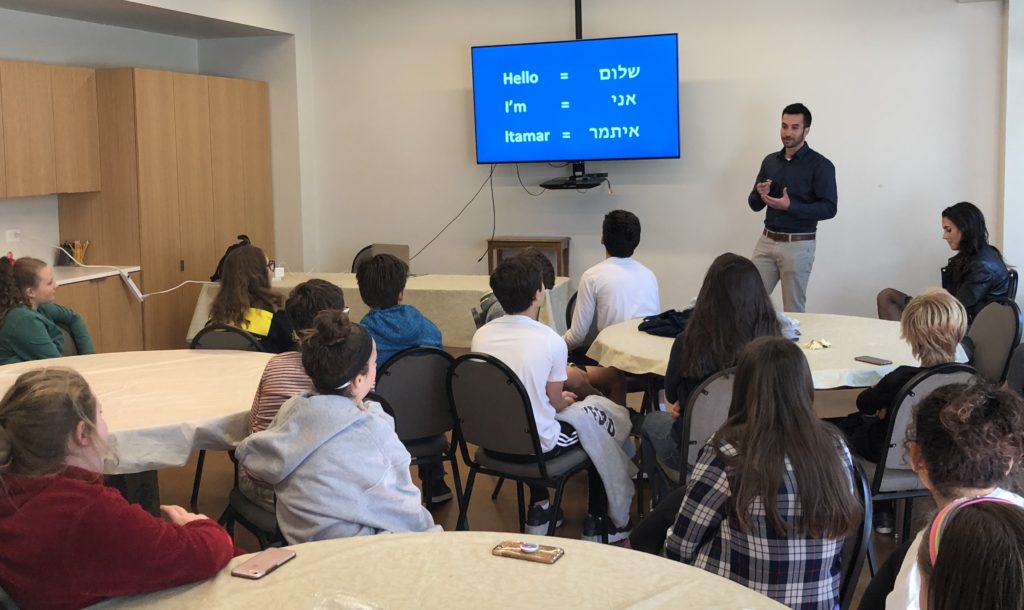
Israeli Soldiers Tour” puts a “human face” on the IDF uniform. The main purpose of this tour is to give people a perspective about the Israel Defense Forces (IDF) and the reality of living in Israel by relating their personal experiences during Israel’s Operations against Hamas in Gaza, interactions with Palestinians in the West Bank and serving on checkpoints and on the Gaza border, protecting Israel’s southern cities from rocket attacks.

They also share their backgrounds, struggles, successes, describe life in Israel and answer questions, the tougher the better.  Their stories have never been heard before and their last names are withheld for security purposes.


Because Israel has to constantly defend itself, military service is mandatory here, and young 18 year olds must enlist once graduating high school; men serve for 3 years and women for 2.

“Israelife” caught up with Itamar, who toured the South and Shir who toured the Midwest after the tour to gain their insights about speaking in the U.S.

Itamar, 25, is from Pardess Hana-Karkur, a small town in Northern Israel. Now living in Kibbutz Magal, he studies Education and Political Science at Oranim College. For the last 4 years, Itamar has worked in informal education on a Kibbutz, and has served as Head of the At-Risk Youth department in the Menashe Municipality.

Itamar served in the intelligence forces of the IDF in a classified unit. During his military service, Itamar consistently dealt with the complicated encounters between soldiers and Palestinian civilians

Together with Ilan Lopez, director StandWithUs Latin America, Itamar met with the Jewish community in Mexico prior to touring the South. Ilan joined the southwest team.

Shir, 26, grew up in Gush-Katif settlement in Gaza until the disengagement in 2005. Today she lives in the southern Israeli village of Beer-Ganim, and studies Law at the College of Management Law School.

Shir served in the Israel Defense Forces as a First Lieutenant in the ground forces as a “war room” operator on the northern border with Gaza, where she continues to serve as a reservist.  Shir took part in two operations against Hamas in Gaza as an officer – “Pillar of Defense” in 2012 and “Protective Edge” in 2014.

Shir volunteered in Africa with children, as a part of the Colman Student Union delegation.  She works as an Administrative-Legal Director at “Tmura center – The Legal Center for the promotion of equality” – representing victims of discrimination and various biases.

Why do you think it’s important to tell your stories as IDF soldier on campus?

Shir: It’s important to let people hear information that is different from the information they’re used to receiving. People should be able to choose what they think about certain issues, and in order to do so they need to have different opinions. In addition, students on campus struggle in a difficult arena in which they hear about Israel in negative contexts – we are there to show a different, more positive side.

Itamar: I believe that telling our stories in campuses can create a dialogue, especially when sometimes people are given only one side and not the full picture. Things are more complicated than the media sometimes portrays.  I think that the opportunity of sharing our own personal experience, will encourage students to explore and ask more questions. It will help them realize that although the reality in our region is complex and despite everything Israelis have been through, we believe in education which is the key that can make a difference for the future.


What is Israel to you, and how do you pass this message to students abroad?

Itamar:  Israel to me and to my family is a safe haven. My family arrived here from Europe and from Morocco and Yemen after suffering from persecution. I always knew, that in the state of Israel we’ll be safe.

My country is a place where each population can feel safe, no matter where they are from or what religion they practice.  Israel to me is a place where I can express my opinions, and where I feel that if I need anything, everybody will help me.

Shir: My heart and the craziest and yet sanest place I know.


Share one of the most memorable moments from your recent tour.

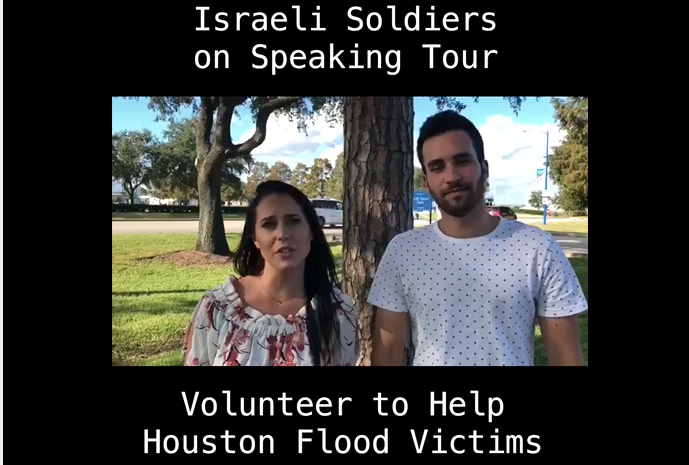
Itamar: One of the most exciting events that we had, was in Houston, Texas.  We met Pastor Becky (Keenan) of Gulf Meadows Church and spoke to a combined Spanish and English Israel class she conducts weekly.  We then joined congregants and volunteers and helped people who are still recovering from Hurricane Harvey. It was an amazing experience; we met a community that loves Israel, supports the Jewish community there and prays for Israel.  I wish we had more time to stay with them.

Here is Kayla and I:


Shir:  When we spoke with law students at one of the universities. In the last row sat four anti-Israel students with laptops who attacked us with masses of twisted and misinformation about the conflict, and the way that Israel behaves.  My tour partner Carlos and I calmly, fluently and professionally answered all the accusations – until they had no words left. I felt that we didn’t need to hide behind a computer and masses of information – I have the truth by my side, and that’s all I need.

What is your advice for people reading this interview, who also want to join the battle against the Israel delegitimization campaign currently taking over social media? 

Shir: Know the facts, research the subject you are talking about, know the twisted narrative of the other side – and always be critical towards any information you receive. If you are not an expert in a particular field or unsure of the facts – just say so. Correcting a wrong and false statement is more difficult than holding back.

Itamar:  My advice is to share as much as you can.

Unfortunately the social media campaign is huge, but on the other hand, it’s up to us to share and educate for the truth. Some people just see the headline or a short video without seeing the bigger picture. I think it’s our responsibility to have the answers and explain what it really means to boycott Israel – the technology that everyone uses, factories that hire Palestinians, and more important, our values as a democracy.


Seeing the growing wave of anti-Semitism, do you believe history can repeat itself? 

Itamar: I believe that if something happened once, it can always happen again. But I know that the only way that it won’t, is if we keep remembering and never forgetting what happened to the Jewish people throughout history. We need to educate the next generation that keeping our country safe, and learning about history is the key for saving our people.  It will also help us be responsive to people around the world who need our help because we’ll be able to identify with them.

Shir: Depends on what aspect. Could the Jews be threatened at this level again? Probably. Will we reach a situation similar to the Holocaust?  Never, because we have a country and a strong moral army. Such a situation could never be repeated.


How do you believe the Israeli-Palestinian conflict can be resolved?

Itamar: I believe in dialogue. We don’t have a partner for peace because they don’t educate for hope or for co-existence. When I watch how the summer camps in Gaza teach children to fight Israel, it’s hard to believe it. But we have to. I want to believe that the Palestinian leadership we’ll decide to stop this, and will prepare its people for similar values of peace and hope. I know that I will keep educating the kids I work with for hope. We should not give up. I believe that the next generation will find a solution, and it’s our job and their job to educate in a way that will allow a true dialogue.

Shir: Through education. By bringing the two peoples closer together, by stopping being afraid of the other side. Through more programs that bring the two peoples together, and that enable a dialogue with the other side, rather than distance and separation.


You need to listen to what these 2 IDF soldiers have to say Read More »

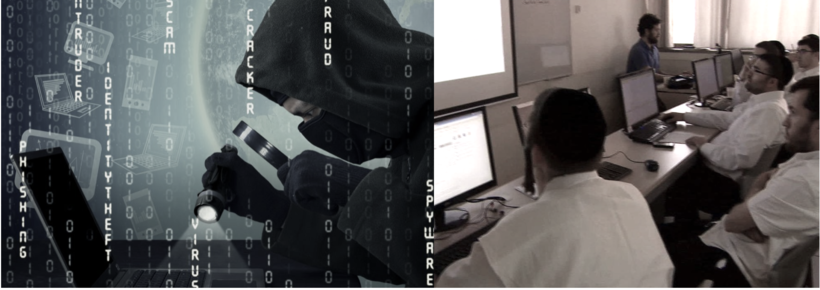
Will the Next Big Hack be Stopped by Rabbis?

Criminals are winning, but a new cybersecurity school being launched inside a New Jersey yeshiva aims to turn the tide

Criminals stole the private data of 143 million Americans in a massive data breach at Equifax this summer. In the past year, hackers have stolen millions of dollars from banks and governments, orchestrated the release of history-altering emails, launched global ransomware attacks shutting down computer systems on many continents, and stolen unseen episodes of major franchises.

Not just the private sector is at risk. Computer systems at more than sixty universities and federal government organizations were significantly compromised. A hacker set off the Dallas emergency siren system. Even those tasked with policing hackers are being targeted — police departments, the TSA, and the CIA have been severely compromised. In perhaps the biggest hack, the US Air Force’s “holy grail” security clearance files were exposed.

Golan Ben-Oni, who works as Chief Security Officer for IDT in Newark, New Jersey, thinks that Talmudic scholars can help to turn the tables in favor of the good guys.

“The study of the Torah is very analytical,” Ben-Oni explained to the Wall Street Journal. “There is a statement that is made, and then it is challenged, and then it is challenged again until it finally comes to an answer. It walks the person through many different viewpoints until there’s resolution.”

Whether Moses knew this when he brought the Jews the Torah is up for debate, however, it turns out that this kind of precise ability to analyze is a critical component of good cybersecurity. A good cybersecurity expert is a master at learning to identify and assess different risks and see risks that may occur.

Many Americans have heard of denial-of-service attacks, personal data theft, credit-card fraud, and ransom-wear, but there are many other hacks out there, and each time the experts patch a hole, the criminals regroup and look for new ways to attack.

The cybersecurity program that Ben-Oni is overseeing partnered with Bellevue University’s Center for Cybersecurity Education. The IDT Yeshiva students are now enrolled in Bellevue’s online courses and Golan and his team are supplementing the online coursework with additional real-life instruction.

In order to bolster real-life, cybersecurity experience for the yeshiva students, Ben-Oni also started a cybersecurity company to provide internships for the students.

While the cyber-sleuth image might not seem fitting for a talmud scholar, the yeshiva’s dean sees no contradiction. “The word for law in Judaism is Halacha, which means movement,” said Rabbi Shmuel Skaist, Director of the IDT Yeshiva. ”While Jewish law and life have ancient roots, there is room within Halacha for embracing all the issues that come with modernity.”

Creating a cutting-edge program of this caliber requires time and support. The program is being supported by Howard Jonas, Chairman of IDT, and is named after his grandfathers, Isser and Yitchak. The yeshiva expects fifteen students as part of the pilot program and are aiming to expand to one-hundred in coming years. Students will finish with a Bachelors of Science in Cybersecurity and as well as Certificate in Jewish Law.

Cybersecurity programs for the fervently religious Chareidi community were launched in Israel for men and women, and have been successful turning Torah scholars into real cyber-Jedi. Some religious cybersecurity experts, personally trained by Golan, are in the field, but due to security reasons we cant expand on their work.

There is an ancient saying from the book Pirkei Avos, which more that two-thousand years ago taught that every act leaves some trace. Rabbi Judah said, “Know what is above from you: a seeing eye, a listening ear, and all your deeds being inscribed in a book.” No matter how the criminals may try to disguise their intentions and cover their tracks, a good cybersecurity will be able to track them down.

The scholars at the IDT Yeshiva may be the next best weapon we have in the fight against cybercriminals.

________________________

Yonah Bookstein is co-founder and Deanna and Allen Alevy Senior Rabbi at LA’s Pico Shul, codirector of Camp Neshama, and Shabbat Tent , projects creating spiritual community for Jews in their 20s and 30s.

Will the Next Big Hack be Stopped by Rabbis? Read More »