It took two seasons and 19 episodes, but VICELAND’s weed-culinary show “Bong Appetite” finally did a traditional Shabbat episode, which aired last night. The guest chef? None other than celebrated Jewish icon Joan Nathan, author of King Solomon’s Table, who whipped up a “cannivorous” Shabbat meal…and we’re kvelling.
“Have you ever cooked with cannabis before?” asked the show’s host Abdullah Saeed. “This is the first time I’ve ever cooked with cannabis, let me just tell you,” assured Nathan.
So what was served?
Challah (duh), matzoh ball soup, double lemon roast chicken and apple kuchen (to which, Saeed exclaimed, “Kuchen! That’s a fun word!”). A typical Shabbat meal, except totally infused with weed.
Upon entering the kitchen, Nathan was faced with a pantry stocked with cannabis. “I don’t think I’ve ever seen weed in my life, but that’s OK,” an unfazed Nathan said. And so, with the help of chef Vanessa Lavorato (founder of Marigold Sweets) and cannabis specialist Ry Prichard, Nathan elevated a traditional Shabbat meal to a “higher” plateau (eh?).
Here’s how: The flour for the challah was sifted with kief (the strain: “Forbidden Fruit”); schmaltz was infused with hemp for the matzoh balls; THCA (the acidic version of THC), delta-8 THC from Area 52 and CBD were pulverized with salt to preserve lemons for the chicken; and coconut oil got a healthy dosage of ganjah for the apple kuchen.
When braiding the challah, Nathan told Lavorato, “What I do is I six-braid it.” Of course she does. Because she’s Joan Nathan and three braids is for amateurs. “Alright, let’s see how this bakes,” she said after putting the immaculately six-braided weed challah into the oven. “Well, it’s already baked,” quipped Lavorato. Ha. Ha. The episode is loaded with puns.
The episode ended with a Shabbat meal (Nathan didn’t indulge). A table was set. A blessing was recited over the challah. Candles were lit (and so were the guests). Oh yeah, and the candle-holder obviously was a bong…
Actress Ellen Page is accusing director Brett Ratner of subjecting her to homophobic comments while on set.
In a lengthy Facebook post, Page claimed that when she was 18 years old and working attending a “meet and greet” for an upcoming film, Ratner told a woman who was 10 years older than Page, “You should f*ck her [Page] to make her realize she’s gay.”
Page went on to say in the post that she “felt violated when this happened.”
“This man, who had cast me in the film, started our months of filming at a work event with this horrific, unchallenged plea,” wrote Page. “He ‘outed’ me with no regard for my well-being, an act we all recognize as homophobic.”
Page added that Ratner made several degrading comments to the women on set and that she eventually got into an “altercation” with Ratner.
“He was pressuring me, in front of many people, to don a t-shirt with ‘Team Ratner’ on it,” wrote Page. “I said no and he insisted. I responded, ‘I am not on your team.’”
She was later “reprimanded” for how she spoke to him.
Page went on to detail how on she was sexually assaulted by someone else in the industry and how someone else made an unwanted sexual advance on her.
“My safety was not guaranteed at work,” wrote Page. “An adult authority figure for whom I worked intended to exploit me, physically.”
Page encouraged women to speak out against those who have sexually abused them.
“We’ve learned that the status quo perpetuates unfair, victimizing behavior to protect and perpetuate itself,” wrote Page. “Don’t allow this behavior to be normalized. Don’t compare wrongs or criminal acts by their degrees of severity. Don’t allow yourselves to be numb to the voices of victims coming forward. Don’t stop demanding our civil rights.”
Prior to Page’s Facebook post, Ratner had been accused by six women of sexual harassment. The Journal’s Danielle Berrin has claimed that Ratner has behaved inappropriate toward her.
A Jewish Olympic medalist is accusing the team doctor of sexually abusing her.
Aly Raisman, a six-time Olympic medalist, told CBS’ 60 Minutes that she first went to Dr. Larry Nasar, who was a volunteer team doctor for the United States’ gymnastics team, for treatment when she was 15 years old.
Raisman was irked that the USA Gymnastics culture discouraged the girls that Nassar allegedly abused from speaking out sooner.
“I am angry,” said Raisman. “I’m really upset because it’s been — I care a lot, you know, when I see these young girls that come up to me, and they ask for pictures or autographs, whatever it is, I just — I can’t — every time I look at them, every time I see them smiling, I just think — I just want to create change so that they never, ever have to go through this.”
Nassar is facing over a 100 lawsuits from athletes and gymnasts at Michigan State and on the Olympics team for sexually abusing them while claiming it was for treatment. For instance, Nassar allegedly used his fingers to penetrate them as well as grope them by stating that it was treatment. Nassar’s defense is that such methods were legitimate forms of treatment.
McKayla Maroney, one of Raisman’s gymnastics teammates, claimed that Nassar twice abused her by claiming it was “treatment” and referred to one of the instances as “the scariest night of my life.”
The former Olympic doctor is currently in prison for pleading guilty to child pornography.
Rabbi Tzvi Weiss, who teaches preschool-aged boys in the Chasidic Karlin school system, has a degree in special education, but he still felt unequipped for the range of challenges facing preschoolers whose language and social skills were significantly delayed.
“I didn’t know how to teach language or to identify certain problems,” said Weiss, who teaches in one of the most Charedi neighborhoods of Jerusalem, where the entrance of every apartment building is filled with baby strollers, and men in black coats and hats hurry down the narrow streets.
Weiss jumped at the opportunity to participate in a three-year pilot program in seven Charedi neighborhoods throughout Israel that focuses on developing children’s social skills, emotional intelligence, language skills, understanding of facial expressions and interpersonal communication. He and his students are now in the final year of the first-of-its-kind early intervention program that the program’s creators hope will soon be expanded to all Charedi schools in Israel.
Called A Taste of Honey, the program is implemented by the nonprofit organization Achiya, under the auspices of JDC-Ashalim and the Ministry of Education. Achiya was created by leaders in Bnei Brak, a largely Charedi city, to help mainstream Charedi schools deal more effectively with childhood learning differences and developmental delays. Early intervention, educators believe, is the best way to do that.
Achiya’s programs have greatly expanded since its launch in 1993. Its facility in Bnei Brak offers paramedical facilities for boys and girls and soon will offer a children’s library. The organization operated a three-year Language Skills Program for preschoolers and runs a teacher training program with 19 branches that produces “fully certified” male teachers who go on to teach in the insular Charedi community.
Most Charedi boys schools do not employ female teachers due to norms regarding separation of the sexes, so the training of male teachers addresses a communitywide void, said Yitzhak Levin, Achiya’s co-founder and director.
“Twenty years ago, the majority of the Charedi population believed that formal teachers’ training was superfluous,” Achiya’s website notes. Levin added, “Ninety percent of the educators in the Talmud Torah system were Torah scholars who had spent years studying in a post-graduate yeshiva, without having received professional training in educational techniques and methodology.”
A Taste of Honey aims to give teachers more than just the skills necessary to identify and address children’s language issues. Eight pedagogical counselors have been working with 84 preschool teachers to help them address social awkwardness, emotional problems and/or developmental/language delays in 2,600 boys.
Following the core training, the counselors have continued to coach the teachers as they navigate their way in the classroom. They help the teachers design and equip the classroom area in a way that encourages verbal interaction, both among the children and between the children and their teacher. At the conclusion of the three-year pilot, the counselors will continue working within the Ministry of Education’s early childhood education department to continue the program’s goals.
“The goal is for the program to become part of the curriculum — by the Ministry of Education with government funding — for all Charedi kindergartens,” said Tzivia Greenberg, Achiya’s director of resource development.
“Twenty years ago, the majority of the Charedi population believed that formal teachers’ training was superfluous.” – Achivya’s website
During a visit to the Karlin school, Tzaly Perlstein, who coordinates A Taste of Honey, said language skills were especially important for Charedi boys because they needed to read Hebrew, Aramaic and often Yiddish by the middle of elementary school.
Levin said he is proud that the program is creating change within the Charedi community.
“Now we have many Charedi professionals who can identify and address what is lacking in the Charedi educational system and find the appropriate solutions. And, most importantly, with the hechsher [kosher approval] of the biggest rabbis.”
Weiss, the Karlin teacher, said he asked his students to color in a picture of an old man crying during a Purim megillah reading, and asked them why the man might be crying.
Then he asked his students, “What is prayer?” “How do you feel when you pray?”
The boys then offered answers like “happy” and “grown up, like my Abba.”
Weiss said it was “very satisfying” to see the children able to verbalize their emotions. They expressed empathy for others. It left him with a warm feeling — “leibidik.”
This article was originally published in The New York Jewish Week.
Jewish professionals and volunteers will gather next week in Los Angeles for the GA, The Jewish Federations of North America’s General Assembly. They will convene under the somewhat vague headline “Venture Further.”
Further to where? This is probably a matter for debate, but the slogan conveys a clear sentiment: What we have now is a transitional phase. Our job is to carve a course that will move us forward “into the future of Jewish education, philanthropy and our community.”
The future of “our community.” Here is something to think about: Is “our community” the North American Jewish community or the whole of the Jewish world? Clearly, in talking about a specific community, as large as it might be, there is also a need to keep an eye on other communities, as no Jewish community is an island. The future of “our community” must consider the future of the community that it not “our community,” but someone else’s.
In this spirit, and before this special annual occasion of discussion — where I will be a speaker this year — I would like to briefly suggest a simple framework for understanding the state of the Jewish world, and, hence, the test we must pass as we attempt to venture further. I know, many of the things I am about to write are obvious. But sometimes we need to remind ourselves of the obvious, as not to drown in a conversation about marginal or irrelevant matters.
So, here it is:
The Jewish world rests mainly on two pillars: North America and Israel. These two pillars have different characteristics that occasionally put them at odds, and this has been especially true over the past couple of months. Their main challenges are quite simple: For Israel, it is physical survival; for North America, it is cultural survival.
Israel is located in a problematic and dangerous area, it is small, it is surrounded by people who want to see it gone. All other problems — and of course it has other problems — pale in comparison. Keeping Jews alive, in a Jewish state, is the main concern of Israel. As for culture, most worries are exaggerated: A long process of communal design eventually will produce an Israeli-Jewishness.
Jews in North America are physically secure. Their country is the most powerful on earth (I know, North America also includes Canada, Mexico and other countries). The challenge they face is cultural. They need a Jewish culture that can be preserved in a modern world, and an open society, where they are a small minority. They need it to be intense and meaningful enough to survive the expected erosion of a minority culture in a majority society.
That’s it. That’s the challenge for “our community.”
Can Israel overcome the challenge? I hope it can. To succeed, it must be strong, realistic, sober, battle ready, tough. And since this is Israel’s main challenge, it would be nice if the Jews of North America would attempt to assist Israel in this arena — even as they attempt to advance the other causes they have in mind for Israel.
Can North American Jews overcome the challenge? I hope they can. To succeed, they must strengthen their communal institutions, invest in education and find a way to have a “community” that means more than a group of people who have Jewish ancestry. And because this is their main challenge, it would be nice if Israel would assist them — even it is not always convenient, politically or otherwise.
The first step in using this formula to venture further is not to deny its validity: There are many who argue that Israel has issues larger than security, that it is about to lose its Jewish soul. These people, although right to identify some problems in need of addressing, are diverting us from prioritizing our policies in the right order. There are also many who argue that the Jews of North America have issues more important than reinvigorating their Jewish culture — fighting the alt-right, or correcting Israel’s course, or whatever. These people, while right to identify some problems in need of addressing, are diverting us from prioritizing our policies in the proper order.
Simplicity is key: Israel needs to bolster its security — the rest will take care of itself. North American Jews need to bolster their culture — the rest will take care of itself.
As to how to achieve these two goals? That is what the GA is for.
Shmuel Rosner is senior political editor. For more analysis of Israeli and international politics, visit Rosner’s Domain at jewishjournal.com/rosnersdomain.
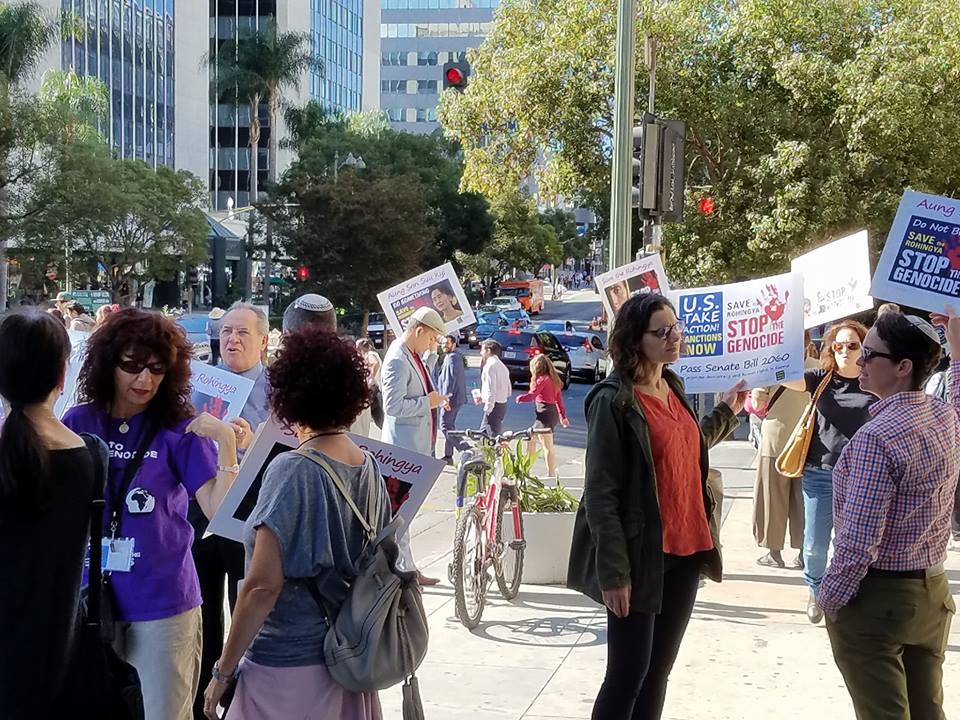
For the first time in Los Angeles, a Jewish organization held a rally to speak out against the persecution of a Muslim minority in Myanmar.
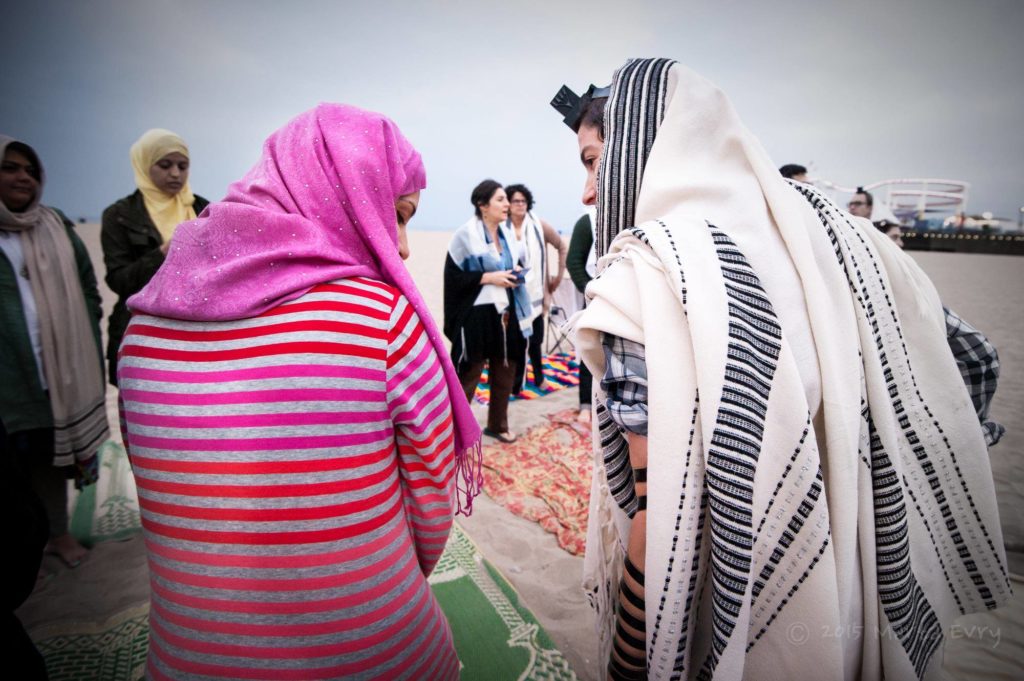
Jewish World Watch held a protest Nov. 8 outside the Myanmar Consulate General in Koreatown to protest that country’s treatment of the Rohingya people. Holding signs and chanting “Stop Rohingya genocide!” and “Silence is violence!,” some 50 people — including representatives of the Jewish and Muslim communities and about a half-dozen local Rohingyas — marched outside the Wilshire Boulevard high-rise housing the consulate.
Speaking through a megaphoine, Zubair Ahmed, a Myanmar-born Rohingya Muslim who lives in Hawthorne, thanked the protesters. “You all will be blessed by almighty God, because you are standing up for the Rohingya people,” he said
The Rohingya people are indigenous to southeast Asia and until recently had their population center in the western part of majority-Buddhist-majority Myanmar. Although discrimination against them dates back at least as far as a junta that brought Myanmar under military control in 1962, it has intensified in recent months, with more than 600,000 being displaced and driven into neighboring Bangladesh since August, according to the United Nations.
“If we don’t act now, things can get a lot worse.” — Rabbi Yonah Bookstein
Although U.N. officials have stopped short of labeling the situation a genocide, Secretary-General Antonio Guterres in September deemed it “the world’s fastest developing refugee emergency and a humanitarian and human rights nightmare.”
A number of local rabbis offered speeches and prayers at the Nov. 8 rally. They included Rabbis Yonah Bookstein of Pico Shul, Jocee Hudson of Temple Israel of Hollywood, Noah Farkas of Valley Beth Shalom and Jason Fruithandler of Sinai Temple.
“Our voices will not be silent,” Hudson told the crowd. “Our feet will not be still. We will stand. We will march. We will speak.”
Salam al-Marayati, president of the Muslim Public Affairs Council, also joined the rally.
“We feel the same as the Jewish community, that this is a matter of our religious obligation, of our human conscience,” he told the Journal. “I think that’s what brings us together.”
Bookstein said he keeps up on the crisis in online updates from a friend who volunteers in refugee camps in Bangladesh.
“As Jews, we can relate to this as well as anybody,” he told the Journal. “And if we don’t act now, things can get a lot worse — because instead of having the displacement of 600,000 people, we’ll have the death of 600,000 people.”
The Pico Shul rabbi wore his tallis to the rally, a nod to the “religious obligation to stand up and speak out,” he said.
Speakers at the protest told the crowd to urge their representatives in Congress to support Senate Bill 6060[TF1] , the Burma Human Rights and Freedom Act of 2017, which would authorize sanctions against Myanmar and offer aid to displaced Rohingyas. (Myanmar was formerly called Burma.)
“We’re going to vote every single one of them out that are against it,” Jarin Islam, a Bangladeshi-born official from the neighborhood council that includes the consulate, told the protesters. “In election season, we will not forget the way you are acting in the Senate and Congress.”
The rally attracted a small group of counterprotesters, who held signs reading, “No Genocide in Myanmar” and chanted, “Stop your Propaganda.”
“We trust our leader, Aung San Suu Kyi,” said one, Aung Khine, an immigrant from Myanmar, referring to the country’s de facto civilian leader. “She would never do that to people.”
But Ahmed told a different story, saying that most Rohingya villages in western Myanmar had been bombed, with the young men killed and the women and children ejected from their homes.
Ahmed said some 10 to 15 Rohingya people live in the Los Angeles area, mostly in Inglewood. He said this is the first time he has seen the Jewish community come out to support the Rohingya cause.
“We don’t know how to thank you,” he told the Journal. “You understand our suffering.”
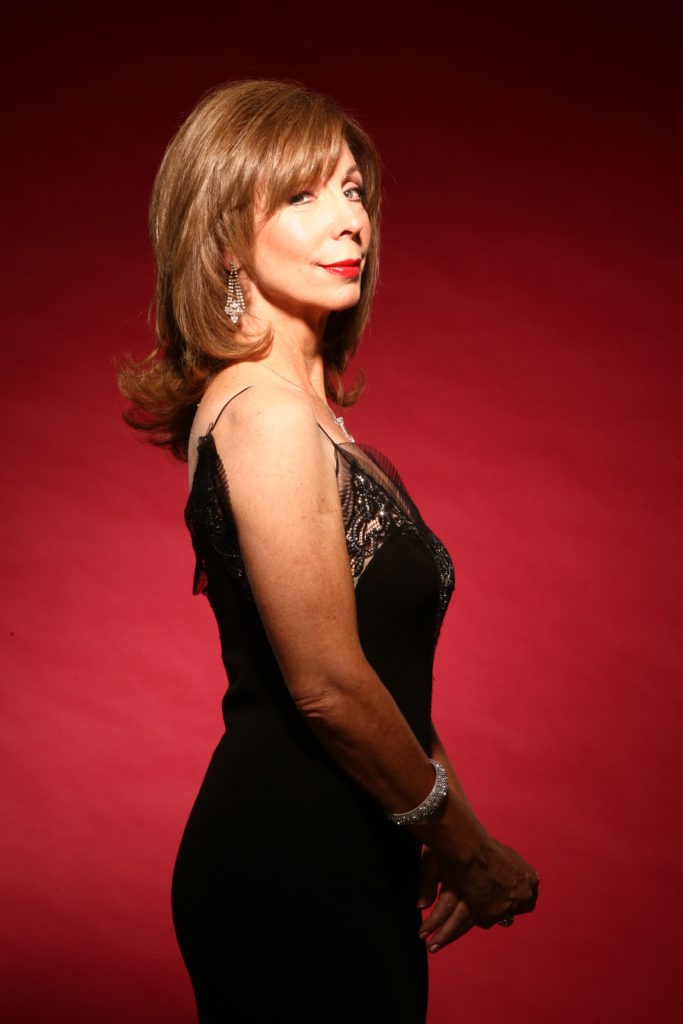
Stand-up comedian and best-selling author Rita Rudner often alludes to her Jewish upbringing in her act. She’ll give away free tickets to two tapings of her latest stand-up special at the historic Palace Theatre in downtown Los Angeles. Don’t miss an evening with the funny lady who claims to have the longest-running solo comedy show in Las Vegas’ history. 5:30 p.m., 7:30 p.m. Free. Palace Theatre, 630 S. Broadway, Los Angeles. (213) 488-2010. ritafunny.com.
BRET STEPHENS
The New York Times’ conservative columnist serves as Sinai Temple’s 2017 Abner & Roslyn Goldstine Scholar-in-Residence this weekend, beginning with a Friday night dinner, followed by a lecture titled “What Is U.S. Foreign Policy For?” During a Saturday luncheon, Stephens discusses “Will Israel Live Till 2048?” On Sunday he participates in a light breakfast, lecture and discussion with Sinai Temple Rabbi David Wolpe on “Writing While Jewish.” Stephens’ previous positions include writing for The Wall Street Journal and serving as editor-in-chief of the Jerusalem Post. His focus is domestic politics and foreign policy. Through Nov. 12. 7 p.m. Friday (community Shabbat dinner). 8:30 p.m. (lecture). $70 (Shabbat dinner; lecture is free). Noon Saturday, $45 (includes lunch). 9:30-11 a.m. Sunday, $35. RSVP required. Sinai Temple, 10400 Wilshire Blvd., Los Angeles. (310) 474-1518. sinaitemple.org.
SAT NOV 11
LIMMUD AFTER DARK LA
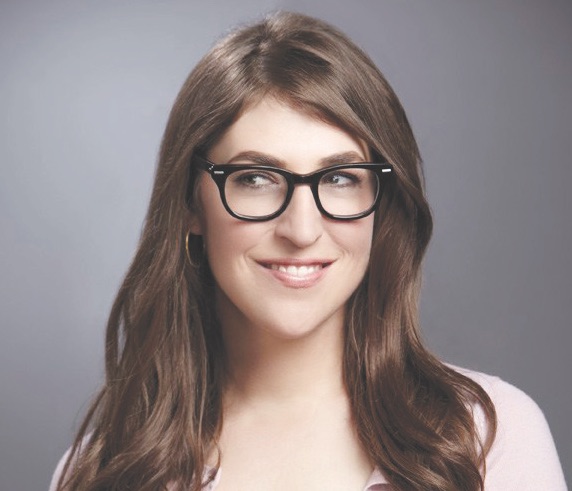
Celebrate Shabbat with “Big Bang Theory” star Mayim Bialik; Holocaust scholar Michael Berenbaum; and stand-up comedian Benji Lovitt. This evening of music, learning and community marks the official launch of Limmud North America. On the eve of the Jewish Federations of North America’s General Assembly, Bialik discusses “Standards of Beauty and Ugliness in Hollywood and Beyond”; Berenbaum examines “21st Century Anti-Semitism: Not Your Father’s Anti-Semitism”; and Lovitt presents “What War Zone? Stand-up Comedy From Israel.” Spirituality expert Sherre Hirsch; Rabba Yaffa Epstein; and Doreen and Chaim Seidler-Feller also participate. Ikar music director Hillel Tigay performs a musical Havdalah. 7 p.m. $30. At-door tickets subject to availability. American Jewish University, 15600 Mulholland Drive, Los Angeles. limmud.org/afterdarkla.
“UNCONVENTIONAL RESPONSES TO UNIQUE CATASTROPHES”
Ken Feinberg, an attorney who has been key to resolving many of this nation’s most challenging and widely known disputes, including administering funds to families affected by 9/11, discusses “Unconventional Responses to Unique Catastrophes: What Is Life Worth?” Feinberg served as the special master of the U.S. government’s Sept. 11 Victim Compensation Fund, an experience he wrote about in his 2005 book, “What Is Life Worth? The Inside Story of the 9/11 Fund and Its Effort to Compensate the Victims of 9/11.” 9:30 a.m. (Shabbat service), 11:30 a.m. (lecture). Free. Reservations recommended at info@beverlyhillsjc.org. Beverly Hills Hotel, 9466 Sunset Blvd., Beverly Hills. (310) 276-4246. beverlyhillsjc.org.
“OPERATION WEDDING”
In 1970 in Leningrad, a group of young Jewish dissidents who were denied exit visas plotted to hijack an empty plane and escape from the Soviet Union. Forty-five years later, filmmaker Anat Zalmanson-Kuznetsov revisits that incident in the documentary film “Operation Wedding.” The film tells the story of her parents, leaders of the group, who were “heroes” in the West but “terrorists” in the USSR, and even in today’s Russia. Zalmanson-Kuznetsov participates in a Q-and-A following this L.A. premiere screening, organized by The Jewish Federation of Greater Los Angeles’ Russian-speaking Jewish young professionals network RuJuLA and the Museum of Tolerance. 7 p.m. (doors). 7:30 p.m. (screening). $15 in advance, $20 at the door. Museum of Tolerance, 9786 W. Pico Blvd., Los Angeles. (310) 772-2505. museumoftolerance.com.
His focus is domestic politics and foreign policy. Through Nov. 12. 7 p.m. Friday (community Shabbat dinner). 8:30 p.m. (lecture). $70 (Shabbat dinner; lecture is free). Noon Saturday, $45 (includes lunch). 9:30-11 a.m. Sunday, $35. RSVP required. Sinai Temple, 10400 Wilshire Blvd., Los Angeles. (310) 474-1518. sinaitemple.org.
SUN NOV 12
GA 2017
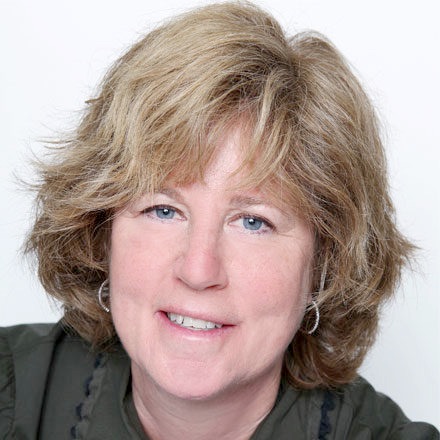
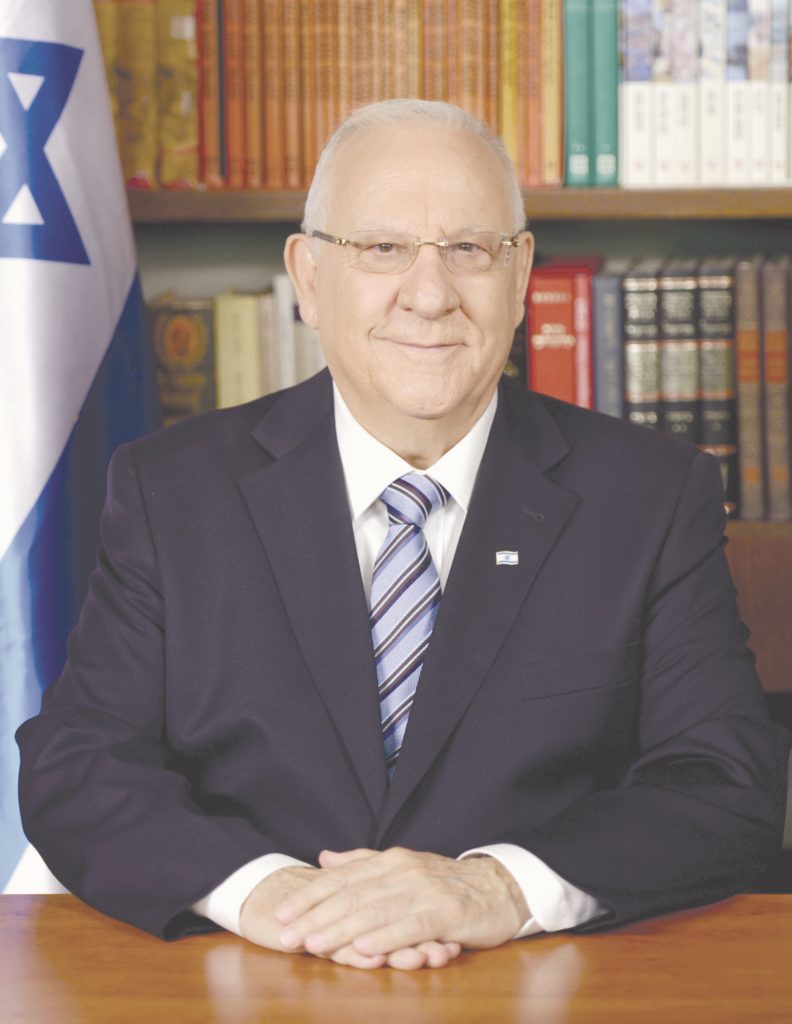
Julie PlattReuven Rivlin
The Jewish Federations of North America’s annual three-day gathering will draw Jewish communal professionals, volunteers and philanthropists. Israeli figures, including President Reuven Rivlin and the Jewish Agency’s Natan Sharansky, are scheduled to appear. Local leaders participating include L.A. Federation CEO Jay Sanderson and Chair Julie Platt, who is co-chairing the GA with her husband, Hollywood producer Marc Platt; Rabbis Naomi Levy, Ed Feinstein, David Wolpe and Nicole Guzik; the Jewish Journal’s Danielle Berrin and Shmuel Rosner; Tablet Magazine Editor-in-Chief Alana Newhouse; Tinder founder Sean Rad; and Joint Distribution Committee Global Leader Ashton Rosin. Through Nov. 14. $499 (general admission), $399 (Jewish communal professional), $189 (single-day admission). JW Marriott, downtown Los Angeles, 900 W. Olympic Blvd., Los Angeles. (866) 208-2144. generalassembly.org.
“CELEBRATION OF MEXICAN-JEWISH CULTURE AND HISTORY”
Food, storytelling and a screening of Temple Beth Am member Daniel Goldberg’s 1995 documentary film, “Un Beso a Esta Tierra” (“A Kiss to the Land”) highlight this community gathering. 6:30 p.m. Free. Temple Beth Am, 1039 S. La Cienega Blvd., Los Angeles. (310) 652-7353. tbala.org.
MILANA VAYNTRUB
Milana Vayntrub, a comedian, actress and activist known to many for her AT&T commercials and for her role in the television show “This is Us,” discusses “Dreams of a Hollywood Refugee.” Vayntrub is a refugee from the former Soviet Union and, after a visit to Greece, became involved in assisting Syrian refugees. Her organization, Can’t Do Nothing, which she co-founded with entrepreneur Eron Zehavi, focuses on empowering people to affect change in the world on the global refugee crisis and other issues. Proceeds from the event benefit Hadadit, formerly the Israel Free Loan Association. 7 p.m. $36. Bel Air private residence (address provided upon RSVP). milana.eventbrite.com.
MON NOV 13
ILIZA SHLESINGER
The Jewish comedienne is a winner of the 2008 “Last Comic Standing” and a regular at the Improv and The Comedy Store. She’ll headline “Girls Night In,” an evening of comedy with special guests. Expect social commentary, politics and pop culture. A portion of ticket proceeds will be donated to Planned Parenthood. 7 p.m. (doors), 8 p.m. (show). $30. Largo, 366 N. La Cienega Blvd., Los Angeles. (310) 855-0350. largo-la.com.
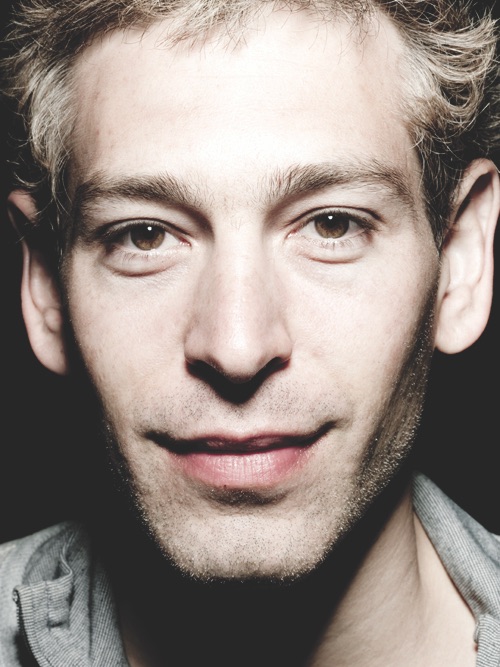
MATISYAHU
The Jewish-American reggae artist performs as part of his “Broken Crowns” tour, accompanied by Dub Trio’s Joe Tomino (drums) and Stu Brooks (bass) and his original guitarist Aaron Dugan. Expect to hear material from Matisyahu’s latest album, “Undercurrent,” as well as fan-favorites including “One Day,” “King Without a Crown” and “Jerusalem.” Also scheduled to appear are Orange County reggae-rockers Common Kings and Orphan, a Matisyahu-produced project featuring a trio of sons of Lubavitch rabbis. 6:30 p.m. $15-$120. The Wiltern, 3790 Wilshire Blvd., Los Angeles. (213) 388-1400. matisyahuworld.com.
TUE NOV 14
FIFTH ANNUAL WOMAN TO WOMAN CONFERENCE
The Jewish Vocational Service (JVS) Women’s Leadership Network’s annual conference explores “Unstoppable: The Power of Women.” Participants in the program include Saudi filmmaker Haifaa Al-Mansour; acclaimed singer and recording artist Barbara Morrison; fashion editor and meditation entrepreneur Suze Yalof Schwartz; Kathy Suto, vice president and general manager at Bloomingdale’s in Century City; and actress Nikki Crawford, who hosts the event. Proceeds benefit the WoMentoring Program and all JVS programs serving women in need. 8 a.m. (networking breakfast), 9 a.m.-1 p.m. (conference and luncheon). $200. Skirball Cultural Center, 2701 N. Sepulveda Blvd., Los Angeles. (323) 761-8888. jvsla.org.
“CAPTURING THE FEMALE RABBI LEGACY”
Ronda Spinak, artistic director of Jewish Women’s Theatre, delivers a spirited presentation about her experience of interviewing 18 of Los Angeles’ most prominent female rabbis for a video catalog about a once-marginalized group that fought for representation in their religion. 11:30 a.m.-1 p.m. $20. Sinai Temple, 10400 Wilshire Blvd., Los Angeles. (310) 474-1518. sinaitemple.org.
“I GOT YOUR BACK”
Inspired by NPR’s “The Moth,” this NewGround: A Muslim-Jewish Partnership for Change storytelling event features Jews and Muslims sharing personal accounts of solidarity and standing up for one another. NewGround is a nonprofit focused on bringing together Muslims and Jews for change. Previous iterations of this event have explored “Transformation,” “Digging Deeper” and “The Space Between.” 7 p.m. (reception), 7:30 p.m. (show). Iman Cultural Center, 3376 Motor Ave., Los Angeles. newground.nationbuilder.com/spotlight17.
THU NOV 16
“THE BALFOUR DECLARATION AND ITS LEGACY”
Marking the 100th anniversary of the signing of the Balfour Declaration, a letter declaring British government support for the creation of a Jewish state, a panel of scholars, including Georgia Tech British historian Jonathan Schneer; University of Pennsylvania political science professor Ian Lustick; and University of Cincinnati modern Jewish history professor Mark Raider discusses the history of the Balfour Declaration and its significance for today. 4 p.m. Free. UCLA Faculty Center, California Room, 480 Charles E. Young Drive, Los Angeles. (310) 825-9646. international.ucla.edu.
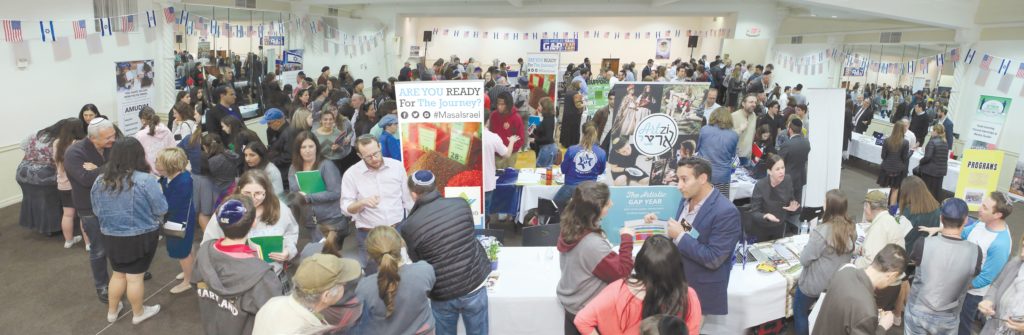
AMERICAN ISRAEL GAP YEAR FAIR
A yearlong break between the end of high of school and the start of college, the gap year is becoming an increasingly popular alternative for high school graduates. This fair, the largest Israel gap-year fair on the West Coast, offers more than 50 Israel programs appealing to students of all backgrounds. Organized by the American Israel Gap Year Association, the annual event draws representatives of gap-year programs and gap year-friendly colleges as well as parents, students and educators. 7-10 p.m. Free ($10 suggested donation). YULA Girls School, 1619 S. Robertson Blvd., Los Angeles. (310) 702-0644. israelgapyear.org.
Dear all,
I was 14 when I first heard the song “Sounds of Silence.” Paul Simon’s lyric, “the words of the prophets are written on the subway walls” always resonated.
And so when I saw this graffiti recently, I paused. It made me think. It made me reflect. It made me smile. It made me question. I think we can all use this message.
We second-guess ourselves all the time. It’s part of being human. It’s what prevents us from rushing too quickly.
No – not everything we do should receive a warm and fuzzy response. But sometimes, in those moments of uncertainty, we just need to know that we are embraced – that we are valid.
Finding those prophetic messages in odd places grounds us with a moment in time.
With love and shalom,
Rabbi Zach Shapiro
A change in perspective can shift the focus of our day – and even our lives. We have an opportunity to harness “a moment in time,” allowing our souls to be both grounded and lifted. This blog shows how the simplest of daily experiences can become the most meaningful of life’s blessings. All it takes is a moment in time. Rabbi Zach Shapiro is the Spiritual Leader of Temple Akiba, a Reform Jewish Congregation in Culver City, CA. He earned his B.A. in Spanish from Colby College in 1992, and his M.A.H.L. from HUC-JIR in 1996. He was ordained from HUC-JIR – Cincinnati, in 1997.
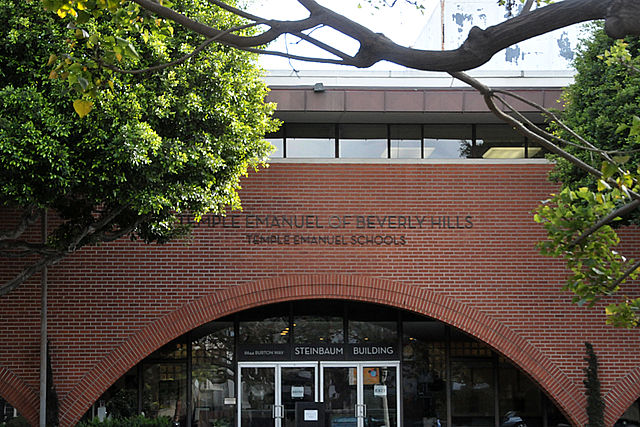
Police are investigating what an Anti-Defamation League official called a “hate incident” after anti-gay graffiti was found scrawled on the door of a Beverly Hills synagogue’s all-genders bathroom last month.
The profanity-laden message, discovered after an Oct. 15 bat mitzvah party at Temple Emanuel, contained slurs against liberals, gays and lesbians, as well as the synagogue’s rabbi.
“It was definitely a hate incident and, because it took place at a temple, it could be an anti-Semitic incident,” said ADL regional director Amanda Susskind, who is a Temple Emanuel member. “We’re still trying to sort that though.”
Eric Reiter, the temple’s executive director, said the synagogue’s video surveillance system captured a suspect on camera. Reiter declined to identify the suspect, an adult male who he said had a confrontation with a temple security guard that evening. The family holding the bat mitzvah party belongs to Temple Emanuel; the suspect does not.
Beverly Hills police are seeking to obtain the surveillance video, which could yield clues about the alleged crime, Sgt. Max Seubin said in a phone interview.
An Oct. 26 statement co-signed by Temple Emanuel Senior Rabbi Jonathan Aaron and President Barry Brucker described the suspect as a “non-member attendee [who] vandalized our all-gender bathroom and wrote angry, hateful words against the LGBTQ community, and threatening language directed toward temple clergy.”
“We condemn this act of hatred and do not tolerate hate crimes in our synagogue and beyond,” the statement said.
On Oct. 29, the synagogue held a town hall meeting to discuss what took place and to address any community members’ concerns. Brucker referenced the incident as he addressed congregants during Friday night services on Nov. 3.
The defaced bathroom is located in the synagogue’s sanctuary building, at 300 N. Clark Drive, next to men’s and women’s restrooms and adjacent to the synagogue’s reception hall. A sign next to the door says, “This restroom may be used by any person regardless of gender identity or expression.”
The bathroom was a single-stall family bathroom before Temple Emanuel’s Associate Rabbi Sarah Bassin enlisted the help of JQ International — a Jewish LGBT support organization — to transform it into an all-genders bathroom in 2015.
The vandalism occurred as many Reform, Conservative, Reconstructionist and non-denominational communities are introducing gender-neutral bathrooms. In the Los Angeles area, these include egalitarian community IKAR and Reform synagogues Stephen S. Wise Temple, Temple Adat Elohim and Kol Tikvah.
Rabbi Rachel Bat-Or, director of the JQ Helpline and Inclusion Services, said many Jewish day schools, synagogues and other institutions from the liberal Jewish movements have inquired about ways to fund the creation of gender-neutral bathrooms.
“It is a radical statement for a synagogue to make and one that is really welcomed by the LGBTQ community,” she said. “We know if we walk into that organization, even if we see only that sign, we know we have stepped into an LGBTQ-inclusive organization and we can assume there are other ways they welcome the LGBTQ community.”
“It was definitely a hate incident and it could be an anti-Semitic incident.” — Amanda Susskind
In separate interviews, Aaron and Bat-Or said they considered the vandalism at Temple Emanuel an affront to progressive Judaism.
“It is a hate crime against Jews but more specifically a crime against progressive Judaism and liberalism — two values I will stand by until I die — to be progressive and liberal and accepting of everybody,” Aaron said.
“I don’t think that it was particularly a Jewish crime — it was an LGBTQ crime,” Bat-Or said. “The fact that it was done in a Reform synagogue and the word, ‘liberalism,’ was used was hate speech against the rabbis and hate speech against liberal progressive Judaism.”
Scott Stone, who is gay and serves on the temple’s board, said he and his partner have two teenage children who spend a lot of time at the synagogue. Years ago, Stone chaired the synagogue’s capital campaign for a renovation of the building where the incident occurred.
“We think of the temple and its buildings as our spiritual home,” he said. “To have someone enter our temple and vandalize it with homophobic and anti-reform Jewish graffiti is as if they broke into our actual home and did the same.”
After recording a “massive surge of anti-Semitic incidents” in the last two months of 2016, the Anti-Defamation League (ADL) has taken the unprecedented step of releasing a midyear audit — and found a 67 percent increase in physical assaults, vandalism and other attacks on Jewish people and institutions compared with the same period last year, according to its CEO, Jonathan Greenblatt.
Released Nov. 2 and covering the first three quarters of 2017, it was ADL’s first midyear report on anti-Semitic incidents since it began releasing a yearly audit in 1979. The previous report, in April, noted a 34 percent increase in incidents in the United States in 2016.
“I didn’t want to be in a situation where we were waiting 12 months to understand the state of play,” Greenblatt told the Journal. “In order to educate and engage policymakers and political figures and the general public, we needed to take a snapshot right now.”
The new survey — available online at adl.org — found 1,299 incidents recorded by ADL so far in 2017, already exceeding the total of 1,266 incidents in all of 2016.
The report presented a particularly sobering picture for Californians. In the first nine months of 2017, anti-Semitic incidents in the state increased by nearly half, to 197 from 135. In Southern California, that included Nazi graffiti at a Hollywood coffee shop and white supremacist symbols spray-painted on a garage at ADL’s Century City office.
Hours before releasing its survey, ADL’s local staff participated in a “State of Hate” forum in Los Angeles convened by California Assemblymember Richard Bloom, a Jewish Democrat whose 50th District stretches from West Hollywood to Malibu.
“California is at times ground zero for a lot of the hate ADL is tracking nationwide,” ADL senior investigative researcher Joanna Mendelson told the audience of law enforcement officers, community leaders and clergy at the Nov. 1 event. Mendelson said California leads the country in its racist skinhead population.
“While these groups are a small percentage of the overall population, they’re not insignificant and are becoming increasingly sophisticated and organized,” Bloom said. “This is cause for concern.”
Greenblatt echoed Bloom’s concern during a phone call the next day. The Charlottesville, Va., white supremacist rallies of Aug. 11-12 “veered into the national consciousness unlike any white supremacist gathering we have seen in recent memory,” he said.
The ADL audit noted an uptick in anti-Semitic incidents after the Charlottesville rally. Of the 306 incidents that occurred in the third quarter of 2017, 211 took place after Aug. 11, more than two-thirds.
Greenblatt said this increase could not definitely be linked to Charlottesville, but he said President Donald Trump’s failure to unambiguously condemn the rallies encouraged white supremacist elements.
“It’s undeniable that the president’s equivocation created an environment in which the extremists felt emboldened. How do I know this? I know this because they said so,” Greenblatt said, referring to ADL’s monitoring of extremist groups at gatherings and on the web.
The State of Hate forum, held in an auditorium at the Los Angeles County Museum of Art, sought to give law enforcement and other community leaders knowledge and tactics to address this rise in hate. It took place the morning after a suspected terrorist mowed down pedestrians and bikers in a rented pickup truck in Manhattan, killing eight people and injuring 12.
“California is at times ground zero for a lot of the hate ADL is tracking nationwide.” – Joanna Mendelson
The attack made the forum “particularly relevant and timely,” said Dan Schnur, director of the American Jewish Committee’s Los Angeles region, who moderated the event.
“Unfortunately, in 21st-century America, there’s never a bad time to have a discussion like this, and yesterday’s atrocities were just the latest reminders of the challenges we face,” he said.
Besides Mendelson, the other speakers were Robin Toma, executive director of the Los Angeles County Human Relations Commission; political science and Chicana/Chicano studies professor Fernando Guerra of Loyola Marymount University (LMU); and FBI Supervisory Special Agent Matthew Coit, who heads the FBI’s Civil Rights Unit in L.A.
Speaking last, Guerra gave Angelenos reason to be hopeful. Citing an LMU survey of 1,203 city residents in January, he said Angelenos tend to view race relations positively, with 77 percent saying that racial and ethnic groups in the city get along. Guerra said the nationwide number is 48 percent, drawing on a similar Pew Research Center poll.