fbpx

August 30, 2017

Rob Eshman, longtime Jewish Journal editor-in-chief and publisher, to leave post for writing projects
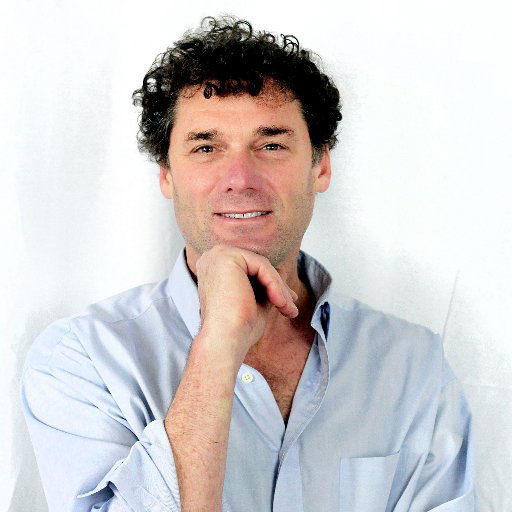
Rob Eshman

Rob Eshman, longtime editor-in-chief and publisher of the Jewish Journal, has announced he will be leaving his position on September 26.

Eshman, who has written and sold two movie projects while at the Journal, said that after 23 years at the paper, he wants to switch the focus of his career to full-time writing. He will be working on a food book—Eshman writes the blog “Foodaism”—and another movie project.

“I couldn’t be prouder of what the Journal has become,” Eshman said. “And I am honored and grateful to have been a part of it. I will always love this paper, its staff and this community.”

Peter Lowy, chairman of TRIBE Media, which produces the Jewish Journal, said that current President David Suissa will be stepping into Eshman’s role.

“Rob has been integral to the Journal and the Jewish community,” Lowy said. “He brought curiosity, intellect, and a sense of humor to his work.  Most of all he cares passionately about journalism and Judaism—and he showed that every week.”

Lowy said Eshman approached him in late July to begin discussing the move, and together with Suissa they worked toward a smooth transition.

“What makes the Journal great is a great staff, its board, and the community we serve,” Eshman said. “Those will remain the constants of the Jewish Journal.”

The Journal combines news of the 600,000-person LA Jewish community –the third largest in the world after New York and Tel Aviv–with commentary, features and national and international news.  It publishes 50,000 print copies each week in Los Angeles, and updates jewishjournal.com, one of the world’s most widely-read Jewish news sites, throughout the day.

In 1994, Eshman arrived at the Journal after working as a freelance journalist in San Francisco and Jerusalem. The paper’s founding editor, Gene Lichtenstein, hired him as a reporter. At the time the Journal was a print-only publication. The Journal was independently incorporated but distributed via the Federation membership list.

Eshman became Managing Editor in 1997. In 2000, then-Chairman Stanley Hirsch named him Editor-in-Chief.

As editor, Eshman expanded the reach of jewishjournal.com from 4000 unique visitors to upwards of 4 million today. He brought on a greater mix of political and religious voices. He also overhauled the print circulation model, completely dropping Federation distribution and making the Journal a free weekly, distributed throughout the city. Then-chairman Irwin Field was instrumental in seeing these changes through, Eshman said.

“I wanted to reach every Jew,” Eshman said, “especially those who weren’t connected to the organized community. I realized a good Jewish paper was the easiest way into Jewish connection, and I wanted to make it even easier.” 

In 2009, the Journal, like most newspapers in the country, fell into dire financial straits. Eshman turned to Lowy, CEO of Westfield Corp. to rescue the company and help steer it through the double blow that the Internet and the recession dealt the industry. With a handful of other philanthropists, Lowy formed a new board and came on as Chairman. A year later, Eshman tapped Suissa, formerly the founder of Suissa/Miller Advertising and editor and publisher of OLAM Magazine, to run the Journal’s business side. At that time, Eshman was named Publisher as well.

In the process, Eshman chose a new name for the company –TRIBE—to reflect the its growing multi-media nature and broader mission. These moves ensured the paper’s survival, and eventual growth.

“David Suissa brought his passion and creative genius to the paper, and has been an invaluable partner,” Eshman said.

While Eshman leans left and Suissa right, the two wrote often-opposing columns and the Journal came even more to reflect—and combine—strongly divergent voices that would otherwise stay secluded in separate media bubbles.

During the 2016 Iran nuclear deal, which Eshman supported and Suissa opposed, their ability to spar publicly while maintaining a close friendship and partnership drew media attention.

L.A. Jewish Journal’s heads spar over Iran deal, but stay friendly,” read a headline in the Times of Israel.

Under Eshman, the Journal has won numerous press and community awards. It has expanded across other media platforms, including video. Its livecast of the Nashuva congregation’s Kol Nidre service draws 75,000 viewers each year, making it the world’s most-watched High Holiday service.

Asked to name highlights of his tenure, Eshman pointed to two. In 2015, Islamic terrorists in Paris massacred the staff at Charlie Hebdo magazine for printing cartoons they found offensive. The Journal renamed the Jan. 16 masthead of the paper, “Jewish Hebdo,” and ran the offending cartoons inside.

A year later, Eshman oversaw the first poll of American Jewish opinion during the Iran nuclear deal. It found most American Jews supported a deal that the vast majority of Jewish organizations, as well as Israel’s Prime Minister, opposed. The results reverberated internationally, and the White House acknowledged the Jewish Journal as “One of the most widely read Jewish publications online.”  

“To go from a small locally-circulated newspaper to a media company that reaches millions around the world, and has an impact on the great debates of our time while still serving its core readers with the kind of independent journalism that serves and builds community–that’s very gratifying,” said Eshman. “But it wasn’t at all just me. It was us.”

Eshman credits his past managing editors Amy Klein and Howard Blume, former executive editor Susan Freudenheim, and current managing editor Ryan Smith—as well as a slew of talented writers—as instrumental to the Journal’s editorial accomplishments.

Eshman, 57, is a native of Encino, CA and a graduate of Dartmouth College. He is married to Rabbi Naomi Levy, an author and founder of Nashuva. They have two children, Adi and Noa.

During his tenure at the Journal, Eshman, a member of the Writers Guild of America, wrote and sold a feature film screenplay and a multi-part television project. He also created the food blog, “Foodaism,” named one of L.A.’s best food blogs, and created and taught “Food, Media and Culture” at USC Annenberg School of Communication, where he will continue to teach. He has served on several non-profit boards, including, at present, The Miracle Project.

“We wish Rob well and look forward to an exciting future with David building off the base that Rob and his team has built,” said Lowy.

Eshman pointed out that there has been at least one Jewish newspaper in Los Angeles since the first one was founded in 1870. 

“I was so honored to serve this community and be part of that history,” he said. “And it goes on.”


Rob Eshman, longtime Jewish Journal editor-in-chief and publisher, to leave post for writing projects Read More »

Not even Harvey could stop this family from publishing Houston’s Jewish paper

As Hurricane Harvey bore down on Houston Friday, Vicki Samuels Levy dashed over to the offices of the Houston Jewish Herald-Voice, took the proofs of this week’s newspaper and went to her mother’s house.

Then mother and daughter spent all night editing the paper. And as the waters rose and they had to be evacuated to a neighbor’s house the next day, the proofs were in hand, ready for the printer.

“We want to help each other as family members, then we have to stop and do things for the paper,” said Samuels Levy, the paper’s CEO. “I couldn’t leave to go to my mother’s home before I checked all these pages.”

The mother, Jeanne Samuels, is also the owner and editor of the Jewish Herald-Voice. Samuels Levy’s husband, Lawrence Levy, runs its circulation, and her son, Michael Duke, is its associate editor and news reporter. Her nephew Matt Samuels writes sports and helps with production.

And this week, despite the storm waters deluging the city, the family is determined to keep the paper publishing. Founded in 1908, it has never skipped an issue.

“We’ve been through this before, and we had a contingency plan in place,” Duke said. “We haven’t missed a print issue for 109 years. We’re hoping this isn’t the first time.”

Although the work is mostly computer based, the flooding has made it an arduous task to put together the paper. Samuels Levy and her mother were forced to move, along with more than a dozen others, into a neighbor’s house Saturday when flood waters got too high. When Lawrence Levy discovered a computer glitch, he had to wait three days to get to the office and address it.

Duke abandoned his SUV after driving two strangers to a relative’s house; the vehicle died on the trip home. He and his wife had to wade a half-mile through waist-high waters to make it back, after which Duke began working again. He has managed to report everything remotely, posting on the paper’s website a series of articles on everything from families’ homes being flooded for the third time to a Mormon with an air boatrescuing 100 people in a Jewish neighborhood. By Wednesday morning, the website included more than 20 stories on the storm’s impact.

In the midst of it all, Duke saved his wife’s car from being crushed by a tree, moving it 10 feet just in time. Like friends of theirs, the couple plans to host less fortunate families in their (mostly) dry house as soon as the waters recede enough to allow travel.

“The hard part was on Sunday and Monday, when I was on the phone with people I know and love who were climbing onto kitchen counters and going on the roof waiting for rescue boats to come,” Duke said.

As of Wednesday morning, the family was putting the finishing touches on this week’s issue. The printer said it hopes to be back up and running on Thursday evening, and the newspaper was awaiting word from the service that labels and mails the copies on Friday mornings. The Jewish Herald-Voice will offer a free e-edition.

Duke has spent the week worrying about his family. But now that everyone is safe, he said, at least they can worry about the paper together.

“It’s been hard because for the first time, we’ve had family members directly impacted by the flood,” he said. “It draws your attention in different directions, but because we’re family and we’re all connected, we can lean on each other a little more.”

Not even Harvey could stop this family from publishing Houston’s Jewish paper Read More »

‘Filming the Camps’ shows how directors chronicled horrors of WWII

In early 2017, when Beth Kean, executive director of the Los Angeles Museum of the Holocaust in Pan Pacific Park, was booking a new exhibition, “Filming the Camps: John Ford, Samuel Fuller, George Stevens, from Hollywood to Nuremberg,” she could not have imagined that fresh images of neo-Nazis marching would be in many people’s minds when the exhibition would open on Aug. 27.

But confronting was was thought unimaginable and deciding how to document and report it are major elements of what the exhibition is about. On display through April 30, it all comes together to inform and warn.

Just as we might think white supremacists and neo-Nazis marching couldn’t happen here, Kean wants Angelenos to realize, both through the exhibition and the museum’s permanent collection, that World War II “wasn’t just something that happened halfway across the world. It affected the people of Los Angeles.”

Through film footage and interviews of Hollywood directors Stevens, Ford and Fuller at the time the concentration camps were liberated during World War II, the traveling exhibition, which already has been to several cities, documents the extent of the horror of the concentration camps, which many people had trouble accepting as real once the war ended.

With both imagery and highly descriptive captions written by Ivan Moffat, a British screenwriter who settled in Hollywood after the war, we come to understand, just as those who first viewed these images, the meaning of “genocide” — a word coined in the early 1940s by Raphael Lemkin, a Polish-Jewish lawyer — a deliberate mass murder of peoples by their oppressors.

“Having the exhibit at our museum, which focuses on three directors who made their mark in L.A., who enlisted in the U.S. Army and filmed the liberation of the camps, is very relevant, since it fits our theme of highlighting the Los Angeles narrative,” Kean said.

The exhibition’s curator, Christian Delage, a historian and filmmaker who did much of his research in Los Angeles, also emphasized the local connection. “L.A. is very, very far from Germany and Poland, but they made it there,” he said of the directors.

Stevens, known for directing Ginger Rogers and Fred Astaire in Hollywood musicals, was drafted into the Army and assigned to direct the Special Coverage Unit (SPECOU) of the Allied Expeditionary Force. Tasked with gathering evidence of war crimes, the unit was ordered to collect and record information “in a uniform manner and in a form which will be acceptable in military tribunals or courts,” according to the exhibition text.

The exhibition points out that one of Stevens’ major objectives was “to convince Americans of the authenticity of the evidence gathered by his unit.” To that end, the exhibition includes a number of interviews by Stevens with several survivors of Dachau, shot with a camera with synchronous sound.

A film sequence shot by Stevens in Dachau documents, step by step, how the gas chamber operated: A shot of the metal door with the latch on the outside, then the false shower heads, the vent, the gas pipes leading into the chamber and the control panel.

Another sequence at Dachau, shot by Stevens’ crew and edited by him, shows the condition of the camp at liberation, including a train filled with corpses

In 1945, according to the exhibition text, the footage of Dachau taken by Stevens’ crew appeared in a documentary, “Nazi Concentration Camp,” that was used as evidence of Nazi war crimes during the Nuremberg trials.

Stevens and his group also recorded at Dachau a speech given by Rabbi David Max Eichhorn, one of the first rabbis to enter the camp, to a group of survivors and others.

“We know that upon you was centered the venomous hate of power-crazed madmen,” the rabbi said. “In every country where the lamps still burn, Jews and non-Jews alike will expend as much time and energy and money as is needed to make good the pledge which is written in our holy Torah … ‘You shall go out with joy, and be led forth in peace.’ ”

“For me, it was very moving to listen to the speech by the rabbi,” Delage said. “He was pushing them toward life again.”

Ford, who already had won an Academy Award for best director for “The Grapes of Wrath” in 1940, headed the Field Photographic Branch, a special unit of the Office of the Coordinator of Information of the U.S., responsible for producing such films as “December 7th” and “Midway,” for which he won an Academy Award for best documentary. He and his crew filmed the liberation of Dachau. (Ford and Stevens are two of five Hollywood filmmakers featured in the 2014 book and 2017 Netflix documentary, “Five Came Back: A Story of Hollywood and the Second World War.”)

Fuller comes into the picture in a different way. A former crime reporter for the tabloid press, he became a scriptwriter. In 1942, he joined the Army’s 1st Infantry Division, which was nicknamed “The Big Red One.” Shooting with a camera he asked his mother to send from home, Fuller, who later would direct such films as “Verboten!” and “The Crimson Kimono,” used it to film the liberation of the Falkenau concentration camp in Czechoslovakia.

The exhibition also features a display of Fuller-related artifacts, made available by Christine Fuller, the director’s widow, and Samantha Fuller, his daughter, who live in Los Angeles. Among them are the camera Fuller used at Falkenau, a canvas satchel on which he doodled, his helmet, the Silver Star he was awarded by Congress and a Red Cross request form that says, “Cigars Please.”

A visitor to the exhibition may wonder after examining the frames documenting the unthinkable: How were these men able to do their  work day after day? Ford and Fuller, Delage said, “were soldiers — that helped them to resist the primary emotion. The fact that they were used to the violence of the war helped them to deal with the vision of the camps.”

“For Stevens, it’s a little different” Delage said. “He was coming from a world of musicals and comedies.  I think he was really affected.”

In terms of a point of view, Delage believes what you can see in the exhibition is “how they tried to keep a good distance. Not too far or too close.” The directors were trying to gather evidence that would bear scrutiny “and not just to shock people.”

LAMOTH’s Kean, a granddaughter of Holocaust survivors, said she hopes young people, like those she saw in the coverage of the recent events in Charlottesville, Va., take notice of the shocking nature of the exhibition. 

“We have a sense of urgency now,” she said.

‘Filming the Camps’ shows how directors chronicled horrors of WWII Read More »

Violence, distrust erupt in Israeli film ‘Death in the Terminal’

On Oct. 18, 2015, a terrorist began shooting inside the bus terminal in the Israeli town of Beersheba. Muhand Al-Aqabi, a Bedouin from a nearby village, shot and killed Sgt. Omri Levi, a 19-year-old soldier, and at least nine others. After a prolonged shootout, Al-Aqabi was killed by security forces.

But the shootout wasn’t the only carnage at the bus terminal that day.

A security guard shot an Eritrean asylum seeker whom he assumed to be the terrorist. As the Eritrean lie bleeding to death, Israeli civilians kicked and cursed him, and spat on him. The killing of Habtom Zarhum, a 29-year-old unarmed refugee, grabbed headlines around the world and provoked soul-searching within Israeli society.

The incident is the subject of “Death in the Terminal,” a new documentary that premieres Sept. 6 on the entertainment and media website Topic.com. In the film, directors Tali Shemesh and Asaf Sudry dissect the attack and the extrajudicial killing of Zarhum using cellphone video, footage from a number of security cameras and eyewitness interviews.

The documentary raises difficult questions: How does one make sense of a quickly unfolding situation in which one’s life is at risk? When should one act, and when should one gather more information? How do deeply held societal fears and prejudices affect those judgment calls? And what would each of us do in such a circumstance?

The film’s executive producers are Megan Ellison and Mark Boal, both producers of “Zero Dark Thirty,” and Israeli director Alma Har’el. It has received strong critical praise and numerous festival awards.

The filmmakers were drawn to the idea of telling the story differently than other media reports. “Nobody really looked into it,” Shemesh said. “It was so traumatic and terrible. After two days, three days, everybody forgot.”

The film reconstructs a minute-by-minute account of the 18 minutes after the attack. The eyewitnesses recall hearing the first round of gunfire, seeing -— even participating in — the beating of Zarhum, hearing a second round of shooting, and then realizing that Zarhum was not a terrorist.

“When we began, nobody wanted to talk to us,” Shemesh said. Through research, they were able to locate eyewitnesses to the incident.

The attack came amid heightened tensions, with stabbings and shootings of Israelis and Palestinians filling the day’s news.

“It was a very tense period of time,” Shemesh said. “People were panicked. … I was scared about my children. You think twice to go on the bus or not.”

The film begins with footage of the terminal. Cheerful Mediterranean music plays over the speakers as shoppers and soldiers stroll around. The normalcy is shattered by gunshots and panic as people run and seek cover.

The first eyewitness interviewed in the film is Daniel Harush, a soldier who was meeting a friend at the terminal. He recounts how they stopped to use a restroom when they heard the gunshots and hid. Harush says he went out and saw the dead soldier, lying in a pool of blood. He returned to hide with his friend in the restroom stall, but when they then decided to come out again, the terrorist shot Harush in the arm.

Lihi Levi, a clothing store worker and nurse also interviewed that day, helped treat a wounded soldier and is relieved that no one besides the terrorist appears to have been killed — until she and a paramedic are asked to treat the fatally wounded Omri Levi and are unable to revive him.

Meanwhile, a prison officer named Ronen Cohen hears the shots from outside the terminal and runs in as everyone’s running out. He sees the Eritrean man on the ground and people kicking him and becomes worried the man might have a gun or explosive belt. Cohen and a friend pick up a row of chairs and place it on top of the suspected terrorist to pin him in place.

The filmmakers manage to unfold the story without revealing Zarhum’s innocence until about halfway through the 52-minute film. The title could refer simply to the death of the Israeli soldier. Like Cohen and others, viewers are left to assume that Zarhum is “the terrorist” — until doubt creeps in.

Cohen and three others are now on trial for Zarhum’s killing. Even though Cohen was advised not to talk to the filmmakers, the filmmakers say he wanted to clear his name after media reports condemned him.

“We also thought Ronen [Cohen] was a kind of an animal. This is the way he was presented in the two-minute headlines in the news,” Shemesh said. “From the first time we met Ronen, we felt so differently about him. …
We gave the people on trial a chance to explain themselves.”

A voice of reason, or at least skepticism, in the film comes from eyewitness Moshe Kochavi, a kibbutz volunteer. He recalls seeing the “terrorist” on the floor and people hitting him and shouting at the crowd, “You’re savages!”

“I had to save these people. What do I mean by saving? People are corrupting, in this very moment, their souls,” Kochavi explains in the film.

We then see surveillance footage of Kochavi being pushed away from the scene, as a soldier comes and forcefully kicks Zarhum in the head.

“Everyone wants to be like Moshe Kochavi,” Shemesh said. “You wish you could be like him but you don’t know what you would do. … Most people would run away and hide.”

Kochavi admits in the film that “something didn’t feel right,” although he’s not sure what it was. He recalls bending over the man and saying, “How can you be a terrorist? You don’t look like one!”

A falafel-stand worker, Hosni Kombaz, shares that concern. He noticed that the suspected terrorist looked like a Christian Eritrean — and was wearing slippers. “I’d never seen a terrorist in slippers,” he says in the film.

Kombaz says he wanted to shout at the crowd to stop, that the man they were kicking and spitting on wasn’t the terrorist. But he didn’t, because he was worried he’d be attacked as well. “If I was Jewish I would have shouted it … but I was afraid because I’m an Arab, so I didn’t shout it,” he says.

Part of the film’s power comes from a universality to the story. No country is immune from terrorist attacks or racial and ethnic tensions. A vigilante mob could form anywhere, not just in Israel.

“This film came out amid all these immigration problems in Europe, and there were terror attacks in the U.S. Everyone opened their ears and eyes to this film because of that,” Sudry said. “Everyone is afraid of ‘the other’ now.”

The film ends as it began, with security footage of the terminal. Only this time, it plays backward, with panic being restored to normalcy. This time, the calm seems fraught with danger and the possibility of violence — an apt metaphor for life in Israel today.

Violence, distrust erupt in Israeli film ‘Death in the Terminal’ Read More »

Arpaio pardon is a travesty of justice

Since biblical times, reverence for the rule of law has fueled our community. When Moses was given the law on Mount Sinai and then presented it to our ancestors, a great tradition was born, one from which a profound adherence to justice has never wavered. President Donald J. Trump’s pardon of Arizona Sheriff Joe Arpaio breaks from the basic tenets of democracy and the premise and promise of our nation’s history.

The president, of course, has the constitutional authority to issue such a pardon. But we argue that he cannot do so with moral impunity, and his actions must not be met with silence — again — on the part of Jewish communal institutions, which too frequently have chosen fiscal discretion over ethical valor.

This pardon, issued on the eve of a massive natural and human catastrophe, is but the latest in a series of assaults on civil liberties, civil rights and a free press. It is but another example of the president’s evident disregard for the rule of law and his willingness to reward political friends despite their history of attacks on our constitutional protections. Accordingly, when a symbol of racism is honored by this administration, which seems so intent on dividing rather than uniting our country, we raise our voices in protest, in the name of a Jewish community that is increasingly vocal in its criticism of this administration.

What Arpaio did was to engage in evil and anarchy. He used his position of authority as sheriff toward unconstitutional, racially discriminatory ends. The Phoenix New Times reported that, for the past two decades, many judges have criticized Arpaio’s practices as being “unconstitutional and abusive” and in violation of a range of antidiscrimination laws.   Arpaio’s racial preferences happened to disfavor Latinos who, irrespective of whether they were suspected of committing a crime, were detained in what Arpaio called “concentration camps.” Arpaio’s sinister conduct and the president’s sanctioning of that conduct erode the very foundation of our Constitution.

This travesty of justice and its implications for our democracy should send shivers up and down the spine of every American Jew. 

This is not a subtle point. The president of the United States blessed a sheriff’s refusal to accept that the Constitution required him to keep his racial prejudices and categorizations at bay and, further, blessed that sheriff’s refusal to accept the legitimacy of a court order. A sheriff endangered and harmed the very people he was entrusted to protect, and this year he was found guilty of contempt of court. And for this, Trump called Arpaio “a great American patriot” and rewarded him with a presidential pardon. Republicans and Democrats alike certainly can agree that a person in a position of authority who, as Arpaio has done, degrades and humiliates inmates, places inmates in subhuman conditions of extreme heat and extreme cold without adequate supplies of water and food, and is racially biased as he executes his job, is anything but a patriot. Alas, he is a criminal. And by pardoning such a criminal, the president has abused his power, thereby promoting division, bigotry and cronyism.

This travesty of justice and its implications for our democracy should send shivers up and down the spine of every American Jew. 

In addition, this pardon sets a dangerous precedent for other reasons. It could frustrate the investigations of the president and his administration that are now underway, if witnesses and persons of interest believe they need not cooperate because the president could absolve them of criminal culpability by pardoning them. It could keep the American people from knowing the extent of possible abuses of power and obstructions of justice. Although James Madison wrote that abuse of the authority to pardon would be grounds for impeachment, we fear the opposite — that this president could use it to preserve himself in office.

It must offend our core values as Americans and as Jews that this president has evidently bartered fundamental constitutional rights and protections for personal political gain.

The pardon Trump issued — late on a Friday afternoon as Hurricane Harvey made landfall in Texas — usurps a system that protects all of us. Left unprotested and unchecked, this pardon threatens to wash away our history, to undermine our democracy, to upend due process and to erode the rule of law.  And, as Jews, this disregard of the rule of law should bear special meaning.

The Hebrew prophets warned against the absolute rule and rapacity of kings. The people ignored them in the name of political convenience, and suffered the consequences. We refuse to ignore this travesty of a pardon, which is no less than an attack on justice itself.


JANICE KAMENIR-REZNIK is co-chair of Jews United for Democracy and Justice (JUDJ); and MEL LEVINE, a former congressman, and ZEV YAROSLAVSKY, a former Los Angeles County supervisor, are members of the executive committee of JUDJ, a grass-roots movement of citizens dedicated to the principles of Torah, justice and democracy.

Arpaio pardon is a travesty of justice Read More »

Rosh Kehilah Dina Najman: Celebrating a Unique Rebbe For Our Time:

Looking out onto the diverse tapestry that is contemporary Judaism, there seems to be a singular thread among many that inspires particularly intense debate within Orthodoxy. That debate is female clergy. Indeed, the Jewish thought-sphere has been raging for the last decade or more about the inclusion of female clergy as accepted members of the broader Orthodox community’s leadership structure. Whether the discussion has been “Maharat,” or “Rabba,” or even simply the notion of the first woman Orthodox “Rabbi,” each title stands nonetheless as a unique accomplishment and push forward for a dynamic Jewish social fabric.


Looking back more than ten years ago, one of the first modern pioneers of female clergy in an Orthodox setting is the luminous  Rosh Kehilah Dina Najman. What is it that makes Rosh Kehilah Najman an exemplar of the future of Jewish practice in America? According to Rabbi Asher Lopatin, President of the Modern Orthodox Yeshivat Chovevei Torah (and a member at Kehilah), Najman is an individual with a unique sense of: “Integrity, passion, warmth and brilliance all bottled together into a joyous, caring and inspiring human being who leads both Kehilah and Talmud education at the SAR Academy.”

Certainly, besides the demanding tasks of being the locus for a spiritual community, Rosh Kehila Dina Najman dedicates much of the remainder of her valuable time serving as the head of the gemara department at SAR Academy. Before officially receiving her ordination, she was adamant that she wanted a gender-neutral title and that she would be tested as rigorously as men. She also wanted non-gender specific language on her ordination certificate (shtar).

It is always worth exploring what pushes people to join the demanding field of religious clergy.  As a child, Dina moved a lot since her father was a Yeshiva University-ordained rabbi and an esteemed chazan. But more than an ordinary rabbi, he was intent that his daughters learn Torah on a high level. So, after her elementary religious schooling, she continued on to Michlala (seminary), then Stern College, before moving onto Drisha Scholar’s Circle and to the yoetzet halacha (female adviser) program at Nishmat in Jerusalem (where she served as a shoel umeishiv—someone who students can turn to for help in their learning). After graduation, there were not many positions open for women Talmud scholars, so she taught grad students in biology as she increased her scholarship in Jewish medical ethics (learning much from the Torah of the Tzitz Eliezer and from the guidance of Dr. Avraham Steinberg); she eventually became a certified bioethicist through the NYU/Einstein Bioethics and Medical Humanities program. Due to her mastery of the arcana of the field, she remains an in-demand lecturer on bioethics and halakhah for communities all over the world.


While Rosh Kehilah Najman did not then, and does not now, go by the clerical appellation of “Rabbi,” she was the first Orthodox woman specifically appointed to lead a congregation and has since been highly influential in paving a path for women who find their calling at the pulpit. And, it should be noted that besides being a quiet trailblazer and a font of emotional support for her community, RK Najman is a serious Torah scholar, a leading theorist on the topic of Jewish bioethics, all the while leading Kehillah, a thriving synagogue located in the Riverdale section of the Bronx, and raising children. Ordained by world-renowned Orthodox rabbi, luminary, and scholar Rabbi Dr. Daniel Sperber in Israel, she paved the path for countless women (and men) who will emulate her journey as community leaders when their calling comes to them.

Despite all the progress, there certainly have been times where it has been a lonely path for RK Najman. Presumably, even more challenging is shifting public stories that write early leaders out of the narrative. Even more, she talks about the challenge of “halakhic amnesia” that people today “forget” all the earlier precedence from Jewish tradition of women’s learning, teaching, leadership, and pesak (halakhic leadership).

Yet, despite all the obstacles and push-back, RK Najman persisted. But not only has she persisted, she has been given the opportunity to take Orthodoxy in bold new directions. In my own spiritual work as a rabbi, I’m constantly inspire by RK Najman and her overflowing love for Jewish learning; she is a go-to source of pesak for many today. She is a very prominent and active member of Torat Chayim, the newly-formed and growing progressive Orthodox rabbinical association, showing moral leadership on causes that have vital import for today’s society.

Looking towards the future, I know that RK Najman yearns for the day where there will be equal colleagueship at the pulpit and for crucial educational paradigm shifts toward co-ed ordination programs. Today, there are many individual Orthodox rabbis ordaining Orthodox women and a growing number of Orthodox institutions that are taking the courageous and crucial leap to ordain women (even when some don’t refer to it by the traditional term smicha). While it may seem futile to wonder what Orthodox Jewish practice will look like a century from now, one element is clear: the dominance of men in the clergy will be tempered by the inspiring presence of thoughtful, intellectually-driven women taking the reigns in synagogue leadership roles. I pray for that day. Until then, the Jewish community should look towards paragons of excellence like Rosh Kehilah Dina Najman, for her model will be the one that countless people—women and men—will follow in generations to come.


Rabbi Dr. Shmuly Yanklowitz is the President & Dean of the Valley Beit Midrash, the Founder & President of Uri L’Tzedek, the Founder and CEO of The Shamayim V’Aretz Institute and the author of ten books on Jewish ethicsNewsweek named Rav Shmuly one of the top 50 rabbis in America and the Forward named him one of the 50 most influential Jews.

Rosh Kehilah Dina Najman: Celebrating a Unique Rebbe For Our Time: Read More »

Why Forgive?

During the thirty days before Rosh Hashanah we Jews begin the process of returning (Teshuvah) to the people from whom we’ve become alienated, to the Jewish community, to Torah, to one’s own soul, to a balanced relationship with nature, and to God. Part of that journey requires the act forgiveness in all its dimensions. Forgiving those who have hurt us is not easy.

I’ve come to the conclusion that our forgiving others and forgiving ourselves for past wrongs means letting go of hurt, anger, resentment, jealousy, envy, and hate, and thereby becoming free. If we are successful, the ensuing relationship we develop with the “other” will necessarily be different than it was. In many cases, the change that takes place in us requires letting go not only of the toxic relationship that caused us so much pain and hardship but any future relationship with the “other.”

On Saturday night, September 16, the Jewish world enters into a midnight service called “Selichot” (“forgiveness”) when tradition teaches that the gates of heaven begin to open to receive our prayers and supplications. Selichot is the opening service of the High Holiday season and it occurs on Saturday night just before Rosh Hashanah. It is a powerful service if we take the need for forgiveness seriously.

I have compiled a list of quotations from world literature that offer wisdom and insight into the purpose and benefits of forgiveness. I present it to you as a gift.

“Forgiveness sets you free!” – Mother Teresa

“The weak can never forgive. Forgiveness is the attribute of the strong.” – Mohandas “Mahatma” Gandhi

“I can forgive, but I cannot forget” is only another way of saying, ‘I will not forgive.’ Forgiveness ought to be like a canceled note — torn in two, and burned up, so that it never can be shown against one.” – Henry Ward Beecher

“A wise person will make haste to forgive, because s/he knows the true value of time, and will not suffer it to pass away in unnecessary pain.” – Samuel Johnson

“Those who cannot forgive others break the bridge over which they themselves must pass.” – Confucius

“To forgive someone does not mean you excuse their behavior or that they were bad. To forgive means getting rid of your resentment, so that it does not complicate your own life.” – Rabbi Abraham J Twerski

“The primary aspect of forgiveness is not as an act of kindness toward the offender, but as a gift to oneself, to free one of the burdens of harboring resentment, which can have negative effects, both physically and emotionally.” – Rabbi Abraham J Twerski

“Forgiveness isn’t about pardoning the one who has hurt us. We simply decide to move on.” – Rabbi Edwin Goldberg

“If we could read the secret history of our enemies, we should find in each person’s life sorrow and suffering enough to disarm all hostility.” – Henry Wadsworth Longfellow

“The day the child realizes that all adults are imperfect, s/he becomes an adolescent; the day s/he forgives them, s/he becomes an adult; the day s/he forgives her/himself, s/he becomes wise.” – Alden Nowlan

“Ribono shel olam! I hereby forgive everyone who has angered or provoked me or sinned against me, whether against me physically, financially, or against my dignity, or against anything belonging to me, whether it was done under duress, or intentionally, or inadvertently or willfully, whether it was verbal, or by deed, or by thought, whether it was in this existence or in a previous existence, everyone, and may no person ever be punished because of me.” – Jewish bedtime prayer

L’shanah tovah!


Why Forgive? Read More »

Gried and the Space Between Us

The Space Between Us by Rabbi Janet Madden

[Ed. Note: Grief Awareness Day falls on August 30, 2017. — JB]

I recently officiated at the funeral of a man who founded a bank and a medical journal. He trained generations of physicians, funded and spearheaded disaster relief efforts and led medical missions to countries across the world in his lifelong efforts to increase medical knowledge and alleviate suffering. His family and many friends and colleagues gathered to honor his life. They derived comfort from knowing that he was able to pursue the work that he loved until the last months of his life, that his memory is a blessing to those who knew him, and that thousands of people were helped through his work. Grief at his death was balanced with the knowledge that he lived a life of passion and purpose.

Death can bring a new level of intimacy, new kinds of knowledge. When I sat with his family to plan his funeral, they told wonderful stories. I’d known that he was a child violin prodigy and I’d known about his life-long love of classical music, but I was surprised to learn that the Beatles’ “Within You Without You” was his favorite song.

Three days after the funeral, when I made a follow-up phone call to his widow, I found the family in crisis. The previous night, while the recently-buried man’s seven year old great-granddaughter slept in the next room, her mother, his only granddaughter, had hanged herself. Her body had been discovered only a couple of hours before.

Distraught family members asked if I had detected anything unusual about this young woman’s grief. I had not. None of them had perceived anything that suggested that the young woman was not grieving her grandfather’s death as what death professionals assess as “appropriate.” During the following days and the excruciating experiences of police and coroner and preparing for her funeral, the family asked the same questions over and over: how could they not have known that she was in such profound distress? What could they have done differently?

As a spiritual director, a grief counselor and a rabbi, I am well prepared to encounter death. But this is a different kind of death, and the grief that has leveled this family is, I think, unique to those whose loved ones suicide. This is complicated grief—grief knotted up with self-recrimination, confusion, shame, fear, and anger.

I guided the family through this second, tragic funeral as gently and compassionately as I know how to do. I’ve been in constant touch with them. I’ve made referrals to therapists who specialize in working with the families of those who have died by suicide. For her heartbroken parents, honor and comfort and the blessings of memory are distant concepts. I cannot fathom what her seven year old daughter, who woke up expecting to get ready for a day at summer camp and found her mother’s body, is experiencing, and what she will continue to endure throughout her life.

In the days since the young woman’s funeral, I’ve reread the lyrics of her grandfather’s favorite song. What at the time of his death seemed an expression of longing seems, in retrospect, a chilling premonition:

“We were talking about the space between us all

And the people who hide themselves behind a wall of illusion

Never glimpse the truth, then it’s far too late, when they pass away…And life flows on within you and without you…”

I am praying for this family. I am praying for all who wall themselves off, concealing their suffering and despair. I am praying for less space between us.

Rabbi Janet Madden
Rabbi Janet Madden

Rabbi Janet Madden, PhD was ordained by The Academy for Jewish Religion-California. She serves as the rabbi of Temple Havurat Emet and Providence Saint John’s Health Center and has been a student of the Gamliel Institute.

 [Ed. Note: Rabbi Janet Madden has agreed to submit a series of entries for Expired And Inspired – watch for them to appear fairly regularly, on a more or less monthly basis. — JB]

___________

GAMLIEL INSTITUTE COURSES

LOOKING FORWARD: UPCOMING COURSE

The Gamliel Institute will be offering course 2, Chevrah Kadisha: Taharah & Shmirah, online, afternoons/evenings, in the Fall semester, starting September 5th, 2017. This is the core course focusing on Taharah and Shmirah ritual, liturgy, practical matters, how-to, and what it means.

CLASS SESSIONS

The course will meet online for twelve Tuesdays (the day will be adjusted in any weeks with Jewish holidays during this course).

There is a Free Preview/Overview of the course being offered on Monday August 14th at 5 pm PDST/8 pm EDST. You are welcome to join us to decide if this course is one in which you would like to enroll. Contact info@jewish-funerals.org or  j.blair@jewish-funerals.org for information on how to connect to the preview webinar.

There will be an orientation session on how to use the online platform and access the materials on Monday, September 4th, 2017, at 5 pm PDST/8 pm EDST online. Register or contact us for more information.

Information on attending the online orientation and course will be sent to those registered.

REGISTRATION

You can register for any Gamliel Institute course online at jewish-funerals.org/gamreg. A full description of all of the courses is found there.

For more information, visit the Gamliel Institute website, or at the Kavod v’Nichum website. Please contact us for information or assistance by email info@jewish-funerals.org, or phone at 410-733-3700.

____________________

Gamliel Café

Gamliel Students are invited to an informal online monthly session on the 3rd Wednedsays of most months. Each month, a different person will offer a short teaching or share some thoughts on a topic of interest to them, and those who are online will have a chance to respond, share their own stories and information, and build our Gamliel Institute community connections. This initiative is being headed up by Rena Boroditsky and Rick Light. You should receive email reminders monthly.

If you are interested in offering a teaching, you can contact us at j.blair@jewish-funerals.org, or info@jewish-funerals.org.

____________________

Gamliel Graduate Courses

Graduates of the Gamliel Institute, and Gamliel students who have complete three or more Gamliel Institute courses are invited to be on the lookout for information on a series of “Graduate’ Courses, advanced sessions focusing in on different topics. These will be in groups of three sessions each quarter (in three consecutive weeks), with different topics addressed in each series.  The goal is to look at these topics in more depth than possible during the core courses. The first two series tentatively planned will be on Psalms and on the Death & the Zohar. Registration will be required, and there will be a tuition charge to attend (more information to be sent soon). Heading this intiative is the dynamic duo of Rena Boroditsky and Rick Light. Contact them, register at www.jewish-funerals.org/gamreg/, or email info@jewish-funerals.org.

_____________________

DONATIONS

Donations are always needed and most welcome to support the work of Kavod v’Nichum and the Gamliel Institute, helping us to bring you the conference, offer community trainings, provide scholarships to students, refurbish and update course materials, expand our teaching, support programs such as Taste of Gamliel, the Gamliel Café, and the Gamliel Gracuates courses, provide and add to online resources, encourage and support communities in establishing, training, and improving their Chevrah Kadisha, and assist with many other programs and activities.

You can donate online at http://jewish-funerals.org/gamliel-institute-financial-support or by snail mail to: either Kavod v’Nichum, or to The Gamliel Institute, both c/o David Zinner, Executive Director, Kavod v’Nichum, 8112 Sea Water Path, Columbia, MD  21045. Kavod v’Nichum [and the Gamliel Institute] is a recognized and registered 501(c)(3) organization, and donations may be tax-deductible to the full extent provided by law. Call 410-733-3700 if you have any questions or want to know more about supporting Kavod v’Nichum or the Gamliel Institute.

You can also become a member (Individual or Group) of Kavod v’Nichum to help support our work. Click here (http://www.jewish-funerals.org/money/).

___________

MORE INFORMATION

If you would like to receive the periodic Kavod v’Nichum Newsletter by email, or be added to the Kavod v’Nichum Chevrah Kadisha & Jewish Cemetery email discussion list, please be in touch and let us know at info@jewish-funerals.org.

You can also be sent a regular email link to the Expired And Inspired blog by sending a message requesting to be added to the distribution list to j.blair@jewish-funerals.org.

Be sure to check out the Kavod V’Nichum website at www.jewish-funerals.org, and for information on the Gamliel Institute, courses planned, and student work in this field also visit the Gamliel.Institute website.

RECEIVE NOTICES WHEN THIS BLOG IS UPDATED!

Sign up on our Facebook Group page: just search for and LIKE Chevra Kadisha sponsored by Kavod vNichum, or follow our Twitter feed @chevra_kadisha.

____________________

SUBMISSIONS ALWAYS WELCOME

If you have an idea for an entry you would like to submit to this blog, please be in touch. Email J.blair@jewish-funerals.org. We are always interested in original unpublished materials that would be of interest to our readers, relating to the broad topics surrounding the continuum of Jewish preparation, planning, rituals, rites, customs, practices, activities, and celebrations approaching the end of life, at the time of death, during the funeral, in the grief and mourning process, and in comforting those dying and those mourning, as well as the actions and work of those who address those needs, including those serving in Bikkur Cholim, Caring Committees, the Chevrah Kadisha, as Shomrim, funeral providers, in funeral homes and mortuaries, and operators and maintainers of cemeteries.

_____________________


The Space Between Us by Rabbi Janet Madden Read More »