fbpx

August 30, 2017

How we should teach about Israel

As a Jewish educator deeply committed to religious Zionism, what keeps me up at night is the fact that Jewish American youth are both disengaged from, and ignorant about, Israel.

The numbers that tell the story of this divide are as startling as they are troubling. For one, Alex Pomson’s research shows that Jewish high school students’ connection to Israel generally is not grounded in knowledge of contemporary Israeli life. Some 57 percent of students said they had little to no confidence discussing contemporary Israeli culture, and only 18 percent of students responded that they were very confident to discuss daily life in Israel. This lack of knowledge about Israel is compounded by the fact that young American Jews are significantly less emotionally connected to Israel. A Pew Research Center Report in 2013 found  that among Jews between the ages of 18 and 29, just 32 percent said that caring about Israel is essential to their Jewish identity; whereas 53 percent of Jews over age 65 said Israel is central to their Jewish identity.

So, what can we do to ensure that our young Jewish-American students are more informed, connected and committed to Israel? How can we educate and enlighten our students to cultivate a passionate relationship with Zionism without sacrificing empathy for the other?

With the school year upon us, I want to offer three ideas on how Jewish educators can bridge this divide.    

1. Schools need to make the bold decision to spend time learning about Israel. Time is a precious commodity in Jewish day schools, yeshivot and summer camps, where educators face the daunting task of choosing what to teach. Yet, the question of Israel education is one that depends on the institution’s overall educational and religious approach.

For instance, some schools may choose to provide a Gemara-rich diet to their student body. There certainly is value in this, but the upshot to this way of thinking is that it becomes what we at Shalhevet High School call a “religious Atkins” of sorts and does not allow for students to have a well-balanced Jewish educational diet. If one’s mission statement describes the school as “religious Zionist,” it needs to mean much more than dancing on Yom HaAtzmaut. It means carving space within our busy days to teach Zionism, its history, its issues, its meaning, its implications in depth. It means learning about the richness of modern Israel and the complexities of having a modern, democratic Jewish state.

2. We also need to actively engage with Israel. This modern miracle is about so much more than the Arab-Israeli conflict, and we should stop boiling down Israel to “conflict.” Students should spend time studying the religious implications and tension points of the state. We need to develop an intimate, I-Thou relationship with Israel.

Israel education ought to be about civic engagement with the state, where our students have an authentic relationship with her songs, culture and overall society. For example, students should spend time unpacking the lyrics of “Matanot Kitanot by Rami Kleinstein and consider its relationship to Natan Alterman’s “Magash Hakesef.” They should learn about the food, the army culture and the interests of their Israeli peers. We ought to enter our students into the same conversation as Israelis so that our students can empathize with our brothers and sisters across the Atlantic.

3. We also cannot sideline the Arab-Israeli and Palestinian-Israeli conflict and we must withstand the pressure to reduce this complex situation down to advocacy one-liners. Although advocacy surely has a place in the Jewish community, we need to give our students more credit than this without whitewashing our history. Schools often hear from alumni who have spent substantial time in Israel or on American college campuses that the mythologized version of Israel they were taught was a lie. A lament we often hear from alumni from various Jewish day schools is that the current norm of Israel education romanticizes Israel.

If these institutions exposed students to some of Israel’s real struggles, those students would be better equipped to engage in tough debates on campus. Students sniff out the intellectual dishonesty when we embark on a defensive project regarding every single decision made by Israel. There are multiple perspectives within Israel’s own Knesset. Let’s teach those perspectives and let’s honor our students by having the courage to not hide ideas and perspectives from them.

The time for a proper Israel education is now. We need to teach that a nuanced approach and an affection for Zionism are not mutually exclusive. We need to teach that “my” perspective on Israel is not the only one, that being united about Israel does not mean having one uniform view of Israel.

Let’s push our organizations, schools and shuls to have a mature view of Israel and to spend time learning about Israel, struggling with Israel, wrestling with Israel, and yes, loving Israel. This is what it has always meant to be part of the Jewish story.


Noam L. Weissman is the principal of Shalhevet High School and wrote his dissertation on Israel education at USC.

How we should teach about Israel Read More »

Hateful rhetoric unleashed against Santa Monica community group

A Santa Monica community group focused on addressing racial inequality has been targeted in recent months by increasing numbers of individuals espousing racist and anti-Semetic rhetoric.

The issues began in July, when a workshop titled “White Privilege and What We Can Do About It,” organized by the Santa Monica Committee for Racial Justice, at the Virginia Avenue Park community center was interrupted by five people. Video shows those five — three of whom kept their faces covered with bandanas — making hate-filled comments during the meeting.

A month later, there were about 50 such people, committee organizers said. Video footage compiled by local blogger Clay Claiborne, who attended the event, shows the outsiders arguing with and taunting meeting-goers outside of the community center. Later, they are shown trying to force their way into the meeting and being blocked, first by the attendees and then by police.

“It was scary,” said Claiborne, who said the attendees had to leave the community center through the back door at the end of the event because they felt threatened. “When have I ever left a meeting in Santa Monica and worried about, ‘Is somebody going to tail me?’ or ‘Is somebody going to assault me on the way to the car?’ In Santa Monica!”

The committee’s next meeting will be at 6 p.m. Sept. 10. It will focus on raising racially conscious children.

The Committee for Racial Justice formed six years ago. The Rev. Janet McKeithen, a member of the steering committee, said the group was created by members of the Church in Ocean Park, an interfaith congregation in Santa Monica. Since then, it’s expanded to include community members from outside the church who come from a variety of backgrounds and faiths, she said.

Today, the committee holds monthly workshops at the Virginia Avenue Park community center. Workshops, which typically draw about 50 people, focus on educating the community about racism and devising ways to address it in the education and criminal justice systems, she said.

The city of Santa Monica allows the committee to use the community center free of charge but does not provide any funding. Workshops are open to the public, McKeithen said.

McKeithen said she was shocked when she heard about the recent hate-related incident at the July meeting, which she did not attend. She said the committee has been holding workshops peacefully since it formed and had not faced similar incidents. McKeithen did go to the August meeting, where she said individuals were hurling racist and anti-Jewish slurs and pushing into people to try to aggravate them.

In a recording of a meeting, one person, whose face is covered with a bandana, holds up a sign saying, “DA GOYIM KNO,” which, according to the Anti-Defamation League (ADL), is a phrase used among white supremacists imagining the supposed reaction of Jews when non-Jewish people realize Jews rule the world.

“They were very, very anti-Semitic and very, very racist,” McKeithen said. “They’re trying to provoke, they’re trying to incite, and they all have a video camera connected to their arm. … They edit the videos to make us look like we’re completely crazy.”

According to reports by the Santa Monica Mirror, those attending the meeting included people working for the Red Elephants, which operates an online news site and bills itself as “an organization of like-minded conservatives that have come together to spread awareness and truth.”

According to Joanna Mendelson, senior investigative researcher with the ADL, Red Elephants co-founder Vincent James is a known alt-right sympathizer who has interviewed and given a platform to white nationalists such as Jason Kessler, organizer of the Unite the Right rally in Charlottesville. James offered commentary regarding a Committee for Racial Justice meeting in a video of the events posted on the Red Elephants’ website. In the commentary, James echoes remarks by individuals at the meeting that Jewish people are not really white and claims the committee workshops are organized by “a bunch of rich Jewish people from Brentwood.”


Members of another group called the Beach Goys tried to enter the meeting in August, according to the Santa Monica Mirror. Mendelson said this group, and others who attended the meeting, all are loosely affiliated and espouse the same rhetoric.

They “paint themselves as victims of an anti-white narrative of which they place blame of perpetuating these beliefs on Jews,” she said.

Responding to an email inquiry to the Red Elephants from the Journal, a person identified as Vincent Foxx tried to distance the group from the protesters shown in the videos.

“We are media. Like Rebel Media or Infowars. We have reporters across country that report on different things. We have broken many stories. We have nothing to do with protesters that show up,” he wrote. “ We film and cover wherever there is controversial occurrences. … We are not objective journalists by any means. We are considered advocacy journalists.” 

A group on Twitter called the SoCal Beach Goys, which describes itself on the social media platform as “SoCal’s largest and most active alt-right, WN [white nationalist] fraternity,” did not respond immediately to a request for information.

McKeithen said the steering committee has spoken with the Santa Monica police department and city officials to prepare for the group’s upcoming meeting, and brought in experts to provide “nonviolent de-escalation” trainings. McKeithen said many meeting attendees have been deeply affected by the recent incidents.

“It’s traumatizing for many people,” she said. ‘Its hard to see that kind of hate. …When it’s right there in your face and you try to stop it and it doesn’t stop, it’s really difficult.”

Robbie Jones, who also is on the steering committee, said she wants city officials to do more to stand up against racism and assure community members they are safe.

“It’s a threat. It’s like terrorism,” she said. “They’re coming and trying to tear the city apart.” n

Hateful rhetoric unleashed against Santa Monica community group Read More »

ADL gives Jewish organizations security tips for High Holy Days

Anti-Defamation League (ADL) officials say they are not aware of any specific threats targeting Los Angeles Jewish communities in advance of the High Holy Days. Nevertheless, they are helping synagogues and Jewish institutions create safe, secure and welcoming environments so that congregants can pray with peace of mind.

The ADL regional office in Century City, as it does every year, held a security briefing on Aug. 22 at which ADL and FBI experts discussed how to respond to bomb threats and make risk assessments. The briefing, attended by representatives of about 50 local Jewish organizations, was closed to the press.

One person who attended the briefing, Lisabeth Lobenthal, executive director at University Synagogue, a Reform community in Brentwood, said in a phone interview that her community faces security issues not only on each of the High Holy Days, which draw 1,000 people, but throughout the year.

In June, Lobenthal said, she called the police when her synagogue received a threatening email. At the time, bomb threats had been called into the Westside Jewish Community Center and other Jewish centers in Southern California, so University Synagogue was not taking any chances.

“We knew it wasn’t real, but given the specific language, which was pretty horrific, we took it seriously,” she told the Journal. Her response followed U.S. Department of Homeland Security recommendations, which were also outlined in materials the ADL made available to attendees of the security briefing.

“Bomb threats are serious until proven otherwise,” the ADL says in an advisory on its website.

The ADL said Jewish community centers and other organizations in 38 states and three Canadian provinces were threatened 167 times from January to March of this year.

The annual High Holy Days briefing draws representatives from synagogues, social service organizations and The Jewish Federation of Greater Los Angeles, which operates the Community Security Initiative outreach program.

The ADL said its speakers emphasize that there is not a one-size-fits-all approach to security, but they share steps that all organizations can take to be better prepared for anything that might happen.

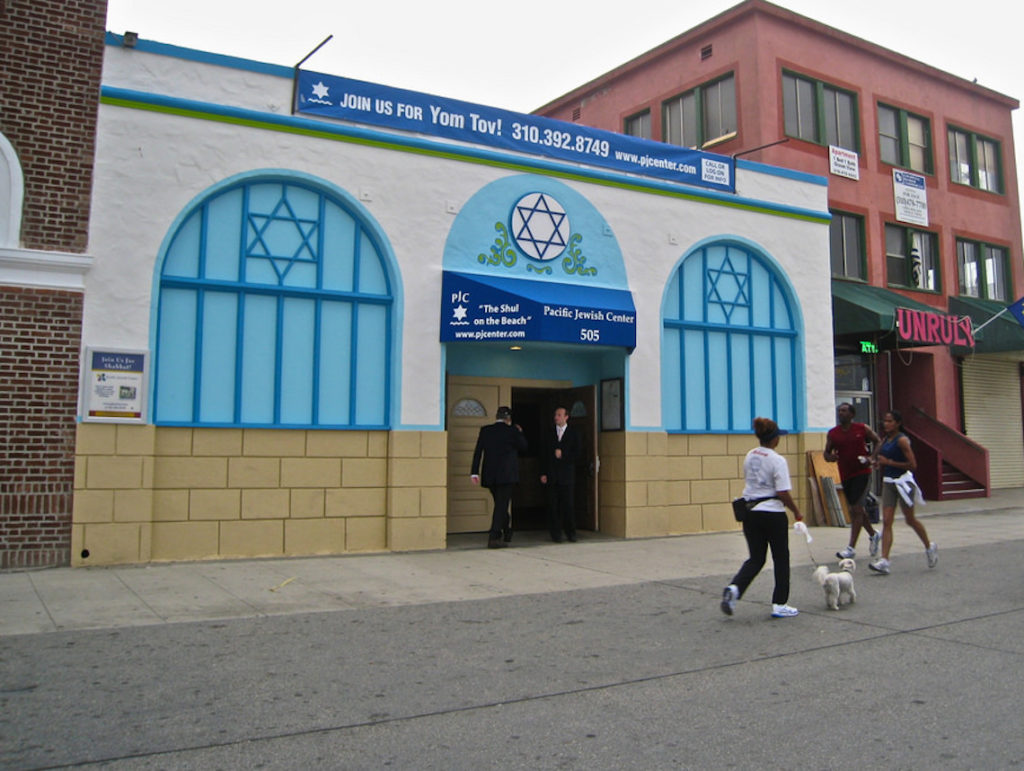
Joanne Feldman, executive director of the Pacific Jewish Center (PJC) in Venice Beach, said the advice is especially critical for congregations like hers, which is also known as Shul on the Beach. PJC, a Modern Orthodox shul expecting about 100 people on each of the holidays, is located on the Venice Beach boardwalk. People of all backgrounds pass by it every day.

It’s like “having a synagogue in the middle of Times Square,” Feldman said, “with all that heavy traffic going by nonstop, with wonderful people and crazy people.”

She recalled an anti-hate demonstration on the boardwalk, organized on a Saturday after the recent white supremacist rallies in Charlottesville, Va. The PJC community was attending Shabbat services and feared that something could happen at the shul.

“We secured the doors to the shul, locked the doors to the shul and the door to the women’s section until they passed by, just to be preventative,” Feldman said.

Elise Jarvis, the ADL’s associate director for law enforcement outreach and community security, said additional vigilance in this post-Charlottesville period would serve communities well during the High Holy Days.

“We want to take security into consideration in our everyday operations and be thinking about security 24/7 and have a culture of security all the time,” Jarvis said. “This year in particular, now after what we saw happening in Charlottesville and the fact that we see white supremacists feeling emboldened, all those security measures are all the more important.”

One practical step Jewish institutions can take is maintaining a close relationship with local law enforcement.

“It’s very important to know who to go to if we are targeted or threatened, so [law enforcement] can respond as efficiently and effectively as possible,” Jarvis said.

The ADL often helps connect Jewish organizations without law enforcement contacts to police officials. It also provides security resources on its website, including guides titled “Protecting Your Jewish Institution: Security Strategies for Today’s Dangerous World” and “Security Recommendations for the High Holidays.” The materials focus on how to create both a secure environment and a welcoming place for people to observe the holiest days of the year, two goals that are not necessarily in conflict, Jarvis said.

“A secure environment — a safe environment — is a welcoming environment,” she said.  n

ADL gives Jewish organizations security tips for High Holy Days Read More »

Trump to appoint Fred Malek, who counted Jews for Nixon, as head of think tank board

President Donald Trump will appoint Fred Malek, a former White House aide who recorded the number of Jews working in the Bureau of Labor Statistics for President Nixon, to chair the board of a prominent think tank affiliated with the Smithsonian Institution.

The White House Press Secretary’s Office announced Trump’s decision for the Woodrow Wilson International Center for Scholars in a release Wednesday. The policy research center is in Washington, D.C.

In 1971, Nixon complained to members of his staff about a “Jewish cabal” in government working against him. He specifically set out to demote members of the Bureau of Labor Statistics who he believed were tweaking employment statistics to make him look bad.

Malek’s role in documenting members of the bureau he thought were Jewish was first revealed in a book by Bob Woodward and Carl Bernstein in 1976. He sent a list of names he thought sounded Jewish to White House aides H.R. Haldeman and Charles Colson in September 1971. The employees Malek named were demoted to different positions within the bureau.

The story resurfaced in 1988, and Malek resigned from his post as deputy chairman of the Republican National Committee.

But Malek has remained active in Republican politics. He was a finance co-chair of John McCain’s presidential campaign in 2007 and then became an adviser to Sarah Palin, McCain’s running mate.

Jewish leaders such as former Anti-Defamation League chief Abraham Foxman and Sen. Dianne Feinstein, D-Calif., have accepted Malek’s apologies over the incident.

Trump to appoint Fred Malek, who counted Jews for Nixon, as head of think tank board Read More »

The Basel Congress’ unexpected result, 120 years later

One hundred and twenty years ago, on Sept. 3, 1897, a Viennese journalist named Theodor Herzl wrote in his diary: “In Basel I founded the Jewish state.” He then added a curious note: “If I were to say this out loud today, everybody would laugh at me. In five years, perhaps, but certainly in fifty, everybody will agree.”

This was two days after he returned from Basel, Switzerland, where, against all odds, he managed to put together the First Zionist Congress — the event that symbolizes the Jewish claim to self-determination.

Herzl had good reasons to feel elated about Basel: 208 delegates from 17 countries, the elite of European press, all dressed in solemn tuxedos, packed Basel’s casino to discuss his proposed solution to the “Jewish Problem.”

For three days, delegates listened to fiery speeches, debated and finally came up with as clear a definition of Zionism as one can possibly articulate: “Zionism seeks to establish for the Jewish people a publically recognized, legally secured homeland in Palestine.”

Sure enough, upon returning to his office at the Neue Freie Presse newspaper in Vienna, Herzl’s co-workers greeted him with obvious mockery, as the “future head of state.” But that was the least of the problems Herzl had to face; skepticism, sarcasm and opposition loomed all over the world. The Vatican issued a letter protesting the “projected occupation of the Holy Places by the Jews.” (Sound familiar?)

The Ottoman authorities had their suspicions aroused and began to restrict the manner in which Jews were acquiring land in Palestine, especially near Jerusalem.

But the worst opposition came from fellow Jews. Orthodox rabbis condemned Herzl’s attempt to hasten God’s plan of redemption, while Reform rabbis saw it as interference with their vision of becoming a moral light unto the nations by mingling among those nations.

Baron Edmond de Rothschild, the French philanthropist who supported Jewish agricultural communities in Palestine since the 1880s, was adamantly against efforts to obtain international legitimization of Jewish national claims. He feared (justifiably) that such efforts would lead to tougher Ottoman restrictions, and that Jews like him would be subject to charges of dual loyalty.

Ahad Ha’am, the most influential Jewish intellectual of the time, wrote about his time in Basel that he felt  “like a mourner at a wedding feast.” His motto was, “Israel will not be redeemed by diplomats, but by prophets.” He could not forgive Herzl for luring the world jury with false hopes of a diplomatic solution.

But the cleavage between Herzl and Ahad Ha’am was much deeper. Ahad Ha’am claimed it is futile and possibly harmful to argue the Jewish case in diplomatic courts when the Jewish people are spiritually unprepared for the task. What must be done first, he wrote, is “to liberate our people from its inner slavery, from the meekness of the spirit that assimilation has brought upon us.”

Herzl, on the other hand, understood that the very act of bringing the Jewish question to the international arena, regardless of its outcome, would change the cultural ills of the Jewish masses and rally them to the cause.

In retrospect, he was right. There were several forerunners of Jewish self-determination (for example, Moses Hess, Yehuda Alkalai, Leon Pinsker, Eliezer Ben-Yehuda and Ahad Ha’am himself), but their writings were directed inward,  toward the intellectual cliques in the Jewish shtetl; their overall impact was therefore meager.

Bringing the Jewish claim to an international court created the cultural transformation that Ahad Ha’am yearned for — the shtetl Jew began to take his own problem seriously and the Zionist program became one of his viable options.

History books make a special point of noting that Herzl’s predictions were miraculously accurate. Israel was declared a state on May 14, 1948, 50 years and eight months after Herzl wrote: “In Basel I founded the Jewish state.”

However, I believe Herzl in effect founded the Jewish state much earlier. True, Herzl’s specific plan to persuade the Ottoman sultan to allocate land for a Jewish state was sheer lunacy and led to painful disappointments. But transforming Jewish statehood into an item on the international political agenda was a monumental achievement — it maintains this position today.

Moreover, the idea that Jews are reclaiming sovereignty by right, not for favor, completely changed the way Jews began to view their standing in the cosmos. It transformed the Jew from an object of history to a shaper of history.

This new self-image was the engine that propelled history toward a Jewish statehood already in the early 1900s. The 40,000 Jews who made up the Second Aliyah (1904-1914) were different in spirit and determination from the 35,000 Jews who came earlier with the First Aliyah (1882-1903). At their core, they knew they were building a model sovereign nation and that Zionism is the most just and noble endeavor in human history. They established kibbutzim, formed self-defense organizations, founded the town of Tel Aviv and turned Hebrew into a practical spoken language. This spirit of hope, purpose and immediacy emanated from the Basel Congress, not from the utopian “in time to come” Zionism of Ahad Ha’am.

The diplomatic efforts that led to the Balfour Declaration and the subsequent ideological immigration of the Third Aliyah (1919-1923) all were direct products of the Zionist movement and made statehood practically inevitable.

The miracle of Israel was planted indeed in 1897.

If I had to choose the single most significant impact that the Basel Congress has had on our lives here, in 2017 Los Angeles, I would name one forgotten statement that Herzl made in his first speech at the Basel Congress. On the morning of Aug. 29, 1897, after 15 minutes of wild cheering, Herzl took the stage and said, “Zionism is a homecoming to the Jewish fold even before it becomes a homecoming to the Jewish land.”

As I observe how the miracle of Israel is becoming the most powerful uniting force among our divided communities, and as I witness the excitement of our children, grandchildren and college students as they internalize the relevance of Israel to their identity as Jews, Herzl’s statement about “homecoming to the Jewish fold“ stands out perhaps as more visionary than his prediction about Israeli statehood. It was the future of the Jewish people, not just of Israel, that was forged there in Basel, 120 years ago.


JUDEA PEARL is Chancellor’s Professor of Computer Science and Statistics at UCLA and president of the Daniel Pearl Foundation.

The Basel Congress’ unexpected result, 120 years later Read More »

News unfolds at a fever pitch

Maybe it’s not a coincidence that a disaster or tragedy strikes so often just before the High Holy Days. The Munich massacre, 9/11, Katrina, now Harvey — is that the Universe’s way of driving home the words of the Unetanah Tokef prayer?   

On Rosh Hashanah it will be inscribed and on Yom Kippur it will be sealed —
how many will pass from the earth
and how many will be created;
who will live and who will die;
who will die at his predestined time and who before his time;
who by water and who by fire,
who by sword and who by beast,
who by famine and who by thirst,
who by war and who by plague,
who by strangling and who by stoning.
Who will rest and who will wander,
who will live in harmony and who will be harried,
who will enjoy tranquility and who will suffer,
who will be impoverished and who will be enriched,
who will be degraded and who will be exalted.
But Repentance, Prayer, and Charity annul the severe Decree.

It could be that August and September were as tough on our ancestors as on us: months when the earth burns under unrelenting sun or floods in Noah-like storms. So they figured God was telling them it was time to think existential thoughts.

This year, I was laid low in August. I went home after work on Aug. 22 feeling a bit off, and woke up the next day as if I had just gone 10 rounds with McGregor and Mayweather. Not one or the other — both. Every year I get a flu shot, so it’s been years since I experienced a full viral knockout. This one caught me with my guard down and laid me out for a week.

I was still able to read, keep up with work via email, catch up on shows I’d been missing (“Red Oaks,” “Fleabag” — both engaging, almost flu-worthy), and, of course — of course — keep up on the news. Because I rarely left our spare bedroom for fear of being Patient Zero to the rest of the household, I subjected myself to an unhealthy amount of news.

On the night of Aug. 25, before Hurricane Harvey made landfall, Hurricane Trump pardoned former Arizona Sheriff Joe Arpaio. The 85-year-old disgraced convict was one of those people I always suspected karma or the law would catch up with, and it was a good day when he was found guilty. Not for abusing and humiliating prisoners, targeting random Latinos for arrest, or trafficking in racist lies against a sitting president — Arpaio was convicted of contempt of court. Just like many gangsters, it was the stuff he never thought twice about that took him down.

The lesson of the High Holy Days is that redemption can come with repentance. But President Donald Trump pardoned Sheriff Joe not because he showed remorse or repentance, but precisely because he didn’t. By standing up to minorities, courts and critics of the left and right, Arpaio made himself a hero to Trump. If he had apologized, he’d be doing time.

Repentance, says the High Holy Day prayer, can save our souls. How sad we have a president who last week taught this lesson to our children: Repentance is for losers.

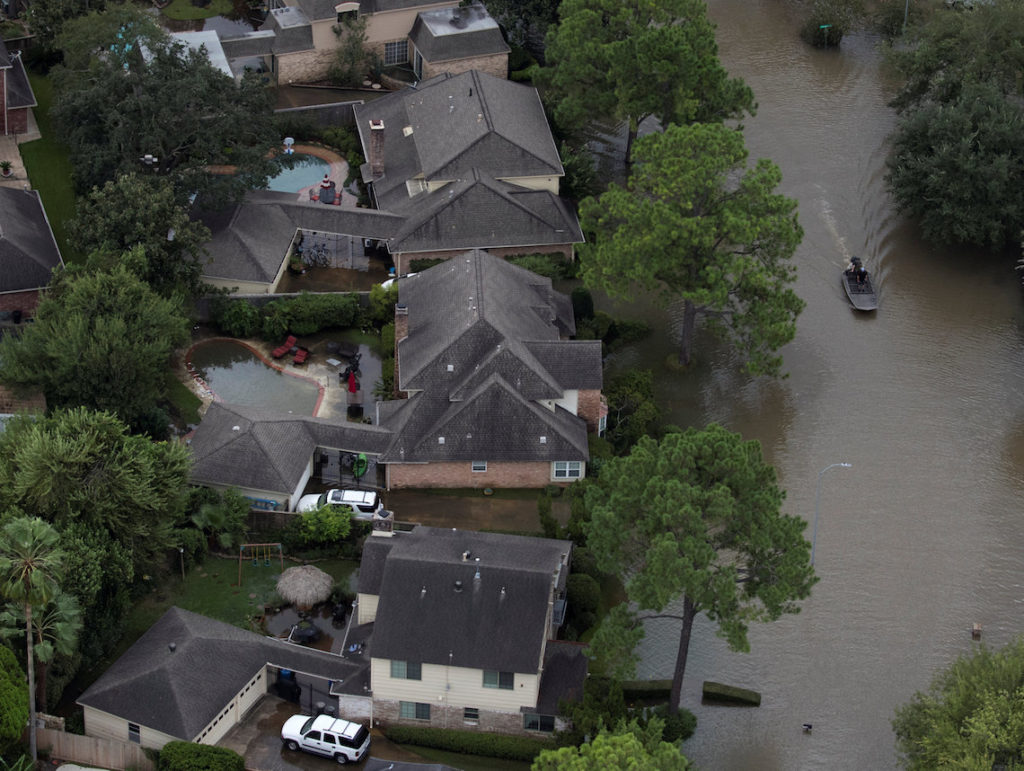
Then came the flood. CNN told the story of a couple who slept on their car roof for two nights in the pouring rain, inches above the floodwaters, until rescuers arrived. The rescuers were volunteers who had towed their boat from two hours away just to help out. President Trump’s response was helpful and efficient. The flood was unrelenting, but so was the relief.

Nothing can stop Americans from springing into action to help or donate to those in immediate need. But that same wondrous empathy goes dormant if the emergency is less than in our face. We’ll carry a cold baby over our heads to safety, but vote for the guy who wants to take health care away from that baby’s mom. We’ll dive into floodwaters for search and rescue, but refuse to fund the science showing the link between a 1-in-500-year flood and climate change. We’ll donate blankets and food to a teenager in a relief center, then support the guy who wants to deport him.

Charity, says the Unetanah Tokef, can avert the severe decree, but how do we get people to expand their idea of charity?

I’m not neglecting the other news — Jared Kushner took a field trip to the Middle East; the Israel Defense Forces demolished two Palestinian schools on the eve of the new school year, alleging they lacked permits; there was some boxing match. Then, just as my fever broke and the flu rented an Airbnb inside my lungs, North Korea shot a missile over Japan and North Korean President Kim Jong Un promised the next one would be in the direction of the U.S. territory of Guam. After that, your guess is as good as mine. What can be done?

Prayer, says the Unetanah Tokef, will “avert the severe decree.” Come the High Holy Days, I recommend it. And a flu shot.


ROB ESHMAN is publisher and editor-in-chief of TRIBE Media Corp./Jewish Journal. Email
him at robe@jewishjournal.com. You can follow him on Instagram and Twitter @foodaism
and @RobEshman.

News unfolds at a fever pitch Read More »

Torah Portion: Parashat Ki Tetze (Deuteronomy 21:10-25:19)

Just before the summer, students in my school’s senior class returned from a trip to Poland, a haunting journey into the Jewish ashes of Eastern Europe — the horrid death camps of Majdanek and Chelmno, the site of a genocidal rage to which for decades the world has sworn “Never again!”

And yet last month, white supremacists and neo-Nazis with menacing swastika flags on full display paraded through the streets of Charlotsville, Va.  Even though we knew in the back of our minds that this age-old brand of Jew-hatred persisted, to actually see it — to witness that sort of hate and aggression — brought our worst fears and anxieties into terrifying focus.

So now what? How are we supposed to react to such hate and hostility?

There’s a strong impulse to meet fire with fire and hate with hate — a method understandably advocated by some on the left. However, our tradition, which has long had to respond to the scourge of anti-Semitism, has charted a different path, one captured in this week’s parsha.

Consider the following verse: “You should not hate the Edomite, for he is your brother; you should not hate the Egyptian, because you were a stranger in his land” (Deuteronomy 23:8).  The Rambam in Moreh Nevuchim expands (Part 3, Chapter 42):

The Law correctly says, “Thou shalt open thine hand wide unto thy brother, unto thy poor” (Deuteronomy 15:11) … The Law has taught us how far we have to extend this principle of favoring those who are near to us, and of treating kindly everyone with whom we have some relationship, even if he offended or wronged us; even if he is very bad, we must have some consideration for him. Thus the Law says: “Thou shalt not abhor an Edomite, for he is thy brother.” Again, if we find a person in trouble, whose assistance we have once enjoyed, or of whom we have received some benefit, even if that person has subsequently done evil to us, we must bear in mind his previous [good] conduct. Thus the Law tells us: “Thou shalt not abhor an Egyptian, because thou wast a stranger in his land,” although the Egyptians have subsequently oppressed us very much, as is well-known.

To be clear, this is not to say that certain groups of people aren’t, in the Torah’s estimation, beyond the proverbial pale. In fact, the last item in this week’s parsha is a discussion of Amalek and an exhortation to “obliterate the remembrance of Amalek from beneath the heavens” (Deuteronomy 25:19).  The Torah is quite unambiguous about that.

But Amalek, it seems, occupies a singular category. According to the Rambam, even the Egyptians, who brutally enslaved and oppressed us for hundreds of years, do not deserve our unmitigated hate. We are — somehow — to afford them empathy and even appreciation. The kabbalistic work of Tomer Devorah echoes this sentiment, instructing that a person should go to great lengths to “have love in his heart” not just for his friends but especially for even his most wicked of enemies.

Why? Why must we do that? Is the Torah instructing us to be naive pushovers? Is it in the spirit of kumbaya?

I do not think so. Turning the other cheek isn’t a Jewish value. Rather, I think the Torah understands that while meeting hate with hate and aggression with aggression certainly feels tremendously satisfying, it’s often not the most effective path toward creating a new and better reality. Hate is not constructive — it is, by its nature, a destructive force. It closes possibilities. It fortifies silos.

So when we look at our enemy in 2017, which is it: Amalek or Egypt? Well, if anyone on the planet belongs in the category of “Amalek,” Nazis (and neo-Nazis) would most assuredly fit that bill. We have to speak up loudly and with force in denouncing them and their message of hate — that’s more than a moral imperative, it’s an existential matter for Jews. (Responding with physical violence, on the other hand, is something else; we are fortunate in this country to have law enforcement and a legal system that governs issues of free speech that we must respect.)

But I believe the Torah teaches us that we also have a responsibility — one that might seem counterintuitive and certainly difficult to fulfill — to find ways to inject love into an environment of hate, and empathy into a whirlpool of ignorance. We cannot watch as spectators as this aggression and hate and hostility continue to snowball even further.

Most individuals on the “far-right,” as it were, are not neo-Nazis. They are complicated human beings with hopes and fears and anxieties. I don’t think we can or should devolve into vitriolic shouting matches with those individuals. We need to open dialogue. We need to find common ground.

Even as we stand our ground and protect ourselves, our families and our communities, we must, through it all, seek to find those who would be willing to have conversations, and have them. To build bridges, and not to burn them.

Torah Portion: Parashat Ki Tetze (Deuteronomy 21:10-25:19) Read More »

Izak Parviz Nazarian, industrialist and philanthropist, dies at 88

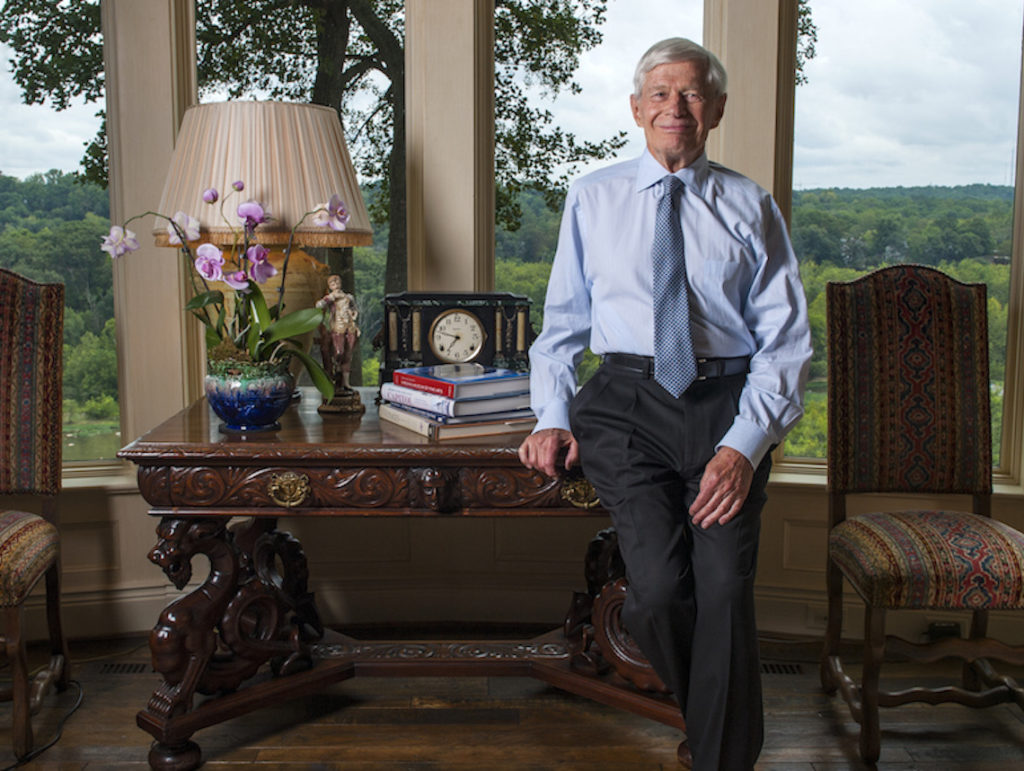
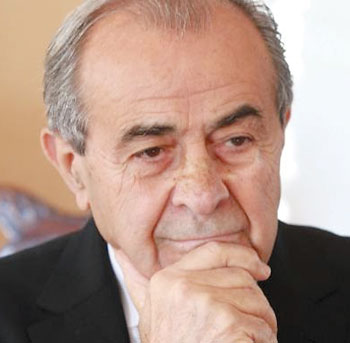
Izak Parviz Nazarian, an Iranian-Jewish community leader, industrialist and self-made billionaire philanthropist, died Aug. 23 in Los Angeles. He was 88.

Local Iranian-Jewish community members remembered Nazarian as a tireless pro-Israel advocate who gave generously to organizations in Israel and started nonprofit groups that benefited the Jewish state in various ways.

“When it comes to true and pure Zionism, he was a lover of Israel and our people. I have lost a teacher and our people have lost their favorite son,” said Dariush Fakheri, the former head of the SIAMAK organization, a nonprofit Iranian-Jewish group based in Los Angeles.

Nazarian was born in 1929 in Tehran’s Jewish ghetto, according to his 2016 Farsi language biography, “My Walk Toward the Horizon.” His parents were David and Golbahar Nazarian, children of Georgian survivors of pogroms and immigrants to the northwestern Iranian town of Urmia.

Following his father’s death in 1935, Nazarian and his younger brother, Younes, grew up in poverty as their mother worked as a tailor. Starting his own business at age 7, Nazarian began selling matches and cigarettes on the streets in order to earn bus money to visit his mother and brother across town while living with other relatives.

Later, Nazarian left his Jewish school before graduation and, with his brother, joined the fast-growing Iranian Railroad Organization trade school and earned a technical electrical degree.

Sam Kermanian, Nazarian’s first cousin and an adviser to the West Hollywood-based Iranian American Jewish Federation (IAJF), praised Nazarian for his hard work and drive.

“Since early childhood when [Nazarian] lost his own father, he dedicated his life first to elevating his family through his tireless and ever-optimistic pursuit of innovative and progressive business ventures,” Kermanian said.

Izak Parviz Nazarian

Nazarian became an ardent Zionist, leaving Iran in 1947 and joining the Haganah’s fledgling 7th Armored Brigade to help the fight for Israel’s survival in the 1948 War of Independence. During the war, he was severely injured during a patrol near Gaza when his military vehicle encountered a land mine.

“My jeep was completely destroyed and my leg was badly injured, but due to a miracle of God, I survived,” Nazarian told the Journal in a 2007 interview. “I felt it was my duty as a Jew to fight for my homeland of Israel after encountering horrible anti-Semitism while living in Iran.”

After leaving the army in 1949, Nazarian briefly worked as a driver for the Israeli Foreign Ministry, and among those he chauffeured was a future prime minister, Golda Meir. Later, he began a road construction business with other young Iranian immigrants, according to his memoirs.

Nazarian moved back to Iran in 1957 and married Pouran Toufer. Along with his brother, he started a construction business that began by paving new roads in undeveloped Iranian towns and provinces and subsequently obtained major road, bridge and civil construction contracts. Later, the two also formed Techno-Is (an abbreviation for Technology of Israel), which imported and distributed throughout Iran various construction machinery and parts from Europe, America and Israel. The company also manufactured construction equipment in its own plant located just outside of Tehran, which employed about 100 people.

Following the turmoil of Iran’s 1979 Islamic Revolution, Nazarian and his family fled Iran and settled in Los Angeles. Teaming again with his brother, he invested in various real estate and industrial ventures, including the acquisition of Stadco, an aerospace manufacturing company in downtown L.A. In 1984, they co-founded the technology company Omninet, which joined forces with Qualcomm in 1988 to develop a satellite-messaging system for the long-haul trucking industry.

“He was also a big risk-taker in business during his life and he took on some major challenges that many average people would never had taken. In the end, those calculated risks paid off,” said Shokrollah Baravarian, a longtime friend of Nazarian.

Nazarian used his wealth to become a constant supporter of Israel through countless philanthropic projects. In 1990, Nazarian became one of the founders of the L.A.-based Magbit Foundation, a nonprofit that over the decades has provided nearly $1 million in interest-free loans to thousands of Israeli college students.

Former Beverly Hills Mayor Jimmy Delshad, who once headed the Magbit Foundation, praised Nazarian’s unceasing philanthropic efforts on behalf of the foundation.

“One of my fondest memories of him was walking with him to downtown Persian-Jewish businesses to introduce me as the new president of Magbit Foundation and asking for donations for our cause,” Delshad said. “He never accepted no as an answer and that confirmed my belief that … ‘no’ means ‘not now.’ ”

Nazarian gave to numerous other causes, including Sinai Temple, where the first floor of the Westwood campus is named for him and his wife, and Nessah Educational and Cultural Center, a Beverly Hills synagogue that serves the Persian-Jewish community. Tel Aviv University, which houses the Pouran and Izak Parviz Nazarian Building, also has been a recipient of his support.

“His legacy will be as a shaper of the Persian-Jewish community here and as a major pillar of the Diaspora support of the State of Israel,” Sinai Temple Max Webb Senior Rabbi David Wolpe said.

In 2003, Nazarian founded the Citizens Empowerment Center in Israel (CECI), a nonprofit organization that promotes election reform.

Consul General of Israel in Los Angeles Sam Grundwerg said Nazarian dedicated much of his life to the betterment of other Jews, especially Israelis.

“His devotion to the State of Israel and his pro-Israel philanthropic contributions helped improve the lives of Israeli citizens and gave students the opportunity to achieve a higher education,” Grundwerg said in a prepared statement to the Journal.

Frank Nikbakht, a local Iranian-Jewish activist and editor of Nazarian’s memoirs, said his friend’s rags-to-riches story should be inspirational to all.

“Nazarian’s life story was one of misfortune, hope, persecution, courage, uprooting, migration, falling, standing up, taking risks, flying high and shining,” he said. “This is the essence of Jewish life throughout the centuries.”

Nazarian’s survivors include his wife, Pouran Toufer; four children, Dora Nazarian Kadisha, Dalia Nazarian Sassouni, Daphna Nazarian Salimpour and Benjamin Nazarian; brother Younes (Soraya); 12 grandchildren; and two great-grandchildren.

— Staff Writer Ryan Torok contributed to this report.

Izak Parviz Nazarian, industrialist and philanthropist, dies at 88 Read More »

Obituaries: Week of September 1-7, 2017

Henrietta Alpert died July 22 at 96. Survived by husband Robert; son Mark (Vicki Brown); 1 grandchild. Hillside

Renee Bennett died July 24 at 103. Survived by son Jack (Emily); 2 grandchildren; 2 great-grandchildren. Hillside

Elsa “Ellie” Bernstein died July 21 at age 78. Survived by husband Stuart; sons David (Diane), Scott; 4 grandchildren. Mount Sinai

Irwin Cohen died July 27 at 89. Survived by wife Frances; sons Michael (Shannan), Robert, David; 4 grandchildren. Mount Sinai

Fred Colton died July 23 at 92. Survived by wife Jean; daughters Melanie (Steven) Mandel, Linda; son Kevin (Stacey); 6 grandchildren; 3 great-grandchildren; brother Marty. Hillside

Arlyne Corfine died July 23 at 95. Survived by sons Ernest, Marc (Judy); 2 grandchildren; 6 great-grandchildren; 1 great-great-grandchild. Hillside

Lila D’Amato died July 24 at 86. Survived by daughters Ruth (Barry) Rice, Phyllis (Loren) Chase, Sandra Fowler; son Mike (Vicki); 8 grandchildren; 11 great-grandchildren. Mount Sinai

Henry Frydrych died July 26 at 98. Survived by sons Jack (Susan), Michael (Susan); 3 grandchildren; 4 great-grandchildren. Mount Sinai

Ina Gale died July 25 at 100. Survived by cousin Bill (Marlene) Freedman. Mount Sinai 

David Gantz died July 23 at 63. Survived by wife Laurie; daughter Deborah (Alvin) Lobo; son Kenneth (Rachel); 3 grandchildren; mother Beverly Carr; stepfather Robert Carr; sister Nora (Elijah) Levy; brother Paul. Hillside

Bernard Hanes died July 23 at 93. Survived by wife Sally; daughter Rose (Warren) Reid; sons Daniel (Kate), Andrew (Paul Butterworth), Kenneth; 6 grandchildren; 1 great-grandchild. Mount Sinai

Sylvia Harmatz died July 14 at 93. Survived by sons Richard Gerson, Harvey (Dana); 5 grandchildren; 1 great-grandchild; brother William Geltman. Malinow and Silverman

Doris Israel died July 8 at 86. Survived by daughter Sandra; sister Marilyn (Franklin) Kaye; brother-in-law Mervyn (Lucie). Malinow and Silverman

Renee Kandel died June 29 at 87. Survived by daughter Shelley (Adam) Reese; sons Alan (Jackie), Gary, Paul (Nancy); 5 grandchildren; 2 great-grandchildren; sister Adele Kishter. Malinow and Silverman

 Gertrude Ruth Kranitz died July 6 at 99. Survived by daughters Shelley (Bill Fariello), Susan (Gary) Wolf; son Jerry (Bobbi); 5 grandchildren; 6 great-grandchildren. Malinow and Silverman

Walter Losk died July 25 at 101. Survived by wife Annie; brother-in-law Norman Wallack. Hillside

 Sylvia McFarlane died July 6 at 103. Survived by niece Barrie Grobstein. Malinow and Silverman

Stanley D. Meisels died July 15 at 85. Survived by daughter Julie; son David; 2 grandchildren.Malinow and Silverman 

Stanley Michelson died July 23 at 64. Survived by mother Alice; sisters Betty Lou (David) Ward, Karen (Charlie) Johnson, Barbara (Alan) Lemons; brothers Roger (Kathy), Richard (Irene), Ronald (Aurelia), Robert (Charlotte). Hillside

Konstantin Morgulis died July 26 at 59. Survived by wife Olga Morgulis; daughter Lana (Avi) Slavin; 1 grandchild. Mount Sinai

Jeri S. Nesbitt died July 12 at 93. Survived by sons Craig (Sandra Scheetz) Starr, Brian Starr, Jeffrey (Rai) Starr; 3 grandchildren. Malinow and Silverman

Renee Petlak died July 25 at 82. Survived by sons Alan (Lisa), Stuart (Naomi), William; 8 grandchildren. Hillside

Ellen Jo Rose died June 21 at 62. Survived by mother Annabelle; father Howard; sisters Linda (John) Urban, Pamela. Malinow and Silverman 

Betty Sally Schwartz died July 28 at 86. Survived by daughter Cheryl Ricki Richard; stepdaughter Wendy (Drew Libby); son Larry (Laurie) Richard; stepson Ronald (Judy); 2 grandchildren; sister Shirlee Katzman; brother Marvin (Claire) Tamaroff. Mount Sinai

Bert W. Schweitz died July 21 at 81. Survived by wife Sarah Barouh; daughter Linda (David) DeCastro; son David; 3 grandchildren. Malinow and Silverman 

Jane Sencer died July 22 at 84. Survived by son Robert (Janice); 2 grandchildren. Groman Eden

Peter Melvin Shugarman died July 23 at 89. Survived by nephew David Wagner; 2 great-nieces; 1 great-nephew. Mount Sinai

Honey Shusett died July 23 at 89. Survived by daughter Leslie Jehnings; sons Randy (Phyllis), Steven; 3 grandchildren; 5 great-grandchildren. Mount Sinai

Yonat Swartzon died June 30 at 71. Survived by husband Jackob; daughter Shimrit (Michael) Vavak; sons Yossi, Saar (Kristie); 5 grandchildren; sister Malka (Karl) Singer. Malinow and Silverman

Howard Visnick died July 31 at 74. Survived by sons Adam Jay, Jacob Heath (Rachel); 5 grandchildren. Stanetsky Memorial Chapels, Mass.

Florence Warren died July 25 at 87. Survived by daughter Toni Klain; 2 grandchildren; sister Marlene Fogelman; brother Arnold (Sheryl) Fogelman. Mount Sinai

Obituaries: Week of September 1-7, 2017 Read More »

Bell-ringing mitzvah project brings hope to cancer patients

In the waiting room of the Radiation Oncology Department at Cedars-Sinai Medical Center, a New Beginning Bell is mounted on the wall. It’s attached to a plaque inscribed with a poem:

Ring this bell
Three times well
Its toll will clearly say
My treatment’s done
My course is run
And now I’m on my way.

It tolls loudly two or three times every day as doctors, nurses and fellow patients applaud individuals completing their treatments. And it’s there because of 13-year-old Isabella Spar and her bat mitzvah project.

So far, Spar has raised $5,000 via sales of charm bracelets and chokers she makes and sells on her website, projectbell.org, to finance bells for any cancer treatment center that wants one. Seven bells have been donated so far, including the one at Cedars-Sinai, which was installed in April, and there’s money for five more. But fundraising will continue, Spar said.

She got the idea when her mother, Wendy Jeshion, underwent radiation treatment for a benign brain tumor at Massachusetts General Hospital in Boston and rang a bell at its completion.

“It was an incredible feeling. It brought everyone together,” Spar said. “They had these bracelets there, but they got worn out easily and my mom asked me to make her a new one. So I made one with a bell and charms on it. And then I made more for friends and family.”

Then, she thought, it would be a great idea for her bat mitzvah project. “I wanted to do something big, not just donate but be part of it,” said Spar, who lives in Westchester County, N.Y., and became a bat mitzvah on April 29. She said that relatives, friends and congregation members wore her jewelry at the ceremony.

“It made me feel proud that I did something special and so happy that I could share that happiness with other people,” she said.

“I’ve always tried to help people,” she added. “After going through this with my mom and knowing I’ve helped so many more people like her is amazing.”

According to her mother, Isabella has always been “that kind of a kid.”

“When she heard there was a big earthquake when she was 5 years old, she emptied her piggy bank and donated every cent. Words cannot describe how proud I am,” Jeshion said.

Isabella Spar and her mother, Wendy Jeshion Photo by Bill Pollard/Cedars-Sinai

A pediatric gastroenterologist, Jeshion was diagnosed with a noncancerous tumor in 2015 and was advised to have surgery and radiation to stop its growth, which could cause blindness. But a month later, she was hit in the head by a baseball, suffering facial damage and a concussion, which rendered the tumor inoperable.

Jeshion consulted many doctors, including Dr. Behrooz Hakimian at Cedars-Sinai, who recommended a 28-day course of radiation over nearly six weeks. Ultimately, she had the treatment in Boston because it was closer to her New York home.

She acknowledged that it has been a difficult time for her family, “but to turn a tough two years into something so beautiful is as good as it gets. Following my treatment, my father bought me a bell, and every morning I ring it when I wake up. It provides a feeling of hope,” she said.

Hakimian said those who ring Cedars’ bell feel the same. “It’s like running a marathon, seeing the finish line and then crossing it. They feel some achievement and other people in the waiting room know their time will come. Positivity is so important in the healing process,” he said. “And this gives them a bit of closure so they can move on to the next step in their lives.”

Art Tostado, a 71-year-old prostate cancer patient who is retired from the motion picture laboratory business, rang the bell last month as Isabella, her sister Alexa, 11, their father, Jeff Spar, and Jeshion witnessed the personal milestone.

“It meant everything to me,” Tostado said. “I’ve done some research about bells and their importance through the centuries. They call people off to new journeys, which this is.

“In this day and age, with all this technology, a bell is still being used to get us through this. It’s very emotional.”

“I cry every time I watch somebody else ring the bell because I know how much they and their families have gone through,” Jeshion said, through tears. “It gives them hope, strength and something to strive for.”

In the spirit of tikkun olam, Isabella said she is trying to do her part to heal the world.

“There’s so much going on in the world right now and it makes me feel really good to know that I made a difference in some way,” she said, “and that doing a little bit made the world a better place.”

Bell-ringing mitzvah project brings hope to cancer patients Read More »