fbpx

August 2, 2017

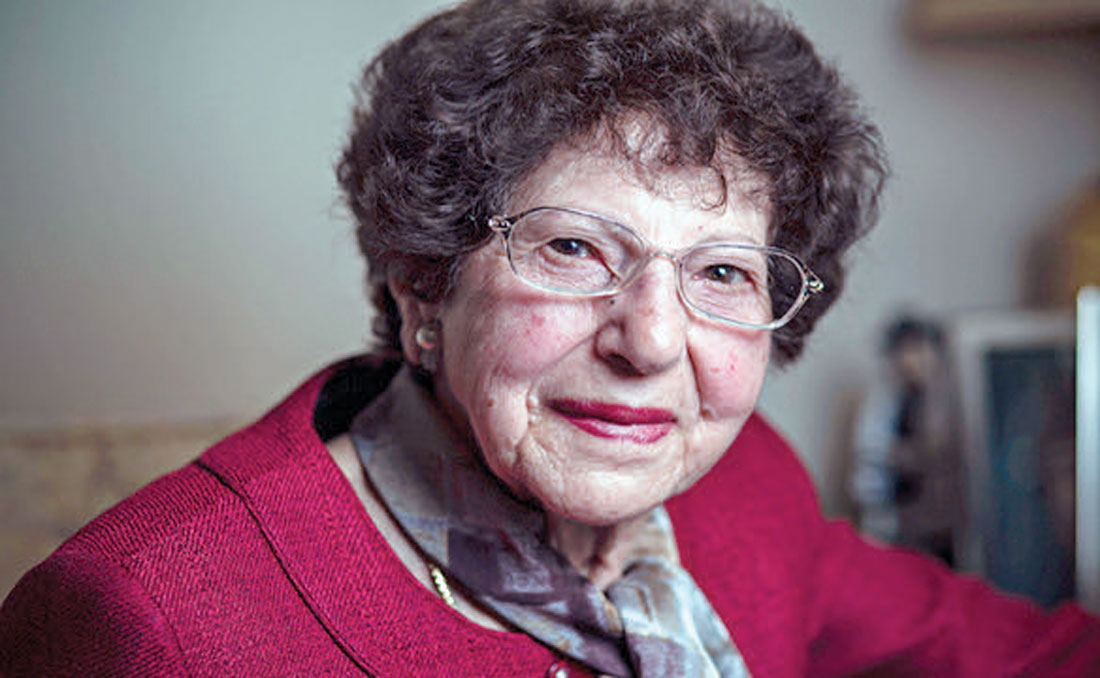
Helen Freeman, Holocaust survivor and educator, dies at 95

Helen Freeman, a Holocaust survivor who shared her story with thousands of students, died July 30 at 95.

Freeman (nee Chaja Borenkraut) was born in Radom, Poland, on Sept. 2, 1921, to Israel and Leja Borenkraut. Helen was the fifth of seven children and the only daughter. Her parents worked as merchants; the family was comfortable, tightknit and deeply observant.

On Sept. 8, 1939, Freeman’s young life took a dark turn as the Shoah engulfed her family.

Her journey in captivity carried her from the Radom Ghetto to Wolanow Labor Camp to Skolna Labor Camp to slave labor in the home of a Nazi squad leader, and then to Auschwitz, which she was able to leave after being selected for slave labor at the Siemens Motor Works aircraft assembly line.

Wandering the ruins of her hometown after the war in search of family, she encountered Joseph Freeman, a boyfriend from her youth. Not long afterward, they were married at Feldafing displaced persons camp. Freeman then dedicated herself to her family: two baby daughters born in Germany, Lillian and Rene, and her husband, who was just beginning to hit a professional stride after several postwar years in Germany.

Freeman waited for sponsorship to emigrate to “any place but here,” jumping at the chance to head to the United States, sponsored by the Pasadena Jewish Temple.

In a new country, and yet unable to speak English, Freeman set about creating a home and providing for her growing family that soon included son Louis and daughter Cecelia.

After years of hardship and hard work, Helen and Joe settled into the cozy Pasadena home where they would raise their family and live out their lives. On Shabbat, Joseph would drive his Cadillac to shul and Helen and the children would follow on foot.

The Freemans became known for their work in Holocaust remembrance. Joe was an advocate for critical conversations around Holocaust memory, documentation and archives. He also penned Helen’s memoir, “Kingdom of Night: The Saga of a Woman’s Struggle for Survival.”

Over the course of decades, Helen and Joe visited schools, churches, synagogues and civic groups across Los Angeles. In her Yiddish-accented English, Helen asked each student to “carry the torch “ of Holocaust memory, speak up in the face of cruelty and injustice, and stand conscious of the possibility that brutality lay nascent in society and could only be thwarted by the resistance and opposition of goodness. Helen and Joe were early supporters and docents at Los Angeles Museum of the Holocaust when it was part of The Jewish Federation of Greater Los Angeles, and supported and attended the groundbreaking ceremony for the United States Holocaust Memorial Museum in Washington, D.C.

After Joe’s death in 2010, as she approached 90, Helen embarked on a six-year mission to share her story. With daughter Cece and granddaughter Jamie, she was a founding Advisory Board Survivor Elder of The Righteous Conversations Project, an endeavor that connected Freeman with thousands of students. Through the project, Freeman inspired students of all ages to exercise their conscience by speaking about important contemporary social justice issues through new media. She also was a participant in the UCLA Hillel Bearing Witness program.

In 2008, when Helen addressed an auditorium of students at Harvard Westlake School, the school’s paper The Chronicle quoted her as closing her talk with the plea to the young people: “Please be good to each other, help each other.” The message is deceptively simple but transformative when followed as a commandment for peace on earth.

Freeman’s legacy is deeply embedded in the hearts, minds and memories of all who heard her speak or were the lucky beneficiaries of her guidelines for healthy living (light soup for dinner and advice from Dr. Oz). and prescriptions for a rewarding life — education, hard work, family, friendship and faith as the four poles and canopy of a meaningful life.

Freeman is survived by daughters Lillian, Rene Grifka (Dan), Cece Feiler (Bill); son Louis (Peggy z”l); grandchildren Jackie, Jamie and Jake Feiler; Jen Sparks (Sam), Nikki Garber (Greg); Josh (Jenna) , Michelle and Adam Freeman; and great grandchild Riley Garber.

To make a donation in Helen’s honor, visit https://secure.jewishla.org/page/contribute/holocaust-survivors-fund.

To learn more about Freeman, read Jane Ulman’s “Survivor” portrait on the Journal website: http://jewishjournal.com/culture/lifestyle/127599/.

SAMARA HUTMAN is the co-founder and director of The Righteous Conversations Project, and executive director of Remember Us.

Helen Freeman, Holocaust survivor and educator, dies at 95 Read More »

Matisyahu shown pushing teen fans offstage at JCC Maccabi Games opening

Jewish reggae star Matisyahu is seen in a video pushing two teenage athletes off the stage at a concert in Alabama during the opening ceremony of the JCC Maccabi Games.

The incident took place Sunday night at the University of Alabama at Birmingham’s Bartow Arena, The Jerusalem Post reported.

Some two dozen Maccabi athletes joined the singer onstage during his concert and were not stopped by security. But when one of the teens knocked off Matisyahu’s hat he became angry, the Post reported, citing an attendee. The video shows the singer shoving two people off the stage into the front row, and pushing a third teen toward the back of the stage.

Several attendees tweeted about the incident. Matisyahu has not responded.

In a statement to the New York Post’s Page Six, the JCC Association of North America wrote: “We are disappointed and dismayed that our opening concert performer, Matisyahu, forcibly removed some of our teen participants from the stage, and we will cooperate with any police investigation. Violence is never acceptable … This is contrary to what we instill in our participants and in what we believe. We are relieved that the participants involved were not seriously injured.”

Hundreds of Jewish athletes aged 13 to 16 from JCCs throughout the United States, along with delegations from Israel and Ukraine, gathered this week for the games.

Matisyahu shown pushing teen fans offstage at JCC Maccabi Games opening Read More »

Tu b’Av: Sunday, Aug. 6 (evening) to Monday, Aug. 7, 2017

BACKGROUND

Tu b’Av is the 15th day of the month of Av. It’s an ancient holiday dating back to the time of the Second Temple in Jerusalem, during which unmarried girls would wear white and dance in the vineyards to capture the attention of single men searching for brides. Tu b’Av marked the beginning of the grape harvest; Yom Kippur, when the girls would return to the vineyards, marked the end.

The first mention of the holiday occurs in the Mishnah, where Rabban Shimon ben Gamliel wrote that Tu b’Av and Yom Kippur were the most joyous Jewish holidays. Various explanations are offered about the timing of the date, including that it is when members of the tribes of Israel were permitted to marry women from other tribes.

TRADITIONS

Today, Tu b’Av is dubbed the “Jewish Valentine’s Day,” and is celebrated that way in Israel. It is the occasion for many weddings, as well as singles and matchmaking events in the Jewish community.  There is little in the way of traditional observances, although the Tachanun (confession of sins) is not said during daily prayers.

SPECIAL FOOD

There are no official Tu b’Av foods, but some people will make heart-shaped foods and use grapes to commemorate the holiday of love.

Source: MyJewishLearning.com, Jewish Food Experience

Tu b’Av: Sunday, Aug. 6 (evening) to Monday, Aug. 7, 2017 Read More »

mosque

The Temple Mount, California edition: Anti-Semitic sermons test Muslim-Jewish bonds

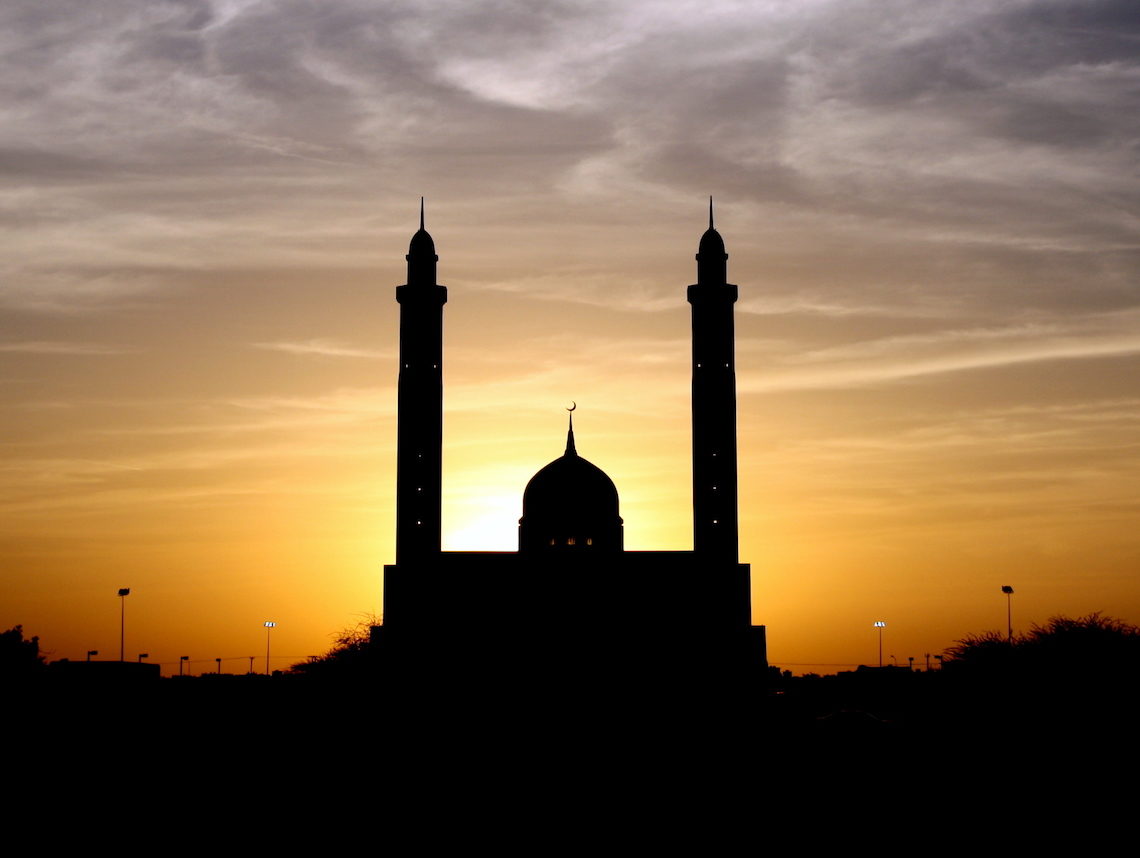
Sermons infused with anti-Semitic language delivered by imams in two California mosques on the same day have reignited tensions in Jewish-Muslim relations after leaders of the two religious groups around the state have worked aggressively to ease lingering conflicts.

The July 21 remarks by Imam Mahmoud Harmoush of the Islamic Center of Riverside and Imam Ammar Shahin of the Islamic Center of Davis drew strong condemnation from Muslim and Jewish leaders, fearful that such incendiary language could erode relations.

The effect was like picking at a scab on a slow-healing wound. Since the terror attacks of 9/11, American Jewish and Muslim groups have made a concerted effort to forge bonds of understanding and cooperation. Those have been nursed along despite the ongoing conflicts in Iraq, Syria and Afghanistan, not to mention the enduring friction between Israelis and Palestinians. More recently, efforts to stigmatize Muslims generally have encouraged Jews and Muslims to push for closer relations.

The angry sermons from the pulpits in Davis and Riverside tested the strength of those developing bonds.

“It is critical to understand the mosque, a sanctuary for worship and spiritual growth, has no place for divisiveness or hate. Paranoia as a result of political unrest does not justify making these allegations against an entire religious group,” the Muslim Public Affairs Council (MPAC), a national nonprofit dedicated to increasing understanding of Muslims, said in condemning the two sermons.

The Anti-Defamation League (ADL), the Simon Wiesenthal Center (SWC) and the American Jewish Committee, among others, expressed outrage over the sermons, with the ADL calling them “anti-Semitic and dangerous.” The Zionist Organization of America called for Shahin’s firing, and the Wiesenthal Center has urged the U.S. Department of Homeland Security and the U.S. Attorney’s Office to investigate the Davis Muslim leader.

In an Aug. 1 statement, Rep. Mark Takano (D-Riverside) said Harmoush’s sermon was “dangerous, offensive, and entirely inconsistent with the tolerant and respectful views routinely expressed by local Muslim leaders.” That same day, Rep. Brad Sherman, a Jewish Democrat who serves the San Fernando Valley, said Harmoush’s words were “nothing short of hate speech.”

Both sermons referred to last month’s conflict at the Temple Mount, where a shooting of two Druze Israeli police officers led the Israeli government to install metal detectors for entrance to the Al-Aqsa Mosque, which is part of the Temple Mount compound in the Old City of Jerusalem. After two weeks of internal and international outrage from Muslims, the metal detectors were removed.

In his sermon, Shahin said, “Oh Allah, liberate the Al-Aqsa Mosque from the filth of the Jews.”

Quoting a hadith, a saying of the Prophet Muhammad that is distinct from the text of the Quran, he said, “Oh Allah, count them one by one and annihilate them down to the very last.”

Harmoush used similar language when he said in his sermon, “Oh Allah, liberate the Al-Aqsa Mosque and all the Muslim lands from the unjust tyrants and occupiers. Oh Allah, destroy them, they are no match for you.” 

Further, he condemned “the occupying forces of the Israeli army [that] have intervened and indeed took over the holy place and shut it down.”

“These statements are anti-Semitic and dangerous,” Jonathan Greenblatt, CEO of the ADL, said referring to the two sermons. “We reject attempts to cast the conflict in Jerusalem as a religious war between Jews and Muslims. At this time of heightened tension, it is more important than ever for the Jewish and Muslim communities to come together to condemn the use of stereotypes and conspiracy theories, and to rebuild trust so that people of all faiths can coexist with mutual respect in the Holy Land and around the world.”

Imam Ammar Shahin


Rabbi Abraham Cooper, associate dean of the SWC, called on Muslim leaders to denounce the two sermons as a more effective way to blunt anti-Semitic speech than criticism from the outside.

“Whatever changes need to take place, they cannot be forced from Christian leaders or Jewish leaders,” he said. “That change has to come from within and it has to be brought about by leaders within the Muslim community.”

If the language of the Riverside and Davis imams stood out as particularly inflammatory, the sentiments were not unique.

While his July 28 sermon at the King Fahad Mosque in Culver City in English and Arabic did not explicitly promote violence, Sheikh Ahson Syed retained a distinct negative bias toward non-Muslims and repeatedly referred to Israeli soldiers, in English, as “Zionist terrorist soldiers.”

The sermon was recorded and posted to YouTube by the mosque, and the Journal commissioned a translation of the Arabic portion.

In Arabic, he said, “O God help our brothers in Palestine to get victory and get rid of the enemies who occupy their land. O God reinforce Islam and the Muslims, take down the shirk and the mushriks and kill enemies; enemies of Islam.”

In Islamic religious thought, a shirk is an idolator and mushrik refers to Christians and Jews, those who worship someone other than Allah.

Unlike leaders of some other religions, imams are appointed to lead prayers and are not required to have had formal seminary or theological training. Nor does Islam have any central authority that specifies what imams can say or not say in their sermons.

As a consequence, it is difficult to quantify how often fiery rhetoric is part of sermons delivered in mosques in California or elsewhere. Mahomed Akbar Khan, director of interfaith and outreach for King Fahad Mosque, said mosques entrust their imams and speakers to deliver sermons however they want.

“It’s generally free rein,” he said. “The questions we ask [when choosing speakers] is, ‘Is this person qualified and is this person respected in the community?’ If there are any inappropriate comments, we make it clear that it is not the stance of the mosque. But every mosque is different.”

Despite the language of the Riverside and Davis sermons and in mosques elsewhere, hate speeches in American mosques are “few and far between” and for the most part, haven’t been proven to lead to violence, said Kenneth Lasson, a law professor at the University of Baltimore, who wrote a 2005 paper on hate speech and incitements in mosques.

“It’s rare a congregation would go out to commit violence after hearing a sermon,” he said, adding that while he would prefer civility in places of worship, hate speech is protected as free speech if no violence happens as a result of it.

“That connection must be proven,” Lasson said. “In the cases in California, there appears that there have been no consequences other than hard feelings.”

Nonetheless, Aziza Hasan, executive director of NewGround, an organization that works to improve Muslim-Jewish relations, said the sermons reveal deep-seated differences between the communities.

“I think it blows the lid off that this is real,” Hasan told the Journal. “There are feelings between these two communities and this is how it has manifested.”

One member of NewGround, Jewish activist Tuli Skaist, reached out to Shahin to challenge his use of “such hateful rhetoric,” as he said in an op-ed posted at jewishjournal.com.

“In these turbulent times, with so much hate in the world, it seems to me that faith leaders ought to be in the firefighting business,” Skaist wrote. “We must fight the inflammatory flames of hate with the sweet waters of love. We must fight intolerance in the world by urging our people to be more kind and more tolerant.”

In his response to Skaist, Shahin accused the Middle East Media Research Institute (MEMRI), an organization that translates speeches in Arabic into English, bringing them to a wider audience, of taking his remarks out of context.

But he apologized for his sermon, writing, “Thank you for your comments and concerns, I will keep them in mind. As you know, when we speak with emotion, words might not be put in the right places or understood correctly.

“My apology to all your community for any harm that my misinterpreted words might have caused.”

In a subsequent press conference, Shahin appeared with Davis Mayor Robb Davis and Rabbi Seth Castleman, chairman of the Sacramento Area Council of Rabbis, and apologized, acknowledging that he allowed his emotions to get the better of him.

“I understand that speech like this can encourage others to do hateful and violent acts, for this I truly apologize,” Shahin said. “Words matter and have consequences.”

In his online op-ed for the Journal, Skaist wrote, “Let me be clear: The imam was wrong; his words were dangerous and inexcusable. Such words should not be tolerated by his community or any other. At the same time, here is a man that is not full of hate, but who simply got carried away with passion, used words that he shouldn’t have, and had them distributed to the world in a two-minute ‘got you’ sound bite.”

MEMRI denied that Shahin’s remarks were edited or mistranslated and called him “one of a group of extremist preachers who have been exposed by MEMRI to be delivering incitement to hatred and violence.” The organization said accusations of misrepresenting Shahin reflects an effort by the Islamic Center of Davis “to deflect responsibility from themselves by issuing all kinds of mendacious and libelous statements against the entity that exposed them.”

In addition to his position at the Davis mosque, Shahin is an instructor at the Zidni Islamic Institute in Brentwood. Egyptian-born, he graduated from the Institute for Preparation of Preachers with a bachelor’s degree in Islamic Studies and earned an associate degree from Al-Forqan Institute, according to the Zidni Institute.

Meanwhile, the Islamic Center of Riverside (ICR) said it conducted an internal inquiry, reviewing Harmoush’s remarks and finding that his critics had misinterpreted his words.

Imam Harmoush was careful to focus his remarks on the actions of the Israeli government in and around Jerusalem,” the center said in a statement. “In fact, those parts of the sermon which have been cited as objectionable were routinely mistranslated and/or taken out of context. Nonetheless, Imam Harmoush unequivocally stated in the sermon that Islam does not call for aggression against any peaceful people.

“ICR believes that the Imam’s remarks were neither anti-Semitic nor discriminatory, but rather intended to address the unfortunate closure of the Mosque in Jerusalem to Muslim worshippers,” the statement said.

In a brief interview with the Journal, Harmoush did not disavow any part of his sermon but conceded that his words might have an unsettling effect on others.

“Oh, I learned that sometimes you have to not only have a sixth sense, but maybe a seventh sense,” he said. “Some people are very sensitive but maybe they cannot handle the truth or information, and unfortunately, we are living in a very sensitive society. Sensitive in a way we have to be careful, so we don’t need to hurt anybody’s feelings. Sometimes I talk to adults, children, male or female, and we have to be careful not to hurt anyone’s feelings.”

Imam Mahmoud Harmoush


According to MEMRI, Harmoush was born in Syria and has been living in the United States since the 1980s.

According to the ICR statement, Harmoush regards himself as an interfaith leader, and on July 31, 10 days after delivering his sermon, he met with Rabbi Suzanne Singer of the Riverside congregation Temple Beth El to discuss the controversy over his sermon.

Having organized an interfaith event at her synagogue this spring in response to President Donald Trump’s executive order banning Muslims from certain countries from entering the United States, Singer said she was eager to talk to Harmoush, despite her discomfort over his sermon. Ibrahim Massoud, chairman of the mosque, also participated in the meeting.

In an interview, Singer said the meeting confirmed what she had suspected after watching Harmoush’s sermon online, that she and Harmoush have strongly different ideas about the founding of the State of Israel and Jewish intentions in the Middle East. Although they did not agree on many things, she said, they agreed to meet again to try to bridge this divide.

“I said it may be a good idea for us to talk about our different narratives around Israel,” Singer said.

As to what the future holds, Singer said she would not allow the two sermons to stop her from building interfaith relationships with willing Muslim partners.

“Obviously, I’m quite distressed about this,” Singer said. “I don’t think it represents the Muslim community [in Riverside].”

Reuven Firestone, a professor of medieval Judaism and Islam at Hebrew Union College-Jewish Institute of Religion, said the views expressed by Harmoush, Shahin and others are popular in the Muslim world, no matter how they are interpreted by others.

“These kinds of views have been encouraged by governments for decades in attempts to deflect criticism away from them,” Firestone said. “And there are plenty of harsh statements about Jews in Muslim religious sources that can be harvested when there is an interest in finding scapegoats.”

The challenge now for those who have worked hard to repair and improve relationships, said NewGround’s Hasan, is for religious leaders to hold one another accountable for hateful comments made by their communities but not to let them derail interfaith work.

“This is a huge opportunity for us to have those hard conversations and not sweep things under the rug,” she said.

The Temple Mount, California edition: Anti-Semitic sermons test Muslim-Jewish bonds Read More »

JSwipe: Navigating love via online apps

Any single man or woman who tells you they’ve never used a dating app while on the toilet is a liar.

JSwipe is the app of choice for those looking for a Jewish partner, but there are plenty of other swiping apps, including Bumble, Raya, The League and, of course, the granddaddy of them all, Tinder. They allow us to swipe right or left on prospective matches in waiting rooms, at red lights, on bad dates (uh-huh) and, yes, in the lavatory. Basically, anytime we’re bored, we swipe. (Does anyone read books anymore?)

It wasn’t always this way. In the beginning of online dating, there was JDate, and Jewish singles saw it and it was good.

In those innocent, pre-smartphone days, you didn’t log on simply because you had nothing else to do. It actually was a chore to find an online date! It required considerable time and energy.

So you did what everyone else did: You searched for your soul mate on the office computer when nobody was looking.  And you’d have to remember to keep the JDate browser open next to an Excel file that you would click over to when your boss walked by. JDating could simultaneously get you a life partner and cost you your job.

And not everyone had pictures up with their profile! Seriously! Because that often required a scanner that often required a trip to Kinko’s to scan the photo on a 3.5-inch floppy disk that often required uploading it to the internet back at the office computer.

But most striking back then was the stigma associated with dating online. Should an online couple actually go the distance, a friend might ask the obvious question: “How did you two meet?” To which the following dance usually followed:

“Well, we have these common friends …”

“And then I saw her at this party.”

“But he didn’t talk to me until …”

So you met on JDate?

“I mean, yes. Technically? But …”

Not anymore. Today, it’s basically assumed you met via a common right swipe. It’s gotten to a point where we singles feel compelled to clarify if we didn’t meet via an app: “Yeah, we met at a party. No, we weren’t swiping at the party; he actually came over to me! Yeah, I thought it was totalllllly weird but I went with it …”

It’s easier than ever to connect. Take out your phone, swipe, connect, text, go out, swipe again. Thank goodness JSwipe logs old conversations in the app; otherwise, we’d all unknowingly go out with the same person again.

So it is, as Tu b’Av, the Jewish holiday of love, approaches that the question inevitably pops up yet again: Are we singles inundated with too many options?

“The problem with JSwipe and all the other dating apps is the Jelly Theory,” my JSwipe date said between sips of tea at a Coffee Bean one spring afternoon last year.

“The Jelly Theory?” I replied.

“Yeah. See, these sociologists brought out all these different flavored jellies to sell at a farmers market. And they found, when faced with more flavors, more people would stop and look but fewer would buy. But! When they brought out fewer jelly flavors, fewer people looked but actually more people bought jelly! Fewer options equals more buying. There are too many dating options thanks to all these apps. Which is why nobody is settling down anymore.”

One coffee date and we never went out again. She was right, in fact. I had too many other options.

But since when is having options a bad thing? Marriage is a lifestyle choice, not a necessity. And nobody other than maybe our Jewish parents is putting a gun to our heads. So why can’t we be as picky as we want to be? And who cares if I sample every Jewish jelly in America, even if that means I never, ever, ever buy one?

Two months later, I right-swiped on Lisa.

I wasn’t in the bathroom but I was, indeed, incredibly bored. I was sitting at a poker table at the Aria Resort and Casino in Las Vegas, having a bad run of cards. Tired of folding one hand after another, I finally opened up JSwipe on my iPhone and started swiping. Twenty minutes later, I cashed in what was left of my chips and went to meet my date down the Strip at the Wynn.

She was a pretty jelly. And she was a smart jelly. And funny. She laughed differently and talked differently, and she admitted that, like me, she was bored on this Vegas trip and this was something different. We went out again the next day.

“You know,” I said to Lisa while we watched a basketball game on date No. 2, “no matchmaker would ever set the two of us up on a date.”

“Totally. If it wasn’t for JSwipe, we’d probably never meet.”

And she was right. Lisa was four years my senior. She lived in Canada, while I lived in L.A. We wanted different things. Aside from being Jewish, we had very little else in common. But we were bored, in Vegas, and we had this amazing app at our fingertips ….

I had done enough JSwiping and tested enough jellies to know that this was someone I wanted to be in a relationship with. All of our options made me and her better consumers. My palate is refined. I know what I want.

One year later, I’m happy to say that Lisa is still the jelly to my peanut butter. Now, I just have to find something other than swiping to do when I’m bored. Can anyone recommend a good book?

JSwipe: Navigating love via online apps Read More »

Khastegari: The Persian-Jewish version of meet the parents

Shannon Delijani was 14 years old, enjoying a cousin’s wedding ceremony, when an older Persian man spotted her, sat down next to her and started telling her about his son: He’s tall, he’s a doctor, he owns his own house …

“I thought, ‘Oh, gosh, this is happening,’ ” said Delijani, now 21. “I had heard about this but I didn’t think it would happen so soon.”

Unsure how to react, Delijani complied with the man’s request for her phone number and full name. When he finally asked her age and she told him, he gazed pensively into the distance. After a long pause, he patted her on the shoulder and conceded, with great disappointment, that she was too young for his 27-year-old son.

Delijani and other Persian Jews know this matchmaking ritual as khastegari, a word that loosely translates to “proposal” but denotes the elaborate Persian courtship custom that precedes the formal offer. What sets khastegari apart from ordinary matchmaking among Jews is the overt, active role families play in arranging matches for their children, sometimes meeting the potential suitor before the couple even plans a first date.

In its most traditional form, a suitor — the khastegar — and his family visit a young woman’s home to evaluate her family over tea and pastries. If the families approve of one another, the couple gets their blessings for a first date or even an engagement. Sometimes the children have a say in the selection; sometimes they don’t.

Several generations and one American migration later, the essential values of khastegari still are entrenched in the landscape of Persian-Jewish dating in Los Angeles, with parental involvement replacing dating apps and bar scenes in the dating lives of many young Persians. The custom is a source of amusement for many young women, who have coined the slang verb “khastegared” and trade stories with friends about awkward encounters like Delijani’s.

For her part, Delijani said she doesn’t mind when adults try to set her up with their relatives. She said every time she tells a non-Persian friend about the custom, they ask if her mom can set them up, too.

“Everyone always complains about not being able to meet people [to date], but here we have this built-in system for meeting someone,” Delijani said.

She’s not exaggerating when she says built in: It’s not rare for single Persian Jews to throw implicit “khastegari parties” with the intention of letting friends scope out potential marriage partners.

Delijani attributed the roots of khastegari to the centrality of family in Persian-Jewish culture, which makes parental involvement a major factor in shaping their children’s lives.

Shaina Pakravan, a master’s candidate at the USC School of Cinematic Arts, created a short film called “Roksana,” based on her mother’s and grandmother’s khastegari experiences. The film, which won a 2015 Short Short Story Film Festival award, follows a young woman with obsessive-compulsive tendencies as she sits awkwardly through a first meeting with a potential suitor and his parents.

Pakravan, 25, said she rarely sees formal khastegari rituals among her own generation. Still, she said, Persian culture’s communal nature persists in the United States despite the influence of American individualism. Meeting a potential spouse’s family still factors heavily into the course of Persian dating, as young adults know how big of a role their in-laws will play in their married lives.

In a sense, Persian Jews marry families, not individuals.

Afshin met his girlfriend of seven months, Arezou (their names have been changed to protect their privacy), through a modern twist on khastegari, as a pair of cousins decided the two might make a good match. One of Afshin’s cousins called Arezou’s parents for their blessing to arrange a date, then called Afshin’s parents for their permission, and somehow Arezou’s number made its way into Afshin’s phone.

They did make a good match, and after a first date at a Santa Monica bar, Afshin said he was surprised by how easy it was to connect with Arezou based on shared cultural background and values, as vetted by their relatives.

“Persian-Jewish women’s mental algorithm might be stronger than, like, dating apps,” Afshin said. He thinks it is the primacy of marriage in Persian culture that lends Persian women their sharp instinct for matchmaking.

“In American culture, if you want to stay single, that’s an acceptable lifestyle choice,” Afshin said. “In Persian-Jewish culture, if you want to stay single, then there’s something wrong with you.”

The tight-knit nature of the Persian-Jewish community provides the intimate knowledge of who’s who that strategic matchmaking requires. Coupled with the fact that Persian Jews tend to travel in familiar circles, khastegari can happen anytime, anywhere — even on Tu b’Av, a Jewish holiday of love, which starts on Aug. 6.

“Ashkenazi women are not going to do matchmaking in the parsley section of Elat Market,” Afshin said, referring to the kosher Persian supermarket on Pico Boulevard. “When they go to Whole Foods or Ralph’s, they’re probably not going to bump into a bunch of people they know.”

Among the qualities matchmaking mothers look for are a similar degree of Jewish observance, an education level and profession that match the caliber of one’s own family, and, above all, a solid family reputation in the Persian-Jewish community. Stains on a family history could be a deal breaker, Afshin said. People talk.

In traditional Persian circles, if a woman dated a man for too long and the relationship fell apart, she was marked as damaged goods, said Homa Halimi Nassirzadeh, a Persian-Jewish marriage and family therapist.

Nassirzadeh, who was courted by a number of khastegars when she was young and single, said she appreciates that modern life in Los Angeles has dissolved much of the intimate knowledge Persian-Jewish families have of one another. She said it’s good for kids to approach the dating scene without too many boundaries — save, perhaps, that they date someone Jewish.

Nassirzadeh said she finds that some of the Persian parents she counsels are apprehensive about today’s upside-down approach to dating, in which children introduce their parents into the equation only after their relationship has gotten serious.

“The biggest struggle for my generation is to shut our mouths,” Nassirzadeh said. “My advice to parents is usually, ‘Leave your kids alone and let them live their own lives.’ ”

Shirin Kohan, 32, said she feels strongly that a relationship between two adults is none of their parents’ business. She thinks some of her Persian peers mistake parental control for parental care.

“I think ‘khastegaring’ is the first step where marital problems begin,” Kohan said. “If you’ve started allowing other people into your relationship from the beginning, it’s a step in the wrong direction.”

Kohan noted that khastegari generally involves a man and his family soliciting a younger woman’s family, which she said objectifies women by denying them agency apart from their parents. The language surrounding the ritual suggests the same: The khastegar is the only named actor, whereas a female subject is only implied.

Delijani said it is not unusual to hear of Persian adults keeping an eye on girls in elementary school as potential spouses for their teenage sons, focusing specifically on the girls who come from prominent families.

“[Khastegari] is dehumanizing,” Kohan said. “It’s unhealthy and I don’t think it’s working in California in this day and age.”

To young Persian Jews like Afshin and Arezou, however, khastegari is a valuable tool to meet a compatible partner, no better or worse than a dating app.

“It feels natural [with Arezou] because we have a common cultural connection,” Afshin said. “I can’t say that it isn’t organic. It is.”

Khastegari is yet another iteration of the eternal contests that play out in Sephardic and Ashkenazi communities alike — tradition vs. modernity, parental oversight vs. independence, and arranged vs. spontaneous dating. It’s another gray area where Persian-Jewish families can negotiate the lines of assimilation and identity.

“[Khastegari] is just part of being a first-generation insert-something-here American,” Delijani said. “Everyone has to deal with these cultural clashes. But at the end of the day, these are our traditions.”

Khastegari: The Persian-Jewish version of meet the parents Read More »

AIPAC backs Taylor Force Act in letter to senators

After months of declining to explicitly endorse the Taylor Force Act, AIPAC announced on Wednesday their support of the bipartisan legislation that would cut off U.S. economic assistance to the Palestinian Authority (PA) until they cease payments to families of terrorists.

[This story originally appeared on jewishinsider.com]

“We urge all members of the committee to work together to move this important legislation forward and to VOTE YES to report the bill from committee,” Brad Gordon and Marvin Feuer, AIPAC’s Directors on Policy and Government Affairs, wrote in a letter to members of the Senate Foreign Relations Committee. “We are hopeful that the Senate Foreign Relations Committee markup will produce a strong, bipartisan bill that will send a very clear message to the Palestinian Authority: Stop these payments to terrorists and their families or your assistance will be cut.”

The Senate Foreign Relations Committee will vote on the bill on Thursday morning.

AIPAC appears to be persuaded by the revised version of the bill released on Tuesday. The updated version allows continued payments towards Palestinian humanitarian programs and also contains an exemption for the East Jerusalem Hospital Network. “The Taylor Force Act does not affect U.S. funding for security cooperation, nor does it cut humanitarian programs,” AIPAC noted. Unlike the Jerusalem Embassy Act, this legislation does not contain a waiver allowing the president to delay implementation of the funding cut.

The bill had no Democratic backing when it was first introduced by Senator Lindsey Graham (R-SC) in February. Senator Joe Manchin (D-WV) signed on as a co-sponsor of the legislation in June. However, despite the bipartisan support, AIPAC remained unwilling to actively lobby for the bill. “We strongly support the legislation’s goals and we are working with Congress to build broad bipartisan support that will require the Palestinian leadership to end these abhorrent payments,” AIPAC spokesman Marshall Wittmann told Jewish Insider at the time.

On Monday, Senator Bob Corker, Chairman of the Senate Foreign Relations Committee, announced a deal was reached with members of the committee to advance the legislation. “This is yet another sign of the bipartisan commitment in Congress to the security of Israel and to ending the Palestinian Authority’s outrageous incitement to violence against Israelis,” the conference of Presidents of Major American Jewish Organizations said in a statement.

The House version of the bill, introduced by Doug Lamborn (R-CO), has increasedsubstantially the number of co-sponsors to 100, but without any Democratic support.

“For too long, some supporters of Israel have feared cutting funding to the PA because it would ‘destabilize’ a supposed peace partner. Now, hopefully, [they] all understand that continuing to fund the PA while it funds murder legitimizes their policy and keeps peace further away,” Eugene Kontorovich, Professor of Law at Northwestern University, told Jewish Insider. “The Palestinian government’s salaries for convicted terrorists is not just a reward for murder, it is murder-for-hire.”

Noah Pollak, an advocate in favor of the Taylor Force Act, said that AIPAC’s formal backing is a “welcome development and something we have been encouraging for many months. We hope that AIPAC will now put its considerable resources behind promoting the bill, even if it is not possible to earn a perfectly equal number of Republican and Democratic votes. We have worked hard to gain bipartisan support. But in the end, passage of a strong, meaningful bill is more important than the details of the vote count.”

In a statement emailed to Jewish Insider, the Republican Jewish Coalition (RJC) applauded AIPAC’s support  and expressed hope that “Democrats will step up, join in, and support a strong and effective version of the bill without diluting it with amendments.”

When informed of AIPAC’s support of the bill, Senator Marco Rubio (R-FL) said the decision was helpful. While AIPAC’s view on the Taylor Force ACT isn’t conditional for Rubio, the pro-Israel organization’s position “is influential with me,” he added.

“Once this bill became bipartisan, it became easier for a wider range of groups to support it,” Jonathan Schanzer, Senior Vice President at the Foundations for the Defense of Democracies (FDD), explained. “It’s also important to see that the bill ensures continued security assistance to the PA, as well as humanitarian assistance to Palestinians in need. In short, the politics in Washington have made this easier to back, and the bill itself does not ignore the importance of stability.”

AIPAC backs Taylor Force Act in letter to senators Read More »

Honor both sides to create an inclusive interfaith wedding

Interfaith weddings are an age-old quandry for Jews, but recent headlines suggest they may be becoming more accepted. Two prominent New York rabbis, trained at the Conservative Jewish Theological Seminary and members of the movement’s Rabbinical Assembly, announced in June that they would begin to perform intermarriages, breaking with the movement’s long-held prohibition.

As perceptions of intermarriage modernize, so do the wedding ceremonies celebrating couples about to embark on their lifelong journey together. There now are more options and variations than ever for couples looking to host an inclusive interfaith wedding.

Rabbi Keara Stein is the Los Angeles director of InterfaithFamily, a nonprofit designed to support interfaith couples exploring Jewish life while also seeking inclusivity in Jewish communities. Part of Stein’s role is to field requests that come through the officiation referral service at InterfaithFamily. She also personally officiates one or two interfaith weddings per month throughout Southern California.

As a general piece of advice, Stein said that no matter what, all aspects of the ceremony should be meaningful to the couple.

“A wedding, no matter what the religion, symbolizes the coming together of two unique individuals, and I want everything we do in that wedding to include that,” she said.

Stein outlined six tips for having an interfaith wedding that will make both sides feel comfortable while respectiving various traditions.

1. Create an educational program

The program not only should outline the timeline of events, it should explain the significance of the traditions the guests will be experiencing during the ceremony.

“This is not a spectator sport,” Stein said. “Everyone should be included. I encourage a couple to make a program for their wedding, and I usually help them do so by explaining the meaningful aspects of the different rituals.”

2. Choose rituals and readings that either are common to both traditions or do not offend either one 

Stein cited the example of lighting a unity candle or, in one specific recent instance, a couple who asked to be wrapped in a tallit along with a handmade blanket made by the bride’s grandmother.

3. Consider an interfaith ketubah

There are many websites devoted to ketubot — Jewish marriage contracts — and to the artists who create them. Many of these artists have created works of art, suitable for framing, with customized language that can honor any partnership, ranging from LGBTQ couples to interfaith unions. InterfaithFamily has several versions of inclusive statements for the creation of the ketubah on its website (interfaithfamily.com).

4. Have in-depth conversations with your parents

Stein readily admits the biggest hurdles for couples to overcome often arise from the parents on both sides.

“It can be very difficult for parents to come to terms with the fact that the [wedding] day might look different than they had initially imagined,” Stein said. “I like to have conversations with couples about how to talk to their parents about the types of rituals they want at their wedding.”

5. Find the right officiant 

“I speak with a lot of couples exploring which type of officiant they’re going to have, and I try to find out where their desire is coming from and what is driving their search,” Stein said. “Is it a deep appreciation for ritual, is it family pressure or is it somewhere in between?”

She has co-officiated wedding ceremonies, although it was a difficult decision.

“Some rabbis have hard lines against co-officiating with other religions. Ultimately, it has been one of the most beautiful, profound experiences for me because there have been couples who would not have had any other Jewish elements at their special day if I had decided against it.”

6. Talk to other intermarried couples

Stein highly recommends that couples planning an interfaith wedding should discuss with others in their community what did and did not work for them on their big day.

“Reach out to other interfaith couples through organizations like ours or synagogues in the area,” she said. “Talk to other people and see how they’ve done it. The wedding sets the stage for the marriage. All of the people attending a wedding are there to show support of a union, so show them what that means through inclusivity and love.”

Honor both sides to create an inclusive interfaith wedding Read More »

Recenterpiece turns table decorations into food source

“When I think back to my bat mitzvah, I don’t remember much,” Deborah Kattler Kupetz said. “What I do remember was the centerpieces. There were little placards at each table explaining how much of the money raised would go to help others. And social action wasn’t big back then.”

That memory is the link between Kattler Kupetz’s past and her new venture, Recenterpiece, a business that creates centerpieces out of fruits, vegetables and flowers. After an event, the produce is distributed to food banks and other organizations that feed the homeless and families who cannot afford to buy enough food to stay healthy.

“The idea for Recenterpiece,” said Kattler Kupetz, CEO and founder of both dkkevents and Recenterpiece, “is to have something at the middle of a table for events that is just as beautiful as anything floral, but is also going to reduce food insecurity.”

An estimated 1.4 million people live with food insecurity in Los Angeles County, according to the Los Angeles Regional Food Bank. With food the second-largest source of waste in California according to a 2016 report by CalRecycle, Kattler Kupetz said she realized there had to be a better way of connecting food to those who need it.

“That’s how Recenterpiece comes in,” she said. Emerging from dkkevents, Recenterpiece is a new initiative to create reusable centerpieces by people who want to help solve a social need.

For any event, starting at around 50 people, Recenterpiece offers a variety of styles for centerpieces to complement the event. “We don’t want anyone to have to compromise on cost, style or feeling,” Kattler Kupetz said.

After the event is over, Recenterpiece takes the centerpieces to the partner food banks, where the food is made available for the hungry. Kattler Kupetz uses special software and technology that finds food banks closest to an event.

Before Recenterpiece began operating, Kattler Kupetz already had been thinking about hunger. “Going hungry is terrible,” she said. “It’s one of the most fundamental needs. It’s hard to get up and work or go to school when you’re just in pain from hunger.”

With that in mind, she decided to expand a project she had been doing for years, “making beautiful centerpieces with fruits and vegetables for clients alternatively. So why not make Recenterpiece its own thing?”

Among the 14 events she has completed was a concert at Sinai Temple for a bar mitzvah, which generated more than 1,000 pounds of produce that went to food banks in need. “It was incredible watching all these people just pay that extra bit of attention to their centerpiece,” Kattler Kupetz said.

Lauryn Harris Pimstone, who organized a recent 80th birthday party for her father-in-law, has been a dkkevents client. “The fact that they take care of delivery to me and the pickup and drop-off to donate is what I love,” she said.

Lauren Schiff, another dkkevents client, said she was attracted to the idea that the centerpieces serve a purpose beyond the ornamental.

“Whether it be a charity event, for graduation, for temple events, you’re going to decorate your table, and it’s a wonderful opportunity to spend your money on something that doesn’t go to waste,” she said.

Kattler Kupetz said her work at dkkevents and Recenterpiece evolved from a story she heard while attending Camp Ramah.

“It’s one of those classic Jewish stories, and I don’t even remember the whole thing,” she said. “But it was about two kings holding different banquets, and at the end, one of the kings says, ‘Look at this banquet and see that it’s all mine.’ But the second king brings everyone in and says, ‘See this? It’s all for you. Enjoy.’ ”

After stopping for a moment to think, Kattler Kupetz said, “And honestly, that sentiment has stuck with me for my entire life.”

Recenterpiece turns table decorations into food source Read More »

‘Transparent’ season four: On to Israel

“I am going to Israel,” the transgender character Maura Pfefferman, played by Jeffrey Tambor, proclaims in the trailer for the fourth season of the Amazon Prime series “Transparent.”

The Emmy Award-winning comedy-drama about a quirky Jewish family with a transgender parent will follow the Pfeffermans as they visit the Jewish homeland on a spiritual odyssey that also will connect them to their roots. It will show the clan as they land at Ben Gurion International Airport, where they kiss the ground before a couple of Orthodox Jews practically knock them down.

“It’s like an Orthodox Jewish Disneyland,” one family member later remarks of the country. The Pfeffermans go on to float in the Dead Sea and even to pass checkpoints in the occupied territories.

“They say in Hebrew you only have one mother,” a sabra says during dinner with the Pfeffermans. “We kind of have more than one,” one of Maura’s children replies.

The trailer was released just a couple of days after President Donald Trump announced a ban on transgender people serving in the military, a fact that didn’t go unnoticed by those who work on the show.

“Sharing this work amidst President Trump’s continued assault on the transgender community is painful,” the show’s creator, Jill Soloway, and her “Transparent” colleagues wrote in a statement released to People magazine.

Later in the statement, they continued: “To our trans community members serving in the military and to transgender veterans: We work in solidarity with you and will continue fighting and creating art for our community’s well-being and future. We hope that you’ll enjoy the trailer for season four because our visibility and our stories are more important than ever.”


“Transparent” Season Four premieres Sept. 22 on Amazon Prime. 

‘Transparent’ season four: On to Israel Read More »