fbpx

May 8, 2017

Turkey’s Erdogan accuses Israel of massacring Palestinians

Turkish President Recep Tayyip Erdogan accused Israel of “massacres” against the Palestinians and chided the international community for its silence.

Erdogan made his comments on Monday at the Al-Quds Forum in Istanbul, a two-day international event that brings together representatives of foundations, experts, academics, ministers and high-ranking officials from around the world to discuss the state of Muslim heritage in Jerusalem.

Speaking of Israel, the Turkish leader was quoted as saying in the Istanbul-based Daily Sabah newspaper, “They feel they are immune to any punishment for their crimes, but the international community needs to stand up against them. It is impossible to establish peace in the region if the international law remains indifferent to massacres and cruelty.”

Israel’s Ministry of Foreign Affairs responded to Erdogan’s comments in a statement issued on Monday night.

“Those who systematically violate human rights in their own country should not preach to the only true democracy in the region,” the statement said. “Israel consistently protects total freedom of worship for Jews, Muslims and Christians – and will continue to do so despite the baseless slander launched against it.”

Also at the forum, Erdogan called on Turks to visit the Al-Aqsa mosque often to protect its Muslim identity.

“Turkey attaches great importance to the justified resistance of the Palestinians and will not yield to Israeli attempts to change the status quo in the Al-Aqsa mosque,” Erdogan said. “We as Muslims should visit the Al-Aqsa mosque more often; every day that Jerusalem is under occupation is an insult to us.”

The mosque, under the control of the Muslim Waqf, is located in Jerusalem on what Jews call the Temple Mount.

Erdogan also criticized a bill being considered in Israel that would limit the volume of the Muslim call to prayer.

“It is disgraceful for those who lecture us about the freedom of religion to turn a blind eye to this attempt. Turkey will not let these attempts against freedom of belief [prevail],” Erdogan said. “Why are they afraid of the call to prayer? Are they unsure of their own fate? We do not and will not treat our Jewish citizens like that.”

Turkey’s Erdogan accuses Israel of massacring Palestinians Read More »

what lies beneath

I think that was a movie title. Never saw the flick, but couldn’t help but think on the title today when in conversation with a new friend.

We were both raving at each other about the details of each others lives. The ones we could see. Then, he made an observation about mine that simply was not true. It was a teeny tiny portion of true I suppose, but the other part? Not so much.

I had a quick decision to make. I decided this friendship was too new to contradict him. I wondered if I was afraid to burst his perfect perception of me and my life, but I ultimately felt he would be embarrassed in that moment so I hold my correction for another time. I figured there would be plenty of time to really share if the friendship was important.

But boy, it got me thinking. What was I missing about him as I gushed about about his life? His home in Venice and the two hour walk with his dog daily on the beach and the exotic travel for the work he enjoyed so much. What was I not getting with my surface observations?

What do we not get about so many whom we encounter in our days, from the loved one to the stranger? What could I not see from the lady whom I feared might sock me in the teeth at Target for our accidental cart mishap last month? What do I not get about my  mailman and my bank teller or grocery clerk, let alone the beautiful souls for whom I have the privilege of seeing and caring for each and every day in my own home.

What do we miss about ourselves. We think we know ourselves so well, we may barely event take an honest look or feel. Every opportunity to give ourselves negative feedback when we look in the mirror or when we teeter off the carefully laid balance beam of our lives may be a coverup for actually going inward. What do we miss in these moments?

Of course, we need to make quick observations sometimes. We have so many mini decisions to make throughout the day that we need to rely on some form of discernment about a person in our immediate orbit sometimes. I wonder though if we can make just a concerted effort, even once daily, to open our eyes. Really look, and really wonder. Not wonder in order to make a conclusion, but in order to keep the possibilities open about the person in front of you. Our questions can heighten our compassion, and at the end of the day, this will nourish our relationships more than any judgment or compliment.

I will be gone for a few days so NO CLASS FRIDAY 4/28

I look forward to practicing with you all Wednesday, 5/3!

And look for the Month Of Mondays starting in June!

In appreciation, and compassion,

Michelle

what lies beneath Read More »

Fidget spinner was invented to stop Palestinian kids from throwing rocks at Israelis

Do we have Palestinian rock throwers to thank for the fidget spinner?

The inventor of the ubiquitous stress-reducing toy says she came up with the idea during a trip to Israel in the 1980s, during the First Intifada, as a way to distract the “young boys throwing rocks at police officers.”

Catherine Hettinger told CNN Money last week that she first brainstormed the gadget while visiting her sister in the Jewish state and hearing about the clashes between Palestinian youth and Israeli security.

She first considered designing a “soft rock that kids could throw,” according to CNN Money.

“It started as a way of promoting peace,” Hettinger said.

But soon after, upon returning home to Orlando, Florida, Hettinger put together the first fidget spinner — a propeller-like toy that spins around a center bearing.

Hettinger secured a patent for the device in 1997, but sales languished for over a decade, and Hasbro declined to market it. Hettinger did not have the money to pay the $400 fee to renew her patent in 2005.

It was not until last year that the fidget spinner became a sensation, appearing everywhere from office cubicles to elementary school classrooms. Some tout the toy as a stress reliever, but others find them disruptive and distracting.

Fidget spinner was invented to stop Palestinian kids from throwing rocks at Israelis Read More »

Comey on Holocaust: ‘Good people helped murder millions’

FBI Director James Comey discussed those who participated in the Nazi atrocities during the Holocaust at the Anti-Defamation League’s annual conference on Monday afternoon. “Although the slaughter of the Holocaust was led by sick and evil people, those sick and evil leaders were joined by and followed by people who loved their families, took soup to sick neighbors, who went to church, who gave to charity,” Comey told the ADL gathering. “Good people helped murder millions.”

[This story originally appeared on jewishinsider.com]

The top law enforcement officer added that in order to better understand humanity’s perils, the FBI requires officers and analysts to tour Washington’s Holocaust Museum in addition to studying about Martin Luther King Jr and the civil rights movement.

“I believe the Holocaust is the most significant event in human history. How could such a thing happen? How is that consistent in any way with the concept of a loving God?” Comey asked. “The answer for me is I don’t know.”

During the first several months of the administration, the issue of the Holocaust has consistently dogged Trump’s presidency. White House Press Secretary Sean Spicer argued that Syrian President Bashar al-Assad committed acts worse than Hitler while also referring to “Holocaust centers.” (Spicer later apologized). In a statement commemorating Holocaust Remembrance Day, the White House declined to include Jews, a strange omission, but furthered when they refused to admit any mistake.

The FBI director also noted that on his desk he keeps a 1963 memo from Director J. Edgar Hoover to Attorney General Robert Kennedy asking permission to wiretap Martin Luther King Jr. due to “communist influences.” Comey asserted that this letter was critical to remembering the dangers of unchecked law enforcement powers.

Comey on Holocaust: ‘Good people helped murder millions’ Read More »

The stigma of the unworthy unhealthy

There was something sublimely degrading about the beer bash President Donald Trump threw May 4 for House Republicans who passed his health care bill by the narrowest of partisan margins.

Start with the host, who will say or do anything. By now it’s apparent that the president is untethered to reality. If he were to be impeached, a compassionate chief justice might declare him incompetent to stand trial because he lacks the mental capacity to be responsible for his words or acts. But the Republicans who sniffed his musk last week aren’t blissed by the clueless stupor his narcissism affords him. They’re fearful of their constituents. No wonder that, of the 217 congress members who voted his way, only two — one in Idaho, one in upstate New York — held district town halls this past weekend. They did not go at all well. When the rest of the cowering Republican conference is forced to face their voters, it will be similarly ugly.

They must be baffled by how devoid of mojo their old battle cries have become. “Jobs-killing Obamacare” packs no punch in an economy that’s added more than 10 million jobs since the Affordable Care Act passed. “Disaster” and “death spiral” sound demented to someone who’s gone from no insurance to comprehensive coverage. “Higher premiums, higher deductibles, higher co-pays” may in some cases be accurate, but for Americans long suffering from rising prices, the real news is the slowing of the rate of increase.

Republican capitulation to the Freedom Caucus’ demand to torpedo Obamacare’s coverage of pre-existing conditions has prompted hundreds of heartbreaking — and televised — stories of congenital defects, deadly tumors, chronic ailments, addictions and mental illnesses, whose long-term treatment was until recently made affordable by irrevocable insurance, but which now is slated for sacrifice in exchange for a trillion-dollar cut to Medicaid and a humongous tax cut for the wealthiest. Not only will those stories, juxtaposed with Rose Garden revelry, make for mercilessly effective ads in the coming midterm campaign; they also sound the death knell for the most toxic trope in the Republican rhetorical armory: the stigma of the unworthy unhealthy.

The label descends from the widespread distinction, as recent as a century ago, between the worthy and the unworthy poor. The worthy poor — widows, orphans, the blind — were indigent through no fault of their own, victims of random misfortune, life’s vicissitudes, circumstances beyond their control. But the unworthy poor were the cause of their own impoverishment. Lazy, morally weak, addled by drink, gamblers: They had only themselves to blame. The worthy poor deserved charity; the unworthy, a kick in the pants.

The Depression altered the presumption that bootstrapping is the royal road to success. If there aren’t any jobs, it doesn’t matter how much moxie you have. From our common catastrophe came a new compact. Every person is worthy of basic human decency, a safety net to catch us, a freedom from want we pledge to one another. To secure it? Not the market, not inheritance, not the luck of our genes — the government. And so from Social Security to Medicare, unemployment insurance to food stamps, we committed public resources to promote the public good.

Universal health care was always the outlier in America — not just the notion that government should provide it, but the idea that it’s an inalienable right. You could see that wariness, stoked by decades of propaganda, in a Wall Street Journal-Harris poll two years before Obama was elected. Asked whether unhealthy people should pay more for insurance, a majority of Americans – 53 percent – said yes. You can hear that same animus today in Alabama Republican Rep. Mo Brooks’ defense of Trumpcare: “It will allow insurance companies to require people who have higher health costs to contribute more to the insurance pool that helps offset all these costs, thereby reducing the cost to those people who lead good lives. They’re healthy, they’ve done the things to keep their bodies healthy, and right now, those are the people who have done the things the right way that are seeing their costs skyrocketing.”

“Moral hazard” is how economists describe the ability to evade the bad consequences of risky decisions. The Wall Street bailout, which prevented a global meltdown, absolved the banks of having hell to pay. I get why House Republicans almost sank it; it maddened me, too. To them, the ACA’s passage two years later reprised that escape from accountability. It didn’t penalize people enough for being addicted to nicotine, for consuming the sugar and fat marketed to them, for escaping a stressful day with a sedentary night.

The ACA has helped millions of Americans with illnesses unrelated to personal decisions get access to health care. At the same time, it established a no-fault policy for having made choices that are bad for you. Under current law, your right to treatment doesn’t depend on how or why you became dependent on opioids or alcohol, or whether your high blood pressure or cholesterol might have been prevented by behavior change. All that counts is that you’re seeking a path to health. We don’t punish the sick for being unhealthy; life has done that enough. There are not the worthy unhealthy and the unworthy unhealthy. All there is is us.


Marty Kaplan is the Norman Lear professor at the USC Annenberg School for Communication and Journalism. Reach him at martyk@jewishjournal.com.

The stigma of the unworthy unhealthy Read More »

Filmmaker struck by idea while sitting shivah

As a teenager, Asaph Polonsky had a close friend whose girlfriend died after a lengthy fight with cancer. Even though she had been sick for years, it still came as a surprise.

Now a 33-year-old American-born Israeli filmmaker, Polonsky cracked a wry smile between sips of coffee at a hip Eastside café while recalling a moment that cut through the tension of the ensuing shivah and provided the inspiration for his first film. 

“We’re sitting, and there’s really nothing to say,” he remembers. “Then one guy goes, ‘Do you have some of her medicinal weed?’ That moment, which was so awkward but real, is what really started this idea.”

That moment, after more than a decade of percolating in Polonsky’s mind, led to his debut feature, “One Week and a Day,” which screened at last spring’s Cannes Film Festival, winning strong reviews and a prestigious Critics’ Week prize.

“It was as mind-blowing of an experience as you’d expect,” he said of his time soaking in the scene in southern France, where cinema gems are discovered and careers are launched. 

The acclaimed dramedy follows Eyal and Vicky, a middle-aged couple mourning the loss of their 25-year-old son. The film opens on the last day of sitting shivah. Vicky seeks a restoring of order and routine to cope, while Eyal beelines in the opposite direction, eventually toward a hospital cabinet that contains his dead son’s medical marijuana.

For Polonsky, the film’s two lead characters are composites of what he has witnessed in people — including himself — during times of grief, and neither reflects “the right way to deal.” If anything, he said, that’s what the film is really about — the various ways people grieve, none of them wrong. 

“When you study Eyal and Vicky from afar, it looks like they’re approaching it differently, but when you really examine it, they’re both just running away from it. The core is the same, and I relate to both of them,” he said. “This curveball has been tossed to them and now they’re forced to deal with it. They didn’t choose it. They deal with it in ways that are unexpected for them. A lot of things they do in the film, they probably never thought they’d do in this situation, but they don’t stop to reflect on them. They just keep moving forward.”

Polonsky, who now lives in Hollywood, was born in the Washington, D.C., area and moved to Israel when he was 6. He grew up in Ramat HaSharon, a suburb of Tel Aviv, and started making short films and music videos at age 15 after being accepted into a high school with a film program, which he compared to an undergraduate film school. It was during this time that he met longtime collaborator Moshe Mishali, who became his cinematographer on “One Week and a Day.” 

“It was awesome because you had such a small program, like 20 kids or something, and two days out of the week, all we did was film,” he said.

After serving in the Israeli military with a unit responsible for producing media, Polonsky continued to collaborate with Mishali and other artists, making short films in Hebrew. In 2010, with a first draft of “One Week and a Day” completed, he moved back to the U.S. to attend Hollywood’s American Film Institute (AFI), graduating in 2012. Initially, heading to film school in the heart of Hollywood presented its challenges.

“There was definitely a transition involved with going back and attending AFI,” he said. “I lived in the States when I was little, so there was some culture shock, but then again, in Israel, we get a lot of the American culture.”

During his time at AFI, Polonsky went back and forth between Los Angeles and Jerusalem after his “One Week and a Day” script was accepted to the Jerusalem Film Lab, a program that partners promising Israeli filmmakers with mentors of the Israeli film industry to develop material. While writing and rewriting his script at a top-ranked American film school, he resisted making the film in the United States, keeping it an Israel-based story.

“I was writing the movie while I was there at AFI,” he said. “I was thinking I could translate the script and I could make it a Jewish family in America. But I think the characters are Israeli. That, for me, is why I wanted to keep it there.”

Five years after finishing the first draft and arriving at AFI, Polonsky was on set in 2015 for the start of a 23-day shoot in his hometown of Ramat HaSharon with his hometown cinematographer.

“Then, one year later, we were at Cannes,” Polonsky said, still in disbelief. “It’s just crazy. It all happened so fast.”

The heartbeat of the film, Polonsky said, is the strong cast that breathes life and lightness to a heavy situation. The film unites two well-known figures in Israeli popular culture, Evgenia Dodina, a renowned Israeli stage actress, as Vicky; and Shai Avivi, a television actor and stand-up comedian sometimes referred to as the “Larry David of Israel,” as Eyal in his first lead role in a film.

Polonsky described a joint audition as playing out almost serendipitously.

“The industry in Israel is so small, and they’ve both been working in it for 25 years or more. But when they met for the chemistry read, that was the first time they met.,” he said. “They knew, of course, of each other, but they’d never met. But the moment they sat together on the couch was like watching a married couple.” 

Tomer Kapon, who might be the most recognizable face in the film to American audiences after a turn on the Israeli Netflix drama “Fauda,” steals scenes as a shaggy, stoner neighbor named Zooler who tokes with Eyal.

“He told me not to watch ‘Fauda’ so I wouldn’t get the wrong idea about him,” Polonsky said. Kapon, who plays a chiseled Israeli intelligence officer on “Fauda,” began what Polonsky described as the “beer-and-pizza diet” to look like a pudgy slacker for his film. Not to worry, Polonsky said to admirers of the “Fauda” Kapon.

“He quickly got back into tip-top, muscular shape after we shot the film,” he said.

Polonsky currently is writing projects for the Israel and American markets, unsure of what he’ll tackle next. All he knows is that he’s looking for a gut-level, unspoken connection like the one he found with his characters in “One Week and a Day.”

“When I’m writing something, I’m not analyzing and trying to figure out what strikes me about it,” he said. “It has to just click with the characters. I’m interested in characters and their dynamics. With this, I just wanted to tell this story and be truthful.”

“One Week and a Day” opens April 28 in New York and Los Angeles. 

Filmmaker struck by idea while sitting shivah Read More »

Hear Now Festival is all about L.A. composers

Composer Hugh Levick recently recalled a story his father told him about his grandfather, an ironworker in Erie, Pa., who would go home directly after a long day‘s work, close the door to his room and study the Talmud.

In its way, the story is consistent with Levick’s composition “The Messiah,” a world premiere to be featured April 30, the final day of the 2017 Hear Now Music Festival, at the First Lutheran Church of Venice. Unique to the city, the three-day Hear Now Festival is devoted exclusively to new works by Los Angeles composers.

Levick’s contribution is one among several socially and politically leaning works on the Hear Now program, including Ted Hearne’s “By-By Huey“ for sextet, Ian Dicke’s “Latest and Greatest” and the U.S. premiere of Sean Heim’s “Rarrk” for flute, horn, violin, cello and piano.

In Levick’s “Messiah,” cello soloist Cecilia Tsan speaks and acts while playing. It’s the kind of questioning musical exploration his scholarly, blue-collar Lithuanian grandfather might have recognized. In the piece, Tsan appears beside an upright cello case prominently featuring a Star of David, with stickers on each side reading “Immigrant.”

“I wanted a woman messiah,” Levick said, “and I wanted to create a kind of continuity between eyes and ears. Contemporary classical can be a music of dissent and resistance because it can’t be commodified. People write it because they have to. It’s not something that’s going to make anyone wealthy. In that sense, it’s music from the soul.”

Hear Now, which Levick founded in 2011, begins at Throop Unitarian Universalist Church in Pasadena on April 28 and then moves to the First Lutheran Church of Venice for concerts on April 29 and 30.

Levick said the festival vetted some 60-70 submissions in past seasons, but this year 150 scores were submitted, including those from familiar and less-familiar composers like Hearne, Andrew Norman, Gabriel Kahane, David Lefkowitz, Russell Steinberg, David Herztberg, Saad Haddad and Wen Liu.

“This year, we could have programmed two more concerts,” Levick said. “There was such fabulous music. The reason these two other concerts don’t exist is a question of finances.”

That said, Levick looks forward to a Hear Now Festival in Paris in December, and additional Hear Now 2017 concerts on May 5-7 at L.A. City College, Chapman University and CSU Dominguez Hills.

For David Lefkowitz, 53, who chairs the division of composition and theory at UCLA, the festival’s more overtly social-political works share a spirit of questioning, an invaluable aspect of composing itself.

“The idea of questioning is also crucial to Judaism,” said Lefkowitz, whose “Love Fragments” for mezzo, harp and soprano, on the April 29 program, typifies the range of styles and genres found at the Hear Now Festival. “As a composer, I like to present myself with formal challenges.

Lefkowitz said that festivals like Hear Now represent something important happening in the city.

“In the last three to five years, we’ve seen an incredible flowering of organizations devoted to playing new music,” Lefkowitz said. “It used to be New York looking to Europe, and then that shifted to Brooklyn. But the center of energy and vitality for new music in the U.S. is here in Los Angeles.”

At 27, David Hertzberg is one of the youngest composers at the festival. His “Méditation Boréale,” performed by the Lyris String Quartet, also on the April 29 program, unfolds in an uninterrupted 15-minute arc. “I wrote it on a trip to Sweden,” Hertzberg said. “It has an arctic flavor, conjuring a magical northern landscape.”

The composer added that the score is melodic and “sounds like Gregorian chant from another planet.”

Incidentally, in a coincidental meeting of former student and teacher, Hertzberg’s work is featured next to Russell Steinberg’s “Subterranean Dance” for mixed ensemble.

“Russell was my elementary school teacher at the Stephen S. Wise Temple,” Hertzberg said. “He was so generous. I recall he set up a school bus to take me to the Milken School so I could take his music theory class.”

Hertzberg currently is working on “The Wake World,” an opera that grew out of his thinking about the mystical and religious symbols in kabbalah. Commissioned by Opera Philadelphia, it opens in September.

On April 29, Jeffrey Kahane, the Los Angeles Chamber Orchestra’s outgoing conductor, will perform his son Gabriel’s “Works on Paper” for solo piano. That concert is billed as a tribute to Kahane, who, like Levick, has championed new music throughout his career.

Hear Now’s panel of judges this year include Levick, who is the festival’s artistic director; Grammy Award-winning pianist Gloria Cheng, the Lyris Quartet (Alyssa Park and Shalini Vijayan, violins; Timothy Loo, cello; Luke Maurer, viola) and composer Jason Heath.

“The pieces are chosen anonymously,” Levick said. “Innovation was an important consideration. What are the compositional elements a composer has decided to work with? If it’s too traditional an approach to melody or harmony, I’m not that interested.”

But he added that there are no hard-and-fast rules.

“Somebody might do something you wouldn’t think could work, but it works,” Levick said. “It’s a question of how a piece unfolds. Something unexpected happens that’s wonderful. That’s what is amazing about art.”

Hear Now Festival is all about L.A. composers Read More »

Family of Palestinians killed in arson attack sues Israel for $2.8 million

The family of a 6-year-old Palestinian boy whose parents and brother were killed in an arson on their West Bank home has filed a lawsuit against the State of Israel demanding $2.78 million in compensation, saying its settlement policies led to the attack.

Right-wing Jewish extremists were indicted in the July 2015 firebombing in the Palestinian village of Duma in the northern West Bank. Ahmed Dawabshe, then 4, was the only survivor of the attack that killed his brother, Ali, 18 months old; father, Saad; and mother, Riham.

The lawsuit filed Monday in the Nazareth District Court charges Israel with criminal negligence, saying that the state failed to demolish illegal outposts, including the one from which the alleged attackers came, The Times of Israel reported.

“The writing was on the wall and it was clear to everyone that the leniency toward the hilltop youth, outpost residents and lawbreakers would quickly spill over from property damage and non-fatal attacks to deadly attacks that would end the lives of the innocent Palestinian residents,” the lawsuit said, according to the news website.

Israeli Defense Minister Avigdor Liberman said late last month that Ahmed Dawabshe was not eligible for compensation because he does not qualify as a terror victim, the law does not apply to Palestinians and that there was no request on file for such compensation.

Liberman was responding to Arab Joint List lawmaker Yousef Jabareen, who had asked why the boy had not received money from the state.

Ahmed is being cared for by his grandparents.

Family of Palestinians killed in arson attack sues Israel for $2.8 million Read More »

Emmanuel Macron wins French election, but Marine Le Pen wins legitimacy

Emmanuel Macron, the 39-year-old  former investment banker and political centrist, handily defeated the far-right nationalist Marine Le Pen in France’s presidential election. Exit polls showed Macron winning Sunday’s vote by a margin of 65 percent to 34 percent.

Although her bid to lead the country failed, Le Pen’s divisive campaign against Macron achieved some of the goals that her supporters have sought for years.

Going mainstream

Under Le Pen, the National Front went from being a fringe movement with no real shot at achieving power to a veritable contender. Her percentage of votes was by far the party’s best electoral performance since its establishment in the 1970s.

While the support may diminish over the next five years, the National Front is now indubitably a major political power and a legitimate choice in the eyes of a third of the electorate.

Le Pen referenced this during an interview Friday, saying, “We moved everything, we have changed everything already.”

The transition came with a personal price for Le Pen, who had a public falling-out with her father and mentor, Jean-Marie, the National Front’s founder. Convicted multiple times for Holocaust denial and incitement of racial hatred against Jews, the elder Le Pen is a hero to the hardcore of the French ultra-right for his apparent disregard for both his country’s laws against hate speech and his rhetoric’s political cost.

Since taking over the leadership of the National Front in 2011, Marine Le Pen has worked to rehabilitate the party’s public image by distancing it from the racist rhetoric favored by her father, the party’s founder.

Jean-Marie Le Pen lost control of the party to a new generation of National Front politicians, led by his daughter, who viewed his provocations as an impediment to contending for power. In 2015, Marine Le Pen kicked her father and dozens of other politicians who made anti-Semitic remarks out of the party.

Still, Le Pen has remained the far-right’s go-to candidate thanks to her insistence on a ban on Jewish and Muslim religious symbols and ritual slaughter, and on immigration by Muslims, among other discriminatory policies.

Jean-Marie Le Pen had to go because he “personifies the ultra-right that does not seek to reach power” in a form of “self-destruction,” Florian Philippot, a National Front vice president and ally of Marine Le Pen, said in a 2015 interview.

Philippot may have been overstating things — in the 2002 presidential elections, the party attracted a respectable 18 percent of the vote. Still, Marine Le Pen has clearly taken National Front to a new level of acceptability while retaining the spirit of its founding mission.

Isolating minorities  

The communal representatives of French Jews and Muslims mobilized almost without exception for Macron. In both communities, even clergy abandoned their carefully cultivated nonpartisanship in an unusual effort, the likes of which had not been seen in at least 15 years.

On Friday, French Chief Rabbi Haim Korsia co-authored, with the president of the Protestant Federation of France and a Muslim faith leader, a statement endorsing Macron. Tellingly, the Catholic Church of France, by far the largest Christian denomination in the country, sat out the declaration.

“Fully aware that our roles require us to be nonpartisan,” the three clergymen wrote, “peace supersedes all other things and only a vote for Emmanuel Macron guarantees” it.

The rare statement followed efforts by French Jews to prevent a Le Pen victory on “a scale that was last witnessed in 2002, ahead of the runoff led by her father,” according to Philippe Karsenty, a Jewish Macron supporter and deputy mayor of the Paris suburb of Neuilly-sur-Seine.

Originally supportive of Francois Fillon, the Republicans candidate who lost in the first round last month and stands significantly to the right of Macron, Karsenty joined the Macron camp not because he believes in the candidate’s policies, but “to block Le Pen from ruining France,” as Karsenty put it in an interview with JTA Saturday.

CRIF, the federation of Jewish communities of France, called on all Jews and non-Jews to vote for Macron, describing Le Pen as a “danger for democracy.” And the Union of Jewish Students of France held a string of rallies Friday against Le Pen, including a concert “against fascism.”

While these efforts served as a show of unity within French Jewry and with other faith groups, they also cast a partisan light on French Jews and Muslims, which leaders of both communities have worked hard to avoid. And that has the potential of highlighting a distinction, favored by many Le Pen supporters, between these minorities and the general population.

At the same time, this may also reinforce stereotypes held by many French about Jews and Muslims – presenting Le Pen and her party as the archenemy of groups that conspiracy theorists in France like to describe as cabals working in unison.

Making international alliances

Critics of Le Pen, who has vowed to dismantle the European Union, warned that her victory would leave France internationally isolated.

In a world where international trade is more important than ever, her isolationist policies had the potential of making France “a pariah nation with no international allies,” according to a position paper published by the liberal think tank Terra Nova in March.

However, her campaign showed that National Front has allies from Washington to the Kremlin — and also among some of the leading politicians of countries that founded the very European Union that she is seeking to break down.

President Donald Trump, whom Le Pen endorsed openly during the U.S. presidential election, partly returned the favor on April 21, when he offered what was widely interpreted as tacit support for Le Pen.

The far-right candidate, Trump said, is “strongest on borders, and she’s the strongest on what’s been going on in France.” Stopping short of giving her his explicit endorsement, Trump added: “Whoever is the toughest on radical Islamic terrorism, and whoever is the toughest at the borders, will do well in the election.”

In March, Russian President Vladimir Putin hosted Le Pen at the Kremlin and reportedly wished her good luck in the elections — though he, too, insisted Russia did not have any favorites in the runoff. Macron did not visit the Kremlin during the campaign.

Still, Putin, a rival and critic of the European Union, seemed to have an unsurprising soft spot for the woman who vowed to dismantle it.

Several computer experts claimed that Russian operatives were behind the hacking of huge amounts of internal correspondence by Macron’s campaign that were published 36 hours before the vote and presumably intended to sow chaos and discredit the front-runner.

Le Pen also has powerful allies within the European Union, including Geert Wilders, the far-right Dutch politician who in March led his Party for Freedom as it became Holland’s second largest political movement for the first time in its history. He publicly endorsed her.

So did Nigel Farage and his UKIP populist party in the United Kingdom, which lobbied forcefully and, ultimately, successfully, in favor of a yea vote in last year’s referendum on whether Britain should leave the European Union.

Reopening debate on the Holocaust

By uttering five words followed by the name of a place that most young French have never heard of, Marine Le Pen has reopened a debate on France’s complicity during the Holocaust, potentially reversing the results of decades of soul searching that led to a belated admission of guilt.

On April 9 she said,  “France is not responsible for Vel d’Hiv” — the name of a Paris stadium where French police officers in 1942 rounded up more than 13,000 Jews for the Nazi occupation forces, who had them sent to death camps. For decades after the war, leaders in France equivocated about the nation’s responsibility for the deportations.

In 1995, former President Jacques Chirac delivered a landmark speech at Vel D’Hiv that for many had put the issue to rest.

“Yes, it is true that the criminal insanity of the occupying forces was supported by some French people and the French state,” Chirac said.

Coming amid stubborn resistance by the French railway company lawyers to demands that it assume responsibly for its central role in the deportations, Chirac’s speech was the first admission of collective guilt of its kind by a French head of state. He made it at what the Yad Vashem museum had for years called “a symbol of the responsibility of the regime and the French nation” for the Holocaust.

Marking a long and anguished journey by a nation that initially had perceived itself only as a victim of Nazism, Chirac’s speech opened the door to restitution agreements with the railway company. It also mainstreamed the consensus of historians, relegating apologists for French collaborators to the fringes.

The impact of Marine Le Pen’s revisionism is not yet clear. But again, more than a third of French voters supported a candidate who sought to whitewash the historical record. And, according to some observers, it has politicized the Holocaust in a way that did not exist before the campaign.

Following Le Pen’s remark, Macron visited the Memorial for the Martyrs of the Deportation in Paris on April 30 during the last stretch of his presidential campaign. The gesture, however well-intended, infuriated the French Jewish philosopher Alain Finkielkraut and other critics. Finklekraut said he was “furious” at Macron for “making the extermination of Jews a campaign argument.”

Attracting Jewish support

While the Jewish establishment rejected Le Pen and her party, it did not prevent Le Pen from making significant inroads into the Jewish community and in Israel. According to a 2014 poll, 13.5 percent of Jewish voters said they would vote for her.

And while that figure is significantly lower than Le Pen’s approval rating in the general population, it is a major achievement for her considering the nearly nonexistent support her father got from Jews.

Numbering approximately 500,000, French Jews lack the electoral weight to determine a major political campaign nationally. But Jewish supporters aid Le Pen’s attempts to argue that her party has changed for the better.

Le Pen’s life partner, Louis Aliot, makes no secret of his Jewish origins. Aliot recently visited Israel, meeting in January with a low-level representative of its ruling Likud party.

Under Le Pen, the National Front has an active club of Jewish supporters, the Association for Patriots of Jewish Faith, led by Michel Thooris, a 36-year-old police officer who is also a member of the Central Board of the National Front.

She has secured Jewish support by saying that Jews are allies of other French people endangered by Islam — a potentially potent argument within a community traumatized by jihadist terrorism. In 2015, she promised to be “the shield” for Jews against Islamists but asked Jews to “make a sacrifice” in the fight, including giving up ritual slaughter and the right to wear religious symbols.

Even CRIF, the federation of Jewish communities of France, appeared to soften its opposition to Le Pen. In 2015, its then president, Roger Cukierman, said she “cannot be faulted personally” for anti-Semitism. Although he later that CRIF would continue to shun the National Front, his comments earned widespread criticismfrom prominent Jewish groups and individuals who consider Le Pen irredeemable.

Emmanuel Macron wins French election, but Marine Le Pen wins legitimacy Read More »

HOW TO BE A LATIN LOVER *Movie Review*

A movie title like How To Be A Latin Lover evokes certain stereotypes.  Rather than poking fun at stereotypes, however, Lover is comedy of interchangeable race and gender.  It relies on the hot guy/rich older woman convention to tell its story regardless of which actor is cast in the title role.

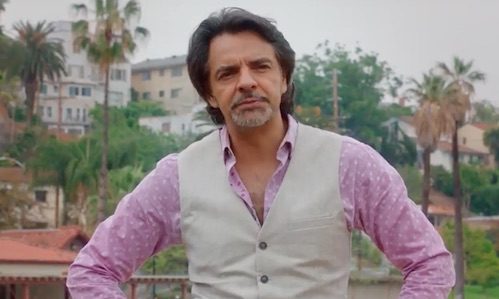
Maximo (Eugenio Derbez) retreats to his estranged sister’s apartment after falling victim to divorce.  Sara (Salma Hayek) takes him in, supposedly under duress though she doesn’t seem in any hurry to get rid of him, either.  In a comedy where the humor relies heavily upon accepting the leads despite their faults, the key is that they remain likable.  In Lover, neither Maximo nor Sara are interesting enough to overlook their faults.  He’s too brazen and never learns his lesson and she is a doormat.

The movie also stars Rob Lowe, Raphael Alejandro, Linda Lavin, Renee Taylor, and Michael Cera.

For more about How To Be A Latin Lover, take a look at the video linked below:


—>Keep in touch with the author on Twitter and Instagram @realZoeHewitt.

HOW TO BE A LATIN LOVER *Movie Review* Read More »