fbpx

March 17, 2017

The UN Human Rights Council and the U.S. commitment to human rights

Nearly three years ago, the United Nations Human Rights Council appointed me as its monitor — “special rapporteur” — on freedom of expression. I report to the council about the worst abuses of expression worldwide, such as attacks on journalists and independent media, members of vulnerable minorities, and the ability of anyone to seek, receive and impart information online. In this position, I know the council, its strengths and its weaknesses.

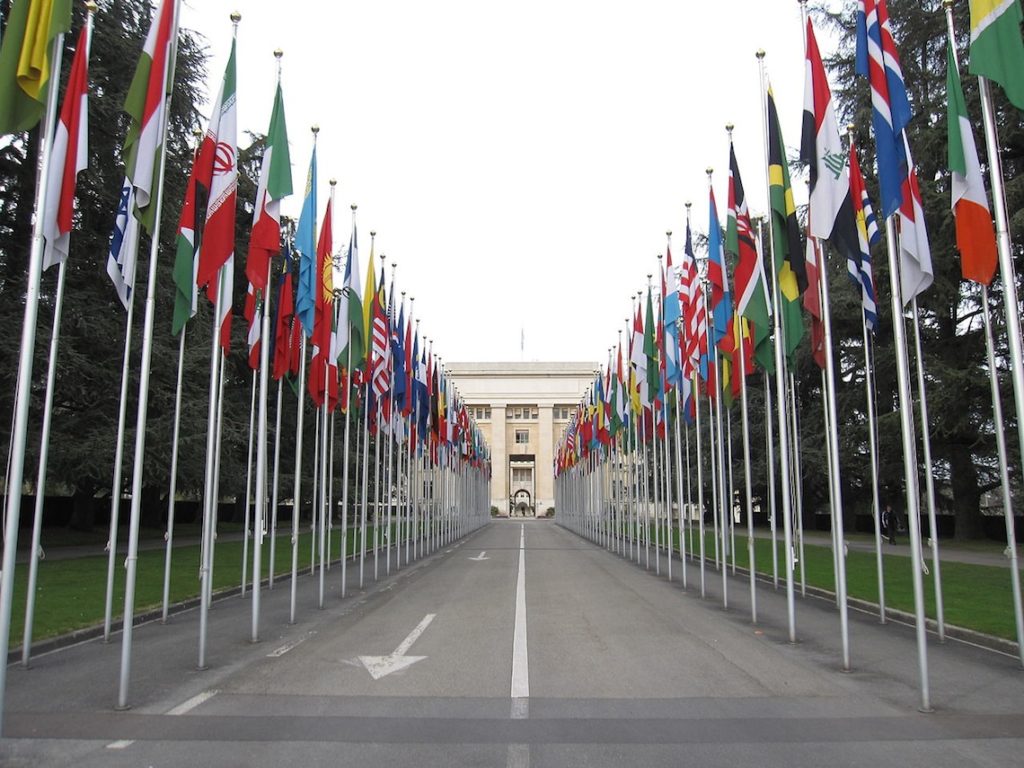
Comprised of government representatives, the council gathers for several weeks every March, June and September in an ornate conference room at the Palais des Nations, the European headquarters of the United Nations in Geneva, to proclaim a commitment to such fundamental human rights as the prohibition of torture, extrajudicial killing and arbitrary detention as well as the rights to freedom of expression, religious belief and peaceful protest.

From my experience, I can say one thing with certainty: activists around the world, in every country, value the council as a central global platform for their voices to be heard. In my missions to Turkey, Tajikistan and Japan last year, journalists, lawyers, judges, teachers, humanitarian workers and activists all sought the help of the U.N. — at the very least, its moral support. While a U.N. visit or statement may get lost in the Western media, in many countries around the world, a word from a U.N. official or the Council can instigate controversy for days, sometimes even leading to solutions.

To be sure, the council is not a human rights nirvana. Its flaws are well-known. Forty-seven governments are elected to sit on the council, one of which is the United States, and all other governments have a seat in the room at the Palais. Many violate human rights norms regularly, some in repressive and violent ways. These flaws, according to our new Secretary of State, Rex Tillerson, seem to be moving the Trump administration to consider whether the United States should abandon the Council seat it won last year.

I believe the case for leaving the council is extraordinarily weak. If the administration, like Barack Obama’s administration before it, strongly objects to the council’s “biased agenda item against Israel,” as Tillerson put it, then the place to fight that bias is from within. Few listen to those outside, and few outside have the tools or the leverage to make reform.

Others have made the case for why the council serves American interests. As Suzanne Nossel, a former State Department official and current head of PEN America, has summarized it in a must-read contribution to the debate, U.S. departure from the council would help cede control of the human rights agenda to authoritarians – exactly those that the council is supposed to resist and restrain. She notes that a council with the United States has historically been better for human rights globally, not to mention better for Israel.

These realpolitik arguments work. Leaving the council makes no sense if we are talking about U.S. national interests.

For me, as someone who heard of tikkun olam before human rights, the council has merit on its own. We constantly sought venues for our own demands for the rights of Soviet Jews during the years of the Cold War or for the rights of African-Americans during the civil rights era. In recognizing that kind of searching today, the council amplifies the messages of those deprived of a voice or denounced as enemies of their people in their home countries.

Consider the kind of discussion that can take place during council meetings. In an era when governments kill their opponents, jail their chroniclers and repress their critics, human rights talk may seem wildly out of sync with the times. Yet there at the Palais, one by one, individual human rights advocates rise from their seats in the back of the room and make their way to microphones so that every person there — every government representative, every U.N. official — can hear. They have come from all corners of the world, and they say what the governments need to hear, calling them out for their abuses in front of a global audience.

You might hear, as I have, Bahraini advocates identify friends and family members held in prison merely for criticizing the government, some for doing so on Facebook or Twitter. You might hear criticism of Saudi Arabia for its jailing and flogging of bloggers, or condemnation of Turkey’s massive attack on the media, the bureaucracy and opposition politicians. You might learn of the ways in which Iran silences and represses its Baha’i minority, from education to music to religious tradition.

You might hear from a refugee who has fled totalitarian North Korea or war-ravaged South Sudan, a member of the Muslim Rohingya community subject to attack and statelessness in Myanmar, or from a Tibetan activist recounting the repression of Chinese authorities. You could be brought to outrage from stories of hunger in Venezuela, driven by authoritarian governance, or of fear from stories of LGBT communities in Cuba, Russia, Kyrgyzstan, Uganda and elsewhere.

This is more than idle talk. These individual interventions can have impact. The voices of victims and advocates have helped lead to important outcomes: special commissions to tell the truth about human rights abuses in North Korea or the brutality of ISIS and the Bashar Assad regime in Syria or special monitors to report on the human rights crises in Iran, Cambodia, Myanmar, South Sudan, many other places — and yes, the West Bank and Gaza. In some cases, stories told in Geneva have helped lead to sanctions adopted by the Security Council in New York.

In response to advocacy by nongovernmental organizations, the council also has created special mandates and appointed individual experts to monitor human rights issues worldwide, including freedom of religious belief, peaceful protest, violence against women, racism and housing (and the one I hold on freedom of expression). It has condemned all manner of human rights abuses, from anti-Semitism to discrimination against women, from racist crimes to attacks on workers’ rights. Through its Universal Periodic Review, the council reviews and reports on every country’s human rights behavior, allowing local and international activists a role in that process.

Leaving the council makes little sense if we still are to maintain that human rights play some significant role in America’s engagement in the world, even if not a leading or pivotal one. The U.N. isn’t perfect, and neither is the United States. But walking away from human rights is not who we are, and it’s not where we should go.

Reform the council, yes. Criticize its biases, sure. But recommit to it. Fix it. And make it work for those who need it worldwide.

David Kaye is a law professor at UC Irvine School of Law and the U.N. special rapporteur on freedom of opinion and expression. He can be found at @davidakaye and freedex.org.

The UN Human Rights Council and the U.S. commitment to human rights Read More »

The Congregation band fuses music, theater at Odyssey

For spiritual fulfillment and community, a person goes to temple. For those things and some foot stomping, rules-defying jazz, a person joins The Congregation.

So says the Grammy-nominated drummer Sammy Miller, 25, whose six-member jazz ensemble is named The Congregation in the spirit of inclusiveness.

“I grew up going to a congregation,” says Miller, who was a member of Ner Tamid in Rancho Palos Verdes. “What’s the point of a congregation? To bring people together. Being a group, you actually have more power and you can uplift each other.”

The New York-based band is touring in support of its recently released debut album, “The Mixtape.” But its engagement at the Odyssey Theatre Ensemble, this weekend and next, will showcase its new jazz-theatrical performance “Great Awakening.” The immersive, hybridized “jazz-theater” production finds the band “playing” a jazz troop that has been banned from playing jazz by an arts organization. So the members have to figure out a way to rebrand themselves as a theater company while staying true to their love of the music.

“Great Awakening” grew out of the group’s vision of jazz as an art form that was all about telling stories. If the genre of jazz traditionally has rules, those rules must be shattered in the interest of making the music less intimidating. The show mixes original music with traditional works from greats like Duke Ellington, Louis Armstrong and Bessie Smith.

“When you go see a jazz show today, typically the band is stationary, but why is that?” says Miller, who grew up in the Los Angeles area before doing his undergraduate work at the School of Jazz at The New School in New York. “If you go back 70 or 80 years and look at theater or opera, they’re using the whole space. In jazz, typically the music isn’t memorized. Why is that? Why can’t we have what’s standing between the songs be as important as the music? Why can’t the transitions be meaningful and what’s said in between be meaningful?”

“The Great Awakening” arrives at the Odyssey with some serious East Coast buzz. The Congregation staged “Great Awakening” at the Connelly Theater in the East Village, drawing the attention of administrators at New York’s Ars Nova theater. Through its Makers Lab, Ars Nova gives aspiring theater artists the opportunity to develop new works, and has helped launch the careers of such figures as “House of Cards” developer Beau Willimon, Pulitzer Prize-winning playwright Annie Baker and “Hamilton” creator Lin-Manuel Miranda. Sammy Miller and The Congregation will be in residence with “The Great Awakening” at Ars Nova for 2017 to continue to develop the piece.

The production’s director, Andrew Neisler, who works frequently at Ars Nova, calls Miller and his bandmates “jazz clowns” and says “The Great Awakening” has a certain anarchy.

“For me their sensibility is very physical, very clowny,” Neisler says. Everything a clown does has that sort of joyful unapologetic humor. They live very much in a very traditional clown world. They’ve got an insurmountable task ahead of them, which is to perform this kind of perfect jazz concert and they’re always trying to achieve this but they’re always constantly falling short.”

Before returning to New York, The Congregation will play band gigs and the two weekend engagements at the Odyssey. While in L.A., the group will work with students at University High School and at Miller’s alma mater, Peninsula High School, where The Congregation will conduct a master class and perform with the school’s band as a fundraiser.

“We always do schools whenever we’re in a city,” Miller said. “Part of our goal is to educate and hopefully engage students. Most of them have never seen a live jazz concert. If they do, they often have negative connotations, that it’s old-person music or boring or whatever. We have to show them maybe it’s not always that way. It can be a joyful experience.”

The band features trombonist Sam Crittenden, tenor sax player Ben Flocks, trumpeter Alphonso Horne, pianist David Linard and bassist John Snow. Horne was a classmate of Miller’s at Juilliard, where Miller earned a master’s degree. In putting together The Congregation, Miller gravitated toward players who had diverse and sometimes unconventional artistic skills. Flocks can sing in a falsetto voice. Horne, who besides playing trumpet, sings and dances. Linard’s parents are actors, which contributes to the pianist’s theatrical background.

All of those abilities may come into play, Miller says, when The Congregation assembles.

“The idea of purist is so wild to me. It offends my sensibility,” Miller said. “I never was into that. I’m always inviting people into a concept, not excluding people. When you have all the different resources of your personality, the music takes on a new character. It isn’t traditional jazz, but perhaps there’s this idea of joyful jazz: music that’s medicinal and can uplift people.”


Sammy Miller and The Congregation present “The Great Awakening” at 8 p.m. Fridays and Saturdays; 6 p.m. Sundays at the Odyssey Theatre, 2055 S. Sepulveda Blvd., Los Angeles. (310) 477-2055, ext. 2. odysseytheatre.com.

The Congregation band fuses music, theater at Odyssey Read More »

Jewish Renewal Mother’s Chicken Soup

This is my unique take on classic Jewish chicken soup. It is so healthful, it’ll renew you!

Ingredients:

One kosher chicken, split and skinned (Keep a little skin for schmaltz) or 4 split chicken breasts, if only white meat is desired

1/2 cup brown basmati rice

4-6 medium carrots, preferably organic

3 parsnips, peeled and sliced

A few stalks of celery

1 good-sized red onion

1 green apple

Half a bunch of parsley

2 cups brown mushrooms (preferably crimini)

2 large sticks cinnamon

1/4 tsp. cumin

1/4 tsp. curry

2 tsp. salt or to taste

8 cups of boiling water

A little olive oil, if necessary

Heat a large pot. Lightly brown chicken, then add brown uncooked rice, stir until fragrant.

Roughly chop the onion, celery and apple, add to pot with rice and chicken. Stir to lightly color. Add a little olive oil if needed to prevent burning.

Add boiling water, cinnamon and other spices.

Add parsnips and carrots. Cover pot and simmer for one hour or until chicken falls off bone and kitchen is filled with a wonderful aroma. Remove chicken, cool and cut into small pieces and add back into soup. If necessary add more spices to taste. Add more water depending on how soupy you want your chicken soup to be. Add mushrooms for avery short simmer 3-5 minutes.

Garnish with parsley. Serve in big bowls with challah, a salad and a glass of Shiraz.

Enjoy!!


Jewish Renewal Mother’s Chicken Soup Read More »

The two-state solution won’t die

This opinion tackling the two-state solution is the “pro” argument published in conjunction with Yishai Fleisher’s “con” argument, “Five Alternatives to Designating Separate States.

Seldom has an idea been pronounced dead more often than that of making peace between Israel and the Palestinians through a two-state solution. Politicians, experts, pundits and columnists have lined up to deliver their eulogies, lay it to earth, fill in its grave and recite Kaddish over its remains.  

Except that it still lives.

Even President Trump, who last month said he had no preference between a two-state solution and a so-called one state solution, has apparently reverted to a fairly classic two-state policy. His envoy, Jason Greenblatt, who met with Israeli Prime Minister Benjamin Netanyahu and Palestinian President Mahmoud Abbas this week, was discussing reining in the Israeli settlements, presumably to preserve land for a future Palestinian state.

The reason even skeptics eventually come back to the two-state solution is that it remains the only viable, equitable and reasonable way of ending the seemingly endless conflict. Two peoples, who live side by side in the same land, can either fight over control of every square inch, denying the other side any ownership or control or dignity, or they can decide to share. The two-state solution does not pretend to give either side everything that they want – but it does give them everything that they need.

True, ultra-nationalists, who base Israel’s claim to the West Bank on their interpretation of God’s will, will never accept any solution that involves Israel relinquishing control over Judea and Samaria. Among this small group, various other “solutions” are regularly floated. A good example were the five “alternatives” proposed in a New York Times article last month by Hebron settler Yishai Fleisher (with whom I will debate at Temple Emanuel in Beverly Hills on the evening of March 30).

The five alternatives all have one thing in common: they do not treat Palestinians as equal to Jews and do not afford them anything close to equal rights. They do nothing to acknowledge Palestinian aspirations to control their own destiny in a state of their own. Fleisher himself recognizes this, stating that all his so-called plans have “potentially repugnant elements.”

The first of these alternatives — allowing Palestinians in the West Bank to become Jordanian citizens, while continuing to live in the West Bank under Israeli rule –would probably destabilize Jordan, a key US and Israeli bulwark against ISIS and al-Qaeda. And the plan itself is preposterous. Imagine if all the African-American residents of Michigan were suddenly told they were henceforth citizens of Canada and not the United States. They could send delegates to Parliament in Ottawa and help determine policies north of the border – but not where they live.

Two of Fleisher’s other so-called alternative solutions are based on Israel’s annexing most of the West Bank, leaving the cities as small Palestinian islands in charge of sewage collection and street lamps but not much else. They would be, in effect, Bantustans – a system attempted unsuccessfully by South Africa during the apartheid era.

The fourth solution suggested by Fleisher would give Palestinians full citizenship in Israel. They would have to swear loyalty to the Jewish state to earn this privilege. While this would not violate their human rights, it would effectively mean the end of Israel as a Jewish state with a Jewish majority, if the Palestinians accepted the conditions. It’s hard to imagine any of the Zionist parties in Israel even pretending to consider this or many Palestinians signing on.

The final alternative in Fleisher’s list is the “voluntary” emigration of some 800,000 Palestinians from the West bank who would be financially “incentivized” to leave for their ancestral lands and rights. Where would they go? Jordan, which is already staggering under the weight of some  1.4 million refugees? Western Europe, where anti-immigrant populist movements are vying for power? Or perhaps Israel could persuade President Trump to accept a few hundred thousand Palestinians in the United States.

All of these false formulas, based on self-deception and fundamental injustice, should persuade us once more that the two-state solution is the only way to end the conflict. The moment the two-state solution really does dies, both peoples condemn themselves to a future of conflict without end, generation after generation – and that is a future too awful to accept.

At the core of this idea are the fundamental principles of peace and justice. With beautiful simplicity and economy, Psalm 34 tells us to “seek peace and pursue it.” With equal terseness, Deuteronomy 16:20 commands us, “Justice, Justice shall you pursue.”

Though current prospects are bleak, I believe that the moment for the two-state solution will come because eventually both sides will realize they have no other choice and that the status quo will become intolerable. The moment may come in five years, it may take longer. But ideas, unlike mortals, have the power to persist for generations, centuries and even millennia when they stand on the fundamental human principles of peace and justice. This is an idea that is too strong to die.

The author is Special Adviser to the President of J Street.

The two-state solution won’t die Read More »

WATCH: Seven Jewish protesters arrested at AIPAC L.A. office

Seven Jewish protesters were arrested March 17 in the lobby of the Century City office tower that houses the Los Angeles office of the American Israel Public Affairs Committee (AIPAC).

The protesters, who were affiliated with IfNotNow, a progressive network of millennial Jews opposed to Israeli policy, were chanting and stomping their feet when they were arrested on suspicion of trespassing, according to Capt. Tina Nieto, area commanding officer for West L.A. for the Los Angeles Police Department (LAPD).

“We are here to say that we’ll occupy this building until AIPAC is ready to stop supporting the endless occupation in Israel-Palestine,” said Michal David, 26, an organizer for IfNotNow, while a small group of protesters marched in a circle and chanted on the sidewalk behind her.

According to David, the protesters arrived at 9 a.m. at the building and blocked off entrances for about 40 minutes, encouraging AIPAC employees to go home, “for a day of reflection.” By 10 a.m., those who were not prepared to be arrested had moved to the sidewalk.

“Shabbat shalom! AIPAC go home!” the seven protesters chanted inside, seated against a marble wall facing the entrance.

Outside, the protesters, who numbered fewer than 10, responded with chants and statements of their own, denouncing AIPAC’s role in “propping up military occupation” and “cozying up to David Friedman,” President Donald Trump’s controversial pick for ambassador to Israel.

David said they had not contacted AIPAC before the protest. “There’s no more room for conversations behind closed doors,” she said.

More than a dozen uniformed LAPD officers and six police cruisers were on hand for the arrests. Nieto said the building’s management called in a private person’s arrest, also known as a citizen’s arrest.

The activists inside the lobby continued chanting until police led them away in handcuffs around 11 a.m., while the protesters outside continued to sing and look on. From there, they were taken to LAPD’s West L.A. Community Police Station, where anybody without an outstanding warrant would be cited and released, Nieto said.

The protesters ranged in age from 20 to 31 and hailed from L.A. and the Bay Area, according to IfNotNow.

On Sunday, IfNotNow is planning another, larger protest at AIPAC’s Century City office, to coincide with the L.A. Marathon, whose route passes AIPAC’s office.

AIPAC declined to comment for this story.

WATCH: Seven Jewish protesters arrested at AIPAC L.A. office Read More »

Dark Matter: How I Realized I Have Post-Election-Stress-Disorder and What I Plan To Do About It

I admit it: I’m suffering from PESD.

Post-Election-Stress-Disorder.

And I’m not alone.

I’ve gone through the phases. Self-pity. Grieving. Reading Hillbilly Elegy. The anger to activism phase—that one I’m still in.

I can trace this anxiety back to the Women’s March, when I posted an open letter to Piers Morgan, confronting his declaration that women should “wait” for their rights to be taken away before protesting.

A family member said I was incorrect when I wrote that defunding international NGOs would mean loss of lives. He contended that if organizations would agree not to perform abortions, then they could have the funding needed for other women’s health issues.

Now I love him deeply, but questions kept gnawing at me: Did he believe his rights to his body mattered more than mine? Where was his compassion, if not for all women, at least for me—a woman that he knows and loves?

Since then, I’ve had all the hallmarks of PESD: depression, lack of sleep, addiction to Twitter, and too much cable news.

Reflecting back on the birther controversy, I was dizzy from the thought running through my mind: Our President is a racist…

Surely I wasn’t seeing straight when I saw how he treated Jews. Did he just put an anti-Semite on the National Security Council? Did he just issue a Holocaust Remembrance Day statement that does not mention Jewish people?

And to add insult to illness, did he really announce a Muslim Ban on that same Holocaust Remembrance Day? As a Jew, I had this image of the St. Louis coming to the U.S. with victims fleeing the Holocaust. The headaches set in. Thinking about that ship being refused entry, and having 250 of its passengers murdered upon returning to Europe made me want to vomit. How could he repeat the inhumanity of turning away those fleeing violence, genocide, and religious persecution, and on the very day that honors the phrase, “Never again”?

Then I asked, “He’s going to enforce ICE raids in this country?” Putting aside the horrific lack of compassion, I knew we couldn’t deport millions of people for logistical and economic reasons. If he went through with this, if he had ICE pull these people out of their homes and detained them, would we end up with camps? After everything we learned growing up in Sunday School and Hebrew School, we could be citizens of a country that allows concentration camps?

And that’s when it hit me. There’s more than one epidemic going on here. Conspiracy theories and complicity have become communicable diseases. It’s no longer enough to talk about the evils of Trump and his administration. We have to talk about the evils of collusion (purposeful or otherwise) as well.

The message behind Trump’s madness is infecting good people. I hear friends of mine rationalizing this new reality, saying things like, “Sure, he’s awful, but what he’s doing doesn’t affect me directly.”

That’s the same apathy that sent the St. Louis back to Hitler.

My response here: Not this time. With or without government, we need to shut this down.

While PESD may have no immediate cure, we can treat this illness by first looking at its cause. The reason those of us suffering from it are feeling worse now than four months ago is because we’re seeing that with every action Trump takes, there is an underlying narrative that we do not matter.

That’s what bothered me most about that Facebook debate and my friends’ seeming indifference. The people around us may not actually be saying, “You don’t matter.” But on some level, they are saying, “You don’t matter enough for me to do anything about it.”

So, what can the rest of us do?

For starters, we can all begin an active regimen of self-care. When Trump says we don’t matter, make a concerted effort to show others they do. When I write a letter to a congressman in support of refugees, I will send another one directly to an arriving refugee. People need to hear they are welcome here, not just from lawmakers, but especially from the rest of us.

Let’s take control of our media diet. For me, that means giving up on cable news panels wondering whether our president is capable of change, and instead, looking at what changes I can make in myself.

That goes for our own media output as well. When I see something inconsiderate stemming from this administration, I’ve vowed to share stories both in person and on social media about acts of kindness. Maybe I can’t change his narrative, but I can certainly change my own.

If Trump’s behavior is contagious, then the way we approach it should be preventative, like popping a Vitamin C packet when we feel chills coming on. We have to be vigilant. PESD is an information illness, so I imagine if we all start with some further introspection, we’ll find, like I did, that we’re overdue for a check-up.

_____________________________________________________________________________

Samantha Becker is a Principal at Fenway Strategies where she focuses on written communications and speechwriting. 

Dark Matter: How I Realized I Have Post-Election-Stress-Disorder and What I Plan To Do About It Read More »

A deafening silence from the Jewish Federation

For at least the past half century, Los Angeles has had active Jewish community organizations that often spoke with one voice, took stands, ventured into politically risky territory and helped mark Jews as a force to be reckoned with on the community relations and political scenes.

Today, that is not the case.

The Jewish community’s umbrella organization, the Jewish Federation, remains deafeningly silent on an issue that is high on the list of major concerns of most Jews—the actions and words of the Trump administration.

We know that if there is any group in society that should be wary of a leader who exhibits the traits of Trump, it is us. The history of the twentieth century sets off our antennae and ought to make action natural, reflexive and immediate. 

Over past decades, the authors of this piece were active participants in meetings, demonstrations, legislation, community events and forming alliances that were meaningful benchmarks on the path to Los Angeles becoming the diverse, vibrant and accepting environment that it is. Avoiding tough issues, running from controversy, or fearing internecine backlashes were not how we operated.

Whether it was engaging minority communities in contentious, but civil, debates over affirmative action and preferences in the 1970s or reaching out to neighbors and allies to cobble together opposition to police abuse and the resurgent Klans and Aryan Nations in the 1980s and 1990s, or creating roundtables and coalitions with Muslims, Latinos and African Americans in the 1990s and 2000s—we knew that our fate was intertwined with those of others; parochial self-absorption was not the prevailing ethos, for us, or for others.

It was not without thought that in the early 90s, as Operation Desert Storm began, Jewish leaders (at a time when passions related to the war and Muslims were high) spoke out against potential hate that “might” be directed at our Muslim neighbors. Some in our community were unhappy (“what’s the need?”) but it was the right and proper thing to do and we did it; to remain silent was seen as an abdication of our leadership responsibility.

There is little doubt that were a politician to have surfaced over the past forty years who pilloried minority groups, maligned immigrants as racists and thugs, promoted conspiracy theories that historically were the stock-in-trade of racists and bigots, and scorned reason, data and facts—-protests from the Jewish community would have been thunderous in warning of the danger to our democracy, to the fabric of the community and to ourselves. The non-profit leadership of this community would have been vocal, visible and busy organizing in opposition. 

Today, the absence of a unified Jewish community leadership protesting President Trump’s incendiary comments on myriad topics, including his targeting of minority groups and immigrants, is shocking.

The Jewish Federation in particular, the community umbrella, has remained appallingly silent on Trump’s order restricting the admission of refugees [ironically, they answer critics by pointing out what they did on behalf of Jewish refugees] and his manifest contempt for civility, reasoned arguments and facts.

Whether it is due to Trump’s perceived support for Israel’s prime minister, or a fear of angering conservative major donors, the silence is inexplicable (nearly ¾ of Jews supported Clinton nationally, considerably higher locally).

Leadership demands that one take a stand on vital issues that may not be perceived as essential to one’s mission—protesting on core issues is easy; that’s self-preservation, not leadership. Leadership asks that you recognize threats where others may not see them and then act, even if at a cost.

Where is the overarching community voice willing to condemn the blatant lying, paranoia, undermining of decency, consorting with bigots and bigotry, and targeting of minorities that will, ultimately, harm us all? Do we get lulled into indolence because we are not today’s target? Why are LA’s Jews compelled to start new grass roots organizations to protest Trump (such as Jews United for Democracy and Justice which garnered over 2,200 supporters in just a few weeks) when the armatures for action already exist?

The silence from “6505” is deafening especially in a week when three leading conservative pundits have all parted company with the prevaricator-in-chief and described him as either “irrational bordering on mental illness”(Bret Stephens of the Wall Street Journal), or as the “most reckless, feckless, and malevolent president in the country’s history” (Andrew Sullivan, New York Magazine), or admonished Republicans to not “define lunacy down” (Michael Gerson, The Washington Post).

Stephens, Sullivan and Gerson all have readers, long-time admirers and fee-generating organizations that they have angered and alienated because of their courage—but they spoke out nonetheless.

In Los Angeles there is no over-arching Jewish community voice speaking clearly and unambiguously about the all too obvious dangers, just a troublesome silence. The warning signs are everywhere, where is the leadership?

____________

David Lehrer is president of Community Advocates Inc., a Los Angeles-based human relations organization, and headed the Anti-Defamation League in L.A. from 1986 to 2002. George T. Caplan was The Jewish Federation of Greater Los Angeles president from 1988 to 1990. Steven Windmueller, professor emeritus at Hebrew Union College-Jewish Institute of Religion, headed Federation’s Community Relations Committee (CRC) from 1985 to 1995. Rabbi Laura Geller, rabbi emerita of Temple Emanuel of Beverly Hills, was director of the American Jewish Congress in Los Angeles from 1990 to 1994. Michael Hirschfeld headed the CRC from 1994 to 2003.

A deafening silence from the Jewish Federation Read More »

In bid to defeat Le Pen, French right-wing candidate cozies up to Jews

Even to his supporters, France’s center-right presidential hopeful Francois Fillon is a flawed candidate.

Dogged by corruption scandals Fillon, who represents The Republicans party of former President Nicolas Sarkozy, was indicted Tuesday for allegedly funneling public funds illicitly to his children and wife. Fillon, a career politician and former prime minister, has denied the allegations.

Nonetheless, his supporters are willing to forgive him these problems, as they see Fillon as likelier to beat the front-runner in the race, far-right candidate Marine Le Pen. Additionally, many of these supporters see him as more likely to act tough on radical Islam than his left-wing rivals.

But there is an added layer of complexity for Jewish backers of Fillon: The candidate has made vaguely critical remarks about ritual slaughter and said that at some indeterminate point in history, Jews had to be forced to obey French law.

On Monday, Fillon — who is running a credible third in the polls behind Le Pen and the centrist independent Emmanuel Macron — attempted to mend fences with French Jews. For the first time in his campaign, he attended a town hall meeting with some 700 members of the community organized by the CRIF federation of Jewish communities.

For Fillon, it was a partial success at best.

Dozens of supporters welcomed the candidate by chanting “Fillon President” at the meeting at a Paris hotel. Meyer Habib, a Jewish lawmaker and former CRIF vice president, endorsed him publicly. Fillon earned applause at least a dozen times when he pledged to support Israel and curb jihadism.

Nevertheless, the applause was weak and sporadic, and the audience questions were critical. By contrast, the former prime minister, Manuel Valls, who lost the Socialists’ primary election this year, received thunderous applause at similar gatherings.

Fillon rebuked France’s support for a UNESCO resolution passed last year that ignored Jewish ties to Jerusalem, calling it “an error and historical untruth that complicates peace efforts.” And he vowed never to normalize ties with Iran as long as that country “continues to call for Israel’s destruction.”

He said he supported Palestinian statehood “only if the future Palestinian state is reached by an agreement between Israel and the Palestinians.”

Fillon also promised to “be more careful,” in reference to his controversial remark last year during a radio interview in which he claimed Jews in the past had lacked respect for the rule of law. As for ritual slaughter, he assured the crowd that his comments from 2012, when he said that the practice “has little to do with modern science,” does not mean he would act to outlaw the custom.

Last year, French Jews and Muslims formed a joint effort to defend against attacks on kosher and halal practices.

“Jewish values, they are, well, they’re our values,” Fillon said. “Jews had a very major role in building the French republic,” he added, noting that Jews have lived in France “since time immemorial.”

Francois Fillon

Francois Fillon, with open jacket, shaking hands with CRIF President Francis Kalifat in Paris, March 14, 2017. (Courtesy of CRIF)

During the two-hour talk, Fillon made little effort to present any Jewish or pro-Israel credentials other than assuring the audience of his desire to curb anti-Semitism and radical Islam while defending French Jews. He repeatedly explained that he was their best defense against a victory for Le Pen.

“Without a candidate for the center-right, Mrs. Le Pen would have a field day,” Fillon warned. “Some in the right wing would express their anger by going so far as to vote for her.”

Many in the crowd remained uninspired by Fillon’s bleak description of French society, and were unimpressed by his failure to apologize for mismanaging his financial affairs and accusing Jews of lawlessness.

“He’s precise and logical, but I heard nothing that will inspire young people or instill hope in the minds of those seeking meaningful change,” said Emmanuel Attlan, a 30-year-old finance executive who attended the meeting.

“He’s got nothing but fairy tales to offer,” said Henry Battner, president of the Farband association of Ashkenazi French Jews.

Serge Sznajder, a scholar on Eastern Europe and a Farband board member, used Yiddish to describe is impression of Fillon.

“Let me sum it up this way: Gurnisht,” he said, which means “nothing.”

Fillon, Sznajder said, “is not against Jews, he just doesn’t know us, doesn’t get us, he has no idea, he never had too many dealings with Jews in Sablé-sur-Sarthe,” Sznajder added, naming the countryside town where Fillon began his political career in 1983.

Both Szajder and Battner said they will vote for Macron.

Albert Cohen, 53, an unemployed Parisian, quietly cracked jokes about Fillon from his seat, calling him “the thief” even though he plans to vote for him. And Olivia Cattan, an author and activist for people with disabilities, asked the person sitting next to her “not to yawn or we’ll all fall asleep.”

According to a poll Tuesday, Le Pen is leading the race with a 26.5 percent approval rating, followed by Macron at 25.5 percent. Fillon was third at  18.5 percent and the far-left Socialist candidate Benoit Hamon had 13.5 percent.

The top two vote-getters in April’s first round will advance to the second and final round on May 7.

Fillon, who won his party’s primaries despite predictions he would finish third or fourth, cited the false forecasts in advising his listeners to distrust polls.

Macron, who has avoided populist statements about Islam in a positive campaign promoting national reconciliation, is the “kind of candidate that floats on the cloud thanks to a nice platform, but come elections, voters will be faced by the divides once more, and that’s when candidates like Macron crash,” Fillon said.

An independent candidate has not won a French presidential election in over four decades, since the 1974 victory by Valéry Giscard d’Estaing.

Countless French voters who are worried about radical Islam, Fillon also argued, would vote for Le Pen if made to choose between her and the reconciliatory Macron. On Feb. 4 in Lyon,  Macron riled the right and even some centrists when he said, “There is no French culture, there is culture in France, and it is diverse, different and made up of multiple cultures.”

Fillon disagreed at the CRIF meeting, saying “France is not multicultural, it is diverse but has one language: French.”

Despite Le Pen’s efforts to woo Jewish voters by promising that she will be their “shield” against Islam, most of them are distrustful of her National Front party. It  was founded by her father, Jean-Marie Le Pen, who has multiple convictions for Holocaust denial and incitement to racial hatred against Jews. His daughter kicked him out in 2015 for making anti-Semitic statements, but he remains honorary president of the party and has many supporters in its ranks.

Marine Le Pen has also said, if elected, that her effort to ban the religious garb of Muslims would include kippahs in some public spaces. The kippah prohibition would be necessary to preserve equality, she said.

By contrast, at the CRIF talk, Fillon said he would focus only on Islam and would not change any of the religious liberties now afforded to Jews and Christians in France.

“Banning citizens from wearing all religious symbols goes against my understanding of religious freedom,” he said. “Today there is one religion that poses an integration problem, and that is Islam.”

In bid to defeat Le Pen, French right-wing candidate cozies up to Jews Read More »

7 Haiku for Parsha Ki Tisa by Rick Lupert

7 Haiku for Parsha Ki Tisa (God’s got “back”) by Rick Lupert

I
An artist hired
for a major project. Here
is my half shekel.

II
Three thousand idol
worshippers executed.
Lesson of gold calf.

III
Moses is selfish.
He tries to sign God to an
exclusive contract.

IV
God’s got back…and that
is all any human will
be able to see.

V
The One with thirteen
merciful attributes has
got our stiff necked backs.

VI
You should not cook a
kid in its mother’s milk. Don’t
worry. They mean goats.

VII
Moses comes down the
mountain with the new tablets.
Hide the molten gods.


Los Angeles poet Rick Lupert created a the Poetry Super Highway (an online publication and resource for poets), and hosted the Cobalt Cafe weekly poetry reading for almost 21 years. He’s authored 20 collections of poetry, including “I’m a Jew, Are You” (Jewish themed poems) and “Feeding Holy Cats” (Poetry written while a staff member on the first Birthright Israel trip), and most recently “Donut Famine” (Rothco Press, December 2016) and edited the anthologies “Ekphrastia Gone Wild”, “A Poet’s Haggadah”, and “The Night Goes on All Night.” He writes the daily web comic “Cat and Banana” with fellow Los Angeles poet Brendan Constantine. He’s widely published and reads his poetry wherever they let him.

7 Haiku for Parsha Ki Tisa (God’s got “back”) by Rick Lupert Read More »

What Are The Most Nutritious Foods You Could Eat?

You cannot eat everything that you want during a day. There are limitations and whoever is really serious about health and especially nutrition will be really careful to maximize the calories that are consumed every single day. Whether you want to start a tough challenge like the Ultimate one-month leg workout or you just want to lose some weight, knowing what to eat is vital. The foods below are among the most nutritious you can eat and that are widely accessible in supermarkets. Consider them to improve your nutrition.

Salmon

People always say that you should eat more fish but not all fish is actually great. Salmon is the best because of the high Omega 3 content. At the same time, there is a high amount of vitamins and vital minerals present. This includes Selenium, B-vitamins, Potassium and Magnesium. Generally, you want to cook meals with fatty fish around one time per week. Salmon is always recommended as the best choice because of the extra nutrients.

Kale

People from all around the world only now realize the advantages of consuming healthy leafy greens. Out of this group of foods, kale is the best possible option. It includes bioactive compounds, antioxidants, fibers, minerals, and vitamins. The main vitamins you get are K1, A and C, together with 3 protein grams, just 50 calories per 100 grams of kale and 2 fiber grams. According to specialists, kale is even healthier than the more popular spinach. That is mainly because of the lower oxalates content.

Seaweed

Sea vegetation is so much better than what many think at the moment. Seaweed practically includes thousands of species. Many of these are highly nutritious. They are even better than most of the vegetables you would eat on a daily basis. Minerals like Manganese, Magnesium, and Calcium are found in high quantities and the best advantage is offered in the bioactive compounds present. There are some antioxidants with really strong anti-inflammatory properties present in seaweed. To make matters even better, seaweed includes high quantities of iodine, which is lacking in many diets.

Garlic

In various cultures from around the world, we have garlic as a superfood and it is easy to understand why since it offers a taste to many dishes and is highly nutritious. We also have high quantities of B6, B1, Potassium, Selenium, manganese, and vitamin C. The nutrients present are great but the one that is particularly useful is Allicin. Studies proved that allicin can lower your blood pressure and even raise HDL levels. Garlic even has cancer-fighting qualities.

Potatoes

This is surely going to surprise you since so many say that potatoes are really bad for your health. The problem with most high carb foods like potatoes is the way in which they are cooked. One potato normally offers all the iron, manganese, copper, magnesium and potassium that you will need for a long time frame. The great thing about potatoes is that it includes small amounts of various nutrients we need to be healthy. And when you are careful with how much you eat you will be able to take advantage of this.

What Are The Most Nutritious Foods You Could Eat? Read More »