fbpx

March 8, 2017

A direct connection for a Holy Land education

Aviv Mussali believes there’s one surefire way to effectively teach American Jews about the Holy Land while they are at camp: introduce them to native Israelis like him.

“Bringing Israeli education to camp can’t be done better than bringing Israelis to camp to do that,” said Mussali, who became a senior scout at Camp JCA Shalom in Malibu in the summer of 2009. “Israelis come with passion for education, especially after finishing the army. They have seen the conflicts, and they have lived through rough times. Speaking about their stories, and even just being there as friends, is a great tool.”

His role at camp involved hosting Israeli activities, integrating costumes and props from the country and rewarding campers with Hebrew T-shirts. Mussali had such a great experience that he went on to serve two more summers there, leading its Israel Day and giving a weekly update on events in the Jewish state.

This approach to Israel education is by no means unique among local Jewish overnight camps, many of which offer special programming, hire Israeli staff members and integrate Israeli education into regular activities.

For example, this summer marks the 50th anniversary of the Six-Day War, and Bnei Akiva of Los Angeles’ summer camp in Running Springs will be commemorating it with special art, dance, music and cooking programs. It will focus on the traditions of the different ethnicities — Russian, Ethiopian and American — that have immigrated to Israel.

According to Executive Director Menachem Hecht, this program will be “a really integrated, immersive, holistic educational experience. It brings to life our heritage and our relationship to Israel.”

A number of the Bnei Akiva staff members are Israeli, flying in to work for the summer. Often, when campers or staff go to Israel to visit or study, this helps provide them with a social network there and a place to spend Shabbat, he said.

At the Wilshire Boulevard Temple Camps (WBTC) in Malibu — Camp Hess Kramer and Gindling Hilltop Camp — staff from Israel teach attendees about their country and serve as role models. Campers who are at least sophomores in high school also have the opportunity to go to Israel for four weeks with WBTC and the North American Federation of Temple Youth, according to the WBTC website.

“Bringing Israeli education to camp can’t be done better than bringing Israelis to camp to do that.” -Aviv Mussali

Camp Ramah in California in Ojai is another camp that offers opportunities to learn about Israel by actually going there. It sends campers to the Holy Land through the Ramah Israel Seminar, a six-week exploration and study trip for former Ramah campers entering the 12th grade.

According to Rabbi Joe Menashe, executive director of the camp, there are currently 12 campers on a semester-long program in Israel called Tichon Ramah Yerushalayim (TRY). Students in the 10th, 11th and 12th grades go to Israel to learn secular and religious studies, participate in simulated army training and do community service.

These campers may be inspired to travel because of the 30 Israeli emissaries who work there every summer. Ariella Moss Peterseil, an Israeli who is associate director of Camp Ramah, started out at Camp Ramah in Canada in 2000 right after she finished her army training.

She said that in Ojai, the camp has a Yom Israel (Israel Day) each session that’s run by the Israeli educators: “They choose a topic and the campers and staff have an experiential day all around camp, which includes food, music, educational programming, dress up, ceremonies, activities, debates and sometimes social action for a cause in Israel.”

Peterseil emphasized that in order to gain a real education on and relationship with the Holy Land, campers need direct contact with Israelis.

“Our kids cannot have a positive connection or real knowledge about this place we call home unless they get to have real hands-on experiences and relationships with Israelis,” she said. “We achieve this by bringing a group of 30 young Israelis every summer and believe that the friendships and relationships are the most important part of the shlichut [mission].”

During the weeks that Camp Alonim in Simi Valley is in session each summer, campers there also have the chance to interact with Israeli staff members. According to Executive Director Josh Levine, the camp has an extensive Israeli folk dancing program, and kids are taught how to broadcast Israeli music over their camp radio station. An Israeli song plays as a signal to campers that it’s time to clean their bunks. 

Levine said it’s important that the campers gain an Israeli education because the country is “a major fact of Jewish life today, not only for Israelis but also for Americans.”

“We want campers to learn about Israel and the diversity and vibrancy of the life and culture there in a short amount of time,” he said.

A direct connection for a Holy Land education Read More »

Spirit of inclusion for transgender students prevails

Amid the national debate over transgender rights and the use of school bathrooms, a number of local Jewish summer camps quietly have been adjusting their policies to accommodate transgender students.

People who are transgender typically identify with the opposite gender to their birth sex, although some feel they are neither male nor female. Just under 1 percent of teenagers — almost 150,000 youths ages 13 to 17 nationwide — are estimated to identify as transgender, according to the Williams Institute at the UCLA School of Law.

The Jewish Journal spoke to four area camps about their approach to transgender campers. All the camps said they sought to be inclusive spaces for all types of campers, although some had more clearly defined policies toward transgender students than others.

Camp JCA Shalom, Malibu

Just as Abraham and Sarah welcomed people from all walks of life into their tent in the Bible, Camp JCA Shalom strives to accommodate campers and staff from a variety of backgrounds, according to camp director Joel Charnick. He calls it “Big Tent Judaism.”

“We like to find ways to be more inclusive and less exclusive,” he said. “We are welcoming of people with all different backgrounds, all different self-identities, and that includes kids and staff who are gender-questioning or transgender or gender-neutral.”

Camp JCA Shalom offers single-stall, gender-neutral bathrooms and showers, located prominently at the center of the campus, Charnick said. The bathrooms and showers have been there for some time, but the director said the camp put up gender-neutral signs on the doors about a year ago to make it clear they can be used by anyone.

The camp also allows transgender campers — fewer than 10 have attended so far — to sleep in cabins that correspond to their gender identity rather than their birth sex, Charnick said. He said sometimes parents have questioned this philosophy while touring the camp, but he is not aware of any who have chosen to send their children elsewhere because of the issue.

In the spirit of inclusion, the camp added a 10th core value to its list of philosophical principles last summer. Kulanu, meaning “all of us” in Hebrew, is a concept discussed with campers and staff, Charnick said. Staff and campers are instructed to be respectful and welcoming to everybody and must sign an anti-bullying pledge.

“Camp relies on this concept of being a safe place for people,” Charnick said. “Once people feel safe, then they’re going to want to try new things and they’re going to grow in all sorts of different ways. But they have to feel safe first; that has to be the foundation.”

Camp Alonim, Simi Valley

Transgender campers are welcome at Camp Alonim, it’s as simple as that, said executive director Josh Levine. The camp, located on the Brandeis-Bardin Campus of American Jewish University, has had only one transgender student so far, he said, but the doors are open to more.

“They’re human beings like you and me, and if they want to come to camp, then of course they should be allowed to come to camp and be welcomed when they’re at camp, like any other kids,” Levine said. “To me, it’s a no-brainer. It’s all about respect and inclusion and equality.”

Levine said initially he was uncertain about how to best accommodate a transgender camper when presented with the request in 2015. He said he sought advice from other summer camps and from the national organization Keshet, which advocates for LGBTQ equality and inclusion in Jewish life.

The camp director said the student was allowed to use the cabin and bathrooms that corresponded with his gender identity. Levine said prior to camp, he also contacted parents of other children in that age group to inform them of the situation and to ask them to remind their kids that the camp is an inclusive place. He said he probably wouldn’t send that kind of notification again because it doesn’t seem necessary.

“Kids just want to make friends with other nice kids, and that’s what happened. That might sound surprising, but kids were just happy to get to know this really nice, creative, funny kid,” he said. “People coming to camp in 2017 should not be surprised to see kids of all different kinds of backgrounds at camp, including transgender campers.”

Camp Ramah in California, Ojai

Executive director Rabbi Joe Menashe declined to comment on whether Camp Ramah has a specific policy or approach when it comes to transgender campers. He said the topic had been discussed during staff training and the camp is “aspiring to be maximally inclusive.”

“It’s not about a topic, it’s about people,” he said. “It’s clearly something that, as we seek to honor the dignity of every individual, is on our minds but … I would prefer not to speak about individual people or specific policies because I think that gets complex in the public sphere.”

Habonim Dror Camp Gilboa, Big Bear Lake

Last summer, Camp Gilboa followed the lead of the national Habonim Dror youth movement by making changes to how Hebrew suffixes are used at camp, with the goal of making the language more inclusive. Instead of using the masculine suffix –im when referring to a group of people that includes males and females, the camp now uses –imot, a combination of -im and the feminine suffix –ot. For example, the age group known as Chotrim is now referred to as Chotrimot.

The camp also has incorporated a gender-neutral prefix for people who do not want to be referred to as a specific gender. For example, in addition to madrich for a male counselor, or madricha for a female counselor, a counselor also can be referred to as madrichol.

Executive director Dalit Shlapobersky said the campers adopted the changes immediately and without any problem.

“It’s a good educational opportunity to raise awareness about how language is used,” she said. “Not only with this [transgender] aspect of it, but just educating campers, making them more aware of gender roles … of how language enforces or makes gender roles more concrete in daily lives.”

Shlapobersky said the camp also has a gender-neutral bathroom in the dining room, the result of a decision made by campers many years ago. Currently, the camp does not have gender-neutral showers or locker rooms, she said, but that’s because it has never had a transgender camper at Camp Gilboa.

“We are prepared to deal with it when the need arises,” she said. “We are a totally, fully open community and everyone is welcome. So when someone is transgender … then we are ready to accept them and make sure that it works.”

Spirit of inclusion for transgender students prevails Read More »

Billy Crystal on being Jewish, playing ball and more

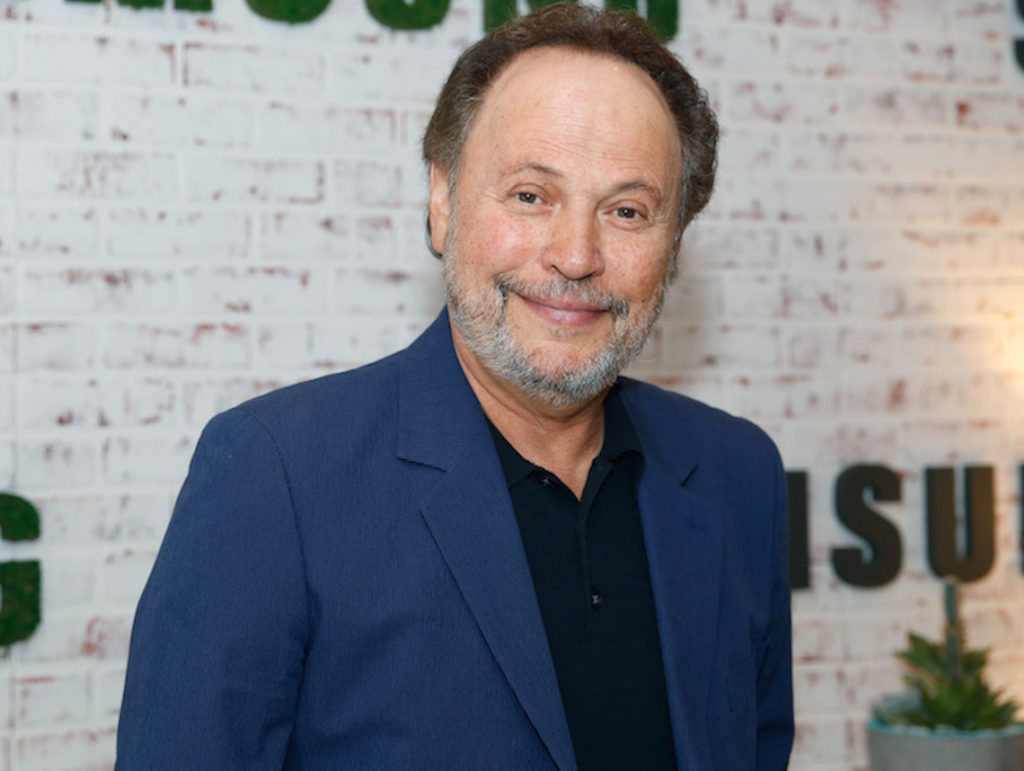
The inimitable Billy Crystal is back on the road. The six-time Emmy Award-winning comedian, actor, producer, director and writer — most recently of a book of essays, “Still Foolin’ ‘Em: Where I’ve Been, Where I’m Going, and Where the Hell Are My Keys” —  is currently touring the U.S. with his new show, “Spend the Night with Billy Crystal.”

The show, scheduled to tour through April, promises to feel like an intimate chat with the audience  — a blend of standup with a “sit-down” interview with Crystal, moderated at many shows by comedian and actor Bonnie Hunt. Crystal, who lives in Los Angeles, will tell stories, talk about the world as he sees it, reflect on his life and show some film clips from his long career.

Of course, the popular nine-time Oscar host has numerous iconic films and roles to choose from: The title character in the quintessential rom-com “When Harry Met Sally;” the grouchy “miracle worker” in “The Princess Bride;” Mitch, a New Yorker heading toward a midlife crisis who goes on a cattle drive with his buddies in “City Slickers;” and in “Analyze This,” a shrink to Robert De Niro’s mob boss.

But before he was charming millions, Crystal, 68, was entertaining his family and friends while growing up in the quaint beach town of Long Beach, New York. Then a predominately Jewish and Italian town, Crystal describes it as the “perfect place to grow up.” He often references his beloved hometown in his act, and in the aftermath of Hurricane Sandy’s battering of New York in 2012, Crystal and his wife of nearly 47 years, Janice, helped raise more than one million dollars to help Long Beach rebuild and rebound.

Crystal’s early childhood, back in the 1950s, was filled with music and laughter. His mother, Helen, was a talented tap dancer and singer. His father, Jack, worked six days a week at two jobs — as a jazz promoter and manager of the family’s popular New York City record store. Jazz greats like Billie Holiday — who were friends of his parents — would frequent their home.

Crystal and his dad would spend most Sundays together watching baseball games. Their relationship was chronicled in Crystal’s Tony Award-winning one-man show “700 Sundays” (also adapted into a book and HBO special), named for the number of Sundays he spent with his father before his dad died of a heart attack when Crystal was only 15.

The only thing Crystal ever aspired to do as much as comedy was play baseball for his beloved New York Yankees — in fact, he says the highlight of his long career came in 2008 ,when he signed a one-day contract with the team in honor of his 60th birthday.

In a phone interview with JTA, Crystal looked back on his family, his Jewish identity, his long career and the “one thing” that keeps him going.

JTA: You seem to be a celebrity who wears your Judaism as a badge of honor, and not in a self-hating sort of way. Would you agree?

Billy Crystal: I do. I mean, I still make fun, but it’s not about Jews — it’s about my Jews, it’s about my relatives. It’s not generalizations.

What are some of your favorite parts about being Jewish?

You mean, besides the circumcision?

You remember that, huh?

Yeah, oh yeah, that’s why I’m an insomniac. I’m waiting for that guy to come back in the room.

What else do you love about being Jewish?

The storytelling, the warmth, the sense of humor. My dad was strict about the holidays. We honored them, we went to temple. I like the ritual, and the caring for our planet that’s written into so many of the works I read in Hebrew school.

How do you compare when you were just starting out in showbiz 4o-plus years ago to touring with your new show today?

It all feels the same. I don’t think I’ve stopped working since the eighth grade. Backstage, when I was on Broadway, felt the same as it did backstage when I was getting ready to do a school play in high school. It’s that same energy of confidence, a little bit of nerves … The moment you go out, you release and say, ‘OK, I’m ready, here I come.’ It’s kind of an intoxicating feeling to go out and entertain people.

That’s why, after all these years, I’m going back on the road with this show … At this age and this point in my career, to still have the hunger I did as a young man is a great feeling.

Besides signing to a one-day contract with the New York Yankees, what’s another of your proudest professional achievements?

I was the first American comedian to perform in the Soviet Union back in 1989 in an HBO special called “Midnight Train to Moscow.” It was a Russian-speaking audience [with] some Americans. Gorbachev was in power, the [Berlin] Wall had not come down yet, and [I felt honored] that HBO trusted me. I found all these relatives that I didn’t know I had there [in Russia]. But performing there and being an ambassador, if you will, for American humor in that country is something I look back on with great pride.

What did your father teach you during those “700 Sundays,” before he passed away?

Besides teaching me a love for comedy, a love for reading, a love for baseball, he also taught me about doing the right thing. My dad was a civil rights giant in his own quiet way, in that he was one of the first promoters to integrate jazz bands. So the house, yes, was filled with Jewish relatives with stories, but sitting next to them was Zutty Singleton, who was a great jazz drummer, or Tyree Glenn, who was Louie Armstrong’s trombone player, or any of these other great musicians. They were all just friends. My family label — Commodore Records — produced “Strange Fruit,” which is Billie Holliday’s epic song about lynching. It took a Jewish family to produce that record, to write that song.

How did your father’s premature death shape your life and your relationship with your mother?

I was 15 and was dealt a bad hand. You can’t help but be angry, and I was angry and had to learn to live with that, and to deal with my mother, who was suddenly widowed and forced back into the workforce. [Being] back home alone with her, while my brothers were away at college, made me grow up really fast. I admired her strength — at the age of 50 she was suddenly back in the workforce. Three sons in school and we all graduated college because of her. You watch that and learn what parenting is really about, and what being a son is really about. My mom sent me on a path of trying to do the right thing in my life and also valuing every moment that you live.

What’s your secret to your happy, healthy and long marriage?

We still feel that we’re dating. After all these years, and all the things that we’ve been through, and all the joys and sadness that we’ve shared together — right from the beginning: You’re 18 and you have to tell the in-laws [that] you’re going to be a comedian.

But Janice’s faith in me, her trust in me, her strength when things aren’t going well. Our key is we keep laughing, we keep talking and we keep loving.

I’m going to remind you about a scene from your own movie, “City Slickers.” Curly, a cowboy, asks your character, Mitch, if you know the secret to life. Then, Curly holds up one finger and says “One thing.” What I took Curly to mean is that each of us have to find that one thing that give our lives meaning. What is that one thing, or maybe a couple of things, that give you purpose?

The purpose is Janice and the kids, and continually doing right by them and right by myself. That’s the most important thing … and in my job, I have a purpose. I have a mind that still loves to create and I follow that deeply.

Cindy Sher is the Executive Editor of Chicago’s JUF News.

Billy Crystal on being Jewish, playing ball and more Read More »

Israel’s Yad Sarah has prescription for U.S. health care system

A new Congress and a new administration are reassessing the efficacy of America’s health care system — and exploring solutions to contain rising costs while delivering better care. They could be well served by looking to a small nation thousands of miles away and one organization that has transformed that country’s health care landscape: Yad Sarah. 

Yad Sarah is the State of Israel’s largest volunteer-staffed organization. We take care of anyone in the country after a hospital stay — whether they are a factory worker, a first-time mom, a senior in hospice, a young adult with a broken leg, or a top business or political leader.

The United States might be able to learn from Yad Sarah’s unique model for home health care delivery. Take our signature service: free or low-cost loans of medical equipment — wheelchairs, crutches, oxygen machines — which are available at local branches around the country or delivered to patients’ homes for a few dozen shekels or less. It developed organically and modestly, with our founder, Uri Lupolianski, and his wife, Michal, distributing vaporizers to sick children from their Jerusalem apartment. As the years passed, their ability to help care for people grew to more than 100 branches with thousands of volunteers.

This is much more efficient and cost-effective than the U.S. system, where only those with insurance have access to devices at home, those devices are often discarded after a short period of use, and the devices don’t always arrive in a timely manner. For instance, when my mother-in-law left the hospital and came home to stay with my family, Medicare paid for and sent a wheelchair. She never used the wheelchair and was rehospitalized 10 days later, passing away after a month. For three years, I looked unsuccessfully for someone who could use the wheelchair — no hospital, doctor’s office or other medical caregiver would take it.

Yad Sarah works to give people in Israel access to medical resources for next to nothing, in a way that ultimately reduces stress on the national medical system while increasing the quality of care received. Half of Israel’s families have used one of our services at some point in their lives. Our annual budget of $23 million — drawn almost entirely from philanthropic contributions — saves the Israeli economy $400 million each year in health care costs.

Of course, a volunteer-based program like Yad Sarah cannot work for a country of 300 million people the same way it does for a country of 8 million. But that doesn’t mean a similar program in the U.S. — whether implemented by nonprofit organizations or governmental agencies — couldn’t have a transformative effect. Recycling programs for durable medical equipment could allow for more agile, efficient and cost-effective health care.

Implementing innovative programs has a domino effect: After establishing our lending service, we followed with our home hospitalization program. It allows individuals to be under the care of family members, whether they are in hospice, suffering from a chronic condition or recovering from a severe short-term illness. Most patients would rather have the dignity and comfort of being at home — and they tend to experience less stress, fewer health complications and faster rehabilitation.

The United States might be able to learn from Yad Sarah’s unique model for home health care delivery.

Not only does the home hospitalization make patients more comfortable and drastically reduce costs, it also addresses the chronic overcrowding of Israeli hospitals, where patients too often are lying in hallways, being released prematurely, and dying from infections they receive in those hospitals — 4,000 each year. While the U.S. and other developed countries have home hospitalization programs, none is run by volunteer-staffed organizations, a key element that enables us to ensure everyone has access to these programs in a timely and cost-effective manner. 

Yad Sarah’s other programs are just as effective at supplementing Israel’s medical system to make care more efficient. This includes driving sick or injured people to medical appointments, offering therapeutic programs at day rehabilitation centers, and supporting families coping with domestic violence. We also provide an emergency alarm response service, which offers peace of mind for nearly 20,000 homebound, frail and isolated older adults; free legal information and representation for elderly people at risk for abuse; after-school programs for children with disabilities; and free dental care for adults living in poverty.

This all started with one couple lending out vaporizers in one city. But making part of health care a public, volunteer-supported endeavor serves Israel well. Yad Sarah saves hundreds of millions of dollars and vastly increases patients’ quality of life. We are true partners in ensuring the health and well-being of Israel’s citizens — the elderly widows, the young children, revered politicians, the brave soldiers and, yes, our volunteers and donors themselves. As the U.S. considers how to address our health care challenges, Yad Sarah’s experience can shed light on important lessons.


ADELE GOLDBERG is the executive director of Friends of Yad Sarah.

Israel’s Yad Sarah has prescription for U.S. health care system Read More »

The paradox of today’s anti-Semitism

Jewish community centers and synagogues have received threatening calls. Headstones at Jewish cemeteries have been overturned in suburban St. Louis, Philadelphia and Rochester, N.Y., and perhaps even in Brooklyn. Jewish writers have found their Facebook pages filled with vitriolic anti-Semitic hatred. Faculty offices have been painted with swastikas and defecations outside the door. Clearly, anti-Semitism is on the rise, and the American Jewish community is rightfully uneasy.

And yet, a recent Pew Research Center survey found yet again that Judaism is the most popular religion in America.

Consider the paradox: How can both be true at once, that anti-Semitism is on the rise yet Judaism is the most popular of America’s religions?

Let’s begin with the Pew survey. What Judaism is the most popular religion in America really means is that Judaism is the least unpopular religion.

Eastern religions are not understood. Muslims are feared and commonly identified with terrorism. Roman Catholicism is in the midst of a deep credibility crisis. Protestantism is divided between evangelicals and liberals, and evangelicals are divided generationally, with younger evangelicals having different views on homosexuality, for example.

Judaism is thus respected and admired — or less disrespected and less disliked than other religions. Little do outsiders know how deeply divided we are.

Why, then, the seeming explosion of anti-Semitism? This, too, must be seen in context.

I doubt there has been an increase in anti-Semitism as much as there has been an increase in the permissibility of the expressions of anti-Semitism and its amplification by the tools of social media.

A bit of history: American anti-Semitism was at its height in the 1930s during the crucial years just before World War II and the Holocaust. Those with anti-Semitic views did not disappear or alter their views in the immediate postwar years. What changed was that they did not feel comfortable expressing anti-Semitism without feeling some social stigma and rebuke both in public and even in social situations. Therefore, many in my generation grew up without hearing many anti-Semitic comments. That changed in the late 1960s with the tensions between Blacks and Jews; it changed again later with some hostility toward Israel and American Jews during the oil crisis of 1973 and 1979. And it has changed more rapidly since the turn of the century with the distance that has developed with the Holocaust. The tools of social networks and the internet magnify anti-Semitism and reinforce those who spew hatred.

No one can deny that the expressions of hatred have intensified the more polarized our society has become, and the explosion of anti-Semitism must be seen as but one dramatic, though not necessarily central, expansion of the expression of all hatreds — toward Muslims, toward immigrants, toward African-Americans, toward gays, toward the poor, toward any minority group, including white Americans without a college education who were at the core of President Donald Trump’s support in the November election.

Although I am deeply hesitant to put this in writing because events even in an hour from now can prove me wrong, it must be noted that in recent days, threats of violence against living Jews — not actual violence — have been sufficient to unnerve the Jewish community. Bombs threats have been called in, but there have been no actual bombs. Cemeteries, however sacred, have been vandalized, tombstones overturned — these are attacks on dead Jews and on the loving memory of living Jews, but not direct assaults on the living. How long this shall continue we do not know, but the costs to the Jewish community in terms of security and even in terms of the enrollment of Jewish children in preschool and day schools and camps are significant.

We also must note that the interests of Israel and the interests of the Diaspora Jewish community are not identical and can diverge easily. When Trump averted directly condemning anti-Semism — he has done so subsequently — Prime Minister Benjamin Netanyahu’s answer was instructive. “There is no greater supporter of Israel or the Jewish state than President Donald Trump. I think we can put that [the question of condemning anti-Semitism] to rest.”

Trump may be a huge friend of Israel and a stupendous supporter of its prime minister, but while that may be terrific for the Israeli right, it does not necessarily translate into safety and security for American Jews.

It is not the first time Netanyahu misjudged the needs of a Diaspora community. His support of the Mexican border wall was an obvious gesture to Trump, but a slap in the face of Latino Americans whose views of Jews and Judaism are less well developed than other groups and who don’t know that Netanyahu doesn’t necessarily speak for the Jewish people or represent their views.

In the aftermath of the Hyper Cacher killings, the French prime minister and president made bold statements: “France without Jews is not France,” claiming these Jews as Frenchmen and committing themselves to defend the place of Jews and the safety of Jews in French society and culture. Netanyahu went to the main synagogue in Paris and then invited French Jews to come “home” to Israel where “we will protect you,” seemingly forgetting for a moment that Iran was an existential threat to Israel with the potential of nuclear annihilation. Just as France was claiming these Jews as they own, Israel pushed for burial in Israel, seemingly underscoring a perception that they were not Frenchmen, which was a blow to all French Jews.

Similarly throughout Eastern Europe, Israel is enjoying political support from ultra-nationalist, right-wing governments that are rewriting the history of World War II to cleanse their nations of the stigma of collaboration. Local Jewish communities speak out, scholars and public officials speak out while Israel remains silent.

I believe that Jews cannot fight the battle against the explosion of anti-Semitism without combatting all expressions of hatred, reaching out to others and even dialing down the vitriol that has characterized all political discourse. If the expression of hatred is unabated, Jews will be its victims — certainly not its only victims, and in all likelihood, not its primary victims. If we combat this promiscuous hatred together, new alliances may be struck and new possibilities emerge.


MICHAEL BERENBAUM is a professor of Jewish studies and director of the Sigi Ziering Institute at American Jewish University.

The paradox of today’s anti-Semitism Read More »

‘Anti-Zionism’ is the anti-Semitism of choice on college campuses

Hating Israel is the thing to do today on university campuses. It makes you seem “progressive.” It means you’re “woke” and socially aware. It means you’re fighting against a tyrannical regime. It is supporting the struggle of an oppressed people at the hands of white colonialist supremacy. Zionism is racism. Israel is evil, end of story

Except that’s complete nonsense.

Zionism is the support for and affirmation of the Jews’ right to self-determination in their indigenous homeland of Israel. It’s the Jewish civil rights movement. It is the struggle of a native people who have been oppressed for thousands of years, expelled from their land, killed and persecuted wherever they went in the world. It is the celebration of victory, of the return home after millennia of Diaspora, of surviving and flourishing against all odds.

Read the full column on timesofisrael.com.


NADIYA AL-NOOR is a young Muslim interfaith activist with a focus on Jewish and Muslim communities. She is a graduate student at Binghamton University, studying public administration and student affairs administration.

‘Anti-Zionism’ is the anti-Semitism of choice on college campuses Read More »

Eric Garcetti elected to second term as LA mayor

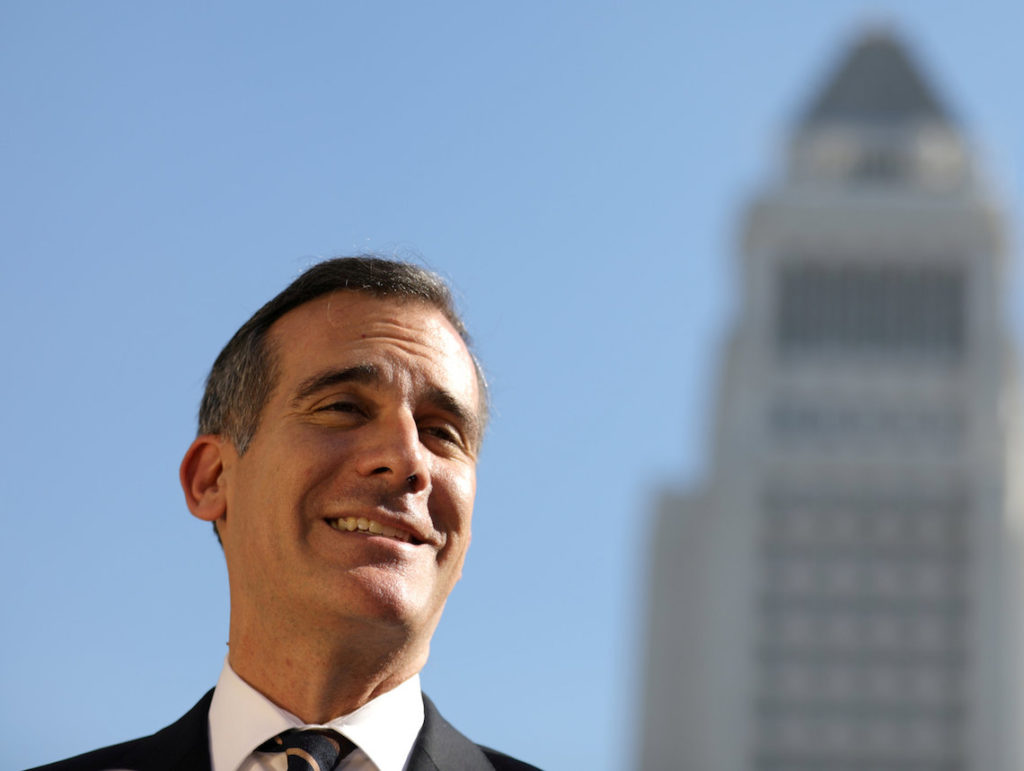
Los Angeles Mayor Eric Garcetti was elected to a second four-year term.

Garcetti, 46, a Democrat, was reelected on Tuesday with 81 percent of the vote, defeating 10 other opponents. Voter turnout was low, the Los Angeles Times reported.

Garcetti, who was a councilman for 12 years before being elected mayor for the first time in 2013, is the son of a Jewish mother and was raised Jewish. On his father’s side, he is of mixed Italian and Mexican heritage.
Los Angeles’ 600,000 Jews, about six percent of the city population of some 4 million residents, make up the second-largest Jewish community in the United States.

Eric Garcetti elected to second term as LA mayor Read More »

4 more bomb threats emailed to JCCs

Bomb threats have been emailed to four Jewish community centers following a wave of threats that targeted 16 Jewish institutions on Tuesday.

JCCs in Colorado, Delaware, Connecticut and Vancouver, Canada, received bomb threats via email either Tuesday night or Wednesday morning, according to local reports and Paul Goldenberg, director of the Secure Community Network, which coordinates security across Jewish organizations.

The emails, according to Goldenberg, appear to be the tail end of a wave of bomb threats Tuesday that targeted JCCs, Jewish day schools and several offices of the Anti-Defamation League. It was the sixth such wave since the beginning of the year. In total, more than 100 bomb threats have been made against Jewish sites since the beginning of the year, all of them hoaxes.

The Boulder, Colorado, JCC sent an email to members shortly after 3 a.m. Wednesday notifying them of the threat and saying that law enforcement had given the JCC permission to resume operations.

“We take the safety and security of our families, our community, and our staff as a top priority,” the email said, adding that “the continuation of these threats across the country to JCCs, other Jewish institutions, and the Boulder JCC is very disheartening.”

The JCC in Wilmington, Delaware, has received four threats, including one overnight Tuesday. Seth Katzen, CEO of the Jewish Federation of Delaware, which shares a building with the JCC, said he doesn’t know why they’ve been targeted so many times.

The Birmingham, Alabama, JCC has also received four threats, and several other sites have received three.

“We haven’t seen that drop that other communities experienced,” Katzen told JTA Wednesday. “We’re a resilient and strong community. We don’t want to give in.”

But he added, “There is a wear and tear, no question.”

4 more bomb threats emailed to JCCs Read More »

AJC joins US Jewish groups criticizing Israel’s anti-BDS entry law

The American Jewish Committee said it was “troubled” by a new Israeli law banning entry to foreigners who publicly call for boycotting the Jewish state or its settlements.

The AJC’s statement, released a day after the law’s passage, was the first signal from the American Jewish establishment that it was unhappy with the law. An array of American groups on the left — including J Street, Americans for Peace Now, Ameinu, the New Israel Fund, and T’ruah, a rabbinical human rights group — condemned the law as soon as it passed.

“Every nation, of course, is entitled to regulate who can enter, and AJC, a longtime, staunch friend of Israel and opponent of the BDS movement fully sympathizes with the underlying desire to defend the legitimacy of the State of Israel,” AJC CEO David Harris, said Tuesday.

“Nevertheless, as history has amply shown throughout the democratic world, barring entry to otherwise qualified visitors on the basis of their political views will not by itself defeat BDS, nor will it help Israel’s image as the beacon of democracy in the Middle East it is, or offer opportunities to expose them to the exciting and pulsating reality of Israel,” Harris said.

According to the final wording of the boycott bill, the ban applies to any foreigner “who knowingly issues a public call for boycotting Israel that, given the content of the call and the circumstances in which it was issued, has a reasonable possibility of leading to the imposition of a boycott – if the issuer was aware of this possibility.” It includes those who urge limiting boycotts to areas under Israeli control, such as the West Bank settlements.

Backers of the bill say it would be used only against those active in organizations that support BDS, and would not block an individual for something she or he might once have said.

AJC joins US Jewish groups criticizing Israel’s anti-BDS entry law Read More »

“No human being is illegal!” Elie Wiesel

In 1987 my wife Barbara was a member of the Board of CARECEN, the Central American Refugee Center in Washington, D.C. CARECEN was a significant activist organization helping to change American foreign policy vis a vis political asylum requests from El Salvadoran refugees fleeing the “Death Squads.” This band of murderers was killing leftists, labor union leaders, intellectuals, and Catholics (recall the murder of the four American nuns found on a road by US Ambassador Bob White under President Jimmy Carter).

President Reagan’s first act upon assuming office was to fire Ambassador White who had called  Roberto D’Aubuisson a “pathological killer.” D’Aubuisson was an El Salvadoran soldier, an extreme right-wing politician and the leader of the death-squads. He was named by the UN-created Truth Commission for El Salvador as having ordered the assassination of Archbishop Óscar Romero in 1980.

Reagan’s firing of Bob White was not one of Reagan’s most shining moments. Those who remember, Reagan didn’t realize that every country in Central and South America was different!

The Reagan Administration had close ties with the El Salvadoran government and was not interested in publicly acknowledging that massive human rights abuses were being committed and countenanced.

Barbara was asked by the Director of CARECEN (she was the only Jew on the national board) to make contact with Elie Wiesel and try and engage him in this effort on behalf of El Salvadoran asylum seekers. Barbara succeeded in doing so and Wiesel made this now famous statement in the context of the El Salvadoran controversy – “No human being is illegal!”

The saying became the brand of CARACEN’s campaign on behalf of these refugees.

Given Trump’s immigrant ban and antipathy to Muslims, Elie Wiesel’s comment is as current as ever.


“No human being is illegal!” Elie Wiesel Read More »