fbpx

February 22, 2017

JCC near San Diego evacuated after emailed bomb threat

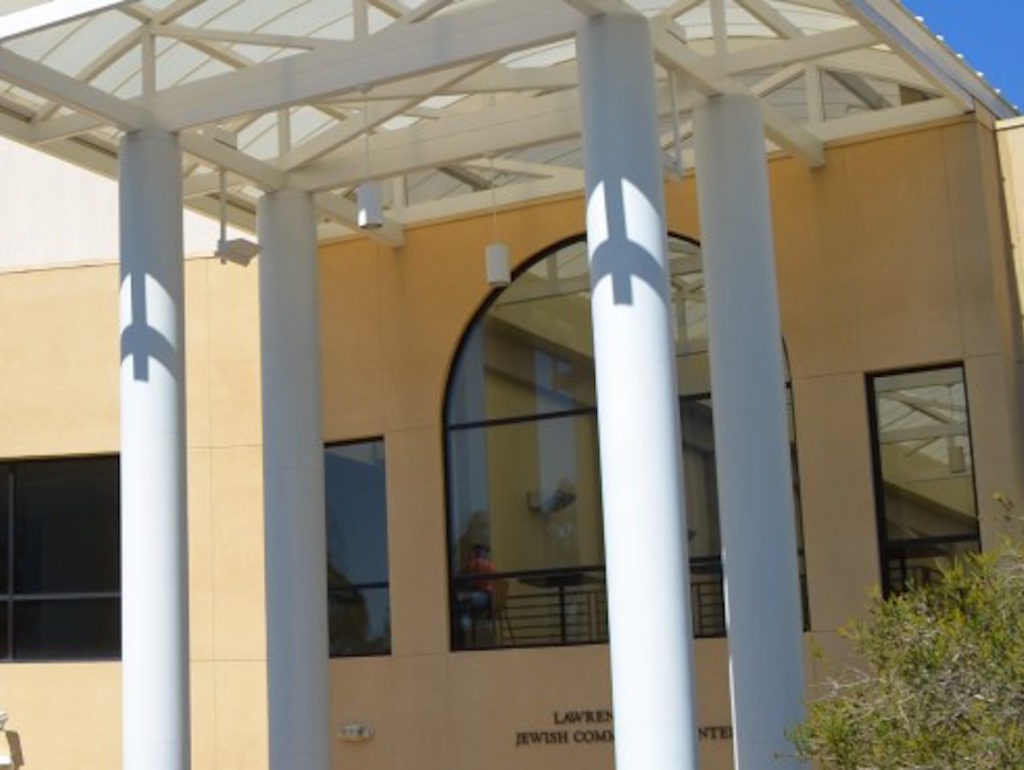
A San Diego-area Jewish community center was evacuated after receiving a bomb threat in an email.

It was the second time in three weeks that the Lawrence Family JCC in La Jolla had to be evacuated.

After the JCC received the email early Tuesday morning, the San Diego Police Department swept the building and did not find any explosives. The JCC was reopened by 7 a.m.

One day earlier, 11 JCCs across the country received phone calls containing bomb threats.

The La Jolla JCC was evacuated on Jan. 31 after receiving a bomb threat phone call along with 16 other JCCs across the country. It was one of four waves of bomb threats to JCCs in about five weeks.

JCC near San Diego evacuated after emailed bomb threat Read More »

Author JK Rowling helps boost Muslim campaign to repair vandalized Jewish cemetery

Donations tripled to a Muslim-supported crowdfunding campaign to repair a vandalized St. Louis-area Jewish cemetery after British author J.K. Rowling offered her support in a tweet.

Rowling, the author of the popular “Harry Potter” series of books, on Wednesday morning in Britain tweeted a link to an article about the campaign and posted “This is such a beautiful thing.”

The tweet has received more than 10,000 retweets and more than 30,000 likes.

As of Wednesday morning in the United States, the campaign by Muslim activists Linda Sarsour and Tarek El-Messidi has raised $66,000, far exceeding its $20,000 goal when it was established on Tuesday afternoon.

Between 170 and 200 headstones were discovered on Monday morning to have been toppled by vandals at the Chesed Shel Emeth Cemetery in St. Louis. The attack on the cemetery took place sometime between Friday night and Monday morning.

The organizers of the crowdfunding campaign said any remaining funds after the cemetery is restored will go to fixes for other vandalized Jewish centers.

“Through this campaign, we hope to send a united message from the Jewish and Muslim communities that there is no place for this type of hate, desecration, and violence in America,” the activists wrote. “We pray that this restores a sense of security and peace to the Jewish-American community who has undoubtedly been shaken by this event.”

Author JK Rowling helps boost Muslim campaign to repair vandalized Jewish cemetery Read More »

The Leading Congregations exchange, part 1: The challenges facing 21st century Jewish communities

Rabbi Hayim Herring is an author, consultant and nonprofit organizational futurist. Rabbi Herring has worked with over 300 rabbis and congregations of all sizes and denominations throughout North America on issues including assessment, volunteer leadership development, strategic planning, organizational foresight and innovation. He has served as a senior rabbi of a congregation, assistant director of the Minneapolis Jewish Federation, and has published dozens of scholarly articles on the American Jewish community. Rabbi Herring holds degrees from Columbia University and The Jewish Theological Seminary of America, where he was ordained, and a doctorate in Organization and Management from Capella University’s School of Business.

The following exchange will focus on Rabbi Herring’s new book, Leading Congregations in a Connected World: Platforms, People and Purposes (co-written with Dr. Teri Elton).

***

Dear Rabbi Herring,

Your new book is entitled Leading Congregations in a Connected World. Our introductory question: What type of congregation and organization leaders did you have in mind when writing this book, and what would you like them to learn from it?

Yours,

Shmuel

***

Dear Shmuel,

My co-author, Dr. Terri Elton, and I wrote Leading Congregations in a Connected World: Platforms, People and Purposes, for two broad audiences: professional and volunteer leaders of congregations and nonprofits, and teachers of current and future leaders. We defined two categories of congregations and nonprofit organizations. We studied both “established and adapting” organizations, namely, those with at least 25 years of history, were structured primarily as top-down hierarchies, but were trying to adapt to a more decentralized, socially networked world where people co-create their own personal meaning and community. We labeled the second category, “emerging and maturing,” that is, those congregations and nonprofits that were at least five years old, were reaching the age of early organizational maturity, and recognizing that the socially networked DNA that gave birth to them was not going to be sufficient to keep them growing and sustainable.

We realized that existing studies on congregations and nonprofits took an “either/or” approach. They looked at “the new kids on the block,” those newer congregations and nonprofits that garnered a lot of attention for their creativity and freshness. Those stories were usually about growth and flourishing. The other side of the narrative was one of decline and decay, and focused on legacy congregations and nonprofits that were losing members and lacking in vibrancy.

We thought that both sides of the equation needed to be studied. While it’s true that many legacy congregations and nonprofits are struggling, we also knew of some that had pivoted to a 21st Century social engagement way of working. (That doesn’t mean just having cool social media tools, but knowing how to use them strategically to deepen community.) Second, even though many established organizations are having difficulty making that pivot, they still command a lot of attention and resources. Was there a way to accelerate their likelihood of becoming more responsive?

Conversely, while many of the startups rightfully gained a lot of attention, we were hearing stories of some that were now between five and ten years old that were struggling. How could they maintain their unique, organic and socially networked attributes now that they had to worry about a larger budget, more staff, and perhaps even a building? They certainly didn’t want to become like the more rigid congregations or nonprofits against which they had rebelled, but they also needed to support a broader base of people who held a shared vision. We wanted to test the commonly held assumption that hierarchies are dead, and that social networks are the only future way forward of organizing spiritual and nonprofit communities. Indeed, we found that both elements of hierarchies and social networks existed within old and new organizations and both are needed.

What was especially appealing to me was to conduct research and write together with a Protestant colleague. Jews are part of a dynamic religious landscape in America that’s undergoing a revolution. So why not contextualize our changes into the broader context of which we are a part? Terri and I are both committed to blending academic theory and empirical research with practical tools and resources for immediate use.

Here are five key takeaways, although I still hope that you and your readers will read the book and call me with your responses!

1. Authenticity and innovation are compatible, although challenging to achieve. Congregations and nonprofits that thrive in the 21st-Century will go back to their core mission, but then pick one of four different pathways that we identify to practice innovation, and make innovation a part of their new organizational DNA.

2. The values of a socially networked world, that include enabling people to co-create their own experiences and have maximum self-choice, are here to stay. These values need to show up digitally, in the synagogue or nonprofit’s bricks and mortar space, and wherever people gather under their auspices. That means leaders must learn to relinquish some control, but in return, gain the joy of watching participants grow as they own their Jewish experiences and purpose. By letting go and enabling others to share and enact their Jewish dream, leaders also expand the influence and impact of their congregational or organizational mission.

3. Disruption doesn’t discriminate by age. Today’s disruptors will be tomorrow’s disrupted, and today’s disrupted can easily become tomorrow’s disruptors. So it’s a good idea to redefine leadership not as having the ability to respond quickly to trends, but to anticipate and favorably shape them.

4. Engagement isn’t a goal or a checklist. It’s an orientation for congregations and nonprofits. That means engaging individuals with a significant mission, and then putting them into community with those who share the same passion for mission, a mission that must connect to the broader world.

5. Community is fragile and trying to hold people with diverse views together is becoming increasingly challenging. Nonprofit CEO’s and clergy have the tremendous task of keeping people focused on mission and bringing people together in face-to-face contact where they can see that others who are not exactly like them are still partners for holy work.

6. Without dismissing the incredibly urgent work of social justice, congregations have another great, and I would say unique, opportunity. There are four generations and soon to be five generations of people alive in large numbers today. Where are the opportunities for people from so many different generations to develop sustained, meaningful, multi-generational relationships? Where are the opportunities where mutual mentoring can happen, if not at congregations? To the best of my knowledge, no other institution has potential access to so many generations over a lifetime. For congregations to claim that role, they’ll have to rethink congregational life, priorities, values, budgets, staffing – and I can’t think of anything more important today given the isolating challenges that each generation faces.

There’s more to say, and I look forward to the next parts of the exchange! Thank you for contributing to this conversation on the disruption and reconfiguration of our communities!

The Leading Congregations exchange, part 1: The challenges facing 21st century Jewish communities Read More »

Travel Talk with Lisa Niver

Talk about Terrific Travels with Lisa Niver Feb 25, 2017

Join me February 25 2017 in Los Angeles, California to talk about my travels!

I will be interviewed by Elisa Kotin from The World Traveled at Capital One Café. This event is free and will be from 11am to 2pm.

WHEN: 11am to 2pm on Saturday February 25, 2017
WHERE: 11175 Santa Monica Boulevard, Los Angeles, California 90025
COST: Free
WHAT:

Travel Talk: Interview with Lisa Niver

Travel expert, writer, and on-camera host from We Said Go Travel

Lisa has explored over 95 countries and has nearly one million video views on a variety of media platforms. Also, the founder of travel blog, We Said Go Travel, Lisa will sit with us and share her favorites and offer tips and expertise on a variety of travel topics.

Lisa was recently a guest on The Jet Set:


Read more about Lisa in her interview on Business Insider: “After quitting her job as a teacher, this woman traveled to 95 countries and turned traveling into a career”

Niver in Business Insider: Find What you are LOOKING for

The INSIDER Summary:

• Lisa Niver was a teacher before quitting her job to work on a cruise ship.
• She’s since been to 95 countries, founded We Said Go Travel, and wrote a travel memoir.
• She believes a traveler’s attitude and outlook shape their experiences, and that staying positive is key.

Watch more about Lisa in her SIZZLE REEL below or explore her 645 videos on YouTube, Amazon and Roku.

Talking Travel with Lisa Niver

Talk about Terrific Travels with Lisa Niver Feb 25, 2017 Read More »

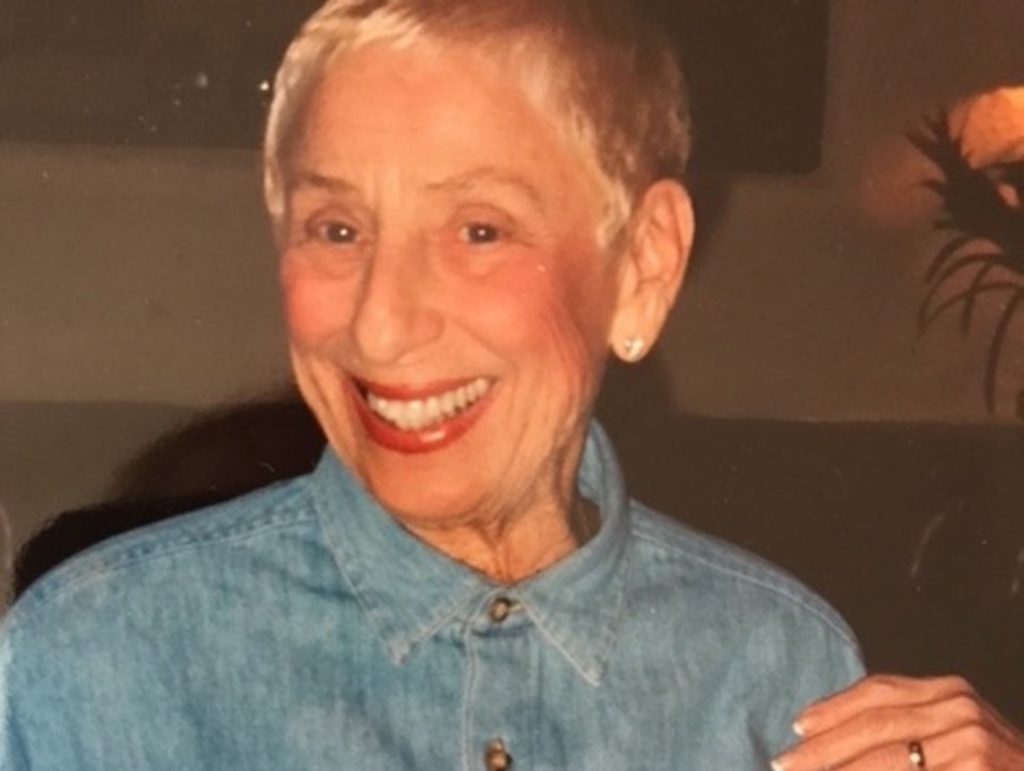
Leah Adler, restaurateur and mother of Steven Spielberg, dies at 97

Leah Adler, a well-known restaurateur and former concert pianist and painter, died Tuesday at her home in Los Angeles. She was 97.

Most of America and the world first heard her name when her son, Steven Spielberg, kissed her and described her as “my lucky charm” while accepting an Academy Award as director of the film “Schindler’s List.”

Although invariably linked to her famous son, during the last four decades of her life, Adler she earned almost equal renown as proprietor, greeter and presiding presence at the strictly kosher The Milky Way restaurant on West Pico Boulevard, popular with Orthodox rabbis, show biz luminaries and tourists.

Born Jan. 12, 1920, in Cincinnati as Leah Posner, she was raised during the Roaring Twenties and the subsequent Depression. At 5, she learned to play the piano and studied at her city’s music conservatory.

Shortly before the United States entered World War II, she had a single date with Arnold Meyer Spielberg, corresponded with him with him while he served with the Army Air Corps in the Pacific, and married him after his discharge in 1945.

Over the next 10 years, the couple had four children — son Steven and daughters Anne, Sue and Nancy — all raised in a somewhat chaotic home environment that encouraged their different talents.

“Leah and I had an open house in the sense that we gave all our children a lot of freedom to do their own things and develop their imaginations,” Arnold Spielberg told the Journal in a 2012 interview.

His wife expanded on this assessment. “Everything in our household was exciting, everything had an edge of hysteria,” she remarked in an interview.

As Arnold Spielberg evolved into one of the pioneers in computers and system engineering, he moved frequently from city to city and his growing family with him.

Along the way the family encountered the prevalent anti-Semitism of the times. For instance, in Scottsdale, Ariz., a neighboring family used to stand outside the family home chanting, “The Spielbergs are dirty Jews.”

One morning, she recounted, she got a hysterical phone call from the neighbors. It seemed that 10-year old Steven had snuck out of the house during the night and smeared all their windows with peanut butter. Characteristically, the mother did not scold her son for this prank. As she recalled the incident later, she commented, “Wasn’t that ingenious of Steven? I was so proud of him.”

The proud mother also passed on a special skill to her son, who has a sideline of making matzah brei twice a week, occasionally for an entire film crew during a shoot.

“My mom used to make it when I was growing up, so it reminds me of home,” the filmmaker said. “My mom used to make salami and eggs one day, and matzah brei the next day.”

Leah and Arnold Spielberg divorced in 1965 and two years later she married Bernard Adler. In the late 1970s, the couple opened The Milky Way restaurant, with the husband handling the business end and he wife as hostess, greeter and reigning presence. She also was in charge of the hallway art gallery, featuring posters of each of her son’s movies.

The petite hostess became a popular, frequently quoted public figure who counseled foreign tourists on the fine points of kosher cuisine and on general life problems.

Nancy Spielberg described her mother as “well-known for her red lipstick and Peter Pan collars, for her love of daisies, blue jeans and sparkling bling … she loved camping, fishing and crossword puzzles and is best remembered for her limitless love for the people around her.”

Another characteristic was Leah Adler’s sharp wit and a gift for the bon mot. At a party in her restaurant following the triumph of “Schindler’s List” at the Academy Awards, she observed, “I told Steve if I had known how famous he was going to be I’d have my uterus bronzed.”

At the same party, a prominent Hollywood talent agent jokingly told the then-74-year-old Adler that he had a deal for her to star in three movies. Adler looked at the man sternly and demanded, ‘No nudity.’”

Leah Adler is survived by her four children, 11 grandchildren and five great-grandchildren. Her first husband, Arnold Spielberg, turned 100 this month and her second husband, Bernard Adler, died in 1995 at 75.

Leah Adler, restaurateur and mother of Steven Spielberg, dies at 97 Read More »

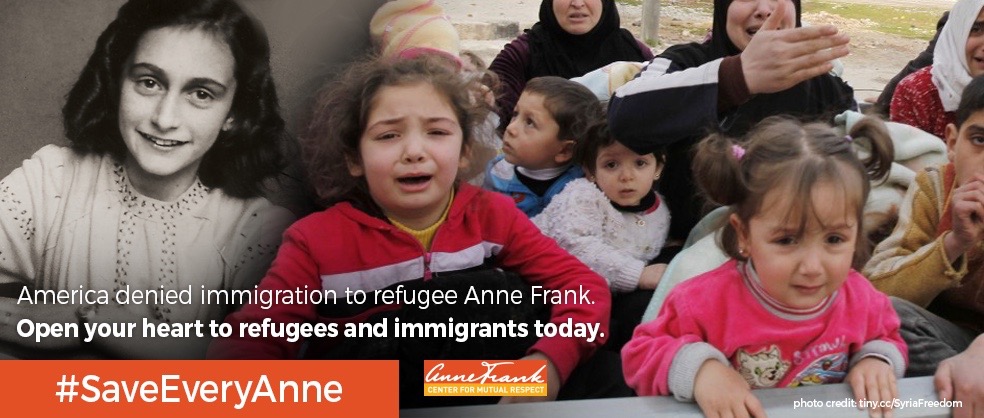
Trump-Bashing “Anne Frank Center” Is A Sham

The comments hit the news like a firebomb: the director of something called the “Anne Frank Center for Mutual Respect” said President Donald J. Trump’s condemnation this morning of anti-Semitism is “a Band-Aid on the cancer of anti-Semitism that has infected his own Administration” and a “pathetic asterisk of condescension.” He claimed Trump and his staff have committed “grotesque” acts of anti-Semitism that he declined to specify. If Holocaust experts don’t accept Trump’s remarks, why should anyone?

But executive director Steven Goldstein is not a Holocaust expert, and the Anne Frank Center (a separate group independent of Amsterdam’s Anne Frank House) is not a serious player in the world of Holocaust memory. Of late, it has become a sham organization that is largely a one-man shop to promote Goldstein’s aspirations to be, as he proclaims himself, a “civil rights leader.” Armed with a great organizational title; incendiary but ready-to-print quotes; and a gullible media slavishly lapping it all up, Goldstein is finding tremendous success. (He could not be reached for comment.)

But the Anne Frank Center for Mutual Respect, by and large, isn’t a “thing.” It developed out of an institution founded by the young diarist’s father Otto Frank, and for years was a constant but minor player in the world of Holocaust education and commemoration. Eight months ago, though, it was co-opted by activists best known for their successful fight for gay marriage in New Jersey. (Both Goldstein and his deputy held their current titles at the gay group Garden State Equality.)

 The center has only nine full-time employees (by contrast, the Anti-Defamation League has 300) – and that’s only if you count the self-described “actor-puppeteer-collaborator-teaching artist” who serves as their <cough> Director of Performance Education. The most recent charitable Form 990s shows their $726,000 assets to be miniscule compared to relevant Jewish and Holocaust organizations that matter: The Simon Wiesenthal Center is 67 times as large, the American Jewish Committee 175 times, and the United States Holocaust Memorial Museum dwarfs them at 600 times as large.

 The center’s pre-Goldstein Wikipedia page was a minor affair, but three weeks ago it was thoroughly rewritten in a self-promoting way by a single editor who has contributed virtually nothing else to Wikipedia.

The group boasts very little programming beyond the dissemination of Goldstein’s sound-bites. Its Web site describes four small traveling Anne Frank exhibits whose ten stops this year include a high school in Elkhart, Indiana and a library in Sarasota. They are very proud of their touring show in which actors visit high schools and community centers playing Martin Luther King dialoguing with Anne Frank. They also plant “Anne Frank Tree Saplings” around the country.

And that’s about it. They have virtually no presence at the Holocaust conferences scheduled year-round, and they have published no significant research in the area of Holocaust studies. They are an utterly marginal organization.

But with “Anne Frank” in his title, Goldstein has been bamboozling journalists into thinking he’s some kind of Holocaust expert, instead of just another left-wing Democratic lawyer and activist. His bio lists no qualifications related to Holocaust or anti-Semitism research or teaching, nor do those of seven of the other eight employees of this supposed Holocaust group.

I don’t support this president, but I’m a Jewish historian who believes in fair play. It’s frustrating to feel I must constantly run to Trump’s defense when members of liberal Jewish organizations make wildly exaggerated charges against him. I’d really like to focus on the ways President Trump’s policies and governing style are inconsistent with the values of my faith tradition, but American Jews will have no credibility to criticize this administration if self-proclaimed Jewish leaders are allowed to invent fake anti-Semitism as a means of undermining a president whose party they despise – and simultaneously getting their names in the papers.

Memo to American journalists: if you wish to speak with a legitimate American Jewish group, membership in the 51-member Conference of Presidents of Major American Jewish Organizations is the gold standard (the Anne Frank Center is not a member). If you want to hear from experts on the Holocaust, try the Simon Wiesenthal Center and the United States Holocaust Memorial Museum

But don’t run after the pretty quote that sparkles the most if its speaker pretty much represents nobody but himself.

 David Benkof is a columnist for the Daily Caller, where this essay first appeared. Follow him on Twitter (@DavidBenkof) or E-mail him at DavidBenkof@gmail.com.


Trump-Bashing “Anne Frank Center” Is A Sham Read More »

White House: Trump will not tolerate anti-Semitism

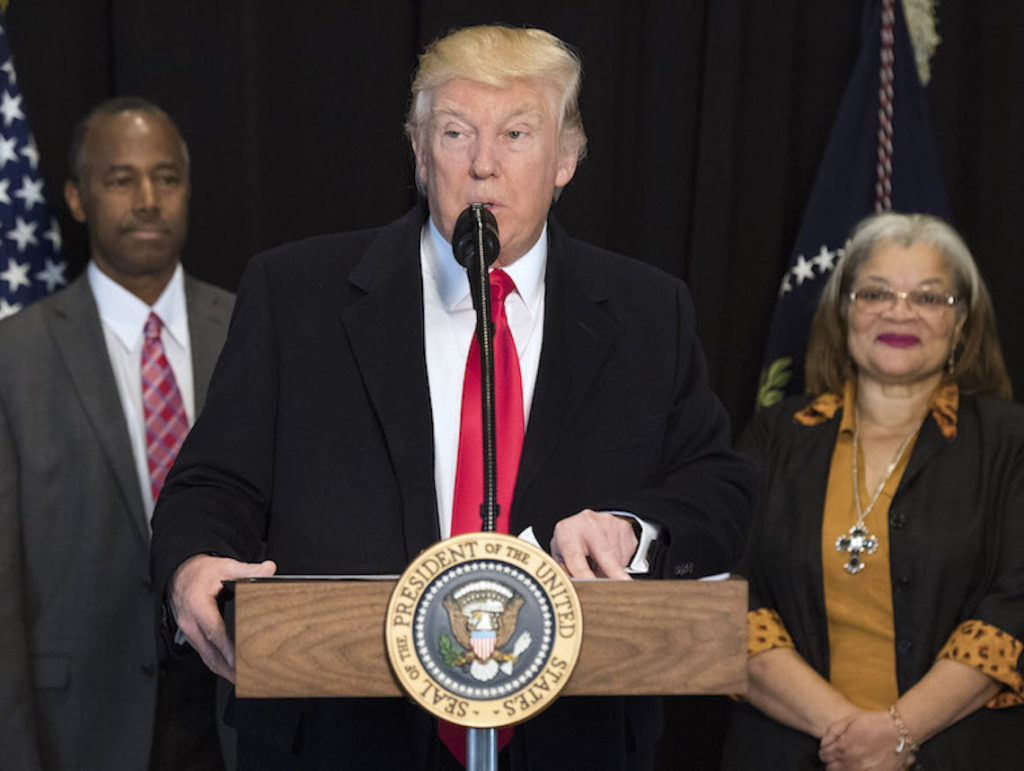
During a visit to the National Museum of African American History and Culture on Tuesday, President Donald Trump addressed, at last, the recent spike in anti-Semitism. “The anti-Semitic threats targeting our Jewish community and community centers are horrible, and are painful, and a very sad reminder of the work that still must be done to root out hate and prejudice and evil,” he said.

[This story originally appeared on jewishinsider.com]

In a memo sent to Jewish Insider, the White House insisted that “anti-Semitic threats, attacks, and vandalism will not be tolerated by the Trump administration” and that the recent bomb threats and acts of vandalism will continue to be thoroughly investigated by the FBI and the Department of Justice.


On Monday, 11 Jewish Community Centers (JCC) across the U.S. received bomb threats. Since January, 54 JCCs have been targeted across 27 states. Police in Missouri also reported 100 headstones at Jewish cemeteries damaged or toppled during the past week.

The White House said that despite the perception that Trump has turned a blind eye on an increase in anti-Semitic incidents, “this issue is near and dear to the President’s heart, as a religious man himself and as the father of a Jewish daughter and grandfather of Jewish grandchildren.”

JCCs “serve a critical role in their communities, opening their doors for people of all backgrounds to share in their resources and participate in their activities,” the memo read, reflecting Trump’s remarks earlier in the day.

The President’s first public denunciation was welcomed by Jewish community leaders and Jewish civil rights groups as a positive step that would help soothe concerns among U.S. Jews.

Jonathan Greenblatt, CEO of the Anti-Defamation League (ADL), wrote on Twitter: “Glad @POTUS stated #antisemitism is horrible. Now need @whitehouse to share plans on how to “stop” it. ADL ready to help”

“I welcome the clear condemnation of anti -Semitism by POTUS,” Abe Foxman, former Director of the ADL and current Director of the Center for the Study of Anti-Semitism at the Museum of Jewish Heritage, told Jewish Insider. “I just wish it had not taken so long to come.”

The Anne Frank Center for Mutual Respect called Trump’s statement “pathetic” and the acknowledgment as a “band-aid on the cancer of anti-Semitism that has infected” the Administration.

“His statement today is a pathetic asterisk of condescension after weeks in which he and his staff have committed grotesque acts and omissions reflecting Anti-Semitism, yet day after day have refused to apologize and correct the record,” the Center’s Executive Director Steven Goldstein said in a statement. “Make no mistake:  The Anti-Semitism coming out of this Administration is the worst we have ever seen from any Administration… When President Trump responds to Anti-Semitism proactively and in real time, and without pleas and pressure, that’s when we’ll be able to say this President has turned a corner. This is not that moment.”

White House Press Secretary Sean Spicer lamented the Anne Frank Center for its criticism of Trump’s slow response. “I wish that they had praised the President for his leadership in this area,” Spicer said at the daily press briefing. “The President has made clear since the day he was elected and frankly through the campaign that he seeks to unite the country… Today, I think, was an unbelievably forceful comment by the President as far as his denunciation of the actions that are currently targeted towards Jewish community centers. But I think that he’s been very clear previous to this… I wish that they had praised the President for his leadership in this area.”

Spicer further expressed frustration over repeated criticisms the Administration has faced regarding anti-Semitism. “It’s ironic that, no matter how many times he talks about this, that it’s never good enough,” he emphasized.

Foxman also blasted Goldstein’s response as “inappropriate and politicized.”

“The Anne Frank Center does not speak for me as a survivor or as an American Jew,” said Foxman, who was also critical of Trump’s dealing with the issue.

Last week, the President berated a Jewish reporter for asking him how he planned to address concerns in the Jewish community relating to the uptick in anti-Semitic incidents and bomb threats against Jewish centers across the country. A day earlier, during a joint press conference with Israeli Prime Minister Benjamin Netanyahu, Trump boasted about his Electoral College victory and reminded the media that his son-in-law Jared Kushner, daughter Ivanka, three grandchildren and many friends are Jewish in response to an Israeli reporter’s question on anti-Semitism.

Trump’s statement on Tuesday came after repeated calls by Jewish community leaders and public officials to speak out and forcefully deal with the issue. On Monday evening, Ivanka Trump noted on Twitter: “America is a nation built on the principle of religious tolerance. We must protect our houses of worship & religious centers #JCC.”

Meanwhile in Jerusalem on Tuesday, Malcolm Hoenlein, Executive Vice Chairman of the Conference of Presidents of Major Jewish Organizations, called for a global summit in which world leaders would declare war against anti-Semitism and bigotry.

White House: Trump will not tolerate anti-Semitism Read More »

Andy Cohen invokes Jewish roots in condemning attack on St. Louis Jewish cemetery

Andy Cohen, the host of Bravo’s late-night talk show “Watch What Happens Live” and the mastermind behind the channel’s uber-popular “Real Housewives” franchise, addressed the recent vandalism of a St. Louis-area Jewish cemetery on his show Monday night.

In doing so, he mentioned that some of his great-grandparents and other relatives are buried there. Over 170 gravestones were toppled in the Chesed Shel Emeth cemetery in University City, Missouri.

“I don’t have to have a personal connection though to know that this is not who we are as Americans,” Cohen says in the powerful clip below.

Andy Cohen invokes Jewish roots in condemning attack on St. Louis Jewish cemetery Read More »

Jewish groups seek action from Trump to match his words on anti-Semitism

He hates it, he really hates it. Now what’s he going to do about it?

President Donald Trump on Tuesday culminated three weeks of missed opportunities to condemn anti-Semitism and doubling down on missed opportunities to condemn anti-Semitism with a statement unequivocally condemning anti-Semitism.

“The anti-Semitic threats targeting our Jewish community at community centers are horrible and are painful and a very sad reminder of the work that still must be done to root out hate and prejudice and evil,” Trump said Tuesday after touring the National Museum of African American History and Culture.

Message back from a Jewish community longing to hear these words: Great. Now how do you plan on dealing with the problem?

“Glad @POTUS stated #antisemitism is horrible,” Jonathan Greenblatt, the Anti-Defamation League CEO, said on Twitter, using the acronym for president of the United States. “Now need @whitehouse to share plans on how to ‘stop’ it. ADL ready to help.”

Greenblatt’s “whaddya got” posture pervaded the organized Jewish community.

David Harris, the American Jewish Committee CEO, explained why Jewish groups that might otherwise have welcomed a simple statement of intent to combat anti-Semitism were sounding a more skeptical tone.

“To date, the administration’s response has been disappointing, to say the least,” Harris said in an email to JTA.

“We’ve only just reached the stage today — thankfully, if belatedly — of hearing President Trump acknowledge the issue and call it by its rightful name — anti-Semitism,” he said.

“For reasons that escape me, until now it’s been about generic words like ‘hatred’ and ‘intolerance,’ or about the President defending himself against non-existent charges that he’s an anti-Semite. It’s elementary: to combat a problem you first have to define it, and the definition of this particular problem is anti-Semitism, pure and simple. Then you need a robust plan of action. Let’s hope it will be forthcoming — and soon.”

The Simon Wiesenthal Center, which has been supportive of Trump, called on Attorney General Jeff Sessions to establish a task force to track down the perpetrator of bomb threats against Jewish community centers, and said Trump must “outline his Administration’s plan to combat surging anti-Semitism.”

Of the major groups who commented, the Orthodox Union seemed the most inclined to declare “case closed.”

“We appreciate that President Trump spoke directly to this matter. The words of a President of the United States carry great weight and it is important that Mr. Trump addressed the American Jewish community and all our fellow Americans at this time,” the O.U. said in a statement about Trump and the bomb threats. “We appreciate that the FBI and Department of Justice are investigating these incidents and the ‘possible civil rights violations’ they entail. We also appreciate the work of the Department of Homeland Security that supports the safety of our Jewish community institutions.”

The Jewish community has been grappling with how the new president deals with anti-Semitism since Jan. 27, when the White House marked International Holocaust Remembrance Day with a statement that noted “victims, survivors, heroes of the Holocaust,” but did not mention the Jews.

What at first seemed like an oversight soon calcified into suspicion that it was part of a worldview, as White House officials doubled down on the omission, condescending to explain to their critics that one must be inclusive in marking an event that uniquely targeted Jews for elimination.

Officials calling critics of the statement “asinine” and “pathetic” didn’t help, nor did the revelation that a bid by the State Department to mention Jews in a statement was rebuffed by the White House.

Fueling suspicion that there was more to the omissions than clumsy oversight was the presence on Trump’s staff of top advisers like Stephen Bannon, Stephen Miller and Sebastian Gorka, who emerged from a political culture of European-style nationalism that rejects what it terms “identity politics” and argues that minority complaints about discrimination are overstated.

The White House visit last week by Israeli Prime Minister Benjamin Netanyahu presented an opportunity to make amends, and at first it seemed Trump was game.

“The State of Israel is a symbol to the world of resilience in the face of oppression,” Trump said in prepared remarks at a joint Feb. 15 news conference with Netanyahu. “I can think of no other state that’s gone through what they’ve gone — and of survival in the face of genocide. We will never forget what the Jewish people have endured.”

So there it was: “genocide” and “Jewish people” adjacent. All was good.

For about 20 minutes.

An Israeli reporter asked Trump about the spike in anti-Semitic incidents in the United States, and whether the president believed it had anything to do with Trump’s rhetoric.

Trump replied by noting the breadth of his Electoral College victory over Hillary Clinton and a statement expressing love for his Jewish daughter, Ivanka; her husband, Jared Kushner, and their grandchildren.

It became weirder the next day at a news conference when a friendly reporter, Jake Turx from the haredi Orthodox Ami magazine, reassured Trump that no one in his community thought the president was an anti-Semite.

Turx proceeded to ask what Trump was planning to do about the waves of bomb threats against Jewish community centers that have severely disrupted Jewish life in North America.

Trump would not allow Turx to complete his question and launched a broadside against the baffled reporter and anyone else who suggested that he was anti-Semitic. Trump called Turx “a liar” and said he hated the question.

What turned Trump and led to his statement Tuesday morning?

His spokesman, Sean Spicer, would not say, except that Trump thought a tour of the African-American museum was an appropriate occasion to expound against hate and discrimination. Trump’s remarks were prepared.

Two precipitating factors may have been the fourth wave of bomb threats on Monday against JCCs, coupled with massive vandalism at a St. Louis-area Jewish cemetery. The White House may have wanted to head off a new round of criticism that it was ignoring anti-Semitism, especially as Jewish groups were heading to Twitter with impatient calls for a strong denunciation from the president.

Another factor may have been Ivanka. Whereas the press office’s initial statement Monday night on the JCC threats again omitted any mention of Jews, Ivanka Trump followed it up with a tweet that at least alluded to Jews, adding to her call for religious tolerance the hashtag “JCC.”

Trump’s erstwhile targets also sensed an opportunity to hit back: Clinton, who infrequently pronounces on issues of the day – and has been oblique when she does pronounce – directly challenged Trump on Twitter to speak out. Muslim groups, targeted by Trump’s rhetoric, raised funds for a reward for the perpetrator of the threat and to repair the toppled headstones at the cemetery.

Calls by Jewish groups for actual plans, and not statements, were not the only sign that Trump’s remarks were unlikely to allay tensions.

Spicer opened his briefing with reporters on Tuesday by repeating Trump’s words, and delivering an impassioned plea for Americans to visit the African-American museum and its National Mall companion, the U.S. Holocaust Memorial Museum. He then turned combative.

“’Is he going to denounce this one, is he going to denounce this one?’” he asked, mocking reporters. “At some point the question is asked and answered!”

(Spicer also responded to the U.S.-based Anne Frank Center for Mutual Respect, which issued a statement mocking Trump’s statement as a “pathetic asterisk of condescension.” He said of the group: “I wish that they had praised the president for his leadership in this area. And I think that hopefully as time continues to go by they recognize his commitment to civil rights, to voting rights, to equality for all Americans.”)

Trump’s Democratic critics weren’t letting go either. Rep. Keith Ellison, D-Minn., running for the chairmanship of the Democratic National Committee, peppered his Twitter feed with follow-up questions for Trump.

“Why has it taken @realDonaldTrump so long to even say the word ‘anti-Semitism?’” Ellison wondered. “Perhaps it has something to do with placating his base?”

Rep. Joe Crowley, D-N.Y., whose bid earlier this month to force a vote on his resolution emphasizing that the Holocaust targeted the Jews was blocked by Republicans, said Trump needed to be more consistent in his condemnations.

“Trump’s statement is long overdue and doesn’t begin to scratch the surface of what needs to be done,” he said in a statement.

Jewish groups seek action from Trump to match his words on anti-Semitism Read More »

Trump, the Jews and the political weaponization of anti-Semitism

Was that so hard?

At some point in the past week, it looked like President Donald Trump was never going to use “anti-Semitism” in a sentence. It took a fourth series of hoax bomb threats at JCCs around the country and imprecations from Jewish groups across the ideological spectrum for the president to at last use the “A” word.

“Anti-Semitism is horrible and it’s going to stop, and it has to stop,” Trump said Tuesday morning. “The anti-Semitic threats targeting our Jewish community and our Jewish community centers are horrible, are painful and they are a reminder of the work that still must be done to root out hate and prejudice and evil.”

That it took so long for Trump to condemn anti-Semitism after twice being asked about it last week, and coming on the heels of a White House International Holocaust Remembrance Day statement that somehow omitted any mention of the Jews, was “mind-boggling” to many groups, including the Anti-Defamation League, which said so in a tweet.

It had reached a point that I already started imagining a White House Passover greeting that didn’t mention the Jews.

“Starting at sundown, the world will come together to remember certain events in Egypt,” it would begin, and end with, “I’ve made it clear that all plagues are horrible.”

What made Trump’s demurrals stranger is that denunciations of anti-Semitism are to presidential declarations what kosher symbols are to supermarket goods: It doesn’t hurt to have one, and only Jews usually notice.

So why did it take the administration five tries to get it right? I am counting the two news conferences, in which Trump basically punted on the question from two Jewish reporters; a statement from the White House on Monday that denounced “hatred and hate-motivated violence of any kind” without mentioning Jews or anti-Semitism, and daughter Ivanka’s tweet saying “We must protect our houses of worship & religious centers. .” The JCC hashtag was a nice touch, but not exactly a Queen Esther-style declaration of co-religious solidarity.

Pundits spent the past week trying to explain Trump’s hesitation. Peter Beinart blamed narcissism, using the theory that when Trump hears “anti-Semitism,” he can’t help but take it as a personal attack that he must fend off. I wondered if it was simple belligerence — that the more you ask this president for something, the more he is likely to say “you can’t make me.”

Or maybe he was just annoyed at the ADL, the group most identified with combating anti-Semitism, for repeatedly calling him and his campaign out for either ignoring or encouraging intolerance. Maybe Trump saw CEO Jonathan Greenblatt’s Feb. 17 column in The Washington Post recalling how “the Trump campaign repeatedly tweeted and shared anti-Semitic imagery and language,” thus “allowing this poison to move from the margins into the mainstream of the public conversation.”

The most ominous explanation, offered by Bradley Burston from the left-wing Haaretz newspaper and a surprisingly outspoken Chuck Todd of NBC News, was that Trump was throwing a bone to — or at least trying not to alienate — the “alt-right” trolls who formed a small but vocal part of his winning coalition.

“Mr. President, we believe you and many other Jews believe you, so please make it clear that not only are you not an anti-Semite but that you reject people who are even if they did vote for you,” Todd said last week.

If Trump had been struggling with a political calculation, it was reminiscent of one that played out in the 2008 campaign, when then-candidate Barack Obama was being pressed to disavow an endorsement from Nation of Islam leader Louis Farrakhan. When he was asked about Farrakhan during a debate with fellow Democratic contender Hillary Clinton, you could almost see the thought bubble over Obama’s head as he weighed rejecting Farrakhan without alienating supporters who considered him a hero.

Obama answered by reiterating his “denunciation” of Farrakhan’s anti-Semitism, leading to a semantic debate with Clinton over the distinction between “denouncing and rejecting.” Eventually the ADL’s then national director, Abe Foxman, declared that Obama had cleared the Farrakhan hurdle.

If Trump’s allergy to the “A” word is a political calculation, what would it be? He knows that three out of every four Jews didn’t vote for him, and perhaps someone is whispering to him, a la James Baker, that he gains no advantage by caving to a special interest as liberal as the Jews.

Trump’s critics pin the issue on his chief strategist, Stephen Bannon, who came to the Trump campaign after steering Breitbart News, which he himself called a “platform” for the alt-right, among other right-wing movements. In turn, Bannon’s defenders note that Breitbart is enthusiastically pro-Israel and often keeps tabs on anti-Semitism.

But search “anti-Semitism” at Breitbart and a pattern emerges — one that could explain the week that was. The site seems most exercised about Jew hatred when it is committed by Muslims, members of the left wing in Europe, and far left and anti-Israel activists on American college campuses. When it does report on hate crimes in the United States, its coverage is almost always skeptical, highlighting hate-crime “hoaxes” or quoting those who deny that there has been a surge in hate crimes here or in Britain since the U.S. elections or Brexit.

This week, when much of the press corps was focusing on how and whether Trump would denounce anti-Semitism, Joel Pollak, a senior editor-at-large at Breitbart, was accusing the media of hyping fears of anti-Semitism. Pollak blames an “ongoing pattern of false ‘hate crimes’” and the media’s reluctance to report on left-wing anti-Semitism. But mostly he blames general “anti-Trump hysteria.”

“Trump’s critics seem to want to believe false accusations of antisemitism, which justify their hatred of him and maintain a sense of outrage and unity among activists,” writes Pollak.

For Pollak and other Breitbart contributors, the reporting and denunciation of anti-Semitism is a partisan weapon wielded by the left to discredit the right. (Just as Trump asserted that it’s a charge wielded by a dishonest media to discredit him.) Of course, Breitbart also politicizes anti-Semitism, using it as a scarlet “A” to be worn, almost exclusively, by Muslims, campus radicals, self-hating Jews and European leftists. In fact, it has become an increasingly familiar trope both on the left and the right that the other is more anti-Semitic.

At least both sides agree that anti-Semitism is bad, even if they hesitate to take responsibility for the version that metastasizes among their ideological allies. They want to target the Jew haters but are wary about friendly fire.

Maybe the mistake of Jewish groups in seeking a strong response from Trump is that they are living in a simpler past, when both sides could agree that anti-Semitism was an evil, no matter the perpetrators or their politics.

Trump, the Jews and the political weaponization of anti-Semitism Read More »