fbpx

February 8, 2017

Meant2Be: A different kind of love

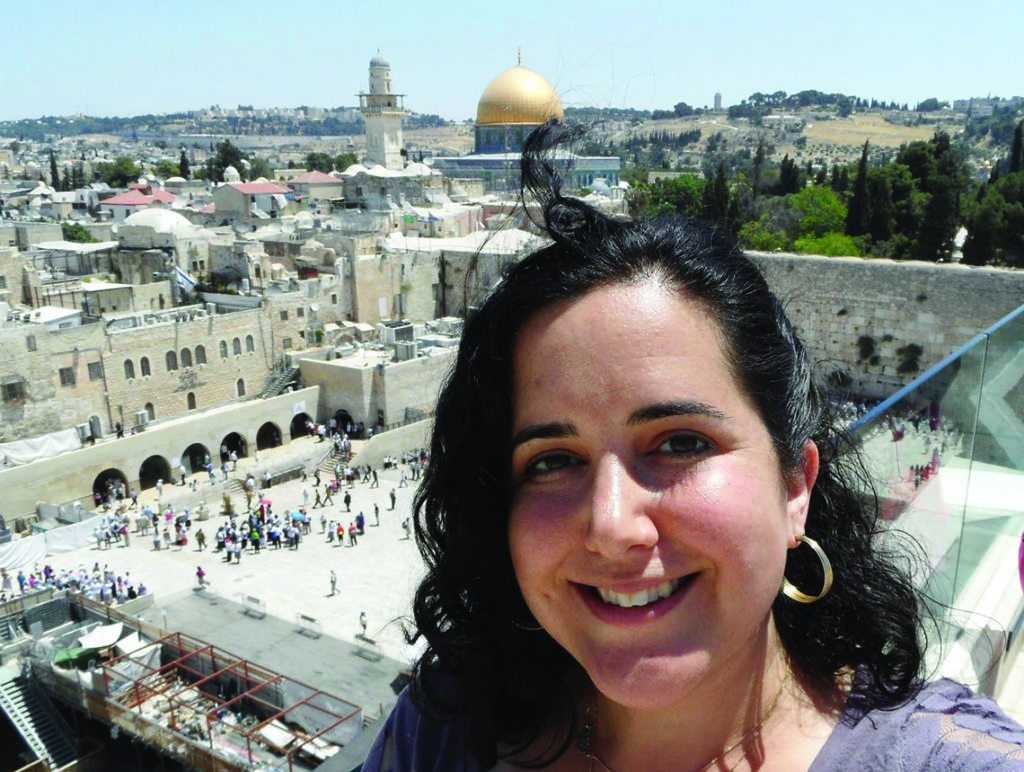
raised my cup of wine as the rabbi recited Kiddush in a space that was filled with young adults. My plan had been to stay in Jerusalem for five months, but this was my sixth.  

The city had compelled me to stay. The sounds of Hebrew and Arabic, both familiar and mysterious, were a musical mingling of speech and prayer. The scent of Middle Eastern delicacies wafted through the air. I lived close to train tracks, but the train no longer ran. Its tracks were paved over into a walking path, and on that summer’s evening, I saw my name etched into that path, urging me to stay even longer.

A California native, I had moved back home after attending college. My sister was a full-time student immersed in her studies; my father had begun a separate chapter in life with his new wife and daughter; and I was engaged in a frustrating job search.

Then my mother was diagnosed with cancer. I shuttled her to appointments, picked up her medications, did grocery shopping and laundry, and sat with her so she wouldn’t be alone.

I knew she had a life-threatening condition, but I didn’t believe she would die. She made improvements, then worsened, then recovered again. I was convinced that the radiation and radioactive iodine treatments would work. That somehow the tumors in her head and spine would shrink and disappear.

Toward the end, a medical professional told me how sick she was. I still couldn’t believe it. My mom had never believed it either. It wasn’t like a Hallmark movie, where we held hands and cried. We fought until the end, which is why the end was so devastating. I couldn’t imagine a future without her. My mom had always loved me warmly and wholeheartedly. Now that she was gone, where would I find love?

After my mother’s death, my father and his new family moved across the country. Staggered, I turned to my sister. Born several years apart, we’d lived separate lives. She was precocious, whereas I was the more obedient daughter, the overly responsible sibling. I assumed that, despite our differences, we would be there for each other now. Instead, she informed me that she wanted her space. I had to move on.

I found a room in an apartment. My new roommate was Israeli and had been living in the States for years. I got to know his friends, most of whom were Israeli ex-pats. They hung out in groups, speaking Hebrew and sharing stories. The language, which I’d learned in elementary school, came back to me.

Finally, I went to visit Israel. It was my first time traveling alone. I stayed in hostels in Jerusalem, and rented a room in Tel Aviv. I had an amazing time navigating around in Hebrew and English, meeting people, and falling in love with a place I’d only heard about.

When I went back to the States, I moved to be near my mother’s mother. I loved being with my grandmother. She was sweet and funny; we cheered each other up and found joy in small things together. But my grandmother’s health was failing, and after a short time, she, too, passed away.

Her death brought back the broken feeling I had after my mother’s death. I moved again, wanting to be near relatives, but couldn’t integrate into their nuclear families. I didn’t feel like I belonged.

And so I returned to Israel — this time it was work-related. I discovered people who took Jewish learning seriously and saw that I could study to enhance my life. The idea appealed to me so much that, after going back to the States and working overtime for six months, I put my belongings in storage and returned to Israel to learn.

During this time, I realized that Judaism is more than a religion — it is a way to live. I met people who were different from my secular Israeli roommate and his friends, people who observed Shabbat, ate strictly kosher and prayed every day. Many of them were progressive and open-minded. I didn’t know religious people could be that way.

I quickly took on the practice of Shabbat. Without television, the internet or shopping, my new community and I were present for each other. Keeping kosher was relatively easy for me, because I had been a vegetarian since college. And I found myself enjoying prayer — connecting with something greater than myself, an eternal something that also connected me with my mother and grandmother. When I prayed, I felt embraced by love.

My year in Jerusalem changed me. There, among the olive trees and pale limestone, I felt whole again. Jerusalem, the holy city, gave me a sense of being part of a type of family that I had never known. This family was not biological. Instead, its members connected by practicing ancient traditions in a modern world. This family had faith and hope in the future.

Finally, so did I.

Scarlet Michaelson is a writer living in Pico-Robertson.

Do you have a story about dating, marriage, singlehood or any important relationship inyour life? Email us at meant2be@jewishjournal.com.

Meant2Be: A different kind of love Read More »

Light and movement: LACMA presents full range of Moholy-Nagy’s art

Hungarian-born László Moholy-Nagy is considered one of the most versatile and inventive artists of the 20th century. Prolific in photography, film, painting, sculpture and graphic design, he sought to merge art with the latest technological advances of his time.

A retrospective of Moholy-Nagy’s work, the first in the United States in nearly half a century, opens Feb. 12 at the Los Angeles County Museum of Art (LACMA). “Moholy-Nagy: Future Present” was curated in collaboration with the Solomon R. Guggenheim Museum in New York and the Art Institute of Chicago, where it already has been presented. The exhibition, including more than 250 pieces representing some dozen media, reveals the many facets of an avant-garde artist with little name recognition outside academic circles.

“He thought about art as a very holistic project,” said Carol Eliel, curator of modern art at LACMA. “And he believed in the value of art. He believed in harnessing the strengths of technology to help serve mankind through art.”

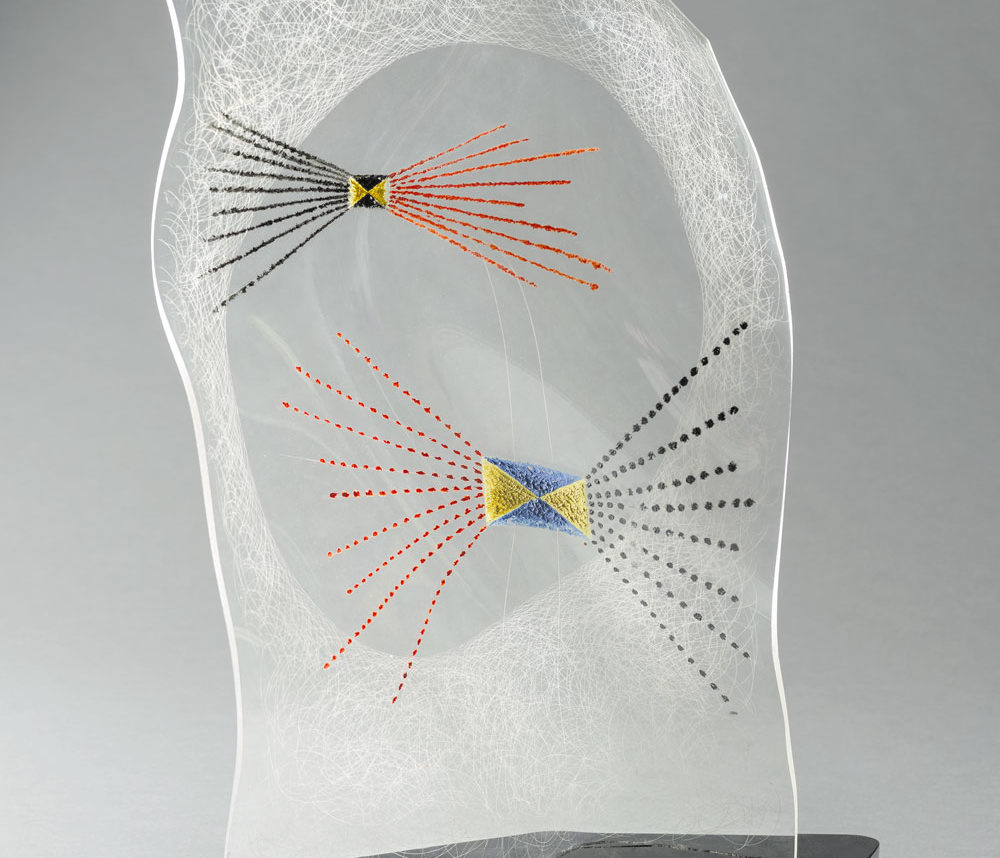
Moholy-Nagy (1895-1946) pursued his art like a scientist or engineer, adopting new forms and materials to achieve his desired outcome. Some of his abstract sculptures incorporate Plexiglas to gain a greater level of reflectiveness and light. He made photograms by placing objects on photosensitive paper to create shadowy, ghost-like figures. And he incorporated new types of metals into his sculptures.

“The reality of our century is technology: the invention, construction and maintenance of machines,” Moholy-Nagy wrote in a 1922 article. “To be a user of machines is to be of the spirit of this century. Machines have replaced the transcendental spiritualism of past eras.”

Moholy-Nagy was born Jewish but later converted to Calvinism. He attended an art school in Budapest after serving in the Austro-Hungarian army during World War I. He was heavily influenced by the art movements of the time, such as Dadaism and Russian Constructivism.

He taught at the Bauhaus, an influential German school of art and design, at its Weimar and Dessau campuses. After the Nazis closed the school, he moved to Amsterdam, London and then Chicago in 1937 to start the New Bauhaus school, which later became the Institute of Design, part of the Illinois Institute of Technology.

“Vertical Black, Red, Blue” (1945)

He had a profound impact on the Bauhaus, inspiring a generation of German and American students to pursue a modernist approach to art. After he settled in the U.S., he adopted English as his main language, writing letters to Bauhaus founder Walter Gropius (a native German speaker) in English.

“There was this incredible sense of being in the present, and a sense of optimism that whatever got thrown at you, you could deal with it and prevail,” Eliel said. “There is this sense of hope and optimism in this work that is incredibly engaging.”

The physical experience of seeing Moholy-Nagy’s works is critical, whether it’s the flickering light of his black-and-white films, the reflective light on the mounted glass-coated works, or the shifting shadows created by his sculptures. It’s also worth observing the intricacy of his drawings and paintings. His second wife, Sibyl, remembered him as “like a gem cutter, adding with infinite patience facet after facet to his intuitive vision.”

While his choice of media varied wildly, there are several themes or motifs that reveal themselves in Moholy-Nagy’s entire body of work, such as light, movement, transparency and the use of new materials.

For example, “Nickel Sculpture With Spiral” (1921), made early in his career, used nickel-plated metal, “which was an industrial fabrication method, not a traditional art-making medium,” Eliel said. “And then it incorporates this spiral with its sense of movement and has a very reflective surface so that light plays off the surface, so that as you walk around the spiral, you see the light adding to this sense of movement.”

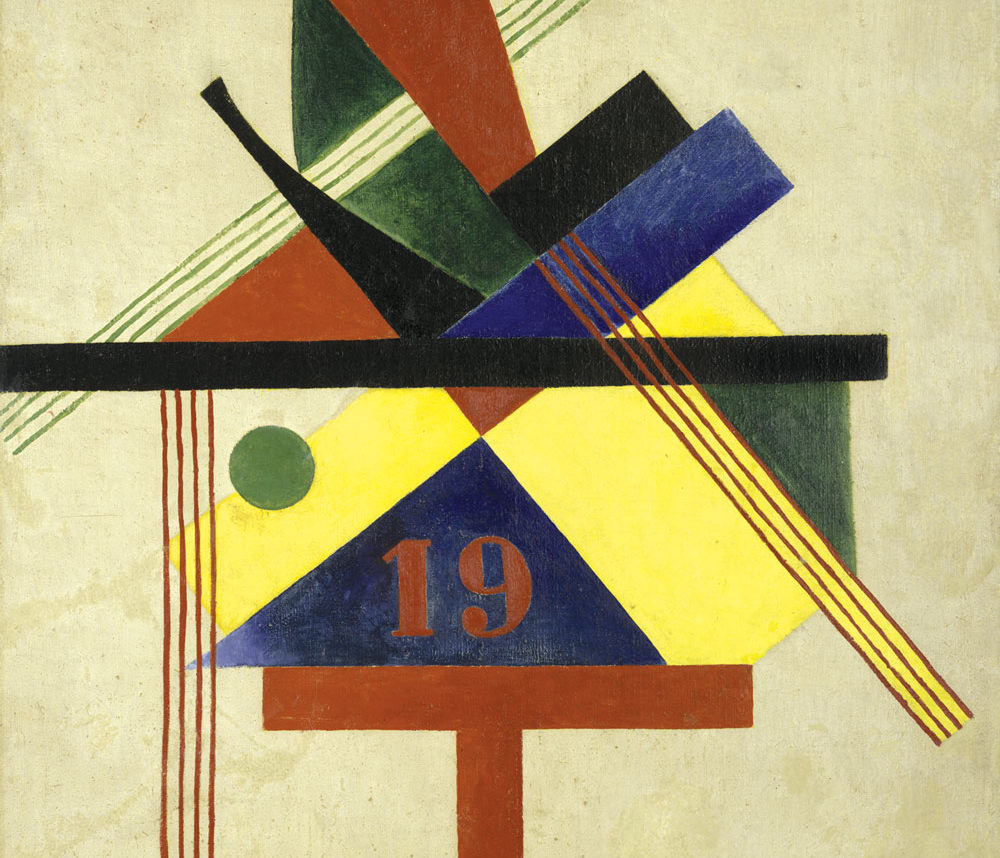
Moholy-Nagy also made traditional oil paintings with a sense of transparency by applying colors to the canvas in a way that appears as if he’s layered colors. For example, the oil painting “A 19” (1927) features rectangles and a circle that overlap and intersect, but his use of paint creates a sense of light shining through transparent layers.

Toward the end of his life, Moholy-Nagy was fascinated by Plexiglas, a new material being used for airplane windshields and other industrial applications. He started making sculptures out of the material by heating, bending and shaping it. At times, he made mobiles out of it, or 3-D paintings with incisions that created shadows, incorporating light and transparency into his work.

“19” (1921)
“19” (1921)

The exhibition is organized chronologically rather than by medium. Moholy-Nagy worked in various media simultaneously, although there are episodic bursts of one medium or another. Eliel chose to place film projections onto the walls next to photographs, paintings and posters displaying his graphic designs.

Moholy-Nagy also was a teacher and a writer, and he organized and curated exhibitions that traveled the world. One senses, overall, a profound sense of curiosity in his work, and a belief in humanity and what can be achieved through art.

“I think he wanted to really have the notion of visual literacy, in as broad as possible of terms, become an integral part of people’s lives, and he felt that this would improve people’s lives in many different ways,” Eliel said.

Also on display at LACMA is a large-scale installation, the “Room of the Present,” a re-creation of an exhibition space Moholy-Nagy originally conceived in 1930 but never realized during his lifetime. It includes photos, film productions and industrial objects that showcase Moholy-Nagy’s embrace of  technology.

Moholy-Nagy died of leukemia in 1946, at the age of 51, leaving behind a rich legacy that influenced minimalist sculptors, abstract expressionist painters and graphic designers of the 1950s and ’60s. Seeing his wide variety of work in one place offers a sense of just how inventive and engaging his art was. One can’t help but think of how excited he would be by contemporary technologies — virtual reality, smartphone apps, 3-D printers — to reach new possibilities in art.

“Moholy-Nagy: Future Present” will be on display at LACMA from Feb. 12 through June 18. For more information, visit lacma.org.

Light and movement: LACMA presents full range of Moholy-Nagy’s art Read More »

DIY: Easy coffee filter flowers

I may be dating myself, but the first record I ever owned was Marie Osmond’s “Paper Roses.” To this day, I’m still obsessed with flowers made of paper. They add a festive touch to home décor, parties or even gift packaging. And they last forever.

I’ve made flowers out of tissue paper, book pages and comic books — they all have their unique charms. But flowers made of coffee filters are all the rage on craft and lifestyle blogs, so I thought I’d give them a try. I can see why they’re so popular. Coffee filters are cheap (150 of them for a dollar at 99 Cents Only Stores), durable even when wet and easy to dye.

This being my first time working with coffee filters, I experimented with a method that would be easy, yet still produce big, fluffy flowers. And it worked! The ones pictured here are the real honest-to-goodness first coffee filter flowers I’ve ever made. It shows that if a novice like me can do it, anyone can.

WHAT YOU’LL NEED

Coffee filters (basket style, 8-12 cup size)
Dye or food coloring
Scissors
Masking tape
Skewer or chopstick

1. Dye the coffee filters

coffee1

Using a liquid dye (such as Rit) or food coloring, tint the coffee filters with the hues of your choice. Wring out excess moisture from the filters, and let them dry in the oven set at the lowest temperature. Even stacked up, the filters will dry completely within about 15 minutes. You also can leave the filters white if you wish.

2. Fold the coffee filters

coffee2

For seven of the coffee filters, fold them in half, then into quarters, and then into eighths. (In other words, fold them three times.) For two of the coffee filters, fold them in half, then into quarters, then into eights, and then once more into sixteenths. Cut the top of each folded filter into a curved petal shape.

3. Line them up on masking tape

coffee3

Tear off a piece of masking tape that is about 12 inches long. Place the strip of tape on your work surface with the sticky side up. Then line up the folded coffee filters with the pointed end on the sticky side of the tape. Working left to right, position the two filters folded into sixteenths first, and continue with the other seven. They should overlap, with about a half-inch space between the pointed ends.

4. Roll up with a skewer

coffee4

Place a skewer or chopstick on the left end of the tape and start rolling it up in the tape. As the skewer gets rolled up, the coffee filter petals also roll up in the tape. Pinch the tape into the petals as you go to make sure they stick really well.

5. Finish taping the petals

coffee5

With any extra tape, secure the bottoms of the petals so they don’t flop down. You can also add additional tape if you need it. The folded coffee filter petals look a little funny at this point, but the flower will blossom in the final step.

6. Fluff the petals

coffee6

Spread out the petals with your fingers to add volume. Push the pedals in different directions — there’s no right or wrong way for how they should look. Don’t fluff up the two folded coffee filters in the center of the flower. Those petals should stay closed. Place the finished flowers in a vase, and sit back to admire your handiwork while enjoying a cup of coffee.


Jonathan Fong is the author of “Walls That Wow,” “Flowers That Wow” and “Parties That Wow,” and host of “Style With a Smile” on YouTube. You can see more of his do-it-yourself  projects at jonathanfongstyle.com.

DIY: Easy coffee filter flowers Read More »

Progressives now trivializing Hitler, Nazism, Auschwitz

Those who wish to perpetuate the sacred memory of the Holocaust have long guarded against the misuse of the terms “Nazi,” “Hitler,” “Fascist,” “Goebbels,” “Auschwitz” and the like.

Jews and Jewish defense agencies have understood that the cheapening of these terms cheapened the suffering of those who endured the true horrors of the Nazi era.

Not anymore.

It is so common to call President Donald Trump and conservatives Nazi, Hitler and fascist that Jews have not only stopped condemning the practice, they have led it. And Jewish defense agencies have largely remained silent.

I could fill this whole issue of the Jewish Journal with examples. But I will suffice with only a handful.

Rachel Maddow of MSNBC interviewed in The Hill:

Maddow: “I’m studying Hitler to prep for Trump.”

The Hill: “How?”

Maddow: “By studying the first few months of Adolf Hitler’s tenure as German chancellor, beginning in 1934.”

Richard Cohen, Washington Post: Trump “is Hitlerian in his thinking.”

Henry S. Rosen, Daily Kos: “Any student of history can compare current times to the rise of fascism in the 1930s — when an electorate reeling from The Great Depression brought to power Hitler and emboldened Mussolini.”

Richard Cohen, Washington Post: “The differences between Weimar Germany and contemporary America are significant but so, increasingly, are the similarities.”

Natasha Lennard, The Nation: “To call Trumpism fascist is to suggest that it demands from us a unique response. … It is constitutive of its fascism that it demands a different sort of opposition.”

Neal Gabler, BillMoyers.com: “Like Goebbels before them, conservatives understood that they had to create their own facts, their own truths, their own reality.”

Dana Milbank, Washington Post: “Anti-Semitism is no longer an undertone of Trump’s campaign. It’s the melody. … When the election returns come in Tuesday night, it will be Nov. 9 in Germany — the 78th anniversary of Kristallnacht, the ‘Night of Broken Glass’ at the start of the Holocaust when Nazis vandalized synagogues and businesses.”

The Hill: “MSNBC’s Chris Matthews said Friday that President Trump’s inaugural address was both ‘Hitlerian’ and meant to mimic Russian President Vladimir Putin.”

New York Daily News: “A group of Cypress Hills High School (Texas) students gave the Nazi salute and shouted ‘Heil Hitler’ and ‘Heil Trump’ while their class photo was being taken.”

University of Wisconsin Education Professor Sara Goldrick-Rab: “My grandfather, a psychologist, just walked me through similarities between [Wisconsin Gov. Scott] Walker and Hitler. There are so many — it’s terrifying.”

Charles Blow, New York Times: “[Trump is] the demi-fascist of Fifth Avenue … an arguably fascist and racist demagogue.”

Paul Krugman, New York Times: “It takes willful blindness not to see the parallels between the rise of fascism and our current political nightmare.”

Germany’s leading news magazine, Der Spiegel, headlined: “How Much Mussolini Is There in Donald Trump?”

To be fair, Donald Trump, too, recently tweeted about “leaked” fake news depicting him cavorting with prostitutes in a Moscow hotel: “Intelligence agencies should never have allowed this fake news to ‘leak’ into the public. … Are we living in Nazi Germany?”

Then Jewish spokesmen raised their voices in protest.

Steven Goldstein, executive director of the Anne Frank Center for Mutual Respect, intoned: “It is a despicable insult to Holocaust survivors around the world, and to the nation he is about to lead, that Donald Trump compares America to Nazi Germany.”

And Jonathan Greenblatt, CEO of the Anti-Defamation League, also weighed in: “No one should cavalierly draw analogies to Nazi Germany, especially the next leader of the free world. It is not only a ridiculous comparison on the merits, but it also coarsens our discourse and diminishes the horror of the Holocaust.”

What we have here is a cheapening of the unique evils of Hitler, Nazism and fascism. If Donald Trump is a Hitler, a Nazi or a fascist, then Hitler, Nazis and fascists were nothing special.

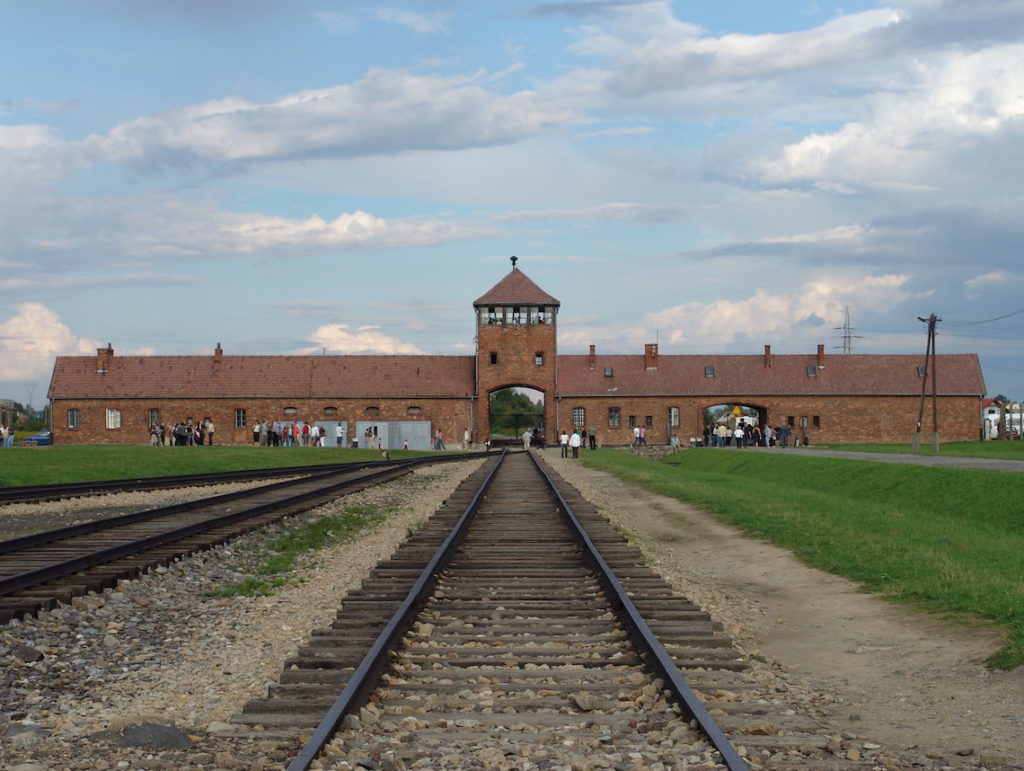
Even Auschwitz.

The most recent issue of the Forward, the oldest Jewish progressive newspaper, presented the nadir of the left wing draining Holocaust terms of their meaning in an article by a writer named Sophia Marie Unterman, titled “Is This Sugarcane Plantation ‘America’s Auschwitz’?”

After a visit to a Louisiana plantation serving as a museum of slavery, Unterman wrote:

“The phrase ‘America’s Auschwitz’ was used by now-mayor of New Orleans Mitch Landrieu in 2008, when he visited the site and spoke to the museum’s creators. … Landrieu used the term ‘Auschwitz’ to encapsulate the darkest part of a country’s history; in that, he was correct to call slavery our Auschwitz.”

“… Landrieu’s description was apt: Slavery is our country’s darkest chapter; and 150 years after Emancipation, we still don’t know how to talk about it.”

That Jews, the people who endured the unique evil of Nazi genocide, would align themselves with those who cheapen that evil, is just one more tragic testament to the poisonous effect of the left on Jewish life.


Dennis Prager’s nationally syndicated radio talk show is heard in Los Angeles on KRLA (AM 870) 9 a.m. to noon. His latest project is the internet-based Prager University (prageru.com).

Progressives now trivializing Hitler, Nazism, Auschwitz Read More »

A Moment in Time: Just When You Thought You Knew it All….

Dear all,
As I was studying our portion this week, I was struck by a phenomenon of the Hebrew alphabet.
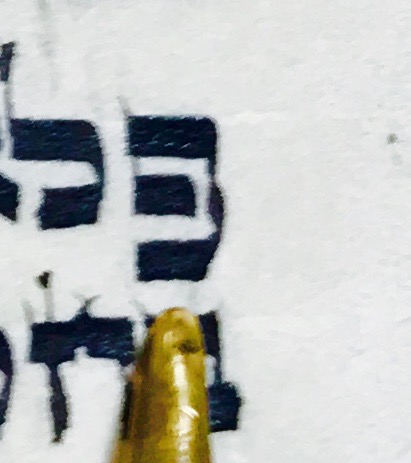
The yad above is pointing to the Hebrew
letter “Peh – פ.”
But with the calligraphy of Torah, if you look at the white space inside of the Peh, you will find the Hebrew letter
“Bet – ב.”
Whenever I see this, I am reminded that it is so important to:
1) slow down
2) be mindful of our surroundings
3) be receptive to all the hidden wisdom that exists
4) refrain from being quick to judge.
Just when we think we know it all, we realize that when we take a moment in time to look from another perspective, possibilities of additional understandings unfold.
With love and shalom,
Rabbi Zach Shapiro

A Moment in Time: Just When You Thought You Knew it All…. Read More »

Israel intercepts rockets aimed at Eilat

Israel’s anti-missile Iron Dome system intercepted at least three missiles fired from the Sinai at its southernmost resort town, Eilat.

The Israeli media quoted the army as saying the missiles were fired Wednesday evening. There were varying counts on the total number of missiles fired, between four and seven. There were no injuries.

Eilat has not suffered an attack since 2012, according to Haaretz.

Israel and Egypt have beefed up efforts to roust militant Islamist terrorists in the Sinai peninsula, territory captured by Israel in the 1967 Six-Day War and returned to Egypt as part of the 1978 Camp David peace accords.

Earlier this week there was a rocket attack from the Gaza Strip into Israel.

Israel intercepts rockets aimed at Eilat Read More »

How Israel’s travel bans are — and aren’t — like Trump’s

Defending his executive order directing the construction of a wall along the U.S. border with Mexico, President Donald Trump pointed to Israel as a model, saying “a wall protects.”

With another swipe of his pen two days later, on Jan. 27, Trump enacted a targeted travel ban. As it turns out, that executive order, which has since been suspended by a federal judge, also has at least superficial similarities to Israel’s immigration regime.

“Officially, we are like Trump,” said Amnon Rubenstein, a law professor at the Interdisciplinary Center Herzliya and former Israeli education minister. “We don’t accept refugees or immigrants” who aren’t Jewish under Israel’s Law of Return. “But the reality is a little different.”

Israel for years has maintained Trumpian semi-bans on entry by citizens from several Arab countries and asylum seekers. The difference is that the law is often not enforced.

The Trump travel ban barred entry to the United States by immigrants from seven Muslim-majority countries — Iran, Iraq, Libya, Somalia, Sudan, Syria and Yemen — for 90 days. It also blocked all refugees for 120 days, and refugees fleeing the civil war in Syria indefinitely.

Since 2007, Israel has legally refused entry to most citizens from three of the countries on Trump’s list — Iran, Iraq and Syria — as well as from Lebanon. These “enemy states” were added to a 2003 emergency law, passed in response to the second intifada, that has largely stopped Palestinians from the West Bank and the Gaza Strip from living in Israel.

Israel has also taken a relatively hard line on asylum seekers, who in its case come mostly from Eritrea and Sudan. The state has generally deemed these migrants “infiltrators” seeking work, though many have fled persecution and human rights abuses at home, according to human rights groups. Between 2009 and the beginning of 2015, Israel granted refugee status to just five of more than 3,500 applicants, or a fraction of 1 percent. That contrasts with the 84 percent of Eritreans and 56 percent of Sudanese asylum seekers who received either refugee status or extended protection in other countries in 2014, according to the United Nations high commissioner for refugees.

At the same time, Israel has deterred more African migrants from coming and sent out those who have already arrived. As Prime Minister Benjamin Netanyahu boasted in a tweet responding to Trump’s shout-out, Israel in 2014 completed a fence along its border with Egyptian-controlled Sinai. The previous year, Israel built a detention center in the Negev just for the migrants, and it has given cash incentives to tens of thousands to return to South Sudan or go to third countries with which Israel has reached agreements.

“Israel, like the U.S. right now, is violating its obligations to refugees,” said Tally Kritzman-Amir, an expert in immigration law at the College of Law and Business outside Tel Aviv and the academic supervisor of its Clinic for Migrants’ Rights. “If you ask me, part of being Jewish is about remembering what happened to our people in the past, and maybe even being proud that we are able to provide some protection now.”

But whereas Trump’s travel ban allows few exceptions, Israel’s immigration laws are full of loopholes and are sometimes simply ignored entirely.

“Israel is primarily a country of Jewish repatriation. Non-Jewish immigration is supposed to be very limited,” said Alexander Yakobson, a historian at The Hebrew University of Jerusalem. “And yet the number of non-Jewish immigrants here is staggering. This is achieved not through policy but through non-enforcement of immigration laws.”

The law targeting West Bank and Gaza Palestinians and citizens of the four Arab countries allows the interior minister or regional military commanders to make various exceptions. These include the options to grant residency to older Palestinian spouses and citizenship to young children. Citizenship, or a lesser status, can also be granted to someone “of special interest to the State” or who “performed a significant act to promote the security, economy or some other important matter of State.” Such a person, whose family may be included, must identify with “Israel and its goals.”

A 30-year old gay poet who had fled persecution for his sexuality in Iran and professed to be “in love with” Israel was allowed to enter the country last year and stay.

For those who need to enter Israel for work or medical care, temporary visas can be issued. Israeli army medics have brought more than 2,600 Syrians to the country for care, though the state will not recognize them as refugees, and tens of thousands of West Bank Palestinians are permitted to work in Israel, with thousands more coming in illegally.

Even African migrants in many ways have been accommodated. Israel has expelled few, and more than 45,000 are estimated to remain in the country. Several years ago, the state announced it would not enforce employment laws that would prevent them from working. In Tel Aviv, where most of the migrants have settled, they work behind the counters of bars and restaurants on nearly every block, speaking Hebrew with Israeli waiters and waitresses.

Trump’s travel ban has been challenged in U.S. federal courts as discriminatory, with lawyers pointing to his calls as a candidate for a “Muslim ban” as proof. Israel has similarly been accused in its Supreme Court of privileging Jews and discriminating against would-be Palestinian immigrants and African refugees when it comes to immigration. The state’s security arguments have mostly carried the day, with the courts only requiring tweaks to its policies.

A U.S. federal appeals court is expected to rule on the legality of Trump’s travel ban within days, after which an appeal to the Supreme Court is likely.

How Israel’s travel bans are — and aren’t — like Trump’s Read More »

‘Do you know Schwartzie?’

Everybody has a Schwartzie story. I would be someplace halfway around the world and tell someone I’m from Los Angeles, and they would ask, “Do you know Schwartzie?” I would reply, “Are you kidding? Schwartzie’s my brother.” And then I’d hear something like, “Well, he married us.”

I have a simple theory for why everybody has a Schwartzie story — the man was everywhere.

Rabbi Shlomo “Schwartzie” Schwartz, who passed away Feb. 8 after a long illness, was a Los Angeles Jewish landmark. You’d see his famous red beard all over town and at all kinds of Jewish events, from outdoor festivals to fancy fundraisers.

A few years ago, as I was attending a memorial service for Rabbi Harold Shulweis at Valley Beth Shalom, I scoured the big crowd and wondered why I couldn’t see any Orthodox rabbis. Then I saw his greying, reddish beard. He was limping with a cane, walking slowly down the main aisle as people were taking their seats. I caught his eye and said “Schwartzie, I have a seat for you!” He looked at me and said, “Hey, holy brother. Good to see you.”

After we sat down, all I remember him saying was, “I really loved that man,” referring to Rabbi Shulweis.

Loving Jews was something of a Schwartzie specialty. He was a Chabad-Lubavitcher who internalized his Rebbe’s message to find the pintele yid in every Jew. He took the unconditional love he had for his own family and found a way to channel it to his collective Jewish family. For him, this was a natural move. I know, it sounds corny, shmaltzy, tribal, but that’s who he was — a great, unapologetic lover of Jews.

That didn’t mean he was naïve or didn’t know the ways of the world. How could he not know? Over the years, he consulted with thousands of Jews who needed help — parents who needed help with their children, children who needed help with their parents, spouses who needed help with each other. You name the problem, he saw it. Maybe that just deepened his love for his people — he saw how needed he was.

He was especially needed on Friday nights at his home in Mar Vista, where for decades he hosted, with his beloved wife and spiritual partner, Olivia, “Dinner for 60 Strangers.” These Shabbat gatherings had an unabashed objective: Get more Jews to meet and marry one another. He was a one-man Jewish continuity machine.

Schwartzie spent most of his summers in the holy city of Tzfat in Israel, teaching at the Ascent center. Those weeks in Tzfat rejuvenated him. They were like his Shabbat for the year — an annual retreat to replenish and renew his soul. And he did it, of course, by teaching and helping other Jews.

I have a simple theory for why everybody has a Schwartzie story — the man was everywhere.

Through his Chai Center in Los Angeles, now run by his son Mendy, one of the ways he helped Jews was by teaching Chassidut, and by throwing hundreds of events where Jews of all ages would get to mingle. His teaching style, no matter how deep the subject, matched his personality: folksy, quirky, joyful. He was famous for his High Holy Day services, which he would announce by saying: “Come to the shul that doesn’t want your money.”

He loved that line. I suggested it when we first met, about 30 years ago, in my little ad agency in Venice. He was looking to promote a High Holy Day service for Jews who had nowhere else to go. He figured more people would show up if he waived admission. The line sort of wrote itself — a shul that doesn’t want your money. How do you beat that? He loved any idea that would make it easier for Jews to enjoy their tradition.

Last year, at an event in his honor, it was fascinating to see how many Jews he touched. He engaged with Jews in Hebron and Jews in Reform temples. He engaged with Sephardic Jews and Russian Jews and Persian Jews. He met Jews in music festivals and at sports venues. His quick wit was his entry card wherever he went, and he went wherever Jews went.

Among his multitude of friends was Rabbi David Wolpe, who wrote this to me on the day of his passing: “He was an igniter of souls, discovering in people a spirit they did not know they had, and bringing them to God and Judaism.”

Schwartzie spent a lifetime bringing Jews back — to their tradition, to their community, to themselves. He did it like no one else. For those of us who knew him well, it’s hard to imagine our lives without him. We can only thank God that everybody has a Schwartzie story.

Those stories, and his undying love, will be his legacy.

‘Do you know Schwartzie?’ Read More »

Rabbi Shlomo Schwartz, had colorful and unconventional approach to outreach in L.A., dies at 71

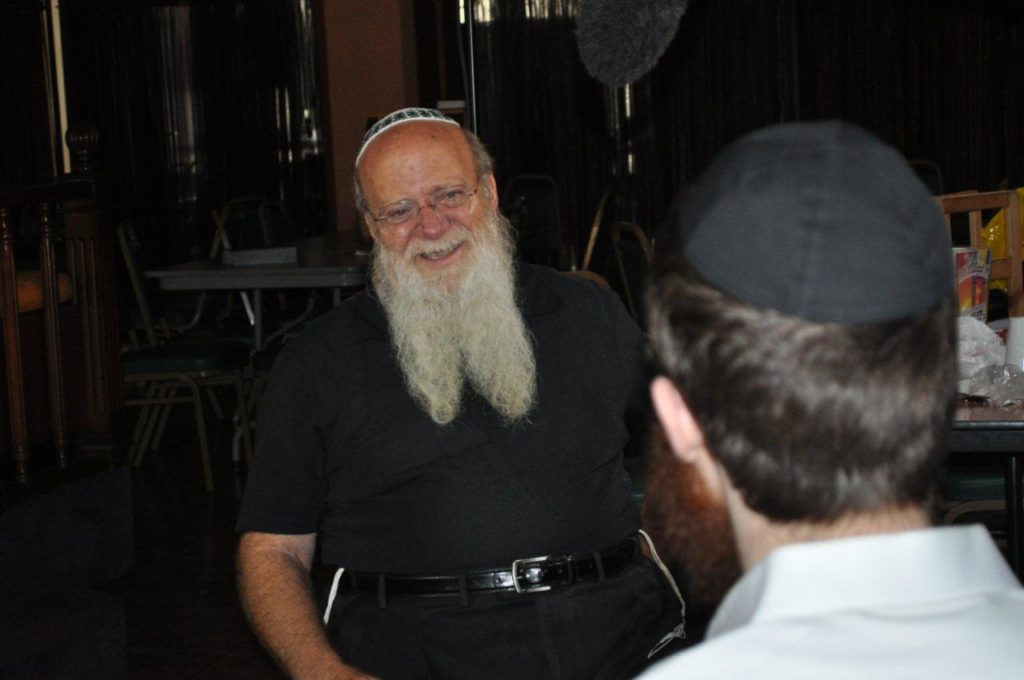
Rabbi Shlomo Schwartz, founder and director of the Chai Center, a Jewish nonprofit outreach organization in Los Angeles that engages Jews through weekly Shabbat dinners, free High Holy Day services and other events, died Feb. 8 of multiple myeloma (Kahler’s disease) at the age of 71.

Known as “Schwartzie,” the rabbi is survived by his wife, Olivia, 12 children and 50 grandchildren.

Born in 1945 in Atlantic City, N.J., his father had been a cantor in Vienna before fleeing in 1939. Schwartz attended public school in Atlantic City through fifth grade, followed by Talmudical Academy of Baltimore, where he was exposed to Chabad through the late Lubavitch Rabbi Yitzchok Springer. He had catching up to do in terms of his Jewish studies abilities, but soon excelled, Steve Bailey, a childhood friend and co-founder of Shalhevet High School, said in a phone interview. 

He attended college at Yeshiva University, spending his time on the weekends enjoying the folk music scene in Greenwich Village. So began a love with the hippie movement that would stay with him until the end of his days.

“That hippie-ness never left him, and that was a good thing … except it had an overlay of Chassidus and traditional Judaism. It wasn’t free-for-all and free love and that part,” Bailey said. “It was the part that was social and cared about other people.”

While at Yeshiva University, he met Rabbi Boruch Cunin, today the director of Chabad West Coast. The Chabad movement made an impression on Schwartz, and he dropped out of the university to attend the Chabad’s Rabbinical College of America. His relationship with Cunin led him to serving as a Chabad rabbi on the UCLA campus for 16 years.

Schwartz split with the Chabad movement in the late 1980s, but continued a practice, which he’d cultivated through Chabad, of finding Jews where they were, as opposed to waiting for Jews to come to him.

“Instead of having one center, one physical location, he ended up going to thousands of locations. He went into different synagogues, different venues, different homes. He took the idea of Chai Center and made it Judaism-to-go,” Jewish Journal President and longtime friend David Suissa said.

He regularly set up a booth on the Venice boardwalk and offered Jewish astrology readings to the skateboarders, workout enthusiasts and others who frequented the bohemian enclave. Through the Chai Center, he also held Friday night dinners in his house — the event was called Dinner for 60 Strangers — that drew singles and couples.

Bailey, who attended both Talmudical Academy of Baltimore and Yeshiva University with Schwartz, said his friend appealed to people of all backgrounds.

“People loved talking to him and listening to what he had to say. He was very stubborn and kept on people until they’d hear him out and hopefully reconnect with their Jewish identity,” Bailey said.

David Sacks, a television writer and producer (“The Simpsons,” “3rd Rock From the Sun”) and co-founder of the Happy Minyan, a Pico-Robertson Orthodox congregation, was among those attracted to Schwartz’s colorful style.

“He was often in rainbow suspenders with his long red beard and huge smile,” Sacks said. “He was someone who really embodied a joyous Judaism and an embrace of everyone, a genuine love for everyone, especially for, in his words, ‘every Jew that moves.’ ”

Even as his health began to fade and he was confined to a wheelchair, Schwartz continued to show up at Happy Minyan and express his love of life, music and Judaism, Sacks said. He recalled that Schwartz attended Happy Minyan on the last night of Chanukah, which was also New Year’s Eve, and stayed until 2 a.m.

“Till the end, he was going to concerts and plugging into the joy,” Sacks said.

Bailey, for his part, said Schwartz’s mission in life included the fight against intermarriage.

“He was very dedicated for Jews to marrying Jews,” Bailey said. “That’s what he wanted.”

Also among those in the entertainment industry touched by Schwartz was Thomas Barad, an independent film producer who praised Schwartz for his ability to speak the language of everyday people.

“Schwartzie loved all Jews. That was his thing, and he could put it in layman’s terms,” Barad said. “He spoke the language of the ’60s and ’70s. He was hip. He had the lingo, and yet he had a profound knowledge of Torah and he had an understanding of human nature that gave him an entry into people’s hearts very quickly.”

Schwartz was buried on Feb. 10 in Safed, Israel.

Rabbi Shlomo Schwartz, had colorful and unconventional approach to outreach in L.A., dies at 71 Read More »

Germany says trust in Israel ‘shaken’ by legalization of West Bank settlements on Palestinian land

Germany condemned a controversial new Israeli law that retroactively legalizes settler homes built on private Palestinian land.

Berlin said Wednesday that the “regulations law” undermines trust in Israel’s seriousness about reaching a compromise with the Palestinians.

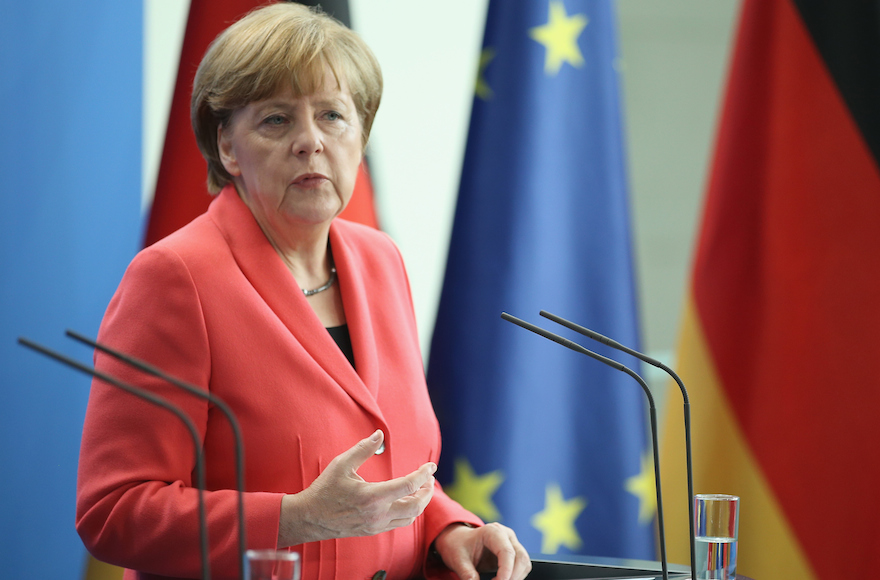
“Many in Germany who stand by Israel and feel great commitment toward it find themselves deeply disappointed by this move,” a German Foreign Ministry spokesman said in a statement. “Our trust in the Israeli government’s commitment to the two-state solution has been fundamentally shaken.”

The law, which the Knesset passed in a raucous late-night session Monday, allows the state to seize private Palestinian land on which settlements or outposts were built, as long as the settlers were not aware of the status of the land. In cases where the landowners are known, they are entitled to compensation.

Censure of the law has come from governments around the world, including the United Nations, the European Union, France, Britain, Turkey, Jordan and the Palestinians. The United States has refused to comment. White House spokesman Sean Spicer said Tuesday that it “will be obviously a topic of discussion” when President Donald Trump and Israeli Prime Minister Benjamin Netanyahu meet later this month.

Most of Israel’s political opposition and even members of the governing coalition oppose the legislation. Israeli Attorney General Avichai Mandelblit has said he would not defend it before the Supreme Court. It was the first time that an Israeli attorney general has made such a refusal, legal experts told JTA.

“In view of the many reservations which the Israeli attorney general, among others, has affirmed once more, it would be good if the bill could soon undergo a critical legal review,” the German statement said. “We hope and expect that the Israeli government will renew its commitment to a negotiated two-state solution and underpin this with practical steps.”

Justice Minister Ayelet Shaked, whose Jewish Home party was the law’s staunchest supporter, is meeting Wednesday with her German counterpart, Heiko Maas.

Germany says trust in Israel ‘shaken’ by legalization of West Bank settlements on Palestinian land Read More »