fbpx

February 8, 2017

The Becoming Jewish exchange, part 1: Is a global conversion phenomenon changing the Jewish people?

Dr. Netanel Fisher is a visiting scholar at the Kohelet Forum and at the  Israel’s Open University. Dr. Fisher holds a PhD from the Hebrew University in Jerusalem. He has served as  an adjunct scholar at the University of Pennsylvania and at Hebrew University and as an Associate Researcher at the Israel Democracy Institute.
This exchange focuses on Becoming Jewish, a new book edited by Dr. Fisher and Professor Tudor Parfitt (Cambridge Scholars Publishing). In the next installments we will also be speaking to Professor Parfitt.

***

Dear Dr. Fisher,

Let’s start with the opening paragraph of the introduction to the book:

Over the last fifty years or so we have witnessed the global phenomenon of a vast number of individuals and groups choosing to become part of the Jewish people, either through marriage, conversion or self-identification as Jews. In many cases this development is being played out through the creation of new religious movements of a Judaic or partially Judaic nature. This overall phenomenon constitutes a dramatic turning point in Jewish history, since traditionally non-Jews had little or no interest in joining the Jewish people. This new reality has many implications, as it is beginning to change the face of Jewish communities and at the same time sharpen the debate over the boundaries of the Jewish collectivity. However it is also creating new opportunities and possibilities both in terms of increasing and reinforcing the world’s Jewish population.

We have two introductory questions:

  1. Define “vast” – is this really a global movement?
  2. Define “join” – is marrying a Jewish person in the same category as conversion? You seem to imply that any connection with a Jewish person amounts to joining the Jewish people – is that what you think?

Yours,

Shmuel

***

Dear Shmuel,

I’ll start with the first question –

The phenomenon we describe in Becoming Jewish is indeed a vast global movement in both quantity and quality. Quantitatively, we are talking about hundreds of thousands, if not millions, of people. All across Asia and Africa, groups – such as Benei Menashe and Benei Ephraim, Ibo and the Lemba – see themselves as the descendants of the Ten Lost Tribes. In South America, Spain, Portugal and south Italy, thousands who carry Crypto-Jewish family traditions are seeking their way back to Judaism. In the US and other western countries there are members of interfaith families who adopt the Jewish lifestyle of their Jewish family members (and many others without Jewish background just choose to be Jewish). In post-communist countries, people of Jewish descent are returning to their Jewish roots, which were hidden since World War II; in Germany, hundreds have converted since the Holocaust. In Israel, the case I know the best, non-Jewish immigrants are joining Israeli society, mostly without going through formal conversion, and gradually becoming Israeli Jews. If we put all these cases together, it brings us to great, unprecedented numbers.

Qualitatively too, this is a vast movement. Beyond the numbers, all around the world people want to join the Jewish nation. They identify as Jews and adopt rituals and Jewish lifecycle practices and customs. Does this mean they are Jewish? Do these people see themselves as solely Jewish? That’s a different question I will address shortly. However, the phenomenon is qualitatively different from all other precedents in Jewish history. Throughout most of Jewish history, non-Jews had no interest in joining the Jewish people. Since the period of emancipation, when legal barriers started falling, the main trend was outward, as hundreds of thousands of Jews – a marginalized ethno-faith community – tried to assimilate in the non-Jewish majority groups of their different countries. In the recent past, there has been no other such trend of joining the Jewish people in terms of scope, intensity and dramatic implications on the Jewish people.

This is why we define the phenomenon as a vast global one. However, I’m sure it is also a very familiar phenomenon to your readers. In the current Jewish world, each one of us, regardless of were we live, know someone who fits this “new Jew” character. Someone who fully or partially sees himself as Jewish although traditionally he is not. So we are talking exactly about these people.

Your second question touches the heart of the classical issue of who is a Jew. In recent decades, this question has been discussed from many perspectives (rabbinical, juristic, philosophical, etc.). Our claim is that for many people the question is not as relevant as it was before.

Let me explain this in short: According to Jewish tradition, one who wants to join the Jewish people must go through a formal rite of passage, namely conversion (and for the purpose of our discussion it doesn’t matter which type of conversion). This is exactly what’s changing as many individuals join the Jewish people without any formal action. For them, our discussion is irrelevant. Let’s take congresswoman Gabrielle Giffords as an example. She is affiliated with a Reform synagogue, identified herself solely with Judaism, although (only) her father is Jewish. It is true that the Reform movement declared a new definition (in the 80s) according to which a person is also Jewish if his or her father Jewish. However, this decision indicated the new trend: people don’t need to follow the traditional ways of joining. New ways are coming into existence in theory and in practice.

Moreover: those who join the Jewish people no longer wait for rabbis or other Jewish leaders or movements (including the liberal ones) to decide whether they are Jews or not. Our discussion doesn’t mean too much for them. They join the Jewish people and declare themselves as Jews without asking any “gatekeepers” for permission. They have decided that they are Jewish, period. We need to carefully pay attention to this new reality: joining the Jewish people has become a vague and fluid action. This phenomenon marks a new step in Jewish history, as individuals independently declare themselves as Jews in one way or another and thus join the extended Jewish family.

Is the phenomenon described in Becoming Jewish creating a modern way of joining the Jewish people? Probably. Will it turn out to be an improvement upon the tradition?  It doesn’t seem so, but who knows? Does it mean a new type of Judaism or syncretism? I hope not. However, we need to seriously think about it and put our collective attention towards it. We are, no doubt, in the midst of a new stage in Jewish history.

Yours,

Netanel Fisher
The Becoming Jewish exchange, part 1: Is a global conversion phenomenon changing the Jewish people? Read More »

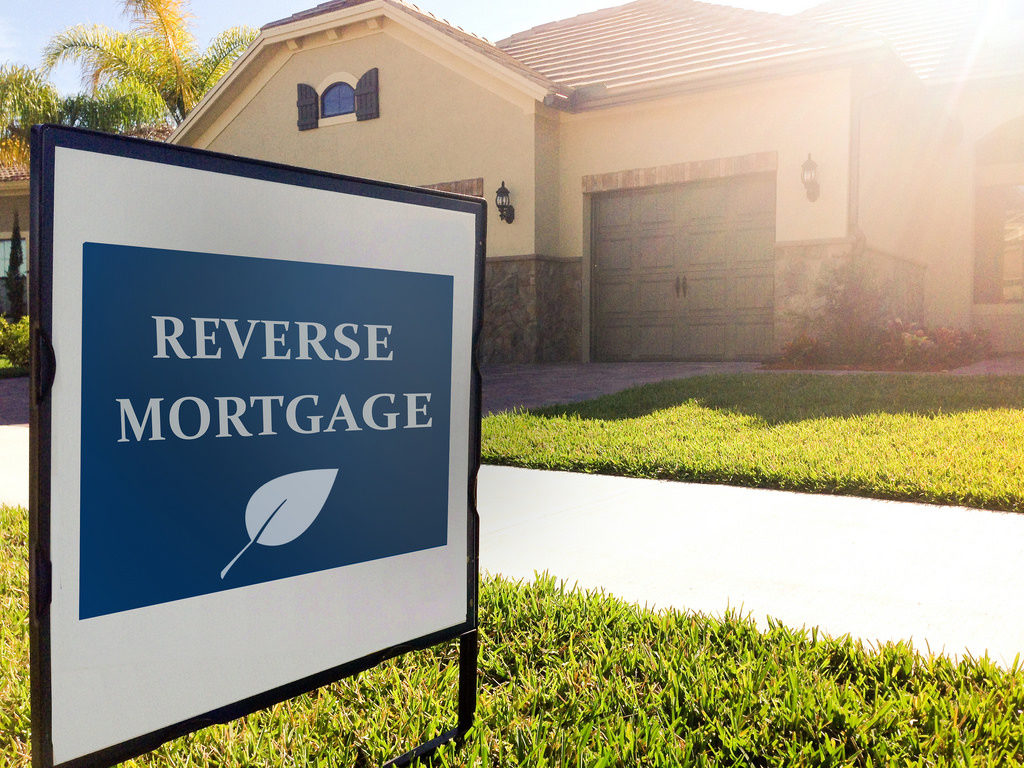
What You Need to Know About Reverse Mortgages

Homeowners have often heard about reverse mortgages as access to loan money to help them get through rough spots in their lives. However, it is vital to really understand not only what a reverse mortgage is but how to work with one and what options are available to you. Before you jump on the reverse mortgage bandwagon, read on to learn more.

What is a Reverse Mortgage?

A reverse mortgage is a loan that uses part of the equity you have in your home. It is available to homeowners aged 62 or older. It’s considered a reverse mortgage because rather than making a payment to your lender, your lender makes a monthly payment to you. And it is limited to a portion of the equity you have in your home, you cannot borrow more than that. The loan is paid back once you sell the home (and is paid by the proceeds of your sale) or if you vacate the home. Although you do receive payments from the lender during your occupation of your home, it is very important to note that you must pay back the loan.

What are My Options?

As with any other kind of loan, there are different types of reverse mortgage loans.

  • Home Equity Conversion Mortgage (HECM) – a reverse mortgage that is regulated by US Department of Housing and Urban Development. It is important to note that HECM is not a government loan but it is insured by the Federal Housing Administration.
  • Proprietary Reverse Mortgage – privately insured by mortgage companies. Many of these same mortgages are regulated like HECM’s, such as requiring mandatory counseling. These are often offered on higher value homes.  With a max of $636,150 for the loan, if you have a multi-million dollar home, you could have a higher loan available to you.

Rates on reverse mortgages vary for both types of loans and often depending on who you get the loan through. It’s best to consult your mortgage lender on what they offer in terms of rates and fees.  It is also important to note that at times, the maximum loan amounts increase. Watch those amounts closely and you could maximize your benefit.

What is Required of Me?

As with any loan, there are requirements for the borrower(s) to fulfill.

  • Age Requirement – all borrowers on the title must be 62 years of age. If a spouse is under 62 it is possible to still acquire a reverse mortgage. Your lender will be able to determine if you qualify.
  • Primary Lien – the reverse mortgage must be the only lien on the home. If you have a mortgage out on the home, the reverse mortgage must first pay it off. Anything left over after that is yours to use at your discretion.
  • Occupancy – the reverse mortgage can only be taken out on the primary home. Vacation homes and investment properties are not eligible. If you are unable to live in the home 12 months out of the year (ie: extended work leave or an illness), let your lender know!
  • Property Condition – homeowners must maintain the property and complete any mandatory repairs on the property.
  • Taxes & Insurance – borrowers must stay current on all property taxes, insurance, and any mandatory fees (such as condominium fees or homeowner’s association fees).

It is possible that there will be other requirements by your mortgage lender. Be sure to ask your lender what they require.

Why Get a Reverse Mortgage?

Of course, one does wonder why exactly would you want a reverse mortgage? Many older folks find success in being able to get the reverse mortgage, sell their home, and then purchase a new home. When they finish closing on the new home they don’t have any mortgage payments to make as everything is settled through the proceeds of the sale. This tends to be successful when the couple is downgrading from a larger, more expensive home to a smaller, less expensive home.

Another option is to afford major renovations to the home that can increase the value of their home. At some point, the home will be sold and you want your home to be worth as much as possible. Using the reverse mortgage is a huge benefit for many people.

Lastly, some older homeowners use the reverse mortgage to increase their investments for their impending retirement. There are many ways to invest for retirement, a reverse mortgage is just one option to consider when bulking up.

It’s important to remember that reverse mortgage is another loan. You will need to check your credit before you apply to make sure you are going to get the best rate possible. While you will not repay it back right away, you will repay it at some point. So be sure that you have clear intentions on how you are using your loan and that your plan includes how to pay it back. If you’re careful, a reverse mortgage can be a big benefit to you!

What You Need to Know About Reverse Mortgages Read More »

An Uncensored Voice

I was a guest in the province
of notes. Carrying my fiddle and bow
I walked down the avenue of heavy oaks.
It was the morning the children left home
for good. I passed soldiers and hostages,
and came to a broad, whitewashed building
set on a gracious southern lawn.
An obsolete palace, home for lepers.
I listened to the nothing I’d been
and the nothing I’d done.
I heard the scratching of leaves and birds,
small sisterly voices moved by wind.
My unconscious life was floating back to me,
I was made to understand: it was god with a large G.
All I had to do was be still.


Judith Skillman’s new book is “Kafka’s Shadow,” Deerbrook Editions (2107).
Visit www.judithskillman.com.

An Uncensored Voice Read More »

Friday is National No One Eats Alone Day

I was going to write about something else entirely this week, but I was reminded that Friday is National No One Eats Alone Day, and, frankly, we’ve had enough bad news lately, so it seems to me some positive news is in order.

National No One Eats Alone Day is a project of “Beyond Differences,” an amazing organization which, according to its website, “empowers students to end social isolation in middle school through online and campus programs.”

The organization, and the concept of No One Eats Alone Day, started in Marin County, and has been spreading throughout the country. Now, as an introvert, sometimes I like to eat lunch alone. But this day isn’t about that. It’s about actively addressing the social isolation that can happen to people at any age, but this organization specifically focuses on middle school, which is a particularly vulnerable time for many people.

The idea of No One Eats Alone Day is pretty simple. First, it breaks up cliques by encouraging students to eat lunch with someone they don’t know. Second, it asks them to seek out those who may feel isolated, and eat with them.

Of course, I’d love to see people of all ages do both these things all the time. But one day is a good way to start. And lunch is a great time to start, as well.

I remember when I was a kid, I used to go to summer camp. I would show up and get checked in, and then many of us weren’t really sure what to do with ourselves, and would spend the time looking around awkwardly. Then dinner time would come. Suddenly, we were all together at a long table, talking and eating. There is simple something about breaking bread together that goes a long way in breaking down those barriers.

So, I love the idea of No One Eats Alone Day. Who knows, once these students have one lunch with someone they may not otherwise have spoken with, they may decide to do it again, and new friendships might develop. Maybe they will start to see the value in caring about the isolated people among them on a more regular basis.

Beyond Differences was inspired by the experience of a child named Lili Rachel Smith, may her memory be a blessing, who was a member of the synagogue I attend, and who knew what it was like to suffer from social isolation. The organization is run by students, and, according to its website, they are the only organization that focuses on this issue.

So, whether you are in middle school or not, I hope you will take some time on Friday to look for people around you who may be socially isolated, and make an effort to bring them into your circle. And maybe, over time, you can make looking out for these folks part of your daily routine.

—————-
“Like” the Religious and Reform Facebook page to see additional photos and behind-the-scenes comments, and follow me on Twitter.

Friday is National No One Eats Alone Day Read More »

Chaim Ferster, survivor of 8 Nazi concentration camps, dies at 94

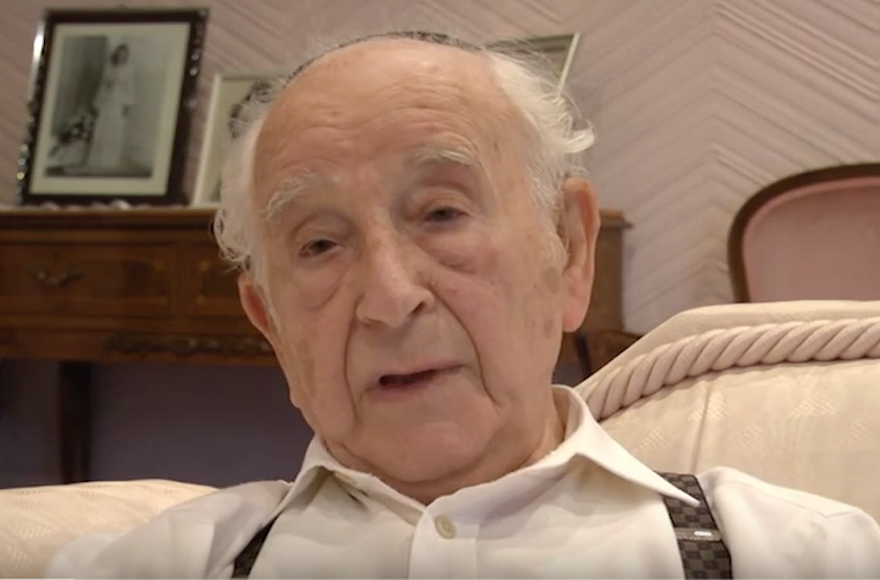
Chaim Ferster, a Polish-Jewish Holocaust survivor who spent time in eight concentration camps, has died.

Ferster died Monday in Manchester, England, from pneumonia and a kidney infection, surrounded by his three sons and other family members, the BBC reported. He was 94.

He was born in Sosnowiec, Poland, in an Orthodox Jewish family. In 1943, the Nazis forced him to leave his home, and he spent time in concentration camps in Germany and Poland, including Auschwitz and Buchenwald.

Ferster, his sister Manya and a cousin were the only members of their family to survive the Holocaust. Manya is now 92.

After World War II, Ferster moved to England, where he found work repairing sewing machines. He later set up “a series of successful businesses,” according to the BBC.

Ferster lectured about the Holocaust in schools and colleges.

“His greatest fear was that people would forget the horrors of the Holocaust,” his son Stuart told the BBC.

On Monday, the Greater Manchester Police shared a video of Ferster playing the Israeli national anthem, “Hatikvah,” on the violin during a Jan. 27 visit to its headquarters on International Holocaust Remembrance Day.

On Monday, the Greater Manchester Police shared a video of Ferster playing the Israeli national anthem, “Hatikvah,” on the violin during a Jan. 27 visit to its headquarters on International Holocaust Remembrance Day.

Chaim Ferster, survivor of 8 Nazi concentration camps, dies at 94 Read More »