“Dancing With the Stars” producer Deena Katz had no idea what she was getting herself into when she reached out to Women’s March organizers one week after the presidential inauguration.
She’d heard about the upcoming rally in Washington, D.C., and wanted to organize a sister march in Los Angeles. But she never could have anticipated the response: 750,000 participants took to the streets by organizers’ estimates (the Los Angeles Police Department left it at “well past 100,000”). Globally, more than 3 million people took to the streets.
To Katz, who attends Kehillat Israel in Pacific Palisades, the march was an important way to react to Donald Trump’s electoral victory.
“I could either curl up in a ball and cry or try and do something proactive,” she told the Journal, days before the march.
Katz said she had considered buying tickets to fly out to the nation’s capital for the march there, but then had a different thought: “Gosh, if they’re doing it in D.C., maybe we should do it here.” After that, as she told the Journal, there was no turning back.
JEWISH JOURNAL: Have you ever organized anything like this before?
DEENA KATZ: No, I’m a television producer, so this is out of my world. Part of [organizing a march] does feel like you’re producing a really big TV show. [Emiliana Guereca], my co-chair, actually is a producer for live events, so she knew how to deal with permits. Other marches were having more difficulty with that, but that’s what Emmy does. So I’m thrilled we were working together on this.
JJ: Why did you get involved?
DK: Instead of spending the money to fly my sisters, my nieces and my daughter all out to D.C., I think the [American Civil Liberties Union] and Planned Parenthood need that money more right now. And it’s more empowering for it to be in another city to show solidarity. So we thought, even if 5,000 people come, that’ll be pretty amazing.
I reached out to the women that were running the D.C. march and it happened that the woman who’s my co-chair also did the same thing at the same time. We had never met each other and it started, honestly, as the most grass-roots thing. We got everyone involved to volunteer and it’s grown. I’m so proud.
JJ: What has this whole experience been like for you?
It’s been the best experience. The scariest experience. It is the most empowering experience.
DK: It’s been the best experience. The scariest experience. It is the most empowering experience. As fantastic as it is here in Los Angeles, we’re all pretty like-minded here. We get on these calls with the sister marches — because there’s a couple hundred of them around the country now — and to hear the women in Texas and Arizona and parts of North Carolina, where it’s not as easy to be, as it is here, to resist — and talk about empowering, these women are trying to get a couple hundred people in their town to attend, having their kids in school draw posters for it. This is much more difficult for them than it is for us. We’re easily going to have over a million people around the country march on the same day.
JJ: Why march? In your opinion, what’s in jeopardy?
DK: I think human rights are in jeopardy. I think women’s rights. I think reproductive rights. I think immigration rights. I think LGBTQ rights. Environmental rights. Religious rights. You can go on and on and on, sadly. To me, there are so many human rights in jeopardy. More people need to register, get out and vote. Without people voting, we’re not going to make a change. I have a 16-year-old daughter and unfortunately, what we fought for, for so long, I think people are going to have to fight for again.
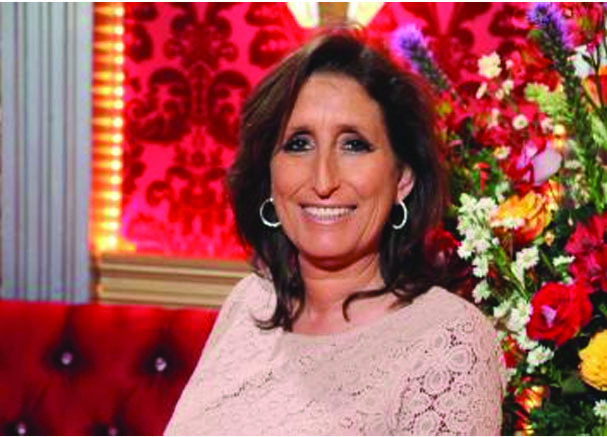
Deena Katz
JJ: Describe the shift you’ve witnessed in people, before and after the election?
DK: With my daughter in particular, she didn’t think she had to speak out. She took things a little bit for granted and I think now she’s realizing the power of her voice, the power of her millennial voice. If something comes out of this, it’s the power in people that didn’t necessarily pay attention, didn’t think they had to. So hopefully people will realize that you do have a voice and for me doing this, it energizes me. I’m looking forward to the end of January, I’m looking forward to March, I’m looking forward to June.
Planning a visit to a museum always is a major challenge to the ambitious art lover. How many works of art can we hope to see? What should we see first? What can be safely saved for last? And what can be omitted without regret if time and energy run out?
Karl Katz is someone who considered all of these questions from an insider’s point of view. A seasoned planner, designer, curator and director of museums, he helped to create the Israel Museum and was the long-serving chairman of special projects at the Metropolitan Museum of Art in Manhattan. His goal in “The Exhibitionist: Living Museums, Loving Museums” (The Overlook Press) is to reminisce about his own colorful career and, at the same time, to offer “a narrative field guide on how to make museums come alive.”
Like every museum professional, he has come to know the rich and powerful, ranging from Jackie Kennedy Onassis to the mayor of Jerusalem. But he is unimpressed by celebrity. “[A]n architect like Frank Gehry can make a museum a landmark before a single piece of art is installed,” he writes. “But few books pay attention to the people who make museums: the directors, curators, designers and educators who shape each collection of objects and ideas into an institution.”
Raised in Brooklyn, educated at Columbia and deeply inspired by a visit to Israel in 1950, his first opportunity in the museum world was an invitation to participate in a show called “From the Land of the Bible” at the Metropolitan — “an exhibit we called by its unfortunate acronym, FLOB.” He felt a little lonely there: “When I arrived in 1953, I felt like the only Jew in the building — there certainly weren’t matzoh in the dining halls on Passover.”
Then he joined an archaeological expedition in Israel, where he quickly realized the Hebrew he had learned in the yeshiva was not the same as the lingua franca of the Jewish homeland: “[M]y language was speckled with the Hebrew equivalent to old English’s thees and thous.” But it was in the Middle East that he acquired firsthand expertise in the acquisition of museum-quality antiquities, not only in Israel but also in Egypt, Turkey and Iran.
Thus began his museum career. He was recruited as the director the Bezalel National Museum, which had been Israel’s first museum, and then he was approached by Teddy Kollek, the future mayor of Jerusalem, to join the planners of what would become the Israel Museum in Jerusalem. The challenges went far beyond the ordinary concerns of collectors and curators of art — for example, the preferred site for the new museum presented strategic concerns. Yigael Yadin, a famous general who was just as well known for his accomplishments as an archaeologist, “was afraid that artillery from Bethlehem would find a sprawling hilltop complex an easy target.” Katz recalls the planning committee “finally convinced him that if the Arabs were going to shell anything, they would shell everything, and he gracefully backed down.”
Katz was lured back to New York after the opening of the Israel Museum when he was invited to accept the directorship of the Jewish Museum on Fifth Avenue. One of his mentors, rabbi and archaeologist Nelson Glueck, advised him to take the job: “Karl, you’re a showman, an exhibitionist.” Even so, Katz ran into opposition from the conservative members of the board of trustees when he proposed a show about the 1968 protests in Paris and Prague, and an even more heated response to an exhibit on Purim that placed the holiday in its historically accurate Persian setting: “To them Persia meant Islamic, and ours was a Jewish museum.” When he first proposed to open the museum without charging admission on Saturdays, as was done at the Israel Museum, “I hit a solid wall of no,” although the board later relented.
The breaking point came when the board of the Jewish Museum, which was unhappy with Katz’s interest in contemporary art and social controversies, resolved to return to presenting only exhibits with strictly Jewish content, a restriction that forced Katz to resign. Ironically, he returned to the museum where his career had started — the Metropolitan, whose director, Thomas Hoving, had taken notice of “all these fabulous shows at the Jewish Museum.” Once again, Katz was ranging around the world in search of art treasures, an effort that brought rare loans from China and the Soviet Union to New York City.
Yet it was a much sought after loan of the Book of Kells from Ireland in the 1970s that presented the biggest obstacle. According to a belief that was shared by the Irish archbishop whose blessing he needed to borrow the Book of Kells, no male children would be born if the medieval manuscript was no longer on Irish soil. “Actually, your eminence, when the Book of Kells went to England in 1953 to be rebound, plenty of Irish boys were born,” Katz boldly replied. The archbishop was persuaded and the exhibit at the Met was so successful that it toured across the United States. The goal of the exhibit planners, in the words of Irish professor G. Frank Mitchell, had been achieved: “We hope to implant in the American mind the idea that Ireland can create more than bombs and bullets.”
The Met and the Israel Museum may be the jewels of his curriculum vitae, but even more remarkable are the reach and diversity of his long career, all vividly and charmingly revealed in the pages of “The Exhibitionist.” Katz played a role in the design of the Museum of Tolerance in Los Angeles, for example, as well as the P.T. Barnum museum in Bridgeport, Conn. — a fitting assignment for a man who embraced and embodied the role of the showman.
In his first statement about the Holocaust as president, Donald Trump vowed to make “love and tolerance prevalent throughout the world” and made no mention of Jews.
“It is with a heavy heart and somber mind that we remember and honor the victims, survivors, heroes of the Holocaust,” Trump said in a statement on Friday, International Holocaust Remembrance Day. “It is impossible to fully fathom the depravity and horror inflicted on innocent people by Nazi terror.”
But, he added, “We know that in the darkest hours of humanity, light shines the brightest. As we remember those who died, we are deeply grateful to those who risked their lives to save the innocent.”
In the name of the perished, Trump wrote, “I pledge to do everything in my power throughout my Presidency, and my life, to ensure that the forces of evil never again defeat the powers of good.”
Trump’s omission of Jews follows the commemorative last year by Canadian Prime Minister Justin Trudeau, who came in for criticism by Jewish groups, including the Zionist Organization of America, for delivering a statement on International Holocaust Remembrance Day that similarly failed to mention Jews.
Jonathan Greenblatt, CEO of the Anti-Defamation League, lamented the omission in Trump’s statement, tweeting, “Puzzling and troubling @WhiteHouse#HolocaustMemorialDay stmt has no mention of Jews. GOP and Dem. presidents have done so in the past.”
Trump was among several world leaders who devoted statements in memory of Holocaust victims on International Holocaust Remembrance Day, which in 2005 the United Nations set for Jan. 27 — the day in 1945 that the Red Army liberated the former Nazi death camp Auschwitz-Birkenau in Poland. More than 1 million Jews out of the 6 million murdered in the Holocaust were killed there.
“Tragically, and contrary to our resolve, anti-Semitism continues to thrive,” U.N. Secretary-General Antonio Guterres said in a statement made Thursday in New York that was read out the following day at U.N. headquarters in Geneva. “We are also seeing a deeply troubling rise in extremism, xenophobia, racism and anti-Muslim hatred. Irrationality and intolerance are back.”
In Germany, outgoing Foreign Minister Frank-Walter Steinmeier, who is to become president this year, noted during a speech the political instability in the world today.
“History should be a lesson, warning and incentive all at the same time,” he said. “There can and should be no end to remembrance.”
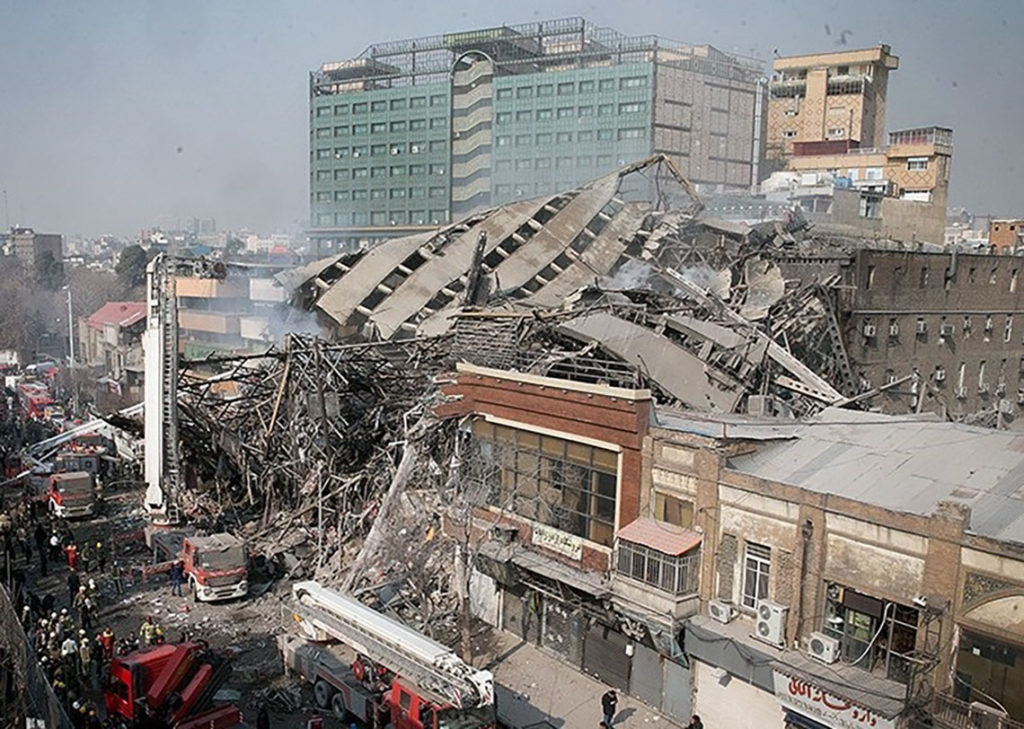
For many Iranian-American Jews, the fire in and collapse of the historic Plasco Building in Tehran on Jan. 19 was a tragedy many times over.
The heartbreak comes not only from the loss of 75 innocent lives who tried to fight the fire or were trapped in the building; the building’s demise also rekindled the painful memories of the unjust execution of Habib Elghanian, the Jewish community leader who originally built the structure. The Plasco Building was one of the remaining symbols of the Jewish community’s height of success in Iran during its modern “golden age.” Not to acknowledge the Elghanian family’s role in this building’s creation and the tragedy that befell Habib Elghanian at the hands of the Iranian regime is also a travesty.
Media outlets worldwide have not extensively acknowledged the important role of the Elghanian family in the Plasco Building’s creation or only briefly mentioned Habib Elghanian’s name in passing. Elghanian and his brothers were among the most affluent and successful Jewish businessmen in Iran before the 1979 Iranian Revolution. They not only imported an array of goods from the West into the Iranian market and expanded infrastructure but also brought new technologies to Iran that helped the country manufacture its own goods and, as a result, helped employ thousands of Iranians in their businesses. The Elghanian family was equally generous in giving back to countless needy causes in Iran, Jewish and non-Jewish.
The Plasco Building, completed in 1962 and standing 17 stories, was the first privately built “high rise” of the modern era created in Iran. It was also the first modern “mall” of that early era in Iran, with floors that were home to many new stores for various goods and services. The Plasco Building was elegant and modern in design and structure for its time, and a huge departure from the ancient slum-like “bazaars” of Iran’s past where people typically went to buy their goods. At a time when Iran was beginning to modernize, the building was a powerful symbol of both the country’s positive transformation and the immense achievement of Iranian Jews.
It was likewise a symbol of great pride for Iranian Jews who, just four decades before, had been forced by the Qajar kings of Iran to live in poverty and in run-down ghettos.
“Jews were proud, of course, that a Jewish person had built this iconic building, but many elders in the community were apprehensive about its implications and the much expected backlash by Muslims, envious of Jewish accomplishments,” Frank Nikbakht, an Iranian-Jewish activist living in Los Angeles, told me this week.
Jewish community leaders in Iran worried about the Plasco Building’s backlash because, according to Shahrzad Elghanayan, Habib Elghanian’s granddaughter, Iranian Shiite cleric Mahmoud Taleghani “objected to the idea that a Jew had built the tallest building of its time in Iran.” No doubt Taleghani, Ayatollah Ruhollah Khomeini and other Shiite clerics were furious at the Pahlavi kings, who had created an environment of co-existence and tolerance among Muslims and non-Muslims in Iran. The late Shah of Iran and his father had essentially set aside the old Islamic Shariah laws, which were designed to impose or ensure superiority of Muslims over Jews or other “infidels.” The Plasco Building, built and owned by a Jew, was a direct slap in the face to that radical Islamic dogma at the time because the notion of a Jewish building being taller in size than Muslim-owned buildings was a totally unacceptable notion for the fanatic Iranian religious clerics.
When Elghanian was executed, the news spread like wildfire among Iran’s 80,000-strong Jewish community and sparked the first massive wave of Jews fleeing the country.
Those fears turned out to be prescient. On May 9, 1979, Elghanian was executed by a firing squad of the Iranian Revolutionary Guard after being accused on trumped-up charges of spying for Israel and the United States. Elghanian first was given a 20-minute sham trial in front of the Iranian Revolution Court and TV cameras, but never was allowed to consult with an attorney, nor any chance to defend himself from the baseless charges. When Elghanian was executed, the news spread like wildfire among Iran’s 80,000-strong Jewish community and sparked the first massive wave of Jews fleeing the country. On that disastrous day, the lives of Iran’s Jews were forever transformed for the worse. It was then that they realized when their beloved community leader could be so easily executed with no real evidence, they too were no longer safe in a country where they had lived for nearly 3,000 years.
In 2009, on the 30th anniversary of his execution, I had the unique opportunity to interview Elghanian family members, Iranian-Jewish leaders and Iranian Muslims who knew Habib Elghanian well and who recalled their memories of his imprisonment and execution. One of the most revealing interviews I had was with SionElghanian, Habib Elghanian’s brother, who told me that Habib had left Iran during the initial chaos of the revolution but then returned to Iran because of his patriotism and commitment to Iran’s Jews as their leader.
“We all begged him not to go back to Iran — including Israeli Prime Minister Begin, because we all knew the new regime would execute him if he returned,” Sion Elghanian said. “He said, ‘I have done nothing wrong for them to execute me. I’ve created jobs and businesses to help the country grow and helped many Iranians of all faiths. Why should they kill me?’ ”
Sion revealed his family had made plans to bribe officials to help Habib escape the prison and country, but Habib refused to go along with the plans.
“He told us he would not go along with the plan to escape because if he did, the Iranian regime would take revenge by executing Jews in Iran. In this way, he sacrificed his life for the community.”
Another revealing interview was of an Iranian-Muslim businessman named Nasser Oliae, who was a longtime Elghanian friend and had nothing but praise for him. “One day they must create a giant statue of Habib Elghanian in the middle of Tehran for all of the great things he did for that country! He brought the plastics manufacturing industry to Iran, he hired thousands of people, he gave generously to thousands of Iranians of all religions who were needy. He was a man who truly loved Iran and wanted to see the country’s success,” Oliae said.
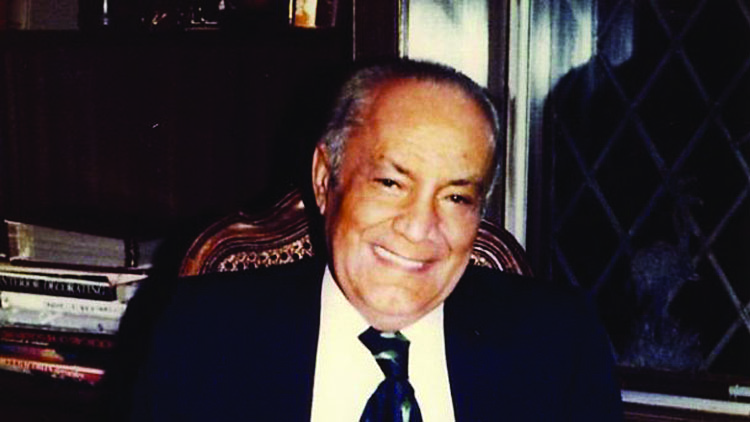
Habib Elghanian
Habib Elghanian was an innocent Jew who was executed for no reason by the evil Iranian regime, and that regime still has not apologized to Iranian Jewry for this injustice.
Elghanian family members sold the building in 1975 to Hojabr Yazdani, an affluent Iranian-Baha’i businessman. After the revolution, the Iranian regime’s official “nonprofit” organization, called Bonyad-e Mostaz-afaan, confiscated the Plasco Building from Yazdani in 1979, and has been operating it since then. Bonyad-e Mostaz-afaan, which translates to “organization for the oppressed people,” was a front established by the Iranian regime’s ayatollahs after the 1979 Revolution to expropriate the assets of any person who they believed was an “infidel” in order to allegedly “redistribute” it to the poor or needy in Iran. Unfortunately for Iran’s poor, the Bonyad-e Mostaz-afaan has in the past 38 years never given a penny to them. Instead, the money and assets this group has confiscated over the years from Jews, Muslims, Christians and Baha’is have all gone into the pockets of the ruling Iranian ayatollahs. All of the Elghanian family assets and properties were also confiscated by the Bonyad-e Mostaz-afaan.
What is truly unfortunate about the recent Plasco Building fire was the fact that, since it was owned by the Iranian regime, no one will be brought to justice for the failure to upkeep the building and prevent the fire hazards that brought it down. We will never know what caused the fire or explosion that destroyed this iconic building in Tehran, and sadly, the ayatollahs who profited from the building for the past 38 years will never be held accountable for the fire code violations that resulted in the loss of so many innocent lives.
In the end, the Plasco Building fire disaster not only caused the death of many individuals but the loss of one of the remaining symbols of Jewish contributions to Iran during the 20th century. The building was also a symbol of the bygone era of modernity and new development that an Iranian Jew named Habib Elghanian and his brothers brought to Iran. Today, we cannot forget the calamity that befell Habib Elghanian at the hands of the current Iranian regime, nor can we forget the tremendous contributions thousands of Iranian Jews made to the betterment of the nation of Iran during the 20th century.
Can traditional Jewish law sanction journalism? Can journalism be practiced by people who look to halachah as their guide for daily living?
At first, these seem like absurd questions. The profession of journalism is entirely about the public sharing of information — the good, the bad and the ugly. Halachah (Jewish law), on the other hand, demands that we be extremely circumspect about sharing information about others, even positive information.
Halachah contains broad prohibitions against being a talebearer. “Do not go about as a talebearer among your people,” reads the verse in Leviticus. Furthermore, Jewish law forbids lashon harah — literally, evil speech, or speaking badly of others. That alone would seem to severely limit the range of what a contemporary journalist could write.
So the question as to whether journalism — in particular investigative journalism within the Jewish community — can be practiced within the bounds of halachah seems almost nonsensical. On the face of it, the answer is: Of course not.
Yet journalism thrives in almost all Jewish communities, including, of course, this one. And how would one tell talented Jewish journalists that their passion for journalism and their passion for Judaism were simply incompatible? That would not only cast aspersions upon all of the Jewish journalists in the field, but it would present halachah as a system of thought and law that has nothing to say about one of the central institutions in our lives, one of the pillars of democratic, free society.
Yet the task of meshing journalism and Jewish law is anything but simple.
Consider the Lanner case. In 2000, The New York Jewish Week published a series of landmark reports on the abuse of Jewish students by their headmaster, Rabbi Baruch Lanner. Had journalists abided by what was then regarded as the correct interpretation of Jewish law, the reporters and editors would have been obligated to keep the information and the lurid details out of the public eye for as long as possible, instead sharing it only with those individuals who exerted direct influence over Lanner. But many of those individuals, we later learned, were unwilling or unable to stop his abuse. The decision of The New York Jewish Week to publish the story, and to reject the halachic interpretation that regarded public exposure as a last resort to be exercised only when all else has failed, not only stopped the abuse, it single-handedly placed the issue of sexual abuse in school and youth group settings squarely into the communal conversation, leading to far-reaching systemic change in how the community thinks and acts.
The task of meshing journalism and Jewish law is anything but simple.
“Theoretically, one should not want to try people in the newspaper,” said Rabbi Yosef Blau, who sat on the special commission that investigated the Lanner case. “But in a practical sense, in the present time, the newspapers have proven to be a very effective tool … in forcing the community to confront the issues, rather than to stay in denial.”
Unfortunately, events over the past decade have demonstrated the unimpeachable truth of Blau’s words time and time again. Over the past 30 years, the Jewish Journal has published numerous stories that exposed the untoward acts of rabbis, leaders and institutions — stories that caused shame and grief at the time, but which, like the Lanner story, resulted in positive change, or at least greater awareness.
But it is clearly insufficient to tell Jewish journalists that, like Pinchas of old, their work requires them to violate halachic norms in the moment, and to then hope that the significance of their reporting ultimately secures them a pardon. And, in truth, none of us should accept the conclusion that halachah has no means of prescriptively affirming the value of a profession that we intuitively understand to be vital to maintaining the ethical fortitude of our community.
More recently, scholars such as Rabbi Aryeh Klapper, the dean of the Center for Modern Torah Leadership, have been endeavoring to articulate a more workable and cogent way to speak about the relationship between halachah and journalism. Klapper demonstrates that halachah maintains different expectations for individuals on the one hand, and public systems that support the communal welfare on the other. Individuals are expected to make a precise cost-benefit analysis in every single instance in which their actions will cause harm to another person, and are typically required to err on the side of inaction. But systems or institutions that the community counts on to preserve the common good are granted more leeway. They are required to have and to enforce a code of ethics anchored in halachic imperatives and values, but the individuals working within that system are free — indeed are required — to pursue the communal interest as their highest priority.
Klapper includes responsible, ethical journalism as falling solidly within the category of systems that the community needs and desires, so that the community’s interests are served. As long as the journalistic organ has a proper code of ethics, its writers and reporters can and must do their work. Klapper’s conceptual breakthrough is premised on the idea that while journalism may not have existed when classical halachah was formulated, this does not at all mean that it cannot be understood and appreciated in halachic categories, and practiced by people who are Jewish journalists in the finest sense of both words.
None of this is to say that there aren’t legitimate dilemmas and potential pitfalls aplenty. The temptation to abuse the power of the pen is ever-present and no less irresistible than any other pleasurable vice. And this is precisely why it is so important that we have meaningful and workable halachic frameworks for journalism, and never create the impression that the twain shall never meet.
Rabbi Yosef Kanefsky is senior rabbi at B’nai David Judea, an Orthodox congregation in Los Angeles. He contributes to the blog Morethodoxy at jewishjournal.com.
In the Jewish Journal’s inaugural issue on Feb. 28, 1986, readers already could see it was not going to be their parents’ kind of Jewish newspaper. The Journal was different from its predecessor owned by the Jewish Federation, as well as the Orthodox-leaning B’nai B’rith Messenger and the crusading Jewish Heritage.
The new weekly, edited by Gene Lichtenstein, sent a message with its first cover story dedicated to anti-school busing and conservative Congresswoman Bobbi Fiedler, a former Los Angeles Unified School District board member. It was going to step outside the well-worn path of covering the status quo of Westside and Beverly Hills liberal politics, and broaden coverage to include a Jewish grassroots, right-leaning firebrand.
In the three decades since that edition, this broader approach — including news, features, opinions and eventually blogs from all points of L.A.’s Jewish communal compass — has been the newspaper’s guiding rule. Turning through old, bound volumes, with pages browned and edges foxed, the paper’s coverage presents a portrait of 30 years of change, growth and evolution within the local Jewish community. Here are 30 noteworthy topics and events that touched L.A. over the past 30 years, as reflected in the Journal’s pages.
1. Embracing LGBT Jews
Although a cover in 1986 announced the continuing conflict within Judaism over gay Jews, by 1998 a news feature detailed increased acceptance — and plans for the celebration of more than 25 years of the world’s first LGBT synagogue, Beth Chayim Chadashim. Getting over the shandah, the embarrassment, denominational Judaism began a serious conversation over transgender acceptance and rights, as reflected in another stirring cover story, this time in 2015.
2. King Juan Carlos Comes to L.A.
Almost half a millennium after the Jews were expelled from Spain in 1492, Spanish King Juan Carlos and Queen Sophia visited Sephardic Temple Tifereth Israel on Wilshire Boulevard to make peace on Oct. 1, 1987. “For the Sephardic Jews of Los Angeles, the gesture is one of historical dimension,” Rabbi Shelton J. Donnell wrote. The Journal went on to chart the growth of a large and vital Sephardic community in L.A.
3. Intermarriage: To Worry or Not to Worry?
Concerns about intermarriage go back all the way to the Torah. But when the 1997 L.A. Jewish Community Survey found the intermarriage rate among couples who were married in the five years ending in 1997 was 41 percent, well, it didn’t seem so bad to some people. That changed for many when the Pew Research Center reported in 2013 a rate of 58 percent nationwide — and 71 percent among non-Orthodox Jews.
4. The Rise of Iranian and Russian Jewish Immigrants
With the Iranian Jewish immigrant community at close to 17,000 by the late ’90s, we learned to love lavash, Persian cucumbers and late night simchas, while recognizing (if not understanding) Farsi in Pico Boulevard shop windows. As for immigrants from the former Soviet Union, more than 24,000 flocked to the area by the late ’80s. Apartment buildings in West Hollywood began to fill with Russian immigrant families, and Santa Monica Boulevard became dotted with Russian bakeries and storefront markets. Were they here to stay? Da.
5. A Growing Orthodoxy
With all the new kosher restaurants on Pico and Ventura boulevards, it seemed clear by 2000 that the Orthodox community was booming. For the kosherly conscious, there was a clear increase in the availability of heckshered foods, as well as public displays of Yiddishkayt, such as Tu b’Shevat street fairs and car-mounted menorahs, and a massive influx of Orthodox families into previously WASP-y Hancock Park.
6. The New Israelis
Around town, we grew accustomed to hearing Ivrit spoken in restaurants, movie theater lines, folkdance spots like Café Danssa, and the Fairfax record store Hataklit (both now closed). By 2007, especially in the Valley, Israelis had “their own cafes, markets, dances and social and business networks,” according to a feature by Tom Tugend. Drawing that community together was the Israeli American Council, begun in 2006. The IAC fires up the largest L.A. Jewish gatherings of the year with the annual Celebrate Israel festival in Rancho Park.
7. Logging On for Love
The inaugural issue of the Journal chronicled the angst of making a Jewish match in a city expansive enough to be its own diaspora with “The Single Life” column. But that was old school. Jewish computer dating began here in the mid-1970s, and rebooted in 1997 with the founding of JDate by Joe and Nickie Shapira of Beverly Hills. Swiping right, in 2014, were Sean Rad and Justin Mateen, two of the Jewish founders of the dating app Tinder. But face-to-face love connections thrived at “Friday Night Live,” an innovative singles-oriented Sabbath service started in 1998 at Sinai Temple that drew up to 1,500 souls.
8. Oy, Did We Have Mail!
The first message on ARPANET, the predecessor to the internet, was sent by a UCLA team led by a Jewish professor, Leonard Kleinrock, in 1969, altering forever the way we give and gain news about our lives. Joining that widening stream, the Journal first went online in 1996, allowing it to cover breaking news, and eventually providing a means for readers to instantly comment, kvetch and post blogs. Now L.A. is home to numerous virtual Jewish sites, and every congregation and organization is a click away.
9. Women of valor and power
With the newly appointed director of Brandeis-Bardin Institute, Deborah Lipstadt, on the paper’s cover during its first year, the Journal set the tone for covering local Jewish women leaders making waves on a national scale. These have included rabbis such as Denise Eger of Congregation Kol Ami, president of the Central Conference of American Rabbis; Laura Geller of Temple Emanuel of Beverly Hills, the first woman to lead a major metropolitan congregation; Naomi Levy, author and founder of Nashuva, and Sharon Brous, founder of IKAR.
10. Higher Ratings for Jewish Identity in Hollywood
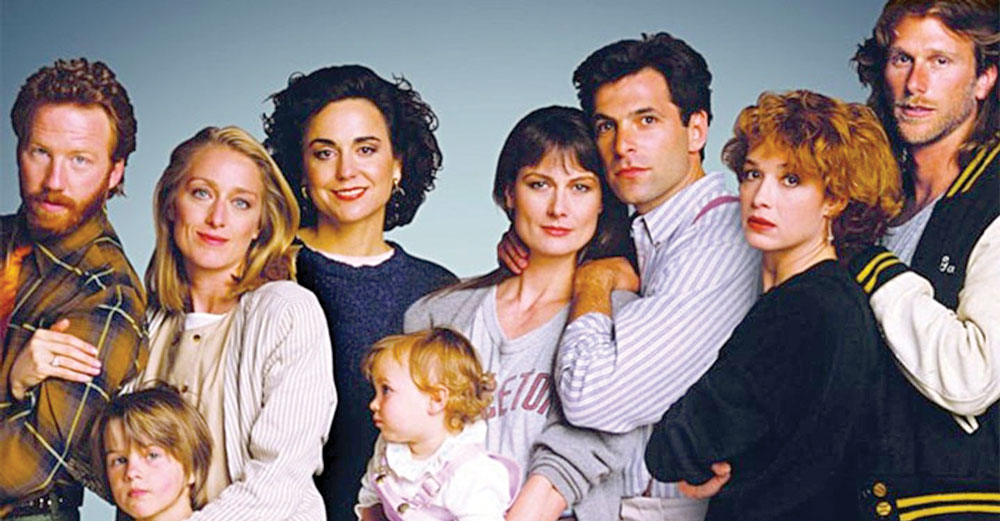
30 Something
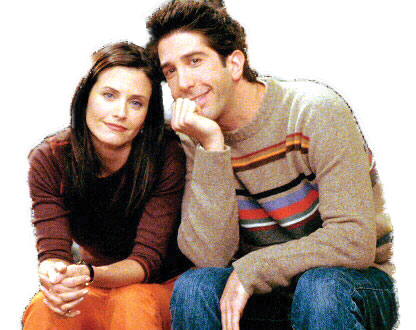
TV shows with clearly drawn Jewish characters such as “Thirtysomething,” “Seinfeld” and “Northern Exposure” reflected a growing hipness and ease of being Jewish. Los Angeles, with a large contingent of Jewish writers, producers, and showrunners, filled the culture with characters such as Monica and Ross Geller (“Friends”), Larry David (“Curb Your Enthusiasm”), Ari Gold (“Entourage”) and Howard Wolowitz (“The Big Bang Theory”), as well as cartoon characters Kyle Broflovski (“South Park”) and Krusty the Clown (“The Simpsons”). More recently, Maura Pfefferman (born “Morton”) of Amazon Prime’s “Transparent” gave us a transgender take on Jewish life.
11. The New Jewish Side of Town
In 2004, famed New York-based streetwear brand Supreme opened a large shop on Fairfax Avenue, just up the block from Canter’s deli, signaling a change to a traditionally Jewish neighborhood that was filling up with trendy skate clothing shops and galleries. As Fairfax turned full-hipster, younger observant Jews, especially those with families, were moving to Pico-Robertson, which was transforming into the Jewish side of town complete with new kosher restaurants, shuls and markets.
12. New museums to look forward — and back
The Torah commands Jews to “zachor,” to remember, and with the opening of the Museum of Tolerance in 1993, and the Los Angeles Museum of the Holocaust in Pan Pacific Park in 2010, we had two new places to look deeply into our painful past as a way to navigate the present. Looking to the future, the Zimmer Children’s Museum opened, helping to transmit and create Jewish memories for children and families. And in 1996, the Skirball Cultural Center opened in the Sepulveda Pass, connecting art and culture with Jewish vision and values.
13. Mazel Tov, It’s Mitzvah Day!
First held in 1999 as a project of Temple Israel of Hollywood, Mitzvah Day was an expression of tikkun olam as volunteers painted, repaired and renewed their city. Begun by TV, theater and movie writer David Levinson, the idea flowered into a community-wide event that drew thousands of participants, changing its name in 2003 to Big Sunday, eventually evolving into a weekend, and then in 2016, into a month of events, attracting up to 50,000 volunteers of all faiths.
14. The Day Rabin Died
Shot by a right-wing extremist while leaving a peace rally on Nov. 5, 1995, the assassination of the Israeli prime minister who negotiated the Oslo Accords — for which he shared the Nobel Peace Prize — reverberated throughout the community, sounding an ominous warning to leaders who wish not to learn war anymore. Some 10,000 people attended a massive memorial rally on a cordoned-off Wilshire Boulevard to mark the end of a man, and a dream.
15. ‘Fighting On’ at USC; Making UCLA Cool to Jews
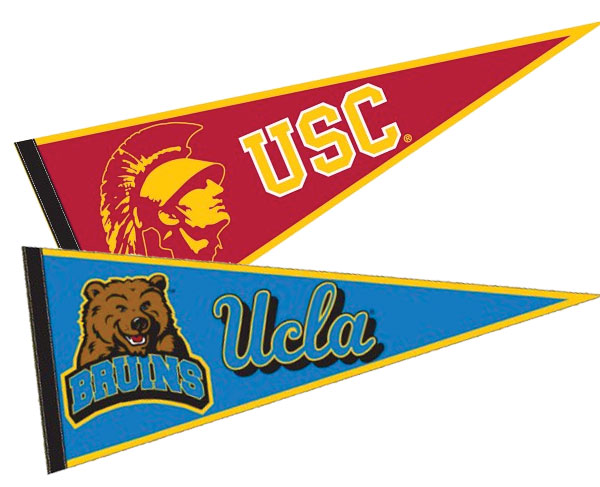
In the 1870s, Isaias W. Hellman, a German-Jewish businessman, banker and philanthropist was one of three men to donate the land for USC, which 100 years later was viewed as a home for WASP elitism. In 2002, a decade of increased inclusiveness at the school was reflected when Stanley Gold was appointed the university’s first Jewish chairman of the board of trustees. In 1972, UCLA was the first major American university to fund a Jewish newspaper, Ha’am, but by 2015 the school was getting headlines for a judicial board nominee being questioned over her Jewish background. In 2016, a student body president left the school alleging harassment by the Boycott, Divestment and Sanctions movement. More hopefully, that same year, the school’s Alan D. Leve Center for Jewish Studies and the Mapping Jewish L.A. project celebrated the history of Boyle Heights with an exhibition.
16. American Jewish University Goes Big
In 2007, the University of Judaism merged with the 1,500-acre Brandeis-Bardin Institute, marrying two 60-year-old L.A. Jewish institutions into the American Jewish University. And when big names came through town, from Bill Clinton to Bill Maher, a likely stop was a speaking engagement through the American Jewish University’s Whizin Center for Continuing Education, which drew thousands.
17. Got Kosher? Yup.
Beyond the opening of kosher Mexican and Thai restaurants, Los Angeles saw the rollout of multiple trucks selling kosher tacos and another truck selling kosher Montreal egg rolls. Add in Jeff’s Gourmet Sausage Factory — now offering concessions at home Dodgers games — and the pretzel challah of Got Kosher? There was bad news in 2013, though, when the Journal reported a scandal at Doheny Glatt Kosher Meat market after a private investigator videotaped the owner allegedly bringing unsupervised animal products into his store.
18. The Dodgers Go Blue and White
Long after Sandy Koufax and fellow Jewish Dodgers brothers Larry and Norm Sherry, who both attended Fairfax High, put on Dodger blue, fellow members of the tribe Stan Kasten (president and part-owner) and Andrew Friedman (president of baseball operations) joined the team. And in 2000, the year they got Jewish slugger Shawn Green, the team began heavily promoting Jewish Community Day.
19. Harold Schulweis z’l
The issue of Dec. 18, 2014, marked the passing of Valley Beth Shalom Senior Rabbi Harold Schulweis at age 89, calling him “the rabbi of rabbis.” Arriving at his Valley pulpit in 1970, Rabbi Schulweis went on to pioneer synagogue-based chavurah, counseling centers, and outreach to interfaith, gay and lesbian Jews and converts. A superb thinker and orator, he insisted upon connecting the Jewish world with the larger community worldwide through foundations and outreach organizations like Jewish World Watch.
“Harold Schulweis is a rabbi,” said Rabbi Uri Herscher, founding president and CEO of the Skirball Cultural Center. “This is a little like saying a Rembrandt is a painting. Or a Stradivarius is a violin. … He has, as much as any rabbi in our time, given Judaism meaning, relevance and renewed purpose.”
20. The Rise of Mega-Synagogues AND Upstart Congregations
Large congregations such as Stephen Wise Temple, Valley Beth Shalom in Encino, Temple Israel of Hollywood, Wilshire Boulevard Temple, Leo Baeck Temple and Sinai Temple all thrived by doubling down on the full-service synagogue model.
At the same time, a 1982 guide to Jewish Los Angeles listed a few independent congregations, mostly Orthodox. In comparison, the 2016 Jewish Journal “City Guide” showed 16 independent, mostly nontraditional congregations, including Metivta, Open Temple, IKAR, Nashuva, Valley Outreach and Movable Minyan, taken together serving thousands of families. L.A.’s plethora of rabbinical seminaries — the Reform Movement’s Hebrew Union College-Jewish Institute of Religion, the Conservative Movement’s Ziegler School of Rabbinic Studies, which ordained its first class in 1999, and the Academy for Jewish Religion, CA (founded in 2000) — helped fuel their growth.
21. A Jewish Approach to…
As social awareness of issues like disabilities and addiction grew, so too did unique Jewish communal responses. Beit T’Shuva, an innovative addiction treatment center, started 30 years ago and has grown to treat thousands. And services for special needs greatly expanded to dozens of programs and organzations.
22. The First Intifada, 1987-1991
Besides the fact that no one knew it would be the first, the Journal did not know what to call it. It settled on, in 1987, the “hostility between the Palestinian youth and Israelis.” By 1989, a piece about the fear and hopelessness many were feeling in Israel, titled “Feeling helpless in the Intifada,” captured the anxiety of many Jewish Angelenos. The continuing conflict has led to the L.A. birth of Israel advocacy organizations like StandWithUs and many, many rallies, op-eds and arguments.
23. The Winning Campaigns of Jewish Candidates
For more than 50 years at the beginning of the 20th century, there was nary a Jewish city councilmember. That changed in 1953 with the election of 22-year-old Rosalind Wyman to the Fifth District seat, which includes the Westside and the Fairfax district. Now held by Paul Koretz, the seat has been Jewish ever since, with several who held the seat rising to higher office: Zev Yaroslavsky and Edmund D. Edelman to L.A. County Supervisor, and Michael Feuer to the State Assembly and position of L.A. City Attorney. Among numerous Jewish electeds, the highest profile is current Mayor Eric Garcetti.
24. The Fall and Revival of Jewish Centers
Disclosures of financial troubles and fiscal mismanagement within the former Jewish Community Centers of Greater Los Angeles in 2001 led to the closure of numerous centers, including Santa Monica’s Bay Cities JCC in 2002 and the Conejo Valley JCC in 2004. With pickets, posters and T-shirts, members of the Westside JCC rallied and eventually won independence, and the center in Silver Lake came back to booming life as well. A JCC continued in Long Beach and even though the JCC at Milken in West Hills closed in 2012 after Federation sold the property, the North Valley JCC was reborn as the Valley JCC in Woodland Hills.
25. Moving Westward and Beyond
The 1997 L.A. Jewish Community Survey was our statistical proof that we were moving westward, but the signs had long been there to read. New synagogues had opened in Simi Valley and the Conejo Valley, kosher markets and day schools too, and in 1997, Mount Sinai Memorial Park expanded to Simi Valley. By the new millennium, Jews were moving east as well — to Koreatown, Echo Park and downtown.
26. From Delis to Mainstream Dining
When Al Levy in 1886 first operated an Oyster Bar Pushcart, and later an Oyster House restaurant in downtown L.A., he was prying open the way for Jewish chefs and entrepreneurs to move into mainstream cuisine. Following in Levy’s footsteps, L.A. became home to the nation’s best family-owned delis, including Langer’s, Canter’s, Izzy’s, and Nate ’n Al. Now, the city is home to chefs including Alma’s Ari Taymor, Mozza’s Nancy Silverton, Micah Wexler of Wexler’s Deli, and Jessica Koslow, owner of the always-hopping Sqirl, who made the cover of last year’s Passover issue.
27. A Local Legacy of “Schindler’s List”
A chance meeting in 1980 in a Beverly Hills leather shop between Australian author Thomas Keneally and the store’s owner, Leopold Page (Leopold Pfefferberg), who had survived the Holocaust due to Oskar Schindler, set in motion this movie, which won the Academy Award for best picture in 1994. Steven Spielberg directed the film, and at the Academy Award ceremony, he credited Page as the “catalyst for the film.” In 1994, Spielberg founded the USC Shoah Foundation Institute for Visual History and Education, dedicated to recording the video testimonies of survivors and witnesses of the Shoah.
28. Federation: From Umbrella to Innovation
The Jewish Federation of Los Angeles worked to transform itself from an umbrella group funding and coordinating Jewish social services and aid here and abroad to a social innovator in its own right. In 2010, the Journal covered the appointment of then-52-year-old Jay Sanderson as president, determined, he said, to “throw the doors open.” Since then, Federation has launched numerous projects aimed at drawing younger Jews, new leaders, the entertainment industry and unaffiliated Jews into communal life.
29. Saving Jewish Buildings
In a city that usually bulldozes and paves over its history, three acts serve as towering achievements in historical preservation. One was the rescue of the Breed Street Shul in Boyle Heights by Stephen Sass and the Jewish Historical Society of Southern California in 2000. Another was the purchase of the original home of Sinai Temple in the Pico Union neighborhood by singer-songwriter Craig Taubman in 2013. And a third was the $100 million restoration of the Wilshire Boulevard Temple in Koreatown. All serve not only the Jewish community, but local neighborhoods as well.
30. School Choice
In the early 1980s, if you wanted to attend a Los Angeles Jewish high school, there was only one choice: YULA, known as Yeshiva University of Los Angeles. By 1987, enrollment at the seven Jewish high schools in Los Angeles covered just 720 kids, about 100 of them in one non-Orthodox school, a predecessor to Milken Community High School. Today, more than 9,700 children attend 42 Jewish schools, with another 10,000 in supplementary Jewish schools, about 7,500 in early childhood programs, and thousands more in camps. Cost is still a concern, but online learning and other innovative programs offer opportunities to reach even more of the young generation — and keep Los Angeles Jewish life thriving for many, many years to come.
The world comes together every Jan. 27 to remember the most devastating tragedy in history: the Shoah.
We remember the victims of the Nazi regime. The loved ones lost and the shameful treatment of human life and human dignity. We also make sure to remember our history, as painful as it may be, so we learn from it and never let it repeat itself.
Most of all, we remember the bravery of the survivors. Those brave souls who are slipping away from us as they implore the next generation to heed the lessons of this darkest of periods with two simple words: never again.
Twelve years ago, the member states of the United Nations came together to pass a resolution establishing International Holocaust Remembrance Day. This important day serves as a reminder of the U.N. at its best, as it was meant to be.
It serves as a beacon to our collective conscience reminding us all of the importance of preventing tragedies like this one and the grave consequences of failing to recognize the warning signs of hatred and bigotry.
But simply remembering the Holocaust is not enough. If we fail to learn the correct lessons, then we lose sight of the magnitude and significance of the worst crime ever committed against humanity. If we are not careful, then we run the risk of allowing the Holocaust to be misappropriated or even cheapened.
Recently, we have seen this happen all too often, including by member states of the U.N.
Under the guise of human rights and tolerance, we are witnessing a growing phenomenon where Israel is subject time and again to false analogies that can only be blamed on hatred and intolerance.
Two months ago the permanent representative of Ecuador stood in the General Assembly hall and unabashedly compared Zionism with Nazism. He compared the national movement of the Jewish people to the most vile and hate-filled movement the world has ever seen.
The worst part of that episode was the silence during his hateful statement. The representatives of the world who were gathered in the hall sat and said nothing. They were silent and did not protest as the state of the Jewish people was singled out and libeled.
Sadly, this is not the only example of the misuse of the sacred memory of the Holocaust. During a meeting of the Security Council, the most powerful U.N. institution, the representative of Venezuela accused Israel of committing a “final solution” of the Palestinians.
Thankfully, during that dark moment a number of our colleagues from around the world stood up and demanded a clear and immediate apology for such blatant anti-Semitism.
This unfortunate phenomenon takes place within the official confines of the U.N. itself.
An undersecretary general had the nerve to say that Israel’s existence as the world’s sole Jewish state is equivalent to the crimes against humanity committed in the 20th century. And the U.N. remained silent.
The over 400,000 annual visitors to U.N. headquarters learn about this darkest of periods in history at a special exhibit on the third floor of the building. After walking a few steps, these visitors are then invited to view an exhibit on the plight of the Palestinians. What lesson does this teach them? That the systematic murder of 6 million Jews can be compared to a conflict between two peoples?
Last March, the ironically named Human Rights Council voted to create a database, a blacklist, of Jewish businesses operating in parts of Jerusalem and Israel. As during other periods of our history, dark forces wish to label our businesses, our livelihood, so we can be delegitimized and boycotted. Again, the U.N. is silent.
When we come together as a people and a community, we can make a real difference. We have to be willing to call out those who would take advantage of the U.N. and the international community.
It is important, however, to also note the progress that has been made.
More and more political and religious leaders around the world are speaking out against anti-Semitism. We particularly appreciated the strong words of Secretary-General António Guterres condemning anti-Semitism when he spoke recently during a visit to a synagogue.
This was a positive development, but the U.N. should build on such statements and take a leading role battling the rising tide of anti-Semitic incidents. This is why we have asked the secretary-general to appoint a special envoy who will oversee the U.N.’s efforts to combat anti-Semitism.
It is important that we honor the memory of the Holocaust by making the world a better place, by pledging never to remain silent in the face of atrocities or human rights violations. We must, however, also make sure to cautiously weigh our words when comparing any events to what Winston Churchill correctly called “the greatest, most horrible crime ever committed in the whole history of the world.”
Upon assuming my post last year, one of my first meetings in New York was with Elie Wiesel, of blessed memory. He taught all of us so much. Personally, I will never forget how he implored me to always speak up when I witness injustice or wrongdoing at the U.N.
Elie was famous for saying “We must take sides. Neutrality helps the oppressor, never the victim. Silence encourages the tormentor never the tormented.”
Let us all pledge to heed these words of wisdom. Let us all have the courage to stand up when wrong is being committed around the world. Most important, let us never shy away from speaking the truth in the defense of the Jewish people and the Jewish state.
Danny Danon is Israel’s ambassador to the United Nations.
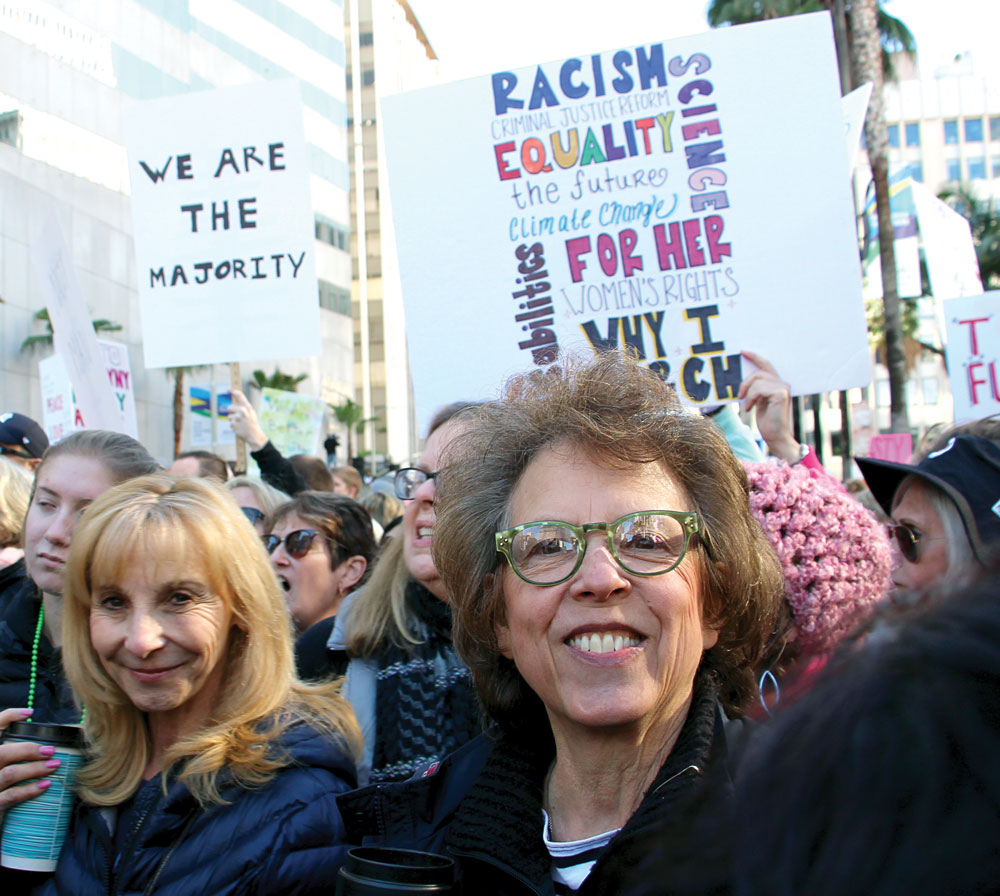
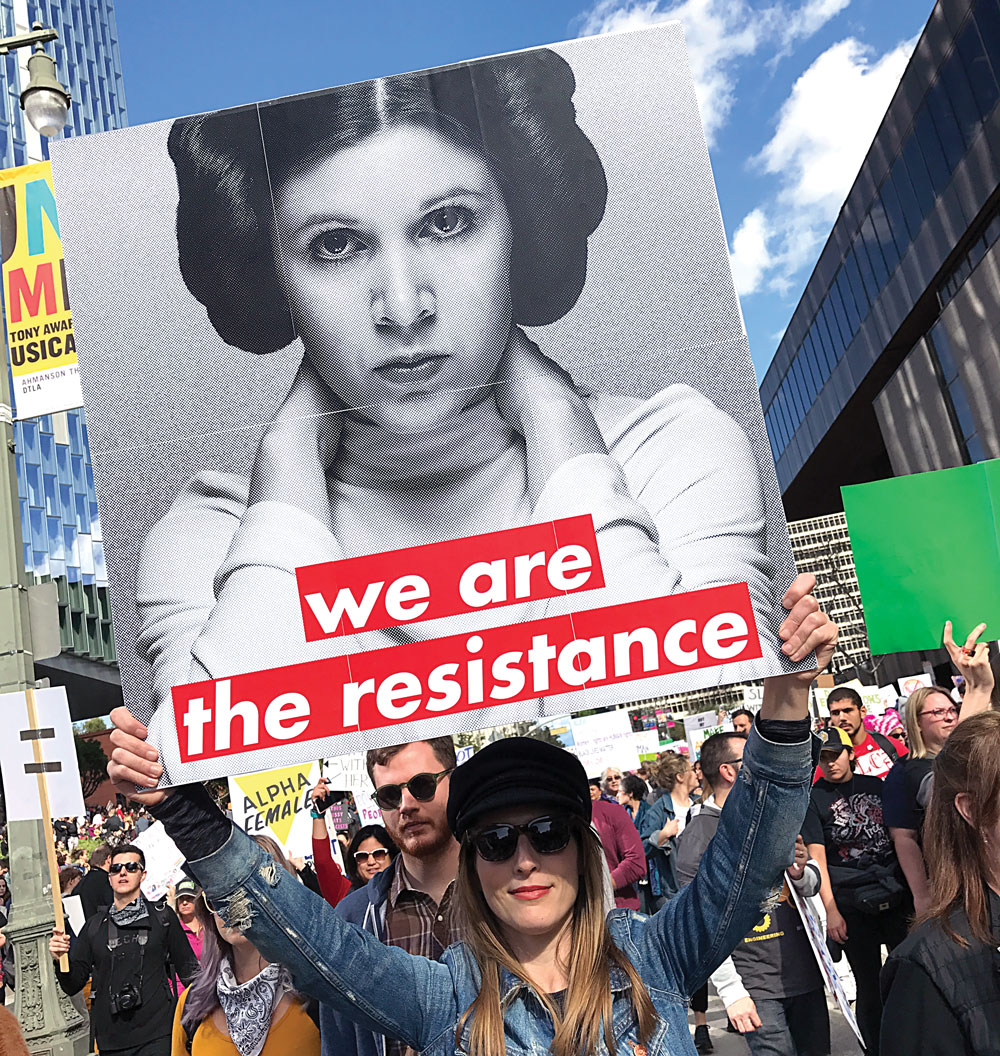
Helicopters and drones circled above Los Angeles on Jan. 21, snapping aerial shots of a city clogged with protesters in a human traffic jam from Pershing Square to City Hall. Organizers of the Women’s March of Los Angeles estimated the crowd at 750,000 as part of a series of marches occurring worldwide — from Washington, D.C., to Tel Aviv — one day after President Donald Trump’s inauguration.
But participants such as Genia Kaplan-Quinn said the event was about more than the new commander-in-chief.
“This is a positive movement. It’s not anti-the orange guy; it’s pro-human rights,” the Temple Emanuel of Beverly Hills congregant said.
Whatever it was, it was big. (The Los Angeles Police Department estimated the crowd at “well past 100,000,” according to a news release.) What originally started as a Facebook post by a retired attorney living in Hawaii evolved into what’s being called the largest protest in U.S. history, attracting more than 3 million marchers across the country.
By the end of the day in L.A., lawns were trampled and posters were abandoned — but, it should be mentioned, no arrests were made.
Kaplan-Quinn said it was important for her to attend with her two teenage daughters, Summer, 16, and Skylar, 14. The mother-and-daughter trio woke up extra early to hitch a bus ride with Temple Emanuel, which organized two buses to transport congregants to and from the event. The transportation alternatives? Some train stops were backed up with two-hour delays and nearby parking lots were crammed full.
Also on the Temple Emanuel bus was Gary Brown, who said he was marching for human rights, alongside his partner, Scott Stone, and their two sons, Harrison, 15, and Ethan, 13. The family discussed the march at the dinner table the previous night.
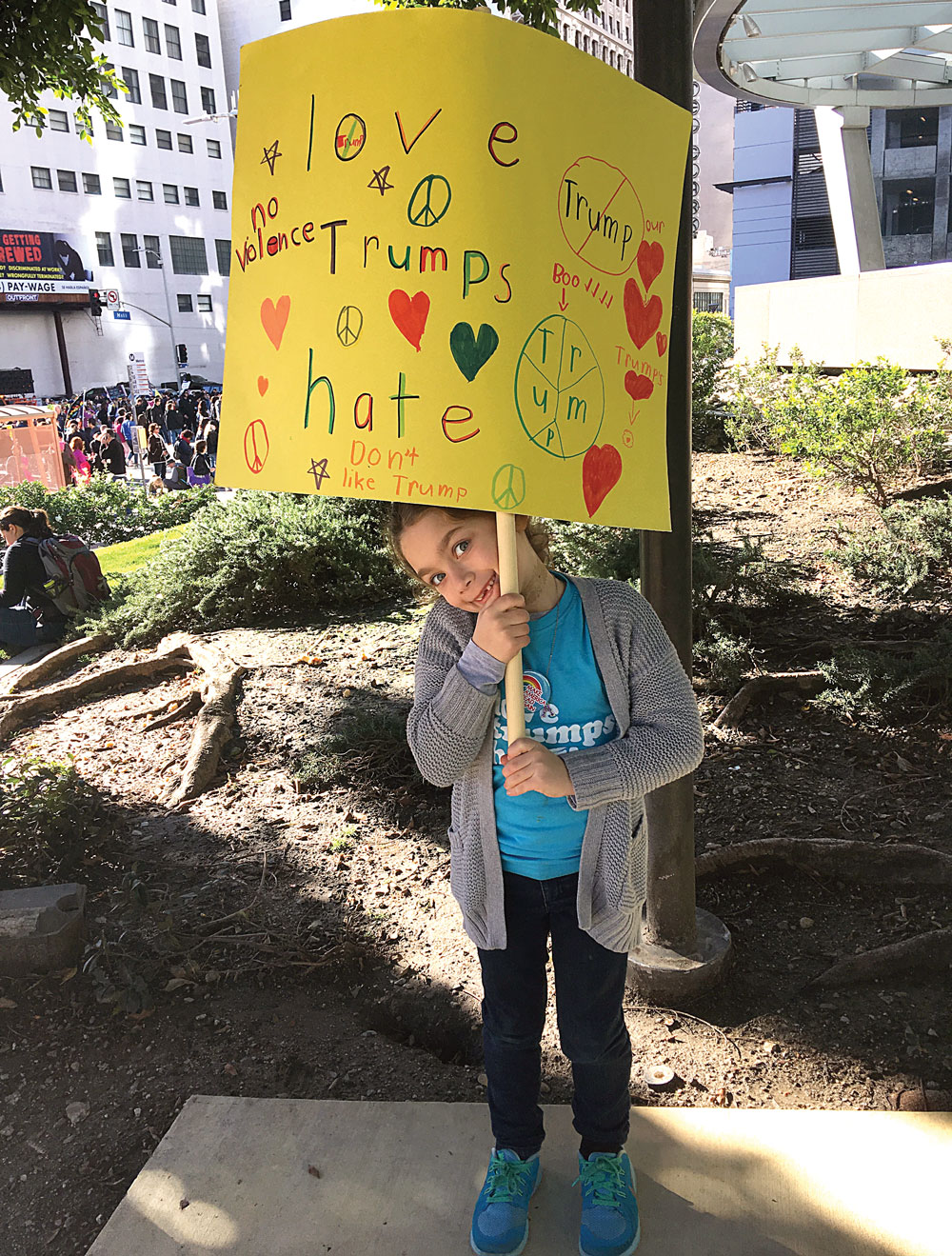
Maisy Myers, 7, of Porter Ranch, was among the young participants hoisting their signs at the march. Photo by Beth Meyers
“Women’s rights is important because women’s rights are human rights,” Harrison said. His bashful younger brother agreed, and the whole family recounted watching Democratic presidential candidate Hillary Clinton’s non-acceptance speech on the night of the election.
“The idea of sitting still and doing nothing makes us feel powerless and lazy,” Scott Stone said. When they found out Temple Emanuel was organizing buses, joining them was a no-brainer. “The fact that it’s a Jewish group, we can experience the march with people we know and love,” Stone said.
Rabbi Laura Geller (right), rabbi emerita at Temple Emanuel of Beverly Hills, was part of a contingent from that congregation. Photo by Steve Factor
Event organizers couldn’t have forecast such a turnout. About 98,000 people RSVP’d on Facebook, meaning perhaps 652,000 did not.
Speeches started at 9 a.m. with a lineup of distinguished speakers, including Los Angeles City Councilman Paul Koretz and directors of nonprofits including Planned Parenthood and the National Council of Jewish Women — LA. But after an hour of march-motivating spiels, the crowd started getting restless — tired of standing in one place too long, the space between people too tight to budge.
Former Los Angeles Mayor Antonio Villaraigosa was in the middle of an anecdote about his mother when the crowd broke into a chant.
Photo by David Blumenkrantz
What do 750,000 people chanting sound like? At first, it sounds far away, but soon it grows, getting deeper and louder, gaining momentum until it becomes a deafening wave.
“March, march, march!” the crowd chanted.
“I really thought it was a jet plane overhead, but, no, it was the sound of human beings roaring. It sounded like a wave, but it was people’s voices ricocheting off buildings,” said Allison Lee, who helped organize three buses from Leo Baeck Temple to downtown.
“We’ll march soon,” Villaraigosa responded to the frustrated mass, fueled with all this momentum and nowhere to go.
Photo by David Blumenkrantz
The members of the crowd were anxious. They were tired. They wanted to roar. Their frustrations were only amplified by the silence of Trump regarding the event. (The new president didn’t recognize the protests until a day later — and then only through a tweet that read, in part: “Watched protests yesterday but was under the impression that we just had an election! Why didn’t these people vote?”)
An hour later, the crowd was still in the same spot, the road too clogged with protesters to allow a march to City Hall.
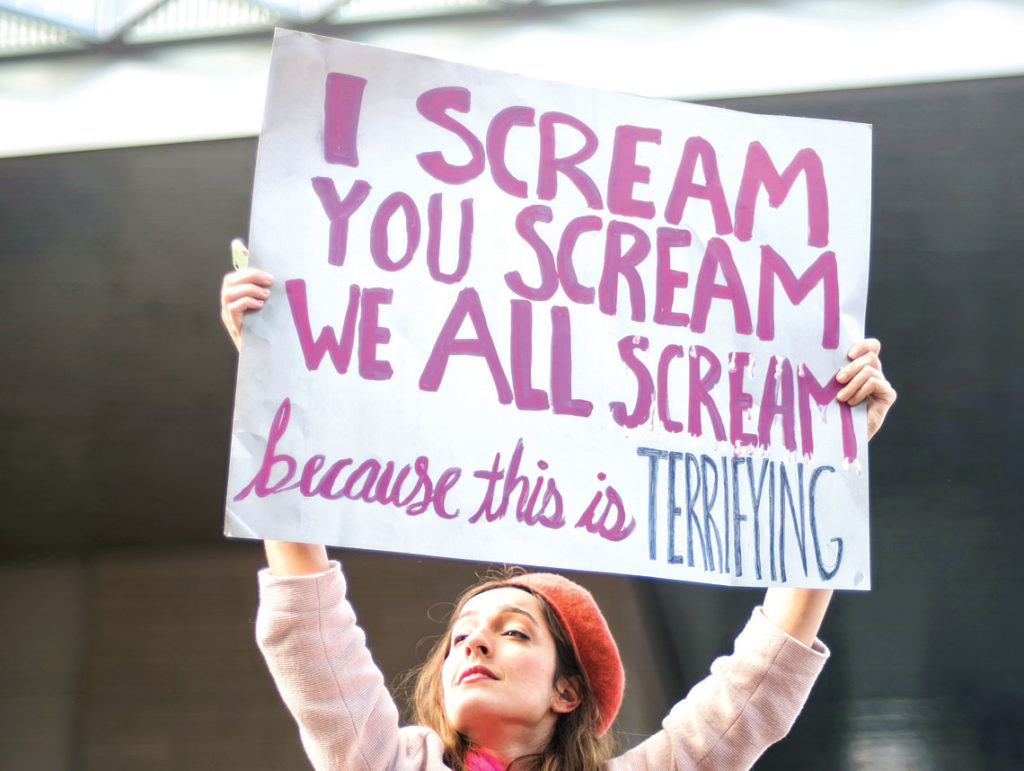
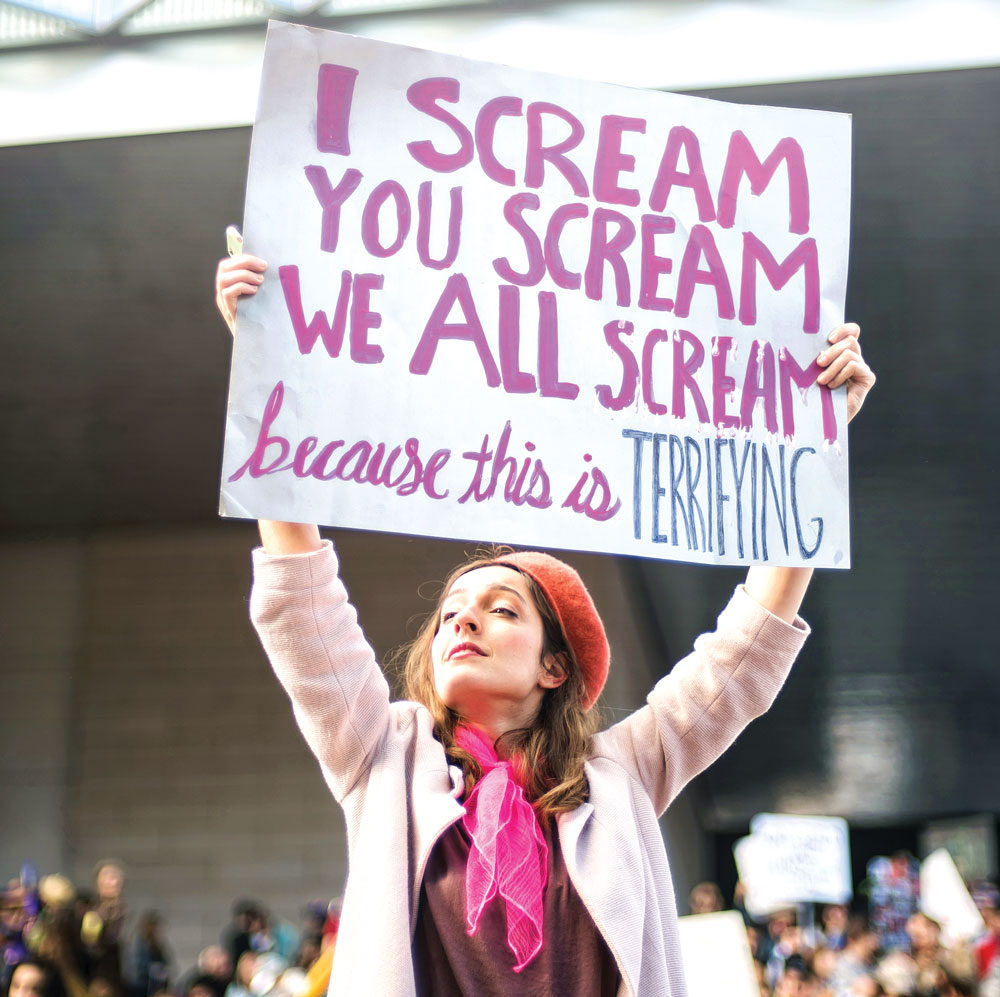
“Thank you for your patience,” a disembodied voice said over the speakers, as would-be marchers held signs such as “#Free Melania,” “Nasty Women Unite,” and “Keep Your Tiny Hands Off My Uterus.” Many wore the march’s trademark garment: a pink knitted beanie made popular by Southern California activists.
For Rabbi Laura Geller, rabbi emerita at Temple Emanuel, the fact that the march took place on Shabbat was especially momentous. “On Shabbat we imagine the world as we want,” she told the Journal, “and we have to take the steps to make that happen.”
The march was finally underway around 11:30 a.m. “We need a leader, not a tweeter” was just one of many chants shouted on the slow, gradual march to City Hall. Upon arrival, activists were greeted by Los Angeles Mayor Eric Garcetti, who told the vocal marchers, “Today we speak out, but tomorrow we act out!”
Photo by Carla Acevedo-Blumenkrantz
Many participants did not reach City Hall in time to hear the speakers. Lee was one of those people, but, for her, showing up was most important. “You’d think that standing stuck for an hour and a half, that you could get irritated, but everyone was encouraging and happy to be doing something and getting our voices heard,” she told the Journal.
The number of marchers was so massive that a second stage was set up at Broadway and Sixth Street, where celebrities and musicians — including Kerry Washington, U2’s The Edge and Juliette Lewis — made cameos to support the cause. A very pregnant Natalie Portman took to the stage as well.
“I want to thank our new president. You just started the revolution,” the actress told a cheering crowd before raising her microphone up in victory.
Immediately after, a girl in the crowd yelled at the top of her lungs, proud and defiant: “I am a nasty woman!”
In the past three decades, many home decorating trends have come and gone — and come back again. In the spirit of celebrating the Jewish Journal’s 30th anniversary, let’s take a look at a few of the most popular decorating looks from the 1980s, 1990s and 2000s. Some are evergreen and still on trend, while others became dated almost immediately. And don’t worry if you’re clinging to a style from the “worst” category — it’s probably going to come back with a vengeance next year.
What will the next 30 years look like in the world of home design? I’d look into my crystal ball, but mystical home accents are so ’90s.
1980s
Best: Art Deco
The decade of glamour saw a revival of Art Deco with a decidedly new wave twist. Triangles, circles and wavy lines in bold colors brought a funky, sexy attitude to furniture and home décor, making homes look like an MTV video.
Worst: Mirrored walls
Mirrors stretching across walls were bad enough, but they were also smoky or had gold crackle.
Best: Preppy
The ’80s brought us Lisa Bernbach’s “The Preppy Handbook,” and furniture and décor also got the preppy treatment. Plaids, ticking stripes and monograms all made us feel a little bit Ivy League.
Worst: Glass blocks
I admit, my bedroom has glass blocks. My house was built in 1989. I sleep in “Miami Vice.” Don’t judge me.
Best: Gray and mauve
I used to love this pastel combination, and I still do. It reminds me of what a room would look like in “Dynasty.”
Worst: Southwest design
Navajo blankets, Native American patterns and animal hides were all the rage. Please, step away from the cow taxidermy skull.
Best: Brass
The metallic finish of choice in the ’80s was brass. And it’s back in 2017, in distressed and antique variations — as if we had the brass for three decades.
Worst: Wallpaper borders
In my first apartment after I graduated from college, I hung a wallpaper border of mallard ducks. All around my bedroom. Pinterest wasn’t there to save me.
1990s
Best: Canopy beds
What ever happened to canopy beds? They were so popular two decades ago. And yes, I had one. Hanging sheer panels from the rails of the canopy created a private retreat that made for a very good night’s sleep.
Worst: Television armoires
The armoires that housed our big televisions were not a particularly bad design trend. It’s just that with the introduction of flat screens, the armoires became obsolete.
Best: Blond wood
With the popularity of Scandinavian design and the expansion of IKEA in the 1990s, blond wood was the material of choice for both floors and furniture.
Worst: Sponge painting
Everybody tried faux finishing, and the results were not pretty. Faux finishing was an “old world” look that was applied with sponges, plastic bags, broom bristles or rags. I bought a faux finishing kit at Pottery Barn and sponge painted one wall in my bedroom. It did not look like a wall in Tuscany. It looked like a rash.
Best: White kitchens
All-white kitchens had that European flair, and any color scheme of accessories worked with the stark white.
Worst: Faux greenery
Potted artificial plants were all right if you didn’t have a green thumb, but the bigger design faux pas was the proliferation of painted ivy that invaded archways, walls above cabinets and bookcases, and powder rooms.
Best: Unusually shaped furniture
The ’90s brought us dramatic furniture silhouettes like sofas with exaggerated arches in the back and arms. This trend was epitomized by designer Philippe Starck’s quirky pieces that graced hip hotels — and even inspired a line at Target.
Worst: Big window treatments
Puffy valances and oversized swags graced our windows and blocked our views.
2000s
Best: Art ledges
These shallow shelves introduced a novel way to display artwork, and best of all, allowed people to continually change things out without having to punch new holes in the wall.
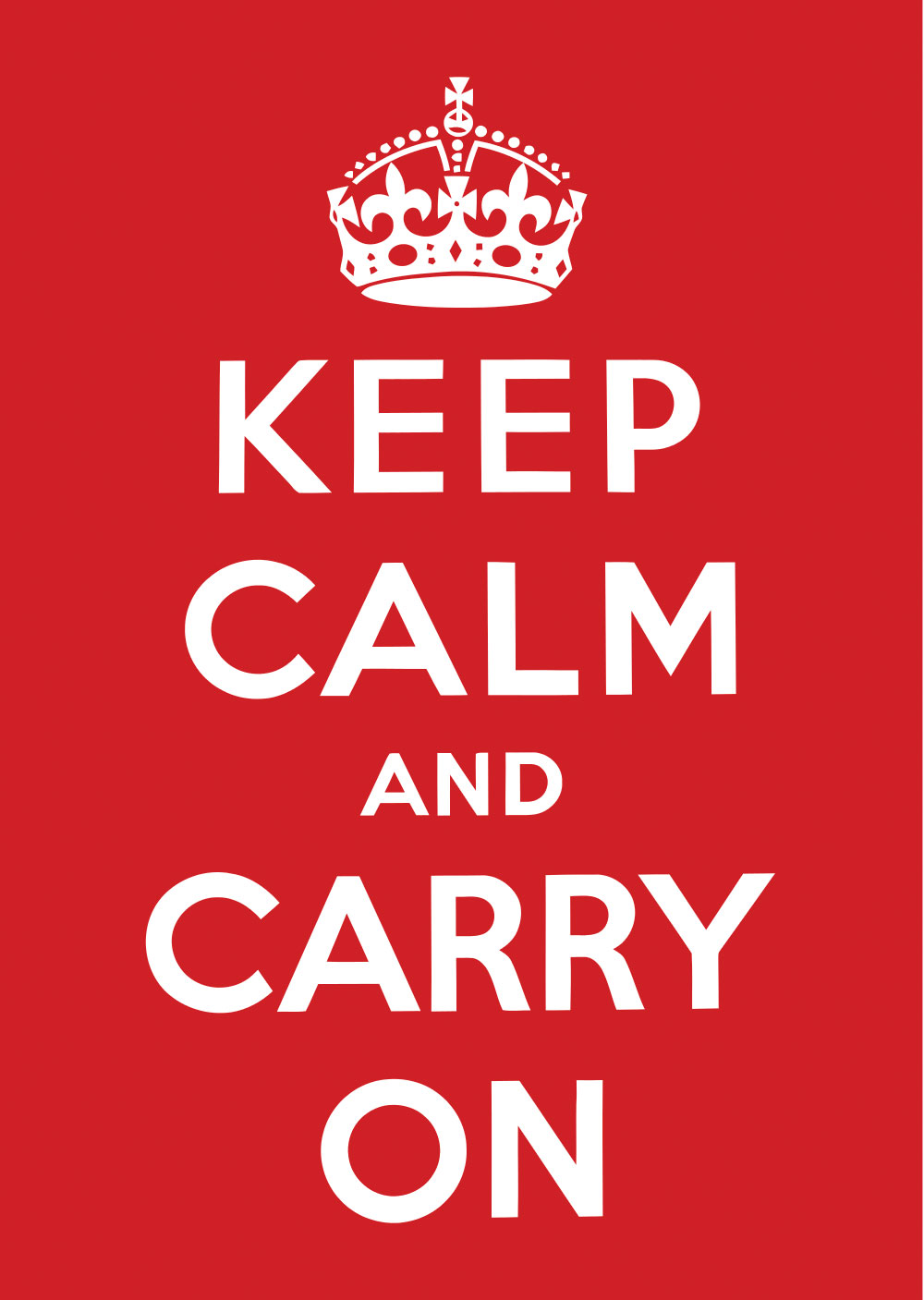
Worst: Keep calm and carry onWhen we first saw these British wartime posters popping up in home décor stores, they had a zippy, retro appeal. They have since overstayed their welcome and need to Brexit.
Best: Stainless appliances
True, they are notoriously difficult to keep clean. But the gleaming surfaces do make a kitchen sparkle. (And make you feel like a professional chef, even if you can’t boil water.)
Worst: Vessel sinks
These sinks, which are free standing and sit directly on a countertop instead of within it, may look interesting, but water gets everywhere.
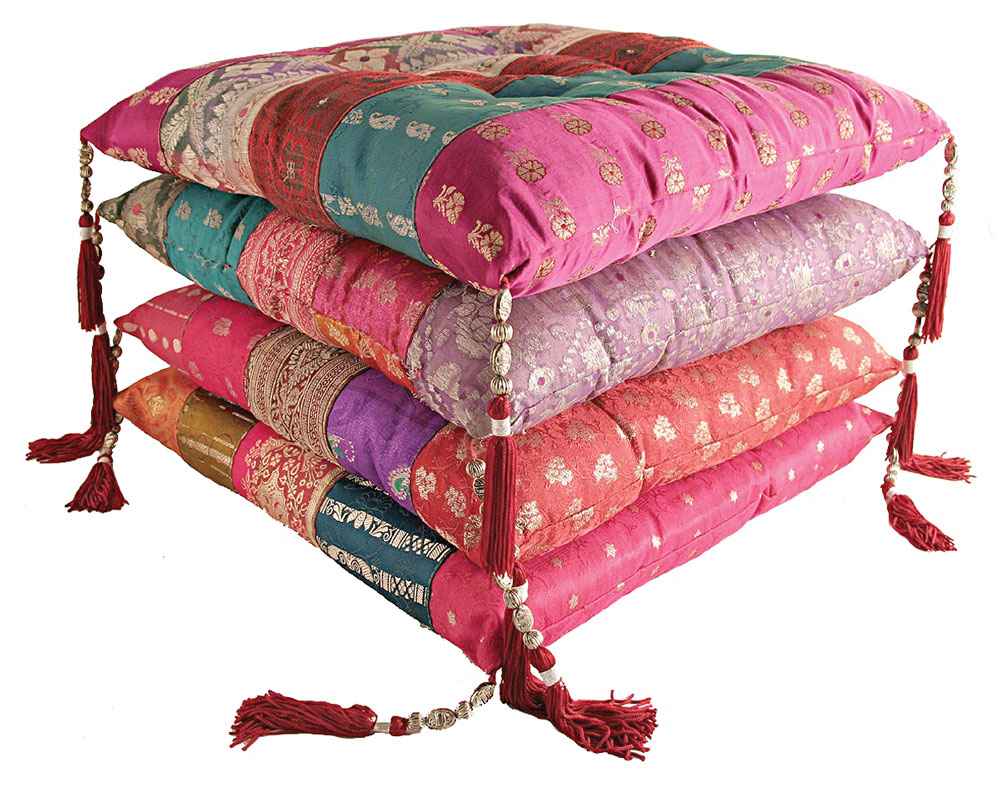
Best: Global accessories
An influx of home accessories and textiles from exotic places such as India, Thailand and Indonesia made us feel like world travelers, even if the goods were really made in China.
Worst: Buddhas
On the other hand, there are way too many Buddha heads in home decorating.
Best: Reclaimed materials
A concerted effort in conservation has created an interest in reclaimed materials, whether for walls, flooring or furniture. The look is rustic and industrial, yet modern.
Worst: Industrial furniture
New furniture that’s made to look like it’s been salvaged from a run-down factory, however, just screams hipster pretension.
Jonathan Fong is the author of “Walls That Wow,” “Flowers That Wow” and “Parties That Wow,” and host of “Style With a Smile” on YouTube. You can see more of his do-it-yourself projects at jonathanfongstyle.com.





 TV shows with clearly drawn Jewish characters such as “Thirtysomething,” “Seinfeld” and “Northern Exposure” reflected a growing hipness and ease of being Jewish. Los Angeles, with a large contingent of Jewish writers, producers, and showrunners, filled the culture with characters such as Monica and Ross Geller (“Friends”), Larry David (“Curb Your Enthusiasm”), Ari Gold (“Entourage”) and Howard Wolowitz (“The Big Bang Theory”), as well as cartoon characters Kyle Broflovski (“South Park”) and Krusty the Clown (“The Simpsons”). More recently, Maura Pfefferman (born “Morton”) of Amazon Prime’s “Transparent” gave us a transgender take on Jewish life.
 In the 1870s, Isaias W. Hellman, a German-Jewish businessman, banker and philanthropist was one of three men to donate the land for USC, which 100 years later was viewed as a home for WASP elitism. In 2002, a decade of increased inclusiveness at the school was reflected when Stanley Gold was appointed the university’s first Jewish chairman of the board of trustees. In 1972, UCLA was the first major American university to fund a Jewish newspaper, Ha’am, but by 2015 the school was getting headlines for a judicial board nominee being questioned over her Jewish background. In 2016, a student body president left the school alleging harassment by the Boycott, Divestment and Sanctions movement. More hopefully, that same year, the school’s Alan D. Leve Center for Jewish Studies and the Mapping Jewish L.A. project celebrated the history of Boyle Heights with an exhibition.
 Beyond the opening of kosher Mexican and Thai restaurants, Los Angeles saw the rollout of multiple trucks selling kosher tacos and another truck selling kosher Montreal egg rolls. Add in Jeff’s Gourmet Sausage Factory — now offering concessions at home Dodgers games — and the pretzel challah of Got Kosher? There was bad news in 2013, though, when the Journal reported a scandal at Doheny Glatt Kosher Meat market after a private investigator videotaped the owner allegedly bringing unsupervised animal products into his store.
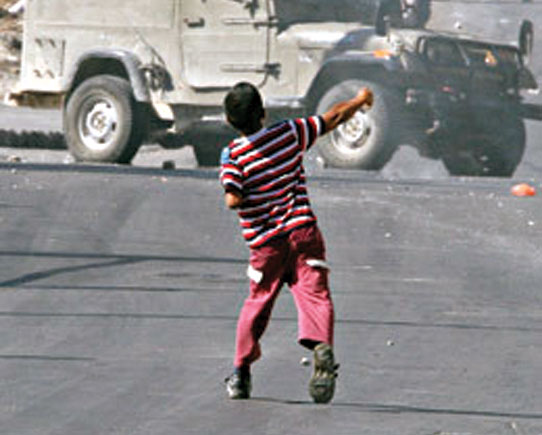 Besides the fact that no one knew it would be the first, the Journal did not know what to call it. It settled on, in 1987, the “hostility between the Palestinian youth and Israelis.” By 1989, a piece about the fear and hopelessness many were feeling in Israel, titled “Feeling helpless in the Intifada,” captured the anxiety of many Jewish Angelenos. The continuing conflict has led to the L.A. birth of Israel advocacy organizations like StandWithUs and many, many rallies, op-eds and arguments.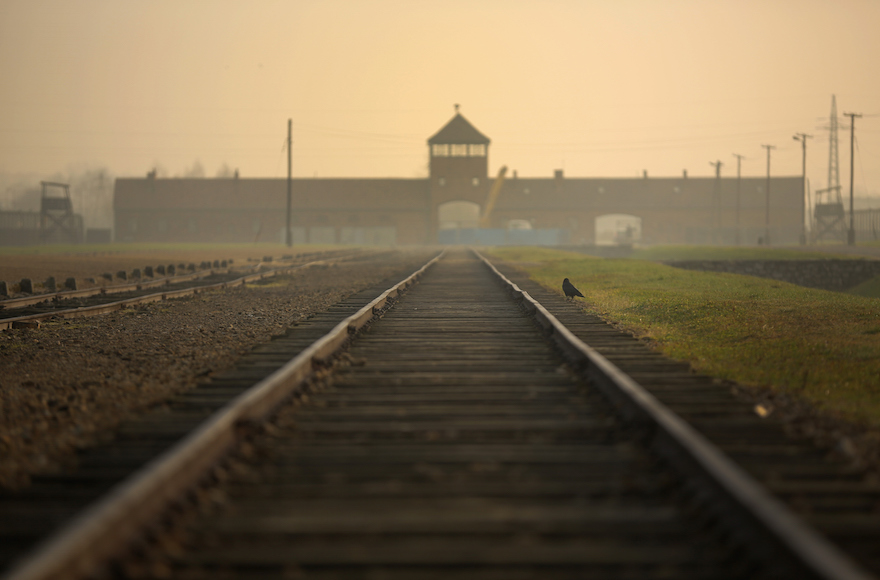



 The ’90s brought us dramatic furniture silhouettes like sofas with exaggerated arches in the back and arms. This trend was epitomized by designer Philippe Starck’s quirky pieces that graced hip hotels — and even inspired a line at Target.
 These shallow shelves introduced a novel way to display artwork, and best of all, allowed people to continually change things out without having to punch new holes in the wall.
 On the other hand, there are way too many Buddha heads in home decorating.