fbpx

September 24, 2013

Yigal Kipnis on Yom Kippur War’s lessons

Yigal Kipnis is an Israeli historian; since 1978 he has been a farmer and a resident of the Golan Heights. He teaches at the University of Haifa and researches the settlement geography and political history of Israel. Kipnis also served as a pilot in the Israeli Air Force for 31 years (26 of them in the IAF reserves). The following exchange focuses on his book, “1973: The Road to War,” which came out in Hebrew in late 2012. The book has received fantastic reviews in the Israeli press by various acclaimed critics and is scheduled to appear in English later this year.
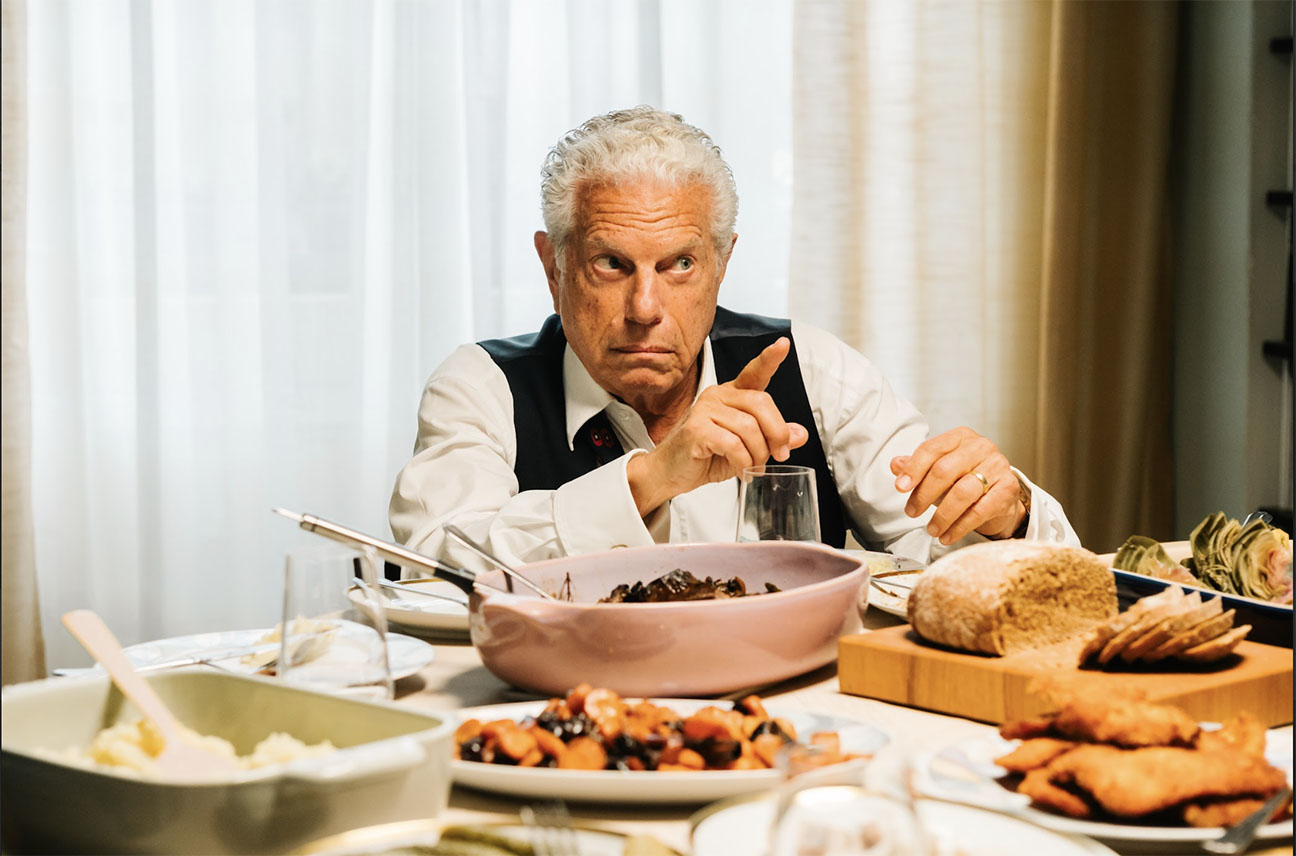

Shmuel Rosner: Your book, and this is no big secret, was immediately embraced by the Israeli so-called “peace camp.” I always find it a little disturbing that history books become a political tool, but in today’s political environment this is probably unavoidable.

The conclusion drawn by many of your readers was this: Israel wasn’t vigorous enough in pursuing peace back in 1973, and the result was devastating. It should therefore be careful not to miss such opportunities today, and be more forthcoming in its conduct when negotiating with its neighbors. 

Is this your conclusion as well? Are we in danger of repeating the mistakes of 1973?

Yigal Kipnis: Your question links the realm of my research — history — and the area you deal with: investigating and interpreting the present.

The book “1973, The Road to Waris entirely devoted to the events of 1973 (except for the Marwan story, which continues up to the present). As I wrote in my introduction, the findings relating to that year were that: “Decision makers in Israel had been mistaken in thinking that their military superiority and deterrence, along with the political support of the United States, would both prevent a political process which they did not want and uphold the favorable (to Israel) status quo. The Israeli prime minister and minister of defense did not comprehend that, in order to ensure Israeli security, military superiority was not enough; a peace agreement was also necessary.”

But I was careful to end the introduction with the following paragraph: “Despite the fact that the book discusses the events of 1973, the attention of many readers will be directed toward the present. History, as is well known, does not repeat itself, but it is important to be familiar with it, as such knowledge assists us in better evaluating current events.”

Nevertheless, many readers examined the book’s findings in accord with their own attitudes about the present-day political situation, a fact that you justifiably deplore. Members of the “peace camp” were indeed happy with these findings so that they could base their present positions on the lessons of 1973. Correspondingly, for the same reason, the “right-wing camp” found it difficult to accept the facts about 1973, some without even learning these facts. There were those who went further, ignoring the findings and viewing only the present, maintaining that Israel should not have considered coordination with the United States and should have launched a preventive attack. With regard to 1973, they are mistaken.

In this paragraph, I reply specifically to your question:

“The actions of the prime minister and the minister of defense that led to the Yom Kippur War evoke thoughts about the role of a national leader, about the relations between decision makers and evaluation bodies, about the price of silencing a mobilized or a paralyzed media, about the price of the ‘national euphoria’ that characterized Israeli society in the ‘euphoric period’ between the Six-Day War and the Yom Kippur War, and, particularly, about the price of a sense that time is working in Israel’s favor.”

But the position that Israel should take at present must be investigated comprehensively considering the Zionist process and present realities, and not according to those of 1973.

I believe, and with no connection to the events of 1973, that Israeli peace agreements with the Arab states surrounding it were and have remained a strategic Israeli goal and thus, it had to act to achieve this goal and still should. These agreements must be based on the international border that defined, for the first and only time in history, the state entity of the land of Israel. This definition stemmed from a decision by the Israeli unity government in June 1967, nine days after the end of the Six-Day War. This decision also expressed how its ministers, both on the left and on the right, and including Menachem Begin, conceived of the way to turn the military achievement of the Six-Day War into a political achievement. This policy was implemented in the peace agreements with Egypt and Jordan. The withdrawal from Lebanon was based on this borderline, as were the negotiations with Syria, conducted by Rabin, Peres and Netanyahu in two terms of office, Barak and Olmert. The problem remaining is what happens within the international border of Israel — the west bank of the Jordan River. One state? Two states? If there are two states, how will we share the land?

In my opinion, without casting doubt on the historical connection of the Jewish nation to the entire land, realization of Zionist aspirations and ensuring the existence of the State of Israel as a national home for the Jewish people requires us to reach an agreement with the Palestinian leadership, if only to ensure proper security and freedom of entry to places that will not remain under Israeli sovereignty. The outline of this agreement is well known. The problem is how to achieve it. In this context I expressed my opinion a few weeks ago in an op-ed article in Ha’aretz: “The Arab initiative for comprehensive peace with Israel is one of the important political achievements of Zionism. Its implementation is likely to lead to regional stability, which will enable Israel to direct its resources and its efforts to the areas of education, society and the economy. No Palestinian leader will be able to reject an agreement that has been accepted in this discussion channel, under the patronage of the Arab world, the United States and the European Community. This patronage will make it easier for both Israeli and Palestinian leaders to compromise on issues that would have been difficult to agree on in direct negotiations between the sides. An Israeli leader who really aspires to peace and security must accept this initiative.”

In addition, I believe that the Israeli public will support a leader who adopts this policy. Not as a lesson drawn from the price we paid in the Yom Kippur War because the Israeli prime minister rejected a peace initiative from President Sadat, an initiative whose principles formed the basis of the treaty Prime Minister Menachem Begin signed six years later with Egypt, but as a vital interest of the State of Israel as a national home for the Jewish people at present in the land of Israel.

For more of this exchange, read Rosner’s Domain at jewisjournal.com/Rosnersdomain.


Shmuel Rosner is senior political editor. For more analysis of Israeli and international politics, please visit Rosner’s Domain at jewishjournal.com/Rosnersdomain.

Yigal Kipnis on Yom Kippur War’s lessons Read More »

Obituaries: Sept. 27-Oct. 3

Jeanette Anter died Aug. 15 at 90. Survived by daughters Marsha Gold, Jill Wieder; son Steven; 3 grandchildren. Hillside

Sheldon Arenberg died Aug. 6 at 84. Survived by wife Janet; daughters Linda (James) Sparling, Lee (Katie Mehan); son Jonathan (Alice), 3 grandchildren; sister Arlene Beck. Hillside

Barbara Aronoff died July 29 at 87. Survived by sons Richard (Pam), Robert; 2 grandchildren. Mount Sinai

Esther Baim died Aug. 2 at 93. Survived by daughters Rochelle (Dick) Puariea, Janet (Jerry) Symon; son David Klitzky; 6 grandchildren; 4 great-grandchildren. Sholom Memorial Park

Sidney Beaver died Aug. 1 at 88. Survived by daughters Barbara (Raymond) Cavaleri, Ellen (Neil) Wyenn; 4 grandchildren; brother Solomon (Doris). Mount Sinai

Edward Beck died Aug. 12 at 69.  Survived by wife Karmen; daughter Jaclyn; son Allen (Jee-Young Kim). Mount Sinai

David Berkovitz died July 1 at 92. Survived by wife Sonya; daughter Eugenia (Israel); son Michael; 3 grandchildren; 3 great-grandchildren. Chevra Kadisha

Doris Bernstein died Aug. 3 at 90. Survived by daughter Mona (Mark Lempert); son Alan (Nancy); sister Nancy Recht; 1 grandchild. Malinow and Silverman 

Khaya Birenberg died July 29 at 93. Survived by daughter Sofiya Alper; son Eugene Alper; 3 grandchildren; 4 great-grandchildren. Mount Sinai

Leonard Black died July 27 at 73. Survived by wife Joyce; daughters Sandy Youngblood, Lauren. Sholom Chapels

Dorothy Borys died Aug. 9 at 88. Survived by husband Jack; daughter Debra (Alan Fishstein); son David; 5 grandchildren. Mount Sinai

Norman Bressick died Aug. 4 at 83. Survived by sons Gary, Sanford. Sholom Chapels

Seymour Brockman died Aug. 14 at 91. Survived by sons Bruce (Patti), Howard (Anita King); 4 grandchildren. Hillside

Erma Bronn died Aug. 14 at 93. Survived by daughters Susan (Daisy Ilagan), Linda (Paul) Virgo; son Michael; 5 grandchildren; 1 great-grandchild; brother Irv (Sally) Berman. Hillside

Annelise Bunzel died Aug. 5 at 100. Survived by niece Susan Hollander; cousin Myra Baxter; friend Ruth Lavine. Mount Sinai

Sally Cohen died Aug. 9 at 88. Survived by daughter Susie Young; brothers Ben Lerman, Jim Lerman; 5 grandchildren; 8 great-grandchildren. Hillside

Ethel Deitshman died July 30 at 95. Survived by daughters Alison (John Kennedy) Feldman, Barbara (Robert) Sparks; 3 grandchildren; 5 great-grandchildren. Mount Sinai

Esther Berg Epstein died Aug. 7 at 99. Survived by sons David, Leonard (Alise), Michael; 8 grandchildren; 4 great-grandchildren. Mount Sinai

Alvin Feinberg died Aug. 7 at 88. Survived by wife Mavis; daughter Linda (Scott) Kutner; sons Irwin (Deb), Ron (Regina), Steve (Hitomi); 7 grandchildren. Hillside

Mary Galambos died Aug. 4 at 74. Survived by daughter Vivian (Douglas) Gee; 3 grandchildren; sister Ruth Gabor; longtime companion Tibor Nedli; former husband Thomas. Sholom Chapels

Sheldon Geller died Aug. 3 at 79. Survived by wife Laura Soloff-Geller; daughters Robin (Ron) Karp, Jeanine (John) McTasney, Deborah; son Michael (Mindy); 6 grandchildren. Hillside

Arthur Ginsburg died July 24 at 78. Survived by wife Sondra; daughters Beverly, Roberta; son Harold; brother Eli. Sholom Chapels

Sami Gitman died July 28 at 96. Survived by wife Sima; daughter Perlia (Boris) Bernshtein; son Mike (Faina); 5 grandchildren. Mount Sinai

Sylvia Gordon died June 17 at 95. Survived by daughter Julie Sanchez. Sholom Chapels

Carol Green died July 29 at 81. Survived by husband Harry; daughters Cynthia (Paul) Anderson, Deborah (Reuben); 4 grandchildren. Mount Sinai

Julius Griffin died Aug. 14 at 94. Survived by daughter Jeanne (Michael) Decker. Malinow and Silverman 

Goldie Hyken died Aug. 1 at 85. Survived by daughter Rhonda; sons Mitch (Sherry), Steve; 2 grandchildren; 3 great-grandchildren. Mount Sinai

Phyllis Hyman died July 6 at 80. Survived by daughter Nancy; sons Brian, Bruce, Stuart; brother Elliot Robbins. Sholom Chapels

Leon Hochstein died Aug. 10 at 96. Survived by wife Ruth; sons Steven (Susan), Ted (Michelle); 4 grandchildren; 1 great-grandchild. Mount Sinai

Shirley Holker died Aug. 10 at 90. Survived by husband Hal; daughter Janet (Frederick) Kessler; sons Brian (Diana), Douglas (Nadine); 5 grandchildren; 2 great-grandchildren. Hillside

Leslie Jarmus died Aug. 4 at 87. Survived by daughter Cheryl (Ron) Morris; sons Steven, Mark; 5 grandchildren; 1 nephew. Hollywood Forever 

Bernice Kahan died Aug. 5 at 85. Survived by daughter Lisa (Jonathan) Marmour; sons David (Amy), Yehoshua (Shoshana); 10 grandchildren; 2 great-grandchildren. Hillside

Ofer Karin died July 30 at 95. Survived by wife Gabriella; son Rom (Mardy); 3 grandchildren. Hillside

Sidney Katz died Aug. 7 at 91. Survived by son Seth. Malinow and Silverman

Sally Kirschner died July 22 at 95. Survived by daughter Linda Fisher. Sholom Chapels

Anatoly Kopelev died Aug. 13 at 71. Survived by wife Galina; daughter Irina Raskin. Mount Sinai

Suzanne Krull Spruyt died July 27 at 47. Survived by husband Peter Spruyt; daughter Harper (Joy) Krull; stepmother Nadine Krull; father-in-law Dirk (Perry Martin) Spruyt; sisters Gabby (Howard) Bachman, Jackie (Mitch) Sussman; brother Jeffrey (Karen) Krull; stepsisters Cheryl (Chris) Bottini, Audrey (Robert) Patterson; stepbrothers David Shulik, Peter Shulik; brothers-in-law Alan (Careena) Spryut, Fric Spryut. Mount Sinai

Robert Levine died Aug. 6 at 63. Survived by wife Roberta; sons Bryan, Greg (Ceil); 1 grandchild; sisters Carol (David) Dang, Sue (Russ Woodward) Robin; brother Michael (Carole); sister-in-law Marla (Jack) Minden; brother-in-law Larry (Heather) Feldman. Mount Sinai

Mildred Levites died July 13 at 93. Survived by daughter Laurie; longtime companion Reid McLeod. Sholom Chapels

Alison Lewin died July 27 at 59. Survived by daughter Samantha; sons Chad, Eric; sister Adell Caler; brothers Harold Pollock, Marc Pollock, Scott Pollock. Mount Sinai

Michael Link died July 28 at 74. Survived by wife Ellen; daughter Jodi (Roger) Clark; son Andrew. Mount Sinai

Jacqueline Lustgarten died Aug. 12 at 89. Survived by daughter Denise (Terry) Avchen. Hillside

Gerald Malenbaum died June 16 at 90. Survived by wife Inge. Sholom Chapels

Robert Mallin died Aug. 4 at 90. Survived by daughter Debbie. Sholom Chapels

Irene Markley died July 16 at 87. Survived by sons Edward, Robert. Sholom Chapels

Edward Michaels died Aug. 8 at 49. Survived by wife Lorin; daughter Dylan; son Matthew; mother Leah (Richard) Poliz. Malinow and Silverman  

Kathleen Michelson died Aug. 3 at 84. Survived by daughter Annette (Errol Ginsberg); 1 grandchild; sister Irene Wetmore; brother Clarence Pajett. Hillside

Shirley Miller died Aug. 14 at 95. Survived by daughter Maria (Steven) Goldberg; sons Marc (Cindy), Steve (Lee); 6 grandchildren; sister Bernice (Ruth Miller) Cotariu. Hillside

Martin Millner died Aug. 8 at 92. Survived by wife Dorothy; daughter Lesley (Kenneth) Geiger; 1 grandchild. Mount Sinai

Mildred Milstein died Aug. 3 at 86. Survived by daughter Sherry. Hillside

Michael Moses died Aug. 8 at 81. Survived by fiancée Carole Records; sons Eric, Christopher, Rodney. Malinow and Silverman 

Fred Moss died Aug. 4 at 95. Survived by daughter Joyce; son Lawrence; 2 grandchildren. Hillside

Gail Nelson died Aug. 10 at 75. Survived by sister Ellen (Ronald) Reisner; brother Gary (Joe) Mosko. Hillside

William Newman died July 27 at 96. Survived by daughters Cynthia (Steven) Hirsch, Andrea (Barry) Miller; 3 grandchildren; 2 great-grandchildren. Mount Sinai

Sara Oliver died Aug. 4 at 74. Survived by husband Roy; daughter Monica Mizrahi; son Alejandro; sister Jaqueline Romano; brother Solly Toussier. Malinow and Silverman  

Harry Oster died July 28 at 96. Survived by wife Susy; daughter Barbara (Thomas) Craft; son Gerry (Lydia Baumrind) Moore; 4 grandchildren. Malinow and Silverman

Randall Ostin died July 28 at 60. Survived by son Josh; father Morris; brother Michael (Joyce); 3 nieces. Mount Sinai

Michael Ostrove died Aug. 6 at 71. Survived by daughters Kristi (Rick) Brown, Jill; son Steve (Brenda); 4 grandchildren; sister Barbara (Stan) Salter. Mount Sinai

Busia Ozeran died Aug. 6 at 85. Survived by son Leon (Rimma); 4 grandchildren. Mount Sinai

Rose Pinsky died Aug. 4 at 94. Survived by daughter Earlene Sykes; sons David Sykes, Donald Sykes; stepsons David, Ronald; 7 grandchildren; 1 great-grandchild. Hillside

David Polin died Aug. 3 at 77. Survived by sisters Ninelle Perline, Nadine. Malinow and Silverman

Robert Radin died July 31 at 90. Survived by daughters Carol (Todd) Eskelin, Janet (George) Klein; 4 grandchildren; brother Seymour. Hillside

Harriet Reuben died Aug. 13 at 85. Survived by daughter Stacey (Bryan) McKinney; son Scott; 3 grandchildren; sisters Leslie Fisher, Bernice Kitnick, Florence Williams. Mount Sinai

Adolph Rich died Aug. 5 at 93. Survived by wife Eva; son George; 3 grandchildren; 1 great-grandchild; 1 niece. Mount Sinai

Jesse Rifkin died Aug. 2 at 81. Survived by daughters Donna (Joseph), Julie; son David (Helen); 5 grandchildren; brother Melvin (Gabriel). Hillside 

Morris Roberts died Aug. 10 at 88. Survived by wife Carolyn; daughter Claudia Beth (Joe) Caelwood Berkman; son Chris; 2 grandchildren; 1 great-grandchild. Hillside
Pauline Roberts died June 29 at 95. Survived by daughters Teri Smooks, Anne. Sholom Chapels

Richard Rome died March 16 at 88. Survived by daughters Joanne Davenport, Bonnie (Walley) Orona; son Robert (Deborah) Rome; 8 grandchildren; 10 great-grandchildren. Chevra Kadisha

Sharon Rue died Aug. 9 at 71. Survived by husband Bernard; daughters Laura (Edward) Balderas, Wendy Balderas; son John (April); 8 grandchildren; 1 great-grandchild. Hillside

Marvin Sadur died Aug. 14 at 87. Survived by wife Faye; daughters Rhonda Anderson, Andrea Lewis, Bonnie Silver; 5 grandchildren; 2 great-grandchildren; sister Miriam Harris. Malinow and Silverman 

Madeline Safran-Brosman died Aug. 8 at 73. Survived by sons Michael (Victoria) Brosman, Wayne Brosman; 4 grandchildren; mother Annabelle Safran; father Herman Safran; brother Martin (Julie) Safran. Mount Sinai

Eileen Salk died Aug. 13 at 89. Survived by husband Irwin; sons David (Leah), Larry (Danielle); 6 grandchildren; 2 great-grandchildren. Hillside

Tobi Sands Thorner died July 27 at 64. Survived by husband Brian Sands; sister Robyn (Jack) Rosso. Mount Sinai

Drew Satin died Aug. 9 at 30. Survived by mother Yolanda (Randy) Bender; father Scott (Jamie); sisters Morgan Bender, Danielle, Samantha; brother Ryan. Mount Sinai

Myra Shon died Aug. 3 at 92. Survived by daughters Hillary (Anthony) Biedul, Lenore (Tom) Sokol; 4 grandchildren. Hillside

Clara Silberstein died July 6 at 76. Survived by sons Sammy, Simon. Sholom Chapels

Herbert Singer died July 12 at 90. Survived by daughter Lynn Greenspan. Sholom Chapels

Marvin Stein died Aug. 12 at 77. Survived by wife Rosanne; sons Jeffrey (Liz West), Richard (Diane); 3 grandchildren. Hillside

Susan Stein died June 26 at 56. Survived by daughter Lindsay Bahreman. Sholom Chapels

Broncha Stern died Aug. 2 at 78. Survived by husband Leon; daughter Bonnie; sons Gary (Michelle), Howard; 2 grandchildren. Mount Sinai

Myra Stern died July 22 at 79. Survived by daughters Livi, Marla, Sandra; son Scott. Sholom Chapels

Howard Strolicht died July 23 at 71. Survived by wife Bilha; sons Tal, Tomer. Sholom Chapels

Stanton Taylor died Aug. 3 at 90. Survived by wife Phyllis; daughter Helen; son Charles; 8 grandchildren. Hillside

Gladys Trontz died Aug. 9 at 91. Survived by husband Sidney; daughter Shelly (Joe) Kwait; son Rick. Hillside

Margaret Wechsler died July 31 at 88. Survived by daughter Louise; son David (Sheri); daughter-in-law Mary; 2 grandchildren; 1 great-grandchild. Mount Sinai

Lawrence Weinstein died Aug. 3 at 86. Survived by wife Gloria; daughter Janet (Mark) Abelson; sons Brian, Ronnie (Cathy); 5 grandchildren; 2 great-grandsons. Mount Sinai

Marshall Wernick died July 10 at 83. Survived by daughter Mindi; son Jonathan. Sholom Chapels

Laurie White died July 26 at 33. Survived by mother Karen; father Gary. Sholom Chapels

Aileen Woroboff died June 22 at 89. Survived by son David. Sholom Chapels

Stanley Zimmerman died June 13 at 86. Survived by wife Regine; daughter Lydia Saravis. Sholom Chapels

Edward Zipperstein died June 24 at 91. Survived by wife Mae; daughter Sharon Fogel; sons Howard, Steven. Sholom Chapels

Obituaries: Sept. 27-Oct. 3 Read More »

Letters to the Editor: Ian Lustick, Kaparot, Sukkot and Anne Frank

Many Opinions on One-State Article

Only in an echo chamber of anti-Zionists do Ian Lustick’s arguments sound anything but absurd (“One-State Delusion,” Sept. 20).

Ethan Felson, Vice President, Jewish Council for Public Affairs of Columbus, Ohio


Excellent, thoughtful analysis of an absurd piece. 

Ethan Roberts, Director, Jewish Community Relations Council for Minnesota and the Dakotas


Ian Lustick is actually past president of the Association for Israel Studies, at least according to his CV and Wikipedia. His op-ed may be unpersuasive for a variety of reasons, but “total lack of familiarity with Israeli society” is probably not one of his shortcomings.

Julie Wiener via jewishjournal.com


Kaparot Ritual: The Anger Continues

To say that I was disturbed by the defense — by “my people” — of the practice of kaparot would be a huge understatement. Of course, it reminded me of a story that I recently read about two sea turtles found in Israel: one in Gaza that was dragged behind a pickup truck and killed by the Palestinians — and the other an injured one found by Israelis north of Tel Aviv that was operated on, saved and released back to the sea. This is how we as Jews fulfill our obligation on being “A Light Unto the Nations” — not by swinging helpless chickens above our heads. 

Richard David, Culver City


Protesting Kaparot

Do religious, cultural communities — or any community — grow and evolve best from within? Indeed. Unfortunately, history reveals that few communities embrace justice independent of outside pressure. Should the Jewish community evaluate its own rituals, free from outside interference? In fact, the animal rights movement is a beneficiary of the path of tzedakah paved by the Jewish people who fight all forms of intolerance, injustice and cruelty. That noble action has led unquestionably to the protest of kaparot where religious and nonreligious alike stand opposed to animal cruelty. In fact, in truth, in justice, the Jewish community has called us to do nothing less.


Ann Bradley via jewishjournal.com


More Balance, Please

Marty Kaplan shows that his beliefs are as firmly held as those in the study, since he only uses examples of Fox News viewers and conservatives as those who won’t believe facts (“The Most Depressing Brain Finding Ever,” Sept. 20). How about being a little more balanced since the research shows both conservatives and liberals demonstrated this phenomenon?

Quinn Cramer, Carlsbad, California via jewishjournal.com


A Very Special Sukkah

Your cover of the sukkah on the front page of the last Jewish Journal was indeed lovely (“Making the Sukkah Beautiful,” Sept. 20), though not as special as the one our family joins together with grandparents, children, grandchildren and family friends to build. We decorate with what can almost be called the history of Israel and the Jewish people. The decor may not be as creative as your front cover designs, but when we sit in our sukkah we know before Whom we stand.

Golda Mendelsohn via e-mail


Anne Frank’s Diary Gives Rise to More Questions

Thanks for contextualizing so accurately/thoroughly the publication of Anne’s diary (“Anne Frank’s Legacy Is Brought to Life,” Sept. 13). Only the Museum of Tolerance could help portray Anne, whom many readers know only from the diary, through to her tragic finale.

That said, one might still ask: 1) Why did Otto excise from Anne’s original writings, and revisions, exactly those sections he did — apart from considerations of modesty, portrayals of relationships and revealed interfamilial squabbles? 2) What role did the 1940s/’50s publishing era play? (Knopf Inc., for example, was one of 15 publishers who rejected the English-language rights version, calling the diary “very dull … a dreary record of typical family bickering, petty annoyances and adolescent emotions.”)

Scholar/writer Melissa Müller is entirely correct, of course, that Otto Frank “decided to universalize her [Anne’s] destiny.” Still, critics such as Meyer Levin, Bruno Bettelheim, Lawrence Langer, Richard Bernstein and, of course, Cynthia Ozick all weighed in on Otto’s choices — and “what he should have done” regarding sharing Anne’s words.

Beyond the upcoming exhibition, those curious about Anne’s original words can access the 2003 English translation of “The Diary of Anne Frank: The Revised Critical Edition.” 

Bill Younglove, Lakewood


Powerful Voice

It’s a real shame when a very vocal minority voice in the population can have such power over what the (unfortunately) silent majority wants to see and hear (“La Brea ‘Eastbound & Down’ Billboard Removed After Orthodox Pressure,” Sept. 20).

Richard Gumpert via jewishjournal.com


Faster Than Runner Jesse Owens

What the article about the Marty Glickman documentary failed to mention was that Glickman was one of the fastest 100-meter runners in the world who, on occasion, had beaten Jesse Owens (“Olympian, Sportscaster Gets His Due in ‘Glickman,’ ” Aug. 30). 

Richard Friedman via e-mail

Letters to the Editor: Ian Lustick, Kaparot, Sukkot and Anne Frank Read More »

Anthony Bourdain (Finally) Goes to Israel

This week I columnized about Anthony Bourdain's visit to Israel, which aired as an episode of his “Parts Unknown” series on CNN.

Two years ago I wrote a column in the Jewish Journal urging Bourdain, the most articulate of all the food personalities on TV, to include Israel as part of his then-popular show, “No Reservations.”

I began the piece with some heartfelt buttering up:

Television is littered with lousy food shows. I know I risk sounding like some grumpy old coot wondering whatever happened to Jack Paar, but I do wonder what the spirit of the great Julia Child would make of the utter mediocrity, the sheer lack of aspiration, the game show approach and personality-driven fluff that has become the norm in food TV.

Thank God for Anthony Bourdain.

Then I made my ask:

One place Bourdain hasn’t been in the Middle East since 2006, or ever, is Israel. He did an episode in Dubai, in which he focused on the plight of the maltreated, deracinated imported laborers, and in Saudi Arabia, where he humanized a culture that exists mostly in monochromatic stereotype, while falling short of giving it a ringing endorsement.

But why not Israel? The comments section of Bourdain-related blogs is peppered with unanswered pleas for an Israel episode.

The country has undergone a food revolution; it is, and has long been, at the crossroads of Middle Eastern cuisine. Israel is home to great chefs, innovative producers, and there’s no lack of moving stories. If you want to examine how food and culture interact, Israel is one of the world’s perfect laboratories.

I assumed Bourdain was keeping his distance out of pique. With a bit of bad luck, he could have been killed in 2006 courtesy of the Israelis. I e-mailed Diane Schutz, the show’s producer,  at Zero Point Zero Productions and asked flat out, “Will Tony go to Israel?”

I expected no answer. But very quickly, by return e-mail, came a yes. Yes, she e-mailed me, it is something they are very much interested in. Not this season, which is in the can, but soon.

Now that will be a food show. Stay tuned.

We (me, our Web Team) launched a Facebook page, “Send Anthony Bourdain to Israel.”  It got a full TWO HUNDRED “Likes.”  Clearly I had tapped into the gestalt.

That was over two years ago.  But finally– with a different show, different network, different approach– Bourdain went.  

And when he returned, he got slammed.  

The watchdog organization CAMERA accused him of pushing pro-Palestinian propaganda. The Forward newspaper– 180 degrees the opposite of CAMERA–  called the trip a “big disappointment.”  

“He barely scratches the surface and spends scant time discussing food with Ottolenghi, who is arguably the most significant Israeli chef in the world,” writes Devra Ferst.

Ha'aretz enumarates all the restaurants he should have gone to but didn't.  But the writer misunderstands what this particular series is about– not restaurants and food per se, but people and their predicaments, with food as a lens.  

To be fair, Bourdain scored a few more points with Palestinians.   At the Daily Beast,, comedian, foodie and all-around remarkable person Maysoon Zayid gushes over his humanizing of Gazans– and notes that for her, he also went a way toward humanizing settlers.

And at the blog Barefoot in Ramallah, Bourdain gets a backhanded not bad, though they call the program “a little odd and simplistic.”  

So, welcome to Israel Tony– where as you noted at the outset of your show, you are bound to upset everyone.  And welcome to the Jewish people, Tony, where pretty much the same holds true.

My bottom line take on the show is this:

…given the limitations of the medium, Bourdain did the right thing. He gathered narratives, tested them against one another and against his own sense of what’s right and wrong. He sat down at tables and let people tell their stories. And only after he had listened, and eaten, with all of them — Israeli and Palestinian — did he venture a conclusion…

Like I said in my piece (the whole thing's below), it was worth the wait.  I'm thinking Bourdain appreciated my sentiments, since he Tweeted the column.

The question is, when is he going back?

Parts Unknown

by Rob Eshman

If you like food and you like Israel, this past week’s episode of Anthony Bourdain’s “Parts Unknown” was a win-win.

And I say that despite the criticism Bourdain has received from the people who profess to love Israel. To them, he presented a biased, pro-Palestinian screed disguised as a food-intensive travelogue.

To me, he showed exactly how smart, curious people should engage a complex country — and how Israelis and Palestinians benefit from that approach.

To food lovers, Bourdain is a star. He wrote the best-selling memoir of life as a professional chef, “Kitchen Confidential,” then took his biting insights on the road, first in the Travel Channel series “No Reservations,” and now for CNN. He travels the world reporting his perceptions of people and their predicaments, always using food as the way into their lives.

His first experience with Israel wasn’t pleasant: Bourdain was filming in Beirut in 2006 when the Second Lebanon War broke out, and he found himself at the wrong end of Israeli rockets.

I wondered in a column if that experience cooled Bourdain to the idea of visiting Israel, despite the fact that the country has undergone a food revolution. I even started a Facebook page to get fans to urge him to go there and see for himself.

Three years, a dozen destinations, one network and an entire show concept later, Bourdain arrived in Jerusalem. My efforts, clearly, were wildly persuasive.

But it was worth the wait. Bourdain reports like he eats — hungry for it all. And within the confines of a popular, half-hour travelogue, he devours the Holy Land with an open mind and an open mouth.

He starts at the Western Wall with the surprising acknowledgement that he is half-Jewish, despite a non-religious upbringing. At the Western Wall, the man who describes himself as “hostile to any sort of devotion” very publicly wrestles with his feelings as an Orthodox Jew wraps him with tefillin, and he prays, as a Jew, for the first time in his life.

Leaving Jerusalem, Bourdain shuttles between Israelis and Palestinians, collecting contrasting narratives and the meals that go with them.

He eats at the table of winemaker Amichai Luria, in the West Bank settlement of Eli, and peppers settlement leader Amiad Cohen with questions about their Palestinian neighbors.

When he asks why the settlers don’t paint over anti-Arab graffiti sprayed by Jewish vandals, Cohen is momentarily at a loss for words, like maybe he was just expecting Rachael Ray.

He visits Al Rowwad Theatre in Aida Refugee Camp in Bethlehem, and just as pointedly asks theater director Abed Abusrour why Palestinians glorify hijackers and suicide bombers. After some equivocation, Abed says that despite the propaganda, young Palestinians actually idolize Mohammed Assaf, the Gazan winner of the singing competition “Arab Idol.”

Just outside of Jerusalem, in the village of Ein Rafa, Bourdain eats at Majda, an idyllic vegetarian restaurant run by husband-and-wife team Michal Baranes, an Israeli Jew, and Yakub Barhum, a Palestinian Muslim. They serve Bourdain fried zucchini in goat yogurt and okra with roasted tomato, onion and mint, and Bourdain allows himself to fantasize, for a second, that a divided land could actually come together over food.

Then, reality: In Gaza, he eats a local delicacy of charred young watermelon with soggy bread — he does a terrible job of feigning delight — and hears the bitterness of old men displaced from their homes in 1948.

Just on the other side of the Gaza border, Bourdain visits Natan Galkowicz, owner of Mides Brazilian Restaurant in the Negev kibbutz Bror Hayil. Galkowicz’s daughter was killed in 2005 by a Hamas mortar.

“I know that my daughter was killed for no reason, and I know that people on the other side have been killed for no reason,” Galkowicz tells Bourdain. “Bottom line is, let’s stop with the suffering.”

Look, it’s not a 13-hour PBS documentary. But this is the way most people come to understand Israel: not through PR, or via professors, but through what’s popular — what’s on television.

That didn’t stop the pro-Israel watchdog group CAMERA from nitpicking it apart. “Bourdain felt compelled to play to the perceived political orientation and pro-Palestinian sympathies of his audience,” the organization posted on its Web site, citing exactly zero statistics to support its own assumptions about his audience.

But given the limitations of the medium, Bourdain did the right thing. He gathered narratives, tested them against one another and against his own sense of what’s right and wrong. He sat down at tables and let people tell their stories. And only after he had listened, and eaten, with all of them — Israeli and Palestinian — did he venture a conclusion:

“One can be forgiven for thinking,” he says, “when you see how similar they are, the two people, both of whom cook with pride, eat with passion, love their kids, love the land in which they live or the land they dream of returning to … that they might someday, somehow figure out how to live with each other. But that would be very mushy thinking indeed. Those things in the end probably don’t count for much at all.”

If only the high priests of certainty on all sides would be as willing as Bourdain to sit and hear competing narratives. They might learn something — and get a good meal, too.

Anthony Bourdain (Finally) Goes to Israel Read More »

SNAP cut: Who decides who’s hungry?

On Sept. 19, the House of Representatives passed a bill that slashes nearly $40 billion from the Supplemental Nutrition Assistance Program (SNAP, formerly known as food stamps). It’s difficult to capture just how monumental a shift this is in American policy. It certainly demonstrates extreme callousness to the enduring need felt by so many of our fellow Americans; it also makes evident its backers’ apparent disregard for the political will of their constituents; and it’s clear that it is grounded in the premise that loyalty to ideology should be held above all else. This mean-spirited and misguided bill undermines generations of bipartisan agreement to provide a federal nutrition safety net for vulnerable Americans.

For 40 years, SNAP has been included in the federal Farm Bill. SNAP’s inclusion represents a frank acknowledgment that too many Americans go hungry in spite of the huge bounty our farms produce. How many hungry Americans are there? Fifty million — that’s more than the entire population of Canada, and the highest percentage of Americans needing such assistance since the U.S. Department of Agriculture began tracking in 1995.

The House failed to pass a comprehensive Farm Bill last June, primarily because of disagreement surrounding the nutrition title and that bill’s $20 billion cuts to SNAP. The response by House majority leaders in July was to turn their back on those in need and, for the first time ever, to strip SNAP entirely from the bill with a promise to address the nutrition title separately. 

Which brings us to last week’s disastrous vote approving a bill that slashes SNAP by 10 times as much as the bipartisan Farm Bill approved by the U.S. Senate. As both chambers prepare to go to conference to try to negotiate a mutually agreeable solution that can be sent for the president’s signature, they must understand what’s at stake. This is not a math problem to be resolved by making the numbers work, nor is it a political science exercise designed to test the political acumen of party extremists who attempt to manipulate the rules to get a desired result, regardless of the very real consequences.

What hangs in the balance are the lives of vulnerable Americans, including a significant number of our nation’s seniors, innocent victims of the proposed cuts who stand to lose SNAP benefits altogether or endure painful reductions. These are real people, not statistics, not caricatures. They are our neighbors, our friends, even our family members. 

Nearly 4 million seniors 60 years or older are enrolled in SNAP, which helps them to avoid having to choose between paying for food, medicine or rent. Yet the proposals that will be considered by the Conference Committee will eliminate provisions that streamline access to SNAP, cutting 1.8 million Americans with modest assets but limited fixed incomes — many of them seniors — from the program. SNAP means the difference between nutritious food and literally having to eat cat food, as we’ve learned from our New Face of Hunger initiative.

Our faith, like so many other faith traditions, teaches that the community has an obligation to sustain its most vulnerable. SNAP is the epitome of this fundamental idea, successfully realized on a larger scale. SNAP represents our collective commitment, as a national community, that when times are tough, we will stand together and help families get back on their feet.

Now is the time to support smart policies aimed at strengthening our nation’s recovery, not taking food out of the mouths of hungry people. We can rebuild our economy, but not if our fellow Americans cannot meet their most basic need for nutritious food.

Seventy years ago, President Franklin Roosevelt delivered his historic “Four Freedoms” address to Congress and asserted that Americans had a right to “freedom from want.” He understood that a lack of access to basic nutrition undermines a person’s ability to enjoy other fundamental rights.

It’s a scandal that our lawmakers have done so little since then to make good on that promise of “freedom from want.”

No country is better equipped to guarantee its citizens a right to food than the United States. What’s needed now is not the means but the political will to ensure that all Americans have enough to eat. Unfortunately, the uncertain fate of food stamps on Capitol Hill casts grave doubt on whether our leaders possess that will.

And so it comes to us to raise our voices to those appointed to the Farm Bill Conference Committee and to congressional leadership. Tell them that we expect better, that Congress is failing to live up to our collective responsibility to help the most vulnerable, that our country is missing the mark in protecting the right of our citizens to live free from want.


Abby J. Leibman is the president and CEO of MAZON: A Jewish Response to Hunger, a national nonprofit organization working to end hunger among people of all faiths and backgrounds in the United States and Israel.

SNAP cut: Who decides who’s hungry? Read More »

Will LAUSD’s iPad upgrade work?

The Los Angeles Unified School District, the second-largest public school district in the United States, has approved a plan that will provide every K-12 student and teacher in Los Angeles with an iPad by fall 2014. With more than 650,000 students and almost 26,000 teachers, this initiative represents a huge and risky investment that’s quickly growing from an initial estimate of $500 million to close to $1 billion. The initiative is being financed from monies in a bond fund that had been earmarked for school infrastructure. 

Is it worth it?

As someone who has, literally, written the book on iPad use in the classroom, I can answer with a definitive: It depends.

Incorporating technology into learning can potentially enhance the quality of education — but only if such an initiative has clear objectives, is well planned and properly managed. The quality of a school’s education can’t be validated with a simple tally of the devices being used on campus. The iPad isn’t a magic pill that will cure the ailments of outdated educational models — not unless its use is integrated into holistic educational approaches that address the needs of 21st century learners entering adulthood in a technology-rich, unpredictable and exponentially changing society. 

As a parent deciding between educational alternatives for my child, I would ask several key questions in deciding whether the new LAUSD initiative will improve public education:

How will technology use change the educational dynamics at the school?

We’ve all experienced the depth of “learning by doing.” In contrast to the traditional “sage on the stage” classroom lecturing model, technology can be used to empower learners to research, discover, create and connect within more student-centered, experiential processes. Given opportunity and support, students can analyze and work toward solutions of real-world problems. Student-centered educational models develop independent, lifelong learners that can thrive in a climate of societal change. As examples of student-centered models, consider the school in Culver City where students polled residents about their water usage in order to create public service videos as part of their campaign to promote water conservation. The students in a middle school class in Texas took it upon themselves to research and design cafeteria menus and school programs for healthier eating and increased fitness. When deciding to rebuild their outdoor play areas, one elementary school turned to its students and gave them the chance to debate and offer design suggestions. 

We all get caught up in assessments and academic results. Remember, however, that preparing students for “the test” can often come at the expense of building important skills that prepare them for life. Education needs to focus on preparing children for the journey ahead and not for some arbitrary destination. 

Will technology be used to break down classroom walls? 

The traditional school design gathered students together in a walled-off, physical space, giving them access to a single content source (textbook) and a subject expert (teacher). That model remained largely unchanged for more than a century — and then along came the Internet. All of a sudden, huge libraries of content and teams of experts are available anywhere and at any time. We can steadfastly hold on to our old pedagogical models or embrace the opportunity to help our students connect, analyze, evaluate and utilize the incredible amount of information they have at their fingertips. 

Access and connection — that’s the magic of technology. Imagine their awe when a class of fifth-grade science students in Ohio had a Skype video call with famed international astrophysicist Dr. Neil DeGrasse Tyson to discuss their interplanetary travel project. Consider the ninth-grade class I worked with that searched Twitter and found the author of the novel they were reading, then arranged a video conference to discuss how he developed the characters and plot. Think of all the classrooms where students can work collaboratively in groups, sharing their work online with others while developing the teamwork and collaborative skills demanded by employers in the workplace. An amazing transformation occurs when you go from “Refer to your textbook and answer the questions at the end of the chapter” to “How and with whom can I connect to develop the answers I’m seeking?”

How will teachers make the adjustment? 

Deploying iPads effectively involves a major change in educational outlook and school culture. This requires ongoing training, mentoring and continual support. Will the teachers at your school receive training on integrating multimedia into lessons, screencasting presentations, creating and publishing class e-books and more … or will they be expected to continue lecturing and use technology for projecting and word processing? Without constant training and reinforcement, not only will technology fail to reform education but it will become a very expensive Band-Aid on an old educational model that isn’t working.

Will classes have a virtual learning environment? 

Learning is occurring in both physical and virtual environments. Schools require a well-designed and implemented online presence that helps students engage in interactive communications and learning practices both before and after the afternoon bell rings. Does your school have an effective online presence that always communicates clear expectations for classes and students? More importantly, can students collaborate and interact with teachers and other students outside of class? Does the school’s online presence encourage and facilitate collaboration with teachers and students in other locations around the world?

The LAUSD plan is a brave and bold first step that recognizes the need to reform our schools. The key question is how schools will use technology to create a 21st century learning environment for students. Answer that question correctly and we’ll be doing our children a great service.


Sam Gliksman is an educational technology consultant, author and speaker. He is the author of “iPads in Education for Dummies” and can be contacted at samgliksman@gmail.com.

Will LAUSD’s iPad upgrade work? Read More »