fbpx

June 12, 2013

Outstanding Graduate: Rose Bern — A passionate voice

Rose Bern isn’t afraid to fight for her values.

The 17-year-old, who recently graduated from Shalhevet High School and lives in Westwood, has strong convictions when it comes to feminism, justice and fairness. 
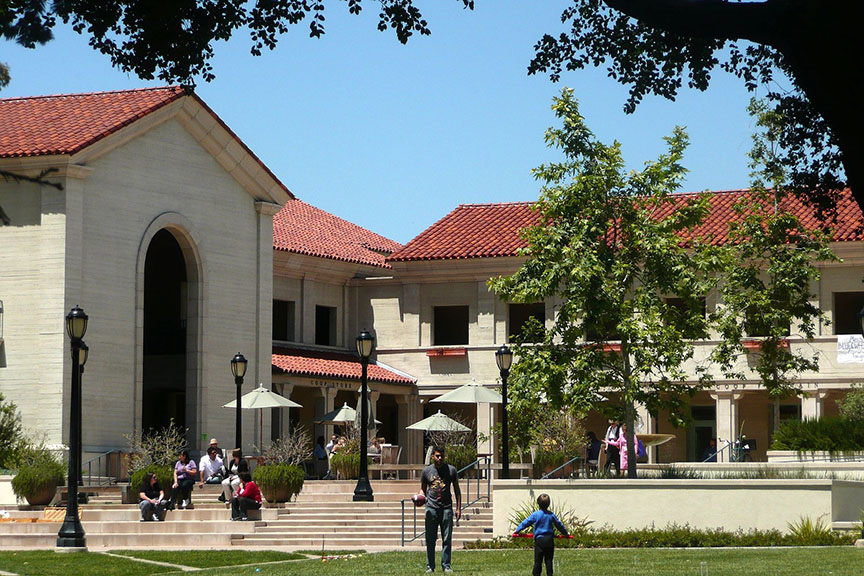
In the ninth grade, she gave a passionate speech at her school about women serving as rabbis. She sits on the Fairness Committee, where she and her peers hear cases between two students or a teacher and a student and decide upon a verdict. One day, she might even decide to be a prosecuting attorney and “serve justice to people who deserve it,” she said. “There are certain issues that really get me pumped up.”

Her former music appreciation teacher and journalism advisor Joelle Keene has noticed Bern’s enthusiasm about different causes.

“She's a firecracker,” she said. “She has a tremendous amount of passion, personality, drive and a sense of outrage too.”

Keene said that at Shalhevet, Bern’s candid nature made her stand out amongst the other students.

“She gets fired up about the way things ought to be,” she said. “At the town hall meetings at school, where they present a moral dilemma about school policy, news or the dress code, she'll feel more strongly about it than most of the kids.”

No doubt this tremendous energy has served Bern well in other areas of her life as well, whether through the award-winning writing she did for Shalhevet’s newspaper, The Boiling Point; her acting in numerous drama productions; or her passionate work on the debate team. She even wrote three one-act plays that were produced.

Somehow, she still finds time to be a babysitter every other Shabbat at her shul, the Westwood Village Synagogue, and work as a counselor at Camp Ramah in California.

In 2014, she’ll attend New York University (NYU). But before she goes to the East Coast, she’s taking a yearlong trip to Israel, where she plans to live on multiple kibbutzim and travel the country.

“I really wanted a year to decompress, and I think this is the prime opportunity to do this,” she said. “Once you go to college you don't have much time to explore the world.”

Though Bern said she doesn’t know what she’ll major in at NYU or what kind of career she will end up choosing, she’s interested in the fields of law and psychology.

“I took Advanced Placement psychology this year, and it was the most fascinating thing in the world,” she said. “[Learning about] the way people behave and why they behave that way, [as well as about] their inner consciousness really struck me.”

What’s most important to Bern is making sure that she is content with whatever she chooses to do. 

“I want to make sure that at the end of my life, I did everything I could,” she said. “I want to be able to look back and say I did it all because I wanted to, and I didn’t let outside circumstances, like money, [dictate my life]. I just want to be happy.”

Outstanding Graduate: Rose Bern — A passionate voice Read More »

Lights out (and sirens off) for Hatzolah?

In March 2011, Hatzolah of Los Angeles, the Orthodox Jewish volunteer emergency response corps, celebrated its 10th anniversary in this city. The celebratory dinner offered a chance for the group to thank some of its supporters, and the hundreds who attended — including elected officials and high-ranking civil servants — heard stories of Hatzolah volunteers saving lives, in part by arriving on the scenes of emergencies within minutes of being called. 

The principal honoree that evening was California Highway Patrol (CHP) Commissioner Joseph A. Farrow. The state agency had given Hatzolah a permit to operate the lights and sirens on its vehicles when responding to emergencies, a practice known as responding “Code 3.”

Left unmentioned that evening was the fact that Hatzolah lacked any authorization from the City of Los Angeles to operate its ambulances, or to respond Code 3. Three times in the three years leading up to that public event, the city’s Department of Transportation (DOT) had informed the group, in writing, that its basic model violated two separate sections of L.A. County law. 

Absent those permits, Hatzolah never stopped working, responding to emergency calls and, in some cases, acting as liaison between members of the Jewish community and mostly non-Jewish first responders. Last summer, the group helped rescue two individuals — in one instance working with Los Angeles County Sheriff’s deputies to find a person just minutes before what would have almost certainly been a successful suicide. 

But starting in 2011, and for more than a full year, all of Hatzolah’s vehicles were off the streets; two years after the celebration, its three fully equipped ambulances still sit idle. 

Its approximately 80 EMTs still respond to emergencies — mostly using their own, private cars and obeying traffic signals even when en route to an emergency, but occasionally using one of Hatzalah’s four SUVs with the lights and sirens running. But no matter what they’re driving, the EMTs are operating in a manner whose legality is uncertain. 

“The current status is ‘hot potato,’ ” Hatzolah spokesman David Bacall said of his organization. “That’s the best way that I can describe it.”

Hatzolah, Hebrew for rescue, got its start in Los Angeles in 2001. Its volunteers operate in three neighborhoods of the city with dense populations of Orthodox Jews, although most Angelenos are hardly aware of the group’s existence, a sharp contrast to chapters in and around New York City that are far better established. 

On the East Coast, the presence of volunteer ambulance corps is quite common, particularly in smaller towns. Hatzolah’s first chapter was established in Brooklyn in the 1970s; Bacall, a financial adviser originally from New Jersey, had served as a volunteer with a number of different 911-related volunteer corps before moving to Los Angeles with his family four years ago. 

In California, however, EMS services are provided primarily by local professionalized fire departments, which maintain exclusive claims to being the sole 911 responders in their particular regions. In the city of Los Angeles, the exclusive responder to emergency calls is the Los Angeles Fire Department (LAFD); in unincorporated sections of Los Angeles County, the county fire department has that privilege. 

Under current county law, Hatzolah is prohibited from responding to emergencies, even when the calls come in over the group’s dedicated hotline. In its letters, the DOT has informed the group that to obtain a permit, Hatzolah would first have to agree not to respond to emergencies. 

Furthermore, because Los Angeles County Emergency Medical Services Agency (LACEMS) also determines the sums charged by all private ambulances in the county, Hatzolah would be prohibited from providing transport to hospitals free of charge.

In both respects, Hatzolah could be seen as a threat to the LAFD — threatening the agency’s claim to exclusivity in the city and chipping away at the department’s main source of revenue, the fees paid by patients and their insurance companies for transport.

In fact, Hatzolah responds to about 500 emergencies each year, and Bacall argues that its relative size wouldn’t adversely affect the LAFD’s bottom line in a significant way. In general, Bacall said, Hatzolah’s aim is to support and supplement the work of the LAFD. 

“We’ve trained with them in the past,” Bacall said. “The boots on the ground, we have a really good rapport with 80 or 90 percent of them.”

The representatives from United Firefighters of Los Angeles City (UFLAC) are a different story, however. 

About five years ago, Hatzolah attempted to get a bill passed in Sacramento that would have specifically allowed the group to respond to emergency calls, using lights and sirens. Then UFLAC President Pat McOsker showed up at the California State Legislature’s transportation committee and argued against the bill, which stopped it in its tracks. 

“It seems like that’s the most complicated issue for them, and there are regulations that get in the way at every level,” said Paul Koretz, who introduced the legislation when he was in the Assembly. 

Koretz, a member of the Los Angeles City Council since 2009, represents some of the parts of the city where Hatzolah operates, and he maintains his strong support for the organization. 

Under current county law, Hatzolah is prohibited from responding to emergencies, even when the calls come in over the group’s dedicated hotline. In its letters, the DOT has informed the group that to obtain a permit, Hatzolah would first have to agree not to respond to emergencies.

In July 2011, Koretz convened a meeting with representatives of the LAFD, DOT, LACEMS and Los Angeles Police Department (LAPD), hoping that the agencies could find a way to work together to allow Hatzolah to respond to emergencies. 

The meeting was “somewhat tense,” Koretz recalled, and the responses of the different agencies were “bureaucratic.” 

“It sounded like some of their requirements might even conflict with each other,” Koretz said in an interview recently. “I was hoping that some of the people in these positions would try to make it work; but I couldn’t tell whether they were finding a way to make it work or trying to find a way to not make it work.”

Perhaps as a result of the bureaucratic challenges and the union’s opposition, Hatzolah has shown itself willing to act first and ask questions later. 

The group, for instance, received a “cease-and-desist” letter from LAPD Chief Charlie Beck’s office in 2011, telling the responders to stop driving Code 3. Earlier this year, on the advice of attorneys, Hatzolah wrote back to Beck informing him that they would resume use of lights and sirens on their four SUVs, in certain cases. Hatzolah leaders met with Beck last month to discuss the matter, Bacall said. 

As for Hatzolah’s three ambulances, the group has submitted an application to LACEMS, but has not brought itself into compliance with the relevant laws. Instead, Bacall said, Hatzolah is hoping that some branch of government — perhaps the state legislature — will provide it with an exemption that would allow Hatzolah to continue responding to emergencies on a volunteer basis. 

Los Angeles’ newly elected mayor and city attorney are almost sure to face questions about whether or how Hatzolah will be allowed to operate in L.A. 

A spokesman for Mayor-elect Eric Garcetti’s transition team did not respond by press time to a request for comment. Former Assemblyman Mike Feuer attended the Hatzolah 10th anniversary dinner two years ago, and a spokesman said Feuer would address the matter once he takes office as city attorney. 

“As with a myriad of issues, he will carefully evaluate each side and receive a full briefing from city attorney staff and make a decision,” spokesman Rob Wilcox said. “Right now, he is City Attorney-elect, and he is focused on his transition.”

Lights out (and sirens off) for Hatzolah? Read More »

Welcome to rehab city

At 9:30 a.m. on a recent Tuesday morning, six men in their 20s and 30s were sitting on leather chairs in a cozy, dimly lit room in a nondescript Miracle Mile building, sharing with one another and two therapists their progress in transitioning from a life of addiction to what they hope will be a clean future.

Some of the men wore gym shorts, others jeans. Some sat up straight, engaged in the conversation. Others looked down at the floor. One shifted somewhat restlessly in his seat, appearing to want to doze off but speaking eloquently when it was his turn.

This was less group therapy than conversation. Noam (a pseudonym used, as with every recovering addict in this story, to protect privacy) talked about fighting addiction at a time when most of his friends are in college. An emotion that the 20-something often fights, which haunts many addicts and can lead to addiction itself, is shame.

“I guess I beat myself up because I’m an addict,” Noam said. “I come from a family where everyone’s successful.”

This is the Chabad Residential Treatment Center. It opened in the 1960s in Westwood before moving to Robertson Boulevard in 1972 and eventually to its current location in 1999 on the corner of Olympic and Hauser boulevards. Beginning with a handful of clients and a shoestring budget, the center now has an annual budget of about $1.4 million and treats approximately 100 people — all men — per month. 

It’s also one of only three Jewish recovery programs in the nation, one of only two Jewish inpatient treatment facilities — both of which are in Los Angeles — and the only all-kosher, holiday-observant rehabilitation facility in America. 

This last, unique quality facility helps attract not only recovering Jewish addicts from California, but also many from across the country. By word of mouth alone, the center has drawn thousands of people, including visits from actors David Arquette and Tom Arnold, who did not undergo treatment at Chabad but came to speak with clients who did.

Just a short drive away on Venice Boulevard sits the only other Jewish addiction rehab inpatient treatment center in the United States — Beit T’Shuvah, which houses an eclectic mix of male and female addicts trying to recover. Many of their counselors are former addicts who went through its Torah-intensive rehab program. It is run by Harriet Rossetto and her husband, Rabbi Mark Borovitz, and was opened in 1987 with a $50,000 annual budget. Beit T’Shuvah’s rapid growth (it’s budget is now $8.5 million) mirrors that of the increasing demand in the Jewish community for addiction rehab. 

Borovitz, a Conservative rabbi who received ordination at the University of Judaism, is an ex-convict who, in his previous life, served time in a state prison in Chino. His Los Angeles Times bestselling memoir, “Holy Thief,” chronicles his recovery from two addictions — crime and alcohol — and how immersion in Torah brought him out of his dark world. 

A key tool for recovery at Beit T’Shuvah, Borovitz said in a recent interview in his office just outside Culver City, is the ability for a highly flawed — even sinful — person to see himself in the Torah.  He cites as an example Jacob, traditionally viewed as a “tzaddik,” (a righteous person), but one who cheated his brother Esau out of his deserved birthright.

“I saw that I was Jacob,” Borovitz said. “I love Jacob. Jacob was a con man, a liar, a cheat and a thief. He’s just my kind of guy.”

Borovitz says he has redirected his salesmanship traits and charisma from conning people out of thousands of dollars to teaching God and wisdom to people searching for meaning and purpose.

A major segment of Beit T’Shuvah’s recovery program involves daily Torah study. Each client is expected to regularly attend these classes. This type of spiritual therapy goes in line with a core belief shared by Rossetto, Borovitz and the Chabad center of what underlies most addiction — a disease of the soul and an inability to harness the energy of the yetzer hara, the darker side of the human that can wreak havoc if not used properly.

The Chabad facility also offers daily Torah classes, but they are not mandatory and the program does not require its clients to take a religious path to recovery. In fact, about one-third of its clients usually are not Jewish. But those who freely choose that path while at the center tend to do better, said Rabbi Chaim Cunin, a spiritual leader at the treatment center and CEO of Chabad of California.

“While the program is kosher, while the spiritual tools are available to them, they need to come to it on their own,” said Cunin, whose father, Boruch Shlomo Cunin, informally founded the center out of his Westwood home in the 1960s.

He related one story of Andrew, a client who was recovering from drug addiction and wanted to leave the Chabad treatment center three months early because he impulsively felt he could find a deeper spiritual connection in his home community in Brooklyn. 

From the Torah’s perspective, Cunin recalls telling Andrew, his only religious obligation at that point was to save his life and complete his treatment. Returning to New York, where he fell into trouble in the first place and where there was no similar rehab facility if he started using again, would be “abandoning the principles of Torah and Judaism.” 

According to Cunin, Andrew stayed in Los Angeles, completed the rehab program one year ago, and has been clean since.

Donna Miller, the Chabad center’s director, said that a problem among some of her clients, many of whom grew up in Orthodox homes in New York, is that observance never “clicked” for them. And unfortunately, too many of their parents, horrified at their sons’ addictions, mistakenly thought that simply re-engaging in Jewish study would be a solution.

“Parents think that just by sending their children back to Torah classes or yeshiva that the underlying problems will get fixed,” Miller said. “The yeshivas are not equipped to address the underlying issues and to provide the kind of support and care needed to correct a drug problem.”

A common concern shared by both Chabad and Beit T’Shuvah is the seeming ubiquity of alcohol in Jewish life. From Kiddush clubs to tisches to farbrengens (casual, religious social gatherings that often involve alcohol), alcohol in Judaism can, at least in a teenager’s eyes, seem synonymous with many of the joyous get-togethers in observant communities.

At the Chabad facility, a client is permitted to venture out to other synagogues on Shabbat and holidays, so Cunin said that nearby shuls are asked to be aware of who is in attendance, and to not serve any alcohol to someone who they know is recovering from addiction. 

Although no studies have been done on the incidence of alcoholism among Jews, recovery experts say that addiction to things like heroine, cocaine, alcohol, methamphetamine, painkillers, pornography, food and sex hits Jews just as hard as it hits any other group of Americans.

According to Dr. Abraham Twerski, an author and psychiatrist specializing in substance abuse, addiction within Judaism is “across the board.” He founded the Gateway Rehabilitation Center, a renowned treatment center in Pittsburgh, and thinks that addiction afflicts the Orthodox as much as it affects any other subset of Jews.

A common problem with recovery, Twerski told the Journal in a phone interview from New Jersey, is the insufficient time commitments that many rehab centers require. He said that most centers have programs lasting three to four weeks followed by a halfway house, but that it would be ideal to have longer treatment.

Zvi, a client at Chabad’s recovery center, said he moved in and out of short-term rehab centers and even paid $15,000 for a rapid 24-hour detox before he decided that quick fixes would never last and that to save his life he needed to be in rehab for at least six months.

Chabad requires a minimum three-month commitment, but encourages everyone to stay for at least six months before taking a job and re-entering society. For those who need more time after treatment, Chabad has “sober living” quarters, where residents are able to live independent lives within the confines of the treatment center.

At Beit T’Shuvah, residents are required to go through a three-month treatment program before being encouraged to transition back into the outside world. For residents who need it, there is a halfway home.

Even people who are clean for many years can never fully kick the temptation. In the addiction world, many clients have multiple stints in rehab centers. One reason they end up so dangerously flawed often comes from, of all things, a sense of perfectionism, according to Rossetto. Their thinking can be, she said, “If I’m not 100 percent perfect then I am completely unworthy.”

For many, she added, the sense that one’s worth is determined by material possessions is self-destructive, leading people who can’t achieve their material expectations to try to numb the pain, often with drugs or alcohol, sometimes with food or sex. For some people, especially workaholics, drugs provide a relief from the stress and intensity of day-to-day life.

Zvi described in detail his descent into his drug of choice — painkillers — and how using helped him handle the pressure of his high-powered finance job in Manhattan. Like many who are hooked on painkillers, Zvi started using them legitimately, as a way to make his recovery from a hand surgery less painful. Eventually, though, painkillers became an escape from the daily grind.

“I didn’t think twice. I just took them,” said Zvi, who grew up in New York and became addicted to Percocet and Vicodin shortly before his first child was born. Whenever he tried to kick the habit, he would fall ill, needing to take more in order to function day to day.

“It became over time like a 24-hour job because you have to make sure you have enough for the next day and for the week.”

After a downward spiral that included stealing from his family, going into significant debt, switching to heroin (which is cheaper than painkillers) and going in and out of short-term rehab facilities, Zvi was told that he needed a long-term inpatient program. And as an observant Jew, the only treatment center that fit his needs was here, on Olympic Boulevard, 2,800 miles away. 

Zvi’s predicament mirrors that of any observant addict in New York, Boston or Baltimore: Because not one Jewish in-patient rehab center exists on the East Coast — Techiya, which is in West Palm Beach, Fla., is a Jewish recovery track within a larger facility — recovering properly would require leaving one’s friends and family for many months. Twerski isn’t sure why New York, with its population of more than 1.5 million Jews, hasn’t created its own centers.

“Facilities should [have] developed out on the East Coast a long time ago,” he said. “They haven’t, but I don’t know why.”

In Los Angeles, the prevalence of addiction in the entertainment industry and in high-profile families — Jewish and non-Jewish — may have helped reduce the humiliation of coming out. Despite the stigma that keeps many addicts in the shadows, Rossetto said California’s culture makes admitting addiction — and thus recovering — easier. 

“There’s more openness about everything here, drug use included.” 

Zvi, who is expecting another child in the coming weeks, said he plans to move his family to California following his recovery. He doesn’t think the New York environment he’s known his whole life is healthy for him.

“I definitely think out here it’s a lot more ok to be a recovering addict than in New York,” Zvi said. “I feel like everyone is more laid back.”

Welcome to rehab city Read More »

What I want for Father’s Day

If you’ve never had a tooth extracted, I can assure you that it is everything you’d imagine and more, especially since I opted out of the general anesthesia that would’ve rendered me unconscious during the procedure. Turns out, I didn’t need it. You can imagine the surprise of the oral surgeon and his team of assisting nurses when my arm twitched involuntarily, exposing the fact that I’d fallen asleep in the chair while they all worked in my open mouth.

What’s worse, the offending arm twitch also woke me up. As I reluctantly drifted back to consciousness, I heard the oral surgeon ask, in amused amazement (or was it “amazed amusement?”), “Did he fall asleep?!”

It seemed this was a first for them. One of the nurses responded, “It shows how good we are.”

Not that they weren’t doing a good job (at least, I hoped they were), but I felt compelled to correct her, “Uh bwuh bwuh bwuh.”

Being fluent in the language of people who have surgical equipment in their mouths, the oral surgeon knew that translated to, “I have a 15-month-old baby at home.”

“That would explain it,” he laughed. “This must be a break for you. I love it!” Then, turning on the drill, he added, “You can go back to sleep now.”

And I did. Not really. But I do confess that, sometime later, I was actually looking forward to an ultrasound I had to have performed because I thought that it might present the opportunity to catch a few winks.

To my horror, I have become a cliché: the sleep-deprived parent.

When people found out that my wife and I were expecting our first child, they all warned us to enjoy our sleep now because soon we weren’t going to be getting any. And I mean, everybody. That was the first response of every single person we told, at least the ones with kids.

Everything they say about the effects of sleep deprivation is true. Remember, it is an accepted form of torture in many countries, none of which, to my knowledge, is cruel enough to administer it in conjunction with forced diaper changing.

Since our son, Gabriel, came to live with us, both my wife and I have experienced the phenomenon of entering a room and being unable to remember what we went in there for. We fail to find things that are right in front of us. We have a sense that there are people we should be holding grudges against, but we can’t remember who they are, or what they did.

On one occasion, I refilled the humidifier with water and turned it on, only to be baffled as to why I couldn’t get any steam to come out of the spout, no matter how high I turned up the dial. I fiddled with it for several minutes, until my wife, in a moment of clarity, suggested that I plug it into an electrical outlet.

Hopefully, none of my current employers are reading this. If they are, I can assure them that my work is the one thing that, for some reason, has not been affected at all.

Everything they say about the effects of sleep deprivation is true. Remember, it is an accepted form of torture in many countries, none of which, to my knowledge, is cruel enough to administer it in conjunction with forced diaper changing.

There is a flip slide to this coin. The truth is, I enjoy sleep now more than I ever have before; it’s just not my own. There’s no accomplishment more satisfying — at least in my life thus far — than finding the perfect combination of soothing techniques necessary to lull a crying baby to sleep in your arms. The moment is thrilling and never ceases to amaze. You cannot believe what you have just achieved, even though you witnessed it with your own eyes. And although Gabriel is always adorable — if you don’t believe me, just ask my wife; she’ll tell you — when he sleeps, he is absolutely angelic.

Who cares that we never get to the movies anymore? I can watch Gabriel (sleeping or waking) for hours on end, completely transfixed and entertained, which is lucky for me as we now attempt to wean him from breastfeeding. When he wakes at 3 or 4 in the morning, expecting to nurse, it is I who must deal with him, as there is no way for my wife to distract him from what he really wants.

As I yearn for my pillow, it would be easy for me to curse my fate, but, eventually, Gabriel will rest his head against my chest, and I’ll feel his little muscles twitch in my arms as he relaxes into slumber. And I know that, one day all too soon, these moments will be cherished amongst the most memorable and meaningful of my life.

What do I want for Father’s Day?

Sleep. Or not.


Howard March is a writer and producer in film and for television in Los Angeles.

What I want for Father’s Day Read More »

EU envoy targets settlements

Israel’s settlement building is increasingly isolating the country in Europe, leading to European Union policies that could reinforce Israel’s delegitimization, according to the top EU representative to the peace process.

Andreas Reinicke, the EU’s special envoy for the Middle East peace process, said increasing frustration with the settlement movement is leading Europe to adopt policies that single out Israel for punitive measures.

In a June 5 interview at the EU’s Washington mission, Reinicke, in town for meetings with counterparts in the Obama administration, cited two policies in particular: increased levies on goods manufactured in West Bank settlements, which already are in place, and labeling to distinguish products manufactured in Israel from those in the West Bank, which is under consideration.

“What the Europeans feel compelled to do is to make clear that our political position, our understanding of the territory of the State of Israel, which is the borders of 1967 including West Jerusalem, has to be reflected in our legal relationship between Israel and the European Union,” he said.

Reinicke said the European establishment overwhelmingly opposes actions that isolate Israel as a whole, noting for instance the decision by British physicist Stephen Hawking to boycott a conference in Israel this summer.

“The vast majority,” he began, then corrected himself. “Everybody is against this,” he said, referring to the boycott and divestment movement.

Nonetheless, he acknowledged that the policies distinguishing settlement products from Israeli products reinforce the movement to isolate and delegitimize Israel.

“The danger is there,” he said. “I don’t think it’s a good development.”

Reinicke suggested that the labeling policy would soon be adopted.

“The number of foreign ministers who are supporting this are increasing,” he said. “This is a development we should look at, which is not a good development.

“It is almost impossible to explain to any European why settlement is continuing all the time. It is difficult to explain to Europeans why increased settlement activities mean an increase of security for the State of Israel.”

The pessimistic scenario outlined by Reinicke echoed similar warnings this week from John Kerry, the U.S. secretary of state, and from the foreign minister of the Czech Republic, one of Israel’s staunchest friends on the continent.

“Yes, the United States of America will always have Israel’s back,” Kerry said in remarks to the American Jewish Committee on June 3. “We will always stand up for Israel’s security. But wouldn’t we both be stronger if we had some more company? “

Also addressing the AJC, Czech Foreign Minister Karel Schwarzenberg described an erosion of support for Israel in Europe.

“Alarm among Israel’s foreign partners about the continued expansion of Jewish residential areas beyond the Green Line, steadily eroding the size and contiguity of the residual non-Jewish territories, often seems to be felt in Israel as a political nuisance to be overcome rather than a serious questioning of Israel’s political credibility,” he said.

The Czech Republic was the only European nation to join the United States and Israel last year in opposing the Palestinian Authority’s successful bid to enhance its United Nations status to non-member state observer.

Most of the other 27 members of the European Union abstained on the vote. Asked why Europe does not treat the Palestinian Authority’s quest for statehood recognition absent negotiations with Israel with the same seriousness that it opposes settlement expansion, Reinicke said it was hard for European nations to adamantly oppose a diplomatic maneuver.

“We think that the Palestinians should come to the negotiating table without preconditions,” he said. “We had a strong discussion and very, very intensive discussions among the Europeans about how to move. But the bottom line, it is a sort of diplomatic activity. It is peaceful, not a violent one.”

He expressed coolness about a plan advanced by Kerry to seek $4 billion in private investment for the Palestinian areas, noting that economic conditions — in particular the ability to move people and goods about freely — are more important than money.

Kerry’s investment plan, which a number of Republicans in Congress have rejected, won a hearty endorsement from the American Israel Public Affairs Committee.

Reinicke suggested that Europe would soon join the United States in designating Hezbollah — or at least its military wing — as a terrorist entity, which would curtail the Lebanon-based terrorist group’s fundraising on the continent.

“If you see the public statements of the major foreign ministers,” he said, “I think there is a move in this direction.” 

EU envoy targets settlements Read More »

Obituaries

Ruth Braverman died April 26 at 92. Survived by sons Michael (Eileen), Walter; 6 grandchildren; 6 great-grandchildren. Hillside

Alvin Breitman died April 25 at 86. Survived by daughters Jill (Rodney) Breitman-Sable, Terri (Kyle) Clark; son Craig (Tracy Childs); 7 grandchildren. Hillside

Isabel Bronstein died April 22 at 89. Survived by sons Marc (Shohreh), Rod (Patti); 2 grandchildren. Hillside

Alvin Canter died April 23 at 84. Survived by wife Betty; daughters Gail (Joe) Arce, Joy (Hank) Palmer; sons Neal Marcus, Neil (Cheryl Perkey), Phillip (Lorraine); daughters-in-law Eva, Kathy; 10 grandchildren; 2 great-grandchildren; brothers Robert (Karen), Sid (Jane). Mount Sinai

Barbara Chodorow died April 24 at 68. Survived by husband Ronald; daughter Tammy (Joe) La Firenza; sons Jason (Jenny), Todd (Millie); 3 grandchildren; mother Dorothy Woskow; brother Michael Woskow. Mount Sinai

Cyril Davis died April 27 at 90. Survived by companion Mickey Galvin-Schultz; daughters Lisa (Glen) Deitell, Caroline (Richard) Green; 3 grandchildren. Mount Sinai

Elaine Ehrlich died April 26 at 85. Survived by daughter Marleen Kushner; son Robert (Laurel); 5 grandchildren; 14 great-grandchildren. Mount Sinai

Eleonore Fleishman died April 21 at 86. Survived by husband Stanley; daughter Linda (Philip). Hillside

Lelia Fligelman died April 23 at 101. Survived by nieces Marti Fligelman, Joan Travis. Hillside

Elinor Glenn died April 24 at 98. Survived by daughter-in-law Marie Ritzo; 2 grandchildren; niece Wendy (Robert) Greene. Mount Sinai

Ben Greenberg died April 21 at 98. Survived by daughter Bobbie (Duke) Aguiar; son Mark (Andrea); 2 grandchildren; 3 great-grandchildren. Mount Sinai

Ann Gross died April 25 at 86. Survived by daughters Vivian (Andrew) Dungan, Miriam (Richard) Levitan; son Michael (Marianne); 5 grandchildren; 1 great-grandchild. Mount Sinai

Georgia Hocket died April 24 at 83. Survived by daughters April (Daniel) Akiva, Elizabeth; sons Richard (Joelle) Quinn, Stanley; sisters Florence Grant, Giselle Bouganim, Rachel Lawrence; brothers Joseph Bouganim, Marc Bouganim, Raymond Quinn; 8 grandchildren; 6 great-grandchildren. Malinow and Silverman

Julian Katz died April 21 at 94. Survived by daughters Francine Ellman, Pamela (Richard) Mann; 2 grandchildren. Mount Sinai

Vicki Katz died April 21 at 64. Survived by sons Bradley (Kathy), Jeff; 2 grandchildren; mother Bernice Gettler; brother Larry (Babette) Gettler. Mount Sinai

Harvey Lerer died April 24 at 78. Survived by wife Nora; daughters Cathrine (Daniel McGee), Elizabeth; son John (Annie); 4 grandchildren; brothers Richard, Stephen. Hillside

Irving Liss died April 23 at 90. Survived by wife Bernice; sons Gary, Richard; sister Shelly Sterling. Mount Sinai

Jacob Puritz died April 25 at 90. Survived by daughter Sharon Miller; sons Harold, Michael (Judith); 2 grandchildren. Hillside

Fannette Ring-Ziering died April 26 at 89. Survived by son Lanny Ziering; daughter-in-law Barbara Ziering; 3 grandchildren. Mount Sinai

Michael Rogovoy died April 26 at 89. Survived by daughter Svetlana (Mark) Pylen; 1 grandchild. Mount Sinai

Jan Ross died April 22 at 93. Survived by daughters Jill Glasband, Marilee (Tony) Sokolowski; brothers Paul (Vicki) Gruszniewski, Steven Ross; 4 grandchildren; 5 great-grandchildren. Hillside

Lazarus Scott died April 20 at 97. Survived by daughter Barbara (Michael Tronick); son David (Elaine); 1 grandchild. Hillside

Hyman Shevick died April 24 at 94. Survived by daughter Laurel (Don) Fulkerson; son Mark; 1 grandchild; 1 great-grandchild; brother Ed Shevick. Hillside

Rose Siegel died April 21 at 93. Survived by daughter Joan (Daryl Clark) Siegel-Clark; son Barry (Mari); 3 grandchildren; 4 great-grandchildren. Mount Sinai

Irene Streisfield died April 22 at 85. Survived by daughters Stephanie Lugash, Robin (Kevin) Vest; brother Elliot Messinger. Mount Sinai

Eve Turkheimer died April 26 at 83. Survived by sons David Rose, Michael (Anita), Steven (Judy); 6 grandchildren; 4 great-grandchildren; brothers David (Fran) Hertz, Klaus (Jeanette) Rose. Malinow and Silverman 

Max Turrell died April 26 at 93. Survived by sons Lonnie (Lori), Jay (Debbie), Alan (Vicki); 6 grandchildren; 4 great-grandchildren; girlfriend Marian Bloch. Groman Eden

Barbara Waldman died April 26 at 80. Survived by husband Gerald; sons Craig (Cindy), Ronald (Stephanie); 4 grandchildren. Hillside

Verne Weinbaum died April 21 at 92. Survived by daughter Lois (Alan) Braus; son Kenny (Barbara); 4 grandchildren; 8 great-grandchildren; brothers Bernard (Carol) Bogar, Donald Bogar; 1 nephew. Mount Sinai

Natalie Wolff died April 21 at 99. Survived by daughter Andrea (David) Stanley; 2 grandchildren. Mount Sinai

Obituaries Read More »

Men who made a mark that will endure

As part of a fundraising event for Tel Aviv University, Rabbi David Wolpe interviewed four leading Los Angeles Jewish philanthropists, recording their stories and thoughts on video. Rabbi Wolpe and the four men — Gil Glazer, Max Webb, Jona Goldrich and Parviz Nazarian — will present the film at a dinner honoring the men on June 20 at the Four Seasons Beverly Hills.

A generation comes and another goes: True enough, but not all generations are alike. Experiences shape some in ways that are unrepeatable. Gil Glazer, Jona Goldrich, Max Webb and Parviz Nazarian are part of a unique generation. And within their generation, these four men are truly remarkable. The blast furnace of history that forged their souls has, thank God, become a historical memory. But we who regard them with love and awe can only be grateful that each used the experiences of his life to elevate our own lives as well.

Gil Glazer served in the American Army in World War II. Parviz Nazarian left Iran and was wounded while serving in the Israeli army in 1948. Jona Goldrich fled Poland and the Nazis with his younger brother in a dramatic trek through Europe. And Max Webb survived 18 camps, including Auschwitz, to come to the United States.

Each of these men, in their own way, had qualities that enabled them to spin gold from the dross of personal trials. Each became deeply involved with the State and fate of Israel. They are the intimates of prime ministers, major forces in the industrial and financial success of the state. And here in Los Angeles, their chosen home, each has taught generations by both advice and example, what it is to use self-created wealth to reach out to those in need. Yes, every generation has its challenge and its glory, but where do we find men like these who were given almost nothing and managed to do everything?

The privilege of interviewing these four men was a glimpse into their times and their world. Certain common themes shone through their lives. Each was desperately concerned with the physical and moral health of the Jewish people. They support Israel not only because they love the land and its people but also because in the personal memory of each man, in different ways, is the burning awareness of what was lost.  Jonah and Max saw with their own eyes the destruction of European Jewry. Gil fought in the war that ended it. Parviz saw the decimation of his ancient community and its relocation throughout the world. They represent together the historical experience of Jews in the 20th century: It is the tale of the phoenix. And these men are the agents of resurrection.

All were profoundly concerned with family. Together with their wives, who were partners in their success and generosity, all of them took care to ensure that their families knew and understood the challenges Jews faced in this world. Each was an agent of education for their children and grandchildren as well as the Jewish community. They were men of the world who began their goodness and greatness by being men of the home.

These are also four deeply learned men. They love education, learning. Not all had the privilege in their lives of a deep formal education, but their experience is wide ranging and deep, and they create that opportunity for others. The reason Gil, Jona, Max and Parviz are so intimately involved with Tel Aviv University is that it teaches thousands of young women and men each year, preparing them for life in a modern economy and a challenging, ever-changing world. Tel Aviv University is a symbol of what the State of Israel has accomplished: a nation where young Jews can achieve commensurate with their efforts and abilities.

So we listen to Jona Goldrich, who was entrusted with his brother and was supposed to meet his parents, who never came. As a result, he works throughout his life to ensure that people remember what happened. He will make sure that we never forget.

We listen to Max Webb, who saw babies murdered by the Nazis. As a result, he promised himself and the memory of his parents that he would forever help the Jewish people flourish as he had seen them suffer. For, although he saw horrors, Max considers his survival a miracle from God.

We listen to Gil Glazer, who learned giving at his parents’ knee, and returning from the war gave up Harvard Business School to give local workers jobs. He became such a success that he spent his life advising governments in the United States and Israel, supporting innumerable causes and promoting Jewish life. 

We listen to Parviz Nazarian, whose father died when he was a small child and who came to Israel with nothing, sleeping on the roof of an Arab man’s home. His remarkable rise in business led him to be a central pillar of support both for Israel and for the Iranian community in the United States.

What makes these men great? They treasure the past but are not limited by it. They each recognized that innovation was a chance to re-create what they treasured from their upbringing in a new world. Each has a boundless optimism even now about the possibilities of change: In place of obstacles, they recognized opportunities. They are charismatic and winning personalities: All four created alliances with others and generated loyalty through their example. These men are driven, not for profit alone but for what vast resources can do in this world. 

Gil, Jona, Parviz and Max are giants in philanthropy, in business, in wisdom and in spirit. What a privilege that they chose our community to make their trailblazing way through life. This generation of theirs has left a mark that will endure throughout the age.


David Wolpe is the rabbi of Sinai Temple. You can follow his teachings at facebook/RabbiWolpe.

Men who made a mark that will endure Read More »

Abraham

I came late to sunrise. The hills were lit
with goats. Everything shimmered in
small steps. I closed my eyes.

The Kinneret sits back in its water
waiting to be made to shine.
My blood is like the sea.

Jerusalem against the sun. People
draw lots for the shadows
and put down spears.

I walk toward walls.
The late sun enters my skin
like the blade of Isaac’s knife.

This poem first appeared in Midstream in 1985.


Bill Yarrow is a professor of English at Joliet Junior College and the author of “Pointed Sentences” (BlazeVOX, 2012). His work has appeared in many print and online journals, including Poetry International, DIAGRAM, The Del Sol Review and RHINO.

Abraham Read More »

L.A. City Council passes anti-BDS resolution

Los Angeles’s City Council unanimously approved a resolution on June 12 stating that the city would continue awarding city contracts without considering issues related to the Arab-Israeli conflict.

The resolution, sponsored by Councilmembers Paul Koretz and Mitchell Englander, deals a pre-emptive blow to backers of the BDS movement. That movement, which seeks to marginalize Israel and has been gaining some traction on some college campuses in California, is named for its three primary strategies, boycotts, divestment, and sanctions.

The resolution came before the council nine months after a coalition of B.D.S. activists urged the city not to award a bus contract to a French multinational company with business holdings in the West Bank.

Back in September 2012, when activists assembled to urge councilmembers on the transportation committee not to renew a city contract with Veolia Transportation, the Jewish Federation of Greater Los Angeles’s community engagement committee and other local Jewish groups turned back the effort, arguing that not renewing Veolia’s contract would be a breach of fiduciary duty, and might even be illegal.

Federation helped draft the resolution that passed on Wednesday, which stated that all contracting decisions would continue to be made “based on the best interests of the City, its residents, businesses and taxpayers,” and not taking into account “issues related to the Arab-Israeli conflict.”

In a statement emailed to the Journal by a member of Federation staff, Federation Board Member Daniel Gryczman, who also chairs its community engagement initiative, said he believed the resolution was the first of its kind adopted by a large American city.

“We are very proud of the victory and the community coalition that our Federation built around this issue,” Gryczman said in the statement.

The full text of the resolution is below:

WHEREAS, individuals affiliated with the Boycott, Divestment and Sanctions

(BDS) Movement attempt to isolate and delegitimize the State of Israel through targeted campaigns across the United States; and

WHEREAS, the BDS movement seeks to block American cities from doing business with or awarding contracts to companies doing business with Israel; and

WHEREAS representatives of this movement have recently targeted the City of

Los Angeles in an attempt to influence City policy decisions in support of their BDS efforts; and

WHEREAS, the Federal government and the State of California have adopted measures prohibiting discrimination in commerce on the basis of contacts in or with Israel; and

WHEREAS, the Federal Government has repeatedly emphasized that efforts to isolate and delegitimize Israel will not promote Middle East peace, which can only be achieved through direct negotiations between the parties; and

WHEREAS, linking the City’s public contracting process to the Arab-Israeli conflict would be contrary to state and Federal policy and is not in the best interest of the City; and

WHEREAS, attempting to isolate Israel in this way will only cause needless division within our community.

NOW, THEREFORE, BE IT RESOLVED, that the City of Los Angeles will continue to make contracting decisions based on the best interests of the City, its residents, businesses and taxpayers and in accordance with the City Charter and applicable State and Federal law and hereby affirms that issues related to the Arab-Israeli conflict will not be considered and will have no impact on the awarding of contracts with the City of Los Angeles.

CO-PRESENTED BY: ­­­­­­­­­­­­­­­­­­­­­­­­­­

____________________________   ­­­­­­­­­­   ___________________________________

    PAUL KORETZ, 5TH District               MITCHELL ENGLANDER, 12TH District

L.A. City Council passes anti-BDS resolution Read More »

The Monty Hall solution

I’ve spent many hours with Monty Hall over the past two months. It’s work related, so I’ve gotten to know him in a way I never did when I was a kid. Back then, I’d come home from school and watch him on “Let’s Make a Deal.” 

Monty created the popular game show with Stefan Hatos 50 years ago. Contestants choose to take what’s behind one of three curtains, and they either end up with a valuable prize or a gag. The show was inspired by the Frank Stockton short story “The Lady, or the Tiger?,” in which a man’s choices result either in love or death. Monty added a third option, and replaced the woman with a washer-dryer combo and the tiger with a goat. I suppose that’s what captivated me about the show even as a child: In life, you never know, but you still have to choose.

Monty shot 4,000 episodes, and the show continues today with Wayne Brady as host. In all, Monty has made some 6,000 hours of television. This Sunday, June 16, Monty, now 91, will receive a much-deserved Lifetime Achievement Award at the 40th Daytime Emmy Awards ceremony.

During my first lunch with Monty, more than a year ago, I learned three things. First, the man cannot lift a spoonful of soup to his mouth without being interrupted by a fan or a friend. Second, he has spent much of his life raising money for charity — over $1 billion by his estimate. Finally, he is one of the best storytellers on the planet, and he has thousands of tales to tell. 

Wait, one more thing. Monty is relentlessly funny and sharp. When I introduced him to our Web director, he asked, “What’s your name?” 

“Jay,” was the reply. 

A beat. “You should take more letters,” Monty said. 

When Monty coughed a bit, his wife of 64 years, Marilyn, asked, “Are you alright?” 

“No, I’m dying,” he said. The man entertains.

He was born Monte Halperin in Winnipeg, Canada, the son of Rose and Maurice. His Orthodox Jewish family was in the kosher meat business, and Monty grew up delivering orders on his bicycle. Once, in winter, he arrived at a customer’s home shaking from cold. The concerned customer called his father and asked what he should do with the boy. “Warm him up and put him back on the bike,” was the reply.

Monty tells it better.

The Halperins were not wealthy — my colleague David Suissa related in these pages Monty’s poignant story of how the town playboy paid for him to go to college. But Rose Halperin taught Monty that however much he had, he had to share with others.

“That wasn’t a choice,” Monty told me.

So when he wasn’t in front of the cameras, Monty was traveling the world, raising money. His big causes were the children’s charity Variety International, Cedars-Sinai Medical Center, Israel Tennis Centers — actually, if you asked, and he was available, he said yes.

I asked Monty if he ever took an honorarium or a speaker’s fee. He looked at me like I stepped on his dog. And he told me this story:

Once a Jewish charity in St. Louis asked him to come emcee their event. He said yes, of course, and all he asked for was one airplane ticket and a hotel room for him and Marilyn. He would cover Marilyn’s airfare. The organizers balked— they didn’t want to pay for a double room. Monty called his mother and launched into a tirade about how could these people be so stingy over a stupid hotel room when he was giving up his weekend to host their event. He expected his mother, who was national chairman of Hadassah, to pick up the phone and set the organizers straight.

“Monty,” Rose Halperin said. “Just pay for the room, you got the money.”

Monty’s home in Beverly Hills is adorned with photos of his three children, the grandkids, all the honors he’s received, photos of him and Marilyn with presidents and prime ministers. There’s also the Emmy Marilyn received as an executive producer of the 1985 CBS TV movie, “Do You Remember Love?”

“I’m going to put mine next to hers,” Monty told me, “so they’ll make lots of little Emmys.”

Among Monty’s other claims to fame, “Let’s Make a Deal” gave rise to a classic mathematical puzzle. After a contestant has chosen one door, and the host offers him the chance to change his mind and choose another, should he? Would changing his mind put the odds of a better prize in his favor? They call this, “The Monty Hall Problem” — even though Monty said, in reality, the contestant’s choice matters less than the way the host manipulates the player. 

“On the show,” Monty said. “It’s different.”

At the end of one long visit, with many more stories, Monty leaned back in his chair.

“I’ve had a life,” he said, his strong and familiar voice a mix of satisfaction, marvel and gratitude.

Man plans and God laughs, goes the old the Yiddish expression. But when you choose well, that great Game Show Host in the Sky laughs with you.


Rob Eshman is publisher and editor-in-chief of TRIBE Media Corp./Jewish Journal. E-mail him at robe@jewishjournal.com. You can follow him on Twitter @foodaism.

The Monty Hall solution Read More »