
fbpx

October 8, 2012

The Jews, stuffed cabbage and Simchat Torah

It’s almost encoded in your Jewish DNA: How you make your stuffed cabbage all depends on where your grandmother came from.

For many, the delicacy is served on the holiday of Simchat Torah much the same way that latkes are associated with Chanukah, hamentaschen tag along with Purim and Shavuot comes with a plethora of dairy dishes.

So how did the overcooked, gelatinous, rolled-up dish become associated with the last festival of the High Holidays season?

“Most of the traditional foods we eat on Jewish holidays start out with a seasonal reason as to why we eat them, and later a religious significance is tacked on,” says Gil Marks, a Jewish food historian and author of the “Encyclopedia of Jewish Food.” “Vegetables like cabbage were in season during the fall and very cheap, so stuffed cabbage became one of the most popular traditional foods eaten. Cabbage was the odor of the shtetl.”

Travel back some 500 years to the 16th century, when Jews first started living in shtetls. The Jews mostly kept to themselves, but the food they ate often was a kosher adaptation of what their non-Jewish neighbors were eating, Marks says.

Stuffed cabbage was a staple dish for peasants during the cold season in places such as Turkey and Persia, and it arrived to the Jews of Europe from the south and the east, according to Marks. Jews living in places like Russia and Poland learned the dish from the Tatars, a Turkish group that ruled the area in the 16th century, while Jews living in southern European countries such as Hungary and the Balkans learned it from their Turkish neighbors, who then were under the control of the Ottoman Empire.

Eastern European Jews adapted the dish with cabbage and kosher meat, naming it after a dove because the rolled up item resembled a bird in a nest. So in Russian it was called golub, in Ukraine holub and in Yiddish teibel — all words for dove.

Those living in the Ottoman Empire made the dish using local grape leaves. They gave the dish a more literal name in Turkish, like sarma, which means wrap, yaprak for leaf, or dolma for stuffed.

From here, Jewish communities added their variations. Many Hungarian Jews use a dash of marjoram, Syrians add cinnamon, Persians throw in some dill and mint, and Romanians toss in lots of garlic and paprika.

As meat was expensive, many Jews in the Middle East and Romania would add rice to reduce the share of meat needed, while Eastern European Jews would add bread, barley or kasha. Some Middle Eastern varieties use only rice for the stuffing.

“They didn’t always have money to buy meat, but when they did, they saved it for special occasions and served their best dish on Simchas Torah,” Marks said, using the Ashkenazic pronunciation for the holiday.

When Jews began to immigrate to America in the 19th and 20th century, the dish took on new variations, like cooking it in a tomato stew or a sweet-and-sour sauce.

“I’ve met so many people over the years that like to make their own little variation of the dish, adding a little sour cream or parmesan cheese,” Joan Nathan, a Jewish cuisine author and television producer, told JTA. “But honestly, why change a recipe that has been through so many generations and is perfect the way it is? We use the same recipe, year after year, and that’s what makes it so special.”

With the dish appearing at the end of Sukkot year after year — Simchat Torah comes the day after Sukkot ends, and some American Jews spend the holiday’s first day, called Shemini Atzeret, eating in the sukkah — Jews began ascribing new meanings to stuffed cabbage. (Or, perhaps, those points of significance were hidden in the folds of the cabbage all along.)

“Some believe stuffing a food represents the time of harvesting, since Sukkot marks the fall harvest. More importantly, it was easily transferable in and out of the sukkah,” Marks said. “It also has an interesting visual. One stuffed cabbage on a plate noticeably resembles a rolled up Torah scroll — and two, side by side, also looks like a Torah, rolled up halfway.”

Tori Avey, a Jewish convert who writes the culinary blog Shiksa in the Kitchen, says readers from all over the world have sent recipes to her. Some were identical.

“For a sweet and sour flavor, readers wrote to add sour salt, although some opt for lemon juice or apple cider vinegar,” Avey told JTA via email. “One reader with Russian ancestors uses lemon peels. Some readers said they use sauerkraut for the sauce, and others use convenience ingredients like cranberry juice, V-8, and even grape jelly.”

Whether you stew it, boil it, saute it or steam it, there’s no right or wrong when it comes to preparing stuffed cabbage. The important thing, Marks says, is to remember your roots.

“People remember the different variations of stuffed cabbage based on their mothers and grandmothers,” he said. “It’s not just about food. Eating something as traditional as this is a cultural experience, one that is spiritual and nostalgic. It manages to transcend time, its food for the soul.”

The Jews, stuffed cabbage and Simchat Torah Read More »
Surviving the Darkness and Embracing the Light

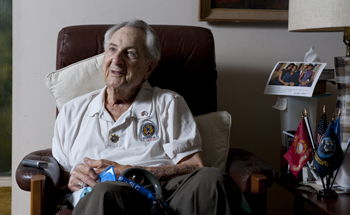
Last year, I went to a park in Ventura County, to attend the joyous 80th birthday party of my Aunt Ruth’s mother, Ann.  Every single birthday has special significance for her, because she is a survivor of the Holocaust.  As I looked around the party, I was profoundly moved by all of the guests that were there celebrating her life.  I thought about how differently her story could have ended. It was empowering to think that because she survived, there are now several generations of my family that can carry on her legacy.

Ann was not the only survivor at her birthday party.  I had the pleasure of meeting another couple Bernd & Judy Simon.  From the moment Ann introduced us, it was obvious that they both had a very special presence.  He began to share a bit of his story with me, and spoke in detail about the horror he experienced on Kristallnacht.  I knew that I wanted to hear more about his life and asked if it would be possible to meet again.  He embraced me with open arms and invited me to come to his home. We set a date and my friend Laurel Johnson and I traveled to Ventura to conduct an interview and to capture some photographs to use for this blog.

Bernd Simon was born in North Western Germany on May 20, 1920.  He is now ninety-twoBernd years old, and lives at home with his wife Judy.  His life was changed forever on November 10, 1938, the night that we now refer to as Kristallnacht.  It was on that tragic night that Gestapo came to his family’s home.  They busted down the doors in early morning, chased them into an ice-cold cellar and then raided their apartment.  All of their belongings were thrown out into the street and into the backyard over the balcony.  The Gestapo then told him he had to clean up the street so that the traffic could pass.  The Gestapo did not take Bernd that day, but later came back for him and forced him on to a freight train heading straight towards Dachau concentration camp.  For two horrific days and two painfully long nights they were packed into the freight train, riding the “journey into hell.”  People died standing up, and fell to the ground when the doors were opened as they reached the gates of Dachau.
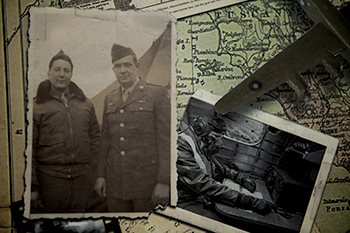
During Bernd’s time as a prisoner in the camp, he was shot at three times, and lived with the reality that any day could be his last.  But he never gave up hope, and lived his life with faith.

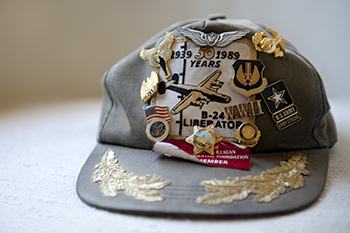
B4Bernd managed to survive Dachau ultimately because of a brilliant and heroic act performed by his mother.  She devised a plan to falsify documents claiming that Bernd was requested for work out of the country and that he was needed immediately.  Her plan worked and amazingly, he was released.  With four dollars to his name, he went and lived in Cuba for two years before moving to the US and joining the US military.  Initially, the military thought that he was a spy for the Germans, but he was able to prove otherwise.  Bernd became an Army Air Core Intercept Officer and flew a B24 four-engine bomber.  After his Air Corp discharge in 1945 in Vienna, he became a U.S. War Department Intelligence Officer with the CIC.  His job was to track down, interrogate and arrest Nazi war criminals in post-war Europe, which he did with a vengeance until 1948.

There are so many amazing and courageous accomplishments that Bernd has achieved B2in his lifetime.  I could spend all day writing about the heroic and honorable life he has lived.  I was blown away by his ability to transform the darkness and despair he was forced to experience into a life filled with light, love, purpose, gratitude and service to others.  From 1975-1985 Bernd worked as a full-time employee with the Ventura County Sheriffs.  He worked with the inmates in booking, providing support services and making sure that every inmate was given food and clean clothing.  He knew all too well how it felt to be hungry and believes that every person on this earth deserves to be treated with dignity.
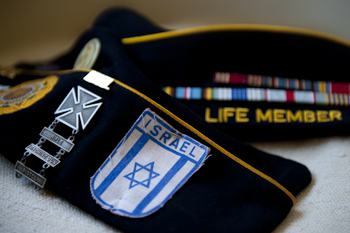
B1(1)As Bernd and I sat in his living room that day, it became clear to me why I was so drawn to his energy. He is a perfect example of transforming darkness into light.

A short time later, as I began to go over my notes from Bernd’s interview, I glimpsed down at the cover of Astronomy Magazine.  I was drawn to a headline on the cover titled “Turning clouds of darkness into Stars of light” by Bruce Dorminey.  I instantly thought of my friend Bernd Simon.

I learned that there are places in our Galaxy that are so dark they actually appear to be nothing at all.  When the shadowy patches of clouds in the Milky Way were first seen through a telescope, astronomer’s actually thought that they were seeing holes in the fabric of space.  These dark clouds, called bok globules, are the coldest objects in the natural universe.  “Despite their apparent nothingness, these molecular clouds turn out to be exceedingly important: They are the places where stars are born.”

The connection was so clear to me.  It is often in the darkest of places, that you can find the brightest of lights.

To see a short video of Bernd Simon, please click HERE

Photo credit: Apples and Honey Photography

Surviving the Darkness and Embracing the Light Read More »

Song and Remembrance, 30 Years After

The last time I saw my grandmother alive, she was sitting in a wheelchair at an elder care hospital in Israel. She wore a little silk scarf over her hair and spoke to me in a perfect mix of Persian, French, and broken Hebrew. My grandmother's first name was Iran. Yet she lived in Israel. And that about captures the complex relationship that Iranian Jews have with their native country and their ancestral homeland.

I'd like to believe that there was no Iran in Israel until my grandmother arrived there.

She was a product of the dilapidated Jewish ghetto of Tehran, born in the 1920s to a world without Ahmadinejads, nuclear weapons, old ideologies and new terrorists. And without a modern Jewish State of Israel and Jewish oversight of Jerusalem. A time when praying at the Western Wall was as much a dream as a man landing on the moon. Before she passed, my grandmother told me that when she was a little girl in Tehran around the time of Passover, she would affix as many pieces of matzah as she could together, line them up against a window, press her face to the solid surface, and pretend that she was at the Western Wall–a pipe dream for practically any Jew in the 1920s; a Travelocity ticket away for me in 2012.

Some sixty years later, her wish came true when she and my grandfather escaped Iran after the Revolution and moved to Israel. From then on, she found a way to make it to the Kotel, first by bus,  then in a car driven by her grandchildren, and finally, with a cane. When I asked her why she kept going back in her fragile state, she lovingly admonished me:

“What do you mean?! BECAUSE I CAN!”

I had never thought about it quite that way before. Despite the fact that I too was born in Tehran, albeit after the Revolution, I am a product of a more self-serving generation. Less because I can and more because I want to and because it makes me feel good.

Five years ago, I committed myself to an amazing cause. “>Civic Action Conference on October 14th in Los Angeles at the historic Millennium Biltmore Hotel.  Almost 35 speakers and over 60 different co-sponsors will be there, including ambassadors and diplomats (keynote speakers will include Ambassador Dennis Ross), congressmen and elected officials, academics, brilliant rabbis, stellar authors, the 2013 candidates for Mayor of Los Angeles, and representatives from both the Obama and Romney campaigns. A full conference schedule may be found on the link above.

There are many reasons why I am so proud to belong to 30 YEARS AFTER, yet they're all fueled by an underlying motive. And it's the same reason why I take advantage of the PCH on a winter's day, enjoy a beer during a Lakers' game, and sing the Israeli national anthem of Ha'Tikva: because I can.

Where I was born, Ha'Tikva is never sung. Israel's flags are not displayed, and even the sale of all “Zionist” goods and products are banned. There is no Israel in Iran, except for the government-fueled depiction of a heartless false state and its faceless, soulless citizenry of occupiers. I can still remember our first grade chants of “Death to Israel” each morning at school.  The fact is that Jews that remain in Iran today (roughly 20,000)–the same kids that were in classrooms with me back in the 1980s–cannot sing the words of Ha'Tikva, though the song belongs to them as much as it belongs to American Jews, French Jews, or Iraqi Jews. This is all the more reason for me to take Ha'Tikva more seriously.

You see, when you realize that you are holding the voices of 20,000 additional Jews on your shoulders, including everyone that you left behind in Iran, you feel a certain responsibility and even privilege…to sing just a bit louder. To enunciate the words and to consciously understand that you are somewhere that allows you to congregate in a room full of Jews and actually sing Israel's national anthem without fear of being arrested, tortured, and even “>Civic Action Conference on Sunday, October 14th in Los Angeles. One of our most talented young members will also be singing the American national anthem. Her family escaped during the Revolution, too. The third national anthem, that of imperial Iran (pre-Revolution)–an emotionally loaded piece for most of us– will be sung by legendary Persian singer Andy, who fled Iran 30 years ago to settle in Los Angeles. The Revolution has made it impossible for him to sing in his native country ever since, but he packs sold-out venues in concerts all around Iran's borders–from Armenia to the United Arab Emirates. In addition to the imperial anthem , he will sing his 2009 hit with Bon Jovi, “Stand By Me,” in support of the people of Iran. That means a lot, folks.

Everyone is welcome–and we expect many members of the greater Los Angeles Jewish community as well–whether Ashkenazi or Sephardi.

I hope that you join us on October 14th, and if you find yourself compelled to sing, that you recall whose voice you are shouldering…the ones that have since passed, or the ones that cannot be there to experience the eternal unity of a national song, and the sacred gift of free expression. Why would you invest such time and energy? Because we would love to have you. Because this signifies a moment in time. And maybe, just maybe, because you can.

Tabby Davoodi is the Executive Director of 30 YEARS AFTER. For more information about the Third Biennial Civic Action Conference on Sunday, October 14, 2012 in Los Angeles, please visit Song and Remembrance, 30 Years After Read More »

Stuffed recipes: cabbage with meat and vegetarian grape leaves

Below are recipes for Sweet and Sour Stuffed Cabbage and Vegetarian Stuffed Grape Leaves.

Joan Nathan's Sweet and Sour Stuffed Cabbage

Ingredients:

1 head of cabbage, frozen (2 pounds)
2 pounds ground beef
1 medium onion, grated
1 clove garlic, minced (about 1 teaspoon)
Salt and freshly ground pepper to taste
2 tablespoons canola or vegetable oil
1 medium onion, peeled and diced (about 1 cup)
1/2 cup brown sugar
Juice of one lemon
1/2 cup raisins
1/2 cup chili sauce
Salt and pinch of freshly ground black pepper

Preparation:

Defrost cabbage the night before cooking. When completely defrosted, separate leaves. Preheat oven to 350. Mix ground beef, grated onion, garlic with salt and pepper in large bowl. Place 1 heaping tablespoon of meat mixture on each cabbage leaf. Tuck ends in and roll up. Arrange cabbage rolls seam side down in a 6-quart, ovenproof casserole. Heat oil in a small frying pan and saute the diced onion for 10 minutes. Stir in brown sugar, lemon juice, raisins, chili sauce and simmer for a few minutes. Pour over cabbage and bake, covered, for an hour. Place stuffed cabbage pieces onto serving platter, spoon sauce over and serve.

Tori Avey's Vegetarian Stuffed Grape Leaves

Ingredients:

1/2 cup pine nuts
1 1/2 cups long grain white rice
1 medium onion, minced
1/2 cup fresh minced dill
1/4 cup fresh minced mint
6 tablespoons freshly squeezed lemon juice, divided
1 tablespoon lemon zest
1 3/4 cups vegetable broth, divided
50 large grape leaves (fresh or jarred)
Salt and pepper
1/2 cup extra virgin olive oil, divided
Fresh mint leaves, lemon slices, and olives (for garnish, optional)

Preparation:

Lightly toast pine nuts in medium skillet until brown; reserve. In medium pot, saute onion in 1/4 cup olive oil until brown. Add rice and 3/4 cup vegetable broth, simmer for 10 minutes or until rice is cooked al dente and liquid is absorbed. Do not cook rice completely to avoid mushy grape leaves. Remove pot, add dill, mint, pine nuts, 2 tablespoons fresh lemon juice and lemon zest. Season with salt and pepper, let mixture cool to room temperature. Boil second pot of salted water, trim grape leaves by cutting stems and trimming any large veins. Place leaves in boiling water for 3-5 minutes until they soften. Drain, cover leaves with cold water. Drain and pat leaves dry. Place shiny side of grape leaf down on flat surface. Place 2 tablespoons of rice filling at base of leaf and fold up like a cigar. Do not roll too tightly. Place any damaged leaves at bottom of saute pan to create bed of stuffed leaves. Place stuffed leaves in saute pan in layers. Pour 1 cup of broth, 1/4 cup of extra virgin olive oil, and 1/4 cup of fresh lemon juice. Invert heat-safe plate on top of leaves, cover pot. Simmer gently, covered, for 30-40 minutes. Serve warm or cold. 

Stuffed recipes: cabbage with meat and vegetarian grape leaves Read More »

Rosner’s ‘Voter’s Guide’ offers an insider’s view

Every four years, the same question is asked in America: Which candidate will win the Jewish vote? With the 2012 presidential election teetering on a razor’s edge, however, the question takes on new importance and even a certain poignancy. That’s exactly why it caught the attention of political reporter and analyst Shmuel Rosner in “The Jewish Vote: Obama vs. Romney: A Voter’s Guide” (Jewish Journal Books: $9.99 paperback, $8 Kindle edition). After all, as Rosner sees it, as many as 5 million Jewish voters may go to the polls next month, and that could be enough to make a difference in an election as close as this one.

“That is not to say that where the Jews go, America also goes,” concedes Rosner. But, at the same time, he insists that “Jews are seen as major political players, because they believe that their vote really counts.”

Shmuel Rosner, of course, is senior political editor of the Jewish Journal, and “The Jewish Vote” is the first title to be published by Jewish Journal Books, a newly launched publishing imprint of TRIBE Media Corp. He’s one of our own, but his analysis is also worthy of attention on its own merits.

It’s significant that Rosner is an accomplished Israeli author and journalist who is writing for an American readership in “The Jewish Vote,” which underscores how much is at stake for the Jewish state in the American presidential elections. Rosner believes that Romney stands to gain the most by cutting into the traditional Democratic edge among Jewish voters: “If he gets 30 percent or more of the Jewish vote — not an easy benchmark — it’s almost like getting an insurance policy against losing.”

Rosner enters the debate between the polarities of what he calls “the-Republican-Party-is-not-an-option-for-most-Jews era” and “the Israel-as-wedge-issue era.” He sees a new geopolitical landscape in which “Republicans [are] drawing closer to Israel, and dangers [are] drawing closer to Israel.” He acknowledges that some Jewish voters do not even consider their Jewishness when they go to the polls, but he divides those who do into two camps: “a more utopian Judaism and a more hard-nosed Judaism.” 

He is tough-minded and blunt when it comes to his take on the Jewish community in America. He suggests that progressive Jews are drawn to the Democratic party because of their allegiance to “the new religion of humanistic values (as interpreted by the modern priests of humanistic religion — namely, university professors and ‘tikkun olam’ activists)” and he contrasts them with Jewish Republicans, for whom, he says, “[V]oting for a political party is not like lighting candles: it is a political deed, not a religious one.” He characterizes his own lively book, however, as a bipartisan effort to “focus on issues that are markedly ‘Jewish’ ” and to thereby enable Jewish voters to make an informed decision between Obama and Romney.

Significantly, the issues of greatest concern to Jewish voters do not necessarily include Israel. One survey placed the economy and health care at the top of the list, and “the growing gap between the rich and the poor” ranked higher than either Israel or “the danger of Iran” in another poll. That’s why, Rosner writes, “For Mitt Romney to find [the] hidden key with which to release the Jewish lock on Democrats would require much  more than talking about his affinity for Israel.” And that’s why “Obama had the wisdom to give Jewish voters some pride that is unrelated to Israel, to remind them that they and Obama are both members of the same community of ‘justice.’ ”

Intriguingly, Rosner insists that “[Sarah] Palin is Romney’s problem with Jewish voters” — or, as he goes on to suggest, “the shadow she casts over the Republican Party.”  It’s an example of the acuity of his political vision; Rosner understands that even those Jewish voters who are attracted to Romney may feel alienated by a Republican Party “in which religious Christians have a greater voice, in which heartland America has a greater voice, in which Palin can be a candidate, in which Paul Ryan can be a candidate.”

Then, too, Rosner points out that Romney’s staunch support of Israel can be unsettling, rather than reassuring, to Jewish voters. After all, when Romney invokes Israel, the Mormon candidate is courting the Evangelical Christian vote as much as, if not more than, the Jewish vote. “If Romney can’t quite win over this vast pool of voters by force of his religious beliefs,” explains Rosner, “he can still convince them that, on matters important to them, he will pursue policies they will find more palatable.”

Obama comes under the same close and discerning scrutiny. “The list of Obama-induced assistance to Israel’s security is indeed very long, as Israeli officials readily admit,” he writes. But he also reminds us that Obama touched a nerve in the Jewish community when he stated in 2008 that “there is a strain within the pro-Israel community that says unless you adopt an unwavering pro-Likud approach to Israel that you’re anti-Israel.” The statement takes on a new meaning when we consider Netanyahu’s outspoken interest in American party politics: “Obama was basically telling both American and future Israeli voters this: If Israel elects Benjamin Netanyahu prime minister and Americans elect Obama president, expect trouble.”

Rosner insists that he comes to understand and explain the Jewish vote, not to influence it, and his book bears him out. Anyone who consults “The Jewish Vote” before Election Day will carry into the polling booth not Rosner’s political advocacy but the wealth of information that he has gathered and the nuanced analysis that he has conducted. 


Jonathan Kirsch, author and publishing attorney, is the book editor of the Jewish Journal. He blogs at jewishjournal.com/twelvetwelve and can be reached at books@jewishjournal.com.

Rosner’s ‘Voter’s Guide’ offers an insider’s view Read More »

Israel reportedly flies over Lebanon in possible response to airspace violation

Several Israeli warplanes violated Lebanon’s airspace Oct. 7, according to Lebanese media outlets, flying over the country’s southern region and setting off sonic booms in a possible response to an Oct. 6 violation of Israeli airspace by an unmanned drone which Israel has speculated was launched by Hezbollah.

Residents in the eastern area of south Lebanon told Lebanon-based The Daily Star that Israel Air Force jets flew over their areas at a low altitude, while Lebanese security sources said the warplanes covered the entire region.

The jets, which were reportedly accompanied by several helicopters, also reached the airspace over the coastal city of Sidon, the sources said.

On Oct. 6, an Israel Air Force F-16i fighter jet shot down a foreign unmanned aerial vehicle over the Hebron Hills on after it had hovered over Israeli territory for half an hour, raising questions about who sent it and for what purpose.

An Israel Defense Forces spokesperson refused to comment on the origin or mission of the drone, though foreign media outlets speculated that it was shot down due to its proximity to Israel’s nuclear reactor in Dimona.

The UAV was identified and monitored by the army before it had crossed into Israeli territory from the Mediterranean Sea and Gaza Strip, according to the IDF spokesperson. It is believed that the drone was not launched from Gaza.

IAF F-16i’s were scrambled to the drone’s location and followed it until the order to shoot it down was given. Based on the size of the explosion from the drone's interception, the IDF believes that it did not carry explosives, and that its purpose was likely to gather intelligence.

Israeli Prime Minister Benjamin Netanyahu praised the IDF for its management of the incident. “We will continue to defend our borders at sea, land and air to protect the citizens of Israel,” he said.

Defense Minister Ehud Barak praised Chief of General Staff Lt. Gen. Benny Gantz and IAF Commander Maj. Gen. Amir Eshel for what he called the “swift and precise” tracking and shooting down of the UAV. “We take this attempt to violate Israel's air space very seriously and are weighing our options for a response.”

IDF Spokesperson Brig. Gen. Yoav Mordechai emphasized that “throughout its flight over Israel the drone was in constant eye-sight of air and ground forces” and noted that the drone was shot down “for the sake of the northern Negev residents’ safety.”

Soldiers were deployed to the area to collect the debris from the destroyed aircraft.

The IDF, meanwhile, has been keeping a close eye on Israel’s neighbors’ UAV programs, at the vanguard of which stands Iran. During the 2006 Second Lebanon War, the IAF intercepted a Hezbollah UAV that was developed by the Islamic republic. Hezbollah attempted several UAV infiltrations during the war; one drone crashed inside Lebanon due to a presumed technical problem, while the others were intercepted by the IAF.

Hezbollah attempted to enter Israeli airspace with drones before the war, as well. In April 2005, a UAV was launched and flown between the cities of Acre and Nahariya in northern Israel, and then landed successfully in southern Lebanon. In November 2004, a Hezbollah drone infiltrated Israeli airspace, took photos of Israeli communities in the north, and made its way back to Lebanese air space before crashing into the Mediterranean. The drone managed to fly over Israeli territory for 15 minutes and was not detected by IDF radars.

In 2010, the IAF shot down an unidentified hot air balloon flying in southern Israel after it hovered close to the Dimona nuclear plant’s airspace.

Reporting on the Oct. 6 violation, Iran’s Press TV quoted retired Lebanese Maj. Gen. Hisham Jaber, who said that the unidentified drone was likely launched by a U.S. aircraft carrier stationed in Saudi Arabia.

Israel reportedly flies over Lebanon in possible response to airspace violation Read More »

The Palestinian great escape?

Abdullah Ashee, a 45-year old investor, is wanted in the West Bank for alleged fraud. But two years ago, while his case was being considered in a court in the West Bank city of Ramallah, he fled to neighboring Jordan. He says he entered Jordan legally and that he fled his home because he does not trust the Palestinian Authority’s legal system.

“The people who filed the charges against me are related to influential people from the Palestinian Authority – I was a victim,” Ashee told The Media Line. “I was facing prison and losing more money, so I decided to flee.”

It is hard to know how many Palestinians have fled to Jordan in recent years, but according to figures published on the website of the Palestinian Authority, its police have apprehended nearly 2,000 people who were trying to escape prosecution in the Palestinian territories by fleeing to Jordan. Legal scholars in Jordan say despite efforts by the PA, dozens have succeeded.

Jordanian officials acknowledge that many Palestinians leave the West Bank while their cases are being heard in Palestinian courts.

The situation is complicated by the close ties between the West Bank and Jordan.  Jordan ruled the area from 1948 to 1967, when it came under Israeli control. An estimated 800,000 Palestinians living in the West Bank, out of a total population of 2.6 million, hold Jordanian citizenship, the impact of which is strengthened where there are close family ties.

Jordanian law prohibits the extradition of Jordanian citizens except in exceptional cases, so the kingdom’s government is unlikely to extradite Palestinians to the West Bank once they have entered Jordan.

The Palestinian justice system is still in its infancy and according to legal experts, Palestinian lawyers have made some mistakes. For example, says Mahmoud Naghawee, a member of the Jordanian Bas Association who has been involved in several cases of extradition requests for Palestinians from Jordan, Palestinian officials do not always send the correct documents to Jordan.

“Jordan’s legal system is very strict. For example, deportation would not take place without the original deportation request, but the Palestinians send a certified copy,” he told The Media Line. “By the time proper documents are sent, the wanted individual will have already left Jordan to a third country, which further complicates efforts to bring him to justice,” Naghawee explained.

Meanwhile, Palestinian diplomats said their attempts to pursue wanted individuals once they have left Jordan for a third country become even more complicated due to the fact that that the Palestinian territories is not a full- fledged state.

Many countries in Europe and Asia do not cooperate with the Palestinian Authority due to the absence of a legal frame work that allows the extradition of wanted people, despite the existence of the Interpol, which operates between states.

Officials from Jordan's Ministry of Justice said Jordan does deport Palestinians to the West Bank, depending on the gravity of the case. They declined, however, to give figures on the number of individuals who have been deported. Sources in the ministry said that no more than five people have been deported in the past four years.

Palestinian Ambassador to Jordan Attallah Khairi said the problem of extradition exists, but he played down its significance.

“Jordan did not shirk its responsibility to the Palestinian Authority on this issue, but cooperation on issues of financial corruption could be improved,” he told The Media Line.

Khiri said the Palestinian Authority and Jordan cooperate under the Riyadh Agreement between members of the Arab League, which allows the extradition of individuals sentenced to prison for more than one year.

Diplomats from the Palestinian embassy in Amman said the fact that many Palestinians hold dual nationality, Jordanian and Palestinian, makes deportation very difficult.

Palestinian diplomats, who spoke to The Media Line on the condition of anonymity, said the Palestinian Authority asked Jordan to freeze the financial assets of former senior Palestinian official Mohammed Dahlan, who is wanted on charges of alleged corruption.

“Jordan did not cooperate in the Dahlan issue. It continues to drag its feet on the matter, demanding more papers every time we meet their demands,” said the diplomat.

Dahlan, who carries dual Jordanian and Palestinian citizenship, is believed to have fled to Jordan after a fallout with Palestinian Authority President Mahmoud Abbas. He is currently wanted in the PA-controlled West Bank on charges of financial fraud.

Meanwhile, a Jordanian official from the justice ministry said Jordan has extradited a few individuals from its territories in cases related to money laundering.

Speaking to The Media Line on condition of anonymity due to the sensitivity of the issue, he said the case of Dahlah is purely political, and therefore Jordan cannot extradite him.  “The issue of Dahlan is an internal Palestinian issue that Jordan does not want to be dragged into,” he said. 

The Palestinian great escape? Read More »

Romney casts Obama’s foreign policy as weak, dangerous

Republican presidential candidate Mitt Romney delivered a sweeping critique on Monday of President Barack Obama's handling of threats in the Middle East, saying Obama's lack of leadership had made the volatile region more dangerous.

In what his campaign called a major foreign policy address, Romney called for a more assertive use of American influence in the Middle East, Europe, Asia and Latin America.

Romney, speaking before the white-uniformed cadets at Virginia Military Institute, questioned Obama's handling of the episode in Libya last month in which U.S. Ambassador Chris Stevens and three other Americans were killed after the U.S. consulate in Benghazi came under militant attack.

The former Massachusetts governor also accused Obama of failing to use U.S. diplomacy to shape events in Iran, Iraq, Israel, Syria, Russia and elsewhere.

“The president is fond of saying that, 'The tide of war is receding,'” Romney said. “And I want to believe him as much as anyone. But when we look at the Middle East today … it is clear that the risk of conflict in the region is higher now than when the president took office.”

Romney's speech was short on specifics, but in broad terms he laid out his national security priorities before the second of his three debates with Obama, which will be at Hofstra University in Hempstead, New York state on Oct. 16 and will include discussion of foreign policy.

Romney's aim on Monday was to portray himself as having the presidential stature needed for the world stage. He had a similar goal during a trip overseas in July, but that was marred by a series of missteps, including his inadvertent insult of the organizers of the London Olympics.

In calling for a more forceful foreign policy, Romney indicated that he would not rush into armed conflict.

But he accused Obama of a hasty troop withdrawal from Iraq, saying hard-fought gains there are being eroded by rising violence and a resurgent al Qaeda. Obama considers his withdrawal of U.S. troops from Iraq the fulfillment of a 2008 campaign promise, sought by Americans weary of war.

Romney also said he might not be so quick to pull troops out of the unpopular war in Afghanistan. Obama has pledged to end the U.S. combat role in Afghanistan by the end of 2014 as part of NATO's plan to hand over security responsibility to Afghan forces.

Romney said he would pursue a transition to Afghan security forces by that time, but would evaluate conditions there before making a final decision to pull out.

Obama was right to order the mission that led to the killing of Osama bin Laden last year, Romney said, but he charged that other elements of the president's strategy for the region were weak or ill-advised. Romney pointed to the extensive U.S. reliance on attacks by drone aircraft as “no substitute for a national security strategy for the Middle East.”

Romney, who accused Obama of pursuing a strategy of “passivity” rather than partnership with U.S. allies, is running just behind or even with his Democratic rival in most opinion polls, which have gotten closer since Romney did well in their first debate last week.

Reuters/Ipsos tracking polls indicate that more Americans favor Obama on foreign policy issues.

The latest data, collected through Sunday, indicate that 40 percent of likely voters believe Obama has a better plan for combating terrorism, compared with 31.5 percent for Romney. In dealing with Iran, 35.4 percent of likely voters favored Obama; 30.9 percent backed Romney.

'CHEST-POUNDING RHETORIC'

Obama's campaign portrayed Romney's speech as the latest in a series of failed attempts by the Republican to look like a statesman on foreign policy.

Obama aides cast Romney as unfit to be commander-in-chief because of his gaffe-filled overseas trip in July and his much-criticized immediate reaction to the Libyan attack. Romney blasted Obama's actions before it was clear that Stevens had been killed in Benghazi, and was accused of injecting politics into a national tragedy.

“This is somebody who leads with chest-pounding rhetoric,” Obama campaign spokeswoman Jen Psaki said of Romney. “He has been clumsy in his handling of foreign policy.”

Romney promised that if elected on Nov. 6, he would vigorously pursue those responsible for the Libyan attack, as Obama has vowed to do.

During his speech, Romney pledged to tighten sanctions on Iran and deploy warships in the region to press Tehran to give up a nuclear program the West believes is aimed at producing atomic bombs.

Romney also said he would increase military assistance and coordination with Israel, which has threatened a pre-emptive strike against Iranian nuclear facilities.

Romney pledged that his administration would work to find elements of the Syrian opposition who share U.S. values and ensure they obtain weapons needed to defeat President Bashir al-Assad's forces. Syrian rebels have accused the United States and Western allies of sitting on the sidelines of the conflict.

“Iran is sending arms to Assad because they know his downfall would be a strategic defeat for them,” Romney said. “We should be working no less vigorously with our international partners to support the many Syrians who would deliver that defeat to Iran – rather than sitting on the sidelines.”

Psaki, the Obama campaign spokeswoman, noted that Romney's foreign policy team includes several former advisers to George W. Bush, Obama's predecessor and the architect of the unpopular war in Iraq.

Romney has “surrounded himself with a number of people who were advisers to past President Bush, people who have used saber-rattling rhetoric when it comes to Syria and Iran,” Psaki said. “That's something … we think the American people should take a look at.”

Romney casts Obama’s foreign policy as weak, dangerous Read More »

Turkish president says ‘worst case’ unfolding in Syria

Turkish President Abdullah Gul said on Monday the “worst-case scenarios” were now playing out in Syria and Turkey would do everything necessary to protect itself, as its army fired back for a sixth day after a shell from Syria flew over the border.

Gul said the violence in Turkey's southern neighbour, where a revolt against President Bashar al-Assad has evolved into a civil war that threatens to draw in regional powers, could not go on indefinitely and Assad's fall was inevitable.

“The worst-case scenarios are taking place right now in Syria … Our government is in constant consultation with the Turkish military. Whatever is needed is being done immediately as you see, and it will continue to be done,” Gul said.

“There will be a change, a transition sooner or later … It is a must for the international community to take effective action before Syria turns into a bigger wreck and further blood is shed, that is our main wish,” he told reporters in Ankara.

Turkey's armed forces have bolstered their presence along the 560 mile border with Syria in recent days and have been responding in kind to gunfire and shelling spilling across from the south, where Assad's forces have been battling rebels who control swathes of territory.

Turkey's Chief of Staff, General Necdet Ozel, travelled to the southern city of Adana and was due to inspect the region patrolled by Turkey's 2nd Army, which protects the border with Syria, the military said on its website.

U.N. Secretary-General Ban Ki-moon said the escalation of the conflict along the Turkey-Syria border, as well as the impact of the crisis on Lebanon, were “extremely dangerous”.

“The situation in Syria has dramatically worsened. It is posing serious risks to the stability of Syria's neighbors and the entire region,” he told a conference in Strasbourg, France.

Ban said U.N. and Arab League envoy Lakhdar Brahimi would be heading back to the region this week.

IMMEDIATE RESPONSE

The exchanges with Turkey mark the most serious cross-border violence in Syria's revolt against Assad, which began in March last year with peaceful protests for reform and has evolved into a civil war with sectarian overtones.

“From now on, every attack on us will be responded to immediately. Every attack that targets our sovereignty, our security of life and property will find its response,” Turkish government spokesman Bulent Arinc said after a cabinet meeting.

Parliament last week authorized the deployment of Turkish troops beyond its borders although government officials said the move was meant as a deterrent rather than a “war mandate”.

“Turkey will decide itself when the situation necessitates acts mentioned in the motion the parliament passed last week. Nobody should think war will follow a parliament approval … but we are more sensitive about our independence and sovereignty than most countries,” Arinc said.

Fighting further inside Syria also intensified on Monday.

Syrian government forces advanced for the first time in months into the rebel-held Khalidiya district in the besieged central city of Homs, one of 12 districts they have been bombarding for days.

“They have occupied buildings that we were stationed in and we had to evacuate,” a rebel fighter told Reuters by Skype.

Skirmishes on the Syrian side of the border have been escalating and it is unclear who fired the shells that have crossed into Turkey.

Damascus has said it fired into Turkey accidentally, but has failed to live up to pledges made last week, after a Syrian shell killed five civilians in the Turkish town of Akcakale, to ensure no more ordnance flies across the border.

Turkey launched its latest retaliatory strike on Monday after a mortar bomb fired from Syria landed in countryside in the Turkish province of Hatay some 150-200 meters inside the district of Hacipasa, a Turkish official told Reuters.

TRUCKS PATROLLING

Further east, Syrian rebel sources in Raqqa province, which borders Akcakale, said they had seen five Turkish army trucks full of soldiers patrolling the Turkish side of the border.

NATO member Turkey was once an ally of Assad's but turned against him after his violent response to the uprising, in which activists say 30,000 people have now died.

Turkey has nearly 100,000 Syrian refugees in camps on its territory, has allowed rebel leaders sanctuary and has led calls for Assad to quit. Its armed forces are far larger than Syria's.

Turkish Foreign Minister Ahmet Davutoglu said at the weekend that a potential leader in an interim Syrian government could be Vice-President Farouq al-Shara.

Reports in August said Shara, a former foreign minister who was appointed vice president six years ago, had tried to defect to neighboring Jordan, but Syrian state media subsequently said he had never considered leaving.

“The opposition is inclined to accept these names. Farouq al-Shara has the ability to understand the system of the last 20 to 30 years,” Davutoglu told the state broadcaster TRT.

“Farouq al-Shara did not get involved in the recent incidents, the massacre, in a very wise and conscientious attitude. But perhaps there is nobody who knows the system better than al-Shara.”

Reporting by John Irish in Paris, Mert Ozkan in Ankara, Daren Butler in Istanbul and Mariam Karouny in Beirut; Writing by Nick Tattersall; Editing by Kevin Liffey and Jon Hemming

Turkish president says ‘worst case’ unfolding in Syria Read More »