fbpx

April 6, 2011

Goldstone says he will not retract report

South African Judge Richard Goldstone said he will not seek to quash his report to the United Nations on Israel’s conduct during the Gaza war, despite his retraction of a key finding.

Goldstone told the Associated Press that reports that he told Israeli Interior Minister Eli Yishai that he would seek to quash the report prepared at the behest of the U.N. Human Rights Council are false. The report presented to the council in September 2009 accused Israel of war crimes and possible crimes against humanity.

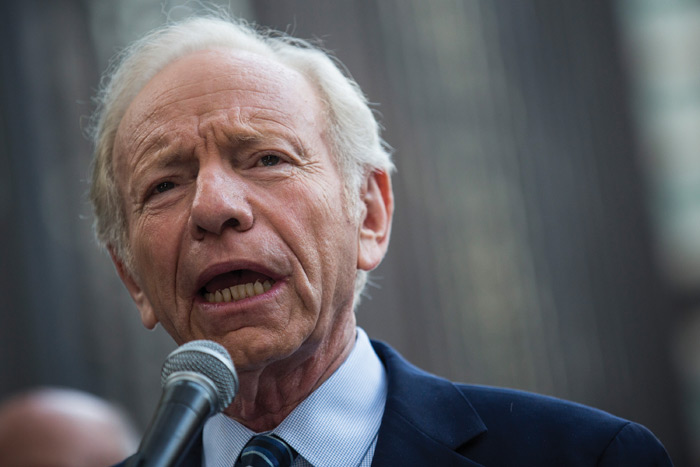
Goldstone wrote in an Op-Ed last weekend in The Washington Post that Israel did not intentionally target civilians as a policy during the Gaza War, withdrawing a critical allegation in the Goldstone Report.

“We know a lot more today about what happened in the Gaza war of 2008-09 than we did when I chaired the fact-finding mission appointed by the U.N. Human Rights Council that produced what has come to be known as the Goldstone Report,” Goldstone wrote. “If I had known then what I know now, the Goldstone Report would have been a different document.”

Israeli Prime Minister Benjamin Netanyahu and a host of Israeli officials and organizations have called on the United Nations to cancel the Goldstone Report after the former South African judge wrote in his Op-Ed that Israel did not intentionally target civilians as a policy during the Gaza War, withdrawing a critical allegation in the Goldstone Report released in September 2009.

Goldstone said he accepted an invitation from Yishai to visit Israel and tour its southern communities, which have been besieged by Hamas rockets.
Yishai said he called Goldstone to thank him for his reassessment and to invite him to visit the country. Goldstone will visit Israel in July as a guest of Yishai.

Goldstone says he will not retract report Read More »

J Street staffers announce departure

Two J Street staff members who have been with the organization since its inception three years ago have resigned their positions for new opportunities, the organization announced.

Issac Luria, the vice president of new media and communications, and press secretary Amy Spitalnick are leaving the the liberal pro-Israel lobby, the organization’s president, Jeremy Ben-Ami, announced Wednesday.

Luria has accepted a position to work on interfaith issues for the Auburn Theological Seminary in New York. Spitalnick is leaving to work for a New York City politician.

In a statement Wednesday, Ben Ami said that “I couldn’t be more grateful for all that they have done to advance the cause of peace and security for Israel and for a more open conversation in the American Jewish community.”

J Street staffers announce departure Read More »

Australian lawmaker Danby slams Greens over Israel boycott

Australian Jewish lawmaker Michael Danby slammed the Greens Party for “promoting extreme and dangerous policies” over its controversial support of an Israel boycott.

Writing in The Australian newspaper of April 2, Danby of the governing Labor Party condemned Greens leader Bob Brown for allowing a “watermelon faction”—green on the outside but red on the inside—to wade into foreign policy.

Danby wrote that most ordinary Australians do not realize that elements of the Greens “support a boycott that would ban the Batsheva Dance Company from returning to Australia and the Israeli Philharmonic from playing at the Sydney Opera House.”

The New South Wales faction of the Greens adopted the boycott, divestment and sanction campaign against Israel in 2010, prompting a major backlash from the Jewish community. The federal Greens Party has not adopted the BDS movement.

In the New South Wales state election last week, the Greens Party candidate in the inner Sydney seat of Marrickville, who was favored to win, was defeated after she supported the council’s Israel boycott. Brown blamed the party’s stance on Israel for the loss of the seat.

Marrickville’s support of the boycott prompted Liberal Senator Mitch Fifield to introduce a motion March 23 in the upper house of federal parliament condemning the local council, but Brown opposed the motion.

The Greens are a minority party in the Labor-led coalition government.

Australian lawmaker Danby slams Greens over Israel boycott Read More »

Europe remembers how Eichmann trial and TV changed perceptions of Holocaust

The face, with its twisted mouth, receding hairline and dark-framed glasses, is familiar around the world today.

But 50 years ago, when Adolf Eichmann—former head of the Nazi Department for Jewish Affairs—first sat in a Jerusalem courtroom to face war crimes charges, his visage was known to very few.

Television changed that. For West Germans, the impact was profound. Twice a week, for four months, entire families—and sometimes neighbors, too—gathered in living rooms to watch the reports from Jerusalem.

“There was a lot of watching, and it changed the discussion about the Holocaust,” said philosopher Bettina Stangneth, whose book “Eichmann vor Jerusalem” (“Eichmann Faces Jerusalem”) is set to be published in Germany on April 18.

It wasn’t as if most Germans wanted to watch the trial.

“But back then, there was not such a big choice of programs,” Stangneth said. “They could not change the channel so easily.”

Now, as historical institutes and museums in Europe and elsewhere look back at the pivotal trial that began 50 years ago, on April 11, 1961, media coverage of the event is a key theme.

In Frankfurt, German TV reports from 1961 will be shown at the Fritz-Bauer Institute, which is hosting a symposium on the Eichmann trial this month. At Berlin’s Topography of Terror documentation center, videotaped testimony by witnesses and by Eichmann are part of a new exhibit. In Paris, the Memorial de la Shoah is dedicating a program to documentary filmmaker Leo Hurwitz, who directed the videotaping of the four-month trial.

Back then, Israel was practically a country without TV, said Ronny Loewy, an expert on cinematography of the Holocaust at Frankfurt’s German Film Institute. Israelis either listened to a broadcast of the trial live on the radio or attended a simulcast in an auditorium near the court.

“Beside the United States, there was no other country where they were reporting to the same extent as in Germany,” Loewy told JTA.

A survey showed that 95 percent of Germans knew about the trial, and 67 percent favored a severe sentence, according to the 1997 book “Anti-Semitism in Germany: The Post-Nai Epoch Since 1945” by German scholars Werner Bergmann and Rainer Erb.

To get out the news at the end of each court day, two hours of clips were flown to London for dissemination to European and U.S. news programs, recalled cinematographer Tom Hurwitz, who was 14 when his father was assigned to direct the taping. In Germany, the clips were used to produce biweekly, 20-minute reports called “An Epoch on Trial.”

These broadcasts, and other coverage by some 400 German journalists in Israel, had a decisive impact, according to Stangneth.

Until the trial, many Germans had dismissed the few books about the Holocaust as biased. Teachers largely had avoided the subject.

Once the broadcasts of the Eichmann trial began, however, they could ignore it no longer. Young Germans looked at the wartime generation differently. Dozens of new books about the Holocaust were written.

The story of how Eichmann was brought to justice seemed made for TV. He escaped an American POW camp in Germany after the war, got help from the Catholic Church to flee to Argentina, and lived there for years under the pseudonym Ricardo Klement. Recently it was revealed that German intelligence officials knew of Eichmann’s location as early as 1952.

Before his capture, Eichmann had boasted to friends of his involvement in the Final Solution and shared his dreams of resurrecting National Socialism. He even told Dutch fascist journalist Willem Sassen in the late 1950s that he regretted his failure to complete the job of genocide. Eichmann reportedly said he hoped the Arabs would carry on his fight for him, according to Stangneth, who recently recovered some 300 pages of “lost” interview transcripts.

In 1960, the Mossad captured Eichmann in a dramatic operation that ended with his being brought clandestinely to Israel.

As the date of the trial neared, German Chancellor Konrad Adenauer became intensely worried, according to historian Deborah Lipstadt, whose new book, “The Eichmann Trial,” came out in March. Adenauer feared “that Eichmann might expose the number of prominent Nazis who served in his government,” she said.

Even worse, Lipstadt said, by 1951 Adenauer was fed up with the guilt he felt was being foisted on the Germans for perpetrating the genocide of the Jews.

“He thought it was time to move on,” she said. “It is shocking that he could say that. And here it was, coming back, in a very strong way.”

The Eichmann trial was full of drama, drawing the world’s attention to the perpetrator and to his victims. Eichmann faced 15 criminal charges, including crimes against humanity and war crimes.

Many millions of eyes studied Eichmann through TV sets, trying in vain to discern in his word, manner and expressions signs of remorse.

Tom Hurwitz recalled how his late father once filmed Eichmann viewing a selection of film clips taken after the liberation of concentration camps; Eichmann had the right to see the clips before they were shown in the courtroom. During the screening, one cameraman focused on Eichmann as he watched one horrific image after another. Eichmann sat impassively.

Hannah Arendt described the stony figure in her 1963 work, “Eichmann in Jerusalem: A Report on the Banality of Evil,” launching a debate that continues to this day as to whether Eichmann was a cog in the Nazi machine or a true believer in genocidal anti-Semitism.

The guilty verdict was pronounced in December 1961, and Eichmann was hanged on May 31, 1962—the only judicial execution ever carried out in Israel. Eichmann’s ashes were scattered in the Mediterranean Sea.

Even once Eichmann was gone, the impact of the trial and its coverage continued. With so many German journalists in Israel, reports about life in the young Jewish state abounded. An era of exchange began.

And the obvious fairness of the trial—Eichmann had a German lawyer and obviously was not being tortured—“looked like justice, not revenge,” Stangneth said. “This also had an impact on the image of Israel. One can say that Israel came a little bit closer to Germany.”

The trial also helped Germany come closer to confronting itself.

Soon afterward, in December 1963, Germany launched its famous Frankfurt Auschwitz trial, which lasted through the summer of 1965 and lay out the brutality of former neighbors and relatives for all to see.

“The Eichmann trial put the theme there,” Stangneth said. “One could not ignore it.”

Europe remembers how Eichmann trial and TV changed perceptions of Holocaust Read More »

Philanthropist Ann Loeb Bronfman dies

Philanthropist Ann Loeb Bronfman, who supported a range of causes through the foundation that she founded and ran, has died.

Bronfman died Tuesday from complications from emphysema at a hospital in Washington, D.C., surrounded by her five children. She was 78.

She funded and directed programs through the Ann L. Bronfman Foundation. The causes she supported included education, senior citizens, underserved youth, the arts and victims of domestic abuse.

Bronfman funded the Ann Loeb Bronfman Gallery at the Washington DC Jewish Community Center. The gallery offers exhibitions and programs that enhance Jewish identity, examine issues of social importance and develop community.

She was a trustee of the Rosemary Hall School, a boarding school in Connecticut, and was presented with its Alumnae Award in 1999 for “demonstrating outstanding achievement in her given field of endeavor.” Last year she was honored by the Teamwork Foundation, a Bronx, N.Y.-based organization that provides afterschool and summer programs to inner-city children, for her many years of support.

Bronfman graduated from the Rosemary Hall School in 1950 and attended Bennington College in Bennington, Vt., before marrying her husband, Edgar M. Bronfman, in 1953. They were divorced in 1973.

Philanthropist Ann Loeb Bronfman dies Read More »

Jewish groups condemn U.S. House’s 2012 budget proposal

Jewish groups and a key Jewish lawmaker condemned the U.S. House of Representative’s budget proposal for 2012, saying it will hurt the Americans most in need.

The Jewish Council for Public Affairs said in a statement released Wednesday that the Republican-backed budget proposal unveiled the previous day, which slashes nearly $6 trillion from federal spending over the next 10 years, “relies on cuts which will be harmful to many of those in America who are most in need.”

“We are concerned that a singular focus on deficit reduction means our families, those looking for work and others who are held up by our national social safety net will be neglected,” said JCPA President Rabbi Steve Gutow.

B’nai B’rith International said in a statement Wednesday that the organization is “deeply troubled” by the budget proposal, saying it would damage Medicaid and Medicare.

“The proposed budget does not control health costs or encourage efficiencies in the broader health care system; it simply relies on dramatic cuts, with a staggering impact on the elderly,” the group said. “By making Medicaid a block grant while creating a decreasingly valuable Medicare voucher, this bill would deal a devastating double-blow to older adults as well as the disabled.”

Rep. Howard Berman (D-Calif.), the ranking Democrat on the House Foreign Affairs Committee, said the proposal, which would slash the international affairs budget by 40 percent, sets “a new standard for recklessness and irresponsibility.”

“This shortsighted plan is a slap in the face to our senior military leadership, which has argued time and again that diplomacy and development are key pillars of U.S. national security,” Berman said in a statement. The cuts “would also severely curtail U.S. efforts to promote human rights, democracy and free markets—which will lead to more instability, and ultimately, greater costs for U.S. taxpayers.”

A budget for fiscal year 2011 was never passed. The government is facing a shutdown Friday when the latest resolution to keep it running expires Friday.

Jewish groups condemn U.S. House’s 2012 budget proposal Read More »

Supreme Court upholds state tuition tax credit program

The U.S. Supreme Court rejected a constitutional challenge to an Arizona tuition tax credit program that benefits parochial schools, with all three Jewish justices dissenting.

The court on Monday threw out a lawsuit against the program, which provides tax credits to those who donate to “school tuition organizations” that grant scholarships to private schools, including religious schools.

The decision prompted the first written dissent by Jewish Supreme Court Justice Elana Kagan, who said the 5-4 ruling “threatens to eliminate all occasions for a taxpayer to contest the government’s monetary support of religion.”

Kagan used a hypothetical case relating to Jews in her dissenting opinion, writing: “Suppose a State desires to reward Jews—by, say, $500 per year—for their religious devotion. Should the nature of taxpayers’ concern vary if the State allows Jews to claim the aid on their tax returns, in lieu of receiving an annual stipend?”

She was joined in her dissent by the other two Jewish justices, Ruth Bader Ginsburg and Stephen Breyer.

The Anti-Defamation League called the court’s decision “a significant setback for religious liberty in America.”

“The Supreme Court has dramatically undercut the ability of taxpayers to protect religion and government by intervening when government money is improperly spent,” Robert Sugarman and Abraham Foxman, ADL’s national chair and national director, respectively, said in a statement.

The Orthodox Union, which supports educational vouchers for parochial schools, applauded the decision. The OU had joined several other faith-community representatives in filing a friend-of-the-court brief in support of the constitutionality of the program.

“The high court upheld school choice today,” said Nathan Diament, director of public policy for the Orthodox Union. “The principles of government respect for private choices in education and government neutrality in programs which can aid and support such private choices is a critical issue for the Orthodox Jewish community and other American faith communities.”

Supreme Court upholds state tuition tax credit program Read More »

Peres to ask UN chief to cancel Goldstone Report, sources say

President Shimon Peres will ask United Nations Secretary General Ban Ki-moon to nullify Judge Richard Goldstone’s damning report on the Gaza war in light of the author’s expression of regret regarding some of his claims, sources told Haaretz on Wednesday.

Peres has held talks with a number of senior U.S. officials including President Barack Obama over the course of his visit, and is scheduled to meet with Ban on Friday.

In an op-ed for the Washington Post last week, Goldstone backtracking on his accusation that Israel had targeted during Operation Cast Lead two years ago.

Read more at Haaretz.com.

Peres to ask UN chief to cancel Goldstone Report, sources say Read More »

The high school atheist club

You know it’s ” title=”"out atheist" on college campuses” target=”_blank”>“out atheist” on college campuses and in ” title=”The New York Times” target=”_blank”>The New York Times about a high school atheist club.

An excerpt:

Club members discussed what to do about Faith Week. Rutherford High’s two Christian clubs will be sponsoring a series of before-school prayer circles around the flagpole this week, and several of the atheists felt a need to respond in some way. “We can set up informational tables near the flagpole and do our own speeches,” said Mr. Creamer, who suggested waiting a few weeks. “Remember, we’re not trying to be confrontational; this will be a counterpoint.”

Mr. Creamer, 47, an English teacher and longtime atheist who grew up in a family of Free Will Baptists, is constantly urging club members to “be friendly, put on those smiles — people don’t expect that from atheists.”

The Christians and atheists at Rutherford High get along better than some might expect. Joshua Mercer, a senior, who is president of Ignite, a Christian club, and Jim, the atheist president, are close friends. They love comparing philosophies, and giving each other a hard time. “We like to go to Taco Bell together,” Joshua said.

Still, he worries about Jim and the other atheists. “If they don’t accept Jesus Christ as a savior, they will definitely go to hell,” said Joshua, who rises at 4:30 each morning to read the Bible with his grandmother.

But at least there bellies will be full with disgusting faux Mexican food.

The high school atheist club Read More »