fbpx

February 26, 2004

Jewish Candidates Fill County Ballot

Jewish candidates will be well represented in the March 2 election, with incumbents in Los Angeles County expected to sail through with no — or token — opposition in the Democratic and Republican primaries.

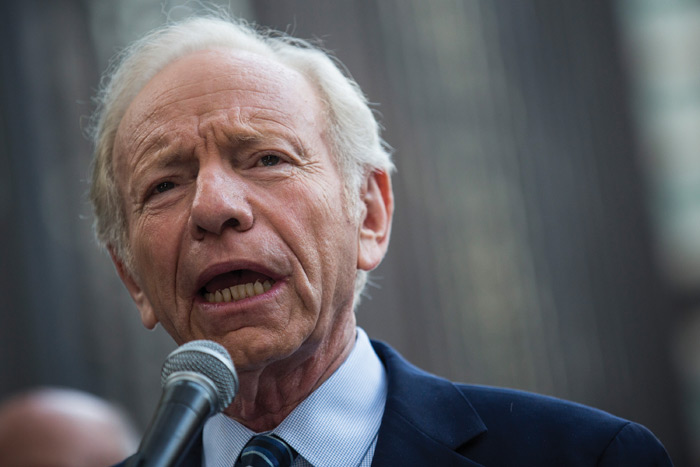
At the top of the ballot — after the presidential candidates, among whom the departed Sen. Joe Lieberman (D-Conn.) is still listed — is U.S. Sen. Barbara Boxer, who has no competition on the Democratic side.

There also is no Democratic competition facing the county’s five Jewish Congress members, Brad Sherman (Sherman Oaks), Howard Berman (North Hollywood), Adam B. Schiff (Burbank), Henry A. Waxman (Los Angeles) and Jane Harman (Venice).

These five, who make up 28 percent of Los Angeles County’s 18 House members, represent the largest congressional Jewish contingent of any county in the United States, according to political expert Howard Welinsky. While New York City may have a larger overall Jewish total, each of its boroughs counts as a separate county.

In the November general election, Sherman will face attorney Robert M. Levy, who is unopposed in the Republican primary.

Running for an open state Senate seat is Assemblyman Alan S. Lowenthal (D-Long Beach).

One of the liveliest Assembly races is shaping up for the open seat in the 47th District. After the last reapportionment, the predominant African American population lost some demographic ground to mainly Jewish concentrations in Cheviot Hills, Pico-Robertson and Westwood.

The three black front-runners, Karen Bass, Nate Holden and Ricky Ivie, have been courting the Jewish vote, which is likely to determine the outcome in the Democratic primary, Welinsky said. Also competing in the same district is Democrat Richard Groper, a California State University political science professor and active member of Congregation Mogen David.

Among other Assembly races, Democratic incumbents Paul Koretz (West Hollywood), Lloyd Levine (Van Nuys) and Jackie Goldberg (Los Angeles), as well as Republican Keith Richman (Granada Hills), are unopposed in their respective primaries. In November, Levine will face Republican Mark Isler, a public school teacher, who faces no opponent in his primary, noted Michael Richman of the local Republican Jewish Coalition.

In additional Assembly contests, Ontario City Councilman Alan Wapner is a Republican contender in the 61st District, while in Orange County, Republican Todd Spitzer (Orange) is up for reelection.

Twelve members of Democrats for Israel are in the race for seats on the Los Angeles County Democratic Party Central Committee, and about an equal number are vying to serve as delegates to the Democratic National Convention, said Welinsky, who chairs the organization.

In a contest that is drawing some national interest in the Bay Area, Democratic Rep. Tom Lantos (San Mateo), the only Holocaust survivor serving in Congress and a champion of Israel, is again opposed by Palestinian American attorney Maad Abu-Ghazalah.

Jewish Candidates Fill County Ballot Read More »

Local Kerry Support Shows Softness

Sen. John Kerry, the Boston Brahmin who has so far won the vast majority of Democratic primaries and caucuses, appears to have opened up an insurmountable lead over rival Sen. John Edwards (D-N.C.) for the presidential nomination. A victory in delegate-rich California would cement Kerry’s status as an unbeatable front-runner and undoubtedly boost his profile in the local Jewish community, where, according one observer, the four-term Massachusetts senator and Vietnam veteran remains a bit of a "mystery man."

With his extensive foreign policy experience, strong pro-Israel voting record and left-of-center political views, Kerry would seem a particularly attractive candidate to Southland Jews who identify themselves as Democrats by a two-to-one margin. That Kerry’s paternal grandparents were born Jewish and his youngest brother and close adviser, Cameron, converted to the religion more than two decades ago might also curry favor, experts said.

Arden Realty Chairman and Chief Executive Richard Ziman, a long-standing Kerry supporter, said he expected more Jews to embrace the senator as they come to know him.

"I like his politics. I like his presence. I like his intellect. I like his experience," said Ziman, who has sponsored two large fundraisers at his home in the past year for Kerry that have raised more than $700,000. "Most of all, I think he’s the only person capable of beating Bush."

Maybe. At this point, though, local Jews, even Democrats, have yet to fall in love with Kerry — they are in "like." Simply put: Jewish support for Kerry appears softer than for some past Democratic presidential candidates, including Franklin Delano Roosevelt.

A relatively more conservative Jewish electorate, Bush’s pro-Israel policies and Kerry’s fondness for the United Nations, an organization viewed by many Jews as anti-Israel or even anti-Semitic, mean that the aristocratic legislator with a shock of gray hair must work hard to attract Jewish votes and dollars.

Kerry also has something of an image problem. Unlike former President Bill Clinton, whose charisma and warmth made him a favorite in the Jewish community, Kerry is "a cooler emotional package" who has so far failed to arouse as much passion, said supporter Howard Welinsky, chair of Democrats for Israel, adding that he considers Kerry "Lincolnesque."

None of this is to suggest that Kerry won’t win a majority of Jewish support both locally and nationally, if nominated. In the once crowded field of Democratic hopefuls, Kerry has emerged as a local favorite.

He connects better with the community than both Edwards and ex-Vermont Gov. Howard Dean, the former front-runner who just quit the race, said Los Angeles City Councilman Jack Weiss. Dean’s promise of a more "balanced" approach to the Middle East and his description of Hamas members as "soldiers" frightened many Jewish voters and could have led to mass defections to the Bush camp, Weiss said. A Kerry nomination would reduce that likelihood, he said.

The senator plans to fight for every Jewish vote, said Ari Melber, a Southern California deputy political director on the Kerry campaign who’s responsible for Jewish outreach. Melber and other staff members have assembled a group of prominent Jewish Democratic supporters to spread the word about Kerry in the community. Among Kerry’s foot soldiers are Rabbi Steven Jacobs of Kol Tikvah in Woodland Hills and Daniel Sokatch, executive director of the Progressive Jewish Alliance.

"We don’t take any single community as a given," Melber said.

Kerry has history on his side. No Republican presidential candidate has won a plurality of the Jewish vote since 1920, when Warren G. Harding took an estimated 43 percent to Socialist candidate Eugene V. Debs’ 38 percent and Democrat James Cox’s 19 percent, Steven Windmueller of Hebrew Union College-Jewish Institute of Religion recently wrote. In the 2000 election, Bush carried a paltry 19 percent of the Jewish vote.

Kerry’s progressive agenda appeals to many in the community, said supporter Lee Wallach, president of the Coalition on the Environment and Jewish Life of Southern California. Unlike Bush, the senator favors abortion rights and opposes drilling for oil in Alaska, Wallach said.

"It’s night and day with Bush and Kerry," he said. "Kerry is very supportive of environmental guidelines that protect our children, so we have a better world for them and for their kids."

Kerry also has a kind heart, said Ruth Singer, a major Southern California fundraiser. On several occasions, the senator called her family to check up on the health of her late husband, who recently died. "That’s something that someone in his position doesn’t need to do," Singer said.

For many partisan Jewish Democrats, the fact that Kerry isn’t Bush is reason enough to support him, said Raphael Sonenshein, a political scientist at California State University, Fullerton. In their view, Bush stole the last presidential election and misled voters by running as a moderate but governing from the right, Sonenshein said.

However, the era of the monolithic liberal Jewish vote has drawn to an end, said Joel Kotkin, senior fellow with the Davenport Institute at Pepperdine University. In the California gubernatorial recall election, Republican candidates Arnold Schwarzenegger and Bill McClintock won 40 percent of the vote. As Jews have shifted to the center from the left, moderate Republicans, such as former Los Angeles Mayor Richard Riordan and ex-New York Mayor Rudy Giuliani have fared surprisingly well in the community, Kotkin said.

On the right, Orthodox Jews generally seem to support Bush, said Rabbi David Eliezre, president of the Rabbinical Council of Orange County. Not only do they see him as a staunch defender of the Jewish State, but they share many of his social policies, including his opposition to gay marriage and his support of vouchers for religious schools, he said.

Bush’s staunch support for Israel has won plaudits. So has his war on terror, including the toppling of Iraqi dictator Saddam Hussein, once the Jewish State’s biggest enemy.

Republicans are so confident that Bush can win more Jewish votes that they have ratcheted up outreach efforts. In California, hundreds of Republican volunteers plan to register new voters and hand out pro-Bush literature at delis, Israel fairs and anywhere else Jews gather, said Bruce Bialosky, Bush-Cheney California Jewish Outreach chair.

Activist Joel Strom said he has already noticed a softening of attitudes toward Bush among Jewish Democrats. The president of the Republican Jewish Coalition of Los Angeles said members of his temple are far more open to Bush now than before.

"Four years ago, people in my synagogue would say he doesn’t care about the Jews. He’s not good for Israel. Look at his dad’s record," said Strom, referring to the first President George Bush. "Now, when I go to synagogue, some members say they don’t like him, but he’s good for Israel. Others like him."

Strom’s optimism might not be misplaced. A survey released in January by the American Jewish Committee found Bush receiving 31 percent of the vote against Kerry’s 59 percent, with 10 percent undecided. If those numbers hold up, that would be a big improvement over Bush’s 2000 performance.

Kerry, who receives high marks from Jewish organizations for his voting record in the Senate, has recently seen some Jews question the depth of that support. Speaking before the Council on Foreign Relations in December, Kerry set off a firestorm of controversy when he said that if elected, he might appoint former Secretary of State James Baker III or former President Jimmy Carter or Clinton as a special envoy to the Middle East.

Anti-Defamation League Director Abraham Foxman said that although Kerry had a good record on Israel, the senator’s remarks concerned him. "Carter’s anti-Israel. Baker hasn’t been a friend. Clinton didn’t succeed" in bringing peace to the region, he said

Kerry’s approach to diplomacy has aroused fears. The candidate said he wants to rebuild America’s alliances by ending the Bush administration’s go-it-alone foreign policy and working more closely with international organizations, such as the United Nations, a body that once equated Zionism with racism.

"At heart, John Kerry is a garden-variety State Department Arabist, regardless of his public pronouncements," Republican political strategist Arnold Steinberg said. "I think the Jewish community is throwing the dice with John Kerry and could end up with someone like Bill Clinton, who resurrected Yasser Arafat, by inviting him to the White House when he was becoming irrelevant."

Carmen Warschaw, former Southern California chair of the Democratic Party, said she thinks Kerry can win both a commanding share of the Jewish vote and the November election.

Still, Bush possesses an important trump card. A war with Syria or some other foreign adventure could divert attention from domestic problems, galvanize Americans behind the president and propel him into the White House for a second term, Warschaw said.

"I think with the president’s and his advisors’ mentality, they’ll look for a menace or a war or find [Osama] Bin Laden," she said. "They’ll create that kind of atmosphere. I’m not saying they’ll do it purely consciously, but I think that’s their mentality."

Local Kerry Support Shows Softness Read More »

Gibson Film Doesn’t Star Anti-Semitism

Before saying what is wrong and what is right with Mel Gibson’s “The Passion of the Christ,” let’s get out of the way the question that is on everyone’s mind. Now that the film has opened, it will become clear to regular moviegoers who have heard of the controversy — furiously fanned by those enterprising fundraisers at the Anti-Defamation League (ADL) — that no, the film is not anti-Semitic.

It does not show Jews per se in a uniquely nasty light. Depicting the final 12 hours of Jesus’ life, it portrays all humanity, except for the few earnest followers of Jesus, in an exceptionally ugly fashion.

The Roman soldiers who mercilessly, endlessly scourge Jesus with clawed whips, laughing and wiping drool from their mouths the whole time, are no less disgustingly portrayed than the proud, callous, foolish Jewish priests who demand that the Roman governor take the torture to the next level: crucifixion.

When Gibson has the crucified Jesus cast an eye up to heaven, the director orients the camera so that the big, round chocolate-brown eye is looking straight at us all in the audience, accusing humanity. Moments later, when Jesus is taken down from the cross, his mother cradles him in her arms, and she looks directly at us in the audience, again casting the accusing eye.

But the fact that “The Passion” isn’t anti-Semitic doesn’t make it an effective piece of filmmaking. The bad news is that Gibson’s motion picture manages to be sadistically violent and somewhat boring at the same time.

It would be hard to know, just from the portrayal in this film, what it was that made Jesus a personality so special as to inspire one of the world’s great religions. The fact that he died in agony? That’s it?

In a quick flashback to the Sermon on the Mount, he is shown endorsing love of one’s enemy, and in a flashback to the Last Supper, he commands his followers to love each other. That exhausts Gibson’s depiction of Jesus as teacher of timeless spiritual truths.

The whole rest of the movie is taken up with depicting Jesus’ grotesque and minutely shown final agonies. When in the course of the very long scourging scene, a claw on one of whips wielded by his Roman tormentors gets stuck in his bloodied flesh and has to pulled out, I thought: OK, enough. But that was only about halfway through the movie.

It is very hard to see how anyone is going to be uplifted by this. Frankly, I’m a little worried about a non-anti-Semitic lunatic getting it into his head to bludgeon some innocent person of any or no religion like Gibson’s Romans do to Jesus.

This alone isn’t a reason not to have made his movie. Who could have predicted that “Taxi Driver” would inspire John Hinckley to try to assassinate Ronald Reagan?

But Gibson ought to have known that there’s a good reason why sensitive people avoid violent films: Watching this stuff, however noble or spiritual or religious the filmmaker’s intentions, coarsens the soul.

Specifically, contrary to Gibson’s intent, “The Passion” seems unlikely to inspire personal repentance. For all the realism of the violence, the rest of the film is highly unrealistic, in such a way that no one who sees it — unless he’s a psycho killer — is going to recognize himself in Gibson’s narrative and feel moved to control himself and stop hurting other people.

The cruelties in our lives, the hurts we inflict, the acts of unfaithfulness to others and to God are many, but they are simply of a different character than nailing a man’s hands to a cross.

As for the part the Jewish priestly establishment plays, arresting Jesus and turning him over to the Romans, their villainy is unrecognizable, because it makes no sense. We’re supposed to believe the Temple priests are after Jesus because he’s got some big, dangerous following that’s going to crown him Messiah, but nowhere do these massively numbered followers ever make an appearance.

From all the evidence of “The Passion,” Jesus had about 10 disciples, 20 max. So why were certain Jews in the New Testament’s telling so intent on seeing him dead? Gibson has no idea.

I mentioned that there is something right about “The Passion.” In at least trying to make a film that depicts his own faith not as a golden dream fantasy but as a reality — an event that actually happened in history, complete with dialogue in the ancient language Jesus really spoke (Aramaic) — Gibson has done something daring, even heroic. The juxtaposition of the Aramaic dialogue in particular, beautifully achieved, with the Caravaggio-esque spooky atmosphere of certain scenes is genuinely thrilling. There is art here, and that fact will move other artists. The importance of his movie lies in the new wave of religiously and even biblically inspired films it will help launch.

He has shown other filmmakers it can be done, and not even the ADL can stop you. This is going to be interesting.


David Klinghoffer is a columnist for The Jewish Journal and The Forward and author of the forthcoming “Why the Jews Rejected Christ: In Search of the Turning Point in Western History” (Doubleday).

Gibson Film Doesn’t Star Anti-Semitism Read More »

Bombing Hits Close to Home for Group

Lt. Gen. Moshe Ya’alon was describing the Palestinian Authority’s strategy of terrorism, when a small commotion erupted in the corner of the room.

One of Ya’alon’s aides swiftly scribbled a note and passed it to the Israeli army chief of staff, who hardly skipped a beat in his Sunday-morning speech to a visiting delegation from the Conference of Presidents of Major American Jewish Organizations.

It was only several minutes later, after Ya’alon had finished his presentation, that he told the group that a Palestinian suicide bomber had detonated himself aboard a bus barely 100 yards from the group’s hotel in downtown Jerusalem.

At least eight people were killed in the explosion, and more than 60 were wounded. The attack took place near the German Colony, an upscale neighborhood filled with trendy shops and beautiful homes.

The Al-Aqsa Brigade, the terrorist wing of Palestinian Authority President Yasser Arafat’s Fatah movement, claimed responsibility for the attack. It cited Israel’s construction of its West Bank security barrier as the primary grievance.

Malcolm Hoenlein, executive vice chairman of the Conference of Presidents, who has seen the aftermath of other suicide bombings, appeared visibly shaken. He said he had never been to the site of a bombing so soon after the attack.

“It’s overwhelming,” Hoenlein said. “It’s too hard to comprehend. There were body parts right there by our feet. You can’t bring the war on terror any closer to home.”

The explosion came a day before the International Court of Justice at The Hague began a hearing on the legality of the security barrier Israel is building to keep Palestinian terrorists from crossing into Israel. Israeli officials said the bombing lent new weight to Israel’s argument that the fence is needed to block terrorists.

“This is Arafat’s response to The Hague,” Hoenlein said. “If anything underlines the obscenity of The Hague trial, this is it. It’s Israel’s obligation to bring an end to this kind of outrage by building the fence.”

A statement from Arafat’s office said, “We will not stand idly by while Palestinian interests are harmed” — apparently a reference to the damage the bombing could cause the Palestinian case at The Hague hearings. The Palestinian Authority condemned the bombing and vowed to catch those responsible. Similar pledges have gone unfulfilled in the past.

The eight people killed in the bombing were identified as Ilan Avisidris, 41, Jerusalem; Lior Azulai, 18, Jerusalem; Yaffa Ben-Shimol, 57, Jerusalem; Rahamim Duga, 38, Mevasseret Zion; Yehuda Haim, 48, Givat Ze’ev; Staff Sgt. Netanel Havshush, 20, Jerusalem; Yuval Ozana, 32, Jerusalem; and Benayahu Yehonatan Zuckerman, 18, Jerusalem. Funerals for them were held Sunday and Monday.

Israeli officials said the Palestinian attacker would not have been able to infiltrate Israel from his home near Bethlehem had the 450-mile barrier been complete.

“I hope that The Hague’s 15 justices get the message,” Justice Minister Yosef “Tommy” Lapid told Israel Radio Sunday. “If there had been a fence around Jerusalem, there would not have been a terrorist attack today.”

Nir Barakat, a member of the Jerusalem City Council, was on his way to visit a local school when the bus exploded across the street from him. He told an aide to call an ambulance and ran to aid the wounded.

“Life is more important than the quality of life,” Barakat said, referring to Palestinian arguments that the fence intended to thwart terrorists impedes Palestinian freedom of movement and makes it difficult for farmers to reach their fields. “I want to protest. The world has a double standard and needs to get its priorities straight. The first thing is to stop the killing.”

American Rep. Jerrold Nadler (D-N.Y.), a member of the Conference of Presidents delegation, said the Palestinians were “thumbing their noses at the world” by carrying out an attack the day before the hearing.

“We knew about these attacks intellectually before, but now we have a little more emotional understanding,” Nadler said. “One thing that is really mind blowing is seeing this piece of flesh, like uncooked meat, lying on the ground and knowing that it comes from a person.”

JTA correspondent Dan Baron in Jerusalem contributed to this report.

Bombing Hits Close to Home for Group Read More »

Hague Protest Mideast Conflict

Holland turned into a staging ground for the Israeli-Palestinian conflict this week, as demonstrators converged on The Hague to talk about Israel’s security barrier and Palestinian terrorism.

As the International Court of Justice held hearings on the West Bank security fence, thousands of Israel supporters from across Europe, Israel and the United States gathered in the streets outside The Hague’s Peace Palace.

On Monday, the same square used by about 3,000 pro-Israel demonstrators later became the site of a pro-Palestinian demonstration of slightly smaller size. For the most part, Dutch police managed to keep the twogroups apart, but the police’s efforts did not temper demonstrators’ vehemence toward each other — and for theircause.

“I came because of the suicide bombings,” said Derya Yalimcan, 30, a Turkish student who came with adelegation of students from Germany to support Israel’s cause. “You can’t do anything about it and you feel helpless. What else can we do besides come to this demonstration?”

To make their argument more poignant, the demonstrators brought with them an Israeli bus mangled in the Jan. 29 Jerusalem suicide bombing, in which 11 people were killed just around the corner from the Israeli prime minister’s official residence. Demonstrators said a hush fell over the crowd when the flatbed truck bearing the shattered bus rolled in.

In a disturbingly familiar image, 10 members of Zaka, the ultra-Orthodox rescue and recovery service that collects victims’ body parts after terrorist attacks in Israel, stood around the bus in their yellow work suits. Iris Boker, director of Zaka in Europe, said the bus had such a strong effect that it would probably be sent to other demonstrations, rather than be returned to Israel. She said there were several requests from U.S. groups to use the bus.

On Monday, unlike on Sunday — when Zaka volunteers in Jerusalem had to clean up after another suicide bombing in the Israeli capital killed eight — the Zaka volunteers at The Hague served a purely cosmetic purpose: They came to Europe to help convey a graphic understanding of the impact of terrorism in Israel.

Miri Avitan came to the demonstration at The Hague with a photo of her son, Assaf, who was killed at his 15th birthday party in a suicide bombing in December 2001.

“He was celebrating his birthday with his friends, and all his friends died,” Avitan said.

Bridgit Kessler’s daughter, Gila, was killed in a suicide bombing on June 19, 2002.

“That was the day I died,” said her mother, who has three other children. “I don’t want to have to wake up one day and they should tell me one of my kids has died.”

Much of the funding and logistical support for the pro-Israel rallies came from the Jewish Agency for Israel, which helped organize delegations of students to come to The Hague from Israel, France, England, Germany, Poland, Belgium and the Netherlands. Hundreds also came from the United States.

“After the lessons of Durban and Johannesburg, one cannot leave the street to the Palestinian propaganda,” Michael Jankelowitz, a spokesman for the Jewish Agency, said, referring to the virulently anti-Israel demonstrations at the U.N. conference against racism in Durban, South Africa, in the summer of 2001.

The bulk of the activity outside The Hague occurred Monday, with a series of marches and news conferences on both sides.

On Tuesday, a pro-Israel Dutch lobbying group, the Center for Information and Documentation on Israel, held “alternative hearings” at The Hague’s former City Hall to provide a counterpoint to the official court hearing on the fence.

Flanked at the event by two E.U. Parliament members, about 20 victims and relatives of Israeli terrorism victims, including Druse and Arabs, spoke at a packed news conference about shattered bodies and shattered lives — and about peace.

Arnold Roth, 52, who with his wife created a foundation in memory of their daughter, Malka, who was killed in the suicide bombing at Jerusalem’s Sbarro restaurant in August 2001, said he was shocked to be asked by reporters whether the suffering of Palestinians is not the same as his suffering.

“When my daughter was murdered, her cell phone was returned to us,” said Roth, a member of a group called Israeli Families for Peace. “On it she wrote the words, ‘It is wrong to speak ill of others.’ But that isn’t what they [the parents of Palestinian terrorists] are teaching their children.”

At Palestinian counterdemonstrations at The Hague, protesters assembled bearing Palestinian flags, signs calling for the ”end of occupation” and pictures of Palestinians killed during the current intifada.

Ahmed Tibi, an Arab member of the Israeli Knesset who is close to Yasser Arafat, spoke at the Palestinian demonstration.

“People who are here are putting the occupation into the important international scene,” he said. “If you are against the wall, you are pro-life.”

The Palestinian demonstration was disbursed prematurely by Dutch police. An Israeli television reporter said he saw some Palestinian participants trying to physically attack nearby pro-Israel demonstrators.

According to Ronny Naftaniel, director of the Center for Information and Documentation on Israel, a pro-Israel Dutch group, said Dutch police reported that several demonstrators were carrying signs comparing the Star of David to the swastika, which is illegal in Holland.

Shelley Klein, advocacy director at Hadassah, the women’s Zionist organization of America, said the demonstrators outside the Peace Palace were not as bad as during the U.N. conference against racism in Durban, South Africa, in the summer of 2001, which turned into an occasion for unrestrained Israel-bashing.

The United States and Israel boycotted that event in protest. They did not attend hearing either. The United States said the International Court was not the right forum to decide a political issue, and Israel said it would not attend because it does not recognize the court’s jurisdiction in the matter of the fence.

Testimony against the fence came from the Palestinian representative to the United Nations, Nasser al-Kidwa, and several other Palestinian lawyers who spoke uninterrupted for about three hours; South Africa’s deputy foreign minister, and representatives from Algeria, Saudi Arabia and Bangladesh, among others.

Outside, some pro-Israel demonstrators said that while they did not support construction of Israel’s security barrier, they wanted to draw attention to the reason for it — terrorism.

“It is not an Israeli fence; it is a Hamas fence; it is an Islamic Jihad fence,” said Joel Kaplan, president of B’nai B’rith International and representative of the Conference of Presidents of Major American Jewish Organizations.

Congressman Robert Wexler (D-Fla.) said, “The issue is not whether or not you support the route of the fence, the issue is the Court of Justice is not the proper place to determine the peace process.”

Wexler was joined by Rep. Steve Chabot (R-Ohio). Both are members of the House International Relations Committee. Chabot said, “The people who ought to be on trial today are the people who are training children to aspire to be suicide bombers, not people who build fences to protect innocent lives.”

Alan Sermonetta, 37, came to The Hague with a group of about 100 Jews from Rome.

“I want the wall not to separate two states but just for security,” Sermonetta said.

A contingent of students from Yeshiva University in New York carried a large banner and danced the hora in two groups, men and women.

Derya Yalimcan, 30, a Turkish student from Germany, said he came to protest the hearings, because Israel is one of Turkey’s few allies in the Middle East.

“I came because of the suicide bombings,” he said. “You can’t do anything about it, and you feel helpless. What else can we do besides come to this demonstration?”

Rabbi Avi Weiss of New York, president of Amcha-The Coalition for Jewish Concerns, said he was disappointed that the pro-Israel demonstrators seemed unwilling to shout.

“Don’t be afraid; raise your voices,” he urged.

Alongside the Jewish supporters of Israel, Christians for Israel held their own pro-Israel march. More than 1,000 participants carried photographs of Israeli terrorism victims.

Thys Bovernkamp from Holland held up a card for someone who was killed in Sunday’s suicide bombing in Jerusalem.

“I don’t know the name, only the number — 928,” he said.

JTA correspondent Rachel Levy at The Hague contributed to this report.

Hague Protest Mideast Conflict Read More »

World Briefs

Public Support for Israel Wanes

American public support for Israel has declined slightly over the past year. In its annual “favorability of nations” poll Feb. 9-12, Gallup found that 59 percent of Americans hold a favorable view of Israel to various degrees, versus 35 percent unfavorable, with 6 percent having no opinion. That’s down from 64-29 one year ago with 7 percent staying neutral.

Meanwhile, 76 percent of Americans have an unfavorable view of the Palestinian Authority, 15 percent have a favorable view and 9 percent have no opinion. One year ago the ratio was 73-13, with 14 percent undecided.

Bus Security System Tested

Israel’s Egged bus company field-tested a system meant to spot suicide bombers before they board. Five buses equipped with the driver-controlled entry turnstile were deployed in Jerusalem on Monday, to a mixed reception. One Egged staffer noted that a terrorist successfully locked out by the turnstile could still detonate his bomb and kill the driver.

A Jesus Whodunit

Seventy-five percent of Americans believe Jews were not responsible for Jesus’ death, according to a new poll. The Anti-Defamation League released the poll this week on the eve of the opening of Mel Gibson’s controversial new movie on Jesus, “The Passion of the Christ.” In the poll of 1,200 Americans, conducted last December, 25 percent of respondents said the statement “Do you think that Jews were responsible for the death of Christ?” was probably true. A similar poll recently released by ABCNews.com found that 80 percent of Americans do not hold Jews responsible for Jesus’ crucifixion.

Proof Positive

Terrorist infiltration has ceased in areas where the West Bank security barrier has been built, Israel’s Shin Bet chief said. In a briefing to Israel’s Knesset Foreign Affairs and Defense Committee on Tuesday, Avi Dichter said areas of Israel still vulnerable to Palestinian suicide bombings were Kafr Kasim, where the West Bank boundary is still open, and Jerusalem.

“Ten measures of terror were bequeathed to the world and nine of them ended up” in the northern West Bank, Israeli media quoted Dichter as saying. “Since the fence was built, the terror in this area has ceased completely.”

5,000 Protest Gaza Withdrawal

Two former Israeli chief rabbis led prayers at the Western Wall to imploring God to stop “evil plans” to evacuate settlements.

Rabbi Avraham Shapira and Rabbi Mordechai Eliahu, both chief rabbis in the 1980s who went on to advise the settler movement, led about 5,000 worshippers in prayer last Friday at the Jerusalem holy site.

They described Prime Minister Ariel Sharon’s pledge to pull out of the Gaza Strip and part of the West Bank as an “evil decree.”

Birthright Baby Born

A couple that met on the Birthright Israel trip had a baby. On Nov. 17, Shoshana and Stephen Kronfeld had a son, Ezra. The two met on a 1999 trip sponsored by Birthright, which provides free trips to Israel for Jews ages 18 to 26 who have never been on an organized trip to the Jewish State.

You Want to Marry a Jewish Doctor?

Doctor still tops the list of prized Jewish professions, according to an Israeli survey. The poll of 500 men and women published in Israel’s daily Ma’ariv on Tuesday found that 22.6 percent of respondents named medicine as the most valuable profession, with pilot or teacher a distant second, at 12 percent each. Politician came in at 12th place in the popularity list, at 1.8 percent. The paper did not provide the date when the poll was conducted or its margin of error.

British Jews Want Hezbollah TV Blocked

The umbrella organization for British Jews urged Britain’s government to block reception of Hezbollah’s satellite television station. British Foreign Secretary Jack Straw told the director-general of the Board of Deputies, Neville Nagler, that he “shares your disgust” at the anti-Semitism expressed in the Al-Manar series “The Diaspora,” a board statement said.

It’s Final: Le Pen Can’t Run

Jean-Marie Le Pen lost his final chance to run for the presidency of southern France. On Sunday, a court in Marseille rejected Le Pen’s final appeal against a decision that he did not possess the necessary residency qualifications enabling him to run as a candidate in the Provence-Alpes-Cote d’Azur region, which includes large Jewish populations in Marseille and Nice. He will also not be a candidate in any other region, a party spokesman said.

Wrong Body to Hezbollah?

Israel may have sent Hezbollah the wrong body. Kul Al-Arab reported that a Lebanese family expecting the body of Muhamed Biro, a drug dealer who died in an Israeli prison when he was 70, instead received the body of what appeared to be an Orthodox Jew. Now, the paper reported, Hezbollah wants an additional 30 bodies as compensation for the mistake.

The body was transferred to Lebanon as part of an exchange of more than 400 Arab prisoners for one live Israeli citizen and three dead Israeli troops.

Briefs courtesy Jewish Telegraphic Agency

World Briefs Read More »

One Voice Gets Alexander’s Vote

For Jason Alexander, best known as Jerry Seinfeld’s hapless sidekick, George Costanza, a grass-roots peace initiative to promote Israeli-Palestinian peace is more than just “yadda yadda yadda.”

Alexander visited Israel this week to help launch One Voice, a project that hopes to empower people on both sides of the conflict through a public, electronic referendum.

As of Tuesday, Israelis and Palestinians will be able to cast ballots that allow them to present their positions on the key issues of the conflict. From their answers, a synthesized peace proposal will be crafted and then presented to leaders on both sides.

Alexander said the idea spoke to him because it held the promise of tapping into the majority on both sides who do want peace.

“The vision was so specific, so well-worked out about how to reconnect the sort of silent majority who have been silenced by the violence and get them reinvigorated and reinvested,” he said.

Speaking Tuesday at a news conference in Petach Tikva, Alexander predicted that he would be able to bring his children to Jerusalem and the West Bank city of Ramallah without fear within a year.

Alexander first heard about One Voice from its main organizers during a meeting at the home of fellow actors Danny Devito and Rhea Perlman last year. Brad Pitt and Jennifer Aniston, who are on the organization’s U.S. advisory board, were also at the meeting.

Organizers are planning to bring other celebrities to Israel to help promote the project and have established an entertainment council to help mobilize actors, writers, producers, directors and others to back it. Among entertainment industry members who have signed on in support of the idea are Ed Norton and Mili Avital.

While in the region, Alexander is planning to meet Israeli actors and members of the entertainment community in Tel Aviv and their Palestinian counterparts in Ramallah.

Daniel Lubetsky, a U.S. businessman, leads One Voice together with its Middle East director, Mohammed Darawshe, an Israeli Arab long involved in coexistence efforts. Lubetsky said the project is different than other recent alternative peace plans, because the plan’s specifics come from the grass-roots.

“We’re essentially a democratic process, where we are going straight to the people and asking them to express themselves,” Lubetsky said.

Participants in the poll will vote either by Internet at the site, www.silentnolonger.com, or via remote control on television sets, telephone, newspapers or voting booths. The organizers say results would then be tabulated by a computer system donated by IBM to the project. Those results would then be used to produce a consensus-style mandate that organizers say would accurately reflect the will of Israelis and Palestinians.

The referendum asks voters to comment on a series of proposals, including a two-state solution, the possibility of setting the 1967 borders as final borders and the evacuation of most Jewish settlements as part of a peace deal.

After Alexander toured Israel in 1991 at the end of the first Gulf War, “Israel went from absolute zero in my life to something I really became concerned with and passionate about,” he said.

The actor said Jews in Hollywood seem to be reluctant to speak out on the subject of Israel. Some, he said, think they will immediately be seen as choosing the Israeli side because they are Jewish if they say anything. Others, he said, priding themselves as leftists, choose to overtly side with the Palestinians.

“In both cases I guarantee you that most of them do not understand the history or nature of this conflict,” Alexander said. “American secular Jews distance themselves from Israel; I was just as guilty before I came here.”

Part of what draws him to Israel, Alexander said, is what he described as the passionate involvement of Israelis in their country. He said he misses seeing that involvement in the United States and that his character, George, was void of it altogether.

“George would not know Israel was on the map,” Alexander said. “George and his cohorts were the most supremely selfish people in the history of television, and anything that did not happen in their apartment and diner was outside of their field of experience. So the best you could get was he’d come here and try to recruit a ballplayer for the Yankees.”

One Voice Gets Alexander’s Vote Read More »

Q & A With András Simony

András Simonyi, Hungary’s ambassador to the United States, made his first visit to the Museum of Tolerance Feb. 11 to plan a spring memorial marking this year’s 60th anniversary of the Nazi deportation of Hungarian Jews in 1944.

A trim man who speaks in the short but thoughtful answers typical of a seasoned diplomat, Simonyi, 51, became the Washington, D.C., ambassador in 2002, after seven years of representing Hungary at the European Union and NATO.

Raised an atheist in communist Hungary, Simonyi’s mother was Catholic and his father was Jewish; his paternal grandparents died in Auschwitz. He talked with The Jewish Journal about anti-Semitism, Israel and how Hungary’s 1956 revolt against the Soviet Union relates to Iraq’s liberation.

Jewish Journal: How will the 60th anniversary of the deportations be observed in Hungary and in the United States?

András Simonyi: We’ll have a couple of major events in Budapest. Two will stand out: One is on the 15th of April, which is basically the day the deportations started in the countryside in Hungary, [and] a Holocaust museum in Budapest will be inaugurated.

I, as the ambassador to the United States, will also commemorate the event at a reception given in Washington, D.C. We will have a major event in New York. I am here partly to discuss with the Jewish community in Los Angeles the way we will commemorate the event in Los Angeles.

JJ: Hungary’s first Holocaust museum opens this year. Has Hungary’s debate over its Holocaust role been missing until now due to the communist years? The French debated France’s Holocaust role in the 1950s and 1960s, but the 1990s debate in post-communist Hungary was about communism. Did that contribute to this delay?

AS: I think so. But the important thing is that when you look back at history, all dictatorships are bad, and you don’t start discussing which dictatorship is worse, because you have to do justice to all, whether they’re victims of the Nazism and the Holocaust, whether they’re victims of communism and the gulags. For us, we have to remember that one life is as precious as another life.

JJ: Hungary has not seen the rise of anti-Semitism that has gripped France in the past few years. What do you attribute that to?

AS: Unfortunately, anti-Semitism exists everywhere, even in Hungary. Some of the anti-Semites in Hungary are very noisy, but the government is very clear on cracking down on anti-Semitism. There is a strong and vibrant Jewish community in Hungary, which is a sign that Jews in Hungary feel confident about the present and their future…. Slowly, but confidently, Hungarians are facing the darkest moment of history, and I really think the 60th anniversary should be marking this facing of the past.

JJ: Far-left parties worldwide have pro-Palestinian stances often so strong that they exclude Israel’s right to exist, and the problems of far-right anti-Semitism are well-documented. What is the state of Hungary’s far-left and far-right political parties?

AS: It is quite obvious that the democratic parties, left and right in Hungary, have a huge responsibility in making sure that they [anti-Semites] are pushed aside. They’re not in the Hungarian Parliament, which means that Hungary, the overwhelming majority of Hungarians, say no to an anti-Semitic party.

JJ: How does Hungary balance its relationship with Israel and with European Union-wide concerns for the situation in the Palestinian areas?

A.S.: Hungary was the first country in the Eastern bloc to re-establish [after the fall of communism] diplomatic relations with Israel. It was just before the fall of the Berlin Wall.

On the other hand, it is very important to send a clear signal that we in the international community, with the European Union, with the United States, want to be part of assisting a solution to the conflict in the Middle East. Hungary has held hands with the United States as it went to war against Saddam Hussein.

JJ: Most Hungarians have not used Hungary’s anti-Soviet revolt in 1956 to make comparisons in support of the Palestinians’ intifada.

AS: I think that would be most ridiculous to draw any parallels. Honestly, fortunately, this is not a very popular belief. Hungarians in 1956 stood up against dictatorship, stood up against Soviet Russian occupation.

I would draw the parallel with what we wanted to achieve in 1956 with the war on terrorism and against Iraq. Partly why we thought we had to get rid of Saddam Hussein and do it together is because we remember what it means when democracies fail to act.

Hungary is a hard-core democracy, and we have learned the hard way, through Nazism, through communism, what it means when a country embraces radical ideas that exclude others. In 1944, Hungarians were deported; as far as I’m concerned, they were Hungarians. Hungarians deporting other Hungarians.

Q & A With András Simony Read More »

Is There a Hole in the Fence Plan?

The burnt-out hulk of an Israeli bus destroyed by a Palestinian suicide bomber had just arrived at The Hague on Sunday, when a second bus was blown up at a busy intersection in Jerusalem.

The first bus — the remains of a Palestinian bomber’s work in Jerusalem on Jan. 29 — was meant to protest this week’s International Court of Justice hearings on the legality of the security barrier Israel is building to stop the bombers.

The images of the two mangled buses made Israel’s case against terrorism better than words ever could. However, they also raised serious issues for Israel.

The two bombings, which killed 19 Israelis and injured more than 100, occurred in densely populated residential sections of the city within three weeks of each other.

Their proximity raised two key questions: How effective is Israel’s barrier likely to be against would-be Palestinian bombers, and if it is effective everywhere else, will Jerusalem — with its patchwork of Arab and Jewish neighborhoods — become the soft underbelly of the system and the main target of Palestinian terrorism?

The barrier, for most of its planned 450 mile-route, is a sophisticated network of wire-mesh fences built with electronic sensors, patrol roads, ditches, cameras and watchtowers. In some short spans, the barrier is a concrete wall.

In both bombing cases, the attackers came from the Bethlehem area. According to Israel’s Shin Bet security services, the bombers infiltrated Jerusalem though gaps in the fence south of the city. Work on the fence there has been held up for weeks in Israeli courts.

Had that southern portion of the barrier been complete, Israeli advocates of the fence system said, the bombings probably would have been prevented. They said the fact that the bombings occurred is a strong argument for speedy completion of the barrier separating Israelis from Palestinians — in Jerusalem and everywhere else.

The problem with that argument is that the fence in Jerusalem is unlike the fence anywhere else.

Between Israel proper and the West Bank, the fence separates Israelis from Palestinians and serves as a security barrier between would-be suicide bombers and their targets in Israel, even if it does not offer protection for Jewish settlers on the Palestinian side of the fence.

In Jerusalem, however, the fence runs along the city’s outer perimeter, separating it from the West Bank but leaving on the Israeli side most of the city’s 200,000 Palestinians. There is no barrier between them and the city’s buses. They could provide a huge fount of Arab terror against Israel.

Danny Seidemann, a U.S.-born lawyer who has studied the Jerusalem fence and knows virtually every inch of its convoluted route, is convinced that that is precisely what will happen.

Seidemann argues that besides leaving nearly 200,000 Palestinians in the capital city, the fence cuts arbitrarily through Palestinian suburbs, cuts off Palestinians from their natural hinterland in the West Bank and cuts off others from Jerusalem itself. Given the mixture of Jewish and Arab neighborhoods, he maintains that a rational division of Jews and Arabs simply is not possible.

"In Jerusalem," Seidemann said, "Israelis should defend themselves against terror by other, more sophisticated means."

Seidemann contended that the fence in Jerusalem is counterproductive. He argued that the main reason Jerusalem Arabs have not taken any significant part in terrorist activities until now is because of their relatively high standard of living.

Per capita income for Jerusalem Arabs, Seidemann said, is about $3,500 a year, more than four times as much as in the rest of the West Bank. Until now, Jerusalem Arabs have been unwilling to risk their standard of living by provoking Israeli reprisals and defensive measures that could strangle economic life, Seidemann said.

However, the fence threatens to put an end to all that. Cut off from the West Bank, prices in Arab neighborhoods of eastern Jerusalem will rise and standards of living will decrease. The humanitarian and economic problems created by the fence, Seidemann said, will increase terror, not reduce it.

Moreover, Palestinians in Jerusalem who decide to turn to terrorism will not be impeded by a barrier, because the fence runs mainly outside the city, not inside it.

Jerusalem could become the prime focus of the terrorists, because of its symbolic resonance in both Israeli and Palestinian narratives and because of the relative ease with which its targets can be reached. That would create a new security problem for Israel’s armed forces and its police, possibly entailing a stronger presence in the eastern part of the city.

Already, there have been 25 suicide bombings in Jerusalem during the three years of the intifada, nearly all by bombers from outside the city. These attacks have claimed more than 180 lives, nearly 20 percent of all Israeli casualties of the intifada.

Jerusalem Arabs joining the ranks of the terrorists could have horrific consequences for both sides, Seidemann said.

Blowing up the second bus in Jerusalem seemed to play into Israel’s hands in the public relations campaign against the proceedings at The Hague, which Israel officially is boycotting on the grounds that the court lacks jurisdiction in the matter.

On the day the proceedings began this week, Israel’s daily Yediot Achronot led its front-page preview of the court’s hearings with a letter to the 15-judge panel from a woman who was widowed by Sunday’s bombing.

"You are sitting in judgment," wrote Fanny Haim, "and I am burying my husband."

Though the Palestinian Authority condemned the latest bombing, Palestinian spokesmen seemed more concerned about the bad timing of the attack than the bombing itself. A branch of the Al-Aqsa Brigade, affiliated with P.A. President Yasser Arafat’s Fatah organization, claimed responsibility for the attack. Some Israeli analysts saw this as evidence of chaos on the Palestinian side, because the bombing does not seem to serve the Palestinian Authority’s interests.

Meanwhile, P.A. leaders reportedly have sent messages to terrorist commanders urging them to exercise restraint for the time being. But whether controlled from above or the result of grass-roots efforts, the attacks against Israeli civilians show few signs of abating soon.

If the judges at The Hague rule against Israel’s fence — ignoring the terrorism that prompted its construction — their ruling could encourage terrorists further.

The bottom line is that whatever happens at The Hague, Israel will go on building its security fence. In Jerusalem, however, that may not be enough.

Is There a Hole in the Fence Plan? Read More »

The Circuit

Tu B’Shevat Time

All over Los Angeles, Jewish groups were finding innovative ways to commemorate Tu B’Shevat, the 15th day of the Jewish month of Shevat, which is the New Year for trees.

At Adat Ari El Early Childhood Center’s community garden, the preschoolers got down and dirty and planted citrus trees. The teachers at the Valley Village school use the garden to teach the children about the agricultural meaning behind many Jewish holidays, and as a source of learning about horticulture and growth, recycling and composting, and the Earth’s relationship to and reliance upon plants. Next up at the garden — growing horseradish and parsley for Pesach.

At the Westside Jewish Community Center (Westside JCC), hundreds flocked to their Feb. 8 festival, which featured a moon bounce, tree planting, kosher hot dogs and fresh roasted corn. The Gilbert Table Tennis Association, which is now housed at the Olympic Boulevard center, offered free lessons and playing time on its many professional tables. The Westside Symphonette gave a free concert, where world-renowned pianist Vivian Florian played “classics to klezmer.”

“This was a great day,” said festival co-chair Beatrice Germain, a former Westside JCC nursery school parent and current Westside JCC board member. “We are thrilled about the wonderful diversity of people from the community who came together for this event and the enthusiastic audience for the concert. It’s great to see the community together again — and our new lemon tree looks really nice in the courtyard.”

Over in Malibu, the Shalom Nature Center had 2,000 people show up at its festival, its biggest turnout ever. They even ran out of parking spaces! Different organizations came to work with the Nature Center staff, including groups from Temple Adat Shalom, Temple Ramat Zion, Congregation B’nai Brith in Santa Barbara, Temple Judea, Heschel West Day School, Temple Beth Am, Young Judaea and Beth Chayim Chadashim. Altogether, people planted more than 300 native plants and a few coastal live oaks at the event.

As fun as it is to celebrate Tu B’Shevat in one place, the Jewish Agency for Israel decided to do something more daring; to have a worldwide Global Tu B’Shevat seder using the wonders of interactive technology. Hagar Shoman-Marko, the Israel education emissary for the Bureau of Jewish Education of Greater Los Angeles oversaw the event on the West Coast, which included 120 students from Milken Community High School, Shalhevet Middle and High schools and Sinai Akiba Academy, who joined their peers around the world by participating in the seder. They sat around tables with offerings of fruit, sang songs, recited blessings and interacted with their peers in Jerusalem, New Jersey, Atlanta and Toronto. A sedar highlights was a tree-planting ceremony at which students in Jerusalem planted trees on behalf of the participating schools in the Diaspora. A moving moment occurred when Sinai Akiba dedicated its tree to David Wolpe, wishing him a refuah shlema (a complete recovery), and teens all over the world responded with amen.

Hello Cello

On Feb. 8, Netivot held a desert reception at the home of Jason and Sari Ciment. Netivot is Los Angeles’ first and largest center of women’s Torah learning, and it has programs that encourage women to channel their artistic talents in a spiritual direction. The event honored Netivot’s teachers for strengthening women’s learning in Los Angeles, and it featured a performance by the renowned cellist, Alexander Zhirov.

Cheder Chic

On Jan. 26, Cheder Menachem Lubavitch held its second annual trustees dinner at the Wyndham Bel Age Hotel. At the beginning of the school year, the cheder went through a financial crisis, and the school was uncertain whether it would have enough funds to open again. The trustees took it upon themselves to ensure that the cheder continues teaching Torah to the young boys of Los Angeles.

The trustees banquet was a sumptuous affair with enormous and lavish flower arrangements on every table and a gourmet dinner that put those rubber-chicken evenings to shame. Rabbi Josh Gordon of Chabad in the Valley emceed the event, and 5th District L.A. City Councilman Jack Weiss spoke about how much the Waring Avenue school is contributing to the community.

Cheder Menachem is one of the few old-style Jewish learning institutions in Los Angeles. The boys elementary school teaches students Chumash and Gemara (Talmud) like they did in cheders of old. Most of the day is dedicated to learning Torah, with the boys repeating every Hebrew phrase after their teacher in a singsong voice. The school is also big on positive reinforcement. At Cheder Menachem, reprimands aren’t caustic. Instead, they are encouraging invitations to do better next time around.

More than 200 trustees attended the event, including Motti and Mechal Slodowitz, Yerachmiel and Danielle Forer, Carmen Tellez, Rabbi Chaim Nochum Cunin and Yocheved and Reuven Sherman.

Recycle Mania

We all know that it is better for the planet — and ultimately ourselves — if we separate our plastics and our paper. Yet, sometimes we need a little push to keep us on the recycling track. At Emek Hebrew Academy second-grade boys teacher Marci Lewis and assistant Shawn Moritz decided to get the students excited about recycling with an innovative project. For two weeks, students brought recyclable materials to class, and were assigned to create original inventions out of them, which they displayed in an “Inventors Showcase.”

Adam Sieger, one of the second-graders at Emek, said, “Recycling is important, and it helps the environment because the less trash we throw away, the cleaner the world will be.”

It’s a Kosher World Out there

If you keep kosher, any new kosher product that you see on the supermarket shelf is likely to give you a slight thrill. That is why the Kosher World Expo at the Los Angeles Convention Center was such an exciting three-day event. There were aisles of new kosher items that were free for the sampling. Yummy treats included the nondairy Jackie Mason cheesecakes, Campbell’s new kosher vegetarian vegetable soup, Jerusalem 2 Pizza and the Old City Cafe Burritos. The expo had 3,380 attendees from 18 countries and 25 states.

The expo gave a lot of the smaller exhibitors a chance to expand their business. Event organizers set up meetings with the exhibitors and the buyers from big supermarket chains like Ralphs and Gelson’s, which proved to be a godsend for businesses trying to get a toehold in the market.

“We are a small company, in business for less than two years, and we needed an opportunity to bring our products to the attention of some major buyers,” said Sandy Calin of Debbie & Sandy’s Homemade. “We really wanted to add one major market to our distribution. Not only did we receive an actual order, in writing, from Gelson’s at the show, but we also got commitments from Ralphs and Albertsons.”

Ambassadors for Israel

The emissaries of the education department of the Jewish Agency for Israel have been busy these days.

On Feb. 10, the agency held a mini-Israel festival at The Federation’s Wilshire Boulevard headquarters. The event opened with a memorial ceremony for Israeli astronaut Ilan Ramon. It intended to expose secular and religious Jewish teens to Israel, and show them that the Jewish state is a democracy with a rich cultural and art-oriented society that has a world-class high-tech sector. More than 100 teens participated in the event.

At the end, the teens proclaimed that they would be “advocacy ambassadors for Israel” in their schools and youth groups.

The Circuit Read More »