I found myself at a seder in Cochabamba, Bolivia on a cool spring evening during Passover 1999. At the time I was spending a semester abroad as part of my major in international studies at Macalester College.
On a daily basis in Bolivia, I experienced most situations from the perspective of a North American female living in a culture dramatically different from the one in which I was raised. The first night of Passover in Bolivia was unique because it was an uncanny juxtaposition of the foreign and the totally familiar, a combination that had the potential to be unsettling but proved to be truly rewarding.
I had learned about this seder — and the synagogue service that preceded it — from a Bolivian doctor who was a member of the small Jewish community in Cochabamba. Most Bolivians, including the incredible host family with whom I lived for six months and became very attached to, had very little practical knowledge of Judaism, since Bolivia is an overwhelmingly Catholic country.
The local synagogue, discreetly tucked into a corner of town not far from the main plaza, was a small white colonial-style building with a delicate stained-glass Star of David above the door. Arriving a few minutes early, I walked in and was faced with a wooden partition, which I assumed was to prevent the congregated masses from having to view the arrival of latecomers. Entering, I saw that the sanctuary was totally empty.
About 20 rows of red-upholstered pews extended in two columns. At the front of the sanctuary were the bimah and the ark. It was all quite familiar: the flame burning above the ark to remind the congregation of God’s eternal presence, and other traditional objects like a menorah and wine glasses.
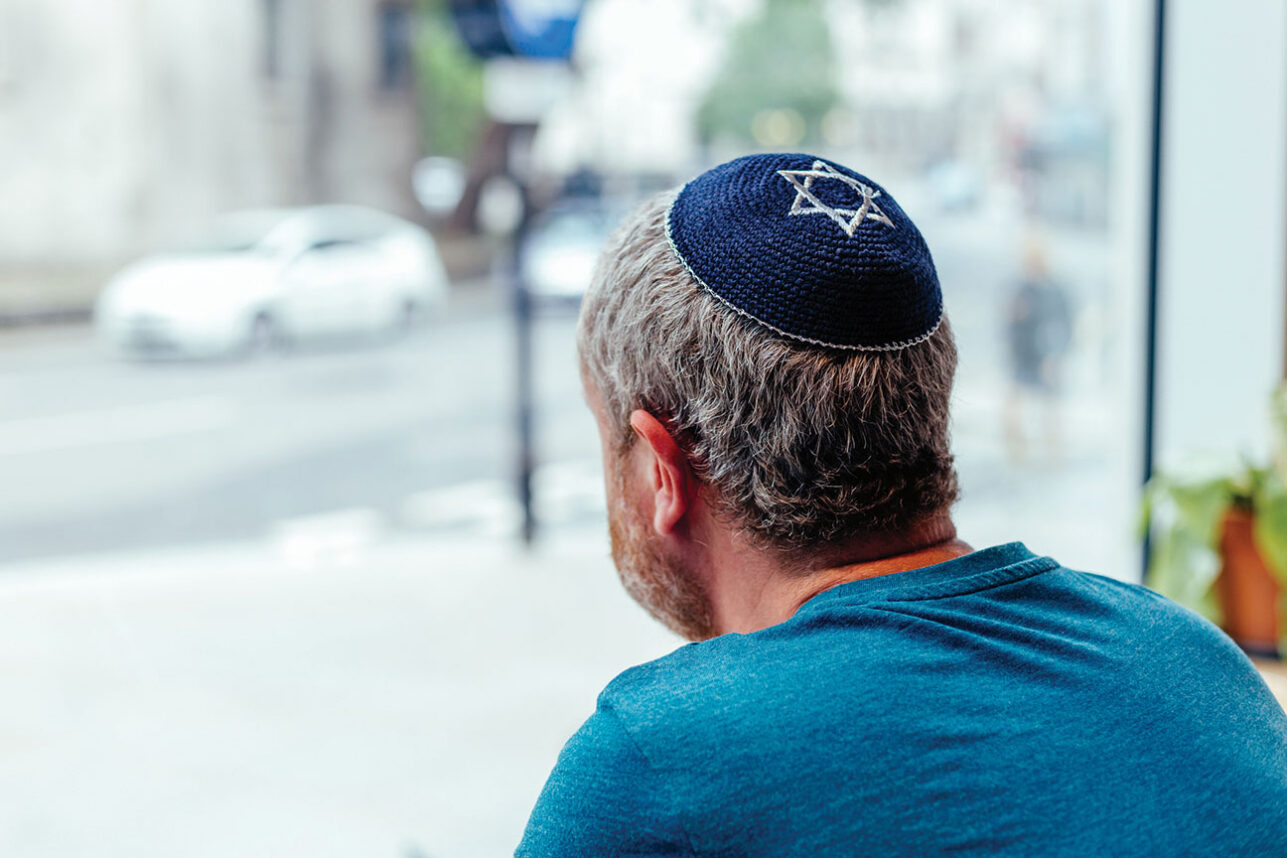
I had been standing in the doorway for a minute, wondering if I had arrived on the wrong day, when two young men arrived and introduced themselves as Peace Corps volunteers. From the basket just inside the door, they helped themselves to kipot, and we stood there chatting, waiting awkwardly for directions of some kind.
Finally, after a good 15 minutes, people began to arrive. I realized that the more relaxed South American standards of time applied to religious services as well as to everyday events. As people filed in and began to mill around, I said goodbye to my new friends when I realized I would be sitting separate from them in the women’s section. I approached a group of women, hoping to make conversation.
"Buenas noches," I said, unsure as to what language I would hear in reply. "Chag sameach" they answered. Familiar as their greeting was, it gave me no clue as to their nationality. I began some small talk in Spanish, but it became clear that the language of choice was Hebrew, with English as a fallback. I soon learned that these women were all from Israel and were here to visit family. Just as I was wondering if the service would ever begin, 30 to 40 Israelis in their 20’s entered in groups of three or four.
Soon the service began, although it seemed that hardly anyone realized it. A few of the men were chanting a familiar melody, and the rest of the congregation was simply watching. In the women’s section, most were chatting quite loudly. Only a couple of times did we sing a prayer in unison. The service was over before I realized it, lasting less than half an hour.
The seder itself was held in a spacious room in a nearby community center. Tables set up in a U-shaped pattern lined the perimeter of the room, with three smaller tables in the center. I smiled to myself as I spotted all the traditional foods of the holiday — plates of matzah, the bright pink maror, parsley, hard-boiled eggs, charoset and wine. The three center tables seemed to be designated for families — several children were in the group — and the families appeared to be Bolivian, all chatting in Spanish, with some of the kids rehearsing their readings for the service to come.
The haggadahs for the evening were photocopied booklets, with the service in Hebrew and Spanish. A Bolivian man began to lead the seder, and his wife, the Hebrew school teacher, prompted the children when it was their turn to read.
Once the dinner was served, I felt as though I could have been at any other seder I’ve ever attended. There was the traditional matzah ball soup, the chicken, potatoes, gefilte fish and fruit salads. After dinner, the table looked like tables always seem to after a seder, with scattered bits of matzah that didn’t make it into anyone’s mouth, bright blotches of the almost fluorescent pink horseradish on various plates, and wine stains on the white tablecloth.
As at many seders, we began to sing after dinner, though this singing was like none that I have experienced. A woman, her hands swaying through the air, stood at the front of the room to direct her Sunday school students in song. However, it soon it became clear who was really leading the songs. The 60-strong Israeli delegation, some rather affected by the wine, sang out with spirit and enthusiasm, and soon no one else could be heard. Everyone joined in, and finally, as all seders do, this one ended when group consensus determined that the singing had gone on long enough.
I had approached this event with little idea of what to expect at a Bolivian seder, but with a firm notion of what a seder was "supposed to be." In the end, I was not disappointed. I had anticipated a more distinctly Bolivian flavor to the evening, but it reflected more of an international sentiment. In retrospect, though, this seems only appropriate, since Judaism, after all, is a religion that transcends national boundaries, creating an international community of Jews all over the globe.
And that is something that I know will offer me both comfort and familiarity, no matter where in the world I find myself at future seders.