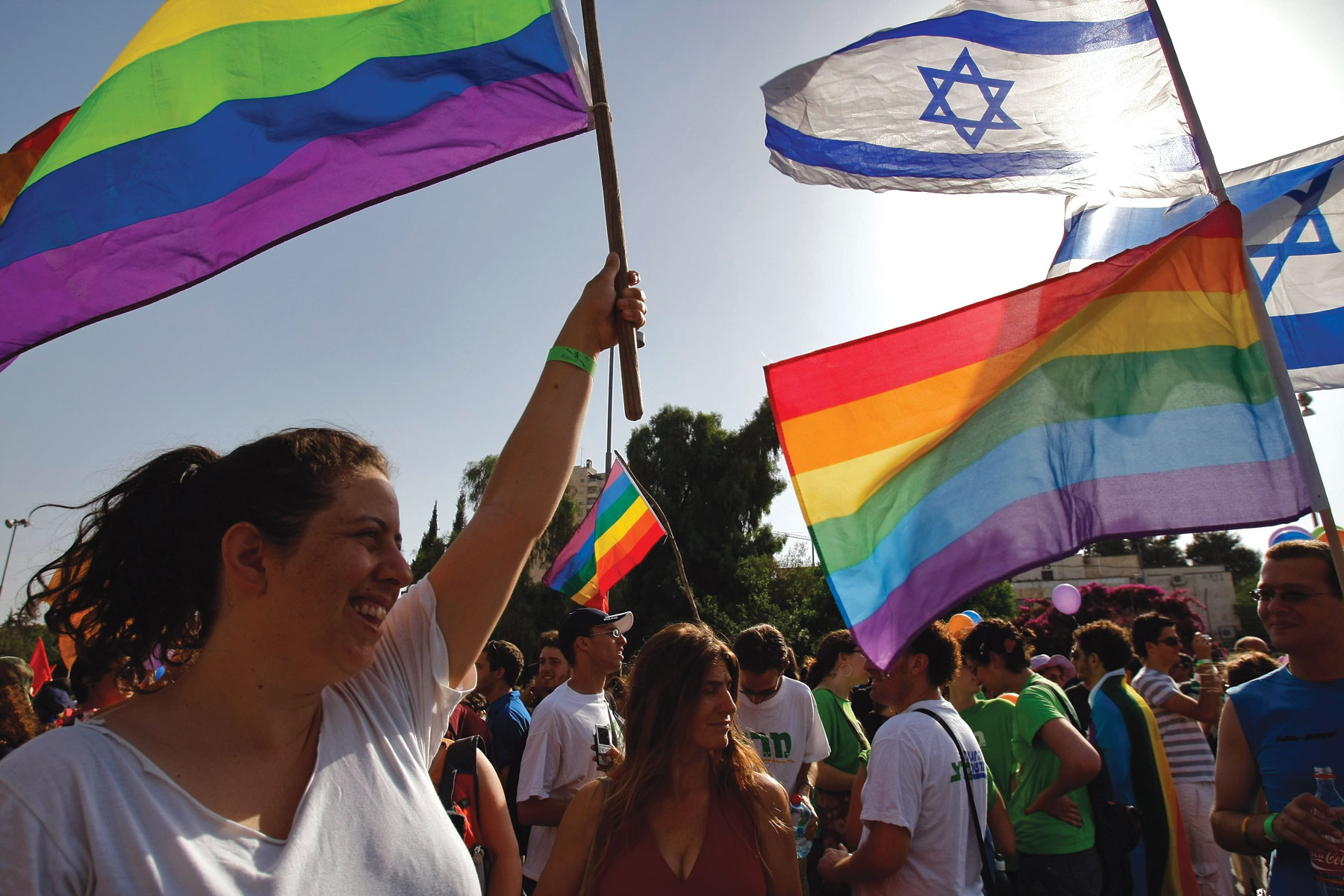
My identity as a Jew and my identity as a gay man are inseparable. Contrary to traditional beliefs regarding religion and sexuality, I believe these two parts of myself enhance each other rather than compromise each other. The LGBTQ Jewish community carries a long history of excellence. We are writers, activists, artists, politicians, academics and teachers. The convergence of identity and the greatness that has been born from this community are special to me. From Rabbi Sandra Lawson to Troye Sivan to Efrat Tilma, queer, Jewish expression seems to be stronger than ever.
Yet, despite this representation, blatant anti-Semitism currently wreaks havoc in the LGBTQ community.
The first time I heard the word “pinkwashing” was when I mentioned to a friend that I was interested in attending the Tel Aviv Pride Parade last summer. My friend supported me but warned me against posting any photos of the parade online, as I would be accused of pinkwashing. I asked her what she meant. “Pinkwashing?” she said. “When Zionists pretend that Israel is the pinnacle of human rights because of how they treat gays? To distract from the way they treat Palestinians?”
This was the first time I heard this term, but it certainly was not the last.
The “anti-pinkwashing” movement is gaining traction in the gay community. My friend was correct in her description: Its mission is to end government-sponsored exploitation of gay constituents so as not to distract from inexcusable corruption or wrongdoing. On paper, the movement seeks to separate nationalism from queer liberation and to honor the voices of queer, oppressed people worldwide. But in reality, the movement tethers the identities of gay Israelis to the Israeli-Palestinian conflict and undermines their autonomy simply because they are citizens of the Jewish state. To the devout gay rights activist, any display of Jewish gay pride is now conditional; it must totally and officially distance itself from the Jewish state to be valid.
Consider the controversy surrounding the 2019 D.C. Dyke March. This event was a unique opportunity for the queer women of Washington to display their solidarity with one another, but under one condition: Jewish queer women could not display any “nationalist iconography,” meaning the Star of David, if it resembled an Israeli flag. At a similar event in Chicago, Jewish women carrying rainbow Star of David flags were forced to leave. In New York, Israelis participating in a gay pride parade were surrounded by protesters shouting, “No pride in apartheid!”
Imagine if you were an American marching in a European pride parade and suddenly you were isolated from the crowd and intimidated with chants of “Screw Donald Trump!” simply because of your nationality. That, of course, wouldn’t happen. The queer liberation movement does not hold a queer person responsible for the actions of their government — unless of course, they are Israeli.
To make matters worse, more and more LGBTQ organizations are openly supporting boycott, divestment and sanctions (BDS) resolutions.
To make matters worse, more and more LGBTQ organizations are openly supporting boycott, divestment and sanctions (BDS) resolutions. How can this movement, which emphasizes the rights and dignity of all people, support BDS, an initiative that constantly discriminates against both Israeli and Diaspora Jews in academic, artistic and political spaces?
The antagonism is finding its way to universities. An organization on my campus at George Washington University that markets itself as “here to work toward building a happy, healthy and equal environment for the LGBTQ community” published a political platform of its own in 2019. The organization wrote, “In recognition of the struggles of LGBTQ+ Palestinians living under occupation, of the fact that settler-colonialism will always hurt our LGBTQ+ siblings, and in recognition of the pinkwashing done by the Israeli state to justify occupation requires combatting by the LGBTQ+ community, we commit ourselves to the cause of anti-settler colonialism. Additionally, we refuse to endorse or work with organizations that stand in support of settler-colonialism states.”
It’s important to note that nowhere in the platform is there any other condemnation of a foreign power or its government’s policy. The only regional conflict recognized is the Israeli-Palestinian conflict. After I filed a complaint with the university, the platform was amended to remove specific mention of Palestinians and Israel. Regardless, this organization will refrain from partnering with Jewish groups if they have any connection to the Jewish state.
I serve on the board of an LGBTQ Jewish organization on campus and last year, I sought to partner with other LGTBQ groups for programming. When speaking with another student, I was advised against this. According to this student, Jewish pride could be “triggering” to certain gay students who are passionate about the Palestinian cause. The student then added that some would be massively uncomfortable with the presence of “organized religion” in queer spaces. When I responded that Jewish life on campus has nothing to do with the Israeli-Palestinian conflict, and that Judaism wasn’t merely a religion but a prominent ethnic and cultural identity among many LGBTQ students, the conversation quickly ended.
Our religious and ethnic identities are being subjected to political litmus tests in order to be accepted in queer spaces. “Bigotry” is too genial a word. One might think to themselves, “If gay Jews have a problem, they should find another movement to rally behind.” That is a valid sentiment when analyzing specific populations and policy preferences — but being Jewish is not a policy preference. It is overtly anti-Semitic to expect Jews to shed part of their identity to conform to a movement they agree with politically.
Why should I have to give up my Jewishness to oppose LGBTQ employment discrimination? Why should I give up my Zionism to support transgender people? Why must I disavow any celebration of queerness in the largest Jewish community on Earth, simply because I disagree with Prime Minister Benjamin Netanyahu’s policies?
My response to all these questions is simple: I shouldn’t have to, and I will not.
It is my hope that more folks who feel the sting of anti-Semitism in these supposedly progressive spaces join me in standing up for Judaism — no matter what the cost.
Blake Flayton is a student at George Washington University.