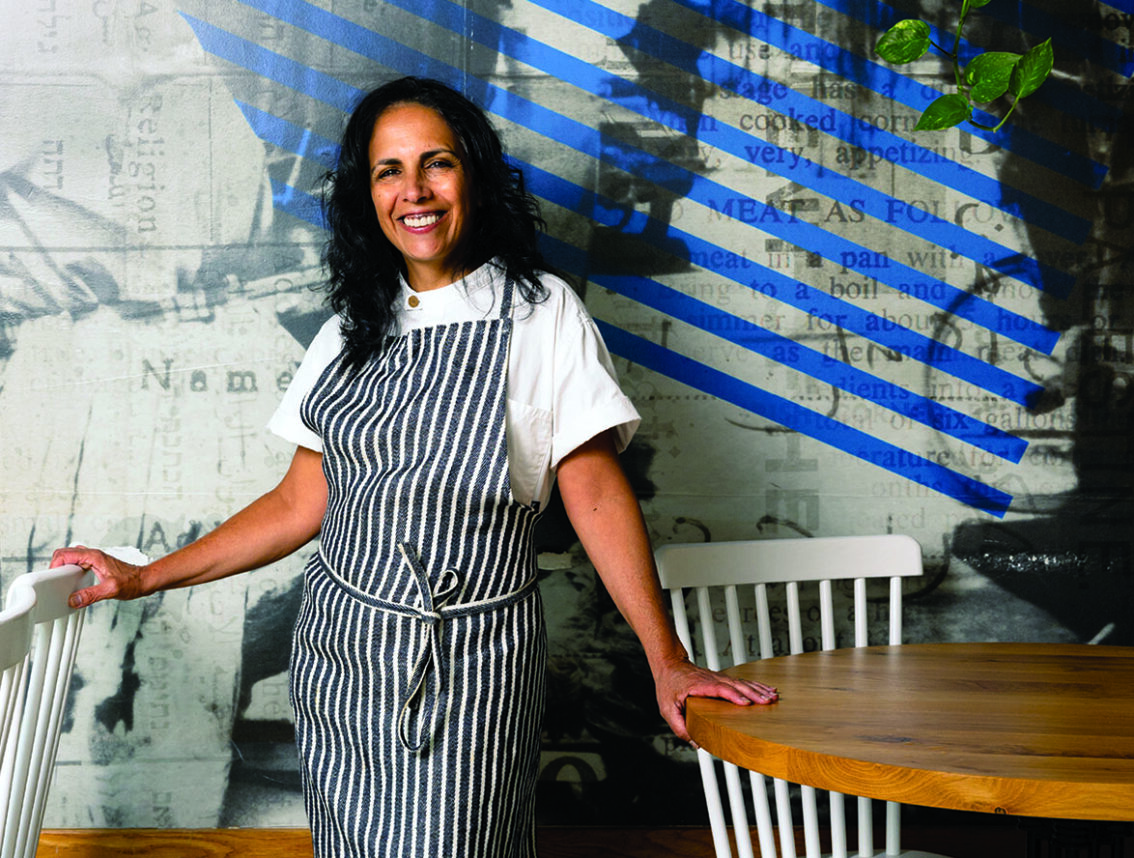
Rebecca Eskreis knew that she was living the dream when directing “What Breaks the Ice.” The coming-of-age thriller starring Madelyn Cline (“Outer Banks”) and Sofia Hublitz (“Ozark”) was filmed over twenty-one days in upstate New York. On one particularly grueling day of shooting, Eskreis’s father called to wish her a happy birthday. He suggested she take the day off from work.
“This is the best birthday of my life—I’m directing a movie!” Eskreis replied.
The Jewish director was inspired to write the screenplay after watching the 2014 movie “Boyhood.” The Academy Award-nominated drama was directed by one of her favorite filmmakers, Richard Linklater. Eskreis ultimately found herself being mentored by Linklater after winning a grant from the Austin Film Society. Linklater invited Eskreis and other emerging filmmakers to his Texas ranch for four days. They presented their projects for critique.
“It’s like really a dream-come-true for an artist to just spend time with their craft and to learn and to get the project ready to be cast and produced,” Eskreis told the Journal.
It wasn’t the first time the Long Island native was mentored by an award-winning director. Eskreis served as creative assistant to the late Jonathan Demme on his 2015 movie, “Ricki and the Flash.”
“Jonathan is one of those incredible people I ever had the privilege to know,” said Eskreis. “I think that what was so special about the experience of working for him was that I feel he was really generous with his knowledge—his knowledge of filmmaking, his facility working with actors, his genius in the editing room, and just generally the world that he occupied. He was a world in and of himself.”
Eskreis continued working with the director on the Netflix documentary concert film, “Justin Timberlake + the Tennessee Kids.” After production wrapped, Demme sat her down for one of the most profound conversations of her career. The internationally-acclaimed auteur told her that it was time for her to go out into the world and make movies.
“It wasn’t like he was firing me,” explained Eskreis. “I carry that with me all the time because I think you have to be brave to just step into the next adventure and not be worried that you are going to sink. I’ve described my career as a ladder, but I could never get to the rung above the one I’m on without jumping and worrying I’m going to fall back down the bottom. It was like a parent giving you tough love.”
The story takes place in the sweltering summer of 1998 amidst the Monica Lewinsky scandal. Eskreis reflected upon her own teenage years when constructing the young characters.
“What Breaks the Ice,” currently streaming on Showtime, is her first feature film. The story takes place in the sweltering summer of 1998 amidst the Monica Lewinsky scandal. Eskreis reflected upon her own teenage years when constructing the young characters. She grew up in Great Neck, a predominantly Jewish community on Long Island. Eskreis always wondered what it would have been like if she hadn’t grown up surrounded by Jews. Her father once jokingly asked her younger brother what percentage of the world was Jewish.
“My brother said, ‘Oh, at least fifty percent,’” Eskreis chuckled.
“Specific to the film I made, I think there’s something in Judaism, in your Jewish education, that you’re always philosophically dealing with ethics and what it means to be a good person.” – Rebecca Eskreis
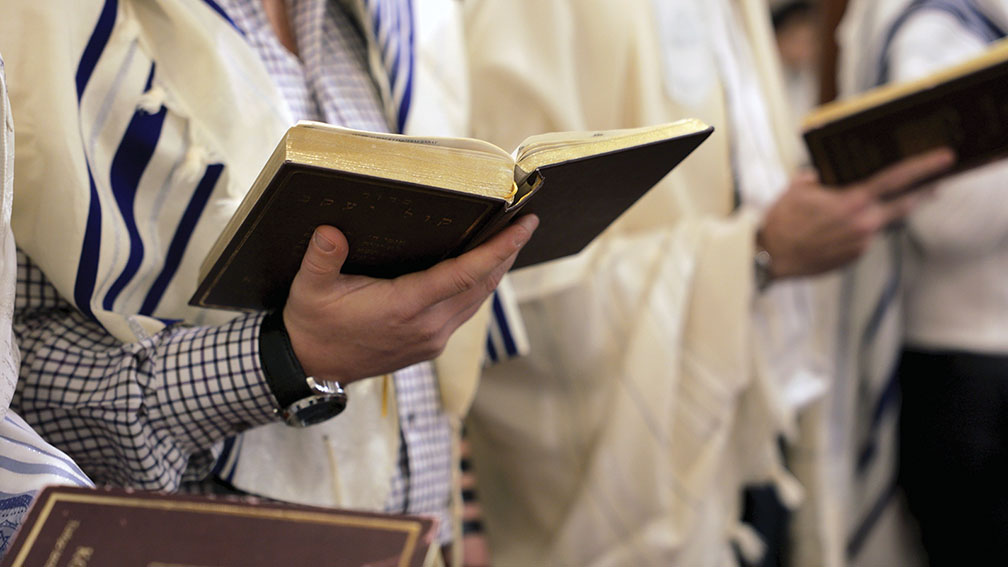
Her faith strongly influenced the main themes of “What Breaks the Ice.” “I think a lot of the ethical things that I explore in my art are rooted in a lot of things that I learned when I was growing up in Hebrew school and exploring what it meant to be a Jewish person,” said the director. “Specific to the film I made, I think there’s something in Judaism, in your Jewish education, that you’re always philosophically dealing with ethics and what it means to be a good person. When you’re in Hebrew school, you talk a lot about the levels of tzedakah and how you could live your life meaningfully. I think, subconsciously, a lot of those things that I used to ponder as a kid and certainly as an adult came from my Jewish heritage. [They] therefore are explored and expressed in ‘What Breaks the Ice’ — what does it mean to be a good person or a bad person, and are any of us all good or all bad?”
Filming “What Breaks the Ice” was no easy feat. Eskreis faced a multitude of challenges throughout every stage of the process. Her team was pressed for time and experienced substantial production costs.
“I think making independent films is just really hard because you’re always scrambling because you don’t have enough money,” said Eskreis. “I credit our producers with working miracles and our production designer as well.”
The director was determined to keep a positive attitude while dealing with difficult subject matter. She was in the middle of editing the film when she received news that her brother had passed away.
“Suddenly, I’m in the worst possible mental place that I could possibly imagine,” recalled Eskreis. The devastating loss didn’t stop her from finishing the film. As actor Madelyn Cline described to Buzzfeed, “Rebecca brought this film to life completely by her bootstraps. It’s very cool to see.”
Eskreis is currently preparing to direct “ClearMind,” a “satire horror comedy” written by Seana Kofoed. The film begins shooting in May 2022. Her advice for aspiring filmmakers is to prepare themselves for a marathon, not a sprint.
“You’re going to face setbacks along the way. You’re going to lose people. You’re going to have a COVID pandemic, maybe,” said Eskreis. “You kind of just let those moments exist and keep going.”