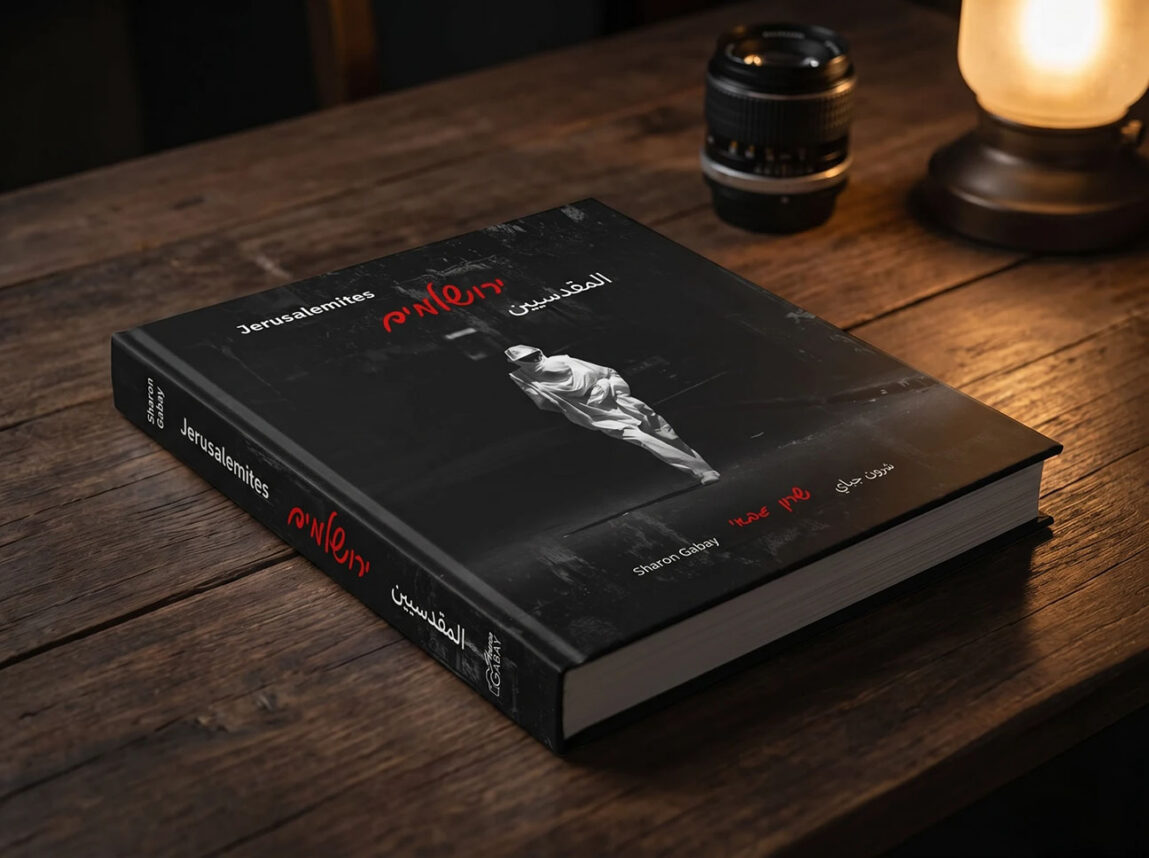
The encounter between Jews and Muslims, which began during the lifetime of Mohammed, has never been without tensions and conflicts, perhaps never more so than today. “A History of Jewish-Muslim Relations: From the Origins to the Present Day” (Princeton University Press, $75), edited by Abdelwahab Meddeb and Benjamin Stora, is an ambitious and highly successful effort at what the publishers call “the ‘biography’ of a living and complex relationship.”
First published in France and now available in English translation, the book offers a collection of scholarly essays accompanied by sidebars of explanatory text, excerpts from historical sources and a rich array of maps and illustrations. Significantly, one of the two principal editors is Muslim and the other is Jewish, and both aspire to bridge the gap between these two peoples who share so much in common, despite their current frictions.
Abdelwahab Meddeb, for example, recalls his childhood in Tunis, where he recognized something familiar in the prayers of his Jewish neighbors: “These Jews, whom I saw on a daily basis, bore within themselves what made them similar to me, and also what made them different,” he writes. “It was that difference in resemblance that confused me.” The same sentiment is echoed by his Jewish colleague, Benjamin Stora, who grew up in Algeria: “In the end, what did we have in common, Jews and Muslims?” he ponders. “Languages (Arabic and French), a temporality marked by liturgical rhythm, musical affinities, culinary traditions, and also the market and the streets.”
Their intention in the book, they announce is nothing less than “a restoration of the historical bonds established between Jews and Muslims for more than fourteen centuries, from the first appearance of the Qu’ran to our own time — fourteen centuries of passions and oppressions, of sometimes tragic, sometimes auspicious relations.” But they also acknowledge that their book “is being written at a time when these relations have reached a dead end.” Nevertheless, these two scholars, and many of the contributors to their enterprise, endorse a hopeful goal — “to call into question some of the cultural assumptions we take for granted, particularly concerning the irreducible opposition between the two worlds, Jewish and Muslim.”
Thus, for example, Princeton professor Mark R. Cohen explains that both Muslim and Jewish scholars have distorted the history of the “ ‘Golden Age’ of Jewish-Muslim harmony” in medieval Spain under Islamic sovereignty. While it was not quite the “interfaith utopia of tolerance and convivencia that it has been advertised to be, Cohen insists that Jews living under Islamic sovereignty were better off than their counterparts in the Christian world. “As long as they were allowed to live in security and practice their religion without interference — this was ‘toleration’ in the medieval sense of the word — they were generally content.” Beyond that, he insists, “[t]he Arabic and Islamic ‘renaissance’ laid the groundwork for other Jewish cultural innovations.”
Indeed, the whole book is focused on the various “cultural innovations,” both Islamic and Jewish, that flowed from the encounter between Muslims and Jews. In the 19th century, for example, Jewish architects played a crucial role in the remaking of Cairo, including the design and construction of mosques and the preservation of antiquities. Remarkably, the monumental Al-Rifai’ Mosque is the work of a Hungarian Jew, Max Herz. The irony does not escape Mercedes Volait, another contributor to the book: “It may seem surprising, within the current context of the Israeli-Palestinian conflict and the religious hatred it has fed, that a Jewish architect designed Muslim places of worship.”
At more than 1,000 pages of text, illustration and scholarly apparatus, “A History of Jewish-Muslim Relations” is, quite literally, a solid work of scholarship. Thanks to its eye-catching visual elements, it also presents itself as a coffee-table book of a superior kind. Above all, it is a serious and timely effort to repair a relationship between kindred peoples who have never been fully at ease with each and yet, thanks to the accidents of history, are fated to live in close proximity.
Jonathan Kirsch, author and publishing attorney, is the book editor of the Jewish Journal. His latest book is “The Short, Strange Life of Herschel Grynszpan: A Boy Avenger, A Nazi Diplomat and a Murder in Paris” (Norton/Liveright), which has been selected as a best book of 2013 by the Washington Post, the Jewish Chronicle, and the Los Angeles Public Library.