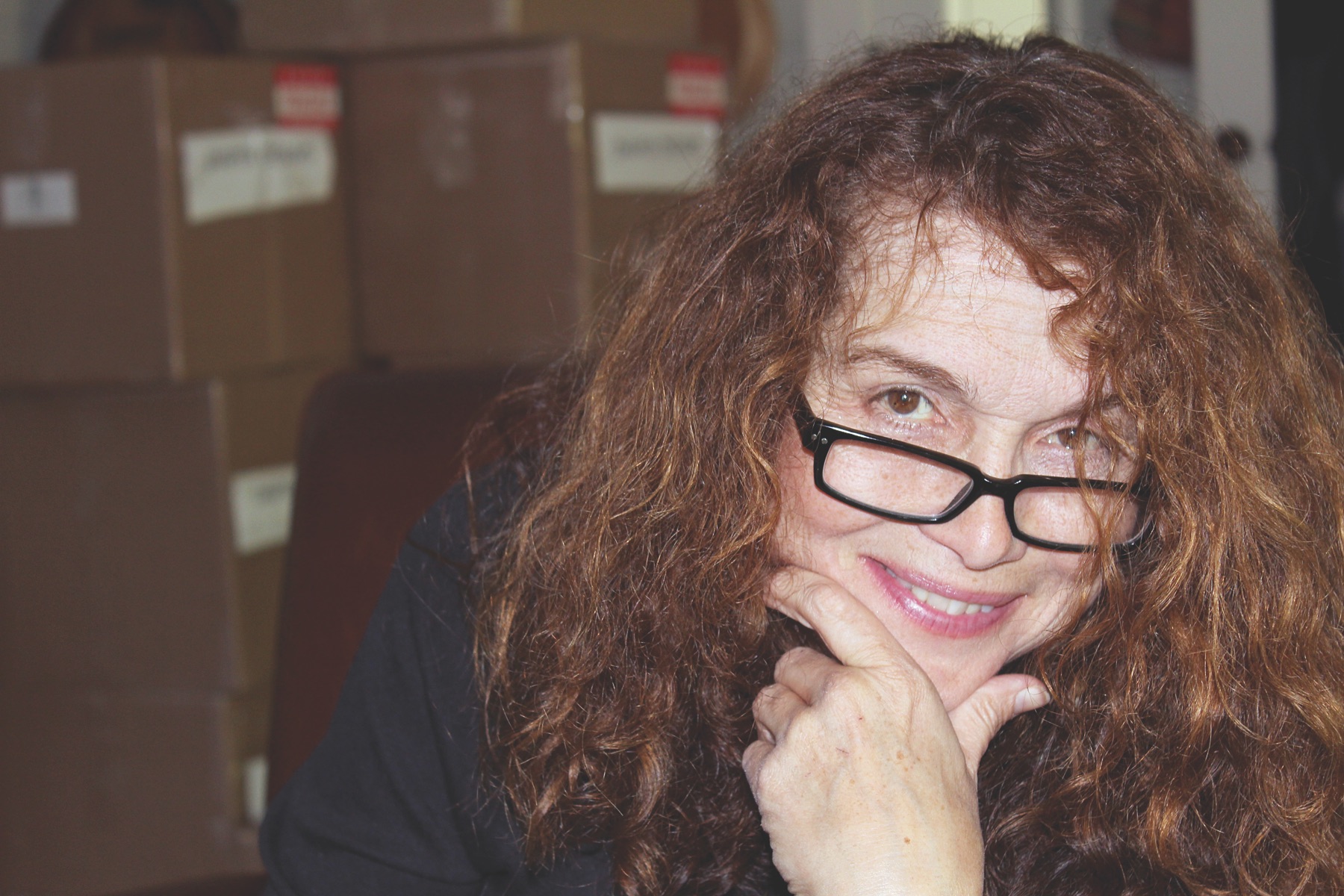
Actress and director Melanie Mayron has managed to carve out a long career in Hollywood. Now 65 years old, she landed her first role in a significant film in “Harry & Tonto” in 1974. She is best known for her performances in Claudia Weill’s critically acclaimed independent feature, “Girlfriends” (1978), for which she was nominated for a British Academy of Film and Television Award (BAFTA); “Playing for Time” (1980), a CBS special starring Vanessa Redgrave; and Costa-Gavras’ film “Missing” (1982), with Jack Lemmon and Sissy Spacek. She won an Emmy Award in 1989 for supporting actress in a drama series for her role as photographer Melissa Steadman on ABC’s “thirtysomething.” She has directed episodes of “thirtysomething” as well as many other well-known shows, including “In Treatment” and “The Larry Sanders Show” on HBO, “Dawson’s Creek” on the former WB Network, and “GLOW” on Netflix. Recently, she’s had a recurring role in and directed several episodes of The CW Television Network’s “Jane the Virgin.”
What part has your Jewish upbringing and heritage played in your work and life?
A huge part. My father is from Palestine. He fought in the war in 1948 to make the State of Israel. He was a medic in the air force and army. My grandparents lived there. So I visited Israel all through my childhood. I spent half of fourth grade there. My great-great grandparents’ names are on a monument in Tel Aviv as among the founders of Tel Aviv — David and Rosa Mizrahi.
How did you land the role of Melissa Steadman on the ABC drama “thirtysomething”?
Ed Zwick and Marshal Herskovitz, who created “thirtysomething,” had seen me in “Girlfriends” and were interested in me from that film. I think once Ken Olin and I were cast — and we were the only Jewish actors in the cast — they decided to make us cousins. And Jewish.
What inspired you to direct?
[I had] a side business. I shot actors’ headshots for extra money when I was starting out as a young actress. I knew lenses, as I shot with a 35 mm camera.
“All actresses seem to get put out to pasture in their mid-40s, and then, if they are lucky, appear again as grandmothers or in senior roles later in life. There is a black hole as an actress from mid-40s to 70. And then, hopefully, you are right for roles again.”
Have you encountered ageism in Hollywood, and if so, how have you dealt with it?
All actresses seem to get put out to pasture in their mid-40s, and then, if they are lucky, appear again as grandmothers or in senior roles later in life. There is a black hole as an actress from mid-40s to 70. And then, hopefully, you are right for roles again. As for directing, there hasn’t been any ageism yet, for me anyway. I mean, it is tougher to get work, and there is so much competition for directing work, but for some people, they value your experience.
Any thoughts or experiences you’d care to share about the current #MeToo movement?
I think it is about time. Women have been second-class citizens forever. But as we raise our voices together, we will raise each other and raise the consciousness of the world. And we all, women and men, will be better off because of it.
What’s coming up for you?
I just completed a film called “Snapshots,” which is playing film festivals now. It is picking up awards, which is so exciting. It stars Piper Laurie, Brooke Adams and a wonderful cast of actors. We are looking at an August release, I am told.
Any charities close to your heart?
Planned Parenthood. The National Women’s Health Network. The SPCA. The Humane Society.
Mark Miller is a humorist and journalist who has performed stand-up comedy on TV and written for various sitcoms. His first book, a collection of humorous essays about dating and romance, is “500 Dates: Dispatches From the Front Lines of the Online Dating Wars.”