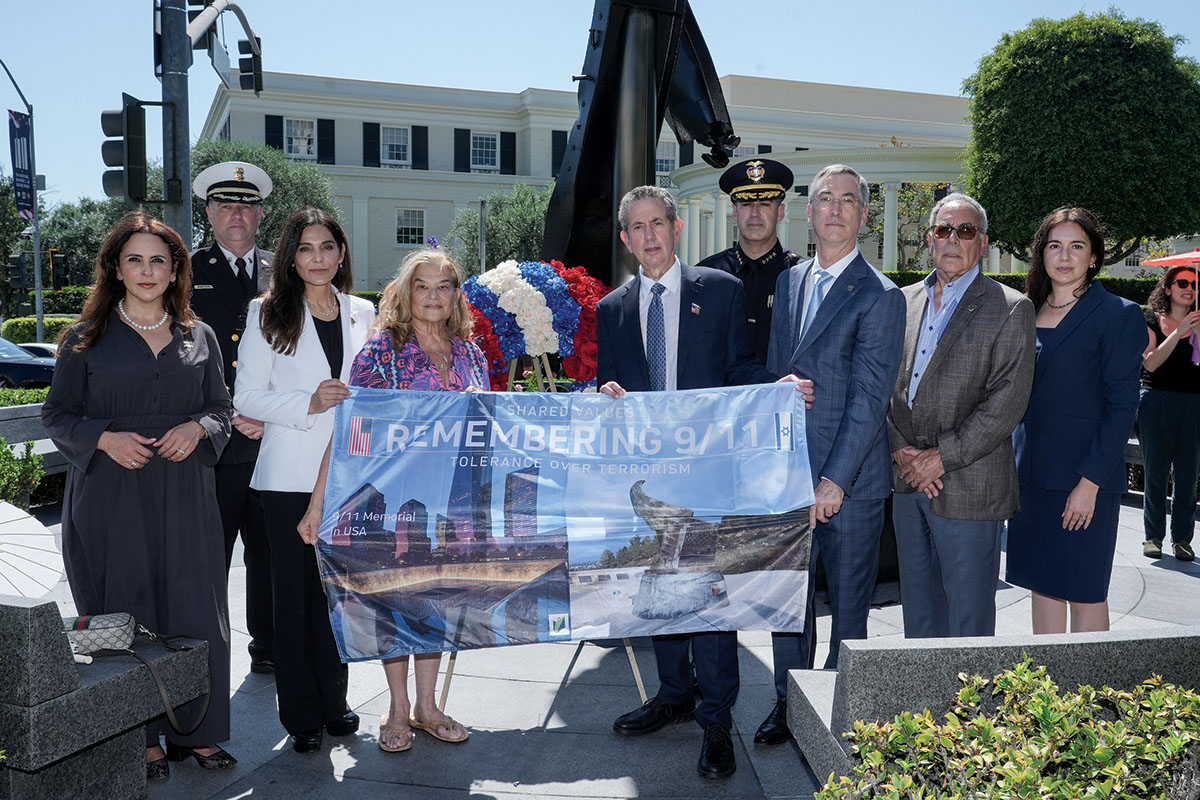
On Tuesday, June 23, the Simon Wiesenthal Center hosted a press conference, “Americans Unite in Solidarity with People of Iran,” the Los Angeles Museum of Tolerance.
Iranian American activists and leaders from the Baha’i, Christian and Jewish communities called for the United Nations to take action regarding reports of a fraudulent election and human rights violations in Iran.
Wiesenthal Center founder and dean Rabbi Marvin Hier said that while non-governmental organizations can’t request a session of the UN Security Council, member countries should do so now.
“Why are the lights out at the United Nations?” Hier asked. “Where is the EU? Where is the United States and Canada? Where is the Muslim and Arab World to demand a meeting of the Security Council to discuss the issue of Iran?”
Political activist Roxanna Ganji echoed the call for UN action and added that regime change was necessary with the support of the world community.
“We are from all different ideologies here [but] … We are here as Iranians requesting the world to hear us as one nation, seeking change for democracy and secularism,” Ganji said.
Political analyst Mohammad Amini said that while the UN should condemn election fraud and resulting violence only Iranians should be involved in regime change.
“It is our job to change the regime in Iran, and we will do it,” Amini added.
Other speakers at the event included moderator and Wiesenthal Center associate dean Rabbi Abraham Cooper; the Evangelical Covenant Church’s Rev. Walter Contreras, Iranians for a Secular Republic secretary general Roozbeh Farahani, UC Irvine Prof. Hamid Arabzadeh, Baha’is of Los Angeles’ Randolph Dobbs and the Committee for Religious Minority Rights in Iran director Faryar Nikbakht.
The Wiesenthal Center also distributed an independent analysis highlighting irregularities in the 2009 Iranian elections, which is available through its Web site www.wiesenthal.com. The paper is published by Chatham House and the University of St. Andrews’ Institute of Iranian Studies.