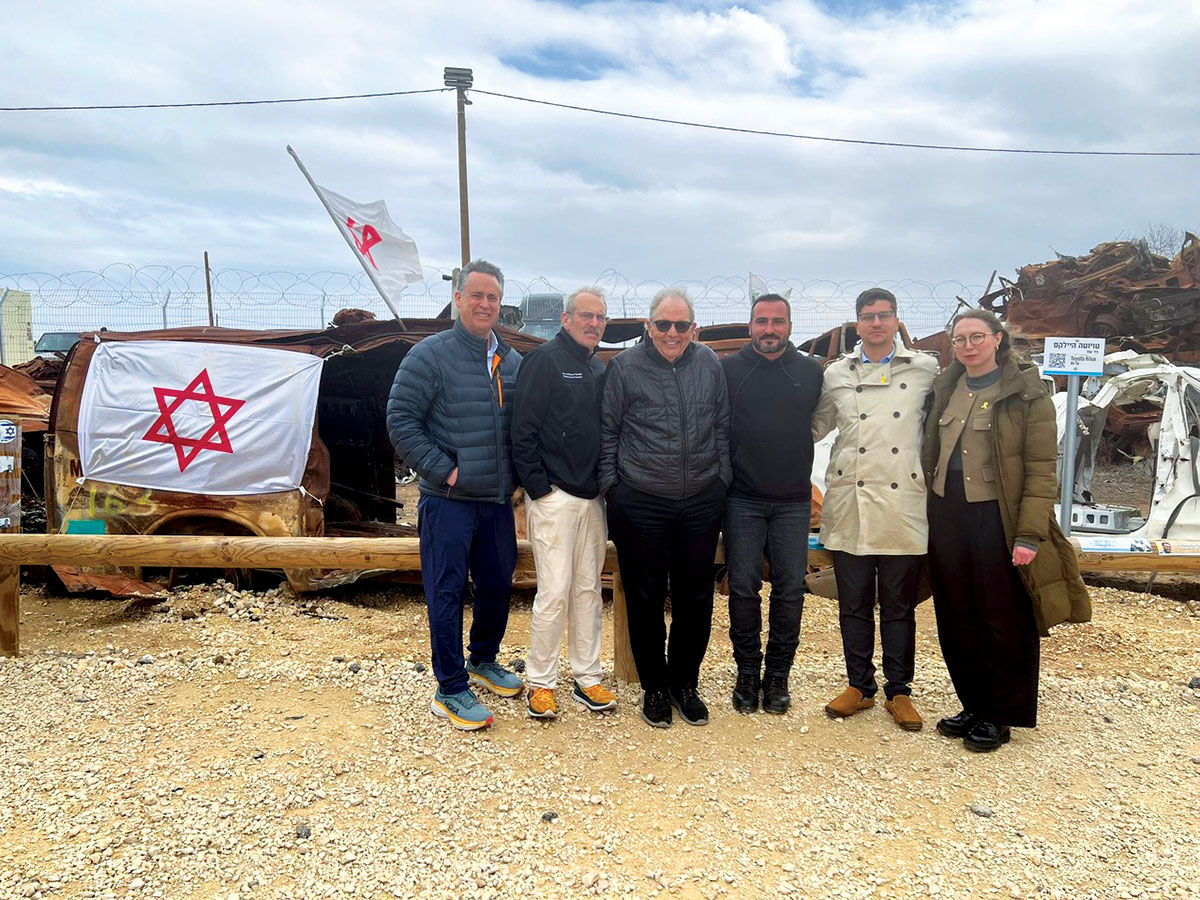
In a step toward enhancing medical collaboration, a delegation from Cedars-Sinai Medical Center visited Israel in early February at the initiative of Consul General Israel to the Pacific Southwest, Israel Bachar. The delegation participated in a series of meetings at hospitals in Israel’s peripheral regions, aiming to establish partnerships that would allow Israeli doctors from these areas to receive specialized training in Los Angeles before returning to Israel.
For years, hospitals in Israel’s periphery have struggled with budget constraints and difficulties in attracting experienced medical professionals, impacting the quality and accessibility of healthcare. In response, Cedars-Sinai has stepped in to help. At the outbreak of the war, the hospital donated funds to several medical centers across Israel, including in both peripheral and central regions. Additionally, it sent doctors to volunteer following the Oct. 7 massacre.
The recent delegation focused on fostering long-term cooperation between Cedars-Sinai and hospitals in Israel’s periphery. “It’s no secret that hospitals in the periphery face many challenges, one of which is the difficulty in attracting top-tier doctors, who often prefer to work in central Israel,” said Bachar in an interview with the Journal. “As a result, the level of medical expertise in these hospitals is not as high.”
Bachar sought to strengthen these hospitals by providing access to advanced training and resources. His initiative would allow doctors from peripheral hospitals to complete their residency or specialization at Cedars-Sinai and then bring their expertise back to Israel.
As part of this effort, four top doctors from Cedars-Sinai visited multiple medical institutions, including Barzilai Medical Center in Ashkelon, one of Israel’s busiest trauma centers. The hospital was responsible in treating many of the victims injured on Oct. 7.

The delegation included Larry Katznelson, M.D., Vice Dean of Medical Education and Professor of Medicine; Harry Sax, M.D., Associate Dean of International Academic Programs; Art Ochoa, J.D., Senior Vice President and Chief Advancement Officer and Jerrold Green, PhD, Global Advisor for Cedars-Sinai Health System.
The delegation toured the hospital’s trauma department, learning about the impact of the Oct. 7 attack and the resilience of the medical staff. They also visited Ziv Medical Center in Safed, which has played a key role in treating trauma patients and has served as a regional trauma center since the war in the north began. The visit provided valuable insights into emergency response protocols and strategies for strengthening resilience among medical teams.
“We learned how these hospitals need to adapt quickly to manage mass casualty situations in dynamic border environments,” said Dr. Katznelson. “We were struck by the fact that these hospitals are made up of hospital leadership, physicians and staff from multiethnic compositions, including Jewish, Arab, Muslim, Druze and other backgrounds, all working together to provide top care to their patients.”
On top of offering Israeli doctors to receive advanced specialty training at Cedars-Sinai, the hospital will look to foster research collaborations in the fields of computational genomics, artificial intelligence and cybersecurity. But this collaboration doesn’t mean that only Israel is going to benefit: Cedars-Sinai can also learn novel approaches to managing mass casualty situations, which will help improve strategies for preparing for unexpected situations.
“What struck us was the flexibility and nimbleness of the trauma teams at the peripheral hospitals to adjust to highly dynamic situations, particularly in the settings of mass casualty,” said Dr. Katznelson. “We can definitely learn from these hospitals as we think about how we can best prepare for catastrophic events, including natural disasters.”
In 2028, Los Angeles will host the Olympics, which will bring many visitors to town, and Bachar said that Cedars-Sinai wants to be prepared for any potential crisis or overwhelming number of injuries requiring medical attention.
The delegation also visited the School of Medicine at Ariel University to foster academic collaborations and medical training programs. Ariel University President Professor Ehud Grossman, a senior physician who previously led the Sackler School of Medicine at Tel Aviv University, welcomed the initiative, calling it a breakthrough for the institution.
Bachar emphasized the broader impact of such efforts, saying, “Beyond hospital partnerships, I also want to support academic growth in Samaria, where many students from Israel’s periphery are studying and succeeding. Strengthening these connections will ultimately enhance healthcare across the country.”
“Strengthening these connections will ultimately enhance healthcare across the country.” – Consul General Israel Bachar
With the foundation now laid for cooperation between Cedars-Sinai and Israel’s peripheral hospitals, this initiative marks a promising step toward improving medical care and professional development in underserved areas.
As for the cost of this collaboration, Bachar stated that the Israeli Ministry of Health supports the program and that funding will be a joint effort between Cedars-Sinai and the Israeli government.
The delegation also visited the Gaza Envelope, including the community of Kfar Aza, which left a profound impression on them. They gained a tangible understanding of the scale of the tragedy, strengthening their determination to help.
“Such connections are critical and significant because, beyond specific events, these relationships are deeply rooted in real life,” said Bachar. “Once established, these relationships will endure for years and are not dependent on fleeting moments. Nothing strengthens support for Israel more than the personal and professional relationships that develop through such initiatives.”