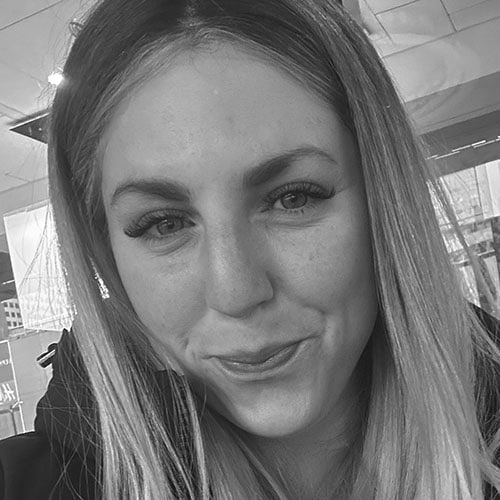

Growing up In Miami, Florida, Rabbi Lisa Berney was always involved in her Jewish community. She went to Jewish day school at her family’s Reform synagogue, had Shabbat dinner at home every Friday night, attended Jewish summer camp and joined youth groups.
“I was in a thriving Jewish community,” she said. “My world was a very Jewish one.”
Berney, who is associate rabbi and director of lifelong learning at Leo Baeck Temple in Los Angeles, knows how important it is to for kids to become engaged with their Judaism from a young age. It’s what inspired her to be part of the community and, ultimately, to become a rabbi.
Though she thought she wanted to work as a children’s rights lawyer, she decided in college to double major in Jewish studies. Then, she attended the Hebrew Union College-Jewish Institute of Religion, where she received ordination. During her time there, she was a student chaplain at Children’s Hospital of Los Angeles.
“I chose to be at Children’s Hospital because I’m really interested in being there for children and for the whole family,” she said.
It was at the hospital that Berney learned the power of listening and being there for people. In one of the toughest moments, she was called into work in the middle of the night after a two-year-old had died from drowning.
“The mom wouldn’t let go of her child, even though it had been hours since the child had died,” she said. “There are no words in those moments. So often, words aren’t necessary. What the mom needed was another soul to be present with her during this moment of unimaginable loss and let her know, physically and cosmically, that she is not alone.”
Loneliness, and being alone, are two themes that come up time and time again in Berney’s life and work.
Loneliness, and being alone, are two themes that come up time and time again in Berney’s life and work. When she was a child, she noticed just how much that people in her community were there for her, her family and one another. They made sure that nobody felt alone.
“We can live in a pretty transactional and lonely world and, for me, the answer to that is we create real community where we journey with one another and watch out for one another over and over again,” she said.
Berney serves people of all ages in her community at Leo Baeck, which has 600 families, but her specialty is working with kids and teens.
“I think children are the most creative, kind and hopeful parts of our community,” she said.
In the learning programs at the Sanford Ragins Religious School, which is for kindergarten through twelfth graders, Berney interacts with young kids as well as teens.
Along with teaching about the Torah, the rabbi gives teens the time to talk about what’s going on in their lives, as well as express their authentic selves.
“This work is about creating spaces where you can just be you,” she said. “Not your filtered you. The teens feel like they have to be this perfectly curated version of themselves. At our school, they can be their whole selves, and we love them unconditionally.”
Berney doesn’t shy away from talking about tough topics with the teens such as issues with parents, friends and body image. She also helps create programs where children and teens can learn from real-world experience, including a program where eighth and ninth graders are going to Arizona to learn about the immigration crisis.
“All of these different experiences help them think about who they want to be in the world,” she said. “They think, ‘What matters to me? What grounds me?’”
To get the entire family involved in Jewish life, Berney and her colleagues at Leo Baeck put together Friday night services, which the kids sometimes lead.
“Two working parents choose, on a Friday night, to schlep to temple with their kids and do Shabbat together as a family,” she said. “That’s a big choice for them. We give them conversations to talk about on the way home. We underestimate what a big deal it is when people are choosing synagogue life at this point.”
For Berney, the Jewish teaching that sticks out the most is, “It is not good for man to be alone.” In her work, she’s always trying to show her congregants that they are never alone.
“There is this deep yearning within all of us to be in deep relationships with each other,” she said. “It’s how we do our best work, fulfill our unique purposes, feel seen and loved by one another and move this world forward.”
Fast Takes with Lisa Berney
Jewish Journal: What’s your favorite Jewish food?
Lisa Berney: Chocolate babka or bagels. Any carbohydrate really.
JJ: What would you do if you weren’t a rabbi?
LB: I’d want to be the orthopedic surgeon for the Miami Heat.
JJ: What do you do on your day off?
LB: My husband [Rabbi Joshua Knobel] and I try to take a hike together or spend time with our two girls. We do something as a family.
JJ: What was your favorite childhood book?
LB: “A Wrinkle in Time.” I loved the strong female characters in this really cool imaginary world.