
Kosher.com, a site that features thousands of kosher recipes, has recently debuted two new shows: “Rosh Chodesh Club” featuring Gabe Garcia, Head Chef of Tierra Sur, and “Breaking Bread” with Danielle Renov, a cookbook author with Ashkenazi and Sephardic roots living in Israel.
Viewers can check into “Rosh Chodesh Club” every month to cook recipes in real time with Garcia, a Southern California native whose cooking has helped Tierra Sur become one of the top-rated restaurants in Ventura County. He takes his audience through every step of the process with his recipes, and so far, has taught how to make fall roasted squash salad and lamb samosas with pea mint sauce.
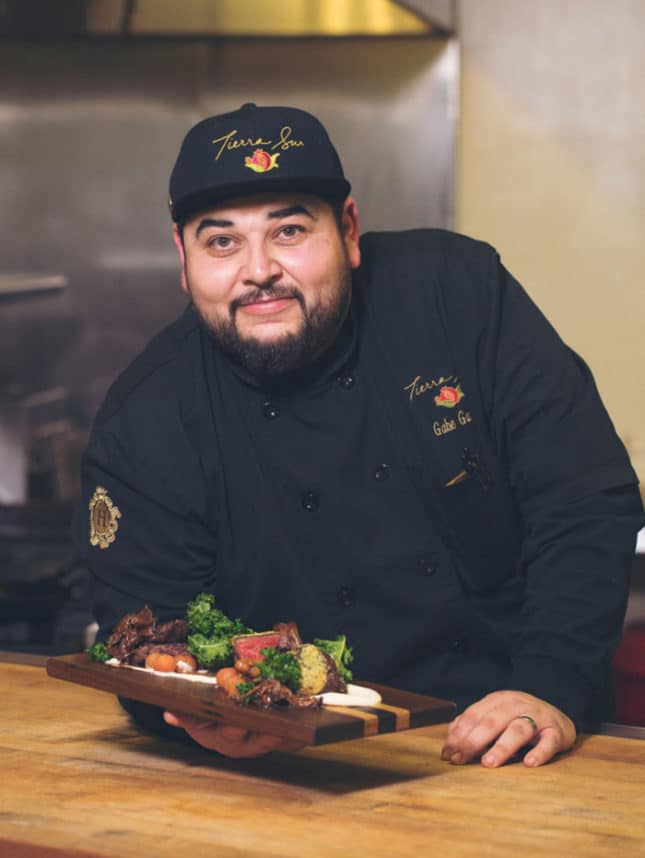
“By creating a real-time show, the viewers get to see every detail of how I create a dish,” Garcia said. “Every thought, every little tip and trick that would normally get left in the editing room, every step—nothing is left out. This is a master class for people that really want to improve their skills in the kitchen and understand flavors and pairings, not just about how to do one very specific recipe.”
To ensure that viewers are ready to cook once the show is posted, Garcia encourages them to prep beforehand. He also explains how to pair food with wine, since Tierra Sur is located at the headquarters of Herzog Wine Cellars. The series is for all kinds of chefs, no matter what their skill level.
While Garcia is not Jewish and doesn’t keep kosher, he brings his palate to Tierra Sur to try to find kosher approximations of dishes that he enjoyed when he was growing up or that he’s had at other restaurants in the non-kosher world.
“I love being able to do that,” he said. “When one of our kosher clients says to me that they’ve never tasted anything like what they’ve just eaten, or when they try something that we’ve created that would normally not be available to them because of kosher guidelines—but we’ve created a kosher substitute that is almost identical—and love it, those are some of my greatest joys as a chef.”
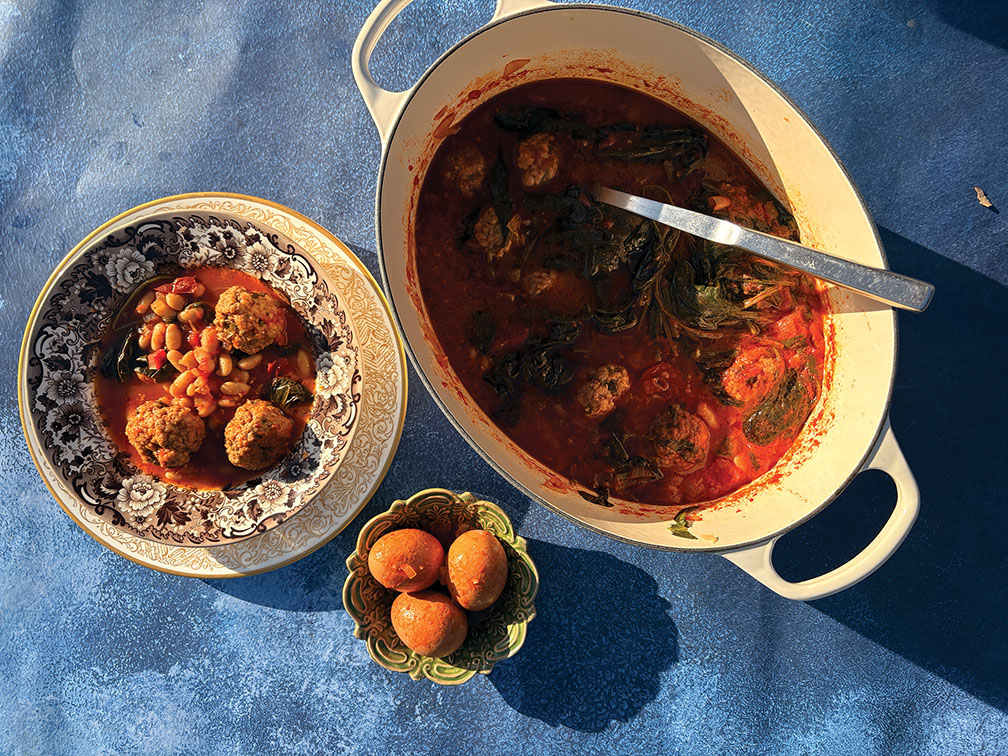
On “Breaking Bread,” Renov, who has over 81,000 followers on Instagram, sits down to cook and eat with interesting Israeli personalities. In one episode, she makes green shakshuka with Rudy Rochman, an activist who was detained in Nigeria this past summer while filming a documentary on the Jewish community there. Another episode showcases Sapir Barak, who cooks Shabbat dinners for up to 50 people each week in her home in Tel Aviv. She and Renov make beef tataki, (marinated, thinly sliced beef).
“Israel is a melting pot of all different types of people,” said Renov. “They come from all over the world with their own unique cultures, customs and cuisine, and I wanted to help tell their stories through the food we cook together.”
Renov has noticed that the world of kosher food is becoming increasingly forward thinking, and chefs are exploring much more than the traditional Jewish cuisines nowadays.
Renov has noticed that the world of kosher food is becoming increasingly forward thinking, and chefs are exploring much more than the traditional Jewish cuisines nowadays.
“Sometimes the limitations we live with push us creatively,” said Renov. “I think the kosher world has been experiencing a renaissance of sorts when it comes to innovative and creative ways to cook and eat.”
Both Renov and Garcia see the spiritual value in kosher cooking as well. While Renov said that eating and making kosher food represents her dedication to her religious lifestyle, according to Garcia, it elevates food to an almost sacred level.
“There’s a huge focus on the process the food takes from its origins to the plate, a process that often ensures you’re getting some of the cleanest and freshest ingredients available,” he said. “While the trend of ‘You are what you eat’ has only been something that’s recently become fashionable in the culinary world, that sentiment has been a guiding principle of kosher food for thousands of years.”
Stuffed Squash from Gabe Garcia
Serves 10
4 small butternut squash
4 small acorn or delicata squash
1 lb. ground veal
1 onion, diced
¼ cup slivered almonds
¼ cup dried cranberries
3 green onions
½ tbsp. thyme
½ tbsp. chopped rosemary
2 – 3 cups cooked mixed or plain rice
¼ cup white wine
1 cup red wine vinegar
1 cup honey
10 sage leaves
1/3 cup fried shallots
- Cut the delicata or acorn squash in half and scoop out the seeds.
- Cut the seed cavity of the butternut squash off and scoop out the seeds, and then peel off the skin.
- Peel the top of the butternut and dice into ¼ inch cubes and save for later.
- Season the squash “cups” with salt, pepper and olive oil and roast in a 375*F oven, cut side up, for 15 to 18 minutes until tender but the shape is not lost.
- In a pan, sauté the ground vealuntil brown.
- Add the onions and cook until tender.
- Add 2 cups of the cubed butternut squash and continue to sauté for 2 to 3 minutes.
- Stir in the cranberries and almonds.
- Add the rice, rosemary and thyme.
- Deglaze with the white wine.
- Continue stirring until the wine has cooked off.
- Remove from the flame and season with salt and pepper. Set aside.
- Place ¼ cup of oil in a small pot over medium heat Add the sage leaves, fry until crisp and drain on a paper towel.
- Mix the honey and vinegar in a second small pot. Cook over medium heat until reduced by half.
- To assemble, fill the cups with the meat mixture.
- Top with the fried shallots, sage and some extra almond slivers.
- Drizzle with vinegar honey sauce.