
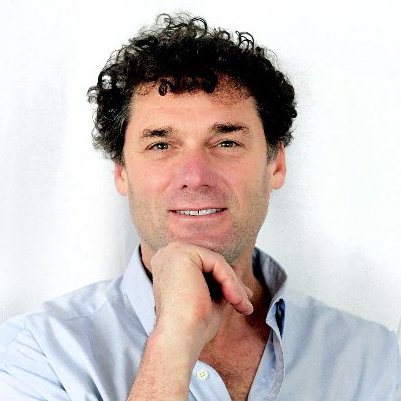
Last Sunday evening, several dozen of the city’s ethnic, political and religious leaders gathered at the home of Bruce and Madeline Peerce Ramer to mark Chanukah. Appropriately, Bruce Ramer, who is national president of the American Jewish Committee, asked various men and women, Jewish and not Jewish, each to light one candle on a symbolic menorah.
The laws of Chanukah teach us that it’s not enough to win a victory over a great empire, and it’s not enough to celebrate that victory in the privacy of your home. You must “publicize the miracle,” as the Ramers and the AJC did, and in the process proclaim your identity, your faith, your values to the world.That’s a fitting law for a holiday that marks a triumph over assimilation. But other holidays make similar demands. On Sukkot, we could have been commanded to commemorate our trek through the desert by, say, making a diorama. Instead, we’re told to build the actual huts, in plain view of the neighbors. (The first time our neighbor saw me putting up the sukkah, he suggested there are better ways to get around the building codes than constructing a room from pipes, muslin and bamboo.)
On Simchat Torah, we march the scrolls through the streets. On Yom Kippur, the blast of the shofar easily carries beyond the walls of our synagogues.
While our laws and traditions urge us on to greater levels of proclamation — keeping kosher, wearing a head-covering — our inclination is often just the opposite. Based on a few hundred years of persecution, Jews are just as apt to keep their faith to themselves or abandon it altogether. We whisper about whether someone we meet on vacation is a “SWEJ” or “MOT.” When around strangers, we sometimes adopt a “don’t ask, don’t tell” policy when it comes to religion.
These paradoxical tendencies play out in different ways, depending on the era. Lately, being Jewish has been about as “in” as it has ever been. Joe Lieberman ran for vice president as a kind-of Orthodox Jew, Madonna led a pop culture embrace of a kind-of kabbalah, cultural figures from Saul Bellow to Adam Sandler (not to confuse the two) have helped make Jewish American culture synonymous with American culture. You’d have to go back to 730 C.E., when King Bulan led the great Khazar conversion to Judaism and proclaimed it the state religion, to find an embrace quite as warm.
But at the same time, we can be shy and retiring on critical issues that directly affect us as Jews. One of the best examples is Iran, where ten Jews languish in prison. They’re there on trumped-up charges, victims of anti-Semitism, pure and simple.
These Jews were arrested between January and March of 1999 in the southern province of Fars and charged with spying for the United States and Israel. Last July, the judge in the case, who also acted as prosecutor, found them guilty and sentenced them to prison terms of four to 13 years. An appeals court reduced their sentences to between two and nine years. That’s a long time to stay put in a hellhole when your only crime is being Jewish.
At a conference last week in Washington, D.C., Elie Wiesel told 1,000 Conservative Jewish women that they and other Jewish leaders should be doing more for these 10 men. He suggested sending a delegation there to appeal to Iranian leaders. Why not? Why not wave after wave of delegations, of American Jews of all convictions? “You could do so much,” Wiesel told the women. “After all, you have an authority which is called compassion.”
Perhaps our old sense that speaking out will draw unwanted attention or be seen as unseemly can still rear its shy, embarrassed head. Or is it that our very acceptance in this country has made us self-satisfied, apathetic to the tribulations Jews can still face abroad?
In Los Angeles, we have less of an excuse to remain silent or plead ignorance. We are home to a 35,000-strong Iranian Jewish community, which by now exceeds the 25,000 Jews left in Iran itself. Most of its leaders, such as Pooya Dayanim, spokesman for the L.A.-based Council of Iranian American Jewish Organizations, have played an active and vocal role in attaining freedom for the 10 imprisoned men. You can contact Dayanim at (310) 535-6610 and ask how best to get involved.
It will be a happier Chanukah if we can celebrate victory over oppression for all Jews, everywhere, even in our own day and age.

































